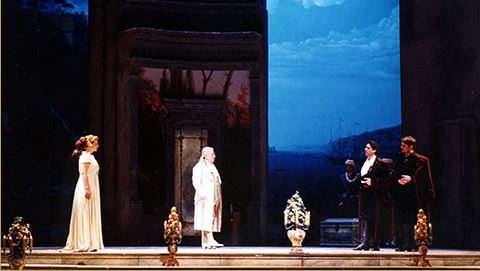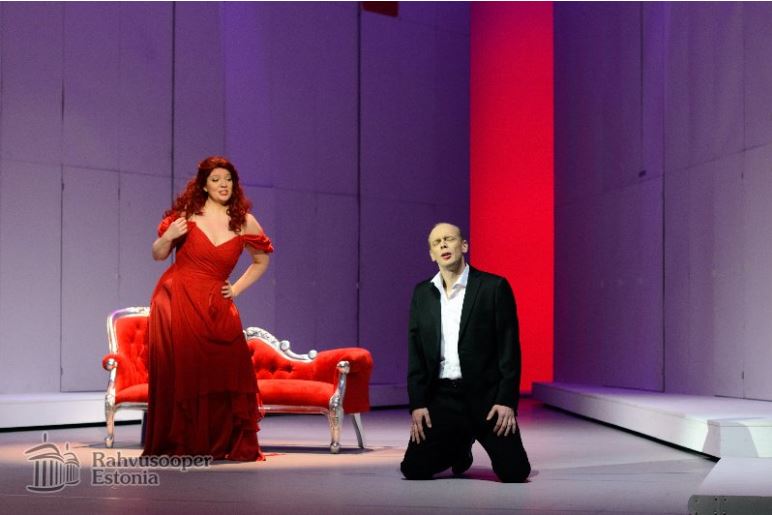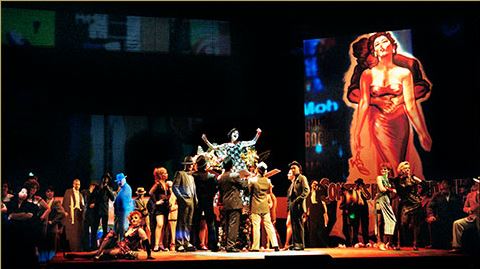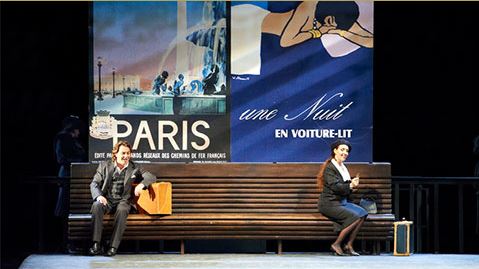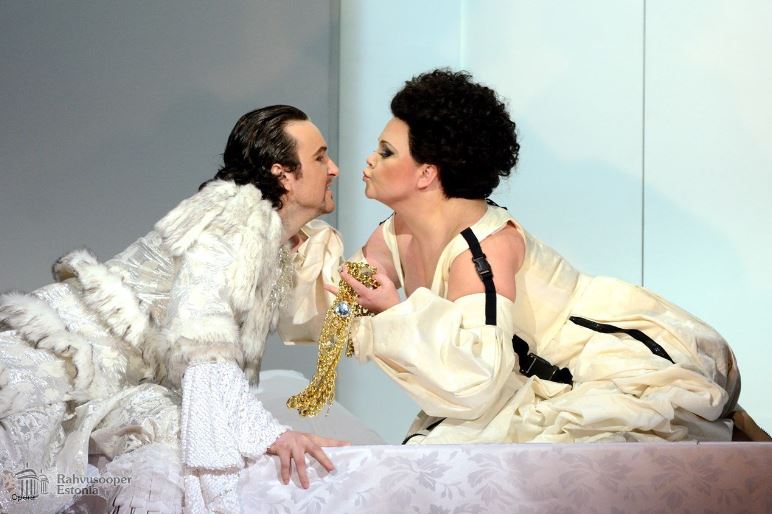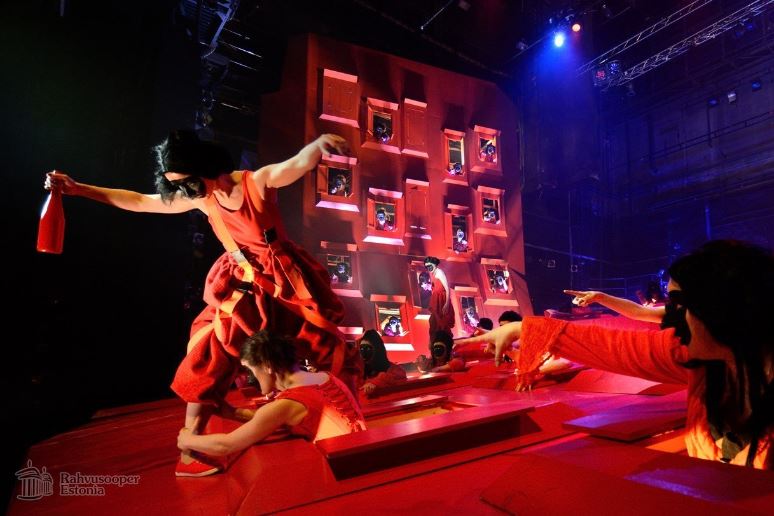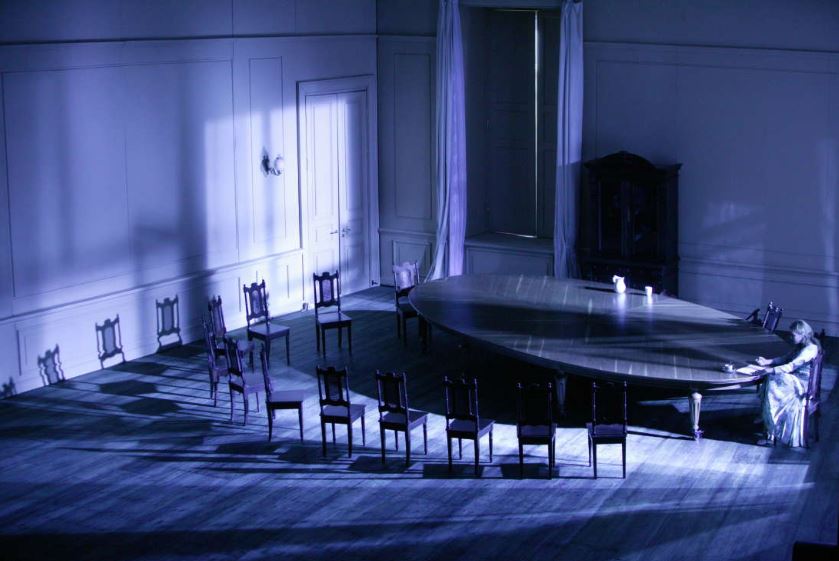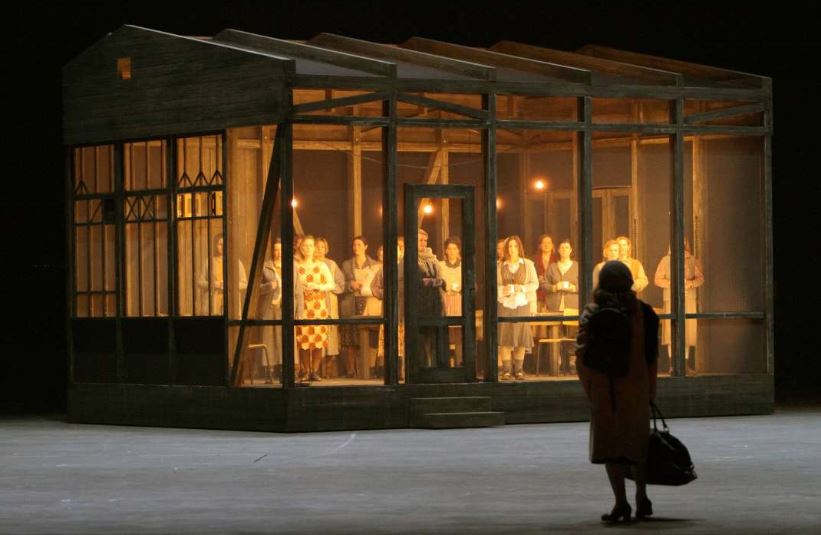
Paul Hindemith’s Cardillac at the Estonian National Opera

cardillac

Opera by Paul Hindemith
Libretto by Ferdinand Lion based on E. T. A. Hoffmann’s short story “Das Fräulein von Scuderi”
World premiere on November 9, 1926 at Dresden Semperoper
Premiere at the Estonian National Opera on May 14, 2015

  • Sung in German with subtitles in Estonian and English
  • Approx running time 2 h
  • Jyrki Anttila (Finnish National Opera), and Sergiu Saplacan (Romania) as guest soloists

F, 19 February 2016 / 19:00

T, 25 February 2016 / 19:00

cardillac4


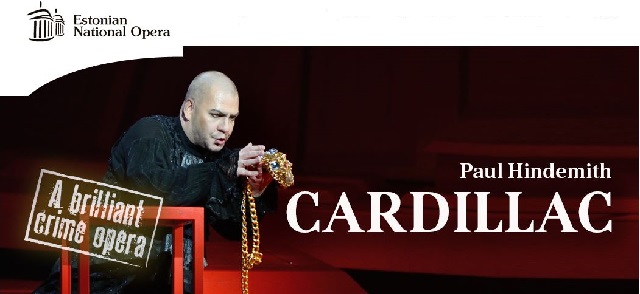
“Cardillac”, written in 1926, the first of Hindemith’s trilogy of operas about the relationship between the artist and society. The others being “Mathis der Maler” (1935) and “Die Harmonie der Welt” (1957). It includes some of the composer’s most engaging music, conveying the opera’s power, strange beauty, and eccentricity sometimes leading to absurdity. “Cardillac” was one of the most frequently performed operas of the 1920s and went on to become Hindemith’s most successful stage work of all.

The protagonist is a goldsmith Cardillac, who fabricates wonderful things and because of his obsession with them he also retrieves them by theft and murder. The plot revolves around the dilemma of revealing to the public that the beloved artist is also the criminal who made an entire city fearful. The citizens and police fail to make any connection between the coincidence of the purchases and murders until Cardillac finally confesses. A crowd then beats him to death, but after his daughter explains that the murders were merely the consequence of his love of beauty, they sing a ravishing eulogy.

cardillac2

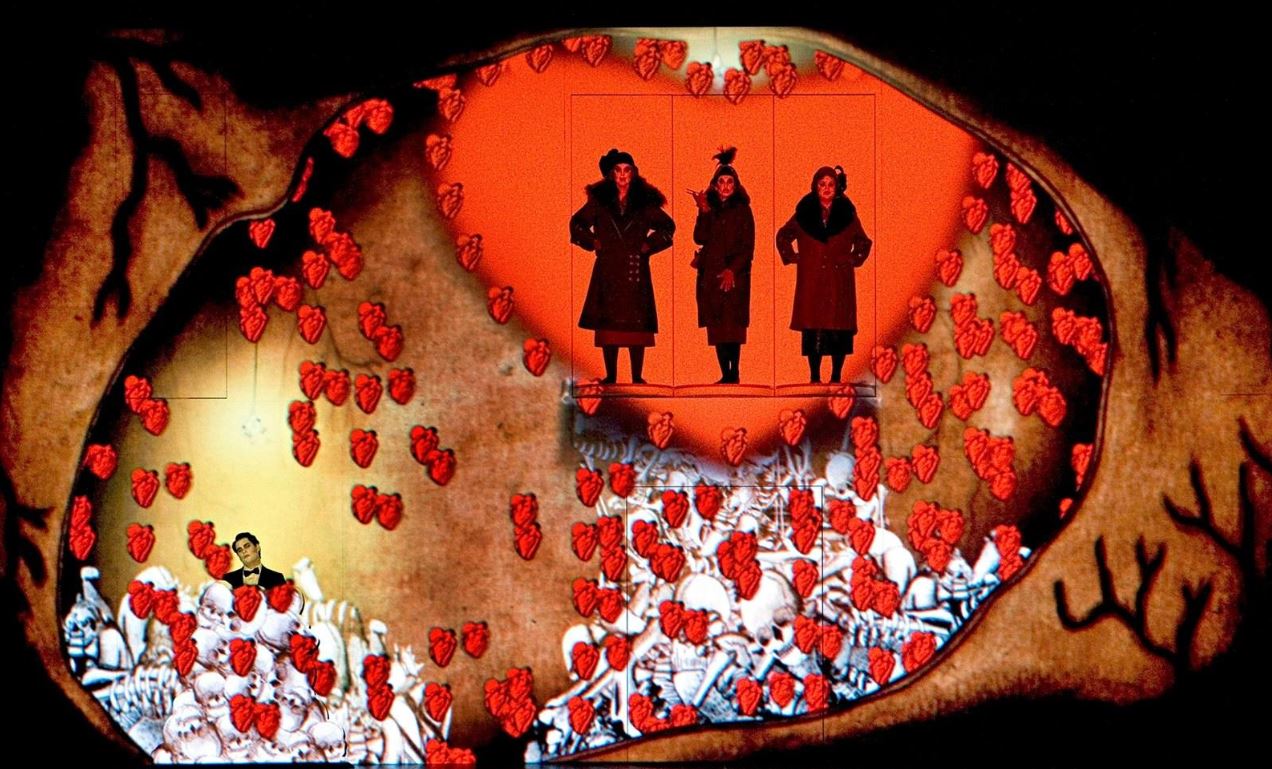
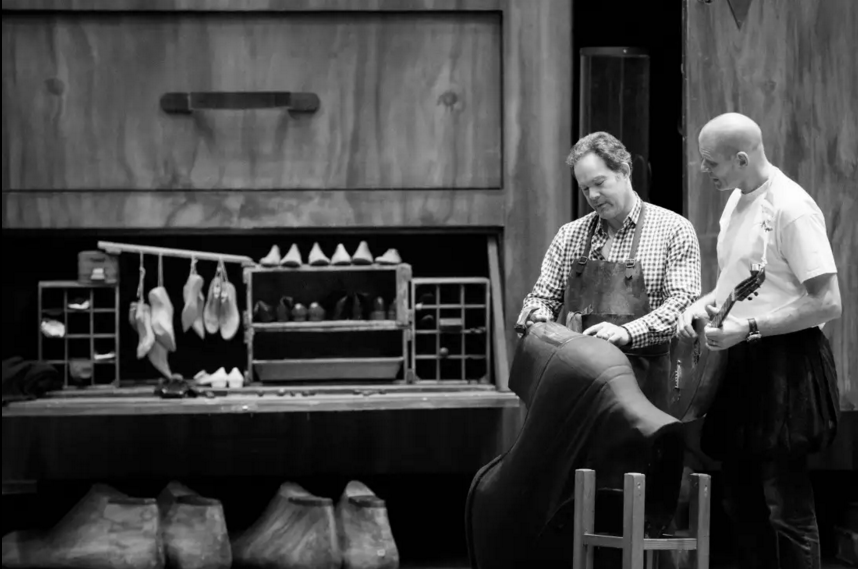
Vilppu Kiljunen: “Paul Hindemith’s “Cardillac” is more than a crime story. It is a story of the unrestrainable power of human mind, passions and desire for death. What makes the opera especially fantastic, powerful and dramatic is not only its music, but the intensity of the plot that lasts throughout the opera. The people thirst for revenge and punishment – the culprit is the one least suspected. But the criminal is not important, what matters is the motive. Desire for beauty and following your inner drive can lead us to the dark side of life. Could we behave differently? Live differently? Does an artist, a human, follow anything but his inner drive? The conflict is born: the individual versus society. Whose rules do we follow? You will definitely face these questions either as a stage director or a spectator of “Cardillac”. I want to ask these questions in the same context that the opera was born. In my fantasy I see the plot in a black-and-white world, in a city that hunts for a murderer.”

Paul Hindemith (1895–1963) was one of the most outstanding representatives of German neo-classicism and one of the most varied 20th century composers. He has written in almost all genres: nine operas, three ballets, four symphonies, several oratorios and chamber music. He is also considered a pioneer of writing “utility music”, compositions for everyday occasions and practical purposes, reflecting a cultural trend in post-wars Germany. Combining traditional and experimental composition techniques, he created a unique style of his own. His early music is often atonal, but his later works return to tonality. The repertoire of the Estonian National Opera features also Hindemith’s short opera “The Long Christmas Dinner”.

This slideshow requires JavaScript.

Staging team

  • Conductors: Vello Pähn, Risto Joost, Lauri Sirp
  • Stage Director: Vilppu Kiljunen (Finland)
  • Designer: Kimmo Viskari (Finland)
  • Lighting Designer: Anton Kulagin
  • Guests:

Jyrkki-Anttila-webSergiuSaplacanweb

CAST

  • vello_pähn_kodukale

    Vello Pähn, Conductor

  • Rauno_Elp

    Rauno Elp

  • Lepalaan_small

    Helen Lepalaan

  • Jyrkki Anttila web

    Jyrki Anttila

  • Mart_Laur

    Mart Laur

  • sergiu saplacan web

    Sergiu Saplacan

  • Heli_Veskus

    Heli Veskus

  • Atlan Karp

    Atlan Karp

Posted in OPera | Tagged , | Leave a comment

Iolanta at the Palais Garnier in Paris

operaParisLogo

yolantaTitle

Photo © Cig Harvey

Palais Garnier from 07 March to 01 April 2016

3h55 with 2 intervals

Opening night Wed. 9 Mar.

iolantaCalendar

Iolanta

Opera in one act (1892)

Music
Piotr Ilyitch Tchaikovski
Libretto
Modeste Tchaikovski
Conductor
Alain Altinoglu
Marius Stieghorst

Director
Dmitri Tcherniakov
yolanta1
Roi René
Alexander Tsymbalyuk
Iolanta
Sonya Yoncheva
Vaudémont
Arnold Rutkowski
Robert
Andrei Jilihovschi
Ibn Hakia
Vito Priante
Alméric
Roman Shulakov
Bertrand
Gennady Bezzubenkov
Martha
Elena Zaremba
Brigitta
Anna Patalong
Laura
Paola Gardina
yolanta2

The Nutcracker

Ballet in two acts (1892)

Music
Piotr Ilyitch Tchaikovski
Choreography
Sidi Larbi Cherkaoui
Edouard Lock
Arthur Pita
Danseurs en alternance
Marion Barbeau
Marine Ganio
Stéphane Bullion
Julien Meyzindi
Nicolas Paul
Aurélien Houette
Yvon Demol
Takeru Coste
Alice Renavand
Sofia Rosolini
Simon Le Borgne
Caroline Bance
Charlotte Ranson
Director
Dmitri Tcherniakov
Set design
Dmitri Tcherniakov
Costume design
Elena Zaitseva
Lighting design
Gleb Filshtinsky
Chorus master
Alessandro Di Stefano

Étoiles, Premiers Danseurs and Corps de Ballet
Paris Opera Orchestra and Chorus
Maîtrise des Hauts-de-Seine / Paris Opera Children’s Chorus

French and English surtitles

This production will be recorded for television.

A coproduction by the Paris Opera, Bel Air Média and Arte with support from the CNC and directed by Andy Sommer.
Broadcast live in cinemas on 17 March and on Culture Box as of 19 March.
Broadcast on France 3 at a later date.
Broadcast on France Musique on 26 March.

yolanta3

Synopsis

Time: 15th century

Place: Mountains of southern France

Scene 1

Princess Iolanta has been blind from birth, but no one has ever told her, nor does she know she is a princess. She lives in a beautiful enclosed garden on the king’s estate, secluded from the world, in the care of Bertrand and Martha. Her attendants bring flowers and sing to her. She declares her sadness, and her vague sense that she is missing something important that other people can experience. Her father, King René insists that she not discover she is blind, or that her betrothed, Duke Robert, find out about this.

yolanta4

Scene 2

After announcing the king’s arrival, Alméric is warned by Bertrand not to speak of light with Iolanta or to reveal that Iolanta’s father is the king. The king arrives with Ibn-Hakia, a famed Moorish physician who states that Iolanta can be cured, but the physical cure will only work if she is psychologically prepared by being made aware of her own blindness. Ibn-Hakia sings the monologue “Two worlds”, explaining the interdependence of the mind and the body within the divinely ordained universe, which merges spirit and matter. The king refuses the treatment, fearing for Iolanta’s happiness if the cure should fail after she has learned what she is missing.

yolanta5

Scene 3

Robert arrives at the court with his friend Count Vaudémont. Robert tells Vaudémont that he wishes to avoid the marriage as he has fallen in love with Countess Matilde. He sings of his love in his aria “Who can compare with my Mathilde” (Кто может сравниться с Матильдой моей). Vaudémont finds the entrance to Iolanta’s secret garden, ignoring the sign which threatens death to anyone who enters. He sees the sleeping Iolanta, without realising who she is and instantly falls in love. Robert, astounded by his friend’s behavior, is convinced she is a sorceress who has bewitched Vaudémont. He tells him to leave, but Vaudémont is too entranced. Robert departs to bring troops to rescue him. Iolanta awakes and Vaudémont who asks her to give him a red rose as a keepsake, realises she is blind when she twice offers him a white one. She has no concept of light, vision or blindness. They fall in love, after he explains light and color to her.

yolanta6

Scene 4

The couple are discovered by the king. Vaudémont pledges his love, whether Iolanta is blind or not. Ibn-Hakia tells the king that as Iolanta is now aware of her blindness, the treatment might be a success. Iolanta who has no will to see, is unsure therefore whether she should agree to treatment or not. Ibn-Hakia points out that the lack of will proves that without inner desire change cannot take place.

After Vaudémont admits seeing the warning sign at the garden entrance, the furious king threatens to execute him for revealing the truth to Iolanta. He tells Iolanta Vaudémont will die if the physician fails to restore her sight, in the hope that this will restore her will. Iolanta is horrified, and agrees to the treatment. After Ibn-Hakia leaves with Iolanta, the king explains to Vaudémont that he was feigning in order to motivate Iolanta. Robert returns with his troops. He admits to the king he has fallen in love with another, but is still willing to go ahead with the agreed marriage. The king cancels the wedding contract, and gives Iolanta to Vaudémont. Ibn-Hakia and Iolanta return. The treatment has worked and Iolanta can see. At first uncertain of her new gift, she eventually sings of the magical new world now visible to her. The court rejoices.

yolanta7

Principal arias and numbers

  • Scene 1a. Iolanta’s Arioso (Ариозо Иоланты): “Why haven’t I known this before?” “Отчего это прежде не знала”
  • Scene 5b. Ibn-Hakia’s Monologue (Монолог Эбн-Хакиа): “Two worlds” “Два мира”
  • Aria: “Who can be compared with my Matilda?” “Кто может сравниться с Матильдой моей” (Robert)


Posted in Music, OPera | Tagged , , , , | Leave a comment

Salome in Tokyo

tokyo_logo

SALOME

Music by Richard STRAUSS
Opera in 1 act
Sung in German with Japanese supertitles
Opera Palace

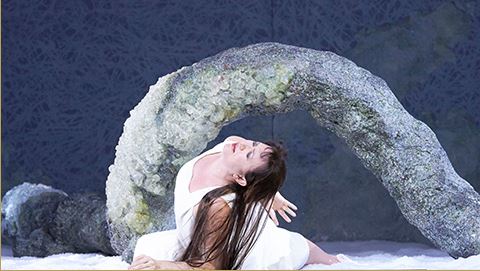
Salome is a masterpiece by the archetypal German late Romantic composer, Richard STRAUSS. It is a one-act opera based on the eponymous play by Oscar WILDE, featuring an episode from the New Testament. The decadent content of the opera brought a reaction at its first performance and made STRAUSS’s name known.
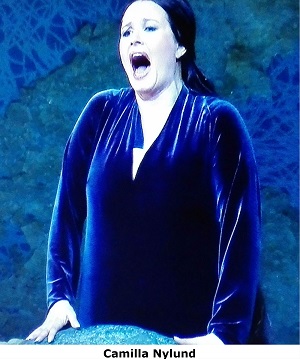
The conductor is Dan ETTINGER, and the director, August EVERDING. Also, Camilla NYLUND appears in the title role for the first time since the Rosenkavalier in 2007.

salomeTokyo

salomecalendar

STAFF

Staff

cast1Conductor Dan ETTINGER 1

Production August EVERDING 2

Scenery and Costume Design Jörg ZIMMERMANN


Chreographer 
ISHII Kiyoko

Revival Director MIURA Yasuhiro

Stage Manager OSAWA Hiroshi

CAST

Salome Camilla NYLUND 3

Herodes Christian FRANZ 4

Herodias Rosalind PLOWRIGHT 5

Johanaan Greer GRIMSLEY 6

Naraboth MOCHIZUKI Tetsuya 7

Ein Page der Herodias KANOH Etsuko 8

5 Juden 1 NAKASHIMA Katsuhiko 9

5 Juden 2 ITOGA Shuhei 10

5 Juden 3 KODAMA Kazuhiro 11

5 Juden 4 AOCHI Hideyuki 12

5 Juden 5 HATAKEYAMA Shigeru 13

2 Nazarener 1 KITAGAWA Tatsuhiko 14

2 Nazarener 2 AKITANI Naoyuki 15

2 Soldaten 1 OTSUKA Hiroaki 16

2 Soldaten 2 ITO Takayuki 17

Ein Cappadocier ONUMA Toru 18

Ein Sklave MATSUURA Rei 19

Orchestra Tokyo Symphony Orchestra


Artistic Director 
IIMORI Taijiro

cast2 cast3


Posted in OPera | Tagged , , | Leave a comment

Il Barbiere di Siviglia at the Opera Bastille in Paris

operaParisLogobarbiereTitlebarbierecalendarOpéra Bastille from 02 February to 04 March 2016

3h05 with 1 interval

Photo © Lola Guerrera / VOZ’image

barbiere1

© Elena Bauer / OnP

Il Barbiere di Siviglia | Le Barbier de Séville

Opera Buffa in two acts (1816)

Music
Gioacchino Rossini
Libretto
Cesare Sterbini
Conductor
Giacomo Sagripanti
Director
Damiano Michieletto
Il Conte d’Almaviva
Lawrence Brownlee
Bartolo
Nicola Alaimo
Rosina
Pretty Yende
Figaro
Alessio Arduini
Basilio
Ildar Abdrazakov
Fiorello
Pietro Di Bianco
Berta
Anaïs Constans
Un Ufficiale
Laurent Laberdesque
Set design
Paolo Fantin
Costume design
Silvia Aymonino
Lighting design
Fabio Barettin
Chorus master
Alessandro Di Stefano

Paris Opera Orchestra and Chorus
Original production from the Grand Théâtre de Genève

French and English surtitles

barbiere2

© Elena Bauer / OnP

 COMMENTARY

“The Barber is one of the century’s masterpieces”. These words were written by the very Berlioz who in his youth had denounced not only Rossini, but also the “fanaticism he aroused in the fashionable circles of Paris”. Accordingly, the compliment, “repeated until exhaustion” – the composer’s own words – is all the greater. The work was so “brilliant” and “so finely orchestrated” that the “dilettanti of Rome”, enraged by the “slightest unforeseen innovation in melody, harmony, rhythm or instrumentation were ready to kill the young maestro”. Il Barbiere di Siviglia has been performed continually since its turbulent premiere on February 16th 1816.

The composer’s opera buffa transcends the spirit of Beaumarchais’ comedy and combines the absurd with a touch of satirical realism in a score where rhythm and virtuosity place the comic effects in an ongoing dramatic narration. As a result, the characters – Rosina in particular – gain a new degree of realism and break with the usual archetypes.

Damiano Michieletto’s giddying production embraces this perpetual motion and carries in its wake the happy couple formed by Lawrence Brownlee and Pretty Yende.

barbiereQuote

barbiere3

© Elena Bauer / OnP

SYNOPSIS

Place: Seville, Spain. Time: 18th century

Act 1

The square in front of Bartolo’s house

In a public square outside Bartolo’s house a band of musicians and a poor student named Lindoro are serenading, to no avail, the window of Rosina (“Ecco, ridente in cielo”; “There, laughing in the sky”). Lindoro, who is really the young Count Almaviva in disguise, hopes to make the beautiful Rosina love him for himself—not his money. Almaviva pays off the musicians who then depart, leaving him to brood alone. Rosina is the young ward of the grumpy, elderly Bartolo and she is allowed very little freedom because Bartolo plans to marry her, and her not inconsiderable dowry, himself – once she is of age.

Figaro approaches singing (Aria: “Largo al factotum della città”; “Make way for the factotum of the city”). Since Figaro used to be a servant of the Count, the Count asks him for assistance in helping him meet Rosina, offering him money should he be successful in arranging this. (Duet: “All’idea di quel metallo”; “At the idea of that metal”). Figaro advises the Count to disguise himself as a drunken soldier, ordered to be billeted with Bartolo, so as to gain entrance to the house. For this suggestion, Figaro is richly rewarded.

A room in Bartolo’s house with four doors

The scene begins with Rosina’s cavatina, “Una voce poco fa” (“A voice a little while ago”). (This aria was originally written in the key of E major, but it is sometimes transposed a semitone up into F major for coloratura sopranos to perform, giving them the chance to sing extra, almost traditional, cadenzas, sometimes reaching high Ds or even Fs.)
Knowing the Count only as Lindoro, Rosina writes to him. As she is leaving the room, Bartolo and Basilio enter. Bartolo is suspicious of the Count, and Basilio advises that he be put out of the way by creating false rumours about him (this aria, “La calunnia è un venticello” – “Calumny is a little breeze” – is almost always sung a tone lower than the original D major).

When the two have gone, Rosina and Figaro enter. Figaro asks Rosina to write a few encouraging words to Lindoro, which she has actually already written. (Duet: “Dunque io son…tu non m’inganni?”; “Then I’m the one…you’re not fooling me?”). Although surprised by Bartolo, Rosina manages to fool him, but he remains suspicious. (Aria: “A un dottor della mia sorte”; “To a doctor of my class”).

barbiere4

© Elena Bauer / OnP

As Berta, the Bartolo housekeeper, attempts to leave the house, she is met by the Count disguised as an intoxicated soldier. In fear of the drunken man, she rushes to Bartolo for protection and he tries to remove the supposed soldier, but does not succeed. The Count manages to have a quick word with Rosina, whispering that he is Lindoro and passing her a letter. The watching Bartolo is suspicious and demands to know what is in the piece of paper in Rosina’s hands, but she fools him by handing over her laundry list. Bartolo and the Count start arguing and, when Basilio, Figaro and Berta appear, the noise attracts the attention of the Officer of the Watch and his men. Bartolo believes that the Count has been arrested, but Almaviva only has to whisper his name to the officer and is released right away. Bartolo and Basilio are astounded, and Rosina makes fun of them. (Finale: “Fredda ed immobile, come una statua”; “Cold and still, just like a statue”).

Act 2

A room in Bartolo’s house with a piano

Almaviva again appears at the doctor’s house, this time disguised as a singing tutor and pretending to act as substitute for the supposedly ailing Basilio, Rosina’s regular singing teacher. Initially, Bartolo is suspicious, but does allow Almaviva to enter when the Count gives him Rosina’s letter. He describes his plan to discredit Lindoro whom he believes to be one of the Count’s servants, intent on pursuing women for his master. Figaro arrives to shave Bartolo. Bartolo demurs, but Figaro makes such a scene he agrees, but in order not to leave the supposed music master alone with Rosina, the doctor has Figaro shave him right there in the music room. When Basilio suddenly appears, he is bribed by a full purse from Almaviva and persuaded to leave again, with much discussion of how ill he looks. (Quintet: “Don Basilio! – Cosa veggo!”; “Don Basilio! – What do I see?”). Figaro begins to shave Bartolo, but Bartolo overhears the lovers conspiring. He drives everybody away.

The scene returns to the location of act 1 with a grill looking out onto the square. Bartolo orders Basilio to have the notary ready to marry him to Rosina that evening. He also explains his plot to come between the lovers. Basilio leaves and Rosina arrives. Bartolo shows Rosina the letter she wrote to “Lindoro”, and persuades her that this is evidence that Lindoro is merely a flunky of Almaviva. Rosina believes him and agrees to marry him.

barbiere5

© Elena Bauer / OnP

The stage remains empty while the music creates a thunder storm to indicate the passage of time. The Count and Figaro climb up a ladder to the balcony and enter the room through a window. Rosina shows Almaviva the letter and expresses her feelings of betrayal and heartbreak. Almaviva reveals his identity and the two reconcile. While Almaviva and Rosina are enraptured by one another, Figaro keeps urging them to leave. Two people are heard approaching the front door, who later turn out to be Basilio and the notary. However, when the Count, Rosina, and Figaro attempt to leave by way of the ladder, they discover it has been removed. The Count quickly gives Basilio the choice of accepting a bribe and being a witness to his marriage or receiving two bullets in the head (an easy choice, Basilio says). He and Figaro witness the signatures to a marriage contract between the Count and Rosina. Bartolo barges in, but is too late. The befuddled Bartolo (who was the one who had removed the ladder) is pacified by being allowed to retain Rosina’s dowry.

barbiere6

© Elena Bauer / OnP

barbiere7

© Elena Bauer / OnP

Opéra Bastille from 02 February to 04 March 2016

Opéra Bastille from 02 February to 04 March 2016

Opéra Bastille from 02 February to 04 March 2016

Opéra Bastille from 02 February to 04 March 2016

Posted in OPera | Tagged , , , | Leave a comment

Alessandro Scarlatti’s “Il Primo Omicidio” in Vienna

logoanderwienprimoomicidioCastprimoomicidioimagel

In the works of Alessandro Scarlatti, Italian music of the 17th and early 18th centuries reached one of its zeniths. Scarlatti, a native of Palermo, was maestro di cappella to Queen Christina of Sweden in Rome from 1680 to 1684, before taking on the same position – after an intermezzo in Naples – at the church of Santa Maria Maggiore in 1703. However, since the papal decree of 1698 all opera and theatre performances were banned. This meant that musico-dramatic compositions could only be written disguised as oratorios. With Il primo omicidio Scarlatti created a remarkable musical interpretation of the Old Testament tale of Cain and Abel, using the individual instruments in an extremely original way. Unlike many oratorio texts, the libretto is not in Latin, but in the language of opera, Italian. The work portrays the first murder in the history of humanity: Adam and Eve bemoan their Fall which has caused their expulsion from Paradise. Abel, wishing to comfort his parents, promises to sacrifice a lamb to God. But Cain, as the first-born, claims it is his right to perform the sacrifice. First aggressive and murderous thoughts descend on him. In the end, Cain hears the voice of Lucifer encouraging him. Out in the field, he slays Abel. God condemns Cain; the first murderer is filled with remorse. In the end, Abel’s voice is heard describing celestial bliss and the voice of God promises salvation.

primioOmicidioprimoOmicidio1

Posted in OPera | Tagged , , , , , , , , , | Leave a comment

Tchaikovsky’s Eugene Onegin in Zagreb

croatian_logocroatianlogo

Pyotr Ilyich Tchaikovsky

EUGENE ONEGIN

Friday, February 26 2016 at 19.30

Director: Róbert Alföldi
Conductor: Nikša Bareza

Like most Russian composers from the period of Romanticism, even the greatest among them, Pyotr Ilych Tchaikovsky based some of his stage works on the works of the Russian romanticist Alexandre Sergeyevich Pushkin. One of the most beautiful creations of the romantic opera opus has been created after Pushkin’s novel in verse Eugene Onegin. A very few operas have such perfectly fused and inseparable two most important components, music and text. Tchaikovsky set to music Pushkin’s exceptional literary model almost in a perfect manner, breathing into it some entirely specific components which, according to many, make this most beautiful Slavic opera very demanding and challenging. In it Tchaikovsky finally achieved a complete realization of his yearnings in construction of a stage work.

onegincroatia2

The opera plot is initiated by lyrical emotions experienced by its characters turning Onegin into a real intimate psychological drama. After Onegin, the operas took another direction and it is no wonder that this work was one of the first opera staging of the great Russian theatre master Konstantin Stanislavsky. The opera focuses on the deeply experienced drama of its protagonists, subduing the exterior events and thus giving up the cliché of only one dramatic peak, since the first act is the drama of Tatyana, the second that of Lensky and the third that of Onegin. Every act is a separate whole, but all three of them are tightly connected into a single unity. Tchaikovsky gave this work a crossheading, Lyrical scenes, and thus created a prototype of a psychological opera in which music does not describe, but deepens the presented events.

onegincroatia3

Although the work is titled after the young, indifferent and rich Eugene Onegin, the main character is the dreamlike girl Tatyana who, living far deep in the Russian province of the 19th century, yields to the fantasies, idealizing a random acquaintance Onegin unworthy of her true love. The author, beside Tatyana who is his favorite character, describes the poet Lensky, Onegin’s friend whom he kills in a duel because of a whim, with a lot of fancy. In a combination of personal tragedies of the characters, it is possible to recognise a characteristic idea of the author on the weakness of man in achieving happiness that everyone craves for. Lensky’s aria before his death, and the famous night scene in which Tatyana is writing a love letter to Onegin, are considered among the most beautiful music numbers in the Slavic opera literature.

onegincroatia6

The new production of Eugene Onegin will be a co-production of the Zagreb Opera and the Opera of the CNT Ivan noble Zajc in Rijeka conducted by Nikša Bareza and directed by Róbert Alföldi, a guest from Hungary.

 GALLERY (Click to enlarge)


Posted in OPera | Tagged , , | Leave a comment

Ansel and Gretel at the Knoxville Opera

Knoxville_logo
hansel_title

The beloved tale of two children whose goodness and faith triumph over an evil witch returns to the Tennessee Theatre for the first time in 32 years.

The lavish production includes a 19-foot tall candied house, trees with blinking eyes, cuckoo birds, 14 angels, and a dancing witch.

Opera preview hosted by Maestro Salesky begins 45 minutes prior to each performance.

Creative Team

Candace-Evans-124x150


Candace Evans (Stage Director)

Candace Evans has enjoyed a distinguished career as a director and choreographer of over 80 operas, musicals and plays. Among the companies which have presented her productions are the Teatro Colón (Buenos Aires), Santa Fe Opera, Dallas Opera, Palm Beach Opera, Florentine Opera, Madison Opera, North Carolina Opera and Opera San Antonio. Honored by the National Music Critic’s Association of Argentina, Ms. Evans’ work was selected among the top three operas of 2012. Similarly, her productions of Carmen and Eugene Onegin for Madison Opera were named Top Ten Classical Events. Frequently asked to develop new productions, Ms. Evans’ Akhnaten was selected by the composer, Philip Glass, to be a definitive DVD. With a conservatory Master of Fine Arts degree in classical theatre/direction, Ms. Evans also trained as an opera singer, ballet dancer and toured the world as a stage performer. Relocating from New York City, she taught for the theatre/music departments of Southern Methodist University for 4 years and now privately coaches singers and leads masterclasses. Ms. Evans has served as the acting/movement coach for Dallas Opera, Fort Worth Opera Festival and Taos Opera Institute. Ms. Evans recent engagements include three new productions, Salome, featuring the role debut of Patricia Racette, Il Matrimonio Segreto, part of the ICastica summer arts festival in Arezzo, Italy and Le Wally, for the Dallas Opera.

Brian Salesky  Conductor

Meet the Cast

Chrystal Williams (Hansel)

Chrystal Williams (Hansel)

Birthplace: Portsmouth, Virginia
Foreign Opera Company: Birmingham Opera (UK)
Foreign Orchestras and Festivals: Cairo Symphony Orchestra (Egypt), Norrköpings Symfoniorkester (Sweden)
U.S. Opera Companies: Washington National Opera, Sarasota Opera, Opera Philadelphia, Gotham Chamber Opera, Academy of Vocal Arts (PA), Yale School of Music Opera, Carnegie Mellon University Opera
U.S. Orchestra: University of Pennsylvania Symphony Orchestra
U.S. Festivals: Aspen Music Festival, Glimmerglass Festival, Pine Mountain Music Festival

Lindsay Russell (Gretel)

Lindsay Russell (Gretel)

Birthplace: Richmond, Virginia
Foreign Orchestra: Hong Kong Philharmonic
U.S. Opera Companies: Santa Fe Opera, Seattle Opera, Arizona Opera, Portland Opera, Syracuse Opera, Skylight Opera (MN), Opera Roanoke
U.S. Orchestras : Yakima Symphony Orchestra (WA), New England Symphonic Ensemble
U.S. Festivals: Glimmerglass Festival (NY), Northern Lights Music Festival (MN)

Jennifer Roderer (Witch)

Jennifer Roderer (Witch)

Birthplace: Wheaton, Illinois
Foreign Opera Company: Teatro Colòn (Buenos Aires), Opern Air Gars (Austria)
U.S. Opera Companies: Lyric Opera of Chicago, Los Angeles Opera, Washington National Opera, Seattle Opera, Santa Fe Opera, New York City Opera, Opera Company of Philadelphia, Virginia Opera, Palm Beach Opera, Opera Pacific, Utah Opera, Lyric Opera of Kansas City, Tulsa Opera, Syracuse Opera, Indianapolis Opera, Glimmerglass Opera, Opera Roanoke, Chautauqua Opera, Opera Illinois, Berkeley Opera
U.S. Orchestras : Los Angeles Philharmonic, American Symphony (NY), Phoenix Symphony, New Jersey Symphony, Florida Symphony, Pacific Symphony, Jacksonville Symphony, Anchorage Symphony, Pacific Chorale and Symphony, New Jersey Festival Orchestra, Peoria Symphony, Hudson Valley Philharmonic (NY), New England Symphonic Ensemble
U.S. Festivals: Spoleto Festival, Crested Butte Music Festival (CO), Ojai Festival (CA), Berkshire Choral Festival

Scott Bearden (Father)

Scott Bearden (Father)

Birthplace: Flint, Michigan
Foreign Opera Company: International Vocal Arts Institute (Tel Aviv)
U.S. Opera Companies: San Francisco Opera, Opera Boston, Knoxville Opera, Opera New Jersey, Toledo Opera, Mississippi Opera, Opera Theater of Connecticut, Opera Memphis, Opera San Jose, Opera Grand Rapids, Eugene Opera, Cedar Rapids Opera, West Bay Opera, Mercury Opera, Rockland Opera (NY), California Festival Opera
U.S. Orchestras : Monterey Symphony, Oakland East Bay Symphony, Midland Symphony, Symphony Silicon Valley
U.S. Festivals: Tanglewood Music Festival, Caramoor Music Festival, Sanibel Music Festival, Mendocino Music Festival

Elizabeth Peterson (Mother)

Elizabeth Peterson (Mother)

Birthplace: St. Petersburg, Florida
Foreign Festival: Edinburgh Arts Festival
U.S. Opera Companies: Cincinnati Opera, Dayton Opera, Opera Theatre of St. Louis, Toledo Opera, Lyric Opera Cleveland, Whitewater/Sorg Opera, Ohio Light Opera
U.S. Orchestras : Atlanta Symphony Orchestra, St. Louis Symphony Orchestra, Tampa Bay Master Chorale and Orchestra, Florida Orchestra, Middletown Symphony Orchestra
U.S. Festivals: Spoleto Festival, Lake Eden Arts Festival

hansel1

Plot Synopsis

Act I – The hut of the broom-maker, at the edge of the forest

Hansel and Gretel play, quarrel, and reconcile in a dance. Their mother, Gertrude, enters and is angry to find them idle, rather than working. In her anger, she knocks over the pitcher of milk a neighbor has brought. The children had hoped the milk would be used for a rice pudding, a rare treat in their poverty-stricken home. An angry and desperate Gertrude, knowing that there will be no supper for her family, sends the children out to pick strawberries in the forest.

An off-stage song announces the return of Peter, her husband, apparently drunk as usual. He has celebrated his success selling his brooms at the village market and has brought home sausages, bread and other food. When he asks Gertrude where the children are, she tells him that she has sent them to the forest. Peter tells her about the wicked witch who lives there using sweetmeats to lure children to her lair, where she bakes them in her oven. Horrified, Gertrude and Peter rush out to the forest in search of their children.

Act II – The forest, evening

An orchestral prelude depicts the Witch’s Ride. As the children search for strawberries in the dark forest, Gretel weaves a garland of flowers and sings of a little man who lives in there. Hansel crowns his sister with the garland, calling her “Queen of the Forest,” as night falls. The pair soon realizes that they have eaten all the strawberries and lost their way. They are now truly frightened, calling out for their father and mother. The Sandman comes, throwing magic dust as they sing their evening prayer and 14 angels descend to protect them in their sleep.

Act III – The forest, morning

The Dewman awakens the children and they notice a little house made of confectionery. They begin to nibble at the extraordinary structure, which Gretel thinks must be a gift from the angels. But as they taste the house, they hear a voice within. The Witch appears and casts a rope around the neck of the unsuspecting Hansel, putting him in a cage.

In order to fatten Hansel up for her recipe, the Witch prepares more food for him. Meanwhile Gretel obtains the magic wand, frees Hansel from his cage, and the two children push the Witch into the oven. They then break the spell which had imprisoned other children in a gingerbread fence encircling the house. Peter and Gertrude, searching for their children enter. As the oven explodes, the Witch, now a giant cookie, is extracted and all cheer.

Knoxville Opera

612 East Depot Ave.
Knoxville, TN 37917
hello@knoxvilleopera.com
Posted in OPera | Tagged , , | Leave a comment

Rossini’s Otello in Vienna

logoanderwien

otello1titleOtello

otelloschedule

Ottelo_webRossini wrote Otello in 1816, between Il barbiere di Siviglia and La Cenerentola, as a commission for the royal theatre in Naples. Anyone expecting a faithful musical rendition of Shakespeare – as Lord Byron did – was in for a disappointment. The poet saw a performance in Venice in 1818 and thundered afterwards, “They have been crucifying Othello into an opera”. In Rossini’s day, Shakespeare’s plays were known on the continent almost exclusively from adapted and sometimes almost unrecognizable versions. But if Rossini’s opera is considered as an original artistic reworking of the Othello story, its extraordinary qualities become apparent and the resounding success it met with in the 19th century becomes understandable. It is especially in the vivid portraits of the characters’ souls and in the third act in which the explosion of emotions occurs, accompanied by a storm, an explosion of natural forces, that Rossini abandons the hitherto customary number structure and – in the words of the Rossini expert Philip Gossett – “the watershed between opera of the 18th century and that of the 19th is to be found.”

SYNOPSIS

Ottelo_web_hochOtello, a black African, is in the employ of Venice. He has won a battle near Cyprus for the republic and now returns to Venice in triumph. He is secretly engaged to Desdemona, daughter of the distinguished Venetian gentleman Elmiro. But the Doge’s son, Rodrigo, also wishes to win Desdemona. Both Elmiro and Rodrigo hate the successful immigrant Otello, while Elmiro would look very favorably on his daughter’s marriage to Rodrigo. But for some time now he has observed a growing and worrying intimacy between Desdemona and Otello. To settle matters, his daughter’s wedding to Rodrigo is scheduled to take place without delay. When Otello unexpectedly appears in the middle of the ceremony, the initially hesitant Desdemona once and for all refuses to plight her troth to Rodrigo. It becomes clear that Desdemona is already promised to Otello. Rodrigo now enlists the help of the scheming Jago to drive Desdemona and Otello apart. Jago knows that Otello is insanely jealous and hatches a plot with the aid of a letter. Otello now believes that Desdemona loves Rodrigo after all and stabs her to death. When the truth of the plot is revealed, Otello kills himself out of remorse.


Posted in OPera | Tagged , , , , | 1 Comment

Handel’s Rinaldo in Israel

logoisraelioperaRINALDO

Opera in two acts by Georg Friedrich Handel


Libretto: Giacomo Rossi based on Aaron Hill and Torquato Tasso

rinaldo1

World premiere:
 February 24, 1711, the Queen’s Theatre, London
Premiere of this production at the Estonian National Opera: September 18, 2014

Monday 29/02/2016 20:00

Conductor Andres Mustonen
Director William Relton
Set and Costume Designer                        Cordelia Chisholm
Lighting Designer Johanna Town 
Movement Director Kati Kivitar

rinaldo3

Rinaldo, a crusader Monika-Evelin Liiv
Goffredo, head of the Christians, leader of the First Crusade             Oliver Kuusik
Almirena, Goffredo’s daughter Helen Lokuta
Argante, Saracen king of Jerusalem Rauno Elp
Armida, sorceress, Queen of Damascus, Argante’s mistress Helen Lepalaan
Sirens Juuli Lill, Olga Zaitseva
A magician Märt Jakobson
Mart Laur
Eustazio, Goffredo’s brother Mart Madiste
A herald Ivo Onton

Boys from the Estonian National Opera Boy Choir 
Estonian National Opera Orchestra

rinaldo2

SYNOPSIS

  • Place: in and around the city of Jerusalem during the First Crusade
  • Time: 1099


Act 1

The Crusader army under Goffredo is laying siege to Jerusalem, where the Saracen king Argante is confined with his troops. With Goffredo are his brother Eustazio, his daughter Almirena, and the knight Rinaldo. As Goffredo sings of the coming victory, Rinaldo declares his love for Almirena, and Goffredo confirms that she will be Rinaldo’s bride when Jerusalem falls. Almirena urges Rinaldo to fight boldly and assure victory. As she departs, a herald announces the approach of Argante from the city. Eustazio surmises that the king fears defeat; this seems to be confirmed when Argante, after a grandiose entrance, requests a three-day truce to which Goffredo graciously assents. After Goffredo leaves, Argante ponders his love for Armida, the Queen of Damascus who is also a powerful sorceress, and considers the help her powers might bring him. As he muses, Armida arrives from the sky in a fiery chariot. She has divined that the Saracens’ only chance of victory lies in vanquishing Rinaldo, and has the power, she claims, to achieve this.

The scene changes to a garden, with fountains and birds, where Rinaldo and Almirena are celebrating their love. They are interrupted as Armida appears, and wrests Almirena from Rinaldo’s embrace. Rinaldo draws his sword to defend his lover, but a black cloud descends to envelop Armida and Almirena, and they are borne away. Rinaldo mourns the loss of his loved one. When Goffredo and Eustazio arrive they comfort Rinaldo, and propose they visit a Christian magician who may have the power to save Almirena. Rinaldo, left alone, prays for strength.

Act 2

Armida falls in love with Rinaldo. 1616 painting by Nicolas Poussin

A sea shore. As Goffredo, Eustazio and Rinaldo near the magician’s lair, a beautiful woman calls from her boat, promising Rinaldo that she can take him to Almirena. Two mermaids sing of love’s delights, and urge Rinaldo to go in the boat. He hesitates, unsure what to do, and his companions attempt to restrain him. Angry at the abduction of his loved one, Rinaldo enters the boat, which immediately sails off. Goffredo and Eustazio are shocked at Rinaldo’s impulsiveness and believe that he has deserted their cause.

In Armida’s palace garden, Almirena mourns her captivity. Argante joins her and, overcome by her beauty, confesses that he now loves her. He promises that as proof of his feelings he will defy Armida’s wrath and secure Almirena’s freedom. Meanwhile, Rinaldo is brought before the triumphant Armida. As he demands that Almirena be set free, Armida finds herself drawn to his noble spirit, and declares her love. When he angrily rejects her she uses her powers to assume Almirena’s form, but Rinaldo suspects trickery, and departs. Armida, resuming her own appearance, is furious at her rejection yet retains feelings of tender love. She decides on another attempt to ensnare Rinaldo, and transforms herself back into Almirena’s shape, but then encounters Argante. Believing her to be Almirena, Argante repeats his earlier promises of love and freedom. Swiftly resuming her own form, Armida denounces his infidelity and vows vengeance. Argante defiantly confirms his love for Almirena and declares that he no longer needs Armida’s help. She departs in a fury.

Act 3

A mountainside, at the magician’s cavern. Goffredo and Eustazio are told by the Magician that Almirena is being held captive in Armida’s palace at the mountain-top. Ignoring the magician’s warning that they will need special powers, the pair set off for the palace but are quickly driven back by Armida’s monsters. The magician then gives them magic wands that transcend Armida’s power, and they set off again. This time they overcome the monsters, but as they reach the gates of the palace it disappears, leaving them clinging to a rock in the midst of a stormy sea. They climb the rock and descend out of sight.

In the palace garden Armida prepares to kill Almirena. Rinaldo draws his sword, but Armida is protected from his wrath by spirits. Suddenly Goffredo and Eustazio arrive, but as they touch the garden with their wands it disappears, leaving them all on an empty plain with the city of Jerusalem visible in the distance. Armida, after a last attempt to kill Almirena, also disappears as Rinaldo strikes her with his sword. The remaining four celebrate their reunion, while Goffredo announces that the attack on Jerusalem will begin the next day.

In the city, Argante and Armida, in danger from a common enemy, become reconciled and prepare their troops for battle. Goffredo’s army advances, and battle finally commences. After a struggle for supremacy, Jerusalem falls to Goffredo; Argante is overcome and captured by Rinaldo, while Armida is taken by Eustazio. Rinaldo and Almirena celebrate their love and forthcoming marriage. Armida, accepting her defeat, breaks the wand which is the source of her evil power and together with Argante embraces Christianity. Goffredo expresses his forgiveness to his beaten foes and sets them free, before victors and vanquished join in a chorus of reconciliation.

Revisions, 1717 and 1731

The opera was frequently revised, most particularly in 1717 and in 1731; modern performances are usually a conflation of the versions available. Up to and including 1717, these changes had no significant effect on the plot. In the 1731 version, however, in Act 2 Armida imitates Almirena’s voice rather than assuming her appearance, and Argante declares his love to Almirena’s portrait rather than to her face. In Act 3 the marches and the battle scene are cut; Armida and Argante remain unrepentant and vanish in a chariot drawn by dragons before the conclusion.

Synopsis from Wikipedia.org

Posted in OPera | Tagged , , | Leave a comment

Der Rosenkavalier in Chicago

rosentitle

by Richard Strauss

In German with projected English titles

It’s exactly what you want a Strauss opera to be — deliciously extravagant!

Can the elegantly alluring Marschallin find lasting happiness with her lover Octavian, who’s half her age? Does the hot-blooded Baron really think his exalted position guarantees that young Sophie will be his wife? All bets are off when Sophie receives an engagement rose from the Baron — delivered by the devastatingly handsome Octavian. Love, sex, fidelity, and aging are delicately explored in a masterwork that artfully blends laugh-out-loud humor with insightful poignancy.

Der Rosenkavalier is a grand event with more than 100 musicians, famous waltzes, and ravishing performances in store from Alice Coote, Sophie Koch, and Amanda Majeski — glorious singing actresses who have each triumphed at Lyric and internationally. And treat yourself to two eagerly awaited Lyric debuts: celebrated British bass Matthew Rose and silver-voiced German soprano Christina Landshamer.

Performance running time: 4 hours 5 minutes with 2 intermissions

Lyric Opera production generously made possible by an Anonymous Donor and Mr. & Mrs. Dietrich M. Gross.
Rosen

rosenCalendar

CAST

rosencast1rosencast2rosencast3rosencast4

Der Rosenkavalier Opera Synopsis

TIME: 1740s

PLACE: Vienna

ACT ONE
The Marschallin’s boudoir

Intermission

ACT TWO
The reception hall of Faninal’s town house

Intermission

ACT THREE
An inn

ACT ONE

Unwelcome sunlight streams into the Marschallin’s bedroom, where she has just spent the night with the young Count Octavian Rofrano, during the absence of her own husband, the Field Marshal. Octavian’s ardor spills into praises of his “Bichette,” who delights in the extravagances of her “Quinquin.” When Mohammed, her page, brings breakfast, Octavian scurries into hiding.

Once they are alone again, the Marschallin distresses Octavian by confessing that the night before she dreamed of her husband. Suddenly voices are heard in the anteroom, and she fears that the Field Marshal himself has unexpectedly returned. To avoid being discovered, Octavian disguises himself as a housemaid. The Marschallin discerns with relief that it is actually her cousin, Baron Ochs of Lerchenau, who is causing the uproar outside her door. The baron forces his way past the servants and takes immediate notice of the pretty “maid.”

Ochs is visiting specifically to remind the Marschallin of his engagement to Sophie von Faninal, the daughter of a wealthy, newly-ennobled merchant whose health is conveniently not the best. As it is customary to have a silver rose presented to one’s fiancée, Ochs asks the Marschallin to recommend a young nobleman to be his rose cavalier. The Marschallin suggests her cousin Octavian, showing the baron the young man’s portrait. Ochs notices a striking resemblance to the maid, “Mariandel,” which the Marschallin attempts to ignore. Once the doors open to admit the crowd assembled for the morning levée, “Mariandel” finally escapes.

While having her hair dressed, the Marschallin listens to pleas for alms from three noble orphans, as well as presentations from a milliner, an animal-vendor, and two Italian “intriguers,” Valzacchi and Annina. A tenor sings for her (Aria: Di rigori armato) while Ochs browbeats the Marschallin’s notary, whose services he usurps to draw up an unconventional marriage contract. He then engages the Italians to help him arrange a rendezvous with “Mariandel.” Suddenly distressed, the Marschallin sends everyone away, but Ochs departs only after leaving her with the silver rose. Once alone, she reflects on the passage of time (Monologue: Da geht er hin).

Now dressed as himself, Octavian returns to continue the interrupted tête-à-tête, but the Marschallin is preoccupied and finally asks him to leave. He goes abruptly and without a farewell kiss. The Marschallin sends her footmen after him, but he has ridden away. Summoning Mohammed, the Marschallin gives him the rose to deliver to Octavian.

ACT TWO

With her father and Marianne, her duenna, Sophie awaits the cavalier whose appearance will precede her first meeting with her fiancé. When Octavian presents the silver rose, he and Sophie feel strongly attracted to each other (Duet: Mir ist die Ehre). The two make polite conversation, interrupted by the arrival of Ochs. His manner repulses Sophie, although her oblivious father presses onward with the wedding arrangements.

Drunk on Faninal’s wine, Ochs’s servants chase their host’s serving maids through the house as chaos ensues. When alone at last with Sophie, Octavian swears to protect her (Duet: Mit Ihren Augen voll Tränen). They two are embracing when they are suddenly pulled apart by Valzacchi and Annina, who have been eavesdropping. They call for the baron, who condescends to Octavian when the young man informs him that Sophie will not marry him. Octavian finally draws his sword and slightly wounds Ochs, who responds with exaggerated outcries. He is bandaged and then left to rest (Monologue: Da lieg’ ich). Annina returns with a note that Octavian has paid her to deliver: an invitation from “Mariandel” to a rendezvous the following night. His mood now completely altered, Ochs waltzes in delighted anticipation.

ACT THREE

Valzacchi and Annina have joined Octavian in a plot to discredit Ochs and rid Sophie of him permanently. They are using the private room of an inn as a scene for an assignation. They conceal their cohorts strategically around the room and, with his henchmen, Valzacchi then rehearses everyone for the upcoming shenanigans.

Ochs enters escorting “Mariandel” and dismisses the inn’s fawning staff. He attempts to ply his companion with wine, which she coyly refuses. As he tries to kiss her, he is startled by her resemblance to Octavian and by the abrupt appearance of one of the henchmen’s heads, which “Mariandel” ignores. More wine and more apparitions succeed in confusing and frightening Ochs. Annina rushes in claiming to be his deserted wife, followed by numerous children claiming that Ochs is their “papa.” A bona fide police commissioner arrives, intent on investigating the disturbance. He is followed by Sophie and her father, who have arrived on schedule to witness the baron’s misbehavior.

At the height of the tumult, the Marschallin appears. Unimpressed by Ochs’s attempts to extricate himself from the situation, she suggests he leave immediately. He does so, followed by his “wife and children,” a throng of annoyed waiters, and Valzacchi’s accomplices.

Alone with Octavian and Sophie, the Marschallin graciously offers to take Faninal home in her carriage. Sophie is embarrassed at the ridiculous situation her father’s social aspirations have created, while the Marschallin is saddened by the realization that losing her lover is a presage of approaching age. Octavian is torn between his new love for Sophie and the complex mixture of love, gratitude, and loyalty he still feels for the Marschallin (Trio: Hab mir’s gelobt). Left to escort Sophie home himself, Octavian lingers with her to savor the moment (Duet: Ist ein Traum/Spür nur dich). The room is empty until Mohammed runs in, catches sight of the handkerchief Sophie has left behind, and rushes out with it. – See more at: https://www.lyricopera.org/concertstickets/calendar/2015-2016/productions/lyricopera/der-rosenkavalier#./Synopsis?&_suid=1455161019615008671028649799228

Posted in OPera | Leave a comment