Opera in Love presents “Romeo and Juliet” in Verona

posteropera

Posted in OPera | Leave a comment

“The Tragedy of Carmen” in Iowa

Des Moines Metro Opera 

PRESENTS:

Bizet/Brook / The Tragedy of Carmen

Bizet/Brook / The Tragedy of Carmen

An Opera in One Act
Libretto after Prosper Mérimée, Henri Meilhac and Ludovic Halévy
First performance: Viviane Beaumont Theater, Lincoln Center, New York, 1981

July 10, 2014 7:00pm & 9:00pm
July 19, 2014 1:00pm
This opera will be performed at the Des Moines Social Club

Cast:
Carmen Peabody Southwell
Don José TBA
Escamillo Luis Orozco
Micaëla Rebecca Krynski
Garcia TBA
Lillas Pastia TBA
An Old Gypsy TBA
Zuniga TBA

Cast and opera are subject to change without notice.

PRODUCTION:
Conductor Michael Spassov
Stage Director Dugg McDonough
Assistant Stage Director TBA
Musical Preparation TBA
Set Designer TBA
Costume Supervisor TBA
Lighting Designer TBA
Make-Up/Hair Designer TBA
Stage Combat Director TBA

Cast, production and opera are subject to change without notice.

SYNOPSIS:
The Tragedy of Carmen is opera at its most powerful — a raw and visceral adaptation of Bizet’s most popular work. Peter Brook and his collaborators have crafted a concentrated night of theatre that focuses on the fatal relationships between the gypsy, soldier, village girl and bullfighter. The score retains all of the most famous musical moments of the original: Carmen’s Habanera and Seguidilla, Don Jose’s Flower Song, and Escamillo’s swaggering Toreador Song. Performed at the Des Moines Social Club’s newly remodeled facility, this will be an opera experience not-to-be missed.

Posted in Music, OPera | Tagged , , , , , , , | Leave a comment

Puts’ “Silent Night” in Cincinnati

CINCINNATI OPERA PRESENTS:

Silent Night

Music by Kevin Puts
Libretto by Mark Campbell

July 10 & 12 • 7:30 p.m.
Music Hall

THE OPERA
To commemorate the 100th anniversary of World War I, Cincinnati Opera will present Silent Night, winner of the 2012 Pulitzer Prize for Music.

Inspired by a true story and based on the 2005 film Joyeux Noël, this new American opera by composer Kevin Puts and librettist Mark Campbell recounts the moving tale of the Christmas truce of 1914, when combatant soldiers on the Western Front declared a brief ceasefire and celebrated the holiday together. The production was hailed as “a triumph of contemporary stagecraft” (Opera News) at its November 2011 premiere.

THE CAST

Thomas-Blondelle-sized Erin-Wall-sized Phillip-Addis-sized Craig-Irvin-sized
Thomas
Blondelle

Nikolaus
Sprink
Erin Wall
Anna
Sørensen
Phillip Addis
Lt. Audebert
Craig Irvin
Lt. Horstmayer
       
Gabriel-Preisser-sized Andrew-Wilkowske-sized Thomas-Glenn-sized Thomas-Cooley-sized
Gabriel
Preisser

Lt. Gordon
Andrew
Wilkowske

Ponchel
Thomas
Glenn

Jonathan Dale
Thomas
Cooley

Kronprinz

CREATIVE TEAM
Stage Director … Eric Simonson
Conductor … David Charles Abell
Set Designer … Francis O’Connor
Costume Designer … Kärin Kopischke

Synopsis

PROLOGUE
Late summer, 1914. War is declared. At a Berlin opera house, the announcement disrupts the careers and personal lives of international opera singers Anna S¯rensen and Nikolaus Sprink. In a small church in Scotland, it inspires dreams of heroism in William, who demands that his younger brother Jonathan immediately enlist with him as their priest, Father Palmer, looks helplessly on. In the apartment of the Audeberts in Paris, it angers Madeleine who excoriates her husband for leaving to fight while she is pregnant with their first child. Amid the fervor of nationalistic songs, the men prepare to leave for war.

ACT I
In and around a battlefield, near the French border, before Christmas

Scene One — December 23, late afternoon. A horrific battle is fought between the Germans and the French and Scottish. An attempt by the French and Scottish soldiers to infiltrate the German bunker fails miserably; corpses begin to pile up in no-manís land between the three bunkers. Nikolaus is seen violently engaging in combatóstabbing a man to death and growing in despair at the violence. William is shot and Jonathan must leave his brother behind to die.

Scene Two — December 23, evening. In the Scottish bunker, Lieutenant Gordon assesses the casualties after the battle. Father Palmer offers solace to Jonathan in prayer. In the French bunker, Lieutenant Audebert discovers the French General waiting in his makeshift office, who reprimands him for surrendering and threatens him with a transfer. The General leaves and Audebert laments the loss of his wifeís photograph to his aide-de-camp, Ponchel. When he is alone, Audebert tallies the casualties in the last battle, while missing Madeleine and their child who he has not yet seen. He sings of needing sleep, a sentiment echoed by all of the soldiers. As it starts to snow, covering the corpses in no-manís land, the soldiers slowly begin to sleep. Alone in the German bunker, Nikolaus reveals his despair about war to an imagined Anna.

Scene Three — December 24, morning. In the German bunker, crates have arrived, and little Christmas trees from the Kronprinz. Lieutenant Horstmayer castigates the Kronprinz for not sending them more useful presents, like ammunition and reinforcements. He receives a directive from headquarters that Nikolaus has been ordered to sing at the nearby chalet of the Kronprinz, along with Anna S¯rensen. Nikolaus departs for the chalet, excited that he will be reunited with Anna again after many months apart. The French soldiers have received crates of wine, sausages and chocolates from the quartermaster and open them jubilantly. Ponchel, a barber by trade, brings coffee to Audebert and sits him down for a haircut. He is reminded of having coffee every morning with his mother who lives only an hour away by foot. The alarm clock he carries next to his heart at all times (which shielded him from a bullet in the last battle) rings at ten oíclock every morning to remind him of their daily meeting. In the Scottish bunker, crates of whiskey have arrived from home. Jonathan writes a letter to his mother, not mentioning his brotherís death.

Scene Four — December 24, early evening. At the chalet of the Kronprinz, Anna and Nikolaus perform a duet. Following the performance, they steal a few moments on a terrace outside. Anna notices the cruel effect war has had on her lover’s spirit. She has arranged for Nikolaus to spend the night with her and is angry when he says he must return to his fellow soldiers. She vows to accompany him back to the battlefield.

Scene Five — December 24, night. In the French bunker, Gueusselin volunteers to infiltrate the German bunker, and with several grenades, sidles onto no-manís land. The Scottish soldiers drink whiskey and play a bagpipe that another unit has sent them, as Father Palmer singers a sentimental ballad about home. The men in the other bunkers hear the song and react to it with sadness, caution, and annoyance. Nikolaus arrives; his fellow soldiers greet him with cheers and applause and gasp in amazement at seeing Anna with him. When the song in the Scottish bunker is finished, Nikolaus sings a rousing Christmas song loudly in response and midway through the bagpiper begins to accompany. Emboldened, Nikolaus stands atop the bunker raising a Christmas tree as a gesture of friendship. Against the protestations of their superiors, the soldiers from all bunkers stand. Nikolaus bravely moves to the center of no-manís land. Gueusselin abandons his plan to grenade the German bunker. Eventually, the three lieutenants, waving a white flag of truce, agree to a cease-fireÖbut only on Christmas Eve. The soldiers slowly and cautiously move toward each other. They share their provisions, their photos and their names. Anna appears and the soldiers are awed by the sight of a woman. Father Palmer has set up a makeshift church and celebrates mass with the men, while Jonathan finds his brotherís body and vows revenge. Father Palmer finishes the mass and urges the men to ìgo in peaceî as bombs explode menacingly in the distance.

Intermission (20 minutes)

ACT II

Scene One — December 25, dawn. The following morning, Jonathan tries to bury his brother. Because the truce is officialy over, two German sentries are prepared to shoot him, until Father Palmer and Lieutenant Gordon intervene. Looking on, Horstmayer proposes that it may indeed be time to bury all of the dead. The three lieutenants meet and decide over Ponchel’s coffee that the truce will be extended until after the dead in no-man’s land are buried.

Scene Two — December 25, late morning, early afternoon. The soldiers pile up the corpses, Father Palmer delivers last rites and the soldiers form a processional bearing the wagon of bodies away. Anna looks on with Nikolaus and promises that he will not suffer the same fate.

Scene Three — December 25, all day. In the meantime, news of the cease-fire has reached headquarters, and the British Major, the Kronprinz and the French General all react in anger and disbelief. They declare that they will punish the soldiers for their betrayal.

Scene Four — December 25, evening. Lieutenant Horstmayer prepares to return to war and Nikolaus berates him for his allegiance to the Fatherland. Horstmayer arrests Nikolaus for insubordination, but Anna takes his hand firmly and leads him across no-manís land as Horstmayer orders his men to shoot, but no one moves. Reaching the French bunker unharmed, Nikolaus regains his voice and demands asylum for him and Anna.

Scene Five — December 26, late morning. The British Major admonishes the Scottish soldiers for participating in the Christmas truce. They are to be transferred to the front lines. When a German soldier is seen crossing the battlefield, the Major orders him killed. Jonathan complies and dispassionately shoots the man. Lieutenant Audebert returns to his small office and discovers the French General there. The General tells Audebert that he will be transferred to Verdun as punishment for consorting with the enemy and that his unit will be disbanded. Audebert informs the French Generalóhis fatheróthat he has learned he has an infant son named Henri. They vow to survive the war for the childís sake. The Kronprinz angrily announces that the German soldiers are to be deployed in Pomerania as punishment. As the soldiers are taken off in a boxcar, they hum the Scottish ballad they heard in the bunker on Christmas Eve. The battlefield is now completely empty. Snow begins to fall again.

– Courtesy of Opera Philadelphia


Posted in Music, OPera | Tagged , , , , , , , | Leave a comment

Rossini’s “Le Comte Ory” in Iowa

Des Moines Metro Opera 

PRESENTS:

Rossini / Le Comte Ory

Rossini / Le Comte Ory (The Count Ory)

Opéra in two acts
Libretto by Eugène Scribe and Charles-Gaspard Delstre-Poirson after their own play
First performance: Paris; Paris Opéra, August 20, 1828
Performed in French with English supertitles above the stage

Rossini’s effervescent Le Comte Ory is a comic tale of disguise, seduction, and the victory of virtue. The scene is the French countryside; the time, the Middle Ages, during the Crusades. Count Ory, a young nobleman, will do just about anything to conquer the chaste Countess Adèle—but his page, Isolier, will do even more to win her love. The result is a triangle of intrigue, counter-intrigue, and counter-counter-intrigue that features some of the most gorgeous and vocally dazzling music in the operatic repertoire.

EVENING SHOWS July 5 | July 15 | July 18
SUNDAY MATINEE July 13

CAST:
Le Comte Ory Taylor Stayton
Comtesse Adèle Sydney Mancasola
Raimbaud Steven LaBrie
Ragonde, the Countess’ stewardess Margaret Lattimore
The Tutor Wayne Tigges
Isolier, page to Ory Stephanie Lauricella
Alice, a peasant girl Abigail Paschke
Setting: The castle of Formoutiers, in and about 1200

PRODUCTION:
Conductor Dean Williamson
Stage Director William Theisen
Cover Conductor Aaron Breid
Assistant Stage Director TBA
Chorus Master Lisa Hasson
Musical Preparation Allen Perriello
Set Designer R. Keith Brumley
Costume Designer TBA
Lighting Designer Barry Steele
Make-Up/Hair Designer TBA
Costumes TBA

Cast, production and opera are subject to change without notice

SYNOPSIS:

Act I
France, around 1200. The Count of Formoutiers and most of the men have left for the Holy Land to fight in the Crusades, leaving behind the count’s sister, Adèle, and her companion Ragonde. The young Count Ory, who is trying to win the countess, is resolved to take advantage of the situation. With the help of his friend Raimbaud, he has disguised himself as a hermit and taken up residence outside the castle gates. Village girls and peasants gather to get the holy man’s advice on matters of the heart. Ory blesses them and promises to make all their wishes come true. Among the crowd is Ragonde. She tells Ory that, in the men’s absence, the ladies of the castle have taken a vow to live as widows, but that the Countess Adèle, who is suffering from a strange melancholy, will come to consult him. Ory is overjoyed at the prospect of seeing her.

Ory’s page Isolier arrives with Ory’s tutor, who is looking for his charge. The tutor is suspicious about the hermit’s identity and leaves to summon reinforcements. Isolier however, who does not recognize his master, confides to the “hermit” that he is in love with the countess and that he has a plan to enter the castle: he will disguise himself as a pilgrim. Ory, impressed by the idea, agrees to help but secretly resolves to use the plan for his own ends.

The countess appears, lamenting her melancholy. To her astonishment, Ory prescribes a love affair to cure her, which leads her to confess her feelings for Isolier. But the “hermit” warns her not to get involved with the page of the libertine Ory. Thankful for his advice, the countess invites Ory to the castle. They are about to leave when Ory’s tutor returns and unmasks him—to the collective horror of Isolier, the countess, and the other ladies. When news arrives that the Crusaders are expected back in two days, Ory resolves to stage another assault on the castle before their return.

Act II
At the castle that evening, the women angrily discuss Ory’s plot. A storm breaks, and cries for help are heard from outside from a group of pilgrim women who claim that Ory is pursuing them. They are, in fact, the count and his men, disguised as nuns. The countess lets them in and one of them, Ory, asks to express their gratitude. When left alone with the countess, he is barely able to contain his feelings. The countess orders a simple meal for the guests and leaves. Raimbaud, who has discovered the castle’s wine cellar, enters with enough to drink for everybody. The men’s carousing gives way to pious chanting as soon as Ragonde comes within earshot.

Isolier informs the countess that the Crusaders will return that night. When Ragonde offers to tell their guests, Isolier realizes who they are and decides to play a joke on Ory. He extinguishes the lamp in the countess’s bedroom as Ory approaches to pay her an unexpected visit. Misled by the countess’s voice, Ory makes his advances towards Isolier. When trumpets announce the return of the Crusaders, Isolier reveals his identity and Ory is left with no choice but to make his escape.

Des Moines Metro Opera
106 West Boston Avenue, Indianola, IA 50125

Posted in Music, OPera | Tagged , , , , , , , | Leave a comment

“La traviata” in Vienna

Theater an der Wien (The New Opera House) Presents:

traviataViennaLa traviata

Melodramma in three acts (1853)

Music by Giuseppe Verdi

In Italian with German supertitles


cast

  role
Conductor Sian Edwards
Director Peter Konwitschny
Set and costume design Johannes Leiacker
Light design Joachim Klein
Violetta Valéry Marlis Petersen
Alfredo Germont Arturo Chacón-Cruz
Giorgio Germont Roberto Frontali
Flora Iwona Sakowicz
Annina Gaia Petrone
Gastone Andrew Owens
Barone Douphol Ben Connor
Dottore Grenvil Igor Bakan
Orchestra ORF Radio-Symphonieorchester Wien
Chorus Arnold Schoenberg Choir

Performance Dates:

July 2014: 1, 3, 6, 9, 11

SYNOPSIS

Before the premiere of La traviata in 1853, subject matter of such topicality and potential to scandalise had never been seen on an opera stage. It was only as recently as 1847 that the courtesan Marie Duplessis had died of consumption in Parip. Her lover, Alexandre Dumas, fils had made her the heroine of his novel The Lady of the Camellias in 1848, and in 1852 he adapted her story as a drama as well. At this time, Giuseppe Verdi was looking for material for a new opera for the Teatro La Fenice in Venice. When he read The Lady of the Camellias in October 1852 he abandoned all previous plans: this was the story in which he would be able to depict his own ideas of human dignity and love in a moving way.

The courtesan Violetta Valéry is suffering from consumption. The demimonde watches as she wastes away. But then Alfredo, a young man from a good family, falls in love with her. He wants to save her and persuades her to abandon her previous way of life. The couple move to the countryside. Alfredo’s respectable, middle-class father opposes his son’s liaison with a “fallen woman”. He speaks to Violetta alone, using his daughter as an argument, since no man would want to marry her if her brother was living with a courtesan. Does Violetta want to ruin the life of a blameless young lady? So Violetta leaves Alfredo and resumes her old activitiep. Offended and jealous, Alfredo publicly humiliates her, but once she is on her deathbed he returns to her. In the meantime, his father has confessed why it was that Violetta left him. But it is too late: Violetta dies in Alfredo’s arms.

Verdi originally wanted to call the opera Amore e morte (Love and Death). From the very beginning his music presages Violetta’s demise: Verdi imbues the character with positively mystic significance. The censors, however, were far from happy with a work that raised a courtesan to the status of a saint. The title had to be changed to La traviata (The Woman Who Strayed) and the action moved to the year 1700 to temper the exposure of bourgeois hypocrisy at least a little. But this did nothing to prevent the success of Verdi’s masterpiece: even today, Verdi’s La traviata continues to provoke new interpretations.

Posted in Music, OPera | Tagged , , , , , , , , , | 1 Comment

Aulis Sallinen’s “Kullervo” in Finland

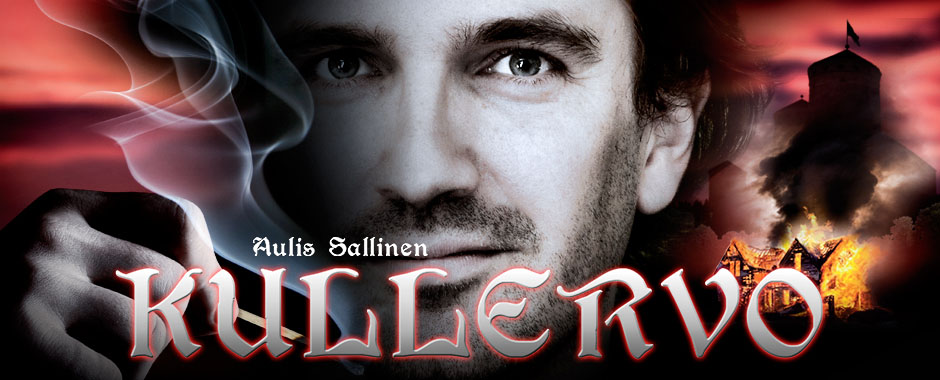
soj_2014_kullervo_940x380px_1Kullervo

by Aulis Sallinen


 A rave-reviewed masterpiece

The opera Kullervo by Aulis Sallinen, based on the Finnish national epic The Kalevala and the play Kullervo by Aleksi Kivi, brilliantly transfers the fanatical character of Kullervo to the world of opera. It now takes the Olavinlinna Castle stage in a new production. The music of Sallinen is powerful and colourful, and does not resort to obvious solutions. Singing the title role will be the great Finnish baritone Tommi Hakala.

The portrait of Kullervo is painted in the darkest shades of Finnish mythology. The smouldering ruins of his home farm spark off in Kullervo a desire for revenge, and the fate of this luckless character is further enflamed by his relationship with a woman who turns out to be his sister.

Conductor: Hannu Lintu
Stage director: Kari Heiskanen
Stage design: Antti Mattila
Costumes: Riitta Anttonen-Palo
Lighting design: Ilkka Paloniemi
Chorus master: Matti Hyökki
Cast includes: Tommi Hakala (Kullervo), Tuija Knihtilä (Mother), Ville Rusanen (Kimmo).


Aulis Sallinen’s  Kullervo

Kaksinäytöksinen ooppera. An opera in two acts.

Libretto: Aulis Sallinen derived from the epic Kalevala and from the play Kullervo by Aleksis Kivi.

Esitykset / Performances: 4.7. (ensi-ilta / premiere) 9.7., 12.7., 18.7., 21.7.2014

Musiikinjohto / Conductor Hannu Lintu
Ohjaus / Stage director Kari Heiskanen
Lavastus / Stage design Antti Mattila
Puvut / Costumes Riitta Anttonen-Palo
Valaistussuunnittelu / Lighting design Ilkka Paloniemi
Kuoron valmennus / Chorus master Matti Hyökki
Henkilöt / Cast
Kullervo , baritoni / baritone Tommi Hakala
Kimmo, baritone Ville Rusanen
Äiti/ Mother, soprano Tuija Knihtilä
Kalervo, Kullervon isä, basso Petri Lindroos
Kullervo´s father, bass
Sister, soprano Reetta Haavisto
Sepän, mezzosoprano Jenny Carlstedt
Smith´s young wife, mezzo-soprano
Hunter, tenor Aki Alamikkotervo
Unto, baritone Juha Kotilainen
 Unto´s wife, alto Marit Sauramo
Blind Singer Maria Ylipää
Tiera, basso / bass Koit Soasepp
1st man, tenor Christian Juslin
2nd man, baritone Nicholas Söderlund

Savonlinna Opera Festival Orchestra 
Savonlinna Opera Festival Choir
Sung in Finnish.
Finnish and English surtitles.
The performance begins at 19.00 and ends at about 22.00. One interval.

July 4, 2014 PREMIERE
 July 9, 2014
 July 12, 2014
 July 18, 2014
 July 21, 2014
 
Posted in Music, OPera | Tagged , , , , | Leave a comment

“Don Pasquale” in Santa Fe

The SANTA FE OPERA Presents:

Don Pasquale

Gaetano Donizetti

2014 Don Pasquale Large

Overview

Norina and Ernesto are young and very much in love, but Don Pasquale, Ernesto’s aging uncle, stands in their way. The road to matrimonial bliss is filled with outlandish pranks and beguiling melodies in Donizetti’s Don Pasquale, one of the greatest of all Italian comic operas – a romantic romp with heart. In this ideally cast new production staged by the imaginative Laurent Pelly, the handsome young tenor Alek Shrader, who enchanted Santa Fe audiences in Albert Herring, portrays Ernesto; the Romanian-American soprano Laura Tatulescu, described by Los Angeles Times as “uncommonly sexy,” is Norina. The eminent British baritone Andrew Shore, a great singer with comic flair who is remembered for his 2001 Santa Fe Falstaff, sings the title role. Corrado Rovaris, who led Donizetti’s very popular Elixir of Love in 2009, returns to conduct.

8:30 pm June 28; July 4, 9,
8:00 pm July 29; August 4, 9, 13, 19, 22\

Synopsis

Composer Gaetano Donizetti

Librettists Gaetano Donizetti and Giovanni Ruffini

Sung in Italian

ACT I
Don Pasquale, an aging bachelor, is frustrated with his nephew Ernesto, for refusing to marry a wealthy spinster whom Pasquale had chosen for him. Instead Ernesto loves Norina, a young widow. Don Pasquale decides to spite his nephew by marrying, disinheriting and leaving him penniless. Don Pasquale’s friend Dr. Malatesta arrives, suggests his younger sister as a bride. He boasts that she is angelic (just out of convent). Ernesto arrives, again refusing the spinster in favor of Norina. Pasquale says that Ernesto must leave his house after gloating to him of his own plans for marriage.

Norina reads a romance on her terrace and makes comparisons to herself. She then receives a letter from Ernesto about his troubles. Malatesta arrives, who is plotting on the young lovers behalf. He suggests that Norina impersonate his sister. She shall marry Pasquale and drive him to desperation. Norina agrees.

ACT II
In Pasquale’s house, Ernesto laments his loss of Norina, clueless to Malatesta’s scheme. As Ernesto leaves, Pasquale enters, preparing himself to meet his bride-to-be. Malatesta enters with “Sorofina,” (a disguised Norina). The couple signs the marriage contract, with Pasquale granting the disguised Norina half of his estate. Ernesto enters and is disturbed to find Norina marrying his uncle. Malatesta quickly explains the scheme, and Ernesto agrees to stand in as the best man. As the wedding contract is signed, Norina’s tone completely changes and she becomes difficult to handle.

ACT III
Pasquale is now burdened with his new wife’s spending habits. As she prepares to leave for the theater and he attempts to confront her, he receives a resounding slap for his efforts. As she leaves, she drops a letter from a suitor detailing a rendezvous that evening. Pasquale confides in Malatesta the troubles of his marriage. The Doctor advises Pasquale to surprise the lovers, and he agrees to leave all to Malatesta.

In the garden, Ernesto serenades Norina, but they are found by Pasquale and Malatesta, just as Ernesto slips away. Norina acts innocently and refuses to leave at Pasquale’s demand. Malatesta suggests that the only way to make her leave would be for her to marry Ernesto, who “Sorofina” hates. Ernesto emerges from Pasquale’s house, and Malatesta reveals that Norina is in fact Sorofina. Pasquale is happy to be freed of the imposter and he blesses the marriage of the young couple.

Artists

  • Norina – Laura Tatulescu
  • Ernesto – Alek Shrader
  • Dr. Malatesta – Zachary Nelson
  • Don Pasquale – Andrew Shore
  • Conductor – Corrado Rovaris
  • Director – Laurent Pelly
  • Scenic Designer – Chantal Thomas
  • Costume Designer – Laurent Pelly
  • Lighting Designer – Duane Schuler
Posted in Music, OPera | Tagged , , , , , , , , | Leave a comment

“Heggie / Dead Man Walking” in Des Moines

Des Moines Metro Opera 

PRESENTS:

Heggie / Dead Man Walking

Heggie / Dead Man Walking*

An opera in two acts
Libretto by Terrence McNally after the book by Sister Helen Prejean
First performance: San Francisco; San Francisco Opera, October 7, 2000
Performed in English with supertitles above the stage

Based on the extraordinary book of the same name by Sister Helen Prejean, Dead Man Walking was Heggie’s first opera, with a libretto by Terrence McNally. It premiered in 2000 at the San Francisco Opera, and has since been performed numerous times across the United States and throughout Europe. From its shocking beginning to its emotionally searing final scene, this opera changes everyone who encounters it. Its stunning score and intense story combine into a work that “must be reckoned something of a masterpiece – a gripping, enormously skillful marriage of words and music to tell a story of love, suffering and spiritual redemption” (San Francisco Chronicle).

*Parental advisory: This opera contains nudity, graphic violence, and explicit language, and is not recommended for anyone under age 18.

EVENING SHOWS June 28 | July 8 | July 11 | July 19
SUNDAY MATINEE July 6

CAST:
Sister Helen Prejean, a young nun from Louisiana Elise Quagliata
Joseph De Rocher, a death row inmate at Angola State Penitentiary David Adam Moore
Mrs. Patrick De Rocher, Joseph’s mother Margaret Lattimore
Sister Rose, co-worker and close friend to Sister Helen Karen Slack
George Benton, prison warden Kyle Abertson
Father Grenville, prison chaplain TBA
Kitty Hart, mother of the murdered girl TBA
Owen Hart, father of the murdered girl Wayne Tigges
Jade Boucher, mother of the murdered boy TBA
Howard Boucher, father of the murdered boy TBA
Motorcycle Cop, baritone Kenneth Stavert
Older Brother, half-brother to Joseph TBA
Younger Brother, half-brother to Joseph TBA
Sister Catherine TBA
Sister Lillianne TBA
Prison Guard 1 Kasey Yeargain
Prison Guard 2 TBA
First mother TBA
Mrs. Charlton TBA
Teenage Girl TBA
Teenage Boy TBA
Anthony De Rocher TBA
Jimmy TBA

Setting: In and around Angola Prison, Louisiana, 1980s.

PRODUCTION:
Conductor David Neely
Stage Director Kristine McIntyre
Associate Conductor Aaron Breid
Assistant Stage Director Octavio Cardenas
Chorus Master Lisa Hasson
Musical Preparation Yasuko Oura
Set Designer R. Keith Brumley
Costume Supervisor TBA
Lighting Designer Barry Steele
Make-Up/Hair Designer TBA
Children’s Chorus Preparation Dennis Hendrickson
Costumes TBA
Sound Designer TBA

Cast, production and opera are subject to change without notice.

SYNOPSIS:

Louisiana, 1980s

Prologue
A teenage boy and girl are parked near a secluded lake at night, on a date. They have the radio on in their car and are making out to its music. Brothers Anthony and Joseph De Rocher emerge from the shadows and turn the radio off. They attack the teens, raping the girl and eventually shooting the boy. When the girl screams, Joseph stabs her until she is silent.

Act I
Scene 1: Hope House, run by the Sisters of Saint Joseph of Medaille
Sister Helen, with the aid of some of the other sisters, is teaching the children a hymn. After the children leave, Sister Helen reveals to her colleagues that she has heard from Joseph De Rocher, a death row inmate she has been corresponding with, asking her to be his spiritual advisor and that she has decided to accept. The sisters warn Helen of the dangers, but she is firm.

Scene 2: The drive to the prison
Helen drives to Louisiana State Penitentiary and muses on her acceptance of De Rocher’s offer. She is stopped by a motorcycle policeman for speeding, but he lets her off with a warning.

Scene 3: Angola State Prison
Helen arrives at the prison and is met by Father Grenville, the prison chaplain.

Scene 4: Father Grenville’s office
Father Grenville criticizes Sister Helen’s choice to work with De Rocher, claiming that the man is unreachable. Helen responds that it is her duty to attempt to help him. She meets with the prison warden, George Benton, who asks many of the same questions and also criticizes her decision.

Scene 5: Death Row
Warden Benton and Sister Helen walk through Death Row to reach the visiting room. They’re accosted by the inmates, who in turn, shout profanities at Sister Helen and ask her to say prayers for them.

Scene 6: Death Row visiting room
Sister Helen and Joseph De Rocher meet. He asks Sister Helen to speak at the pardon board hearing on his behalf. He seems convinced that she will not return to help him; she assures him that such is not the case.

Scene 7: The pardon board hearing
Sister Helen is present with De Rocher’s mother, who pleads with the pardon board on his behalf. Owen Hart, father of the murdered girl, lashes out in anger.

Scene 8: The courthouse parking lot
The four parents of De Rocher’s victims speak angrily to his mother and to Sister Helen, who attempts to calm both sides in the debate. The parents accuse her of not understanding their pain and sorrow. Word comes from the pardon board: De Rocher has not been granted a pardon. Barring intercession from the governor, he is to die.

Scene 9: Death Row visiting room
De Rocher is convinced that Helen has abandoned him; she enters, late, and tells him that she has not and will not. He is angry and rejects all her suggestions to confess and make peace with his actions. The warden enters and tells Helen to leave.

Scene 10: The prison waiting room
Helen is attempting to find money to get food from the vending machine, having forgotten to eat. She begins to hear the voices in her head of the parents, the children at Hope House, Father Grenville, the motorcycle policeman, Warden Benton, and her colleagues, all telling her to stop attempting to help De Rocher. The warden enters to tell her that the governor has refused to act to save De Rocher and gives Helen some money for the machine. She faints.

Act II
Scene 1: Joseph De Rocher’s prison cell
A guard enters and tells De Rocher, who is doing pushups, that his execution date has been set for August 4. The guard leaves; Joseph contemplates his fate.

Scene 2: Sister Helen’s bedroom
Helen wakes up in terror from a nightmare, alarming Sister Rose, who begs her to stop working with De Rocher; Rose reminds her that she has not slept well since she began helping him. Helen says she cannot; the two women pray for the strength to forgive De Rocher.

Scene 3: Joseph’s cell
It is the evening of the date set for the execution. Joseph and Sister Helen talk, discovering a shared love for Elvis. For the first time, Joseph admits that he is afraid. Sister Helen reassures him, urging him to confess and make peace with what he has done; again he refuses. The warden enters and informs them that Mrs. De Rocher is there to see him.

Scene 4: The visiting room
Mrs. De Rocher and her two younger sons are there. Joseph visits with them and attempts to apologize; she will have none of it, preferring to believe to the end that he is innocent. She asks Helen to take a last picture of her family together. The guards lead Joseph away; she looks after him, near tears, eventually losing control. She thanks Helen for all that she has done.

Scene 5: Outside the Death House
Helen speaks with the victims’ parents. One of them, Owen Hart, takes her aside and confesses that he is less sure of what he wants now than he was; he tells her that he and his wife have separated due to the stress they have felt. Helen attempts to console him; they agree to part as “Fellow victims of Joseph De Rocher.”

Scenes 6/7: Joseph’s holding cell
Helen and De Rocher converse for one last time; once again she attempts to get him to confess to the murders. This time something in him snaps; he breaks down and tells her the entire story. He expects Helen to hate him; instead, she says she forgives him and that she will be “the face of love” for him. He thanks her. Father Grenville enters and begins the final preparations for the execution.

Scene 8: March to the execution chamber/The execution chamber
Guards, inmates, the warden, the parents, the chaplain, and protesters assembled outside the prison sing the Lord’s Prayer as Sister Helen reads a passage from the book of Isaiah. They approach the death chamber, and Helen is separated from De Rocher. The warden asks if he has any last words; he says he does and asks forgiveness from the parents of the murdered teenagers. The warden gives the nod, and the execution proceeds. De Rocher dies thanking Helen for her love. The opera ends as Sister Helen repeats her hymn.

Des Moines Metro Opera
106 West Boston Avenue, Indianola, IA 50125

Posted in Music, OPera | Tagged , , , , , , , | Leave a comment

“La Traviata” in Des Moines

Des Moines Metro Opera 

PRESENTS:

Verdi / La Traviata

Verdi / La Traviata (The Fallen Woman)*

An opera in four acts
Libretto by Francesco Maria Piave after Alexandre Dumas fils’ play La dame aux camélias
First performance: Venice; Teatro La Fenice, March 6, 1853
Performed in Italian with English supertitles above the stage

Some operas sweep through vast swaths of history; some turn on mistaken identity, political intrigue, magic, envy, or greed. But La Traviata breaks the mold. Verdi and his librettist, Francesco Maria Piave, spin a tale of social expectation and conflict – a story about a courtesan who falls in love and ultimately sacrifices everything for her love. Verdi makes us care so deeply about his heroine that her heart and happiness carry the tale. For more than a century and a half, audiences have adored this heroine and the score Verdi considered his most meaningful.

EVENING SHOWS June 27 | July 4 | July 12 | July 17
SUNDAY MATINEES June 29 | July 20
June 27 performance is at 8pm. All other evening performances are at 7:30pm.
CAST:
Violetta Valéry, a courtesan Caitlin Lynch
Flora Bervoix, her friend Ashley Dixon
Annina, Violetta’s maid TBA
Alfredo Germont Diego Silva
Giorgio Germont, his father Todd Thomas
Gastone, Vicomte de Letorières Brenton Ryan
Baron Duphol, Violetta’s protector Luis Orozco
Marchese D’Obigny, friend of Flora TBA
Doctor Grenvil TBA
Flora’s Servant TBA

Ladies and gentlemen, friends of Violetta and Flora, matadors, picadors, gypsies, servants and masquers

Setting:In and around Paris, 1870s

PRODUCTION:
Conductor David Neely
Stage Director Lillian Groag
Associate Conductor Michael Spassov
Assistant Stage Director Daniel Witzke
Chorus Master Lisa Hasson
Musical Preparation Elden Little
Set Designer Robert Little
Costume Supervisor TBA
Lighting Designer Barry Steele
Make-Up/Hair Designer TBA
Costumes TBA
Choreographer TBA

Cast, production and opera are subject to change without notice

Synopsis

Act I
The opera opens at the home of courtesan Violetta Valéry, who is throwing a raucous party. One of the guests, Alfredo Germont, is introduced to Violetta and reveals that he has loved her from afar for some time, which Violetta laughs off before asking him to lead the party in a drinking song. The guests leave to dance, but Violetta is too weak due to her affliction with consumption, and Alfredo stays behind with her. Alfredo promises to love and care for her, but she makes clear that she only lives a life of pleasure. After he leaves, Violetta is somewhat overcome by his tenderness, but she resolves to stick with her earlier declarations.

Act II
Alfredo and Violetta have been living together happily in the countryside for three months. Alfredo discovers that Violetta has been selling her possessions in order to finance their household and he leaves for Paris to raise money. Germont, Alfredo’s father, arrives unexpectedly and asks Violetta to end her relationship with Alfredo since it jeopardizes his daughter’s upcoming marriage. Violetta eventually agrees and decides to return to her life as a courtesan. Alfredo returns and she reassures him of her love, even as she is departing for Paris. She leaves a note for Alfredo, informing him that she is returning to her former patron, Baron Douphol. Germont tries to reassure his distraught son, asking him to return to their home in Provence, but Alfredo vows revenge and leaves for Paris.

Act III
Alfredo arrives at a lively party thrown by Flora Bervoix, a close friend of Violetta’s. Violetta and the Baron soon appear, having reunited. The Baron challenges Alfredo to a card game and loses a great deal of money. Alfredo tries to get Violetta to leave the party with him, but she refuses. Angered, Alfredo summons the party guests and throws the money he has won at Violetta’s feet. The Baron challenges Alfredo to a duel.

Act IV
Violetta is mortally ill. Both Germont and Alfredo travel to Paris in order to see her, but Violetta wonders whether she will live until their arrival. Alfredo rushes in and they declare their mutual love. Alfredo begins to describe a new life he has planned for them away from Paris, but it is obvious that Violetta’s death is imminent. Violetta gives her portrait to Alfredo with the hope that he will think of her even after he finds someone else. After a final moment of strength, she dies.

*Scenery for this production is jointly produced and owned by Des Moines Metro Opera and Virginia Opera

Des Moines Metro Opera
106 West Boston Avenue, Indianola, IA 50125

Posted in Music, OPera | Tagged , , , , , , , | 1 Comment

CARMEN in Santa Fe

The SANTA FE OPERA Presents:

Carmen

8:30 pm June 27; July 2, 5, 11, 18
8:00 pm July 28; August 2, 6, 11, 16, 20, 23
<!– read more –>

2014 Carmen Large

What makes Carmen the world’s most popular opera? Simple: It sizzles. Carmen is an archetypal love story of irresistible dramatic sweep, a meditation on fate and freedom, and an unforgettable portrait of the definitive femme fatale. But most of all, it is music: the highest expression of Bizet’s genius, a trove of melodies that capture all the sun and sensuality of Carmen herself. The international cast for this Carmen comes to Santa Fe from many countries. Argentinian Daniela Mack (6/27-7/18) and Ana María Martínez from Puerto Rico (7/28-8/23) share the title role. Don José, Roberto De Biaso, has catapulted to the forefront of romantic tenors in only seven years since his debut in Bergamo, Italy. The swaggering toreador Escamillo is sung by the bass-baritone Kostas Smoriginas, praised as “utterly charismatic, physically and vocally” (The Guardian) in this role. The exciting young Scottish maestro Rory Macdonald conducts. Stephen Lawless, whose imaginative productions of The Elixir of Love (2009) and Faust (2011) captivated audiences, will direct.

Synopsis

Composer Georges Bizet
Librettists Henri Meilhac and Ludovic Halévy

Sung in French

ACT I
Near a cigarette factory in a square, a group of soldiers gather. Micaëla, a peasant girl approaches them and inquires about a corporal, Don José. She is teased and leaves. Don José arrives at the changing of the guard and learns that Micaëla has been looking for him. The factory bell rings and the men watch the women – especially the gypsy Carmen – arrive in the square. She tells the men about love and freedom. The one man who pays her no attention, Don José, is the one Carmen throws a flower to. The women return to work and José hides the flower. Micaëla returns with a letter and kisses from his mother.

A fight breaks out at the cigarette factory involving Carmen, and Lieutenant Zuniga orders José to take Carmen to prison. She seduces José and suggests a rendezvous at Pastia’s tavern. He agrees to let her escape, and then he himself is arrested.

ACT II
At Lillas Pastia’s tavern, Carmen, Frasquita, and Mercédes celebrate the gypsy life. The toreador Escamillo enters and flirts with Carmen. The smugglers Dancaïre and Remendado enter and explain their latest operation to Carmen and her friends. She refuses to join them as she is in love with and waiting for José. He arrives at the tavern and she dances for him. When a bugle sounds, José says he must return to the barracks and she becomes angry. José shows her the flower she gave him that he had kept throughout prison. Carmen insists that if he really loved her, he would desert the army. Zuniga interrupts the pair, provoking José, and the smugglers return and disarm Zuniga. José now has no choice but to join the gypsies.

ACT III
In a mountain hideaway, Carmen and José quarrel. She tells him her love is waning and that he should return to his mother. Carmen joins Frasquita and Mercédes who find wealth and fortune in their fortune cards, but Carmen only finds death for herself and José. Micaëla wanders into the mountains and is startled by a gunshot: José has fired at Escamillo who is in search of Carmen. The two fight until the smugglers break it up. The toreador invites everyone, especially Carmen, to a bullfight. Micaëla appears and pleads with José to return to his dying mother, and José agrees but warns Carmen that she will see him again.

ACT IV
At a bullfight, a crowd cheers for Ecamillo’s arrival. Carmen and the toreador declare their love for each other although José is nearby. José begs Carmen to start a new life with him, but she says their affair is over. She says she loves Escamillo and throws at José the ring he gave her. He stabs her to death.

Artists

  • Carmen (6/27 – 7/18) – Daniela Mack
  • Carmen (7/28 – 8/23) – Ana María Martínez
  • Don José – Roberto De Biasio
  • Escamillo – Kostas Smoriginas
  • Micaëla – Joyce El-Khoury
  • Zuniga – Evan Hughes
  • Le Remendado – Noah Baetge
  • Conductor – Rory Macdonald
  • Director – Stephen Lawless
  • Scenic Designer – Benoit Dugardyn
  • Costume Designer – Jorge Jara
  • Lighting Designer – Pat Collins
  • Choreographer – Nicola Bowie
Posted in Music, OPera | Tagged , , , , , , , , | Leave a comment