TURANDOT in Detroit

DETROIT OPERA HOUSE Presents:

turandot551g

Turandot

Opera in three acts
Music: Giacomo Puccini
Libretto: Giuseppe Adami and Renato Simoni
Premiere: Milan, 1926

Running time: About 2.5 hrs
Sung in Italian with English translations projected above the stage

PERFORMANCE DATES:

Sat May 10, 2014 730p

Wed May 14, 2014 730p

Fri May 16, 2014 730p

Sat May 17, 2014 730p

Sun May 18, 2014 230p

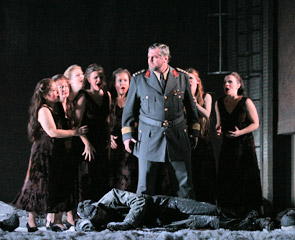
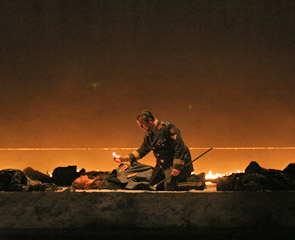
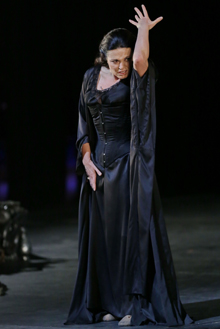
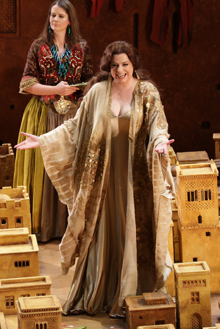
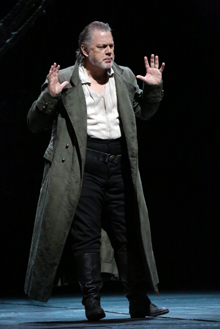
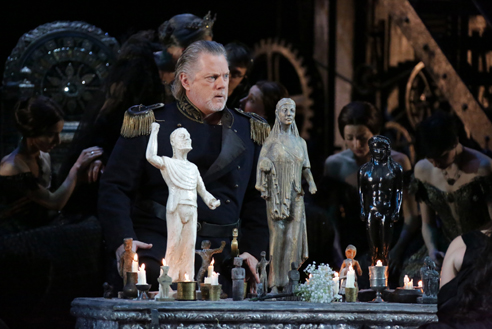
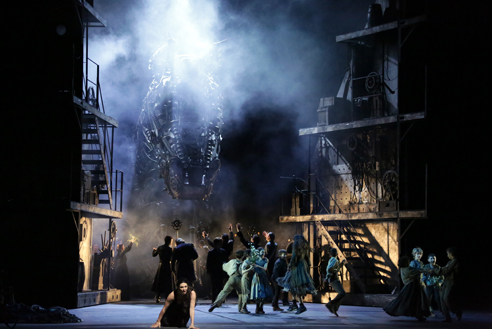
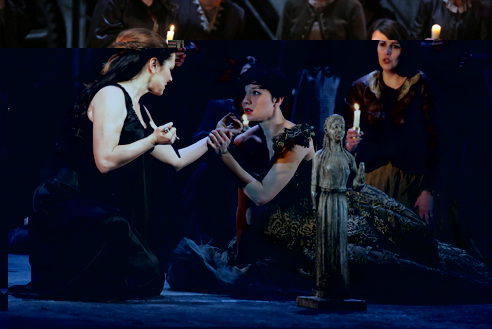
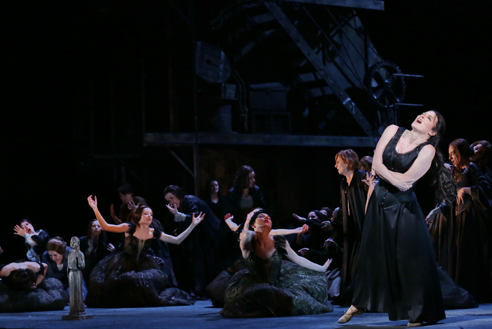
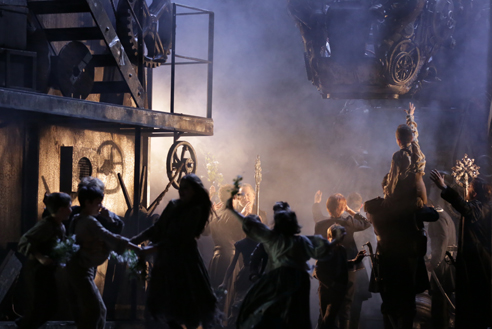
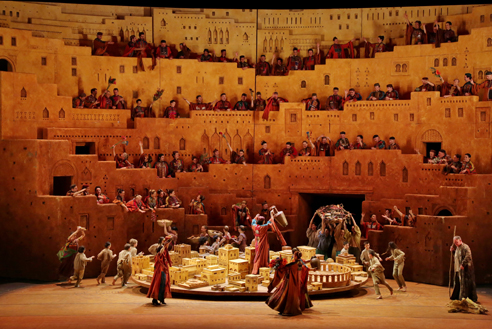
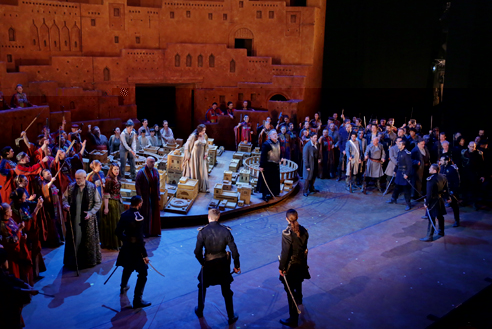
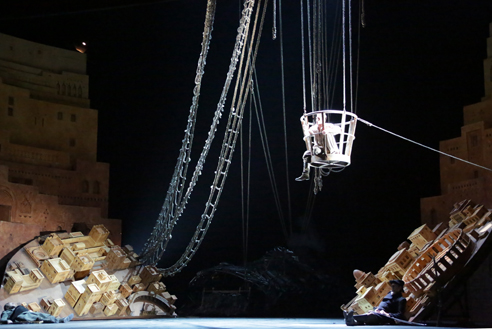
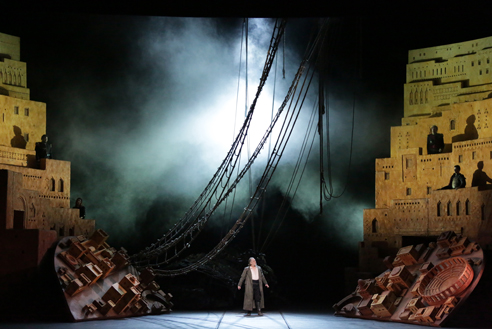
Ancient Peking is the backdrop for the myth of the beautiful, bloodthirsty, Princess Turandot. Resolved to never let any man possess her, she decrees that any suitor must answer three riddles or die. Puccini’s final opera is also his most musically adventurous.

Starring

liseLindstrom200.jpg LISE LINDSTROM, Turandot
Lindstrom is cool and imperious as the callous queen-to-be, but her voice is warm, rich and lustrous (never shrill) with an evenness of tone. Turandot is known as one of the hardest roles in the dramatic soprano repertoire, but Lindstrom never falters, particularly in her all-over-the-scales second-act aria “In Questa Reggia.”-North County Times
othalieGraham200.jpg OTHALIE GRAHAM, Turandot
[As Turandot] timbre and power were thrilling – steely ring from top to bottom – and her path from imperiousness to passion was convincing.-Boston Globe
 donataDAnnunzioLombardi200.jpg DONATA D’ANNUZIO LOMBARDI, Liu
Lombardi’s sweet, expressive, technically flawless control of the material, and her expertly measured mastery of the stage.-l’Opera
liseLindstrom200.jpg
LISE LINDSTROM
Soprano
Role: Turandot
Dates: May 10, 14, 17
othalieGraham200.jpg
OTHALIE GRAHAM
Soprano
Role: Turandot
Dates: May 16, 18
rudyPark200.jpg
RUDY PARK
Tenor
Role: Calaf
Dates: May 10, 14, 17
 eugeneVillanueva200.jpgEUGENE VILLANUEVA
Baritone
Role: Ping
juliusAhn200.jpg 
JULIUS AHN

Baritone
Role: Pang
josephHu200.jpgJOSEPH HU
Tenor
Role: Pong
donataDAnnunzioLombardi200.jpg  DONATA D’ANNUNZIO LOMBARDI
Soprano
Role: Liu
valerioGalli200b.jpg  VALERIO GALLI
Conductor
garnettBruce200.jpg GARNETT BRUCE
Director

SYNOPSIS

Act I

Outside the Imperial Palace in Peking, a mandarin reads an edict to the crowd: any prince seeking to marry the princess Turandot must answer three riddles. If he fails, he will die. The most recent suitor, the Prince of Persia, is to be executed at the moon’s rising. Among the onlookers are the slave girl Liù, her aged master, and the young Calàf, who recognizes the old man as his long lost father, Timur, vanquished King of Tartary. When Timur reveals that only Liù has remained faithful to him, Calàf asks why. She replies that once, long ago, Calàf smiled at her. The mob cries for blood but greets the rising moon with a sudden fearful silence. When the Prince of Persia is led to his execution, the crowd calls upon the princess to spare him. Turandot appears, and with a contemptuous gesture orders that the execution proceed. As the victim’s death cry is heard from the distance, Calàf, transfixed by the beauty of the unattainable princess, strides to the gong that announces a new suitor. Suddenly Turandot’s three ministers, Ping, Pang, and Pong, appear to discourage him. Timur and the tearful Liù also beg him not to risk his life (“Signore, ascolta!”). Calàf tries to comfort her (“Non piangere, Liù”) but then strikes the gong and calls Turandot’s name.

Act II

Inside the palace, Ping, Pang, and Pong lament Turandot’s bloody reign, praying that love will conquer her heart and restore peace. The three let their thoughts wander to their peaceful country homes (Trio: “Ho una casa nell’Honan”), but the noise of the people gathering to hear Turandot question the new challenger calls them back to reality.

The old emperor asks Calàf to reconsider, but he will not be dissuaded. Turandot enters and describes how her beautiful ancestor, Princess Lou-Ling, was abducted and killed by a conquering prince. In revenge, she has turned against men and determined that none shall ever possess her (“In questa reggia”). Facing Calàf, she poses her first question: What is born each night and dies each dawn? “Hope,” Calàf answers, correctly. Turandot continues: What flickers red and warm like a flame, yet is not a flame? “Blood,” Calàf replies after a moment’s thought. Shaken, Turandot delivers the third riddle: What is like ice but burns? Tense silence prevails until Calàf triumphantly cries, “Turandot!” The crowd erupts in joy, and the princess vainly begs her father not to give her to the stranger. Hoping to win her love, Calàf offers Turandot a challenge of his own: if she can learn his name by dawn, he will forfeit his life.

Act III

In the Imperial Gardens, Calàf hears a proclamation: on pain of death no one in Peking shall sleep until Turandot learns the stranger’s name. Calàf is certain of his victory (“Nessun dorma!”), but Ping, Pang, and Pong try to bribe him to leave the city. As the fearful mob threatens him to learn his name, soldiers drag in Liù and Timur. Calàf tries to convince the crowd that neither of them knows his secret. When Turandot appears, commanding Timur to speak, Liù replies that she alone knows the stranger’s identity and will never reveal it. She is tortured but remains silent. Impressed by such fortitude, Turandot asks Liù’s secret. It is love, she replies. When the soldiers intensify the torture, Liù tells Turandot that she, too, will know the joys of love (“Tu, che di gel sei cinta”). Then she snatches a dagger and kills herself. The crowd forms a funeral procession and the body is taken away. Turandot remains alone to confront Calàf, who impetuously kisses her (Duet: “Principessa di morte!”). Knowing emotion for the first time, Turandot weeps (“Del primo pianto”). Calàf, now sure of winning her, reveals his identity.

Once again before the emperor’s throne, Turandot declares she knows the stranger’s name: it is “Love.”

Posted in Music, OPera | Tagged , , , , , , , , | Leave a comment

Die Walküre in Barcelona

logoliceu

Presents:

 Walkure17_02Die Walküre

Richard Wagner

19, 22, 23, 25, 27, 28, 30 and 31 May and 3 June 2014

Chronicles of a great war

The first part of Wagner’s great mythological system is the building of Walhalla, the mansion of the gods. The second part – recounted in Die Walküre – is the evolution of human society, with its laws and taboos. The prologue to The Valkyrie shows the terrible consequences that inevitably arise in a place isolated from the world and set aside for the gods. Theft, murder and the devastation of land and culture are rampant. This opera, dominated by the horrors of war and tribal conflict and revenge, is a gloomy poem about apocalyptic prophecies and the betrayal of debased humanity, about the spread of moral corruption to an environment contaminated by the action of Man. Robert Carsen’s production is the follow-up to the first ‘day’ of his Ring Cycle. In it he presents an environmentally pessimistic vision with close affinities to Schopenhauer’s philosophy, itself the key to the evolution of Richard Wagner’s Weltanschauung.


Music drama in three acts. The first ‘day’ of the tetralogy Der Ring des Nibelungen (The Ring of the Nibelung). Libretto and music by Richard Wagner. Premiered on 26 June 1870 at the Royal Theatre in Munich. First performed at the Gran Teatre del Liceu on 25 January 1899. Most recent performance at the Gran Teatre del Liceu: 7 July 2003.


The Ring of the Nibelung cycle at the Liceu.

The Ring of the Nibelung is a cycle of four musical dramas with text and music by Richard Wagner, which has its central theme the possession of a magic ring, forged by the Nibelung Alberich, which grants anyone possessing it the power to rule the world. All of its inhabitants ─ gods, men and Nibelung ─ are overcome by the desire to possess the ring, except for the protagonist: Siegfried, a hero who is free from the gregarious servitude of power and gold. “The Ring of the Nibelung” – preceded by the prelude (Das Rheingold) – is the story of the origin (Die Walküre), the glory (Siegfried) and the defeat (Götterdämmerung) of this hero. This way, Wagner wanted to create a myth ─ like the great myths of Greek civilisation ─ that was not a mere anecdote but a fable on human nature with a universal and timeless value, and he based it on mediaeval epic texts (twelfth-thirteenth centuries) such as the “Song of the Nibelung” in order to create a genuinely German mythology.

Robert Carsen, stage director of the cycle, has designed a drama far removed from grandiloquence that invites the spectator to focus on the essence of the work.

Conductor
Josep Pons

Stage direction
Robert Carsen

Scenography and Costumes
Patrick Kinmonth

Lighting
Manfred Voss

Production
Buhnen der Stadt Koln (Colonia)

Symphony Orchestra of the Gran Teatre del Liceu

CAST

<:section>

 
Sieglinde Anja Kampe 19, 22, 25, 28 and 31 May, 3 Jun
Eva Maria Westbroek 23, 27 and 30 May
Siegmund Klaus Florian Vogt 19, 22, 25, 28 and 31 May, 3 Jun
Frank Van Aken 23, 27 and 30 May
Brünnhilde Irene Theorin 19, 22, 25, 28 and 31 May, 3 Jun
Catherine Foster 23, 27 and 30 May
Wotan Albert Dohmen 19, 22, 25, 28 and 31 May, 3 Jun
Greer Grimsley 23, 27 and 30 May
Hunding Eric Halfvarson 19, 22, 25, 28 and 31 May, 3 Jun
Ante Jerkunica 23, 27 and 30 May
Fricka Mihoko Fujimura 19, 22, 25, 28 and 31 May, 3 Jun
Katarina Karnéus 23, 27 and 30 May
Helmwige Daniela Köhler  
Orlinde Maribel Ortega  
Gerhilde Susana Cordón  
Siegrune Kai Rüütel  
Waltraute Pilar Vázquez  
Rossweisse Ana Häsler  
Grimgerde Anna Tobella  
Schwertleite Kismara Pessatti


Walkure24_02 Walkure1_02 Walkure4_02 Walkure5_02 Walkure9_02 Walkure10_02 Walkure11_02 Walkure13_02 Walkure18_02 Walkure20_02 Walkure22_02 Walkure23_02

Posted in Music, OPera | Tagged , , , , , | Leave a comment

NCPA´s Production of Verdi´s La Traviata with Andrea Battistoni

The National Centre for the Performing Arts of Beijing Presents:
traviataChina

NCPA´s Production of Verdi´s La Traviata

NCPA Opera Festival 2014

Venue:Beijing Opera House
Dates:Apr. 10, 2014-Apr. 12, 2014

Duration:approximate 180 mins
intermission included

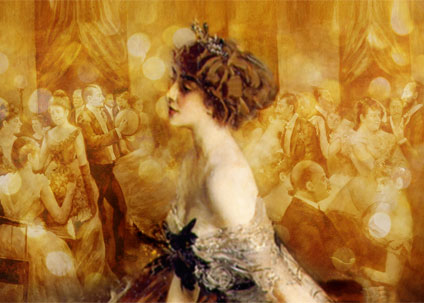
La Traviata is the last part of ‘Popular Trilogy’ by Verdi, the Italian romanticist composing master. It’s also one of the best-selling classical works in the world opera history. The original version of the story is from Dumas Fils’ famous novel Lady of the Camellias. The whole opera consists of three acts. It was initially performed in Teatro La Fenice on Mar. 6, 1853. After further adaptation, it became one of the most popular works in different opera houses universally and was performed again and again. Many arias with elegant melody enjoy great popularity and are engraved on the mind of the audience. Among Verdi’s pieces, it has the greatest number of famous selections, which can be compete with Bizet’s Carmen. Dumas Fils once hailed: ’50 years later, people may not remember my novel, but Verdi makes it immortal.’

In 2010, National Centre for the Performing Arts (NCPA) has organized an international crew. The world top conducting maestro, Lorin Maazel, is invited to be its conductor and Artistic Director. The renowned Italian stage designer, Benito Leonori, will create a magic stage set in NCPA with flowing light and shadow as well as presenting a classical and fantastic banquet for vision and hearing.

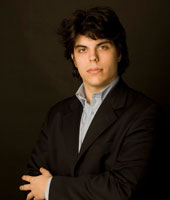
CONDUCTOR: Andrea Battistoni
battistoni

Born in Verona in 1987, Andrea Battistoni is one of the rising young talents at the international level.

In January 2011 he was appointed First Guest Conductor at the Teatro Regio in Parma, with a three-year engagement for two operas and two symphonic productions a year.

He started his career at a very young age performing in many notable theatres such as Theater Basel, Verdi/Trieste, San Carlo/Naples, Filarmonico/Verona, La Fenice/Venice, Lirico/Cagliari, Massimo/Palermo, and Regio/Parma. He also led some prestigious orchestras: St. Petersburg State Symphony Orchestra, Orchestra di Padova e del Veneto, Orchestra Filarmonica Marchigiana, Orchestra da Camera di Mantova, Orchestra dei Pomeriggi Musicali di Milano, Royal College of Music Orchestra Manchester, Orchestra dell’Arena di Verona, Orchestra Giovanile Italiana, and Orchestra Haydn di Bolzano e Trento.

He took part in several festivals such as “Michelangeli” of Brescia and Bergamo, Verona Contemporanea, Festival Giovane at Rossini Opera Festival, Valle d’Itria of Martina Franca, Settimane Musicali di Stresa e del Lago Maggiore, Festival Verdi in Parma where he met distinguished soloists like Ivo Pogorelich, Enrico Dindo, Sergej Krylov, Thomas Demenga, and Mario Brunello.

Andrea Battistoni has already conducted operas including La Bohème, Il Viaggio a Reims, Il Matrimonio Segreto, Attila and La Traviata. Other engagements included the 2011 season opening concert at Teatro Regio in Parma and the return to I Pomeriggi Musicali and Orchestra Filarmonica Marchigiana.

Among his recent successes: a symphonic concert at the Teatro Lirico in Cagliari, Il Barbiere di Siviglia in Parma, Arena di Verona and Venice, the symphonic debut with the Maggio Musicale Orchestra of Florence, Rigoletto in Macerata. Rigoletto and symphonic concerts at the Filarmonico in Verona, Falstaff at the Festival Verdi in Parma and Nabucco in Tokyo with the Tokyo Philharmonic.

Noteworthy his debut at the Teatro alla Scala in Milano and the historical production of Le Nozze di Figaro and at the Teatro Regio in Parma with Stiffelio, Il Trovatore in concert form at the Deutsche Oper Berlin, La Bohème in Naples and La Traviata at the Maggio Musicale Fiorentino.

His upcoming engagements include: debut with the Accademia di Santa Cecilia in Rome, MITO Festival leading the Orchestra Filarmonica della Scala, La Bohème at the Dresden Semperoper and at the Valencia Palau de Les Arts, Attila at the Teatro Filarmonico in Verona, Macbeth at the Teatro Carlo Felice in Genova, several concerts in the main American Universities in New York, Boston, Chicago and Miami, La Traviata at the Arena di Verona and a new production of Nabucco at the Deutsche Oper Berlin.

CAST

Apr. 10 Apr. 11 Apr. 12
Violetta Zhang Liping Zhou Xiaolin Zhang Liping
Alfredo Wang Chuanyue Warren Mok Wang Chuanyue
Germont Liao Changyong Zhang Feng Liao Changyong
Flora Yang Yanting Chen Yajie Yang Yanting

Zhang Liping as Violetta
Zhang Liping currently is Chair and Professor of the Vocal Music and Opera Department of China Central Conservatory of Music. In March 2004, she became the first Chinese in history to perform as the diva in the opera Madama Butterfly at the Metropolitan Opera in New York. Meanwhile, she is also the first Chinese opera singer to perform the leading cast in the Royal Opera House, Convent Garden, where she has starred in a number of opera works, including the extremely difficult Lucia di Lammermo, which is regarded by the House as a box office draw.


Zhang Liping has also cast leading roles on the stages of Teatro Regio di Parma, Munich State Opera, Deutsche Oper Berlin, Barcelona Opera House, Teatro La Fenice, in almost 20 operas including Rigoletto, Madama Butterfly, La Boheme, Lucia di Lammermo, Turandot, La Traviata, Carmen, Faust, The Marriage of Figaro and The Magic Flute. At the invitation of Mr. Webber, Father of music opera, Zhang appeared in the premiere of his new play True Love Never Dies in London, and recorded the theme song in Chinese.

EMI Classics released Zhang Liping’s debut disc Arias in 2008, which has won worldwide acclaims. In 2009, Zhang saw some of her works collected into EMI’s best annual opera selections CD, along with those of such giant singers as Callas, Domingo and Carreras. She performed Violetta in NCPA’s production of La Traviata under the baton of Maestro Lorin Maazel. She played Xi Shi in the first NCPA-commission Opera Xi Shi, and Desdemona in NCPA’s production of Otello.


Zhou Xiaolin as Violetta
Zhou graduated from Central Conservatory of Music where she has studied with Yang Xiaoping and serves as soloist of PLA’s General Political Department Opera Troupe, gaining in popularity in recent years. In 2007, she won recognition in the training program run by the Central City Opera House, Colorado, U.S. in the summer of 2007, receiving full scholarship and was invited to participate in the world premiere of Poet Li Bai composed by Chinese composer Guo Wenjing. It is worth mentioning that she succeeded in holding recitals in Tokyo and Osaka, Japan and won an award in Neue Stimmen International Singing Competition, came in first and won Anna and John J Sie award in Carlo Bergorzi Maestro Class, the golden prize in China Gold Bell Award Bel Canto Group and the second prize in Wenhua Vocal Competition awarded by Ministry of Culture.

Zhou performed as the soprano soloist in Mahler’s Symphony No. 2 with German Philharmonic Orchestra during its China tour, in Beethoven Symphony No.9 conducted by Lorin Maazel as a soprano cantor and in Mahler’s Symphony No. 2 conducted by Vladimir Ashkenazy as the soprano cantor. Additionally, she sang the role of Mimi in La Bohème by Puccini, starred Yang Caihong in A Village Teacher, the NCPA’s first realistic opera, and appeared as Micaela in Carmen by Georges Bizet, Princess in NCPA’s Chinese Orphan, and Antonia/Stella in NCPA’s Les Contes d’Hoffmann.


Wang Chuanyue as Alfredo
Wang Chuanyue is a young tenor from Opera Troupe of the General Political Department. He graduated from Vocal Department of China Central Conservatory of Music where he scored the highest in five consecutive years.

He has been the lead role in Donizetti’s Don Pasquale and Verdi’s La Traviata. In 2005 he was auditioned to be a student of Bergonzi’s International Master Class. In 2008 he enrolled in the Opera Centre of Juilliard School studying after professor Edith Bers, Dean of Vocal Department.

Wang had wonderful performances in both the 11th and the 13th China CCTV Young Singers Competition, and he is also a winner of many national and international competitions, such as Excellent Awards among Chinese competitors in the 12th Neue Stimmen International Singing Competition(2005), the second prize in the audition of Chinese competitors in the 3rdInternational Vocal Competition(2007) hosted by Chinese Musicians Association, Excellent Awards in the 26th International Hans Gabor Belvedere Singing Competition(2007), the fourth prize in the 4th China International Vocal Competition(2008) hosted by China’s Ministry of Culture, the first prize in the International Artists’ Vocal Competition(2009), and the first prize in the 5th China International Vocal Competition(2011).


Warren Mok as Alfredo
Warren Mok once performed in NCPA’s productions of Carmen, Die Fledermaus, La Boheme, The Chinese Orphan,Turandot, Der Fliegende Hollander and Lohengrin.

In 2008, Mok was awardedCavaliere dell’ Ordine della Stella della Solitarita’ Italiana from the Government of Italy, Chevalier dans l’Ordre des Arts et des Lettres from the French Government, in 2011 he just received the Medal of Honor from the Hong Kong Government. All awards honor his contribution to bring the cultural exchanges between Hong Kong, Italy & France, mainland China.

since his European début in 1987 at the Deutsche Opera Berlin Mok has been making frequent guest appearances throughout the world, including Deutsche Opera Berlin, Paris Opera, Teatro dell’Opera di Roma, Opera Australia in Sydney Opera House, Teatro di Bologna Comunale, Teatro Carlo Felice Genova, Teatro Maggio Musicale Fiorentino, Opera de Nice, Opera de Lyon, Teatro Colon in Buenos Aires, The Netherlands Opera, Leipzig Opera, Royal Danish Opera, Teatro di San Carlos Lisbon, Seattle Opera, Bolshoi Theatre, Warsaw Opera, Teatro Lirico di Cagliari in Italy, ABAO Bilbao, Opera Ireland, Teatro di Palma di Mallorca, Nancy Opera France, Bergen Opera Norway, Latvian National Opera, Lithuanian National Opera, Orlando Opera Florida, Hawaii Opera Theater, concert halls in New York’s Carnegie Hall, London’s Royal Albert Hall, Berlin Philharmonie, Vienna Musik Verein, Tokyo Suntori Hall, Seoul, Prague and Zurich.

His operatic repertoire exceeds 60 roles including Calaf (Turandot), Cavaradossi (Tosca), Rodolfo (La Bohème), Don Jose (Carmen), Riccardo (Masked Ball), Radames (Aida), Duke (Rigoletto), Alfredo (La Traviata), Don Carlos, Romeo , Faust, Werther, and many others.

In 2009, he sang Ariadne auf Naxos at Teatro Carlo Felice, Manon Lescaut at Opera de Nice, Turandot at Savonlinna Festival. Opera, La Boheme at National Centre for Performing Arts in Beijing. In Summer, he performed Tosca & Carmen at Caracalla with Teatro Dell’Opera di Roma.He also sang in famous Director Zhang Yi Mo’s Turandot at Olympic Stadium in Beijing.

In 2010, he started the year to perform Adriana Lecouvreur in Teatro del Maggio Musicale Fiorentino, Tosca in Opera di Roma & Teatro Carlo Felice, Carmen in National Centre for Performing Arts in Beijing. He produced Manon & La Boheme with Opera Hong Kong, Il Trovatore in Macau International Music Festival, numerous concerts/TV appearances in China.

In 2011, He sang a world premier opera Sun Yat Sen, Tosca in West Palm Beach Opera, in Guangzhou Opera House, Francesca da Rimini in Teatro Verdi Triete, Die Fledermaus at National Centre for Performing Arts Beijing, Turandot in Seoul Arts Centre.

In 2012, He sang Wagner’s Der Fliegende Hollander and Lohengrin at NCPA, producing Carmen & La Travaita with Opera Hong Kong & Shanghai Opera House. He is the current Artistic Director of Opera Hong Kong & Macau International Music Festival.


Liao Changyong as Germont
Liao Changyong has played in NCPA’s La Traviata, Il barbiere di Siviglia and Un Ballo in Maschera.

Liao Changyong is an outstanding Asian vocalist taking an active part in the global stage. He ever studied with the famous vocal music educator Zhou Xiaoyan and tenor Luo Wei. In 1995, Liao Changyong obtained his master’s degree at Shanghai Conservatory of Music. Over the years, Liao has won many international vocal music awards. From 1996-1997, he was respectively the highest-class winner of the 41st Toulouse International Voice Competition (France), Placido Domingo World Opera Competition and Norwegian Queen Sonja’s International Vocal Music Competition within one year, thereby shocking the world music circles.

Liao Changyong’s footprints spread all over the world. He has cooperated with more than a dozen of world-renowned orchestras and opera masters such as Placido Domingo, Jose Carreras and Ruth Ann Swansm to perform successful operas and dozens of concerts. In 2002, New York Opera House Symphony Orchestra and Carnegie Hall awarded Liao Changyong with ‘Distinguished Artist Award’, and specifically held his solo concert in Carnegie Hall. Afterwards, he cooperated with New York Opera House Symphony Orchestra, Michigan Opera, Washington National Opera, Royal Opera House (the Netherlands) and other organs to stage such operas as Attila, Il Pirata, Trovatore, Un Ballo In Maschera, La Traviata, Il barbiere di Siviglia, Don Carlo and Carmen. Liao Changyong is praised by local media as ‘the most outstanding artist’. The New York Times and Opera Magazine speak highly of Liao Changyong’s performance and singing.

Liao Changyong is Vice President of Chinese Musicians Association, Vice President of Shanghai Musicians Association and Dean of Vocal Music Department in Shanghai Conservatory of Music.


NCPA Chorus
choruschinaThe NCPA Chorus was established on December 8, 2009, whose members were carefully selected from famous music schools in and out of China. Now the Chorus invites Wu Lingfen as the conductor, with many artists well-known in China and abroad giving instructions. Affiliated to NCPA, the highest palace of performing arts in China, the Chorus adheres to NCPA’s guiding principles of “for the people, for the arts, and for the world”. The Chorus mainly stages operas and concerts, and also takes part in kinds of cultural communication and arts outreach events.

Ever since its establishment, the Chorus has actively performed in more than 20 operas of NCPA production, such as NCPA’s commission operas Xi Shi, The Chinese Orphan, and The Ballad of Canal, as well as other classical operas in and out of China: The White-Haired Girl, The Red Guards on Honghu Lake, Le Nozze di Figaro, Il Barbiere di Siviglia, L’italiana in Algeri, Rigoletto,La Traviata, Otello, Der Fliegende Hollander, Lohengrin, Carmen, Turandot andTosca, etc. Its artistic quality receives rave acclaims from both the critics and the audience.

Besides operas, the Chorus has participated in many grand vocal works and themed concerts, such as Beethoven’s Symphony No. 9, Mahler’s Symphony No.2 and No.8, and the grand music and dance epic Road to Revive, etc. As NCPA’s resident chorus, it has been to Singapore, South Korea, Hong Kong and Japan to participate in performances and arts exchange, both to wide acclaims.

The Chorus has cooperated with many well-known artists ever since its establishment, receiving high praises from them all. Plácido Domingo once said it was his honor to cooperate with these talented young artists; Lorin Maazel ever praised it “a chorus full of passion”, so and so forth. On the stage of NCPA, the Chorus has cooperated with such directors as Francesca Zambello, Giancarlo Del Monaco, Chen Xinyi, Cao Qijing, Liao Xianghong, such conductors as Lorin Maazel, Daniel Oren, Lu Jia, Li Xincao, Zhang Guoyong, such vocalists as Plácido Domingo, Leo Nucci, Inva Mula, Brandon Jovanovich, Dai Yuqiang, Wei Song, Warren Mok, He Hui, Dilbèr, Zhang Liping, to name just a few. With more than a hundred performances each year, the Chorus is surely to play an active role in the further development of NCPA.


NCPA Orchestra
The China NCPA Orchestra is the resident orchestra of the National Centre for the Performing Arts of China (NCPA), balancing a busy and distinguished performance schedule with a reputation as one of China’s most adventurous and dynamic orchestras. Established in March 2010, the orchestra is composed of distinguished musicians from around the world, performing more than a dozen operas, ballets and regular symphonic seasons every year. Maestro Lu Jia took up the post of Principal Conductor in February 2011, succeeding Chen Zuohuang, the current Laureate Conductor, NCPA’s Music Artistic Director and also one of the founders of the orchestra.

The NCPA Orchestra demonstrates an abiding commitment to high levels of artistic excellence and prides itself on its long-term collaborations with the finest musicians of our day. Artists associated with the orchestra in the past two years include Lorin Maazel, Christoph Eschenbach, Vladimir Ashkenazy, Yan Pascal Tortelier, Gunter Herbig, Gilbert Varga, Lang Lang, Stephen Kovacevich, Leo Nucci, Wang Yuja and Han-Na Chang. Maestro Lorin Maazel praised the orchestra as “a hard-working excellence with great passion” after a series of concerts and the NCPA’s new La Traviata in June 2010.

In its first season of 2011, China NCPA Orchestra gained critical acclaim for its performances in NCPA’s new productions of Tosca (Directed by Giancarlo Del Monaco), Il Barbiere di Siviglia (co-produced with Castleton Festival), Die Fledermaus, and a new composed opera The Chinese Orphan. Apart from that, the orchestra was also deeply involved in NCPA’s 2011 Gustav Mahler Project. Under the batons of maestros including Christoph Eschenbach, Yoel Levi, Jun Maerkl and Chen Zuohuang, the orchestra completed Mahler’s Symphonies No. 1, 2, 3, 8 and 10.

In the season of 2012, China NCPA Orchestra won a highly successful acclaim for two NCPA’s new productions: Der Fliegende Hollander and Lohengrin, both Wagner’s operas were Chinese premiere. It continually collaborates with prominent musicians around the world for concert programs, including Maestro Vladimir Ashkenazy, Yan Pascal Tortelier and the legendary pianist Rudolf Buchbinder.

In addition to its extensive domestic performances, the NCPA Orchestra also received a widespread international praise in 2012. The orchestra was invited by Kissingen Summer Music Festival and Schleswig-Holstein Musik Festival in July 2012, and kicked off his first German tour in Nürnberg, Hamburg and Berlin under the baton of Christoph Eschenbach and Chen Zuohuang. This was followed by a successful concert at the Sydney Opera House with Maestro Chen Zuohuang in November.

In the season of 2013, the NCPA orchestra presents colorful programs on the commemoration of Wagner, Verdi and Britten, highlighting the Ring without words with 12 principals from Berlin Philharmonic under the baton of Lorin Maazel. NCPA’s new opera productions that the orchestra is involved include Les Contes d’Hoffmann, Otello and Nabucco, which features her second successful collaboration with Placido Domingo.

The NCPA orchestra aims to build up a world-class orchestra with operation and management conforming to global practices while incorporating Chinese characteristics. Devoted to educational and outreach activities, the Orchestra also has presented a series of Weekend Matinee Concerts since its establishment. With specially selected repertoire, performances of high quality and extremely low ticket prices, these concerts have won great acclaim from both audience and critics. The orchestra is now embarking on a similar path with the complete Beethoven symphonies with Maestro Lu Jia.

Posted in OPera | Tagged , , , , , , , | Leave a comment

Les Troyens at Teatro Alla Scala

logoTAS

PRESENTS

troyens-5-1400x574Les Troyens

Hector Berlioz

Grand-Opéra in five acts
Libretto by Hector Berlioz

New Production
In coproduction with Royal Opera House, London;
San Francisco Opera and Wiener Staatsoper

From 8 to 30 April 2014

Running Time: 5 hours 20 minutes intermissions included

Sung in French with electronic libretto in Italian, English, French

Notes on the performances
The grandiose idea of giving a musical form to the Aeneid led to Berlioz creating a powerful tragedy, which is unique in recreating with classical precision the shadows of the past as imagined by Virgil’s poem. It is the finest posthumous masterpiece in the history of opera: the French musician died without ever seeing it on stage. He had conceived, at the same time as Wagner conceived his “tetralogy”, a grand-opéra with a cast of twenty formed by two operas: a “dilogy” set in two different locations – La prise de Troie and Les Troyens à Cartage – in each of which we witness the destiny of two women who are defeated by their fate, the unheeded prophetess Cassandre and the abandoned queen Didon. For these two archetypal heroines it would have been impossible to find finer performers than Anna Caterina Antonacci and Daniela Barcellona. Alongside them will be young talent like Paolo Fanale, Maria Radner, Alexandre Duhamel, Fabio Capitanucci. The role of Aenea is played by virtuoso Gregory Kunde. The monumental drama will feature the opera debut on the La Scala podium of Antonio Pappano, who is seen as one of the finest contemporary performers. This foreboding and bellicose work of classical antiquity is brought to life and given a form – from the wooden horse, to royal hunts– by specialist Scottish director David McVicar, whose career spans more than thirty operas. The grandiose idea of giving a musical form to the Aeneid led to Berlioz creating a powerful tragedy, which is unique in recreating with classical precision the shadows of the past as imagined by Virgil’s poem. It is the finest posthumous masterpiece in the history of opera: the French musician died without ever seeing it on stage. He had conceived, at the same time as Wagner conceived his “tetralogy”, a grand-opéra with a cast of twenty formed by two operas: a “dilogy” set in two different locations – La prise de Troie and Les Troyens à Cartage – in each of which we witness the destiny of two women who are defeated by their fate, the unheeded prophetess Cassandre and the abandoned queen Didon. For these two archetypal heroines it would have been impossible to find finer performers than Anna Caterina Antonacci and Daniela Barcellona. Alongside them will be young talent like Paolo Fanale, Maria Radner, Alexandre Duhamel, Fabio Capitanucci. The role of Aenea is played by virtuoso Gregory Kunde. The monumental drama will feature the opera debut on the La Scala podium of Antonio Pappano, who is seen as one of the finest contemporary performers. This foreboding and bellicose work of classical antiquity is brought to life and given a form – from the wooden horse, to royal hunts– by specialist Scottish director David McVicar, whose career spans more than thirty operas. The grandiose idea of giving a musical form to the Aeneid led to Berlioz creating a powerful tragedy, which is unique in recreating with classical precision the shadows of the past as imagined by Virgil’s poem. It is the finest posthumous masterpiece in the history of opera: the French musician died without ever seeing it on stage. He had conceived, at the same time as Wagner conceived his “tetralogy”, a grand-opéra with a cast of twenty formed by two operas: a “dilogy” set in two different locations – La prise de Troie and Les Troyens à Cartage – in each of which we witness the destiny of two women who are defeated by their fate, the unheeded prophetess Cassandre and the abandoned queen Didon. For these two archetypal heroines it would have been impossible to find finer performers than Anna Caterina Antonacci and Daniela Barcellona. Alongside them will be young talent like Paolo Fanale, Maria Radner, Alexandre Duhamel, Fabio Capitanucci. The role of Aenea is played by virtuoso Gregory Kunde. The monumental drama will feature the opera debut on the La Scala podium of Antonio Pappano, who is seen as one of the finest contemporary performers. This foreboding and bellicose work of classical antiquity is brought to life and given a form – from the wooden horse, to royal hunts– by specialist Scottish director David McVicar, whose career spans more than thirty operas.

troyen1 troyen9 troyen12

Direction

Conductor
Antonio Pappano
Staging
David McVicar
Sets
Es Devlin
Costumes
Moritz Junge
Lights
Wolfgang Göbbel
Choreography
Lynne Page

CAST

Enée
Gregory Kunde
Chorèbe
Fabio Capitanucci
Panthée
Alexandre Duhamel
Narbal
Giacomo Prestia
Iopas
Shalva Mukeria
Ascagne
Paola Gardina
Cassandre
Anna Caterina Antonacci
Didon
Daniela Barcellona
Anna
Maria Radner
Hylas
Paolo Fanale
Priam
Mario Luperi
Un chef Grec
Ernesto Panariello
L’ombre d’Hector
Deyan Vatchkov
Hèlénus
Oreste Cosimo
1er soldat Troyen
Guillermo Esteban Bussolini
2eme soldat Troyen
Alberto Rota
Un soldat
Luciano Andreoli
Le Dieu Mercure
Emidio Guidotti
Hécuba
Elena Zilio

troyen2troyen3  troyen4 troyen5 troyen6 troyen7 troyen8 troyen10 troyen11

Synopsis

The Sack of Troy
Act I
The Greeks have raised their siege of Troy,

and the Trojans, after so many years of war,
at last come out of their walls in exultance.
Believing it to be an offering to Pallas, they
decide to bring into the city the great wooden
horse which the Greeks have abandoned.
All the people think they are safe, and pay no
heed to the prophecies of Cassandra, who instead
sees the departure of the Greeks only
as a trick which will bring about the ruin and

death of all the Trojans.

Fate will have it that Troy shall perish.While
the population celebrates their regained freedom
with games in honour of the gods,
strange events occur. Aeneas reports that
Laocoön struck the wooden horse with a
spear and was immediately devoured by two
hideous snakes. Fearing sacrilege, Priam orders
that the horse be drawn at once into the
city. In vain Cassandra insists on her prophecies
and tries to convince the blinded crowd
of the ruin that awaits them.
Act II
Shortly afterwards, during the night, the

ghost of Hector appears before Aeneas and
announces that Troy is about to be taken by
the Greeks. His destiny is to go to Italy to
found a new city and to die there in glory.As
the Greeks take possession of the city’s walls
and palaces, spreading fire and death,Aeneas
fights the last battle and opens a breach for
himself with his trusty companions, taking
with him Priam’s treasure. Cassandra and the
Trojan women kill themselves rather than fall
into the hands of the conquerors.
The Trojans at Carthage
Act III
The scene is in Carthage, the new city ruled

by Dido. The people are celebrating their
newfound prosperity and wealth. The queen,
during a ceremony, receives the homage of
her hardworking people. The arrival of
foreigners from the sea is announced and Dido
welcomes them cordially. They are the
Trojans, led by Aeneas, whose presence upsets
the queen. At that very moment news
comes that Iarbas, king of the Numidians, is
making ready to conquer Carthage by force.
Aeneas offers to fight beside the Carthaginians
against the barbarian king.
Act IV
Aeneas has won the war against the Numidians

and he and his men have lingered in the
pleasant land of Carthage. In a forest close to
the cit y walls, the royal couple have gone
hunting. The spirits and creatures of the forest
are disturbed by the intrusion of the hunting
party as they ride through the trees. A
storm gathers and violently breaks. Dido and
Aeneas are separated from the others and
take shelter from the storm. Finally, they acknowledge
their love and their union is consummated.
The passion of the lovers is reflected
in the wildness of the storm. The spirits
dance in ecstasy, but the cries that resound
through the forest are of Aeneas’ inevitable
destiny: ‘Italy!’.
The hero and the queen have fallen in love
and their love is looked upon kindly by Dido’s
sister, Anna, but worries the faithful
Narbal. Great festivities. Hunting and dancing
are organized. Aeneas, forgetting the orders
of the gods who wish his destiny to be
fulfilled in Italy, abandons himself to passion.
Dido forgets her faithfulness to her dead husband.
But Mercury intervenes with a warning
cry: Italy!
Act V
Aeneas cannot escape his fate. He is persecuted

by apparitions of the dead and must
make up his mind to depart. Despite his love
for Dido, he must give orders for the fleet to
sail. The separation between the two lovers is
at once dramatic and tender. Dido returns in
despair to her chambers, torn between hate
and love. She asks her sister to implore
Aeneas to stay, but is informed that the Trojan
fleet has already set sail. The queen has a
sacrifice prepared for the gods of Hades, and
on the pyre she kills herself with a sword. She
has a vision of future revenge on Rome by
the hand of Hannibal, but then the prophecy
turns into the total triumph of Rome. The
Carthaginians curse the Romans’ future,
while the complete triumph of the Roman
Empire is announced. The will of the gods is
carried out and Dido’s sacrifice remains fruitless.
Posted in OPera | Tagged , , , , , , , , , , , , | Leave a comment

“La Bohème” in Milwaukee

THE FLORENTINE OPERA COMPANY (Milwaukee) PRESENTS:

bohemeflorentine

Puccini’s ‘Tragic Romance’ Markes the Finale of the 80th Season

Opera’s most touching tale of tragic romance will transport you to 19th century Paris with La Bohème. The Florentine brings the 2013-2014 season to a grand finale with the soaring score of Giacomo Puccini, featuring soprano Alyson Cambridge in her Florentine Opera debut as Mimi alongside rising star and recording artist, tenor Noah Stewart (Don José in Carmen 2012) as Rodolfo. Soprano Katrina Thurman (Musetta), baritone Corey McKern (Marcello), bass-baritone Matthew Treviño (Colline) make their Florentine debuts. Maestro Joseph Rescigno conducts the Milwaukee Symphony Orchestra and the Florentine Opera Chorus in this production directed by General Director William Florescu.

Opera’s most beloved work brings the Florentine’s monumental 2013-2014 Season to a close in grand opera style.

Sung in Italian with English supertitles projected above the stage

Featured artists include:

Alyson Cambridge . . . . . . . . . . . . . . . . . . .Mimi*

Noah Stewart . . . . . . . . . . . . . . . . . . . . . .Rodolfo

Katrina Thurman . . . . . . . . . . . . . . . . . . . .Musetta*

Corey McKern . . . . . . . . . . . . . . . . . . . . . .Marcello*

Matthew Treviño . . . . . . . . . . . . . . . . . . . .Colline*

Scott Johnson . . . . . . . . . . . . . . . . . . . . . Schaunard (past FO Studio Artist)

William Florescu. . . .. . . . . . . . . . . . . . . . .Stage Director

Joseph Rescigno . . . . . . . . . . . . . .Conductor

Giacomo Puccini

(December 22, 1858 – November 29, 1924)

Puccini was born in Lucca, Italy, a member of a large family with a five-generation lineage of musicians going back to the early 18th century. His first job, at age 14, was as an organist to the two churches of Lucca, but he quickly became more interested in opera than church music. A performance of Verdi’s Aida at Pisa in 1876 made such an impact on him that he decided to follow his heart and began to pursue operatic composition. With a scholarship and financial support from a wealthy uncle, he was able to enter the Milan Conservatory in 1880. While in Milan, he came into contact with a group of Milanese artists, called the Scapigliati, who lived the Bohemian lifestyle.

Puccini wrote his first opera, Le villi, a “dramatic legend” about mythical, vampire-like creatures found in Italian mythology, in 1884. It was successful, and opened at the La Scala in Milan the next year. His second opera, Edgar, was a less well-received, but his third, Manon Lescaut, was celebrated, and established him on the international operatic scene. Around this time, the composer met Elvira Gemignani, wife of a merchant in Lucca. They carried on an illicit affair, and she gave birth to his son in 1886. Eventually, the two married following the death of her first husband. She is said to have been an unfit partner for Puccini, limiting his intellectual pursuits, controlling him emotionally, and ferociously cutting him off from most personal relationships with friends and other artists.

His next opera, La Bohème was at first less successful than Manon Lescaut, although it later went on to grow in fame. After producing Tosca and Madama Butterfly, Puccini was embroiled in a domestic scandel in 1909 that resulted in a court case and large amounts of negative publicity. Puccini’s jealous wife accused him of having had an intimate affair with his servant girl, Doria. Eventually the girl herself committed suicide in 1909 as a result. Today, scholars are still intrigued by the affair and work to prove or disprove Puccini’s innocence. Consensus indicates that it was most likely a fabrication of his wife. The experience took its toll on the very sensitive composer, and its deep psychological effects were a main factor in the long period before he began work on his next opera.

In the single decade before his death, Puccini completed La Rondine, and the trilogy of Il Tabarro , Suor Angelica and Gianni Schicchi. His final opera, the lavish fairy tale Turandot, was unfinished at his death in 1924, but was completed by his colleague Franco Alfano and premiered in 1926. It remains one of his most admired works. During its composition, he moved to Viareggio and in 1923, he developed cancer of the throat. Although he sought treatment at a Brussels clinic, his heart could not stand the strain and he died on November 29, 1924. All Italy went into mourning and two years later, his remains were interred at his house at Torre del Lago. After his wife’s death in 1930, the house was turned into a museum where fans from around the world could come to celebrate one of opera’s greatest composers.

Posted in Music, OPera | Tagged , , , , , , , | 1 Comment

Édouard Lalo’s “Le Roi d’Ys” in Marseille

from May 10th – 18th, 2014

Le Roi d’Ys

Édouard Lalo

Saturday May 10th, 2014 > 8:00PM
Tuesday May 13th, 2014 > 8:00PM
Thursday May 15th, 2014 > 8:00PM
Sunday May 18th, 2014 > 2:30PM
The tragedy of two sisters in love with the same man, but above all a splendid and essential milestone in French music, soaring to great heights of power and invention. 
 

Le Roi d’Ys

Opera in 3 acts
Libretto by Edouard BLAU.
First performed at Opéra-Comique, Paris, on May 7th, 1888.
Last performed at Marseille Opera, on March 23rd, 1994.

Coproduction Opéra de Saint-Étienne / Opéra Royal de Wallonie

Conductor : Lawrence FOSTER
Director : Jean-Louis PICHON
Assistant Director : Sylvie AUGET
Scenic Designer : Alexandre HEYRAUD
Costume Designer : Frédéric PINEAU
Lighting Designer : Michel THEUIL

CAST

Rozenn : Inva MULA
Margared : Béatrice URIA-MONZON

Mylio : Florian LACONI
Karnak : Philippe ROUILLON
The King : Nicolas COURJAL
Saint Corentin : Patrick DELCOUR
Jahel : Marc SCOFFONI

Marseille Opera Orchestra and Chorus

Posted in Music, OPera | Tagged , , , , | Leave a comment

ORPHÉE in Pittsburgh

Orphee

ORPHÉE

April 26, 29; May 2, 4, 2014
Benedum Center

Music by Philip Glass • Libretto by Philip Glass, based on Cocteau’s Orphée
ORPHÉE is part of Pittsburgh Opera’s 2014 American Opera Series

* The Sunday, May 4 performance of ORPHÉE is at 3:00 PM.

THE LIFE OF AN ARTIST, BETWEEN WORLDS
OF THE LIVING AND THE DEAD

The myth of Orpheus and Eurydice gets a “lyrical, even seductive” (Washington Times) makeover from Philip Glass, via French visionary Jean Cocteau: the poet Orphée becomes involved with a mysterious Princess. Love eventually triumphs…but not without a price.

The Cast

Matthew Worth Caroline Worra Heather Buck Jonathan Boyd
Matthew Worth
Orphée
Caroline Worra **
Eurydice
Heather Buck +
Princess
Jonathan Boyd +
Heurtebise
Resident Artist Daniel Curran Resident Artist Samantha Korbey Adam Fry Resident Artist Alex DeSocio
Daniel Curran *
Cegeste
Samantha Korbey *
Aglaonice
Adam Fry **
Poet
Alex DeSocio *
Police Commissioner
Resident Artist Phillip Gay Christopher Toeller Dimitrie Lazich
Phillip Gay *
Judge
Christopher Toeller
Reporter/Glazier
Dimitrie Lazich
Policeman

Creative Team

Conductor
Antony Walker
Stage Director Sam Helfrich
Set Designer(s) Andrew Lieberman
Costume Designer Kaye Voyce
Lighting Designer Aaron Black
Assistant Conductor Glenn Lewis
Chorus Master Mark Trawka
Associate Coach/Pianist James Lesniak
Hair & Makeup Designer James D. Geier
Assistant Director George Cederquist *

+ Pittsburgh Opera debut
* Pittsburgh Opera Resident Artist
** Pittsburgh Opera Resident Artist alumni

Original production by Glimmerglass Festival.

Photos from the performance

Performance Details & Resources

PERFORMANCE LOCATION • All performances of ORPHÉE will be at the Benedum Center.
PARKING Get real-time parking information at Park PGH. See a map of Cultural District parking facilities here.
RUN TIME • ORPHÉE will last about 2 hours and 10 minutes, including 1 intermission.
OPERA FAQs Get answers to frequently-asked questions like “what’s a good opera for kids? or “what should I wear?”
PRE-OPERA TALKS begin 1 hour before each performance of ORPHÉE.
UNDERSTAND EVERY WORD: English texts are projected above the stage at all Benedum Center and CAPA performances.
AUDIO DESCRIPTION is offered at the Tuesday, April 29 performance of ORPHÉE.
Posted in OPera | Tagged , , , , , , | Leave a comment

Massenet’s DON QUICHOTTE in Toronto

Canadian Opera Company   PRESENTS:

DON QUICHOTTE

Jules Masenet

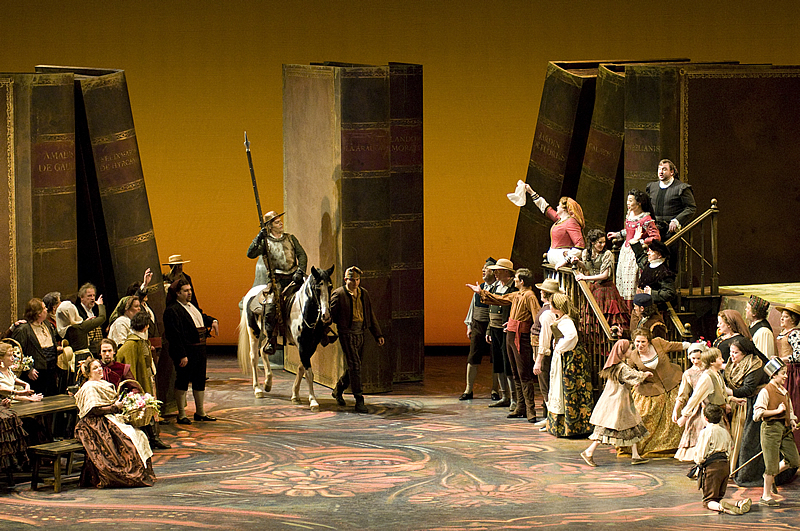
John Relyea (centre, on horse) as Don Quichotte in the Seattle Opera production of Don Quichotte.
 

A romantic French take on Spain’s greatest literary hero, starring the incomparable Ferruccio Furlanetto.

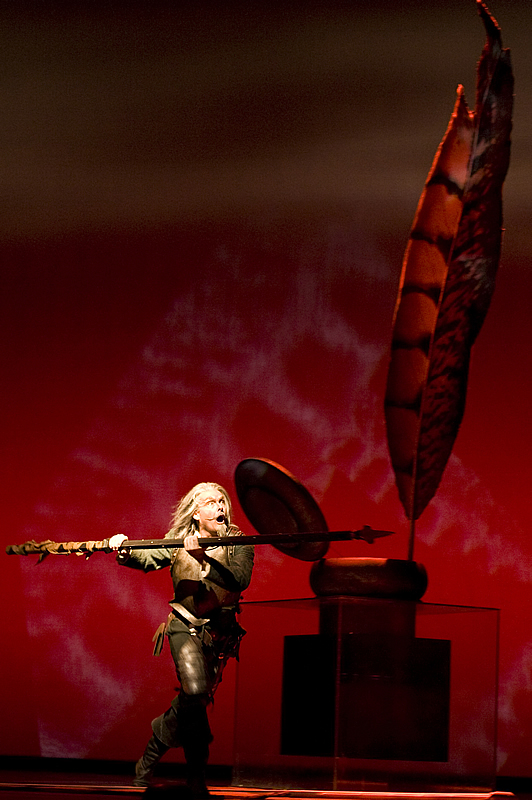
 Based on the same classic novel that inspired the Broadway hit Man of La Mancha, Don Quichotte is Massenet’s affectionate portrayal of literature’s ultimate dreamer, Don Quixote. Ferruccio Furlanetto, opera’s pre-eminent bass, stars in his intensely moving signature role. Lush melodies and Spanish dance rhythms conjure up medieval Spain at the end of the age of chivalry. In this enchanting production, characters spring out of giant leather-bound storybooks as windmills are fashioned from oversized quills.

MAY 9 TO 24, 2014


On stage at the Four Seasons Centre, 145 Queen St. W., Toronto.
Performance time is approximately two hours, 25 minutes including one intermission.
Sung in French with English SURTITLES™.

Cast 

Don Quichotte: Ferruccio Furlanetto

Sancho Panza: Quinn Kelsey

Dulcinée: Ekaterina Gubanova

<!–Pedro:

Garcias:

Juan:

Rodriguez:

–>

Creative Team


Conductor: Johannes Debus

Director: Linda Brovsky

Set Designer: Donald Eastman

Costume Designer: Christina Poddubiuk

Lighting Designer: Connie Yun

Choreographer: Sara de Luis

Chorus Master: Sandra Horst

With the COC Orchestra and Chorus

Performance Dates & Times

  • Fri. May 9, 2014 at 7:30 p.m.
  • Sun. May 11, 2014 at 2 p.m.
  • Wed. May 14, 2014 at 7:30 p.m.
  • Sat. May 17, 2014 at 7:30 p.m.
  • Tues. May 20, 2014 at 7:30 p.m.
  • Thurs. May 22, 2014 at 7:30 p.m.
  • Sat. May 24, 2014 at 4:30 p.m.

SYNOPSIS

Act I

Dulcinée is courted by four suitors during a party in a crowded square. When Don Quichotte and his faithful servant Sancho Panza arrive, Juan mocks his eccentric nature, but another suitor, Rodriguez, defends Quichotte, reminding everyone of the knight’s noble ambitions. As the party breaks up, Don Quichotte serenades Dulcinée, only to be interrupted by Juan who challenges him to a duel. Dulcinée intervenes and sends Juan away, chastising Quichotte for his temper. She tells him how Ténébrun, a bandit, has stolen her necklace, and asks Quichotte to retrieve it for her. Quichotte vows to find and return the necklace.


Act II

On their quest, Don Quichotte and Sancho Panza roam through the countryside. Sancho is resentful of being on this mission solely at Dulcinée’s whim, and launches into a tirade against women. However, Don Quichotte has mistaken some windmills on the horizon for giants, and charges to attack them. Alas, his attack fails as he gets caught on one of the windmill’s blades.


Act III

Quichotte and Sancho are taking a well-deserved rest when the bandits catch up to them. Don Quichotte, however, wins the criminals over by explaining his purpose in life – his quest as a knight errant, to right all wrongs, to love the poor, and even to honour bandits like his present attackers. They are so moved by this explanation that they hand over the necklace.


Act IV

At home, Dulcinée is once again surrounded by suitors, but ignores their compliments. She dreams of a love of another kind. Sancho arrives and announces his master. Dulcinée greets them playfully and is delighted at the return of her necklace. She rewards the Don with a kiss, and he declares his love for her, asking for her hand in marriage. Dulcinée lets him down gently, despite the mockery of the crowd. Sancho lashes out at the others to protect his master.


Act V

Later, Don Quichotte and Sancho are alone and the Don is close to death. He thinks of all the ways he should have rewarded Sancho for his loyal service, and promises him an “island of dreams.” As he dies, he dreams of his Dulcinée.


Quichotte_large05 Quichotte_large02 Quichotte_large03 Quichotte_large04

Posted in Music, OPera | Tagged , , , , , , , , | Leave a comment

“Salome” in Philadelphia

PHILADELPHIA OPERA Presents:

Salome_1200x430

Richard Strauss

Salome

May 8, 10, 2014 | Verizon Hall
Opera with The Philadelphia Orchestra

A historic collaboration.  A provocative masterpiece.

The Philadelphia Orchestra and Opera Philadelphia will team up for a first-ever collaboration in the 2013-2014 Season—a theatrically-inspired production of Richard Strauss’s compelling and provocative masterpiece, Salome. Two performances only, on Thursday, May 8 and Saturday, May 10, 2014 in the Kimmel Center’s Verizon Hall, will be led by Philadelphia Orchestra Music Director Yannick Nézet-Séguin!

Celebrate the 150th anniversary of the composer’s birth with a timeless treatment of an age-old, biblical tale, as Verizon Hall is transformed with custom-built staging elements, stylized costumes, theatrical lighting, and innovative design elements. The result is a completely immersive, 4-D concert environment—one that transports the audience into the heart of the action, with the musical score as the driving force. See and hear The Philadelphia Orchestra on stage alongside opera stars Camilla Nylund (Salome), Birgit Remmert (Herodias), John Mac Master (Herod), Alan Held (John the Baptist), and Andrew Staples (Narraboth).

Ticketing update: These performances are sold out on subscription. Ticket availability may change and we encourage you to check again. Please e-mail patronservices@philorch.org if you require further assistance.

All dates, programs, prices, and artists subject to change. All tickets are subject to availability and additional fees.

Venue:

Verizon Hall at the Kimmel Center for the Performing Arts
300 S Broad Street, Philadelphia, PA 19102

Schedule Details:

Thursday, May 8, 2014 at 8:00 pm
Saturday, May 10, 2014 at 8:00 pm

Estimated Running Time:

Approximately 1 hour and 45 minutes with no intermission

Language: Performed in German with English supertitles

Cast


Camilla Nylund*
as Salome

Birgit Remmert*
as Herodias


Alan Held*
as Jochanaan

Andrew Staples*
as Narraboth

Cecelia Hall
as Page of Herodias


Wayne Tigges*
as First Nazarene

Keith Miller*
as First Soldier

Donovan Singletary*
as Second Soldier


Dominic Armstrong
as First Jew

Roy Hage*
as Second Jew

Joseph Gaines
as Third Jew


Corey Bix*
as Fourth Jew

Nicholas Masters
as Fifth Jew

Eric Dubin
as Second Nazarene & Cappadocian


Alison Sanders
as Slave

Creative Team

*Opera Philadelphia Debut

Synopsis

Introduction

Considered scandalous when it premiered in 1905, and banned for years in the U.S. and elsewhere, Strauss’s adaptation of Oscar Wilde’s play is among the most important musical works of the 20th century. Mahler, who attended the 1906 premiere along with Puccini, Zemlinsky, and Schoenberg, praised the piece as “one of the greatest masterworks of our time.” This fast-paced, one-act opera is known as much for its revolutionary use of large-scale orchestra and virtuosic singers as it is for its graphic depiction of this deeply psychological tale. At the core of this erotically-charged opera set in biblical times exists a tangled and disturbed triangle: the persecuted John the Baptist, a lecherous King Herod, and the monarch’s pathologically seductive stepdaughter, Salome, who eventually demands the head of the imprisoned prophet on a silver platter. This virtuosic score of massive proportions culminates with the famous and controversial “Dance of the Seven Veils,” as well as an explicit scene with the beheaded prisoner.

Synopsis

Time: Circa A.D. 30
Place: The Great Terrace of Herod’s Palace on the Sea of Gaiilee
Opera in One Act

Herod, King of Judea, is feasting with his court in the palace of Tiberias on the Sea of Galilee. From the terrace, Narraboth, the Captain of the Guard, gazes at the King’s beautiful stepdaughter, Salome, with whom he is in love, and ignores the warnings of the Page, who loves and admires him. Salome comes out to look at the moonlight and to escape the noise and vulgarity of the banquet. She hears the voice of Jochanaan (John the Baptist), imprisoned by Herod in a cistern beneath the terrace. He is announcing the coming of the Messiah. Fascinated, she asks to see him and when the guards refuse for fear of disobeying the King’s orders, she persuades Narraboth to do as she asks.

The Prophet emerges and denounces Herod and his wife Herodias, Salome’s mother, who has married her murdered husband’s brother. Salome is filled with desire for him. When he tells her to leave everything to seek the Son of Man, she only answers, “Who is he, the Son of Man? Is he as beautiful as thou art?” and sings ecstatically of his beauty and her desire to kiss his mouth. Narraboth, unable to bear it, kills himself, but she barely notices that he took his life. Jochanaan curses Salome when he realizes that she is the daughter of Herodias and descends once more into his dungeon. Herod comes out of the palace. His lust for Salome provokes a quarrel with Herodias who demands the death of Jochanaan for his insults to her. But Herod holds him in awe, considering him to be a holy man, and the Jews come forward to dispute his teachings.

In need of a diversion, Herod begs Salome to dance. At first unwilling, she consents when Herod promises her anything she desires. The dance finished, she throws herself on the floor in front of Herod and demands the head of Jochanaan. His desire for her gives way to abhorrence, but he agrees at last. From the cistern, the executioner hands up the head on a silver platter and she seizes it in a frenzy of joy.

He who has despised her love must now accept it, she who had craved for him can sate herself in kissing his mouth as longs as she pleases. Sick with horror, King Herod shouts to the guards to kill her, and she is crushed to death beneath their shields.

Composer

 In the last two decades of the nineteenth century and the first of the twentieth century, Richard Strauss became a very popular topic of conversation in Europe. His operas, Salome (1905) and Elektra (1909) provoked both discussion and scandal as his work seemed too progressive for his audiences. “As a result, his musically challenging operas received negative critical response. 

Strauss was born in 1864 in the German state of Bayern, the first child of Franz and Josephine Strauss. His father was a skilled musician and consequently a great influence on his musical development. At the age of four and a half Richard began playing the piano and violin, and at the age of six he began to compose his first pieces. His first compositions were heavily influenced by his father’s musical preferences, Mozart, Haydn and Beethoven.

Although Franz’s conservative outlook tried to steer his son toward academia first, Richard’s schooling lasted only a short time. In 1884, Strauss’ musical career began when Hans von Buelow, the director of the Meininger Hoflkapelle appointed the 23-year old assistant conductor of his orchestra, one of the finest European orchestras at the time. This appointment proved to be the first and most important step for Strauss as a conductor and composer. Influenced by Alexander Ratter, a violinist of the Meininger orchestra, and freed from the musical taste of his father, Strauss started to compose “modern” music.

From the start, Strauss’ compositions divided audiences, but he but he felt that such reactions were an indication that he was doing something right. Instead of hindering his work he felt complimented, his innovative style a mark of the musical genius misunderstood by society.

As his reputation preceded him, Strauss became a director of the much large Munich Orchestra in 1886. Here he continued the concept of transferring literary pieces into musical form through the genre of the ‘tone poem.’ In the midst of his aspiring career, Strauss married the soprano singer Pauline d’Ahna in 1894.

Richard directed several of the great European orchestras spending a few years with the Weimar Hofkapelle, the King’s Opera in Berlin and later moved on to the Vienna Opera in Austria. During this period Strauss began composing operas and had his first work, Guntram, open in 1894.

In 1903 he saw Oscar Wilde’s play, Salome, and was so fascinated, that after the performance he went straight home to begin composing music for the opera. Two years later, Strauss’ Salome opened in Dresden and shocked audiences. As a result of its controversial content, many European opera companies refused to perform Salome for fear of censorship. Strauss felt that in order to drive the drama in a play like Salome, it was necessary to compose music that intensified both the actions and emotions of the characters. Strauss had succeeded in creating an innovative style of opera with unusual music. The vocalist and musicians were challenged to follow his difficult and at times atonal verses while the audience was challenged to appreciate it.

In 1904, he travelled to the United States where he conducted his music in many major concert halls. During this tour, he conducted the Philadelphia Orchestra at the Academy of Music on March 4th and 5th.

Strauss continued his musical originality with Elektra (1909) and later with Der Rosenkavalier (1911) both composed with noted writer Hugo von Hofmannsthal. These were the last important operas that Strauss composed and which challenged the musical world. In the following years Richard Strauss wrote operas like Ariadne auf Naxos, Die Frau ohne Schatten, and Intermezzo which did not enjoy nearly the same degree of success. Strauss, still working on his old formulas, did not notice that European music was moving in a another direction.

When the Nazi party came into power in the 1930s, Strauss was appointed president of the Reichmusikkammer, the government department responsible for regulating art and culture. He had never interested himself in politics because, in his experience, governments shifted like sand.

Strauss had worked in Germany before the unification, under the Kaiser’s united German government, through the First World War, under the new Weimar Republic, and now was confronted by working under the fourth government of his life, the Nazis. Strauss thought that the Nazis were simply a new band in the long parade of governments whose time would soon pass. As a result of these experiences, he accepted the position because it enabled him to continue to compose and support his family.

Strauss seemed to be pro-Nazi when he stepped in to conduct a Berlin Philharmonic Orchestra concert when the Jewish conductor Bruno Walter was denied permission. He then donated his fee to the musicians. He was not an anti-Semite. His daughter-in-law was Jewish as were his grandchildren.

Soon after Hitler came to power in January of 1933, a law was issued that all German theaters could no longer perform any piece of music or staged drama in which non-Aryans performed or had any part in the production. As a result, Mendelssohn’s music was banned. However, Strauss had already begun to work on a new opera with his Jewish librettist Stefan Zweig. The work on the opera Die schweigsame Frau continued despite the law. Zweig was unsure it would be heard. Strauss had to go to both Goebbels and Hitler to get permission for the opera to be performed.

In a letter to Zweig, that the Nazis opened, he wrote that he conducted the concert years earlier only for the sake of “the orchestra.” This was not the answer the Nazis expected. It was obvious that he was not one of them. A few weeks later, when his and Zweig’s opera was about to be premiered the Dresden Opera, he asked to see the stage bill. When he saw that Stefan Zweig’s name was not on it, he threatened to leave the city unless his name was added. They did as he had requested but as a result, the manager of the opera house was fired from his post.

Soon the Nazis were at Strauss’ door and he was told to resign his post as president of the Reichsmusikkammer because of his “poor health.” Later, when he refused to allow the government to house armament workers in his villa, the government took it from him. It was the destruction of the opera houses and concert halls of Germany, the center of his reality, that caused him to realize the times. The total war destruction of the centers of the performing arts left him deeply depressed.

After the war, he worked with the new occupation government and was given permission to go to Switzerland where he composed an Oboe concerto for an American soldier, John de Lance, who was the principal oboist of the Philadelphia Orchestra. In 1948, he wrote his five last songs for orchestra and voice. He died in his sleep in 1949 at the age of eighty-five.

Posted in Music, OPera | Tagged , , , , , , , , | Leave a comment

Rusalka at the Royal Opera House Muscat (Oman)

The Royal Opera House Muscat Presents:

Antonín Dvořák’s

“Rusalka”

May 8 & May 10, 2013


Rusalka is Czech composer Antonín Dvořák’s most beloved opera and one of the most achingly beautiful of all operatic works. Janáček Opera of the National Theatre Brno, Czech Republic, presents this national treasure of Czech operatic repertoire.

The tale, a mix of Czech mythology and the classic tale of the Little Mermaid, paints the tragedy of Rusalka, a water nymph who strikes a sorry deal with a witch in order to follow her love for a human, a prince. Under the musical direction of Jaroslav Kyzlink and the dramatic leadership of innovative theatre director Vladimír Morávek, the new staging is a vital fairy tale, “a mystery about love, defeat and salvation.” The work has been increasingly recognized as a major part of Dvořák’s oeuvre; a celebration of love stronger than death, and forgiveness stronger than hate.

Antonín Dvořák (1841-1904)
RUSALKA
Opera in three acts. Libretto by Jaroslav Kvapil.
Scenic poem of Vladimír Morávek

Musical study: Jaroslav Kyzlink
Conductor: Jaroslav Kyzlink
Direction: Vladimír Moráve
Stage: Daniel Dvořák
Costumes: Sylva Zimula Hanákov
Choreography: Ladislava Košíková
Choirmaster: Pavel Koňárek

Premiere on 24 February 2012 in the Janáček Theatre

Characters and cast:
Rusalka (a water nymph): Maria Kobielska, Anna Wierzbicka
Prince: Peter Berger, Richard Samek
Vodník (a water goblin): Gustáv Beláček
Foreign princess: Daniela Straková-Šedrlová, Iveta Jiříková
Ježibaba (a witch): Helena Zubanovich, Veronika Hajnová
Cook: Martina Králíková
Gamekeeper: Jiří Klecker
1st nymph: Tereza Merklová Kyzlinková
2nd nymph: Jitka Klečanská 
3rd nymph: Hana Kopřivová
Hunter: Igor Loškár
Choir and orchestra of the Janáček Opera of The National Theatre Brno
Artistic Director of the Janáček Opera: prof. Eva Blahova

SYNOPSIS: 

ACT 1
The moon rises over a lake in a forest clearing and its rays light up the sparkling water. The wood nymphs run mischievously into the glade and play around the water sprite. One water nymph (Rusalka) is sad, for she has fallen in love with a prince who often comes to the lake. She wants to become human and yearns for a human soul so that she may be close to him. The water sprite warns her against worldly things, for he knows well that human love is not forever. Rusalka has made up her mind, however, and the water sprite sends her to the witch, for she is the only one who can help. The witch agrees to turn Rusalka into a girl, but the price is a high one – in her human form she’ll be unable to speak and, should she prove to be unable to hold on to the prince’s love, she’ll become a will-o’-the-wisp for eternity. At dawn the prince arrives at the lake. He finds Rusalka and is so taken by her beauty that he brings her back to his castle.

ACT 2
At the castle, preparations for the prince’s marriage to Rusalka are in full sway. An unknown princess arrives, and the prince succumbs to her provocative nature and sensuality, which are so different from Rusalka’s cold beauty, that he begins to court her. Rusalka fears for her love and runs to the water sprite for advice. He advises her to fight for it, but it is too late. The prince has completely fallen for the charms of the exotic princess and spurns Rusalka. The water sprite promises revenge.

ACT 3
Rusalka returns to her home lake. She is now a will-o’-the-wisp alluring wayfarers into the swamp. The witch offers her a way out – if she is able to kill the person who had hurt her so much, she would become a fairy once more. Rusalka refuses, for she is still in love with the prince. The prince is not content either. The charm of the princess has quickly worn off, and the prince now wanders aimlessly around the castle in search of his lost love. He returns to the lake and calls for Rusalka. She appears before him, but warns that her kiss would mean his death. The prince cannot bear to live without her and throws himself into her deathly embrace.

Posted in Music, OPera | Tagged , , , , , , , | Leave a comment