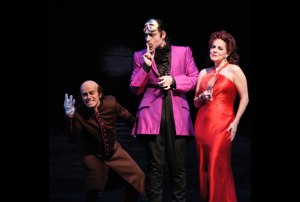
Massenet’s “Thaïs” in Florida

Florida Grand Opera Presents:


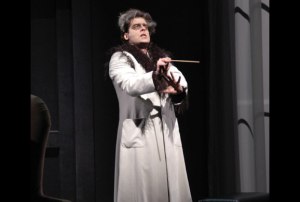
Thaïs


Jules Massenet


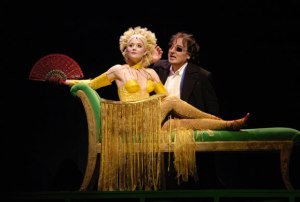
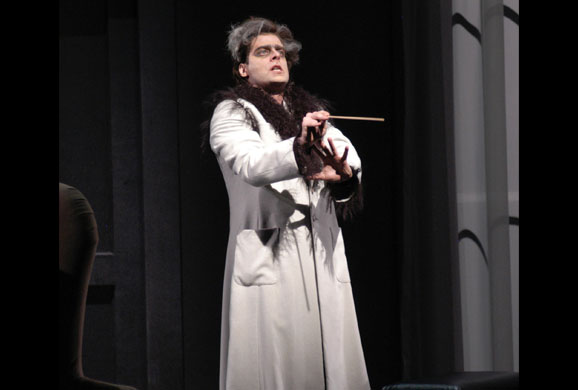
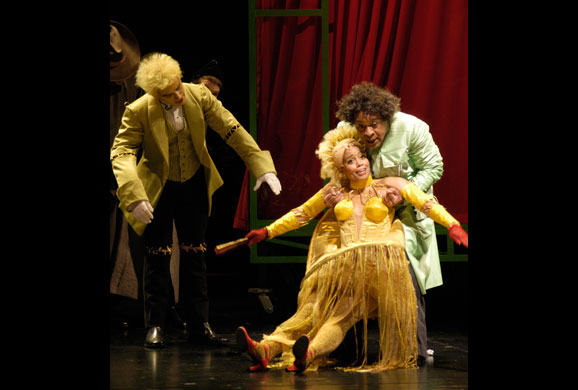
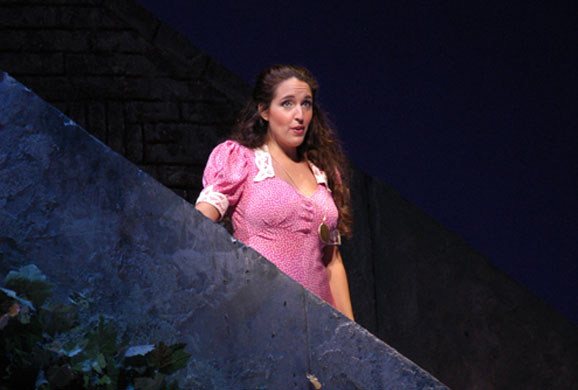
Tristan & IsoldeThis opera by Jules Massenet is set in ancient Egypt, where the seduction comes in the form of a beautiful courtesan named Thaïs. A monk makes it his mission to redeem her, but becomes obsessed with her erotic allure. Redemption or lust – what proves stronger?

Eglise Gutiérrez Thaïs (May 3, 6, 15, 17)
Angela Mortellaro Thaïs (May 4, 10)
Kristopher Irmiter Athanaël
Martin Nusspaumer Nicias
Adam Lau Palémon
Ramón Tebar Conductor
Renaud Doucet Stage Director
Opera Theatre of Saint Louis with Opéra de Montréal Production

MIAMI
Adrienne Arsht Center for the Performing Arts
of Miami-Dade County
Sanford and Dolores Ziff Ballet Opera House
May 3, 2014, at 7:00 p.m. – Opening Night
May 4, 2014, matinee at 2 p.m.
May 6 & 10, 2014, at 8:00 p.m.FORT LAUDERDALE
Broward Center for the Performing Arts / Au-Rene Theater
May 15 & 17, 2014, at 7:30 p.m.

Posted in OPera | Tagged , , , , , , , | Leave a comment

“The Tales of Hoffmann” in Seattle

Seattle Opera Presents:

Hphoto_03

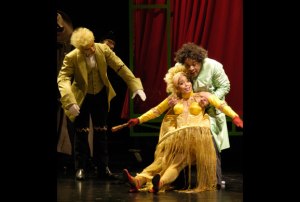
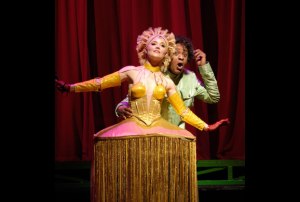
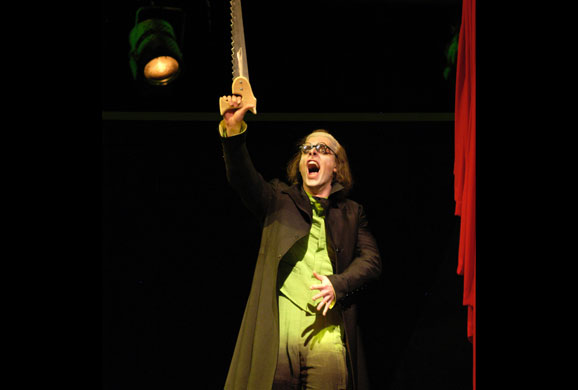
The Tales of Hoffmann

Jacques Offenbach 

<!–
Approximate Running Time: 3 hours and 30 minutes, with 2 intermissions
McCaw Hall

–>

One of the most talked-about productions in Seattle Opera history returns to McCaw Hall for a glorious season finale. An endlessly inventive poet regales his drinking buddies with stories of romancing three fantastic women. A trio of colorful villains foils our hero at every turn. Three fabulous shows in one, Offenbach’s sumptuous collage of whimsy, creativity, heartbreak, and artistic salvation enchants and delights with luminous music and compelling theater. Not to be missed.
In French with English subtitles | at McCaw Hall
Approximate Running Time: 3 hours, 30 minutes, with 2 intermissions

Audio described performance for visually impaired patrons available on Sunday, May 4. Description begins 10 minutes prior to the beginning of the matinee.

Performance Dates

Sat, May 3, 2014 7:30 PM
Sun, May 4, 2014 2:00 PM
Thu, May 8, 2014 7:30 PM
Sat, May 10, 2014 7:30 PM
Wed, May 14, 2014 7:30 PM
Fri, May 16, 2014 7:30 PM
Sat, May 17, 2014 7:30 PM

Synopsis

Long Story Short
Eccentric writer tells the stories of his three great failed romances while screwing up the fourth. But at least he has his art.

Who’s Who?

Five characters appear in each tale:
Hoffmann

is the great German writer who, in this opera, likes to sing in French.
Nicklausse is a teenage boy who follows Hoffmann everywhere. The mezzo-soprano who plays him also plays the Muse, the goddess of art and Hoffmann’s guardian angel.
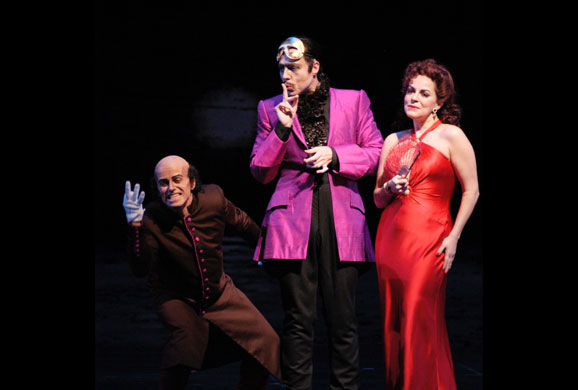
The Enemy, also known as Councilor Lindorf, Coppélius, Dr. Miracle, and Dappertutto, is a shape-shifting demon with frightening magical powers, always out to destroy Hoffmann.
The Woman also takes on various forms; she is Olympia, a pretty doll; Antonia, a sickly young woman of great talent and promise; Giulietta, a high-class courtesan; and Stella, a star performer with a voice of gold.
The Servant always has some defect: he is Andrès, an imbecile; Cochenille, a broken robot; Franz, who cannot hear; and Pitichinaccio, who is deformed.

The Other Characters Include:
Nathanaël
and Hermann, students and friends of Hoffmann and Nicklausse.
Spalanzani, a mad scientist interested in creating artificial intelligence.
Councilor Crespel, Antonia’s father, a violin-maker.
The Portrait of Antonia’s Dead Mother, which can come to life and sing.
Peter Schlemil, Giulietta’s most recent lover.

When?
E. T. A. Hoffmann was born in 1776 and died in 1822. The action presumably occurs when he’s a young man, at the beginning of the nineteenth century.

What’s Going On?
PROLOGUE.
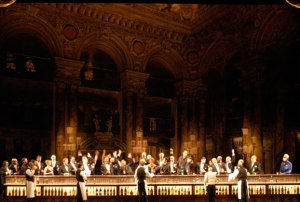
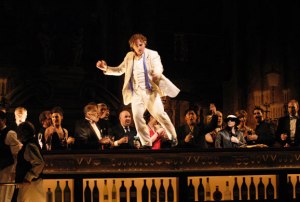
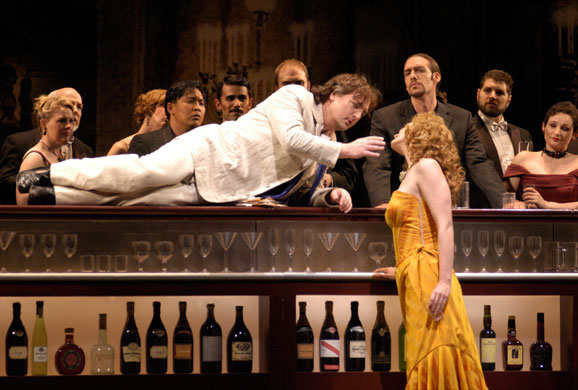
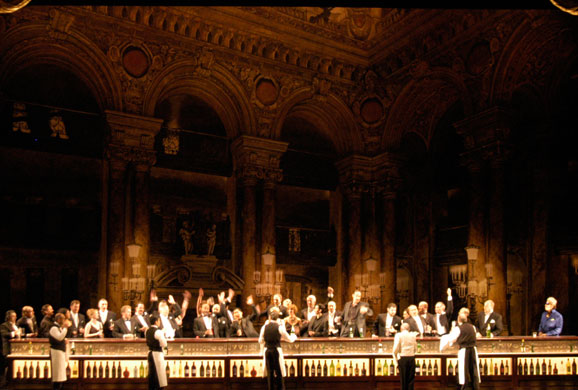
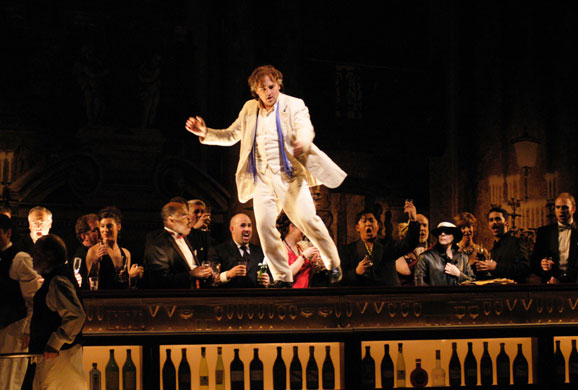
The great writer, Hoffmann, stumbles into a bar for a drink during an intermission of Don Giovanni, which is playing nearby in a production starring La Stella, the current mistress of his heart. His friends, a rowdy gang of students, encourage him to entertain them with the stories of his previous love affairs. The three acts of the opera thus take place as flashbacks…

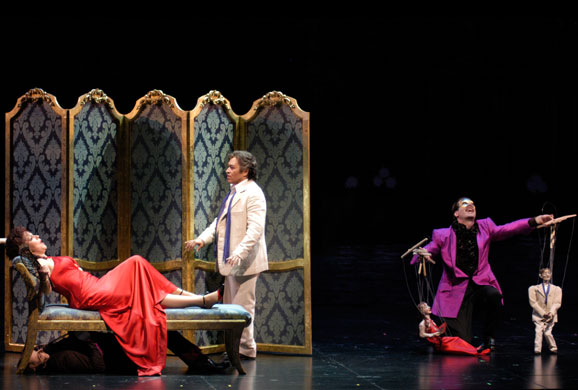
OLYMPIA. When Hoffmann was a young man, he toyed with the idea of giving up poetry and becoming a scientist. Accordingly, he apprenticed himself to Spalanzani, a famous inventor who had recently finished creating a very life-like robotic doll. Spalanzani introduced the doll to Hoffmann as his daughter, Olympia; and Hoffmann, seeing the doll through rose-tinted glasses sold to him by Spalanzani’s business associate Coppélius, fell in love with her. At Olympia’s debutante ball, Hoffmann amused all of Spalanzani’s guests by failing to notice that he had fallen in love with a robot.

Meanwhile, Coppélius, who had manufactured Olympia’s eyes, discovered that Spalanzani had cheated him. The inventor paid his supplier with a check from the banking house of Elias, and when Coppélius discovered that Elias had gone bankrupt, he crashed the party and ripped Olympia into pieces. Hoffmann was devastated to find that a) his beloved was dead, b) she was never alive, and c) everyone was laughing at him.

ANTONIA. Some years later, Hoffmann was found romancing Antonia, a girl from a musical family: her father, Crespel, was a violin-maker and her mother a great soprano who died of a strange disease that made singing lethal for her. Crespel kept Antonia healthy by locking her away in his middle-class house, away from admirers like the poet Hoffmann, who might encourage her to sing, and away from the wicked Dr. Miracle, the quack whose tinctures and potions only hastened his wife’s untimely demise. But Hoffmann and Miracle found their way to Antonia nevertheless. When Hoffmann finally understood Antonia’s predicament, he offered to marry her and set up an orderly household, like that of her father. But Miracle told Antonia she would be a fool to deny the world her beautiful voice, to silence herself for the sake of bourgeois respectability. The portrait of Antonia’s dead mother came to life and implored her daughter to sing. The girl did, and it killed her. Her wretched father made a stab at Hoffmann, whom he blamed for his daughter’s death; but Hoffmann’s teenage amanuensis Nicklausse saved his life, and the devastated poet escaped.

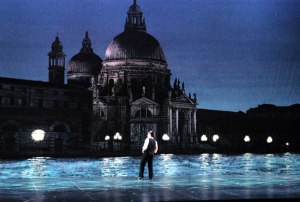
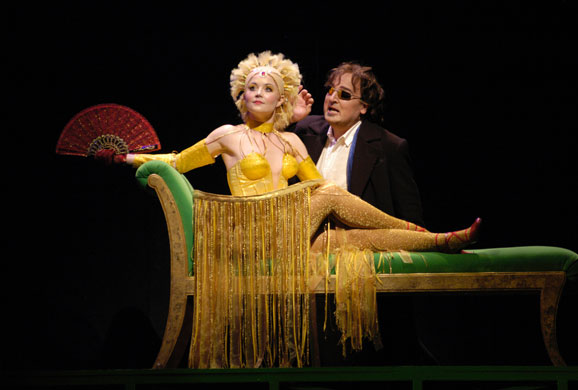
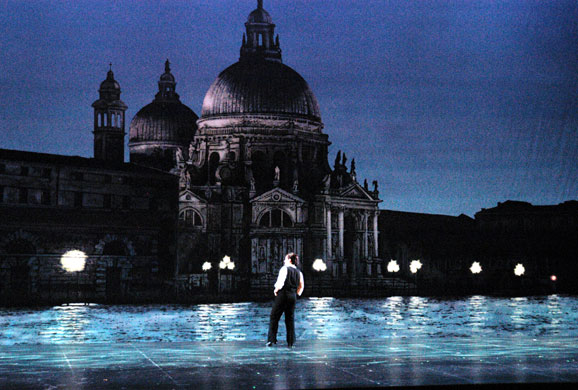
GIULIETTA. Some time later, Hoffmann and Nicklausse turned up in Venice, gambling and whoring in that infamous cesspool of vice. Hoffmann fell for a beautiful courtesan named Giulietta, who was in the business of selling her favors in exchange for men’s souls. She had just handed over the shadow of Peter Schlemil to Dapertutto, who kept her well-supplied with the jewelry she so craved. Dapertutto encouraged her to go after Hoffmann next. She made Hoffmann think she was falling in love with him and begged him to give her his reflection as a memento of him. No sooner had he agreed than Hoffmann found he couldn’t see himself if he looked in a mirror. Hoffmann killed Schlemil in a duel, to get him out of the way, only to watch Giulietta run off with another admirer, the deformed midget Pitichinaccio. Hoffmann managed to escape with Nicklausse, but Dapertutto kept his soul.

EPILOGUE. Hoffmann has been telling stories through the entire second act of Stella’s performance, and when she comes by the tavern, she finds him a bitter, self-pitying, drunken mess. She leaves on the arm of Councilor Lindorf, who bears an uncanny resemblance, in voice and appearance, to Coppélius, Miracle, and Dapertutto. But still faithful to Hoffmann is Nicklausse, who turns out to be the Muse of Poetry. Women may fail Hoffmann, but art will never desert him.

Artists

Hoffmann
William Burden
Russell Thomas *
The Villains
Nicolas Cavallier
Alfred Walker *
The Muse/Nicklausse
Kate Lindsey
The Heroines
Norah Amsellem
Leah Partridge †*
Crespel
Andrea Silvestrelli
The Henchmen
Keith Jameson
Spalanszani
Steven Cole
Antonia’s Mother
Tichina Vaughn
Conductor
Yves Abel
Stage Director
Chris Alexander
Set Designer
Robert A. Dahlstrom
Costume Designer
Marie Theresa Cramer
Lighting Designer
Robert Wierzel
Sets & Costumes
Seattle Opera 

† Seattle Opera debut
* On May 4 and 16 only

Russell Thomas is a former Seattle Opera Young Artist
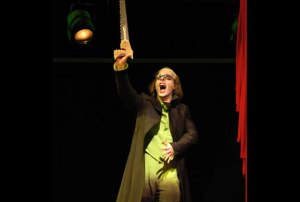
Hphoto_15 Hphoto_01 Hphoto_02  Hphoto_04 Hphoto_05 Hphoto_06 Hphoto_07 Hphoto_08 Hphoto_09 Hphoto_10 Hphoto_11 Hphoto_12

Posted in OPera | Tagged , , , , , , , | Leave a comment

LA BOHÈME in Pittsburgh

La bohème

LA BOHÈME

March 29; April 1, 4, 6, 2014
Benedum Center

Music by Giacomo Puccini • Libretto by Luigi Illica

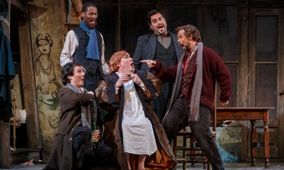
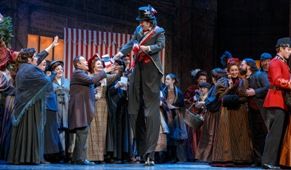
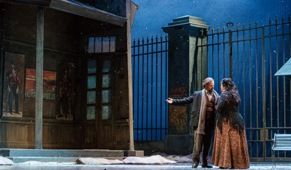
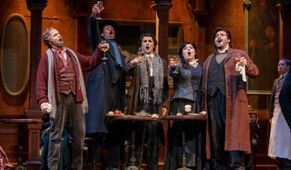
boheme1 - CopyROMANCE, FRIENDSHIP, AND A STRUGGLE
FOR SURVIVAL IN THE CITY OF LIGHTS

It’s Christmas Eve in Paris, and a young poet meets the love of his life. Their time together is a poignant picture of poverty and illness, shared by friends. The entrancing set captures the charm and vigor of 19th-century Paris.

The Cast

Leah Crocetto Craig Verm Eric Barry Sari Gruber
Leah Crocetto +
Mimi
David Lomeli
Rodolfo 3/29, 4/1, 4/4
Eric Barry
Rodolfo 4/3, 4/6
Sari Gruber
Musetta
Troy Cook Oren Gradus Resident Artist Phillip Gay Resident Artist Alex DeSocio
Troy Cook +
Marcello
Kevin Glavin **
Benoit/Alcindoro
Philip Gay *
Colline
Dimitrie Lazich
Schaunard

Creative Team

Conductor
Antony Walker
Director Tomer Zvulun
Co-Director
Helena Binder
Set Designer(s) Michael Yeargan
Costume Designer Martin Pakledinez *
Lighting Designer Andrew Ostrowski
* deceased
Assistant Conductor Glenn Lewis
Chorus Master Mark Trawka
Associate Coach/Pianist James Lesniak
Hair & Makeup Designer James D. Geier
Assistant Director George Cederquist *

+ Pittsburgh Opera debut
* Pittsburgh Opera Resident Artist
** Pittsburgh Opera Resident Artist alumni

Production owned by Pittsburgh Opera.

Photo Album Click here

boheme3 - Copy boheme7 - Copy boheme5 boheme2 - Copy boheme4 - Copy boheme8 - Copy boheme6boheme11

boheme10 boheme9

SYNOPSIS

Act I
Paris, the 1830s. In their Latin Quarter garret, the near-destitute painter Marcello and poet Rodolfo try to keep warm on Christmas Eve by feeding the stove with pages from Rodolfo’s latest drama. They are soon joined by their roommates—Colline, a philosopher, and Schaunard, a musician, who brings food, fuel, and funds. When the landlord, Benoit, comes to collect the rent, they ply the older man with wine, then throw him out. As his friends leave for the Café Momus, Rodolfo promises to join them later, remaining behind to write. There is a knock at the door; the visitor is a pretty neighbor, Mimì, whose candle has gone out on the stairway. Rodolfo relights it. Mimì realizes she has lost her key, and in the confusion, both candles are blown out. As the two search for the key in the moonlight, their hands meet. Rodolfo tells Mimì his dreams (“Che gelida manina”). She then recounts her life alone in a lofty garret, embroidering flowers and waiting for the spring (“Mi chiamano Mimì”). Rodolfo’s friends are heard outside, urging him to join them; he calls back that he is not alone and will be along shortly. Expressing their joy in finding each other (Duet: “O soave fanciulla”), Mimì and Rodolfo embrace and leave for the café.

Act II
At the Café Momus, Rodolfo introduces Mimì to his friends. Marcello’s former sweetheart, Musetta, makes a noisy entrance on the arm of the elderly but wealthy Alcindoro. The ensuing tumult reaches its peak when, trying to regain Marcello’s attention, she sings a waltz about her popularity (“Quando me’n vo’”). Sending Alcindoro off on an errand, she falls into Marcello’s arms and tells the waiter to charge everything to Alcindoro. Soldiers march by the café, and the bohemians fall in behind.

Act III
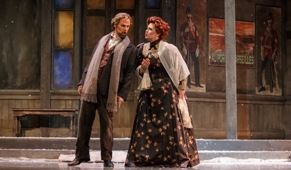
At dawn by a tavern on the snowy outskirts of Paris, a customs official admits farm women to the city. Mimì wanders in, searching for the place where Marcello and Musetta now live. When the painter emerges, she tells him of her distress over Rodolfo’s incessant jealousy (Duet: “O buon Marcello, aiuto!”). She says she believes it is best that they part. When Rodolfo appears from the tavern, Mimì hides nearby, though Marcello thinks she has gone. The poet tells Marcello that he wants to separate from his sweetheart, citing her fickleness; pressed for the real reason, he breaks down, saying that her coughing can only grow worse in the poverty they share; he’s desperately afraid she will die from her illness. Overcome with tears, Mimì stumbles forward to bid her lover farewell (“Donde lieta uscì”). While Mimì and Rodolfo recall past happiness, Musetta quarrels with Marcello, who has caught her flirting (Quartet: “Addio dolce svegliare”). The painter and his mistress part, hurling insults at each other, but Mimì and Rodolfo decide to remain together until spring.

boheme12Act IV
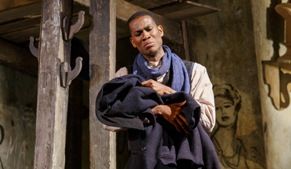
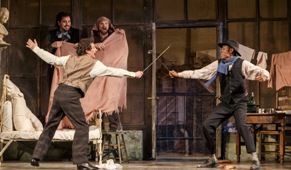
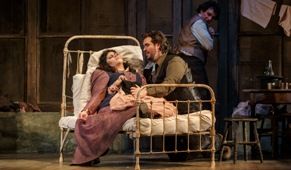
Now separated from their girlfriends, Rodolfo and Marcello lament their loneliness in the garret (Duet: “O Mimì, tu più non torni”). Colline and Schaunard bring a meager meal. To lighten their spirits the four stage a dance, when suddenly Musetta bursts in to tell them that Mimì is outside, too weak to come upstairs. Rodolfo carries her in, while Musetta asks Marcello to sell her earrings for medicine and Colline goes off to pawn his overcoat (“Vecchia zimarra”). Left alone, Mimì and Rodolfo recall their first meeting and their happy days, but she is seized with violent coughing (Duet: “Sono andati?”). The others return and Mimì drifts into unconsciousness. When Rodolfo at last realizes that she is dead, he throws himself despairingly on her body, calling her name.

— courtesy of Opera News, edited

Posted in OPera | Tagged , , , , | 1 Comment

“DON CARLO” in Vancouver

 PRESENTS:


GIUSEPPE VERDI

First VO production in 40 years!
A magnificent drama of a king’s brutal power and a son’s brash rebellion
In Italian with English SURTITLES™

May 3, 8, 10, 11 (matinée), 2014
Evening performances 7:30pm.
Matinée performances 2:00pm.
OPENS May 3, 2014!

►In the war-torn 16th century, peace between France and Spain is secured when a French princess, Elisabeth de Valois, is given in marriage to Spain’s King Philip. The King’s son, Carlo, is shattered, for he is in love with her. When Carlo dares to defend the Flemish people from Philip’s persecution, he incites both his father’s fury and the awesome authority of the Grand Inquisitor. Believing that he has been doubly betrayed, Philip arrests Carlo and Elisabeth. In the dramatic final scene at the tomb of Charles V, a ghostly friar rescues Carlo from the wrath of Church and State.

Spectacular on a grand scale and also extraordinarily intimate, Don Carlo is one of Verdi’s most impressive works. His orchestral colours are brilliant, his choruses are powerful, and his music for the monstrous yet very human king, the terrifying Inquisitor, and the heroic lovers is magnificent.

This production will be the Milan version: 4 acts without the Fontainebleau scene

► All performances are at the Queen Elizabeth Theatre
► Approximate running time: 3 hours 5 minutes (including one intermission)
 

CAST & CREATIVE TEAM

Conducted by JONATHAN DARLINGTON

JONATHAN DARLINGTON
CONDUCTOR


Directed by PAUL PEERS

PAUL PEERS
DIRECTOR


Don Carlo ANDREA CARE

ANDREA CARE
DON CARLO

Elisabeth JONI HENSON

JONI HENSON
ELISABETH


Eboli MARY PHILLIPS

MARY PHILLIPS
EBOLI


Rodrigo BRETT POLEGATO

BRETT POLEGATO
RODRIGO


King Philip PETER VOLPE

PETER VOLPE
KING PHILIP


The Grand Inquisitor GREGORY FRANK

GREGORY FRANK
THE GRAND INQUISITOR


Friar

TBA
FRIAR


Tebaldo KRISTIN HOFF

KRISTIN HOFF
TEBALDO


Count Lerma MARTIN SADD

MARTIN SADD
COUNT LERMA


Celestial Voice MELANIE KRUEGER

MELANIE KRUEGER
CELESTIAL VOICE


Royal Herald

TBA
ROYAL HERALD


Chorus Director / Associate Conductor LESLIE DALA

LESLIE DALA
ASSOCIATE CONDUCTOR / CHORUS DIRECTOR


Lighting Designer GERALD KING

GERALD KING
LIGHTING DESIGNER


Musical Preparation KINZA TYRRELL

KINZA TYRRELL
MUSICAL PREPARATION


  TINA CHANG

TINA CHANG
MUSICAL PREPARATION


  KIMBERLEY-ANN BARTCZAK

KIMBERELY-ANN BARTCZAK
MUSICAL PREPARATION


Stage Manager SHEILA MUNN

SHEILA MUNN
STAGE MANAGER


Fight Director TBA

TBA
FIGHT DIRECTOR


Assistant Director FANNY GILBERT-COLLET
Posted in Music, OPera | Tagged , , , , , , , , | Leave a comment

Washington National Opera: The Magic Flute

THE KENNEDY CENTER Presents:

Washington National Opera: The Magic Flute

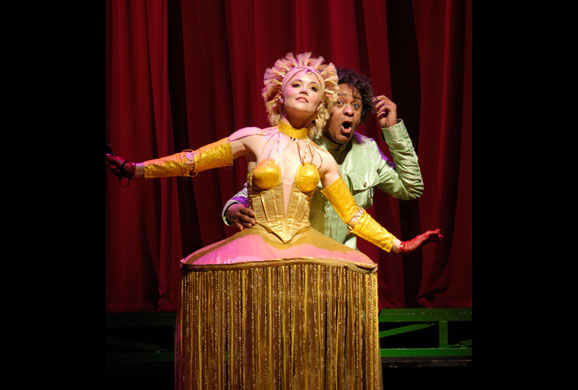
A love-struck prince sets out on a fantastic adventure to rescue the Queen of the Night’s daughter in Mozart’s final opera. This “zesty and imaginative new production” (San Francisco Chronicle) is certain to captivate audiences of all ages.

The Magic Flute (Cory Weaver - San Francisco Opera)

Wolfgang Amadeus Mozart’s
The Magic Flute
(Die Zauberflöte)
Libretto by Emanuel Schikaneder
New production
Co-production with San Francisco Opera Association, Opera Omaha, Lyric Opera of Kansas City, and Opera Carolina
 
A prince’s quest leads to love at first sight–but to prove his worth in marriage, he must first survive trials of wisdom and devotion. Lost in a faraway land, young Tamino is enlisted by the Queen of the Night to rescue her lovely daughter Pamina from the hands of Sarastro, an evil sorcerer. With the aid of a magic flute and the bumbling, lovelorn Papageno by his side, Tamino sets out on a fantastic adventure filled with danger and temptation, culminating in one final test at a mystical temple.
 
Mozart’s final opera, The Magic Flute is simultaneously a delightful fairy tale and a profound reflection on spiritual enlightenment. Sung in English–and featuring a colorful kaleidoscope of sets and costumes by Japanese American artist Jun Kaneko–it’s also a perfect opera for the entire family. American director Harry Silverstein, whose The Marriage of Figaro wowed WNO audiences in 2010, directs an attractive young cast, many in their WNO debuts. Conducted by WNO Music Director Philippe Auguin, this “zesty and imaginative new production” (San Francisco Chronicle) is guaranteed to captivate audiences of all ages.
 
“A feast for the eyes, a feast for the ears… a masterpiece of conception and execution!”
–Opera Today

The Queen of the Night: Kathryn Lewek (5/3, 8, 11, 15, 18), Anna Siminska (5/5, 7, 10, 17)
Pamina: Eri Nakamura (5/5, 7, 10, 17), Maureen McKay (5/3, 8, 11, 15, 18)
Tamino: Joseph Kaiser (5/3, 8, 11, 15, 18), Paul Appleby (5/5, 7, 10, 17)
Papageno: Joshua Hopkins (5/3, 8, 11, 15, 18), Kostas Smoriginas (5/5, 7, 10, 17)
Sarastro: Soloman Howard (5/5, 7, 10, 17), Jordan Bisch (5/3, 8, 11, 15, 18)

May 16: Domingo-Cafritz Young Artist Performance (Casting TBD)

Conductor: Philippe Auguin
Director: Harry Silverstein
Lighting Designer: Paul Pyant
Set & Costume Designer: Jun Kaneko

Performed in English with projected English titles. Titles may not be visible from the rear of the orchestra.

~~~~~~~~~~~~~~~

COME EARLY FOR FREE OPERA INSIGHTS
Musicologist Saul Lilienstein leads the Thursday, May 8 Opera Insight, starting 1 hour and 15 minutes before the performance and lasting 35–40 minutes. All other Opera Insights start 1 hour before the performance and last 20–25 minutes.Informative and entertaining, Opera Insights take you inside the composer’s mind, behind the scenes of planning a production, and into the history and social context of each opera.
These lectures are free, but patrons must present a ticket from any performance of The Magic Flute.

STAY AFTER FOR A FREE ARTIST Q&A ON THE MAGIC FLUTE
Following these performances:
Monday evening, May 5
Sunday matinees, May 11 & 18
Join WNO artists for a unique opportunity to ask questions about the production.
All discussions begin immediately after the performance and are free with your ticket.

~~~~~~~~~~~~~~~

Performance Timing: Act I – 74 min.; Intermission – 20 min.; Act II – 89 min. (Approx. 3 hours)

Artists

  • Kathryn Lewek (uncredited) Kathryn Lewek, The Queen of the Night
  • Anna Siminska (uncredited) Anna Siminska, The Queen of the Night
  • Eri Nakamura (uncredited) Eri Nakamura, Pamina
  • Maureen McKay (uncredited) Maureen McKay, Pamina
  • Joseph Kaiser (uncredited) Joseph Kaiser, Tamino
  • Paul Appleby (Ken Howard) Paul Appleby, Tamino
  • Joshua Hopkins (uncredited) Joshua Hopkins, Papageno
  • Kostos Smortiginas (Tomas Kauneckas) Kostas Smoriginas, Papageno
  • Soloman Howard (Unknown) Soloman Howard, Sarastro
  • Jordan Bisch (uncredited) Jordan Bisch, Sarastro
  • PHILIPPE AUGUIN (Dario Acosta) Philippe Auguin, conductor
  • Harry Silverstein (uncredited) Harry Silverstein, director
  • general artist image Paul Pyant, lighting designer
  • Jun Kaneko (uncredited) Jun Kaneko, set & costume designer

IMAGES

The Magic Flute 
The Magic Flute   The Magic Flute   The Magic Flute

Posted in Music, OPera | Tagged , , , , , , , | Leave a comment

“I Puritani” in Boston


BOSTON LYRIC OPERA PRESENTS:

Bellini | I Puritani

I_Puritani_688x688_web

May 2, 4m, 7, 9, 11m, 2014

New BLO production. Sung in Italian with projected English translation.
May 2, 4m, 7, 9, 11m, 2014 at the Citi Performing Arts CenterSM Shubert Theatre.
Evening performances at 7:30pm. Matinees (m) at 3pm. New BLO production

Elvira has been promised to one man, but loves another. When she believes the object of her affection has betrayed her, she descends into madness. Bellini’s bel canto gem unfolds during a tumultuous English civil war and features mad scenes filled with pathos and achingly beautiful music.

Troy Cook and Paul Whelan are the men trying to arrange marriage for Elvira. John Tessier and Sarah Coburn, acclaimed for their roles in BLO’s The Barber of Seville, sing the roles of the lovers with Coburn delivering the famous tour de force soprano arias.

Creative Team  
Conductor David Angus
Stage Director Crystal Manich
Set Designer John Conklin
Costume Designer Catherine Zuber
Lighting Designer Paul Hackenmueller
Wigs and Makeup Designer Jason Allen
   

Cast  
Elvira Sarah Coburn
Arturo John Tessier
Riccardo Troy Cook*
Giorgio Paul Whelan*
Gualtiero Liam Moran#
Bruno Omar Najmi#
Enrichetta Chelsea Basler#

*BLO debut 
#BLO Emerging Artist 

SYNOPSIS

I Puritani is set in the Puritan fortress at Plymouth during the English Civil War. The Puritans, led by Oliver Cromwell, have inflicted a crushing defeat on troops loyal to Charles I (the Cavaliers) and taken parliamentary power. Although the King has been tried and executed (his widow, Henrietta, plays a significant role in the opera) the Cavaliers fight on.

But the main thrust of the opera lies not to so much this specific historical context but in its dramatic and expressively poignant music and its vivid psychological study of an emotionally vulnerable woman physically and mentally isolated within a rigidly militaristic world of men. She is caught up, with them, in the brutalizing confusion and chaos of a civil war that can destroy the passions of the heart.

I Puritani was written in three acts – the BLO production will be played in two parts with one intermission. I Puritani will be sung in Italian. The equivalent (sung) Italian names appear in the synopsis in parenthesizes.

Part 1 

The Puritan governor Lord Walton (Lord Gualterio Valton) had  promised his daughter Elvira to Sir Richard Forth (Sir Riccardo Forth) a captain in his army but persuaded by his brother George (Sir Giorgio Valton) that she is desperately in love with a cavalier –  Sir Arthur  Talbot (Lord Arturo Talbo) agrees to the marriage in spite of the political consequences. Richard is deeply frustrated and bitterly angry at the decision while Elvira is surprised at her father’s change of heart but obviously overjoyed. The wedding is prepared and Arthur arrives for the ceremony. Walton explains that he must take a female political prisoner who has been held in the fortress to London to stand trial. Arthur recognizes her as Henrietta (Enrichetta di Francia) widow of the executed King. To save her from certain death, he smuggles her out of the castle by disguising her in Evira’s wedding veil and passing her off as his bride to be. Richard surprises them, challenges Arthur to a duel but in the end but allows them to pass hoping thereby to forever disgrace his rival. Elvira informed of their escape can only assume that Arthur has cruelly humiliated and publicly betrayed her and her confused mind begins to splinter.  She sees herself as the figure of the white- veiled Henrietta (“He looks at her and call her his bride – Is Elvira the lady? Am I no longer Elvira”) She deliriously imagines the happy transports of the wedding but then she berates Arthur’s cruelty  and treachery and cries out – ” Cruel man  do you abandon  me who loves you so much? Burning wrath sweeps through me…fury tears my heart….this burning fever will destroy me.”

Part 2

Arthur has been condemned to death for treason. George sees Elvira senseless with despair, weeping, unable to find any relief – wandering aimlessly – now  joyfully recreating  her lost marriage ceremony and her passionate reunion with Arthur – now bemoaning her happiness seeming lost forever. He implores Richard to put aside his hatred and vengeful pursuit and to save Arthur’s life fearing that Elvira will die of grief if she should learn of his death. The passion of his appeal wins over Richard and he agrees.

Arthur having led Henrietta to safety, returns to Plymouth to reunite with Elvira. Although closely pursued by puritan soldiers, he makes contact with her and explains the real reason for his sudden disappearance. Comforted, she regains her lucidity for a time but her mental stability has been shattered and suddenly relapsing into delusion she has a vision that Arthur will desert her once again. She calls for the soldiers who arrest him and take him to be executed, but word of a pardon arrives and it seems that Arthur is saved and can be united with Elvira.

Posted in Music, OPera | Tagged , , , , , , , , , | Leave a comment

Opera on the Beach in Australia: Mozart’s “The Magic Flute”

Opera on the Beach

Opera on the Beach

Greenmount Beach, Coolangatta May 9 – 11, 2014

Presented by Opera Australia
in partnership with Bleach* Festival, City of The Gold Coast and Tourism & Events Queensland

Mozart’s The Magic Flute; out of the theatre and onto the beach…

Sometimes it feels like a crime to go indoors when the skies are clear, even for a night at the opera.

That’s why we’re taking the opera out of the theatre and onto the beach.

Picture a giant sandcastle on the beach at Coolangatta, families enjoying a picnic, children playing as the sun goes down, and miraculously beautiful music.

And there you have a uniquely Australian production of one of the world’s favourite operas, Mozart’s The Magic Flute.

This new production is directed by Michael Gow and stars some of Opera Australia’s finest singers alongside a chorus drawn from community choirs and Gold Coast’s own surf life saving clubs.

Together, they will battle the serpent, put a spell on  the guards and rescue the princess, before sending you home, with stars in your eyes, sand in your shoes and songs in your heart.

Now that’s opera, Australia!

Director Michael Gow
Set & Costume Design Robert Kemp
Sound Design Norwest Productions, Brisbane
   
Tamino Jonathan Abernethy
Queen of the Night Milica Ilic
Sarastro Conal Coad
Food, beverage and seating

A range of food and beverages is available at the venue from 5pm.

For the comfort of our patrons only low chairs will be permitted. Strictly no BYO alcohol. Alcohol will be available for purchase on site.

Spread out your towel on the sand and picnic under the stars.

 
The Opera Australia Community Choir has been assisted by the Australian Government through the Australia Council for the Arts, its funding and advisory body.
Bleach* Festival is an initiative of Connecting Southern Gold Coast.

Synopsis

The Magic Flute

Act 1

Tamino, a young explorer, finds himself in a mysterious tomblike maze.  A terrible monster begins stalking him and in his panic to escape, Tamino knocks himself out.  At that moment, Three Women arrive to send the monster back to whatever vault it escaped from.
The Three Women are very taken with Tamino, each wanting to stay alone with him while the other two go and alert the woman they serve, the mysterious Queen of the Night. In the end all three go, promising to return.
Tamino comes to, not sure where he is or even whether he’s not dreaming.  Another bizarre figure appears.  It’s Papageno, the former ornithologist now bird catcher who works for the Queen of the Night.  Papageno claims to have defeated the monster but the three women return and make it clear they were the ones who rescued Tamino.  To stop Papageno fibbing they put a stopper in his mouth.
They give Tamino a locket with a portrait of the Queen of the Night’s daughter Pamina.  Tamino immediately falls in love with Pamina and vows to rescue her from the terrible man who has kidnapped her.
The Queen of the Night hears his vow and arrives to promise that the moment Pamina is rescued she will be Tamino’s bride.
The Three Women give Tamino a magic flute to protect him on his mission. They give Papageno, who doesn’t really want to help, a magic music box to keep him safe.  The Three Woman give both men Spirits to guide them on their quest.  Tamino and Papageno set off to rescue Pamina.
Pamina is trying to escape from the maze but she is caught by Monostatos, the man who is assigned to guard her.  It’s clear Monostatos is very taken with Pamina.  Papageno stumbles in and looks so bizarre Monostatos goes to get help.  Papageno tells Pamino that a handsome young man is in love with her and they must go to meet him.  They both yearn to have someone to love.
Tamino meanwhile encounters a Stranger who questions him about his reasons for being in this tomb.  Tamino tells him he’s here to rescue a young women from an evil man.  The Stranger tells Tamino he doesn’t know the true  story about Pamina’s kidnap.
Tamino is afraid Pamina might be dead but mysterious voices tell him she is still alive.  The Stranger returns with his followers.  The Stranger is in fact Sarastro, Pamina’s father and leader of a band of Philosophers working in the tomb.  Monostatos has caught Tamino, who is shocked to learn the Stranger he insulted is the man who stole his beloved from her mother.  Monostatos expects to be rewarded for finding Tamino but instead is punished for harassing Pamina.  Sarastro tells Tamino he must join the Philosophers or never find his way out of the maze.

Act 2

Sarastro and the Philosophers convene and agree that Tamino is ready to undergo the three trials that lead to membership of their circle.  The first trial is the Trial by Silence.
The Three Women appear and warn them that terrible things will happen to them if they join the Philosophers.  Papageno is terrified and can’t keep quiet.
The Spirit Guides appear to tell the two men to be brave in the coming trials.  They feed them to build up their strength for what’s to come.
Pamina finds Tamino but he can’t speak to her because of the Trial by Silence.  She thinks he doesn’t love her any more and is heartbroken.  She thinks that only death will end her suffering.  Papageno wishes he had someone to feel as deeply about him.
Monostatos finds the unhappy Pamina and decides to make her his, but The Queen of the Night arrives.  She is impatient for Tamino to lead Pamina out of the tomb.  She admits she also wants to know the secret knowledge that Sarastro is uncovering.  When Pamina tells her Tamino will become one of the Philosphers, The Queen of the Night is enraged.  She tells Pamina she must kill Sarastro or she will no longer be her daughter.
Sarastro comforts Pamina and tells her that the secret knowledge he has uncovered involves forgiveness and resistance to the urge for revenge.Tamino is led to the next two trials, The Trial by Fire and the Trial by Water by two Priests in protective outfits.  Pamina cries out in despair, Tamino hears her and they are reunited.  Pamina bravely leads Tamino through the secret doors that lead to the two Trials.  Her love and the music of the magic flute protect them and they survive.  They are welcomed into the band of Philosophers.
Papageno is overwhelmed by loneliness and thinks of ending his life.  But the Spirits Guides tell him to use the music box to obtain what he longs for.  He does and finally meets his perfect partner, Papagena.
Monostatos is now aiding and abetting the Queen of Night and they are about to blow up the tomb when Sarastro exposes their plot.  But instead of punishing them, he heeds his own philosophy and humbles himself before them, asking forgiveness for having been so angry towards them.  Every one sings of the joy and harmony that come from listening to this wisdom.

Posted in OPera | Tagged , , , , , , | Leave a comment

“I Puritani” in Boston

BOSTON LYRIC OPERA PRESENTS:

Bellini | I Puritani

I_Puritani_688x688_web

May 2, 4m, 7, 9, 11m, 2014]

New BLO production. Sung in Italian with projected English translation.
May 2, 4m, 7, 9, 11m, 2014 at the Citi Performing Arts CenterSM Shubert Theatre.
Evening performances at 7:30pm. Matinees (m) at 3pm. New BLO production

Elvira has been promised to one man, but loves another. When she believes the object of her affection has betrayed her, she descends into madness. Bellini’s bel canto gem unfolds during a tumultuous English civil war and features mad scenes filled with pathos and achingly beautiful music.

Troy Cook and Paul Whelan are the men trying to arrange marriage for Elvira. John Tessier and Sarah Coburn, acclaimed for their roles in BLO’s The Barber of Seville, sing the roles of the lovers with Coburn delivering the famous tour de force soprano arias.

Creative Team  
Conductor David Angus
Stage Director Crystal Manich
Set Designer John Conklin
Costume Designer Catherine Zuber
Lighting Designer Paul Hackenmueller
Wigs and Makeup Designer Jason Allen
   

Cast  
Elvira Sarah Coburn
Arturo John Tessier
Riccardo Troy Cook*
Giorgio Paul Whelan*
Gualtiero Liam Moran#
Bruno Omar Najmi#
Enrichetta Chelsea Basler#

*BLO debut 
#BLO Emerging Artist 

SYNOPSIS.

I Puritani is set in the Puritan fortress at Plymouth during the English Civil War. The Puritans, led by Oliver Cromwell, have inflicted a crushing defeat on troops loyal to Charles I (the Cavaliers) and taken parliamentary power. Although the King has been tried and executed (his widow, Henrietta, plays a significant role in the opera) the Cavaliers fight on.

But the main thrust of the opera lies not to so much this specific historical context but in its dramatic and expressively poignant music and its vivid psychological study of an emotionally vulnerable woman physically and mentally isolated within a rigidly militaristic world of men. She is caught up, with them, in the brutalizing confusion and chaos of a civil war that can destroy the passions of the heart.

I Puritani was written in three acts – the BLO production will be played in two parts with one intermission. I Puritani will be sung in Italian. The equivalent (sung) Italian names appear in the synopsis in parenthesizes.

Part 1 

The Puritan governor Lord Walton (Lord Gualterio Valton) had  promised his daughter Elvira to Sir Richard Forth (Sir Riccardo Forth) a captain in his army but persuaded by his brother George (Sir Giorgio Valton) that she is desperately in love with a cavalier –  Sir Arthur  Talbot (Lord Arturo Talbo) agrees to the marriage in spite of the political consequences. Richard is deeply frustrated and bitterly angry at the decision while Elvira is surprised at her father’s change of heart but obviously overjoyed. The wedding is prepared and Arthur arrives for the ceremony. Walton explains that he must take a female political prisoner who has been held in the fortress to London to stand trial. Arthur recognizes her as Henrietta (Enrichetta di Francia) widow of the executed King. To save her from certain death, he smuggles her out of the castle by disguising her in Evira’s wedding veil and passing her off as his bride to be. Richard surprises them, challenges Arthur to a duel but in the end but allows them to pass hoping thereby to forever disgrace his rival. Elvira informed of their escape can only assume that Arthur has cruelly humiliated and publicly betrayed her and her confused mind begins to splinter.  She sees herself as the figure of the white- veiled Henrietta (“He looks at her and call her his bride – Is Elvira the lady? Am I no longer Elvira”) She deliriously imagines the happy transports of the wedding but then she berates Arthur’s cruelty  and treachery and cries out – ” Cruel man  do you abandon  me who loves you so much? Burning wrath sweeps through me…fury tears my heart….this burning fever will destroy me.”

Part 2

Arthur has been condemned to death for treason. George sees Elvira senseless with despair, weeping, unable to find any relief – wandering aimlessly – now  joyfully recreating  her lost marriage ceremony and her passionate reunion with Arthur – now bemoaning her happiness seeming lost forever. He implores Richard to put aside his hatred and vengeful pursuit and to save Arthur’s life fearing that Elvira will die of grief if she should learn of his death. The passion of his appeal wins over Richard and he agrees.

Arthur having led Henrietta to safety, returns to Plymouth to reunite with Elvira. Although closely pursued by puritan soldiers, he makes contact with her and explains the real reason for his sudden disappearance. Comforted, she regains her lucidity for a time but her mental stability has been shattered and suddenly relapsing into delusion she has a vision that Arthur will desert her once again. She calls for the soldiers who arrest him and take him to be executed, but word of a pardon arrives and it seems that Arthur is saved and can be united with Elvira.

Posted in Music, OPera | Tagged , , , , , , , , | Leave a comment

Il Trovatore in Delaware

OPERA DELAWARE PRESENTS:

Il Trovatore
 

About Il Trovatore

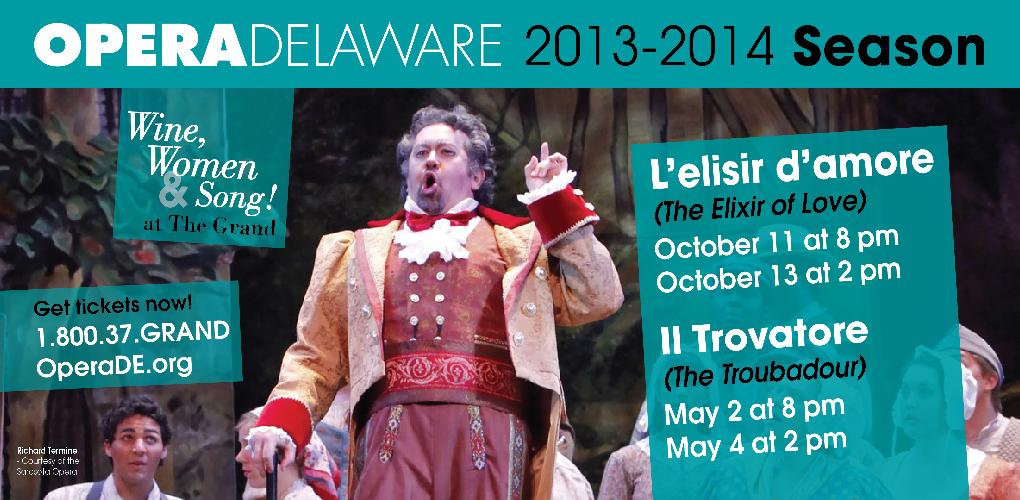
SeasonWebsiteBannerwithphotcreditHappy endings may be few and far between in this family drama of Count Di Luna’s search for his long-lost brother and the plot may border on being…well, operatic – however Il Trovatore features some of Verdi’s most magnificent music – including the ever-popular “anvil chorus.” 

Maestro Giovanni Reggioli returns to conduct after his triumph in the pit last spring for Verdi’s Macbeth and Marc Astafan (Tosca and La Traviata 2010) returns to direct.  Tenor Kirk Dougherty sings the role of Manrico, and Baritone Tim Mix (who many will remember from last Spring’s Studio Series) sings Count di Luna.

Performances take Place at The Grand, 818 N Market Street, Wilmington Delaware.
Click on the date to order ONLINE tickets
  • Friday May 02, 2014-8:00 PM
  • Sunday May 04, 2014-2:00 PM
Il Trovatore


Il Trovatore Cast Members

  • Kirk Dougherty, tenor -- Manrico

    Kirk Dougherty, tenor — Manrico

    Tenor Kirk Dougherty has a vibrant career in concert and opera in the United States. From Mozart’s most sublime lovers to Verdi’s grandest heroes, his performances are acclaimed for their versatility, strength, and elegance. Opera Magazine (UK), Operapulse.com, and Opera News describe his voice as ‘a tenor on the rise’, ‘an exceptionally beautiful tenor’, and ‘a limitless, iridescent instrument’. 

    This season in March at Opera Naples, he appears as Obadiah in a staged production of Mendelssohn’s Elijah. In May with theGreenwich Choral Society. In the summer, he sings at the 2013 Castleton Festival in Puccini’s Fanciulla del West and Verdi’s Othello at Castleton, Virginia and in A Coruña, Spain. He also has upcoming appearances at Salt Marsh Opera andTownsend Opera Players in 2013-14.

    Earlier this season, Kirk Dougherty appeared as a principal character in Victoria Bond’s opera Mrs. President atAnchorage Opera. He also performed four featured roles in Montemezzi’s La Nave with New York City’s Teatro Grattacielo. In Tri-Cities Opera’s acclaimed Il Trovatore, he sang the role of Manrico with ‘exquisite lyric and dramatic power’. 

    As a 2011-2012 guest artist at Tri-Cities Opera he sang Tamino (Die Zauberflöte), Pinkerton (Madama Butterfly), and Edgardo (Lucia di Lammermoor). In 2011-2012 he also performed Tamino at Salt Marsh Opera, the title role of Faustat Opéra Louisiane, Amaryllus (The Poisoned Kiss) and Fra Diavolo (Fra Diavolo) with Bronx Opera, and Rodolfo (La Bohème) at 2012 Belleayre Music Festival. Highlights of 2009-2011 included Alfredo (La Traviata), Rinuccio (Gianni Schicchi), Nemorino (L’Elisir d’Amore), Ferrando (Cosi fan tutte), and Hoffmann (Les Contes d’Hoffmann) with Tri-Cities Opera.

    Kirk Dougherty is a graduate of the Eastman School of Music. He was a Festival Artist at Utah Festival Opera and Musical Theatre, an Apprentice Artist at Central City Opera, and a Resident Artist at Tri-Cities Opera. At Tri-Cities Opera, he was the recipient of the 2009 Carlotta Savoca Award. He currently lives in Sleepy Hollow, NY (a suburb of New York) and is married to mezzo-soprano Cabiria Jacobsen.

  • Timothy Mix, baritone -- Count di Luna

    Timothy Mix, baritone — Count di Luna

    Recipient of a 2008 Richard Tucker Foundation Career Grant, Timothy Mix is recognized for the beauty of his voice and his compelling stage presence.  He received critical acclaim for his pivotal role as Edward Gaines in the New York premiere of Richard Danielpour and Toni Morrison’s Margaret Garner, in a new production by Tazewell Thompson, for which the American baritone received New York City Opera’s 2008 Christopher Keene Award.

    The 2010/11 season brought Timothy Mix back to Washington National Opera in the role of Renato in James Robinson’s production of Un Ballo in Maschera conducted by Daniele Callegari, to the San Francisco Opera to sing in the company premiere of Alfano’s Cyrano de Bergerac as Le Bret in a new production by Petrika Ionesco and conducted by Patrick Fournillier as well as Prus in Janácek’s The Makropolus Case, conducted by Jiri Belohlávek and directed by Olivier Tambosi.  The artist then joined Portland Opera as Ping in Turandot under Leonardo Vordoni and directed by Christopher Alden.  Timothy Mix will wrap up his season by singing Albert in Werther with the Washington Concert Opera, conducted by Antony Walker.  Highlights of the 2011/12 season include Dancairo in Bizet’s Carmen, conducted by Nicola Luisotti as well as a debut at Dallas Opera as Baron Duphol in Verdi’s La Traviata, conducted by Marco Guidarini.  Orchestral highlights include a night of arias for the opening gala of the Orlando Philharmonic, conducted by Christopher Wilkins. 

    During the 2009/10 season, Timothy Mix made his Washington National Opera debut as Ford in Falstaff, conducted by Sebastian Lang-Lessing, as well as his San Francisco Opera debut in La Fanciulla del West, under the baton of Nicola Luisotti. He also sang his first performances with Arizona Opera as Marcello in La Bohème, brought his Belcore to Toledo Opera’s L’elisir d’amore, joined Opera Southwest as Escamillo in Carmen, and sang Handel’s Messiah with the Pacific Symphony.

    The 2008/09 season featured a pair of notable house debuts: at Dallas Opera as the Duke of Nottingham in the Stephen Lawless production of Donizetti’s Roberto Devereaux, conducted by Graeme Jenkins, and at Michigan Opera Theatre as Edward Gaines in Kenny Leon’s production of Margaret Garner. Mr. Mix also sang the role of Marcello in La Bohème at both Opera Theatre of Saint Louis and Palm Beach Opera. His concert calendar included Fauré’s Requiem with the Buffalo Philharmonic, Beethoven’s Mass in C and Dvorák’s Te Deum with Voices of Ascension, Beethoven’s Ninth Symphony with the Hudson Valley Philharmonic, and an opera gala with the Springfield Symphony.

    Career highlights include his Boston Lyric Opera debut as Marcello; Escamillo in Carmen for his Opera Colorado debut, conducted by Stephen Lord; his role debut as Yevgeny Onegin at Virginia’s Todi Music Fest; Ford in Falstaff at New York City Opera; Belcore in a new James Robinson production of L’elisir d’amore at Opera Colorado; Clayton McAllister in Carlisle Floyd’s Cold Sassy Tree at Atlanta Opera; Monterone in Rigoletto and Mr. Flint in Billy Budd, both with Pittsburgh Opera; and his Baltimore Opera debut as Krušina in Smetana’s The Bartered Bride.

    A former Pittsburgh Opera Center artist, Timothy Mix has sung with the Pittsburgh Symphony, Baltimore Symphony, Asheville Symphony, the Yaraslavl Symphony in Russia, and the Finnish National Opera Orchestra.

    With Pittsburgh Opera, his performances include Baron Douphol (also covering Germont) inLa Traviata, Don Fernando in Fidelio and Count Almaviva in Le Nozze di Figaro.  He was singled out for his outstanding performance as Henry Cuffe in a new Colin Graham production of Britten’s Glorianaconducted by Steuart Bedford at Opera Theatre of St. Louis in their 2005 season. He has also sung the title role in Gianni Schicchi and Michele in Il Tabarro with Peabody Opera and Stankar in Stiffelio at Sarasota Opera.  Other roles in his repertoire include Valentin in Faust and Nick Shadow in The Rake’s Progress.   In concert, he has performed the Fauré Requiem, Beethoven’s Ninth Symphony and Handel’sIsrael in Egypt.  He also has appeared in recital on tour in Russia.

    Having received the Founder’s Award from the Opera Theatre of Saint Louis and the Helen Jepson Dellera Award from the Bradenton Opera Guild, he has also received awards  in several competitions, most notably the Mirjam Helen International Singing Competition, the Palm Beach Opera Competition and the Metropolitan Opera National Council Auditions.  In addition to being a 2007 recipient of a Sullivan Foundation grant, he was a first prize winner in the Rosa Ponselle All Marylanders Competition, the National Foundation for the Advancement of the Arts and the Catherine Filene Shouse Youth Scholarship Competition.

  • Conductor -- Maestro Giovanni Reggioli

    Conductor — Maestro Giovanni Reggioli

    “From the intense, expansive way he shaped the sorrowful opening of the opera, it was clear that conductor Giovanni Reggioli would be a star of the production. His unflaggingly elegant phrasing and ear for subtle details paid off handsomely all night, revealing the soulful beauty in the score.” (Opera News)


    “Giovanni Reggioli …led the Washington National Opera Orchestra with sure lyricism and stage-to-pit synchronicity” (Washington Post)


    “Reggioli had a sound instinct for balancing control and forward movement with moments where a phrase or note was allowed to open out and drift free.” (Sydney Morning Herald)

    Elegant phrasing, eloquent, intense, disciplined, incandescent are but a few of the words used to describe the conducting of young Italian Giovanni Reggioli.  

    Giovanni has quickly established an impressive international career having conducted Falstaff in Sydney and Caracas, Carmen, La Bohème and Don Giovanni at the Washington Opera, Un Giorno di Regno at the Caramoor International Music Festival of New York, Un Ballo in Maschera and Turandot in Quebec City, as well as I Pagliacci and Cavalleria Rusticana for Port Opera. He has led the Metropolitan Opera, Washington Opera and Los Angeles Opera orchestras, the Los Angeles Chamber Orchestra, the Orchestra of Saint Luke’s, the Orchestra Filarmonica Mediterranea, the Orchestra Filarmonica di Sanremo.

    His critically acclaimed conducting debut with Opera Australia of Verdi’s Falstaff assured his return for subsequent years: “The lion’s share of the credit for that triumph simply must be awarded to the conductor, Giovanni Reggioli, whose intimate and loving knowledge of the detail of this wonderful work inspired the Australian Opera and Ballet Orchestra to give consistently of its very best, providing a reading of the music so incandescent it rendered all but irrelevant slight shortfalls in other areas of the premiere performance. May Reggioli return soon, and often, to adorn the future performance rosters of Opera Australia.” (Opera~Opera, February 2006).

    Now a perennial favorite with Australian audiences and press alike, Giovanni has led performances of Rigoletto, FalstaffLa Traviata, Otello, Nabucco, La Boheme and Turandot.

    Recent highlights feature acclaimed performances of Le Nozze di Figaro with the Manhattan School of Music in New York City, his debut with the Minnesota Opera conducting Il Trovatore,the special New Year’s Gala Bravissimo! at Roy Thomson Hall in Toronto, his debut in Ottawa, Canada, conducting the National Arts Centre Orchestra for the Black and White Opera Gala, performances of Madama Butterfly and Un ballo in maschera for the Opéra de Québec, Il barbiere di Siviglia for PortOpera and at the Baths of Caracalla in Rome where he conductedAida. A favourite at the Washington National Opera, he has conducted I Vespri Sicilani, Samson et Dalila and La Traviata and, in September 2006, he was asked, at short notice, to step in and take over the season opening productions of the Washington National Opera:Bluebeard’s Castle and Gianni Schicchi.

    Giovanni has served as assistant conductor and vocal coach at the New York City Opera, Juilliard Opera Center, the Maggio Musicale in Florence, the Donizetti Festival in Bergamo, the Barga Opera Festival and the Settimana Musicale Senese at the Accademia Chigiana in Siena working with such celebrated conductors as Zubin Mehta, Riccardo Chailly, Gerard Schwartz, Julius Rudel, Bruno Bartoletti, Edoardo Muller and Peter Maag. He also served as head coach and music administrator for the Washington Opera’s Vilar Young Artist Program from 2001 to 2004, working directly with Placido Domingo. During his tenure there, he conducted the “Operalia Gala”, featuring Placido Domingo, and the Washington Opera Gala, televised for PBS, working alongside Valery Giergiev.

    A versatile musician, Maestro Reggioli has accompanied in recital such renowned opera singers as Renata Scotto, Shirley Verrett, Placido Domingo, Cecilia Bartoli, Rolando Paneraï, Anna Moffo, Carlo Bergonzi and Jennifer Larmore.

    He was the recipient of the conducting scholarship at the Laboratorio Lirico di Alessandria in Italy and the Bruno Walter Memorial Scholarship at the Juilliard School in New York in 1991, 1992, and 1993. He also spent 6 years as Assistant Conductor at the Metropolitan Opera, working with James Levine, among others.

    Giovanni Reggioli makes his home in Washington, DC with his wife Alizon and daughter Camilla.

  • Stage Director -- Marc Astafan

    Stage Director — Marc Astafan

    MARC ASTAFAN, Stage Director, returns to OperaDelaware to direct this production of Il Trovatore after directing Tosca and La Traviata here.  Recently Marc was at Amarillo Opera for Lucia di Lammermoor and Central City Opera for a new production of The Barber of Seville.  His work has also been seen at Virginia Opera, Opera Birmingham, Syracuse Opera, Anchorage Opera, Opera Illinois, Eugene Opera and Center City Opera in Philadelphia.  Career highlights also include The Magic Flute on the site of the Egyptian Temple of Dendur at New York’s Metropolitan Museum of Art, directing revivals of Tosca and Le Nozze di Figaro at The Metropolitan Opera and his production of Summer and Smoke was a highlight of the Tennessee Williams Festival in Provincetown, Massachusetts in 2008.  Dedicated to the training of young singers Marc spent 12 years on the faculty of the New England Conservatory in Boston and has been a guest director at Santa Fe Opera, Pittsburgh Opera, The Juilliard School, Tanglewood Music Center, Music Academy of the West and Temple University.  He is currently the Director of the Young Artist Program at Central City Opera.  Recent productions included return engagements at Opera Birmingham for Rigoletto, a debut at Mobile Opera with Madama Butterfly and in 2015 he returns to Syracuse Opera for a new production of Turandot to celebrate that companies 40th Anniversary Season.

Posted in Music, OPera | Tagged , , , | Leave a comment

MAROR, Valencian dramatic opera by Manuel Palau

maror

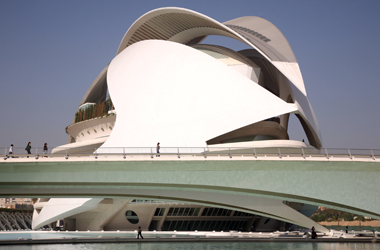
at the Palau de Les Arts Reina Sofia in Valencia


Valencian dramatic opera in three acts
Music by Manuel Palau
Libretto by Xavier Casp
Premiere (concert version): València, Palau de la Música, 23rd May 2002

24th, 27th, 30th April 2014 –
The performances start at 8:00 pm. Sundays and holidays, at 7:00 pm
Palau de Les Arts Reina Sofia, Valencia, Sala Principal

Conductor
Manuel Galduf Stage Director
Antonio Díaz Zamora

Set Designer
Manuel Zuriaga

Costume Designer
Miguel Crespí

Lighting Designer
Carles Alfaro

Videocreator
Miguel Bosch

Choreography
Julia Grecos

New production
Palau de les Arts Reina Sofía


Ballet de la Generalitat
Inmaculada Gil-Lázaro, director

Escolania de la Mare de Déu dels Desemparats
Luis Garrido, chorus master

Cor de la Generalitat Valenciana
Francesc Perales, chorus master

Orquestra de la Comunitat Valenciana 

Rosa
Minerva Moliner

Tonet
Javier Palacios

Teresa
Sandra Ferrández

Toni
Josep Miquel Ramon

Anna
María Luisa Corbacho

Maria
Cristina Faus

Tio Estrop
Bonifaci Carrillo**

Sailor
Boro Giner**

Inside voice
Yolanda Marín**
** Cor de la Generalitat Valenciana


palau

PALAU DE LES ARTS REINA SOFIA


S Y N O P S I S

Act I
A village in the Marina region of Valencia, around 1940. It is a sunny spring morning. Maria is putting the finishing touches to her brother Toni’s house to welcome him, a modest fisherman in his forties, and his wife back from their honeymoon. The newly weds, Toni and his young wife Rosa, appear accompanied by Estrop (Rosa’s grandfather), Rosa’s friends and her sister Teresa. Maria and Ana (Rosa and Teresa’s mother) go upstairs to prepare the bedrooms. Rosa’s friends say goodbye to her, wishing her all the best in her marriage.

The two sisters are alone. Rosa admits she is not completely happy with Toni, as she cannot forget her previous boyfriend Tonet (Toni’s son), who disappeared three years before and is presumed dead. Teresa encourages her to leave the past behind and concentrate on her new life. She says goodbye to her and leaves with Estrop. Before Maria leaves, she talks to Rosa and makes her see that now she is the mistress of that house. Once again the name of Tonet inevitably crops up in the conversation.

Rosa drops into a chair, exhausted. In a deep but restless sleep, she sees spirits dancing round the room and hears Tonet’s voice telling her that his ship did not sink as everyone believed, but that he was kidnapped. She wakes up startled. Just at that moment, Toni bursts in, upset. He is holding a letter from his son Tonet who explains that he is alive and living in Germany, and that he has started his journey back to the village. Rosa and Toni are excited at such good news, but they are also worried about how Tonet will react when he finds out that his fiancée and father have married. At that moment Tonet appears in the hall by surprise. Father and son embrace. Tonet tries to kiss Rosa, but she turns away not knowing what to say. Toni clears the confusion saying that Rosa is now his wife. Tonet cries out, furious. Rosa faints.

Act II
Preparations are underway at Rosa and Toni’s house for the baptism of their first child. The guests sing canticles as an offering of the child to the figure of Christ of the fishermen. More guests arrive. Finally the baby’s godparents arrive (Tonet and Teresa) carrying the baby and the celebration begins with a series of dances.

Tonet confesses to his father that he can no longer live in the same family environment as him and Rosa, who approaches at that moment and becomes involved in the argument. Tonet reproaches his father for stealing the love of his life from him, and he proposes to go somewhere far away. Teresa appears as the situation becomes more strained. Toni moves away and Rosa begins to cry. Teresa consoles Tonet and affectionately speaks to him while she caresses him. She is in love with him. Rosa and Toni, each one from an aside, look on emotionally, aware that a relationship is flourishing between the couple that will bring peace to them all. But, deep down, Rosa does not want this to happen as she is still in love with Tonet.

Act III
Rosa rocks the cradle while she sings. Tonet enters the house very agitated, in search of a rope. He kisses Rosa, a kiss that seems to bid her farewell, and leaves quickly. Maria lights a candle at the feet of the figure of Christ and tells Rosa that Toni is fighting in his ship against the swell (Maror) not far from the port. All the men have gone to help him and all they can do is wait and pray. But Rosa cannot hold back her distress any longer and she runs out in the direction of the port. Maria stays with the child.

The sad expression on the face of Estrop standing in the hall forebodes the tragedy: Toni has drowned despite Tonet’s attempts to save him. Tonet was seriously injured when he was thrown by the sea against a rock. The fishermen carry him home on their shoulders. Rosa embraces and kisses him in despair. Tonet is delirious and keeps asking if Toni has been saved. Finally, he realises Toni has not been saved and he dies.

Posted in OPera | Tagged , , , , , , | Leave a comment