Welsh National Opera presents “Manon Lescaut”

Welsh National Opera presents:

“Manon Lescaut”

Giacomo Puccini

New Production

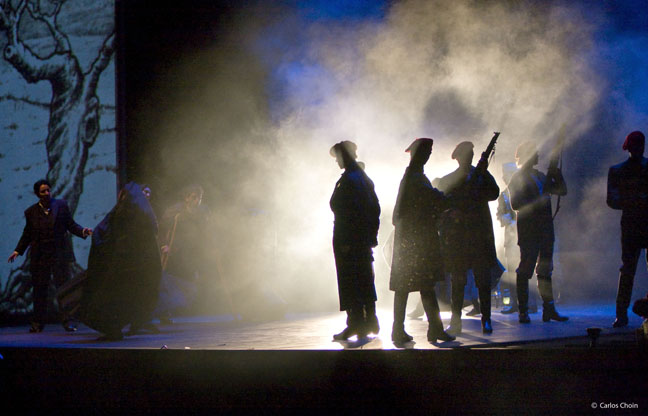
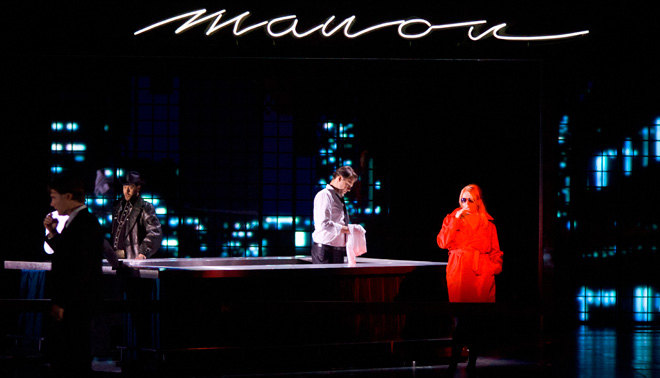
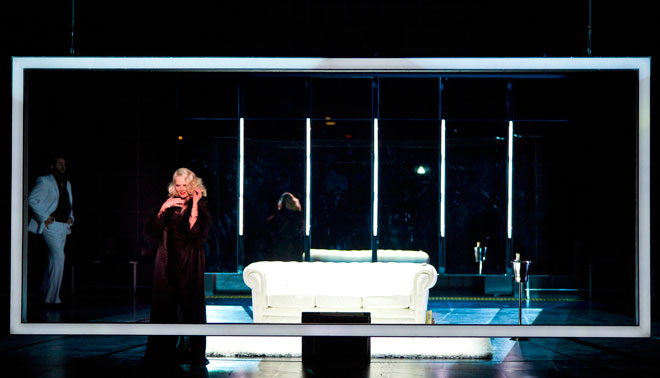
Manon-Lescaut---photo-credit-Forster---La-Monnaie-1_0

Manon has been seduced. As an impressionable young woman she wanted it all. She wanted to taste the tempting fruit of adult life. Now just months later she has discovered that the fruit is rotten at the core. Does Manon have any chance of salvation? 

Manon Lescaut is the classic Fallen Woman. Puccini charts her rapid descent from innocent to criminal with feverish intensity. If you enjoy La bohème, Madam Butterfly and Tosca you will want to explore Puccini’s breakthrough hit and first great opera.

“I’m looking forward to working on Manon Lescaut as I’ve never heard it before. I know whenever Puccini is in our repertoire I need to bring tissues to rehearsals, his music always moves me to tears.”

Katie Heath-Jones, Deputy Stage Manager

Cities

FREE pre-performance talks 
Prior to every performance of Manon Lescaut and Boulevard Solitude.

The Whole Story
Thursday 6 February – Wednesday 19 March
The Whole Story is the perfect introduction to the Fallen Women season. Before the performances begin, our team of experts will guide you through the music, stories and background to each opera.

Literary inspirations
Friday 28 February
A special hour long talk looking at how the season’s operas draw on classics by Dumas and and Prévost.

David Pountney in Conversation
Thursday 7 February
David Pountney and a key figure from the arts explore the Fallen Women theme.

Conductor Lothar Koenigs
Director Mariusz Trelinski
Set Designer Boris Kudlicka
Costume Designer Magdalena Musial
Choreography Tomasz Wygoda
Video Projections Bartek Macias
Lighting Designer Felice Ross

Cast includes
Manon Lescaut Chiara Taigi
Lescaut David Kempster
Chevalier des Grieux Gwyn Hughes Jones
Geronte di Ravoir Stephen Richardson

All performances start at 7.15pm

Running time approximately 2 hours 30 minutes including one interval

Sung in Italian with surtitles in English (and Welsh in Cardiff and Llandudno)

Co-production with Teatr Wielki, Warsaw and La Monnaie, Brussels

Manon Lescaut Gallery

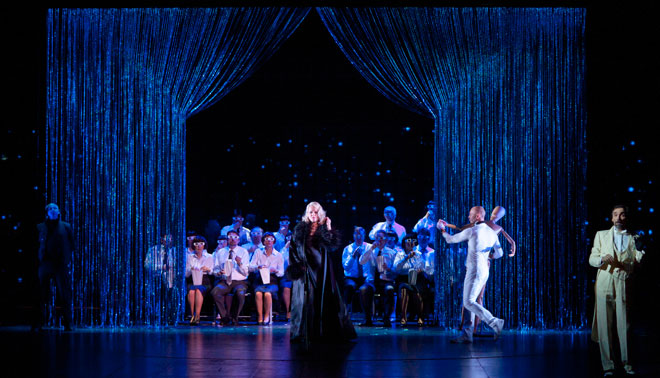
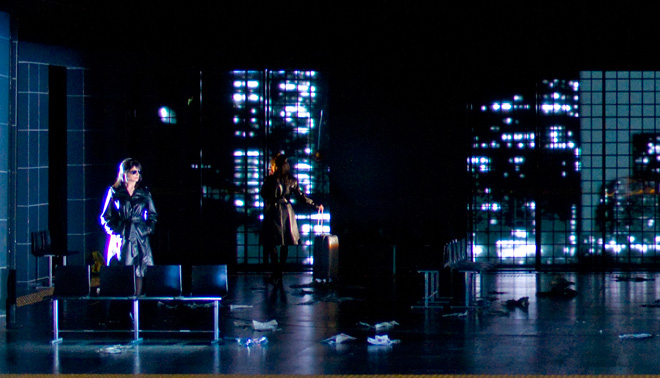
Images by Forster

Manon-Lescaut---Photo-credit-Forster---La-Monnaie-8_0 Manon-Lescaut---Photo-credit-Forster---La-Monnaie-2 Manon-Lescaut---Photo-credit-Forster---La-Monnaie-3 Manon-Lescaut---Photo-credit-Forster---La-Monnaie-4_0 Manon-Lescaut---Photo-credit-Forster---La-Monnaie-5 Manon-Lescaut---Photo-credit-Forster---La-Monnaie-6_0 Manon-Lescaut---Photo-credit-Forster---La-Monnaie-7_0

Posted in OPera | Tagged , , , , , , , | Leave a comment

“Opera Unlimited” in Poland

Opera UnlimitedlogooperaKrakov

Opera Unlimited

Production team:

Artistic Director
Laco Adamik, Grzegorz Brajner, Elena Korpusenko, Bogusław Nowak, Marek Pacuła, Bożena Pędziwiatr


Cast:

SOLOIST A | Karolina Wieczorek, Katarzyna Oleś-Blacha

SOLOIST B | Magdalena Barylak, Marta Abako

SOLOIST C | Monika Korybalska, Agnieszka Cząstka

SOLOIST D | Krzysztof Witkowski, Michał Kutnik

SOLOIST E | Krzysztof Kozarek, Adam Sobierajski

SOLOIST F | Volodymyr Pankiv, Krzysztof Dekański

MASTER | Marek Pacuła, Sławomir Rokita

Assistant: Stanisław Knapik, Władysław Guzik
Tutor: Kristina Kutnik

Ballet
Gabriela Kubacka, Mizuki Kurosawa
Maksim Kileyeu, Aurimas Sibirskas

Dates

26.02.2014
time: 11:00 am
scene: Main Stage
duration: 1 hr. 30 min.

22.01.2014
time: 11:00 am
scene: Main Stage
duration: 1 hr. 30 min.

27.11.2013
time: 11:00 am
scene: Main Stage
duration: 1 hr. 30 min.

Opera Unlimited

An educational spectacle in which the orchestra and soloists of the Krakow Opera will stage fragments of the greatest opera, operetta, musical and ballet works. The purpose of the performance is to show young spectators how a theatre spectacle is created and to introduce them to names and the most eminent composers and performers of these works through an anecdote and an attempt to define genres of a musical theatre.

The host of the spectacle will be Marek Pacuła – a famous Krakow-based satirist, for years related to the artistic centre “Piwnica pod Baranami”, currently a journalist and an announcer. The spectacle will feature fragments of The Haunted Manor, Carmen, Madama Butterfly, The Merry Widow, Don Giovanni, Swan Lake and other.

Posted in Music, OPera | Tagged , , , , , , , | Leave a comment

A MASKED BALL (Un ballo in maschera) in Toronto

A MASKED BALL (Un ballo in maschera)

Giuseppe Verdi

Canadian Opera Company

An all-star cast includes Canada’s great diva Adrianne Pieczonka and the exciting tenor Dimitri Pittas.

Composed directly after his hugely successful Rigoletto, La Traviata, and Il Trovatore, Verdi’s A Masked Ball (Un ballo in maschera) depicts a deeply human tale of forbidden passion between two very grown-up lovers. This stunning production sets Verdi’s abiding love triangle in the American south of the 1960s, with its undertones of Kennedy-era tensions and power plays.

FEBRUARY 2 TO 22, 2014


On stage at the Four Seasons Centre, 145 Queen St. W., Toronto.
Performance time is approximately three hours including two intermissions.
Sung in Italian with English SURTITLES™.

Cast 

Amelia: Adrianne Pieczonka

Riccardo: Dimitri Pittas

Ulrica: Elena Manistina

Renato: Roland Wood

Oscar: Simone Osborne

Silvano: Gregory Dahl

Samuel: Evan Boyer

Tom: Giovanni Battista Parodi

Magistrate: John Kriter

Servant of Amelia: Owen McCausland

Creative Team


Conductor: Stephen Lord

Directors: Jossi Wieler & Sergio Morabito

Set Designer: Barbara Ehnes

Costume Designer: Anja Rabes

Lighting Designer: Olaf Freese

<!–Choreographer:

–>

Chorus Master: Sandra Horst

With the COC Orchestra and Chorus

Act I

Scene i, The governor’s house
Riccardo reviews his guest list for the coming masked ball. Seeing the name of Amelia, he is moved and privately expresses his guilty love for his secretary’s wife. Renato, his secretary, then enters to warn Riccardo about plots against Riccardo’s life, which the governor laughs off. The judge appears, requesting that Riccardo exile Ulrica, a fortune-teller suspected of supernatural practices. Oscar, the page, defends Ulrica and Riccardo decides to visit her in disguise to see for himself, inviting the court to follow him.

Scene ii, Ulrica’s dwelling
In hiding, Riccardo sees Amelia ask the fortune teller to rid her of the love that torments her. Ulrica tells her of a healing plant that grows in the graveyard nearby. Riccardo vows to follow Amelia on her quest. As his courtiers appear, he asks for his own fortune and is told he will soon die by the hand of a friend. Ulrica says the murderer will be the next person to shake his hand, a prophecy that seems absurd to Riccardo as Renato enters and greets him with a handshake. But Riccardo’s faith in his friend is unshaken. The people recognize Riccardo and all hail their beloved governor.


Act II

The graveyard
A terrified Amelia searches for the plant that will make her fall out of love, and prays for assistance in her ordeal. Riccardo appears and declares his love for her. At first reluctant, Amelia finally admits her love as well. At the sound of footsteps, she lowers her veil and conceals her identity. Renato appears, warning of approaching assassins. Riccardo agrees to leave only after Renato promises to take the unknown woman to the gates of the city, without speaking to her or looking at her. When the conspirators, Samuel and Tom, appear and find Riccardo gone, they decide to amuse themselves by revealing the face of the mysterious woman. When it becomes clear that Renato will fight rather than permit this, Amelia raises her veil. Renato is astounded and the conspirators break out in laughter. Enraged by his friend’s betrayal, Renato arranges to meet with the conspirators the next day.


Act III

Scene i, Renato’s study
Renato informs Amelia that she must die. Although she admits her love for Riccardo, she insists that she has not betrayed her husband and begs to see her young son once more. Renato meets with Samuel and Tom and vows to help them kill the governor. They elect to draw lots to decide who will strike the final blow. Renato forces Amelia to draw and she is horrified when she selects her husband’s name. Oscar enters, bringing invitations to a masked ball in the governor’s palace. Renato decides to take Amelia with him and carry out the assassination at the ball.

Scene ii, The governor’s study
Riccardo decides to sign an order sending Renato and Amelia back to England and muses on the loss of his love. He is brought an anonymous message warning that he risks assassination at the ball, but decides to see Amelia one last time.

Scene iii, The ballroom in the governor’s mansion
Renato, Samuel, Tom and their followers search for Riccardo. Renato persuades Oscar to reveal the governor’s disguise. Amelia enters, finds Riccardo and begs him to escape, revealing that she sent the anonymous note. He reiterates his love, but tells her that she must leave with her husband. As they bid a last, tender farewell, Renato throws himself between them and kills the governor. Before he dies, Riccardo bids his people to release Renato and assures him that his wife’s honour is intact. Everyone grieves as Riccardo dies.


(l – r) Catherine Naglestad as Amelia, Piotr Beczala as Riccardo, Dalibor Jenis as Renato, Anna Prohaska as Oscar, Oliver Zwarg as Samuel and Andreas Bauer as Tom in the Berlin Staatsoper production of Un ballo in maschera. Photo: Ruth Walz © 2008

Posted in Music, OPera | Tagged , , , , , , , , | Leave a comment

FALSTAFF in Stuttgart

Logo of the Oper Stuttgart

Presents:

Falstaff

Giuseppe Verdi
In Italian with German supertitles

In Shakespeare’s drama Sir John Falstaff, an aristocratic crook, loses his way and finds himself in Windsor – amongst hard-working citizens, who are now forced to defend everything they have worked for and have earned against that uninvited guest: their money, their children, their women. Windsor’s women and children, however, have minds of their own.
Half a century after his first success with Nabucco, 80-year-old Giuseppe Verdi concludes his life’s work with one of world literature’s best musical comedies ever.
Pre-performance Introduction (in German)
45 minutes prior to the start of every performance, Opera House, Grand Tier Foyer (Foyer I. Rang)

Late Night Talks (in German)
Directors, dramaturgs, singers and conductors of the productions answer questions by the audience.

  • Saturday, 26 October 2013
  • Wednesday, 13 November 2013

Opernhaus
Premiere
20 October 2013
Duration
Act I and Act II: approx. 1 hour 25 min
– Interval (after Act II): approx. 25-30 min –
Act III: approx. 45 min

Performance
02.01.2014 19:00 – 22:00 

ARTISTIC TEAM 
Conductor: Sylvain Cambreling, Till Drömann,

Director: Andrea Moses,

Stage Design: Jan Pappelbaum,

Costumes: Anna Eiermann,

Lighting: Reinhard Traub,

Chorus: Johannes Knecht,

Dramaturgy: Wilfried Buchholz, Moritz Lobeck

CAST

Sir John Falstaff: Albert Dohmen,

Ford: Gezim Myshketa,

Fenton: Atalla Ayan, Gergely Németi,

Dr. Cajus: Heinz Göhrig, Uwe Eikötter,

Bardolfo: Torsten Hofmann, Albrecht Kludszuweit,

Pistola: Roland Bracht,

Mrs Alice Ford: Simone Schneider, Christiane Iven,

Nannetta: Pumeza Matshikiza, Mirella Bunoaica,

Mrs Quickly: Hilke Andersen, Lindsay Ammann,

Mrs Meg Page: Sophie Marilley,

Der Wirt (stumme Rolle): Maarten Güppertz,

With: Staatsopernchor Stuttgart, Staatsorchester Stuttgart


Posted in Music, OPera | Tagged , , , , , , , , , | Leave a comment

The Lyric Opera of Chicago presents “The barber of Seville”

The Lyric Opera of Chiacgo presents

The Barber of Seville

  • by Gioachino Rossini
  • In Italian with projected English texts.Rossini’s The Barber of Seville is a new production.
  • Approximate running time: 3h 10m

February 1, 3, 6, 9, 12, 15, 18, 21, 25, 28 

Figaro! Figaro! Figaro! Rossini’s music sparkles like sunshine with one hit tune after another.

Not only is Figaro the Barber of Seville, he’s also the ultimate Mr. Fix-It! This time he’s out to ensure that Count Almaviva can marry lovely Rosina before her grumpy old guardian drags her to the altar himself.

  Anna ChristieA Streetcar Named DesireShrekCat on a Hot Tin RoofHow to Succeed in Business…Tony and Olivier Award-winning director Rob Ashford keeps racking up major hits. Whether working in comedy or drama, his productions “pull out all the stops.” The Independent, London

New Lyric Opera production of Gioachino Rossini’s The Barber of Seville generously made possible by the Gramma Fisher Foundation of Marshalltown, Iowa, the NIB Foundation, Randy L. and Melvin R. Berlin, and Margot and Josef Lakonishok

Starring

  • Nathan Gunn

    Figaro

    Nathan Gunn

    One of today’s most in-demand baritones, dashing Nathan Gunn “is a vibrant Figaro with a potent sexuality.” Opera News

  • Isabel Leonard

    Rosina

    Isabel Leonard 

    “With her passionate intensity and remarkable beauty, Isabel Leonard makes the role of Rosina her own.” The New York Times

  • Alek Shrader

    Almaviva

    Alek Shrader 

    Alek Shrader is an Almaviva with comic wit and matinee-idol good looks.” Opera News

  • Alessandro Corbelli

    Bartolo

    Alessandro Corbelli 

    When it comes to definitive interpretations of iconic buffo characters, Alessandro Corbelli is unsurpassed. “He could have created Bartolo, all bluster and great comic timing.” The Independent, London

    CAST

    Barber of Seville - Kyle Ketelsen   Basilio
    Kyle Ketelsen
    Barber of Seville - Tracy Cantin  Berta
    Tracy Cantin
    Barber of Seville - Will Liverman  Fiorello
    Will Liverman
    Barber of Seville - John Irvin  Sergeant
    John Irvin
    Barber of Seville - Michele Mariotti  Conductor
    Michele Mariotti*
    Barber of Seville - Rob Ashford  Director
    Rob Ashford*
      Set Designer
    Scott Pask* 
      Costume Designer
    Catherine Zuber* 
      Lighting Designer
    TBA
      Chorus Master
    Michael Black

    A NEW BARBER IN TOWN
    Rossini’s sparkler boasts stellar cast

    by Jack Zimmerman

    Figaro is a fixer, the guy who makes everything right for Rosina and Count Almaviva. He’s a man of many talents and the central character in Il barbiere di Siviglia (The Barber of Seville), one of the greatest comic operas ever written. We first get to know him as he tells us he’s needed by everybody and has many places to be in the famous “Largo al factotum.”

    Figaro’s clever, optimistic, and at times opportunistic, but always trying to help others. “He’s a modern man, and I try to get that across without turning him into a comedian,” says Lyric favorite Nathan Gunn, who sings Figaro in this new production of the Rossini classic. “I enjoy doing the part because it’s a big step out of who I actually am. Figaro’s an opportunist, but his intentions aren’t nefarious or selfish. He doesn’t want to hurt others, just do the right thing. He dislikes those who are corrupt and sneaky, and likes those who have good intentions and good will. I doubt I’d be his pal, but I’d probably enjoy having a drink with him once in a while.”

    Rossini’s best-known opera is packed with plenty of coloratura arias, laugh-out-loud scenes, and memorable characters. It’s become such a part of us that it’s received a fair share of pop-culture references – for instance, the Bugs Bunny cartoon The Rabbit of Seville, which has introduced countless kids and adults to the strains of “FigaroFigaroFIGARO.”

    Most impressive is the fact that Rossini’s classic has remained relevant – and more important, has remained funny – after almost 200 years of continual performance. By age 21, thanks to Tancredi and L’italiana in Algeri, Rossini was Italy’s most popular composer. He wrote Barber before he was 25 – not bad for a kid who apprenticed to a Bolognese pork butcher when he was 12!

    The Barber story was adapted from French playwright Beaumarchais’ Le barbier de Séville. Beaumarchais wrote three Figaro plays in all. His Le mariage de Figaro inspired Mozart’s Le nozze di Figaro. All three plays mirror the changing social attitudes around the time of the French Revolution.

    In The Barber of Seville the beautiful Rosina is pursued by Count Almaviva, but Bartolo, Rosina’s guardian, wants to marry her himself. Before it’s all over, the Count has assumed several identities: 1) a guy named Lindoro, 2) a drunken soldier, and 3) a music teacher, Don Alonso.

    There’s a close call with Rosina feeling betrayed and briefly considering marriage to Bartolo, but through it all, with a good deal of scheming by Figaro and several comedic encounters, Rosina winds up with the Count, and Bartolo, accepting his fate, gives the couple his blessing.

    While the story is amusing, it’s Rossini’s music that makes the opera so universally appealing. The opera is still entertaining because, as renowned opera scholar Philip Gossett puts it, “Rossini was careful to write into it his reactions to the conventions of Italian opera of his time. In his opening Introduzione, the Count sings his serenade to Rosina and the musicians follow with a typical Rossini crescendo. The point of the crescendo is to make more noise each time the melody is repeated, but the Count really wants the musicians to be quiet.

    “Likewise, Rossini plays with the cabaletta – the quick section that concludes a musical number. Convention holds that the theme will be repeated a second time. But in this case Figaro tries to hurry the lovers along, only to find they won’t be hurried, and the ladder by which they had planned their escape disappears from under them! This is all part of what keeps the opera so amusing and so fresh all these years.”

    For the past 25 years, the Barber seen at Lyric was the Magritte-inspired, John Conklin-designed production. This season Lyric audiences will experience director Rob Ashford’s take on the work with set designs by Scott Pask and costume designs by Catherine Zuber.

    All are making their company debuts with this new Lyric production.

    The Tony- and Olivier Award- winning Ashford comes from a dance background (he made his Broadway dance debut in the 1987 Lincoln Center revival of Anything Goes). A director of both drama and comedy, he’s scheduled to direct and choreograph Carmen at Houston Grand Opera next spring.

    Pask’s work on The Book of Mormon earned him the Tony Award for Best Scenic Design of a Musical. He made his Metropolitan Opera debut with designs for Benjamin Britten’s Peter Grimes and has designed, among other operas, Albert Herring for Opera North, in Leeds, England.

    “We wanted the scenic design to have the look and feel of 18th-century Seville,” says Pask, “infusing the comedic timing and movement of the opera throughout the transformation of the set, as it moves swiftly between locales, utilizing Rob’s extraordinary gift for musical storytelling.”

    Zuber was the costume designer for the Met’s Doctor Atomic and has worked with the Canadian Opera Company, New York City Opera, Glimmerglass, and the opera companies of Houston and Los Angeles. “When considering the costumes for The Barber of Seville,” she says, “Rob Ashford felt the characters should reflect the time period in which the piece was written and have the flavor of Seville. The characters have delightful parallels with commedia dell’arte, creating the challenge to imbue the costumes with a restrained humorous silhouette. We also thought about the movement that the costumes could provide in telling our story.”

    Italian-born Maestro Michele Mariotti, principal conductor of the Teatro Comunale di Bologna since 2008, will make his Lyric debut in this production. He conducted the Metropolitan Opera’s recent “Rat-Pack” Rigoletto.

    In Lyric’s production, Rosina is sung by mezzo-soprano Isabel Leonard in her much anticipated Lyric debut. She’s performed the role before, in Vienna and twice at the Met. But the very first time she sang Rosina was in Denver, six-and-a half months pregnant – and struggling with the altitude of the mile-high city. “That in itself was comic,” she says. 

    “I have never thought of Rosina as a spicy, manipulative, conniving person,” says Leonard. “She’s actually incredibly kind, sweet and gentle. This [marriage] is her last hope and she knows it. If this doesn’t work, she’ll have to marry Don Bartolo. She’s smart enough to take advantage of the situation.”

    Count Almaviva is sung by Alek Shrader, who debuted at Lyric as Tamino in 2011/12’s The Magic Flute. The ultimate interpreter of Italian comic roles, the legendary Alessandro Corbelli sings the role of Bartolo. Corbelli was Dulcamara in The Elixir of Love here in the 2009/10 season. Basilio is sung by Kyle Ketelsen, who starred in the title role of Mozart’s The Marriage of Figaro at Lyric in 2009/10.

    Figaro may be central to the opera, but as Gunn says, “It’s really a story about a number of characters. Figaro never draws attention to himself, but subtly distracts people so that something else can happen. His goal is to get the Count and Rosina together. That’s my point of view when I come into the opera. Everything I say and do has one goal, which is to get those two people together.”

    They do get together, and their story has delighted opera goers for close to 200 years. And it has delighted Lyricpatrons since the company’s first season 59 years ago, when Tito Gobbi was Lyric’s first Figaro. This production is sure to continue the tradition. As Figaro sings in “Largo al factotum”: “Ah, isn’t life good? How pleasant it is for a barber of class!”

Posted in Music, OPera | Tagged , , , , , , , , | Leave a comment

Madama Butterfly performed in Tokyo

mainmenuTokyo

Presents:

madamaTokyo

Madama Butterfly

    • 2013/2014 Season
    • Giacomo Puccini:Madama Butterfly
      Opera in 2 Acts
      Sung in Italian with Japanese Supertitles
    • OPERA HOUSE
  • PERFORMANCES

    2014
    January 30 February 2 February 5 February 8
    Thursday Sunday Wednesday Saturday
     
     
    2:00
    *
     
     
    2:00
     
    7:00


    7:00
    *


Kuriyama Tamiya’s production of Madama Butterfly has been part of the NNTT opera line-up five times since 2005, the year it premiered. The stage is backdropped by a fluttering American flag, which symbolizes the servant-master relationship between East and West that is explored in the original work. Keri-Lynn Wilson will conduct, becoming the first woman conductor to perform here at NNTT. Ms. Wilson maintains an active performance schedule in the US and Europe. The role of Cio-Cio San will be sung by Alexia Voulgaridou, making her NNTT debut. Pinkerton will be sung by Mikhail Agafonov, who gave a much-lauded performance in our 2010 production of Andrea Chénier in the title role. Sharpless will be sung by Kai Eijiro, who currently performs with the Vienna State Opera. Mr. Kai also sang Sharpless in the 2011 NNTT production of Madama Butterfly.

STAFF

Conductor : Keri-Lynn Wilson
Production : Kuriyama Tamiya
Scenery Design : Shima Jiro
Costume Design : Maeda Ayako
Lighting Design : Katsushiba Jiro


(Conductor)
Keri-Lynn Wilson

(Production)
Kuriyama Tamiya

CAST

Madama Butterfly : Alexia Voulgaridou
Pinkerton : Mikhail Agafonov
Sharpless : Kai Eijiro
Suzuki : Obayashi Tomoko
Goro : Uchiyama Shingo
Lo zio Bonzo : Shimura Fumihiko
Il principe Yamadori : Kobayashi Yoshiki
Kate Pinkerton : Ono Wakako

Chorus : New National Theatre Chorus
Orchestra : Tokyo Symphony Orchestra

Photos

(Madama Butterfly)
Alexia Voulgaridou
Photos

(Pinkerton)
Mikhail Agafonov
Photos

(Sharpless)
Kai Eijiro
Photos

(Suzuki)
Obayashi Tomoko
Photos

(Goro)
Uchiyama Shingo
Photos

(Lo zio Bonzo)
Shimura Fumihiko

SYNOPSIS

The setting is Nagasaki in the Meiji Era. The U.S. naval officer Pinkerton buys the freedom of 15-year-old Cio-Cio-San in Nagasaki, where his ship docked, and marries her without giving it too much thought. Pinkerton soon departs for America. Despite his long silence, Cio-Cio-San waits for her husband’s return in the belief that “one fine day he will come back” and turns down a new proposal of marriage. Finally Pinkerton’s ship calls at Nagasaki again. But he is accompanied by his wife Kate. Having seen an unfamiliar American woman and learned the whole truth, Cio-Cio-San kills herself with a dagger left by her father.

New National Theatre Foundation
1-1-1 Hon-machi, Shibuya-ku, Tokyo
151-0071, Japan
Tel. +81-3-5351-3011
Posted in Music, OPera | Tagged , , , , , , | Leave a comment

EDMONTON OPERA Presents “Die Fledermaus”

EDMONTON OPERA Presents:

fledermaus-edmonton

Die Fledermaus

Production sponsored by

The performance is approximately 2 hours and 30 minutes, with one 20-minute intermission after Act1.

A sparkling comedy in three-quarter time.

Northern Alberta Jubilee Auditorium

Saturday, February 1, 2014 » 8:00pm

Tuesday, February 4, 2014 » 7:30pm

Thursday, February 6, 2014 » 7:30pm

Sung in English with English supertitles

Gabriel von Eisenstein has been sentenced to a fortnight in jail, but his confinement is preceded by an evening of mistaken identity. At a masked ball, two old flames reunite and flirtations occur between a woman and her husband who don’t recognize each other. One man’s elaborate plan for revenge results in a comedy of errors, accompanied by some of opera’s most catchy music.

Please note that as part of our 50th anniversary celebrations, Edmonton Opera will be providing complimentary parking to all of its patrons at the Jubilee parkade during all opera performances this season. 

Die Fledermaus

 
Peter Dala , Conductor

Peter Dala

Peter has worked for the Basel Ballet, Zurich Ballet in Switzerland, the Hungarian State Opera and the National Ballet of Hungary, with performances in Monte Carlo, Germany, Israel, New York, Spain and China. As Edmonton Opera’s chorusmaster from 1996 for 2012 and resident conducter from 2001 to 2012, he prepared the chorus for roughly 40 operas and conducted numerous mainstage productions. In 2001 he began his affiliation with Alberta Ballet and was appointed music director in 2005. Most recent performances were Tchaikovsky’s Nutcracker in Edmonton, Calgary, and Ottawa’s National Arts Centre. Last spring, he conducted Mozart’s Requiem — choreographed by Jean Grand-Maitre, with the Richard Eaton Singers, and soloists Nathalie Paulin, Allyson McHardy, Ben Butterfield and John Fanning — and Yukichi Hattori’s world premiere of Pomp without Circumstance. Last season, he was the repetiteur for Edmonton Opera’s Aida and Les Contes d’Hoffmann.


Allison Grant , Director

Allison Grant

Allison Grant recently choreographed an acclaimed production of Die Fledermaus at the Canadian Opera Company and Pirates of Penzance for Vancouver Opera. A highlight of the past season was an acclaimed production of Romeo et Juliette for Vancouver Opera. Other directing highlights include Die Zauberflöte (Sarasota Opera), Don Giovanni and Carmen (Opera Ontario), Così fan tutte (Vancouver Opera), L’Italiana in algeri  (L’Opéra de Montréal), Smokey Joe’s Café (Stagewest Calgary) and Leslie Arden’s A Meeting of Minds (CanStage). As a choreographer her work has been seen in The Merry Widow for opera companies in Hawaii, Edmonton and Hamilton, Die Fledermaus, Un ballo in maschera and Eugene Onegin (Vancouver Opera), The Queen of Spades, Dido and Aeneas, Don Giovanni and Eugene Onegin (Canadian Opera Company) and Die Fledermaus (Kentucky Opera). At Theatre Athena where she was recently artistic director, she directed Master Class, Private Lives and the Canadian premiere of Itamar Moses’ brilliant play, Bach at Leipzig.


David Fraser , Lighting Designer

David Fraser

Previous designs with the Edmonton Opera include Aida, Cavalleria Rusticana/I Pagliacci and Otello. As a Calgary-based artist, David works extensively across the country in theatre, dance and opera. His theatrical designs have been seen from the National Arts Centre in Ontario, to the Vancouver Opera in British Columbia, while his designs in dance have been seen both nationally and internationally with choreographers Tania Alvarado and Pam Tzeng.  He has been nominated for a Jessie Richardson Award, two Betty Mitchell Awards, and 10 Elizabeth Sterling Haynes Awards, and he has been the recipient twice for his designs.


Betty Waynne Allison

Soprano Betty Waynne Allison is an alumna of the Canadian Opera Company’s Ensemble Studio. She made her French debut in Metz as Alice in Falstaff and created the title role in Mary’s Wedding for its world premiere in Victoria. The title role in Floyd’s Susannah was her U.S. debut role in Milwaukee and on the concert stage, she was heard in Galgenlieder à 3 by Gubaidulina (Queen of Puddings), and was featured in Brahms’ Requiem for the Winnipeg Symphony and the Grand Philharmonic Choir. Leading assignments in Ensemble productions included Fiordiligi (Così fan tutte), Donna Elvira (Don Giovanni), and Mona in the world premiere of James Rolfe’s Swoon. On the mainstage she has covered and performed  roles including Erste Dame (Die Zauberflöte), Donna Anna (Don Giovanni), Luisa Miller (Luisa Miller), Turnspit (Rusalka), Freia (Das Rheingold), Marguerite (Faust), Countess (Le nozze di Figaro), Tatyana (Eugene Onegin) and Amelia (Simon Boccanegra).


Jacqueline Woodley

A former member of the Canadian Opera Company Ensemble, soprano Jacqueline Woodley drew wide attention starring in the world premiere of Ana Sokolovic’s opera Svadba – Wedding, commissioned and produced by Queen of Puddings Music Theatre.  She sang the role of Milica, the bride, to rave reviews and joined the company for the European and Canadian tours of Svadba in the 2012/13 season.  After her success as Papagena in the Ensemble production of Die Zauberflöte, she sang Iris in Handel’s Semele (Four Seasons’ Opera Centre). Other roles with the COC include the Page (Rigoletto) and First Priestess (Iphigénie en Tauride). Jacqueline is featured frequently in the Richard Bradshaw Amphitheatre Free Concert Series, recently for her Les Adieux solo recital as well as in Tenebrae by Golijov, with the Tokai Quartet, Clarinet and dancers and as Lucy in The Telephone. Other recent operatic highlights include the Lace Seller (Death in Venice), Pamina (Die Zauberflöte), Lisette (La Rondine), Miss Wordsworth (Albert Herring), Serpina (La serva padrona), Despina (Cosí fan tutte) and Belinda (Dido and Aeneas).


Gordon Gietz , Eisenstein

Gordon Gietz

Gordon Gietz created the role of Stingo in Nicholas Maw’s Sophie’s Choice at Covent Garden and for the North American première in Washington, DC. He appeared as Tamino, Don Ottavio, Cassio and Alfred at the Opéra National de Paris and created the character of Yonas in the world première of Kaija Saariaho’s Adriana Mater, a role he reprised at the Barbican in London for the British première with the BBC Orchestra. He made his La Scala debut as Chevalier in Dialogues des Carmélites and returned for A Midsummer Night’s Dream as Lysander, his debut role at Glyndebourne and the Gran Teatre del Liceu in Barcelona. Other highlights include Die Nase at the Metropolitan Opera, Steva in Jenufa at the Châtelet and Madrid’s Teatro Real, Hoffmann in Marseille, Don José in Carmen in Montréal, Antwerp and Lille and Béatrice et Bénédict with the New York Philharmonic, Orchestre National du Capitole de Toulouse and the Santa Fe Opera.


Gerald Thompson , Orlofsky

Gerald Thompson

American countertenor Gerald Thompson’s recent successes include his return to the Metropolitan Opera for the role of Bertarido (cover) in Rodelinda, and appearances as Mike Teevee in The Golden Ticket (Atlanta Opera) and at Chicago Opera Theatre in Teseo. He returned to Europe for concert performances of Narvèes in Montezuma (Musikfestpiele Potsdam Sassoucci Festival). Further appearances include his debut at Pacific Opera Victoria as Bertarido and his appearance at New York City Opera in the role of Hegai in Esther. He made his Royal Opera House, Covent Garden, debut in the role of The Dog in The Cunning Little Vixen, and sang Medoro in Orlando in Moscow, in one of the first public appearances in Russia by a countertenor. He is the recipient of the spring 2007 Koloszar Award (New York City Opera), Richard Tucker Foundation Career Grant (2006), second prize in the Opera Division as well as International Media-Jury Prize winner at the 25th International Hans Gabor Belvedere Vocal Competition (2006). 


Adam Fisher , Alfred

Adam Fisher

Vancouver tenor Adam Fisher began his 2012 season in scenic Santa Barbara, California, leading the cast as Tom Rakewell in performances of Stravinsky’s The Rake’s Progress at Music Academy of the West. A graduate of University of British Columbia, Adam joined Calgary Opera’s Emerging Artists Program in 2010, where he performed the roles of Ferrando (Così fan tutte), Wilhelm in The Brothers Grimm (Burry) and several roles in the world premiere of Bramwell Tovey’s The Inventor. With Edmonton’s Opera Nuova, this charismatic young tenor sang Fenton (Falstaff) and Alfred (Die Fledermaus). Adam returned to Calgary as Tamino in Cowtown Opera’s fresh version of Mozart’s The Magic Flute and joined the youthful cast as Alfred in their 2012 production of Die Fledermaus. He recently debuted with Chorus Niagara in Best of Broadway, an orchestral concert of favourite Rodgers and Hammerstein songs from Oklahoma, Carousel, Flower Drum Song and more.


Peter McGillivray , Dr. Falke

Peter McGillivray

Baritone Peter McGillivray was the winner of the 2003 CBC Young Performers Competition and won top prizes at both the Montreal International and the Queen Sonya of Norway singing competitions (2005). He joined the Canadian Opera Company where he has appeared in Dido and Aeneas, Albert Herring, La Bohème, Faust, War and Peace, and Gianni Schicchi. He has appeared with orchestras in Vancouver, Calgary, Edmonton, Regina, Winnipeg, Windsor, London, Kitchener-Waterloo, Quebec City, Liverpool, Oslo, Duisberg and the National Arts Centre Orchestra in Ottawa in repertoire ranging from Messiah to Carmina burana to the St. Matthew Passion. He joined the roster of the Metropolitan Opera in 2010 for productions of La Bohème and Capriccio. Other recent credits include performances with companies in Calgary (Carmen, Manon, Gianni Schicchi, Pagliacci, Moby Dick), Victoria (Madama Butterfly, Albert Herring, Noye’s Fludde), Hamilton (Die Fledermaus) and Ottawa (La Bohème). With Toronto’s Tapestry New Opera, he has starred in the premiere of Omar Daniel’s The Shadow and most recently the 2012 world premiere of Juliet Palmer’s Shelter in Edmonton.


Edward Hanlon

Bass-baritone Edward Hanlon, a 2010 Metropolitan Opera National Council Auditions semi-finalist and Lyric Opera of Chicago Ryan Opera Center finalist, is a graduate of the University of Michigan and McGill University. Recent engagements include covering with the Lyric Opera of Chicago, performing with Michigan Opera Theatre, Virginia Opera, Ohio Light Opera, Winter Opera St. Louis, Toledo Opera and the Siena Music Festival in roles including Figaro (Le nozze di Figaro), Dick Deadeye (H.M.S. Pinafore), Masetto (Don Giovanni), Don Alhambra (The Gondoliers), Sid (La fanciulla del west), Count Ceprano (Rigoletto) and Pish-Tush (The Mikado). An alumnus of several young artist programs, Edward has performed with Des Moines Metro Opera, the Glimmerglass Festival, Ash Lawn Opera, Chautauqua Opera and Summer Opera Lyric Theatre. Edward has upcoming engagements with Toledo Opera and the Lyric Opera of Chicago and currently resides in Chicago with his wife, soprano Tanya.


Tanya Roberts

Tanya Roberts has performed over 30 opera and musical theatre roles in professional and academic arenas throughout North America, Europe and the Middle East. She recently made her solo debut with the Chicago Symphony Orchestra as a principal artist in the Very Special Promenades Concert Series and as the Soprano I cover in Bach’s Mass in B Minor under the direction of Riccardo Muti. Recent highlights include Anna in The King & I and Gianetta in The Gondoliers (Ohio Light Opera Company), Gianetta in The Gondoliers (Gilbert & Sullivan Opera Company), Coffee Cantata and Faure’s Requiem (Salt Creek Chamber Orchestra), Vivaldi’s Gloria (Northeastern Illinois University), and Lucy in The Billy Goats Gruff (Motor City Lyric Opera).  Tanya is in residence with the Lyric Opera of Chicago Chorus.


Aaron Ferguson , Dr. Blind

Aaron Ferguson

Renowned for his intricate physical characterization and flawless comic timing, Aaron is quickly establishing himself as one of the top international comic tenors. Recent performances include Armide (Le Chevalier Danois, Glimmerglass Festival, Royal Opera of Versailles, Opera Atelier), Constable Locke (The Music Man, Royal Opera of Muscat, Oman), Grandpa Joe in Johnny Johnson and Monstatos in Die Zauberflöte (Opera Atelier, Opera Columbus, Penn State), Blind in Die Fledermaus, Basilio/Curzio in Il nozze di Figaro, Nika Magadoff in The Consul, Borsa in Rigoletto, Monostatos in Die Zauberflöte, Spoletta in Tosca and Le Doyen in Cendrillon (Opéra de Montréal, Opera de Québec Gala), Lysander (A Midsummer Night’s Dream, Banff Centre), Apollo (Semele, Pacific Opera Victoria), Riot (Peace, Shannon Festival, Ireland) and Albert in Albert Herring (Opera Nuova). He has performed with Toronto Symphony Orchestra, Orchestre Métropolitain, Tafelmusik, Victoria Symphony, Orchestra London, Vancouver Chamber Singers and Victoria Choral Society. Upcoming engagements include Euryale (Persée, Royal Opera of Versailles and Opera Atelier), Gastone (La Traviata, Opera Highlands), Goro (Madama Butterfly, Opéra de Québec) and Jupiter/Anfinomo (Il ritorno d’Ulysse in patria, Opera Atelier).


Julien Arnold , Frosch


Posted in Music, OPera | Tagged , , , , , , , | Leave a comment

CALGARY OPERA Presents “The Flying Dutchman”

CALGARY OPERA Presents:

“The Flying Dutchman”

Richard Wagner

 New Production 

flying dutchmancalgary

The Flying Dutchman is doomed to endlessly roam the ocean until a woman can break his curse with an undying pledge of love. Senta, the daughter of a ship’s captain, has always dreamed it would be her. One day a wealthy ship comes to port with a dark and mysterious captain at its helm. Be swept away in this haunting ghost story brought to life with Wagner’s powerful and enchanting music.

performances

Sat / feb 01 : 8:00PM

 Wed / feb 05 : 7:30PM

Fri / feb 07 : 8:00PM

Where:

Southern Alberta Jubilee Auditorium
1415 14th Ave. NW

Posted in Music, OPera | Tagged , , , , , , , | Leave a comment

Lucia di Lammermoor in Marseille

Marseille Opera Presents:

from January 31st – February 6th, 2014

Lucia di Lammermoor

Gaetano Donizetti

Friday January 31st, 2014 > 8:00PM
Saturday February 1st, 2014 > 8:00PM
Sunday February 2nd, 2014 > 2:30PM
Tuesday February 4th, 2014 > 8:00PM
Wednesday February 5th, 2014 > 8:00PM
Thursday February 6th, 2014 > 8:00PM
With the inspired themes of romanticism, intensity, elegance and refinement, we will never tire of admiring this bel canto jewel.


Lucia di Lammermoor

Opera in 3 acts
Libretto by Salvatore CAMMARANO from the novel by Sir Walter SCOTT.
First performed in Naples, Teatro San Carlo, on September 26th, 1835.
Last performed at Marseille Opéra, on April 15th, 2007.

Coproduction Opéra de Lausanne / Marseille Opera

Conductor : Alain GUINGAL
Director : Frédéric BÉLIER–GARCIA
Assistant Director : Caroline GONCE
Scenic Designer : Jacques GABEL
Costume Designer : Katia DUFLOT
Lighting Designer : Roberto VENTURI

CAST

Lucia : Eglise GUTIÉRREZ (31 january, 2, 4, 6 february)
Lucia : Zuzana MARKOVÁ (1, 5 february)
Alisa : Lucie ROCHE

Enrico : Marc BARRARD (31 january, 2, 4, 6 february)
Enrico : Gezim MYSHKETA (1, 5 february)
Edgardo : Giuseppe GIPALI (31 january, 2, 4, 6 february)
Edgardo : Arnold RUTKOWSKI (1, 5 february)
Raimondo : Wojtek SMILEK (31 january, 2, 4, 6 february)
Raimondo : Nicolas TESTÉ (1, 5 february)
Arturo : Stanislas de BARBEYRAC
Normanno : Marc LARCHER

Marseille Opera Orchestra and Chorus

http://opera.marseille.fr/en/content/lucia-di-lammermoor

Posted in Music, OPera | Tagged , , , | Leave a comment

LUCIA DI LAMMERMOOR in Portland

PORTLAND OPERA PRESENTS:

Portland Opera's Lucia di Lammermoor 2013

Lucia’s love, fanned into madness by an unsympathetic brother, leaves her new bridegroom in a puddle of blood.
This tragic masterpiece, with its ravishing melodies and vocal thrills (as well as a secret rendezvous, a duel, and a murder) is Donizetti’s crowning achievement, and one of the most beloved operas ever composed.
Internationally acclaimed coloratura soprano Elizabeth Futral makes her Portland Opera debut as Lucia. The New York Times called Ms. Futral “vocally luminous, emotionally vulnerable and brilliant,” and praised her “mesmerizing combination of vocal elegance and expressive ferocity.”
Sung in Italian with English translations projected above the stage.
 

Cast  
   
Lucia Elizabeth Futral
Alisa Melissa Fajardo
Edgardo Scott Ramsay
Normanno Carl Halvorson
Arturo Ian José Ramirez
Enrico Weston Hurt
Raimondo Peter Volpe
   
Original Production James Robinson
Stage Director Doug Scholz-Carlson
Conductor George Manahan

SYNOPSIS

In a feud between the Scottish families of Ravenswood and Lammermoor, Enrico (Lord Henry Ashton of Lammermoor) has gained the upper hand over Edgardo (Edgar of Ravenswood), killing his kinsmen and taking over his estates. By the time of the opera’s action, however, Enrico’s fortunes have begun to wane. In political disfavor, he stakes all on uniting his family with that of Arturo (Lord Arthur Bucklaw), whom he means to force his sister, Lucia (Lucy Ashton), to marry. 

ACT I 

In a ruined park near Lammermoor Castle, Enrico’s retainers prepare to search for a mysterious trespasser. Normanno, captain of the guard, remains behind to greet Enrico, who decries Lucia’s refusal to marry Arturo. When the girl’s elderly tutor, Raimondo, suggests that grief over her mother’s death keeps her from thoughts of love, Normanno reveals that Lucia has been discovered keeping trysts with a hunter who saved her from a raging bull. He suspects the stranger is none other than Edgardo. Enrico rages, and as retainers confirm Normanno’s suspicions, he swears vengeance.

At a fountain near her mother’s tomb, Lucia, fearful of her brother, awaits a rendezvous with Edgardo. She tells her confidante, Alisa, the tale of a maiden’s ghost that haunts the fountain and has warned her of a tragic end to her love for Edgardo. Though Alisa implores her to take care, Lucia cannot restrain her love. On arrival, Edgardo explains he must go to France on a political mission but wishes to reconcile himself with Enrico so he and Lucia may marry. Lucia, knowing her brother will not relent, begs Edgardo to keep their love a secret. Though infuriated at Enrico’s persecution, he agrees. The lovers seal their vows by exchanging rings, then bid each other farewell.


ACT II

In an anteroom of Lammermoor Castle, Enrico plots with Normanno to force Lucia to marry Arturo. As the captain goes off to greet the bridegroom, Lucia enters, distraught but defiant, only to be shown a forged letter, supposedly from Edgardo, proving him pledged to another. Crushed, she longs for death, but Enrico insists on her marrying at once to save the family fortunes. Now Raimondo urges her to consent to the wedding, invoking the memory of her mother and asking her to respect the family’s desperate situation. When she yields, he reminds her there are heavenly rewards for earthly sacrifices. 

In the great hall of Lammermoor, as guests hail the union of two important families, Arturo pledges to restore the Ashtons’ prestige. Enrico prepares him for Lucia’s melancholy by pleading her grief over her mother’s death. No sooner has the girl entered and been forced to sign the marriage contract than Edgardo bursts in. Returning earlier than expected, he has learned of the wedding and come to claim his bride. Bloodshed is averted only when Raimondo commands the rivals to put up their swords. Seeing Lucia’s signature on the contract, Edgardo tears his ring from her finger, curses her and rushes from the hall. Hardly comprehending his words, Lucia collapses. 

ACT III 

Edgardo sits in a chamber at the foot of Wolf’s Crag tower, deep in thought, as a storm rages. Enrico rides there to confront him, and the flames of their enmity flare. They agree to meet at dawn among the tombs of the Ravenswoods to fight a duel.The continuing wedding festivities are halted when Raimondo enters to announce that Lucia, gone mad, has stabbed and killed Arturo in the bridal chamber. Disheveled, unaware of what she has done, she wanders in, recalling her meetings with Edgardo and imagining herself married to him. When the angry Enrico rushes in, he is silenced by the sight of her pitiful condition. Believing herself in heaven, Lucia falls dying.

Among the tombs of his ancestors, Edgardo, last of the Ravenswoods, laments Lucia’s supposed betrayal and awaits his duel with Enrico, which he hopes will end his own life. Guests leaving Lammermoor Castle tell Edgardo the dying Lucia has called his name. As he is about to rush to her side, Raimondo arrives to tell of her death, and her bier is carried by. Resolving to join Lucia in heaven, Edgardo stabs himself and dies.

 — courtesy of Opera News

The Making of Lucia di Lammermoor


“Our theaters go from bad to worse…the operas fail, the public hisses, the attendance is poor…The crisis is near, the public has indigestion, the Società teatrale is about to be dissolved, Vesuvius is smoking, and the eruption is near.”
—Donizetti in an 1835 letter to Ricordi shortly before the premiere of Lucia di Lammermoor


On April 23, 1835, Donizetti and his wife, Virginia, arrived home in Naples after an extended absence, during which Donizetti had debuted in Paris with his opera Marin Faliero.  Though politely received, this opera had the misfortune of having to compete directly with Bellini’s latest blockbuster I Puritani.  Despite a more tepid reception in Paris than he would have liked, Donizetti was excited by the city itself and full of renewed ambition for a rewarding future in France.  Rossini had been nothing but gracious, and he had made many new contacts and friends.  Ever the pragmatic optimist at this point in his life, Donizetti viewed the trip as a success, and “Paris [as] a great city in which artists everywhere are honored, respected and well-received.”


Imagine his dismay, then, when he returned to find the Neapolitan theaters figuratively speaking, burning and near collapse.  The brilliant, ruthless, loud-mouth bully of an impresario, Domenico Barbaja had given up the reins of the Royal Opera Theaters of Naples, leaving them in the care of a committee of dilettantes dubbed the Società  d’Industria e Belle Arti.  One can imagine Barbaja gleefully laughing, “Good luck!” as he tossed them the keys and left.  This abandoned Donizetti, still contracted as musical director for the same theaters, to the unenviable task of sorting out a hornets’ nest of confusion.  His attempts were often undermined by a committee which reinvented every wheel he set into motion.  “A cage of madmen!” Donizetti fumed to Ricordi. 


In addition to trying to wrap his arms around the bedlam of the theaters, Donizetti had signed a contract with said madhouses to write three operas, the first of which was to premiere in July.  It was now May.  Stipulated in the contract, the composer was to receive a completed libretto, approved by the censors, four months before the opera was to be produced.  Though the first opera was due in two months, no such libretto had materialized.  On May 25, 1835, Donizetti submitted to the Società an outline of the scenario and required singers for his new opera, Lucia di Lammermoor, conceived in conjunction with the young librettist Salvatore Cammarano who had been recommended by the very same Società that was holding him up now.  Donizetti waited for approval.  He heard nothing.  On May 29th, in barely suppressed fury he wrote:


After having developed for you as clearly as possible with my letter of 25 May the reasons that have induced me to write Lucia di Lammermoor, I do not understand how you can want to attribute to my long indecision on the choice of subject the delay of the staging of the opera, in the course of the month of July;  permit me to tell you with my customary frankness that you should find amont the terms of the contract there is that one that says you sould have given me the book, approved by all authorities, on the first days of this past March.  While only a few days ago you placed at my disposition, as a result of my repeated urgings, the poet Signor Cammarano, with whom I came to an agreement directly on the subject above stated.  You should remember that when I myself placed in your hands a few days ago the plan on which was indicated the performers, not only did you approve the choice, but personally sent it to the censor, whence it came back approved for the scenic part, a formality which you could have well dispensed with, considering that urgency has often got us out of some difficulty.  The delay then does not come at all from my part; rather I would be within my rights to protest did I not trust in your loyalty.


Time flies, and I assure you that I can no longer remain in such perplexity, since I have other obligations.  Therefore, either be pleased to authorize the poet Sigor Cammarano to busy himself without delay on the plan of Lucia di Lammermoor already presented to and approved by the censor, and in that case I would regard myself as obligated to finish the work by the end of August, without insisting on the four-month period, allowed by the contract; otherwise, allow me to regulate myself, reverting to my rights strictly according to the terms of the contract and cancelling every easement offered by me in my earlier letter of the 25th of this month, and in this letter.


With Lucia di Lammermoor,  Donizetti and Cammarano were choosing source material with an excellent track record.  Sir Walter Scott’s recent novel, The Bride of Lammermoor was already a favorite, with some five operas already based on the bloodstained bride (one of which, rather remarkably, had a libretto by none other than Hans Christian Andersen!)  Sir Walter Scott enjoyed terrific popularity with his books.  He is generally considered the father of two genres:  the historical novel and the popular novel.  His books were inexpensive and accessible—and therefore, ubiquitous throughout Europe.  As a rule, Scott’s novels are well-researched and accurate as to time and place, full of rich details as to locale and dripping with political intrigue.  The Bride of Lammermoor is no exception.  In his forward, Scott describes the seed of truth from which his novel grew:  the sad story of Janet Dalrymple and David Dunbar, a vivid example of 17th century political machinations ending in tragedy.


Little is known of the ill-fated Janet Dalyrmple.  Her family was powerful, as were the Dunbars, and they were able to successfully hush up and muddy the details of the bizarre incident.  As many as five versions of this tale exist, each reflecting the political persuasion of the teller.  The bare bones of the events related by Scott are these:  The Dalrymples, anxious to solidify their political position, arranged a marriage for their daughter, Janet, with David Dunbar.  Unfortunately, Janet had made another choice, a poorer man, though of equally good breeding.  Janet’s mother, who, euphemistically, was a strong personality (accused, less euphemistically, by the domestics as serving Satan himself), little regarded such ephemeral connections as a young girl’s plight troth, and forced her daughter to face her beloved, renounce him and marry her parents’ choice.


We know little for sure of the outcome.  According to one of the tales, elaborated on by Scott, after the wedding, the bride and groom were secured in their bridal chamber as custom dictated.  Soon after, the guests heard such horrific screaming and inarticulate howling that they were forced to unlock the door.  What met the appalled spectators was a stabbed bridegroom, spread-eagled on the bed, his blood pooling around him, and a mewling, rocking bride cowering in the fireplace hissing, “Tak’ yon bonny bridegroom.”  From various conflicting reports of this singular event, Scott cobbled together a wildly entertaining novel which vacillates between gothic and historical romance.


What doubtless appealed to Donizetti and his librettist Salvatore Cammarano,  were the magnificent melodramatic possibilities offered by the doomed lovers.  Scottish history and politics meant little to Italians, but love held an endless appeal. Cammarano was a master of the striking dramatic image, and he most likely worked from the libretto for Michele Carafa’s Le Nozze di Lammermoor,  to strip away Scott’s political machinations ad culls the numerous cast of characters to a manageable number, utilizing composites to hyper-focus on the doomed lovers.


True to form and his promise, Donizetti finished the opera by July 6th.  Cammarano and Donizetti, working with a preternatural concentration completed the libretto and music in approximately five weeks, leaving plenty of time for rehearsals and the anticipated August opening.  But the theaters were in complete and utter disarray.  The San Carlo had declared bankruptcy, forcing King Ferdinando II to clean house, sweeping up all but a handful of directors.  Those left had an intimidating directive:  pull the theaters together—or else.


August 20th rolled around and Lucia was still not in rehearsal, though the copyist had received the score.  Rehearsals began, but Donizetti’s trials were far from over.  During rehearsals, the composer began to suffer from blinding headaches, which were an ominous bell tolling the progress of his disease into a new phase.  The headaches would continue throughout rehearsals and on into the fall and winter.


Probably more pressing to Donizetti, who was unaware of his illness, was that the Società was on the brink of complete disaster.  His leading lady, Fanny Persiani, had not been paid and was understandably refusing to rehearse.  Donizetti was unsure if or when he himself would be paid.  And, most tragically for the opera, the glass armonica player, Domenico Pezzi, for whom Donizetti had conceived the great Mad Scene, had quit and was suing the theater.  Donizetti scrubbed out the armonica part with his own hand and replaced the instrument with the flute, further illustrating Donizetti’s practicality as a composer.  Though the glass armonica, with its eerie, otherworldly timbre was imminently preferable for the Mad Scene, than the sweetness of the flute, Donizetti didn’t hesitate to substitute one for the other when his preference proved unavailable. 


As often seems to happen in the theater, some miracle occurred which ironed out all of these wrinkles, and Lucia di Lammermoor premiered on September 26, 1835.  It was an unmitigated triumph—a huge sensation which prompted the perennially modest composer to, in his understated way, write to Riccordi:


Lucia di Lammermoorhas gone on stage, and kindly permit me to shame myself and tell you the truth.  It has pleased, and pleased very much, if I may believe the applause and compliments received.  Many times I was called out and also the singers, even more times.  His Majesty’s brother, Leopold, who was present and applauded, paid me the most flattering compliments…Every piece was listened too with religious silence and hailed by spontaneous cheers…” 


In the years since its premiere, Lucia has never left the opera house, celebrated even by those critics who accuse Donizetti of being vapid, insipid and trivial.  Even Berlioz, who had little use for Donizetti or the bel canto genre, excepts Lucia di Lammermoor from his scorn.  Lucia became the embodiment of the 19th century Romantic ideal.  The opera became literary shorthand for doomed love, appearing in key scenes in Flaubert’s Madame Bovary and Tolstoy’s Anna Karenina.


Lucia di Lammermoor more than anything besides Bellini’s untimely death three weeks after its premiere, cemented Donizetti as the lion of Italian opera for the rest of his active career.  Rossini was no longer composing, Bellini was dead, and Verdi had yet to write Rigoletto, Il Trovatore, or La Traviata.  It is difficult for us, with the benefit of an historical perspective to understand that before his death in 1848, Donizetti was the composer of note in Italy, not Verdi. 


Though for many years Donizetti’s music was maligned, today Donizetti is receiving a much deserved second look, which is beginning to acknowledge his genius.  Donizetti stands as an early romantic, paving the way for Verdi and Puccini.  In Lucia, he hints at Verdi’s palette with his timpani  and trombone in the prelude, recurring musical motives in the Mad Scene, and the incisive character and plot devices, all carefully calculated to take the greatest advantage of the “blood and thunder” telescoped into beautiful clarity by their mutual librettist, Cammarano. 


The criticisms aimed at Donizetti do not ring true to those who have heard his music, and are very much the product of a temporal accident.  Poor Donizetti had the misfortune to become Italy’s golden child just as German forms were on the rise.  Wagnerians are responsible for the general (and often unthinking) disparagement of Donizetti and his music.  This Germanic assessment is unfair and culturally myopic.  The Italians never shared the Germans’ passion for conflating philosophy and art.  Opera was written as popular entertainment.  Donizetti wrote 69 operas, compared to Rossini’s 39, Wagner’s 13, Verdi’s 25 or Puccini’s 10 (12 if you count Il Trittico as three one acts).  In that multitude, some are bound to be better than others.  Judged as Donizetti and his audiences would have judged his music, Donizetti is a master of fluid melody which eschewed unnecessary fioratura in favor of musicality and theatricality.  His orchestrations are original and highly effective.  Examined from today’s perspective, Donizetti’s operas are vivid examples of music theater designed to speak directly to the heart of an audience and to move them with emotional truth.  With Anna Bolena, L’elisir d’amore, Don Pasquale, La favorite, and Lucia di Lammermoor, to name but a handful of his masterpieces, Donizetti has earned—and achieved —immortality. 

Gaetano Donizetti
(November 29, 1797 — April 8, 1848)


“Vast is my mind; swift my genius; ready my fancy; and when I compose, I am lightening!”
— The character of “Donizetti” in Johann Simon Mayr’s one-act opera, Il piccolo compositore di musica, written in 1811 for his students, with the boy Donizetti playing himself as the eponymous character.


In 1806, Johann Simon Mayr, a deeply respected composer of opera and liturgical music in Bergamo, Italy and beyond, welcomed the first class of students to the newly established Lezioni Caritatevoli, a charity music school designed to train choir boys for Santa Maria Maggiore Cathedral.  Among these first boys, was a nine-year-old Domenico Gaetano Donizetti, unprepossessing now, but destined for great things.  It was Mayr who would notice, nurture and shape this boy’s talent. Mayr who would push him under the noses of the right people; Mayr who would wheedle the school’s board of directors to allow the boy to continue his musical studies, despite his unsatisfactory singing voice;  and Mayr who, when necessary, pried money from the purses of these same directors to send Donizetti off to Bologna to continue his studies.  Mayr was a tireless advocate for the boy, a consummate and selfless teacher whose influence on Donizetti went way beyond the musical sphere, coloring all of his attitudes toward music, fellow students, colleagues and rival composers.  In short, had there been no Mayr, there would be no Donizetti.


The words Mayr put into Donizetti’s mouth in the school opera he wrote for a group of his prize students (quoted above) would prove prophetic.  This boy, this buoyant, effusive soul, would go on to write sixty-nine operas, three oratorios, sixteen symphonies, one hundred ninety-three songs, forty-five duets, ten choral pieces, and twenty-eight cantatas.  And this list is merely representative.  There is still more only partially catalogued.


Gaetano Donizetti was born on November 29, 1797 into desperate poverty.  His father, Andrea eventually became a janitor and then the delivery man for the local pawn shop.  Gaetano was the fifth of six children born in the dingy, two bedroom basement apartment his father rented.  There was no history of or love for music in this family, until Gaetano’s generation broke the mold and made up for that lack.  His eldest brother, Giuseppe would rise to become the Chief of Music to the Ottoman Empire and live in Constantinople, far from his Bergamasc home, eventually awarded the honorific “Pasha.”  The middle brother, Francesco, suffering from some sort of mental disability, which allowed him only a modicum of independence after his parents’ deaths, played the cymbals in the Bergamo Civic Band. 


Andrea Donizetti knew little of music and feared for the fortunes of his family.  Given that Giuseppe was lost to him, first as a soldier and then to his career in Constantinople, and that Francesco was incompetent to be of financial help to the family, Andrea turned to his youngest son, Gaetano as the sole remaining support for his parents as they aged.  A charitable soul would empathize with Andrea’s lack of enthusiasm for Gaetano’s chosen career, and his anxiety in the early years of his son’s musical ambitions.  He could not recognize his son’s talent, nor appreciate it, and therefore constantly encouraged him to become the village organist. 


Fortunately, Donizetti had Mayr.


When Gaetano entered Mayr’s school, he did so on a three month probation.  His brother Giuseppe applied as well, but at eighteen was deemed too old to enroll.  Gaetano was to stdy voice and harpsichord.  At the time, the school was allowed to admit twelve students tuition free, eight of whom were to study voice.  (As previously stated, the primary purpose of the Lezioni Caritatevoli was to train choir boys for the cathedral.)  At his three month review in September of 1806, Gaetano’s progress seems to have been good:


In singing class:  diligent, attentive, has made progress in reading music, but his voice is defective and throaty.  In piano class:  diligent in attendance, quiet and attentive.  His progress is in accordance with his good disposition and attention to studies.


He was allowed to continue.  A year after his initial enrollment, he was Mayr’s star pupil.  Gaetano was awarded a cash prize.  But his voice remained obdurate.  He was not a gifted singer, and he was suspended from school for this lack in 1808.


Mayr was desperate.  Donizetti’s father wrote to the Board on his behalf.  Arms were twisted, and Gaetano readmitted.  Provisionally.  The following year, he was once again cut from the program.  Mayr began a full-scale assault on the Board to reinstate the boy.  Mayr proposed that the school be expanded to include boys whose voices were changing (a group which now included Gaetano), allowing them to continue to study the organ and harpsichord.


Mayr succeeded in his efforts.  Finally, he managed to secure a place at the music school until such time that he should be deemed ready to continue his studies elsewhere.  It was now that Mayr wrote the opera quoted at the beginning of this article.  The opera was a charming farce written for several students (including Donizetti) to star as themselves.  It included a moment to feature one of Gaetano’s own compositions and ended with a rather pointed moral to the Board of the school: 


“Whoever is bold enough to discourage another’s talent deserves rigorous punishment.”


Donizetti stayed at Mayr’s school until he was seventeen.  Andrea expected that now his son should settle into steady employment.  Mayr was determined that his gifted student should continue his studies with Father Stanislao Mattei, the best teacher of counterpoint available in Italy, and Rossini’s former teacher.  Mayr lobbied Gaetano’s father hard for permission for his son’s further education.  What is more, he raised the funds needed for him to do so.  In a letter to the Board he writes:


In the founding of the free music school…[the Council] has particularly taken as its aim the cultivation of budding musical talents, which deprived of financial support would have remained buried…Let me hope that the Illustrious Congregation will permit me to put forward my humble prayers on behalf of Gaetano Donizetti, a student who is about to leave the school.  Although not overly favored by nature with an outstanding voice, he is, however, gifted by inclination, talent and genius for composition, particularly with his readiness of fantasy in conceiving musical ideas which are not unsuitable for the setting of words…It would be a loss if this not mediocre talent were not cultivated in the most useful manner, and by the most solid and valuable means of instruction Italy can boast today…However, this youngster, lacking the means wherewith to aspire to such an advantage, and furthermore, calculating the benefit that would derive to himself and to his parents…and considering the honor that might redound to his native city that it should have formed a distinguished composer of music, several charitable souls [including, no doubt, Mayr himself] have had the goodness to offer generous support to maintain this youth for two years.  But these funds not being sufficient for everything, I am so bold as to beg the Illustrious Congregation, by an act of true charity directed toward the worthiest end, to deign to concur also with this support…

Your most humble, devoted and obedient servant,

Gio Simone Mayr

Donizetti spent the next two to three years based in Bologna, working very hard for the cold taskmaster Padre Mattei.  His counterpoint composition books from the time attest to his hard work and steady progress. 


In Bologna, Donizetti acquitted himself well, and earned the respect of his taciturn teacher Mattei.  Though Mattei respected his pupil, he in no way commanded the affection and devotion in the youth that his old master Mayr did.  A charming (and almost certainly apocryphal) story highlights the difference in the relationships.  Donizetti was always eager to prove that he was worthy of his mentor Mayr’s faith in him and wanted to give a worthy gift to his beloved maestro.  According to this story, told by Donizetti’s earliest biographers, Alborghetti and Galli, Mayr’s opera La Rosa Bianca e la rosa rossa was to be performed in Bologna during the 1817 Carnival season.  For some reason, the impresario refused to return not only the original score but its copy to Mayr.  Donizetti, hoping to help his master and sidestep the rascally producer, attended all three performances of the opera, and from memory transcribed it note for note.  He then presented Mayr with the “voluminous manuscript saying, ‘I wanted to exert my memory for you, and I hope that I have succeeded in doing something that pleases you.’”  Mayr, overwhelmed with pride and joy, then gave Donizetti the watch from his pocket and presented it to the youth who treasured it for the rest of his days.


Whether the story of the transcription is factually true or not seems niggling to debate (though the story has become tradition, none of Mayr’s operas are recorded as being produced in Bologna during the time that Donizetti studied there).  The story reflects the truth of Donizetti’s generousity of spirit, his depth of feeling for Mayr and his very real facility.  At any rate, the bit about Mayr’s watch is true, as Is the fact that Donizetti kept and treasured it.


At twenty-one, Donizetti finished his work in Bologna and, aided by Mayr, found work in a Venetian opera company headed by impresario Paolo Zancla.  Donizetti wrote four operas for Zancla, all of which are now essentially forgotten.  Although not his greatest works, the operas cannot be considered failures.  They earned Donizetti enough respect to win him a commission to write an opera for the Teatro Argentina in Rome.  Zoraide di Granata did very well, garnering the young composer praise from critics and the public.  This opera established Donizetti’s worth as a composer, and encouraged by his Roman accolades, he moved on to Naples.  Again, Mayr’s influence opened doors to the dashing Donizetti, whose self-discipline, innate rapport with colleagues, remarkable lightning speed and terrific talent kept open.


Naples would become his base of operations for much of his career—and, indeed, he considered it his home throughout his life, whether in Paris, Vienna, or on the endless travelling schedule his busy work life demanded of him.  Napoli was to be the site of his greatest personal tragedies, and he spent eight of his, what Verdi would have called his “galley years,” coping with the deaths of his closest family.


But first, he would revel in marital bliss.  In Rome, in 1828, Donizetti married the beautiful Virginia Vasselli, the youngest sister of his dear friend Toto Vasselli.  Donizetti adored this lovely young woman, and was adored in return.  His father, however, was not in favor of the wedding, though this was less an objection to Virginia or the Vasselli’s neither of whom he ever actually met, as to his never-ending fear that his son would no longer be interested in supporting his parents and older brother.  Donizetti assured his father that this was not the case in several testy written exchanges, and the deliriously happy couple began their life together in a third floor apartment near the Teatro San Carlo, where Donizetti had signed a rather remarkable contract to write four operas a year for three years, in addition to acting as music director.  This provided a steady income for the newlyweds, and does not seem to have precluded Donizetti writing operas for other companies as well.


Finally in 1830, his journeyman years were over.  Donizetti was quite prolific during the years from 1822-1832, and he established himself as a competent composer, appreciated for his craftsmanship and professionalism, but not estimated a great artist.  Then he wrote Anna Bolena, generally considered the turning point of his career.  With Anna Bolena, Donizetti finally sang with his own voice, shedding Rossini’s influence and utilizing orchestration to further color his characterizations.  For the first time, Donizetti put vocal acrobatics lower on his list of priorities than dramatic integrity.  As a result, Anna Bolena can truly be categorized as the first Italian Romantic opera.  The opera was remarkably popular and helped to define Donizetti as an international personality, with performances in England, Austria, Germany, Cuba, France and the United States.


Of Anna Bolena’s success, Donizetti wrote:

My Respected and Most Beloved Wife:


I am pleased to announce that the new opera of your beloved and famous husband has had a reception which could not possibly be improved upon. 


Success, triumph, delirium; it seemed that the public had gone mad.  Everyone said that they could not remember ever being present at such a triumph.  I was so happy that I started to weep, just think!  And my heart came close to you and I thought of your joy had you been present…


Now I am in Paradise and I cannot express my happiness.  I lack only a kiss from my Virginia which I will come to collect at the first chance…


By the beginning of 1831, Donizetti began to realize that he could not continue to write four operas a year and maintain any sort of quality.  In September of that year, Donizetti managed to renegotiate his contract, which left him with his primary job in Naples as music director and his involvement with the Naples Conservatory.


Following the success of Anna Bolena, he rapidly composed a number of operas which have since been forgotten.  In 1832, he churned out L’elisir d’amore in less than a month, an opera whose sparkle and charm continues to delight audiences today.  Again, in L’elisir Donizetti created a greater range of emotion for his characters by varying their musical language.  This was a significan departure from Rossini’s carefully constructed, elegantly wry comedies.


Four more operas were produced in the eighteen months between L’elisir and Lucretia Borgia, Donizetti’s next triumph.  This achievement led to a contract in Naples to write one opera seria per year for the Teatro San Carlo.  Through no fault of its own, Donizetti’s first offering Maria Stuarda failed miserably.  It had been plagued with problems from the premiere.  Undaunted, Donizetti provided the San Carlo with Marino Faliero in 1835.  Unfortunately for Donizetti, Bellini, his greatest rival (at least in Bellini’s mind—Donizetti had great respect for the younger man and his operas.  Bellini, meanwhile, was pathologically convinced that Donizetti was out to get him.), had just produced I Puritani which was a phenomenon with the public.  Donizetti’s next work, Lucia di Lammermoor was opera gold.  Once more Donizetti wrote in a white heat, setting pages as soon as his librettist’s ink was dry.  Happily, Lucia was immediately successful.


In 1837, Donizetti’s beloved wife died soon after she gave birth to their second son, who died almost immediately.  Virginia’s cruel death a month later capped eight years of unrelenting sorrows in which Donizetti lost his father-in-law, both parents, two infant sons, a little daughter, and now his darling wife.  Many of Donizetti’s letters echo the searing depths of his pain, though he would never again write Virginia’s name.  In one agonizing letter to his brother-in-law Toto he wrote, “Without a father, without a mother, without a wife, without children…Why then do I labor on?  Why?”  He closed the door of Virginia’s room and never again entered it.  He was thirty-nine years old and utterly bereft.


After Virginia’s death, Donizetti began to pursue women.  Some of this pursuit was attributed to his disease (syphilis), which at this point must have been latent but would start to show symptoms within five years of the loss of his wife.  In a letter to Toto, which shows his self-awareness as well as his sensitivity he explains, “There are moments when I could give myself in hand to a hundred women if they could distract me for an hour and I would pay what I could.  I try, I laugh, I hope, but I fall back further.  No one would believe it, because I never reveal to anyone my internal sadness…”


Later as his mental and physical state deteriorated, his skirt chasing became compulsive and would lead his desperate nephew to commit him to an insane asylum from which it would take eighteen long and anxiety-riddled months to free him.  But that sad chapter is yet to come.


His inconsolable grief over the loss of Virgina, combined with disenchantment with his life and position in Naples sent Donizetti to Paris.  Here, Donizetti reworked Lucia for French audiences and wrote La fille du régiment, Les martyrs and La favorite in rapid succession.  An indication of how far Donizetti’s reputation as an artist had evolved involves Mendelssohn.  Mendelssohn had in 1831 see one of Donizetti’s weaker operas, which left him of the opinion that Donizetti composed too much, too fast, too confident of his lightening pen and too reliant upon one or two good set pieces to carry the opera.  A fair assessment at the time, especially since Mendelssohn had yet to see Anna Bolena.  But his estimation of Donizetti had grown as Donizetti did.  Given his former opinion, some friends of Mendelssohn’s were dining with him and “excoriating La fille du régiment and appealed to Mendelssohn, hoping he would cap their denunciations with a well-turned phrase, but imagine their embarrassment when Mendelssohn said, ‘I am afraid I like it.  I think it very pretty—it is so merry.’  Then, bursting into one of thos fits of hearty gaiety which lit up his beautiful countenance in a manner never to be forgotten, ‘Do you know,’ said he, ‘I should have liked to have written it myself!’ (Quoted in Donizetti by William Ashbrook from Thirty Years’ Musical Recollections by Henry Chorley)


The last of Donizetti’s operas never achieved great popularity, although modern audiences have found much to admire in the melancholy melodies of Caterina Cornaro and Dom Sébastien, Roi de Portugal.  The commercial failure of Dom Sébastien was particularly upsetting to the composer who had hoped to touch audiences with this somber tragedy.


Donizetti’s disintegration into madness is terrible reading.  He was in Paris after Dom Sébastien expecting to return to Vienna where he was contracted as the court composer, a position which Mozart had held many years before him.  His increasingly bizarre and erratic letters filled his far-flung correspondents with hideous anxiety.


…Since last night my poor brains have made me suffer…I suffer!  The surgeon this morning peeled pulled and cut!  …They held me with my head high.  What pain! …I am seized with melancholia, which my tremendously sensitive nerves feel and I want to weep…


His behavior was devolving at an alarming rate—strange, compulsive, forgetful, repetitive actions alarmed his Parisian friends.  At last, after urgent missives to Donizetti’s elder brother Giuseppe, his nephew, Andrea, was dispatched to assess the situation and bring his Uncle Gaetano back to Italy, if possible.  The subsequent assessment of various doctors’ and the seeming lack of support from Italian friends, coupled with Francesco’s [1] refusal to grant him power of attorney pushed Andrea to commit his uncle to the asylum at Ivry, some short distance from Paris.  Unfortunately, Donizetti was left there confused and terrified, convinced that he had been accused of stealing his own carriage.  He issued desperate, pathetic letters begging for help to various and sundry of his influential friends; letters which were never sent.


Eventually, Andrea returned home to Constantinople.  Donizetti’s disease progressed inexorably, his paralysis leaving him unable to raise his head or uncurl his hands, or walk without assistance.  Still he was alone at Ivry with infrequent visits from friends.  He ceased to speak.


Meanwhile, the rumor mill was grinding away in three countries, many blaming Donizetti’s family for “dump[ing] him in a public hospital.”  At last, Andrea returned and began the long process of getting him released from Ivry.


By this time, illness and isolation had taken its toll.  No longer could anyone fear that Gaetano would endanger himself if moved from Ivry, but rather that the act of moving him would be harmful.  Andrea worked tirelessly to release his uncle from France and return him to Bergamo.  Intrigues and roadblocks met him at every turn until finally he brought in the Austrian government to make an intercession on his behalf. (Donizetti, as a citizen of Lombardy was also an Austrian citizen, as well as still being under the employ of the Emperor.)  The threat of an international incident was enough to finally release Donizetti into Andrea’s care and get him back home.


After Donizetti arrived in Bergamo, he lived only another six months and his final days were excruciating.  He died on April 8, 1848, surrounded by friends.


These last indignities belie the vibrant, ebullient soul evidenced in Donizetti’s music and his personal dealings.  Throughout his life, Donizetti remained generous with family and friends and supportive of his fellow composers.  Many critics have dismissed Donizetti for not being a Mozart or even a Rossini, but not a one of them wrote so many works, so quickly as did Donizetti.  The quality of Donizetti’s works vary wildly, much more due to the vagaries of tardy or inferior librettos and the illogical, damaging and puritanical hack jobs various censors inflicted upon his work than to his music.  Donizetti considered music a business and created high-quality music-theater on a deadline.  Sweet, effervescent melodies and dramatic integrity characterize the best of Donizetti’s operas, bridging the gap from the bel canto to the Romantic periods of Italian opera.


[1] Donizetti’s addled elder brother was sustained by a monthly allowance provided by the composer and feared that should Donizetti become lucid again, he would be infuriated.  This created no end of problems for Andrea.

Posted in Music, OPera | Tagged , , , , , , , | Leave a comment