Le Nozze di Figaro in Norway

marriagetitle

logonorway

JUNE 11,-26 2016

The Marriage of Figaro has entertained audiences for well over 200 years. Mozart’s melodic inventiveness is limitless, the comedy is excellent and the strong emotions in the opera are still painfully recognizable. From the energetic overture to the gripping finale, The Marriage of Figaro draws a broad picture of human desire: from Cherubino’s naïve enthusiasm via Count Almaviva’s raw lust to the Countess’s painful resignation and forgiveness.

marriageNorskTitle

Figaro is the same character as the one we meet in Rossini’s The Barber of Seville (first performed 30 years after The Marriage of Figaro). Both are based on the plays by Pierre Beaumarchais. In Mozart’s opera, the cunning barber has fallen in love with Susanna and wants to marry her. But like everything else in Figaro’s life, the situation is fraught with complications. When Count Almaviva invokes his right to spend a last night with the young and beautiful bride, the bridegroom sees an opportunity to teach his master a lesson. The result is a bewildering assortment of complications, dangers, seductions and disguises.

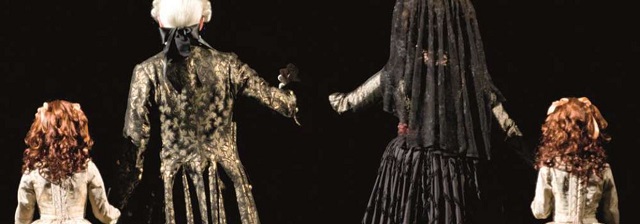
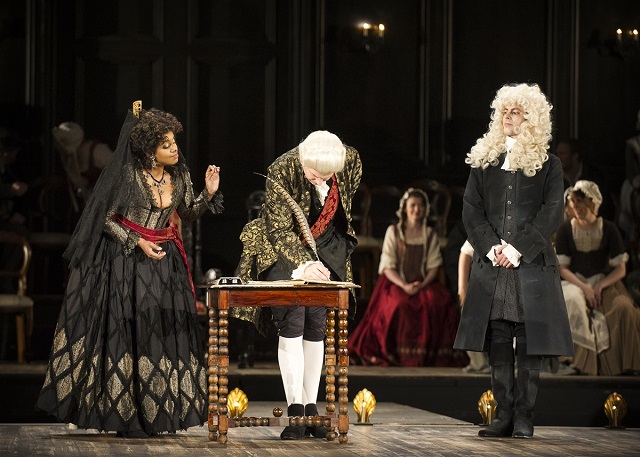
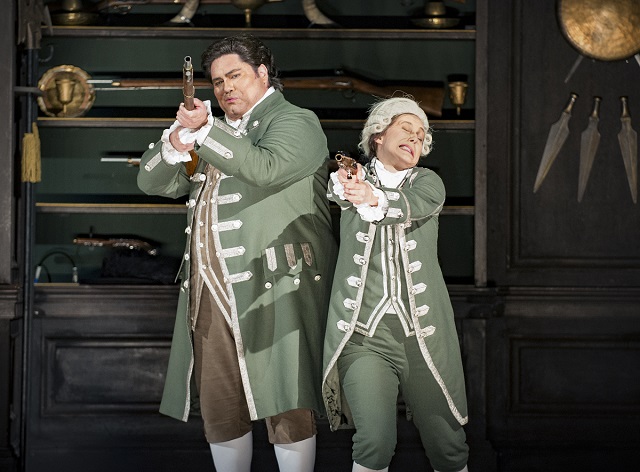
Thaddeus Strassberger’s production was a success with both audiences and critics when it premiered in January 2010, and again in 2013. The action and costumes are set against the backdrop of an 18th century Spanish estate, with bustling, fairytale sets.

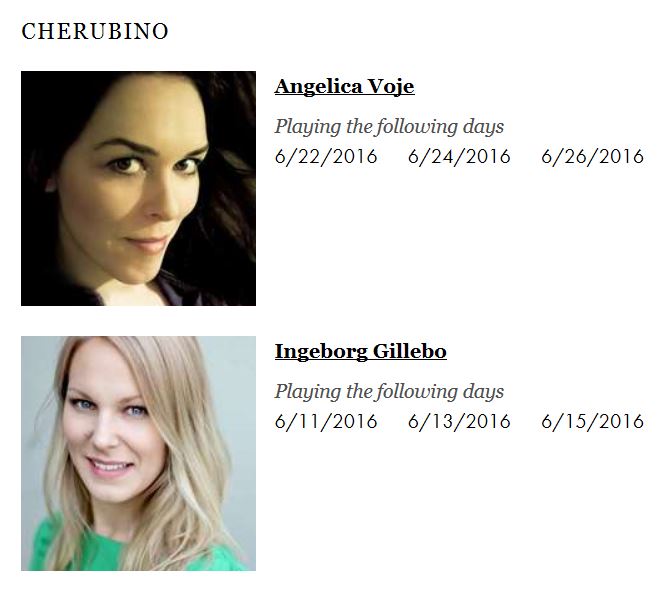
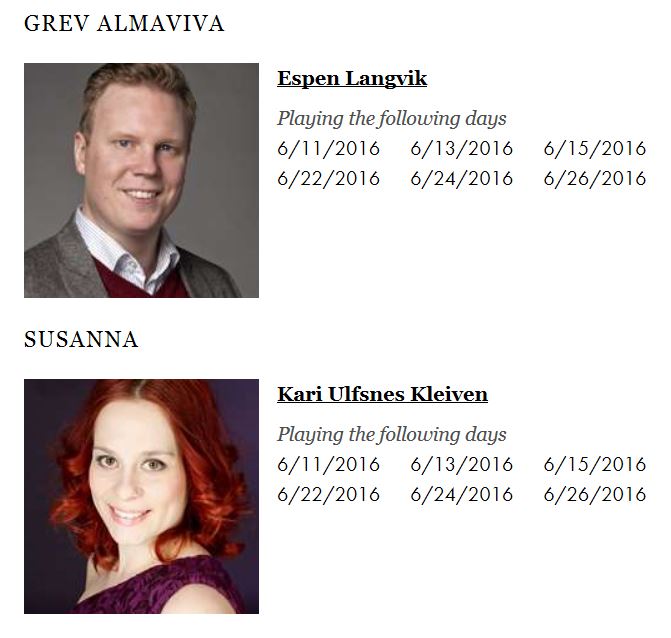
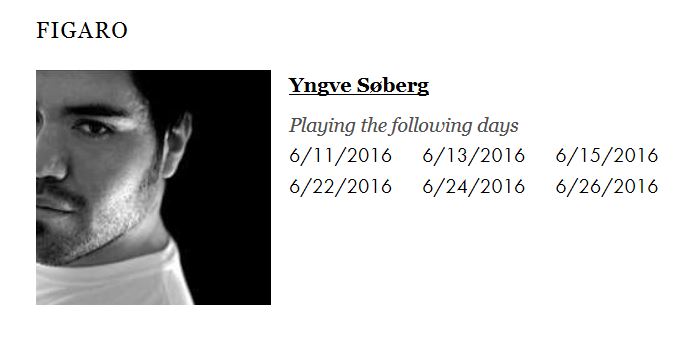
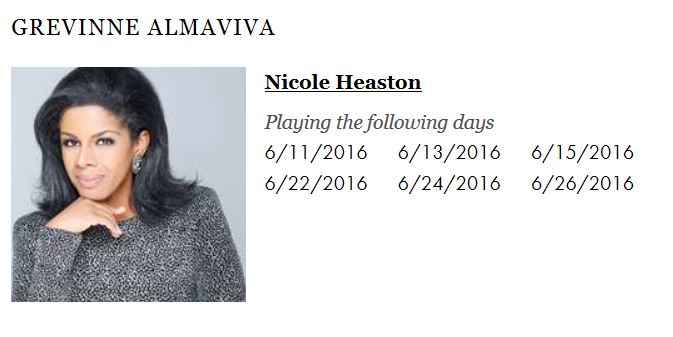
Once again we present an extremely strong cast, including Nicole Heaston, who charmed audiences in Alcina in spring 2014. “When she sings, the energy swirls around her and is flung out again across the audience in waves of sensuality and sorrow,” wrote the Morgenbladet critic at the time. As the heartsick Countess, she meets Audun Iversen in the role of the Count. We will also hear from Kari Ulfsnes Kleiven, Yngve Søberg and Ingeborg Gillebo.

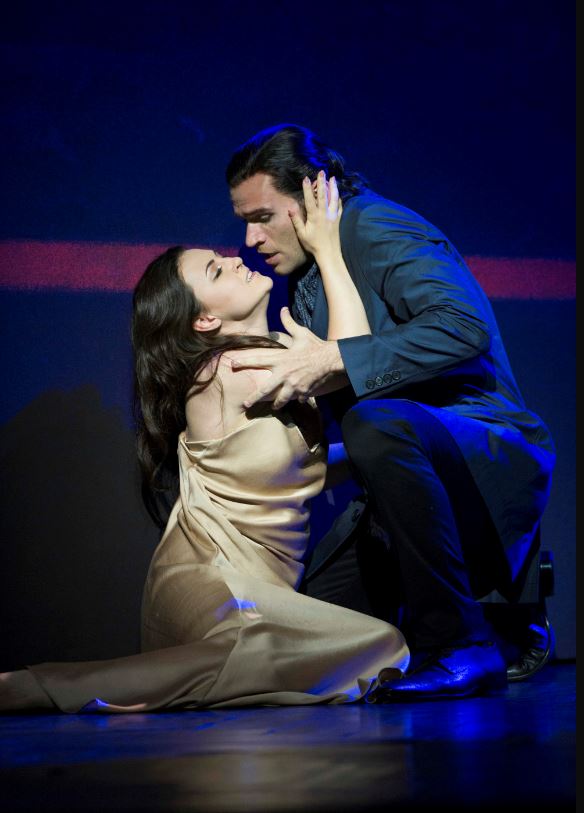
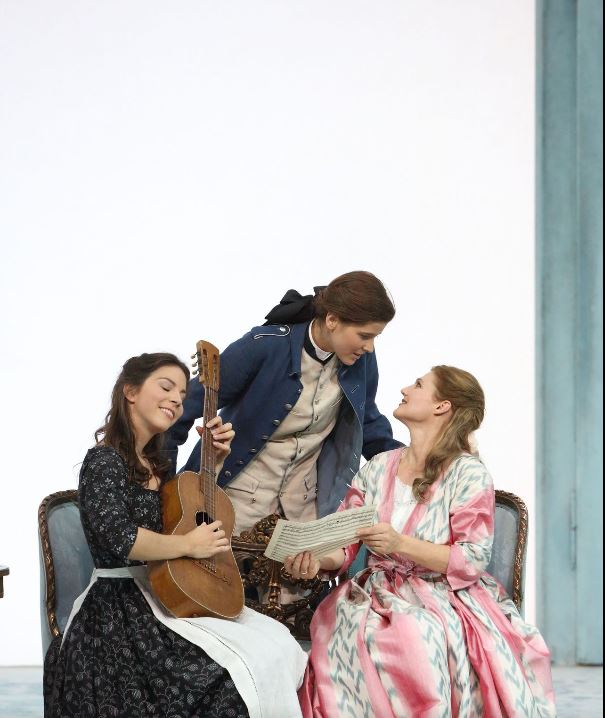
Regi: Thaddeus Strassberger, Dirigent: Rinaldo Alessandrini, Nicole Heaston as the Countand Countess Almavira

Director, Thaddeus Strassberger, Conductor: Rinaldo Alessandrini, Nicole Heaston as Countess Almavira

Voice of the revolution

The Marriage of Figaro was composed just two years after the outbreak of the French Revolution in 1789. The relationship between master and servant in the opera was political dynamite at the time. The 1784 Pierre Beaumarchais drama La folle journée, ou le Mariage de Figaro, on which the opera is based, was initially banned in Vienna. Placing nobleman and servant on an equal footing – even suggesting that a servant might be better than his master – was interpreted as a sharp criticism of the aristocracy. Lorenzo da Ponte, who wrote the libretto, thus had to dampen the political overtones. For example, Figaro’s lengthy monologue criticizing the hereditary rights of the upper class became a story about unfaithful women. This tension between master and servant is made plain in Strassberger’s production. The revolution and revolt are coming.

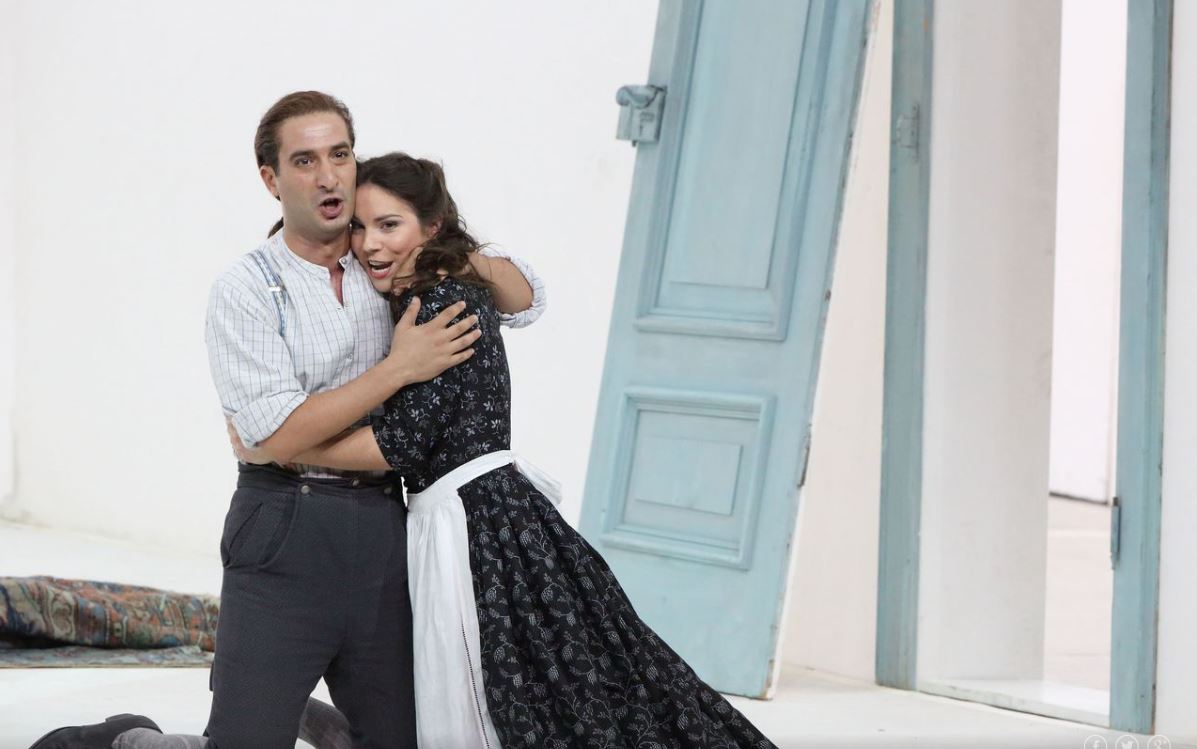
Regi: Thaddeus Strassberger, Dirigent: Rinaldo Alessandrini, Ingeborg Gillebo as Cherubino, Yngve Søberg as Figaro

Regi: Thaddeus Strassberger, Dirigent: Rinaldo Alessandrini, Ingeborg Gillebo as Cherubino, Yngve Søberg as Figaro

Original title Le nozze di Figaro

Music Wolfgang Amadeus Mozart

Libretto Lorenzo da Ponte

Conductor Rinaldo Alessandrini
Direction Thaddeus Strassberger
Set design and costumes Kevin Knight
Lighting design Bruno Poet

Cast

Figaro              Yngve Søberg
Susanna           Kari Ulfsnes Kleiven
Countess Almaviva       Nicole Heaston
Count Almaviva            Audun Iversen
Cherubino        Ingeborg Gillebo, Angelica Voje
Marcellina        Ingebjørg Kosmo
Bartolo             Ketil Hugaas
Basilio             Helge Rønning
Don Curzio       Petter W. Moen
Antonio            Øystein Skre
Barbarina         Vigdis Unsgård
Household Servants  Ingeborg Barstad, Désirée Baraula

The Norwegian National Opera Chorus, The Norwegian National Opera Orchestra / Performed in Italian with Norwegian and English subtitles / Free introduction one hour before the performance

Characters in Le nozze di Figaro

Count Almaviva
The head of a large feudal estate called Aguas Frescas. He «must be played with a great nobility, as well as charm and informality. His complete lack of any moral fiber should not make him any less a ‘perfect gentleman’ as far as his manners are concerned. In the bad old days it was by no means unusual for our betters to be very irresponsible when it came to adventures with young women. This role is perhaps more difficult to play today, as he must perform actions with which the audience can certainly never identify.» *

Countess Almaviva
His wife. Well-known from the play and opera Il Barbiere di Siviglia by the given name, Rosina, her fun-loving youth has given way to heartbreak in a marriage that is devoid of love and affection. «A prey to conflicting emotions, she must be very restrained in showing her feelings, and keep her anger well under control: above all else, her charmand innocence must be clear to the public. It is certainly one of the most difficult roles in the play.»*

Figaro
The Count’s faithful servant, and ultimately somehow, his competition. Previously in his role as the famous Barber, he was beholden to no one, but now is solely in the employ of the Count. The Count’s heartless pursuit of Susanna requires that Figaro conspire against his master. «It is impossible to over-emphasis how important it is for anyone playing this part to immerse himself absolutely in the character. If her were to see in it anything other than common sense, leavened with a sense of humor and a quick wit, or, worse be tempted to overplay it in any way, he would coarsen a role that has been described as a challenge to the talents of any actor capable of grasping its many subtleties and rising to its overall demands.»

Susanna
Maid to the Countess. She is a «clever and entertaining young woman, always laughing, but without the irreverence of the traditional cheeky maid in French comedy.»*

Marcellina
A member of the household, she formerly performed the duties now assumed by Susanna. She has been «demoted’ to the role of Governess for the Countand Countess twin daughters. She «is an intelligent woman, emotional by nature, but chastened by experience and her earlier mistakes.»*

Dr. Bartolo
A lawyer from Seville, who once was in love with Rosina, who is now the Countess Almaviva. Still angry at having lost his young lover, he helps Marcellina, his former mistress, attempt to win Figaro for her as a husband. The scandal is revealed and they discover that Figaro is their son.

Cherubino
A page in the Count’s household. A young teen, he is beginning to feel sexual stirrings; he is infatuated with many of the females on the estate, including the Countess, Susanna, Barbarina and even Marcellina.

Basilio
The Count’s Music Master. He has travelled the world, but in his role in the stifling household, he has intimate access to many people and acts as a court gossip monger.

Antonio
The chief gardener. He is also Susanna’s uncle as well as Barbarina’s father. «He should only be mildly drunk, and by the end, we should be barely aware of it.»

Don Curzio
The Notary of the district. However, in this role he is generally ineffective, failing to understand the cases that are put before him as well as the events that have taken place during the day.

Barbarina
Antonio’s youngest daughter, barely a teenager. Already at her tender age, she is caught in the net of the men around her, and ably maneuvers around them to her advantage.

Household Servants
The large household requires dozens of servants to support the family. Grooms, huntsmen, laundrymaids, chambermaids, housekeepers, cooks, scullery, musicians, entertainers, footman and pages work ceaselessly to provide comfort and pleasure to the Almaviva’s.

Peasants
An even larger number of serfs toil in the land, harvesting grapes, making wine, cultivating all sorts of agriculture and livestock, both for consumption of the family, and for selling at a profit for the benefit of Almaviva himself.

GALLERY

 SYNOPSIS

Act 1

Figaro well known throughout the region as the “Barber of Seville” and his young bride, Susanna, are to marry today. He is now the valet of Count Almaviva, and she the maid of his wife, Countess Rosina, and they are senior members of a sizable household staff. Susanna tells Figaro that the count has been trying to seduce her. Figaro, hurt and angered, plots to teach the Count a lesson. Dr. Bartolo arrives with his former servant and duenna of the Almaviva’s children, Marcellina. She is determined to be repaid an old loan made to Figaro. According to the contract Figaro must either repay her or else marry her. Marcellina accidentally confronts her younger rival Susanna and is further incensed. Interrupting Susanna’s busyday, the young page Cherubino enters. He wants Susanna to plead on his behalf with the Countessto reinstate him in the Count’s good graces—theCount has banished him after finding him with the gardener Antonio’s daughter, Barbarina. They hear the Count approaching, and Cherubino hides. The Countattempts to arrange a rendezvous with Susanna,and he, too, hides when Don Basilio, the music master at Aguas Frescas, arrives. As Basilio gossips with Susanna about Cherubino’s infatuation onthe Countess, the jealous Count reveals himself. Ashe tells how he found Cherubino with Barbarina, he discovers Cherubino in yet another compromising situation. Figaro has gathered the peasants from the estate to hail the Count’s decision to abolish his ancient right to deflower his female servants on the night of their wedding; he enters and begsthe Count to marry him to Susanna immediately.Using Cherubino as a distraction, the Count avoidsan instant wedding by instead ordering the young page to join his personal regiment in the army and summarily dismisses the peasants. Figaro paints a vivid portrait of how the gallant Cherubino’s life is soon to change.

Act 2

The Countess is heartbroken by her husband’srepeated infidelities. As Susanna dresses the Countess for the day, Figaro arrives to update the ladies on his scheme. He has sent the Count an anonymous note telling him that the Countess is expecting a lover while he is out hunting. Figaro hopes to keep the Count embroiled in this ruse to deflect his attention from Marcellina’s troublesome claim. Figaro also asks Susanna to arrange a rendezvous with the Count later on that evening in the garden. He plans for Cherubino, dressed as a girl, to go in Susanna’s place. The Count will be humiliated and forced to mend his ways. As Rosina and Susanna begin to disguise Cherubino, Susanna leaves the room for a moment. The Count arrives in a jealous fury, having read the anonymous note.He knocks on the bedroom door and finds it locked. A terrified Cherubino locks himself in the closet while the flustered Countess then unlocks her door for the Count. Susanna re-enters, unnoticed. The Countess refuses to unlock the closet, so the Count leaves, taking the Countess with him, in search of tools to break the lock. Susanna helps the page escape through the window, and then she hides in the closet, surprising both the Count and Countess when they find her there. Figaro arrives and tries to get everyone to come to the wedding festivities.When Antonio the gardener enters and claims someone has jumped out of the window, Figaro takes the blame. Marcellina bursts in with the notary Don Curzio, Bartolo and Basilio and demands hercase against Figaro be heard.

Act 3

As the Count tries to clear his head for the impromptu deliberations over Marcellina’s case against Figaro, the Countess alters Figaro’s plan: Susanna will ask the Count to meet her in the garden that evening, but the Countess herself will goin her place. The Count eagerly agrees to meet Susanna, but he hears her tell Figaro that they have already“won the case” and he is once again filled with suspicion. Cherubino is spirited away by Barbarina in an effort to avoid the Count for even a few hours longer. Rosina, alone in her chamber, laments that she is reduced to the petty plots of her servant; she desires only to be loved and adored again. Don Curzio, the notary, has determined that Figaro must either pay off the old debt or marry Marcellina. Figaro claims that, as the son of an aristocrat, he cannot marry without the consent of his parents, and since he was a foundling, he doesn’texpect to be able to find them. Hearing the story of his childhood abduction, Marcellina realizes that she is Figaro’s mother and reveals that his father is Dr. Bartolo. Susanna unexpectedly appears with perfect timing, bringing the money the Countess has given her to pay off Figaro’s debt. Enraged at seeing Figaro embrace Marcellina, she is placated when she understands the true situation. A double wedding is declared, so that Marcellina and Bartolomay legitimize their relationship and son as well.Antonio once again disrupts the plans. He informs the Count that Cherubino is indeed still at Aguas Frescas, against the Count’s previous orders.The Countess dictates a note for Susanna to give to the Count, specifying the location of their supposed rendezvous later that evening in the garden. During the wedding festivities, Susanna slips thisnote to the Count. The Count is to return a pin used to seal the note as an acknowledgment that he will meet her. He gives the pin to Barbarina to give to Susanna.

Act 4

Barbarina is looking both for Cherubino and for the pin the Count gave her. She tells Figaro what has happened, and he believes that Susanna plans to betray him. Crushed, he hides in the garden and plans his revenge. Susanna baits the trap and sings of her love for the Count, as the Countess transforms herself into the guise of Susanna. Their scenario to fool the Count is disrupted by the arrival of Cherubino. Figaro eventually realizes what is going on and gets even with Susanna by wooing her in her Countess disguise. Mistaking Susanna for his wife, the Count attempts to “expose” her, but when the real Countess appears, the Count is the one who must ask for forgiveness.

Main roles  

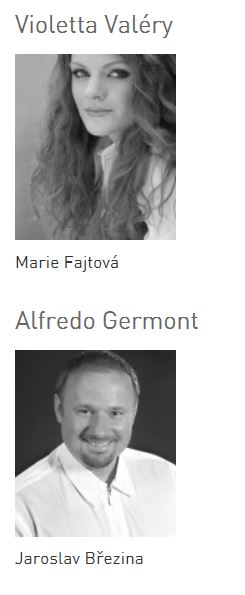
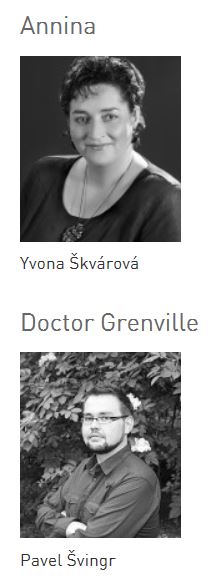
cast1 Cast2 cast3 cast4

Posted in OPera | Leave a comment

“Le Nozze di Figaro” at the Bayerische Staatsoper

nozze_title

bayerische_logoOpera buffa in four acts

Composer Wolfgang Amadeus Mozart · Libretto by Lorenzo da Ponte
In Italian with German surtitles

Saturday, 11. June 2016
07:00 pm – 10:40 pm
Nationaltheater

Duration est. 3 hours 40 minutes · 1 Interval between 1. + 2. Akt and 3. Akt (est. 08:45 pm – 09:15 pm )
OTHER PERFORMANCES
Tuesday June 14 · 06:30 PM · Nationaltheater
Saturday June 18,   07:00 PM · Nationaltheater
Sunday November 13, 06:00 PM · Nationaltheater
Wednesday November 16, 07:00 PM · Nationaltheater
Friday November 18 07:00 PM · Nationaltheater
Sunday November 20 06:00 PM · Nationaltheater

When the servants marry, the Count wants to have a little (more) fun in the bargain. He craves the first night with Susanna, the chambermaid. Figaro is not amused. The countess and Susanna make common cause. Double disguises and then some – and even more complications. Everybody wants everyone else – which doesn’t always pan out. Nobody could lust after anyone to more glorious music. Summary: men are different – and so are women!

Conductor Ivor Bolton

Production Dieter Dorn

Sets and costumes Jürgen Rose

Lights Max Keller

Dramaturgy Hans-Joachim Rückhäberle

Choir Master Stellario Fagone


Il Conte di Almaviva
Markus Eiche
La Contessa di Almaviva
Guanqun Yu
Cherubino
Anett Fritsch
Figaro
Ildebrando D’Arcangelo
Susanna
Tara Erraught
Bartolo
Alexander Tsymbalyuk
Marcellina
Heike Grötzinger
Basilio
Ulrich Reß
Don Curzio
Kevin Conners
Antonio
Peter Lobert
Barbarina
Leela Subramaniam
Mädchen Sopran Solo
Anna Rajah
Mädchen Mezzo Solo
Marzia Marzo
  • Bayerisches Staatsorchester
  • Chorus of the Bayerische Staatsoper

GALLERY:

SYNOPSIS
Act One

Count Almaviva lusts after Susanna, the bride-to-be of Figaro, his personal servant. With the help of bribes and sweet talk he hopes to get Susanna to grant him what he has officially renounced, namely his droit de seigneur. As he obviously does not intend to be satisfied with just the one night, however, the Count has allocated the young couple a room to which he has easy access. Figaro is completely preoccupied with the furnishings in this room while Susanna seeks to enlighten him as to the Count’s true motives. Figaro is confident that he will be more than equal to whatever situation arises, he has every faith in his own cunning and powers of intrigue. But the Count is not the only threat to his happiness: Marcellina believes that she is justified in hoping that Figaro will marry her. She holds a promissory note, signed by Figaro in return for some money she lent him which binds him to marry her if he cannot repay the money.
Dr. Bartolo, an advocate, is going to present Marcellina’s claim before the court. Further confusion is caused by Cherubino, the page, who seems to fall in love with every female he meets, with true adolescent enthusiasm. He has already poached on the Count’s preserves by paying court to Barbarina, the gardener’s daughter. As the Count has sacked him as a result of this, Cherubino asks Susanna to get the Countess to intercede on his behalf. Events happen in a rush: When the Count appears unexpectedly, Cherubino has to hide, and when Basilio, the music teacher, enters, the Count hides as well. When he realizes that Cherubino is also party to his wooing of Susanna, the Count presents him with an officer’s commission in order to get rid of him. In the meantime Figaro has set about putting his plan into action. He has summoned the Count’s female subjects to thank him for renouncing his droit de seigneur. Figaro is counting on the Count being so taken by surprise that he, Figaro, will be able to persuade him to have the marriage solemnized immediately. But the Count manages to delay the ceremony by promising Figaro a great celebration; he hopes that Marcellina’s claim will be settled.nozze7

Act Two

The Countess is very sad because she feels that she has lost her husband’s love and is prepared to go to almost any lengths to win him back. For this reason she agrees to Figaro’s plan to arouse the Count’s jealousy by sending him an anonymous letter. At the same time Susanna is to agree to meet the Count secretly, but Cherubino will turn up at the meeting-place instead, wearing Susanna’s wedding-dress.
Just as Cherubino is being dressed for his role, the Count returns early from hunting. His suspicions are aroused by the anonymous letter and he sees them confirmed by the fact that the door to the Countess’ rooms is locked. When the Countess lets him in and he hears a noise coming from her bedroom, the door of which is, however, also locked, everything seems clear – his wife is unfaithful to him! As the Countess refuses to give him the key he intends to open the door by brute force. He leaves the room, with the Countess, to fetch the necessary tools, and he locks the door behind him. Susanna, who has remained unobserved in an ante-room throughout all this, manages to change places with Cherubino. The page escapes by jumping out of the window.
When the Count and Countess return, she tells her husband the truth: that it is Cherubino who is in the room. But then Susanna emerges from the bedroom – to the great surprise of both the Count and his wife. The Countess keeps her wits about her and pretends that this is a deliberate surprise intended to teach the Count a lesson and punish him for his jealousy. Only with great difficulty does the Count manage to gain her forgiveness and restore peace and harmony. Unfortunately, however, Cherubino’s jump out of the window has not gone unnoticed. Antonio, the gardener, plans to sue the man who has destroyed his flowers. The commission papers found in the flower-bed implicate Cherubino, but Figaro, with the help of Susanna and the Countess, manages to take the blame himself.
The act ends tumultuously: Marcellina and her allies institute official proceedings against Figaro.nozze3

Act Three

A new intrigue is being planned, in which the Countess takes the initiative. Susanna is to promise to meet the Count, but it will be the Countess who turns up wearing Susanna’s wedding-dress.
The Count thinks he has finally achieved his heart’s desire but then realizes, as a result of something Susanna says, that he is to be deceived. He orders Don Curzio, the judge, to carry out the court’s ruling – Figaro must pay his debts or marry Marcellina.
When judgement is being pronounced in the court, all the complications are solved as if by magic. It transpires that Figaro is the son of Marcellina and Bartolo and was abducted by robbers when he was a baby. So now there will be a double wedding. Marcellina will marry Bartolo, Susanna her Figaro.
But the intrigue is not over yet. The Countess dictates to Susanna a letter to the Count, naming the place at which he is to meet her in the evening. The girls from the village come to pay homage to the Countess, among them Barbarina and Cherubino in disguise. The page is again discovered but is rescued by Barbarina, who uses her influence with the Count, who has made her several promises in return for her caresses.
During the wedding ceremony Susanna slips the letter to the Count. It is sealed with a pin and this time the Count trusts in the message it contains.nozze10

Act Four

Figaro accidently meets Barbarina, who is acting as the Count’s messenger and is to return the pin to Susanna to confirm their tryst. While Barbarina is looking for the pin, which she has mislaid, Figaro learns of the tryst. He has no knowledge of the intrigue and is beside himself with jealousy. He swears to have his revenge and be an example to all men whose wives have been unfaithful. He arranges for all concerned to come to the place where Susanna is to meet the Count.
The swapping of clothes works. Cherubino and Figaro think that the Countess is Susanna, as does the Count, who declares his love for her with great passion. Figaro is eavesdropping on the scene and rushes in, jealous. Susanna, disguised as the Countess, avails herself of this opportunity to approach Figaro, who then quickly sees through the disguise.
The Count catches the two of them and demands that the supposed adultress should be severely punished. But now the Countess reveals her true identity. The Count has to take back all his accusations, rather shamefacedly, in front of all the witness he has summoned, and admit his own guilt. The Countess forgives him and the celebrations can begin.

Translation: Susan Bollinger

© Bavarian State Opera

Posted in OPera | Tagged , , , , , , | Leave a comment

Les Pecheurs de Perles in Tel Aviv

logoisraeliopera

Les Pecheurs de Perles

Georges Bizet

Passionate love and true friendship are juxtaposed as Nadir and Zurga fight for the love of the priestess Leila.
Bizet’s exotic opera, set in Sri Lanka, is full with beguiling arias, duets and chorus numbers.

New Production | Sung in French | Duration: 2 hours and 30 minutes

Libretto: Eugene Cormon and Michel Carre

pecheurs1
PecheursSchedule

Conductor Steven Sloane
Ethan Schmeisser
Director Lotte de Beer
Set Designer Marouscha Levy
Costume Designer           Jorine van Beek
Lighting Designer Alex Brok
Video Designer Finn Ross

Among the soloists:

The Israeli Opera Chorus
Chorus Master : Ethan Schmeisser

The Opera Orchestra – The Israel Symphony Orchestra Rishon LeZion

English & Hebrew Surtitles
Translation : Israel Ouval

*TOWARDS OPENING – SAT, 25.6.16, 11:00
** PREMIÈRE – TUE 20:00 28.6.16

GALLERY (Photo copyright Israeli Opera)

SYNOPSIS
Act I
On the evening of the pearl fishers’ annual expedition in Ceylon, the people choose their leader. Zurga is elected. After many years, Nadir, a hunter, visit Zurga, his boyhood friend. As young men, the two were once in love with the same woman. Both swore not to pursue her so as not to endanger their friendship. Zurga sees a boat approaching: it must be the priestess whose task it is to keep the pearl fishers from harm during their expedition. The veiled priestess takes a vow of celibacy and loyalty for as long as she prays and sings for the pearl fishers on a rock.
Nadir and the priestess recognize each other: she is Leila, the woman the two men once fell in love with. Alone, Nadir sings of his love of Leila. However, his conscience plagues him because he has betrayed his friendship with Zurga. Nourabad, the high priest, brings Leila to the rock upon which she will sing to calm the sea. Nadir steals up to her and listens. Leila sings – but it is not clear whether her song n intended for the god or her beloved Nadir.

Act II
Nourabad leads Leila to a temple where she is to spend the night. Leila tells him a story of how once as a young girl she saved a fugitive from his enemies. As a sign of his gratitude, the fugitive made her a present of a necklace. Fearful of the night Leila yearns for the protective arms of Nadir. Nadir arrives but in order not to break her oath, Leila urges him to leave. Nadir stays and they confess of their love to each other.
Nourabad discovers the couple. Guards capture the fleeing Nadir and the tribe of the pearl fishers demands that the two lovers will be put to death. However, Zurga pardons them. At the command of the high priest, Leila removes her veil. Only now does Zurga recognize her as the woman he and Nadir once fell in love with. He immediately retracts his pardon. The two are to be executed.

Act III
Zurga is torn between anger and grief. He does not want to punish his friend and the woman of his dreams. Leila begs Zurga to let Nadir go and says that she is alone to blame for her breaking her oath. However, because this sacrifice is further proof of her deep love of Nadir, Zurga’s jealousy increases to a veritable fury and her rejects her pleadings.
Leila gives her necklace to one of the guards, asking him to take it to her mother after her execution. Zurga recognizes the necklace. In the dead of the night, preparations are under way to lead Nadir and Leila to the pyre. The lovers say their last farewells. Zurga cries out that a fire is raging in the camp and everyone rushes to the camp.
Zurga frees Nadir and Leila. He returns her necklace to her. Because she once saved his life, he now wishes to save hers. It was he himself who started the fire in the camp. They say goodbye to each other and Leila and Nadir escape. Zurga stays behind, alone, and waits for the revenge of the pearl fishers.

Posted in OPera | Tagged , , , | Leave a comment

Thomas Adès’ THE TEMPEST at the Hungarian State Opera

Hungarian_logoOpera in two parts, three acts in English, with Hungarian and English surtitles
Hungarian premiere

Heralded by the New York Times as “one of the most inspired, audacious and personal operas to have come along in years”, Thomas Adès’s 2004 opera uses the tales of Prospero, Caliban and Ariel – as well as the young Ferdinand and Miranda – to raise issues about the thirst for vengeance, the power of good and evil, the nature of magic, the possibility of love, and paths to reconciliation.tempest23

The libretto by Australian dramatist Meredith Oakes preserves Shakespeare’s poetry, while at the same time providing space for the soaring and thrilling music of Adès, whose vocal works frequently test the limits of the human voice and present a quite formidable challenge to the singers.

Performed by arrangement with Faber Music Ltd, London.tem22

PERFORMANCES

2016. May 19., Thu, 19:00
2016. May 21., Sat, 19:00
2016. May 25., Wed, 19:00
2016. May 28., Sat, 19:00
2016. June 01., Wed, 19:00

PHOTO GALLERY

SYNOPSIS

Background
After being deposed from the throne by his brother, Antonio, with the support of the king of Naples, Prospero, the rightful duke of Milan, sets out to sea in a small ship with his young daughter, Miranda, to be carried off wherever the currents take them. The former duke and the child owe their life to a nobleman named Gonzalo, who had previously been Prospero’s counsellor. Sympathising with the exiles, the gentleman loads the ship full of food and Prospero’s books. Although everyone believes them to be dead, Prospero and Miranda find a new home on an unknown island. Prospero uses sorcery to bring the island under his dominion.

Approximately 12 years later

Act I
In the open sea near Prospero’s island, a ship encounters a sudden raging tempest and founders. The crew and passengers, who include Antonio, as well as the king of Naples and Gonzalo, miraculously manage to reach the shore in safety. Suspecting that her father had used his magical powers to summon the tempest, Miranda feels sympathy and worry for the travellers on the ship. Prospero reassures her that no ill has befallen anybody. Since the girl has no memories of her early childhood, Prospero now tells her for the first time about Milan, about her girlhood and the treachery of his enemies. Deeply saddened by what she has heard, Miranda falls asleep. Prospero summons Ariel, the spirit who serves him, and commands him to watch over the survivors of the shipwreck. Caliban, the son of the witch Sycorax, who had previously ruled over the island, comes to Prospero. The loathsome creature accuses Prospero of ungratefulness, and also makes it clear that he would be pleased to marry Miranda and make her the mother of his children. The thought of this fills Prospero with disgust, and he threatens Caliban. Meanwhile, Ferdinand, the heir to the throne of Naples, despite being separated from his companions, makes it safe and sound to shore, where he encounters Miranda. Against Prospero’s will, the two fall in love with each other immediately. This is the first time that Miranda has acted against her father’s wishes. Prospero, blinded by his own thirst for revenge, sees Ferdinand only as the son of his enemy.

Act II
The castaways marvel at the island and the circumstances of their deliverance. Only the king is worried, as his son, Ferdinand, is nowhere to be found. Each attempt to cheer him up fails, especially after the clever Ariel instigates a quarrel between Antonio and Sebastian, and then between Sebastian and the courtiers. When Caliban joins them in order to incite them against Prospero, the group laughs at him and ply him with brandy, making Caliban drunk. The survivors set off to find Ferdinand, leaving Stefano and Trinculo alone with Caliban. Prospero slowly realises that he cannot stand in the way of Miranda and Ferdinand’s love. He has lost his total power over his daughter.

Act III
Caliban, Stefano, Trinculo – all three of them intoxicated – set out against Prospero, intending to kill him. Stefano and Caliban both dream of becoming the master of the island, with Miranda as his wife. Meanwhile the despairing king, believing Ferdinand to be dead, designates Gonzalo as heir to the throne in the event of his death instead of his own younger brother, Sebastian. When the king and his retinue fall into a deep sleep shortly thereafter, Antonio and Sebastian decide to kill the king and Gonzalo, but Ariel thwarts their plans by waking up the sleepers in time. The spirit then sternly calls the king and Antonio to account for seemingly having sent Prospero and Miranda to their certain death twelve years earlier. Meanwhile, Prospero, accepting the love between Ferdinand and Miranda, asks his daughter’s forgiveness. Miranda again states how much she abhors Caliban and his murderous instincts. When Ariel movingly relates to Prospero how much pain the king of Naples and Gonzalo feel over Ferdinand’s death, the master of the island decides to forgive his enemies and forget the past. When the group of people wandering the island appear before him, Prospero returns Ferdinand to his father, renounces his study of magic, and sets free the spirits held in his service. Preparing for Ferdinand and Miranda’s wedding, they leave together on the ship that had already been repaired by magic. Only Caliban remains on the island, all alone.


General cast

Conductor
Péter Halász
Ariel
Laure Meloy
Prospero
Franco Pomponi
Caliban
István Horváth
Miranda
Andrea Szántó
Ferdinand
Péter Balczó
Antonio
Tamás Tarjányi
Stéfano
Géza Gábor
Trinculo
Armin Gramer
Sebastian
Zsolt Haja
Gonzalo
András Palerdi
Nápoly királya
Attila Fekete

Credits

Libretto after Shakespeare by
Meredith Oakes
Director
Ludger Engels
Set designer
Ric Schachtebeck
Costume designer
Sabine Blickenstorfer
Dramaturg
Eszter Orbán
Hungarian surtitles
Ádám Nádasdy
Chorus director
Kálmán Strausz
Posted in OPera | Tagged , , | Leave a comment

Macbeth in Marseille

operamarseillelogo

Macbeth

GIUSEPPE VERDI

Tuesday June 7th, 2016 > 8:00PM
Friday June 10th, 2016 > 8:00PM
Sunday June 12th, 2016 > 2:30PM
Wednesday June 15th, 2016 > 8:00PM

Opulent orchestral work with sometimes murderous arias take this opera to a paroxysm of violence and madness, leaving both performers and audience holding their breath

Visu-MacBeth


MACBETH

Opera in 4 acts
Libretto by Francesco Maria PIAVE and Andrea MAFFEI
from the play by William SHAKESPEARE
First performed in Florence, Teatro della Pergola, on March14th, 1847
Last performed in Marseille opera, on January 12th, 1992
New production

Conductor Pinchas STEINBERG
Director Frédéric BÉLIER-GARCIA
Scenic Designer Jacques GABEL
Costume Designer Catherine and Sarah LETERRIER
Lighting Designer Roberto VENTURI

CAST

Lady Macbeth Csilla BOROSS
Lady-in-waiting of Lady Macbeth Vanessa LE CHARLÈS

Macbeth Seng-Hyoun KO
Banquo Wojtek SMILEK
Macduff Stanislas DE BARBEYRAC
Malcolm Xin WANG
The Doctor Alain HERRIAU
A murderer / Servant of Macbeth / An apparition Jean-Marie DELPAS

Marseille Opera Orchestra and Chorus

About the show

Conférences opéras
Macbeth – Giuseppe Verdi
Samedi à 15h au Foyer de l’Opéra
(3€, dans la limite des places disponibles. Réservation prioritaire pour les abonnés : 04 91 55 11 10 ou 04 91 55 20 43)

Posted in OPera | Tagged , , | Leave a comment

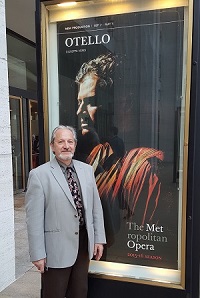
OTELLO saved by the performers at the MET

REVIEW BY TIZIANO THOMAS DOSSENA

This ostensibly new production (it started in September of last year) of Verdi’s Otello at the Metropolitan Opera could have been the greatest pleasant surprise if only… Well, that is not how I would want to start my review, since the singers have all proved themselves to be professional in all senses, but truthfully there are some ifs, regardless of the famous critics’ pat in the back to the Met for an auspicious Met debut (the New York Times), and because of these ifs, the opera loses its great impact with the audience, especially for the neophytes who wanted to chew on a more ear-challenging Verdi, without the aria and recitative structure to which they may be used to, as in the classics Rigoletto or La Traviata. Otello has an audacious and complex orchestration and its characters are well developed, so having great singers and a great opera, what could go wrong? The comments of the audience on the way out of the theater (yes, it’s true, I did not take a poll, all I did was eavesdrop, but even that can give you an idea of at least how the audience reacted)  were mostly  matching my impressions, so I could not have been wrong in feeling that something had gone amiss.

What was it? I am already not a promoter of updating or modernizing the story, but there are times when it works; most of the times it does not, sadly. The efforts of the scenic designer (Es Devlin), a respected professional who created a marvelous series of sliding and rotating transparent arches, illuminated in a way to give a feeling of fable, could have worked for another type of show, maybe some fantasy similar to Alice in Wonderland, but it had no pertinence to this story. I cannot blame Mr. Devlin or Donald Holder (the lighting designer) for the failure to deliver, though. Mr. Bartlett Sher, who produced this opera version, is fully responsible for the choices taken and for their effect on the story development. The amazing projected images by Luke Halls did bring some sanity at times, but their use got old fast enough, having to deal with those inadequate structures that someone wrongly imagined to create a proper environment for an Otello. And what is with the choir always dressed in black, with reminiscence to a witch tribunal among the Puritans? This opera already has enough drama within itself without attempting to create an unrelated atmosphere of doom. The fact that the choir stands on stage dressed as for a funeral, singing about the possibility of a shipwreck could be acceptable, maybe even building on the roots of the tragedy that will soon loom behind the scenes, and that the same choir (in black) just goes on a happy frenzy as soon as Otello’s ship comes to port is annoying to people of good taste and clashing with the expectations of an opera lover. How believable is seeing Venetians in Crete dressed as English Puritans (or whatever those outfits were meant to represent)? And choosing those garments to create an even deeper sense of doom does not feel incorrect to the director, when the celebration occurs? Just an opinion….

Phot Copyrigth Epoch Times

Photo Copyright Epoch Times

The sliding arches, with their majestic beauty and there lack of usefulness to the story and its setting, have another characteristics that attempted even more to destroy the proper flow of the drama: their inadequacy for the movements of the actors. To see the poor Otello (an otherwise flawless and magnificent Aleksandrs Antonenko, who proved his voice skills and his power over and over throughout the performance) attempting to go around the arches, passing through them clumsily as if that would have been a naturally expected action was disheartening to say the least. Didn’t the director notice the lack of flow in the actions? Did the glitter and special effects convince him that it was an ideal choice? It would have been nice to hear an explanation by Mr. Sher regarding the meaning of these flowing arches (Symbolism? Cubism? Belated expressionism? Minimalism?).OTELLONYTimes

Thankfully, besides the magnificent voice of Mr. Antonenko, a marvelous, silky-textured voiced commanding soprano (Hibla Gerzmava) performed in an impeccable manner, although there were two instances when I could not hear her, and I am not certain whether it was the volume of the orchestra, which otherwise seemed to have a clear grasp of the music interpretation and played in a remarkable fashion (also thanks to the excellent conduction by Adam Fischer) or a slight loss of volume by the soprano. Nevertheless, it was forgivable, especially keeping mind of the difficulty of the part and the strange selections of movements across the stage set by Mr. Sher, which would have confounded and stressed out any normal performer ( maybe not a rocker on acid, but I am not sure about that).iagoagainstglass

A ‘bravo’ also to Alexey Dolgov, an effective and substantial Cassio., and  to Iago (Željco Lučić, a baritone with a luxurious voice and a great stage presence,) who proved to be a prodigious ‘evil character’ and at times he made me forget the inadequacy of the staging. Actually, there was a time in this magnificently sung Otello when I did forget that there were no sliding psychedelic arches in Cyprus, also because they finally were in the background and the main part of the stage was occupied by a real bed (a touch of sanity that surprised me; I expected a sleeping bag or maybe a transparent platform that would have stood in for the bed). The brilliance of the late Verdi’s musical choices was here in primo piano, and proved their validity in bringing the depth of the tragedy and the real essence of the drama to the audience. You could feel the drama in your chest; people’s eyes were moist and their necks were tense. Yes, it was a tragedy and the marvelous work by the composer was grabbed successfully by the singers as well by the orchestra, bringing a divine product on stage. One has to recognize that the singers were all so convincing and skilled that they were able to annihilate the negative effects of the stage production, or at least most of the time.

Posted in Article | Tagged , | Leave a comment

Boismortier : “Don Quixote visits the Duchess” at the Chateau de Versailles

versailles_logodon

In 1743, two years before Rameau imagined Platée, Boismortier had an extraordinarily modern and preposterous « comic ballet » performed at the Académie royale de musique : Don Quixote visits the Duchess.

donquichotte_ot_metz_metropole_2015-4331web

In the course of a totally hysterical plot, the hero encounters monsters, magicians, princesses, inhabitants of Japan… a pretest for daring and quirky ballets and choruses. The beauty of music mingles with irreverent parody. Boismortier is little known nowadays, but he was a prolific composer under Louis XI’s reign, in all the fashionable styles in vogue at the time. His first major success was this Don Quixote visits the Duchess, a Ballet Comique he invented with Favart, the libretto genius, who transformed the subject of Don Quixote into a farce of “theatre within the theatre”, full of brilliance and colour. Boismortier’s music sparkles in each phrase of this light comedy where the Duchess makes Don Quixote believe that he meets Dulcinea again and a gallery of characters, among whom the Magician Merlin or the Infante of Congo, when he is unknowingly on the stage of the castle’s private theatre…

donquichotte_ot_metz_metropole_2015-4484web

Hervé Niquet discovered this gem in 1988 and finally stages it with Corinne and Gilles Benizio (Shirley and Dino), the infernal trio from King Arthur. You are warned, baroque frenzy in view!

Extrait de Don Quichotte chez la Duchesse, Boismortier, 2015.

Performed at the Royal Opera of Versailles, located in the grounds of the Castle, one of the major opera houses.

CAST

Mathias Vidal, Don Quichotte

Marc Labonnette, Sancho Pança

Chantal Santon-Jeffery, Altisidore, Japan Queen

João Fernandes, Montesinos / Merlin / the Translator

Gilles Benizio, the Duke, the Japanese man

Camille Poul, a farmer / a lover / a companion

Charles Barbier, a lover

donquichotte_ot_metz_metropole_2015-4711web

CREATIVE TEAM

Philippe Lafeuille, Choreography

Daniel Bevan, Stage sets

Anaïs Heureaux et Charlotte Winter, Costumes

Jacques Rouveyrollis, Lights

Elisabeth Geiger, Chef de chant

Pauline Jolly Assistant director

Jessica Duclos Lighting assistant

Corinne et Gilles Benizio (Shirley et Dino), Director

Le Concert Spirituel

Hervé Niquet, Conductor

Posted in OPera | Tagged | Leave a comment

La Fanciulla Del West at La Scala di Milano

scala_Logo_fanciullafanciulla1fanciulla_staff
libretto_westLIBRETTO OF THE OPERA

Riccardo Chailly

Riccardo Chailly

cast
cast1
cast2

La fanciulla del west

La fanciulla del west

fanciulla_notes
act1

act2

act3

Posted in OPera | Leave a comment

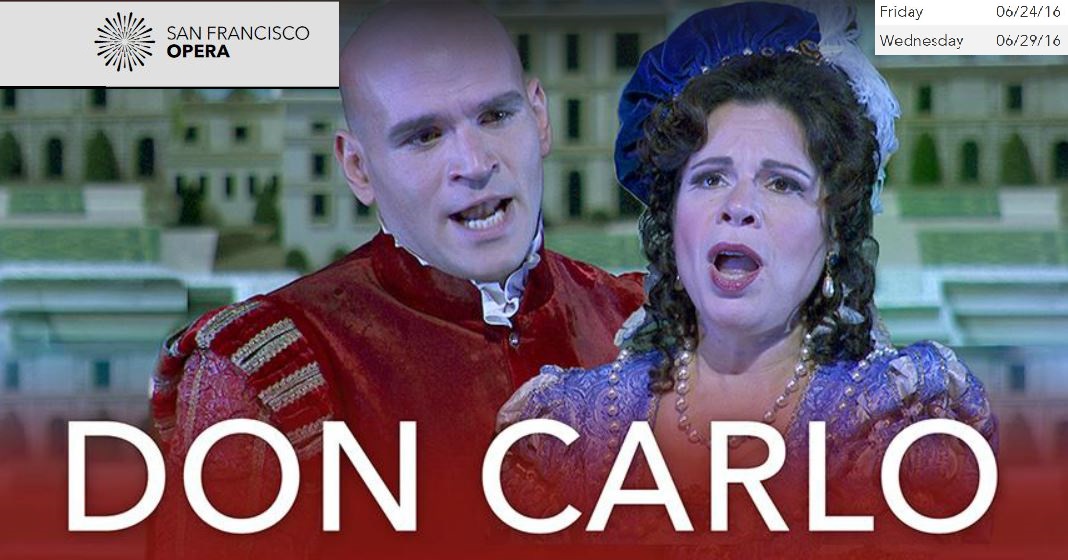
Don Carlo at the San Francisco Opera

sanfranciscologo

doncarlo+titleAt the time of Spain’s brutal Inquisition, the king of Spain marries the woman his son loves and sets into motion a tension-filled chain of events. Music Director Nicola Luisotti conducts this magnificent tale of romantic triangles, political idealism and life-and-death devotion.

Starring soprano Ana María Martínez, renowned bass René Pape and the powerful tenor Michael Fabiano in his role debut as Don Carlo, this grand Italian opera will grip your heart with its complexity, passion and conscience long after the curtain falls.

Music by Giuseppe Verdi | Libretto by Joseph Méry and Camille du Locle

Sung in Italian with English supertitles

Running Time: 4 hours, 20 minutes including two intermissions

Who Should See It: Fans of historical drama and Masterpiece Theater.

Pre-Opera Talks are free to ticketholders and take place in the Orchestra section, 55 minutes prior to curtain.

doncarloscheduleDonCarloCast

GALLERY

SYNOPSIS

ACT I 1559-1568; France and Spain.

Against the wishes of the Spanish King Philip II, his son and heir, Don Carlo, has traveled incognito to Fontainebleau, where negotiations are under way for a peace treaty between Spain and France. He has seen his intended bride Elisabetta, daughter of the French king, and fallen in love with her on sight. When he meets Elisabetta and her page, who have been hunting and become lost in the forest, Carlo offers his protection without revealing his identity. Elisabetta questions him about her future husband, apprehensive over her marriage to a stranger. Carlo gives her a miniature portrait of himself, and she realizes that he is the prince. It is clear to them both that their feelings of love are mutual. Their happiness ends with news that the treaty arrangements have been altered and Elisabetta is to marry King Philip, Carlo’s father. Elisabetta reluctantly accepts. While all around them celebrate the end of the war, Elisabetta and Carlo are devastated.

ACT II

Carlo seeks peace at the monastery of St.-Just in Spain, where he prays at the tomb of his grandfather, Emperor Charles V. He is confronted by a monk who seems to be the emperor’s ghost. His friend Rodrigo, the Marquis of Posa, arrives to remind Carlo of his commitment to the cause of the Flemish people who are oppressed by Spanish rule. Both pledge themselves to the cause of liberty and swear eternal friendship. In a garden outside the monastery, Princess Eboli entertains the other ladies of the court with a song. Elisabetta—now queen—enters, followed by Posa, who hands her a secret letter from Carlo asking for a meeting. When he is admitted, Carlo asks the queen to obtain Philip’s permission for him to go to Flanders, then suddenly declares his continuing love. Elisabetta rejects him and Carlo rushes off. The king enters and, finding the queen unattended, banishes the Countess of Aremberg, who should have been present. Left alone with the king, Posa challenges Philip to end his oppression of the Flemish people. Philip refuses but is impressed by Posa’s courage. He warns him to beware of the Inquisition and tells Posa about his suspicions of his wife and Carlo, asking Posa to watch them. Posa accepts the assignment, knowing that being in the king’s confidence will help him in the future.

ACT III

Carlo has received a letter asking him to a secret meeting at midnight in the queen’s gardens in Madrid. He thinks the meeting is with Elisabetta, but it is Princess Eboli who appears. She is in love with him. When Carlo discovers her identity and rejects her advances, Eboli realizes where the prince’s true feelings lie and swears to expose him. Posa arrives in time to overhear Eboli and threatens to kill her but is stopped by Carlo. Eboli leaves. Posa persuades Carlo he is now in danger and Carlo hands over some secret papers to him for safekeeping. At a public burning of heretics in front of Madrid’s Basilica of Our Lady of Atocha, Carlo leads a group of Flemish deputies to Philip. The king rejects their pleas for freedom. When he also dismisses Carlo’s own request to rule Flanders, the prince draws his sword on his father. He is disarmed by Posa and arrested. In thanks, Philip makes Posa a duke. As a group of heretics is led to the stake, a celestial voice welcomes their souls into heaven. ACT IV In his study at night, the king reflects on his life with a wife who doesn’t love him. He consults with the old and blind Grand Inquisitor, who consents to the death sentence for Carlo: as God sacrificed his son to save mankind so Philip must stifle his love for his son for the sake of the faith. The Inquisitor also demands that Posa be handed over to him. As he leaves, Philip wonders if the throne must always yield to the altar. Elisabetta enters, having discovered that her jewel case has been stolen. Eboli, who knows that Elisabetta keeps a portrait of Carlo in it, had taken the box and given it to the king. Philip now shows the box to Elisabetta, takes out the portrait, and accuses her of adultery. Elisabetta collapses and the king calls for help. Eboli and Posa rush in, he to express amazement that a king who rules half the world cannot govern his own emotions, she to feel remorse at what her jealousy has brought about. Alone with Elisabetta, Eboli confesses that she not only falsely accused her but that she has been the king’s mistress. Elisabetta orders her from the court. Eboli laments her fatal beauty and swears to spend her final day in Spain trying to save Carlo. Posa visits Carlo in prison to tell him that he has used the secret papers to take upon himself the blame for the Flemish rebellion. He is now a marked man, so Carlo must take up the cause of liberty for Flanders. Posa is shot by agents of the Inquisition. As he dies, he tells Carlo that Elisabetta will meet him at the monastery of St.-Just and declares he is happy to have sacrificed his life for a man who will become Spain’s savior.
ACT V

Elisabetta has come to the monastery, wanting only her own death. When Carlo appears, she encourages him to continue Posa’s quest for freedom in Flanders and they hope for happiness in the next world. As they say goodbye, Philip and the Grand Inquisitor arrive. As the agents of the Inquisition move in on Carlo, the Emperor Charles V materializes out of the darkness to insist that suffering is unavoidable and ceases only in heaven.

Posted in OPera | Tagged , , , , , , , , | Leave a comment

Turandot in Norway with the phenomenal Elizabeth Blancke-Biggs ( updated with more images and a video)

turandotTitledateslogonorway

In Puccini’s opera, Princess Turandot  has sworn never to marry any man unless he can correctly answer her three riddles. Captivated by her beauty, the unknown Prince Calàf takes up the challenge, well aware that the untouchable ice princess has issued an ultimatum: anyone who tries and fails must die.

Giacomo Puccini created a rich, beautiful soundtrack for this darkly erotic tale, setting it in classical Beijing and weaving simple Chinese folk tunes into the orchestra’s huge sound.turandot3

The opera includes famous arias such as “Signore, ascolta”, sung by the servant Liù as she tries to stop Prince Calàf from throwing himself away in Turandot’s perilous challenge, and the Prince’s beautiful “Nessun dorma”, as he looks forward to winning the princess’s hand.

In director Andreas Homoki’s production, we do not encounter a classical, folkloric China, but instead a modern fairy tale where screens are functioning as storytellers and camera lenses represent the gaze of power. However, the potential brutal encounters between the individual and the demands of the masses are still the same. An open question

The penultimate scene in Turandot was the last Puccini wrote before travelling to a clinic in Brussels, where he died after a cancer operation in 1924. The opera was completed two years later by Franco Alfano. During the premiere at La Scala Milan in 1926, conductor Arturo Toscanini laid down his baton in the middle of the third act, turning to the public to say: “At this point, the maestro died.” This is after Liù has sung “Tu che di gel sei cinta” (“You who are begirdled by ice”) to Turandot. Immediately afterward, Liù kills herself.

We are performing the incomplete version of Turandot, which ends with the death of Liù – and of Puccini. When we do not know whether the prince and princess end up together, the story ends as an unanswered question.

Co-production with Semperoper Dresden

  • Premiere discussion one week before the premiere
  • Free introduction one hour before the performance

GALLERY (Photos Copyright Den Norsk opera)

CAST

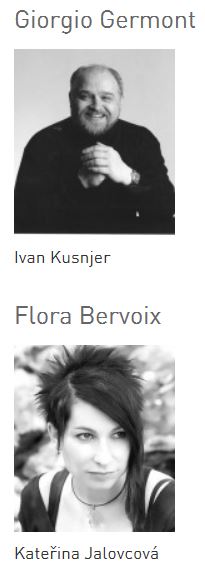
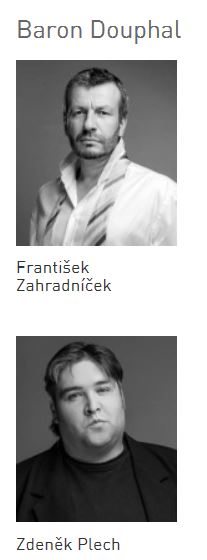
cast1 Cast2 Cast3 cast4 cast5 cast6 cast7

FOCUS ON

liz

Read an interview with this magnificent soprano, recently published by our magazine!

‘Elizabeth Blancke-Biggs … certainly was [Salome’s] highlight. Her vocal splendor and strength were Salome worthy and she often formed the merciless role with beautiful bel canto singing.’
– Kulturkompasset

liz2 liz1
A brilliant interpreter of the most demanding roles on the operatic and concert stage, this past season has seen Elizabeth Blancke ­ Biggs as Salome in Mexico City’s Palacio de Bellas Artes, as soloist in the Verdi Requiem, also in Mexico City with Mo. Carlos Miguel Prieto, At New York’s Lincoln Center for the Rossini Stabat Mater and the Dvorak Te Deum, Verdi’s Nabucco at the Teatro Nacional di Costa Rica, and La Traviata in Argentina. Last season she was the featured artist opening the Verdi Bicentennial Concerts at Mexico City’s Palacio de Bellas Artes, followed by her critically acclaimed role and house debut in Strauss’ Salome at den Norske Opern in Stefan Herheim’s reprise of his Salzburg production. She then appeared under the baton of Lorin Maazel as Puccini’s La Fanciulla del West at his Castleton International Festival, and as Verdi’s Lady Macbeth at Montevideo’s Teatro Solis.

She was heard worldwide in the Sirius Satellite Radio Metropolitan Opera Broadcast of Puccini’s Tosca with tenor Marcello Giordani, as Puccini’s La Fanciulla del West under the direction of Bruno Bartoletti at Palermo’s Teatro Massimo, and as Verdi’s Lady Macbeth at Santiago, Chile’s Teatro Municipal.

Elizabeth is becoming recognized as one of the most exciting lirico-spinto sopranos on the international scene today. Critics have praised her virtuosic bel canto technique, the beauty of her voice, her pyrotechnic coloratura, and her unerring theatricality. Hailed as one of the best young Verdi singers by Placido Domingo, she appeared with him at the Washington National Opera as Giordani’s Fedora in a gala performance. She made her Metropolitan Opera debut as Violetta in the Zeffirelli production of Verdi’s La Traviata under the baton of Marcello Viotti with Lado Ataneli as Germont, and her Italian debut was the title role in Jonathan Miller’s production of Donizetti’s Maria Stuarda at Torino’s Teatro Regio, conducted by Evelino Pidó. In South America she was Abigaille in Verdi’s Nabucco for Chile’s Teatro Municipal, with Maurizio Benini. In London she appeared as Bellini’s Norma and Puccini’s Fanciulla del West for Opera Holland Park. She was seen as Minnie in La Fanciulla del West, for Florida Grand Opera with Anthony Michaels-Moore as Rance, and where one reviewer said “… [her] rapturous sound literally enveloped the stage. A flamboyant, charismatic stage presence.” She returned to FGO to sing a critically acclaimed Tosca. She reprised Abigaille in Nabucco for the Aspendos Festival at the 15,000 seat Roman amphitheater in Antalya, Turkey, and was featured in a new production of Aida at Opera Omaha and Norma for Palm Beach Opera with Ruth Ann Swenson as Adalgisa. For the New York City Opera she was seen as both Tosca and Mimì in La Bohème. Her most recent appearances in Palermo’s Teatro Massimo (La Fanciulla del West,) Bologna’s Teatro Comunale, Chile’s Teatro Municipal (Lady Macbeth) and the Welsh National Opera Gala (Fedora) were all critically acclaimed.

Posted in OPera | Leave a comment