The Flying Dutchman in Poland

WagnerTitleRomantic opera in three acts
polandlogoLibretto: Richard Wagner after Heinrich Heine’s From the Memoirs of Herr von Schnabelewopski
World premiere: 2.01.1843, Semperoper, Dresden
Polish premiere: 6.02.1902, Teatr Miejski, Lviv
Premiere of this production: 16.03.2012, Teatr Wielki – Polish National Opera

In the original German with Polish surtitles

26 February 2016 Friday 19:00 Moniuszko Auditorium

28 February 2016 Sunday 18:00 Moniuszko Auditorium

01 March 2016 Tuesday 19:00 Moniuszko Auditorium

Wagner9

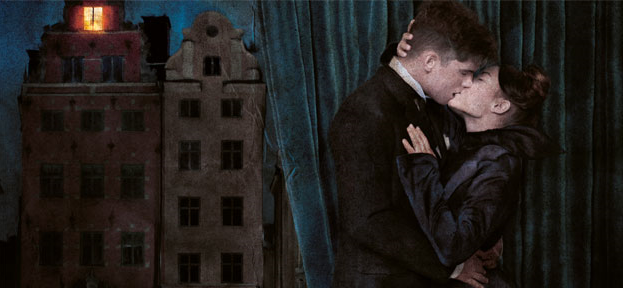
The first epoch-making opera by Richard Wagner, evidence of the incredible artistic and at the same time reformist genius of the composer. The myth behind the opera stems from the seventeenth century and has inspired many artists of various professions. Wagner encountered it through an ironic retelling by Heinrich Heine, not entirely devoid of misogynist references.

For Mariusz Treliński The Flying Dutchman is a score full of multidimensional and often shimmering meanings. Known for his penchant for lavish stagings, the artist, along with the set and light designers, built a very dark and surprisingly minimalist show. It is dominated by the colour black, a sign of the vampiric Dutchman wandering the world and of his spiritual abyss, a sign definitely overwhelming the white — a symbol of Senta, devoted to her eternal wanderer.

The show has a lasting effect, imprinting itself in one’s memory. But how could it be otherwise? Throughout almost the entire show the stage is literally flooded with water, bringing on associations with the mare tenebrarum concept. The sea of darkness and the unconscious is crossed in deafening silence by a ghost ship, and the depths of that sea serve as a background for the conflict of the darkest demons of the male psyche.

GALLERY (Photos Opera Narodowa)

CAST

Aleksander Teliga
Daland

  • Erika Sunnegårdh
    Senta
  • Daniel Kirch
    Erik
  • Anna Lubańska
    Mary
  • Mateusz Zajdel
    Steersman


CREDITS

Keri-Lynn WilsonConductor

  • Mariusz TrelińskiDirector
  • Boris KudličkaSet designer
  • Magdalena MusiałCostume designer

  • Tomasz WygodaChoreography
  • Felice Ross Lighting designer
  • Chorus and Orchestra of the Teatr Wielki – Polish National Opera
    Dancers and mimes
Posted in OPera | Tagged , , | Leave a comment

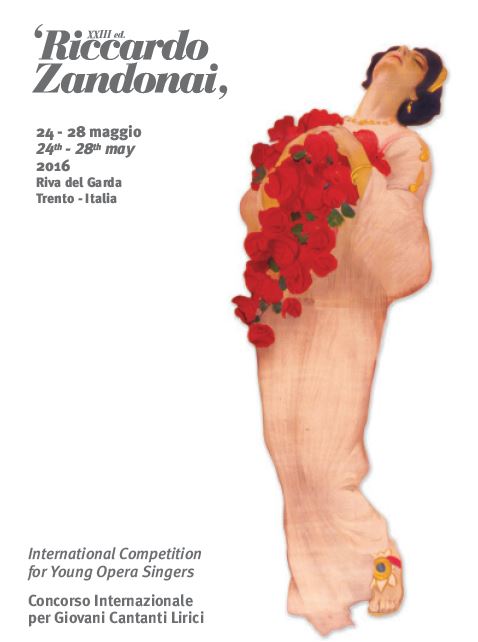
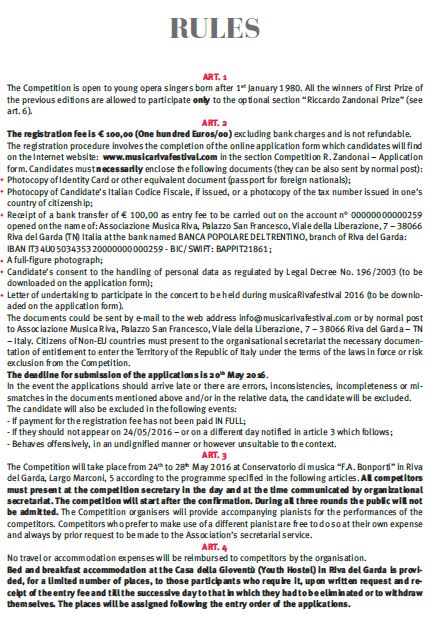
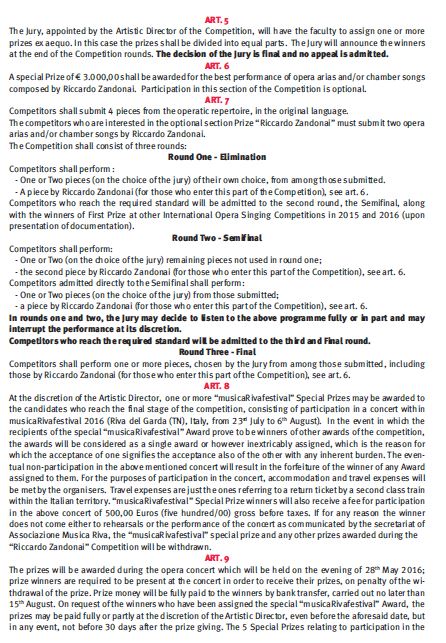
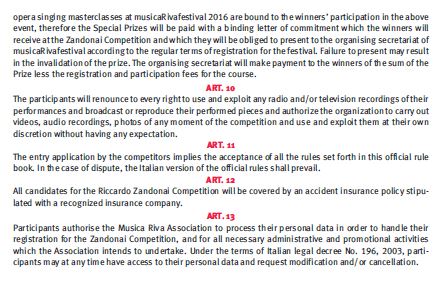
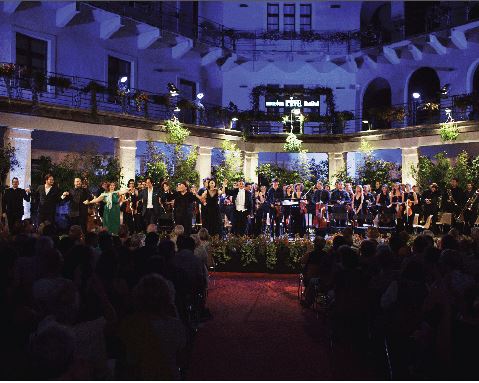
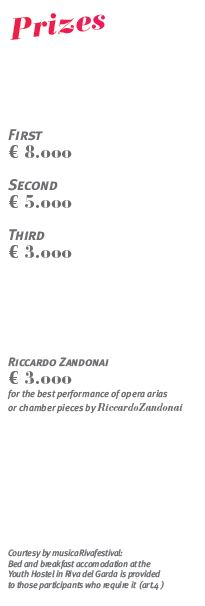
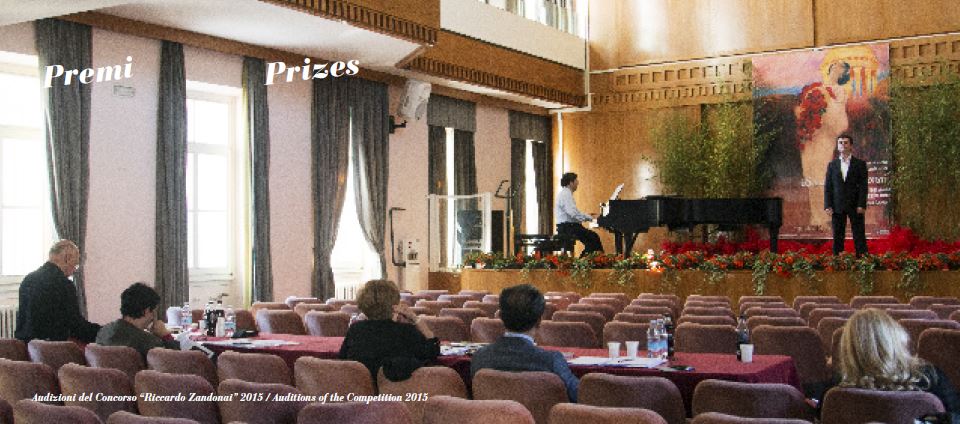
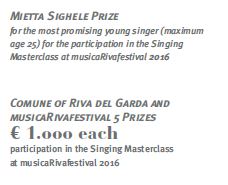
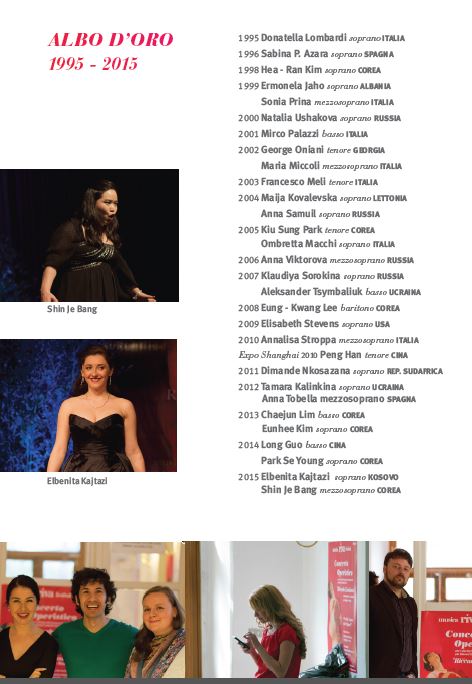
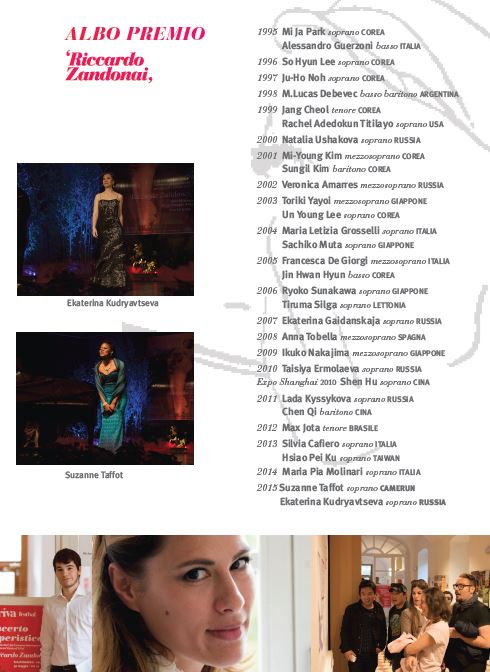
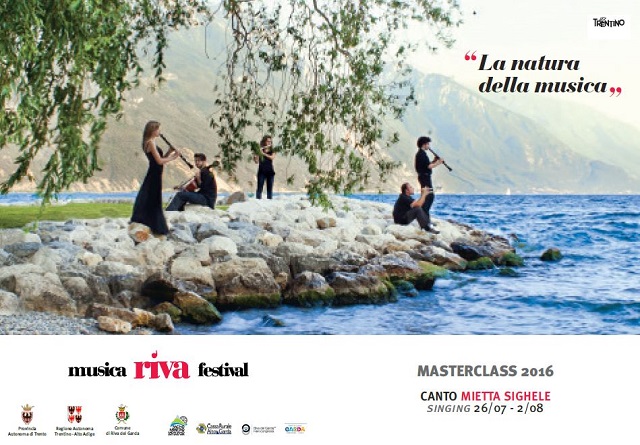
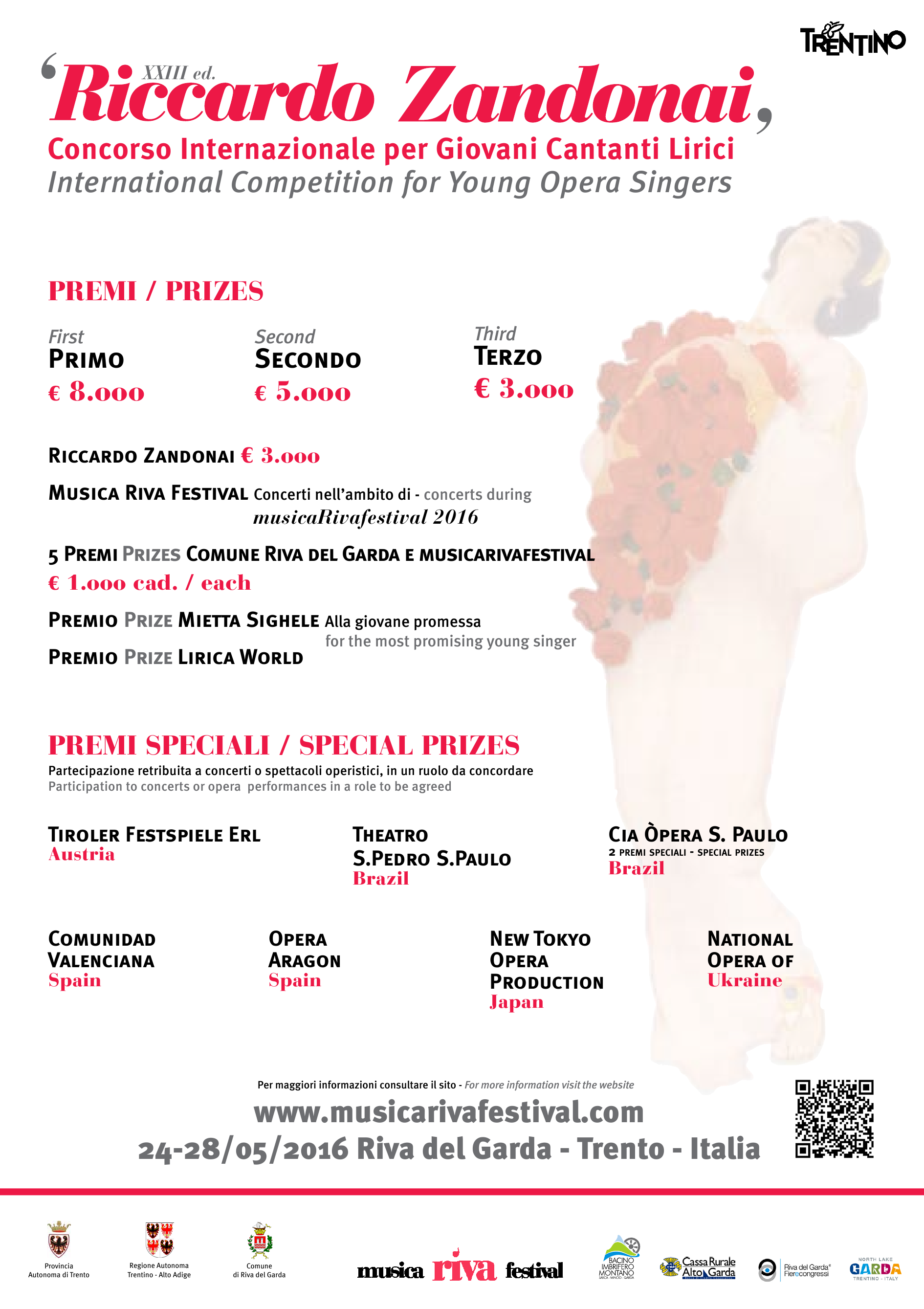
International Competition “Riccardo Zandonai” for Young Opera Singers

z1
zrules1

zrules2

zrules3z2z2e z3e


z4 z4e z5e


z6ez6az7a z7b z7c z7e


z8a z8b z8cz9a z10a zalbo1 zalbo2zclosingLOCANDINA RICCARDO ZANDONAI

Posted in Competition | Tagged | Leave a comment

It’s Rossini’s Birthday! WORLD-WIDE CELEBRATIONS

It’s Rossini’s Birthday! Zedda conducts The barber of Seville in Pesaro…


barbiere

The barber of Seville, Rossini’s most famous opera, was composed two hundred years ago, and on Monday 29th February, Gioachino Rossini’s birthday, Pesaro will be dedicating a concert performance of the opera to the memory of her most illustrious citizen. The performance, organized by the Conservatorio Rossini, will begin at 8.30 p.m. at the Teatro Rossini. (On that same day the Conservatory will be commencing its 134th academic year.)  The Rossini Opera Festival’s Accademia Rossiniana, the Town Council of Pesaro, AMAT and the Rossini Foundation are also involved in the organization of the event.  Alberto Zedda will conduct the Chorus and Orchestra of the Conservatorio Rossini.

barbiere180216_640x

Maestro Zedda, having dedicated much of his life to the study of Rossini’s music, was the first person to complain about the discrepancies between the scores generally used for performances of the Barber and Rossini’s autograph score.  The critical edition of the opera that he prepared, using  original methods that were later adopted by the Rossini Foundation for the publication of Rossini’s complete works, was so widely praised and adopted that it has become a foundation stone of the Rossini Renaissance that has transformed our ideas about Rossini and has led to the revival in the theatre of all his operatic works, largely forgotten, above all where the “serious” operas are concerned.  That Critical Edition, absolutely the first ever realized of any major Italian opera, has strongly influenced our way of preparing and performing operas in the bel canto repertoire.

Following in the spirit of Zedda’s work of teaching young singers,  the cast of the promised Barber will be drawn from some of the most brilliantly promising young singers heard in recent editions of the Accademia Rossiniana, an institution that he has directed from its foundation (1989) as part of the Rossini Opera Festival: Sunnyboy Dladla (Count Almaviva), Filippo Fontana (Bartolo), Cecilia Molinari (Rosina), Yunpeng Wang (Figaro), Dimitri Pkhaladze (Basilio).  They will be joined by some of the best pupils of the Conservatorio Rossini’s singing classes: Giorgia Paci (Berta), Li Shuxin (Fiorello), Giuseppe Lamicela (Ambrogio)  and Xue Tao (an Officer).

Founded in 1869 by the terms of Gioachino Rossini’s last will and testament, Pesaro’s Conservatory, named after him, began academic courses in 1882 and is one of the oldest and most respected.  Right from the beginning the school’s high artistic level has been guaranteed by the presence, in the direcotr’s chair, of some of the leading Italian composers of their day.  The first director was Carlo Pedrotti, an opera composer from Verona, who, in order to take on the new job, resigned his post as conductor of the Orchestra of the Teatro Regio, Turin, and persuaded some first-class teachers to follow him to Pesaro.  Later, other famous directors included Pietro Mascagni, Amilcare Zanella, Riccardo Zandonai, Lino Liviabella, Marcello Abbado.  Many of the school’s pupils have also, in recent years, distinguished themselves in the international world of music and have followed brilliant careers  bearing witness to the seriously high quality of the courses they studied.  Among the most historically significant pupils of the Conservatorio Rossini we may mention the soprano Renata Tebaldi, the tenor Mario Del Monaco and the composer Riz Ortolani.

WORLD-WIDE ROSSINI CELEBRATIONS

The ROF, in collaboration with Italian Cultural Institutes and the Casa Italiana Zerilli Marimò NYU, is organizing a series of events in honour of Rossini’s birthday.

istituto

IIC Los Angeles
29th  February, Happy Birthday Gioachino Rossini!
An introduction to the Rossini Opera Festival and a recital by the soprano Elisabetta Russo (a pupil of the 2004 Accademia Rossiniana) and baritone Roberto Perlas Gomez accompanied by Bryan Pezzone, piano. Introductory talk by Maestro Carlo Ponti of the Los Angeles Virtuosi Orchestra.

IIC Chicago
29th February, In Homage to Gioachino Rossini
The musicologists Jesse Rosenberg (Northwestern University) and Robert Kendrick (University of Chicago) talk about Rossini and the Rossini Opera Festival productions. Excerpts will be projected from La gazza ladra (2007, ROF / Dynamic), L’Italiana in Algeri (2013, ROF / Unitel Classica) and Il barbiere di Siviglia (2011, ROF).

New York, Casa Italiana Zerilli Marimò NYU
29th February, Happy Birthday Maestro Rossini!
Projection of L’Italiana in Algeri (2013, ROF / Unitel Classica).

IIC Istanbul
29th February, Rossini Concert – transcriptions and compositions in honour of Rossini
Eugenio Della Chiara, guitar
Presented by the Rossini Opera Festival

IIC Hamburg
29th February, Happy Birthday Gioachino!
Recital by Benjamin Popson, tenor, accompanied by Claudia Cecilia, piano. Introductory talk by Volker Wacker (Opernwerkstatt, Staatsoper Hamburg).

IIC Dublin
11 February, In Homage to Rossini
Projection of Il barbiere di Siviglia
Conducted by Claudio Abbado, production by Jean-Pierre Ponnelle, with Teresa Berganza, Luigi Alva, Enzo Dara, Paolo Montarsolo.

IIC Sydney
4 March, Celebration of Rossini’s Birthday
Projection of Il barbiere di Siviglia (2011, ROF).
Introductory talk by Maestro Robert Mitchell (Opera Australia).

Posted in Exhibits, Lectures, Music, OPera | Leave a comment

The Magic Flute at the Komische Opera in Berlin

komische_opera_berlin_logoWolfgang Amadeus Mozart

The Magic Flute

Grand opera in two acts (1791)
Libretto by Emanuel Schikaneder

The Komische Oper Berlin’s production of The Magic Flute, »a deliciously absurd mixture of silent film and cartoon« [Berliner Morgenpost], has caused a furore, and not just in Berlin: in Los Angeles, Minneapolis and at the Deutsche Oper am Rhein, it received euphoric acclaim both from audiences and the press. »Barrie Kosky has transformed The Magic Flute into a stunning live-action cartoon, so bewitching as to silence every criticism.« [Los Angeles Times] »You are amazed by the perfection, you laugh in appreciation of the virtuoso design behind each of these scenes… Breath-taking!« [taz]

PERFORMANCES

March 24, 2016
April 2, 16, 27, 28, 29, 2016
May 4, 8, 13, 2016
June 14, 2016

iko_freese_berlin1

Who is »1927«?

A show that oozes technical accomplishment, and there’s no doubt, with a debut as slick as this, that these young artists have a bright future ahead of them.” The Age, Melbourne

1927 is a London based performance company that specializes in combining performance and live music with animation and film to create magical filmic theatre. Celebrated at home and overseas, the Company was founded in 2005 by Writer, Performer & Director Suzanne Andrade and Animator & Illustrator Paul Barritt.  In 2006, Performer & Costume Designer Esme Appleton and Performer, Composer & Musician Lillian Henley joined and  in 2007, Producer Jo Crowley began collaborating with the company.  All  four  creative  members  of  1927  come  from  different  artistic backgrounds, and it is the collaboration between these artists and the complete integration of artistic  disciplines, that has paved the way for 1927 to create it’s unique, innovative and highly original work.

At the heart of 1927’s practice is the desire to explore the relationship between live actor and animation to  create dynamic and innovative live theatre.  1927 fuse, merge and mix creative mediums to create a unique  performance style.  The company has developed an approach to  combining the mediums of film,  performance and music to great effect, both technically and conceptually; pushing the forms the company  works in to new and exciting places.  1927 has mastered a delicate marriage of live music, animation, film,  performance and song  –  taking  disparate  elements  and  making  them  work  in  harmony  to  create  unique  theatrical experiences.

iko_freese_berlin4

CREATIVE TEAM 

Musical direction Henrik Nánási, Alexander Joel, Hendrik Vestmann, Gabriel Feltz
Staging Suzanne Andrade, Barrie Kosky
Animations Paul Barritt
(Suzanne Andrade und Paul Barritt) und Barrie Kosky
Stage design and costume Esther Bialas
Dramaturgy Ulrich Lenz
Chorus David Cavelius
Lighting Diego Leetz

iko_freese_berlin12

CAST

Queen of the Night
Sarastro / Speaker
Alexey Antonov, Stefan Cerny
Papagena
Julia Giebel, Sheida Damghani
Monostatos
Peter Renz, Ivan Tursic
Second lady
Third lady
First armoured man
Second armoured man
Three boys
Solisten des Tölzer Knabenchores
iko_freese_berlin14

SYNOPSIS
ACT ONE
In a dark forest, far away …
As he flees from a dangerous giant serpent, Tamino is rescued at the last second by the three ladies who serve the Queen of the Night. When he regains consciousness, the first thing Tamino sees is Papageno, and he believes him to be his rescuer. Papageno, a bird catcher in search of love, does nothing to dispel the misunderstanding. The three ladies return and punish Papageno for his lies by rendering him mute. They show Tamino a picture of Pamina, the daughter of the Queen of the Night, whom Tamino instantly falls in love with. Shortly thereafter, the Queen of the Night herself appears and
tells Tamino of her daughter’s kidnapping at the hands of Sarastro. Tamino responds with great enthusiasm to her command that he free Pamina. The three ladies give Papageno back his voice and instruct him to accompany Tamino. As a protection against danger, they give Tamino the gift of a magic flute, while Papageno receives magic bells. The three ladies declare that three boys will show Tamino and Papageno the way to Sarastro.
Pamina is being importuned by Sarastro’s slave Monostatos. Papageno, who has become separated from Tamino on the way to Sarastro, is as scared by the strange appearance of Monostatos as the slave is by Papageno’s. Alone with Pamina, Papageno announces that her rescuer Tamino will soon arrive. Papageno himself is sad that his search for love has thus far proved fruitless. Pamina comforts him.
The three boys have led Tamino to the gates of Sarastro’s domain. Although he is initially refused entry, Tamino begins to doubt the statements made by the Queen of the Night regarding Sarastro. He begins to play on his magic flute, and enchants nature with his music. Papageno meanwhile flees with Pamina, but they are caught by Monostatos and his helpers. Papageno’s magic bells put their pursuers out of action. Sarastro and his retinue then enter upon the scene. Monostatos leads in Tamino. The long yearned-for encounter between Tamino and Pamina is all too brief. Sarastro orders that they must first face a series of trials.

iko_freese_berlin10

ACT TWO

The trial of silence
Tamino and Papageno must practise being silent. Because of the appearance of the ladies and their warnings, their ordeal is a truly testing one. Tamino remains resolute, while Papageno immediately begins to chatter.

Meanwhile, Monostatos again tries to get close to the sleeping Pamina. The Queen of the Night appears and orders her daughter to kill Sarastro. Pamina remains behind, despairing. Sarastro seeks to console Pamina by foreswearing any thoughts of revenge.

The trial of temptation
Tamino and Papageno must resist any temptation: no conversation, no women, no food! As well as the magic flute and magic bells the three boys also bring Tamino and Papageno food, which Tamino once again steadfastly resists. Even Pamina fails to draw a single word from Tamino’s lips, which she interprets as a rejection. She laments the cooling of Tamino’s love for her.
Before the last great trial, Pamina and Tamino are brought together one last time to say farewell to one another. Papageno is not permitted to take part in any further trials. He now wishes for only a glass of wine – and dreams of his great love.
For her part, Pamina believes that she has lost Tamino forever. In her despair, she seeks to end her own life, but is prevented from doing so by the three boys, who assure her that Tamino still loves her. Gladdened and relieved, Pamina accepts their invitation to see Tamino again.
Reunited at last, Tamino and Pamina undergo the final trial together.

iko_freese_berlin11

The trial of fire and water
The music of the magic flute and their love for one another allow Tamino and Pamina to conquer their own fear and overcome the dangers of fire and water.
Papageno is meanwhile still unsuccessful in his search for his great love. Despairing, he now also seeks to end his life, but is also prevented from doing so by the three boys. Papageno’s dream finally comes
true: together with his Papagena, he dreams of being blessed with many children.

Meanwhile …
… the Queen of the Night, the three ladies, and the turncoat Monostatos arm themselves for an attack against Sarastro and his retinue. However, the attack is repelled.
Tamino and Pamina have reached the end of their trials, and can finally be together.

 GALLERY (Photos Copyright Iko Freese, Berlin)

Posted in OPera | Tagged , , , , | Leave a comment

“Così fan tutte” in Vienna

logo_Vienna

Così fan tutte

Wolfgang Amadeus Mozart

24. February 2016
19:00-22:30|1 Intermission

cosi1

Artistic team

  • Tomáš Netopil | Conductor
  • Roberto de Simone | Diretor
  • Mauro Carosi | Stage
  • Odette Nicoletti | Costumes

CAST

  • Caroline Wenborne | Fiordiligi
  • Stephanie Houtzeel | Dorabella
  • Markus Eiche | Guglielmo
  • Benjamin Bruns | Ferrando
  • Maria Nazarova | Despina
  • Wolfgang Bankl | Don Alfonso

cosi2

SYNOPSIS

Don Alfonso engages the officers Ferrando and Guglielmo in a lively discussion about the fidelity of women. The young gentlemen are convinced of the steadfastness of their fiancées, the two sisters Fiordiligi and Dorabella. Alfonso does not share their opinion, however, and the men enter into a wager. Alfonso intends to demonstrate that a woman’s fidelity will not even last 24 hours. He hurries to Fiordiligi and Dorabella, explaining to them that their fiancés have been summoned to the field of battle. Ferrando and Guglielmo pretend to take their leave of the despondent ladies. Alfonso enlists the assistance of Despina, the chamber maid, revealing only as much of his plan as necessary. She is to make life easier for the two foreign gentlemen wishing to court the two sisters. These gentlemen are none other than Ferrando and Guglielmo, who now appear heavily disguised, just as Fiordiligi and Dorabella are about to turn the “strangers” out, Don Alfonso welcomes them as old friends. Since the ladies do not immediately submit to their advances, the men develop a new strategy. They rush to Fiordiligi and Dorabella claiming that their unrequited love has caused them to take poison: they act out a dramatic death scene. In the guise of a doctor, Despina “saves” the two lovers with the assistance of the ladies, who have now become more compassionate. Just for fun, Fiordiligi and Dorabella pretend to give their new lovers a hearing: without realizing it, each of them chooses the wrong partner. Gradually they fall in love with the “new” lovers, and are soon ready to marry them. Despina dresses up as a notary to perform the “wedding ceremony”. At this precise moment, Alfonso announces the return of the “former” lovers. The latter now appear in their original uniforms and “find” the marriage contract. In the end all is explains to the disconsolate ladies, and Alfonso is able to unite the right couples with one another again. ​

GALLERY Photo © Wiener Staatsoper GmbH

Posted in OPera | Tagged , , | Leave a comment

Tannhäuser at the Estonian National Opera

tannhauserTitle

Grosse romantische Oper in three acts by Richard Wagner
World premiere in Dresden Hoftheater on October 19, 1845
Premiere at the Estonian National Opera on March 14, 2013

“Tannhäuser” is the best production of year 2014 in Estonia. The award was handed over on 27 March. Different awards were also given to Mati Turi and Ain Anger, who participated in the production.

T, 31 March 2016 / 19:00
S, 2 April 2016 / 19:00
S, 30 April 2016 / 19:00

“Tannhäuser”, belongs to the composer’s more romantic stage in his creative career together with “Der fliegende Holländer” and “Lohengrin”. Telling the story of man’s struggle towards his dreams and the danger of losing touch with the reality, “Tannhäuser” unites the historical with the mythological, creating a world of magic realism common to Wagner’s operas. The composer drew on legends about the Minnesinger Tannhäuser and the Wartburg singing contest, combining the historic figure of Tannhäuser with the myth of Venus and her world of love pleasures. As an antithesis Wagner set off Elisabeth’s pure and redeeming love. Today the most famous melodies from “Tannhäuser” are the Pilgrims’ Chorus and Wolfram’s aria “O du mein holder Abendstern“ from Act 3.

In 2013 all the world celebrated the 200th anniversary of Richard Wagner’s birth. For this occasion, “Tannhäuser” was staged at the Estonian National Opera by an internationally renowned stage director Daniel Slater, whose productions are known for their originality, humanity, intelligence and modernity. His award-winning productions have been successfully staged in Great Britain, Germany, France, Switzerland, Sweden, Norway, Spain, USA and New Zealand.

tan3

Synopsis

Having left the Castle of Wartburg in Thuringia with a quarrel, the knight and Minnesinger Tannhäuser has fallen for the charms of Venus and lives with the goddess on Venusberg. After a year, he grows tired of heavenly pleasures and asks Venus to release him. The goddess curses Tannhäuser and foretells that he will return to her on the hour of utmost despair. Tannhäuser finds himself near the Wartburg Castle, where he meets his old friends, who remind him of Elisabeth, the Landgrave Hermann’s niece who was once in love with him. Tannhäuser is moved by the news, joins the court again and begs for Elisabeth’s forgiveness. The Landgrave announces a song contest in which the winner will be crowned by Elisabeth. Tannhäuser’s best friend Wolfram, who is secretly in love with Elisabeth, praises the purity of true love. Angered Tannhäuser interrupts him, saying that real love is not pure but passionate and breaks into a hymn in praise of Venus. The court realises that during his absence, Tannhäuser was in Venusberg and they want to attack him for his shameful behaviour, but Elisabeth asks them for mercy. The Landgrave sends Tannhäuser together with other pilgrims to the Pope in order to ask the Pope to pardon him. After half a year, other pilgrims return to Wartburg, but Tannhäuser is not among them. Elisabeth prays to the Virgin Mary to be allowed to die and, through her death, to redeem Tannhäuser. Wolfram, wandering in the woods, meets the weary Tannhäuser, who tells him that the Pope refused to pardon him, saying “You can find no more forgiveness than the Pope’s staff could blossom”. In great despair, Tannhäuser returns to Venusberg. Wolfram tries to prevent him from yielding to the charms of Venus, reminding him of Elisabeth who still loves him. A procession passes that announces the death of Elisabeth. Grief-stricken Tannhäuser cries out Elisabeth’s name and Venus vanishes. Tannhäuser collapses dead with the cry “Holy Elisabeth, pray for me!” The pilgrims and the crowd announce that a miracle has happened: the Pope’s staff has blossomed! Tannhäuser’s soul is saved.

GALLERY

Staging team

  • Conductors: Vello Pähn, Jüri Alperten
  • Stage Director: Daniel Slater (England)
  • Designer: Leslie Travers (England)
  • Lighting Designer: Anton Kulagin
  • Movement Director: Kati Kivitar

vello_pähn_kodukale

Vello Pähn Conductor

  • Jyrkki Anttila web

    Jyrki Anttila

  • Heli_Veskus

    Heli Veskus

  • Rauno_Elp

    Rauno Elp

  • New Image

    Pavlo Balakin

  • oliver_kuusik

    Oliver Kuusik

  • Jassi_Zahharov
Posted in OPera | Tagged , , | Leave a comment

Jules Massenet’s Manon at the Wiener Staatsoper in Vienna

logo_Vienna

Manon

Jules Massenet

22. February 2016  | 19:00-22:15|1 Intermission

  • 25. Feb. 2016 | 19.00
  • 28. Feb. 2016 | 18.30


Massenet’s musical rendering of the story of the frivolous and charming Manon, to whom the young nobleman Des Grieux loses his heart, has been one of the most popular French operas ever since it was premièred in 1884.

manon1

Artistic Team

  • Frédéric Chaslin | Conductor
  • Andrei Serban |Production
  • Peter Pabst | Equipment

CAST

  • Diana Damrau | Manon Lescaut
  • Ramón Vargas | Chevalier Des Grieux
  • Dan Paul Dumitrescu | Graf Des Grieux
  • Boaz Daniel | Lescaut

manon2


SYNOPSIS

The wealthy Guillot de Morfontaine, the farmer-general Brétigny and their female companions Poussette, Javotte and Rosette are enjoying themselves in a tavern at a staging post in Amiens. The approach of a group of travellers is announced, and curious town-folk gather to watch them, amongst them Sergeant Lescaut, who has come to meet his cousin Manon to take her to a convent. The young Manon is indeed amongst the new arrivals, enchanting all the bystanders – including Guillot – with her beauty. The latter offers her a life of luxury if she will become his mistress. Though Manon rejects his advances, she feels irresistibly attracted by the prospect of wealth. Chevalier Des Grieux alo arrives on the scene. Hardly has the young noblemen set eyes on the young girl than he, too, falls in love with her completely. Manon is also attracted to him, and agrees to flee to Paris with him. However, the time which the young lovers spend with one another is all too short, as Manon finally gives in to the advances of the wealthy Brétigny. Chevalier Des Grieux is forcefully abducted at the instigation of his father, the old Count Des Grieux., who wishes to put his son back on the straight and narrow. Some time later, Manon chances to hear that the young Des Grieux is about to take holy orders. She immediately goes to visit him at the monastery of Saint-Sulpice. It only takes a few tender words from Manon for Des Grieux to succumb to her charms: once again the couple flee together. Since Manon is still unwilling to do without her luxury, Des Grieux endeavours to improve his financial circumstances by gambling at the sleazy Hotel de Transylvanie. Guillot sees him there and drums up a scandal, accusing Des Grieux of cheating. He fetches the police, and both Manon and Des Grieux are arrested. Though Count Des Grieux is able to secure the release of his son, Manon is to be deported to America. However, worn down by the exertions of prison life, Manon dies in des Grieux’s arms on the way to the harbor.

GALLERY

This slideshow requires JavaScript.


Posted in OPera | Tagged , , | Leave a comment

Rigoletto in Zurich

operhauszurichlogorigoletto1

rigoletto

GALLERY Photos Opernhaus Zurich

Posted in OPera | Tagged , , | Leave a comment

Rusalka at the Wiener Staatsoper in Vienna

logo_Vienna

Rusalka

Antonín Dvořák

21. Feb. 2016

© Wiener Staatsoper GmbH

© Wiener Staatsoper GmbH

This opera – the composer’s second last work – was written around 1900. Musically it is related both to the Czech national school and in individual aspects to the musical drama of Richard Wagner.

Unlike the mischievous wood nymphs, the water nymph Rusalka does not tease the awakening water goblin, but confesses to him her desire to acquire a human form and a human soul in order to fulfil her love for a prince whom she has often observed by the lake. Although the water goblin warns Rusalka, he advises her to seek Ježibaba’s assistance. The latter appears and drives a hard bargain with the impassioned nymph: Rusalka will be able to adopt the human form, but will lose the power of speech. However, if she is nevertheless unable to win the prince’s unfailing love, only the death of her lover will enable her to return to the kingdom of nymphs.

© Wiener Staatsoper GmbH

© Wiener Staatsoper GmbH

Since Rusalka agrees, she is transformed into a human being, and is able to win the love of the prince when he appears by the lake. However, the planned wedding of the couple is prevented by a mysterious and seductive princess who unexpectedly appears on the scene, and whom the prince finds irresistibly attractive. When the prince makes a declaration of love to the princess and dismisses his planned wedding to Rusalka as a mere escapade, Rusalka makes one last desperate attempt to win him back, but is coldly rejected.

The water goblin puts a curse on the Prince before pulling Rusalka back into his underwater realm. A short time later, Ježibaba offers the lonely and lamenting Rusalka a means of returning to the kingdom of nymphs for ever. She hands Rusalka a dagger with which to murder her unfaithful lover. But Rusalka throws the dagger into the lake. Filled with remorse, the prince comes down to the lake: Rusalka appears to him as a will-o’-the-wisp. He begs her to free him of his guilt. Though Rusalka warns him that her embrace will cost him his life, he insists on a final kiss. He dies in her arms, and Rusalka sinks back into the lake.

Artistic team

  • Tomáš Netopil | Conductor
  • Sven-Eric Bechtolf | Director
  • Rolf Glittenberg |Stage Design
  • Marianne Glittenberg | Costumes
  • Jürgen Hoffmann | Lights
  • Lukas Gaudernak | Choreography

Cast

  • Klaus Florian Vogt | The Prince
  • Elena Zhidkova | The foreign Princess
  • Jongmin Park | The Water Goblin
  • Camilla Nylund | Rusalka
  • Monika Bohinec | Jezibaba

The critics say:

…Rusalka is played by soprano Camilla Nylund, with an expressive, warm, yet soft and agile  voice making it almost real with her naturalnesssprezzante in the sovracuti of which the role is rich. Since the first aria, Song to the Moon, the public had realized that she would be a personification of Rusalka, being free in the stage movements and with penetrating eyes and a bewitching voice, very elegant, never ungainly, with beautiful mezza voce yarns, always ready to respond to the virtuosity of Dvořák‘s orchestral music…

Salvatore Margarone & Federico Scatamburlo, OperaAmorMio

SYNOPSIS

Unlike the mischievous wood nymphs, the water nymph Rusalka does not tease the awakening water goblin, but confesses to him her desire to acquire a human form and a human soul in order to fulfil her love for a prince whom she has often observed by the lake. Although the water goblin warns Rusalka, he advises her to seek Ježibaba’s assistance. The latter appears and drives a hard bargain with the impassioned nymph: Rusalka will be able to adopt the human form, but will lose the power of speech. However, if she is nevertheless unable to win the prince’s unfailing love, only the death of her lover will enable her to return to the kingdom of nymphs.

Photo by Salvatore Margarone

Photo by Salvatore Margarone

Since Rusalka agrees, she is transformed into a human being, and is able to win the love of the prince when he appears by the lake. However, the planned wedding of the couple is prevented by a mysterious and seductive princess who unexpectedly appears on the scene, and whom the prince finds irresistibly attractive. When the prince makes a declaration of love to the princess and dismisses his planned wedding to Rusalka as a mere escapade, Rusalka makes one last desperate attempt to win him back, but is coldly rejected.

The water goblin puts a curse on the Prince before pulling Rusalka back into his underwater realm. A short time later, Ježibaba offers the lonely and lamenting Rusalka a means of returning to the kingdom of nymphs for ever. She hands Rusalka a dagger with which to murder her unfaithful lover. But Rusalka throws the dagger into the lake. Filled with remorse, the prince comes down to the lake: Rusalka appears to him as a will-o’-the-wisp. He begs her to free him of his guilt. Though Rusalka warns him that her embrace will cost him his life, he insists on a final kiss. He dies in her arms, and Rusalka sinks back into the lake.

GALLERY

Photos by Salvatore Margarone, Federico Scatamburlo, Wiener Staatsoper


Posted in OPera | Tagged , , | Leave a comment

Wagner’s “Die Meistersinger von Nurnberg” in Paris

operaParisLogo
meistersinger

Opéra Bastille from 01 to 28 March 2016

Opening night Tuesday, 1 March 2016

5h45 with 2 intervals

Die Meistersinger von Nürnberg

Opera in three acts and seven scenes (1868)

Music Richard Wagner
Libretto Richard Wagner (1813-1883).  In German

calendarMeistersinger

Copyright Photo by Elena Bauer/ONP

© Elena Bauer / OnP

Conductor  Philippe Jordan
Director Stefan Herheim
Hans Sachs Gerald Finley
Veit Pogner Günther Groissböck
Kunz Vogelgesang Dietmar Kerschbaum
Konrad Nachtigall Ralf Lukas
Sixtus Beckmesser Bo Skovhus
Fritz Kothner Michael Kraus
Balthasar Zorn Martin Homrich
Ulrich Eisslinger Stefan Heibach
Augustin Moser Robert Wörle
Hermann Ortel Miljenko Turk
Hans Schwarz Panajotis Iconomou
Hans Foltz Roman Astakhov
Walter Von Stolzing Brandon Jovanovich
David Toby Spence
Eva Julia Kleiter
Magdalene Wiebke Lehmkuhl
Ein Nachtwächter Andreas Bauer

Set design Heike Scheele
Costume design Gesine Völlm
Lighting design Olaf Freese
Video Martin Kern
Dramaturgy Alexander Meier-Dörzenbach
Chorus master José Luis Basso

Paris Opera Orchestra and Chorus
Coproduction with the Salzburg Festival, La Scala, Milan and The Metropolitan Opera, New York

French and English surtitles

© Elena Bauer / OnP

© Elena Bauer / OnP

Commentary

Nuremberg, Summer 1835: in a tavern, a heated debate between Richard Wagner and a carpenter-singer degenerates into a brawl. To all intents and purposes, the stage for “Die Meistersinger” is set. Marienbad, Summer 1845: drawing on the History of the Poetic Literature of the German-speaking Peoples as well as the biography of poet and shoemaker Hans Sachs (1494-1576), the composer sketches out the canvas for a satirical counterpart to Tannhäuser. Venice, Autumn 1861: visiting the Accademia with the Wesendoncks, Wagner is spellbound by Titian’s Assumption and decides to begin writing “Die Meistersinger” – an opera he would not complete until six years later. With a sense of self-derision with which he is not usually associated, Wagner brings together an exercise in style and an aesthetic manifesto in praise of the “noble and holy German art!”.

Going beyond a nationalism which Thomas Mann would later qualify as “spiritualized”, Wagner’s only comedy of his later years combines a desire for change with the ever-essential persistence of the very traditions upon which it is built and sketches a dual self-portrait of the artist, both wise and audacious, in the characters of Sachs and Walther von Stoltzing. Following an outstanding Parsifal at the Bayreuth Festival in 2012, Philippe Jordan joins director Stefan Herheim for the first production of Die Meistersinger von Nürnberg at the Paris Opera for more than a quarter of a century.

meistersingerquote

Posted in OPera | Tagged , , | Leave a comment