The Magic Flute at the Komische Opera in Berlin

komische_opera_berlin_logoWolfgang Amadeus Mozart

The Magic Flute

Grand opera in two acts (1791)
Libretto by Emanuel Schikaneder

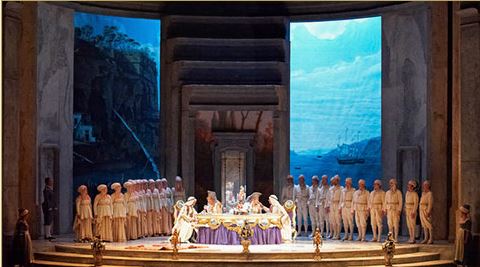
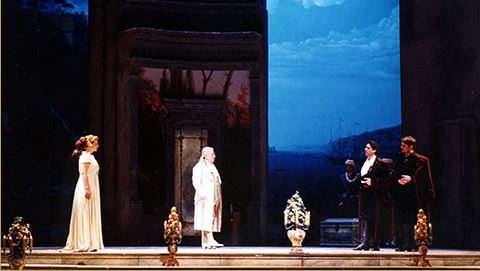
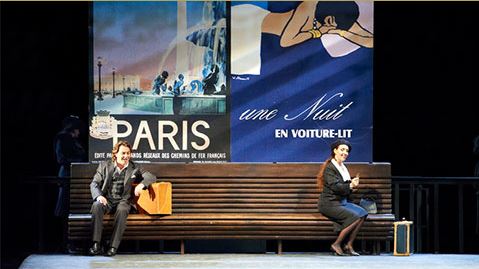
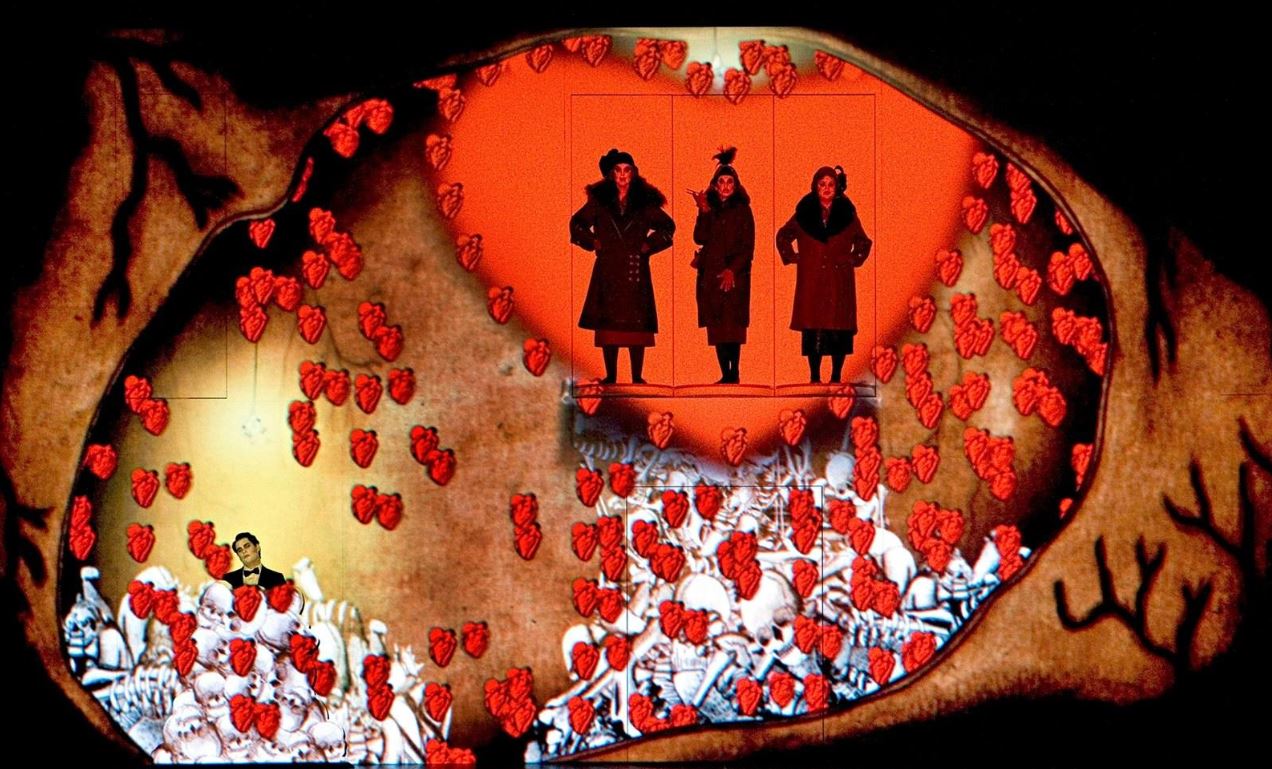
The Komische Oper Berlin’s production of The Magic Flute, »a deliciously absurd mixture of silent film and cartoon« [Berliner Morgenpost], has caused a furore, and not just in Berlin: in Los Angeles, Minneapolis and at the Deutsche Oper am Rhein, it received euphoric acclaim both from audiences and the press. »Barrie Kosky has transformed The Magic Flute into a stunning live-action cartoon, so bewitching as to silence every criticism.« [Los Angeles Times] »You are amazed by the perfection, you laugh in appreciation of the virtuoso design behind each of these scenes… Breath-taking!« [taz]

PERFORMANCES

March 24, 2016
April 2, 16, 27, 28, 29, 2016
May 4, 8, 13, 2016
June 14, 2016
iko_freese_berlin1

Who is »1927«?

A show that oozes technical accomplishment, and there’s no doubt, with a debut as slick as this, that these young artists have a bright future ahead of them.” The Age, Melbourne

1927 is a London based performance company that specializes in combining performance and live music with animation and film to create magical filmic theatre. Celebrated at home and overseas, the Company was founded in 2005 by Writer, Performer & Director Suzanne Andrade and Animator & Illustrator Paul Barritt.  In 2006, Performer & Costume Designer Esme Appleton and Performer, Composer & Musician Lillian Henley joined and  in 2007, Producer Jo Crowley began collaborating with the company.  All  four  creative  members  of  1927  come  from  different  artistic backgrounds, and it is the collaboration between these artists and the complete integration of artistic  disciplines, that has paved the way for 1927 to create it’s unique, innovative and highly original work.

At the heart of 1927’s practice is the desire to explore the relationship between live actor and animation to  create dynamic and innovative live theatre.  1927 fuse, merge and mix creative mediums to create a unique  performance style.  The company has developed an approach to  combining the mediums of film,  performance and music to great effect, both technically and conceptually; pushing the forms the company  works in to new and exciting places.  1927 has mastered a delicate marriage of live music, animation, film,  performance and song  –  taking  disparate  elements  and  making  them  work  in  harmony  to  create  unique  theatrical experiences.

iko_freese_berlin4

CREATIVE TEAM 

Musical direction Henrik Nánási, Alexander Joel, Hendrik Vestmann, Gabriel Feltz
Staging Suzanne Andrade, Barrie Kosky
Animations Paul Barritt
(Suzanne Andrade und Paul Barritt) und Barrie Kosky
Stage design and costume Esther Bialas
Dramaturgy Ulrich Lenz
Chorus David Cavelius
Lighting Diego Leetz

iko_freese_berlin12

CAST

Queen of the Night
Sarastro / Speaker
Alexey Antonov, Stefan Cerny
Papagena
Julia Giebel, Sheida Damghani
Monostatos
Peter Renz, Ivan Tursic
Second lady
Third lady
First armoured man
Second armoured man
Three boys
Solisten des Tölzer Knabenchores
iko_freese_berlin14

SYNOPSIS
ACT ONE
In a dark forest, far away …
As he flees from a dangerous giant serpent, Tamino is rescued at the last second by the three ladies who serve the Queen of the Night. When he regains consciousness, the first thing Tamino sees is Papageno, and he believes him to be his rescuer. Papageno, a bird catcher in search of love, does nothing to dispel the misunderstanding. The three ladies return and punish Papageno for his lies by rendering him mute. They show Tamino a picture of Pamina, the daughter of the Queen of the Night, whom Tamino instantly falls in love with. Shortly thereafter, the Queen of the Night herself appears and
tells Tamino of her daughter’s kidnapping at the hands of Sarastro. Tamino responds with great enthusiasm to her command that he free Pamina. The three ladies give Papageno back his voice and instruct him to accompany Tamino. As a protection against danger, they give Tamino the gift of a magic flute, while Papageno receives magic bells. The three ladies declare that three boys will show Tamino and Papageno the way to Sarastro.
Pamina is being importuned by Sarastro’s slave Monostatos. Papageno, who has become separated from Tamino on the way to Sarastro, is as scared by the strange appearance of Monostatos as the slave is by Papageno’s. Alone with Pamina, Papageno announces that her rescuer Tamino will soon arrive. Papageno himself is sad that his search for love has thus far proved fruitless. Pamina comforts him.
The three boys have led Tamino to the gates of Sarastro’s domain. Although he is initially refused entry, Tamino begins to doubt the statements made by the Queen of the Night regarding Sarastro. He begins to play on his magic flute, and enchants nature with his music. Papageno meanwhile flees with Pamina, but they are caught by Monostatos and his helpers. Papageno’s magic bells put their pursuers out of action. Sarastro and his retinue then enter upon the scene. Monostatos leads in Tamino. The long yearned-for encounter between Tamino and Pamina is all too brief. Sarastro orders that they must first face a series of trials.

iko_freese_berlin10

ACT TWO

The trial of silence
Tamino and Papageno must practise being silent. Because of the appearance of the ladies and their warnings, their ordeal is a truly testing one. Tamino remains resolute, while Papageno immediately begins to chatter.

Meanwhile, Monostatos again tries to get close to the sleeping Pamina. The Queen of the Night appears and orders her daughter to kill Sarastro. Pamina remains behind, despairing. Sarastro seeks to console Pamina by foreswearing any thoughts of revenge.

The trial of temptation
Tamino and Papageno must resist any temptation: no conversation, no women, no food! As well as the magic flute and magic bells the three boys also bring Tamino and Papageno food, which Tamino once again steadfastly resists. Even Pamina fails to draw a single word from Tamino’s lips, which she interprets as a rejection. She laments the cooling of Tamino’s love for her.
Before the last great trial, Pamina and Tamino are brought together one last time to say farewell to one another. Papageno is not permitted to take part in any further trials. He now wishes for only a glass of wine – and dreams of his great love.
For her part, Pamina believes that she has lost Tamino forever. In her despair, she seeks to end her own life, but is prevented from doing so by the three boys, who assure her that Tamino still loves her. Gladdened and relieved, Pamina accepts their invitation to see Tamino again.
Reunited at last, Tamino and Pamina undergo the final trial together.
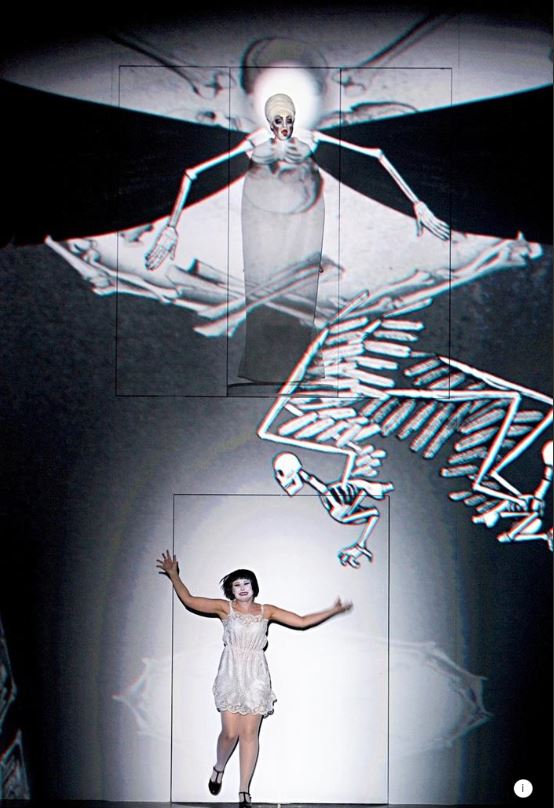
iko_freese_berlin11

The trial of fire and water
The music of the magic flute and their love for one another allow Tamino and Pamina to conquer their own fear and overcome the dangers of fire and water.
Papageno is meanwhile still unsuccessful in his search for his great love. Despairing, he now also seeks to end his life, but is also prevented from doing so by the three boys. Papageno’s dream finally comes
true: together with his Papagena, he dreams of being blessed with many children.

Meanwhile …
… the Queen of the Night, the three ladies, and the turncoat Monostatos arm themselves for an attack against Sarastro and his retinue. However, the attack is repelled.
Tamino and Pamina have reached the end of their trials, and can finally be together.

 GALLERY (Photos Copyright Iko Freese, Berlin)

Posted in OPera | Tagged , , , , | Leave a comment

“Così fan tutte” in Vienna

logo_Vienna

Così fan tutte

Wolfgang Amadeus Mozart

24. February 2016
19:00-22:30|1 Intermission

cosi1

Artistic team

  • Tomáš Netopil | Conductor
  • Roberto de Simone | Diretor
  • Mauro Carosi | Stage
  • Odette Nicoletti | Costumes

CAST

  • Caroline Wenborne | Fiordiligi
  • Stephanie Houtzeel | Dorabella
  • Markus Eiche | Guglielmo
  • Benjamin Bruns | Ferrando
  • Maria Nazarova | Despina
  • Wolfgang Bankl | Don Alfonso

cosi2

SYNOPSIS

Don Alfonso engages the officers Ferrando and Guglielmo in a lively discussion about the fidelity of women. The young gentlemen are convinced of the steadfastness of their fiancées, the two sisters Fiordiligi and Dorabella. Alfonso does not share their opinion, however, and the men enter into a wager. Alfonso intends to demonstrate that a woman’s fidelity will not even last 24 hours. He hurries to Fiordiligi and Dorabella, explaining to them that their fiancés have been summoned to the field of battle. Ferrando and Guglielmo pretend to take their leave of the despondent ladies. Alfonso enlists the assistance of Despina, the chamber maid, revealing only as much of his plan as necessary. She is to make life easier for the two foreign gentlemen wishing to court the two sisters. These gentlemen are none other than Ferrando and Guglielmo, who now appear heavily disguised, just as Fiordiligi and Dorabella are about to turn the “strangers” out, Don Alfonso welcomes them as old friends. Since the ladies do not immediately submit to their advances, the men develop a new strategy. They rush to Fiordiligi and Dorabella claiming that their unrequited love has caused them to take poison: they act out a dramatic death scene. In the guise of a doctor, Despina “saves” the two lovers with the assistance of the ladies, who have now become more compassionate. Just for fun, Fiordiligi and Dorabella pretend to give their new lovers a hearing: without realizing it, each of them chooses the wrong partner. Gradually they fall in love with the “new” lovers, and are soon ready to marry them. Despina dresses up as a notary to perform the “wedding ceremony”. At this precise moment, Alfonso announces the return of the “former” lovers. The latter now appear in their original uniforms and “find” the marriage contract. In the end all is explains to the disconsolate ladies, and Alfonso is able to unite the right couples with one another again. ​

GALLERY Photo © Wiener Staatsoper GmbH

Posted in OPera | Tagged , , | Leave a comment

Tannhäuser at the Estonian National Opera

tannhauserTitle

Grosse romantische Oper in three acts by Richard Wagner
World premiere in Dresden Hoftheater on October 19, 1845
Premiere at the Estonian National Opera on March 14, 2013

“Tannhäuser” is the best production of year 2014 in Estonia. The award was handed over on 27 March. Different awards were also given to Mati Turi and Ain Anger, who participated in the production.

T, 31 March 2016 / 19:00
S, 2 April 2016 / 19:00
S, 30 April 2016 / 19:00

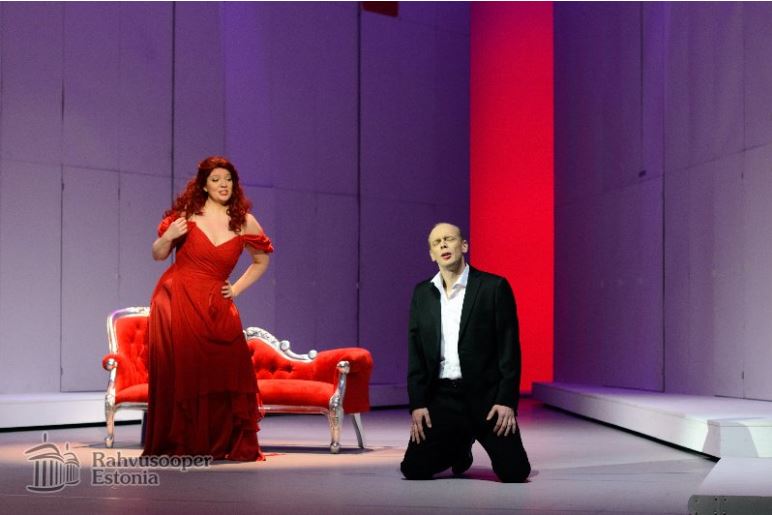
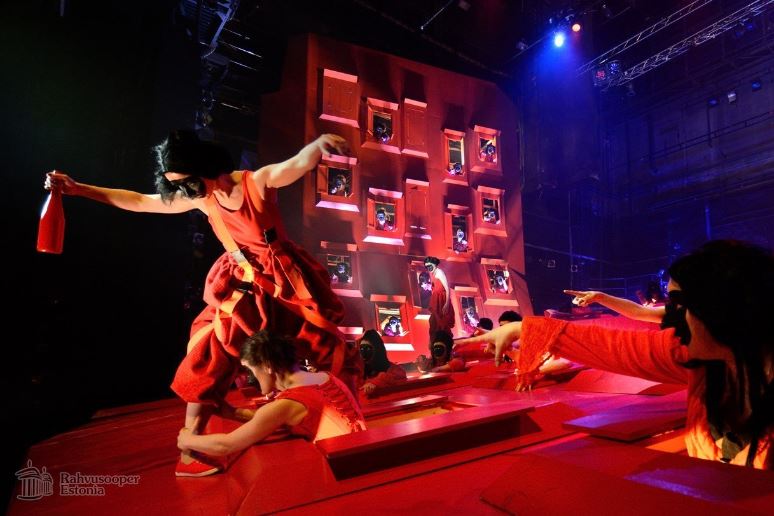
“Tannhäuser”, belongs to the composer’s more romantic stage in his creative career together with “Der fliegende Holländer” and “Lohengrin”. Telling the story of man’s struggle towards his dreams and the danger of losing touch with the reality, “Tannhäuser” unites the historical with the mythological, creating a world of magic realism common to Wagner’s operas. The composer drew on legends about the Minnesinger Tannhäuser and the Wartburg singing contest, combining the historic figure of Tannhäuser with the myth of Venus and her world of love pleasures. As an antithesis Wagner set off Elisabeth’s pure and redeeming love. Today the most famous melodies from “Tannhäuser” are the Pilgrims’ Chorus and Wolfram’s aria “O du mein holder Abendstern“ from Act 3.

In 2013 all the world celebrated the 200th anniversary of Richard Wagner’s birth. For this occasion, “Tannhäuser” was staged at the Estonian National Opera by an internationally renowned stage director Daniel Slater, whose productions are known for their originality, humanity, intelligence and modernity. His award-winning productions have been successfully staged in Great Britain, Germany, France, Switzerland, Sweden, Norway, Spain, USA and New Zealand.

tan3

Synopsis

Having left the Castle of Wartburg in Thuringia with a quarrel, the knight and Minnesinger Tannhäuser has fallen for the charms of Venus and lives with the goddess on Venusberg. After a year, he grows tired of heavenly pleasures and asks Venus to release him. The goddess curses Tannhäuser and foretells that he will return to her on the hour of utmost despair. Tannhäuser finds himself near the Wartburg Castle, where he meets his old friends, who remind him of Elisabeth, the Landgrave Hermann’s niece who was once in love with him. Tannhäuser is moved by the news, joins the court again and begs for Elisabeth’s forgiveness. The Landgrave announces a song contest in which the winner will be crowned by Elisabeth. Tannhäuser’s best friend Wolfram, who is secretly in love with Elisabeth, praises the purity of true love. Angered Tannhäuser interrupts him, saying that real love is not pure but passionate and breaks into a hymn in praise of Venus. The court realises that during his absence, Tannhäuser was in Venusberg and they want to attack him for his shameful behaviour, but Elisabeth asks them for mercy. The Landgrave sends Tannhäuser together with other pilgrims to the Pope in order to ask the Pope to pardon him. After half a year, other pilgrims return to Wartburg, but Tannhäuser is not among them. Elisabeth prays to the Virgin Mary to be allowed to die and, through her death, to redeem Tannhäuser. Wolfram, wandering in the woods, meets the weary Tannhäuser, who tells him that the Pope refused to pardon him, saying “You can find no more forgiveness than the Pope’s staff could blossom”. In great despair, Tannhäuser returns to Venusberg. Wolfram tries to prevent him from yielding to the charms of Venus, reminding him of Elisabeth who still loves him. A procession passes that announces the death of Elisabeth. Grief-stricken Tannhäuser cries out Elisabeth’s name and Venus vanishes. Tannhäuser collapses dead with the cry “Holy Elisabeth, pray for me!” The pilgrims and the crowd announce that a miracle has happened: the Pope’s staff has blossomed! Tannhäuser’s soul is saved.

GALLERY

Staging team

  • Conductors: Vello Pähn, Jüri Alperten
  • Stage Director: Daniel Slater (England)
  • Designer: Leslie Travers (England)
  • Lighting Designer: Anton Kulagin
  • Movement Director: Kati Kivitar

vello_pähn_kodukale

Vello Pähn Conductor

  • Jyrkki Anttila web

    Jyrki Anttila

  • Heli_Veskus

    Heli Veskus

  • Rauno_Elp

    Rauno Elp

  • New Image

    Pavlo Balakin

  • oliver_kuusik

    Oliver Kuusik

  • Jassi_Zahharov
Posted in OPera | Tagged , , | Leave a comment

Jules Massenet’s Manon at the Wiener Staatsoper in Vienna

logo_Vienna

Manon

Jules Massenet

22. February 2016  | 19:00-22:15|1 Intermission

  • 25. Feb. 2016 | 19.00
  • 28. Feb. 2016 | 18.30


Massenet’s musical rendering of the story of the frivolous and charming Manon, to whom the young nobleman Des Grieux loses his heart, has been one of the most popular French operas ever since it was premièred in 1884.

manon1

Artistic Team

  • Frédéric Chaslin | Conductor
  • Andrei Serban |Production
  • Peter Pabst | Equipment

CAST

  • Diana Damrau | Manon Lescaut
  • Ramón Vargas | Chevalier Des Grieux
  • Dan Paul Dumitrescu | Graf Des Grieux
  • Boaz Daniel | Lescaut

manon2


SYNOPSIS

The wealthy Guillot de Morfontaine, the farmer-general Brétigny and their female companions Poussette, Javotte and Rosette are enjoying themselves in a tavern at a staging post in Amiens. The approach of a group of travellers is announced, and curious town-folk gather to watch them, amongst them Sergeant Lescaut, who has come to meet his cousin Manon to take her to a convent. The young Manon is indeed amongst the new arrivals, enchanting all the bystanders – including Guillot – with her beauty. The latter offers her a life of luxury if she will become his mistress. Though Manon rejects his advances, she feels irresistibly attracted by the prospect of wealth. Chevalier Des Grieux alo arrives on the scene. Hardly has the young noblemen set eyes on the young girl than he, too, falls in love with her completely. Manon is also attracted to him, and agrees to flee to Paris with him. However, the time which the young lovers spend with one another is all too short, as Manon finally gives in to the advances of the wealthy Brétigny. Chevalier Des Grieux is forcefully abducted at the instigation of his father, the old Count Des Grieux., who wishes to put his son back on the straight and narrow. Some time later, Manon chances to hear that the young Des Grieux is about to take holy orders. She immediately goes to visit him at the monastery of Saint-Sulpice. It only takes a few tender words from Manon for Des Grieux to succumb to her charms: once again the couple flee together. Since Manon is still unwilling to do without her luxury, Des Grieux endeavours to improve his financial circumstances by gambling at the sleazy Hotel de Transylvanie. Guillot sees him there and drums up a scandal, accusing Des Grieux of cheating. He fetches the police, and both Manon and Des Grieux are arrested. Though Count Des Grieux is able to secure the release of his son, Manon is to be deported to America. However, worn down by the exertions of prison life, Manon dies in des Grieux’s arms on the way to the harbor.

GALLERY

This slideshow requires JavaScript.


Posted in OPera | Tagged , , | Leave a comment

Rigoletto in Zurich

operhauszurichlogorigoletto1

rigoletto

GALLERY Photos Opernhaus Zurich

Posted in OPera | Tagged , , | Leave a comment

Rusalka at the Wiener Staatsoper in Vienna

logo_Vienna

Rusalka

Antonín Dvořák

21. Feb. 2016

© Wiener Staatsoper GmbH

© Wiener Staatsoper GmbH

This opera – the composer’s second last work – was written around 1900. Musically it is related both to the Czech national school and in individual aspects to the musical drama of Richard Wagner.

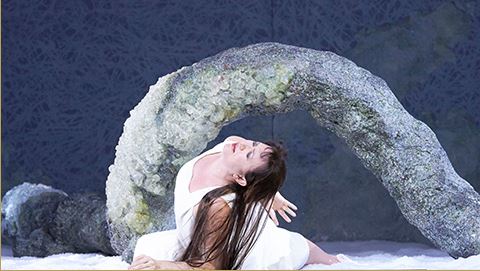
Unlike the mischievous wood nymphs, the water nymph Rusalka does not tease the awakening water goblin, but confesses to him her desire to acquire a human form and a human soul in order to fulfil her love for a prince whom she has often observed by the lake. Although the water goblin warns Rusalka, he advises her to seek Ježibaba’s assistance. The latter appears and drives a hard bargain with the impassioned nymph: Rusalka will be able to adopt the human form, but will lose the power of speech. However, if she is nevertheless unable to win the prince’s unfailing love, only the death of her lover will enable her to return to the kingdom of nymphs.

© Wiener Staatsoper GmbH

© Wiener Staatsoper GmbH

Since Rusalka agrees, she is transformed into a human being, and is able to win the love of the prince when he appears by the lake. However, the planned wedding of the couple is prevented by a mysterious and seductive princess who unexpectedly appears on the scene, and whom the prince finds irresistibly attractive. When the prince makes a declaration of love to the princess and dismisses his planned wedding to Rusalka as a mere escapade, Rusalka makes one last desperate attempt to win him back, but is coldly rejected.

The water goblin puts a curse on the Prince before pulling Rusalka back into his underwater realm. A short time later, Ježibaba offers the lonely and lamenting Rusalka a means of returning to the kingdom of nymphs for ever. She hands Rusalka a dagger with which to murder her unfaithful lover. But Rusalka throws the dagger into the lake. Filled with remorse, the prince comes down to the lake: Rusalka appears to him as a will-o’-the-wisp. He begs her to free him of his guilt. Though Rusalka warns him that her embrace will cost him his life, he insists on a final kiss. He dies in her arms, and Rusalka sinks back into the lake.

Artistic team

  • Tomáš Netopil | Conductor
  • Sven-Eric Bechtolf | Director
  • Rolf Glittenberg |Stage Design
  • Marianne Glittenberg | Costumes
  • Jürgen Hoffmann | Lights
  • Lukas Gaudernak | Choreography

Cast

  • Klaus Florian Vogt | The Prince
  • Elena Zhidkova | The foreign Princess
  • Jongmin Park | The Water Goblin
  • Camilla Nylund | Rusalka
  • Monika Bohinec | Jezibaba

The critics say:

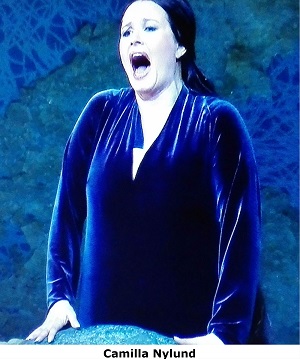
…Rusalka is played by soprano Camilla Nylund, with an expressive, warm, yet soft and agile  voice making it almost real with her naturalnesssprezzante in the sovracuti of which the role is rich. Since the first aria, Song to the Moon, the public had realized that she would be a personification of Rusalka, being free in the stage movements and with penetrating eyes and a bewitching voice, very elegant, never ungainly, with beautiful mezza voce yarns, always ready to respond to the virtuosity of Dvořák‘s orchestral music…

Salvatore Margarone & Federico Scatamburlo, OperaAmorMio

SYNOPSIS

Unlike the mischievous wood nymphs, the water nymph Rusalka does not tease the awakening water goblin, but confesses to him her desire to acquire a human form and a human soul in order to fulfil her love for a prince whom she has often observed by the lake. Although the water goblin warns Rusalka, he advises her to seek Ježibaba’s assistance. The latter appears and drives a hard bargain with the impassioned nymph: Rusalka will be able to adopt the human form, but will lose the power of speech. However, if she is nevertheless unable to win the prince’s unfailing love, only the death of her lover will enable her to return to the kingdom of nymphs.

Photo by Salvatore Margarone

Photo by Salvatore Margarone

Since Rusalka agrees, she is transformed into a human being, and is able to win the love of the prince when he appears by the lake. However, the planned wedding of the couple is prevented by a mysterious and seductive princess who unexpectedly appears on the scene, and whom the prince finds irresistibly attractive. When the prince makes a declaration of love to the princess and dismisses his planned wedding to Rusalka as a mere escapade, Rusalka makes one last desperate attempt to win him back, but is coldly rejected.

The water goblin puts a curse on the Prince before pulling Rusalka back into his underwater realm. A short time later, Ježibaba offers the lonely and lamenting Rusalka a means of returning to the kingdom of nymphs for ever. She hands Rusalka a dagger with which to murder her unfaithful lover. But Rusalka throws the dagger into the lake. Filled with remorse, the prince comes down to the lake: Rusalka appears to him as a will-o’-the-wisp. He begs her to free him of his guilt. Though Rusalka warns him that her embrace will cost him his life, he insists on a final kiss. He dies in her arms, and Rusalka sinks back into the lake.

GALLERY

Photos by Salvatore Margarone, Federico Scatamburlo, Wiener Staatsoper


Posted in OPera | Tagged , , | Leave a comment

Wagner’s “Die Meistersinger von Nurnberg” in Paris

operaParisLogo
meistersinger

Opéra Bastille from 01 to 28 March 2016

Opening night Tuesday, 1 March 2016

5h45 with 2 intervals

Die Meistersinger von Nürnberg

Opera in three acts and seven scenes (1868)

Music Richard Wagner
Libretto Richard Wagner (1813-1883).  In German

calendarMeistersinger

Copyright Photo by Elena Bauer/ONP

© Elena Bauer / OnP

Conductor  Philippe Jordan
Director Stefan Herheim
Hans Sachs Gerald Finley
Veit Pogner Günther Groissböck
Kunz Vogelgesang Dietmar Kerschbaum
Konrad Nachtigall Ralf Lukas
Sixtus Beckmesser Bo Skovhus
Fritz Kothner Michael Kraus
Balthasar Zorn Martin Homrich
Ulrich Eisslinger Stefan Heibach
Augustin Moser Robert Wörle
Hermann Ortel Miljenko Turk
Hans Schwarz Panajotis Iconomou
Hans Foltz Roman Astakhov
Walter Von Stolzing Brandon Jovanovich
David Toby Spence
Eva Julia Kleiter
Magdalene Wiebke Lehmkuhl
Ein Nachtwächter Andreas Bauer

Set design Heike Scheele
Costume design Gesine Völlm
Lighting design Olaf Freese
Video Martin Kern
Dramaturgy Alexander Meier-Dörzenbach
Chorus master José Luis Basso

Paris Opera Orchestra and Chorus
Coproduction with the Salzburg Festival, La Scala, Milan and The Metropolitan Opera, New York

French and English surtitles

© Elena Bauer / OnP

© Elena Bauer / OnP

Commentary

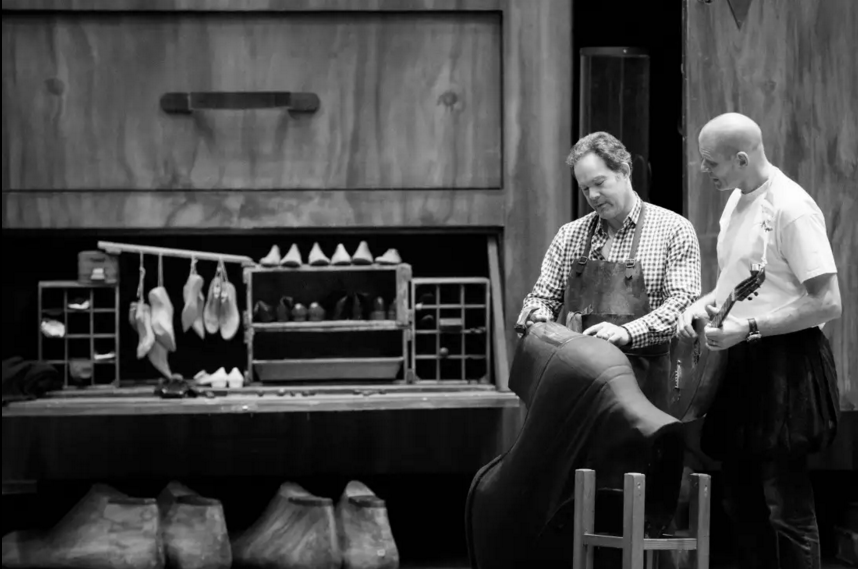
Nuremberg, Summer 1835: in a tavern, a heated debate between Richard Wagner and a carpenter-singer degenerates into a brawl. To all intents and purposes, the stage for “Die Meistersinger” is set. Marienbad, Summer 1845: drawing on the History of the Poetic Literature of the German-speaking Peoples as well as the biography of poet and shoemaker Hans Sachs (1494-1576), the composer sketches out the canvas for a satirical counterpart to Tannhäuser. Venice, Autumn 1861: visiting the Accademia with the Wesendoncks, Wagner is spellbound by Titian’s Assumption and decides to begin writing “Die Meistersinger” – an opera he would not complete until six years later. With a sense of self-derision with which he is not usually associated, Wagner brings together an exercise in style and an aesthetic manifesto in praise of the “noble and holy German art!”.

Going beyond a nationalism which Thomas Mann would later qualify as “spiritualized”, Wagner’s only comedy of his later years combines a desire for change with the ever-essential persistence of the very traditions upon which it is built and sketches a dual self-portrait of the artist, both wise and audacious, in the characters of Sachs and Walther von Stoltzing. Following an outstanding Parsifal at the Bayreuth Festival in 2012, Philippe Jordan joins director Stefan Herheim for the first production of Die Meistersinger von Nürnberg at the Paris Opera for more than a quarter of a century.

meistersingerquote

Posted in OPera | Tagged , , | Leave a comment

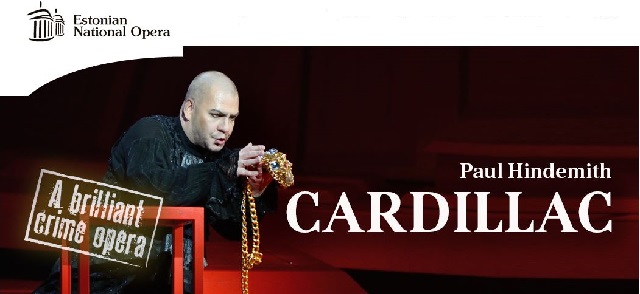
Paul Hindemith’s Cardillac at the Estonian National Opera

cardillac

Opera by Paul Hindemith
Libretto by Ferdinand Lion based on E. T. A. Hoffmann’s short story “Das Fräulein von Scuderi”
World premiere on November 9, 1926 at Dresden Semperoper
Premiere at the Estonian National Opera on May 14, 2015

  • Sung in German with subtitles in Estonian and English
  • Approx running time 2 h
  • Jyrki Anttila (Finnish National Opera), and Sergiu Saplacan (Romania) as guest soloists

F, 19 February 2016 / 19:00

T, 25 February 2016 / 19:00

cardillac4


“Cardillac”, written in 1926, the first of Hindemith’s trilogy of operas about the relationship between the artist and society. The others being “Mathis der Maler” (1935) and “Die Harmonie der Welt” (1957). It includes some of the composer’s most engaging music, conveying the opera’s power, strange beauty, and eccentricity sometimes leading to absurdity. “Cardillac” was one of the most frequently performed operas of the 1920s and went on to become Hindemith’s most successful stage work of all.

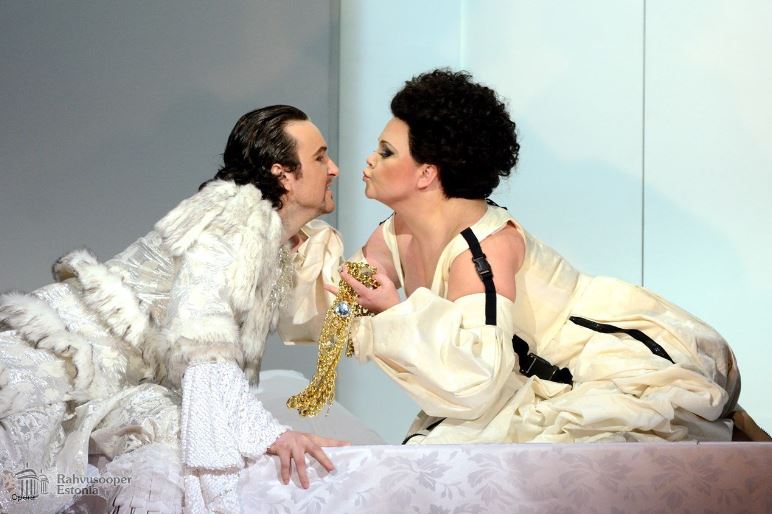
The protagonist is a goldsmith Cardillac, who fabricates wonderful things and because of his obsession with them he also retrieves them by theft and murder. The plot revolves around the dilemma of revealing to the public that the beloved artist is also the criminal who made an entire city fearful. The citizens and police fail to make any connection between the coincidence of the purchases and murders until Cardillac finally confesses. A crowd then beats him to death, but after his daughter explains that the murders were merely the consequence of his love of beauty, they sing a ravishing eulogy.

cardillac2

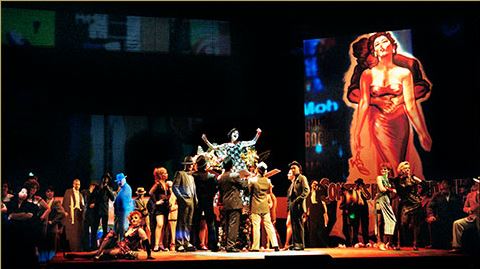
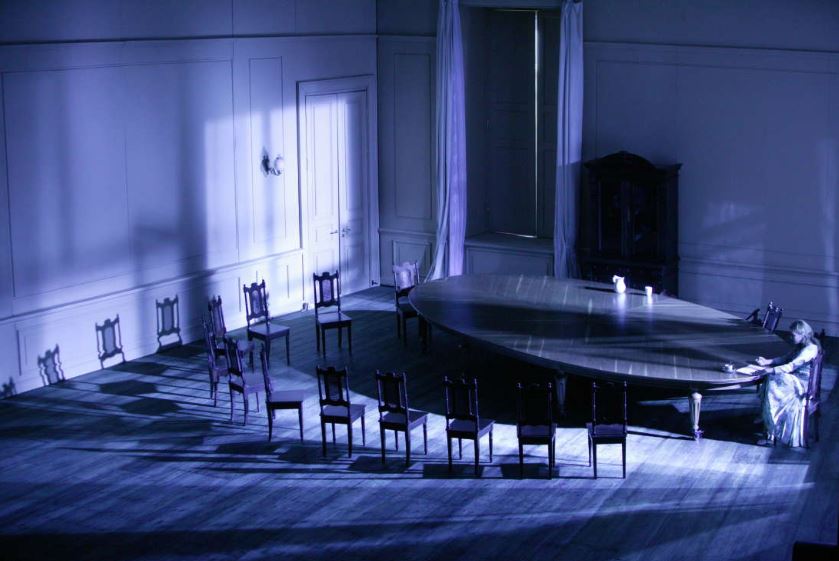
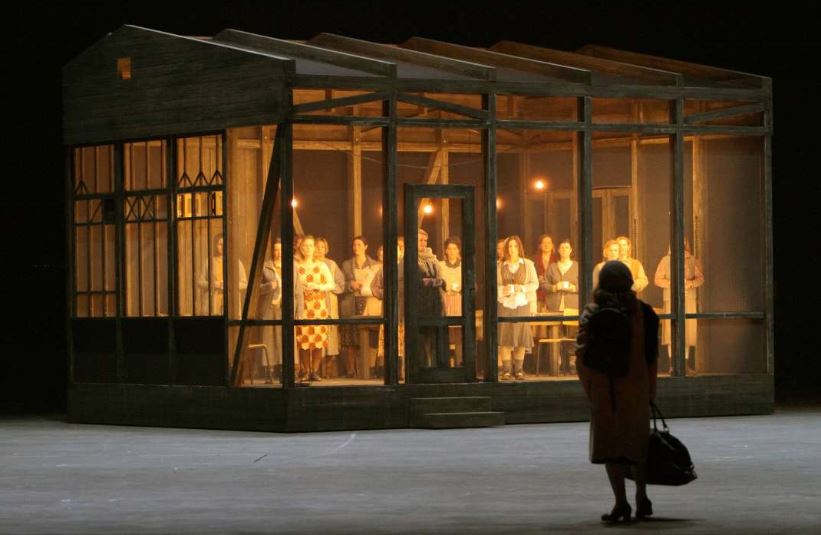
Vilppu Kiljunen: “Paul Hindemith’s “Cardillac” is more than a crime story. It is a story of the unrestrainable power of human mind, passions and desire for death. What makes the opera especially fantastic, powerful and dramatic is not only its music, but the intensity of the plot that lasts throughout the opera. The people thirst for revenge and punishment – the culprit is the one least suspected. But the criminal is not important, what matters is the motive. Desire for beauty and following your inner drive can lead us to the dark side of life. Could we behave differently? Live differently? Does an artist, a human, follow anything but his inner drive? The conflict is born: the individual versus society. Whose rules do we follow? You will definitely face these questions either as a stage director or a spectator of “Cardillac”. I want to ask these questions in the same context that the opera was born. In my fantasy I see the plot in a black-and-white world, in a city that hunts for a murderer.”

Paul Hindemith (1895–1963) was one of the most outstanding representatives of German neo-classicism and one of the most varied 20th century composers. He has written in almost all genres: nine operas, three ballets, four symphonies, several oratorios and chamber music. He is also considered a pioneer of writing “utility music”, compositions for everyday occasions and practical purposes, reflecting a cultural trend in post-wars Germany. Combining traditional and experimental composition techniques, he created a unique style of his own. His early music is often atonal, but his later works return to tonality. The repertoire of the Estonian National Opera features also Hindemith’s short opera “The Long Christmas Dinner”.

This slideshow requires JavaScript.

Staging team

  • Conductors: Vello Pähn, Risto Joost, Lauri Sirp
  • Stage Director: Vilppu Kiljunen (Finland)
  • Designer: Kimmo Viskari (Finland)
  • Lighting Designer: Anton Kulagin
  • Guests:

Jyrkki-Anttila-webSergiuSaplacanweb

CAST

  • vello_pähn_kodukale

    Vello Pähn, Conductor

  • Rauno_Elp

    Rauno Elp

  • Lepalaan_small

    Helen Lepalaan

  • Jyrkki Anttila web

    Jyrki Anttila

  • Mart_Laur

    Mart Laur

  • sergiu saplacan web

    Sergiu Saplacan

  • Heli_Veskus

    Heli Veskus

  • Atlan Karp

    Atlan Karp

Posted in OPera | Tagged , | Leave a comment

Iolanta at the Palais Garnier in Paris

operaParisLogo

yolantaTitle

Photo © Cig Harvey

Palais Garnier from 07 March to 01 April 2016

3h55 with 2 intervals

Opening night Wed. 9 Mar.

iolantaCalendar

Iolanta

Opera in one act (1892)

Music
Piotr Ilyitch Tchaikovski
Libretto
Modeste Tchaikovski
Conductor
Alain Altinoglu
Marius Stieghorst

Director
Dmitri Tcherniakov
yolanta1
Roi René
Alexander Tsymbalyuk
Iolanta
Sonya Yoncheva
Vaudémont
Arnold Rutkowski
Robert
Andrei Jilihovschi
Ibn Hakia
Vito Priante
Alméric
Roman Shulakov
Bertrand
Gennady Bezzubenkov
Martha
Elena Zaremba
Brigitta
Anna Patalong
Laura
Paola Gardina
yolanta2

The Nutcracker

Ballet in two acts (1892)

Music
Piotr Ilyitch Tchaikovski
Choreography
Sidi Larbi Cherkaoui
Edouard Lock
Arthur Pita
Danseurs en alternance
Marion Barbeau
Marine Ganio
Stéphane Bullion
Julien Meyzindi
Nicolas Paul
Aurélien Houette
Yvon Demol
Takeru Coste
Alice Renavand
Sofia Rosolini
Simon Le Borgne
Caroline Bance
Charlotte Ranson
Director
Dmitri Tcherniakov
Set design
Dmitri Tcherniakov
Costume design
Elena Zaitseva
Lighting design
Gleb Filshtinsky
Chorus master
Alessandro Di Stefano

Étoiles, Premiers Danseurs and Corps de Ballet
Paris Opera Orchestra and Chorus
Maîtrise des Hauts-de-Seine / Paris Opera Children’s Chorus

French and English surtitles

This production will be recorded for television.

A coproduction by the Paris Opera, Bel Air Média and Arte with support from the CNC and directed by Andy Sommer.
Broadcast live in cinemas on 17 March and on Culture Box as of 19 March.
Broadcast on France 3 at a later date.
Broadcast on France Musique on 26 March.

yolanta3

Synopsis

Time: 15th century

Place: Mountains of southern France

Scene 1

Princess Iolanta has been blind from birth, but no one has ever told her, nor does she know she is a princess. She lives in a beautiful enclosed garden on the king’s estate, secluded from the world, in the care of Bertrand and Martha. Her attendants bring flowers and sing to her. She declares her sadness, and her vague sense that she is missing something important that other people can experience. Her father, King René insists that she not discover she is blind, or that her betrothed, Duke Robert, find out about this.

yolanta4

Scene 2

After announcing the king’s arrival, Alméric is warned by Bertrand not to speak of light with Iolanta or to reveal that Iolanta’s father is the king. The king arrives with Ibn-Hakia, a famed Moorish physician who states that Iolanta can be cured, but the physical cure will only work if she is psychologically prepared by being made aware of her own blindness. Ibn-Hakia sings the monologue “Two worlds”, explaining the interdependence of the mind and the body within the divinely ordained universe, which merges spirit and matter. The king refuses the treatment, fearing for Iolanta’s happiness if the cure should fail after she has learned what she is missing.

yolanta5

Scene 3

Robert arrives at the court with his friend Count Vaudémont. Robert tells Vaudémont that he wishes to avoid the marriage as he has fallen in love with Countess Matilde. He sings of his love in his aria “Who can compare with my Mathilde” (Кто может сравниться с Матильдой моей). Vaudémont finds the entrance to Iolanta’s secret garden, ignoring the sign which threatens death to anyone who enters. He sees the sleeping Iolanta, without realising who she is and instantly falls in love. Robert, astounded by his friend’s behavior, is convinced she is a sorceress who has bewitched Vaudémont. He tells him to leave, but Vaudémont is too entranced. Robert departs to bring troops to rescue him. Iolanta awakes and Vaudémont who asks her to give him a red rose as a keepsake, realises she is blind when she twice offers him a white one. She has no concept of light, vision or blindness. They fall in love, after he explains light and color to her.

yolanta6

Scene 4

The couple are discovered by the king. Vaudémont pledges his love, whether Iolanta is blind or not. Ibn-Hakia tells the king that as Iolanta is now aware of her blindness, the treatment might be a success. Iolanta who has no will to see, is unsure therefore whether she should agree to treatment or not. Ibn-Hakia points out that the lack of will proves that without inner desire change cannot take place.

After Vaudémont admits seeing the warning sign at the garden entrance, the furious king threatens to execute him for revealing the truth to Iolanta. He tells Iolanta Vaudémont will die if the physician fails to restore her sight, in the hope that this will restore her will. Iolanta is horrified, and agrees to the treatment. After Ibn-Hakia leaves with Iolanta, the king explains to Vaudémont that he was feigning in order to motivate Iolanta. Robert returns with his troops. He admits to the king he has fallen in love with another, but is still willing to go ahead with the agreed marriage. The king cancels the wedding contract, and gives Iolanta to Vaudémont. Ibn-Hakia and Iolanta return. The treatment has worked and Iolanta can see. At first uncertain of her new gift, she eventually sings of the magical new world now visible to her. The court rejoices.

yolanta7

Principal arias and numbers

  • Scene 1a. Iolanta’s Arioso (Ариозо Иоланты): “Why haven’t I known this before?” “Отчего это прежде не знала”
  • Scene 5b. Ibn-Hakia’s Monologue (Монолог Эбн-Хакиа): “Two worlds” “Два мира”
  • Aria: “Who can be compared with my Matilda?” “Кто может сравниться с Матильдой моей” (Robert)


Posted in Music, OPera | Tagged , , , , | Leave a comment

Salome in Tokyo

tokyo_logo

SALOME

Music by Richard STRAUSS
Opera in 1 act
Sung in German with Japanese supertitles
Opera Palace

Salome is a masterpiece by the archetypal German late Romantic composer, Richard STRAUSS. It is a one-act opera based on the eponymous play by Oscar WILDE, featuring an episode from the New Testament. The decadent content of the opera brought a reaction at its first performance and made STRAUSS’s name known.
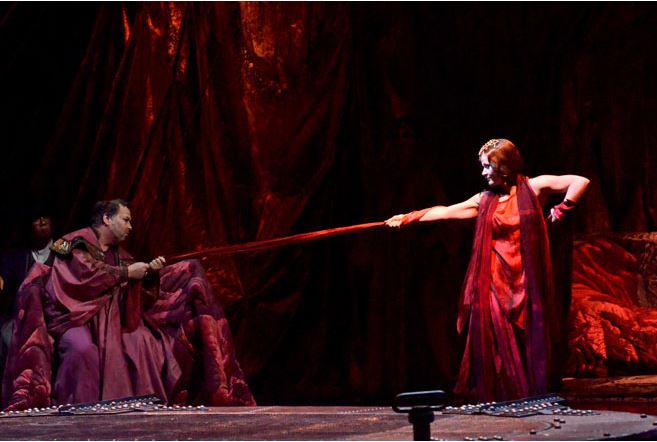
The conductor is Dan ETTINGER, and the director, August EVERDING. Also, Camilla NYLUND appears in the title role for the first time since the Rosenkavalier in 2007.

salomeTokyo

salomecalendar

STAFF

Staff

cast1Conductor Dan ETTINGER 1

Production August EVERDING 2

Scenery and Costume Design Jörg ZIMMERMANN


Chreographer 
ISHII Kiyoko

Revival Director MIURA Yasuhiro

Stage Manager OSAWA Hiroshi

CAST

Salome Camilla NYLUND 3

Herodes Christian FRANZ 4

Herodias Rosalind PLOWRIGHT 5

Johanaan Greer GRIMSLEY 6

Naraboth MOCHIZUKI Tetsuya 7

Ein Page der Herodias KANOH Etsuko 8

5 Juden 1 NAKASHIMA Katsuhiko 9

5 Juden 2 ITOGA Shuhei 10

5 Juden 3 KODAMA Kazuhiro 11

5 Juden 4 AOCHI Hideyuki 12

5 Juden 5 HATAKEYAMA Shigeru 13

2 Nazarener 1 KITAGAWA Tatsuhiko 14

2 Nazarener 2 AKITANI Naoyuki 15

2 Soldaten 1 OTSUKA Hiroaki 16

2 Soldaten 2 ITO Takayuki 17

Ein Cappadocier ONUMA Toru 18

Ein Sklave MATSUURA Rei 19

Orchestra Tokyo Symphony Orchestra


Artistic Director 
IIMORI Taijiro

cast2 cast3


Posted in OPera | Tagged , , | Leave a comment