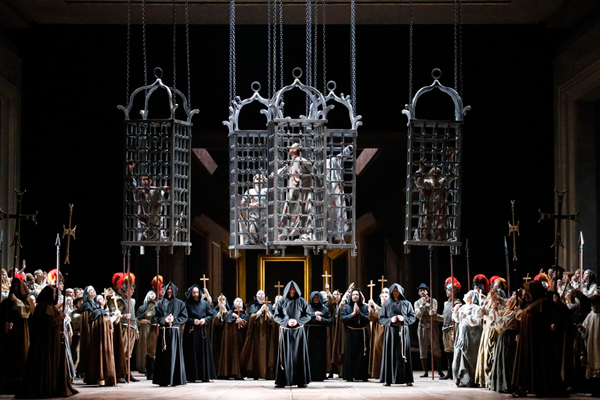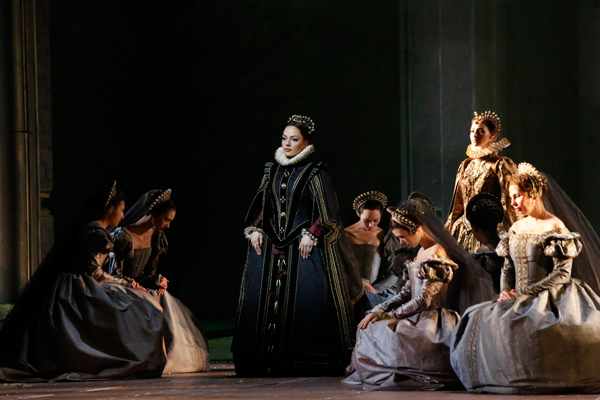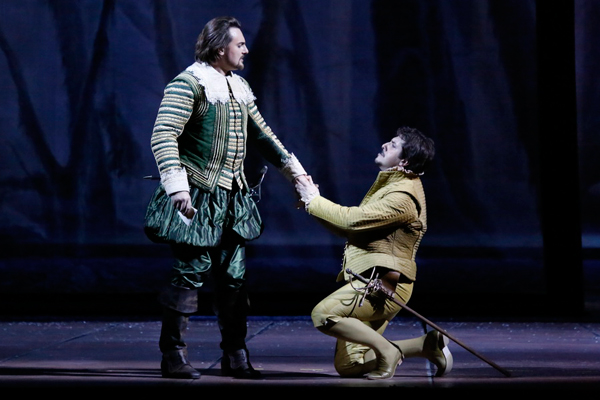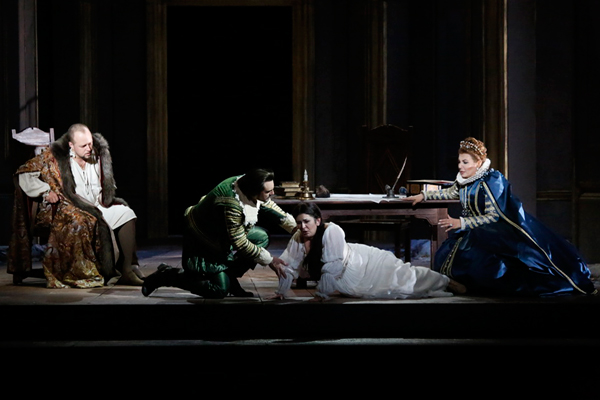
Donizetti’s Lucia di Lammermoor in Barcelona

liceulogo


lucia1lucia2

Lucia di Lammermoor

Opera in three acts Libretto by Salvatore Cammarano, based on Walter Scott’s novel The Bride of Lammermoor.

World premiere: 26/09/1835 at the Teatro San Carlo in Naples. First Barcelona performance: 22/09/1838 at the Teatre de la Santa Creu. First Liceu performance:15/09/1859. Last Liceu performance: 04/12/2006 Number of Liceu performances: 277

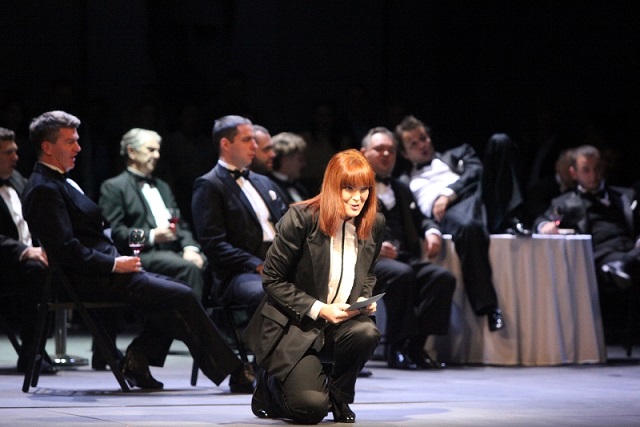
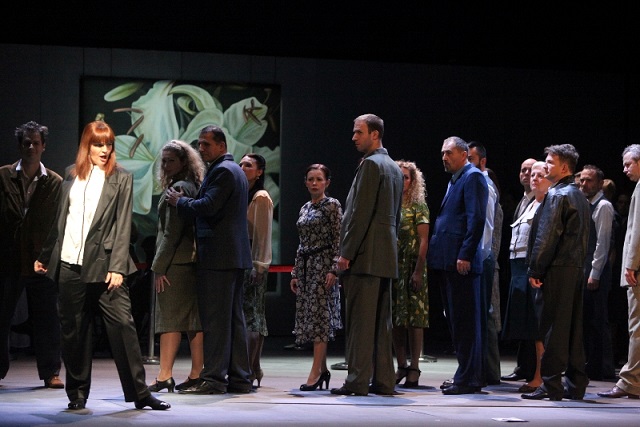
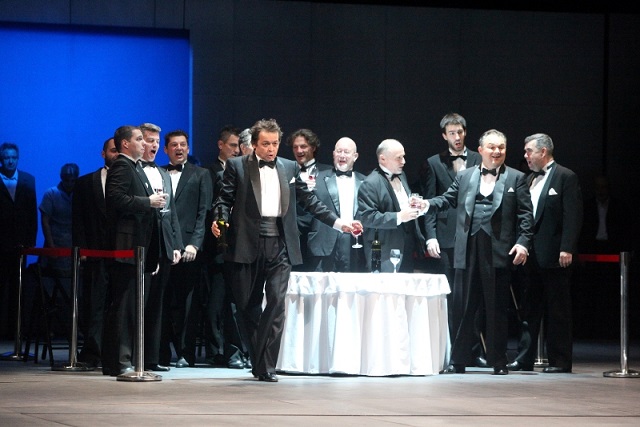
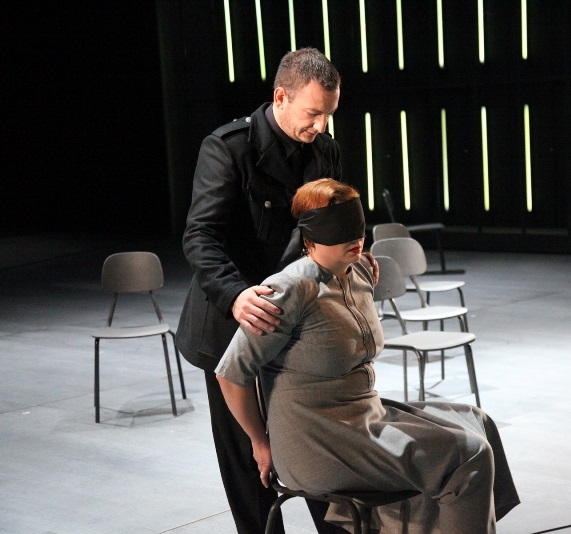
lucia3 Family feuds, passion and madness

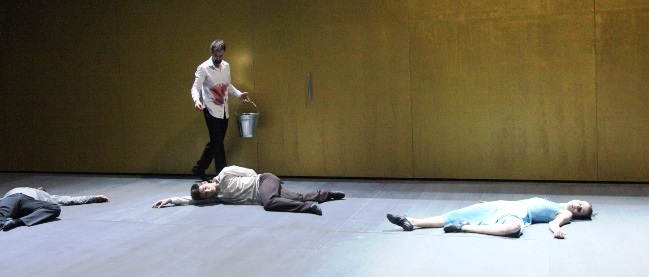
Scotland. Between two feuding families a love affair is born. Lucia and Edgardo secretly pledge themselves in marriage. But Lucia’s brother, who is bent on separating them, convinces Lucia that Edgardo has forgotten her and forces her to marry another man. Lucia goes mad, kills her bridegroom, and ultimately dies herself. When Edgardo finds out, he commits suicide to be reunited with her in death.

The world debut of Juan Diego Flórez in the role of Edgardo in Donizetti’s second most frequently staged work.
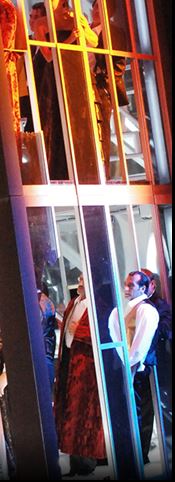
The set, dominated by a leaning glass tower amid a ravaged, desolate landscape, recalls that Scotland is at war, torn apart by the ambitions of rival factions.

To listen the broadcast on December 17th at 8 PM CET, click here

December 2015
Friday 4 20:00
Saturday 5 20:00
Monday 7 20:00
Thursday 10 20:00
Friday 11 20:00
Saturday 12 20:00
Monday 14 20:00
Tuesday 15 20:00
Thursday 17 20:00
Friday 18 20:00
Sunday 20 17:00
Wednesday 23 20:00
Sunday 27 18:00
Tuesday 29 20:00

RUNNING TIME

First act: 41 min
Second act: 40 min
Interval: 30 min
Third act: 54 min

Total lenght: 2 h 50 min

STAFF

Music director
Marco Armiliato

Stage director
Damiano Michieletto

Set design
Paolo Fantin

Costumes
Carla Teti

Lighting
Martin Gebhardt

Production
Opernhaus Zürich

Symphony Orchestra and Chorus of the Gran Teatre del Liceu

Chorus director
Conxita Garcia

CAST
Lucia di Lammermoor Elena Mosuc 4, 7, 11, 14, 17, 20 and 23 Dec
María José Moreno 5, 10, 12, 15, 18, 27 and 29 Dec
Edgardo Juan Diego Flórez 4, 7, 11, 14, 17, 20 and 23 Dec
Ismael Jordi 5, 10, 12, 15, 18, 27 and 29 Dec
Enrico Marco Caria 4, 7, 11, 14, 17, 20 and 23 Dec
Giorgio Caoduro 5, 10, 12, 15, 18, 27 and 29 Dec
Raimondo Simón Orfila 4, 7, 11, 14, 17, 20 and 23 Dec
Marko Mimica 5, 10, 12, 15, 18, 27 and 29 Dec
Arturo Albert Casals
Normano Jorge Rodríguez Norton
Alisa Sandra Ferrández
Posted in OPera | Leave a comment

80 years of Ero the Joker

HNK_croatian_logo

ero3

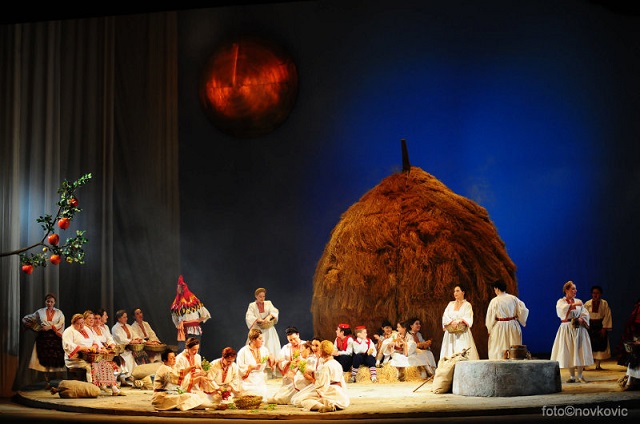
Jakov Gotovac’s cult opera Ero the Joker directed by Kresimir Dolencic was performed on Monday November 2, 2015 at 7:30 p.m. on the occasion of the 80th anniversary of the world opening night. The world opening night was held on November 2, 1935.ero4

Ero s onoga svijeta (usually translated as Ero the Joker, literally Ero from the other world) is a comic opera in three acts by Jakov Gotovac, with a libretto by Milan Begović based on a folk tale. The genesis of the opera was at Vrlička Česma in the town of Vrlika, a hometown of Milan Begović.

According to Croatian musicologist Josip Andreis, Ero s onoga svijeta is “not only the most successful Croatian comic opera to this day, but also the only Croatian opera with a presence in the theaters abroad”. (Wikipedia)

ero5

SYNOPSIS

Act I

On the threshing floor of the rich peasant, Marko, young women are singing while threshing grain. Only master Marko’s daughter Djula is sad: her mother had died and her stepmother, Doma, does not care for her at all. Djula’s voice awakes Mica, a young man whom nobody knows. While the women are comforting Djula and starting to sing again, Mica slides down from a big haystack on which he has been lying unnoticed – as if he had fallen from the sky. The superstitious women believe him when he says: “I am Ero from another world!” He starts dragging out a story about life up there, delivering messages from their deceased ones. Djula’s stepmother comes out and complains about their laziness. However, Mica sends her back into the kitchen by deceit, and thus, being left alone with Djula, tells her that her late mother has chosen him to be Djula’s husband. While they are discussing how to make her father, Marko, give his consent to their marriage, her father himself appears and drives Mica off, refusing to give shelter to a scoundrel. However, Doma has also heard about this young man from another world and so, after Marko leaves, she makes inquiries after her late husband, Matija. Having heard that he is angry about her new marriage and her lack of respect for him, he adds that his pockets are empty. She, in a pang of conscience, gives Mica a sock full of gold coins to give to Matija when he sees him. Ero joyfully leaves. However, when Marko finds out about the money, he gathers men to go after Mica/Ero.

Act II

In the mill. Sima, the miller, mills and sings joyfully until women crowd: each one is in a rush and he does not know how to please them. When Doma arrives with Djula insisting to be served at once, a quarrel bursts out. Djula tries to calm her stepmother down, but she turns against her and leaves furiously. Djula laments after her ill fate; Sima is comforting her and she leaves with women. But, here is Mica, running away. He disguises himself into a miller’s apprentice and meets the pursuit crying: yes, he has seen the swindler running towards the mountains! They leave their horses and continue the chase on foot. Djula comes back and he assures her that he took the coins just to make a joke out of it, and he persuades her to run away with him. When Marko and men return, a young shepherd comes informing them that he saw Mica and Djula running away riding Marko’s horse.

Act III

At the fair. Throng, howls and cheerfulness. Marko and Doma arrive quarrelling since he does not want to give her money for shopping. She leaves furiously. Sima, the miller, approaches Marko, telling him that Djula, in fact, married a rich boy from the neighbouring village and that they live a happy life. She is longing after her father, but Mica does not want to come unless Marko invites him. Marko agrees to send for him, and when Mica and Djula arrive dressed up, people give them a warm reception. And everything becomes clearer: following mother’s advice, Mica, pretending to be a poor boy, went to find a girl who will love him for what he is. Now, he is ready to give back the horse and money and he only asks for Marko’s blessing. Marko is happy for them and a big celebration begins, with a great round-dance in its finale.

ero7 ero8

Characters

  • Marko, rich peasant, bass
  • Doma, his second wife, mezzo soprano
  • Đula, Marko’s daughter from the first marriage, soprano
  • Mića (Ero), young man from the nearby village, tenor
  • Sima, millman, baritone
  • Shepherd boy, child soprano
  • A young man, tenor
  • girls (6 solos), women (8 solos), men, shepherds, fruit-merchants (4 solos), merchants (4 solos), children and other village people.

The opera takes place in a small town, somewhere in the plain at the foothill of Dinara mountain in Herzegovina, in early autumn.

 ero10

Orchestra

  • 3 Flauti (III muta in Piccolo), 2 Oboi, Corno Inglese, 3 Clarinetti, 2 Fagotti (II muta in Contrafagotto)
  • 4 Corni in F, 3 Trombe in C, 3 Tromboni, Tuba
  • Timpani, Percussioni, Arpa, Pianino
  • I Violini, II Violini, Viole, Violoncelli, Contrabassi
  • Sul palco: Organo

ero6

Posted in OPera | Tagged , , | Leave a comment

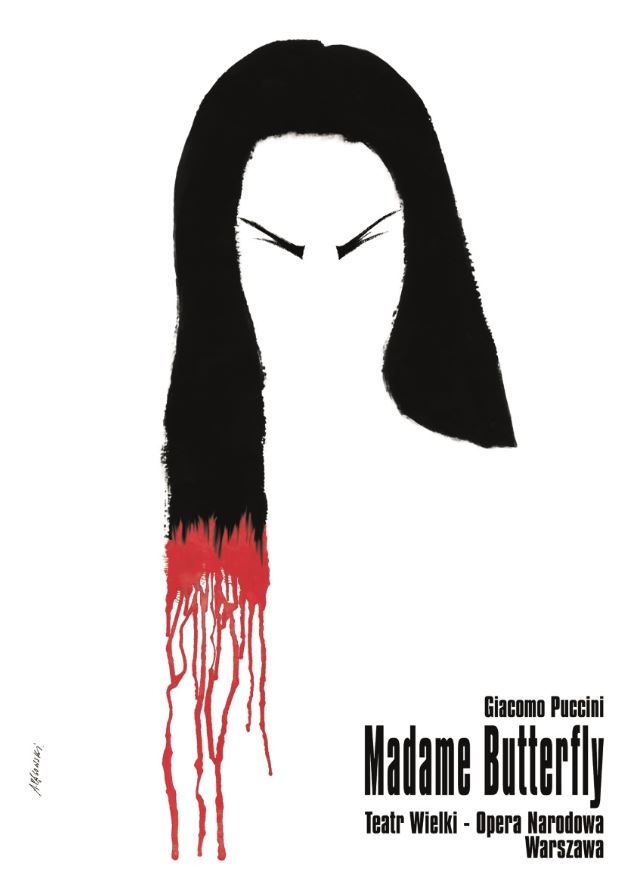
MADAME BUTTERFLY in Warsaw, Poland

butterflytitle1butterflyTitle
polandlogo

Music by Giacomo Puccini

Japanese tragedy in three acts
Libretto: Giuseppe Giacosa and Luigi Illica
World premiere: 17 February 1904, Regio Teatro alla Scala, Milan
Polish premiere: 3 December 1908, Teatr Wielki, Warsaw
Premiere of this production: 29 May 1999

In the original Italian with Polish surtitles

December 6, 2015

butterfly1

A great love story against the background of which a clash of cultures and attitudes makes itself manifest. A young American ladies’ man, Pinkerton, marries an adolescent Japanese geisha. Butterfly, fragile and delicate as indeed, a butterfly, gives herself over to him completely and trustfully.

butterfly2

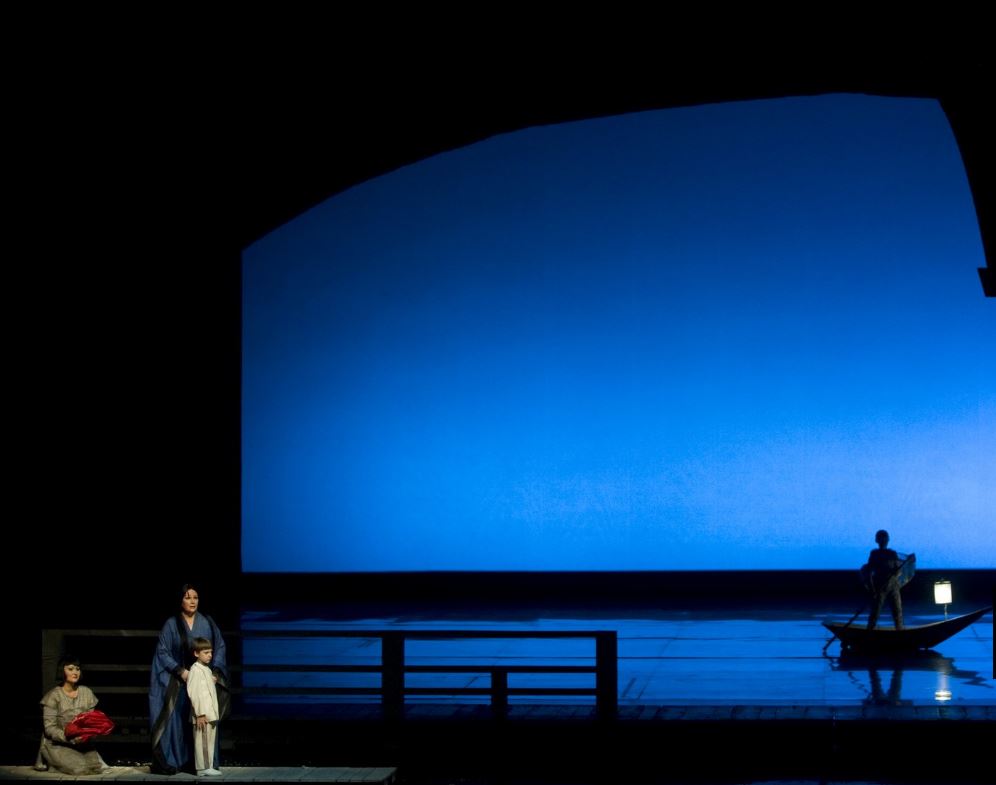
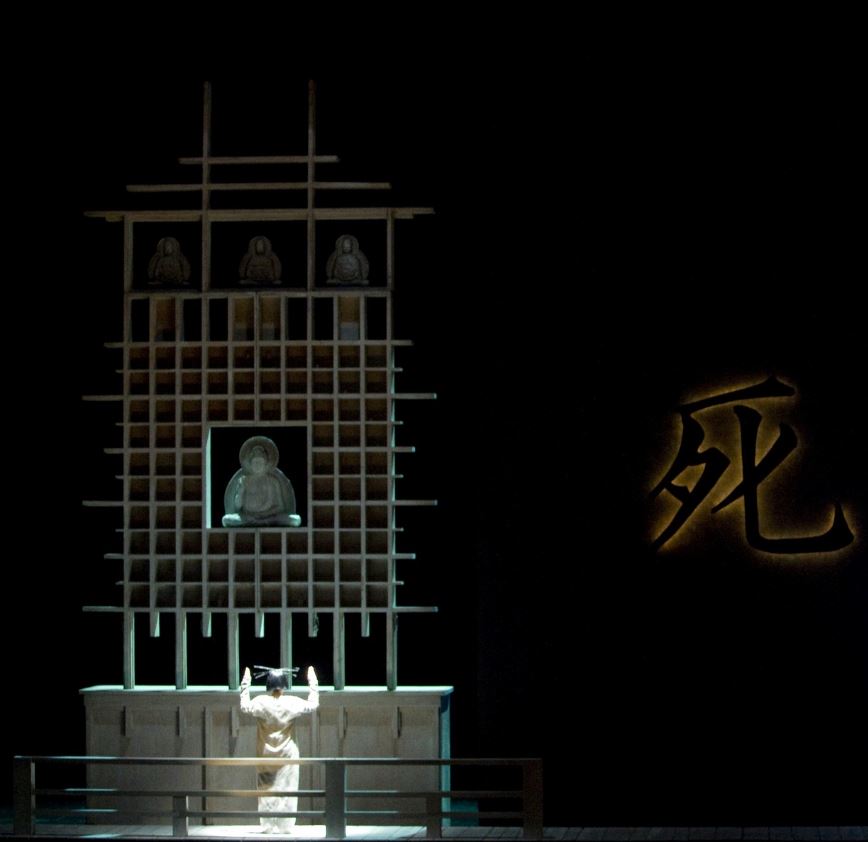
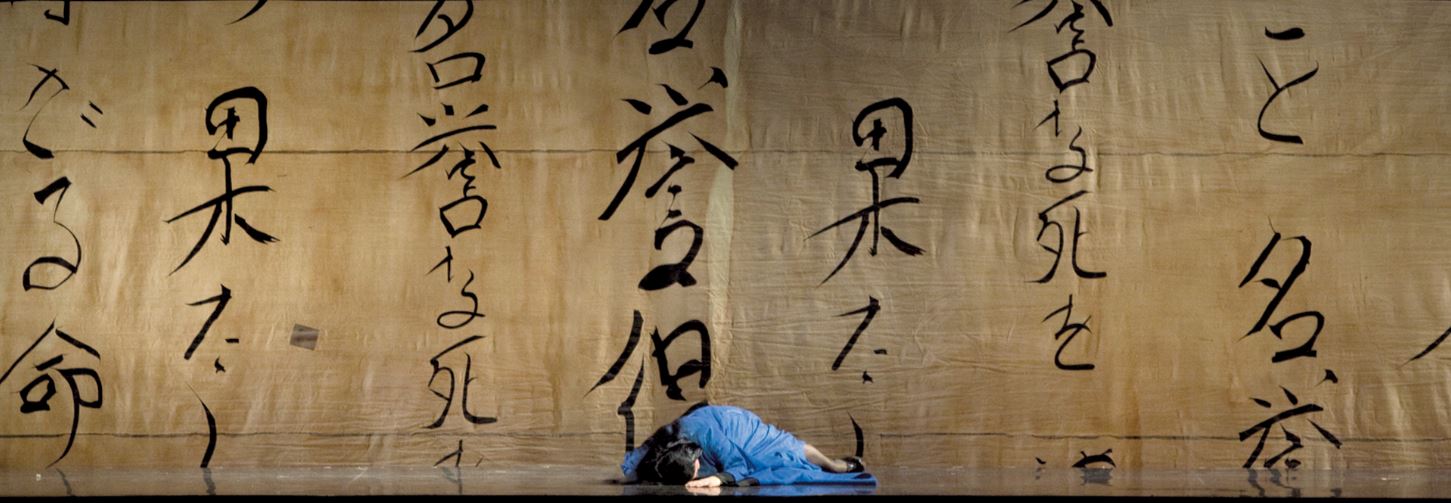
The staging that can be seen in Teatr Wielki – Polish National Opera is entirely stripped down from layers of tackiness and saccharine sentimentality, from the make-up of folkloristic Japonism. It shows us the calligraphic purity of a Japanese drawing, under the surface of which great emotions are throbbing and exploding — love first and foremost, a force moving the Sun and flowers.

Butterfly4

This masterly staging brings back to Giacomo Puccini’s opera the beauty and sharpness of a Buddhist parable about fidelity. The show constitutes the first and instantly brilliant flash of Mariusz Treliński and Boris Kudlička director/designer duo’s talent. It was created in collaboration with the choreographer Emil Wesołowski, and following its Polish premiere in 1999 has been staged almost every year in various theatres in Italy, Spain, Russia, United States and Israel.

butterfly3

Butterfly5ARTISTIC TEAM

ButterflyArtistic Team butterfly6
CAST

butterflyCast
Chorus and Orchestra of the Teatr Wielki – Polish National Opera
Mimes

butterfly7 Butterfly8 Butterfly10

Posted in OPera | Tagged | Leave a comment

Giuseppe Verdi’s Les Vêpres Siciliennes performed for the first time in Croatia

vespri1

HNK_croatian_logoThe Zagreb Opera has performed  on Thursday November 5, 2015 at 7 p.m. The premiere was held on October 24, 2015 and it was the first ever held performances of this opera in Croatia, This really unique score presents the loved Verdi in a different manner; Verdi who experiments especially with the orchestra. The work, famous for its remarkable overture that announces all the complexity of the music score, had been prepared by conductor Niksa Bareza and stage director Janusz Kica with a large number of soloist, the CNT Choir and Orchestra. The set designer is Marko Japelj, the costume designer is Doris Kristic, the light designer is Aljaz Zaletel, choreographer Leonard Jakovina, and choir leader is Nina Cosetto.

HNKvespri2HNKvespri3HNKvespri4HNKvespri5HNKvespri6HNKvespri7HNKvespri8HNKvespri9HNKvespri10


Posted in OPera | Tagged , , | Leave a comment

VERDI’s FALSTAFF in Tokyo

tokyo_logo

3 Dec. – 12 Dec., 2015

FALSTAFF

2015/2016 Season
Music by Giuseppe VERDI
Opera in 3 acts
Sung in Italian with Japanese supertitles
Opera Palace

falstaff_tokyo

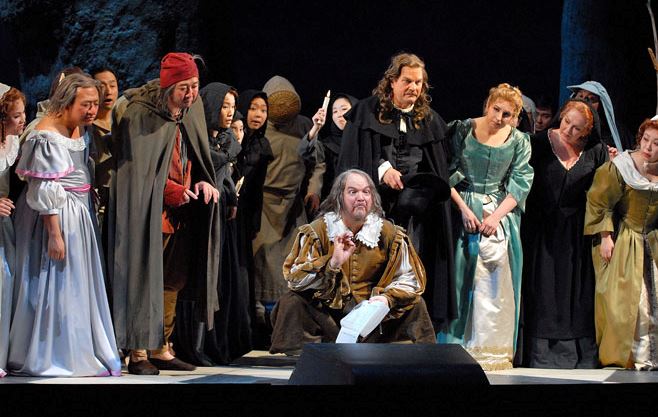
Falstaff is the last of VERDI’s operas, and is based on SHAKESPEARE’s Merry Wives of Windsor. It is considered the crowning work of comedy in the history of Italian opera. The work requires the highest degree of precise ensemble singing throughout, typified first and foremost in the final fugue (Tutto nel mondo è burla, or “All the world’s a joke”) sung by the whole cast.
This ​Jonathan MILLER’s production ​will be staged for the first time since 2007.
Georgian baritone George GAGNIZDE will make his ​debut in the title role ​under the baton of Maestro Yves ABEL​.

Staff

falstaff_tokyo15Conductor Yves ABEL 1

Production Jonathan MILLER 2

Scenery and Costume Design Isabella BYWATER

Lighting Design Peter PETSCHNIG

Cast

falstaff_tokyo15a

Sir John Falstaff George GAGNIDZE 3

Ford Massimo CAVALLETTI 4

Fenton YOSHIDA Hiroyuki 5

Dr. Cajus Matsuura Ken 6

falstaff_tokyo15b

Bardolfo ITOGA Shuhei 7

Pistola TSUMAYA Hidekazu 8

Mrs. Alice Ford Aga MIKOLAJ 9

Nannetta YASUI Yoko 10

falstaff_tokyo15cMrs. Quickly Elena ZAREMBA 11

Mrs. Meg Page MASUDA Yayoi 12

Chorus New National Theatre Chorus

Orchestra Tokyo Philharmonic Orchestra

PHOTOS FROM THE 13 Jun, 2007 SHOW

falstaff2 falstaff3
falstaff5
falstaff1Tokyofalstaff4  falstaff6

SYNOPSIS

Act I
The Garter Inn. Dr. Caius bursts into Sir John Falstaff’s room in the Garter Inn, accusing him of unseemly behavior the previous night. He further accuses Falstaff’s two henchmen, Bardolph and Pistol, of having robbed him while he was drunk. Unable to obtain reparations, Dr. Caius leaves in a fury. Falstaff contemplates the large bill he has run up at the inn. He informs Bardolph and Pistol that in order to repair his finances he plans to seduce Alice Ford and Meg Page, both wives of prosperous Windsor citizens. When Bardolph and Pistol refuse to deliver the letters Falstaff has written to the two ladies, Falstaff instructs a page to do so instead. He then ridicules Bardolph and Pistol’s newly discovered sense of honor, before throwing them out of his room.

The Garter Inn. Alice Ford and Meg Page laugh over the identical love letters they have received from Sir John Falstaff. They share their amusement with Alice’s daughter Nannetta, and with their friend Mistress Quickly. Ford arrives, followed by four men all proffering advice: Dr. Caius, whom Ford favors as Nannetta’s future husband; Bardolph and Pistol, who are now seeking advantageous employment from Ford; and Fenton, who is in love with Ford’s daughter Nannetta. When Ford learns of Falstaff’s plan to seduce his wife, he immediately becomes jealous. While Alice and Meg plan how to take revenge on their importunate suitor, Ford decides to disguise himself in order to pay a visit to Falstaff. Unnoticed in the midst of all the commotion, Nannetta and Fenton manage to steal a few precious moments together.

Act II
The Garter Inn. Feigning penitence, Bardolph and Pistol rejoin Falstaff’s service. They show in Mistress Quickly, who informs Falstaff that both Alice and Meg are madly in love with him. She explains that it will be easier to seduce Alice, since her husband is out of the house every afternoon, between two and three. Falstaff joyously anticipates his seduction of Alice. Bardolph now announces that a “Mister Brook” (Ford in disguise) wishes to speak to Falstaff. To Falstaff’s surprise, “Brook” offers him wine and money if he will seduce Alice Ford, explaining that he has long been in love with the lady, but to no avail. If she were to be seduced by the more experienced Falstaff, she might then be more likely to fall a second time and accept “Brook.” Falstaff agrees to the plan, telling his surprised new friend that he already has a rendezvous with Alice that very afternoon. As Falstaff leaves to prepare himself, Ford gives way to jealous rage. When Falstaff returns, dressed in his best clothes, the two men exchange compliments before leaving together.

Ford’s house. Mistress Quickly, Alice and Meg are preparing for Falstaff’s visit. Nannetta tearfully tells her mother that her father insists on her marrying Dr. Caius, but Alice tells her daughter not to worry. Falstaff arrives and begins his seduction of Alice, nostalgically boasting of his aristocratic youth as page to the Duke of Norfolk. As Falstaff becomes more amorous, Meg Page interrupts the tête-à-tête, as planned, to announce (in jest) that Ford is approaching. But just at that point Mistress Quickly suddenly returns in a panic to inform Alice that Ford really is on his way, and in a jealous temper. As Ford rushes in with a group of townsfolk, the terrified Falstaff seeks a hiding place, eventually ending up in a large laundry basket. Fenton and Nannetta also hide. Ford and the other men ransack the house. Hearing the sound of kissing, Ford is convinced that he has found his wife and her lover Falstaff together, but is furious to discover Nannetta and Fenton instead. While Ford argues with Fenton, Alice instructs her servants to empty the laundry basket out of the window. To general hilarity, Falstaff is thrown into the River Thames.

Act III
Outside the Garter Inn. A wet and bruised Falstaff laments the wickedness of the world, but soon cheers up with a glass of mulled wine. Mistress Quickly persuades him that Alice was innocent of the unfortunate incident at Ford’s house. To prove that Alice still loves him, she proposes a new rendezvous that night in Windsor Great Park. In a letter that Quickly gives to Falstaff, Alice asks the knight to appear at midnight, disguised as the Black Huntsman. Ford, Nannetta, Meg, and Alice prepare the second part of their plot: Nannetta will be Queen of the Fairies and the others, also in disguise, will help to continue Falstaff’s punishment. Ford secretly promises Caius that he will marry Nannetta that evening. Mistress Quickly overhears them.

Windsor Great Park. As Fenton and Nannetta are reunited, Alice explains her plan to trick Ford into marrying them. They all hide as Falstaff approaches. On the stroke of midnight, Alice appears. She declares her love for Falstaff, but suddenly runs away, saying that she hears spirits approaching. Nannetta, disguised as the Queen of the Fairies, summons her followers who attack the terrified Falstaff, pinching and poking him until he promises to give up his dissolute ways. In the midst of the assault Falstaff suddenly recognizes Bardolph, and realizes that he has been tricked. While Ford explains that he was “Brook,” Quickly scolds Falstaff for his attempts at seducing two younger, virtuous women. Falstaff accepts that he has been made a figure of fun, but points out that he remains the real source of wit in others. Dr. Caius now comes forward with a figure in white. They are to be married by Ford. Alice brings forward another couple, who also receive Ford’s blessing. When the brides remove their veils it is revealed that Ford has just married Fenton to Nannetta, and Dr. Caius to Bardolph. With everyone now laughing at his expense, Ford has no choice but to forgive the lovers and bless their marriage. Before sitting down to a wedding supper with Sir John Falstaff, the entire company agrees that the whole world may be nothing but a jest filled with jesters, but he who laughs last, laughs best. —Robert Carsen

Reprinted courtesy of the Royal Opera House, Covent Garden
© Royal Opera House, covent garden

Posted in OPera | Tagged , | Leave a comment

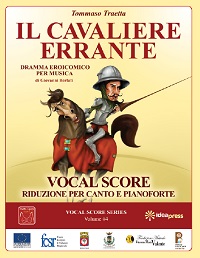
The Vocal Score of IL CAVALIERE ERRANTE by Tommaso Traetta published for the first time…

IL CAVALIERE ERRANTE IL CAVALIERE ERRANTE

DRAMMA EROICOMICO PER MUSICA
Vocal Score/Riduzione per Canto e Pianoforte
Edited by: Vito Clemente and Roberto Duarte
Copyright @ 2015 Idea Press Musical Edition USA

All rights reserved: Traetta Opera Festival
Published by: Idea Press USA

Il Cavaliere Errante, dramma eroicomico (1778) appartiene all’ultimo periodo creativo di Tommaso Traetta: qui ha innanzi tutto sviluppato il lato amabile del suo talento sino all’originalità ed ha acquisito leggerezza nell’espressione musicale. L’opera è in sostanza una favola: un principe spagnolo fa rapire la dama della quale è innamorato, la confina in un’isola incantata e lì, con i sortilegi di un mago, tenta di convincerla a sposarlo. La dama è però innamorata del Cavaliere Errante che, grazie all’aiuto di una maga buona ed insieme al fedele servo, riesce ad annullare i sortilegi, a liberare l’amata e a sposarla.

La partitura è ricca di parodie, di recitativi ed arie virtuosistiche per tutti i personaggi e presenta alcuni tòpoi utilizzati dai suoi successori, da Mozart a Rossini.

Acquistatelo su AMAZON, BARNES & NOBLE e altre librerie internazionali…


Il Cavaliere Errante (The Errant Knight), a comic-heroic drama, belongs to the last creative period of Tommaso Traetta: here he first developed the amiable side of his talent arriving to originality and acquired lightness in his musical expression.The opera is essentially a fairy tale: a Spanish prince makes his men abduct the lady whom he is in love with, he holds her prisoner in an enchanted island, and there, with the aid of the spells of a magician, tries to convince her to marry him. The lady, however, is in love with the Errant Knight who, with the help of a good witch and with his faithful servant, is able to dissolve the incantations, free his beloved and marry her.

The score is full of parodies, recitatives and virtuosic arias for all the characters and presents some topoi used by his successors, from Mozart to Rossini.

Buy on AMAZON, BARNES AND NOBLE and other International bookstores.

IL CAVALIERE ERRANTE

Posted in Books | Leave a comment

Penned up on Lake Geneva. OPERA-FILM REVIEW BY LINDAANN LOSCHIAVO: “Villa Diodati” by Mira J. Spektor.

Reviewed by LindaAnn Loschiavo

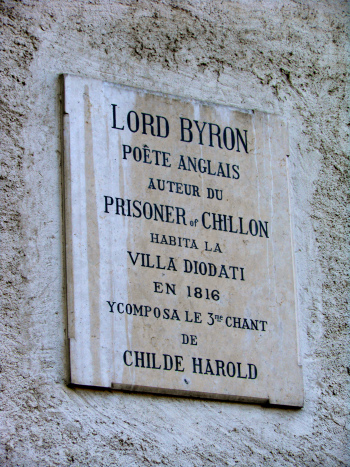
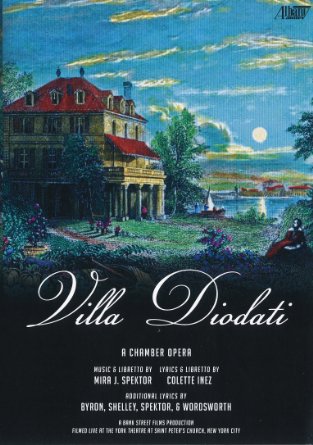
diodatiPlaqueMissed your engraved invitation to spend the summer of 1816 on Lake Geneva with Lord Byron, Shelley, Mary Godwin, and their entourage? Composer Mira J. Spektor, founder of The Aviva Players, wants to invoke their spirits and make it up to you.

First a little background.  Lord Byron [1788— 1824] rented the Swiss mansion Villa Diodati and vacationed there with his moody physician, John Polidori [1795—1821]. Mary Godwin [1797—1851] and Percy Bysshe Shelley [1792—1822], renting nearby, dropped in often. Thanks to unseasonably cool, rainy June weather, the friends holed up for three days inside the villa, spinning ghost stories to pass the time. Only two narratives were completed and published. Mary’s monster tale became “Frankenstein” and Polidori’s title was “The Vampyre.”

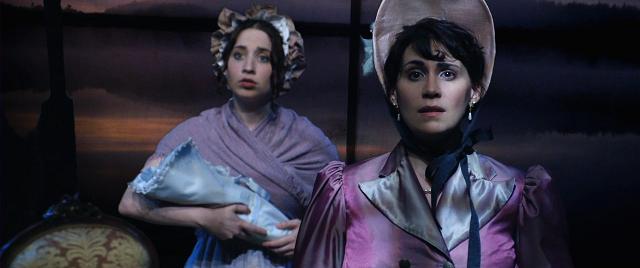
Still from "Villa Diodati" by Bank Street Films, based on Mira K. Spektor's opera about the origin of the Frankenstein story.  The villa is seen in fog in this shot.

Still from “Villa Diodati” by Bank Street Films, based on Mira K. Spektor’s opera about the origin of the Frankenstein story. The villa is seen in fog in this shot.

Unfortunately, Dr. Polidori (who was there, pen in hand) is not a character in Spektor’s opera, which has been in development since 1993 (or so) and was filmed in 2012 at York Theatre, Saint Peter’s Church, New York City. The 73-minute performance starts and ends with an anemic interlude featuring a modern couple not interesting enough to care about. The frame story— —used as a bridge to link the present day to 1816— —concerns an American man (tenor Mike Longo), vaguely ill and awaiting a diagnosis, who forges ahead by train to Villa Diodati with his amiable wife (mezzo-soprano Rachel Arky), where they will morph into characters from the past. Then, at last, the alluring Romantic poets do appear onstage with their ladies, 19-year-old Mary (soprano Angela Leson), and her 18-year-old half-sister Claire Clairmont [1798–1879] (soprano Rachel Zatcoff), along with a maidservant (soprano Hillary Schranze).

Still from "Villa Diodati" by Bank Street Films, based on Mira K. Spektor's opera about the origin of the Frankenstein story.

Still from “Villa Diodati” by Bank Street Films, based on Mira K. Spektor’s opera about the origin of the Frankenstein story.

As expected, there is plenty of sublime poetry, each poem sung like an aria. A classic text paired with music sounds like an interesting idea, doesn’t it? The question is whether or not the creative team has found a valid new way to illuminate and dramatize the work. That’s most definitely not the case with this hybrid. One problem is that the verses written two centuries ago were not intended to show character development nor advance a plot. Consequently, they stop the action cold. Therefore, in order to overcompensate for these poem-pauses, there must also be riveting storytelling, dramatic tension, conflict, inner turmoil. In the most memorable operas, a dilemma must be resolved, a lover’s desire is thwarted, a heroine is faced with an impossible choice, and so on. Alas, to its detriment, there is no gripping narrative arc here.

Still from "Villa Diodati" by Bank Street Films, based on Mira K. Spektor's opera about the origin of the Frankenstein story.

Still from “Villa Diodati” by Bank Street Films, based on Mira K. Spektor’s opera about the origin of the Frankenstein story.

diodatiposterAt one point, the shape of a subplot emerges: Claire confides in Mary that she is carrying Byron’s child and wants to tell him. Mary disagrees. [Hooray! Conflict!] Then it gets muddled. At first the couple is shown cuddling on the floor, all lovey-dovey. But Claire never tells Byron (tenor Jeremy J. Moore) about the pregnancy. [Why not?] Abruptly he declares it’s over because Claire spread gossip about him to reporters. Why raise the thorny issue of a pregnancy and then stifle a confrontation about it? Perhaps Mira Spektor did this to keep the focus on the happier couple, Percy and Mary, and their arias. But without anything amiss between them, there’s little to raise the stakes. While there is interesting staging for Mary’s nightmarish visions that inspire Frankenstein, the woman herself never quite breathes. In fact, feisty and troubled Claire Clairmont ends up having more narrative and emotional weight than Mary.

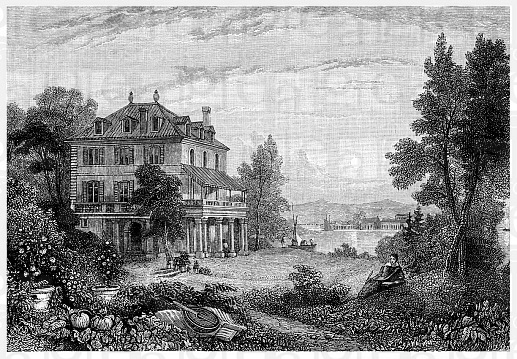
Historical illustration from the 19th Century, Villa Diodati, an estate on Lake Geneva in Cologny, a resident of George Gordon Noel Byron, 6th Baron B...

Historical illustration from the 19th Century, Villa Diodati, an estate on Lake Geneva in Cologny, a residence of George Gordon Noel Byron.

Director Rob Urbinati positioned Rachel Arky, in modern shoes and attire, onstage for the entire production and this was peculiar. Why is this tourist here? Then, without a costume change, she becomes Mary Wollstonecraft [1759—1797], Mary’s dead mother. She’s given a haunting song about death surrounding her daughter, which foretells who will die and when. It’s a good device but it would have been more effective to bring her onstage at that moment and barefoot, like all good ghosts. (The other female characters are shod in period footwear.)

Yes, many of us treasure these poems but the payoff of the music, though sung very nicely, does not save the film from its own stasis and dramatic flatness.

— — — — — — — —  — — — — —  — — —  — — — — —  — —
“Villa Diodati” | Bank Street Films | http://www.theavivaplayers.org
Mira J. Spektor (music and libretto) and Colette Inez (lyrics and libretto)
The Cast:
Rachel Arky, mezzo-soprano (tourist/ mother);
Angela Leson, soprano (Mary Godwin);
Mike Longo, tenor (tourist/ Shelley);
Jeremy J. Moore, tenor (Lord Bryon);
Hillary Schranze, soprano (maid);
Rachel Zatcoff, soprano (Claire Clairmont);
Arkady Orlovsky, cello; Barbara Ames, piano; produced by Gabriel Nussbaum for Bank Street Films, directed for the stage by Rob Urbinati with musical direction by Barbara Ames.

Posted in Article | Tagged , | Leave a comment

Don Carlo in Moscow at the Bolshoi


bolshoilogo

Don Carlo

Opera in four acts

Premiered on December 17, 2013

Presented with one interval.
Running time: 3 hours 45 minutes.

The score has been made available by RICORDI

Libretto by François-Joseph Méry and Camille du Locle
Original Italian translation by Achille De Lauzières, revised by Angelo Zanardini
‘Milan’ version 1884
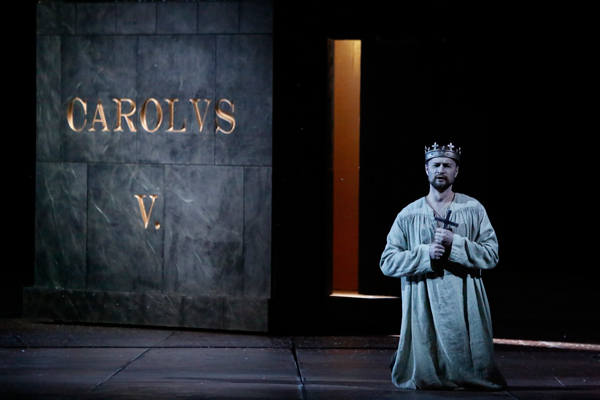
carlo1

Conductors: Robert Treviño, Giacomo Sagripanti
Stage Director: Adrian Noble
Set Designer: Tobias Hoheisel
Costume Designer: Moritz Junge
Lighting Designer: Jean Kalman
Chorus Master: Valery Borisov
Choreographer: Darren Ross
Make up Artist: Campbell Young
Assistant to Director: Elsa Rooke
Assistant to Costume Designer: Elaine Garlick

In Honor of Giuseppe Verdi Bicentennial

carlo2

CAST

25 November 2015

Conductor Giacomo Sagripanti
Philip II, the King of Spain Rafal Siwek
Don Carlo, Infante of Spain Andrea Caré
Rodrigo, Marquis of Posa Elchin Azizov
The Grand Inquisitor Vyacheslav Pochapsky
A Monk Nikolai Kazansky
Elisabeth of Valois Veronika Dzhioeva
Princess Eboli, an aristocrat in court Elena Zelenskaya
Thibault, page to Elisabeth Oxana Gorchakovskaya
The Count of Lerma Marat Gali
Royal Herald Arseny Yakovlev
A Voice from Heaven Ruslana Koval

carlo3

26 November 2015

Conductor Giacomo Sagripanti
Philip II, the King of Spain Andrei Gonuykov
Don Carlo, Infante of Spain Oleg Dolgov
Rodrigo, Marquis of Posa Vasily Ladyuk
The Grand Inquisitor Pyotr Migunov
A Monk Oleg Tsybulko
Elisabeth of Valois Elena Evseyeva
Princess Eboli, an aristocrat in court Anastasia Bibicheva
Thibault, page to Elisabeth Ruslana Koval
The Count of Lerma Stanislav Mostovoy
Royal Herald Bogdan Volkov
A Voice from Heaven Olga Kulchinskaya

carlo4

27 November 2015

Conductor Giacomo Sagripanti
Philip II, the King of Spain Rafal Siwek
Don Carlo, Infante of Spain Andrea Caré
Rodrigo, Marquis of Posa Elchin Azizov
The Grand Inquisitor Vyacheslav Pochapsky
A Monk Nikolai Kazansky
Elisabeth of Valois Veronika Dzhioeva
Princess Eboli, an aristocrat in court Elena Zelenskaya
Thibault, page to Elisabeth Oxana Gorchakovskaya
The Count of Lerma Marat Gali
Royal Herald Arseny Yakovlev
A Voice from Heaven Ruslana Koval

carlo5

28 November 2015

Conductor Giacomo Sagripanti
Philip II, the King of Spain Andrei Gonuykov
Don Carlo, Infante of Spain Oleg Dolgov
Rodrigo, Marquis of Posa Vasily Ladyuk
The Grand Inquisitor Pyotr Migunov
A Monk Oleg Tsybulko
Elisabeth of Valois Elena Evseyeva
Princess Eboli, an aristocrat in court Anastasia Bibicheva
Thibault, page to Elisabeth Ruslana Koval
The Count of Lerma Stanislav Mostovoy
Royal Herald Bogdan Volkov
A Voice from Heaven Olga Kulchinskaya

carlo6

29 November 2015

Conductor Giacomo Sagripanti
Philip II, the King of Spain Rafal Siwek
Don Carlo, Infante of Spain Andrea Caré
Rodrigo, Marquis of Posa Elchin Azizov
The Grand Inquisitor Vyacheslav Pochapsky
A Monk Nikolai Kazansky
Elisabeth of Valois Veronika Dzhioeva
Princess Eboli, an aristocrat in court Elena Zelenskaya
Thibault, page to Elisabeth Oxana Gorchakovskaya
The Count of Lerma Marat Gali
Royal Herald Arseny Yakovlev
A Voice from Heaven Ruslana Koval

carlo7

SYNOPSIS

In 1556, the Emperor Charles V abdicated, celebrated his own funeral and retired to the monastery of San Jeronimo at Yuste. His son Philip II is now on the throne of Spain. To seal the peace between France and Spain after a long war, Philip marries Elisabeth of Valois, the daughter of Henry II, the French King, who has long been betrothed to his son Don Carlo.

carlo8

ACT I

Scene 1
The cloister of the Yuste monastery

A Monk prays before the gates of the tomb of Charles V. Carlo starts at the sound of the voice — is this his grandfather, the Emperor?
Carlo’s friend Rodrigo, the Marquis of Posa, joins him, and advises him to conquer his sorrow caused by losing his bride by a noble enterprise — that of freeing Flanders. The two vow to live and die together.

carlo9

Scene 2
Outside the Yuste monastery gates

Outside the monastery, which no woman but the Queen may enter, her ladies while away the time with the song Princess Eboli sings.

The Queen enters, followed by Posa, who brings Elisabeth a letter from her mother and, under cover of the letter, a note from Carlo. While Eboli and Posa chat about the latest Paris fashions, Elisabeth reads the note, which tells her to trust Posa. In two broad strophes, Posa urges Elisabeth grant Carlo an interview, while Eboli (in asides) reveals her love for Carlo, and her hope that he loves her. Dismissing her ladies, Elisabeth consents to Posa’s request. Carlo, at first controlled, asks Elisabeth to obtain the King’s permission that he should leave for Flanders, but then his emotions overcome him and he falls to the ground in a swoon. On recovering, he clasps Elisabeth in his arms, defying the world. But she exclaims, “Then smite your father. Come stained with his murder, to lead your mother to the altar.” Carlo runs off in despair.

Philip enters, angry to find the Queen unattended. Coldly he orders the lady-in-waiting who should have been with her to return to France. Elisabeth consoles her. The company leaves, but Philip orders Posa to remain: has he no favour to ask for? “Nothing for me,” replies the Marquis, “but for others”; and, invited to speak freely, he describes the terror and destruction being wrought in Flanders. “At this bloody price,” says Philip, “I have paid for the peace of the world.” “The peace of a graveyard,” Posa replies: one word from Philip could change the world and set people free. The King, struck by Posa’s fearless honesty, confides to him his suspicions about his wife and his son, and appoints him his personal counsellor, but bids him beware the Grand Inquisitor.

carlo10

ACT II

Scene 1
The Queen’s gardens

Carlo enters, reading a note of midnight assignation which he believes has come from Elisabeth. When Eboli (who wrote the note) enters, masked, Carlo mistakes her for Elisabeth, and pours out his love. Too late, the mistake is revealed, and Eboli guesses his secret. Posa enters and tries to silence her, but in a tense trio she bids them beware the fury of a woman scorned. Posa asks Carlo to entrust to him any incriminating papers he may be carrying, and after a moment’s hesitation — can he trust the King’s new favourite? — Carlo does so.

Scene 2
A large square before the Basilica of Nuestra Señora de Atocha

The people gather to acclaim their King. Monks escort some Inquisition victims across the square; a splendid auto da fe, or public burning of heretics, is among the attractions of the day. Philip appears from the church and swears solemnly to serve God with fire and the sword. Suddenly a group of men cast themselves at his feet, and Carlo, who has led them there, announces that they are deputies from Flanders. The Flemings break into an eloquent plea for their country. Philip orders them to be taken away. All — except the monks — urge him to show mercy. At the close of the huge ensemble, Carlo asks his father to send him to Flanders as regent, and when Philip refuses, draws his sword on the King. No one dares to disarm him, until Posa steps forward. The King rewards Posa by making him a Duke, and the festive chorus is resumed.

carlo11

ACT III

Scene 1
The King’s study

Philip is alone in his study and reflects gloomily on his loveless, careworn life. The Grand Inquisitor is announced. Philip doubts whether he will be forgiven if he condemns his son to death; the Inquisitor demands that Posa should be handed over to the Inquisition. Philip refuses. The Inquisitor declares that Philip himself is in danger of being summoned before the Inquisition and leaves.

Elisabeth rushes in, distressed that her jewel casket has been stolen. Philip, who has it, opens it and draws out a portrait of Carlo. Elisabeth reminds him that she was once betrothed to the Prince, but he calls her an adulterous wife. She swoons. Eboli and Posa enter, and in a quartet Philip curses his unworthy suspicions, Eboli expresses her regret (for it was she who stole the casket), Posa decides that the time has come for him to take action, and Elisabeth, reviving, laments her unhappy life in this friendless country.

The two women are left alone. Eboli confesses that, drive by jealousy, she denounced Elisabeth to the King. At Eboli’s further confession, that she has been Philip’s mistress, Elisabeth tells her to choose, the following day, between exile and the veil, and leaves. Eboli curses the gift of fatal beauty that has caused her ruin. Her thoughts turn to Carlo, and she resolves to save him during the one day this is left to her.

Scene 2
Don Carlo’s prison

Posa comes to bid Carlo farewell; he is marked for death, since Carlo’s incriminating papers have been found on him — but Carlo can go free, to save Flanders. A shot is fired, and Posa falls. Quickly he explains that Elisabeth awaits Carlo at the Yuste cloister; he dies content, since by his death he secures the happy future of Spain. Philip enters, to return to Carlo his sword. A warning bell rings out; a crowd storms the prison, demanding the Prince. The tumult is quelled by the Grand Inquisitor, who orders the sacrilegious mob to fall on its knees before the King.

carlo12

ACT IV

The Cloister at Yuste

Elisabeth invokes the spirit of the Emperor Charles: may he carry her prayers to the Eternal Throne. Carlo enters and declares that he is done with dreaming; now he will save Flanders. The two take a solemn farewell, hoping to meet in a better world: “And for ever! Farewell!” Philip and the Inquisitor have overheard them; the King delivers his son to the Inquisition. The gates of the Emperor’s tomb open, and the Monk steps forth. He enfolds Carlo in his mantle and leads him into the cloister, recognized as Charles V by everyone present on stage.

ABOUT THE PERFORMANCE:

“In Don Carlo one feels a thirst for freedom”

The Don Carlo performance history at the Bolshoi Theatre is a short one. The opera was premièred at the Theatre on 2 November 1876 by an Italian troupe — there were a total of ten performances after which Don Carlo disappeared for a long time out of the repertoire. Its next appearance on the Theatre playbills was due to the initiative of Fyodor Chaliapin — there was just one performance on 10 February 1917 (Chaliapin sang King Philip). The third production to mark the 150th anniversary of Verdi’s birth opened at the Theatre on 25 October 1963 and this time Don Carlo remained in the repertoire for twenty-five years.

For the bicentennial of Verdi’s birth which this year has been celebrated across the globe, the Bolshoi invited the eminent British director, Adrian Noble, to do a new version of Don Carlo. An acknowledged expert on Shakespeare (for 13 years he was artistic director of the Royal Shakespeare Company and is the author of the book How to do Shakespeare), he is also known as a director of musicals and operas: the span of his interest ranging all the way from baroque opera to the modern musical. He has worked for the Glyndebourne Festival, the Opera Festival at Aix-en-Provence, the Metropolitan, La Scala, Wiener Staatsoper and for other Companies (over 20). He has received more than 20 Olivier Award nominations.

ADRIAN NOBLE:

“I belong to the ranks of those directors who trust authors and follow their dramaturgy. Great works talk to us directly across the centuries. And a story which in its time attracted one of the ‘chief’ romantics — Schiller, and then Verdi, the first composer of the Risorgimento, is still topical today. Both Schiller and Verdi examine the issues of state and the individual, of politics and the freedom of man. In Don Carlo one feels a thirst for freedom, I would even say that the spirit of revolt hovers in the air.

It seemed to me natural and logical not to transfer the action of the opera to a different age. If we manage to recreate the world of 16th century Spain on stage, that atmosphere of itself will shock the contemporary spectator and there will be no need to resort to additional directorial devices.

Imagine to yourself: a huge, rapidly growing empire which is held together by the mighty power of king, Inquisition and army. A society which wages a battle against nonconformists, in which rigid ceremonial plays a huge role and live human emotions are dangerous and carry death in their wake.

Luckily there are a lot of portraits of the historical prototypes of the opera’s heroes and we know exactly what they looked like. Their clothes — the external expression of their status in the rigid hierarchy, their duties and their lack of freedom. They are confined in their clothing as if it was a cocoon. Each character to some extent is in prison, each is bound by his duty. Philip II cannot be father to his son — he is a monarch aware of his mission before God and to the empire. Don Carlo is heir to a huge empire, but his convictions are absolutely opposed to those of his father. Elizabeth is queen and does not have the right to show her feelings. And they are all terribly lonely”.

Posted in OPera | Tagged , , | Leave a comment

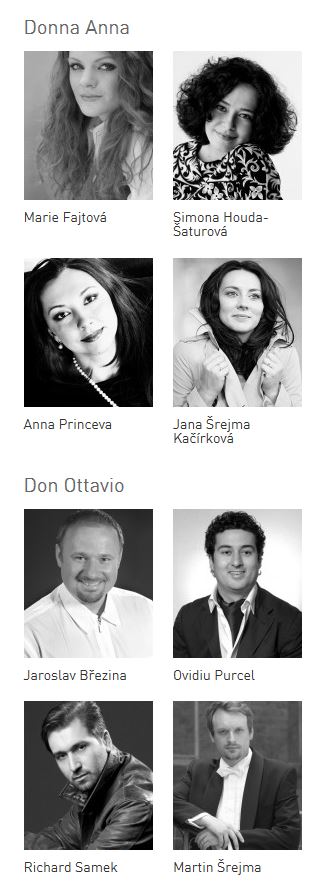
Don Giovanni in Prague

1dongiovanniNarodni

nationaltheatreLibretto: Lorenzo da Ponte
Musical preparation: Tomáš Netopil
Conductor: Jan Chalupecký, David Švec
Stage director: SKUTR (Martin Kukučka a Lukáš Trpišovský)
Sets: Jakub Kopecký
Costumes: Linda Boráros
Chorus master: Pavel Vaněk
Choreography: Jana Burkiewiczová
Dramaturgy: Beno Blachut

National Theatre Orchestra

National Theatre Chorus

Ballet of the National Theatre Opera

Premiere: June 9 and 10, 2012

November 18, 2015 <!–RE–>

December 2, 20, 28, 2015<!–RE–> 

January 14, 2016<!–RE–> 

don-giovanni-df-047web

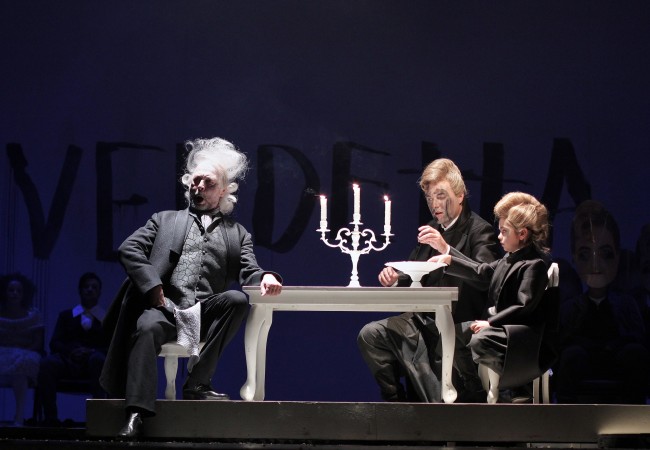
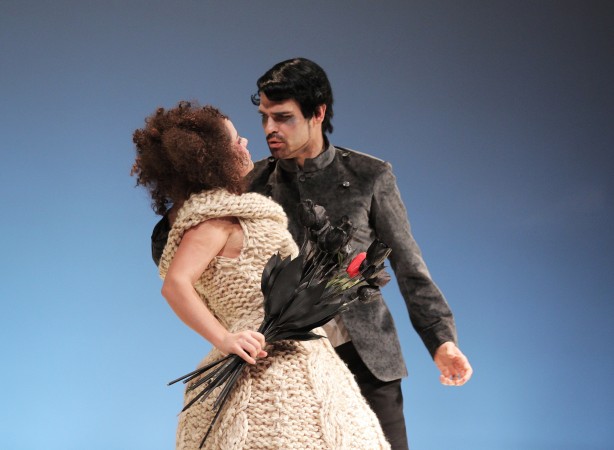
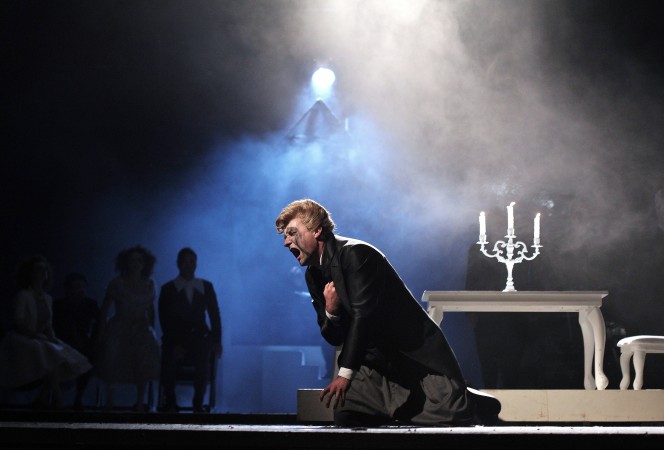
The opera Don Giovanni, the Estates Theatre and the long-standing Mozart tradition are among the greatest glories of Prague’s cultural history. The Estates Theatre is globally unique in that it is the one and only preserved and still functional venue where a world premiere of a Mozart opera took place with the composer himself conducting. This premiere was – as is generally known – of the very “Opera of Operas”, Don Giovanni. And the Estates Theatre is all the more unique owing to the fact that this opera has been performed there for centuries.

don-giovanni-df-251web

The world premiere of Don Giovanni on 29 October 1787 was a tremendous success and from Prague the new opera set out on its journey to global acclaim and admiration. Mozart’s “Prague” opera is one of the most frequently performed titles at the National Theatre. Mozart and Da Ponte’s opera is a work of Shakespearean multivalence, blending comedy and tragedy, “high” and “low”, giving rise to philosophical contemplations while at the same time affording entertainment replete with excitement and humour.

don-giovanni-df-943web

Orchestra and Chorus of the National Theatre

The opera is staged in Italian original version and Czech and English surtitles are used in the performance.

Photo: Hana Smejkalová

Duration of the performance: 3 hours and 10 minutes, 1 intermission

don-giovanni-df-1114web

CAST

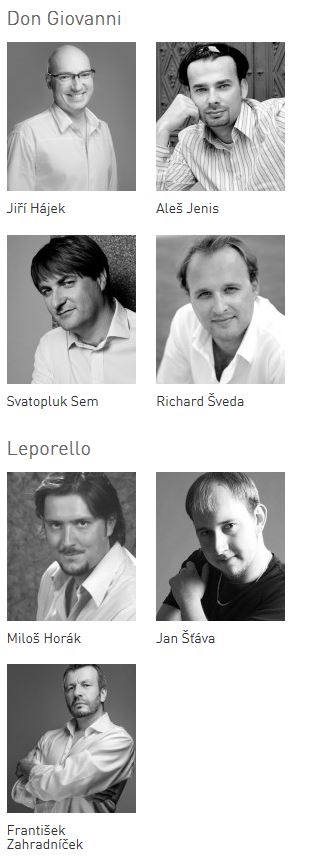
dongiovanniNat1 dongiovanniNat2

dongiovanniNat3 dongiovanniNat4

dongiovanniNat5


giovanni1 giovanni2 giovanni3 giovanni4 giovanni5 giovanni6 giovanni7 giovanni8 giovanni10 giovanni12 giovanni13

Posted in OPera | Tagged , | Leave a comment

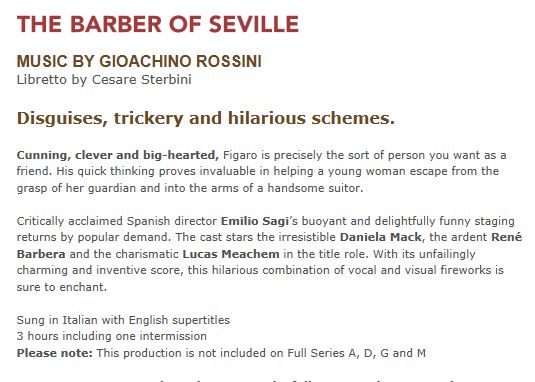
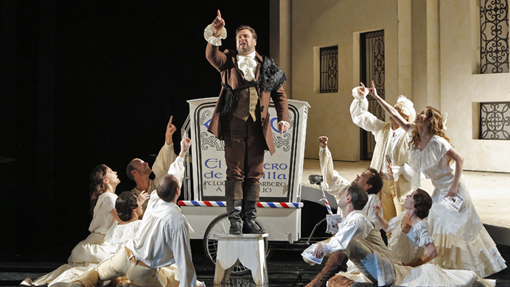
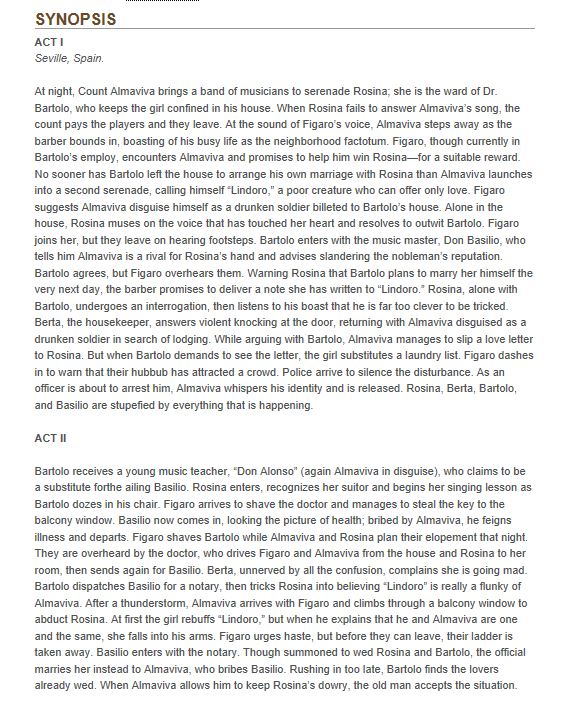
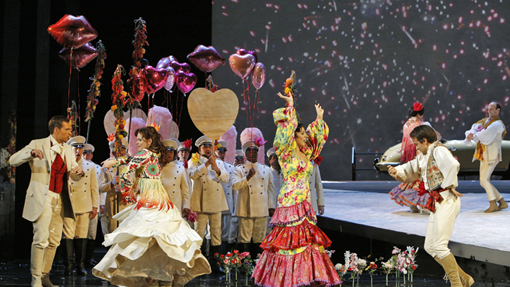
Disguises, trickery and hilarious schemes: the Barber of Seville at the San Francisco Opera

sanfranciscologobarber1Barber_Web1_P

PERFORMANCE PREMIERE

Wed 11/25/15 7:30pm

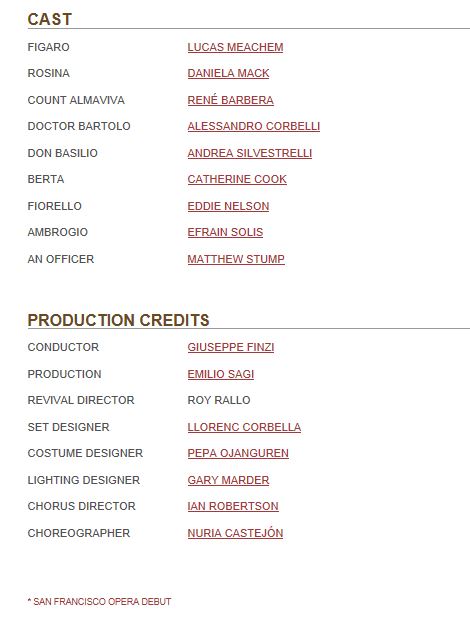
barber2Barber_Web2-2_Pbarbercast
Barber_Web3-1_P Barber_Web4_P

Posted in OPera | Tagged , , , , , | Leave a comment