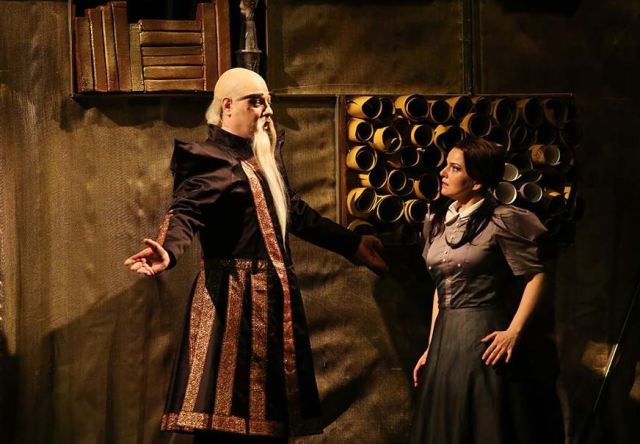
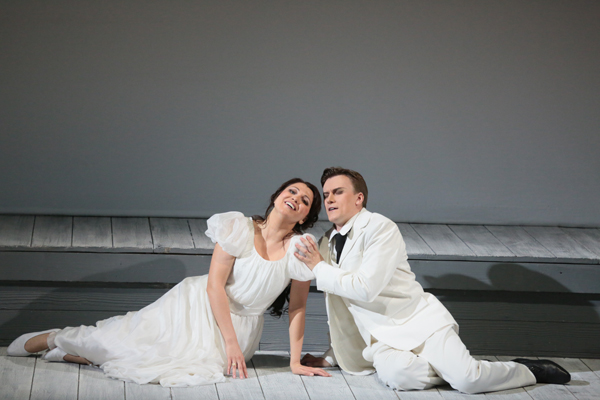
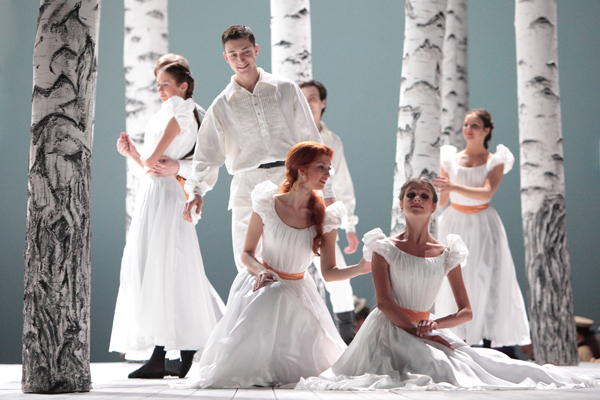
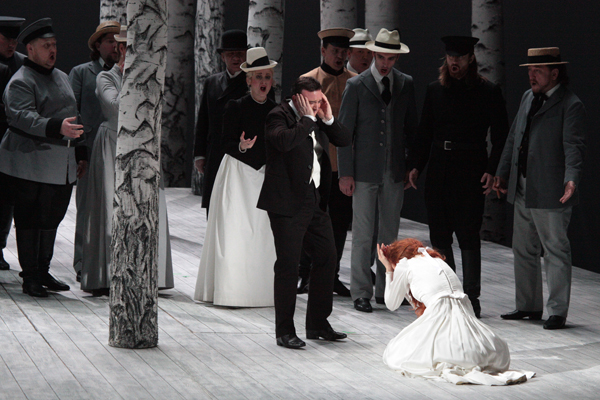
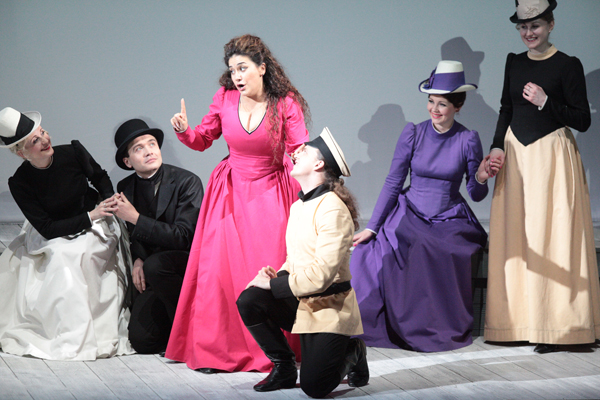
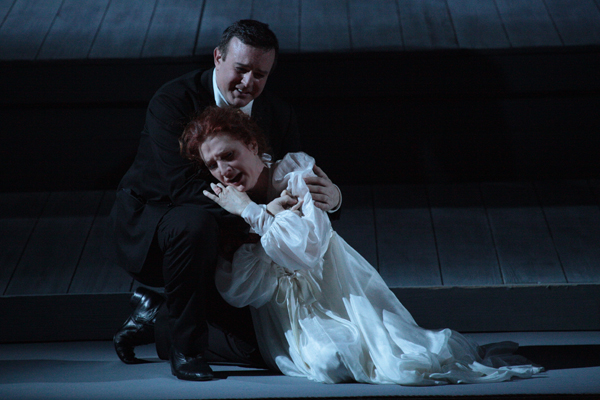
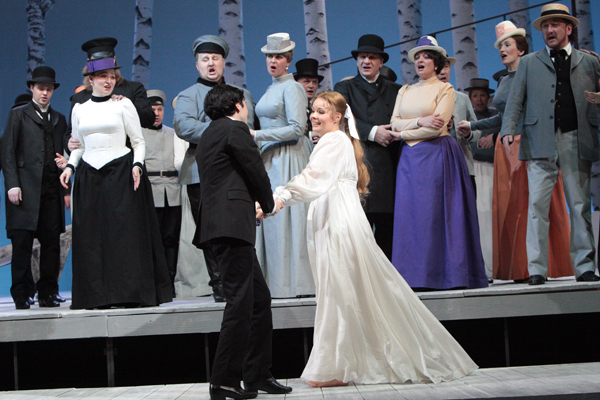
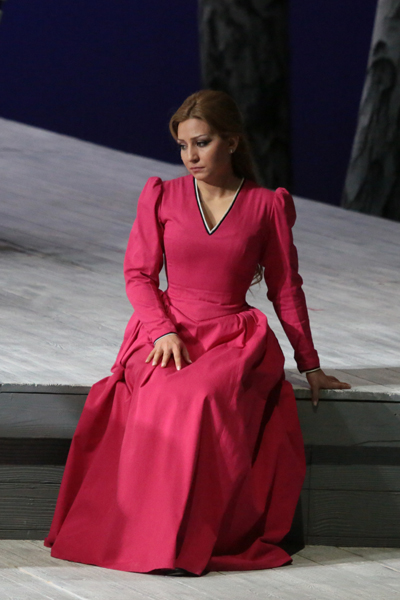
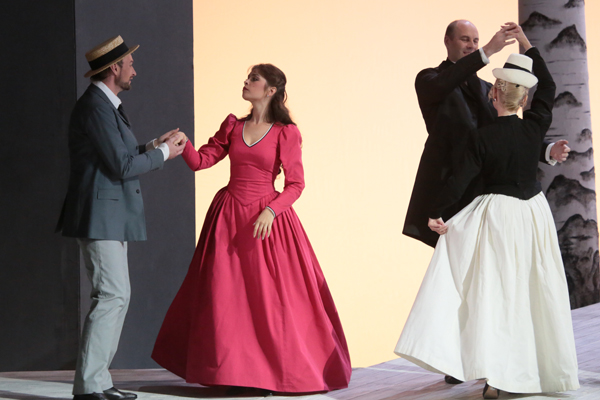
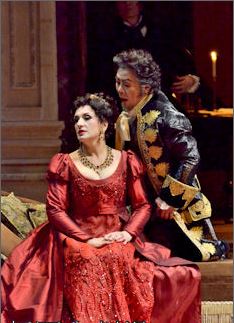
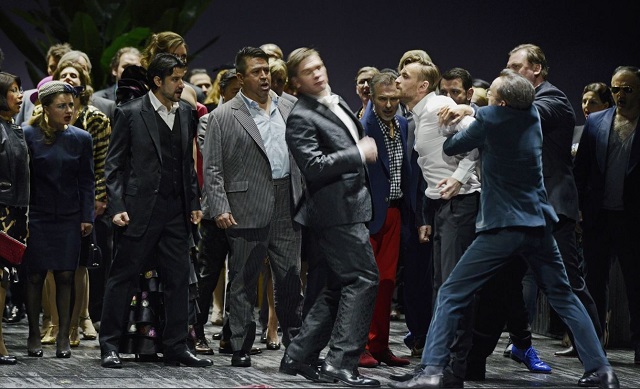
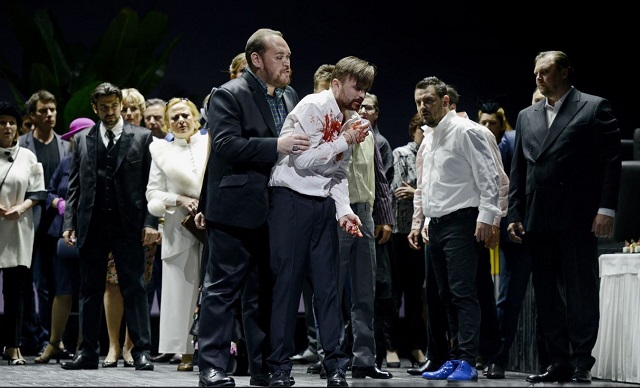
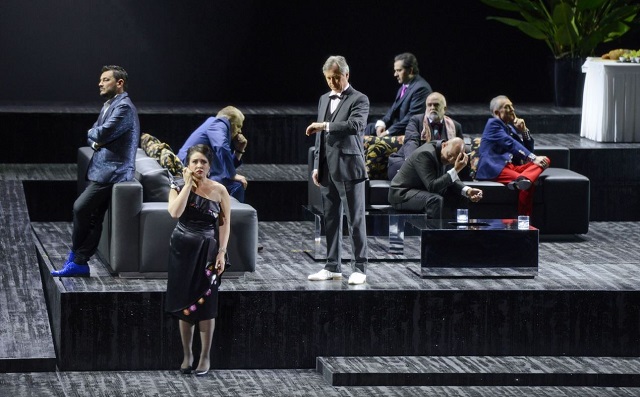
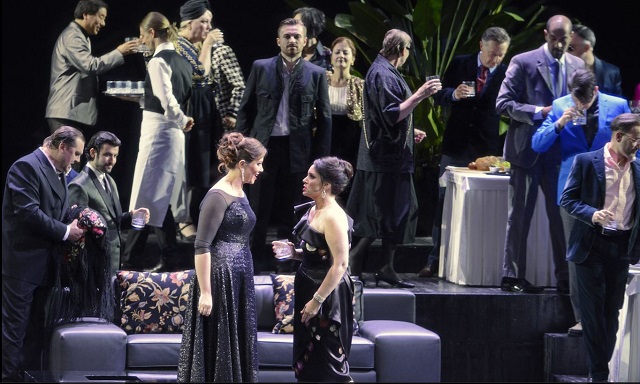
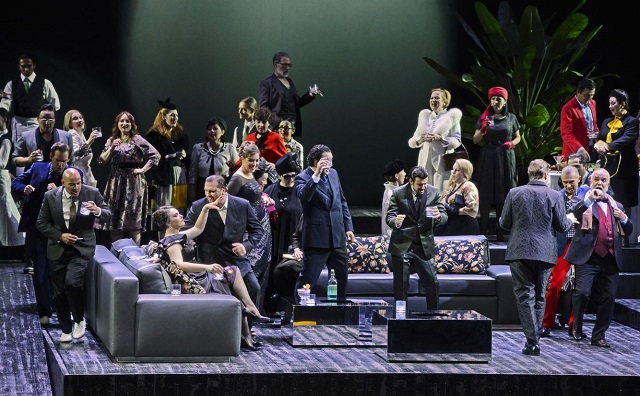
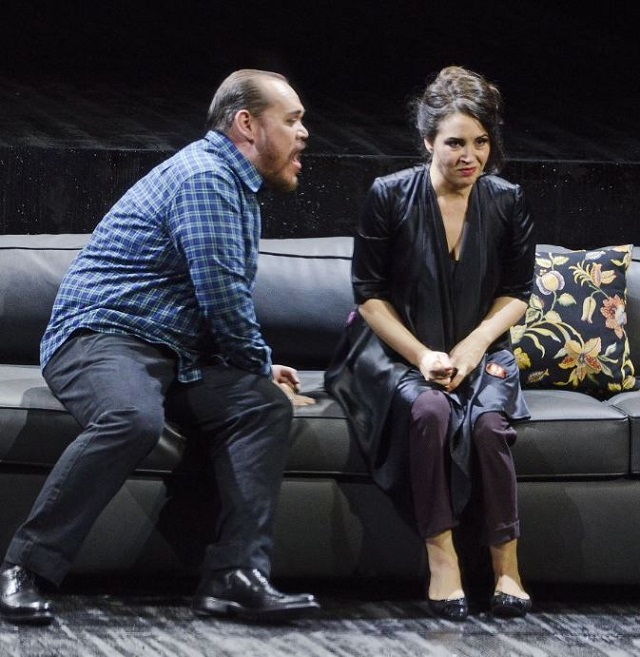
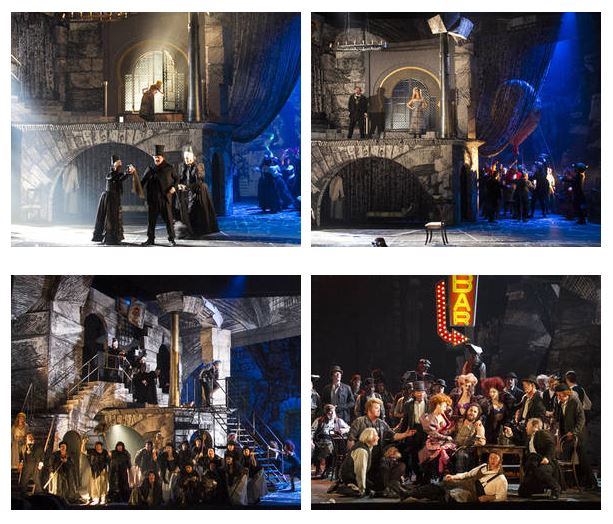
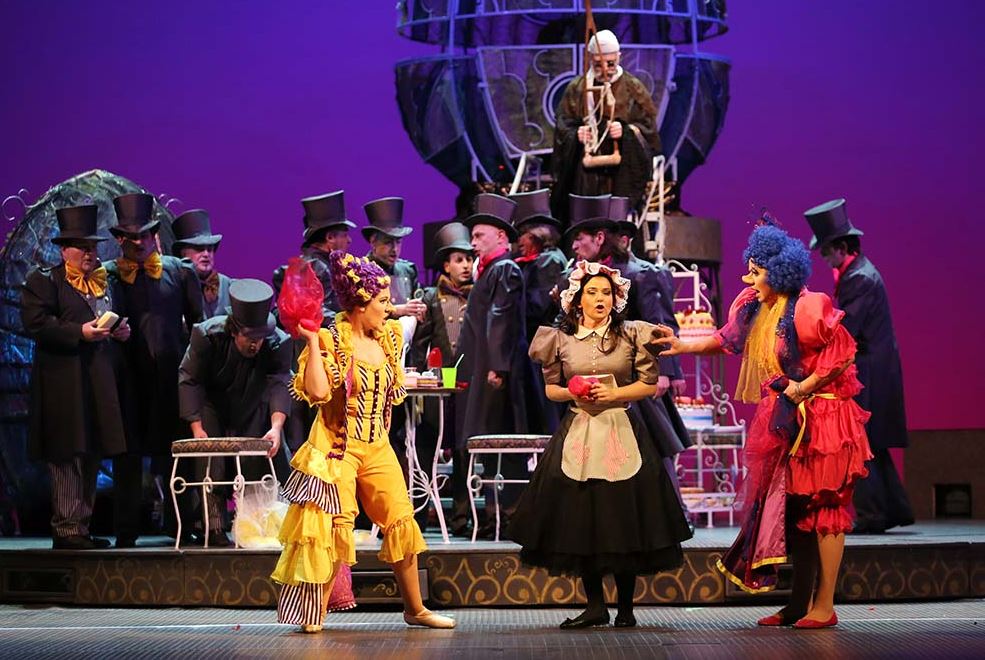
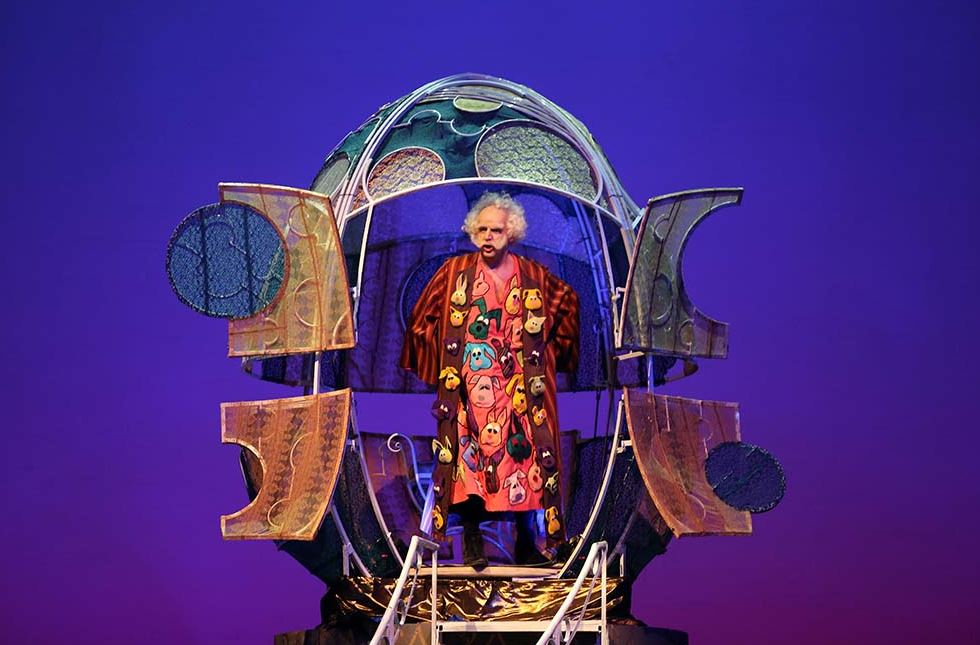
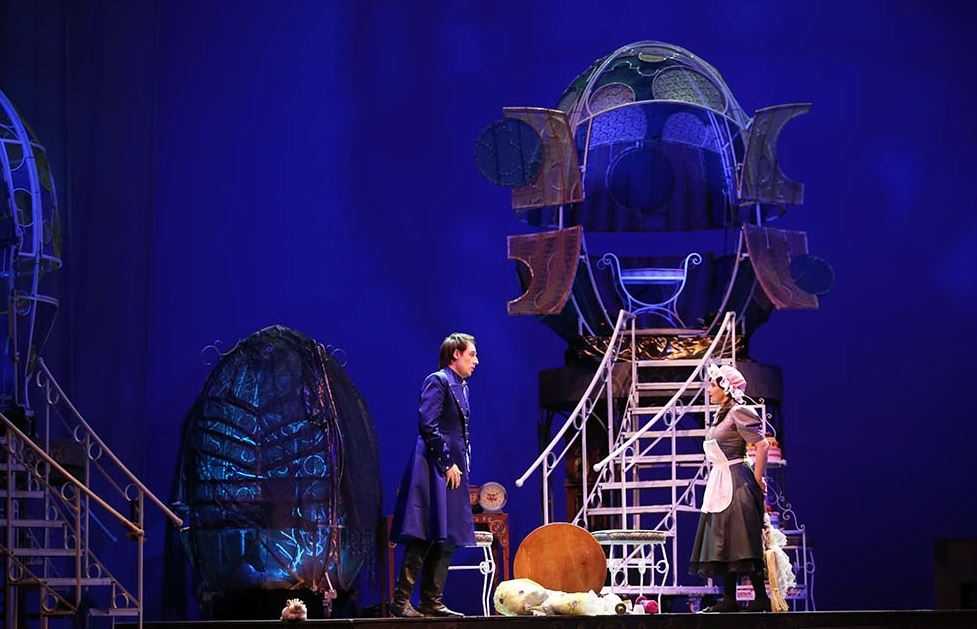
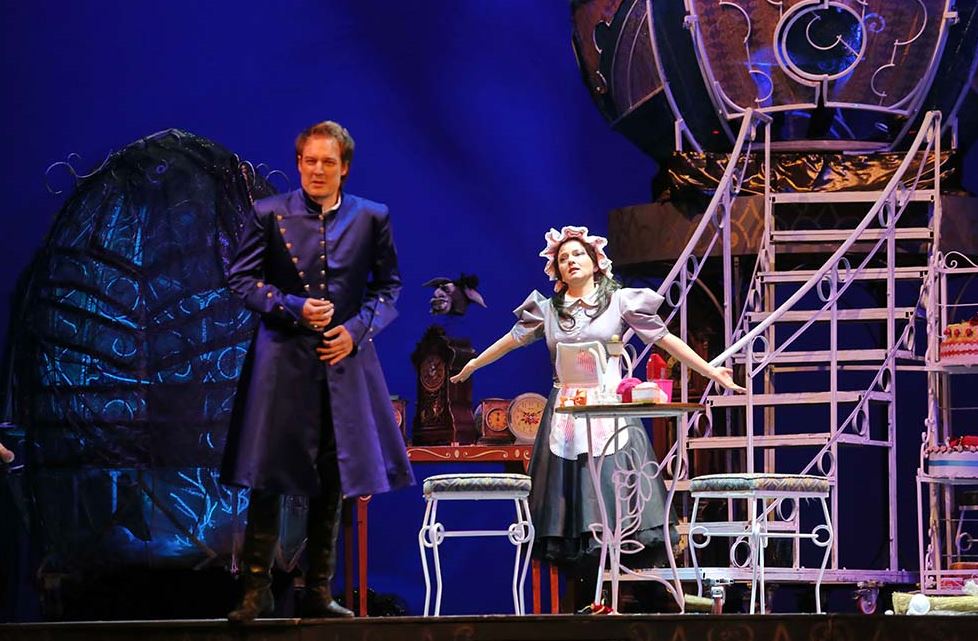
MOZART, IDOMENEO, K 366 at the Teatro La Fenice in Venice

fenicelogo2

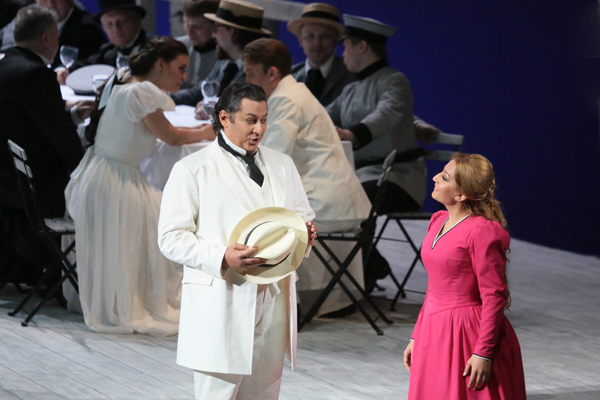
idomeneoMOZART, IDOMENEO, K 366

Conductor: Jeffrey Tate

Direction: Alessandro Talevi

Sets: Justin Arienti

Costumes: Manuel Pedretti

Lights Designer: Giuseppe Calabrò

Venice: La Fenice Opera House

22, 24, 26, 28 November 2015

Idomeneo ⎮ Brenden Gunnell
Idamante ⎮ Monica Bacelli
Elettra ⎮ Michaela Kaune
IliaEkaterina Sadovnikova
Arbace ⎮ Anicio Zorzi Giustiniani
Il sommo sacerdote di Poseidone ⎮ Krystian Adam
La voce dell’oracolo ⎮ Michail Leibundgut

direttore ⎮ Jeffrey Tate
regia ⎮ Alessandro Talevi
scene ⎮ Justin Arienti
costumi ⎮ Manuel Pedretti
disegno luci ⎮ Giuseppe Calabrò
movimenti coreografici ⎮ Nikos Lagousakos

Orchestra e Coro del Teatro La Fenice
maestro del Coro ⎮ Claudio Marino Moretti

nuovo allestimento Fondazione Teatro La Fenice
col sostegno del Freundskreis des Teatro La Fenice
mozart_idomeneo

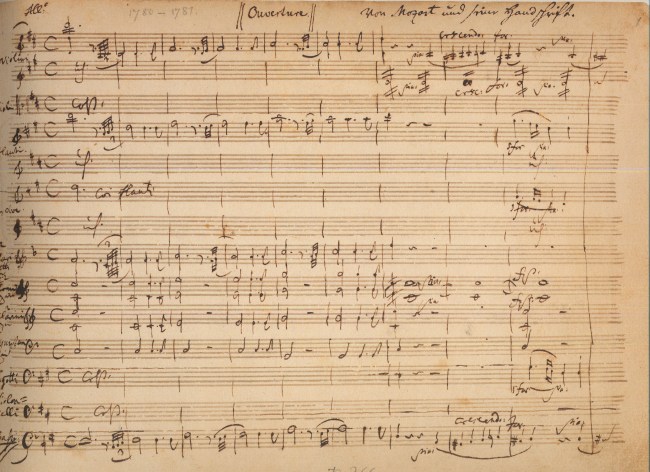
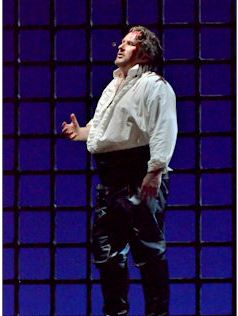
Idomeneo fu composto tra l’autunno del 1780 e i primi giorni del 1781 su libretto di Gianbattista Varesco, cappellano di corte dell’arcivescovo di Salisburgo. Del libretto esistono due versioni: la prima presenta il testo integrale; la seconda non riporta, invece, i numerosi passi tagliati o non musicati da Mozart, altri espunti dopo esser stati composti e altri ancora esclusi all’ultimo momento per esigenze di durata. A partitura ultimata, il compositore effettuò ulteriori tagli per snellire la lunghezza dello spettacolo. Questa complessa vicenda testuale nasconde un travaglio creativo, documentato dalla quarantina di fondamentali lettere che Mozart e suo padre si scambiarono tra l’8 dicembre 1780 e il 22 gennaio 1781. In esse il compositore discute con Varesco, per interposta persona, le soluzioni da adottare in molte parti del dramma. Non conosciamo l’esito della prima rappresentazione, ma dai pareri dei membri della corte di Monaco riportati nell’epistolario, si deduce che l’impressione destata dal lavoro del compositore venticinquenne fu enorme: «Vi assicuro che mi aspettavo molto da voi» confessò a Mozart il conte Seinsheim in una lettera del 1º dicembre 1780, «ma veramente non mi aspettavo questo!».

mozart_idomeneo1

Posted in OPera | Tagged , , , , , , | Leave a comment

La Sonnambula at the Bolshoi in Moscow

La Sonnambula

Opera in two acts

Premiered on March 6, 2013.

Sung in Italian with Russian surtitles.

New Stage
Presented with one interval.
Running time: 2 hours 50 minutes.

Libretto by Felice Romani

Music Director: Enrique Mazzola
Stage Director and Designer: Pier Luigi Pizzi
Chorus Master: Valery Borisov
Lighting Designer: Mark Stavtsev
Choreographer: Ekaterina Mironova

2sonnambula

CAST

18 November 2015

Conductor Pavel Klinichev
Count Rodolpho, Lord of the village Nikolay Didenko
Teresa, milleress Svetlana Shilova
Amina, orphan adopted by Teresa, betrothed to Elvino Venera Gimadieva
Elvino, wealthy peasant Pavel Kolgatin
Lisa, inn-keeper, in love with Elvino Anna Aglatova
Alessio, peasant, in love with Lisa Nikolai Kazansky
A Notary Vadim Tikhonov

1sonnambula

19 November 2015

Conductor Pavel Klinichev
Count Rodolpho, Lord of the village Oleg Tsybulko
Teresa, milleress Elena Novak
Amina, orphan adopted by Teresa, betrothed to Elvino Uliana Alexyuk
Elvino, wealthy peasant Stanislav Mostovoy
Lisa, inn-keeper, in love with Elvino Ruslana Koval
Alessio, peasant, in love with Lisa Pyotr Migunov
A Notary Yuri Markelov

3sonnambula

20 November 2015

Conductor Pavel Klinichev
Count Rodolpho, Lord of the village Nikolay Didenko
Teresa, milleress Svetlana Shilova
Amina, orphan adopted by Teresa, betrothed to Elvino Venera Gimadieva
Elvino, wealthy peasant Pavel Kolgatin
Lisa, inn-keeper, in love with Elvino Anna Aglatova
Alessio, peasant, in love with Lisa Nikolai Kazansky
A Notary Vadim Tikhonov

4sonnambula 5sonnambula

SYNOPSIS

Act I

The peasants are singing to celebrate the marriage of the rich landowner Elvino to Amina, an orphan adopted by Teresa. In the general rejoicing Lisa cannot find peace: she complains because of her unrequited love for Elvino. In the meantime she ignores the love which Alessio cherishes towards her. While awaiting the bridegroom, Amina happily answers her village friends. Elvino finally arrives after the notary and offers the wedding ring to Amina. The idyll is broken by the unexpected arrival of a carriage bearing Count Rodolfo, the son of the late Lord of the village, who, after many years absence, is not recognized and prefers to remain incognito. He takes up lodgings in Lisa’s inn and pays compliments to the young bride, thus arousing Elvino’s jealousy.

6sonnambula

In his room in the inn, Count Rodolfo pays court to Lisa who seems quite willing, but runs out, dropping a handkerchief, when a sound is heard outside; at that moment Amina arrives, asleep, in her nightdress, repeating the name of Elvino and describing the vision she has of the coming wedding ceremony; then she lies clown on the couch. Rodolfo remains disconcerted and uncertain as to what to do, then leaves the room. Right in this predicament the crowd of villagers enters to congratulate the Count, whose identity they have discovered. In this way everyone sees Amina, asleep in Rodolfo’s room. On waking, the young girl tries to justify herself and pleads her own innocence but nobody believes her. Elvino, seized by jealousy, repudiates her.

7sonnambula 8sonnambula

Act II

A group of peasants go to see the Count to persuade him to defend Amina who, in the meantime, accompanied by Teresa, crosses the path of Elvino who takes back the ring.

In the village, Lisa, taking advantage of the new situation, is about to marry Eivino who has accepted the marriage despite the Count’s repeated assurances that Amina is innocent. The village is celebrating once again but when Lisa and Elvino pass in front of Teresa’s mill, the latter accuses Lisa of having committed the same act as Amina, declaring that she has found a handkerchief of hers in Rodolfo’s room; Elvino is angry and jealous and rejects this marriage too. Suddenly the sleeping Amina appears on the edge of the roof, thus confirming the words spoken by the Count in her defence. Amina, still sleepwalking, comes down into the street singing her love for Elvino; the latter, repentant and with a change of heart, takes her in his arms, where she awakens. The festivities start once again and preparations are finally made for the wedding.

9sonnambula 10sonnambula

ABOUT THE PERFORMANCE:

Enter La Sonnambula

La Sonnambula’s performance history at the Bolshoi is not a great one — the opera has appeared in the repertoire just four times. The Theatre’s first production, however, was only six years after the world première — in December 1837. While the first night of the last Bolshoi Theatre Sonnambula was in December 1891 (when it was given a total of four performances before being dropped from the repertoire in January 1892).

After its long absence, La Sonnambula is returned to the Bolshoi by the illustrious director and scenographer Pier Luigi Pizzi, known for his baroque and bel canto opera productions.

EkaterinaLekhinaAs Amina
Pier Luigi Pizzi belongs to the same glorious ranks of outstanding Italian theatre people as Giorgio Strehler, Franco Zeffirelli and Luca Ronconi, while his creative range embraces the entire history of opera — from the baroque to the present day. Pizzi did not immediately take up the profession of director, starting off as scenographer and costume designer. Today he brilliantly combines all three professions.

And remarkably, though he has a simply incredible number of romantic operas to his credit, this was to be his first Sonnambula.

Laura Claycomb as Amina

Nina Minasyan as Lisa Pier Luigi Pizzi:

“I was amazed to learn that La Sonnambula had not been heard at the Bolshoi Theatre since 1892. However, it was this discovery which prompted me to the treatment of the opera which I am presenting. To transfer La Sonnambula to the present day, would be to divest it of its romantic aura without which it is unthinkable. This opera has to have the quality of an elusive dream. But, nor did I want the action to unfold at the time the opera was created, the remote from us ‘costume age’, since this might inhibit the artists from behaving naturally on stage. I therefore transferred the action to the period when La Sonnambula vanished from the Bolshoi Theatre stage, to the turn of the 19th-20th centuries, the time of Chekhov.

Nikolai Kazansky as Alessio Nikolay Didenko as Count RodolfoNinaMinasyanLisa

Chekhov’s world is in some sense very similar to that of Bellini. It is incredibly poetic and invariably colored by a gentle melancholy. A note of sadness is always present in Bellini’s music — even at moments of total jubilation. With Bellini shades of feeling are very complex, one emotion conceals another, much is built on counterpoint — just as in the case of Chekhov. And for this reason I decided it would be via Chekhov that I would re-introduce La Sonnambula to the Moscow public.venera Gimadieva as Amina

I did not want the production to turn into a quaint ‘picture-postcard’ and I therefore rejected an emphatically Swiss aesthetic, in favor of a landscape more familiar to the Russian public. The Russian countryside is very poetic, I have a very vivid image of it — an image of absolute purity which is so suitable for La Sonnambula.”

Posted in OPera | Tagged , , | Leave a comment

Lucia di Lammermoor at the Opera Royal du Liege

lammermoor

operaliegelogoLucia di Lammermoor

Season : 2015-2016
Length : 2:35
Song language : 
Italian
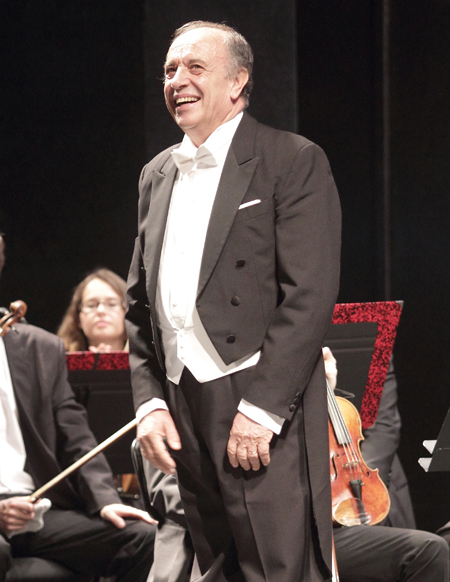
Conductor : Jesús López Cobos
Director : Stefano Mazzonis di Pralafera
Choirmaster : Pierre Iodice
Artists : Annick Massis, Celso Albelo, Ivan Thirion, Roberto Tagliavini, Pietro Picone, Alexise Yerna, Denzil Delaere
Number of performances : 
6
Dates : 
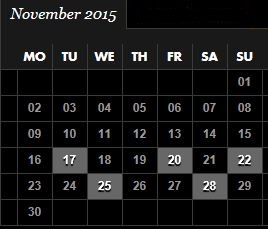
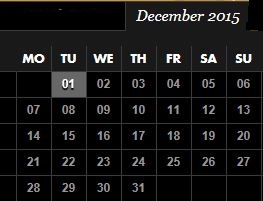
Tue, 17/11/2015 to Tue, 01/12/2015

Last performance at the Opera : May 2007.

nov nov1

Endless success

Donizetti is among the composers who saw glory and success in their lifetime. As a result, between two cities, while stopping off at home, he was snapped up by the Teatro San Carlo in Naples. He was bound by a contract and was obliged, this time, to honour a three-opera commission. He saw in Salvatore Cammarano a young librettist with a fiery nature to perfectly match the urgency of the moment.

Together, they pored over a work by Sir Walter Scott, The Bride of Lammermoor. They took a mere six weeks to compose Lucia di Lammermoor. The public’s enthusiasm was immediate. The composer added a feather to his cap: he had just saved the Theatre. Destiny smiled on him because, three days before the premiere, the death of Bellini made him the sole representative of the operatic art in Italy. This accident lends a surprising intensity to this tragedy, which will be borne by Annick Massis, and, for the first time in Liège, the Spanish tenor Celso Albelo. They make a dazzling duo.


 The Story

17th-century Scotland is marked by inter-clan warring. Edgardo and Lucia are in love, but are members of opposing clans. In addition, the beauty’s brother has promised her to another man. This is an impossible love that will drag her into madness and lead her, with her lover, to certain death.


(Libretto: Salvatore Cammarano after
Sir Walter Scott’s novel, The Bride of Lammermoor)

Cast

Conductor: Jesús López Cobos
Director: Stefano Mazzonis di Pralafera
Set designs: Jean-Guy Lecat
Costume designs: Fernand Ruiz
Lighting designs: Franco Marri


Choirmaster: Pierre Iodice
Orchestra & Choirs: Opéra Royal de Wallonie


Lucia: Annick Massis
Sir Edgardo di Ravenswood: Celso Albelo*
Lord Enrico Ashton: Ivan Thirion
Raimondo: Roberto Tagliavini*
Lord Arturo Bucklaw: Pietro Picone
Alisa: Alexise Yerna
Normanno: Denzil Delaere*


New production: Opéra Royal de Wallonie
Critical editions: Gabriele Dotto and Roger Parker – RICORDI –
Autograph revision: Jesús López Cobos


* First time at the Opéra Royal de Wallonie

Posted in OPera | Leave a comment

I due Foscari in Marseille

operamarseillelogo

I due Foscari

GIUSEPPE VERDI

Sunday November 15th, 2015 > 2:30PM
Wednesday November 18th, 2015 > 8:00PM

Although in the libretto, a father, at the height of his power, is powerless to help his son, this brilliant cast will do Verdi proud

Visu-Iduefoscari


I DUE FOSCARI

Opera in 3 acts
Libretto by Francesco Maria PIAVE
from the play by Lord BYRON
First performed in Rome, Teatro Argentina, on November 3rd, 1844
First performed in Marseille Opera

CONCERT VERSION

Conductor Paolo ARRIVABENI

CAST

Lucrezia Contarini Virginia TOLA
Pisana Sandrine EYGLIER

Francesco Foscari Leo NUCCI
Jacopo Foscari Giuseppe GIPALI
Jacopo Loredano Wojtek SMILEK
Barbarigo / Fante Marc LARCHER

Marseille Opera Orchestra and Chorus

Posted in OPera | Tagged , , , | Leave a comment

Tosca at the New National Theatre in Tokyo

tokyo_logotokyotosca2toscaTokyo

TOSCA

17 Nov. – 29 Nov., 2015

2015/2016 Season
Music by Giacomo PUCCINI
Opera in 3 acts
Sung in Italian with Japanese supertitles
Opera Palace

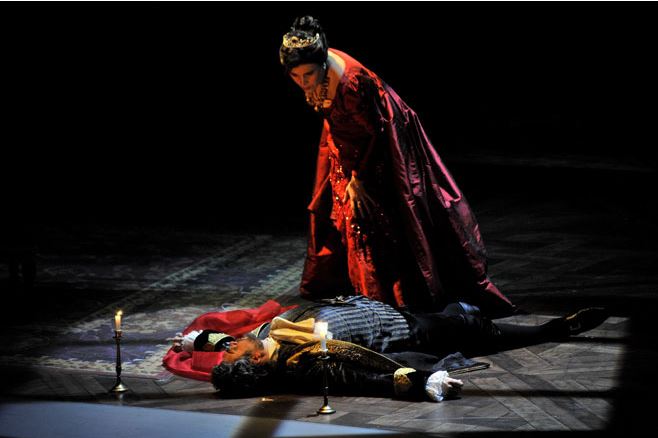
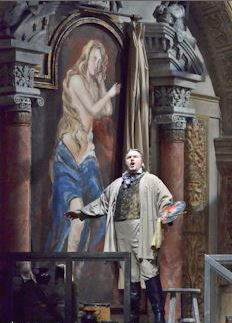
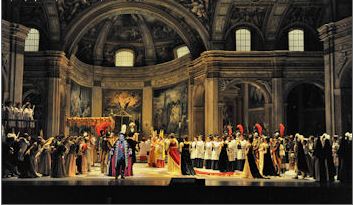
tosca1Tosca is one of PUCCINI’s most popular operas. This performance is a restaging of a production by Antonello Madau DIAZ that took a traditional approach to depicting the essence of the work’s nineteenth century Roman setting. The opera has scenes such as the Te deumat the end of the first act that are spectacular in their grand, gorgeous staging and costumes.

The conductor is the young Norwegian, Eivind Gullberg JENSEN. The title role is played by Maria José SIRI, Cavaradossi by Jorge de LEON, and Scarpia by Roberto FRONTALI.


tosca5

tosca2 tosca3tosca8  tosca6 tosca7  tosca9


Staff

Conductor Eivind Gullberg JENSEN 1

Production Antonello Madau DIAZ 2

Scenery Design KAWAGUCHI Naoji

Costume Design Pier Luciano CAVALLOTTI

Lighting Design OKUHATA Yasuo

Cast

toktotoscacast1

Tosca Maria José SIRI 3

Cavaradossi Jorge de LEON 4

Scarpia Roberto FRONTALI 5

Angelotti ONUMA Toru 6

toktotoscacast2

Spoletta MATSUURA Ken 7

Sciarrone OTSUKA Hiroaki 8

Il Sagrestano SHIMURA Fumihiko 9

Carceriere AKIMOTO Ken 10

toktotoscacast3

Un Pastore MAEKAWA Yoriko 11


Chorus New National Theatre Chorus

Orchestra Tokyo Philharmonic Orchestra

Photos are from 11 Nov, 2012 Tosca.

 SYNOPSIS

Act 1

In the church of Sant’Andrea della Valle

Cesare Angelotti, a political prisoner, has escaped from the Castel Sant’Angelo in Rome. He seeks refuge in the family chapel at the church of Sant’Andrea della Valle using a key hidden by his beautiful sister, Marchioness Attavanti. The Sacristan turns up but thinks that the noise at the door was made by the artist Mario Cavaradossi. The painter is currently working on a depiction of the Madonna inspired by the Marchioness, who has sat for the portrait in the church over the last couple of days. The artist also likens the portrait to a miniature of the woman he loves, the singer Floria Tosca.

Once the Sacristan has left, Angelotti comes out of hiding and recognises Cavaradossi – a friend whom he can trust in his struggle for the republic. Cavaradossi gives him the lunch basket prepared by the Sacristan but urges Angelotti to hide in the far end of the chapel when he hears Tosca, who goaded by jealousy pounds on the church door and calls out to her lover, convinced as she is that he has locked the door to seek privacy with another woman. He lets her in.

Cavaradossi attempts to reassure Tosca, but she notices that the eyes of the Madonna on the portrait resemble those of Marchioness Attavanti and she accuses him of cheating on her. He, however, assures her that she has nothing to fear. When Tosca has left the church Cavaradossi fetches Angelotti and together they find the women’s clothing that Angelotti has hidden as disguise for his escape. Cavaradossi advises Angelotti to seek refuge in his personal villa. No sooner has Angelotti left the church before canon fire is heard from the Castel Sant’Angelo, signalling that the jailbreak has been discovered. Cavaradossi decides to accompany Angelotti through Rome.

The Sacristan returns with tidings of the defeat of Napoleon by the Austrians, thus securing the continued rule of monarchy in Rome. The church chorists rejoice in the prospect of grand celebrations to be held at Palazzo Farnese the same evening, including a cantata by none other than Floria Tosca. There is also promise of a bonus to be paid for the Te Deum, staged by the church as part of the festivities. Baron Scarpia of the secret police turns up, which immediately quells the jubilation, although revellers are quick to reassure him that their jubilant behaviour is a mere expression of their joy of victory.

Scarpia and his henchmen look for leads in their search for Angelotti. They soon find Attavanti’s fan in the church, which Scarpia uses to convince Tosca – the object of his desire – of Cavaradossi’s faithlessness. He sends a spy to trail Tosca while she hastens to Cavaradossi fearing she will find him in the arms of his mistress.

Act 2

At Scarpia’s office in Palazzo Farnese

Tosca and Baron Scarpia are to rendezvous the same evening, following her performance. Scarpia hopes his scheme will work – soon Tosca will be his! Scarpia is unsuccessful in his pursuit of Angelotti but his men arrest Cavaradossi instead on the charge of abetting a fugitive. He refuses to reveal Angelotti’s hideout and Scarpia orders him to be interrogated in the next room.

When Tosca arrives her dilemma soon dawns on her: she can only save her beloved Cavaradossi from torture if she reveals Angelotti’s hideout. At first she refuses to cooperate but is soon unnerved by Cavaradossi’s harrowing agony and reveals Angelotti’s whereabouts. Cavaradossi has, however, confessed to republican leanings and is to be executed at dawn the next day, unless Tosca yields herself to Scarpia.

However, Angelotti commits suicide in his hiding place before the arrival of Scarpia’s men. So is Cavaradossi now to face the firing squad? Initially, Tosca agrees to Scarpia’s conditions for Cavaradossi’s release but she also demands free passage out of Rome for them both. Scarpia issues a pass and orders a mock execution of Cavaradossi using blanks.

But Tosca has a trump up her sleeve. She stabs Scarpia with a dagger and flees from the room with the pass in her hand.

Act 3

At the top of Castel Sant’Angelo

At the break of dawn, Cavaradossi prepares himself for death. He bribes a guard to bring a farewell letter to Tosca and he recalls their happiest hours together.

Tosca, in reply, shares the good news with him and they rejoice in the prospect of starting a new life together far from Rome. Cavaradossi faces the firing squad with a self-assured air as the soldiers raise their muskets. When the shots are fired he falls down to the ground. Tosca’s future happiness now depends on the unfolding events of the next few seconds….


Posted in OPera | Tagged , | Leave a comment

Der Freischütz at the Royal Danish Opera

derTitle

Der Freischütz

By Carl Maria von Weber

Director: Kasper Holten

Conductor: Dirk Kaftan

Scenography: Es Devlin

Costume design: Anja Vang Kragh

Choreographer: Signe Fabricius

Set designs: Bruno Poet

Video design: Luke Halls

der

NOVEMBER

calendar

Kasper Holten, artistic director of the Royal Opera House Covent Garden, returns to his old stomping grounds at the Royal Danish Theatre to direct the German national opera treasure Der Freischütz.

Der Freischütz is a romantic masterpiece by Carl Maria von Weber, based on a legend from German folklore set in the depth of the dark, German forests and telling the story of evil, love and the workings of Fate: In order to marry his beloved Agathe, Max sells his soul for seven magic bullets. What Max does not know is that he can only control six of the bullets – the seventh is in the hands of Fate.

In Kasper Holten’s production the old legend is turned into a heart-breaking story of the impact of war on those who return from the fighting with wounded souls – and what happens when Fate steps into our lives and lets us face the ultimate challenge.

The opera is conducted by German conductor Dirk Kaftan, chief conductor of Oper Graz. On stage the Royal Danish Theatre’s opera soloists are joined by guests including world tenor Michael Schade for his debut at the Royal Danish Theatre.

Der Freischütz is performed in German with Danish supertitles. Der Freischütz is a coproduction with the Royal Opera House, Covent Garden in London.

CAST

castDenmark

operaHouse

Posted in OPera | Tagged , , | Leave a comment

La traviata in Zurich conducted by John Fiore

logo_operhaus_zurich

La traviata

Opera by Giuseppe Verdi

Cast, dates

Conductor John Fiore
Producer David Hermann
Stage and costume design Christof Hetzer
Light-Design Franck Evin
Video-Design Anna Henckel-Donnersmarck
Chorus master Ernst Raffelsberger
Dramaturgy Beate Breidenbach
Orchestra Philharmonia Zürich
Choir Chor der Oper Zürich
zurich1
 zurich2 zurich3

Violetta Valéry Marina Rebeka
10, 18, 21, 27 Nov

Irina Lungu
13, 15 Nov

Alfredo Germont Pavol Breslik
Giorgio Germont George Petean
Flora Bervoix Carmen Seibel
Annina Hamida Kristoffersen
Gastone Airam Hernandez
Baron Douphol Cheyne Davidson
Marquis D’Obigny Valeriy Murga
Doktor Grenvil Dimitri Pkhaladze
Giuseppe Pavel Petrov
Commissionario Ildo Song
 zurich5
Statistenverein am Opernhaus Zürich
Partner
Opernhaus Zürich
In Italian
with German and English surtitles
Playing duration 2 hrs. 40 min.
Break Break after approx. 1 hrs. 20 min.
Introduction 45 min before the performance
Einführungsmatinee 12 Apr 2015
Dates 10 Nov 2015, 19:00
Revival
Preise E: 230, 192, 168, 95, 35 CHF 13 Nov 2015, 19:30
Preise E: 230, 192, 168, 95, 35 CHF 15 Nov 2015, 20:00 Opera House Day
Preise E: 230, 192, 168, 95, 35 CHF 18 Nov 2015, 19:00
Preise E: 230, 192, 168, 95, 35 CHF

21 Nov 2015, 20:00
Preise E: 230, 192, 168, 95, 35 CHF

27 Nov 2015, 19:00
Preise E: 230, 192, 168, 95, 35 CHF

Location Hauptbühne Opernhaus

zurich6 zurich7

Melodrama in three acts, libretto by Francesco Maria Piave
after the play La Dame aux camélias by Alexandre Dumas the Younger

INFORMATION

Violetta Valéry is la traviata – the woman who has gone astray. Beautiful, intelligent and desired by all, but mortally ill, she lives for the thrill of the moment as a courtesan. She does not allow herself true feelings and considers great love a utopia until she meets Alfredo one day: she wants to start a new life with him, far away from hedonistic Parisian society. However, the past catches up with Violetta. Alfredo’s father demands that they separate in order to protect the family’s reputation and not to endanger the marriage of Alfredo’s sister. Violetta renounces Alfredo and returns to her old life for a short time. Soon afterwards, her mortal illness catches up with her.

zurich8 zurich9

Alexandre Dumas’s novel, The Lady of the Camellias , published in 1848, five years before the première of La Traviata, provided Verdi with the “new, grandiose, bold” subject matter he wanted. For the first time, Verdi brought a contemporary story to the stage. Radically referring to the present as in no other of his operas, he made a prostitute – like Rigoletto, a socially ostracised figure – the tragic heroine of his perhaps most popular opera.

zurich10 zurich11

The piece should originally have been entitled Amore e morte – love and death. Indeed, these are the two poles between which Violetta’s tragic story unfolds. The love Violetta dreams of remains utopian, because it is doomed to failure within the value system espoused by society. Only Verdi’s music makes reference, with transcendental power, to a better life, more worthy of human beings, beyond death. This new production is conducted by Marco Armiliato, an internationally sought-after conductor who is at home in the Italian repertoire.

zurich12 zurich13 zurich14

Director David Hermann, celebrated for his productions of Pique Dame in Basel and The Magic Flute in Antwerp, will offer us a new perspective on a seemingly familiar piece. Marina Rebeka will sing Violetta and Pavol Breslik can be heard as her lover Alfredo. Quinn Kelsey, who has already been heard in Zurich as Rigoletto, will play his father.

zurich15 zurich16

Posted in OPera | Tagged , , | Leave a comment

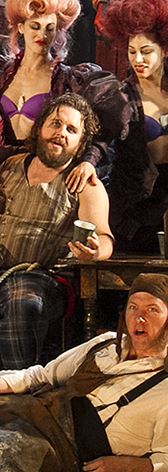
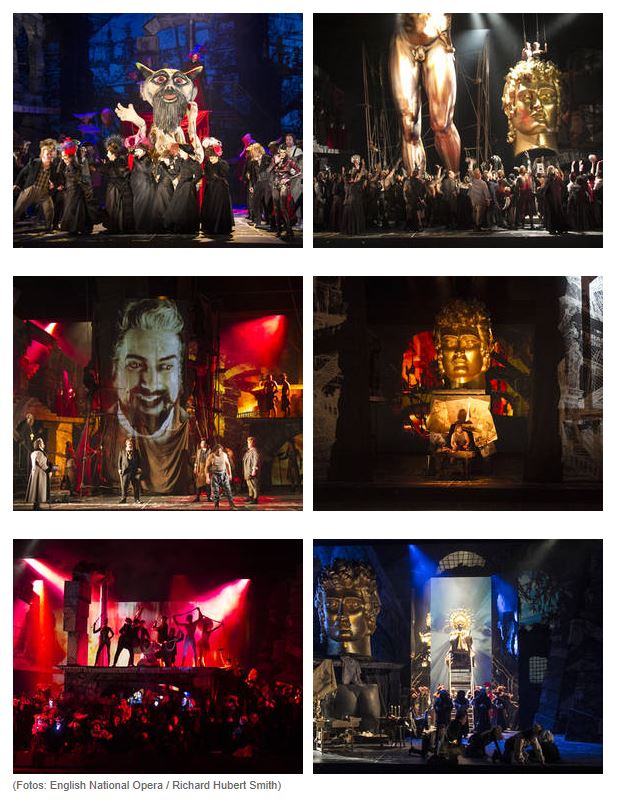
Benvenuto Cellini in Barcelona

 liceulogocellinititle


cellini4Benvenuto Cellini

Opera in two acts Libretto by Léon de Wailly and Auguste Barbier. World premiere: 10/09/1838 at the Opéra de Paris. First performance in Spain: 15/01/1977 at the Liceu. Last Liceu performance: 20/01/1977. Number of Liceu performances: 3

A love duel between artists at the papal court

Benvenuto Cellini has been commissioned to make a sculpture for Pope Clement VII. He is in love with the beautiful Teresa and is determined to run off with her at any price. But Teresa’s fiancé Fieramosca, who is also a sculptor, is scheming to keep her and get the papal commission as well.

  • Though premiered in 1838, this opera did not reach the Liceu until 1977 and has not been staged there since.
  • Terry Gilliam of Monthy Python, who is also the director of films such as Brazil, brings us this classic by Berlioz in an entertaining, colourful, novel production that includes acrobats.

cellini

Music director
Josep Pons

Stage director
Terry Gilliam

Co-director and movement director
Leah Hausman

Set design
Terry Gilliam i Aaron Marsden

Costumes
Katrina Lindsay

Lighting
Paule Constable

Video
Finn Ross

Production
English National Opera (London), Dutch National Opera & Ballet (Amsterdam)

Symphony Orchestra and Chorus of the Gran Teatre del Liceu

Chorus director
Conxita Garcia

cellini3

CAST
Benvenuto Cellini John Osborn 8, 10, 14, 16 and 19 Nov
Adrian Xhema 12 Nov
Teresa Kathryn Lewek
Giacomo Balducci Maurizio Muraro
Fieramosca Ashley Holland
Pope Clement VII Eric Halfvarson
Ascanio Annalisa Stroppa 8, 10, 12, 14 and 19 Nov
Lidia Vinyes 16 Nov
Francesco Francisco Vas
Bernardino Valeriano Lanchas
Pompéo Manel Esteve
Innkeeper Antoni Comas

The production is a triumph, exuberantly colourful and inventive” (The Telegraph)

“Gilliam goes at this piece with tremendous gusto” (The Guardian)

RUNNING TIME

First act: 90 min.
Interval: 30 min.
Second act: 66 min.

Total lenght: 3 h 15 min

cellini2

Posted in OPera | Leave a comment

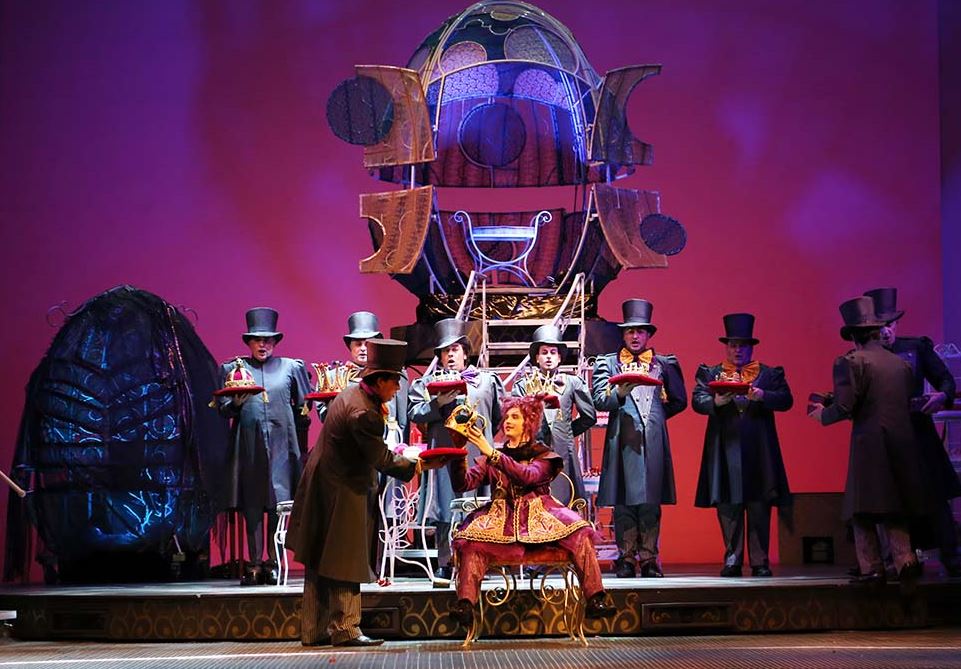
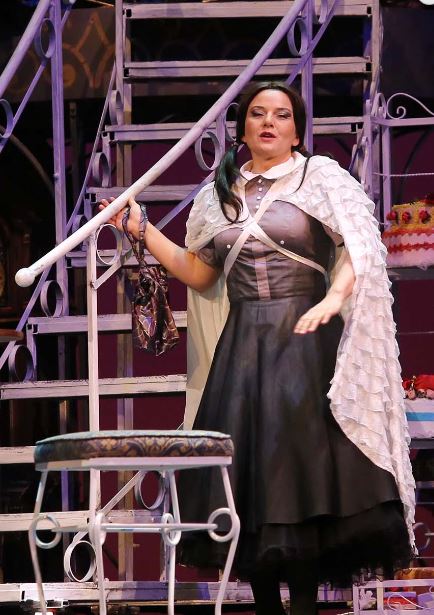
“LA CENERENTOLA” in Craiova, Romania

sofiaLogoLa Cenerentola”

Opera by Gioachino Rossini

04.11.2015 19:00
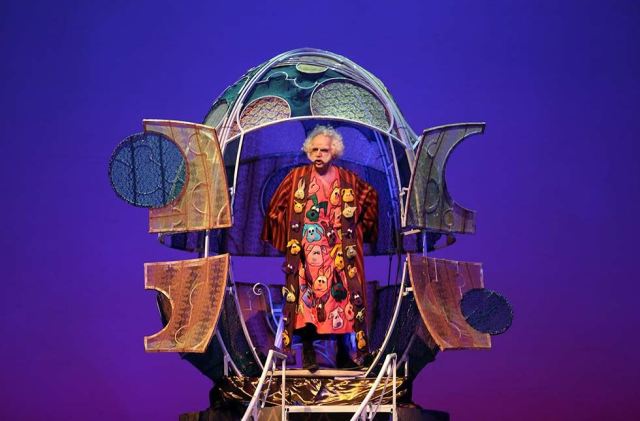
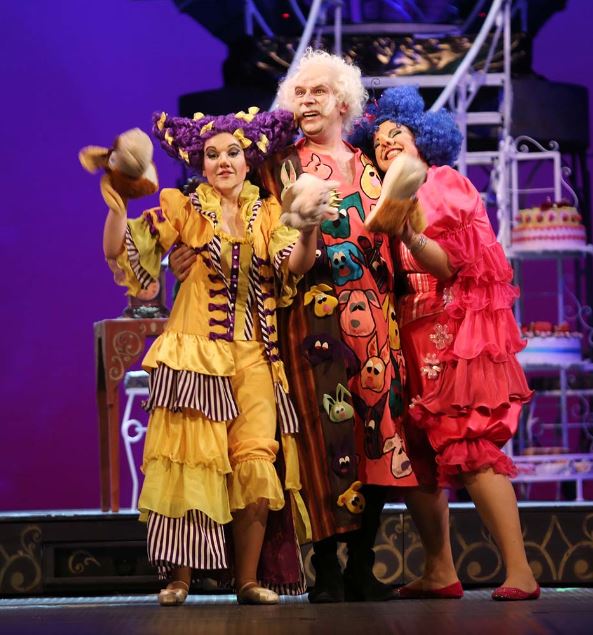
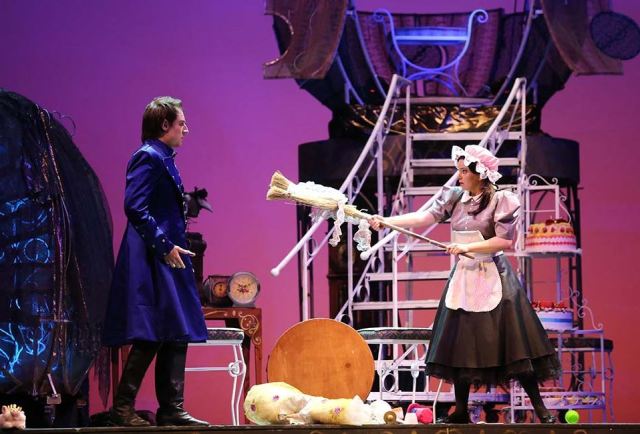
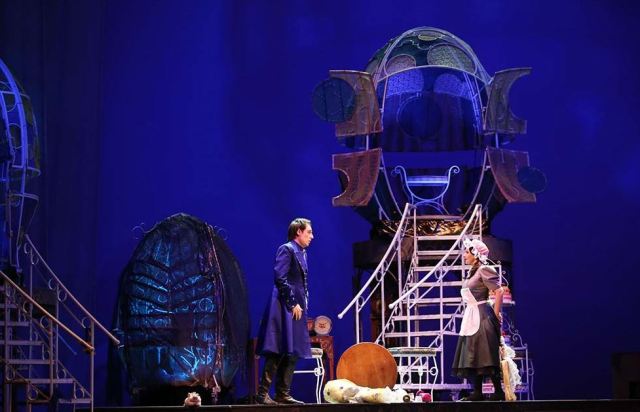
On 04.11.2015g. Sofia Opera and Ballet guest in Craiova, Romania – opera “LA CENERENTOLA” by Gioachino Rossinicen2
“La Cenerentola, ossia La bontà in trionfo” (“Cinderella, or Goodness Triumphant”) is an operatic drama giocoso in two acts by Gioachino Rossini. The libretto was written by Jacopo Ferretti and was drawn on the fairy tale of the same name by Charles Perrault.

The opera’s first performance was on 25 January 1817 at “Teatro Valle” in Rome.

Rossini was 25 years old when he wrote “La Cenerentola”, but he had already behind him a succession of opera masterpieces as “Il barbiere di Siviglia”, “Tancredi”, “L’italiana in Algeri” and others.

cen3 cen4

The opera “La Cenerentola” is considered to be one of the finest writing for solo voice and ensemble. Because of the usual lack of time, method, terms and tempo of composing, the entire opera was completed in three weeks. For that reason Rossini uses in it the overture from “La gazzetta”, an opera buffo written several years before, as well as a part of an aria from “Il barbiere di Siviglia”. Some help Rossini received by Luca Agolini, who composed the “dry” recitatives, as well as three other extracts – of Alidoro, Clorinda and the chorus scene “Ah, della bella incognita”. Rossini changed and added different scenes and numbers in some cases on next productions, as these in 1818 and 1820.
cen5

The overture of the opera “La Cenerentola” has been often performed in concert programmes and is a part of the “standard” orchestra repertoire since its very composition, together with most of Rossini’s overtures.

cen6

The first performance was received with some hostility, but soon it gained great popularity in Italy and in other countries in Europe, among which Lisbon /1819/, London /1820/, New York /1826/. Practically, in the whole 19th century its popularity rivalled that of “Il barbiere di Siviglia”, but because of the exceptional vocal requirements and the difficulties in the contralto part, as it was originally written, it fell slowly out of the repertoire and became rare.
cen7

In the 60s of the 20th century Rossini’s music enjoyed a real renaissance. The new generation mezzo-sopranos and contraltos regained the popularity of “La Cenerentola” and it has been again on stage.
cen8

There were also some changes in the fairy tale itself, mainly because of Rossini’s choice for the visible realistic resolutions, and not for magic, as it is in the original, due to the obvious limitations and lack of “special effects” of his time.

cen9

In the last decades, there were made many recordings of the opera, and in the standard list of most performed operas it holds number 28 among several hundred titles of the active opera repertoire!

The forthcoming spectacle of the opera “La Cenerentola” on the stage of Sofia Opera and Ballet is in rehearsal process under the direction by Vera Petrova.

cen10

CAST

DON RAMIRO – Georgi Sultanov, Miloš Bulajić, Hrisimir Damyanov

DANDINI – Alek Avedissian, Atanas Mladenov, Svilen Nikolov

DON MAGNIFICO – Nikolay Petrov, Orlin Nevenkin

CLORINDA – Bilyana Traykovska, Irina Zhekova, Milena Gyurova

TISBE – Blagovesta Mekki-Tsvetkova, Raya Nacheva, Yuliana Ivanova

ANGELINA /LA CENERENTOLA / – Maria Jinga, Oana Andra, Petya Petrova

ALIDORO – Evgeniy Stanchev, Kostadin Mechkov, Martin Tsonev
Conductor GRIGOR PALIKAROV

Director VERA PETROVA

Set Designer BORYANA ANGELOVA

Costume Designer HRISTIANA MIHALEVA-ZORBALIEVA

Plastic and Choreography MARIA LUKANOVA

Chorus Master VIOLETA DIMITROVA

Artistic Lightning Andrey Haydinyak

Assistant Stage Director Rositsa Kostova

Stage Managers Vera Beleva, Rositsa Kostova, Maria Pavlova

Répétiteurs: Ivaylo Ivanov, Milen Stanev, Pelagia Cherneva, Svetlana Ananievska
cen11 cen12 cen13

SYNOPSIS

In this variation of the traditional Cinderella story, the wicked stepmother is replaced by a wicked stepfather, Don Magnifico. The Fairy Godmother is replaced by Alidoro, a philosopher and the Prince’s tutor. Cinderella is identified not by her glass slipper but by her bracelet.

Time: Late 18th century – early 19th century
Place: Italy

Act 1

Angelina (“Cenerentola”) is forced to work as the maid in the run-down house of her stepfather Don Magnifico. While his two mean, idle daughters, Clorinda and Tisbe, try on their gowns and jewelry, Cenerentola sings a ballad about a king who found his wife among common folk. A beggar comes calling. Clorinda and Tisbe want to send him away, but Cenerentola offers him bread and coffee. Courtiers arrive to announce that Prince Ramiro is looking for the most beautiful girl in the land to be his bride, and is on his way to pay them a visit. Prince Ramiro arrives, disguised as his own valet in order to observe the women without them knowing. He is immediately struck with admiration for Cenerentola and she for him. Cenerentola has to leave when her stepsisters call her. Don Magnifico enters and Ramiro tells him the Prince will arrive shortly.
cen14 cen15

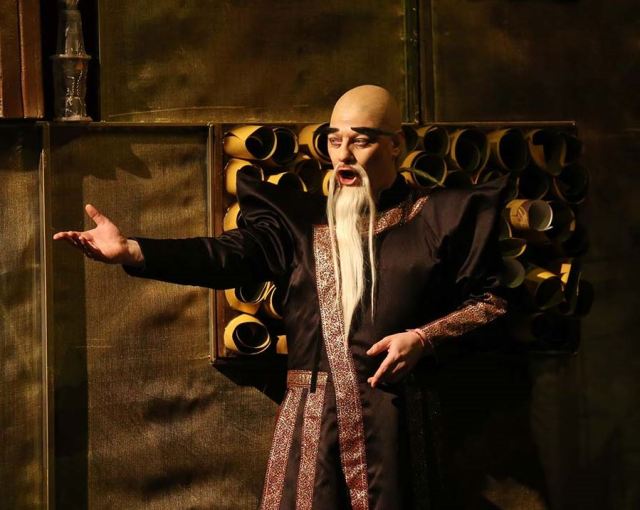
The “prince” is actually Dandini, Ramiro’s valet in disguise. The stepsisters arrive and fawn gleefully over Dandini, who invites them to a ball at the Royal palace. Don Magnifico tells Cenerentola that she cannot accompany them to the ball, despite her pleading. Before leaving, Ramiro notices how badly Cenerentola is treated. His tutor, Alidoro, who had been at the house earlier disguised as the beggar, arrives still wearing his rags and asks for Don Magnifico’s third daughter. Magnifico denies she is still alive, but when Alidoro is left alone with Cenerentola, he tells her that she will accompany him to the ball. He throws off his beggar’s clothes and identifies himself as a member of Prince Ramiro’s court, telling her that heaven will reward her pure heart.

cen16 cen17

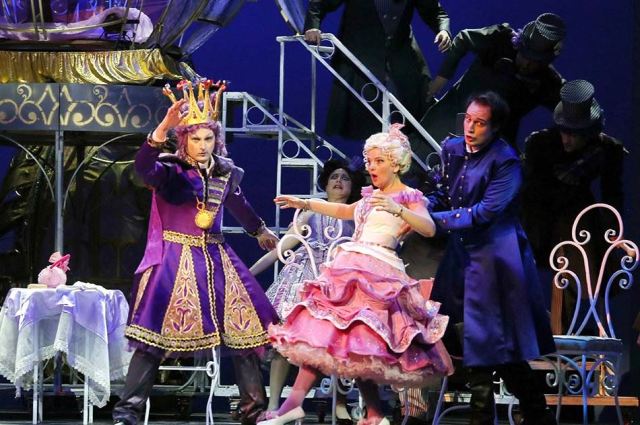
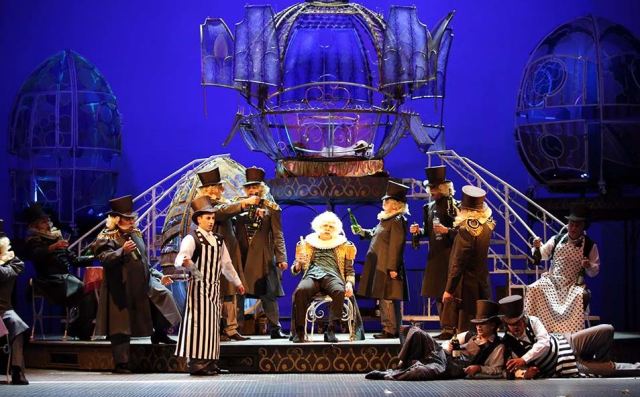
The stepsisters and Don Magnifico arrive at Prince Ramiro’s palace, with Dandini still posing as the Prince. Dandini offers Magnifico a tour of the wine cellar, hoping to get him drunk. He then disentangles himself from the family and tells Ramiro how stupid and obnoxious the two sisters are. Ramiro is confused since Alidoro had spoken well of one of Magnifico’s daughters. Clorinda and Tisbe enter and impatiently pressure Dandini to declare his “princely” choice. Without committing himself, Dandini ponders the question “Whom will the rejected sister marry?” and suggests Ramiro as a possible husband. Believing him to be a mere valet, the two sisters reject Ramiro as a despicable choice and insult him to his face. Alidoro announces the arrival of an unknown, lavishly dressed yet veiled, lady (Cenerentola). All sense something familiar about her and feel they are in a dream but on the verge of being awakened with a shock.
cen19

Act 2

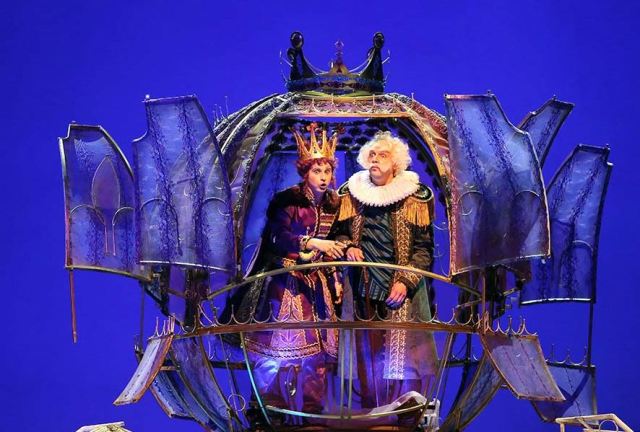
Don Magnifico, Clorinda, and Tisbe are in a room of Ramiro’s palace. Magnifico frets over the unknown woman who threatens the chance for one of his daughters to marry Prince Ramiro. The three leave and Ramiro enters, smitten with the unknown woman who resembles the girl he had met that morning. He conceals himself as Dandini arrives with Cenerentola and tries to court her. She turns Dandini down politely, telling him that she is in love with his valet. Ramiro steps forth and declares his love for her. She then leaves giving him one of a pair of matching bracelets and saying that if he really cares for her, he will find her. Encouraged by Alidoro, Ramiro calls his men together to begin searching for her. Meanwhile, Dandini confesses to Don Magnifico that he is really Prince Ramiro’s valet. Magnifico becomes highly indignant, and Dandini orders him out of the palace.
cen20

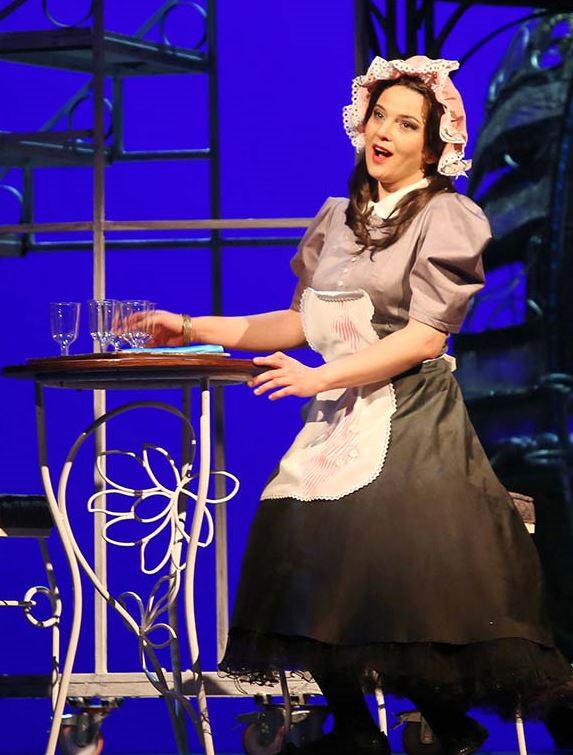
At Magnifico’s house, Cenerentola, once again dressed in rags, is tending the fire and singing her ballad. Magnifico and his daughters return from the ball in a vile mood, and order Cenerentola to prepare their supper. A thunderstorm rages. Dandini suddenly appears at the door to say that Prince Ramiro’s carriage has overturned outside and brings him into the house. Cenerentola fetches a chair for the prince and realizes he is Ramiro. He recognizes her bracelet and the couple are reunited. Don Magnifico, Clorinda and Tisbe are furious. Angered by their cruelty to Cenerentola, Ramiro threatens to punish them, but Cenerentola asks him to be merciful. As Cenerentola leaves with her prince, Alidoro thanks heaven for the happy outcome.

cen21

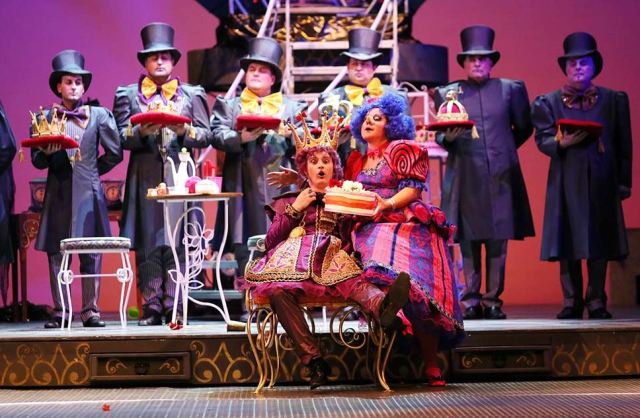
In the throne room of Ramiro’s palace, Magnifico tries to curry favor with his stepdaughter, the new princess, but she only wants to be acknowledged as his daughter. Cenerentola asks the prince to forgive Magnifico and the two stepsisters. Her father and stepsisters embrace her as she declares that her days of toiling by the fire are over.
cen22

Posted in OPera | Tagged , , | Leave a comment

L’AMICO FRITZ by Mascagni at the Royal Danish Opera

fritzTitle

The Old Stage, Copenhagen, OCTOBER 25, 2015

L’amico Fritz  is an opera in three acts by Pietro Mascagni, premiered in 1891 from a libretto by P. Suardon (Nicola Daspuro) (with additions by Giovanni Targioni-Tozzetti), based on the French novel L’ami Fritz by Émile Erckmann and Pierre-Alexandre Chatrian.

The opera enjoyed some success in its day and is probably Mascagni’s most famous work after Cavalleria rusticana. Today it is performed far more rarely than Cavalleria, so this is a great opportunity to watch it!! The “Cherry Duet” between Fritz and Suzel in Act 2 is the best known piece in the opera and has never left the duet repertoire.

Cast

Fritz: Scott Quinn

Suzel: Natalya Romaniw

David: Lars Møller

Beppe: Andrea Pellegrini

Federico: Alexander Grove

Hanezò: Jesper Brun-Jensen

Caterina: Christel Smith

royalOpera1

SYNOPSIS

Time: indefinite; sometime in the 19th century Place: indefinite; probably somewhere in Alsace

Act 1

The dining room of Fritz Kobus’ house

Fritz Kobus, a wealthy landowner is in discussion with his friend David, the local rabbi. Despite his disdain for marriage Fritz agrees to provide the dowry for a young couple. Fritz’s friends join him to celebrate his birthday. He is presented with a bouquet by Suzel, the daughter of one of his tenants. She joins the birthday celebration and is moved when the gypsy Beppe enters playing his violin. When Suzel leaves David comments that she will make a good bride and that he will find her a husband. Fritz protests that she is too young. They argue about marriage and Fritz bets David one of his vineyards that he will never marry.

Act 2

The courtyard of a farm

Suzel is preparing to pick cherries as the farmers go out to the fields. Fritz approaches and helps her.. They sing of the enchantment of the spring and the flowers. Fritz’s friends arrive and Fritz leaves to look over the farms. David stays behind to talk to Suzel. When he suggests that she might be a bride, she becomes embarrassed and leaves. Fritz returns and David mentions that he thinks he has found the right man for Suzel to marry. Fritz becomes visibly upset and, left alone, realizes that he is in love with the girl.

Act 3

The dining room of Fritz Kobus’ house

Fritz cannot banish thoughts of Suzel. Beppe enters and attempts to cheer him up with a song, but Fritz becomes even more depressed. David arrives and tells Fritz that Suzel is engaged to a fine young man and her father will soon ask for Fritz’s blessing. Enraged, Fritz says that he will refuse and leaves. Suzel enters sadly but David insists that everything will be all right. He leaves her alone and she voices her despair and love for Fritz. Fritz enters and asks about her engagement. He quickly senses that she does not love her intended. Fritz reveals his feelings for her and the two admit their love. David enters and declares that he has won his wager with Fritz, telling him that he is going to give his winnings, Fritz’s vineyard, to Suzel as a wedding present. <Sarasota Opera program notes, 2009>

fritz

Posted in OPera | Tagged , | Leave a comment