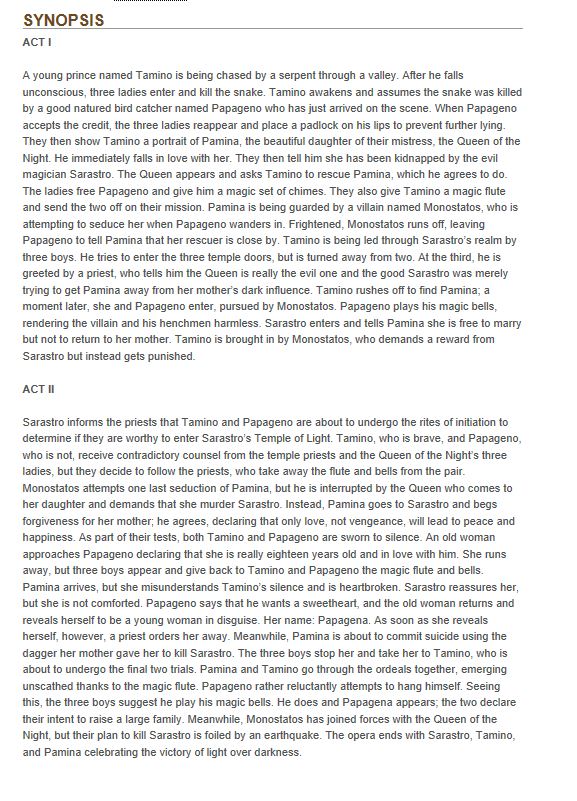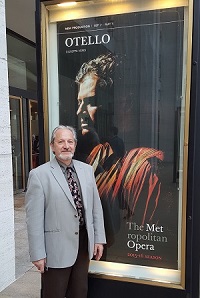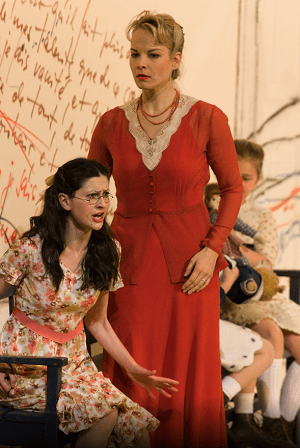
L’elisir d’amore in Estonia

elisir_estonia

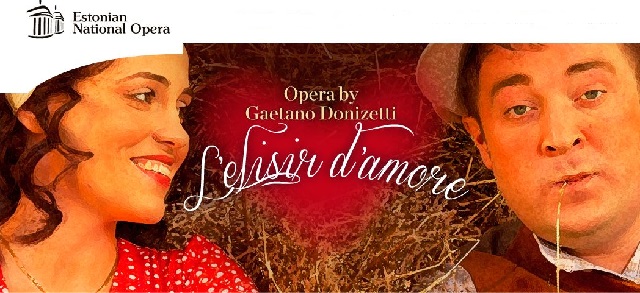
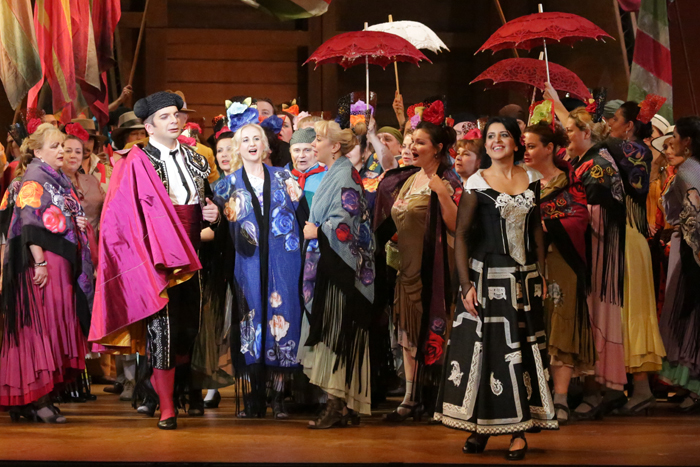
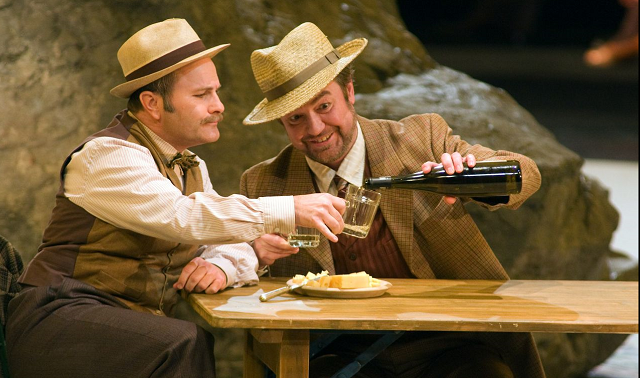
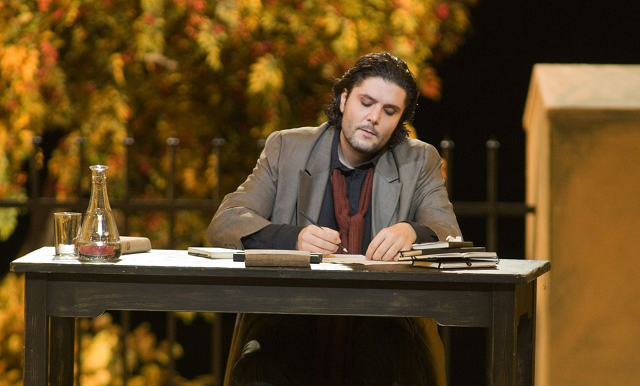
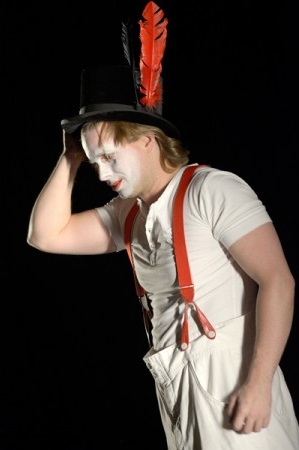
L’elisir d’amore

Opera by Gaetano Donizetti in two acts
Libretto by Felice Romani after Eugène Scribe’s text for Daniel-François-Esprit Auber’s “Le Philtre”
World premiere on May 12, 1832 (Milano Teatro Cannobiana)
Premiere at the Estonian National Opera on May 15, 2014

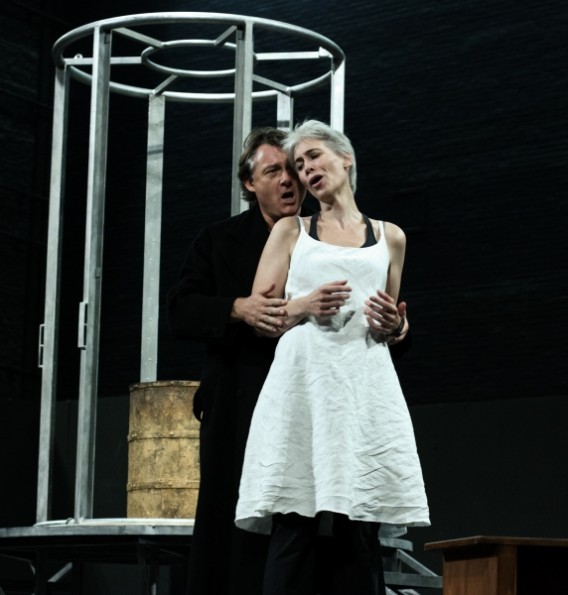
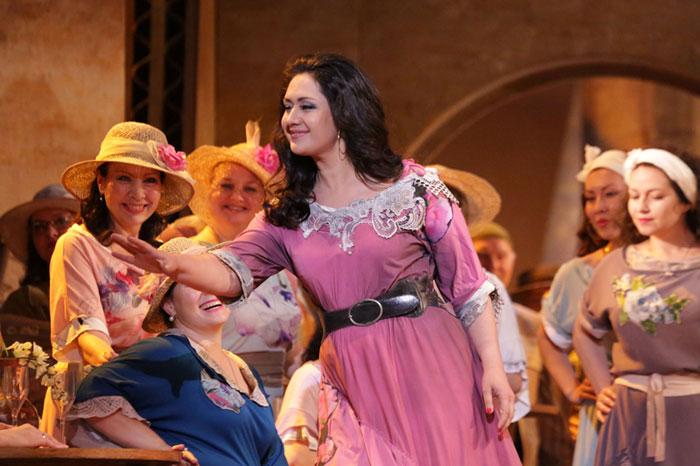
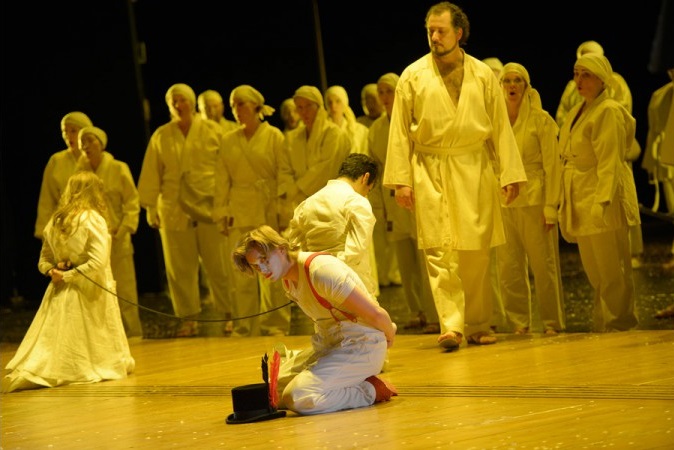
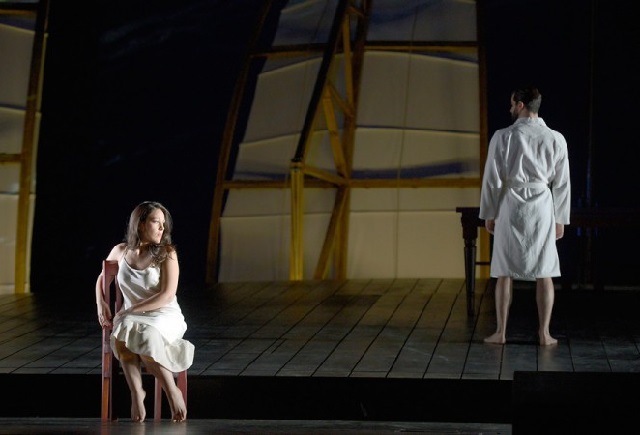
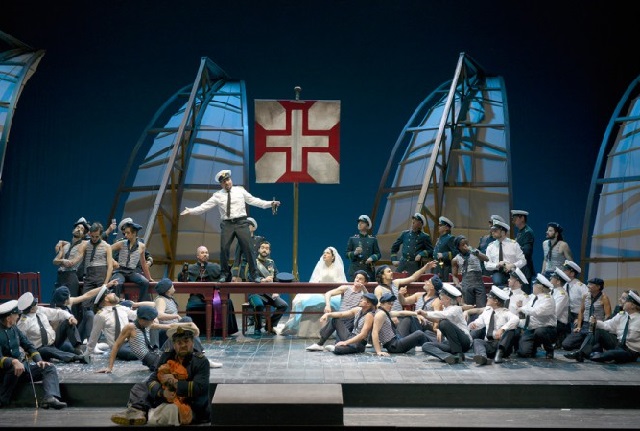
Written in a few weeks’ time, “L’elisir d’amore” has become one of the most frequently performed of all Gaetano Donizetti’s operas together with “Lucia di Lammermoor” (1835) and “Don Pasquale” (1843). It combines a touching love story and hilarious comedy with lightness, sparkling wit and beautiful music, including the well-loved tenor aria “Una furtiva lagrima”. Its premiere in Milan in 1832 was a triumph and secured Donizetti’s place as one of the leading Italian opera composers of his day. “L’elisir d’amore” relies on the traditions of the 18th century opera buffa and offers an ear-tickling delight for all lovers of 19th century Italian bel canto.

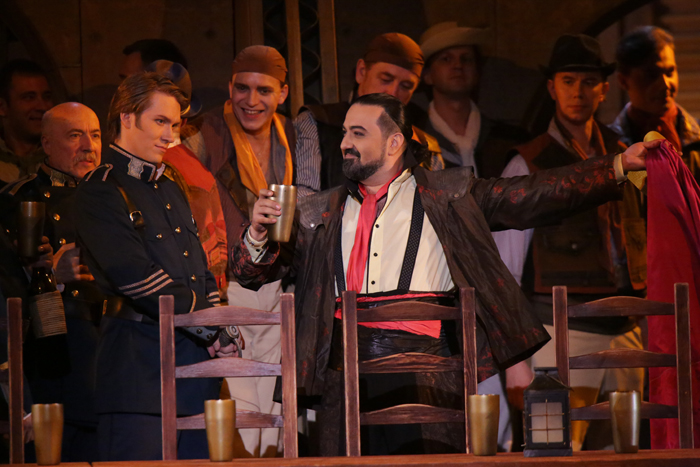
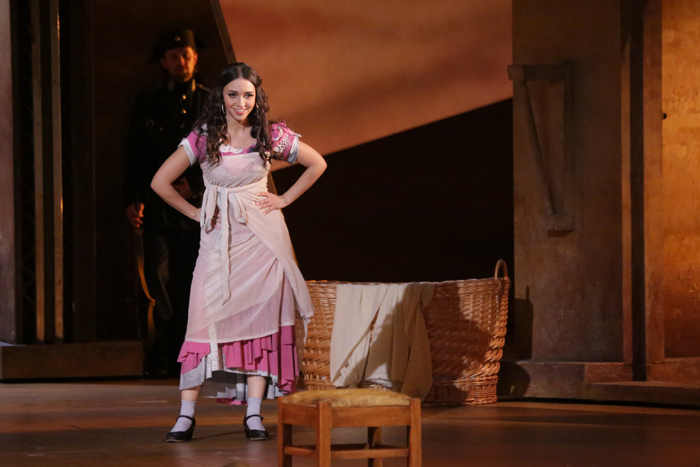
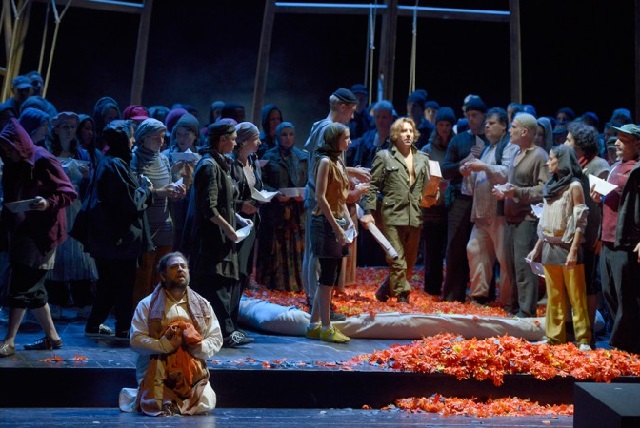
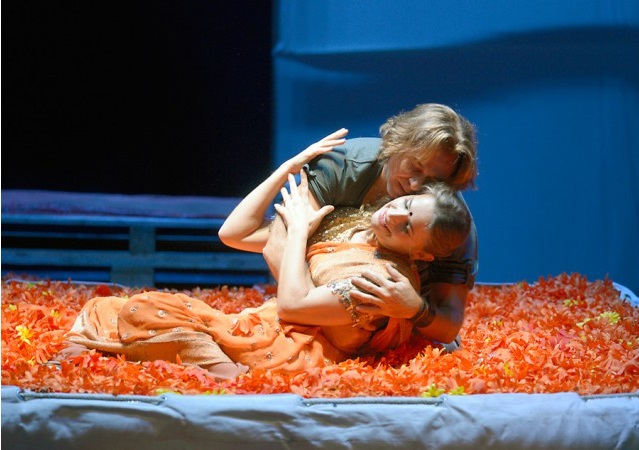
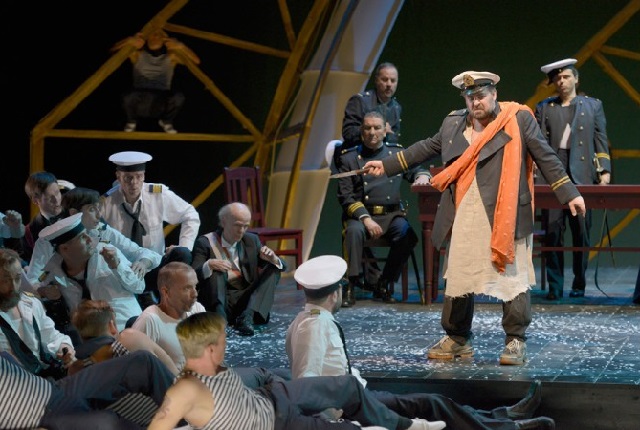
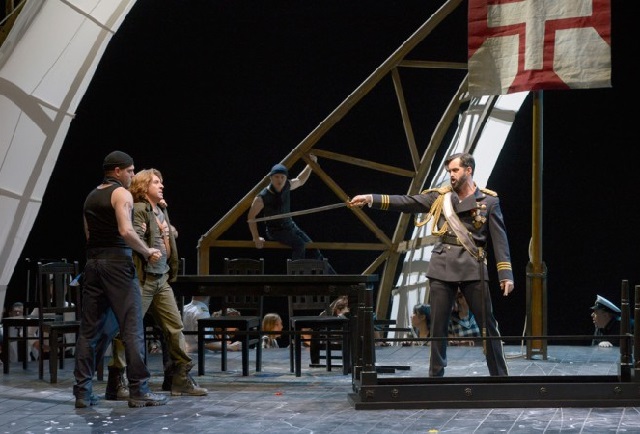
Young, naive Nemorino loves the rich and capricious Adina, who is indifferent to his affection. A travelling quack physician Dulcamara convinces Nemorino to spend the last of his money on an infallible love potion that is really a bottle of wine. Despite Nemorino’s efforts, Adina remains unmoved and enjoys the courting of Belcore, a mafia-leader. In desperation, Nemorino enlists with the troop in order to purchase a second bottle of the love potion. Deeply moved by Nemorino’s dedication to win her love, Adina finally admits to herself that she also has feelings for him and buys back his commission. What miracles a bottle of bordeaux can work!

Georg Malvius has directed more that 60 plays, 70 musicals and 20 operas in Sweden, Finland, Norway, Denmark, Germany, England, Holland, Italy, Luxembourg Austria, Monaco, Hungary and elsewhere. In Estonia, Malvius has staged 14 musical and drama productions.

 31 October 2015 / 19:00

12 March 2016 / 19:00

20 March 2016 / 17:00

8 April 2016 / 19:00

14 April 2016 / 19:00

  • Sung in Italian with subtitles in Estonian and English
  • Approx. running time 2 h 30 min


Staging team

  • Conductors: Vello Pähn, Risto Joost, Lauri Sirp
  • Stage Director: Georg Malvius (Sweden)
  • Designer: Ellen Cairns (Scotland)
  • Lighting Designer: Palle Palmé (Sweden)
  • Choreographer: Adrienne Åbjörn (Sweden)

Cast:

  • Nemorino: Cataldo Caputo (Italy), Oliver Kuusik, Andres Köster
  • Adina: Kadri Kipper, Kristel Pärtna
  • Belcore: Rauno Elp, Aare Saal, René Soom
  • Dulcamara: Pavlo Balakin, Rauno Elp
  • Giannetta: Janne Ševtšenko, Olga Zaitseva


Posted in OPera | Tagged , , | Leave a comment

Sontini’s La Vestale in Bruxelles

logolamonnaie

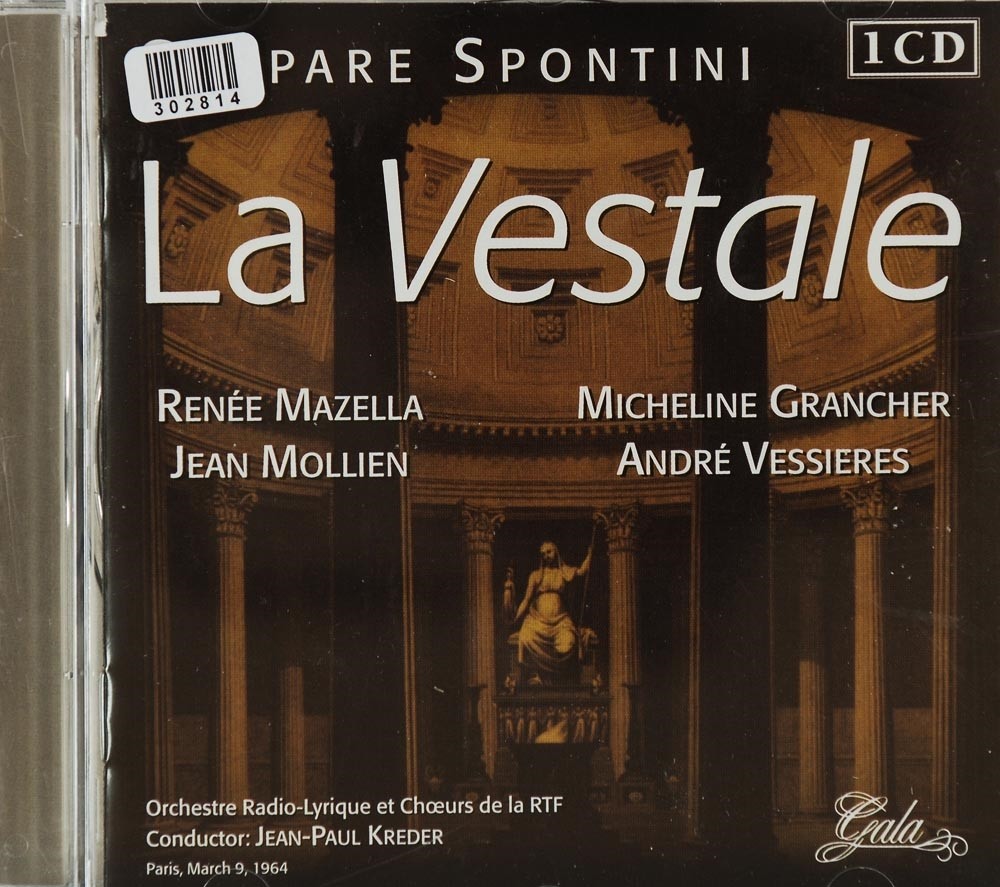
Gaspare Spontini

La Vestale

The flames of the vestal altar set the score alight

vestale

‘Since La Vestale, not a note of music has been written that wasn’t stolen from my scores!’ Gaspare Spontini was himself aware of how innovative and influential his score was. He turned opera in a new direction by conceiving the whole score on the basis of a compelling dramatic conception involving naturalistic effects, orchestration, and musical form, thereby pointing the way for such opera composers as Rossini, Wagner, Berlioz, and Meyerbeer. As a grand opera it was ahead of its time and was full of spectacular scenes showing a Vestal Virgin’s forbidden love for a Roman general; it made Spontini the most important composer of the Napoleonic period. Here directing his first opera, the French stage director Eric Lacascade focuses on a highly topical subject: ‘More than passionate love, what is at stake in this opera is the liberation of a woman who frees herself from the power of religious authority.’
new production

Gaspare-Spontini1 Gaspare-Spontini2

Co-production La Monnaie / De Munt, Théâtre des Champs-Élysées

vestale1

spontiniRecord

With the support of SWIFT

Music direction ¦ Alessandro De Marchi
Director ¦ Éric Lacascade
Set design ¦ Emmanuel Clolus
Costumes ¦ Marguerite Bordat
Lighting ¦ Philippe Berthomé
Dramaturgy ¦ Daria Lippi
Chorus direction ¦ Martino Faggiani
Chorus Academy direction ¦ Benoît Giaux
Licinius ¦ Yann Beuron
Cinna ¦ Julien Dran
Le Souverain Pontife ¦ Jean Teitgen
Julia ¦ Alexandra Deshorties
La Grande Vestale ¦ Sylvie Brunet-Grupposo
Orchestra ¦ La Monnaie Symphony Orchestra & Chorus
Chorus ¦ La Monnaie Chorus Academy
13, 15, 17, 20, 22 & 25 October<!–
[see agenda detail link]–>Sung in French
Surtitles in French / DutchApproximate running time: 2hours 30min
(Act 1 : 40min / change : 2min / Act 2 : 40min / interval : 20min / Act 3 : 40min)Pre-performance talks half an hour before the start of the performances

Photos from the rehearsals:

V_11_copy V_26_copy V_31_copy V_39_copy vestale2

Posted in OPera | Tagged , , , | Leave a comment

CARMEN at the Bolshoi

Carmen

Opera in four acts

Libretto by Henri Meilhac and Ludovic Halévy after the novel of the same name by Prosper Mérimée

Music Director: Tugan Sokhiev
Stage Director: Alexei Borodin
Set Designer: Stanislav Benediktov
Costume Designer:
Valentina Komolova
Lighting Designer:
Damir Ismagilov
Chorus Master:
Valery Borisov
Choreographers:
Ricardo Castro, Rosario Castro
Director of Stage Movement:
Andrei Ryklin

CarmenCarmen1 Carmen2

CAST

3 November 2015

Agunda Kulaeva as Carmen

Agunda Kulaeva as Carmen

Conductor Alexander Soloviev
Carmen Agunda Kulaeva
Don Jose Oleg Dolgov
Escamillo Elchin Azizov
Micaela Dinara Alieva
Zuniga Nikolai Kazansky
Morales Konstantin Shushakov
Mercedes Ekaterina Morozova
Frasquita Darya Zykova
Remendado Arseny Yakovlev
Dancairo Alexander Miminoshvili
Lillas Pastia Igor Dremov
Dancers Nadezhda Blagova
Anatoly Strizhak
Elchin Aziziv as Escamillo

Elchin Aziziv as Escamillo

4 November 2015

Conductor Alexander Soloviev
Carmen Svetlana Shilova
Don Jose Murat Karahan
Escamillo Nikoloz Lagvilava
Micaela Anna Aglatova
Zuniga Pyotr Migunov
Morales Konstantin Shushakov
Mercedes Oxana Gorchakovskaya
Frasquita Ruslana Koval
Remendado Marat Gali
Dancairo Alexander Miminoshvili
Lillas Pastia Igor Dremov
Dancers Evgeny Kulesh
Yulia Shoshina
Murat Karahan and Agunda Kulaeva

Murat Karahan and Agunda Kulaeva

11 November 2015

Conductor Tugan Sokhiev
Carmen Svetlana Shilova
Don Jose Murat Karahan
Escamillo Elchin Azizov
Micaela Anna Aglatova
Zuniga Nikolai Kazansky
Morales Ilya Kutyukhin
Mercedes Ekaterina Morozova
Frasquita Ruslana Koval
Remendado Stanislav Mostovoy
Dancairo Andrei Jilihovschi
Lillas Pastia Igor Dremov
Dancers Evgeny Kulesh
Yulia Shoshina

12 November 2015

Yulia Mazurova as Carmen

Yulia Mazurova as Carmen

Yulia Mazurova as Carmen

Yulia Mazurova as Carmen

Conductor Tugan Sokhiev
Carmen Yulia Mazurova
Don Jose Oleg Dolgov
Escamillo Nikoloz Lagvilava
Micaela Dinara Alieva
Zuniga Pyotr Migunov
Morales Ilya Kutyukhin
Mercedes Oxana Gorchakovskaya
Frasquita Darya Zykova
Remendado Arseny Yakovlev
Dancairo Andrei Jilihovschi
Lillas Pastia Igor Dremov
Dancers Nadezhda Blagova
Anatoly Strizhak

Carmen3

SYNOPSIS

Act I
A bustling square in the city of Seville. Dragoon guards are watching over the crowd. Micaëla comes in search of Don José whose mother is sending him a letter through her. As José is not to be found, Micaëla leaves. José arrives with his company to relieve the guards. Female workers of the tobacco make their way from work through the square. Carmen the gypsy is among them. All the men are fascinated by her, but she refuses to love them back: she is drawn to the indifferent one, Don José. As she leaves, she throws at him a cassia flower. Micaëla returns. She and José reminisce about their native land. When Micaëla goes away, José reads his mother’s letter. He is decided to do as she says and marry Micaëla.
Suddenly the peace is disturbed: Carmen has started a quarrel with her fellow worker. Two fighting women are set apart, and José is to escort Carmen to jail. Carmen promises him her love if he helps her escape. José surrenders to her charm.

Carmen5

Act II
Gypsy girls entertain the soldiers at Lillas Pastia’s. Escamillo the toreador praises his dangerous trade, and is in his turn praised by the enrapt crowd. Escamillo is captivated by Carmen, but she is not interested in him.
The smugglers Dancaïre and Remendado arrive. They tempt Carmen and her friends, Frasquita and Mercédès, to assist them in a fat job. Carmen refuses: she is in love and awaits the soldier who was confined because of her. It is José, and he does not hesistate to keep their appointment once he is free. Carmen is happy to see him and eager to dance for him alone. A bugle call summons José back to the barracks. He intends to go, and Carmen annoyed with his obedience to command.
Suddenly Zuniga, José’s senior, arrives at the inn. He goes after Carmen, but the smugglers interfere. Zuniga is overpowered, and José has to join the smugglers.

DamirYusupov2

Act III
Smugglers’ camp. José is jealous of his lover and ashamed of being a deserter.
Carmen reads the cards and is foretold death.
The smugglers, including Frasquita and Mercédès, are in for a job, and Carmen decides to join them to help cajole the customs officers.
Escamillo comes to the camp. He wants to see Carmen and declares his love for her. José is ready to kill his rival, but Carmen stops their combat. As he leaves, Escamillo invites everyone to a bullfight.
Micaëla arrives. She was looking for José to inform him of his mother’s mortal ilness. José has to go with her and leave Carmen.

NikolaiKazanskyAsZuniga

Act IV
A square in front of an arena where a bullfight is about to start. Carmen and Escamillo arrive together, they are happily in love. Frasquita and Mercédès warn Carmen to beware of José, but Carmen is intrepid.
She stays behind the crowd and meets José face to face. José implores Carmen to go with him and love him again, but she is adamant: her heart belongs to another.
Desperate and enraged, José kills Carmen.

Carmen6

Photos by Damir Yusupov

Posted in OPera | Tagged , , , | Leave a comment

Jules Massenet’s WERTHER in Munich

bayerischeoperalogo

werther_Massimo_Giordano WERTHER

Music by Jules Massenet

Drama lyrique in four acts

Composer Jules Massenet · Libretto by Edouard Blau, Paul Milliet, Georges Hartmann based on Johann Wolfgang von Goethes novel “Die Leiden des jungen Werthers”
In French with German surtitles

October 25, 28, 31, 2015; November 4, 2015
Nationaltheater

Duration est. 3 hours 15 minutes · 1 Interval between 1 Act and 2 Act (est. 07:30 pm – 08:10 pm ) Open ticket sales

The most famous suicide in world literature as a grand French opera: Werther loves Charlotte, she marries Albert. The passionate, torn Werther despairs and – shoots himself. Goethe’s novel Die Leiden des jungen Werther (The Sorrows of Young Werther) once set off a wave of suicides among young lovers. Jules Massenet’s opera has less of a suicidal effect on its audience – the work established itself as one of the most beautiful at the Grande Opéra. Great duet scenes between the lovesick tenor and his adored Charlotte: pure loveliness, sensuous musical intoxication. Opera that stirs the heart. Emotions that move the soul!

All photographs © Bavarian State Opera

Elena_Tsallagova

ARTISTIC TEAM

Conductor Asher Fisch

Production, Set, lighting concept and costumes  Jürgen Rose

Production Staff Franziska Severin

Lights Michael Bauer

Set Director Ingrid Zellner

Children’s Choir Director Stellario Fagone


Kevin Conners_RudigerTrebes

CAST

Werther
Rolando Villazón, Matthew Polenzani
Albert
Michael Nagy
Amtmann
Christoph Stephinger
Schmidt
Kevin Conners
Johann
Tim Kuypers
Brühlmann
Johannes Kammler
Charlotte
Angela Brower
Sophie
Hanna-Elisabeth Müller
Käthchen
Anna Rajah
Chor
Kinderchor der Bayerischen Staatsoper
    • Bayerisches Staatsorchester
    • Children’s chorus of the Bayerische Staatsoper

werther6

SYNOPSIS

The scene of the action is Wetzlar
Act One

The magistrate has lived alone with his nine children since his wife’s death. Charlotte, the oldest, runs the household, Sophie, his second-oldest, helps her. Although it is still only the middle of July, the magistrate is rehearsing a Christmas song with his younger children, to the great amusement of his friends, Schmidt and Johann.

werther5 Relatives and neighbours arrive to collect Charlotte and take her with them to a dance.
Werther, a melancholy dreamer and sensitive poet who loves the country atmosphere, has arrived before them and when he sees how lovingly Charlotte looks after her younger brothers and sisters he falls in love with her and desires nothing more than to become part of this idyllic family. Charlotte asks Sophie to look after their father and the children while she is out and leaves the house with Werther.

While Charlotte and Werther and their friends are at the dance, Albert, Charlotte’s fiancé, returns unexpectedly from a long journey. He learns from Sophie that Charlotte has gone out for the evening but that everyone is looking forward to his approaching marriage to her sister. Albert leaves the house happy and contented.

Werther accompanies Charlotte home and declares his love for her. Charlotte is so overcome by the ardour of his feelings for her that she forgets to mention her engagement to Albert. She feels drawn towards this unusual man. When the magistrate tells her that Albert has returned, Werther learns that Charlotte promised her mother on her deathbed that she would marry Albert.

werther2

Act Two

It is autumn. People in the village are preparing for the celebrations in honour of their pastor’s golden wedding, everyone is invited to coffee after the celebration service in church. Albert and Charlotte, who have now been married for three months, are among the guests, as is Werther, who is lost in misery at having lost Charlotte. Albert actually broaches the subject to him, but Werther conceals his feelings and assures the couple of his loyalty to both. When Sophie joins them, Albert uses her happy mood to draw her to Werther’s attention, but Werther refuses Sophie’s invitation to dance and instead seeks a private conversation with Charlotte, reminiscing about their first meeting and renewing his protestations of love.

werther3 Charlotte points out to him that she now has duties as a married woman and begs Werther to stay away from her for a while. She leaves him, having told him that she does not wish to see him again before Christmas. Werther forces himself to do as she wishes but knows that being at a distance will not help him; he would rather kill himself than do without the love of this woman. He tells Sophie he is going away, never to return. While the guests are celebrating the pastor’s golden wedding, Sophie tells her sister of Werther’s decision and his despair. Albert sees his suspicions about Werther’s love for Charlotte confirmed. Charlotte cannot believe that she will never see Werther again.

Chalotte_Garanca Act Three

It is Christmas Eve and Charlotte is preparing to celebrate her first Christmas with Albert. Werther has written her several letters from his exile and she reads them again and again. It becomes clear to her that she returns his love and will never be able to forget him. Sophie comes by unannounced and immediately senses the unrest and sadness in her elder sister. She tries in vain to cheer Charlotte up a little before returning to her father and brothers and sisters. Alone once again, Charlotte breaks down under the vehemence of her innermost feelings.

Werther has not the strength to keep his promise never to see Charlotte again and visits her in her husband’s house. For a short while the two of them remember the happy hours in which they played music together and read the works of the great poets. When Charlotte reminds Werther of the translation he had begun of his favourite poet, Ossian, this becomes Werther’s undoing. Werther works himself up into such a state about the melancholy and despair in the verses that he misinterprets Charlotte’s concern as a declaration of her love and urges her to admit to this openly. Once again, Charlotte’s sense of duty is stronger, she frees herself from Werther’s embrace and rushes out. Werther now finally sees no point in his life any longer and leaves the house.

Albert returns home. He has learned of Werther’s return and finds his wife extremely agitated. As he is about to challenge her, a messenger comes in with a letter from Werther in which he asks Albert to lend him his pistols. Albert forces Charlotte to give the messenger the pistols.
Although she automatically does as she is bid, Charlotte still hopes that she will be able to prevent what she knows is about to happen…

Werther

Act Four

Charlotte arrives too late. Werther has already fatally wounded himself with the pistol. He refuses her offer to fetch help, he wants to die in her arms. Now, finally, Charlotte finds the courage to admit to Werther that she loves him. The voices of the children, singing the Christmas song they learnt in the summer, seem to Werther, who is by now hallucinating, to be a sign of heavenly forgiveness. Begging Charlotte to weep for him at the grave he so longs for, Werther dies.

© Bavarian State Opera

NOTES ABOUT THIS PRODUCTION

Jürgen Rose

Thoughts, Image Ideas, Questions…
(from notes written from February 2005 to September 2006)

With (pseudo) realism and a complete historical ambience (be it 18th, 19th or 20th century) and visual milieu descriptions alone (as necessary as they are to tell this story) we will not get any closer to this piece… certainly not right down to the nitty-gritty. Many of these elements would just distract from it. The concentration on the characters (even the supporting parts) would interest me more! From the first moment on, we have to feel Werther’s status as an outsider… a foreigner… in this bourgeois world… the artist people admire because of his talent – yet keep their distance from him!

Perhaps Werther always needs his own dark section of the stage, his specific solitude, his isolation…? (He is restless, questing, self-banishing…) Perhaps we should have a table standing somewhere with his books, his notes, sketches and poems on it?
How can one create an abstract playing area for the mind-sets and conflicts of the protagonists – and still display the bourgeois idyll (Act I), the bourgeois society with its church attendance and anniversary celebration (Act II) and the bourgeois new home of the young couple on Christmas Eve (Act III)?

Everything necessary for an ambience in the initial acts must disappear in the last act! Charlotte removes herself from her world – steps into emptiness…
An ice-cold atmosphere!
The two alone in the emptiness!
How do I make the space for Werther more specific?

werther4

Meanwhile I’m back to the white light space darkening into blackness in the background (tent construction with indirect lighting) – combined with a diagonally positioned revolving disk.
What visual means to I need to generate Werther’s unmistakable, intimate situation space exclusively related to his character?
The attraction of Goethe’s letter novel, which must have fascinated Massenet, too – Werther’s manic-depressive tendency, constantly wanting to rephrase, write down, preserve everything keeps forcing itself on me as well, … brings the kaleidoscope of varicolored bits of lettering, chaotic lines and drawings before my eye…
Why not write all over all the walls, the floor and the ceiling, filling them with Werther’s poetic sentences, despairing cries and oaths – scribble the widest variety of sketches all over complete with crossed-out passages – and thus expose the totally individualistic, intimate spiritual landscape of this man (this artist)?
Now Werther’s space, his area in the center is forcing itself on me. Where else can his table stand other than stage center? How can all the bourgeois scenes be arranged? I just happen to see a post card with Caspar David Friedrich’s lonely man on a mountaintop… that’s it!
I search for a meaning, then put it in the model… with Werther’s table and chair on it… there’s nothing more obvious than that! Up there in the “dizzying heights” is the only place Werther’s space can be!

Translation by Donald Arthur

© Bavarian State Opera

Posted in OPera | Tagged , | Leave a comment

Fondazione Arturo Toscanini Educational presents: R-Esistence, a Music program for children.


logoEDUresistence

“Resistance” (in Italian, Resistenza) from the dictionary:

  1. Action that strives to resist someone or somethingaiming to oppose this action.
  2. Ability to withstand pressures, strainand wear.
  3. Force that opposes the movement of the point or the body to which it is applied
  4. Electrical Resistor
  5. Fight against fascism in Italy and in Europe during the Second World War.

What is the meaning of Resistance today? What values ​​can be taken from historical resistance and make them EXISTENCE? And above all: is it possible? Is it necessary?Helped by all forms of artistic expression, but above all through music, both past and present, from chant to the dodecaphonic music, from pop to classic, we discover what R-esistence means nowadays. This is a Pilot project developed between the Toscanini Foundation and the “Alcide Cervi Institute” and with the involvement of Reggio Emilia and Parma middle and high schools. Meetings with people who now R-Exist, creativity and expression workshops, talks and discussions with conductor Alessandro Nidi and composer Andrea Talmelli and … in the end, helped by the writing, graphic, visual and sound suggestionsmade by youngsters, it will create a concert / show also with the Emilia Romagna Regional Orchestra.

Do you whant to listen a fragment? Click HERE

Alessandro Nidi conductor, Roberto Recchia recited voice

Giornata-dellarte

Posted in Article | Leave a comment

Deutsche Oper Berlin presents The Magic Flute…

deutschelogo

The Magic Flute

Wolfgang Amadeus Mozart (1756 – 1791)

Opera in two acts
Libretto by Emanuel Schikaneder
First performed on 30. September, 1791 in Vienna
Premiered at the Deutsche Oper Berlin on 24. September, 1991

In German with German and English surtitles

MagicFlute11

Cast

Conductor Nicholas Carter
Donald Runnicles (12.12.2015)
Moritz Gnann (25.10.2015 | 29.12.2015)
Daniel Cohen (12.02.2016 | 03.06.2016 | 08.07.2016)
Director Günter Krämer
Stage-design, Costume-design Andreas Reinhardt
Choir Conductor Thomas Richter
Sarastro Tobias Kehrer
Ante Jerkunica (13.11.2015 | 12.12.2015 | 29.12.2015 | 02.01.2016)
Tamino Álvaro Zambrano
Thomas Blondelle (13.11.2015 | 02.01.2016 | 15.05.2016)
Matthew Newlin (12.12.2015 | 29.12.2015 | 12.02.2016 | 23.04.2016)
Attilio Glaser (25.10.2015 | 03.06.2016 | 08.07.2016)
Speaker Stephen Bronk
Dong-Hwan Lee (23.04.2016 | 15.05.2016 | 03.06.2016 | 08.07.2016)
Derek Welton (13.11.2015 | 12.12.2015)
Seth Carico (29.12.2015 | 02.01.2016)
1st priest Thomas Lehman
Stephen Bronk (13.11.2015 | 12.12.2015 | 15.05.2016 | 03.06.2016 | 08.07.2016)
2nd priest Jörg Schörner
Gideon Poppe (15.05.2016 | 03.06.2016 | 08.07.2016)
Queen of the Night Nina Minasyan
Hulkar Sabirova (13.11.2015 | 12.12.2015 | 29.12.2015 | 02.01.2016 | 12.02.2016)
Pamina Siobhan Stagg
Heidi Stober (12.02.2016 | 23.04.2016 | 15.05.2016 | 03.06.2016 | 08.07.2016)
Elena Tsallagova (25.10.2015 | 13.11.2015 | 12.12.2015)
1st lady Martina Welschenbach
Adriana Ferfezka (13.11.2015 | 12.12.2015 | 29.12.2015 | 02.01.2016 | 12.02.2016 | 23.04.2016 | 15.05.2016 | 03.06.2016 | 08.07.2016)
2nd lady Rebecca Jo Loeb
Irene Roberts (13.11.2015 | 12.12.2015 | 02.01.2016)
Jana Kurucová (25.10.2015)
3rd lady Annika Schlicht
Ronnita Miller (25.10.2015 | 12.12.2015 | 29.12.2015 | 02.01.2016 | 23.04.2016 | 15.05.2016 | 03.06.2016 | 08.07.2016)
Papagena Alexandra Hutton
Elbenita Kajtazi (25.10.2015 | 13.11.2015 | 12.12.2015 | 29.12.2015 | 12.02.2016 | 23.04.2016 | 15.05.2016 | 03.06.2016 | 08.07.2016)
Papageno John Chest
Simon Pauly (02.01.2016 | 23.04.2016 | 15.05.2016 | 03.06.2016 | 08.07.2016)
Monostatos Burkhard Ulrich
Gideon Poppe (12.02.2016 | 23.04.2016)
1st armoured man Clemens Bieber
James Kryshak (12.02.2016 | 23.04.2016 | 15.05.2016)
Attilio Glaser (13.11.2015 | 12.12.2015)
2nd armoured man Andrew Harris
Alexei Botnarciuc (13.11.2015 | 12.12.2015 | 29.12.2015 | 02.01.2016 | 03.06.2016 | 08.07.2016)
Three boys Solisten des Knabenchores der Chorakademie Dortmund
Solisten des Tölzer Knabenchores (13.11.2015 | 12.12.2015 | 02.01.2016 | 15.05.2016 | 03.06.2016 | 08.07.2016)
Chorus Chor der Deutschen Oper Berlin
Orchestra Orchester der Deutschen Oper Berlin

magic5

Information

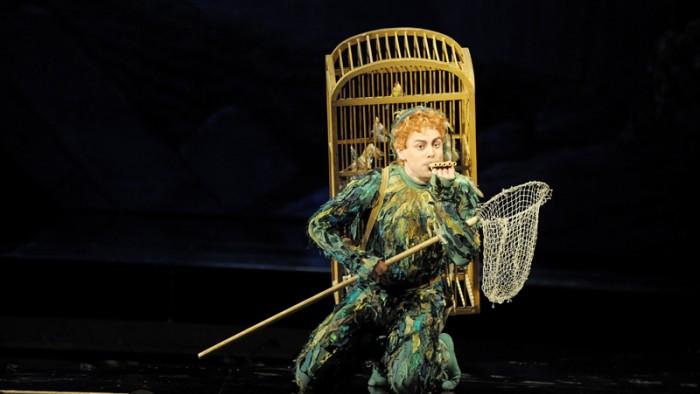
Prince Tamino is menaced by a wild dragon. At the last moment he is saved by three mysterious women, who have been sent by the Queen of the Night. When the bird catcher Papageno appears and boasts of his heroic deed as dragon slayer, the three ladies punish him. They present the Prince with a picture of Pamina, the Queen’s daughter, who has been imprisoned by Sarastro, Regent of the Sun Temple. Tamino falls in love with her. The Queen appears in person and orders him to join forces with Papageno to save Pamina. They give Tamino a magic flute for protection and the reluctant Pagageno receives a glockenspiel of magical chimes. Led by three boys, the two heroes begin their journey to Sarastro’s castle. Tamino is twice prevented from entering by the gatekeepers. At the third attempt they inform him that Sarastro is nothing like the cruel tyrant that the Queen of the Night has made him out to be. Papageno finds Pamina and tries to escape with her.

MagicFlute1 He is able to stall her guard Monostatos with the help of the chimes, but the appearance of Sarastro puts an end to all attempts to flee. Papageno, Pamina and Tamino are compelled to stay in Sarastro’s temple and submit to a series of life-threatening trials. First of all they have to learn to be silent, which is especially difficult for Papageno. When an old woman passes, Papageno cannot restrain himself and asks her what her name is. She disappears in a clap of thunder. Papageno consoles himself with the food that is so miraculously served to them. Tamino keeps silent, playing on his flute. Pamina appears, in deep despair that Tamino is no longer talking to her. Her mother has already entreated her in vain to murder Sarastro. When she decides to end her life the three boys seize her dagger and lead her to Tamino. Protected by the flute, both of them pass the ordeals of fire and water, and have now successfully completed all the trials. Meanwhile Papageno, in his great loneliness, conjures up the old woman again and promises to marry her, »if there’s nothing better to be had«.

magic3 All of a sudden she is transformed into a beautiful young girl, but their time has not yet come and she is taken from him again. In his despair he decides to end his life, but the three boys remind him of the magic chimes. Their tinkling brings back Papagena, and the reunion sets them both dreaming of a happy future together. The other pair is happy, too: Tamino and Pamina are inducted into the Society of the Enlightened, which celebrates the ideals of Nature, Wisdom and Reason. Only for the Queen of the Night does the story take a turn for the worse: when she attempts to enter the temple along with her entourage she is devoured by the spirits of darkness.

magic2 Mozart’s MAGIC FLUTE is the most frequently performed opera in the German-speaking world. This variegated masterpiece straddling Viennese popular theatre, fairytale, myth and the mystery of freemasonry is a puzzle even today: did Mozart and his librettist Schikaneder switch horses in mid-stream, changing allegiance from the Queen of the Night to Sarastro? Should one not distrust the holier-than-thou world of the priests and an ideology that divides the world into good and evil? Are there not traces, even, of discrepancies between text and music, as many a Mozart expert has suggested? Whatever the facts of the matter, it is the music that smooths the contradictions of the plot, elevating them to a worldly realism. The music does not denounce the characters but rather confers on the conflicts an existential dimension. Without this dimension the opera would come over as an irrational fairytale.

magic13

Supported by Förderkreis der Deutschen Oper Berlin e.V. and Deutschen Philips Unternehmen

magicfluteberlin9

Posted in OPera | Tagged , , | Leave a comment

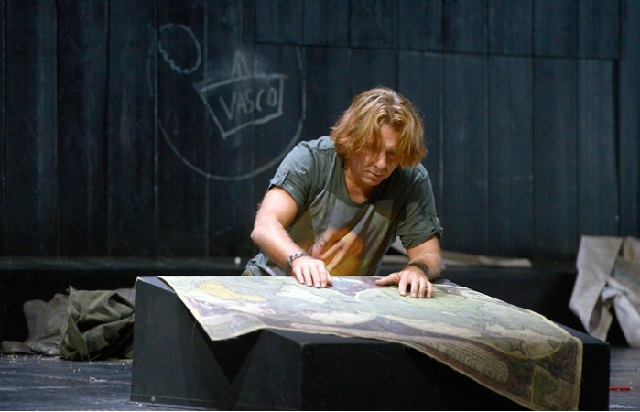
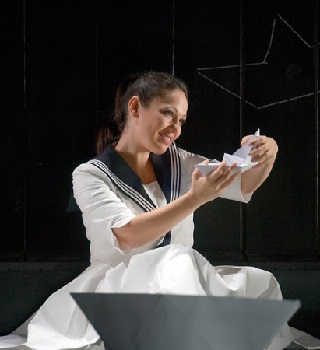
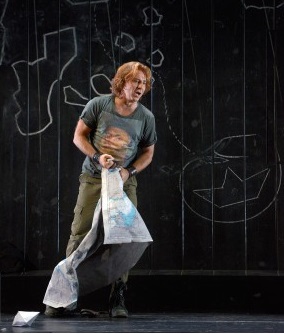
New production of Meyerbeer’s VASCO DA GAMA with Roberto Alagna in Berlin

deutschelogo

VASCO DA GAMA (L’Africaine)

Giacomo Meyerbeer (1791 – 1864)

A grand opéra in five acts

Libretto by Eugène Scribe
World premiere [as L’AFRICAINE] 28th April 1865 at the Opéra de Paris
Premiere of revised version [as VASCO DA GAMA] on 2nd February 2013 in Chemnitz following publication of Jürgen Schläder’s edition based on the history of the opera’s development
Premiere at the Deutsche Oper Berlin: 4th October 2015

In French language with German and English surtitles

vasco1

Cast

Conductor Enrique Mazzola
Stage Director Vera Nemirova
Assistant Stage Director Sonja Nemirova
Set Design Jens Kilian
Costume Design Marie-Thérèse Jossen
Choreographer Bharti Ramdhoni
Silke Sense
Video Marcus Richardt
Chorus Master William Spaulding
Dramaturge Jörg Königsdorf
Don Pedro Seth Carico
Don Diego Andrew Harris
Ines Nino Machaidze
Vasco da Gama Roberto Alagna
Don Alvar Clemens Bieber
Paul Kaufmann (15.10.2015)
Inquisitor Dong-Hwan Lee
Nelusco Markus Brück
Selica Sophie Koch
The High-priest Albert Pesendorfer
Alexei Botnarciuc (07.10.2015 | 11.10.2015)
Anna Irene Roberts
Matelots Paul Kaufmann
Matthew Peña (15.10.2015)
Matelots Gideon Poppe
Matelots Thomas Lehman
Matelots Michael Adams
Chorus Chor der Deutschen Oper Berlin
Orchestra Orchester der Deutschen Oper Berlin

vasco2

Information

Barely a month separates the premieres of Giacomo Meyerbeer’s last opera VASCO DA GAMA and Wagner’s TRISTAN, yet while TRISTAN was quickly hailed as a ground-breaking work, VASCO was long dismissed as a late example of an art form – grand opéra – that had already had its day. It did not help that the path from idea to completion had been a complex one: following the composer’s death prior to the world premiere, his opus ultimum was aired not only under the misnomer of L’AFRICAINE – referring to an earlier version of the story – but also with a raft of alterations and cuts made to the libretto and music.

vasco4

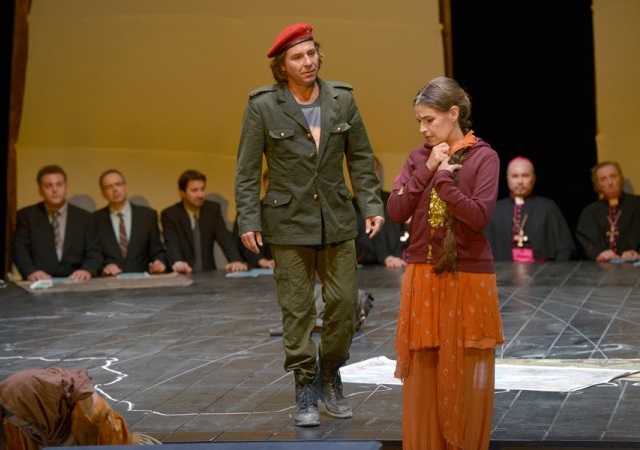
It was not until the appearance of the critical edition of the work, first performed only 3 years ago, that VASCO DA GAMA was rehabilitated as a worthy counterpart to the musical dramas of Wagner and Verdi. As he had done in the LES HUGUENOTS, Meyerbeer uses the tools afforded by grand opéra to show individual happiness being dashed on the rocks of social and religious notions. The central character in VASCO is not the Portuguese explorer, who still gets to sing one of opera’s greatest tenor arias, but in fact the Indian Queen Selica. She is the only figure who is not hostile or prejudiced towards people from different countries and religions, and she becomes a victim of her unrequited love for Vasco.

vasco5

Vera Nemirova directs the new production of VASCO DA GAMA, the first in a cycle of major Meyerbeer operas being staged at the Deutsche Oper Berlin. Nemirova has previously directed Puccini’s THE GIRL OF THE GOLDEN WEST at the Deutsche Oper Berlin and is one of the most accomplished female directors of musical theatre of her generation. The conductor will be Enrique Mazzola, who recently triumphed in the Berliner Philharmonie with his concert performance of Meyerbeer’s DINORAH.

vasco6

Kindly supported by LOTTO-Stiftung Berlin
Presented by Wall AG, kulturradio vom rbb and tip Berlin

vasco7 vasco9

vasco10vasco15vasco16vasco17vasco19vasco21

Photos Vasco da Gama © 2015, Bettina Stöß

Posted in OPera | Tagged , | Leave a comment

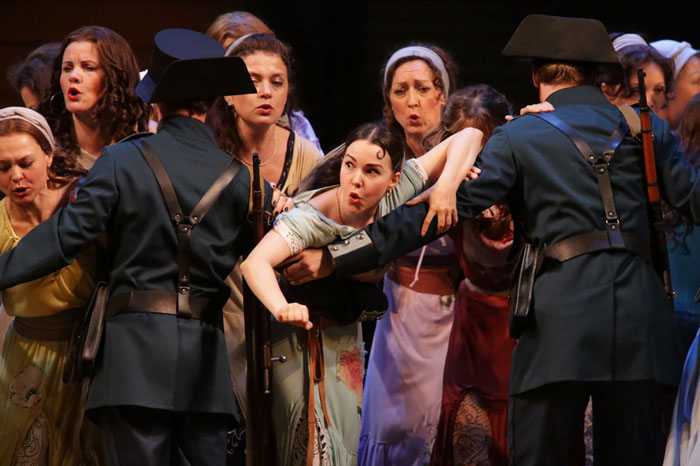
GIOACCHINO ROSSINI’s “Semiramide” in Marseille

 operamarseillelogoSemiramide

GIOACCHINO ROSSINI

Sunday October 18th, 2015 > 2:30PM
Wednesday October 21st, 2015 > 8:00PM
Saturday October 24th, 2015 > 8:00PM
Tuesday October 27th, 2015 > 8:00PM

Simultaneously stunning and majestic, this score reveals yet another element of the Rossini genius


Visu-Semiramide

SEMIRAMIDE

Opera in 2 acts
Libretto by Gaetano ROSSI,
from Sémiramis by VOLTAIRE
First performed in Venice, Teatro La Fenice, on February 3rd, 1823
First performed at Marseille Opera, on May 25th, 1997

CONCERT VERSION

Conductor Giuliano CARELLA

CAST

Semiramide Jessica PRATT
Arsace Varduhi ABRAHAMYAN
Assur Mirco PALAZZI
Idreno David ALEGRET
Le fantôme de Nino / Oroe Patrick BOLLEIRE
Mitrane Samy CAMPS

Marseille Opera Orchestra and Chorus
Posted in OPera | Tagged , , , | Leave a comment

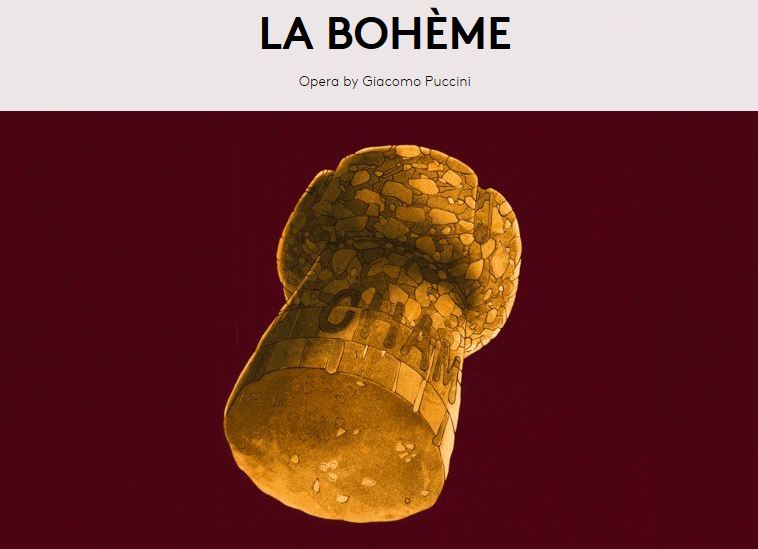
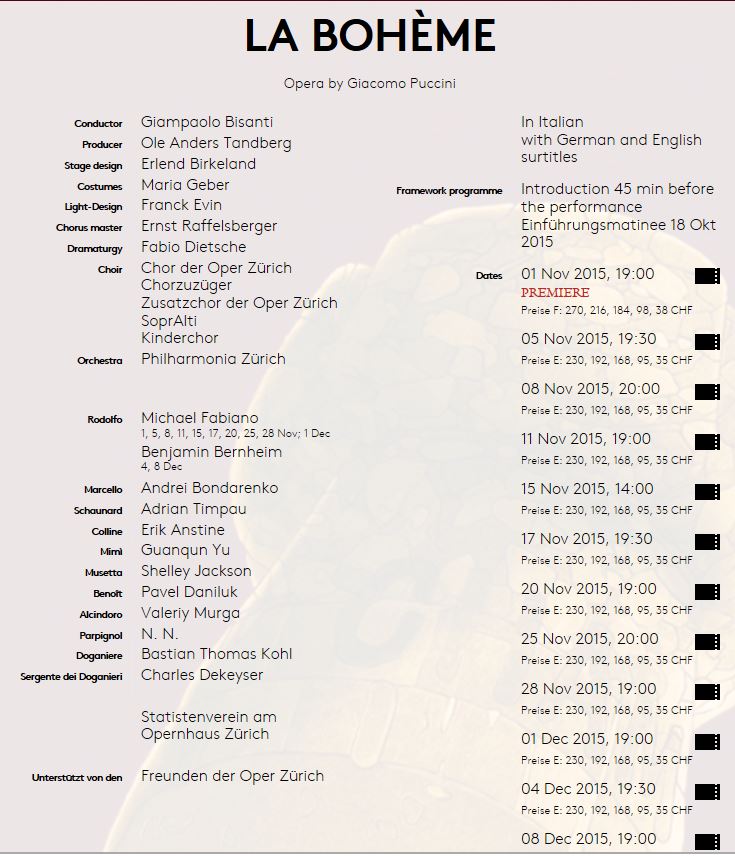
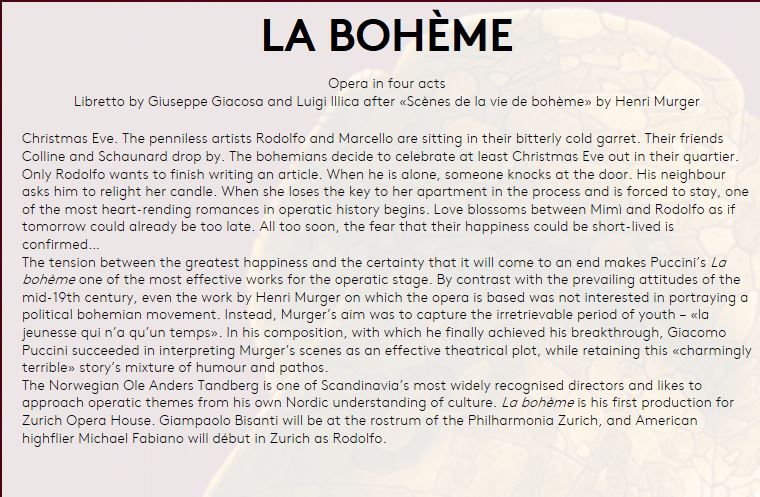
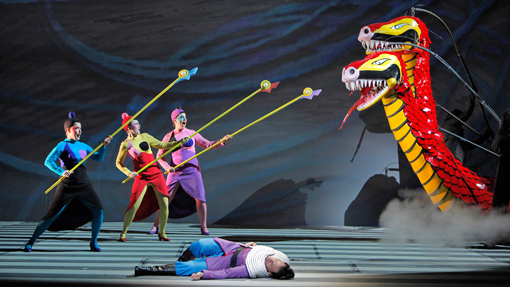
La Boheme in Zurich

logo_operhaus_zurichzurich_bohemetitle

zurich_bohemezurich_boheme1

Posted in OPera | Tagged , , , | Leave a comment

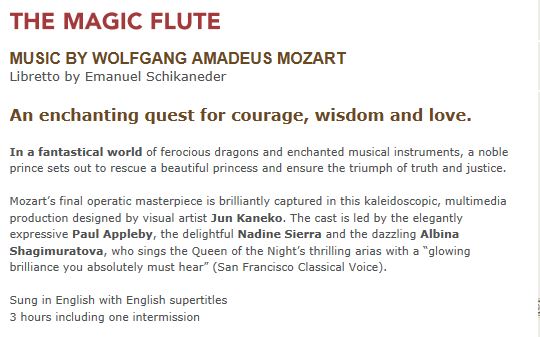
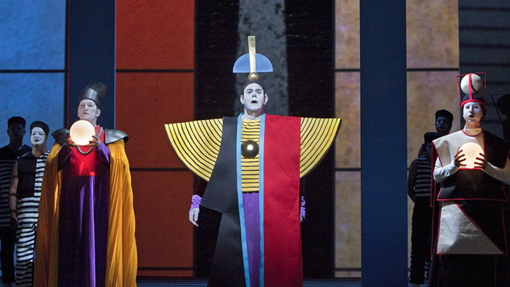
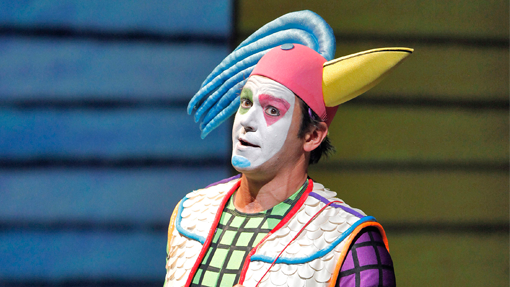
San Francisco Opera premieres the Magic Flute

sanfranciscologoMagicFlute_med_1

PERFORMANCE PREMIERE

Tue 10/20/15 7:30pm

magicflute1Flute_Web1_P

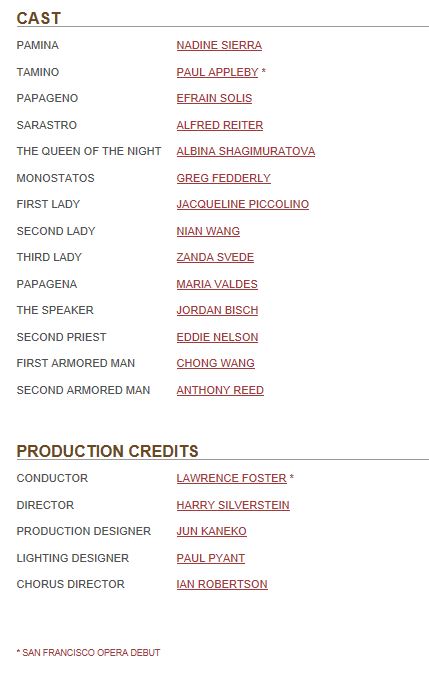
magiccast

MagicFlute_med_2 MagicFlute_med_4

magicsynopsis


Posted in OPera | Tagged , , | Leave a comment