Don Pasquale in Barcelona

liceulogodonpasquale

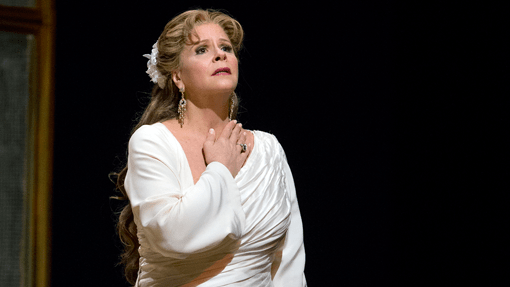
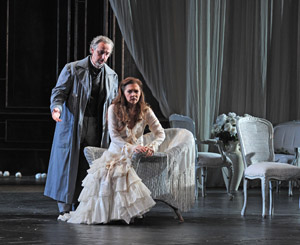
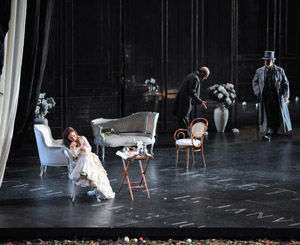
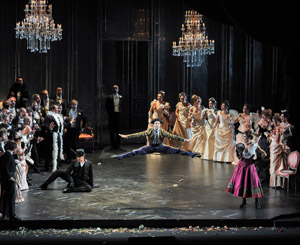
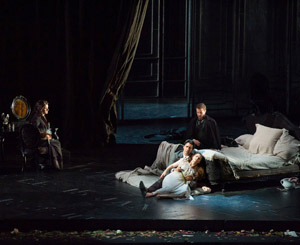
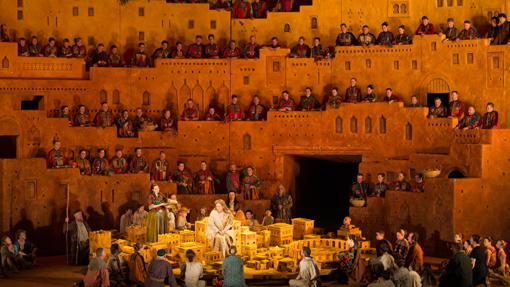
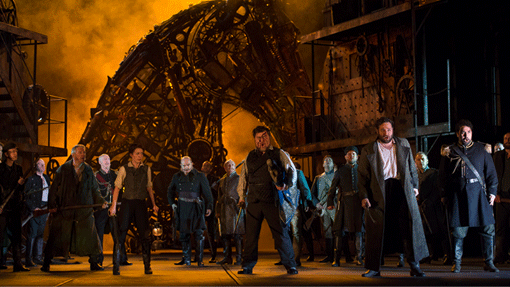
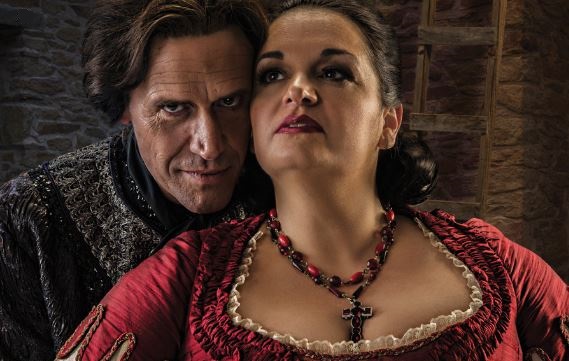
Norina and Ernesto are a young couple in love but then Don Pasquale, Ernesto’s aged uncle, decides to interfere. He has other plans for his nephew involving marriage to a wealthy single lady. Dr Malatesta comes to the aid of the bewildered young pair, sparking off a series of entertaining developments – bizarre incidents, mix-ups and hard lessons about life – before the happy ending is reached and they marry. All this is accompanied by Gaetano Donizetti’s captivating melodies. His Don Pasquale, considered one of the foremost Italian comic operas, is a Romantic game that scored an instant success at its Parisian premiere in 1847. It is also a homage from Donizetti to the opera buffa tradition. Laurent Pelly’s famed dramatic imagination is brought to bear here on a masterpiece of the genre.

don1 don2 don3 don4


Don Pasquale

Dramma buffo in three acts. Libretto by Giovanni Ruffini based on a text written by Angelo Anelli for the opera Ser Marcantonio by Stefano Pavesi. Premiered on 3 January 1843 at the Théâtre Italien in Paris. First performed at the Gran Teatre del Liceu on 19 January 1848. Last staged at the Liceu on 13 May 1986.
Conductor
Diego Matheuz

Stage Direction and Costumes
Laurent Pelly

Scenography
Chantal Thomas

Lighting
Duane Schuler

New Co-production
Gran Teatre del Liceu, Santa Fe Festival (Nuevo México) and San Francisco Opera

Symphony Orchestra and Chorus of the Gran Teatre del Liceu

don5 don6

CAST
Don Pasquale Lorenzo Regazzo 16, 18, 20, 22, 25 and 27 Jun
Roberto de Candia 17, 19, 21 and 26 Jun
Norina Ailyn Pérez 16, 18, 20, 22, 25 and 27 Jun
Pretty Yende 17, 19, 21 and 26 Jun
Ernesto Juan Francisco Gatell 16, 18, 20, 22, 25 and 27 Jun
Antonino Siragusa 17, 19, 21 and 26 Jun
Dottor Malatesta Mariusz Kwiecien 16, 18, 20, 22, 25 and 27 Jun
Gabriel Bermúdez 17, 19, 21 and 26 Jun
a notary Marc Pujol
Photos: Festival de Santa Fe de Nuevo México

Posted in OPera | Tagged , , , , , , , | Leave a comment

Cinderella at the Washington National Opera

     kennedycenterlogo

cinderella3

Saturday, May 09, 2015 – Thursday, May 21, 2015

Rossini’s retelling of the Cinderella story adds a few twists in a whimsical production featuring two mezzo-sopranos alternating in the title role: Isabel Leonard, the 2013 Richard Tucker Award winner, and Tara Erraught, making her U.S. debut.

GIOACHINO ROSSINI’s Cinderella (1817) (La cenerentola)

Libretto by Jacopo Ferretti, after Cendrillon by Charles Perrault

A co-production of Houston Grand Opera Association, Welsh National Opera, Gran Teatre del Liceu, and Grand Théâtre de Genève

“Imaginative, fast-paced, irresistibly funny… a show that will entrance the whole family”–The Seattle Times

Rossini’s popular retelling of Charles Perrault’s beloved Cinderella story adds a few fabulous twists to the traditional fairy tale, a perfect springtime treat for the entire family. In this bright and whimsical production by Spanish director Joan Font and his performance troupe Els Comediants, a kindhearted girl named Angelina dreams of one day escaping her impoverished stepfather’s castle. When the prince announces he’ll choose his bride at a glamorous ball, she seizes the opportunity to escape the tyranny of her vain stepsisters and take control of her own destiny. Audiences of all ages will delight in this clever romantic comedy featuring bracelets instead of glass slippers, a philosophical tutor in place of a fairy godmother, and six adorable dancing rats that serve as a makeshift Greek chorus. Considered one of his finest vocal works, Rossini’s opera glows with captivating bel canto singing and ornate ensemble passages performed by a thrilling cast of young talents, including American mezzo-soprano and 2013 Richard Tucker Award winner Isabel Leonard alternating in the title role with celebrated Irish mezzo-soprano Tara Erraught in her U.S. debut.
Gifted conductor Speranza Scappucci makes her WNO debut leading the orchestra in a “marvelously perfect show” (Los Angeles Daily News) that has enchanted audiences from Seattle to Toronto to Barcelona with its witty characterizations, rainbow-bright costumes, and rags-to-riches ending that celebrates the power of love and forgiveness.
cinderella1

Isabel Leonard is “a rising young mezzo with a radiant, bell-like voice and a captivating sense of drama…What a voice it is– supple, perfectly controlled, capable of great power, but with a lilt, purity and expressive warmth.” –The Washington Post
Tara Erraught,”a bright star in her guild…has some of the cleanest coloratura in the game, an enviably large range, and body language that draws one directly into the mood of each song.” –Opera News

CAST

Angelina (Cenerentola): Isabel Leonard* (May 9, 13, 16, 19, 21) / Tara Erraught* (May 11, 15, 17m)

Don Ramiro: Maxim Mironov* (May 9, 13, 16, 19, 21) / David Portillo* (May 11, 15, 17m)

Dandini: Simone Alberghini Don Magnifico: Paolo Bordogna* (May 9, 11, 13, 16, 19, 21) / Valeriano Lanchas^ (May 15, 17m)

Alidoro: Shenyang* Tisbe: Deborah Nansteel**

Clorinda: Jacqueline Echols**

ARTISTIC TEAM

Conductor: Speranza Scappucci*

Director: Joan Font*

Set and Costume Designer: Joan Guillén*

Lighting Designer: Albert Faura*

Choreographer: Xevi Dorca

* * WNO debut ** Current Domingo-Cafritz Young Artist ^ Former Domingo-Cafritz Young Artist
In Italian with projected English titles. Titles may not be visible from the rear of the orchestra.
Performance Timing: Act I – 95 min.; Intermission – 20 min.; Act II – 58 min.

Costumes of these performances

cinderellacostumes1 cinderellacostumes2 cinderellacostumes3 cinderellacostumes4 cinderellacostumes5 cinderellacostumes6 cinderellacostumes7 cinderellacostumes8


Posted in OPera | Tagged , | Leave a comment

Ariadne auf Naxos at the Seattle Opera

ariadneseattle

Ariadne auf Naxosseattlelogo

By Richard Strauss

May 2 – 16, 2015

THE SHOWS MUST GO ON! A wealthy patron has commissioned two pieces of entertainment for a private dinner party: an opera based on the myth of Ariadne in exile, and a capering troupe of clowns for comic relief. The catch: the two acts must perform simultaneously so a fabulous pyrotechnics display can conclude the evening as promised. Our acclaimed production delivers a deliciously theatrical mix of lowbrow comedy and high art, offering surprises and delights at every turn.
In German with English subtitles | at McCaw Hall
Approximate Running Time: 2 hours, 35minutes with 1 intermission

ariadneseattle1Artists

Prima Donna/Ariadne
Christiane Libor
Marcy Stonikas *
Zerbinetta
Sarah Coburn
Haeran Hong † *
The Composer
Kate Lindsey
Sarah Larsen *
 
Tenor/Bacchus
Issachah Savage
Jeffrey Hartman † *
Harlekin
Andrew Garland
Music Teacher/Truffaldino
Patrick Carfizzi
Dancing Master
Doug Jones
Brighella
Joshua Kohl
Scaramuccio
Eric Neuville
Naiad
Amanda Opuszynski
Dryad
Maya Lahyani
Echo
Andrea Carroll
Butler
Georg Martin Bode
Butler’s Assistant
Barry Johnson
Wigmaker
Karl Marx Reyes
Officer
Jon Farmer
Conductor
Lawrence Renes
Stage Director
Chris Alexander
Set Designer
Robert Dahlstrom
Costume Designer
Cynthia Savage
Lighting Designer
Robert Wierzel
Hair and Makeup Designer
Joyce Degenfelder
English Captions
Jonathan Dean
Sets and Costumes
Seattle Opera 

† Seattle Opera debut
* On May 3 and 15 only
Sarah Coburn, Andrew Garland, Maya Lahyani, Sarah Larsen, Eric Neuville, Amanda Opuszynski, and Marcy Stonikas are former Seattle Opera Young Artists.

Synopsis

Long Story Short
Tonight we attempt to answer the age-old question: what happens when comedy and tragedy are forced to share the same stage?

Who’s Who?
The Composer is an idealistic, impatient, emotional young genius who deplores the frivolity and vulgarity of the world. Since he is very young, he is played by a woman.
The Music Master, his teacher, is older, wiser, and much more practical.
The Butler is a pompous sycophant who couldn’t care less about art or music. Because he’s supposed to be tone-deaf, he is played by an actor.
The Dancing Master is a sly producer of silly Italian comedies.
Zerbinetta is a sexy, flirtatious young actress who stars in the Dancing Master’s shows.
The Soprano is an obnoxious prima donna who plays Ariadne, an ancient Greek princess whose lover abandoned her, in the Composer’s opera.
The Tenor is a quick-tempered clod who plays Bacchus, the god of wine, in the Composer’s opera.
Harlequin is a likeable, lovesick young clown.
The Nymphs are Ariadne’s only companions in her exile upon Naxos; they are Naiad, a water spirit, Dryad, a forest spirit, and Echo, a…well, an echo.
The Comics perform with Zerbinetta and Harlekin; their names are Brighella, Scaramuccio, and Truffaldino.

Where and When?
The Prologue to this opera within an opera takes place in an art-lover’s mansion. The opera itself takes place on (a stage representing) the island of Naxos, from Greek myth.

What’s Going On?
The wealthiest man in town, eager to dazzle his friends and neighbors and show off his vast wealth, is having a party. The invitation promised a glorious feast, the premiere of a serious opera on the Greek myth of Ariadne (written by the hotshot young composer the entire city is talking about), and a hilarious skit about “Fickle Zerbinetta and Her Four Lovers.” But the real climax of the evening—according to the Butler, at least—will be fireworks, in the garden at dusk!

No one dared tell the Composer that the antics of a troupe of Italian clowns would follow the unveiling of his masterpiece, and when he finds out he is livid. But matters grow worse as the dinner drags on, and the Butler announces that, in order to make up the time, the comedians and tragedians must combine their shows; they are both to appear on the same stage at the same time, and must perform ALL their music and text if they hope to be paid. Upon hearing this, the Composer is ready to kill himself, or at least to walk away forever from the rich cretin who could so desecrate his sacred art. Zerbinetta, however, saves the day (and her paycheck) by flirting with the Composer and seducing him into staying.

The resulting mish-mash of a performance veers back and forth between comedy and tragedy. Ariadne, who has been abandoned on an island by her faithless lover, Theseus, longs for death; Zerbinetta and her friends, who evidently inhabit this deserted island, attempt to cheer her up. But she is inconsolable—at least until the young god Bacchus stops by. Bacchus and Ariadne slowly discover each other’s identity; they fall in love, and the magic of their love transforms them both. As they sing the conclusion of their opera, the same thing happens—in real life—to Zerbinetta and the Composer

Posted in OPera | Tagged , , , | Leave a comment

WORLD PREMIERE of “Daniel”, an oratorio by Dan Montez in Westchester

taconicoperalogodanielan oratorio by Dan Montez In English

WORLD PREMIERE!

On the heels of last year’s premiere, Jonah, based on the famous prophet of whale fame, Taconic Opera presents another world premiere, Daniel, based on the prophet sent to the den of lions. The work is being promoted by Arts Westchester as part of this year’s ARTSEE campaign to promote new works to the public.

“The story isn’t just about a lions’ den; the book of Daniel includes some of the most exciting narrative in canon,” says Dan Montez, the composer, orchestrator, and conductor of the work. The story covers the lives of four kings, including the famous Nebuchadnezzar. “For those who love Verdi’s opera, Nabucco, this oratorio tells the rest of the story,” claims Montez.

The narrative includes the famous “writing on the wall,” the madness of Nebuchadnezzar, the bizarre dreams, the three burning young men, and, of course, Daniel’s survival of the lions’ den.

Much like Jonah, Daniel is a revered prophet in Judaism, Islam, and Christianity. Within Christianity, Catholicism’s version of the Bible (based on the Septuagint) has two additional chapters not found in the King James version. “These two additional chapters contain the words and prayers of the three men cast into the fiery furnace and are some of the most beautiful prose in scripture…it was calling me to write music for it,” says Montez.

Montez describes his composing style as “somewhat impressionistic.” It is similar to Ravel, Poulenc, Debussy, Fauré, and yet seems to have harmonic elements of Puccini, and stylistic elements of Copland and Ralph Vaughan Williams. “Truth be told, as much as I love impressionism, it is hard to get the opera out of me. I like drama, and I love the powerful way opera singers can tell a story. I believe it is time to tell these Biblical stories in the language of the people, in this case English, and not only foreign languages like Latin. They also need to be told to a modern audience in a beautiful way. Too many liturgical oratorios are either only available in early music or in ultra-modern forms. I’m not sure people are being moved by the stories this way…so I don’t apologize for not composing with any sort of atonality. I want to reach people with the narrative.”

The work is about an hour and fifteen minutes in length and features the soloists, opera chorus, and full orchestra of the Taconic Opera.

The company will be presenting the oratorio in two locations:

UNITED METHODIST CHURCH OF OSSINING
One Emwilton (corner of Emwilton and Route 9 next to the high school)
Saturday, May 30, 2015, at 7:30 pm

and

PRESBYTERIAN CHURCH OF WHITE PLAINS
39 North Broadway, White Plains, New York (Route 6 exit on Highway 287)
Sunday, May 31, 2015, at 3:00 pm.

Tickets are $27 for adults, $20 for seniors, and $15 for students
Tickets can be purchased safely ONLINE here or by calling toll-free
1-(855) 88-OPERA (67372) or at the door.

 CAST

DAN MONTEZ Composer

DAN MONTEZ
Composer

ADRIENNE PATINO Soprano

ADRIENNE PATINO
Soprano

CHRISTINA CARR Mezzosoprano

CHRISTINA CARR
Mezzosoprano

GENNARD LOMBARDOZZI Tenor DANIEL

GENNARD LOMBARDOZZI
Tenor
DANIEL

STEVEN FREDERICKS Bass

STEVEN FREDERICKS
Bass

Posted in Music | Tagged , , , , , | Leave a comment

Fidelio at the Operhaus in Zurich

operhauszurichlogo

Fidelio

Opera in two actsfidelio2

Disguised as a man and under the name of Fidelio (the faithful one), Leonore has herself employed as the gaoler’s assistant in a state prison. The governor of the prison is keeping her husband, his most dangerous opponent, hidden there and intends to let him slowly starve to death. When the minister comes to inspect the prison, the governor decides that he must die immediately. Leonore has to dig her own husband’s grave. At the moment of the gravest danger, a trumpet signal announces the arrival of the minister.

fidelio3Beethoven contemplated writing an opera all his life, but only the story of the woman who risks her life to rescue her beloved husband from prison reflected his vision of an opera as he felt it should be. However, the work was arduous and dogged by discouraging failures and setbacks. After the unsuccessful première in 18O5, the composer revised the work thoroughly on two occasions, until it embarked on its triumphal progress across the stages of the world. The composer’s difficulties in writing the piece have left their mark: Fidelio is not a self-contained, classically rounded work. It is a contradictory, brittle and angular conglomerate of singspiel, grand opera and oratorio. Yet Beethoven’s music succeeds in uniting the disparate elements and, from a seemingly trivial libretto, creating a work with clearly delineated figures and moving situations. The opera is both a paean to conjugal love and an ardent hymn to freedom. Above all, however, it is an opera about the invincible strength of hope and the world-changing power of utopian ideals.

fidelio5

Fidelio is Andreas Homoki and Fabio Luisi’s first joint opera production in Zurich. The much-lauded American tenor Brandon Jovanovich will be giving his role début as Florestan.

fidelio6fidelio4

fideliocast

fidelio6 fidelio7 fidelio8 fidelio9 fidelio10fidelio11 fidelio12 fidelio13 fidelio14 fidelio15fidelio16 fidelio17 fidelio18 fidelio19 fidelio20fidelio 24 fidelio21 fidelio22 fidelio23fidelio25

Posted in OPera | Tagged , , , | Leave a comment

Cherubini’s Medea in Geneva

medeatitle1 theatregenevelogo

Tragedia in 3 acts by Luigi Cherubini
Libretto by François-Benoît Hoffmann, based on Euripides’ tragedy and Pierre Corneille’s play.
Italian translation by Carlo Zangarini.
First performed on 13 March 1797 at the Théâtre Feydeau, Paris and on 30 December 1909 at the Teatro alla Scala, Milan.

New production
At the Grand Théâtre de Genève

Sung in Italian with English and French surtitles

Due to reasons of ill health, Jennifer Larmore will not be singing Medea. The soprano Alexandra Deshorties will stand in for her part.

medea3 medea4 medea5Since its beginnings, opera has been characterized by its fascination for extreme personalities. No surprise then that many opera composers should have chosen as their subject one of the most fiery, passionate and violent figures of Ancient Greek legend: the vengeful sorceress Medea, daughter of the King of Colchis, who did not hesitate to murder her children and burn the temple of Juno to the ground on finding out the adulterous affair of her husband Jason. Among them, Luigi Cherubini’s Médée (1796) stands as a ground-breaking work in the history of French musical theatre. Making good use of the innovations introduced by Gluck, the Italian composer so admired by Beethoven imagined a musical tragedy containing the full measure of passionate fury and bloodthirstiness found in the ancient myth. Inspired by the tragedies of Euripides, Seneca and Corneille, Cherubini’s Médée was soon adapted in an Italian version, which became popular thanks to Maria Callas’ performances of the title role in the 1950s. Medea promises musical moments of dramatic intensity that will not be easily forgotten.

medea6 medea7 medea8

Musical Director Marko Letonja
Stage Director Christof Loy
Set and Costume Designer Herbert Murauer
Lighting Designer Reinhard Traub
Body Expression Thomas Wilhelm
Dramaturgy Yvonne Gebauer
Creonte Daniel Okulitch
Glauce Grazia Doronzio
Giasone Andrea Carè
Neris Sara Mingardo
Medea Alexandra Deshorties
Captain of the Guard Alexander Milev
Fashion Designer Johanna Rudström
Her assistant Magdalena Risberg
Medea Jennifer Larmore

Grand Théâtre Opera Chorus
Director Alan Woodbridge
Orchestre de la Suisse Romande

medea9 medea10 medea12 medea13


Posted in OPera | Tagged , , , , , | Leave a comment

I Due Foscari at the Gran Teatre de Liceu in Barcelona with Placido Domingo

liceulogofoscari

Verdi was just starting to be Verdi when I due Foscari was first performed. But this was also his period of intensive work, which he dubbed “his galley-slave years”. This sixth opera was his most dramatic to date. Contemporary critics noted that the characters all had their own idiom and voiced their own passions. The tale, taken from Lord Byron’s play of the same title, relates how the dying Doge of Venice is faced with the choice between his political duties and his love for his son, who is accused of murder. Reasons of State versus fatherly love. Verdi wrote the work for La Fenice in Venice but the theatre management, under pressure from the censors, considered it unsuitable because it uncovered political intrigues in the city’s own political underbelly and some of the leading figures, such as the Foscari family itself, still wielded influence there. So the premiere was transferred to Rome.


Opera in three acts. Libretto by Francesco Maria Piave based on Lord Byron’s novel The Two Foscari. Music by Giuseppe Verdi. Premiered on 3 November 1844 at the Teatro Argentina in Rome. First performed at the Gran Teatre del Liceu on 12 July 1847. Last staged at the Liceu on 13 November 1977.

Conductor
Massimo Zanetti

Symphony Orchestra and Chorus of the Gran Teatre del Liceu

CAST
Francesco Foscari Plácido Domingo
Jacopo Foscari Ramón Vargas
Lucrezia Contarini Liudmyla Monastyrska
Jacopo Loredano Raymond Aceto
Barbarigo Josep Fadó
Pisana Maria Miró
Posted in OPera | Tagged , , , | Leave a comment

The Czech National Opera presents “Don Giovanni”

nationaltheatre

dongiovanni

dongiovannidateLibretto: Lorenzo da Ponte
Musical preparation: Tomáš Netopil
Conductor: David Švec
Stage director: SKUTR (Martin Kukučka a Lukáš Trpišovský)
Sets: Jakub Kopecký
Costumes: Linda Boráros
Chorus master: Pavel Vaněk
Choreography: Jana Burkiewiczová
Dramaturgy: Beno Blachut

National Theatre Orchestra

National Theatre Chorus

Ballet of the National Theatre Opera

Premiere: June 9 and 10, 2012


don-giovanni-df-1114webdon-giovanni-df-1121webdon-giovanni-df-047webdon-giovanni-df-251webdon-giovanni-df-943web

The opera Don Giovanni, the Estates Theatre and the long-standing Mozart tradition are among the greatest glories of Prague’s cultural history. The Estates Theatre is globally unique in that it is the one and only preserved and still functional venue where a world premiere of a Mozart opera took place with the composer himself conducting. This premiere was – as is generally known – of the very “Opera of Operas”, Don Giovanni. And the Estates Theatre is all the more unique owing to the fact that this opera has been performed there for centuries. The world premiere of Don Giovanni on 29 October 1787 was a tremendous success and from Prague the new opera set out on its journey to global acclaim and admiration. Mozart’s “Prague” opera is one of the most frequently performed titles at the National Theatre. Mozart and Da Ponte’s opera is a work of Shakespearean multivalence, blending comedy and tragedy, “high” and “low”, giving rise to philosophical contemplations while at the same time affording entertainment replete with excitement and humour.

Orchestra and Chorus of the National Theatre

The opera is staged in Italian original version and Czech and English surtitles are used in the performance.

Photo: Hana Smejkalová

Duration of the performance: 3 hours and 10 minutes, 1 intermission

giovanni1 giovanni2 giovanni3 giovanni4
CAST
dongiovannicast1 dongiovannicast2 ongiovannicast3
giovanni5 giovanni6 giovanni7 giovanni8 giovanni10 giovanni12 giovanni13

Posted in OPera | Tagged , , , | Leave a comment

“La Traviata” at La Fenice Theater in Venice

fenicelogo2verdifenicetraviata1
postertraviatafenice

traviata3traviata4

traviatadates

traviata5

Synopsis

ACT ONE

In the Salon in the house of Violetta Valéry, a fascinating and much-wooed courtesan in fashionable Parisian society, a sumptuous reception is in progress. Among the last guests to arrive, after gambling at cards in the house of Flora Bervoix, Viscount Gaston de Letorières introduces Violetta to Alfredo Germont, who is a fervent admirer of hers: so deeply in love, confides Gaston, that when she was recently ill he came each day to enquire secretly after her health. Violetta, touched by this unusual devotion, amiably dispels the young man’s shyness. Encouraged by his friends, Alfredo improvises a toast to beauty and to the joy of life. After supper, as the guests move off towards the ballroom, Violetta has a sudden fit of coughing. Alfredo, who is alone with her, begs her fondly to take more care of her health, assuring her that he would know how to look after her jealously. And tenderly he declares his love to her. Violetta is surprised and feigns indifference, replying that he will receive only friendship from her. Inwardly, however, she is perturbed by this confession. Plucking a flower from her bosom, she offers it to Alfredo for him to bring back when it has withered. Exultantly he takes it to mean an invitation to return the following day. Dawn has risen and the guests take their leave after the dancing. In solitude, Violetta ponders over Alfredo’s words of love. For the first time, someone has expressed a sincere affection for her. Accustomed to spend her life among fleeting joys and worldly pleasures, should she take him seriously, and change her way of life? No, she resolves not to pursue this foolish illusion. Though deep in her heart she feels that their love must be true.

Caramba (Luigi Sapelli, 1865-1936), figurini (Violetta, Alfredo) per la ripresa scaligera del 1906, la prima in costumi moderni. Cantavano Rosina Storchio (Violetta; 1876-1945; la prima Mimì e Zazà per Leoncavallo, e la prima Butterfly), Leonida Sobinov (Alfredo; 1872-1934), Riccardo Stracciari (Germont; 1875-1955).

Caramba (Luigi Sapelli, 1865-1936), costumes (Violetta, Alfredo) for the Verona premiere of 1906, the first one with modern costumes. The performers were Leonida Sobinov (Alfredo; 1872-1934), Riccardo Stracciari (Germont; 1875-1955), and Rosina Storchio (Violetta; 1876-1945), who was the first Mimì, but also the first Zazà for Leoncavallo, and the first Butterfly.

ACT TWO

Scene one

In a country house near Paris Violetta and Alfredo are spending an idyllic life together, far from the social whirl of the capital. Alfredo expresses the fullness of his joy at this delightful situation, which has lasted now for three months. But the spell is unexpectedly broken by Annina, the maid, who tells him she has been to Paris upon Violetta’s orders, to sell jewels, horses and property to pay for the expenses of their stay in the country. Alfredo’s pride is hurted and he decides to leave at once in order to settle these affairs personally. Violetta enters. She is reading a letter from Flora, who has discovered the lovers’ retreat and invites her friend to a reception that same evening. Let her wait in vain, smiles Violetta. In the meantime a visit is announced. Giorgio Germont, Alfredo’s father, introduces himself to Violetta with a contemptuous air, convinced that the woman is being kept by his son. Proudly Violetta shows Germont the deed of sale of her estate. Germont is favourably impressed by this gesture. However he asks her on the strength of her affection, to renounce Alfredo in order not to ruin the happiness of another member of his family, his daughter, whose marriage with a young man «of good family» is liable to fall through unless her brother’s scandalous liaison is broken off. Violetta claims the rights of her love, telling Germont of her serious state of health, and desperately resists his pressing requests. But in the end she yields. In resignation she agrees to sacrifice her own happiness for the sake of Alfredo and his loved ones. She promises Germont, who is deeply moved, to face her immense sorrow alone and never to reveal to Alfredo why she has deserted him so precipitately. She is on the point of writing him a farewell letter when Alfredo himself appears and asks the reason for her strange uneasiness. Violetta answers with a heartrending cry of love, before hastening away. Later she sends him a note saying that she has decided to return to her former society life and old friends. Alfredo is deeply shaken. Germont arrives, but his fond words of consolation are of no avail, even though he reminds his son of the peaceful times spent in their native Provence, where he invites him to savour once again the warmth of family affection.

Scene two

In a hall in the house of Flora Bervoix. A masked ball is in full swing. Violetta is in attendanceon the arm of Baron Douphol, her former protector. Not expecting to find Alfredo there,she is upset on seeing him, but he pretends to take no notice. He makes for the card tables, wherehe wins with shameless luck, while provoking Douphol’s resentment with vague allusions. The announcementof dinner prevents a quarrel, and the guests move into the dining room. Alfredo re-entersimmediately, having received an invitation from Violetta to talk with her. She implores him to leave and not to incur the baron’s wrath. Also, she confesses, if he would but realize, she fears most of all for his own life. But Alfredo replies that he will leave only if she will follow him. Violetta is compelled to reveal that she has sworn never to see him again. But since Alfredo insists on knowing who has had the right to impose this oath upon her, she allows him to understand that it was the Baron. Beside himself with jealousy and despair, Alfredo summons the guests. Confessing his shame at having allowed a woman to squander her fortune for him, he flings at Violetta’s feet a purse full of money, proclaiming that he has thus repaid her. Violetta faints, while Alfredo’s gesture is received with general indignation. Germont, who is arrived in the meantime, reproaches his already humiliated and repentant son, and drags him away, followed by Douphol who demands satisfaction for the insult to his partner.

ACT THREE

Violetta, whose illness is by now beyond hope, is being looked after by the faithful Annina. It is a grey winter’s morning. Doctor Grenvil arrives and tries so instil hope and courage into his patient, but confesses to Annina that the end is near. Violetta once again re-reads the affectionate letter received from Germont, in which he thanks her for having kept her promise. He also informs her that the Baron was wounded in the duel and that he has at last revealed the truth to Alfredo, who is now on his way to visit her to beg forgiveness. A echo of carnival music and revelry rise from the street, Violetta gazes mournfully her pale image in the looking-glass and her heart breaks when she remembers the happy months spent with her lover. But now Annina enters to prepare her for a great emotion, followed at once by Alfredo, who throws himself into Violetta’s arms. Together they dream once again of a radiant future. Blissfully happy, Violetta would like to get dressed and go out into the festive city. But her strength fails her and she realizes she has not much longer to live. As Germont, who has joined his son, now clasps her to his heart like a daughter, she gives Alfredo a portrait of their happy years, begging him to keep it in memory of her who has loved him so deeply, and to offer it one day to the young woman who will be his future wife: on the stage Annina and Doctor Grenvil too. Suddenly she feels lifted by a mysterious force. Rising in one last longing for life, she falls back dead in Alfredo’s arms.

traviata6traviata2

Posted in OPera | Tagged , , , , , , , , , , , | Leave a comment

“Il trovatore” in Prague

nationaltheatre

trovatore

trovatoredateLibretto: Salvatore Cammarano
Musical preparation: Jan Latham-Koenig
Conductor: Jiří Štrunc
Stage director: Lubor Cukr
Sets: Josef Jelínek
Costumes: Josef Jelínek
Chorus master: Adolf Melichar
Dramaturgy: Jitka Slavíková

State Opera Orchestra

State Opera Chorus

Premiere: May 26, 2011

The romantic story set in 15th-century Spain about the troubadour Manrico and the Gypsy Azucena, replete with heroism, machinations, love, hatred and revenge, is rather intricate and its plot improbable to say the least. The celebrated tenor Leo Slezak, a favourite guest of the New German Theatre (today’s State Opera) and a superlative performer of Manrico, remarked: “I have sung the Troubadour at least a hundred times, and I still haven’t the slightest inkling as to what this opera is actually about!” Nevertheless, Giuseppe Verdi superbly negotiated all the unlikely plot twists and duly created one of his most forcible works. The melodies in Il trovatore are lavishly expressive and the celebrated Anvil Chorus “Vedi le fosche notturne” from Act 2 has experienced numerous paraphrases, including Glen Miller’s jazz arrangement. The premiere on 19 January 1853 at the Teatro Apollo in Rome was a triumph and opera stages were soon scrambling to stage the work. Alongside La traviata and Rigoletto, Il trovatore is the apex of Verdi’s creation, and the three operas are still record-breakers when it comes to the number of performances and visitors at opera houses around the world.

The opera is staged in Italian original version and Czech and English surtitles are used in the performance.

Duration of the performance: 2 hours and 35 minutes, 1 intermission

Photo: Martin Divíšek

trubadur trubadur-1  trubadur-3
trovatorecast1 trovatorecast2 trovatorecast3 trubadur-2 trubadur-5

Posted in OPera | Tagged , , , , , | Leave a comment