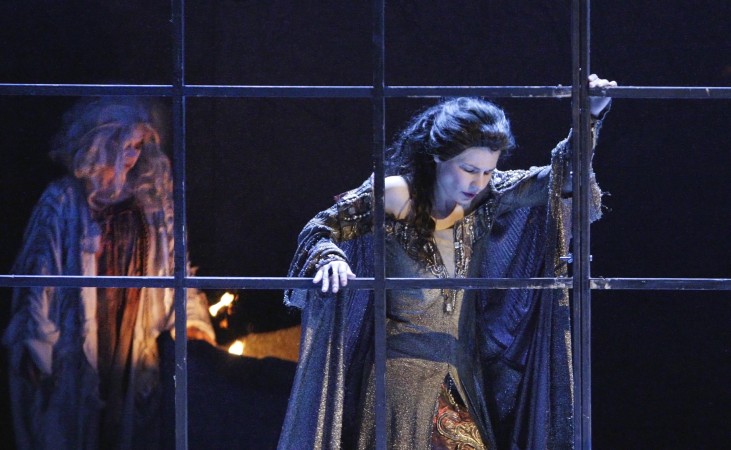
Aida in the Czech Republic

aidanationaltheatre
aidadateLibretto: Antonio Ghislanzoni
Conductor: Martin Leginus
Stage director: Petar Selem
Sets: Hafiz Abdel Farghali
Costumes: Josef Jelínek
Chorus master: Adolf Melichar
Choreography: Otto Šanda

State Opera Orchestra
State Opera Chorus
Czech National Opera Ballet

Premiere: June 2, 1994

To inaugurate the Suez Canal, Ismail Pasha, Viceroy of Egypt, commissioned an opera from the composer whose Rigoletto opened the Khedivial Opera House in Cairo in 1869. Giuseppe Verdi dedicated great care to preparing the new work and even visited Egypt so as to have his own idea of the country. (He even had Old Egypt “Aida trumpets” made in Milan.) Yet he only completed the opera after the Suez Canal was opened (17 November 1869) and the premiere took place on 24 December 1871 at the Teatro del’Opera in Cairo.

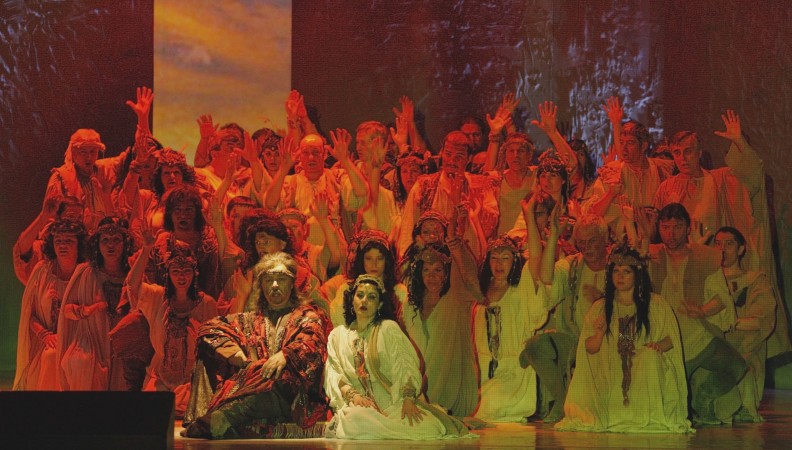
aida-1 aida-2 aida-5The dramatic charge of the story of the Egyptian Princess Aida and the warrior Radames grows out of the inner torment of a woman who has to decide between being loyal to her country or dedicating herself to a man who is one of the oppressors of her nation. The dilemma of choosing between love and duty is also faced by Radames, who ultimately betrays his homeland because of Aida. The current State Opera production was premiered in 1994. The renowned Egyptian painter Hafíz Abdel Farghali gave a genuine Egyptian colour to the sets which, together with Josef Jelínek’s exquisite costumes, contributed to the great success of the performances. The production also met with a tremendous response during the State Opera Prague’s two tours of Japan – in 2001, the role of Radames was portrayed by the world-famous artist José Cura, and in 2005 the celebrated singer Maria Guleghina performed with our company.

The opera is staged in Italian original version and Czech and English surtitles are used in the performance.

Photo: Oldřich Pernica and Dan Jäger

Duration of the performance: 2 hours and 45 minutes, 1 intermission

aida-15

Cast

aidacast1 aidacast2 aidacast3
aida-6 aida-8 aida-10 aida-14

Posted in OPera | Tagged , , , | 1 Comment

Dvořák’s The Jacobin performed by the Czech State Opera

jacobinnationaltheatre
jacobindateLibretto: Marie Červinková-Riegrová
Musical preparation: Tomáš Netopil
Conductor: David Švec, Jan Chalupecký
Stage director: Jiří Heřman
Sets: Pavel Svoboda
Costumes: Alexandra Grusková
Choreography: Lucie Holánková
Chorus master: Pavel Vaněk
Dramaturgy: Beno Blachut
Light-design: Daniel Tesař
Chorus master of the Kühn’s Children’s Choir: Jiří Chvála

National Theatre Orchestra

National Theatre Chorus

Ballet of the National Theatre Opera

Kühn Children’s Choir

Premiere: October 8 and 9, 2011


jakobin-1 jakobin-3 jakobin-4Dvořák’s The Jacobin is one of the most popular and most frequently performed Czech operas. To date, the National Theatre has staged twelve productions, most recently in 1993. The story, depicting life in a small Czech town on the one hand and the return of a “suspicious” émigré to his homeland on the other, is often understood in a somewhat simplistic, hyperbolic manner. Yet it is rather borne – primarily owing to Dvořák’s musical genius – in an ambiguous atmosphere of melancholy, sentiment, humorous bird’s-eye view and self-irony. As in many other similarly tuned Czech dramatic works, here too all the accumulated and pointed conflicts end up in humble, conciliatory and amicable lesson-learning.jakobin-5

At the end of the 18th century, Bohuš, a count’s son, who at one time was hounded out by his father owing to his liberalism returns to an idealised Czech town. Yet before he is allowed to reconcile with his father, he and his wife have to experience a slew of provincial intrigues which the locals direct both at themselves and – because of his being suspected of “Jacobinism” – against Bohuš and his wife. We encounter a number of stock and popular dramatic types – the happily amorous Jiří and Terinka, between whom the big-headed burgrave Filip wants to drive a wedge, the count’s power-hungry nephew Adolf, as well as the good-natured teacher Benda. A crucial role in the story is played by the traditionally lauded Czech musicality; the Czechs’ affectionate relationship to music, whose ardency and tenderness is able to soften even the most hardened of hearts. The scene at the school during which the teacher Benda is preparing with the children a festive cantata in honour of the new master is one of the most remarkable in Czech opera.

Orchestra of the National Theatre, Chorus of the National Theatre Opera and Kühn Childern´s Choir, Ballet of the National Theatre Opera

The opera is staged in Czech original version and Czech and English surtitles are used in the performance.

Duration of the performance: 3 hours, 2 intermissionsjakobin-6 jakobin-7 jakobin-8

CAST

jacobincast1 jacobincast2 jacobincast3


jakobin-10

Posted in OPera | Tagged , , , , , | Leave a comment

Rigoletto performed by the Prague State Opera

nationaltheatrerigoletto
rigolettodate
Libretto: Francesco Maria Piave
Conductor: Richard Hein
Stage director: Karel Jernek
Sets: Zbyněk Kolář
Costumes: Olga Filipi
Chorus master: Adolf Melichar
Choreography: Daniel Wiesner

State Opera Orchestra

State Opera Chorus

Premiere: January 14, 1988


rigoletto-3 rigoletto-4 rigoletto-7 rigoletto-10Together with La traviata and Il trovatore, Rigoletto (1851) is an opera that made Verdi famous worldwide. Its theme, taken over from Victor Hugo’s drama Le roi s’amuse, is the tragic story of the court jester Rigoletto and his beautiful daughter Gilda, who falls victim to her father’s promiscuous master, the Duke of Mantua. The genesis of the work, written for the Teatro La Fenice, was quite dramatic in itself. The Venice police intervened and subjected the original version to censorship, claiming that the theme was “tastelessly immoral” and “offensive to His Royal Majesty”.

The librettist Francesco Maria Piave carried out acceptable revisions, replaced the character of the King with the Duke, omitted the hunchback personage and the motif of curse, and changed the working title La maledizione to Il duco di Vendôme. Yet Verdi insisted that the main story line be preserved and that Triboletto (as the hunchback was originally called) remain an outcast living on the edge of society. Ultimately, a compromise was reached and the opera was given a new title, the one we know it by today – Rigoletto. The world premiere on 11 March 1851 in Venice was a triumph and the Duke’s cynical song “La donna e mobile” (The woman is fickle) was sung by people in the streets the very next day. Verdi’s splendid melodies and the masterful depiction of the lead characters still enchant opera-lovers around the world.

The opera is staged in Italian original version and Czech and English surtitles are used in the performance.

Duration of the performance: 2 hours and 30 minutes, 2 intermissions

rigoletto-13 rigoletto-r-haan rigoletto-web1jpg

rigolettocast1 rigolettocast2


rigolettocast3 rigolettocast4

Posted in OPera | Tagged , , , | Leave a comment

The Magic Flute at the San Jose Opera

2014-15_MagicFlute_524x412sanjoselogoA quest for enlightenment and honor. A mystical story about the power of love. A young prince discovers a flute with magic and a girl who will make him whole. Mozart’s fantastical and comical tale draws you into a world of magic fantasy, complete with a giant serpent, a secret brotherhood, and a lovesick bird catcher. Sung in German with English supertitles.

soundclipsoundclip

CREATIVE TEAM

Conductor

Joseph Marcheso

Stage Director

Brad Dalton

Assistant Conductor

Andrew Whitfield

Chorus Master

Andrew Whitfield

Set Designer

Ryan McGettigan

Costume Designer

Alyssa Oania

Lighting Designer

David Lee Cuthbert

Wig & Makeup
Designer

Vicky Martinez

CAST*

Role 4/18, 4/19, 4/23, 4/26, 5/1, 5/3
Tamino Kirk Dougherty
Pamina Hae Ji Chang
Papageno Matthew Hanscom
Queen of the Night Isabella Ivy
First Lady Elizabeth Baldwin
Second Lady Chloe Smart
Third Lady Lisa Chavez
Monastatos David Margulis
Sarastro Silas Elash
Papagena Jennie Litster
The Speaker Christopher Filipowicz

Opera San José Orchestra, Chorus, Dancers and Supers

PRE-PERFORMANCE TALKS

California TheatreBefore each performance in the California Theatre (except on Saturday, February 7, 2015), General Director Larry Hancock will share his thoughts on the opera, discuss the plot and characters, tell you about the composer, and answer your questions, greatly enriching your opera-going experience. Each 45-minute Introduction to Opera is FREE and begins at 6:30 prior to evening performances and at 1:30 prior to Sunday matinees.

SYNOPSIS

The Magic Flute

Act 1

Scene 1: A rough, rocky landscape

Tamino, a handsome prince who is lost in a distant land, is being pursued by a serpent and asks the gods to save him (quartet: “Zu Hilfe! Zu Hilfe!”). He faints, and three ladies, attendants of the Queen of the Night, appear and kill the serpent. They admire Tamino for his handsomeness and youth. Each of the ladies tries to convince the other two to leave to tell their mistress about the young prince. After arguing, they reluctantly decide to leave together.

Tamino wakes, hears someone approaching and hides. Papageno enters, arrayed entirely in the plumage of birds. He describes his happy life as a bird-catcher, but also complains of his longing for a wife, or at least a girlfriend (aria: “Der Vogelfänger bin ich ja”). Tamino emerges and introduces himself to Papageno, whom he initially thinks may have killed the serpent. Papageno is only too happy to take the credit – he claims that he strangled the monster with his bare hands. The three ladies suddenly reappear and instead of his daily meal of wine, sweet figs and cakes, they bring Papageno water, a stone and a padlock which they place over his mouth as a warning not to lie. They tell Tamino that it was they who saved him from the serpent and give him a portrait of the Queen of the Night’s daughter Pamina. The ladies leave and Tamino gazes on the portrait, falling instantly in love with Pamina (aria: “Dies Bildnis ist bezaubernd schön” / “This image is enchantingly lovely”).

The arrival of the Queen of the Night. Stage set by Karl Friedrich Schinkel (1781–1841) for an 1815 production

The ladies return and tell Tamino that Pamina has been captured by an evil sorcerer, Sarastro, and that her mother longs to see her again. Tamino swears that he will rescue Pamina. The Queen of the Night herself appears and tells Tamino that Pamina will be his wife if he can rescue her from Sarastro (Recitative and aria: “O zittre nicht, mein lieber Sohn” / “Oh, tremble not, my dear son! You are innocent, wise, pious”). After the Queen leaves, the ladies remove the padlock from Papageno’s mouth, warning him not to tell any more lies. They give Tamino a magic flute, which will protect him on his journey and has the power to change sorrow into joy. They tell Papageno to accompany Tamino on his rescue-mission and present him with some magic bells for protection – the bells will bring great happiness to anyone who hears them. The ladies introduce three child-spirits, who will guide Tamino and Papageno to Sarastro’s temple. Together Tamino and Papageno set forth (Quintet: “Hm! Hm! Hm! Hm!”).

Scene 2: A room in Sarastro’s palace

Pamina, her hands bound, is brought in by Sarastro’s slaves. Monostatos gloats that she is in his power. He orders the slaves to untie her and leave them together. Papageno, sent ahead by Tamino to help find Pamina, enters. (Trio: “Du feines Täubchen, nur herein!”.) Monostatos and Papageno are each terrified by the other’s strange appearance and Monostatos flees. Papageno announces to Pamina that her mother has sent Tamino to save her. Pamina rejoices to hear that Tamino is in love with her. She offers sympathy and hope to Papageno, who longs for a wife. Together they reflect on the joys and sacred duties of marital love (duet: “Bei Männern welche Liebe fühlen”).

Scene 3: A grove

The three child-spirits lead Tamino to Sarastro’s temple, promising that if he remains patient, wise and steadfast, he will succeed in rescuing Pamina. Tamino approaches the left-hand entrance and is denied access by priests from within. The same happens when he goes to the entrance on the right. But from the entrance in the middle, a speaker appears and lets Tamino in. The speaker tells Tamino that Sarastro is benevolent, not evil, and that he should not trust the Queen of the Night. He leaves, instructing Tamino to trust in wisdom. Outside the temple, Tamino longs for the night to end and to find Pamina. Voices from within the temple reassure Tamino that Pamina is alive. Tamino plays his magic flute. Animals appear and dance, enraptured, to his music. Tamino hears Papageno’s pipes and hurries off to find him.

Papageno and Pamina are trying to find Tamino when they are captured by Monostatos and his slaves. Papageno plays his magic bells, and Monostatos and his slaves begin to dance, mesmerised by the beauty of the music. Papageno and Pamina hear the sound of Sarastro’s retinue. Papageno is frightened and asks Pamina what they should say. She answers that they must tell the truth. Sarastro enters, with a crowd of followers who hail his wisdom and justice.

Pamina falls at Sarastro’s feet and confesses that she tried to escape because Monostatos had forced his attentions on her. Sarastro receives her kindly and assures her that he wishes only for her happiness. But he refuses to return her to her mother, whom he describes as a proud, headstrong woman, and a bad influence on those around her.

Monostatos brings in Tamino. The two lovers see one another for the first time and embrace, causing indignation among Sarastro’s followers. Monostatos tells Sarastro that he caught Papageno and Pamina trying to escape and demands a reward. Sarastro, however, punishes Monostatos for his lustful behaviour toward Pamina, and sends him away. He announces that Tamino must undergo trials of wisdom in order to become worthy as Pamina’s husband. The priests declare that virtue and forgiveness will sanctify life (“Wenn Tugend und Gerechtigkeit”).

Act 2

Scene 1: A grove of palms

The council of priests of Isis and Osiris, headed by Sarastro, enters to the sound of a solemn march. Sarastro tells the priests that Tamino is ready to undergo the ordeals that will lead to enlightenment. He explains that he seized Pamina from her mother so that she could be united with Tamino – he plans for the couple to eventually take over from him as rulers of the temple. He praises the gods Isis and Osiris, asking them to protect Tamino and Pamina (Aria: “O Isis und Osiris”).

Scene 2: The courtyard of the Temple of Ordeal

Tamino and a frightened Papageno are led in by two priests. The priests ask Tamino what he seeks; he says that they are searching for enlightenment, wisdom and love, for which they will risk their lives and undergo every trial. Papageno declines the trials at first, saying that he doesn’t care much about wisdom or enlightenment, and only wants sleep, food and wine, and a pretty woman. One of the priests tells Papageno that Sarastro may have a woman for him if he undergoes the trials: she is called Papagena and is young and beautiful – a perfect wife for Papageno.

The priests advise Tamino and Papageno of the dangers ahead of them, warn them of women’s wiles and swear them to silence (Duet: “Bewahret euch von Weibertücken”). The three ladies appear. They are shocked that Tamino is now an ally of Sarastro and tempt Tamino and Papageno to speak. (Quintet: “Wie, wie, wie”) Papageno cannot resist answering the ladies, but Tamino remains aloof, angrily instructing Papageno not to listen to the ladies’ threats and to keep quiet. Seeing that Tamino will not speak to them, the ladies withdraw in confusion.

The priests congratulate Tamino for successfully passing the first test, while warning him that there are many challenges still to come.

Scene 3: A garden, Pamina asleep

Pamina is asleep. Monostatos approaches and gazes upon her with rapture. (Aria: “Alles fühlt der Liebe Freuden”) He is about to kiss the sleeping Pamina, when the Queen of the Night appears. Pamina wakes and tells her mother that Tamino is aspiring to join Sarastro’s brotherhood and to gain enlightenment. The Queen is furious and reveals her true plan: she gives Pamina a dagger, ordering her to kill Sarastro with it. (Aria: “Der Hölle Rache kocht in meinem Herzen” / “Hell’s vengeance boils in my heart”). She leaves, and Pamina declares that she will not do as her mother asked. Monostatos returns and tries to force Pamina’s love by threatening to reveal the Queen’s plot, but Sarastro enters and drives him off. Pamina begs Sarastro to forgive her mother and he reassures her that revenge and cruelty have no place in his domain (Aria: “In diesen heil’gen Hallen”).

Scene 4: A hall in the Temple of Ordeal

Tamino and Papageno are led in by priests. They are reminded that they must remain silent. Papageno complains of thirst. An old woman enters and offers Papageno a cup of water. He drinks and, although it is forbidden, he engages the woman in conversation and asks how old she is. She replies that she is eighteen years and two minutes old. Papageno teasingly asks whether she has a boyfriend. She replies that she does and that his name is Papageno. She disappears as Papageno asks for her name, and the three child-spirits bring in food, the magic flute, and the bells, sent from Sarastro. They instruct Papageno to keep quiet. Tamino begins to play the flute, which summons Pamina. She tries to speak with him. Tamino, bound to a vow of silence as part of the trials, cannot talk to her, and Pamina begins to believe that he no longer loves her. (Aria: “Ach, ich fühl’s, es ist verschwunden”) She leaves in despair.

Scene 5: The pyramids

The priests celebrate Tamino’s successes so far, and pray that he will succeed and become worthy of their order (Chorus: “O Isis und Osiris”). Pamina is brought in and Sarastro instructs Pamina and Tamino to bid each other farewell before the greater trials ahead. (Trio: Sarastro, Pamina, Tamino – “Soll ich dich, Teurer, nicht mehr sehn?”) They exit and Papageno enters, in search of Tamino and complaining about the trials. The priests grant his request for a glass of wine and he expresses his desire for a wife. (Aria, Papageno: “Ein Mädchen oder Weibchen”). The elderly woman reappears and tells him that unless he marries her, he will be imprisoned forever. When Papageno promises to love her faithfully (muttering that he will only do this until something better comes along), she immediately transforms into the young and pretty Papagena. Papageno rushes to embrace her, but the priests drive him back, telling him that he is not yet worthy of her.

Scene 6: A garden

Tamino and Pamina undergo their final trial; watercolor by Max Slevogt (1868–1932)

The three child-spirits hail the dawn. They observe Pamina, who is contemplating suicide because she believes Tamino has abandoned her. The child-spirits restrain her and reassure her of Tamino’s love. She allows them to lead her to Tamino. (Quartet: “Bald prangt, den Morgen zu verkünden”).

Scene 7: Outside the Temple of Ordeal

Two men in armour lead in Tamino. They recite one of the formal creeds of Isis and Osiris, promising enlightenment to those who successfully overcome the fear of death (“Der, welcher wandert diese Strasse voll Beschwerden”). This recitation takes the musical form of a Baroque chorale prelude, to the tune of Martin Luther’s hymn Ach Gott, vom Himmel sieh darein (Oh God, look down from heaven).[19] Tamino declares that he is ready to be tested. Pamina’s voice is heard. The men in armour assure Tamino that the trial by silence is over and he is free to speak with her. Pamina enters and declares her intention to undergo the remaining trials with Tamino. The pair are delighted to be together again. Pamina hands Tamino the magic flute to help them through the trials. (“Tamino mein, o welch ein Glück!”). Protected by the music of the magic flute, which Tamino plays, they pass unscathed through trials of fire and water. The Priests hail their triumph and invite the couple to enter the temple.

Scene 8: A garden

Papageno despairs at having lost Papagena and decides to hang himself (Aria/Quartet: “Papagena! Papagena! Papagena!”) The three child-spirits appear and stop him. They advise him to play his magic bells to summon Papagena. She appears and, united, the happy couple stutter in astonishment. They plan their future and dream of the many children they will have together (Duet: “Pa … pa … pa …”).

The traitorous Monostatos appears with the Queen of the Night and her three ladies. They plot to destroy the temple (“Nur stille, stille”) and the Queen confirms that she has promised her daughter Pamina to Monostatos. But before the conspirators can enter the temple, they are magically cast out into eternal night.

Scene 9: The Temple of the Sun

Sarastro announces the sun’s triumph over the night. Everyone praises the courage of Tamino and Pamina in enduring their trials, gives thanks to Isis and Osiris and hails the dawn of a new era of wisdom and brotherhood.

Courtesy of Wikipedia

Posted in OPera | Tagged , , , , , | Leave a comment

Madrid will be the European Capital of the Opera in May 2015

madridlogoteatrorealTeatro Real welcomes the International Conference of Opera Europe
From the 6th to the 8th of May, Madrid will celebrate the International Conference of Opera Europe, which will gather, at the Teatro Real, representatives of 150 opera theatres from more than 40 countries all over the world and will turn Madrid into the European Capital of the Opera.

The Conference, whose main discussion point will be the use of new technologies as a tool for the spreading of the opera, will coincide with the celebration of the “European Days of Opera”, for the first time since the Conference in Paris, 2007, and the launch of the digital opera project.

Among the activities planned on the occasion of both celebrations is the screening of opera and children’s shows on different outdoor screens.

European Opera Days

European Opera Days 2014: A successful journey for all

Over 230,000 citizens joined 100 participating houses in 25 countries for the 8th edition of the European Opera Days on 10 and 11 May 2014. Opera, its diversity, rich heritage and contemporary message were celebrated through free activities, out-of-house events, online happenings, rehearsals and performances.

First estimates show that the event’s objectives were realised successfully on a European level, reaching out to new audiences and inviting them to join a ‘Journey to Opera’: over 50% of the participants throughout Europe were opera newcomers.
Moreover, almost 40% of these participants were estimated to be under 30 years of age, thanks to the innovative activities proposed by the opera organisations’ organising teams.

We hope to ensure that this journey will continue for all and look forward to the next edition of the European Opera Days from 8 to 10 May 2015.


European Opera Days invite you on a journey.
For the 8th year running, opera houses all around Europe are opening their doors and inviting everyone to (re)discover opera during the European Opera Days on 10 and 11 May 2014.

The 8th edition of the European Opera Days invites you on a journey; a journey through time, a journey through places, but also an emotional journey.

It is a musical journey that has been enjoyed throughout Europe for 400 years. Linked intimately to the history and developments of Europe, opera mirrors our societies and challenges people to see their world from a different perspective.

This year, 100 companies in 25 countries celebrate opera, its diversity, its rich heritage and its contemporary message through free activities, tours of theatres and workshops, rehearsals and performances.
Since 2007, opera companies from all over Europe have been collaborating on this project. The European Opera Days are an open invitation to discover opera in all its forms on the weekend closest to 9 May, Europe Day.

The European Opera Days are a joint initiative of Opera Europa, the leading organisation for professional opera companies and festivals throughout Europe, serving over 140 members in 37 countries (www.opera-europa.org), and RESEO, the European network for opera and dance education, supporting participation, creative learning and youth productions of 80 members in 21 countries (www.reseo.org), in partnership with la Réunion des Opéras de France (www.rof.fr), ANFOLS (Italty), Opera Norge (Norway), Ópera XXI (www.operaxxi.com), the UK National Opera Coordinating Committee.

See the complete list of participants on http://www.operadays.eu/en/participating-houses.

madridconference
Program of the Conference

operadate operadate1

2015Operadate2

Posted in Lectures | Tagged , , , , | Leave a comment

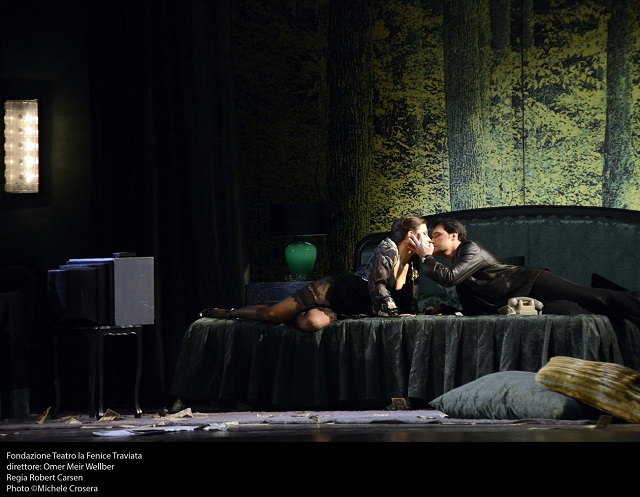
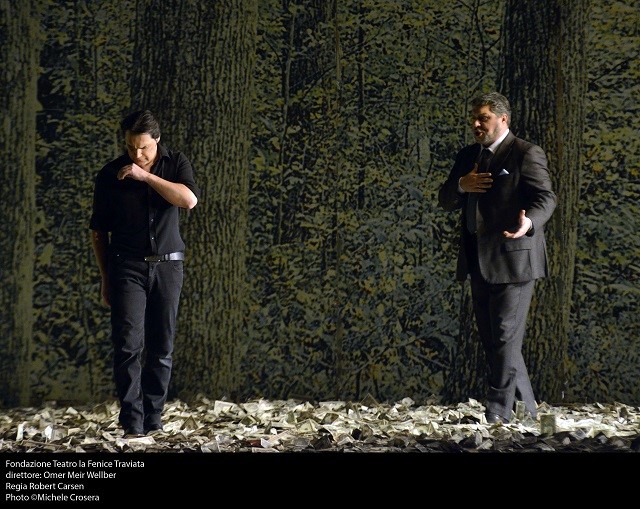
Cosi` fan tutte at the Gran Teatre de Liceu

liceulogocosifantutte

The superlative quality of Così fan tutte enabled it to withstand numerous contemporary obstacles (1790): the financial restrictions at the Viennese court which compelled Mozart to make cutbacks; his own personal problems; the death of Emperor Josef II, which interrupted the run for six months a few days after the premiere; and the alleged immorality of the plot, which deals with women’s infidelity (the entire sex being targeted by the provocative title “So do they all”). Now Damiano Micheletto transfers the action to an ultramodern hotel, with a cynical and solitary landlord (Don Alfonso), a maid (Despina), and four guests (Dorabella, Fiordiligi, Guglielmo and Ferrando). Instead of a pleasant holiday, the latter have experiences that will leave them all scarred when, by wagering on the fidelity of their respective partners, they create a series of hilarious entanglements that amount to genuine social satire.

Cosi_fan_tutte_01 Cosi_fan_tutte_02 Cosi_fan_tutte_04 Cosi_fan_tutte_05


Così fan tutte

Opera buffa in two acts. Original libretto by Lorenzo Da Ponte inspired in texts by Boccaccio, Shakespeare and Cervantes. Music by Wolfgang Amadeus Mozart. Premiered on 26 January 1790 at the Burgtheater in Vienna. First Barcelona performance at the Teatre de la Santa Creu on 4 November 1798. First seen at the Gran Teatre del Liceu on 4 January 1930. Last staged at the Liceu on 30 January 2004.

Conductor
Josep Pons

Stage Direction
Damiano Michieletto

Scenography
Paolo Fantin

Costumes
Carla Teti

Lighting
Fabio Barettin

Production
Teatro La Fenice (Venice)

Symphony Orchestra and Chorus of the Gran Teatre del Liceu 

Cosi_fan_tutte_06 Cosi_fan_tutte_07 Cosi_fan_tutte_09Cosi_fan_tutte_08

CAST
Fiordiligi Juliane Banse 20, 22, 24, 26, 28 and 30 May
Maite Alberola 21, 27 and 29 May
Dorabella Maite Beaumont 20, 22, 24, 26, 28 and 30 May
Gemma Coma-Alabert 21, 27 and 29 May
Ferrando Joel Prieto 20, 22, 24, 26, 28 and 30 May
David Alegret 21, 27 and 29 May
Guglielmo Joan Martín-Royo 20, 22, 24, 26, 28 and 30 May
Borja Quiza 21, 27 and 29 May
Despina Sabina Puértolas 20, 22, 24, 26, 28 and 30 May
Anna Tobella 21, 27 and 29 May
Don Alfonso Pietro Spagnoli 20, 22, 24, 26, 28 and 30 May
William Berger 21, 27 and 29 May

Cosi_fan_tutte_11 Cosi_fan_tutte_12

Posted in OPera | Tagged , , , , , , , | Leave a comment

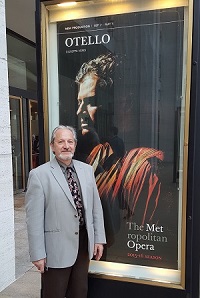
Otello at the National Theatre in Prague

nationaltheatre

Otello

OtellodateLibretto: Arrigo Boito
Musical preparation: Heiko Mathias Förster
Conductor: Martin Leginus
Stage director: Dominik Neuner
Stage director for the renewed production: Lubor Cukr
Sets: Vladimír Nývlt
Costumes: Josef Jelínek
Chorus master: Adolf Melichar
Dramaturgy: Jitka Slavíková

State Opera Orchestra

State Opera Chorus

Premiéra: May 28, 2009

otello1 otello-1 otello-2

A key role in the origination of Verdi’s penultimate opera, Otello, was played by the composer’s publisher Giulio Ricordi. After completing Aida in 1871, Verdi decided to abandon his extremely successful operatic career. Naturally, Ricordi did not take kindly to this, but he did know how to change Verdi’s mind – by offering the composer a libretto he simply would not be able to resist. Verdi’s great admiration of Shakespeare was generally known, and hence Ricordi cannily turned his attention to Othello and chose the renowned librettist Arrigo Boito. On 1 November 1886, Verdi completed the score. He was convinced that he and Boito had created a masterpiece – and he was right.

The premiere on 5 February 1887 was a momentous event and the opera immediately set out on its triumphant journey around the world. Owing to the promptitude of its director Adolf Šubert, Otello was staged by the National Theatre in Prague less than a year later, on 7 January 1888. In 1991, the German stage director Dominik Neuner created a remarkable production which went on to become one of the State Opera’s most acclaimed performances. In 2009, the opera was revived within Neuner’s intentions by Lubor Cukr and musically prepared by the dynamic young German conductor Heiko Mathias Förster.

The opera is staged in Italian original version and Czech surtitles are used in the performance.

Photo: Karel Kouba

Duration of the performance: 2 hours and 40 minutes, 1 intermission

otello-3 otello-4 otello-df-015web

otellocast1 Otellocast2 otellocast3


otello-df-310web otello-df-398web otello-df-552web

Posted in OPera | Tagged , , , | Leave a comment

Korsakov’s “The Tsar’s Bride” in Israel

israeliopera

The Tsar’s Bride

Nikolai Rimsky Korsakov

The Novaya Opera from Moscow returns to the Israeli Opera with a new production of one of the greatest classics of the Russian repertoire, a story of love, passion, jealousy, deceit and murder enveloped by the passionate music of Rimsky Korsakov.

New Production | Sung in Russian | Duration: Three hours

Libretto: Ilia Tyumenev

tsar

Conductor Felix Korobov
Director Yuri Grymov
Set Designer Vladimir Maximov
Costume Designer Maria Danilova
Grigory Griaznoy Andrey Breus
Andjey Beletsky
Lubasha Anastasia Bibicheva
Anna Victorova
Agunda Kulaeva
Marfa, Sobakin’s daughter Galina Koroleva
Victoria Shevtsova
Lykov, nobleman Veniamin Egorov
Aleksey Neklyudov
Bomelius, the Tsar’s physician Maksim Ostroukhov
Sergey Polyakov
Duniasha, Saburova’s daughter and Marfa’s friend Anna Sinitsyna
Alexandra Saulskaya Shulyatieva
Sobakin, Novgorod merchant Vitaly Efanov
Vladimir Kudashev
Aleksey Tikhomirov
Maluta Skuratov Evgeny Stavinsky
Andrey Neklyudov
Saburova, a merchant’s wife Olga Terentieva

English & Hebrew Surtitles
Translation: Israel Ouval

Day Date Hour Back Stage Tours Opera Talkback
FRI 8.5.15 13:00
SAT 9.5.15 21:00
* MON 11.5.15 20:00
TUE 12.5.15 20:00 18:30 After the show
WED 13.5.15 20:00 18:30
THU 14.5.15 20:00 After the show
FRI 15.5.15 13:00
SAT 16.5.15 21:00
MON 18.5.15 20:00 18:30 After the show
TUE 19.5.15 20:00 18:30

* PREMIÈRE – 11.5.15
A pre-performance lecture (in Hebrew) is held one hour before every performance. Free admission for tickets holders.

Synopsis

Act I

The Carousal

Chamber in Oprichnik Grigory Gryaznoy’s house. Grigory is desperate: he has fallen passionately in love with Marfa, daughter of the merchant Sobakin, but she is already betrothed to the young boyar Ivan Lykov. In order to put his love out of his mind, Grigory called some guests to a drinking-party. One of them is the Tsar’s foreign physician Bomelius, the other is Lykov.

The guests arrive, led by Malyuta Skuratov, Gryaznoy’s friend. Lykov who just returned to Russia, tells the assembled company of the life abroad. The guests sing the praises of their sovereign, Ivan the Terrible, drink and dance.

Malyuta mentions Lyubasha and tells Gryaznoy to call her. “Who is Lyubasha?”, Bomelius asks. “Gryaznoy’s mistress, a right bonny lass!”, Malyuta replies. At Malyuta’s request, Lyubasha sings a song about bitter fate of a girl who is forced to marry a man she doesn’t love. The carousal comes to an end and the guests depart. Gryaznoy detains Bomelius.

Lyubasha, sensing that something is wrong, hides and listens to their conversation. Gryaznoy asks Bomelius for a love potion. The physician promises to provide him with powder that can arouse love in a girl’s heart. After Bomelius has gone, Lyubasha accuses Grigory of having fallen out of love with her but Grigory won’t listen. He can think of nothing else but his passion for Marfa and leaves when the bells sound for the early morning service. Lyubasha is left alone with her despair. She vows to find the girl who is the cause of her troubles and bewitch her away from Gryaznoy.

Act II

The Love Potion

A street in the Alexandrovskaya Sloboda. The parishioners are coming out of the monastery after the evening service. At the porch of her house, Marfa stands talking to her friend Dunyasha of her betrothed, Ivan Lykov. A group of Oprichniks appears through the monastery gates. Marfa doesn’t recognize Ivan the Terrible who is leading the group, but the stranger’s intent gaze frightens her. It is only when she catches sight of her father and her betrothed, who are approaching the house, that she calms down.

Sobakin invites Lykov into the house and the girls follow them in. Dusk is falling. A shadow is circling round the Sobakin house. It is Lyubasha. She cautiously steals up to the porch: she wants to have a look at her rival. Having peeped through the lit-up window, Lyubasha is struck by Marfa’s beauty. The desperate girl rushes to Bomelius’s house. Bomelius appears in asnwer to her call. Lyubasha begs him to sell her a potion which will destroy human beauty. Bomelius agrees, demanding in return Lyubasha’s love. Indignant, Lyubasha wants to leave, but Bomelius threatens to tell Gryaznoy what she has asked him for. The sound of Marfa’s laughter coming from the Sobakins house, makes Lyubasha agree to Bomelius’s terms. The potion is ready, and she goes into his house.

The Oprichniks appear on the street, coming back from an execution ride.

Act III

The Best Man

Chamber in Merchant Sobakin’s house. Sobakin tells Ivan Lykov and Gryaznoy that Marfa and Dunyasha have been summoned to the palace along with 10 other girls as the Tsar intends to choose himself a bride. This alarms both Lykov and Gryaznoy. Sobakin tries to calm Lykov down. Gryaznoy offers to be Lykov’s best man at his wedding.

Domna Saburova, Duniasha’s mother, appears. She describes the ceremony: the Tsar hardly glanced in Marfa’s direction, but he paid Dunyasha a lot of attention, joking and talking with her. Lykov sighs with relief.

Following the betrothal ceremony rules, Gryaznoy fills two goblets for the bride and bridegroom. Unnoticed, he pours the powder that Bomelius has given him into Marfa’s goblet — the love potion. As soon as Marfa, who has returned from the palace together with Dunyasha, enters the room, Grigory congratulates the couple, hands them their goblets and makes them drink. Saburova strikes up a song in honour of the bride, and all the household joins in.

Malyuta appears with the boyars and proclaims the Tsar’s will — Marfa is to be his wife.

Act IV

The Bride

The Tsar’s chamber where Marfa, the Tsar’s bride, is now living before her wedding. But she is ill, and bitter fears give Sobakin no peace. Domna Saburova tries in vain to allay his anxiety.

Gryaznoy appears, and Marfa comes out of her room, pretending to be well. Gryaznoy tells Marfa that Lykov had confessed to giving Marfa a potion, and that he, Gryaznoy, with his own hands had carried out the Tsar’s sentence. Learning of the death of her beloved, Marfa falls unconscious to the floor. When she recovers, she recognizes no one. Mistaking Gryaznoy for Lykov, she converses tenderly with him, recalling the happy days they have spent together. Shaken by Marfa’s words, Gryaznoy admits that he had slandered Lykov and that he was the one who gave Marfa the love potion. But Marfa doesn’t hear him at all, though. Gryaznoy is desperate with guilt. But before going to his trial, he wants to have his revenge on Bomelius. Lyubasha who has appeared in the palace, tells Grigory how she had substituted poison for the love potion Bomelius had given him, and which Grigory had then given to Marfa. Grigory kills Lyubasha.

But Marfa sees and hears nothing. All her thoughts are in the past, with Lykov.

Posted in OPera | Tagged , , , | Leave a comment

Carmen at the National Theatre in Prague

carmennationaltheatre

carmendateLibretto: Henri Meilhac, Ludovic Halévy
Conductor: Tomáš Brauner
Stage director: Zdeněk Troška
Sets: Milan Ferenčík
Costumes: Josef Jelínek
Chorus master: Adolf Melichar
Dramaturgy: Jitka Slavíková
Choreography: Marcela Benoni

State Opera Orchestra

State Opera Chorus

Premiere: March 11, 2004

carmen-so-1 carmen-so-2 carmen-so-3 carmen-so-4

The premiere of Carmen at the Opéra Comique in Paris on 3 March 1875 met with a lukewarm response. Although on that very day George Bizet was named a Chevalier de la Légion d’honneur, this accolade could not compensate for his disappointment at the audience’s reserved reception of the opera. The real triumph only came when the work was staged at the Hofoper in Vienna on 23 October 1875, which, however, Bizet did not live to see. Since that day, Carmen has conquered opera stages worldwide and become one of the most frequently performed operas. Bizet found the theme himself, in Prosper Merimée’s novella about the beautiful and frivolous Carmen who is ultimately killed by her jilted lover Don José. Bizet was immediately intrigued by the story: he liked exotic themes and even though he had never been to Spain he was entranced by the dramatic atmosphere. The libretto was entrusted to Henri Meilhac (spoken dialogue) and Ludovic Halévy (arias, etc.), yet Bizet most likely played a significant role too (he wrote, for example, the text to the Habanera).

The form of the opera’s definitive version is not entirely clear. We only know that on 2 June 1875, a day before his death, Bizet concluded an agreement with the Vienna Opera pursuant to which the spoken dialogue should be replaced with recitatives. This task was undertaken by Bizet’s friend Ernest Guiraud, who added ballet music to Act 4, taken over from other Bizet compositions. After the premiere in Vienna, the opera was performed in this version around the world. In 1964, Fritz Oeser published a reconstructed original version, thus affording another possible performance practice. The State Opera presents the work’s original version with shortened dialogues.

The opera is staged in French original version and Czech and English surtitles are used in the performance.

Photo: František Ortmann

Duration of the performance: 2 hours and 55 minutes, 1 intermission

carmen-so-5carmen-so-6 carmen-so-7 carmen-so-11


CAST

carmencast1 carmencast2


carmencast3 carmencast4


carmen-so-8 carmen-so-9 carmen-so-10 carmen-so-12 carmen-so-324web carmen-so-web f109nn

Posted in OPera | Tagged , , , , | Leave a comment

AIDA in Finland

logofinland31_158

The Finnish National Opera Presents:

Aida

Giuseppe Verdi

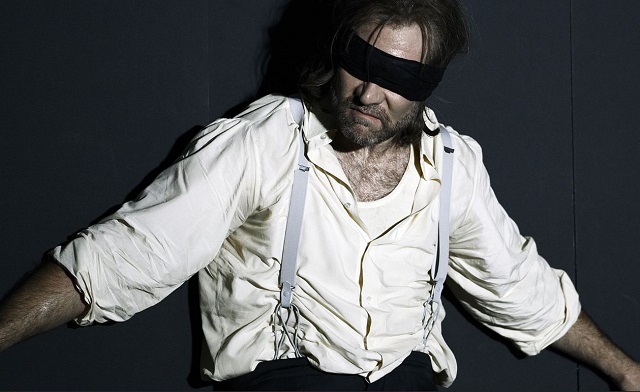
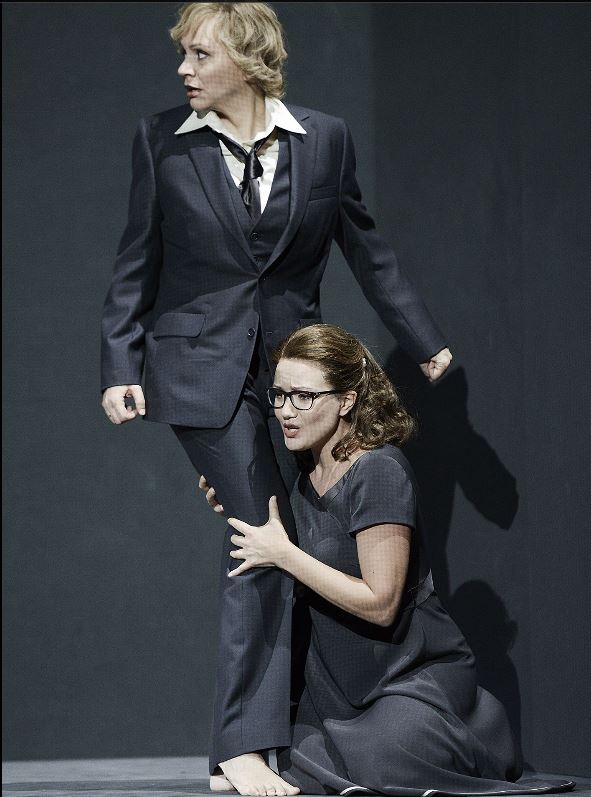
Military commander Radamès inadvertently betrays his country because of his love for Aida. The lovers are joined in death. This Egyptian story inspired Verdi to write some of his most brilliant music, resulting in one of the finest operas of all time.

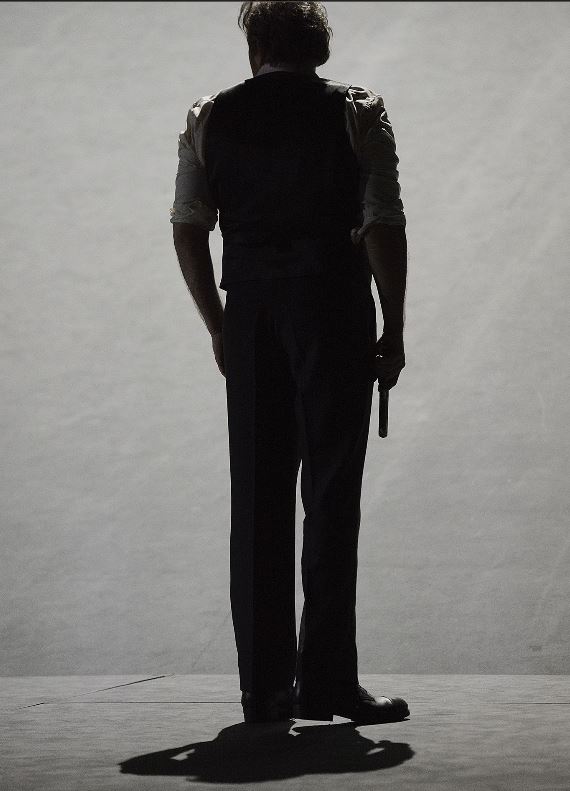
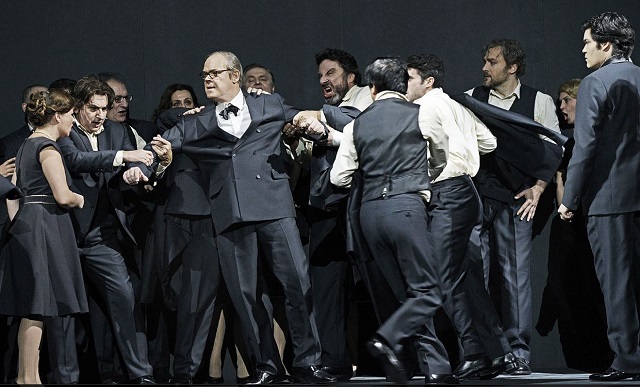
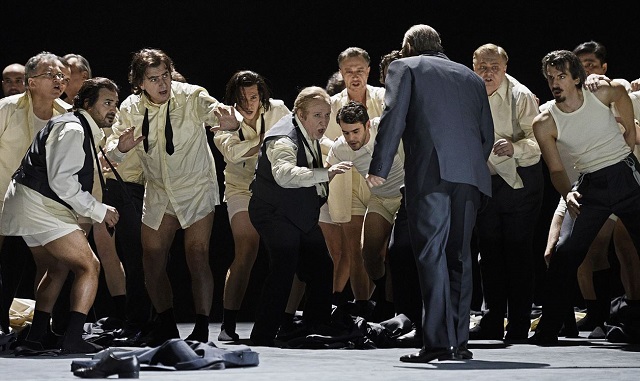
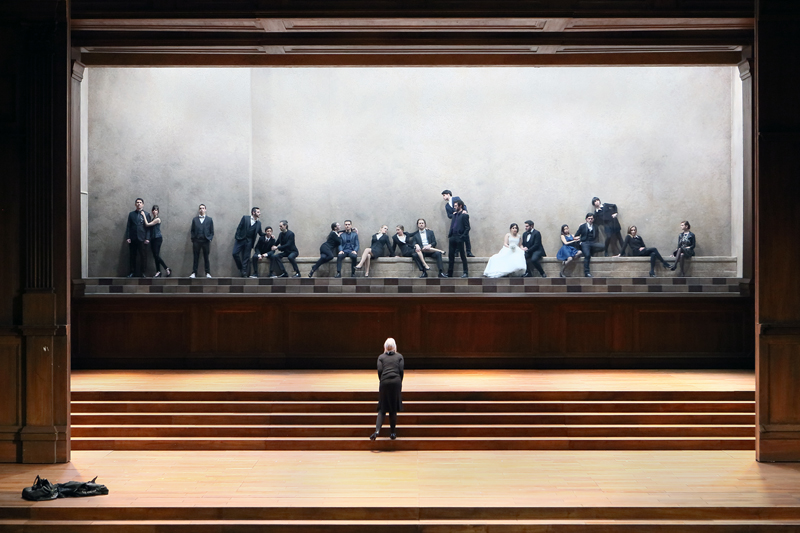
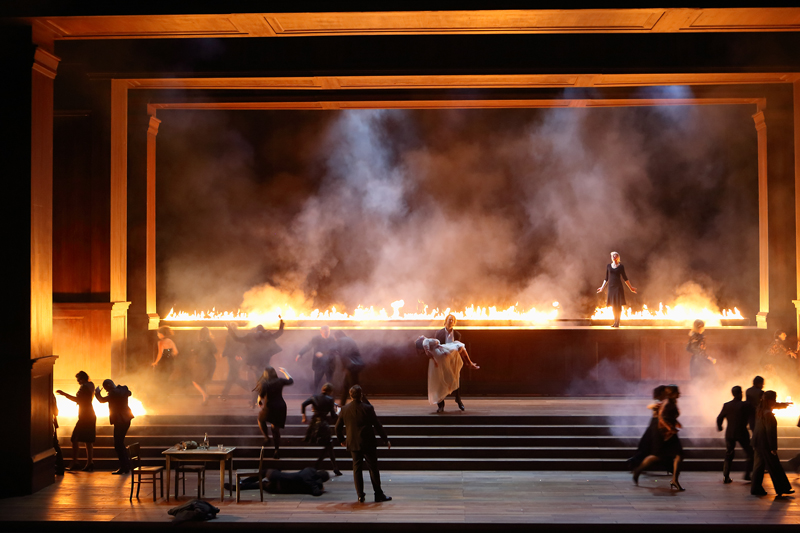
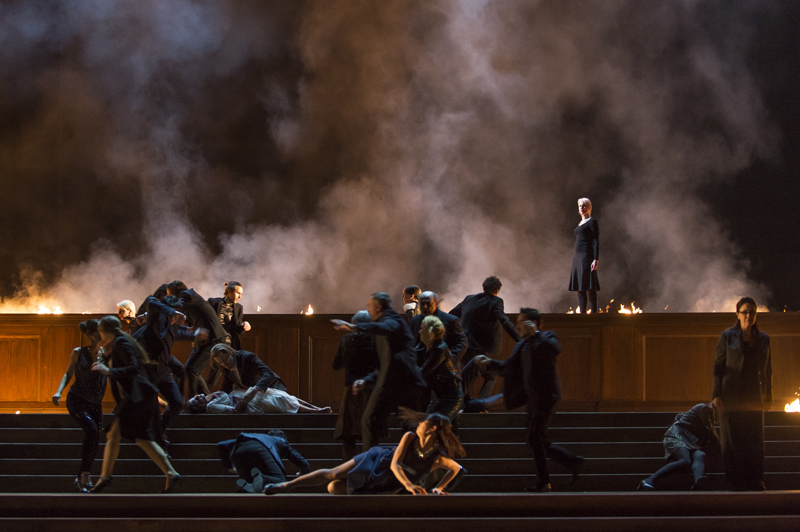
Verdi was a seasoned master by the time he came to write Aida, able to identify compelling stories and to play on the emotions of the audience. Aida is celebrated for its grand events and spectacular crowd scenes, but it also contains an intimate portrait of forbidden love. The acclaimed FNO production refers both to the time of the Pharaohs and to modern-day conflicts.

Duration 3 h 5 min, 1 intermission
Performed in Italian, surtitles in Finnish, Swedish and English.
  • Conductor Michael Güttler
  • Director Georg Rootering
  • Sets Bernd Franke
  • Costumes Götz Lanzelot Fischer
  • Lighting design Ilkka Paloniemi
  • Choreography Marilena Fontoura
Mika Pohjonen, Gweneth-Ann Jeffers

Mika Pohjonen, Gweneth-Ann Jeffers

CAST

Mardi Byers, Jorge Lagunes

Mardi Byers, Jorge Lagunes

Upcoming performances

Main auditorium

  • Sat 02/05/2015 7:00 pm
  • Tue 05/05/2015 7:00 pm
  • Sat 09/05/2015 7:00 pm
  • Wed 13/05/2015 7:00 pm
  • Sat 16/05/2015 7:00 pm
Tuija Knihtilä, Gweneth-Ann Jeffers

Tuija Knihtilä, Gweneth-Ann Jeffers

Antonello Palombi

Antonello Palombi

Mardi Byers

Mardi Byers

Lilli Paasikivi, Jyrki Korhonen

Lilli Paasikivi, Jyrki Korhonen

Posted in OPera | Leave a comment