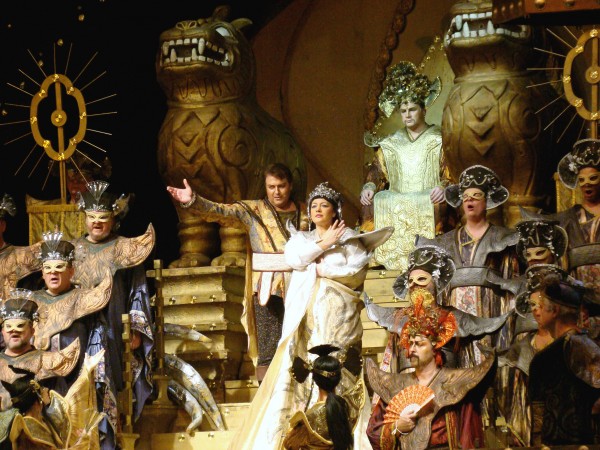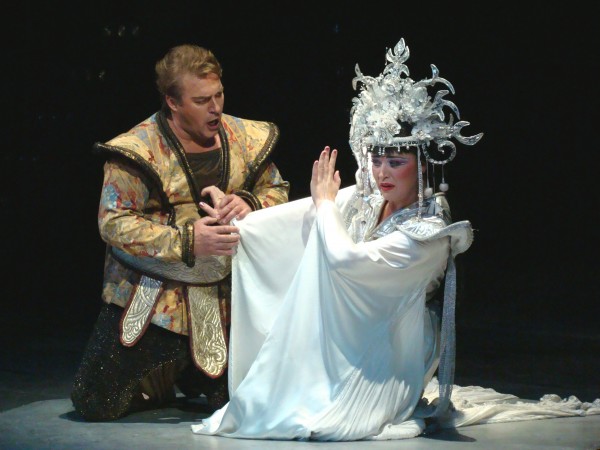
Lohengrin in Oslo


logonorwaylohengrinOslo


4 hours and 20 minutes/ 2 intermissions

  • Performed in German/ Texted in Norwegian and English
  • 8 productions / From March 8. to April 11.
  • Premier March 8. 2015 / Main House / Opera

lohengrin3

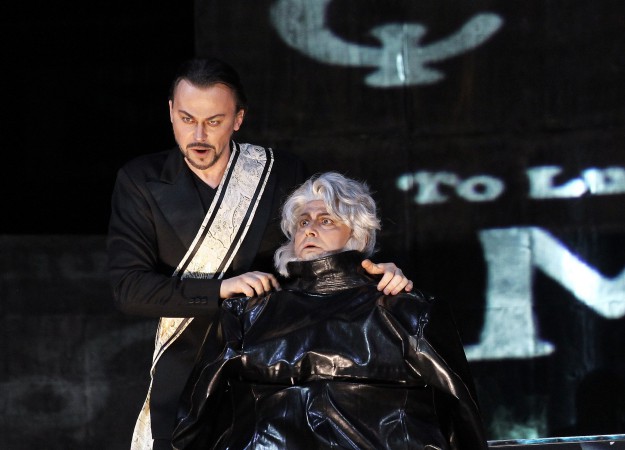
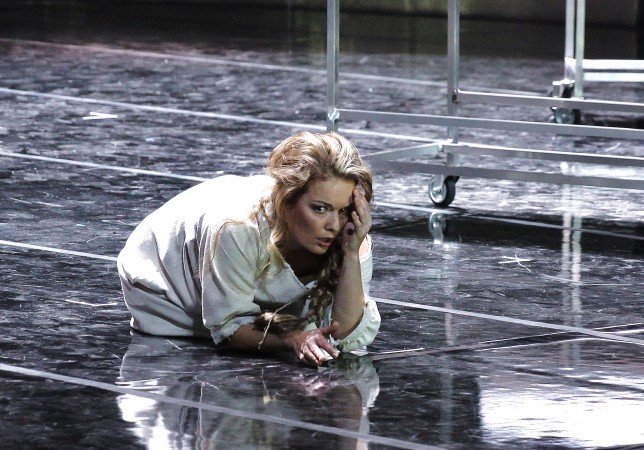
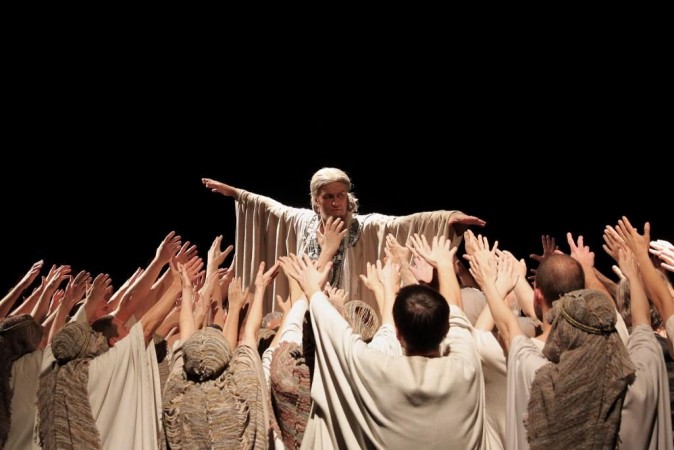
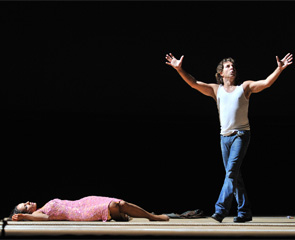
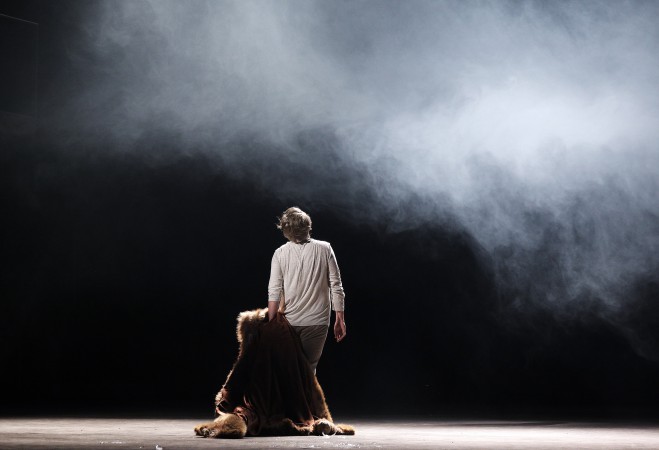
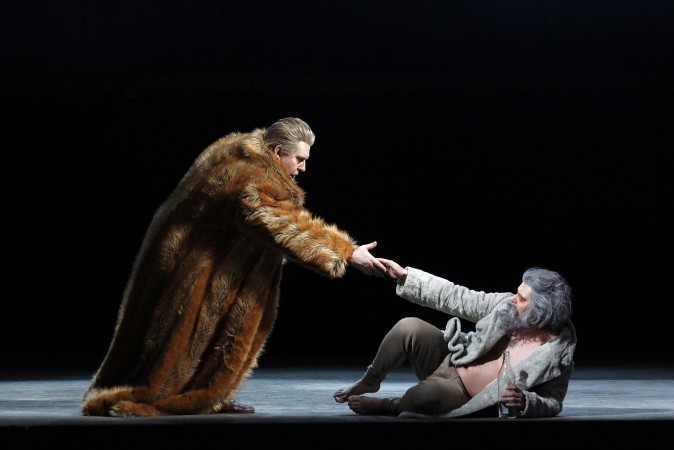
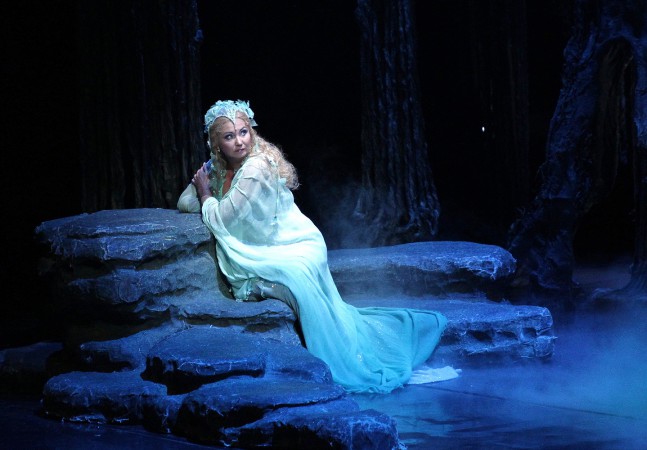
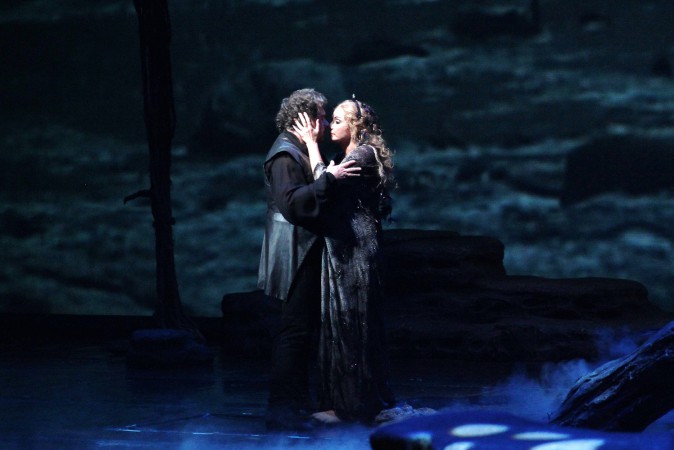
Lohengrin is Richard Wagner’s most romantic opera, with the premiere in 1850. This new production of Lohengrin by Johannes Erath is based on the universal conflict that is set out in Wagner’s music drama: between blind faith on the one hand and the need for knowledge and wisdom on the other.

Surrendering to a belief can truly be a blessing; however, with the human desire to see and understand, it can also lead to an intolerable situation. In a new light, love and trust can turn into naivety and ignorance.

Elsa of Brabant has been accused of the most heinous of crimes: murdering her brother. But one day a mysterious man who promises to help her appears. The price she must pay for his aid – and his love – is never to ask where he comes from, who he is or what he represents. But is this man truly the redeemer, or is he seeking his own redemption? And will Elsa be able to refrain from asking those questions?

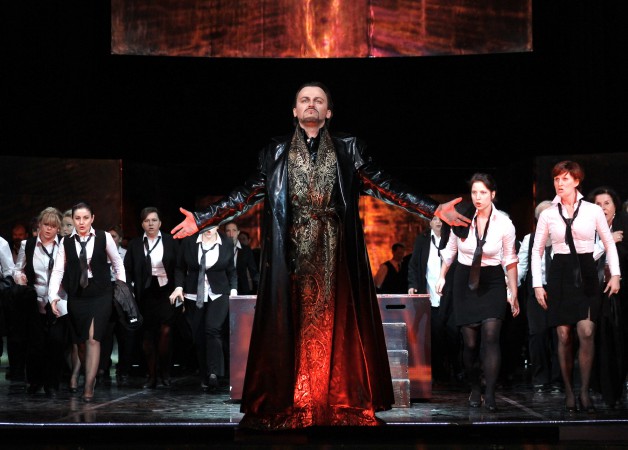
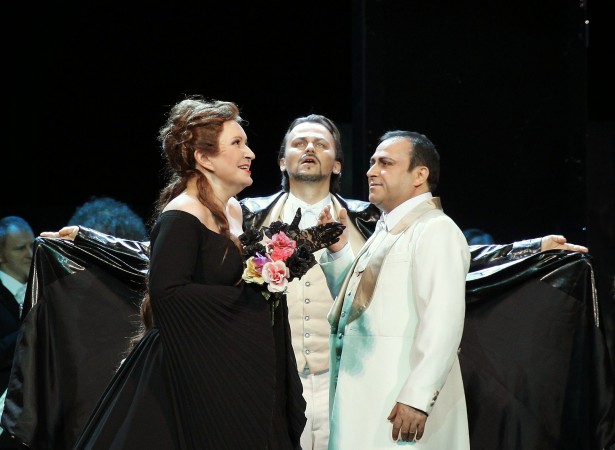
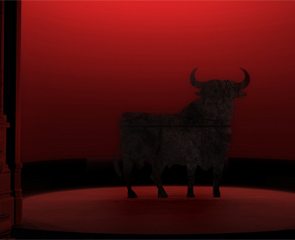
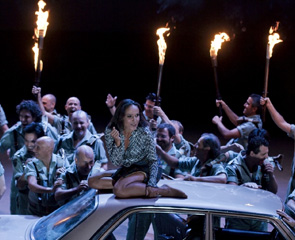
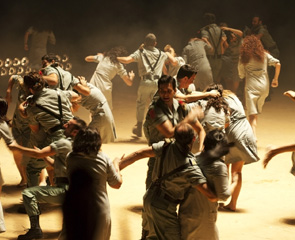
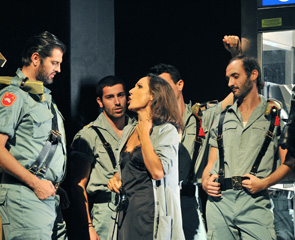
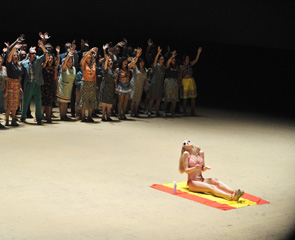
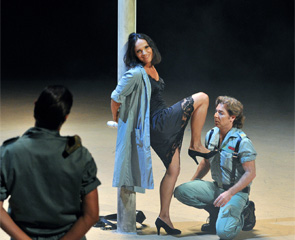
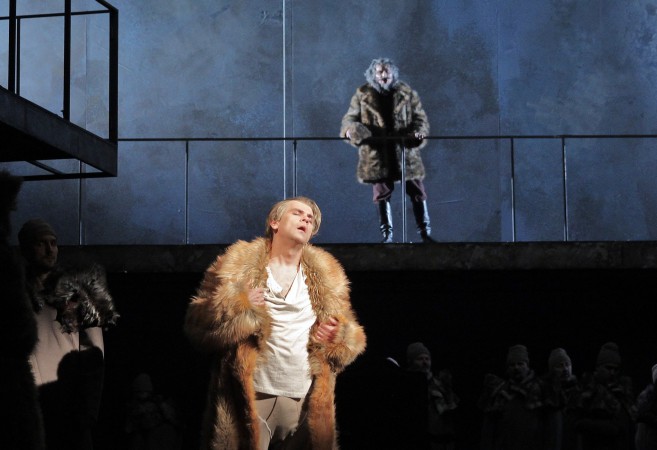
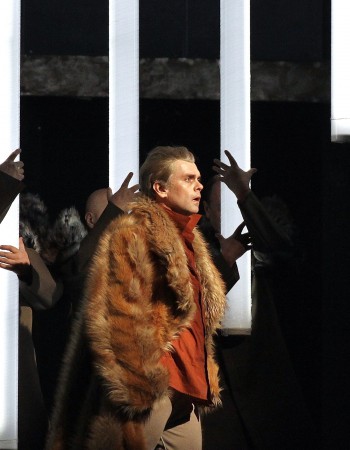
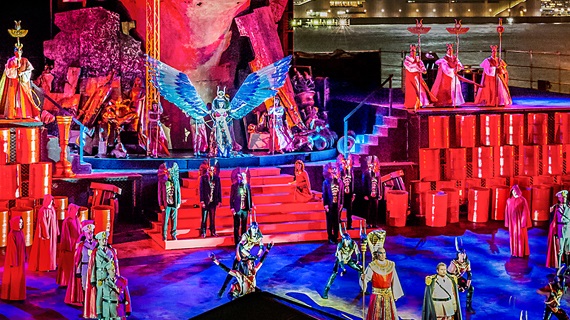
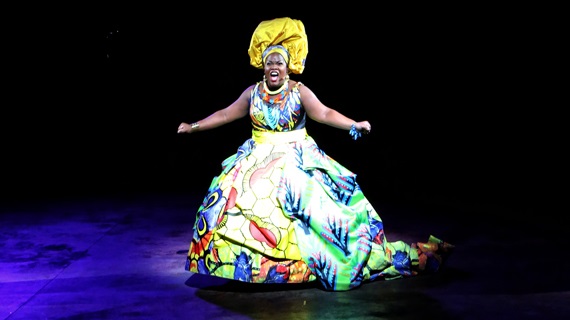
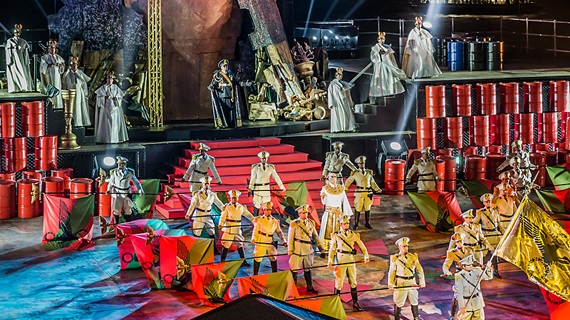
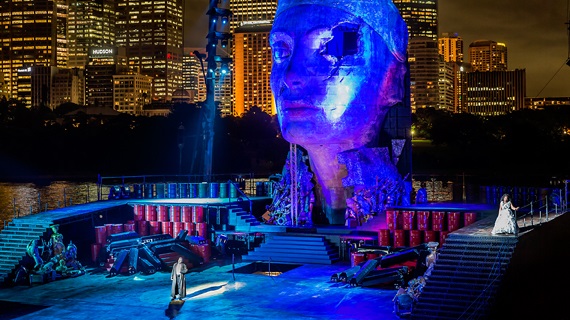
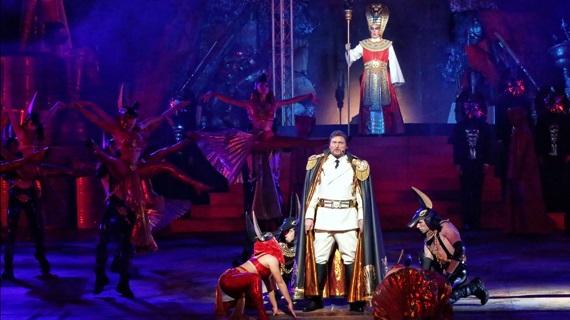
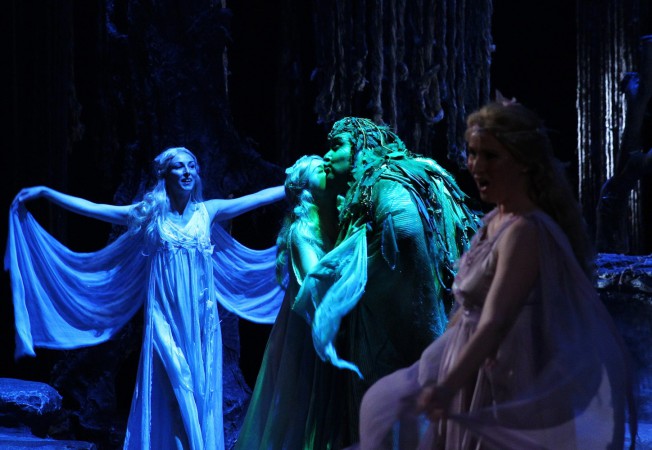
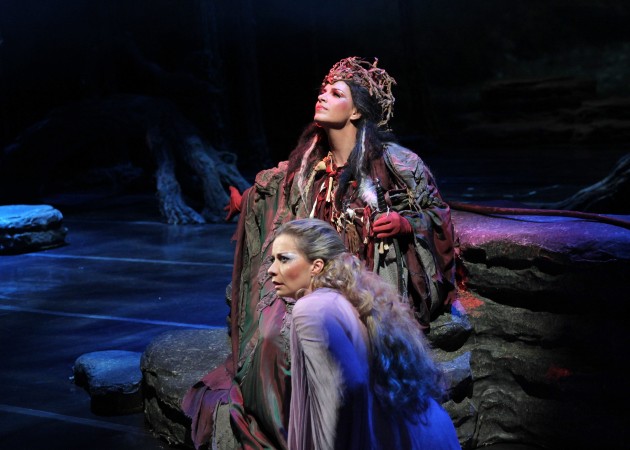
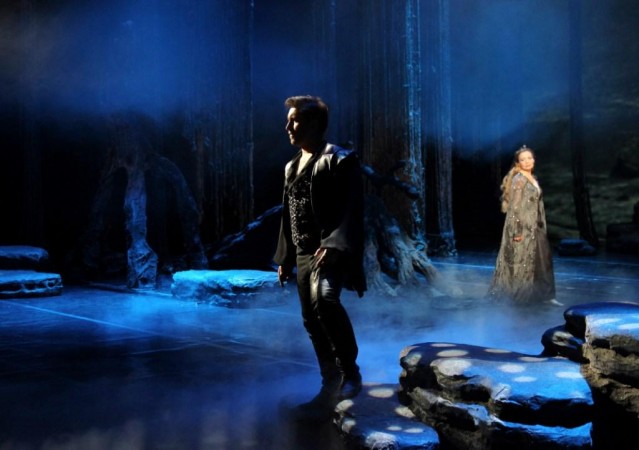
lohengrin4 lohengrin5Together with the set designer Kaspar Glarner and the costume designer Christian Lacroix, Erath has maintained the fairy tale of the Lohengrin story, which is given a striking visual expression.

When the production first premiered in Graz September 2013, the utterly aesthetic sceneries were critically acclaimed. These are inspired by Caspar David Friedrich’s dramatic-romantic paintings of the monastery graveyard in the snow, encountering clean modernist surfaces – as an expression of the new world and the new art that Richard Wagner dreamed of. In this way, the story unfolds between different worlds and time levels, all while pointing to our eternal need for dreams, faith and fairy tales in the face of the ever-changing realities.

lohengrin7 lohengrin8

John Fiore Lecture Show and free introduction one hour before the performance.

  • Music and libretto : Richard Wagner
  • Conductor : John Helmer Fiore
  • Direction : Johannes Erath
  • Assisting direction: Mika Blauensteiner
  • Set design : Kaspar Glarner
  • Costumes : Christian Lacroix
  • Dramaturgy: Francis Hüsers, Bernd Krispin
  • Light design: Bernd Purkrabek

lohengrin6

  • Cast : The Opera Chorus, The Opera Orchestra

Main roles

  • Heinrich

    portrett_magne_fremmerlid
    Playing the following days
    • 4/11/2015
    • 4/7/2015
    • 3/28/2015
    • 3/25/2015
    • 3/22/2015
    • 3/14/2015
    • 3/11/2015
    • 3/8/2015
  • Lohengrin

    Paul_Groves
    Playing the following days
    • 4/11/2015
    • 4/7/2015
    • 3/28/2015
    • 3/25/2015
    • 3/22/2015
    • 3/14/2015
    • 3/11/2015
    • 3/8/2015
  • Elsa

    gravrok1
    Playing the following days
    • 4/11/2015
    • 4/7/2015
    • 3/28/2015
    • 3/25/2015
    • 3/22/2015
    • 3/14/2015
    • 3/11/2015
    • 3/8/2015
  • Telramund

    krinstiansen
    Playing the following days
    • 4/11/2015
    • 4/7/2015
    • 3/28/2015
    • 3/25/2015
    • 3/22/2015
    • 3/14/2015
    • 3/11/2015
    • 3/8/2015
  • Ortrud

    Elena_Zhidkova


SYNOPSIS

First Act

Elsa, daughter of the deceased Count of Brabant, is accused of murdering her brother Gottfried in order to help her secret lover seize the throne. The dispute is to be settled in the presence of the German King Henry via an ordeal by combat, the result of which will be taken as God’s judgement.

Elsa’s accuser, Friedrich von Telramund, is ready to fight. He once proposed to Elsa but was refused. However, Elsa has nobody to fight for her – until a miracle occurs: the Knight whom Elsa has dreamed of marrying comes to her aid, led there by a swan. He defeats Friedrich. But first, Elsa must promise never to ask the Knight his name and where he comes from.

Second Act

Ortrud, Friedrich von Telramund’s wife and the daughter of the old Duke of Frisia, puts her trust in dark magic and the pagan gods. Along with Friedrich she listens to the sounds of merry-making in the palace from which the pair are banished. They are out for revenge. Elsa, who has come out to breathe the fresh night air, takes pity on Ortrud and says that she must accompany Elsa into the church when she is married.

The sun rises.The Herald announces that Friedrich von Telramund is now outlawed, and that the Knight is appointed Commander of the Army and the Duke of Brabant. Four nobles from Brabant nevertheless join Friedrich.On the way into the church, the bridal procession is held up by Ortrud and Friedrich, who deride the unknown origins of the Knight and try to persuade Elsa to ask her bridegroom his name and where he comes from. But Elsa is unshakeable: her love will overcome the power of doubt. The wedding ceremony takes place in the church.

Third Act

As the bridal chorus fades, Elsa and her husband find themselves in the bridal chamber, alone together for the first time. Their love is about to be consummated, but Elsa can hold back no longer: of course she should know the name of her bridegroom before giving herself to him. He must be known to her. The Knight tries to stop her, but it is already too late: Elsa must know his name and where he comes from.

Suddenly Friedrich von Telramund bursts into the room, and the Knight kills him in self-defence. Once again, they must all gather in front of the king, where the Knight will answer Elsa’s questions for all to hear.Trumpets summon people and troops to King Henry once more.

Friedrich’s corpse is brought in, and the Knight relates the story of the previous night’s attack and of Elsa’s questions. He was sent from Montsalvat as the Knight of the Holy Grail, but now that his identity has been revealed, he can no longer stay. The Grail has already summoned him home. His father is King Parsifal, and his own name is Lohengrin. He greets the swan, which has arrived to lead him home, and bids them farewell.

In hateful triumph, Ortrud announces that the swan is the enchanted Gottfried. Lohengrin sends up a prayer and Gottfried, released from his enchantment, steps forward as the rightful Duke of Brabant.But Elsa falls to the ground dead.

Posted in OPera | Tagged , , , , | Leave a comment

Italian American Museum Presents “Signora Rossini: A Celebration of the Life of Isabella Colbran”

Signora Rossini: A Celebration of the Life of Isabella Colbran

whitelogo2Presents
Signora Rossini:
A Celebration of the Life of Isabella Colbran

rossinibride

Presented by

Divaria Productions

http://www.DivariaProductions.com

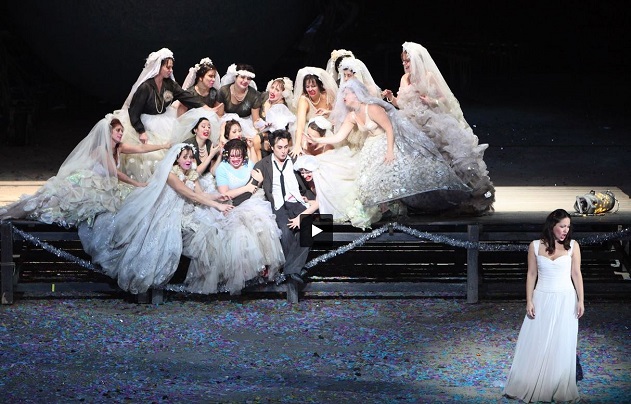
isabella-colbranDivaria Productions presents a preview of Sergio Ragni’s book based on the life of Spanish born opera singer, Isabella Colbran at the Italian American Museum this Thursday, April 2nd. Colbran (1785-1845), was the toast of opera stages throughout Europe in the early 19th century and subsequently became the wife of Italian opera composer Gioacchino Rossini (1792-1868). She collaborated with Rossini in the creation of a number of roles that remain in the repertory to this day. She was also the composer of four collections of songs.
About Divaria Productions:

Gioacchino Rossini
Gioacchino Rossini

Founded in 2011, Divaria Productions is dedicated to making extremely high quality opera both accessible and approachable, providing emerging artists with a platform to perform their work and reaching out to people who might otherwise be unable to attend opera including patients with Alzheimers’ and other ailments. To achieve our mission, we seek to create one of a kind quality experiences in intimate settings that make opera easy to digest and entertaining for a modern audience. Highlights of recent seasons have included the American premiere of Offenbach’s rare comedic operetta “The Babysitter” with the Salome Chamber Orchestra Hamptons Festival and partnering with the Italian Culture Institute of New York and the Basilica of St. Patrick’s Old Cathedral in an event commemorating the 175th anniversary of the death of Lorenzo Da Ponte, famous librettist for Mozart’s operas, first professor of Italian at Columbia University and one of New York’s first Italian immigrants.

Thursday, April 2nd, 6:00 P.M.

Italian American Museum

155 Mulberry Street

(Corner of Grand and Mulberry Streets)

New York, NY 10013

Suggested donation of $10 per person

RSVP Code: Rossini0402

For reservations, please call the

Italian American Museum at (212) 965-9000

or

email: ItalianAmericanMuseum@gmail.com

Posted in Lectures | Tagged , , , | Leave a comment

La Traviata at the Bolshoi in Moscow

bolshoilogo

traviata

April 7, 8, 9, 10, 2015
June 10, 2015

Premiered on October 7, 2012.

Sung in Italian with Russian surtitles.

Running time: 2 hours 40 minutes.
Presented with one interval.

Libretto by Francesco Maria Piave based on the novel La dame aux Camélias by Alexandre Dumas, fils

Music Director: Laurent Campellone
Stage Director: Francesca Zambello
Associated Director: Julia Pevzner
Set Designer: Peter John Davison
Costume Designer: Tanya McCallin
Lighting Designer: Mark McCullough
Chorus Master: Valery Borisov
Choreographer: Ekaterina Mironova

preview_Traviata-1-photo-by-Damir-Yusupov preview_Traviata-2-photo-by-Damir-Yusupov preview_Traviata-3-photo-by-Damir-Yusupov preview_Traviata-4-photo-by-Damir-Yusupov

CAST

Conductor

Tugan Sokhiev
Violetta Valéry Dinara Alieva
Flora Bervoix Irina Dolzhenko
Annina Irina Udalova
Alfredo Germont Murat Karahan
Giorgio Germont, Alfredo’s father Vasily Ladyuk
Gastone, viscomte De Letorières Marat Gali
Baron Douphol Otar Kunchulia
Marquis D’obigny Nikolai Kazansky
Doctor Grenvil Daniil Chesnokov
Giuseppe, Violetta’s servant Vadim Tikhonov

preview_Traviata-5-photo-by-Damir-Yusupov preview_Traviata-6-photo-by-Damir-Yusupov preview_Traviata-7-photo-by-Damir-Yusupov preview_Traviata-8-photo-by-Damir-Yusupov

Synopsis

Part One
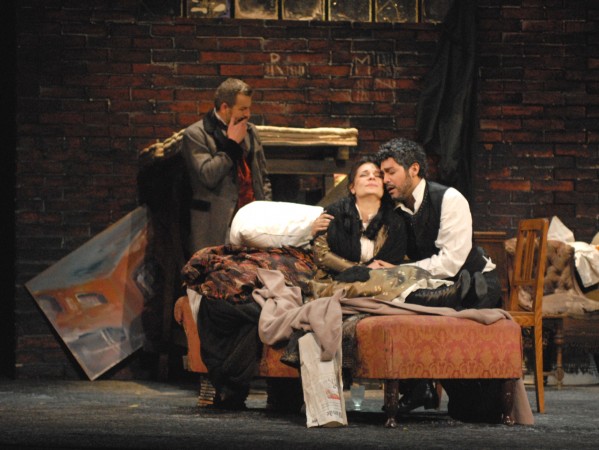
Alfredo Germont arrives at a party at the home of Violetta Valéry, a renowned courtesan. She is surprised to learn of his devotion to her, and of his concern during her recent illness. Alfredo leads a toast to love; Violetta responds with a toast to pleasure and excitement. Feeling faint, she excuses herself to rest. Alfredo follows and begs her to allow him to love and care for her. She tells him she is not interested in such heroic commitment, but invites him to return the next day. Alone, she wonders if she is capable of experiencing love. Dismissing the idea as nonsense, she determines to live for freedom and pleasure alone.

preview_Traviata-9-photo-by-Damir-Yusupov preview_Traviata-10-photo-by-Damir-Yusupov preview_Traviata-11-photo-by-Damir-Yusupov preview_Traviata-12-photo-by-Damir-Yusupov

Violetta flees her extravagant life in Paris to be with Alfredo. After learning that she plans to sell her belongings to maintain their country retreat, Alfredo goes to Paris to pay their debts. While he is away, Giorgio Germont visits Violetta. He tells her that Alfredo, his son, intends to give her all his possessions. She tells the elder Germont that she would never accept and reveals that she is making sacrifices to maintain their life together. Although impressed by her nobility, Germont begs her to leave his son, as her association with the family will ruin his daughter’s future prospects. Violetta finally agrees, asking only that, after her death, Germont tell his daughter the truth. Later, when Alfredo receives a letter from Violetta, claiming she no longer loves him, he is devastated.

preview_Traviata-13-photo-by-Damir-Yusupov preview_Traviata-14-photo-by-Damir-Yusupov preview_Traviata-15-photo-by-Damir-Yusupov preview_Traviata-16-photo-by-Damir-Yusupov

Part Two
Violetta attends a party with her new protector, Baron Douphol. The men gamble, and Alfredo is the winner. Violetta pulls Alfredo aside and begs him to leave; he refuses and threatens to duel with the Baron. Unable to break her promise to the elder Germont, Violetta insists that she loves the Baron. Furious and hurt, Alfredo calls the guests together and publicly insults Violetta.

preview_Traviata-17-photo-by-Damir-Yusupov preview_Traviata-19-photo-by-Damir-Yusupov preview_Traviata-20-photo-by-Damir-Yusupov preview_Traviata-22-photo-by-Damir-Yusupov

Now on her deathbed and tended by Annina, Violetta re-reads a letter from Giorgio Germont. According to the letter, Alfredo went abroad after dueling with the Baron; his father wrote to him there, explaining Violetta’s sacrifice. Alfredo arrives, asking forgiveness and pledging eternal love. Violetta expresses hope for their future together, but she is very weak. Alfredo sends Annina for the Doctor. He arrives with Giorgio Germont, who reproaches himself for his earlier behavior toward Violetta. He asks forgiveness and pledges to accept her as a daughter, but he is too late.

preview_Traviata-23-photo-by-Damir-Yusupov preview_Traviata-24-photo-by-Damir-Yusupov

Photos by Damir Yusupov

Posted in OPera | Tagged , , | Leave a comment

Parsifal in Croatia

croatian

croatianlogoRichard Wagner

Parsifal

April 4, 5, 10, 2015

Premiere: March 26, 2011.

Conductor: Nikša Bareza
Director: Kurt Josef Schildknecht

Anton-Keremidtchiev1Parsifal5parsifal6parsifal7parsifal8parsifal9parsifal10parsifal11parsifal12parsifal13parsifal14parsifal15parsifal16scena-iz-predstave2untitled Anton-Keremidtchiev2

Parsifal is an amazing and enigmatic work. Did Wagner, at the end of his life, decide to glorify the asceticism he had never practised? Or he kneeled in front of the crucifix, as Nietzshce claimed? What is the meaning of the secret society of knights of the pure blood, which is desperately waiting for the saviour who would restore it? What is the true nature of the contrast between the world of Klingsor and that of Holy Grail? What can Parsifal tell us today? In his artistic testament, Wagner condenses his personal moral evaluation of the world and returns to the roots of love and religion.

Egils-Silins Egils-Silins-Foto-Zlatko-Kalle1-703x1024 Egils-Silins-Foto-Zlatko-Kalle-625x1024 John-Charles-Pierce-Manfred-Hemm parsifal1 parsifal2 parsifal3 parsifal4

Posted in OPera | Tagged | Leave a comment

Rigoletto at the Bolshoi

bolshoilogo

rigoletto

Festival d’Aix-en-Provence, Opéra national du Rhin (Strasburg), Théâtre Royale de la Monnaie (Belgium), Grand Théâtre de Genève and Bolshoi Theatre of Russia Coproduction

Premiered at the Bolshoi Theatre on 14 December 2014

Wednesday April 1, 2015
Thursday April2, 2015
Friday April 3, 2015,
Saturday April4, 2015
Sunday April 5, 2015

Running time: 2 hours 40 minutes.
Presented with one interval.

ARTISTIC TEAM

Music Director: Evelino Pidò
Stage Director: Robert Carsen
Set Designer: Radu Boruzescu
Costume Designer: Miruna Boruzescu
Lighting designers: Peter Van Praet, Robert Carsen
Choreographer: Philippe Giraudeau
Chorus Master: Valery Borisov

Alekseyev-Gillet-Damir-Yusupov Paesano-DamirYusupov


CAST

Conductor

Alexander Soloviev
The Duke of Mantua Fabrizio Paesano
Rigoletto, the Duke’s jester Valery Alexeyev
Gilda, his daughter Kristina Mkhitaryan
Sparafucile, an assassin Oleg Tsybulko
Maddalena, his sister Justina Gringyte
Giovanna, Gilda’s Nurse Alexandra Durseneva
Count Monterone Vyacheslav Pochapsky
Marullo Konstantin Shushakov
Matteo Borsa, a courtier Arseny Yakovlev
Count Ceprano Nikolai Kazansky
Countess Ceprano, his wife Daria Davydova
A Court Usher Sergei Vasilchenko
A Page Ruslana Koval

Alekseyev-Pochapsky-Damir-Yusupov DimitrisTilyakos-OlegChernous Kovalevich-Tsymbalyuk-Chernous Mkhitaryan-2-Chernous

Synopsis by Robert Carsen

Act I

During a ball at the Duke of Mantova’s, the latter confesses to his friend Borsa his desire to seduce a young girl he has seen in church. But his attention goes to all women, including the spouse of Count Ceprano. Rigoletto, the Duke’s court jester, overtly encourages him to get rid of the unwanted husband, which makes Ceprano furious. As for Marullo, he announces to everyone an astonishing discovery, namely that Rigoletto would have a mistress. Ceprano sticks to his revenge: that very same night he will abduct the mistress in question. The ball is cut short by Count Monterone, who accuses the Duke of having dishonoured his daughter. Rigoletto’s persistent mockeries lead Monterone to curse him.

Tormented by the curse, the jester goes back home. On his way, he meets Sparafucile, a hitman who offers him his services. Left to himself, Rigoletto compares both professions: the hitman uses his sword where the jester uses his word. He then meets up with his daughter Gilda, whom he forbids to leave the house except to go to church. Gilda questions him in vain on his past and her mother’s death. Rigoletto, as he believes he hears some noise, goes out in the street. It is the Duke, who has come to spy on the mysterious unknown young woman and who now understands that she is his jester’s daughter. Rigoletto comes back to take leave of his daughter. Gilda then confesses to her governess Giovanna that she has met a very seductive young man in church. The Duke appears, declares his love, passing himself off as a student named Gualtier Maldè, and then leaves. Gilda dreams of her beloved, whereas as Ceprano, Borsa and the other courtiers are watching her, believing she is Rigoletto’s mistress. The latter chances upon them, as he retraces his steps. They claim they pretend they want to abduct Ceprano’s wife. Rigoletto accepts to wear a mask and takes part in the abduction only to enable the courtiers to flee with Gilda. The jester understands too late that he has been tricked and believes it to be the effect of Monterone’s curse.Mkhitaryan-Chernous Rigoletto-Romanovsky-Gringyte-photo-by-Chernous

Act II

The Duke is lamenting that the young woman he coveted has been abducted. The courtiers reassure him however: they are the ones who abducted Rigoletto’s mistress. Consumed by desire, the Duke goes to meet with Gilda. Feigning indifference when he is actually in despair, Rigoletto starts to search for his daughter. As he understands she is with the Duke, he discloses she is his daughter and begs the courtiers to give her back. Gilda then appears and throws herself in her father’s arms. Once alone with Rigoletto, she confesses she is in love with the Duke. A court usher interrupts the confidences, announcing that Monterone is arrested and will be jailed. Rigoletto offers him his vengeance.

Rigoletto-Romanovsky-Mkhitaryan-photo-by-Chernous Tiliakos-Damir-Yusupov

Act III

Determined to show his daughter the true nature of her seducer, Rigoletto obliges her to watch him court Maddalena, the sister of Sparafucile. To carry out his vengeance, the jester, together with Sparafucile, plots the Duke’s assassination and then demands of Gilda that she leave the city. When the Duke falls asleep, Maddalena begs his brother to spare him. Sparafucile ends up accepting on the condition however that another victim falls under his sword. Gilda has overheard their discussion and offers to sacrifice herself out of love. She knocks on the door and Sparafucile stabs her just before Rigoletto arrives to find the body. The jester rejoices in his vengeance and sets out to rid himself of the corpse he has been delivered in a sack. In the distance, the Duke’s voice can be heard. Rigoletto then discovers his daughter’s body who dies in his arms: he cries out, horrified, “La maledizione!” (The Curse!)

Tilyakos-Mkhitaryan-YusupovPaesano-Gillet-Damir-Yusupov

Photos by Oleg Chernous and Damir Yusupov,

Posted in OPera | Tagged , , , , , , | Leave a comment

Offenbach’s Les Contes d’Hoffmann in Munich

bayerischeoperalogo

contes

Opéra fantastique in five acts

Composer Jacques Offenbach · Libretto by Jules Barbier after the play by Jules Barbier and Michel Carré
In French with German surtitles

Saturday, 28. March 2015
07:00 pm – 10:25 pm
Nationaltheater

Tuesday, 31. March 2015
07:00 pm – 10:25 pm
Nationaltheater

Saturday, 04. April 2015
07:00 pm – 10:25 pm
Nationaltheater

Duration est. 3 hours 25 minutes · Intervals between 1. Akt and 2. Akt (est. 08:10 pm – 08:40 pm ) between 2. Akt and 3. Akt (est. 09:25 pm – 09:40 pm )

contes1 contes2 contes4

The protagonist of the opera is E.T.A. Hoffmann, the prototype of the German romantic period artist: his life is an artwork, his lower depths, his doubts, his grand inspirations – his crises. And all of these are connected with: women. Hoffmann in the opera tells of three types of woman in his tales, the “lifeless doll with a heart of ice”, the “virtuoso”, ill and destined to die, as well as the “shameless courtesan”.

Jacques Offenbach’s opera fantastique, premièred in 1881, is based on the play of the same name by Jules Barbier and Michel Carré, who drew from the biographies and works of E.T.A. Hoffmann, Adelbert von Chamisso and Alfred de Musset to create their own artist’s drama. It is not a literature opera – the protagonists from different romantic tales are connected to one another by a fictitious Hoffmann – but rather more of a message to the writer, telling him to make art his matter of the heart, or perhaps even open up his heart with brutal frankness.

Based on the edition by Michael Kaye and Jean-Christophe Keck, © Schott Music International

contes3 contes5

SYNOPSIS

Act One

Hoffmann, a poet, has not been able to write even a single sensible line since his affair with Stella, a prima donna, began. Stella wants to make an assignation with him, but he hides from her. Due to his doubts about himself he resorts to alcohol and begins to drink. Nicklausse,
his muse, tries his best to get him to write and offers what diversion he can: Lindorf, who has also been seen with Stella, three students by the names of Hermann, Wilhelm and Nathanael and a number of their drinking-mates. They all try to raise Hoffmann’s spirits with large amounts of alcohol and lusty songs. What they would really like, however, is to hear one of his exciting tales and Hoffmann does not disappoint them: he recites the poem about the ugly dwarf Kleinzack – but suddenly seems to fall into a reverie and rhapsodises about the features of his beloved. When his companions interrupt him and bring him back to reality he promises that he will tell them the catastrophic stories of the previous loves of his life.

contes6 contes7 contes8

Act Two: Olympia

Spalanzani has invented a doll which is deceptively life-like: Olympia. He is now bankrupt and can no longer pay Coppélius, from whom he bought the eyes for the doll, what he owes him.He hopes to make a fortune with his supposed ‚daughter‘ and to this end has invited a number of guests to whom he wishes to present his invention. He is able to get rid of Coppélius by giving him a bond.
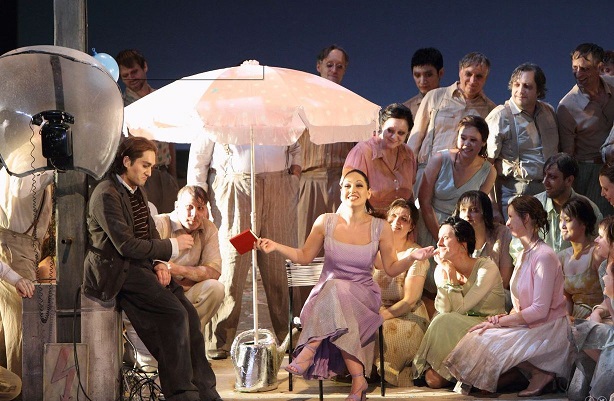
Hoffmann, who is not at all interested in physics and technology, has fallen in love with Olympia. He has bought a pair of spectacles from Coppélius through which he sees the doll as a real person. Nicklausse has nothing but scorn for him. Hoffmann, however, finds the singing of the doll just as simple and charming as her shyness. Spalanzani’s guests are also quite charmed by her. Spalanzani even hopes that Hoffmann will marry his daughter, but at the same time is afraid that too much activity might endanger his creation. When Hoffmann begins to waltz wildly with Olympia they both work themselves ever further into a frenzy.
Coppélius, on the other hand, seeks revenge. Spalanzani’s bond was not covered and so he gets control of the doll and destroys her. Only now does Hoffmann realize that he has fallen in love with a piece of machinery.

contes12 contes14 contes15

Act Three: Antonia

Hoffmann very much wants to see the singer Antonia again, with whom he has fallen deeply in love. Antonia also longs to see her lover but her father, Crespel, keeps her completely hidden from the outside world. In addition, he has also had all her music locked away and made her promise never to sing again. What she does not know is that her mother, who was also a famous singer, died of a mysterious illness the symptoms of which her father has now discovered in her. He is afraid that singing could also doom her to die. However Antonia manages to steal the key for her music from the servant Frantz, who dabbles in the art of singing himself.

Hoffmann also manages to outwit Frantz and gain entrance to Crespel’s house. Nicklausse, who is at least happy that Antonia is not a doll but a talented singer, urges Hoffmann to devote himself to his art. But nothing can stop Hoffmann: Antonia and he have at last found each other again. When Crespel unexpectedly returns, Hoffmann just manages to hide but is thus forced to overhear the argument between Antonia’s father and Dr Miracle: Miracle offers to treat Antonia’s illness but Crespel holds him responsible for the death of his wife and bids him leave.

Hoffmann is horrified and asks Antonia to promise him, too, that she will never sing again and then leaves. Antonia believes her lover has taken sides with her father. Uncertain and with a deep longing for her art she takes up the music and hears the voice of Miracle, who tempts her to give in completely to her desire to sing. When her mother’s voice also speaks to her there is nothing more to stop her. She sings and breaks down in mid song. Crespel and Hoffmann are not able to save her. She dies.

contes11 contes13

Act Four: Giulietta

Guilietta, a prostitute, has become a slave to the wealth of Dapertutto, who demands that she should obtain for him the reflections and souls of young men. Together with Schlémil and Pitichinaccio she is also very successful in this. Hoffmann, however, does not seem to be at all interested in her charms. After all his dreadful experiences, wine and cards seem to him to be more attractive. Nicklausse warns Hoffmann that this behaviour will only create new problems.

Dapertutto spurs Giulietta on to greater exertion with regard to Hoffmann’s soul by promising to give her a huge and valuable diamond. She immediately tries to capture Hoffmann’s affections by responding to his song. Hoffmann sits down to play cards with Schlémil and Pitichinaccio. At first he loses, but spurred on by Giulietta his luck changes. Schlémil is jealous of Giulietta’s affection for Hoffmann, who now declares his love for her, whereupon Pitichinaccio tries to get Nicklausse out of the way and prepares a drink mixed with poison. But Nicklausse does not feel like drinking. When Giulietta prepares to retire with Hoffmann, Schlémil attacks Hoffmann with a knife, but the latter is able to defend himself and in doing so kills Schlémil. Giulietta pretends she wants to protect him from further attacks. Hoffmann is meanwhile completely besotted by her so it is very easy for her to steal his reflection. Dapertutto thinks that he has won. Giulietta receives the diamond, with which she becomes enraptured, and reaches for a glass to refresh herself – and drinks the poison which was intended for Nicklausse. She dies, to the horror of Pitichinaccio and Dapertutto. Nicklausse seizes the opportunity to free Hoffmann from his spell.

contes16 contes17

Act Five

The students and their friends are both enthralled and horrified by Hoffmann’s tales. One thing is clear to all of them: all three types of women are pesonified in one women-Stella. Hoffmann is too drunk to care. He collapses and Stella turns away from him in disgust. So he begins to commit his story to paper. Nicklausse the muse and all the other characters surround Hoffmann as if they were explaining to him what he has learned through his experiences: „Laugh at your pain! The Muse will ease your woes. For love makes man great, but sorrow makes him greater still.“

contes10Cast

Musikalische Leitung
Constantin Trinks
Inszenierung
Richard Jones
Bühne
Giles Cadle
Kostüme
Buki Shiff
Choreographie
Lucy Burge
Licht
Mimi Jordan Sherin
Dramaturgie
Rainer Karlitschek
Chor
Sören Eckhoff

Olympia
Jane Archibald
Giulietta
Brenda Rae
Cochenille
Kevin Conners
Pitichinaccio
Kevin Conners
Frantz
Kevin Conners
Lindorf
Christian Van Horn
Coppélius
Christian Van Horn
Dapertutto
Christian Van Horn
Miracle
Christian Van Horn
Nicklausse/Muse
Angela Brower
Stimme aus dem Grab
Qiu Lin Zhang
Hoffmann
Rolando Villazón
Spalanzani
Ulrich Reß
Nathanaël
Dean Power
Hermann
Andrea Borghini
Schlémil
Christian Rieger
Wilhelm
Petr Nekoranec
Crespel
Peter Lobert
Luther
Peter Lobert
Chor
Chor der Bayerischen Staatsoper
Orchester
Bayerisches Staatsorchester
Antonia
Serena Farnocchia
contes9
Posted in OPera | Tagged , , , , , | Leave a comment

The Opera World Weeps for Its Two Lost Stars…

operastarsThe world of opera mourns two rising stars who have lost their life in the Germanwings Flight 9525 crash in the French Alps on Tuesday: Baritone Oleg Bryjak and Contralto Maria Radner. Both internationally renown singers were returning from Barcelona to Dusseldorf, where Radner, who was said to be traveling with her husband and child, resided; Bryjak was a member of the local opera ensemble, Deutsche Oper am Rhein. The singers had performed in Wagner’s Siegfrid. Bryjak, a 54-year-old bass-baritone, played the part of the evil dwarf Alberich. Radner, a 34-year old alto, played the role of the goddess Erda in her debut at the Gran Teatre del Liceu in Barcelona.
Christoph Meyer, director of Deutsche Oper am Rhein, asserted:”We have lost a great performer and a great person in Oleg Bryjak. We are stunned.”  Norwegian soprano Mari Eriksmoen tweeted:”Devastating. she was a beautiful person and an amazing singer.”
French officials said everyone aboard the Airbus A320 perished in the crash. A prayer for them and their families from all of us at operamylove.
A biography and some images of the two singers follows…

Maria_RadnerMARIA RADNER, CONTRALTO

Within a very short time Maria Radner had established herself as one of the most promising contraltos and caught the attention of the international press and the audience after her debut in January 2012 in Götterdämmerung at the Metropolitan Opera in New York and her appearance in Die Frau ohne Schatten at the Teatro alla Scala Milano in March 2012.

In the 2014/15 season she was supposed to make her debut at the Bayreuth Festival under Kirill Petrenko in Rheingold and Götterdämmerung. As Erda she was be heard at the Gran Teatre del Liceu in Siegfried.

Last season included Erda in the Ring des Nibelungen at the Grand Opéra de Genève, Dvorak’s Stabat Mater with Santa Cecilia in Rome under Tomas Netopil and Anna in a new production of Les Troyens (Antonio Pappano / David McVicar) at Teatro alla Scala Milan. Further previous engagements were Erda in Rheingold and Siegfried at the Royal Opera House Covent Garden conducted by Antonio Pappano. With RSO Berlin she performed under the direction of Marek Janowski in a concert performance of Rheingold also in the part of Erda. In the very same role the Grand Théâtre de Genève has engaged Maria Radner for the new production of The Ring (Ingo Metzmacher/Dieter Dorn). In Florence she sang Schwertleite in Walküre with Zubin Mehta conducting. Concert obligations led her to Lyon with Dvorak’s Requiem under Tomas Netopil and to Frankfurt with Mahler’s Symphony No. 3 under Sebastian Weigle.radner1

In previous seasons she gave a series of top-class opera debuts at Salzburger Festspiele (new production of Elektra under Daniele Gatti and Frau ohne Schatten, conducted by Christian Thielemann), at Salzburger Osterfestspiele (Götterdämmerung conducted by Sir Simon Rattle), at Teatro alla Scala Milano (Faust Scenes under Pinchas Steinberg), Erda in a concert performance of Rheingold and Siegfried under Ulf Schirmer at Leipzig Opera and Ariadne auf Naxos conducted by Bertrand de Billy at Theater an der Wien, at Bavarian State Opera Munich (Zauberflöte) and at Canadian Opera Toronto (Rossignol).

Maria Radner as Erda in Siegfrid

Maria Radner as Erda in Siegfrid

Also in the concert field she established herself mainly with works by Mahler and Beethoven among others. Maria Radner sang Mahler´s Symphony N° 2 and N° 8 at Accademia di Santa Cecilia Roma under Antonio Pappano, Mahler N° 8 at MITO Festival under Gianandrea Noseda, with the Gürzenich Orchester Köln under Markus Stenz and Orquestra Nacional do Porto under Christoph König. With the Philharmoniker Hamburg she sang Mahler´s Symphony N°3 under Markus Lehtinen and at RSB Berlin under Marek Janowski. At the Concertgebouw in Amsterdam she made her debut with Beethoven´s Symphony No.9 and Missa Solemnis and at the Wiener Musikverein she performed in eanne d’Arc au bucher under Bertrand de Billy.

Maria Radner, Karen Cargill and Elisabeth Meister as Norns

Maria Radner, Karen Cargill and Elisabeth Meister as Norns

Before that Maria Radner sang Still a student Maria Radner made her debut under Zubin Mehta at Palau de les Arts Valencia in Martin y Soler’s oratorio Philitaei a Jonatha disperse and a recital, followed by her debut at Bregenz Festival in the title role of Haendel’s Salomo. Furthermore she appeared in a new production of Parsifal under the baton of Lorin Maazel in Valencia, her concert debuts at Teatro Real Madrid (Faust-scenes under Jesus Lopez-Cobos), at Teatro Regio Torino (Beethoven’s Symphony No. 9 conducted by Gianandrea Noseda) and her debut at Festival d’ Aix en Provence (Götterdämmerung conducted by Sir Simon Rattle).

Maria Radner was born in Düsseldorf, Germany and passed her studies with distinction. She was working with KS Marga Schiml in Karlsruhe and was scholarship holder of the Richard Wagner Association Bayreuth.

REPERTOIRE

Berlioz – Les Troyens – Anna
Teatro Real Madrid
Grand Teatre del Liceu Barcelona
Teatro alla Scala Milano

Giordano – André Chénier – Bersi

Gluck – Orfeo ed Euridice – Orfeo

Gounod – Margarethe – Marthe

Händel – Giulio Cesare – Cornelia
Theater Hagen

Händel – Salomo – Salomo
Bregenzer Festspiele

Händel – Alcina – Bradamante

Händel – Agrippina – Narciso

Haydn – Welt auf dem Mond – Lisetta

Martín y Soler – Philistaei a Jonatha dispersi – Saul
Palau de les Arts Reina Sofia Valencia

Massenet – Werther – Charlotte

Mozart – Zauberflöte – 3. Dame
Bayerische Staatsoper München– Teatro alla Scala Milano

Mozart – Nozze di Figaro – Marcellina

Nicolai – Die lustigen Weiber von Windsor – Frau Reich

Offenbach – Les Contes d’Hoffmann – La Mère
Deutsche Oper am Rhein

Puccini – Gianni Schicchi – Ciesca / Zita

Puccini – Il tabarro – Frugola

Puccini – Suor Angelica – La zia principessa

Rossini – Tancredi – Isaura

Saint-Saens – Samson – Dalila

Strauss – Ariadne auf Naxos – Dryade
Theater an der Wien

Strauss – Daphne –Gaea

Strauss – Elektra – 1. Magd
Salzburger Festspiele(Gatti)

Stravinsky – Rossignol – La Mort
Canadian Opera Company
Salzburger Festspiele

Tschaikovskij – Iolanta – Marta
Salzburger Festspiele

Verdi – Falstaff – Mrs. Quickly

Verdi – Ballo in maschera – Ulrica
Den Norske Opera Oslo

Wagner – Rheingold – Erda
Oper Leipzig – Royal Opera House Covent Garden(Pappano) Rundfunk-Sinfonieorchester Berlin, Grand Theatre de Geneve, Palau de les Arts Valencia(Mehta), Enescu Festival Bucarest(Janowski)

Wagner – Siegfried – Erda
Royal Opera House Covent Garden(Pappano), Oper Leipzig
Grand Theatre de Geneve, Palau de les Arts
Valencia (Mehta)

Wagner – Götterdämmerung – 1. Norn
Festival Int. d’Art Lyrique Aix en Provence(Rattle)
Salzburger Osterfestspiele(Rattle) Metropolitan Opera New Yor (Luisi)k, Palau de les Arts Valencia(Mehta)

Wagner – Götterdämmerung – Flosshilde
Festival Int. d’Art Lyrique Aix en Provence(Rattle)
Salzburger Osterfestspiele(Rattle)

Wagner – Götterdämmerung – Waltraute

Wagner – Parsifal – Stimme von oben
Palau de les Arts Valencia(Maazel)

Wagner – Fliegender Holländer – Mary

OLEG BRYJAK, BARITONE

oleg_bryjakBIOGRAPHY
Oleg Bryjak was born in Kasachstan in the former USSR and has appeared on opera stages all over the world, including Paris, Zurich, London, Los Angeles, Chicago, Vienna, Berlin, Munich, Sao Paolo and Tokyo. His repertoire included more than 30 operas, and he had worked with such conductors as Daniel Barenboim, Sir Andrew Davis, James Conlon, Donald Runnicles, John Fiore, and Simon Rattle.

In 1990 he took 2nd Prize in the International Sylvia-Gesty Competition in Stuttgart, Germany. From 1991 to 1996 he was engaged at Karlsruhe Staatsoper, singing such roles as Bartolo (II barbiere di Siviglia), Dulcamara (L’elisir d’amore), Fra Melitone (La forza del destino), Kezal (The Bartered Bride), Warlaam (Boris Gudunov), Galitsky and Lord Tgor (Lord Igor), Boris Ismailov (Lady Macbeth from Mtsensk), and Alberich (Ring Cycle), among others.

Oleg Bryjak as Falstaff

Oleg Bryjak as Falstaff

Since 1996, Mr. Bryjak was a member of the ensemble of the Deutsche Oper am Rhein in Dusseldorf. There he had sung Leporello (Don Giovanni), Father (Hansel und Gretel), Don Pasquale, Falstaff, Rigoletto, Amonasro (Aida), Klingsor (Parsifal), Alberich (Ring), Telramund (Lohengrin), Jago (Otello), Don Magnifico (Cenerentola), Mustafa (L’italiana in Algeri), Dr. Kolenaty (The Macropolous Case), Pizarro (Fidelio), Hans Sachs (Die Meistersinger), Hollander, Scarpia (Tosca), Alfio and Tonio (Cav/Pag), Gianni Schicchi and Michele (Tabarro).

bryjakSince 1998 he had appeared regularly with the Vienna Staatsoper as Telramung, Amonasro, Alberich and Pizarro. Other highlights of his career included: Chicago Lyric Opera debut as Alberich (Ring Cycle) 2003-2005; Alberich at the Royal Albert Hall in London and in a live TV/Radio Broadcast at the Baden-Baden Festspielhaus 2004; in Amsterdam as Alberich and Klingsor 2005-06; Tokyo debut as Scarpia (Tosca) 2006; Covent Garden debut as Dikoj (Kata Kabanova) 2007; and Los Angeles debut as Kothner in Meistersinger 2007, Alberich at the Deutsche Oper Berlin in 2008, and Kruschina (The Bartered Bride) at the National Theater of Paris, Dikoj in Madrid and a return to Los Angeles as Alberich in 2009.

REPERTOIRE

Wagner Ring – Alberich
Lohengrin – Telramund
Parsifal – Klingsor
Holländer
Die Meistersinger – Hans Sachs, Kothner
Verdi Aida – Amonasro
Rigoletto
Otello – Jago
Falstaff
La forza del Destiono – Fra Melitone
Beethoven Fidelio – Pizarro
Mozart D. Giovanni – Leporello
Puccini Tosca- Scarpia
Gianni Schicchi
Il Tabarro- Michele
Donizetti Don Pasquale
L`elisir d`amore – Dulcamara
Rossini Barbier – Bartolo
Cenerentola – Don Magnifico
L`Italiana – Mustafa
Turco in Italien – Geronio
Humperdinck Hänsel und Gretel – Vater
Janacek Makropulos – Dr. Kolenaty
Jenufa – Altgesel
K. Kabanova – DikojAus einem Totenhaus – Schischkoff
Leoncavallo Paglacci – Tonio
Mascagni Cavalleria rusticana – Alfio
Schostakowitsch Lady Macbeth from Mzensk – Boris Ismailov
Borodin Fürst Igor – F.Igor, Galizkj
Wunschpartien Barak – Frau ohne Schatten
Jochanaan – Solome
Wotan – Ring
Posted in Article | Tagged , , | Leave a comment

Carmen at the Teatro alla Scala

scala

Carmen

Georges Bizet

Orchestra and Chorus of the Teatro alla Scala

Treble Voices Chorus of the Teatro alla Scala

Teatro alla Scala Production

From 22 March to 16 June 2015

Running Time: 3 hours 25 minutes intermissions included

Sung in French with electronic libretto in Italian, English, French

carmen7Notes on the performances

By now an acclaimed classic with a stream of revivals, this is the Emma Dante show that so shocked part of the gallery on its opening night in 2009. A free, secular and rebellious Carmen, mired in a world of grey and dusty decay, bedecked with religious ornaments, votive offerings and blood-red gashes. A maiden Carmen, untouched by social hypocrisy, an unsullied martyr, almost angelic. The leads were played by Elīna Garanča and José Cura, then revisited by Anita Rachvelishvili (making her debut to great acclaim in this show) and Francesco Meli. The baton is wielded by the world-renowned opera specialist Massimo Zanetti.

Carmen4Direction

Conductor
Massimo Zanetti

Staging

Emma Dante
Sets
Richard Peduzzi
Costumes
Emma Dante
Lights
Dominique Bruguière
Choreographic movements
Manuela Lo Sicco

Carmen12 CAST

Don José José Cura (March); Francesco Meli (June)
Escamillo Vito Priante (March); Artur Ruciński (June)
Le Dancaïre Michal Partyka
Le Remendado Fabrizio Paesano
Moralès Alessandro Luongo
Zuniga Gabriele Sagona
Carmen Elīna Garanča (March); Anita Rachvelishvili (June)
Micaëla Elena Mosuc (March); Nino Machaidze (June)
Frasquita Hanna Hipp
Mercédès Sofia Mchedlishvili*
Une marchande d’orange Alessandra Fratelli
Un bohemien Alberto M. Rota
Lillas Pastia Rémi Boissy
Un guide Carmine Maringola

*Soloist of the Teatro alla Scala Academy

Synopsis

Act I
A square in Seville.
Outside the cigarette factory, soldiers on guard duty watch the passers-by (Scena and Chorus: “Sur la place, chacun passe”). From a distance is heard a military march, followed by a band of urchins: it’s the changing of the guard (Chorus: “Avec la garde montante”). The factory bell rings, and everybody presses forward to see the cigarette girls come out, and especially to court the most seductive of them all: the gypsy Carmen (Chorus: “La cloche a sonné”). Impudent and indifferent, the girl sings a song (Habanera: “L’amour est un oiseau rebelle”) and throws a flower to Don José, a corporal in the Dragoons. He is perturbed by her gesture. The arrival of his fiancée Micaëla, who brings greetings from his distant mother, seems to take Don José’s mind off Carmen (Duet: “Parle-moi de ma mère”). But then a furious row breaks out in the factory, started by the comely cigarette girl (Chorus: “Au secours! N’entendez-vous pas?”). She is promptly arrested and handed over to Don José. During the brief interrogation, conducted by lieutenant Zuniga, Carmen refuses to answer questions. Instead she cheekily hums to herself (Song: “Tra la la la la la la la”). Then, alone with Don José, she strikes up another song to convince the corporal to let her escape: in exchange she promises him a rendezvous at Lillas Pastia’s inn (Seguidilla and Duet: “Près des remparts de Séville”). Bewitched by the gypsy girl, Don José has himself thrown to the ground, thus enabling Carmen to take to her heels, amidst laughter from the cigarette girls (Finale: “Voici l’ordre, partez”).Carmen13

Act II
At Lillas Pastia’s inn.
Carmen sings and dances with two of her female friends (Frasquita and Mercédès) in Lillas Pastia’s ill-reputed tavern (Song: “Les triangles des sistres tintaient”). Also among the somewhat dubious people in the establishment is lieutenant Zuniga, who woos the gypsy girl. Later, with his retinue of admirers (Chorus: “Vivat! Vivat le toréro”), the toreador Escamillo enters, singing his famous couplets (“Votre toast, je peux vous le rendre”). Carmen resists his advances too, for she is in love with Don José and is waiting for him to be released from prison, into which he has been thrown for having let her get away. It is closing time. Everybody comes out except Lillas Pastia and the other members of the band of smugglers to which Carmen also belongs. They are preparing a robbery for that night and try to convince Carmen to join them (Quintet: “Nous avons en tête une affaire”). Meanwhile a song is heard off stage: it is sung by Don José who is gradually approaching (“Halte-là! Qui va là?”). The soldier and the gypsy remain alone, and she dances for him, accompanying herself on the castanets (Duet: “Je vais danser en votre honneur”). A stand-easy is heard from the streets, and Don José, who has been demoted to the rank of private, says he must now return to barracks. Carmen inveighs against him and makes fun of him. In the meantime lieutenant Zuniga returns and attempts to seduce the beautiful gypsy. Blind with jealousy, Don José flings himself at him, but the smugglers enter, separate them and lead Zuniga away (Finale: “Holà! Carmen, holà!”).

Carmen8 Carmen9 Carmen10 Carmen11

Act III
A wild and remote spot.
The scene opens in the smugglers’ den. It is night (Sextet and Chorus: “Écoute, écoute, compagnon”). Don José, who has followed Carmen into the mountains, creeps about uneasily while thinking with remorse of his old mother. Carmen has already tired of him and, turning her back on him, she reads the cards with Frasquita and Mercédès (Trio: “Mêlons! Coupons!”), but her fate is sealed: the cards indicate death for her and for Don José. The smugglers go off with the women to do their shady business (Ensemble:

“Quant au douanier, c’est notre affaire”). Micaëla enters, accompanied by a guide: she is looking for Don José (Aria: “Je dis que rien ne m’épouvante”). The latter, who still desperately loves the woman for whom he has ruined his life, clashes with Escamillo (Duet: “Je suis Escamillo”) who has come up the mountains to see Carmen. The two men are fighting with knives when Carmen arrives, just in time to separate them. Escamillo invites the gypsy to the bullfight and goes out. Micaëla arrives to tell Don José that his mother is dying and beseeches him to follow her. Don José, stricken with sorrow and jealousy, and threatening Carmen who defies and taunts him mockingly, follows Micaëla out (Finale: “Holà! Holà, José”).Carmen3 Carmen5 Carmen6 Carmen8

Act IV
A square in Seville near the Arena.
The square is filled by a many-coloured and noisy crowd (Chorus: “À deux cuartos”) awaiting the arrival of the torero to acclaim and cheer him. Escamillo enters, with Carmen (March and Chorus: “Les voici! Les voici!”). Frasquita and Mercédès warn their friend of Don José, whom they have seen lurking in the neighbourhood. They all go into the Arena except the two exlovers (Duet and Final chorus: “C’est toi? / C’est moi!”). In vain Don José implores Carmen to come back to him and to love him again. But the gypsy is adamant. She tosses away the ring which he had given her, while from the Arena are heard acclamations of the torero’s victory. As Escamillo steps out of the Arena surrounded by the festive crowd, Don José stabs Carmen to death and falls sobbing over her corpse, calling out her name in despair.

carmen1

CARMEN: A BRIEF OVERVIEW

BY EMILIO SALA

The most reliable experts swear that the opera is the most widely performed in the world. However, when it was first staged at the Opéra-Comique in Paris on 3 March 1875, it was given a rather frosty reception. The fact that the public did not understand it was a cause of deep sorrow to Bizet, who died three months later at the age of only thirty-six. Even so, Carmen ran for

48 consecutive performances, which can hardly be considered a negligible figure, although ironically, the audiences were drawn by the opera’s reputed indecency and its condemnation by the press. “Our stages are increasingly invaded by courtesans. This is the class from which our authors so like to re- cruit the heroines of their dramas and their opéras-comiques”, wrote Achille de Lauzières in his review published in La Patrie on 8 March. He went on: “It is the fille in the most repugnant sense of the word [that has been set on stage]; the fille who is obsessed with her body, who gives herself to the first soldier that passes, on a whim, as a dare, blindly; […] sensual, mocking, hard-faced; miscreant, obedient only to the law of pleasure; […] in short, well and truly a prostitute off the streets”. The critic for the Petit Journal on

6 March said of the interpretation of Carmen: “Madame Galli-Marié has found how to make the character of Carmen more vulgar, more hateful and more abject than it already was in Mérimée. Her interpretation is brutally re- alistic, in the manner of Courbet”. We shall return to the realism and to Célestine Galli-Marié, the first to play the role of Carmen; however, it should be strongly underlined that perceiving Carmen as a fille, a prostitute, is a de- fensive reaction, typical of the bourgeoisie, and of which there is no evi- dence in the opera. If anything, she is the opposite: Carmen never sells her- self; she is a free woman (this is the real scandal), wholly coherent and un- compromising. “Jamais Carmen ne cédera, libre elle est née et libre elle mourra” [Never will Carmen cede, free she was born and free she will die].Carmen14

If we wish to measure the distance that separates Bizet’s Carmen from an average opéra-comique of the time, we might refer to a previous adaptation of Mérimée’s story, La fille d’Égypte (1862) by Jules Barbier, with music by Jules Beer. Browsing through this banal work, writes Hervé Lacombe, “it is easier to understand the formidable challenge of Bizet’s score to the melliflu- ous conventions of the opéra-comique”. However, it should also be pointed out how, at the same time, Bizet’s Carmen went against the poeticising ten- dency typical of the period (see Thomas’s Mignon of 1866), which was push- ing the opéra-comique towards the delicate sentimentalism of the opéra- lyrique. Bizet himself had also moved in this direction with his Djamileh, staged at the Opéra-Comique in 1872. And the same can be said of the re- vival of Gounod’s Roméo et Juliette under the direction of Bizet at the Opéra Comique in 1873. So, with Carmen, Bizet doubly dissociates himself, from the opéra-comique on the one hand, and from the opéra-lyrique on the oth- er. The category to which Carmen belongs, however, is still not clear today and something of a problem. “They say that I am obscure and complicated,”

Bizet tells his mother-in-law, “but this time I have written an opera that is completely clear, lively, colourful and melodious.” Like the dramatic mecha- nisms used, it is elementary music.

It may be easier to understand Carmen by looking firstly at Daudet’s L’Arlé- sienne, a play for which Bizet wrote some beautiful incidental music in
1872.
The use of pre-existing material taken from the Provencal folk tradi- tion, in order to create a musical background against which to set the ac- tion, anticipated one of the features of Carmen: let us not forget that the fa- mous Habanera from the first act is based on a then popular Spanish song, El Arreglito, by Sebastián de Yradier. The effect of contrast between the painful explosion of the individual drama and the jubilant sound of the inci- dental music describing the action with its festive folk sound closely links the finales of the first and fourth tableaux in L’Arlésienne with the last act of Carmen. And indeed, the enhancement of the theatrical dimension in Bizet’s last opera is extremely evident. If the mixed forms of drama appeared to the opéra-lyrique to be a throwback to the past (Roméo et Juliette, mentioned above, was performed with the recitatives sung), the spoken dialogues in Carmen acquire considerable importance. The same can be said for the mélodrames (the simultaneous presence of spoken dialogue and music) al- ready experimented in L’Arlésienne. Nowadays, we are not wholly aware of this, because even in the most “philological” productions the spoken parts are unashamedly cut. The famous realism of Carmen lies firstly in the struc- ture: the amount of incidental music, justified by the action and the back- drop against which it takes place, is very surprising and corresponds to the enhancement of the theatrical dimension mentioned previously. Carmen’s songs in the first and second acts would be as pertinent even if we were to imagine the opera as a spoken theatrical drama. Then, of course, there is Don José’s song performed off-stage and again the first part of his duet with Carmen in the second act, which are pure theatre, pure incidental music. Célestine Galli-Marié was the singer who first starred as Carmen, and who worked closely with Bizet on modelling the character. As Hervé Lacombe ex- plains, her interpretation of the part was based more on the effectiveness of her acting than on her voice or her ability to sing. The first success of Car- men came with its production in Vienna during the autumn of 1875 and co- incided with a series of interventions including additions, rewritings, indica- tions for its execution, which were more or less justified and had the inten- tion of normalising/lightening Bizet’s original score, and which became the standard in Ernest Guiraud’s version. Following Fritz Oeser’s questionable critical version of the Sixties, musicologists from around the world have be- gun to look at the opera again and to clean it up with the aim of returning to a version that is as close as possible to what Bizet intended. Robert Did- ion’s version for La Scala is without a doubt a further step in this direction.

Posted in OPera | Tagged , , , , , , , | Leave a comment

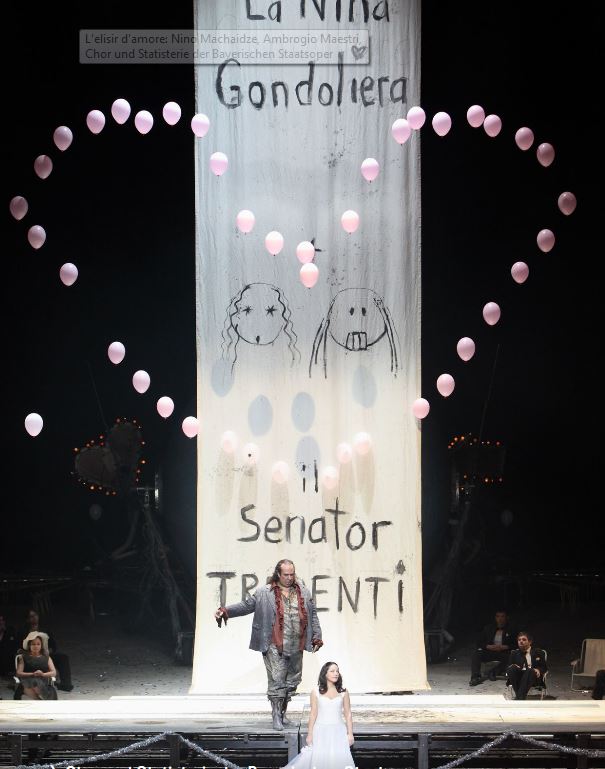
L’ELISIR D’AMORE in Parma

regioelisir

Sunday 22nd, March 2015, at 20.00 turn A
Thursday 26th March 2015, at 20.00 turn B
Sunday 29th March 2015, at 15.30 turn D
Tuesday 31st March 2015, at 20.00 turn C

regio1

Playful melodrama in two acts, libretto by FELICE ROMANI

Music by GAETANO DONIZETTI

Characters Cast
Adina JESSICA NUCCIO
Nemorino CELSO ALBELO
Belcore JULIAN KIM
Il dottor Dulcamara ROBERTO DE CANDIA
Giannetta ELEONORA CONTUCCI


regio2Conductor
FRANCESCO CILLUFFO

Direction
MARCELLO GRIGOROV

Scenes and costumes
NICA MAGNANI

Lights
ANDREA BORELLI

Chorus Master
MARTINO FAGGIANI

ORCHESTRA REGIONALE DELL’EMILIA ROMAGNA
CORO DEL TEATRO REGIO DI PARMA
Settings by Teatro Regio di Parma

Coproduction with
Fondazione Teatro Comunale di Modena
With overtitles

Performance lasts 2h 20′
Act I: 70′ – Interval: 20′ – Act II: 50′elisir1 elisir2

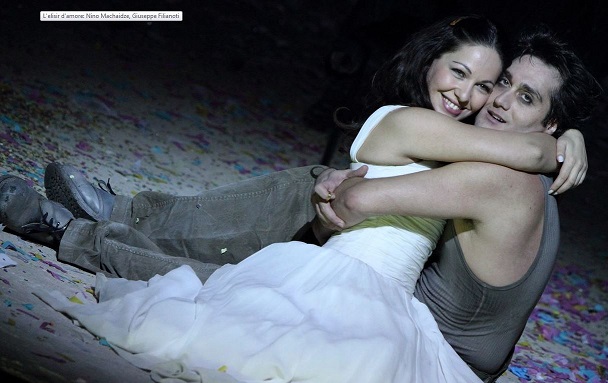
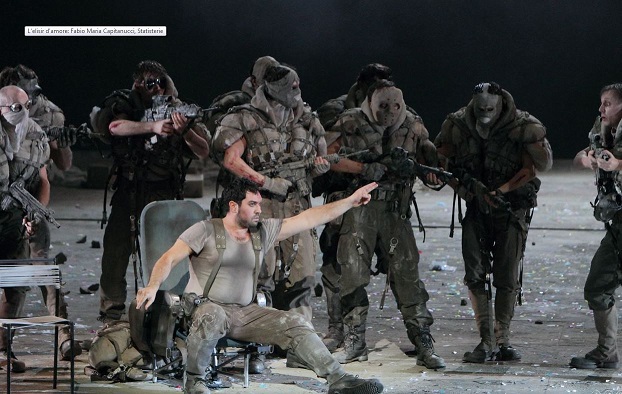
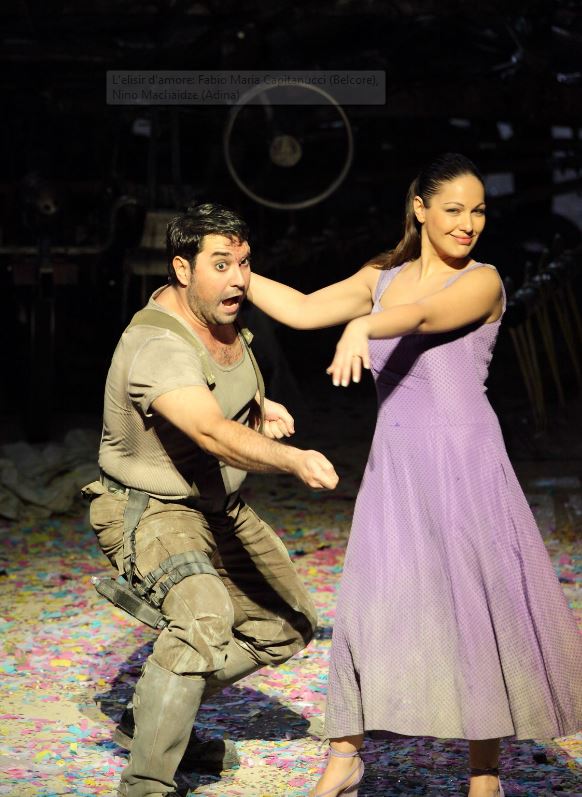
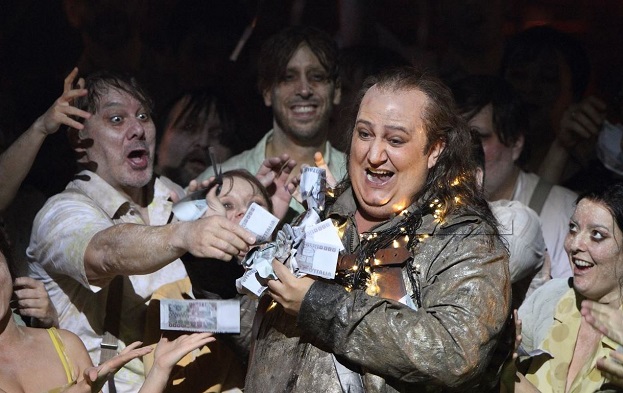
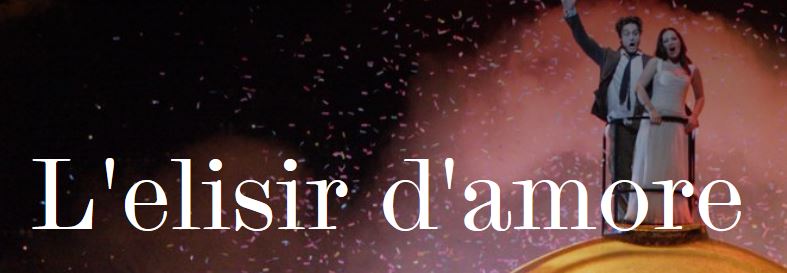
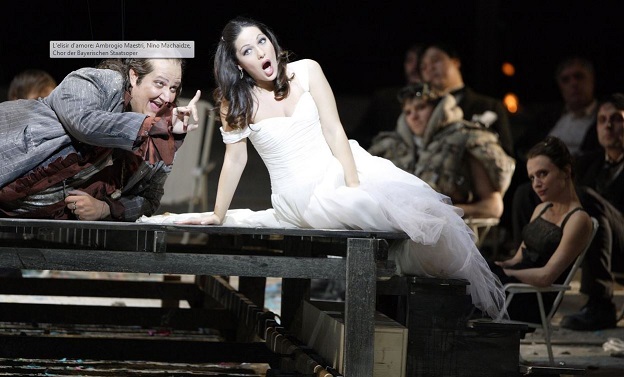
Open spaces and soft colours, a large tree, a hot air balloon, a painted backdrop: “Listen, listen”, Doctor Dulcamara’s Elisir d’Amore is returning to the Teatro Regio. Directed by Marcello Grigorov, Donizetti’s love potion returns to ensnare capricious hearts in the 1988 production created by Francesca Zambello with scenes and costumes by Nica Magnani. A framework of purity for the voices of Jessica Nuccio, Celso Albelo, and Roberto de Candia with the Orchestra Regionale dell’Emilia Romagna and the Chorus of the Teatro Regio in Parma directed by Francesco Cilluffo.

regio3

elisir3 elisir4 elisir5BEFORE THE SHOW…

Together with Giuseppe Martini, we discover the genesis and history as well as interesting anecdotes about the operas which will be performed. Students from the Conservatoire of Music “A. Boito” in Parma will interpret the most famous pieces from the operas to a piano accompaniment.

Ridotto del Teatro Regio di Parma

Free Admission
Saturday 21st March 2015, at 17.00

L’elisir d’amore

Introduced by GIUSEPPE MARTINI

Soprano
GIOVANNA IACOBELLIS

Tenor
LORENZO CALTAGIRONE

Baritone
LORENZO BONOMI

Piano
PAOLO GOBBI

Pupils of the Conservatorio “Arrigo Boito” di Parma

Vocal coach
DONATELLA SACCARDI

elisir6elisir7

regio

Posted in OPera | Tagged , , | Leave a comment

Wagner’s Siegfrid in Munich

bayerischeoperalogo

siegfridTitle

Second Day of “Der Ring des Nibelungen”

Composer Richard Wagner · Libretto by Richard Wagner
In German with German surtitles

Thursday, 26. March 2015
04:00 pm – 09:20 pm
Nationaltheater

Duration est. 5 hours 20 minutes · Intervals between 1. Akt and 2. Akt (est. 05:20 pm – 06:00 pm ) between 2. Akt and 3. Akt (est. 07:15 pm – 07:55 pm )

Only an individual without fear can turn Mime’s dream into reality, forge the shattered sword anew, slay Fafner the dragon, snatch the ring away from him and walk straight into Mime’s knife – and all the power will be Mime’s. But he himself is too frightened of the Wanderer, in whose puzzle game he loses his head, of the dragon, whom he wants his foster son to slay, of his brother, whom he meets in the forest, and of the fearless Siegfried, who thanks to a message from a prophetic bird helps himself to the ring and slaughters Mime.

But Wotan’s plan for a free hero also comes to naught: Siegfried smashes his spear with the sword and stands fearlessly before Brünnhilde. The sight of her body sets him atremble, and he finally learns the true meaning of fear. In the glow of the sun, the two discover their love.

Mountain cave. Forest. Wilderness. Mountain peak. The second day of the work belongs to nature. But the guise of the harmless, nature-loving Wanderer fails to protect the father of the gods from his curse.

JillGrove-ThomasMayer Ryan-ThomasMayer siegfrid3 siegfrid4 siegfrid6 Sperrhacke-Koch

SYNOPSIS

Past History

The giant Fafner, in the form of a dragon, guards the Ring which Alberich, the Nibelung, forged from the Rheingold and which gives the person possessing it great power. Alberich’s brother, Mime, a blacksmith, is brooding about how to re-possess the ring with the help of his foster son Siegfried. Siegfried is the son of the Wälsungs Siegmund and Sieglinde and was left in the care of Mime by his mother as she died giving birth to him, all she left him was the name Siegfried and the pieces of Siegmund’s smashed sword Nothung. Mime has a plan, of which Siegfried is ignorant, namely that Siegfried is to kill the dragon and bring him the Ring.

Wotan had smashed the sword with his spear so that Siegmund would be killed by Hunding in a fight. Because, however, his daughter, the Valkyrie Brünnhilde, wanted to protect Siegmund, Wotan punished her by condemning her to sleep. At Brünnhilde’s request the rock on which she was to lie was encircled by fire from which only a fearless hero would be able to claim her.

LanceRyanCatherineNaglestad LanceRyanWolfgangAblinger-Sperrhacke

Act One

Mime is trying desperately to fashion a sword worthy of Siegfried. When he returns from the woods with a bear to frighten Mime, Siegfried shatters the new sword. Only when Siegfried pesters him to tell him something about his origins does Mime tell him the story of his birth and show him the fragments of his father’s sword Nothung. Siegfried challenges Mime to forge a new sword for him out of the pieces.

Wotan, disguised as a Wanderer, comes to see Mime and persuades him to take part in a wager of knowledge, the forfeit being the head of the loser. The Wanderer has no trouble answering Mime’s questions about the people who inhabit the bowels of the earth, the earth and the cloudy heights. Mime is able to answer the question about the Wälsungs and the name of the sword Nothung with which Siegfried must kill Fafner. He is, however, unable to answer the third question about who is forging the new sword and thus loses the wager. The Wanderer explains to him that only a fearless hero would be able to do this and leaves Mime’s forfeited head to this hero.

Mime is afraid and asks Siegfried if he has ever known fear, but this is something Siegfried has never experienced. Mime hopes that Siegfried will learn what fear is from Fafner. Faced with Mime’s inability to fashion a new sword, Siegfried succeeds, against all the rules of the trade, in doing it himself. Meanwhile Mime mixes a potion with which he plans to kill Siegfried once he has brought him the sword.

Ryan-AnnaVirovlansky

Act Two

Alberich is lying in wait outside Fafner’s cave in order to regain possession of the Ring once the giant is dead. He realizes the true identity of the Wanderer who comes by and who warns him about Mime and Siegfried. Alberich suggests to Fafner, who has been woken by the Wanderer, that he will thwart Siegfried’s attempt to kill him in return for the Ring, but Fafner merely yawns and declines. Mime has led Siegfried to Fafner’s cave and leaves him there with orders to kill the dragon. Left alone in the woods, Siegfried’s thought turn longingly to his unknown mother. A singing woodbird catches his attention but he fails in his attempt to copy the bird’s song with his horn. He has instead woken Fafner with the sound of his horn. Siegfried kills him with his sword. Once he has tasted the dragon’s blood on his lips he is able to understand the woodbird, who advises him to fetch the Ring and the Tarn helmet from the cave and warns him about Mime.

Alberich angrily refuses Mime’s off er to share the treasures Siegfried has acquired and hides. Wh en Siegfried returns with his booty, Mime off ers him the poisonous potion as refreshment. The dragon’s blood has, however, made Siegfried able to realize Mime’s true intentions. He kills his foster father. Once again he hears the song of the woodbird telling him the way to Brünnhilde’s rock, where he is to rouse the woman from her sleep.Mayer-Ablinger

Act Three

The Wanderer rouses Erda from a deep sleep; she had once warned him about his own downfall and is the woman with whom he fathered Brünnhilde. Initially remembering her knowledge about how he could prevent the end she had prophesied, he sees her wisdom fade. He tells her about his plan for Siegfried, who will soon, together with Brünnhilde, redeem the world and sends her to everlasting sleep.

Accompanied by the woodbird, Siegfried encounters the Wanderer, who does not want to allow him access to Brünnhilde’s rock. Instead he asks pertinent questions to ascertain how much Siegfried knows about his mission. Wh en he realizes that Siegfried is completely without fear he holds out his spear towards him. Siegfried recognizes his father’s murderer and shatters the spear with his sword. The Wanderer disappears, the way to Brünnhilde is now open.

Striding through the fire, Siegfried finds the sleeping Brünnhilde. When he removes Brünnhilde’s protective shield he sees a woman for the first time in his life. He thinks what he feels is fear and wakes Brünnhilde with a kiss. She sees in him the hero with whom she will realize Wotan’s plans, the twilight of the Gods. Siegfried overwhelms her with his love, to which they both abandon themselves.siegfrid1 siegfrid7

Cast

Musikalische Leitung
Kirill Petrenko
Inszenierung
Andreas Kriegenburg
Bühne
Harald B. Thor
Kostüme
Andrea Schraad
Licht
Stefan Bolliger
Choreographie
Zenta Haerter
Dramaturgie
Marion Tiedtke
Dramaturgie
Olaf A. Schmitt

Siegfried
Stephen Gould
Mime
Andreas Conrad
Der Wanderer
Thomas J. Mayer
Alberich
Tomasz Konieczny
Fafner
Christof Fischesser
Erda
Qiu Lin Zhang
Brünnhilde
Catherine Naglestad
Stimme eines Waldvogels
Iulia Maria Dan
siegfrid8
Posted in OPera | Tagged , | Leave a comment