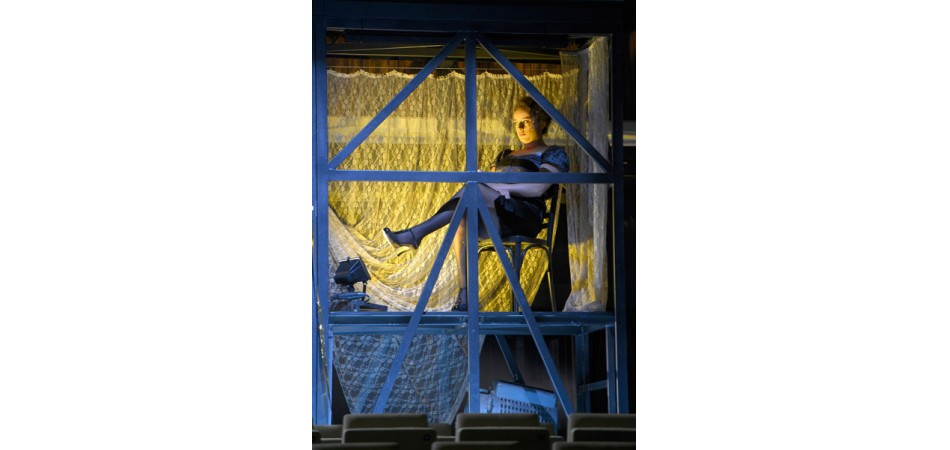
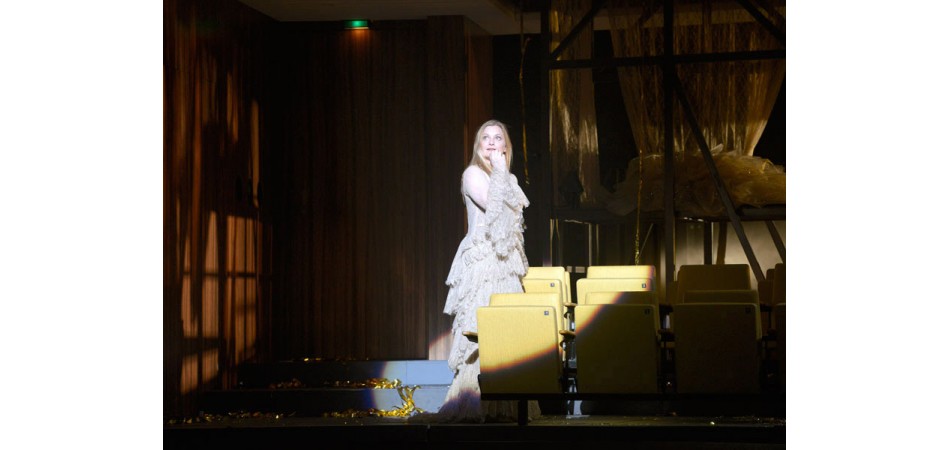
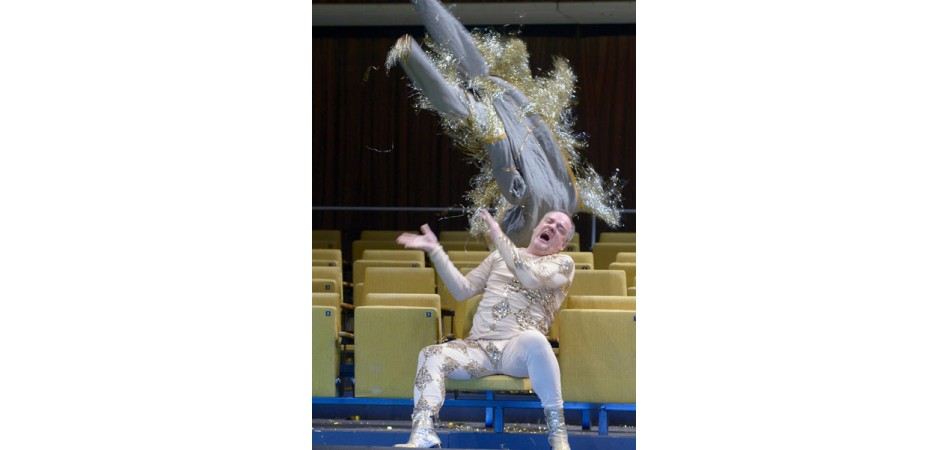
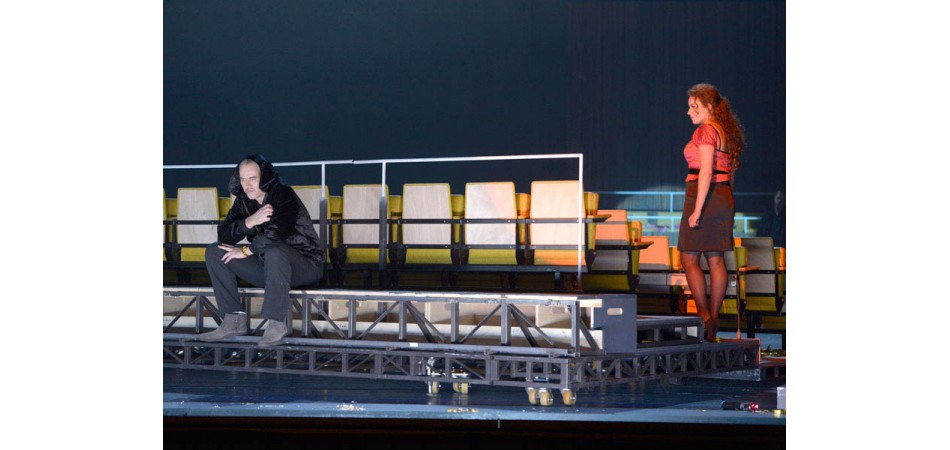
“Black el payaso / I pagliacci”, dual performance in Madrid

Teatro de la Zarzuela

PRESENTS:

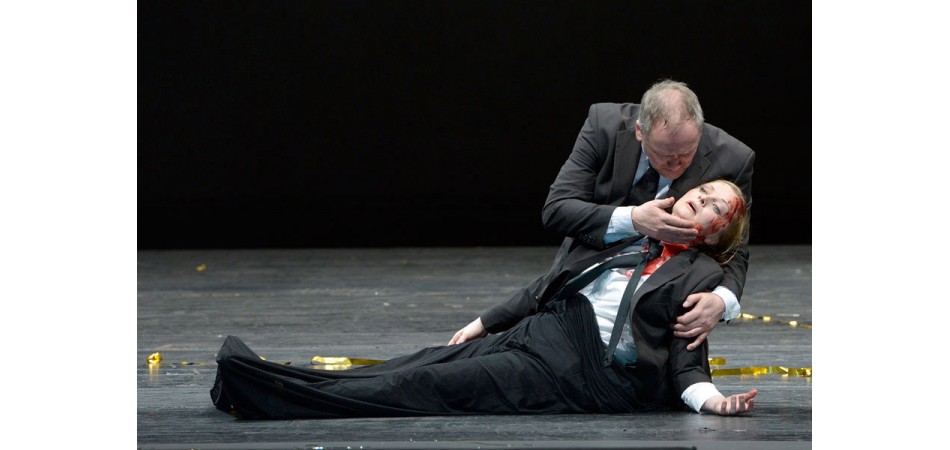
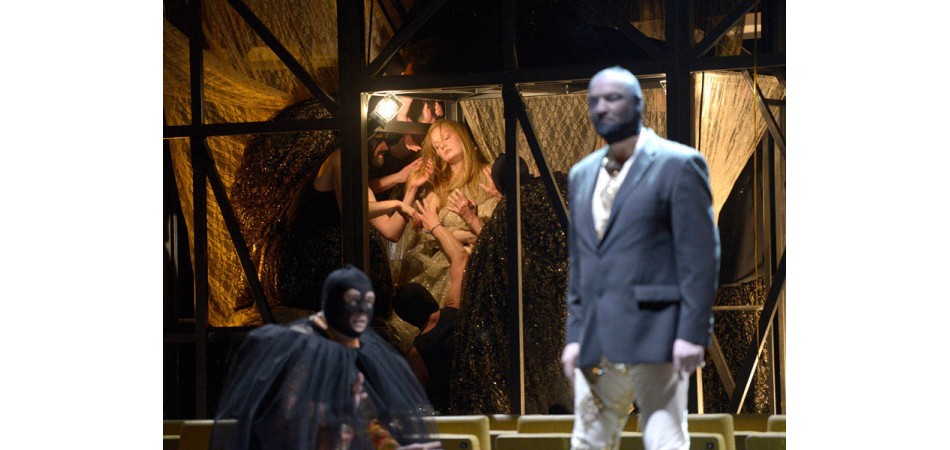
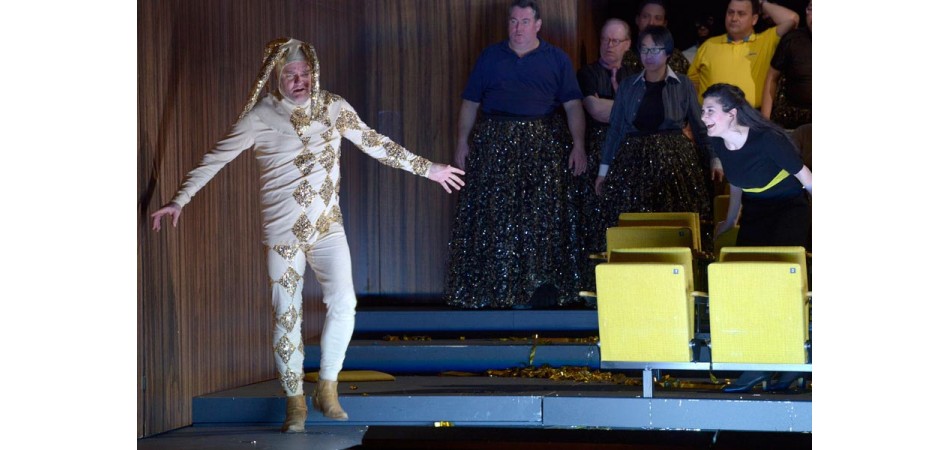
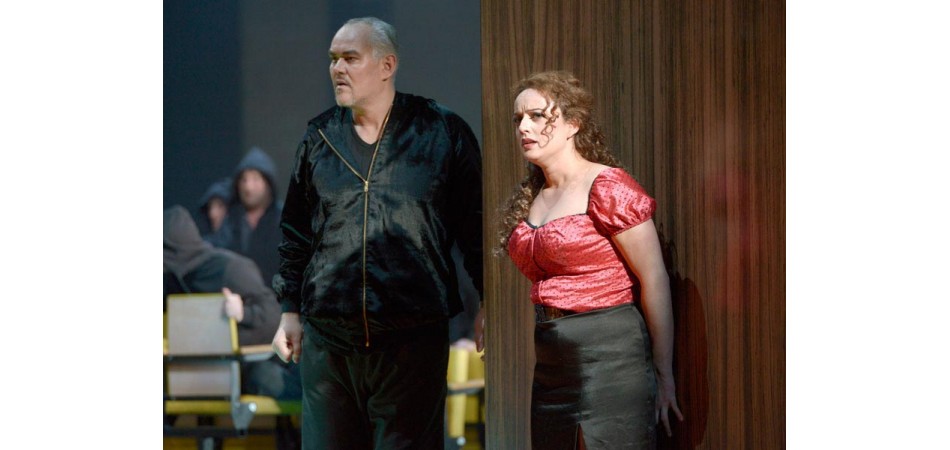
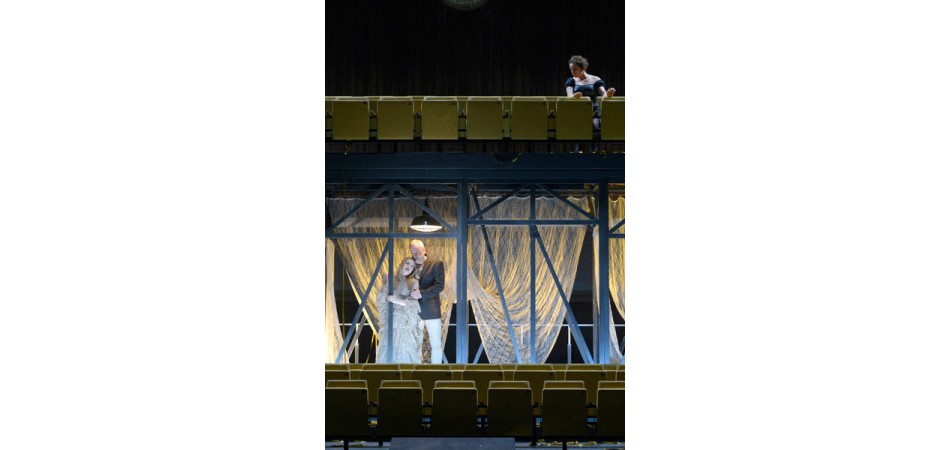
Black el payaso / I pagliacci

Black el payaso / I pagliacci

[Dual program]

Approximate duration:

Black el payaso
Operetta in a prologue and three acts by Francisco Serrano Anguita
Music by PABLO SOROZÁBAL
Worldpremiered at Teatro Coliseum, Barcelona, on April 21, 1942

I pagliacci
Drama in a prologue and two acts by Ruggero Leoncavallo
Music by RUGGERO LEONCAVALLO
Worldpremiered at Teatro dal Verme, Milán, on May 21, 1892

New production of Teatro de la Zarzuela in Madrid

Synopsis

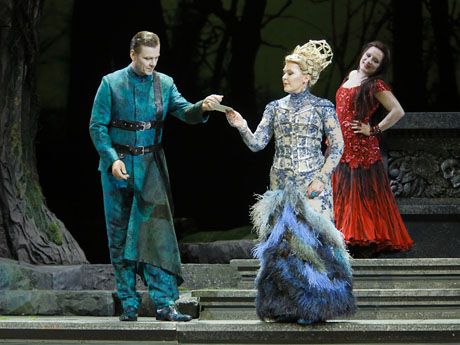
In Black El Payaso, the action takes place in Paris and later moved to the imaginary country of Orsonia. Black and White are two clowns working in the French capital. One day the princess Sophie goes to the theater and hears Black singing and suspects that heis her fiance Daniel, the Grand Duke, of whom nothing has been heard. Black, driven by love, is immersed in deceit and lies …

The action of I Pagliacci is in the small village of Montalto (Italy) in the late nineteenth century. Villagers welcome a traveling theater troupe whose leader, Canio, announces the function for the same night. Jealous of his wife Nedda, Canio suspected infidelities. A true story of adultery with a very similar to the situation of the work they have to represent …

Dates & Times

April 4, 6, 9, 11, 13, 16, 19, 20, 23, 24, 26 and 27, 2014
8 PM (Sundays, at 6 PM)

Audience days
April 16 and 23
Subscription performances
April 4, 6, 9, 11, 19, 24 and 26

Artistic Team

Music director:
Donato Renzetti
Stage director:
Ignacio García
Sets:
Miguel Ángel Coso and Juan Sanz
Costumes:
Pepe Corzo
Lights:
Francisco Ariza
Black el payaso (cast)
LA PRINCESA SOFÍA DE SUREVIA: María José Moreno (April 4, 6, 9, 11, 19, 24 and 26), María Rey-Joly (April 13, 16, 20, 23 and 27); CATALINA FEODOROVNA: Nuria García; LA CONDESA DE SARATOV: Trinidad Iglesias; BLACK: Juan Jesús Rodríguez (April 4, 6, 9, 11, 19, 24 and 26), Fabián Veloz (April 13, 16, 20, 23 and 27); WHITE: Rubén Amoretti; CARLOS DUPONT: Javier Galán; GREGORIO ZINENKO: Miguel Palenzuela; HENRY MARAT: José Manuel Montero; EL BARÓN DE ORSAVA: Miguel Sola; BAYDAROV: Jorge Merino; EL DIRECTOR DE ESCENA: Emilio Gavira
I pagliacci (cast)
NEDDA: María José Moreno (April 4, 6, 9, 11, 19, 24 and 26), María Rey-Joly (April 13, 16, 20, 23 and 27); CANIO: Jorge de León (April 4, 6, 9, 11, 19, 24 and 26), Albert Montserrat (April 13, 16, 20, 23 and 27); TONIO: Juan Jesús Rodríguez (April 4, 6, 9, 11, 19, 24 and 26), Fabián Veloz (April 13, 16, 20, 23 and 27); BEPPE: Miguel Borrallo; SILVIO: David Menéndez / Carlos Bergasa
Orquesta de la Comunidad de Madrid
Resident orchestra of Teatro de La Zarzuela
Coro del Teatro de La Zarzuela
Director:
Antonio Fauró

Posted in Music, OPera | Tagged , , , , , , , , | Leave a comment

RIGOLETTO at the Deutsche Oper Berlin

Deutsche Oper Berlin Presents

rigoletto11RIGOLETTO

Giuseppe Verdi (1813 – 1901)

Melodramma in 3 acts; Libretto by Francesco Maria Piave; First performed on 11th March 1851 in Venice; Premiered at the Deutsche Oper Berlin on 21. April 2013

In Italian with German surtitles

Cast

Conductor Roberto Rizzi Brignoli
Director Jan Bosse
Stage-Design Stéphane Laimé
Costume-Design Kathrin Plath
Chorus Master Thomas Richter
The Duke of Mantua Ivan Magrì
Rigoletto Andrzej Dobber
Gilda Lucy Crowe
The count of Monterone Bastiaan Everink
The count of Ceprano Andrew Harris
The countness of Ceprano Siobhan Stagg
Marullo Stephen Barchi
Matteo Borsa Alvaro Zambrano
Sparafucile Ante Jerkunica
Maddalena / Giovanna Clémentine Margaine
A bailiff Ben Wager
A court lady Christina Sidak
Chorus Chor der Deutschen Oper Berlin
Orchestra Orchester der Deutschen Oper Berlin

Information

“From a purely theatrical point of view I consider “Rigoletto” to be the best story that I’ve set to music so far […]. It has really powerful scenes, temperament, pathos, a lot of variety.”  (Verdi to Antonio Somma, 22.4.1853)
In listing the attributes of his 1851 melodrama, adapted from Victor Hugo’s hit play “Le roi s’amuse”, Verdi is also describing the challenges that any production of this opera must rise to. RIGOLETTO is a masterpiece whose charm lies precisely in the confrontation between psychological portraiture and the unlikely turns of a fantastical tale, a tale that is half tragedy, half romantic horror story. For better or worse, despite his grotesque physique, the hunchbacked jester-hero has to get his audience laughing. His daughter Gilda seems angelic by contrast – and yet human through and through in her unconditional love and self-sacrifice. This blend of realism and the fantastic makes the RIGOLETTO material a worthy challenge for the great directors. Following on from Hans Neuenfels’ successful 20-year run with the work at the Deutsche Oper Berlin, Jan Bosse is now grasping the nettle. Since turning to musical theatre in recent years [ORFEO, LA CALISTO] the feted theatre director now delivers not only his first Verdi but also his first work for a Berlin opera house.

Pre-performance lecture (in German): 45 minutes prior to each performance

Photographs © Bettina Stöß

rigoletto15 rigoletto14 rigoletto13 rigoletto12 rigoletto10 rigoletto9 rigoletto8 rigoletto7 rigoletto6 rigoletto5 rigoletto4 rigoletto3 rigoletto2 rigoletto1

Posted in OPera | Tagged , , , , , | Leave a comment

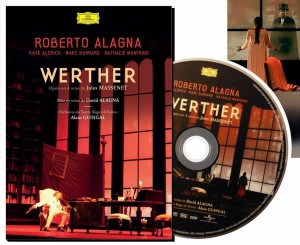
Roberto Alagna brings WERTHER in DVD.

werthercopertina-300x245WERTHER in DVD.

[excerpts from the web site of Roberto Alagna]

February 17, 2014 was the release date of this Werther at Deutsche Grammophon -Universal – Music Classic & Jazz France. This DVD offers an accurate and rigorous work’s reading and staging. Pre-ordered, eagerly awaited, and desired by many, that Werther, immortalized in the 2005 staging at the Teatro Regio of Turin, is now finally in record stores. […]

The masterpiece by the great Massenet is in nature free of spectacular settings. It becomes a rich show made of many close ups and facial expressions, thanks to the polished dramatic staging of David Alagna, also involving his brother Frederico, a gifted sculptor, graphic artist and painter, as well as thanks to the perfect image pickup used for the video production. From their common work arose also elegant, sometimes subtly sumptuous and upsetting scenes, contributing to the overall beauty of this production. Yet one should not be misled by a seeming compliance with the traditional “classical” canons. The Alagna brothers are clearly offering an extremely contemporary Werther, regarding as well the literal reading of the score itself as the staging performance.

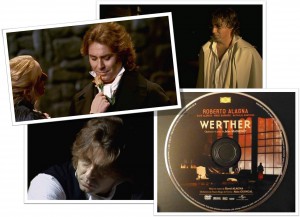
thumbThe beautiful Kate Aldrich as Charlotte, dazzling with a voice perfectly suited to the role, is often also a feast for the eyes …but the perfect performance of Roberto Alagna as the main protagonist firstly deserves to be emphasized, if ever necessary: even if the video takes us a few years back, he stands as the best Werther it can be on contemporary opera stages.

How not to keep still in our eyes and ears the memorable performance at the Opera National de Paris Bastille in late January / early February 2014, shortly before the DVD release ? But these are two sides of a same medal. If still needed, it proves with no doubt how perfectly the singer is mastering the vocal and acting featuring of Werther for almost 10 years now, but also how he is continuously seeking for new approaches to his character. Thanks to this permanent renewal, Werther is certainly one of the most moving and accomplished role in Alagna’s Repertoire.

1618314_699333243440599_54169856_o-300x217Regarding the voice of the famous tenor, only one adjective is called for: “brilliant”, as well in phrasing as in the singing line and expressiveness. With his voice, especially when he is singing in French, Alagna was and is able to do just what he wants, and it’s obvious: a feast for ears and minds […] His Werther is deeply committed, youthful, expressive and credible as usual, tempestuous and passionate, never too sweet, occasionally proud. He doesn’t die of weariness but of the depressive part of his soul. […] And yet is he able to give himself up to the happy scene of communion with nature, so serene at the beginning at Act 1, typically romantic and distinctive of Goethe’s character.

1607006_651472491580459_791424142_n-300x168Werther, that’s it. It may bring a thousand other sophisticated reviews, but the reading key to the staging set the Alagna brothers have chosen, is the rightest and the most faithful to Hugo’s spirit. […] The whole production is marked by a high level of touching realism, perfectly suitable for Roberto’s featuring. He takes it over and transcends it, reaching the heights in the personal and unique embodying of the character.

Werther in this DVD is so rich, in regard to both music and visual aesthetic, that it should be watched a few times to fully appreciate all its specificity and beauty.

An excellent multimedia item, of highly refined quality: we strongly recommend!

Posted in OPera | Leave a comment

Alban Berg’s Wozzeck in Tokyo

mainmenuTokyo 

Presents:

wozzeck

Wozzeck

    • 2013/2014 Season
    • Alban Berg : Wozzeck
      Opera in 3 Acts
      Sung in German with Japanese Supertitles
    • OPERA HOUSE
  • PERFORMANCES

    2014
    April 5 April 8 April 11 April 13
    Saturday Tuesday Friday Sunday
    2:00


    2:00
    *
    2:00
    *
     
     
    7:00


Wozzeck is the only opera Alban Berg ever completed. This production was mounted in 2009 as a joint production with the Bavarian State Opera. The production was directed by Andreas Kriegenburg, who also directed the production of Rigoletto which opens the season. Kriegenburg’s Wozzeck offers a biting depiction of the way that widespread poverty and violence can link one generation to the next in a society. Conducting will be Günter Neuhold. The title role will be sung by George Nigl, a baritone who maintains an active international performance schedule. Marie will be sung by Elena Zhidkova, with whom audiences should be familiar thanks to her appearances in past NNTT opera productions.

STAFF

Conductor : Gunter Neuhold
Production : Andreas Kriegenburg
Scenery Design : Harald Thor
Costume Design : Andrea Schraad
Lighting Design : Stefan Bolliger


(Conductor)
Gunter Neuhold

(Production)
Andreas Kriegenburg

CAST

Wozzeck : Georg Nigl
Tambourmajor : Roman Sadnik
Andres : Mochizuki Tetsuya
Hauptmann : Wolfgang Schmidt
Doktor : Tsumaya Hidekazu
1. Handwerksbursch : Osawa Ken
2. Handwerksbursch : Hagiwara Jun
Der Narr : Aochi Hideyuki
Marie : Elena Zhidkova
Margret : Yamashita Makiko

Chorus : New National Theatre Chorus
Orchestra : Tokyo Philharmonic Orchestra

Photos

(Wozzeck)
Georg Nigl
Photos

(Tambourmajor)
Roman Sadnik
Photos

(Andres)
Mochizuki Tetsuya
Photos

(Hauptmann)
Wolfgang Schmidt
Photos

(Doktor)
Tsumaya Hidekazu
Photos

(Marie)
Elena Zhidkova
Posted in Music, OPera | Tagged , , , , | 1 Comment

NABUCCO at the Grand Theatre de Geneve: Elizabeth Blancke-Biggs shines as Abigaille.

Grand Theatre de Geneve

Nabucco

1653856_10152077767814215_1952501569_n

“Pride goes before a fall”: the Babylonian king Nebuchadnezzar follows the path from megalomania to madness before finding reason again. His journey is closely intertwined with love, hate, renunciation and the intoxication of power that mark the stories of Fenena and Abigaille, Nabucco’s two very different daughters. The Hebrew captives’ chorus “Va pensiero”, quoting the 137th Psalm “By the rivers of Babylon” became so well known that it blurred the contours of Verdi’s great psychodrama and family tragedy. Veteran Swiss director Roland Aeschlimann uses a highly symbolic set (imposing stairs, mountain of books, Star of David) to restore unity to the broken house of Nabucco. Great performance by the NewYorker Elizabeth Blancke-Briggs, who will soon appear in an interview on this blog.

 Dramma lirico in 4 parts by Giuseppe Verdi Libretto by Temistocle Solera. First performed in Milan on 9 March 1842 at Teatro alla Scala. New production At the Grand Théâtre de Genève Sung in Italian with English and French surtitles Duration: approx. 2:40 (including intermission)

PERFORMANCE DATES

fri 28 feb 14 -19:30

sat 01 mar 14 – 19:30

sun 02 mar 14 – 15:00

tue 04 mar 14 – 19:30

thu 06 mar 14 – 19:30

fri 07 mar 14 – 19:30

sat 08 mar 14 – 19:30

mon 10 mar 14 – 19:30

Musical Director John Fiore
Stage Director & Set Designer Roland Aeschlimann
Associate Stage Director & Body Expression Andrea K. Schlehwein
Costume Designer Andrea Schmidt-Futterer / Roland Aeschlimann
Lighting Designer Simon Trottet
Vidéo fettFilm
Nabucodonosor Lucio Gallo (28 fev., 2, & 6 march.)*
Nabucodonosor Roman Burdenko (1, 4, 7, 8 & 10 march)*
Ismaele Leonardo Capalbo
Zaccaria Roberto Scandiuzzi (28 fév., 2, 6, 8 & 10 march)*
Zaccaria Almas Svilpa (1er, 4 & 7 march)*
Abigaille Csilla Boross (28 fév, 2, 6 & 8 march)*
Abigaille Elizabeth Blancke-Biggs (1er, 4, 7 & 10 march)*
Fenena Ahlima Mhamdi
High priest of Baal Khachik Matevosyan
Abdallo Terige Sirolli
Anna Elisa Cenni

Grand Théâtre Opera Chorus Director Ching-Lien Wu Orchestre de la Suisse Romande *subject to changes

Synopsis

Nabucco’s daughter Fenena is the hostage of the Jewish people. Zaccaria the High Priest of the Jews places her in the care of Ismaele, and they fall in love. They attempt to elope, but Fenena’s older sister Abigaille threatens to denounce them unless Ismaele becomes her lover. The rivalry between the sisters aggravates Abigaille’s thirst for power and genocidal tendencies. She defies her father and persecutes the Jews. But Nabucco regains his senses and kingly power when he turns to the God of the Jews…

Posted in OPera | Leave a comment

WELSH NATIONAL OPERA PRESENTS “La traviata”

WELSH NATIONAL OPERA PRESENTS

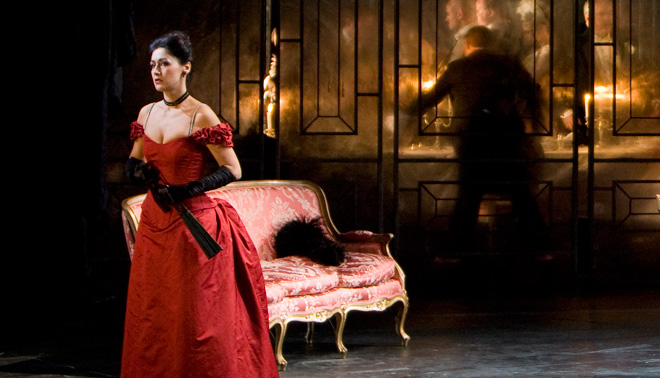
WNO-La-traviata---Myrto-Papatanasiu-(Violetta)-Eddie-Wade-(Baron-Douphol)-Alfie-Boe-(Alfredo)---Credit-Bill-Cooper-449

Myrto Papatanasiu (Violetta)-Eddie Wade (Baron-Douphol)-Alfie Boe (Alfredo)— Photo Credit: Bill Cooper

La traviata

Giuseppe Verdi

Giorgio Germont has made a terrible mistake. Germont has realised that Violetta, the fallen woman he drove away from his son, Alfredo, was the best thing that will ever happen to his inexperienced boy. His realisation comes late in the day as Violetta’s health is getting worse. Can Germont repair the damage before it’s too late? La traviata is an attack on hypocrisy. It is also a life-affirming celebration of the fact that essential human qualities like compassion, love and self-sacrifice do exist. Most of all, La traviata is a supreme tear-jerker. David McVicar’s masterful production makes sure that few leave the theatre with dry eyes.

Performance Cities 

Birmingham Hippodrome              4 Mar-8 Mar

Milton Keynes Theatre            11 Mar-15 Mar

Mayflower Theatre, Southampton   18 Mar-22 Mar

Theatre Royal, Plymouth       25 Mar-29 Mar

Venue Cymru, Llandudno      1 Apr-5 Apr

The Bristol Hippodrome      12 Apr  – See more at: http://www.wno.org.uk/traviata#sthash.IIUlV8uL.dpuf

Free New to opera talks Tuesday 11 February – Saturday 5 April New to opera? La traviata is the perfect place to start. Join us for a special introduction to opera before selected performances of La traviata.

The Whole Story Thursday 6 February – Wednesday 19 March The Whole Story is the perfect introduction to the Fallen Women season. Before the performances begin, our team of experts will guide you through the music, stories and background to each opera.

Literary inspirations Friday 28 February A special hour long talk looking at how the season’s operas draw on classics by Dumas and and Prévost.

David Pountney in Conversation Friday 7 February David Pountney and a key figure from the arts explore the Fallen Women theme.

WNO-La-traviata---Myrto-Papatanasiu-(Violetta)---Credit-Bill-Cooper-169

Myrto Papatanasiu (Violetta)— Photo Credit: Bill Cooper

SYNOPSIS

Act One | Paris Violetta, a courtesan under the protection of Baron Douphol, is giving a party. She is introduced to Alfredo Germont, a young man of solid Provençal family who confesses to being already in love with her. As she leads her guests off 
to dance, Violetta is overcome by a coughing fit. Her frivolous friends are unconcerned, Alfredo is not. He again protests his love but she discourages him. Left alone when her guests finally depart, Violetta finds herself unexpectedly touched by the young man’s passionate declaration. Despite this she convinces herself that her only choice is to continue to pursue a life of hectic pleasure.

Interval

Act Two
 Scene One |
 A country house near Paris, three months later Violetta has given in to her feelings and she and Alfredo are now living together in the country, where her health has improved. When he accidentally discovers from her maid, Annina, that Violetta has been selling her possessions in order to pay their bills, Alfredo is overcome with shame and leaves for Paris in order to raise the necessary money. Violetta is surprised by an unheralded visit from Giorgio Germont, Alfredo’s father. Having assumed that his son has been squandering his inheritance on Violetta, he is shocked to discover that she has been paying for everything. He begs her to break away from his son as their relationship is threatening 
his daughter’s prospects of marriage into a respectable family. Germont persuades Violetta that she must make the sacrifice in order to protect the future happiness of both his son and daughter. A distraught Violetta finally agrees and sends word to Baron Douphol, signalling her return to Paris. When Germont leaves she writes a farewell note to Alfredo, to be given to him when she has gone. When Alfredo reads the note he rejects his father’s attempts to console him and rushes back to Paris, determined to avenge himself for what he believes to be Violetta’s betrayal.

Scene Two | Flora’s house in Paris, the same night Another party is under way. Alfredo arrives alone, expecting to find Violetta back in her old circle. His fears are realized when she appears, on the arm of Baron Douphol. The two men play at cards and Alfredo wins a large amount of money. Desperate to prevent them fighting, Violetta tries to persuade Alfredo to leave the party. He refuses and forces her to say that she loves the Baron. In a fury, Alfredo calls all the guests to witness the repayment of his debts and flings his winnings in Violetta’s face. She collapses. Germont witnesses his son’s outburst and reproaches him for his cruel behaviour.

Interval

Act Three | Violetta’s sickroom, a few months later Violetta is dying, friendless and in penury, with only Annina for company. She reads a letter from Germont telling her that he has told Alfredo the truth and that they are both coming to beg her forgiveness. The two lovers are reunited and plan feverishly for a happier future, but it is too late. Violetta dies in Alfredo’s arms.

WNO-La-traviata---Dario-Solari-(Giorgio-Germont)-Myrto-Papatanasiu-(Violetta)---Credit-Bill-Cooper-128

Dario Solari (Giorgio Germont)-Myrto Papatanasiu (Violetta)— Photo Credit:Bill Cooper

Creative team includes:

Conductor Simon Phillippo

Director David McVicar

Revival Director Sarah Crisp

Designer Tanya McCallin

Lighting Designer Jennifer Tipton

Choreographer Andrew George

Lighting realised on tour by Benjamin Naylor

Revival Choreographer Colm Seery

Dance Captain Joanna Jeffries

Chorus Master Stephen Harris

Musical Preparation Russell Moreton

Staff Director Katherine Wilde

Language Coach Matteo Dalle Fratte

Stage Manager Suzie Erith

Production Manager Robert Pagett

Cast includes:

Violetta Valéry Linda Richardson

Flora Rebecca Afonwy-Jones (ex. 11 March), Amanda Baldwin (11 March)

Marquis d’Obigny Philip Lloyd-Evans

Baron Douphol Jack O’Kelly

Gaston Howard Kirk

Alfredo Germont Peter Sonn (until 1 March), Ji-Min Park (4, 8, 11 March), Leonardo Capalbo (from 15 March)

Annina Sian Meinir

Giuseppe Michael Clifton-Thompson

Giorgio Germont Alan Opie

Doctor Grenvil Martin Lloyd

Messenger George Newton-Fitzgerald

Flora’s Servant Laurence Cole

Dancers Esther Fuge, Joanna Jeffries, Sophia McGregor, Jenna Sloan, Gordon Brandie, Nicholas Keegan, Ashley James Orwin

WNO-La-traviata---Cast---Credit-Bill-Cooper-445

Cast—Phot Credit:Bill Cooper


All performances start at 7.15pm (except 16 February at 4pm)

Running time approximately 2 hours 40 minutes including two intervals

Sung in Italian with surtitles in English (and Welsh in Cardiff and Llandudno)

Co-production with Scottish Opera and Gran Teatre del Liceu, Barcelona

Under 30s can get tickets for under £5 please talk to your local box office for further details

Download

Posted in OPera | Tagged , , , , , | Leave a comment

“JULIUS CAESAR” in Milwaukee

THE FLORENTINE OPERA COMPANY (Milwaukee) PRESENTS:

Caesar

An Empire Rests in the ‘Hands of Love’ in this New Florentine Opera Production

Behold, as the greatest Roman general who has ever lived falls madly in love with the most beautiful and powerful Queen in the history of ancient Egypt. A war between the great nations of Rome and Egypt is eclipsed by the passion of Caesar and Cleopatra in this brand new production of  Handel’s most beloved opera. Soprano Ava Pine (Pamina in The Magic Flute 2009, Blanca in Río de Sangre 2010) returns to the Florentine Opera stage as the seductive Cleopatra opposite mezzo-soprano Deanne Meek, making her Florentine debut as Julius Caesar. Mezzo-soprano Adriana Zabala (Cherubino in The Marriage of Figaro 2013) sings Sextus, and counter-tenor Ian Howell (Cupid/Spirit in Venus & Adonis/Dido & Aeneas 2011) returns with newcomer Derrick Ballard in this production directed by the Metropolitan Opera’s Eric Einhorn (Turandot 2011). Maestro William Boggs (two-time Grammy-winning Elmer Gantry 2010) conducts the Milwaukee Symphony Orchestra in this new Florentine Opera production featuring sets and lighting by Noele Stollmack with new costume design by Christianne Myers (The Magic Flute 2009, Rigoletto 2010, Venus/Dido 2011).

Sung in Italian with English supertitles projected above the stage

Performance Information:
Uihlein Hall, Marcus Center for the Performing Arts
929 N. Water St., Milwaukee, WI

Friday, March 28, 2014 | 7:30pm
Sunday, March 30, 2014 | 2:30pm

Featured artists include:

Ava Pine. . . . . . . . . . . . . . . . . . . . . . . . Cleopatra

Deanne Meek . . . . . . . . . . . . . . . . . . . . Caesar*

Eve Gigliotti. . . . . . . . . . . . . . . . . . . . . .Cornelia*

Adriana Zabala. . . . . . . . . . . . . . . . . . . .Sextus

Ian Howell. . . . . . . . . . . . . . . . . . . . . . .Ptolemy

Derrick Ballard. . . . . . . . . . . . . . . . . . . .Achillas*

Eric Einhorn . . . . . . . . . . . . . . . . . . . . . Stage Director

William Boggs . . . . . . . . . . . . . . . . . . . Conductor

Noele Stollmack . . . . . . . . . . . . . . . . . . Lighting Designer

Christianne Myers . . . . . . . . . . . . . . . . . Costume Designer
(Costume design sponsored by John Shannon and Jan Serr)

Synopsis of Julius Caesar

An opera in three acts by George Frideric Handel set to an Italian libretto by Nicola Francesco Haym

Handel’s Julius Caesar takes place in Egypt in 48 B.C.

ACT I

After defeating Pompeo’s forces, Julius Caesar’s political rival and ex-son-in-law, Caesar and his troops settle victoriously on the banks of the Nile river. Pompeo’s second wife, Cornelia, begs Caesar to have mercy upon her husband. He will only show mercy if Pompeo asks for it in person. A few moments later, Achillas, leader of the Egyptian military brings Caesar a casket containing the head of Pompeo, presented as a gift from Ptolemy. Ptolemy and his sister, Cleopatra chose to rule Egypt together. Upset by the gesture, Caesar takes leave to reproach Ptolemy. After Cornelia faints, Caesar’s assistant, Curio, who is secretly in love with Cornelia, tells her that he will avenge her husband’s death. Cornelia disdains his offer, and her son, Sextus takes revenge into his own hands.

Meanwhile, Cleopatra has come to learn that Ptolemy devised plans to murder Pompeo only to gain favor with Caesar. Realizing what she must do, she decides to win favor from the Roman conquerer by her own means. Achillas brings Ptolemy the news that Caesar was unhappy with Pompeo’s death, and offers to kill Caesar himself should he be given Cornelia’s hand in marriage. Ptolemy relishes the thought of no longer having to deal with Caesar, and agrees to Achillas’ terms.

Disguised as “Lidia”, Cleopatra enters into Caesar’s camp. She meets with Caesar, who is distracted by her beauty, and divulges the hardships she has faced. They are interrupted by the grieving Cornelia searching for her husband’s sword. Sextus isn’t far behind to stop her, and he vows to avenge his father’s death. “Lidia” offers guidance to reach Ptolemy, and Caesar, Sextus, and Cornelia leave to find him.

Caesar enters Ptolemy’s palace, suspecting something may happen. When Ptolemy sees Cornelia, he immediately falls in love with her, but gives the impression to Achillas that he will still give her to him. Sextus challenges Ptolemy, but loses, and Cornelia rejects Achillas’ advances. Burned by her emotions, Achillas calls in his soldiers to arrest Sextus.

ACT II

Caesar has come to Cleopatra’s palace in search of “Lidia.” Cleopatra instructs her advisor to lead Caesar into her room. She begins singing music of love and cupid’s arrows as Caesar draws nearer to her bedroom doors. He is captivated once more by her beauty.

In Ptolemy’s palace, Achillas tries desperately (and unsuccessfully) to win Cornelia’s affections. She turns her head from him in scorn. After the dejected Achillas leaves, Ptolemy takes his turn to win her over, but is met with the same harsh feelings. Sextus arrives hell-bent on killing Ptolemy.

Back in Cleopatra’s bedroom, her tryst with Caesar is interrupted when they hear conspirators approaching. She reveals her true identity to him and offers to help him escape. Instead, he chooses to stay and fight.

Ptolemy sits among his harem of women, including Cornelia, when Sextus bursts into the room, charging the king. Achillas quickly tackles him to the floor and announces that his troops have just attacked Caesar. Having cornered him within the palace, the troops forced him to jump out the window into the billowing sea, where he surely died. Achillas then demands that Ptolemy give Cornelia to him, but Ptolemy refuses. Overcome with grief, Sextus tries to stab himself with his sword, but Cornelia stops him. She relights his vengeful flame and he vows to kill his father’s murderer once again.

ACT III

Ptolemy and Cleopatra have taken up arms against each other. As their own armies battle for dominance, Caesar, who survived his fall, prays for Cleopatra’s victory. However, Ptolemy triumphs over Cleopatra, and he orders his men to escort her out of the palace in chains. Sextus, on his way to kill Ptolemy, stumbles upon a wounded Achillas. Having been betrayed by Ptolemy, who has kidnapped Cornelia, Achillas hands Sextus a sigil that gives him full command of his troops stationed in a nearby cave. Sextus takes the sigil and Achillas dies. Caesar arrives moments later and asks Sextus to let him take the sigil and control the army, “For if he cannot save both Cornelia and Cleopatra, he will die trying”. Sextus relinquishes the sigil and Caesar quickly departs.

Cleopatra sits in a small cell within a camp of Ptolemy’s troops, and prays for Caesar. She is astonished when she spots him leading an army into the camp. After rescuing her, the lovers embrace before setting out to Ptolemy’s palace. Sextus arrives at the palace first and finds Ptolemy courting his mother again. This time, however, Sextus is able to kill Ptolemy.

When Caesar and Cleopatra enter Alexandria, they are greeted by cheers and adoration. Cornelia presents tokens of Ptolemy’s death to Caesar, who then hands them to Cleopatra. He tells her that he will support her as queen and the two announce their love. The citizens rejoice and revel in new found peace.

Synopsis compiled from historical performance info and various references by the Florentine Opera Company ©2013

Posted in Music, OPera | Tagged , , , , , , , | Leave a comment

I Pagliacci / Carmina Burana at the HAWAII OPERA THEATRE

HAWAII OPERA THEATRE Presents:

I Pagliacci / Carmina Burana

You’ve never seen anything like this!

Slideshow Image 1

Performance Schedule

  • March 28, Friday, 8:00pm
  • March 30, Sunday, 4:00pm
  • April 1, Tuesday, 7:00pm

All performances at the Blaisdell Concert Hall.

Sung in Italian, Latin & Middle High German with English translations projected above the stage.

  • CANIO:
    Kip Wilborn
  • NEDDA/SOPRANO SOLOIST:
    Elizabeth Caballero
  • TONIO:
    Louis Otey
  • SILVIO/BARITONE SOLOIST:
    Andrew Garland
  • BEPPE/TENOR SOLOIST:
    Tracy Wise
  • CONDUCTOR:
    Hal France
  • STAGE DIRECTOR:
    Roy Rallo
  • CHOREOGRAPHY:
    Jamey Hampton & Ashley Roland, BodyVox

Il teatro e la vita non son la stessa cosa (the theater and real life are not the same thing)
line from Pagliacci

Created by the Portland Opera and arguably its most popular production, having been commissioned numerous times by other companies, HOT presents to you Pagliacci and Carmina Burana!

Leoncavallo’s Pagliacci, one of Opera’s most popular stories about Love, Jealousy, and Death has historically been paired with other pieces including Puccini’s Il Tabarro or Mascagni’s Cavalleria Rusticana. This new combination of Pagliacci with Carl Orff’s extraordinarily popular choral masterpiece Carmina Burana works magically as both pieces combine to touch upon the visceral emotions of the human condition.

Slideshow Image 2

Meet the Stars

elizabethcaballero 

Elizabeth Caballero

Elizabeth Caballero has literally one of the finest voices I’ve ever heard, crushing the men onstage with a booming, elastic vibrato that dominates McCaw Hall. Imagine the world’s creamiest, richest vanilla custard—now imagine that as a serenade. The only drag about La Bohème is that Caballero is not singing constantly throughout the show.

Dominic Holden, The Stranger 2/27/13

andrewgarland 

Andrew Garland

American baritone Andrew Garland has been saluted by The New York Times as having a “distinctly American presence” with a “big voice” who is “an able and comfortable performer, and a sincere one,” and by Opera News as having “coloratura [which] bordered on the phenomenal as he dashed through the music’s intricacies with his warm baritone, offering plenty of elegance and glamour in his smooth acting.

Hawaii Opera Theatre
848 S. Beretania St.
Honolulu, HI 96813

Posted in Music, OPera | Tagged , , , , , , , | Leave a comment

“The Barber of Seville” in Dallas

The Dallas Opera presents:

Disguises and false identities abound as men — young and old — vie for the hand of the beautiful Rosina in one of the funniest and most frenetic operas ever composed! Rossini’s delightful 19th-century romp centers on “Figaro, Figaro, Figaro,” a scheming barber and jack-of-all-trades, sung by Dallas Opera favorite Nathan Gunn, who plots with Count Almaviva to release Bartolo’s ward from her gilded cage.

The all-star ensemble includes acclaimed mezzo-soprano Isabel Leonard as the gorgeous-yet-spunky Rosina, lyric tenor Alek Shrader as the love-struck Almaviva, and commanding Turkish bass Burak Bilgili as Don Basilio in their much-anticipated TDO debuts. It also marks the welcome return of the inimitable Donato DiStefano, a comic veteran of previous Dallas Opera productions of Barber and La Cenerentola, in a role he has sung all over the world: Dr. Bartolo.

From the first notes of one of the world’s most famous overtures to the final curtain, your heart will be racing — but not for the exit!

Sung in Italian with English supertitles

Performances (2014)

  • Fri 3/28/14 7:30pm
     
  • Sun 3/30/14 2:00pm
     
  • Wed 4/2/14 7:30pm
     
  • Sat 4/5/14 7:30pm
     
  • Fri 4/11/14 7:30pm
     
  • Sun 4/13/14 2:00pm

    Starring
    Nathan Gunn
    Isabel Leonard
    Alek Shrader
    Burak Bilgili
    Donato DiStefano

    Conductor
    Giuliano Carella

    Originally directed by
    John Copley

    Set design
    John Conklin


Posted in OPera | Tagged , , , , , , , | Leave a comment

Don Carlos in Helsinki

logofinland

Finnish National Opera -Helsinki

Don Carlos

Giuseppe Verdi

doncarlosfinland1

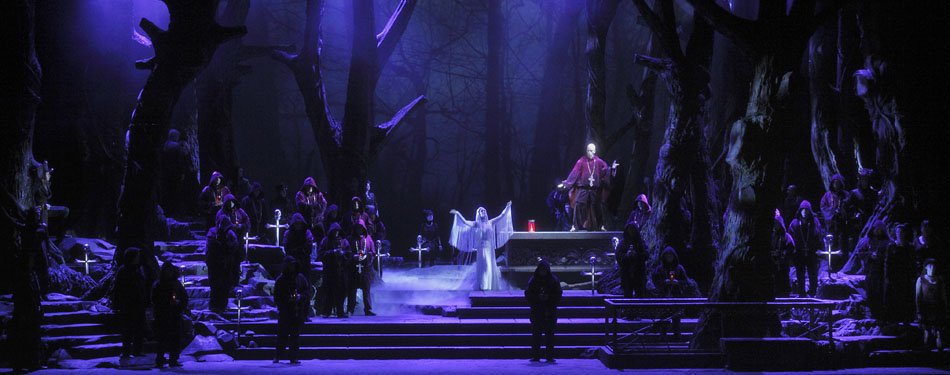
Father and son in love with the same woman, the struggle for freedom, a lonely king, and the conflict between the powers of heaven and earth – Verdi used these ingredients to create a magnificently dramatic grand opera.

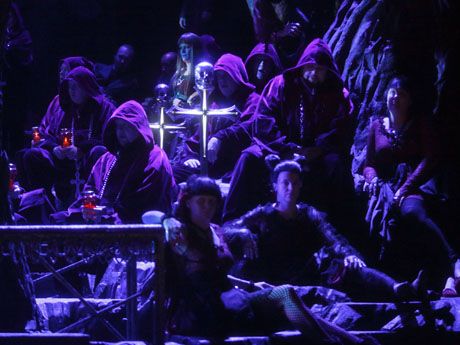
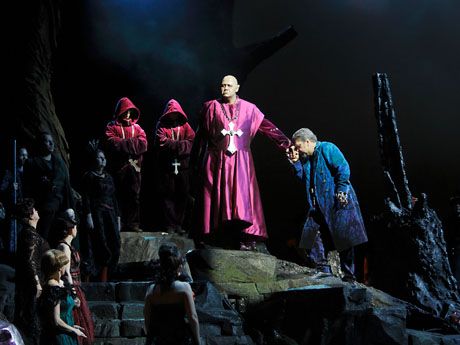
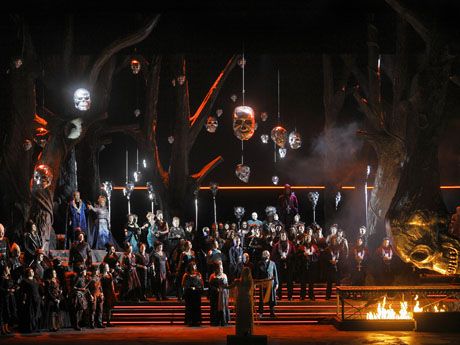
Don Carlos is a dark story about longing for freedom, doomed love, and politics. The Finnish National Opera’s latest production adds added flavour to the opera’s tone with a Goth staging. The music with its incredible arias for the bass voice is Verdi at his finest.

Duration 3 h 30 min, 1 intermission
Performed in Italian, surtitles in Finnish, Swedish and English
  • Conductor Michael Güttler
  • Director Manfred Schweigkofler
  • Sets Walter Schütze
  • Costumes Heidi Wikar
  • Lighting design Olli-Pekka  Koivunen
  • Choreography Lotta Kuusisto

doncarlosfinland2 doncarlosfinland3 doncarlosfinland4 doncarlosfinland5 doncarlosfinland6 doncarlosfinland7 doncarlosfinland8

Posted in OPera | Tagged , , , , , | Leave a comment