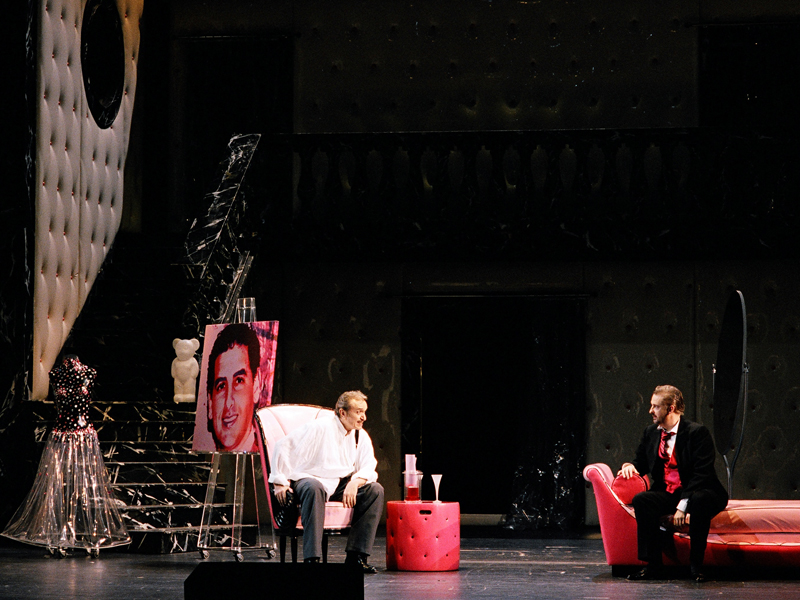
New Production of “Die tote Stadt” at the New National Theatre of Tokyo

mainmenuTokyo

Presents:

dietotestadt

Die tote Stadt

    • 2013/2014 Season
    • [New Production]
      Erich Wolfgang Korngold : Die tote Stadt
      Opera in 3 Acts
      Sung in German with Japanese Supertitles
    • OPERA HOUSE
  • PERFORMANCES

    2014
    March 12 March 15 March 18 March 21 March 24
    Wednesday Saturday Tuesday Friday Monday
     
     
    2:00
    *
     
     
    2:00
    *
    2:00
     
    7:00


    7:00
    *


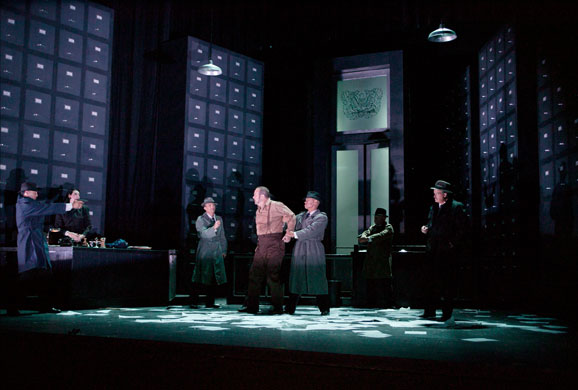
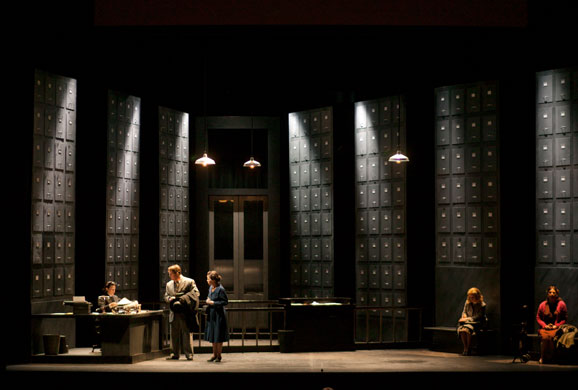
Otaka Tadaaki chose Die tote Stadt by Erich Wolfgang Korngold as one of the works to unveil as a new production during his fourth season as Artistic Director. Korngold was a composer who was buffeted by the winds of his era. In 1920, when Korngold was age 23, he enjoyed great success with his opera Die tote Stadt, but soon after fled Austria for America. There Korngold worked on Hollywood film scores, a fact which led to his being ostracized from the world of classical music in the post-war years; he lived out his later years in relative obscurity. In Germany, performance of Korngold’s music was prohibited by the Nazis, and for a time he was largely forgotten. But starting in the 1970s, there has been a reappraisal and growing appreciation of his work in the US and Europe. His operas started to be performed once again, and his music has been featured in a large number of concerts and recordings.

This production was directed by Kasper Holten. The NNTT has rented the stage art and costumes for the production from the Finnish National Opera (Helsinki). Holten productions are based on clear-cut interpretations, yet display a distinctive sense of style. He is recognized as one of the most dynamic directors on the world scene. Mr. Holten has served as Director of London’s Royal Opera since the start of their 2012/2013 season. Conducting the opera will be Jaroslav Kyzlink, making his return to the NNTT. He gave a much-lauded performance on the podium for the 2011 production of Rusalka. Die tote Stadt is not frequently performed, due in part to the difficulty of the main parts for soprano and tenor. In these roles we are proud to present Torsten Kerl as Paul, and Meagan Miller as Marie/Marietta. The role of Frank/Fritz will be sung by Thomas Johannes Mayer.

STAFF

Conductor : Jaroslav Kyzlink
Production : Kasper Holten
Scenery Design : Es Devlin
Costume Design : Katrina Lindsay
Lighting Design : Wolfgang Gobbel


(Conductor)
Jaroslav Kyzlink

(Production)
Kasper Holten

CAST

Paul : Torsten Kerl
Marietta/Marie : Meagan Miller
Frank/Fritz : Thomas Johannes Mayer
Brigitta : Yamashita Makiko
Gaston/Victorin : Ohara Keiroh
Juliette : Hirai Kaori
Graf Albert : Itoga Shuhei
Lucienne : Ono Wakako

Chorus : New National Theatre Chorus
Orchestra : Tokyo Symphony Orchestra

Photos

(Paul)
Torsten Kerl
Photos

(Marietta/Marie)
Meagan Miller
Photos

(Frank/Fritz)
Thomas Johannes Mayer
Photos

(Brigitta)
Yamashita Makiko
Photos

(Gaston/Victorin)
Ohara Keiroh
New National Theatre Foundation
1-1-1 Hon-machi, Shibuya-ku, Tokyo
151-0071, Japan
Tel. +81-3-5351-3011
Posted in Music, OPera | Tagged , , , , , | Leave a comment

“The Dream of Valentino” in Minnesota

ah_Valentino-Web-Bit-750x400

MINNESOTA OPERA PRESENTA:

The Dream of Valentino

by Dominick Argento

Fame is a dangerous dance.

Performances

  • Sat. 3/1/14 at 7:30pm
  • Thu. 3/6/14 at 7:30pm
  • Sat. 3/8/14 at 7:30pm
  • Sun. 3/9/14 at 2pm

A sultry young dancer is transformed from an unknown immigrant into a silent film sensation. Rudolph Valentino’s stardom blazes across the silver screen but is quickly consumed by the same forces that ignited it. Seduction and scandal swirl in Dominick Argento’s tango-tinged opera about an artist discovered and destroyed by Hollywood.

Sung in English with English captions projected above the stage.

A Minnesota Opera New Works Initiative Production.

Synopsis

Part I

Scene one – The Avalon Ballroom, Broadway, post-World War I

Rodolfo Valentino has just arrived from Italy, and has found employment as a dancer in a Broadway dance palace. He recoils when one of his partners makes a provocative and inappropriate move. Insulted, the woman calls for the police. Valentino is saved by June Mathis, who is there conducting research for an upcoming film.

Scene two – The parlor of June Mathis’ apartment, New York

Mathis provides food and wine as a grateful Valentino presents his abilities as an actor. He believes fate has brought them together, but the screenwriter has her doubts – could this attractive young man truly be a movie star?

Scene three – A studio screening room in Hollywood

The Mogul and his entourage are watching a Valentino B-movie. All agree the young Italian has screen appeal, particularly among the female sex. He is already signed with another film company, so they are content to wait and see how things develop.

Scene fourA garden in Alla Nazimova’s estate on Sunset Boulevard

Natacha Rambova and Jean Acker are discussing a possible film version of Camille with Alla Nazimova. The celebrated actress believes the project’s success hinges on casting the perfect Armand, the love interest. Valentino auditions for her and her guests. Later, he dances a tango with Acker while the rest look on admiringly. Nazimova is determined to get Valentino under contract so that she can guide and polish his career.

Scene five – Louella Parsons’ desk at the Hearst offices

Louella Parsons writes about the recent and hasty marriage between Jean Acker and Rodolph Valentino while the other reporters gossip about the wedding night. The Camille project has been delayed, but Mathis has written a new screenplay, Four Horsemen of the Apocalypse, with a leading role for Valentino.

Scene six – The Mogul’s office at the film studio

The Mogul discusses Valentino’s recent box office success with Marvin Heeno. He is determined to get this hot new actor under contract and exploit his popularity with women.

Scene seven – At the film studio

Valentino poses for publicity shots in preparation for the movie The Sheik. Mathis is angered by the breaking of the Metro contract she negotiated. A lawyer informs her that the actor is under a personal contract with Nazimova and therefore unavailable to the Mogul. Meanwhile, Acker demands financial support as Nazimova asserts her right to influence all aspects of the film. As the chaos swirls around him, Valentino finds himself helpless to control his life.

Part II

Scene eight – A silent film stage

Rambova coaches Valentino through his newest film, Monsieur Beaucaire. The sensitive role is very much the opposite of the manly sheik, and Mathis objects. Heeno asks Valentino if he has secretly married Rambova, and the actor confirms that the rumor is true. Heeno and Mathis openly express their disappointment. The Mogul bursts in, complaining that the new film is trash. This effeminate new image, along with the gossip over Valentino’s sudden marriage, will ruin his career.

Scene nine – Valentino’s studio dressing room

As he removes his wig and makeup, Valentino studies his reflection in the mirror, trying to understand what he has become. Is it too late to recover his dreams?

Scene ten – The Mogul’s office

Monsieur Beaucaire is a flop. The Mogul and Heeno strategize how they can get Valentino back on track and out of Rambova and Nazimova’s control. With their lavish lifestyle, the two women are driving the actor to financial ruin. Mathis suggests getting a court injunction requiring that he will work for the Mogul exclusively.

Scene eleven – The backstage of a theater, Omaha

Deeply in debt and abandoned by Rambova, Valentino has been reduced to performing dance in a Midwest vaudeville theater. The Mogul has pursued him to Nebraska and tries to convince him to return to Hollywood. Valentino refuses, preferring to be his own man rather the property of a film studio. Upset by the meeting, he begins the tango rather unsteadily, eventually falling off the stage.

Scene twelve – Aboard the New York-bound S.S. Aquitania

Returning to America after a private visit to Italy, Valentino dreamily reviews his destroyed life in anguish and in pain. Newspapermen wait at the docks, eager for a story about “The Pink Power Puff,” an appellation given to him by the Chicago Tribune. Valentino collapses. Headlines report his ailing condition arising from a perforated ulcer.

Scene thirteen – Campbell’s Funeral Parlor, New York, 1926

Valentino has died at the age of 31 and is mourned by Mathis. She expresses remorse for her role in his rise to stardom and ponders what she could have done to save him. Through his legendary fame and premature death, Valentino has at least achieved immortality.

ah-valentino-62113-740x395 

Dominick Argento


Dominick Argento
b York, Pennsylvania, October 27, 1927

Dominick Argento is considered to be America’s preeminent composer of lyric opera. At the Peabody Conservatory, where he earned his Bachelor’s and Master’s degrees, his teachers included Nicholas Nabokov, Henry Cowell and Hugo Weisgall. Argento received his Ph.D. from the Eastman School of Music, where he studied with Alan Hovhaness and Howard Hanson. Fulbright and Guggenheim Fellowships allowed him to study in Italy with Luigi Dallapiccola and to complete his first opera, Colonel Jonathan the Saint. Following his Fulbright, Argento became music director of Hilltop Opera in Baltimore, and taught theory and composition at the Eastman School. In 1958, he joined the faculty of the Department of Music at the University of Minnesota, where he taught until 1997. He now holds the rank of Professor Emeritus.

Although Argento’s instrumental works have received consistent praise, the great majority of his music is vocal, whether in operatic, choral or solo context. This emphasis on the human voice is a facet of the powerful dramatic impulse that drives nearly all of his music, both instrumental and vocal. Music critic Heidi Waleson has described Argento’s work as “richly melodic … [his] pieces are built with wit and passion, and always with the dramatic shape and color that make them theater. They speak to the heart.”

During his years at Eastman, Argento composed his opera, The Boor (1957), which has remained in the repertoire; John Rockwell of The New York Times, writing of a 1985 production, stated that “[it] taps deep currents of sentiment and passion.” Following his arrival in Minnesota, the composer accepted a number of commissions from significant organizations in his adopted state. Among these were the Saint Paul Chamber Orchestra, who commissioned his suite Royal Invitation (1964); and the Civic Orchestra of Minneapolis, who commissioned Variations for Orchestra [The Mask of Night] (1965). Argento’s close association with Sir Tyrone Guthrie and Douglas Campbell, directors of the Minnesota Theatre Company, led to his composing incidental music for several Guthrie productions, as well as a ballad opera, The Shoemaker’s Holiday (1967).

The 1970s and 1980s saw the composer working increasingly in the song cycle form, while still writing operas and orchestral music. Among his major song cycles are: Letters from Composers (1968); To Be Sung Upon the Water (1973); From the Diary of Virginia Woolf (1975); the choral I Hate and I Love (1982); The Andree Expedition (1983); and Casa Guidi (1983). His most recent song cycles, both premiered in 1996, are A Few Words About Chekhov (mezzo-soprano, baritone, and piano), given its premiere by Frederica von Stade, Håkan Hagegård and accompanist Martin Katz at the Ordway in Saint Paul; Walden Pond (mixed chorus, harp, and three cellos), commissioned and premiered by the Dale Warland Singers; and Miss Manners on Music, to texts by the noted advice columnist.

Since the early 1970s the composer’s operas, which have always found success in the United States, have been heard with increasing frequency abroad. Nearly all of them, beginning with Postcard from Morocco (1971), have had at least one European production. Among these are The Voyage of Edgar Allan Poe (1976), Miss Havisham’s Wedding Night (1981) and Casanova’s Homecoming (1984); Robert Jacobson of Opera News described the latter work as “a masterpiece.” The Aspern Papers was given its premiere by Dallas Opera in November 1988 to great acclaim, was telecast on the pbs series Great Performances and was again presented, to critical praise, by the Washington Opera in 1990. It since has been heard in Germany and in Sweden; June 1998 brought a performance at the Barbican Centre in London.

Dominick Argento has examined fame and the immigrant experience in his newest opera, The Dream of Valentino, set in the early days of Hollywood. Washington Opera gave the work its premiere under the baton of Christopher Keene in January 1994, followed by its co-commissioning company, Dallas Opera, in 1995. The production featured special multi-media sets by John Conklin and costumes by the couturier Valentino. Writing of the premiere, Peter G. Davis of New York magazine stated, “What a pleasure to encounter a real opera composer, one who has studied and learned from his predecessors, loves the form, understands its conventions, has mastered them and then lets his imagination take wing.” The Dream of Valentino received its European premiere in February 1999 in Kassel, Germany.

Among other honors and awards, Dominick Argento received the Pulitzer Prize for Music in 1975 for his song cycle From the Diary of Virginia Woolf. He was elected to the American Academy of Arts and Letters in 1979, and in 1997 was honored with the title of Composer Laureate to the Minnesota Orchestra, a lifetime appointment. In honor of his 85th birthday, the University of Maryland presented a special career retrospective that included Miss Havisham’s FirePostcard from Morocco and Miss Manners on Music, as well as other recitals and lectures. 

 – reproduced by kind permission of Boosey & Hawkes.

Cast & Creative Team

Music by Dominick Argento
Libretto by Charles Nolte

World premiere at The Kennedy Center, Washington D.C. January 15, 1994

Creative Team

Conductor Christoph Campestrini
Stage Director Eric Simonson
Senic Designer Erhard Rom
Projections Designer Peter Nigrini
Costume Designer Karin Kopischke
Lighting Designer Robert Wierzel


The Cast

Rudolph Valentino James Valenti
June Mathis, a screenwriter Brenda Harris
The Mogul, a film studio boss Alan Held
Alla Nazimova, a celebrated actress Eve Gigliotti
Marvin Heeno, the Mogul’s nephew John Robert Lindsey
Natcha Rambova, a Hollywood director and designer Victoria Vargas
Jean Acker, a young actress Angela Mortellaro
Posted in Music, OPera | Tagged , , , , , , , , | Leave a comment

DON GIOVANNI in Vancouver


PRESENTS: 


W.A. MOZART

Mozart’s brilliant portrait of the world’s most infamous lover
In Italian with English SURTITLES™
NEW CO-PRODUCTION
Co-produced with The Banff Centre

March 1, 6, 7, 8, 9 (matinée), 2014
Evening performances 7:30pm.
Matinée performances 2:00pm.

OPENS March 1, 2014!

►Don Giovanni is a dangerously attractive aristocrat and serial seducer who leaves death and destruction in his wake. Defying both society and God in his reckless pursuit of gratification, he manages to evade the vengeful retribution of his most outraged victims, only to self-destruct in a surreal encounter with a curse-hurling stone statue.

Mozart’s musical and dramatic portrait of this complex character, and of those whose lives he stains, is Shakespearean in its understanding of human nature. Filled with wisdom and beauty, and by turns funny and terrifying, Don Giovanni is a towering creation, which we honour with a spectacular new co-production featuring state-of-the-art stage technology and design.

► All performances are at the Queen Elizabeth Theatre
► Approximate running time: 3 hours 13 minutes (including one intermission)


CAST & CREATIVE TEAM

Conducted by STEUART BEDFORD

STEUART BEDFORD
CONDUCTOR


Directed by KELLY ROBINSON

KELLY ROBINSON
DIRECTOR


Projection Designer BOB BONNIOL

BOB BONNIOL
PROJECTION DESIGNER
 

Don Giovanni (March 1, 6, 8) DANIEL OKULITCH

DANIEL OKULITCH
DON GIOVANNI


Don Giovanni (March 7, 9)

TBA
DON GIOVANNI


Donna Anna (March 1, 6, 8) ERIN WALL

ERIN WALL
DONNA ANNA


Donna Anna (March 7, 9) KATHERINE WHYTE

KATHERINE WHYTE
DONNA ANNA


Donna Elvira (March 1, 6, 8) KRISZTINA SZABO

KRISZTINA SZABO
DONNA ELVIRA


Donna Elvira (March 7, 9) LESLIE ANN BRADLEY

LESLIE ANN BRADLEY
DONNA ELVIRA


Don Ottavio COLIN AINSWORTH

COLIN AINSWORTH
DON OTTAVIO


Leporello (March 1, 6, 8) STEPHEN HEGEDUS

STEPHEN HEGEDUS
LEPORELLO


Leporello (March 7, 9) GILES TOMKINS

GILES TOMKINS
LEPORELLO

Zerlina RACHEL FENLON

RACHEL FENLON
ZERLINA

Masetto AARON DURAND

AARON DURAND
MASETTO
 

Commendatore (March 1, 6, 8) GILES TOMKINS

GILES TOMKINS
COMMENDATORE

Commendatore (March 7, 9) STEPHEN HEGEDUS

STEPHEN HEGEDUS
COMMENDATORE
 

Chorus Director / Associate Conductor LESLIE DALA

LESLIE DALA
ASSOCIATE CONDUCTOR / CHORUS DIRECTOR

Lighting Designer HARRY FREHNER

HARRY FREHNER
LIGHTING DESIGNER

Musical Preparation KINZA TYRRELL

KINZA TYRRELL
MUSICAL PREPARATION

  TINA CHANG

TINA CHANG
MUSICAL PREPARATION

  KIMBERLEY-ANN BARTCZAK

KIMBERELY-ANN BARTCZAK
MUSICAL PREPARATION

Stage Manager THERESA TSANG

THERESA TSANG
STAGE MANAGER

Fight Director

TBA
FIGHT DIRECTOR


Assistant Director FANNY GILBERT-COLLET

FANNY GILBERT-COLLET
ASSISTANT DIRECTOR


Posted in Music, OPera | Tagged , , , , , , , | Leave a comment

CAN LOVE FOR BOOKS AND OPERA KEEP YOU YOUNG?

Interview by Tiziano Thomas Dossena

In 1912 Italians won the war against the Ottoman Empire, a forecast of the underlying colonialism that brought the Great War, the Titanic revealed itself not to be unsinkable and vitamins were first identified. It was a year of turmoil and of great hopes, with Woodrow Wilson taking the presidency, a fanatic attempting to kill Theodore Roosevelt, China becoming a republic, and stainless steel making its debut.

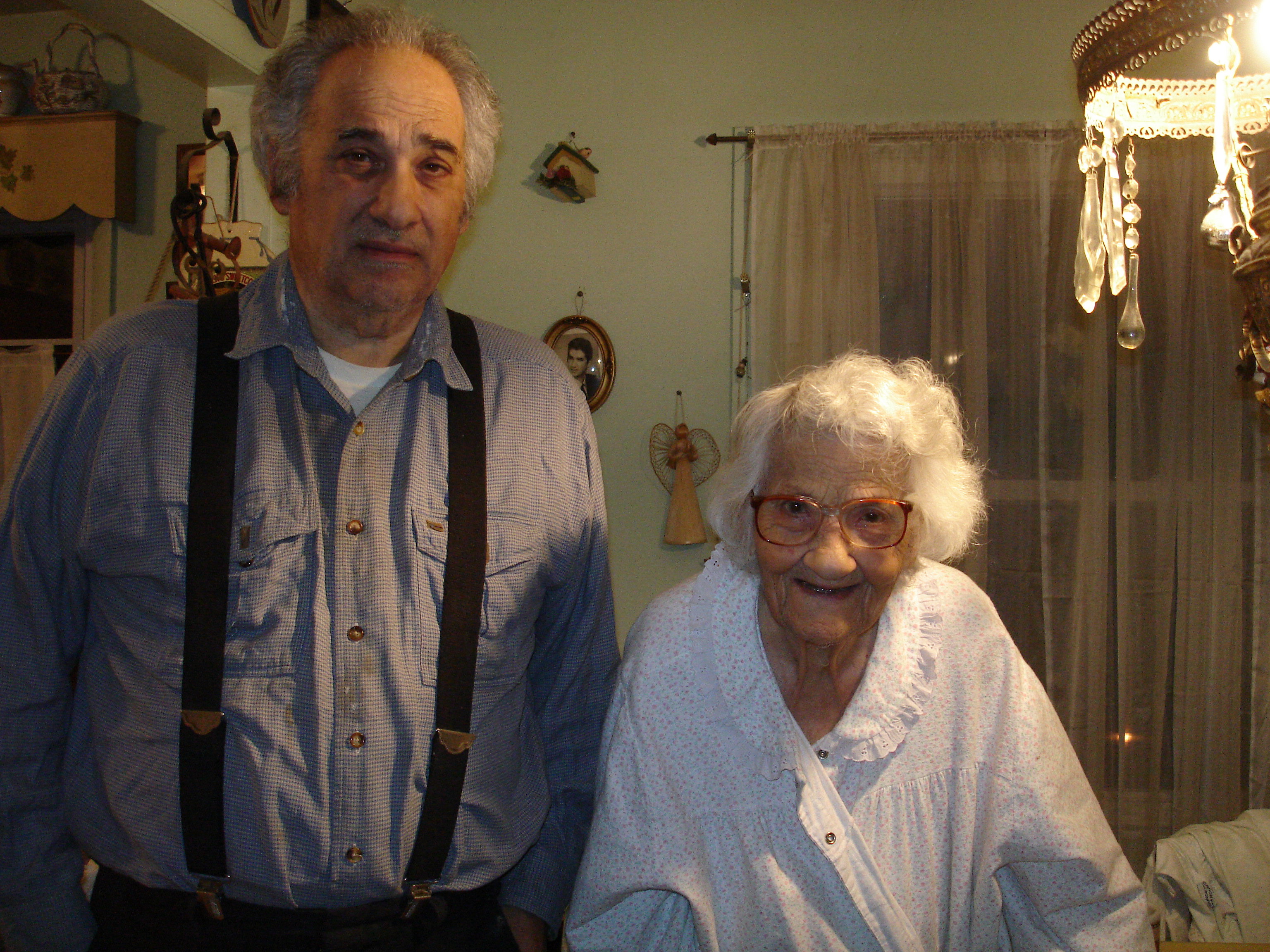
DSC00748Many famous and infamous historic characters were born that year: Hitler’s companion Eva Braun, the artist Jackson Pollock, the entertainer Danny Thomas, Italian movie director Michelangelo Antonioni, and Pope John Paul I; among the not-so-famous, on January 25th of that year, a Yonkers denizen, Teresa Mautone-Tortora. The father Eugene and the mother Grace (Grazia) Gatto-Mautone were both born in the province of Salerno, Italy. Grace was brought to USA when she was two years old, while Eugene emigrated at twenty-one, in 1905.

Teresa loved opera since she was a little girl, and her parents, who only spoke English and their original dialect, hired a tutor for her to learn Italian, so that she could reads librettos and enjoy the operas at the most. Her love for classical music was enhanced even more by her family’s activities: her Aunt Louise Gatto-Creston was a famous dancer with the Martha Graham’s Dance Company and owned a dance studio, and the Uncle Paul Creston (Giuseppe Guttoveggio) was a famous classical composer.

Apart from a four-year period spent in Brooklyn, Teresa has been a lifetime resident of Yonkers. Her recollection of how this city was when she was young is charming and her descriptions are like postcards from the past. Yonkers was a very friendly town, where everyone greeted you and it was safe to walk even at night. The CrossCountyShopping Center was a swamp upon where she used to ice skate in the winter and she hiked every weekend to White Plains by way of the Bronx River Parkway walking path (18 miles total). Kimball Avenue was in a golf course and she used to sleigh ride from its hills in the winter. It was all clean fun!!!

Scan_Pic0015

From left: Teresa Mautone-Tortora with two friend and her husband Vincent, circa 1952

Teresa lived in South West Yonkers, on top of a hill overlooking Mount Vernon, where she walked to when she needed to shop for food; only after WWII a bus line was established for the local residents. Her original house was one of two buildings in her street and it took 4 years for the workers from the WPA (brainchild of FDR and part of his New Deal) to remove all the heavy stones so that it could be paved. There was a well and a cesspool, but neither indoor piping nor electricity, and as a toilet, just an outhouse. Her father built the house in which she now lives over the week ends in the early 1930s, with the assistance of Saunders HS boys, so they could have all modern luxuries (running water, toilet, electricity and sewage service).

teresaTeresa Tortora with the composer Robert Russell Bennett, 1954

She worked at FARAND, a bomb-sights factory in Mount Vernon, during WWII and went back to her job during the Korean War, a “Rosy the Riveter” of her own; she then worked ten years at Litton, an electronic firm, always in Mount Vernon.

Teresa married Vincent Tortora, who passed away in 1976, and has two sons, Eugene and Mark, now 75 and 67 years old respectively.

Teresa traveled through United States and she is an avid reader; as a matter of fact she believes reading made her different from a lot of her contemporaries, more tolerant and somehow out of the ordinary in the way she envisioned the world. She owns more than two hundred books and the entire collections of fifty tomes of Western stories written by Zane Gray. She read the Bible few times over because she was always fascinated by the stories in it, the struggles of those early people and their daily lives. Teresa believes strongly that her life would have been quite different without books.

She confesses that there are no good reasons for her longevity, genetics apart, since she lived a normal life; certainly it helped a bit not to be a drinker or a smoker, but that is all.

She misses attending the opera performances, although she believes that nowadays they are too formal; she recollects when the people used to holler and stood up cheering whenever the performers sang well. “They were more relaxed and fun times, then…,” she declares with a soft but firm voice that does not betray her age, “people are too ambitious now and money has become too important. People forget that good times and good friends do not come with a tab, but are free.”

She believes that American ingenuity in improving products is what made it competitive and that is the direction we have to take again, since relying on China for just about everything is destroying the texture of this country.

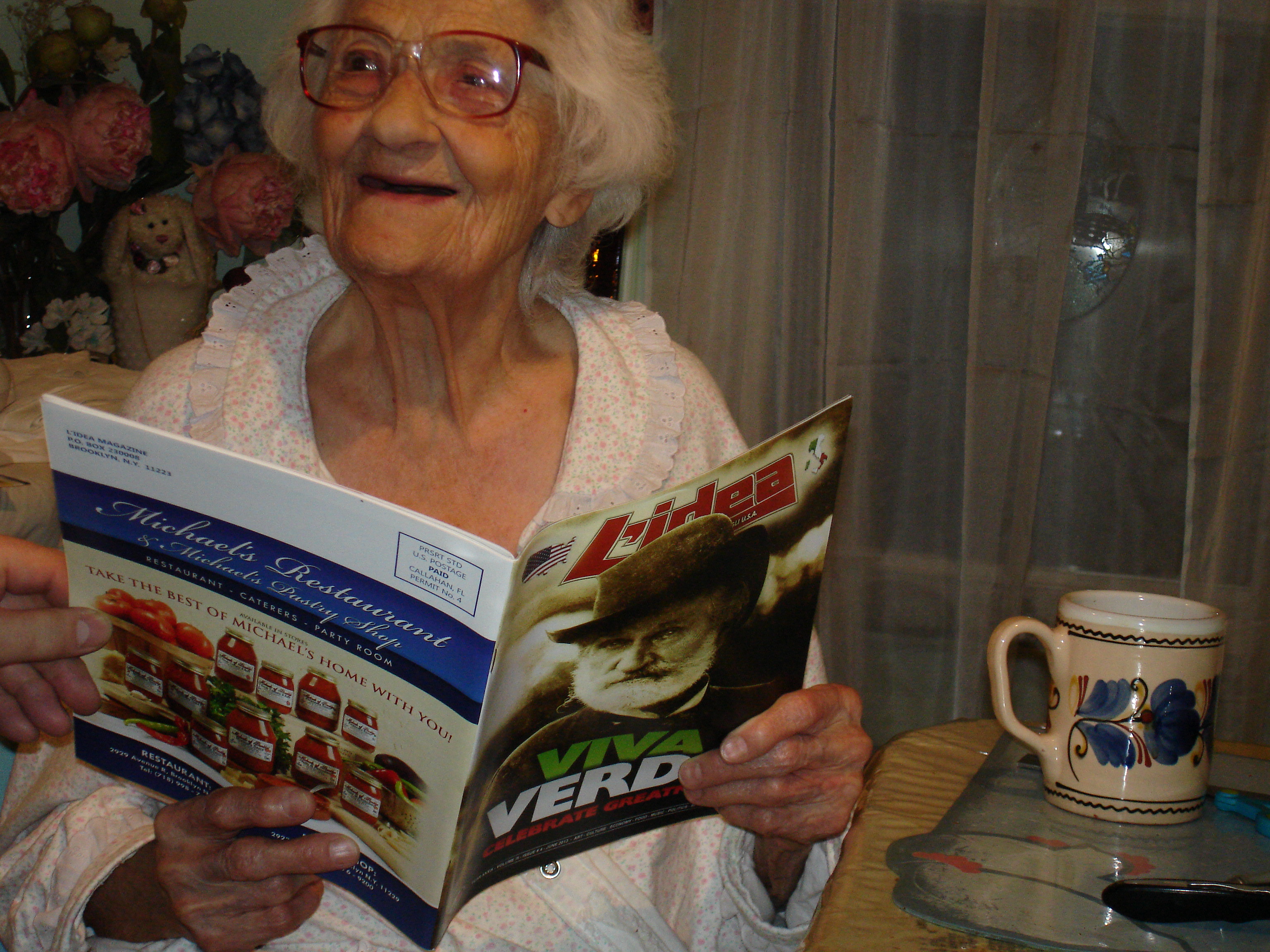
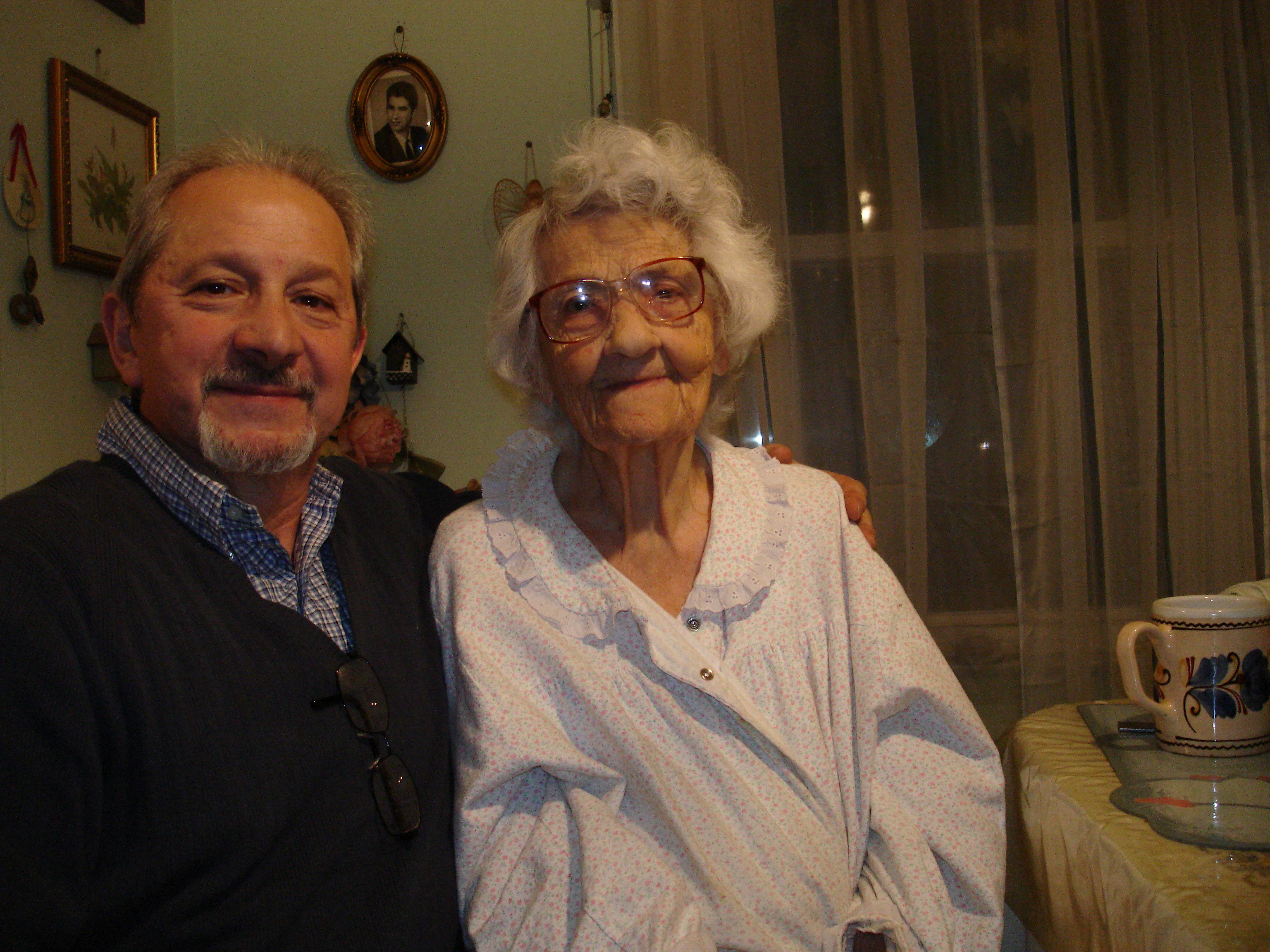
Teresa Tortora is a happy, smart and alert 102-years-old lady who knows what she is talking about! Happy birthday again from all of our readers!

DSC00757 Mark and Teresa Tortora  

DSC00758  

         Tiziano Thomas Dossena with Teresa Tortora                                                      

Posted in Article, Interview | Tagged , , , , , | Leave a comment

Welsh National Opera presents “Boulevard Solitude”

Welsh National Opera presents:

“Boulevard Solitude”

Hans Werner Henze

New Production

boulevard_solitude1140

Armand and Manon are penniless but in love. The cruel world of 20th century capitalism and corruption will soon shatter their happiness. They will be left with nothing but memories of happier days before they strayed onto the boulevard of broken dreams.

Henze’s potent updating of the Manon story is a heady musical cocktail of jazz, 19th century opera and 20th century styles. It is an enveloping and immersive cinematic vision of European society after the war. This is the first time one of the greatest operas of the last century has been performed outside London. Join us for opera at its most powerful and compelling.

“Alongside Britten, Henze is surely the most important representative of opera in the 20th century. Boulevard Solitude overflows with sensuousness and subtlety.”
Lothar Koenigs, Music Director

FREE pre-performance talks 

Prior to every performance of Manon Lescaut and Boulevard Solitude.

The Whole Story
Thursday 6 February – Wednesday 19 March
The Whole Story is the perfect introduction to the Fallen Women season. Before the performances begin, our team of experts will guide you through the music, stories and background to each opera.

Literary inspirations
Friday 28 February
A special hour long talk looking at how the season’s operas draw on classics by Dumas and and Prévost.

David Pountney in Conversation
Thursday 7 February
David Pountney and a key figure from the arts explore the Fallen Women theme.

SYNOPSIS

Scene One
Armand des Grieux and his friend Francis are at a train station. Manon is being taken to a finishing school by her brother, Lescaut. She and Armand strike up a conversation and are immediately attracted to one another. Manon decides to go away with Armand. Lescaut watches them leave.

Scene Two
Armand and Manon are happy together but have no money. Lescaut tries to persuade Manon to take a rich lover – he has someone in mind who would support her and be a source of income for himself as well. He tells her that she must be hard-hearted to succeed in life and that she must choose between comfort and poverty.

Scene Three
Manon is now the spoilt mistress of Monsieur Lilaque. She writes to Armand, telling him that she misses him. Lescaut is furious that she is thinking of her old lover rather than her current protector. Lescaut’s various deals are not going well and he attempts to steal some money. He is discovered by Lilaque, who throws them both out.

Scene Four
Armand, Francis and other students are studying erotic Latin poetry by Catullus. Armand is distracted and unable to forget Manon. He refuses to believe that she can be guilty when Francis tells him of the theft of the money. Manon and Armand are temporarily reunited.

Scene Five
Manon has left Armand again and he is taking drugs to help him forget her. Lescaut is looking for his sister – he has a new client for her, Lilaque’s son. Manon arrives and attempts to calm the frantic Armand but fails. She leaves with young Lilaque but sends a message, asking Armand to meet her later.

Scene Six
Manon and Armand are together in young Lilaque’s apartment. Lescaut comes to warn Armand to get out before he is discovered. There is a painting on the wall which Lescaut decides to steal but he is interrupted by the arrival of Monsieur Lilaque. Manon tries to distract him but he finds Armand and Lescaut in their hiding place and calls the police. Lescaut pushes a gun into Manon’s hand and she fires. Young Lilaque returns to find Manon with the gun and the dead body of his father.

Scene Seven
Manon is being taken to prison. Armand hopes to catch a final glimpse of her but she is taken away before they have a chance to speak

Conductor Lothar Koenigs
Director Mariusz Trelinski
Designer Boris Kudlicka
Costume Designer Marek Adamski
Lighting Designer Felice Ross
Video Designer Bartek Macias
Choreographer Tomasz Wygoda

Cast includes
Manon Lescaut Sarah Tynan
Armand des Grieux Peter Wedd
Lescaut Benjamin Bevan
Lilaque Pere Adrian Thompson

All performances start at 8pm

Running time approximately 1 hour 15 minutes with no interval

Sung in English with surtitles in English (and Welsh in Cardiff and Llandudno)

Welsh National Opera
Wales Millennium Centre
Bute Place Cardiff CF10 5AL

Posted in OPera | Tagged , , , , , , , | Leave a comment

“DER ROSENKAVALIER” in Luxembourg

logoLuxembourg

DER ROSENKAVALIER

Richard Strauss (1864-1949)

Tuesday 25 February 2014 at 20h00

Thursday 27  February2014 at 20h00

Der Rosenkavalier is undoubtedly the masterpiece of German composer Richard Strauss. Set in 18th-century Vienna, the story centres on the ageing Feldmarschallin and her younger lover Oktavian who in turn falls in love with Sophie, who is herself betrothed to the lecherous Baron Ochs. Needless to say that a lot of intrigue, confusion and mistaken identities ensue before this delightful merry-go-round reaches its conclusion. But the Rosenkavalier is a lot more than just a frivolous musical comedy. Both Strauss and librettist Hugo von Hoffmansthal manage to infuse the work with a great deal of emotional depth and humanity as well. This new production directed by actor and double Oscar winner Christoph Waltz boasts a stellar cast including Camilla Nylund, Christiane Karg and Stefanie Doufexis and Strauss-expert Stefan Soltesz will conduct the OPL.

Musikalische Leitung Stefan Soltesz
Inszenierung Christoph Waltz
Bühne Annette Murschetz
Licht Franck Evin
Kostüme Eva Dessecker

Feldmarschallin Camilla Nylund
Baron Ochs auf Lerchenau Albert Pesendorfer
Octavian Stella Doufexis
Herr von Faninal Michael Kraus
Sophie Christiane Karg
Marianne Leitmetzerin Hanne Roos
Valzacchi Guy de Mey
Annina N.N.
Ein Sänger Nicolas Darmanin
Ein Polizeikommissar Andrew Greenan
Ein Wirt Christopher Lemmings

Orchester Orchestre Philharmonique du Luxembourg
Chor Vlaamse Opera

Erstaufführung dieser Produktion am 15. Dezember 2013 an der Vlaamse Opera

Produktion Vlaamse Opera
Koproduktion Royal Opera House Covent Garden, Les Théâtres de la Ville de Luxembourg
Vorstellungen in Luxemburg in Zusammenarbeit mit dem Orchestre Philharmonique du Luxembourg

DURÉE 3h30 & entracte

Introduction à l’opéra par Jérôme Wigny des Amis de l’Opéra une demi-heure avant chaque représentation (en langue française)

Lieu: Grand Théâtre / Grande Salle

Vorstellungen in Luxemburg in Zusammenarbeit mit dem Orchestre Philharmonique du Luxembourg

Posted in Music, OPera | Tagged , , , , , | Leave a comment

“RUSALKA” in Chicago

The Lyric Opera of Chicago presents

RUSALKA

Rusalka

  • by Antonín Dvorák
  • In Czech with projected English texts.Dvořák’s Rusalka is a new production and a Lyric Opera premiere. 
  • Approximate running time: 3h 30m

 2014: FEBRUARY 22, 26

MARCH 4, 7, 10, 16

You may know Dvořák’s rousing “New World Symphony”—but here he’s at his romantic best as dark swirling under-currents blend seamlessly with entrancing folk melodies.

A witch grants a water nymph mortality so she can marry the prince she adores. But if he’s unfaithful, their souls are damned for eternity. And damned they are in the darkly sensual fairytale.

 Elektra, Manon, Julius Caesar, and Billy Budd Sir David McVicar has given Lyric some of its most memorable productions. Expect another from this extraordinary director. 

New Lyric Opera production of Antonín Dvořák’s Rusalka generously made possible by The Monument Trust, an Anonymous Donor, Marion A. Cameron, Exelon, and Sidley Austin LLP, with additional support from the National Endowment for the Arts

Starring

  • Ana María Martínez

    Rusalka

    Ana María Martínez 

    Ana María Martínez and Brandon Jovanovich triumphed in Rusalka at the 2009 Glyndebourne Festival. “When Martínez sings that ‘to suffer is to be alive’—you believe her. An intoxicating composite of Slavic darkness and Latin brilliance.” The Independent, London

  • Brandon Jovanovich

    Prince

    Brandon Jovanovich 

    Brandon Jovanovich sings with “visceral excitement…a prince as handsome to hear as he is to look at.” Opera News

  • Jill Grove

    Ježibaba

    Jill Grove

    As the witch, Jill Grove is a “theatrical and vocal knockout.” (Dallas Morning News)

  • Eric Owens

    Vodnik

    Eric Owens

    Bass-baritone Eric Owens will bring “clarion tone and endless power” (Boston Globe) as the water spirit Vodnik, Rusalka’s father, who tries in vain to save her.

  • Ekaterina Gubanova

    Foreign Princess

    Ekaterina Gubanova 

    As the foreign princess Russian star Ekaterina Gubanova mesmerizes with “power and urgency.” Seen and Heard

    Rusalka - Lauren Snouffer  1st Wood Nymph
    Lauren Snouffer*
    Rusalka - J'nai Bridges  2nd Wood Nymph
    J’nai Bridges
    Rusalka - Cynthia Hanna  3rd Wood Nymph
    Cynthia Hanna*
    Rusalka - Daniela Mack  Kitchen Boy
    Daniela Mack*
    Rusalka - Philip Horst  Game Keeper
    Philip Horst*
    Rusalka - Anthony Clark Evans  Hunter
    Anthony Clark Evans
    Rusalka - Sir Andrew Davis  Conductor
    Sir Andrew Davis
    Rusalka - Sir David McVicar  Director
    Sir David McVicar
     John Macfarlane Set Designer
    John Macfarlane    
    Rusalka - Moritz Junge  Costume Designer
    Moritz Junge* 
      Lighting Designer
    David Finn* 
      Chorus Master
    Michael Black 
    Rusalka - Andrew George   Choreographer
    Andrew George 

    RUSALKA
    Dvořák’s darkly sensual fairytale

    by Roger Pines

    We’re aware of certain rarely-performed operas solely because of one particular aria that has captivated audiences everywhere. For years in this country that was the case with Dvořák’s Rusalka, thanks to the heroine’s exquisite “Song to the Moon.” For most audiences the complete opera remained a mystery. Fortunately, the tide has turned for Rusalka: major opera companies, both here and abroad, stage it more frequently these days, which means that audiences are repeatedly declaring, “Where has this gorgeous opera been all our lives?”

    This season Lyric audiences will have their chance to discover Rusalka in its long-awaited company premiere. A breathtaking new production will be conducted by Lyric music director Sir Andrew Davis and directed by Sir David McVicar, with sets designed by John Macfarlane – the team that brought us last season’s acclaimed Elektra

    Dvořák’s heroine, the water nymph Rusalka (soprano Ana María Martínez), falls in love with a prince (tenor Brandon Jovanovich). Despite the apprehension of her father, the water goblin or Vodník (bass-baritone Eric Owens), she implores the forest witch, Ježibaba (mezzo-soprano Jill Grove), to transform her into a human woman. The price is that whenever Rusalka is with him (or any other human being), she will lose her power to speak. And if the man she loves betrays her, she and he will both be damned forever. In human form, Rusalka entrances the Prince, who hopes to marry her. When her continuing silence alienates him, he transfers his attentions to an imperious foreign princess (mezzosoprano Ekaterina Gubanova, debut). Ježibaba informs the desperately unhappy Rusalka that she can save herself only by killing the Prince, but Rusalka would rather suffer in despair for eternity. The Prince’s realization of his true feelings leads him back to Rusalka, who lets him know that her kiss will be fatal. When he insists, she kisses him, and he dies peacefully. Hoping that God will have mercy on his soul, she returns to the water. 

    This opera, says McVicar, is “a fairytale for adults, profoundly sad and tragic.” The vision he and Macfarlane have for the piece takes its cue in part from the powerfully dramatic German Romantic artists of the 1860s and 1880s. It’s “a spooky, dark, sinister world in which the Prince dreams Rusalka, or summons her into existence. We’re playing him as a romantic fantasist, like Bavaria’s King Ludwig II. He’s a hunter, and what he’s doing to the forest is a good analogy to what happens to Rusalka.” The theme of man destroying nature runs through the opera, McVicar explains. “In his longing to commune with nature, the Prince finds himself creating Rusalka almost as a necessity.” At the end of the opera, “Rusalka fades away into nature, and the Prince, after annihilating himself with her kiss, finds the peace with nature that he’s been seeking as a character all the way through.” 

    The costumes by Moritz Junge (debut) place the work in the 1870s, the era of famously extravagant Ludwig himself. The sets by Macfarlane present a romantic forest and a pond, “but a dam has been built – nature has been violated,” says McVicar. The Act-Two ball scene is moved from the Prince’s palace to a hunting lodge somewhat resembling Queen Victoria’s famous retreat at Balmoral, “an impressive, sinister place. The architecture of the Prince’s world is Gothic, like Ludwig’s Neuschwanstein castle.” The Prince’s guests are “high Gothic/heavy Victorian. It’s a hot, stuffy, oppressive society – the most uncongenial environment possible for Rusalka.” 

    McVicar is entranced by Dvořák’s music, as is Sir Andrew Davis, who has triumphed leading this work at the Metropolitan Opera, Glyndebourne, and Barcelona. “I’m so excited about bringing Rusalka to Lyric,” says the conductor. “This is simply one of the most beautiful scores of any romantic opera.” Ana María Martínez agrees, noting that “the principals and supporting characters all have their own color, their own mood, their own story to tell.” Brandon Jovanovich finds that “musically it’s such a rich tapestry of so many different sounds, in which the emotions are intertwined.” 

    Besides the “Song to the Moon,” Rusalka has two more arias, each deeply moving. There are fabulous opportunities for the other principals, plus an orchestral role exhibiting Dvořák’s dazzling skill and imagination. In this piece, by far the most celebrated of his ten operas, the composer often colors the drama with somber and occasionally ominous qualities. At the same time, Rusalka reveals the essence of romantic longing with incomparable depth and truthfulness. 

    Whatever resemblance Jaroslav Kvapil’s libretto bears to Hans Christian Andersen’s “The Little Mermaid” is evident only in the basic idea of a water creature in love with a human being and her refusal to kill him to end her own suffering. The rusalky can be found in Czech mythology – water nymphs who in life had been young women who committed suicide after being jilted by their lovers. Now they lure young men who pursue them and are drawn into the water, only to die in their embrace.

    Premiered in Prague in 1901, during its first half-century Rusalka was heard there more than 600 times. Internationally there were some important productions, but very sporadically (the U. S. professional premiere in San Diego came only in 1975). New interest in Rusalka has been aroused by Renée Fleming’s performances as the heroine in many major houses over the past two decades. 

    Ana María Martínez and Brandon Jovanovich, who triumphed together starring in Rusalka at Glyndebourne, create an extraordinary chemistry onstage in this opera. Martínez describes how her tenor colleague’s eyes “lock in with yours. A space is created in which you can give with complete abandon, and the two characters have this journey together.” Jovanovich responds in kind: “Ana is able to give so much onstage, which makes it so much easier to give back. The two of us really feed off each other’s energy and emotions.” 

    Jovanovich speaks of the Prince as “all guns blazing, right from the start. I really enjoy the aria in his first scene, for which you need power and lyricism.” There’s a high C in the final scene, “but it’s not a big bravado moment! It’s a sweet whispering, but most people don’t sing it with any degree of love.” The tenor admits that, with the Prince’s rejection of Rusalka, it’s tough for him to earn the audience’s sympathy, “but I think in the last act they’re easily able to forgive him, given the emotions emerging through the music and the text.” 

    Whenever Dvořák’s heroine comes to her mind, “I think of the purest form of love in all its capacities,” says Martínez. “Rusalka loves life and she loves the concept of a soul, which also implies tremendous spirituality. She loves all that is living, vibrant, creative, and inspiring.” This character takes a real emotional journey “from pre-adolescence to adolescence to womanhood, always maintaining her love. She reaches womanhood in her ability to forgive the Prince at the end.” 

    Martínez hopes Lyric audiences will relish Rusalka’s “world of magic and mystery.” Through Dvořák’s genius, not just the beauty of that world but “the vulnerability, the passion, the rawness – everything is there. It’s glorious and spiritual and loving all in one.” Jovanovich’s goal is for listeners to come away from the opera house thinking, “That’s one of the most memorable nights I will ever have in my life.”

    Soprano Ana María Martínez, who will sing the title role in Lyric’s 2013-14 production of Dvořák’s Rusalka, answers Lyric Opera dramaturg Roger Pines’s questions about the character.

    AMMasRusalka

    RP:You sang your first Rusalka at Glyndebourne in 2009, and later reprised the role in Munich. Had it occurred to you to sing this opera before it was first offered to you?

    AMM: Not right away. I always thought it was a bit too full, more for a lirico spinto. You have to have the vocal range to do it. There are scenes that are actually bigger than Madama Butterfly vocally – the finale with the Prince, for example. The role itself was always in my mind as very beautiful, something one would love to portray onstage. I’ve always erred on the conservative side regarding what I sing. I think it’s served me well to wait until later in my career before singing Rusalka.

    RP: Had you ever seen the opera onstage before, or listened to anything in the piece besides Rusalka’s “Song to the Moon”?

    AMM: I’d listened to it, but not with the ears of learning it. I knew parts of it, and when I was studying at Juilliard we listened to portions of it. But you listen differently when you’re going to learn a role. I’ll put it to you this way: When you’re in the passenger’s seat of a car and you’re looking at the scenery—“Isn’t this nice?” But if it’s a route that’s new to you, unless you’ve actually driven there and have the perspective of the driver, you look at it differently.

    RP: How did you respond to Rusalka as a whole the first time you saw or heard it?

    AMM: I felt inspired but also emotionally exhausted by Rusalka’s journey. In a good way—I have to emphasize that! It’s a cathartic experience that you have when you listen to this piece. I also felt, “Wow, I really, really hope I can do this and do it well.” When I was learning it, it felt like such a tremendous and wonderful undertaking, but wow! What a mountain to climb, on every level.

    As with all roles, vocally you eventually figure out what you need to do in this piece. I was lucky to have seven weeks of rehearsal when I was doing it for the first time at Glyndebourne, but the work there quickly shifted into the emotional mountain I needed to climb. I wanted to try as honestly as I could to walk in Rusalka’s shoes. The journey she undertakes is really tremendous.

    RP:What do you consider this opera’s greatest strengths?

    AMM: Several things come to mind. Beginning with the very first notes in the orchestra, Dvořák is able to create an incredible atmosphere—it’s quickly established and it remains present throughout. You’re in another world, and it’s an enchanted world. I think you can tell when you’re on land and when you’re in the water—you hear it in the music! Everything is stated so clearly. The principals and supporting characters all have their own color, their own mood, their own story to tell.

    Of course, the story has to do with love, but it has to do with the journey toward becoming. Rusalka wants to be human and, more than anything, she wants a soul – she’ll sacrifice whatever it takes to have that. The core of this piece is that quest, that desire, that journey. Even though I think I’m a pretty courageous, gutsy lady, Rusalka has far more courage than I could ever have. To step in her shoes makes me grow. My hope is that all of us – the entire cast, the company, and the audience – will take this journey with Rusalka. 

    So there’s the story itself, but then there’s the emotional journey that’s supported through the music – and it’s heartbreaking. There’s the scene where she’s pleading with Ježibaba to make her human. She’s trying everything, and Ježibaba is so cold! “Let’s see if you’ve got what it takes, little girl – do you know what you’re asking?” That is a phenomenal scene. 

    For me, what is the most touching and I think will have the audience sobbing is Rusalka’s duet with the Prince in the last act. Dvořák could have written it fortissimo – Rusalka could have yelled at the Prince, “Why did you lie to me? Why did you say you loved me when you didn’t? Why?”—but it’s with the quietest of dynamics, the quietest orchestration. And then there is the very end of the opera, when it’s clear that Rusalka is destined for the worst type of existence – she’s neither dead nor alive. Anyone would wish death over what she has to endure for eternity – but this is expressed in such a quiet way.

    RP: The emotional content of what Rusalka expresses in the final scene is actually pretty intense and complex.

    AMM: We see in that scene that Rusalka doesn’t understand human passion. You feel she desires the Prince, but she’s incapable of completing that part of her woman-ness. It’s like when a girl is 13 or 14, she has a crush and dreams of being in the arms of the boy she has a crush on. She fantasizes, but when she’s in the moment, it’s “What do I do here?” Talk to anyone who had their first experiences with romance when they were quite young – it usually wasn’t great! They fantasize, but then it’s scary and they don’t know what to do. Perhaps if Rusalka were given the chance to go a little slower, she could warm up to that. But she’s doing this for the first time, and she’s out of her element, away from her whole support system – she’s been ostracized. Obviously she’s intelligent, her mind is constantly going, and the way she puts thoughts into words is tremendous, but she’s probably just freaking out! This also makes me think that the Prince is impatient and wants passion from her right away.

    RP: Beyond what you’ve just discussed, what matters the most to you in your characterization?

    AMM: When I think of Rusalka I just think of absolute, pure love, as much as we can fathom what that is. Love comes in all sorts of forms, and sometimes we have ulterior motives when we feel we love someone or want something. But if we were to think of the purest form of love in all its capacities, that to me is Rusalka. That is difficult to physicalize onstage. She loves life and she loves the concept of a soul, which also implies tremendous spirituality. She loves all that is living, vibrant, creative, and inspiring. She’s idealistic in that way. I think of her as this bright light, and profound. Here’s someone who is just all heart, with this being around it. That is her truth, where she gets her strength, her courage, her passion. We actually see her journey from pre-adolescence to adolescence to womanhood, always maintaining her love. She becomes a full woman in the confrontation with the Prince at the end. She reaches womanhood there, and in her ability to forgive the Prince at the end. That to me is love in all its facets, with the risk that comes with it. If you think of the definition of courage as being terrified by going through with it anyway, she was so sure she’d have nothing to lose in this venture, and she was losing from the get-go. Still, she remains steadfast. The witch gives her an out: “If you make sure that that man’s blood is shed, the curse will be lifted and you can go back to your life,” and Rusalka says, “Rather than cause him such harm, I welcome that terrible sentence you’ll have me undergo for the rest of my existence” – that existence being, in effect, living death. She takes responsibility for her choices, and always – even in such pain – she stands for love.

    RP:What’s the toughest place emotionally in the role?

    AMM: What really gets me is when her sister water-nymphs come back in Act Three. Their words rip her to shreds. There are performances when I’m sobbing at the end of that. It’s so powerful – that’s Rusalka’s rock-bottom.

    RP:And what’s the most challenging portion of singing this music? 

    AMM: The challenge comes when you’ve been quiet for so long. Remember, in Act Two, until the scene with her father, she’s unable to speak. He emerges, and suddenly she’s singing the aria to him. That’s the tough one vocally – it’s quite dramatic. Vocally speaking you have to be very grounded and not let the rage of the moment get in the way.

    RP:This opera has one of the greatest final scenes in the entire operatic repertoire. What makes it so exceptional? 

    AMM: Musically speaking it’s paced to show the journey of emotions in that confrontation between Rusalka and the Prince. She believes he lied to her, and now she’s genuinely asking, “Why did you do this? I really want to know.” In terms of the emotions, what makes it so extraordinary is that you’re able to have full closure in that dialogue. You can also express ultimate vulnerability and ultimate sacrifice. How many of us have had tremendous life-changing relationships that have ended, in which we’ve been betrayed and yet have not had the opportunity for that closure and that confrontation and honoring what there was at one point? In Rusalka this is depicted in the most human, honest, and fulfilling way. It really does show that type of need, which all of us have. On top of that, you add how it’s set musically – and the ultimate sacrifice that takes place. After he’s sacrificed himself, even though she didn’t want him to, she’s able to bless him. The whole scene is tremendous.

    RP:How does it feel to play an otherworldly creature? 

    AMM: First of all, her inner world is so rich in many ways, and I can identify with her dream-like thinking. I was very much like that as a child and teenager—I would escape a lot from the stresses of life. My parents are wonderful people, but they divorced when I was young. I was an only child, uprooted from Puerto Rico to New York City. Like many kids who undergo something like that, I’d just retreat to an inner fantasy world quite often. Rusalka’s thinking is quite infantile in that way, but we see how real she actually is when, in Act Two, she’s forced to enter a harsh human reality. How cruel that is! We’ve seen the cruelty of her father ostracizing her, saying, “Your only hope is to ask Jezibaba to make you human, and if you do that, good luck, I’m through with you, you’re banned forever from our world and will lose everything.” And she did, so she experiences abandonment and then cruelty, and has to fend for herself. She has to grow up pretty fast! Even though she’s from another world, she actually ends up being more of this world than anyone could be. Someone who comes from a different culture going into a new culture, another country, another way of thinking, can go through the same thing. So I think we can identify with her. I can’t just “put on” an emotion like wearing a jacket; I have to find my resources of personal experience and knowledge in order to portray her in an honest way.

    As far as movement onstage in the role is concerned, I do have ballet training, although when I began rehearsing this role, I hadn’t danced in a while. I looked in the mirror and said, “OK, I’ve got some work to do.” I changed my eating habits that day! During those seven weeks of rehearsal I was working with the dancers on a daily basis for at least an hour, while getting reacquainted with my body from a dancer’s perspective. By the time we opened, I was physically aware in a way I hadn’t been for a long time. In the scenes where Rusalka is silent, you need your body language more than ever. That’s where the tools of dancer training come in so handy. You really need to physicalize what she’s feeling. Since that production I’ve stayed in good shape – I’m a runner now, and I’m doing that to be able to add more physicality to my roles. That’s the demand of reality that we all face in the business now. I don’t know what David McVicar will have us do in his concept, but I’m prepared! I’m keeping up the running and working out and strengthening exercises so I can lend my body to what is necessary for the production.

    RP: At Lyric you’ll reprise your stage partnership with Brandon Jovanovich, who sang the Prince opposite you at Glyndebourne. The two of you were able to achieve a marvelous chemistry in your scenes together.

    AMM: Brandon has so many wonderful qualities as a human being and as an artist. In any role he comes first and foremost from his acting background, and he’s a very honest interpreter. When he comes into a rehearsal and onto the stage, he leaves Brandon at the door, and by the time he starts he is that character. He presents the energy and the thought, the emotions, and the body language completely. Mostly, though, he does it through his eyes — they lock in with yours. I feel that he’s telling me volumes through his eyes, but he’s also respectful that this is our craft. I’m seeing the eyes of the Prince, which invites me to do the same with my character. A space is created in which you can give with complete abandon, and the two characters have this journey together. We both understand that we’re there to serve the story and the music. If we do our part with complete abandon, it will be that much richer for the audience. Brandon isn’t distracted – you know, “Here comes this vocal phrase,” or “I have to go over here and grab this.” Plus he’s also very caring, very attuned to what you need onstage, and I tend to be that way as well. It’s just the right fit as far as establishing that safety and trust – we’re always discovering something new. My background is also first in drama, in acting, so we know that about each other, so we can just go there. He’s inviting you to take that journey, and it’s a joy to do that with him.

    RP: You’re also renewing your collaboration with Sir Andrew Davis, which was so rewarding in Lyric Opera’s production of Faust.

    AMM: He’s so gifted, so musical, and so knowledgeable. I felt really taken care of throughout that entire experience. He’s so warm, gentle, and also at the same time beautifully demanding in what we’re there to do. He loves what he’s doing. When we’ve talked about Rusalka and how excited we are to do it, I’ve seen that joy in him. He’s also watching out for us at every moment. Sometimes these pieces have tremendous demands on us, but I feel he’s very attuned to what our needs are. In addition to his tremendous musical excellence and rich knowledge, he’s also a very caring conductor. I’m really looking forward to this experience with him.

    RP:This will be your first time working with Sir David McVicar.

    AMM: I’ve heard that he has a tremendously creative mind and wants to try all sorts of things. Very much an out-of-the-box thinker. I met him at Glyndebourne, and when he saw our production of Rusalka there he said to me, “Oh, good—you want to play. You’ll try anything!” I’m excited about that kind of energy, and the desire to try all sorts of things to get the story told. 

    RP:What do you want the audience to come away with after seeing and hearing Rusalka in the theater?

    AMM: I want them to relish the experience of having entered a world of magic and mystery – a world that is so instantly and warmly defined. Through Dvořák’s music and his storytelling, you feel it’s OK to have this fantasy, OK to enter this scary but marvelous world. You never leave it until the piece is over. The beauty of it, the vulnerability, the passion, the rawness – everything is there. It’s glorious and spiritual and loving all in one.

    Pictured above: Soprano Ana María Martínez as Rusalka in Glyndebourne’s 2009 production. (Photo: Bill Cooper, Glyndebourne Productions Ltd.)


Posted in Music, OPera | Tagged , , , , , , , | Leave a comment

GianCarlo Menotti’s “The Consul” in Seattle

Seattle Opera presents:

The Consul

Gian-Carlo Menotti 

<!–
Approximate Running Time: 2 hours and 30 minutes, with 1 intermission
McCaw Hall

–>

In this Pulitzer Prize-winning American work, a devoted wife and mother clashes with the bureaucracy of a nameless police state while trying to obtain an exit visa for her persecuted family. Menotti’s nailbiting narrative surprises with several magical touches and is buoyed by a melodic score in which love, hope, and redemption all play their part. Don’t miss this gripping Seattle Opera premiere.
In English with English subtitles | at McCaw Hall
Approximate Running Time: 2 hours, 30 minutes, with 1 intermission

Audio described performance for visually impaired patrons available on Sunday, February 23. Description begins 10 minutes prior to the beginning of the matinee.

Performance Dates

Sat, Feb 22, 2014 7:30 PM

Sun, Feb 23, 2014 2:00 PM

 Wed, Feb 26, 2014 7:30 PM

Fri, Feb 28, 2014 7:30 PM

Sat, Mar 1, 2014 7:30 PM

Wed, Mar 5, 2014 7:30 PM

Fri, Mar 7, 2014 7:30 PM

 Synopsis

Long Story Short
Bureaucracy and totalitarianism can close every border except one.

Who’s Who?
Magda Sorel
is everywoman: daughter, wife, mother, victim, and heroine.
John Sorel, her husband, is a wanted enemy of the state.
His Mother and Baby live with Magda in a shabby apartment.
The Secret Police Agent is hot on John’s trail.
Assan, a glass-cutter, is John’s contact in the underground.
The Secretary works for the Consul and tries not to think about all those who need her help.
Some of them include: Nika Magadoff, a vaudeville magician; Anna Gomez, a concentration camp survivor; Mr. Kofner; Vera Boronel; and an older Foreign Woman.

Where and When?
An unidentified totalitarian state, mid 20th century.

What’s Going On?
John Sorel bursts into the small apartment he shares with his family. He is bleeding. The secret police broke up a meeting he was having with fellow revolutionaries, injured him, and followed him home. When they enter to search the apartment, he hides, and his wife Magda covers for him. The Sorels’ only real option is to flee the country. John goes into hiding and Magda goes to the Consulate of an unidentified country, hoping to emigrate legally so they can begin a new life where there is freedom and opportunity.

The only opportunity Magda finds, however, is a chance to fill out paperwork: forms, questionnaires, and applications. The secretary who guards the office of the unseen Consul is a nightmare: “These photos are not the right size.” “This paper must be notarized.” “No one is allowed to see the Consul, the Consul is busy.” “I don’t see how we can help you.” “I can’t make an exception, it would upset our system.” “Next!” Magda takes her place as one of many people, all of them beset with terrible problems, lingering in the Consul’s office, waiting, waiting, hoping beyond hope to hear good news.

Meanwhile, her life goes from bad to worse. With no money, no food, no heat in the apartment, her child grows sick and dies, as does John’s old mother. The secret police wise up to the code Magda uses to pass messages to John’s friends in the underground. And the police agent who stalks Magda is seen in the Consul’s office, chatting companionably with the unapproachable bureaucrat. As Magda edges closer and closer to despair, John sneaks back into the country to try and rescue her. But the secret police arrest him, at the Consul’s office, and in the end, it all comes down to whether the secretary will break the rules and do the right thing…

Artists

Magda Sorel
Marcy Stonikas
Vira Slywotzky *
John Sorel
Michael Todd Simpson
Mother
Lucille Beer
The Secretary
Sarah Larsen
Secret Police Agent
Steven LaBrie
Mr. Kofner
Colin Ramsey
Foreign Woman
Deborah Nansteel
Anna Gomez
Dana Pundt
Vera Boronel
Margaret Gawrysiak
Nika Magadoff
Alex Mansoori
Assan
Joseph Lattanzi
Conductor
Carlo Montanaro
Stage Director
Peter Kazaras
Set Designer
David P. Gordon
Costume Designer
Carrie Kunz
Lighting Designer
Duane Shuler
Sets & Costumes
Arizona Opera

† Seattle Opera debut
* On February 23 and 28 only

Margaret Gawrysiak, Sarah Larsen, Joseph Lattanzi, Alex Mansoori, Deborah Nansteel, Dana Pundt, Michael Todd Simpson, Vira Slywotzky, and Marcy Stonikas are former Seattle Opera Young Artists.

The Consul

Long Story Short: Bureaucracy and totalitarianism can close every border except one.

Who’s Who?
Magda Sorel
is everywoman: daughter, wife, mother, victim, and heroine.
John Sorel, her husband, is a wanted enemy of the state.
His Mother and Baby live with Magda in a shabby apartment.
The Secret Police Agent is hot on John’s trail.
Assan, a glass-cutter, is John’s contact in the underground.
The Secretary works for the Consul and tries not to think about all those who need her help.
Some of them include: Nika Magadoff, a vaudeville magician; Anna Gomez, a concentration camp survivor; Mr. Kofner; Vera Boronel; and an older Foreign Woman.

Where and When? An unidentified totalitarian state, mid 20th century.

cphoto_06 cphoto_04 cphoto_05

What’s Going On?
John Sorel bursts into the small apartment he shares with his family. He is bleeding. The secret police broke up a meeting he was having with fellow revolutionaries, injured him, and followed him home. When they enter to search the apartment, he hides, and his wife Magda covers for him. The Sorels’ only real option is to flee the country. John goes into hiding and Magda goes to the Consulate of an unidentified country, hoping to emigrate legally so they can begin a new life where there is freedom and opportunity.

Posted in OPera | Tagged , , , , , , , , | Leave a comment

“Don Pasquale” in Israel

logoisraelioperaThe Israeli Opera Presents:

donpasqualeIsrael2

Don Pasquale

Gaetano Donizetti

The vivacious Norina teaches a far from pleasant lesson to the old miser Pasquale who wishes to marry a young woman. With the help of her beloved Ernesto and their friend Malatesta the young lady strips off Pasquale from his romantic dreams.

Libretto: Giovanni Ruffini and the composer

Conductor David Stern
Director Grischa Asagaroff
Set and Costumes Designer           Luigi Perego
Lighting Designer Jϋrgen Hoffmann

Among the Soloists:

Don Pasquale Marco Camastra
  Vladimir Braun
Norina Hila Baggio
  Shiri Hershkovitz
Ernesto Scotto di Luzio
Malatesta David Adam Moore
  Noah Briger
Notary                             Oded Reich

The Israeli Opera Chorus
Chorus Master: Ethan Schmeisser
The Opera Orchestra – The Israel Symphony Orchestra Rishon LeZion
Surtitles in Hebrew and English Translation: Israel Ouval

New Production
Sung in Italian
Duration: Two and a half hours

Day Date Hour Back Stage Tours   Opera Talkback
*TUE 18.2.14 20:00    
WED 19.2.14 20:00 18:30 After the show
FRI 21.2.14 13:00    
SAT             22.2.14         20:00 18:30  
SUN 23.2.14 20:00         18:30 After the show
TUE 25.2.14 20:00 18:30  
WED 26.2.14 20:00   After the show
THU 27.2.14 20:00   After the show
FRI 28.2.14 13:00    
SAT 1.3.14 20:00    

* PREMIÈRE
* TOWARDS OPENING – 15.2.14 SAT 11:00    

ACT I
Scene i 
A room in Don Pasquale’s house
Don Pasquale, a rich but aging bachelor, has decided to arrange the marriage of his nephew and heir, Ernesto, to a woman of his choice. But Ernesto has other plans; his choice is Norina, an impoverished young widow, who definitely does not meet with the approval of his uncle. Pasquale decides to beget his own son and heir, and requests his friend Dr. Malatesta to find a suitable bride. Malatesta arrives to announce his choice — an innocent and convent-bred young girl, beautiful as an angel: she is indeed, he explains, his own sister. Pasquale demands an immediate rendezvous and, left alone, feels an irrepressible enthusiasm to father a large family. At first, Ernesto finds his uncle’s aspirations ludicrous, but soon becomes alarmed when he realizes what the outcome will be for his own future.

Scene ii
Norina’s room
In another part of the city, Norina is browsing through a romantic magazine, but concludes that she hardly needs guidance in such matters. She is informed by letter that Ernesto has been deprived of his inheritance and plans to leave town. Malatesta arrives and tells her of his plot for her to impersonate his imaginary sister for the mock marriage with Pasquale, but reassures her that he will advise Ernesto of the ruse. He rehearses Norina’s new role with her.

ACT II 
A room in Don Pasquale’s house
Ernesto discovers that he has lost his prospective bride and resolves to seek solace in a distant land. He avows that he will forgive Norina, so long as she is happy with her new lover. Malatesta presents Norina to Pasquale, disguised as his sister Sofronia. She feigns fear at being introduced to a man and meekly answers Pasquale’s questions about her sheltered life. When Malatesta insists that she reveal her face, Pasquale is overwhelmed by her beauty. A ‘Notary’ is brought in at Malatesta’s bidding, and they begin to draw up a marriage contract. A second witness is needed, and the distraught Ernesto is pressed into service. As soon as the contract has been signed, Ernesto recognizes the bride as Norina. Malatesta quickly explains the ruse. As soon as the ceremony is over, Sofronia changes her character. She demands of her new husband that Ernesto be retained in the house as her escort; she will require new and better-paid servants; the house is to be redecorated. Pasquale feels he has been betrayed and succumbs to confusion.

ACT III
Scene i
A room in Don Pasquale’s house

The newly hired servants and workmen are turning the house inside out. Pasquale is appalled at the cost. When Sofronia arrives, dressed up to go out for the evening, he asks her where she is going. “To the opera,” she replies. When he upbraids her, she slaps his face. Pasquale’s world crumbles. As she leaves, Norina drops a letter of assignation from a lover seeking a tryst that evening in the garden. Pasquale summons help from his friend Malatesta. The servants comment on the strange goings on in the house. Malatesta arrives and suggests an appropriate course of action. Together they will steal into the garden, catch the lovers and take their revenge.

Scene ii
Don Pasquale’s Garden

Ernesto serenades his Norina. The lovers are reunited. Pasquale and Malatesta surprise them but Ernesto escapes. Pasquale decides to rid himself of his new wife, but she refuses to be easily dismissed. Malatesta proposes a solution for which he will require a free hand. Pasquale readily agrees. Ernesto is summoned from the house and Malatesta happily tells him that his uncle has consented to his marriage to Norina, and that he will endow a large allowance upon them. Pasquale awakens to the deception that has been played upon him but soon forgives the young couple. Norina points out the moral: “marriage is a good thing, but not for an old man.”

The Israeli Opera, Sderot Sha’ul HaMelech 19, Tel Aviv-Yafo, Israel


 donpasqualeIsrael3  donpasqualeIsrael1

Posted in Music, OPera | Tagged , , , , , | 3 Comments

“Platée” in Vienna

Theater an der Wiene
The New opera House Presents:

platee

Ballet-bouffon in one prologue and three acts (1745)
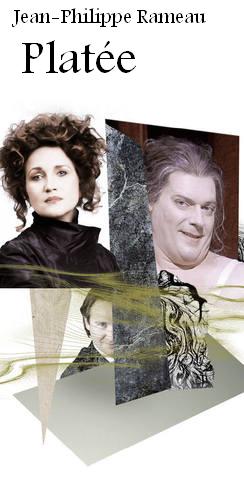
Music by Jean-Philippe Rameau
Libretto by Jacques Autreau


cast

actor role
Conductor William Christie
Director Robert Carsen
Set and costume designer Gideon Davey
Light design Robert Carsen, Peter van Praet
Choreography Nicolas Paul
Dramaturgy Ian Burton
Platée Marcel Beekman
Mercure | Thespis Cyril Auvity
Jupiter Edwin Crossley-Mercer
La Folie Simone Kermes
Clarine | Amour Emmanuelle de Negri
Momus | Satyre Joao Fernandes
Cithéron | Momus (Prolog) Marc Mauillon
Junon Emilie Renard
Thalie Gan-ya Ben-gur Akselrod
Orchestra Les Arts Florissants
Chorus Arnold Schoenberg Choir
Performances: February 2014; 17, 19, 21, 24, 26, 28 

Synopsis

Platée was written in March 1745 for the wedding in Versailles of the heir to the French throne. This was to be one of the last major festivities of the Ancien Régime. A large-scale tragedy would have suited the event; and although Rameau did construct his work using that template, Platée is an ingenious parody. However, the love intrigue about an ugly and vain water nymph did not meet with much approval in Versailles; indeed, as a romantic, sentimental wedding opera it could hardly have been less appropriate.

Juno causes severe storms to destroy the harvest because, once again, she is angry with Jupiter, her philandering husband and supreme god. But this time her anger is groundless: Jupiter is faithful to her. Mercury and Citheron plan to cure Juno of her unfounded jealousy and devise a plot: in a marsh the ugly nymph Platée lives, who has been pestering Citheron with her unwanted affections. She is told that Jupiter has fallen in love with her. The father of the gods, who is in on the plan, appears to Platée in the form of a donkey, declares his (untrue) love for her and commands a wedding celebration. Juno is lured to the mock wedding. In a fury she tears the veil from the face of the supposed bride. Faced with Platée’s ugliness she cannot help laughing at her own jealousy and patches up her differences with Jupiter. Citheron and Jupiter now have peace and quiet again; only Platée is lonely and humiliated.

In Paris in 1749, Platée immediately became one of Rameau’s most successful works. The audience revelled in the elegantly composed, subtly comic music and the playful use of language and sounds such as the croaking of the frogs in the marsh and the braying of Jupiter as a donkey. Since the mid-twentieth century, Platée has again been the most frequently performed of Rameau’s operas. But it is not just the burlesque elements that make the work such a success; Rameau’s portrayal of Platée’s fate as the butt of heartless laughter and derision is also sympathetic, showing her to be pitiable. By the end our laughter dies on our lips. In 1750, Jean-Jacques Rousseau hailed Platée as “the best musical play ever to be heard in our theatres.”

Posted in Music, OPera | Tagged , , , , , , , , , | 1 Comment