VERDI’s 200th ANNIVERSARY CELEBRATION: Verdi’s musical scores anthological itinerant exhibition

veride pittoriVerdi’s musical scores anthological exhibition

Organized by the Accademia Nazionale d’Arte Antica e Moderna di Roma, 2013

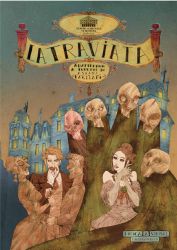
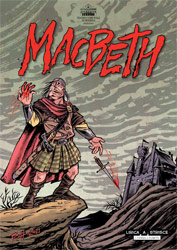
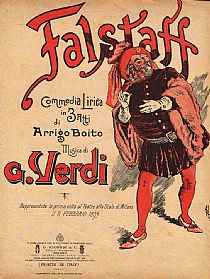
On the occasion of the bicentenary of Giuseppe Verdi’s birth, the association Accademia Nazionale d’Arte Antica e Moderna di Roma organized an exhibition concerning the artists who designed the most important original score covers of Giuseppe Verdi’s operas from 1839 to 1893.
This project started more than one year ago, searching and buying Verdi’s musical scores illustrated by masters and less known artists.
The association intends with this exhibition to celebrate the bicentenary of Giuseppe Verdi’s birth with a subject not directly linked to concerts or to his biography, showing an aspect of the circulation of his music through the illustration. The public management for the promotion of the Italian cultural heritage abroad is also involved, offering to the public a reading of the music through its relation with figurative arts. This project allowed the discovery of talented but still unknown artists.
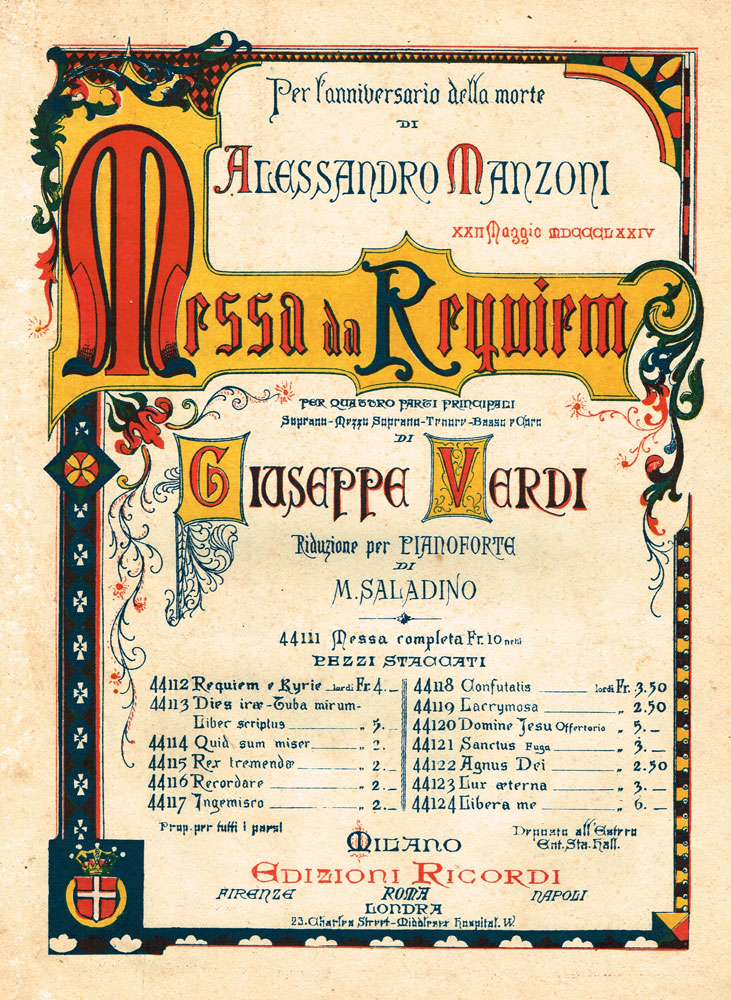
verdimessaThe exhibition follows a chronological path showing all the score covers of the 28 operas by Verdi, together with the Requiem Mass dedicated to Manzoni and Dante’s Ave Maria, in several editions, not only Italian.
The techniques used to print the covers include xylography, lithography, etching and chromolithography. The publisher is almost always the printing works Ricordi, even though it is not rare to find foreign licensee publishers. The artists who illustrated Verdi’s score covers were nearly all members of Ricordi’s graphic design studio managed by Tito I Ricordi, skilled lithographer and printer.
Also his son Giulio designed some covers, among which the title page of the famous first edition of Aida. The most famous artists of this team were Francesco Ratti, Roberto Focosi, Alfredo Edel and Adolf Hohenstein.
Verdi_otelloThe exhibition, curated by Stefano Liberati and Dario F. Marletto, is sponsored and organized by the association Accademia Nazionale d’Arte Antica e Moderna and is under the patronage of the Italian President and the National Committee for the celebrations of Giuseppe Verdi’s birth bicentenary in collaboration with Unione Europea Esperti d’Arte, the Italian Ministry of Foreign Affairs, Regione Emilia-Romagna, the Braidense National Library and the city of Rivoli and will circulate during year 2013 through the world net of diplomatic and cultural delegations of the Ministry of Foreign Affairs.
Scheda pratica per “Verdi’s musical scores anthological exhibition ”

When:

Theatro Municipal – San Paolo
 from August 9th to September 9th, 2013
Galleria Mario Sironi – Istituto Italiano di Cultura di Lima
from the 5th of September to the 8th of October 2013
Palacio de bellas artes – Città del Messico
October 2013
Casa del Conte Verde a Rivoli (TO)
from the 6th to the 29th of September 2013
Biblioteca Nazionale Braidense a Milano
from October 3rd to November 6th, 2013
                 verdimariafalstaff1893verdiaida2
Posted in Exhibits, Music, OPera | Tagged , , | Leave a comment

VERDI’S 200th ANNIVERSARY: Nabucco in Philadelphia.

kimmelcenter

AMERICAN ACADEMY OF MUSIC

Opera Philadelphia

Nabucco

by Giuseppe Verdi
Performed in Italian with English supertitles
Company Premiere and New Co-Production
Starting Friday, September 27th.

An ancient story. A revolutionary telling.
On its surface, Nabucco is about the epic struggle of the Jews suppressed by Babylon’s King. But to Italians fighting for their freedom from Austria, Verdi’s first great opera was an inspiring call to arms. In an unprecedented spectacle, Opera Philadelphia produces this beloved biblical tale with a slight twist: while the classical story unfolds on stage, 19th century opera goers join the modern day audience. The result? An exhilarating opera-within-an-opera as the Academy transforms into La Scala to thrill all involved, especially with ‘Va, pensiero (The Chorus of the Hebrew Slaves),’ adopted as Italy’s unofficial national anthem shortly after Nabucco’s premiere. In celebration of Verdi’s 200th birthday and 2013 being the Year of Italian Culture in the U.S., Opera Philadelphia delivers a galvanizing, must-see production.Nabucco160

All artists and programs subject to change.

Friday, September 27 8pm  
Sunday, September 29 2:30pm  
Wednesday, October 2 7:30pm  
Friday, October 4 8pm  
Sunday, October 6 2:30pm  
Posted in Music, OPera | Tagged , , , , , , , , , | Leave a comment

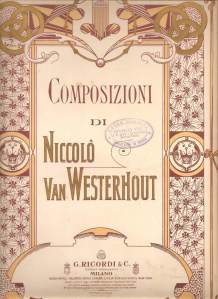
Niccolo` van Westerhout’s Sinfonia in La minore- 1 Movimento

As a fan of van Westerhout’s  works, I could not help myself to include this brief movimento in my blog… Click on the book and it will play it for you…
partitura-composizioni-niccolo-van-westerhout

Posted in Music | Tagged , | Leave a comment

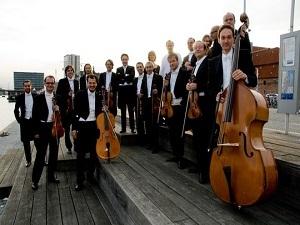
VERDI’s 200th ANNIVERSARY: I Cameristi della Scala Tour the USA

I Cameristi della Scala Tour in the United States

October 2013

5 – Charleston

7 – Boston: Massachusetts Institute of Technology, Kresge Auditorium

8 – Providence:

9 – Washington:

Library of Congress,Coolidge Auditorium

10 – New York: Carnegie Hall

11 – Miami

cameristi

Celebrating Giuseppe Verdi’s 200th Birthday

In the year of the celebrations for the 200 years passed from Giuseppe Verdi’s birth, the Cameristi della Scala will offer an exclusive program, absolutely unique in the international music’s world. It contains “Fantasie” from Verdi’s operas, composed in the 19th century by Italian important composer, sometimes Verdi’s friends and coworkers. These pieces, gifts and celebrations to the greatness of the composer from Busseto, were lying forgotten and without an editor in world libraries. We found them and we transcribed and rivisited them. They are now played for the fi rst time in our modern times.

These “Fantasie” from Verdi’s operas, represented a very important way to spread Verdi’s music, in a time where there was no possibility of reproducing music except from a live concert. These are rielaborated versions, that we could easily call covers, which is a sign of how incredibly popular the original themes to which they refer were. It will be possible to hear and experience the most famous melodies from Verdi with the virtuosity of the orchestra and its soloists.

FANTASIES FROM VERDI’S OPERAS

Camillo Sivori (1815-1894);  Il Trovatore [for violin and orchestra]

Antonio Bazzini (1818-1897); La Traviata [for violin and orchestra]

Luigi Mancinelli (1848-1921); Don Carlo [for cello and orchestra]; Aida [for cello and orchestra]

Giovanni Avolio (1849-1923); Otello [for violin, cello and orchestra]; Falstaff[for violin, cello and orchestra]

Francesco Manara, violin; Massimo Polidori, cello

Posted in Music, OPera | Tagged , , , | 4 Comments

VERDI’S 200th ANNIVERSARY: Chicago Simphony Orchestra’s Macbeth

Celebrating Giuseppe Verdi

“Giuseppe Verdi was a composer who expressed the most essential feelings of mankind: love, hate, friendship, jealousy—everything that reflects our life, our way of being human. His music is the mirror of who we are. Each of Verdi’s operas expresses human nature in such a profound way that we often recognize ourselves in Verdi’s characters.

When Verdi died, the famous Italian poet Gabriele d’Annunzio wrote a few lines that I think perfectly express who Verdi was: ‘Diede una voce alle speranze e ai lutti. Pianse ed amò per tutti’—he gave a voice to all our hopes, he wept and loved for all of us. That’s why Verdi will always be of the moment, and he will never become old-fashioned. I feel certain that in 50 years, 100 years, 200 years, Verdi will still be a composer who speaks to people. His voice is universal.”
Riccardo Muti

Music Director Riccardo Muti and the CSO celebrate the 200th birthday of Italy’s greatest opera composer, Giuseppe Verdi, with concerts from September 18-October 10, 2013.

headermutiverdi

Muti Conducts Verdi’s Macbeth

7:00 PM
Saturday, September 28, 2013;  Tuesday, October 1, 2013;  Friday, October 4, 2013
 
3:00 PM
Sunday, October 6, 2013


Revering Shakespeare above all other playwrights, Giuseppe Verdi based three operas on the Bard’s works. His electrifying psychodrama Macbeth was the first, a blood-soaked portrayal of ambition and guilt. Riccardo Muti, the “greatest Verdi conductor of our time” (Chicago Tribune), leads the incomparable Chicago Symphony Orchestra and Chorus in this dramatic concert.

Performers

Riccardo Muti

conductor
 
Luca Salsi
baritone (Macbeth)
 
Tatiana Serjan

soprano (Lady Macbeth)
 
Dmitry Belosselskiy

bass (Banco)
 
Francesco Meli

tenor (Macduff)
 
Antonello Ceron

tenor (Malcolm)
 
Simge Büyükedes
soprano (Lady-in-Waiting)
 
Gianluca Buratto

bass (Doctor)
 
Duain Wolfe

chorus director

JOIN MAESTRO MUTI AND THE CSO FOR THE VERDI 200TH BIRTHDAY SPECTACULAR, FEATURING THE REQUIEM.
Though the performance at Symphony Center is sold out, audiences around the globe can still get a “free seat” to the Verdi 200th Birthday Spectacular, a culmination of the Chicago Symphony Orchestra’s celebration of the bicentennial of the incomparable Italian composer Giuseppe Verdi.

The event will take place on the evening of Thursday, October 10, 2013 – 200 years to the day that Verdi was born. CSO Music Director Riccardo Muti, who is considered to be the world’s greatest living interpreter of Verdi’s music, will lead the Chicago Symphony Orchestra and Chorus in a special one-night-only performance of Verdi’s Requiem Mass at Symphony Center. The Requiem is one of Verdi’s most striking choral works, and one that portrays all aspects of humanity. As Maestro Muti has said, “Everybody can … see themselves in the music of Verdi. With his music, he translated the feelings of all of us.”

Oct. 10: Requiem Live Webcast

To celebrate the Verdi bicentennial with people around the world, the CSO is offering a free live webcast of the Verdi 200th Birthday Spectacular featuring the Requiem.

7:30 p.m. CDT U.S. (GMT -5) on Thursday, October 10, 2013.
(Find the time of the performance in your time zone here.)

Online, the Requiem performance can be viewed live

And for those in the Chicago area, the Verdi webcast will be simulcast live, via satellite, on the new state-of-the-art screen in the Jay Pritzker Pavilion in Millennium Park in downtown Chicago.

Posted in Music, OPera | Tagged , , , , | Leave a comment

Richard Wagner’s Bicentennial Sparks Effort to Split Music and Anti-Semitism

Hitler’s Favorite Composer Gave Himself Black Eye With Bias

By Reuters

w-richardwagnerbicentennial-012813

Former German infantryman Hans Himsel lived through scenes in 1944 at the Bayreuth opera house worthy of the finale of Richard Wagner’s “Gotterdammerung” when Valhalla goes up in flames.

In this bicentenary year of Wagner’s birth, Himsel, 90, recalled the last wartime production at Bayreuth. It was August 9, 1944 and the cast performed “Die Meistersinger von Nurnberg”, which contains the command “honour your German masters”. The Nazis had turned the piece into a propaganda pageant.

Although malnutrition was rampant, and Paris was to be liberated two weeks later, Himsel, a butcher’s apprentice who was wounded five times and survived the Russian front, said for the last performance the backstage and catering crews were feted with a band, half a duck each and all the wine they could drink.

Adolf Hitler considered Wagner his favourite composer. History’s problem, compounded by Wagner’s virulent anti-Semitism, has been disentangling the two.

“We danced at the feast while the soldiers died,” Himsel said in an interview at a Bayreuth restaurant and hotel where Wagner stayed when he was building his Bavarian opera house in the late 19th century.

Hitler was a Bayreuth regular and kept it going during the war by buying up tickets for soldiers to attend. Hitler’s use of Bayreuth for propaganda purposes, rivaled only by his manipulation of the 1936 Berlin Olympics, resonates still.

“Of course Wagner’s reputation is terrible, I understand why people have the feelings they do about his music,” American soprano Deborah Voigt, who sings Wagner’s “Ring”-cycle heroine Brunnhilde, said in a telephone interview from Florida.

“It’s odd to me because as someone who is spiritual, and has a lot of faith, it feels like the music he wrote was divinely inspired and in such contrast to what his personal views were.”

“Wagner is a genius, the sound is extraordinary,” said Hungarian conductor Adam Fischer, who runs a Wagner festival in Budapest and is Jewish. “The music is not the person,” he added, saying what was important was “the intensity of Wagner’s music”.

From Seattle to Australia, and across Europe, Wagner compositions from the “Ring” with its Valkyrie cry “hojotoho”, to the romantic “Tristan und Isolde” which provides the soundtrack for the world’s end in Lars von Trier’s “Melancholia”, draw audiences of all ages.

“It gives a higher feeling, you get goose bumps,” artist-photographer Christopher Gemenig, 27, a stud in his lower lip, said recently during the interval of Wagner’s swan-knight opera “Lohengrin” at the Dresden Semperoper.

Gemenig, and his companion Mia Mueller, whose flame-red hair bolstered their resemblance to Wagner’s doomed lovers Tristan and the Irish princess Isolde, acknowledged that despite Wagner having joined ranks with anarchists in a failed revolution in mid-19th century Dresden, the taint of Hitler ran deep.

“Hitler liked the music and all that Hitler likes is evil. I think that’s a curse of Wagner,” said Gemenig, whose favourite bit is the overture to “Gotterdammerung”. “But I think this is not a problem for me, and for many people it also is not.”

As they have every year since 1990, Germany’s first couple, Chancellor Angela Merkel and her husband, quantum chemist Joachim Sauer, will attend the summer festival at the Bayreuth Festspielhaus, the opera house Wagner built with money he borrowed from Bavarian King Ludwig II and never repaid.

“It never ends, it’s so rich,” Sauer, 63, said in a rare interview with Reuters, speaking of the appeal of Wagner’s operas. “And they are all so very different.”

These days Bayreuth is always sold out and has a waiting list that can be as long as a decade.

SILENCED VOICES

A little way down the “Green Hill” from the opera house, visible from the balcony of an annex built for Ludwig where Hitler acknowledged the Nazi salute of the crowd in the plaza below, is an outdoor exhibition called “Silenced Voices”.

Adult-height placards display short biographies and the smiles or serious gazes of singers, musicians, conductors and stage directors who were progressively shunned by Bayreuth, as the festival drew closer and closer to the Fuhrer.

Arranged in a multi-layered rectangle around a bust of Wagner by Nazi-era sculptor Arno Breker, the placards furthest away are for people who emigrated or somehow survived the war. Those closest died in concentration camps and gas chambers.

“This Breker bust, it is the fascistic Wagner image and this ‘Hitler Wagner’ is surrounded by his victims,” said Sven Friedrich, director of the Richard Wagner Museum and National Archive.

He brushed aside suggestions the bicentenary may trigger a debate about Germany’s role in Europe. Merkel is a “trustful person, she’s not dangerous at all” and her presence “gives this very bourgeois image to Bayreuth”, he said.

Hitler, and Bayreuth’s complicity in Nazi propaganda, is another story.

“Everybody is conscious about the history, it is absolutely necessary, we mustn’t leave it,” Friedrich said, speaking in a room Hitler used when he visited.

“In Bayreuth you can learn the ‘elysium’ and the ‘bestiarium’ of German history, both extremes…This is a very, very big tension.”

A STATUE, A SHADOW, IN HIS HOMETOWN

For his 200th, Wagner’s hometown of Leipzig will get an “anti-Breker bust” – a life-sized bronze statue of the composer with a black shadow several times his diminutive height looming behind him.

To be unveiled on the birthday, May 22, the 220,000-euro ($292,900) cost was raised privately and mostly from outside Leipzig, said Markus Kaebisch, 44, a businessman who spearheaded the effort.

He said Leipzig still has a “difficult” relationship with its native son, in part because of the anti-Semitism and Hitler, but also because Leipzig was host during their adult careers to so many other musical greats, including Bach, converted Jewish composer Felix Mendelssohn – whom Wagner reviled – and Schumann.

“It’s never been a Wagner city,” he said in a telephone interview. “And I’m sure it won’t be better after this year is over.”

Music critic Barry Millington, whose book “The Sorcerer of Bayreuth” adds to a bibliography some say makes Wagner the third most written-about person in history, after Jesus and Napoleon, says there is no extricating him from his anti-Semitism.

“I’m attacked by the Wagnerians who think I am dragging him through the mud…They want the Wagner experience to be in this idea-free zone, they want to erect a firewall between the music and the ideology and you can’t. Wagner’s music is rooted in the ideology. That for me is what makes it fascinating,” the British author said.

Wagner’s infamous 1850 essay “Judaism in Music”, published at first under a pen name and some 20 years later under his own, took vile swipes at contemporary Jewish opera composer Giacomo Meyerbeer and the converted Mendelssohn, depicting them and other Jews as “a swarming colony of maggots” feasting on the carcass of German culture. The rants continued unabated right up to Wagner’s death in a Venice palazzo in 1883.

“Anti-Semitism is woven into the fabric of the music of Wagner,” Millington said.

Another view comes from Hamburg-based author Joachim Kohler, one of whose books, called “Wagner’s Hitler, The Prophet and His Disciple” in English, struck a raw nerve with Wagnerians. Kohler, in an interview in his flat, said he had changed his opinion and now saw Wagner’s anti-Semitism as an adjunct of his artistic mind, not as a scenario for which Hitler and the Holocaust were the inevitable last act.

“Yes, I made a mistake…so I revised and I came to the conclusion that Wagner’s anti-Semitism was not political, it was theatrical,” Kohler said.

“And the proof that he had not deep-rooted anti-Semitism against people, it was just an idea against people, is that he had so many Jewish friends.” One of them, Kohler said, was the impresario Angelo Neumann whom Wagner, sick with the expense and trouble of the place, wished would buy Bayreuth.

Kohler’s latest book, entitled “The Laughing Wagner” in German, paints an altogether different picture of Wagner from the grim anti-Semite. Wagner, who stood just over 168 cm, or 5-1/2 feet tall, enjoyed cracking jokes and stood on his head when welcoming the visiting Emperor Dom Pedro II of Brazil to Bayreuth for the festival’s opening in 1876.

“He was a real entertainer, like a Las Vegas entertainer,” Kohler said, adding that Wagner’s “genius gave him not a multiple personality because the different personalities knew of each other, but I would say he had multiple identities.

“There were really opposites in him that can’t be easily reconciled because they are opposites.”

NOT BAD FOR BUSINESS

Some of those personality traits have been passed down from generation to generation in the famously feuding Wagner clan, and all its branches, whose lives read like a soap opera that regularly commands the attention of the German and world press.

Power struggles over who would control the festival, and the Wagner legacy, have pitted mother against children, children against siblings and different branches of the clan against each other. The German state and the town of Bayreuth now run it, with family members sitting on the board of directors and having artistic control.

One great grandson coaxed the then-septuagenarian Winifred Wagner, the English-born widow of Wagner’s son Siegfried, into revealing her affection for Hitler to a filmmaker in the 1970s: “If Hitler were to walk in through that door now, for instance, I’d be as happy and glad to see and have him here as ever…”

In their way the family machinations, and the concern of some Wagner researchers, among them Millington, that important correspondence between Winifred and Hitler is mouldering away under lock and key in a Munich bank vault, out of public view, are a good public relations gimmick, archivist Friedrich said.

The documents in the vault have been “Fafnerised”, he said, referring to the dragon in the “Ring” who sits on his hoard of gold stolen from the Rhine maidens, including the accursed ring that gives its wearer supreme power. It is all part of what he called the “myth” that makes the family interesting.

Those myths, but particularly the ones Wagner fashioned out of old Norse legends and other sources, some of them brought to his attention by his Jewish friends and acquaintances, are what draw audiences to the treasure trove of Wagner today.

American stage director Francesca Zambello said she had reimagined Wagner’s “Ring” cycle for a production that focused on greed and power for Washington and on the destruction of the environment when she tailored it for San Francisco.

“I think Wagner’s music feels contemporary…The themes, the characters, the emotions, they resonate with a contemporary audience. Wagner, more than any other composer, can be interpreted in a variety of approaches because his works are mythic and mythic can mean the past, the present and the future,” she said in a telephone interview.

And Wagner does have a future in the eyes of some of the young people who will be around to mark his 250th birthday.

“I just know every opera from Wagner is very long but what I know, what I hear, I like,” Tomas Ottych, 32, of Brno, Czech Republic, said, passing a plaque mounted on a wall in Leipzig that marks the spot where Wagner’s birth house stood in 1813.

Ottych, a ballet dancer who will perform in a production to mark the bicentenary, said Wagner’s anti-Semitism and Hitler’s fondness for him were beside the point.

“I mean, it’s past, and his music is forever,” he said.

Posted in OPera | Leave a comment

VERDI’S 200th ANNIVERSARY: Washington National Opera Features “The Force of Destiny”

 override_opera

logoWno     

Verdi’s  “The Force of Destiny”   

Thrust together by fate, three lives become intertwined on a path to ruin. WNO Artistic Director Francesca Zambello brings her inventive staging to this new production of Verdi’s demanding masterpiece, featuring an exciting cast of international singers.

Giuseppe Verdi’s
The Force of Destiny
(La forza del destino)
Libretto by Francesco Maria Piave
New production
 
Thrust together by the hand of fate, three lives become irreversibly intertwined on a path to ruin. Leonora, the daughter of a disgraced marquis, is ready to leave her homeland behind to run away with Alvaro, a foreigner from a distant land. When her father is accidentally killed by Alvaro’s gun, the couple is tragically separated–and her brother Carlo vows revenge at any cost.
 
washington_FORCEDESTINY_400Distraught, Leonora commits to a life of solitude near a monastery. Meanwhile, Alvaro and Carlo both enlist in the army and become friends, unaware of the other’s true identity. An innocent promise ultimately leads Carlo to face down his comrade, and Leonora to emerge from hiding to save her long-lost love.
 
From its famed overture to the fourth act’s show-stopping “Pace, Pace mio dio,” Verdi’s notoriously demanding masterpiece–not seen by WNO audiences in nearly 25 years–bursts with thrilling arias and rousing ensemble passages. WNO Artistic Director Francesca Zambello brings her inventive staging to this new production that celebrates the bicentenary of Verdi’s birth. Combined with an exciting, young cast of international singers conducted by gifted Chinese American maestra Xian Zhang, this is one opera Washington and the world will be talking about for years to come.
 
Zambello is “known for her psychologically probing interpretations of the operatic repertoire.”
The New Yorker

Donna Leonora di Vargas: Adina Aaron (10/12, 16, 20, 24, 26), Amber Wagner (10/18 & 22)
Don Alvaro: Giancarlo Monsalve (10/12, 16, 20, 24, 26), Rafael Davila (10/18 & 22)
Don Carlo di Vargas: Àngel Òdena (10/12, 16, 20, 24), Luca Salsi (10/18, 22, 26)
Preziosilla: Ketevan Kemoklidze
Fra Melitone: Valeriano Lanchas
Padre Guardiano: Enrico Iori
Marchese di Calatrava: Peter Volpe

Set Designer: Peter Davison
Costume Designer: Catherine Zuber
Lighting Designer: Mark McCullough
Choreographer: Eric Sean Fogel

Performed in Italian with projected English titles. Titles may not be visible from the rear of the orchestra.

~~~~~~~~~~~~~~~

COME EARLY FOR FREE OPERA INSIGHTS
Musicologist Saul Lilienstein leads the Thursday, Oct. 24 Opera Insight, starting 1 hour and 15 minutes before the performance and lasting 35–40 minutes. All other Opera Insights start 1 hour before the performance and last 20–25 minutes.
Informative and entertaining, Opera Insights take you inside the composer’s mind, behind the scenes of planning a production, and into the history and social context of each opera.
These lectures are free, but patrons must present a ticket from any performance of The Force of Destiny.

STAY AFTER FOR A FREE ARTIST Q&A ON THE FORCE OF DESTINY
Following these performances:
Sunday matinee, October 20
Tuesday evening, October 22
Join WNO artists for a unique opportunity to ask questions about the production.
All discussions begin immediately after the performance and are free with your ticket.

Posted in OPera | Leave a comment

WAGNER’ S 200th ANNIVERSARY: Washington National Opera Features Tristan and Isolde

override_opera logoWno

Tristan and Isolde

In Wagner’s retelling of the beloved Celtic myth and its star-crossed lovers, Deborah Voigt–one of the finest Wagnerian sopranos of our time–brings her alluring portrayal of Isolde to a stunning production featuring an impressive international cast.

Richard Wagner’s
Tristan and Isolde

Libretto by the composer
Production from Opera Australia
 
Isolde, a beautiful Irish maiden with magical powers, is riding the high seas to marry her betrothed, the King of Cornwall. But first she must avenge the death of her former fiancé by killing Tristan, a dashing knight and nephew of the king. When the poison she concocts turns out to be a love potion, her vengeful ire and his bold betrayal are suddenly transformed into rapturous, unbridled passion. As the royal wedding approaches, Tristan and Isolde can only find comfort under cover of night. Yet even the darkness cannot hide their desires for long.

washuington_TRISTANISOLDE_400Following her acclaimed 2010 WNO debut in the role of Salome, Deborah Voigt–one of the finest Wagnerian sopranos of our time–brings her alluring portrayal of Isolde to a stunning production that celebrates the bicentenary of Wagner’s birth with direction by Neil Armfield, who will also direct Opera Australia’s first production of Wagner’s Ring cycle later this fall. Conducted by WNO Music Director Philippe Auguin, and featuring an impressive international cast, Wagner’s retelling of the beloved Celtic myth and its star-crossed lovers continues to enchant audiences across the globe. 
 
Voigt’s “golden-toned, full-bodied singing and luminous beauty has made her the opera world’s Isolde of choice.”
The Chicago Sun-Times

Tristan: Ian Storey; Clifton Forbis (Sep. 27)
Isolde: Deborah Voigt
Brangäne: Elizabeth Bishop
Kurwenal: James Rutherford
King Marke: Wilhelm Schwinghammer

Conductor: Philippe Auguin
Director: Neil Armfield
Costume Designer: Jennie Tate
Lighting Designer: Toby Sewell

Performed in German with projected English titles. Titles may not be visible from the rear of the orchestra.

~~~~~~~~~~~~~~~

COME EARLY FOR FREE OPERA INSIGHTS
Musicologist Saul Lilienstein leads the Friday, Sep. 27 Opera Insight, starting 1 hour and 15 minutes before the performance and lasting 35–40 minutes. All other Opera Insights start 1 hour before the performance and last 20–25 minutes.
Informative and entertaining, Opera Insights take you inside the composer’s mind, behind the scenes of planning a production, and into the history and social context of each opera.
These lectures are free, but patrons must present a ticket from any performance of Tristan and Isolde.

STAY AFTER FOR A FREE ARTIST Q&A ON TRISTAN AND ISOLDE
Following this performance:
Sunday matinee, September 15
Join WNO artists for a unique opportunity to ask questions about the production.
All discussions begin immediately after the performance and are free with your ticket.

Posted in Music, OPera | Leave a comment

VERDI’S ANNIVERSARY: Muti Directs Verdi and Brahms in Chicago.

LargeBanner_rmuti

Muti Conducts Verdi and Brahms at the Chicago Symphony Orchestra.

8:00 PM
Verdi, Brahms, Strauss
Thursday, September 19, 2013

Music Director Riccardo Muti leads Giuseppe Verdi’s powerful ballet music from Macbeth in honor of the opera composer’s bicentennial and rounds the concert off with the sunniest of Brahms’s symphonies, which opens with horns rising like the dawn over brooding lower strings. The splendid melodies of Johann Strauss, Jr.’s overture to Indigo and the Forty Thieves are filled with heroic swagger.

Program

  • J. Strauss, Jr. Overture to Indigo and the Forty Thieves
  • Verdi Ballet Music from Macbeth
  • Verdi Overture to La forza del destino
  • Brahms Symphony No. 2
Posted in Music, OPera | Tagged , , , , | Leave a comment

FREUD MUSEUM LONDON DAY LECTURE: WAGNER, FREUD AND THE END OF MYTH

FREUD MUSEUM LONDON

Day Conference, Saturday September 28th, 2013
9.30am – 5.00pm

Freud_Wagner_ParsifalWAGNER, FREUD AND THE END OF MYTH

Freud once asserted that his intention was to re-interpret myths and stories as products of the inner world, and thus ‘transform metaphysics into metapsychology’. But had Wagner got there before him? By taking the mythic dimension and bringing it into the human realm, Wagner anticipated Freud in his depiction of unconscious processes of the mind, while Freud’s ‘science of the unconscious’ gives unprecedented insights into Wagner’s monumental achievements. This conference is a result of the conviction that, like Freud, “Wagner was grappling … with fundamental psychosexual issues that affect us all” (Barry Millington, 2013) and that a fruitful dialogue can exist between their two bodies of work.

SPEAKERS

Anthony Cantle (psychoanalyst)
Introductory Remarks

Gavin Plumley (musicologist)
Private Theatre and Hysterical Opera: Wagner’s influence in Freud’s Vienna

Inge Wise (psychoanalyst)
Die Walküre: A Tale of Oedipal Longings and Desires

Tom Artin (writer)
The Ring in a Nutshell: A Glimpse at The Wagner Complex

Bryan Magee (philosopher)
in conversation with
Stephen Gee (psychotherapist)
Precursors of the Unconscious: Wagner and the Philosophers

Estela Welldon (forensic psychotherapist)
The Chaste and the Driven: Power struggles in Wagner’s women

Stephen Gross (Jungian analyst)
Freud and Wagner: The Assault on Reason

SPEAKERS’ BIOGRAPHIES

Gavin Plumley is a writer and broadcaster, specialising in the music and culture of Central Europe. He has appeared on BBC Radio 3 and has recently spoken at the Royal Opera House, ENO, the CBSO, V&A, The Freud Museum, and the Neue Galerie New York. He has given a number of talks at the Southbank Centre’s ‘The Rest is Noise’ festival this year and was recently appointed commissioning editor for the English language programmes at the Salzburg Festival. www.entartetemusik.blogspot.com

Inge Wise studied English, French and Spanish literature and worked as simultaneous interpreter prior to training at the Tavistock Clinic and the British Psychoanalytic Society. She is a fellow of both the BPAS and of the Institute of Psychoanalysis. She founded the Psychoanalytic Ideas series published by the Institute of Psychoanalysis, which she co-edited with Paul Williams until 2011. She works in private practice and teaches/supervises in the UK and abroad. Music has been a constant in her life.

Tom Artin was educated at Princeton, from which he holds a Ph. D. in Comparative Literature. He has held academic positions at a number of American colleges and universities, Swarthmore College and SUNY Rockland among them. His interest in Wagner evolved both from his training as a medievalist and his life-long involvement with music, and opera in particular. He is the author of several books, including The Allegory of Adventure, an exegetical study of the Arthurian romances of the 12th c. French poet Chrétien de Troyes, and most recently The Wagner Complex: Genesis and Meaning of The Ring.

Stephen Gee is a member and former Chair of The Site for Contemporary Psychoanalysis. He has contributed to Site conferences on Winnicott, Lacan, Homosexuality, and Class. He organised a rehearsed reading of Sarah Kane’s ‘4:48 Psychosis’ followed by a colloquium in which psychoanalysts of different schools talked about the issues raised by the play and the challenges facing people suffering with psychosis. He ran a performance group at the Studio Upstairs where he was also a supervisor. He is a member of the editorial group of the Site’s psychoanalytic journal, and has written on the problematic history of psychoanalysis and homosexuality. He interviewed the director Phyllida Lloyd at The Site and at the English National Opera on her 2005 production of Wagner’s Ring cycle. He has a private practice in South London and teaches regularly at The Site and on other psychoanalytic trainings.

Bryan Magee has had a lifelong engagement with philosophy and music. His work includes the award winning radio and TV series in which he interviewed contemporary thinkers such as Sir Alfred Ayer and Herbert Marcuse as well as exploring the ideas of philosophers of the past. His books include the autobiographical Confessions of a Philosopher and an acclaimed introduction to Karl Popper. He wrote The Philosophy of Schopenhauer and two books on Wagner; Aspects of Wagner and The Tristan Chord; Wagner and Philosophy. Like these two major figures in his creative life Bryan Magee has himself been a man of action as wells of ideas. In the1960s he made documentaries on prostitution, abortion and homosexuality and was Labour MP for Leyton in the 1970s and 80s. He has the gift of communicating his own love of ideas and music in a way that engages both aficionados and newcomers.

Estela Welldon is a psychotherapist who worked for many years at the Portman Clinic and in private practice. She is the founder of the International Association for Forensic Psychotherapy and a Fellow of the Royal College of Psychiatrists. She is most famous for her book Mother, Madonna Whore: The Idealization and Denigration of Motherhood (1988) which quashed the myth that ‘perversion’ was largely a male preserve and opened up a whole new field of therapeutic enquiry. In 1997 Oxford Brookes University awarded Dr. Welldon a D.Sc. Honorary Doctorate of Science degree for her contributions to the field of forensic psychotherapy, and this year she was invited to become an Honorary member of the American Psychoanalytic Association. She is principal editor of A Practical Guide to Forensic Psychotherapy (1997) and author of Sadomasochism (2002). Her latest publication is Playing with Dynamite: A Personal Approach to the Understanding of Perversions, Violence and Criminality (Karnac, 2011) Her interest in Wagner is long-standing.

Stephen Gross is an analytic psychotherapist in private practice. He also teaches and supervises at WPF Therapy and other training organisations. He is particularly interested in the overlap between psychotherapy and literature, especially the works of Shakespeare on which he has published widely. His first play, “Freud’s Night Visitors” has been performed twice at The Freud Museum London.

Anthony Cantle has introduced and chaired three previous Freud Museum events – on the “Therapist’s Body” (2000), “Understanding Perversion” (2009) and “Mahler” (2010). He is a practising Psychoanalyst and Psychoanalytic Psychotherapist and a Fellow of The Institute of Psychoanalysis, London and its former Curator. Formerly Founder and Director of the Open Door Adolescent Consultation Service in London he has also taught on the MA in Psychotherapy at the Tavistock Clinic. He worked for many years at the St Albans College of Art & Design where he set up and offered a consultation service to postgraduate students studying Art, Dance & Drama Therapies.

In addition to his clinical practice he is currently a Training Analyst and Supervisor for the former British Association of Psychotherapists, the Lincoln Clinic for Psychotherapy and the London Centre for Psychotherapy and the Tavistock Clinic and the Tavistock Centre for Couple Relationships. He is also member of the UK Mahler Society and participated in the 2009 BBC Series “Robert Winston’s Musical Analysis” where he spoke about the marriage of Gustav and Alma Mahler. In 2010 he introduced and chaired the Freud Museum event – with Gavin Plumley as the guest speaker – and entitled “The ‘Faust’ Problem: Music and Madness in Mahler’s Vienna. Later the same year, as part of the centenary celebrations of Mahler’s death, the BBC asked Anthony Cantle and the British composer and Mahler expert David Matthews to make a programme about Gustav Mahler’s meeting and four hour conversation with Sigmund Freud in the Dutch city of Leiden. Recorded on location, “Walking with Freud” was transmitted in 2010 and was repeated as the interval documentary during the 2011 BBC Proms season.

Anthony Cantle was also a contributor to the 2011 BBC Radio Four series “Soul Music” featuring the Adagietto from Mahler’s 5th symphony and assisted in the BBC Wales production of the 2012 two part programme on the Finnish composer, Jean Sibelius.

ABSTRACTS

Gavin Plumley
Post-Wagnerian composers in Vienna, hugely influenced by the Bayreuth Behemoth, actively explored the kind of mental dissociation described in Freud and Breuer’s Studies on Hysteria (1894). Employing vast orchestras to create swirling psychodramas, their operas offer a beguiling artistic response to Anna O’s idea of ‘private theatre’, and to Wagner’s use of the mythological as a way of approaching psychological ‘truths’. A few decades later many of those composers, exiled by the Nazis, employed the same soundworld to accompany the ultimate dissociative narratives of Hollywood’s Silver Screen. In this paper I will look at operas by Schreker, Korngold and their contemporaries through a Freudian lens.

Inge Wise
Abstract to come.

Tom Artin
In this paper I will present an overview of my recently published The Wagner Complex: Genesis and Meaning of The Ring, which sets forth a psychoanalytic interpretation of Wagner’s operatic tetralogy. Though a commonplace that Wagner’s works offer fertile ground for Freudian analysis, remarkably little investigation along these lines has actually seen publication. This book’s thesis rests on an exploration of the 19th c. Zeitgeist in whose atmosphere Wagner’s operatic creations and Freud’s psychological speculations alike came to fruition, most notably the emerging conjecture–scientific as well as philosophical–of the fundamental role played by the unconscious in everyday life and the creative process. The overarching conclusion of The Wagner Complex is that The Ring comprises not merely fanciful adventures (and misadventures) of gods, giants, and dwarves, of super-human heroes and anti-heroes such as traverse its intricate surface, but shadows forth symbolically the drama of unconscious intra-psychic conflict.

Bryan Magee and Stephen Gee
In this conversation we will explore Bryan Magee’s long-standing work on music and philosophy with reference to the impact on Wagner’s operas of 19th century philosophers, most notably Schopenhauer, and Wagner’s concomitant influence on philosophy through his association with Nietzsche. In their writing, all three men elaborated ideas about unconscious forces and desires at work in human affairs, famously anticipating Freud and modernism. No 20th century composer could avoid the influence of Wagner and there were many artistic developments, including the breakdown of tonality itself. Likewise, with the advent of psychoanalysis there was no going back to any ideal of a unitary self or a philosophical ‘subject’.

Estela Welldon
Far from being the passive victims of popular imagination, Wagner’s women are often complex, paradoxical and driven characters, representing diverse aspects of femininity and female desire. Wagner’s mythic narratives unveil power struggles between men and women, and between women themselves, representing warring currents of emotion within female psychology.

Stephen Gross
A highly significant connection linking Freud and Wagner is the German philosopher Arthur Schopenhauer. His claim that true reality consists of the primordial and undifferentiated Will beyond both space and time as well as the reach of Reason and appearance, was hugely influential on Wagner’s music, particularly “Tristan and Isolde” as Bryan Magee has argued in his celebrated study Wagner and Philosophy. Freud’s notion of the unconscious, most specifically the id as seat of the sex drives, can now be seen as a derivation of Schopenhauer’s ideas, thereby establishing his link with Wagner. The fierce resistance and hostility towards both Freud and Wagner was founded not only on their perceived assault on prevailing sexual mores, but their assault on Reason itself, and, in Wagner’s case, on his association with Nazism.

WHY FREUD AND WAGNER?

“The Prince Consort sits under a gothic tent, so to speak, around whose base runs a frieze of sculptures which depicts writers, artists, sculptors, musicians, as life-like as possible … But it is very curious how rapidly a collection becomes incomplete. Lacking for us nowadays, of course, is R. Wagner, who was at that time starving.” Letter to Family, Sunday 13 September 1908.

Why be surprised that Freud, visiting London in 1908, should notice the absence of Wagner at the base of the Albert Memorial? Wagner was everywhere in Freud’s Vienna. One of his closest early colleagues was the musicologist Max Graf, who organised the 50th anniversary celebrations of Wagner in Vienna and wrote psychoanalytic interpretations of The Flying Dutchman and other works. His sisters went to Wagner’s operas as often as they could, and Freud mentions Tannhauser, Mastersingers, and Tristan and Isolde in his writings. Patients brought him dreams of interminable Wagner operas that may have been coded criticisms of the interminable analysis they were undergoing. And when did little Sigmund learn that his namesake in Wagner’s tetralogy was the hero who transgressed the incest taboo and was brutally punished by his father? This conference is a result of the conviction that, like Freud, “Wagner was grappling … with fundamental psychosexual issues that affect us all” (Barry Millington, 2013) and that a fruitful dialogue can exist between their two bodies of work.

Posted in OPera | Leave a comment