The hateful side of Wagner’s musical genius

w-richardwagnerbicentennial-012813

From: www.dw.de

Famous German composer Richard Wagner was a vehement anti-Semite. But he also admired Jews like poet Heinrich Heine and had both Jewish patrons and fans. How does it all fit together, and where did his hatred come from?

Zurich in 1850: Richard Wagner writes of “the Jew” that he is “incapable … of artistic expression, neither through his outer appearance, nor through his language and least of all through his singing.” Instead, Wagner believed Jews could only “imitate art.”

In his pamphlet “Das Judenthum in der Musik” (“Jewishness in Music”), he makes no secret of his anti-Semitism. When the composer published those lines in a music magazine under a pseudonym, he was still largely unknown to the world and living on limited funds in Switzerland. It was only later that he would come to be revered as a musical revolutionary and as the mastermind behind operas like “Lohengrin” or “The Ring of the Nibelung.” His genius is still commemorated around the world today, and for his 200th birthday on May 22, 2013, Germany celebrated his artistry.

But there was clearly a hateful side to the composer, as well. His anti-Semitic views became increasingly aggressive as he got older. As such, understanding the dark side of his intellectual legacy is as important as ever in the Richard Wagner year of 2013.

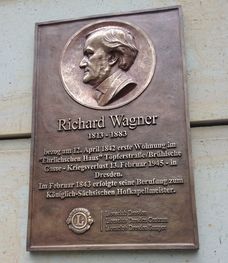
Richard and Cosima Wagner Richard Wagner and his wife, Cosima

From beer halls to middle-class salons

After Wagner’s death in 1883, the calamitous legacy of anti-Semitism would continue. His wife, Cosima, and several of his children turned the famed performances at Bayreuth, which Wagner founded during his lifetime, to a venue of oppression against Jewish artists. Racist ideas had currency there. And later, the Nazis appropriated Wagner as a composer. Adolf Hitler cherished his music and also esteemed him as an early herald of anti-Semitism in Germany. For the racist and nationalist opponents of German modernism, Wagner was – even during the composer’s lifetime – an important figure.

As one of the most famous composers of his time, Wagner’s name carried weight. He helped hoist anti-Semitism out of dirty bars or scarcely read pamphlets and into the comfortable milieu of the middle class, said theater and literary scholar Jens Malte Fischer.

“That was disastrous and has to be attributed to him,” the Wagner expert said.

wagner5Fischer has researched the composer for years and has now published a further book about Richard Wagner. Although it’s clear that Wagner did not invent anti-Semitism, he was a pioneer of such thinking in at least one respect, Fischer said, “He carried over the hatred of Jews of his era into the area of culture and – in particular – that of music.”

In Germany, this is one way in which anti-Semitism found entry into middle-class salons.

What explains Wagner’s hatred?

Historian Hannes Heer is curating an exhibition on the role of Jews in Bayreuth from 1876 to 1945, which can be seen in Bayreuth through the end of this year.

“In the first third of the 19th century, a certain anti-Judaism shaped by Christianity dissolved into anti-Semitism, which fixated more on contemporary society,” Heer said.

Since then, the traditional Christian opposition to Jews was grounded less in religion and more in political and racist expressions. Nationalist authors and writers made Jews into the supposed enemy of the German state, while anti-Semitic organizations sprang up and anti-Jewish demonstrations took place. These political and intellectual movements shaped Wagner’s views.

It was typical for authors of the time to couple anti-Semitism with criticism of modernism. In their caricature, Jews were the protagonists of a new, industrial-capitalist era, which the authors rejected.

But Wagner also had personal experiences that influenced his anti-Semitic beliefs. In the 1840s, he went to Paris, where the young and ambitious composer found no success. Jens Malte Fischer explained, “He had the feeling that the music business in which he couldn’t succeed was in Jewish hands. But that’s, of course, not true.”

Wagner focused his frustration on critics, music journalists and publishers with Jewish roots and came to see them as behind his failure.

 Opportunism

In Paris, Wagner met the famous German poet Heinrich Heine, whom he initially admired. Heine was of Jewish heritage but had converted to Protestantism. And the opera conductor Giacomo Meyerbeer, who was also Jewish, was a supporter of Wagner’s.

“In letters, Wagner expresses much appreciation for that,” said Wagner expert Fischer.

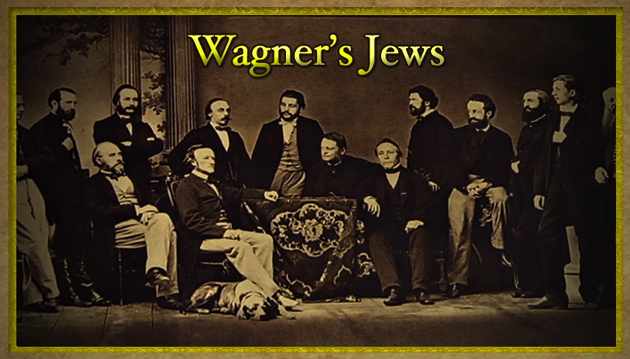
Once back in Germany, Wagner later maintained contact with wealthy Germans who had Jewish roots, like the mathematician and art patron Alfred Pringsheim, with whom Wagner even regularly exchanged letters. Is this ambivalence an expression of mere opportunism?

Anti-Semitism researcher Matthias Küntzel said, “Wagner had an ambivalent relationship with Jews.” Although he rejected them in many ways, he also allowed Jewish supporters to make the trip to Bayreuth. That apparently had pragmatic reasons – after all, they put money into his coffers. But that hardly means he wasn’t an anti-Semite.

When it came to Jewish colleagues, Wagner could be quite cruel, said historian Hannes Heer, who cited the example of “Parsifal” conductor Hermann Levi.

“Levi is unfortunately the most prominent example to show that Wagner tormented the Jews around him,” Heer said.

Wagner repeatedly tried to get the conductor baptized, and Levi was not the only Jewish musician that Wagner put under psychological pressure.

After Wagner’s death, the harassment became systematic under his wife and heir Cosima Wagner. She overwhelmingly cast the singers with non-Jewish performers, and her son and successor Siegfried continued the discriminatory practices from 1908 onward. Although there were occasional Jewish soloists and musicians in Bayreuth until the Nazis took power in 1933, such moves generally had political motivations. Siegfried Wagner wanted to ensure he had the support of the liberal press.

Even during Richard Wagner’s lifetime, his home became a kind of summoning point for anti-Semites. “If you didn’t know in the 1870s and 1880s that Wagner was a pretty staunch anti-Semite, then you must have been pretty much deaf and blind,” said Jens Malte Fischer.

And for today’s listeners?

Wagner’s followers were anything but blind and deaf. They praised the composer for his fiery opera works. For many, it remains a question today whether Wagner’s anti-Semitism can be blocked out when hearing his work. Does his hatred of Jews come through in his works for the stage?

Most Wagner researchers would say no. But those who disagree include Jens Malte Fischer. He said Wagner never wrote any anti-Semitic operas, but that his attitude toward Jews is reflected in some of his characters.

“There are allusions in some of his individual figures that subliminally point to Jewish stereotypes, particularly with Mime in ‘The Ring of the Nibelung’ and with Beckmesser in the ‘Mastersingers of Nuremberg,'” the researcher said.

Both characters represent antagonists to heroic counterparts in Wagner’s works, and Fischer said Wagner’s contemporaries would have known how to interpret this “anti-Semitic code” in the roles.

“When people stage Wagner today, they’re not works with anti-Semitic connotations. Instead, it’s the work of a great composer and theater maker,” Hannes Heer said.

Musical genius and anti-Semite – Richard Wagner is and will remain one of the most controversial titans of Germany’s musical history.

Posted in Article, Music, OPera | Tagged , , , , | Leave a comment

VERDI’S 200TH ANNIVERSARY CELEBRATION: Viva l’Opera ’13/’14- Live in French Cinemas

visuel_nabuccoVerdi’s Nabucco from La Scala in Milan, part of the 200th anniversary celebrations across Europe this year, will open the UGC cinema chain’s Viva l’Opéra 2013-2014 broadcast season around France. 

frenchnews

In an echo of the hugely successful live broadcasts from the New York Met matinees that are screened in cinemas across France and the rest of the world, the Paris Opera and the UCG chain joined forces two years ago to bring audiences here a similar experience. They have based their programme on live performances from French and other major European opera houses in a season that opens September 19, 2013 and runs through to 10th July 2014.

Reporting on the initiative France Musique radio presenter David Christoffel said surveys showed that most cinema-goers attending  the live broadcasts from the Met came precisely because it was live and the cinema performances are attracting new audiences for opera around the world.

Thanks to the Internet, the famous chorus of the Hebrew slaves has made Nabucco one of the most popular operas. But Nabucco cannot be reduced to this chorus, it is also a founding work of Verdi’s style – a work that in addition was for the Italians, a symbolic image of their ‘enslavement’ under Austrian occupation. Thus in this year of Verdi’s 200th anniversary we could not celebrate without an opera that was for Verdi the spark that ignited the lyrical art of the 19th century. First screening: Nabucco, Giuseppe Verdi Directed by: Nicola Luisotti, Directed by Danièle Abbado, Singers – Nabucco: Leo Nucci (Baritone); Ismaele: Aleksandrs Antonenko; Zaccaria: Vitalij Kowaljow; Abigaille: Liudmyla Monastyrski; Fenena: Veronica Simeoni; The high priest of Babylon: Ernesto Panariello; Abdallo: Giuseppe Veneziano; Anna: Tatyana Ryaguzova September 19, 2013 from La Scala Milan.

Read more: http://www.french-news-online.com/wordpress/?p=30262#ixzz2f76wUQjO
Follow us: @frenchnewsonlin on Twitter

Posted in Music, OPera | Tagged , , , , | Leave a comment

VERDI’S 200th ANNIVERSARY CELEBRATION: The Workshop Project “Verdi Web”

verdiweb

Verdi Web

A second workshop project of the Ravenna Festival aimed at young people between the ages of 16 and 28 will be held in 2013

Verdi Web is a workshop project of the Ravenna festival aimed at young people which focuses on the various languages of communication connected to opera. In 2012 17 young people were chosen from a number of candidates coming from all over Italy. They were all aged between 16 and 28. The Alighieri Theatre opened its doors to 10 photographers, five writers, and two videomakers during the period of rehearsals for Verdi’s “Popular Trilogy”, namely  Rigoletto,  Il Trovatore and la Traviata. This gave the participants a wonderful  opportunity to get closer to the theatrical and musical experience. Day after day the participants “invaded” the theatre (the stalls, the balconies, the foyer the stage and the dressing rooms) participating with passion and a growing knowledge of this special opportunity they had been offered.
The experience of the workshop has been documented by the participants with photos videos and texts, which were published on a daily basis on www.verdiweb.it

The 23rd Ravenna Festival ended with performances of the “popular trilogy” between November 9th and 18th 2012 at the Teatro Alighieri. All three works were performed on consecutive evenings in a type of “operatic marathon”.
workshop is an experience that Ravenna Festival wants to repeat again in November 2013 with another Verdi trilogy alongside another Verdi Web

Posted in OPera | Leave a comment

“Tribute to Maria Callas”, an evening musical stroll in central Athens, in five acts

logogreekoperaPREMIERE 15 SEPTEMBER 15, 2013
 

callas“Tribute to Maria Callas”

An evening musical stroll in central Athens, in five acts

on Sunday September 15, 2013

Acropolis Museum,
Herod Atticus Theatre steps,
Aghion Asomaton Square,
Kotzia Square,
National Archaeological Museum

With the GNO Orchestra, pianists and soloists
Conducted by Myron Michailidis


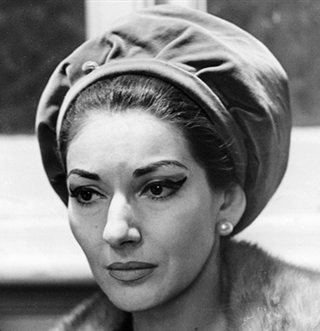
On the occasion of the 36th anniversary of the death of Maria Callas (16 September 1977), the Greek National Opera paid tribute to the great Greek soprano with a series of musical events in central Athens, on Sunday 15 September, starting at 18.00 in the evening and ending at 22.00.
The streets of Athens, the city where Maria Callas grew up, played host to the famous arias that have become associated with some of Maria Callas’ most outstanding performances. They were interpreted by the artists of the Greek National Opera, where Callas took the first steps of her stellar career.
Soloists Eleni Voudouraki, Dimitra Theodosiou, Antonia Kalogirou, Vassiliki Karayianni, Irini Karaianni, Elena Kelessidi, Cellia Costea, Myrsini Margariti, Maria Mitsopoulou and Julia Souglakou, the pianists and the Greek National Opera Orchestra, conducted by the company’s Artistic Director Myron Michailidis, interpreted extracts from the operas La Traviata La Bohéme, Tosca, Madama Butterfly, Macbeth, Rigoletto, The Barber of Seville, Il Trovatore, Sicilian Vespers, etc.

The musical stroll in five acts is designed to allow the public to watch all five acts, walking from one to the other. The Greek National Opera invites the fans of the ultimate opera diva to take a stroll around the streets of the city centre, to the sounds of operas by Verdi, Puccini, Rossini, Donizzeti and others, to spend a few inspiring moments at famous and lesser-known spots and to experience the city, as well as the opera, in a new light.

The program on Sunday, September 15, 2013 was as follows:

•    18.00 -Acropolis Museum courtyard – Dionysiou Areopagitou Street [soloists accompanied by piano, duration 20 minutes]
•    18.45 – Herod Atticus Theatre steps – Dionysiou Areopagitou Street [soloists accompanied by piano, duration 20 minutes]
•    19.35 – Association of Greek Archaeologists, 134-136 Ermou pedestrian street, Aghion Asomaton Square, Thisseio [soloists accompanied by piano, duration 20 minutes]
•    20.30 – Kotzia Square [soloists accompanied by piano, duration 20 minutes]
•    21.30 – National Archaeological Museum courtyard – Patission [Greek National Opera Orchestra – soloists, duration 40 minutes]

Admission to all events is free of charge.


In collaboration with the City of Athens, the Acropolis Museum, the National Archaeological Museum, the Association of Greek Architects and the urban revival group Every Saturday in Athens.
Posted in Music, OPera | Tagged , , , | Leave a comment

VERDI’S 200th ANNIVERSARY CELEBRATION: “Verdi between Romanticism and Risorgimento.”

“Verdi between Romanticism and Risorgimento.” A Lecture by Alberto Rizzuti

 Italian Cultural Institute, Chicago, United States

Monday, September 16, 2013 from 6:00 PM to 8:00 PM (CDT)

Immagine mostra. Giuseppe Verdi: un mito italiano

“Verdi between Romanticism and Risorgimento”

A lecture by Prof. Alberto Rizzuti

 Introduction by Philip Gossett


Alberto Rizzuti, born in Turin in 1963, is one of Verdi’s leading scholars.

After a Ph.D. in Chicago in 2001, he currently teaches History of Musical Civilization at the University of Turin.

In 2008, he edited the critical edition of Verdi’s opera “Giovanna d’Arco.”

In his lecture, Prof. Rizzuti will discuss Verdi’s life and works from his debut up to 1850. 

Light refreshments will be offered.Reservations kindly suggested.

Posted in Lectures, OPera | Tagged , , , | 2 Comments

VERDI’S 200th ANNIVERSARY CELEBRATION: Happy Birthday to Verdi in China.

locandina“Happy Birthday to Verdi”

Andrea Griminelli plays Verdi in Beijing

Andrea Griminelli, flute
Shengqi He, flute
Dawei Qu, piano

Program:
I° part:
Luigi Hugues (1836-1913): Fantasia su “Un Ballo in Maschera” di Giuseppe Verdi per due flauti e pianoforte
Giulio Briccialdi (1818-1881): Fantasia su “Aida” di Giuseppe Verdi per flauto e pianoforte
E. Krakamp (1813-1883) – G. Briccialdi (1818-1881): Fantasia su “La Traviata” di Giuseppe Verdi per flauto e pianoforte
 
II° part:
Giulio Briccialdi (1818-1881): Fantasia su “Il Trovatore” di Giuseppe Verdi per flauto e pianoforte
Wilhelm Popp (1828-1903) / Franz e Karl Doppler (1821-1883): Fantasia su il “Rigoletto” di Giuseppe Verdi Op. 335 per flauto e pianoforte. Duo concertante su il “Rigoletto” per due flauti e pianoforte.
Gala concert for Giuseppe Verdi bicentenary in the opening of the video exhibition “L’invenzione del vero. L’Alfabeto del sentimento umano” at the National Museum of China, in Beijing, Hall 16.

Under the High Patronage of the Italian President
– Comitato nazionale per le celebrazioni del Bicentenario verdiano
– Ambasciata d’Italia e Istituto Italiano di Cultura a Pechino
– RAI – Radiotelevisione Italiana
– Fondazione per le Scienze Religiose Giovanni XXIII
– Treccani Istituto della Enciclopedia Italiana
– Regione Emilia-Romagna
– Istituto Nazionale di Studi Verdiani
– Teatro Regio di Parma
– Ricordi & C.
– GLOBART
– CC TV

Posted in OPera | Leave a comment

THE MAGIC FLUTE IN FLORENCE….

mozart1

FLORENCEOPERA and THE MAGIC FLUTE.

The Magic Flute will be presented to the public by the youth gropu of the Florenceopera Project on October 4th and 5th at 9PM.

Place: Tempio Valdese Via La Marmora, corner Via Micheli, in Florence.  The group will be directed by the Maestro Claudio Bianchi, with the artistic direction of Patrizia Morandini.

CAST

TAMINO: JADID SAAD LUCA-MANTOVANI
PAPAGENO : PAOLO BREDA BULGHERINI ALESSIO GORI
PAMINA: BARBARA LEPRE
MARTINA BARRECA
SARASTRO : TOMMASO CORVAJA FEDERICO MASI
1 DAMA: DANIELA CIABATTI
2 DAMA: ALEXANDRA SCICLUNA
3 DAMA: ELISABETTA VUOCOLO
REGINA DELLA NOTTE: SONIA BELLUGI
1 GENIETTO: CLAUDIA CECCHINI
2 GENIETTO: FRANCESCA BECUCCI
MARTA MARQUES
3 GENIETTO: AMELIA VANZINI
MONOSTATO: CLAUDIO TEMPESTINI
PAPAGENA: MARTA MARQUES FRANCESCA BECUCCI
1 SACERDOTE: MATTEO MEGUENI
2 SACERDOTE : CARLO CORBANI
ORATORE : TIAGO DE SA
MARCO BERNABEI
1 ARMIGERO: MATTEO MEGUENI
2 ARMIGERO: TIAGO DE SA
MARCO BERNABEI
1 SCHIAVO : GIUSEPPE INTRIERI
2 SCHIAVO: ANASTASIA VULGARIS
3 SCHIAVO: VERONICA NATALI
LA COMPAGNIA BILIKU

1940-Mozart-Il-flauto-magicoMAKE UP ARTIST: ELENA SANTINI
SCENOGRAPHIES: CARLO CORBANI – LUCIA CAPONE -ILARIA CARITO
COSTUMES: ELISABETTA VUOCOLO
ATTREZZERIE: ANASTASIA VULGARIS – ZHU XI XI
LIGHTS: LUIGI MAGNANI – DITTA MA PI

CORO LIRICO DELLA SCUOLA DI MUSICA DI CAMPI BISENZIO DIRECTED BY MAESTRO RICCARDO MONTINARO

PIANOFORTE: MARCO FRANCIOLI

CONDUCTOR: CLAUDIO BIANCHI

DIRECTOR: PATRIZIA MORANDINI

DBP_1991_1571_Block_26_Wolfgang_Amadeus_Mozart

Posted in OPera | Leave a comment

Conductor Riccardo Frizza leads the rehearsal for Norma at the Metropolitan Opera.

bbnewnorma

NORMA

Approximate running time 3 hrs. 5 min.

Only the greatest of sopranos are up to the challenge of Bellini’s crowd-pleaser of bel canto fireworks, which is why Sondra Radvanovsky, followed by Angela Meade, is cast in the title role. Mezzo-soprano Kate Aldrich is Adalgisa and tenor Aleksandrs Antonenko is Pollione.

Conductor Riccardo Frizza leads the rehearsal for Norma: Ten photographs.

met1  met2

met3  met4

met5         met6

met7  met8

met9  met10

Posted in Music, OPera | Tagged , , , , , , , , , | Leave a comment

La Traviata in Comic-strip

La Traviata in Comic-strip

“Lirica a strisce”, Comic strip opera from Teatro Comunale Luciano Pavarotti – Modena. After all, the characters of this opera can easily compare to the usual “superheroes”…

Sample pages…

Traviata-fumetto-Teatro-MO-1  Traviata-fumetto-Teatro-MO-2

Traviata-fumetto-Teatro-MO-3 Traviata-fumetto-Teatro-MO-4

Traviata-fumetto-Teatro-MO-5 Traviata-fumetto-Teatro-MO-6

Traviata-fumetto-Teatro-MO-7 Traviata-fumetto-Teatro-MO-5

Posted in OPera | Leave a comment

Comic-strip opera in Modena

verdifumetto4Lirica a strisce. Comic-strip opera

LIRICA A STRISCE is the transposition into comic-strips of the most acclaimed Operas produced and staged by the Teatro Comunale of Modena.  The editorial project came out of the desire to bring to opera a new and more extended public, using a language that is more modern compared to the original libretto of the Opera.
The choice of the comic-strip as the language for this operation fits in well with the local tradition of Modena tied to the ninth art (which has drawn into the shadow of Modena’s Ghirlandina tower great authors such as Bonvi, Silver, Paul Campani, Massimo Bonfatti and Claudio Nizzi) and a more general popularizing vocation of so-called “designed literature”.  In fact the intention of the strip is to tell the story exploiting the potentialities of connection between word and image, between the moment represented (by the actors) and the imagined space (perceived between one vignette and the other by the reader),  to modulate dramatic force and irony through lines, color and characterization.  All this without losing the openly popular and divulgative vein that has been part of it from the beginning.
verdifumetto3An entire series dedicated not only to children and young people, but also to comic-strip fans of all ages and to the lovers of opera in all its forms.
The comic can be found at the ticket office of the Teatro Comunale, as well as in the Feltrinelli and Nuova Tarantola bookstores in the center of Modena, in the specialized book store Pop Store in Parma, at the Castello di Carta in Vignola and at the Ambasciatori book store in Bologna near Piazza Maggiore.


Information:

Ufficio promozione
Tel. 059/2033003
Email: promozione@teatrocomunalemodena.it
(Price: € 7.00)
Posted in Books, OPera | Tagged , , , , | Leave a comment