Fidelio in Munich

bayerische_logofidelioTitle

Opera in two acts

Composer Ludwig van Beethoven · Libretto by Joseph Sonnleithner after the amendments by Georg Friedrich Treitschke after Jean-Nicolas Bouilly’s libretto “Léonore, ou L’Amour conjugal”
In German with German surtitles

Sunday, 07. February 2016
06:00 pm – 08:50 pm
Nationaltheater

Duration est. 2 hours 50 minutes · 1 Interval between 1. Akt and 2. AKt (est. 07:20 pm – 07:50 pm )

fidelio1

Conductor Zubin Mehta

Stage Director Calixto Bieito

Scenography Rebecca Ringst

Costumes Ingo Krügler

Licht Reinhard Traub

Choreography Heidi Aemisegger

Dramaturgy Andrea Schönhofer

Choir Director Sören Eckhoff

fidelio7


Don Fernando
Tareq Nazmi
Don Pizarro
Tomasz Konieczny
Florestan
Peter Seiffert
Leonore
Anja Kampe
Rocco
Franz-Josef Selig
Marzelline
Hanna-Elisabeth Müller
Jaquino
Dean Power
1. Gefangener
Joshua Owen Mills
2. Gefangener
Igor Tsarkov
  • Bayerisches Staatsorchester
  • Chorus of the Bayerische Staatsoper

SYNOPSIS

Florestan has disappeared. Leonore, his wife, is searching for him. She wants to rescue him. Pizarro, his enemy, has been persecuting him. He wants to kill Florestan.

Act One

Leonore suspects that her husband, Florestan, is being held prisoner by Pizarro in his fortress.

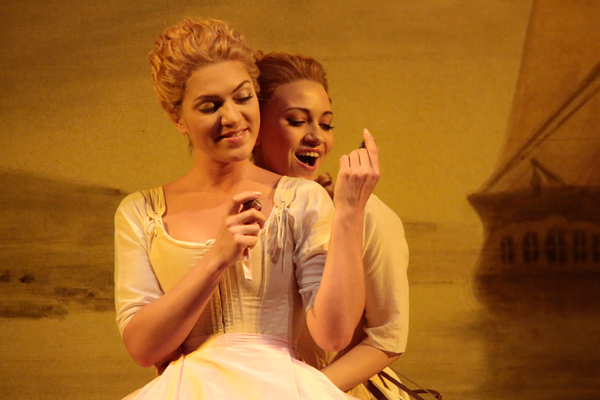
She alters her identity and, calling herself Fidelio, gets a job as an assistant to Rocco, who is the chief jailer in Pizarro’s prison.

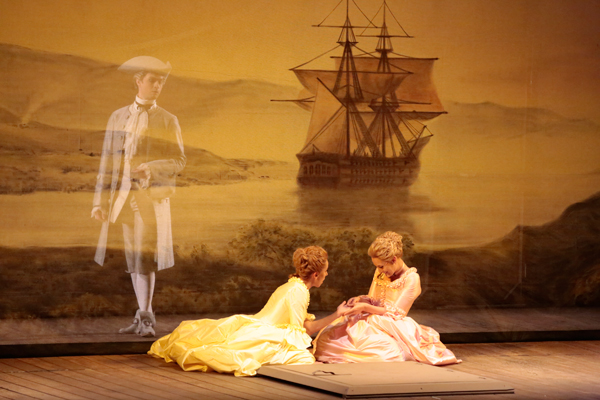
Marzelline, Rocco’s daughter, has fallen in love with Fidelio. Jaquino, who also works for Rocco, is in love with Marzelline, but she now finds his affection a nuisance and would like to be rid of him. Rocco is convinced that money, not only love, is necessary in order to find happiness in life. He sides with his daughter and encourages her in her hopes for a new romance. Marzelline already imagines the fulfillment of her dream: she will be happily married to Fidelio and spend her life at his side. Having won the confidence of father and daughter, Leonore also hopes that she is getting closer to her goal, namely to find Florestan. Jaquino’s hopes are dashed, however, and his world falls apart.

Pizarro’s superior, Fernando, plans to inspect the prison as he has heard that people are being held there illegally. Pizarro gets himself into the mood for his revenge: Florestan must be killed before Fernando arrives and Rocco is given instructions to carry out the task – for which he will, of course, be generously rewarded. Rocco refuses to murder Florestan but, mindful of his duty, he agrees to assist Pizarro when the latter orders him to help him to carry out the murder himself.

fidelio10

Leonore, who has overheard the conversation between Pizarro and Rocco, is now determined to do whatever is necessary to rescue her husband. She allows the prisoners to go out into the prison yard for air but cannot find Florestan among them when she scans their desperate faces, so she persuades Rocco to allow her to accompany him down into the dungeons, where she suspects Florestan is being held.

Pizarro angrily gives orders for the prisoners to be returned to their cells. Rocco steps in front of Marzelline and Leonore to protect them. Mindful of the plot to get rid of Florestan, Pizarro does not punish Rocco for disobeying orders.

fidelio8

Act Two

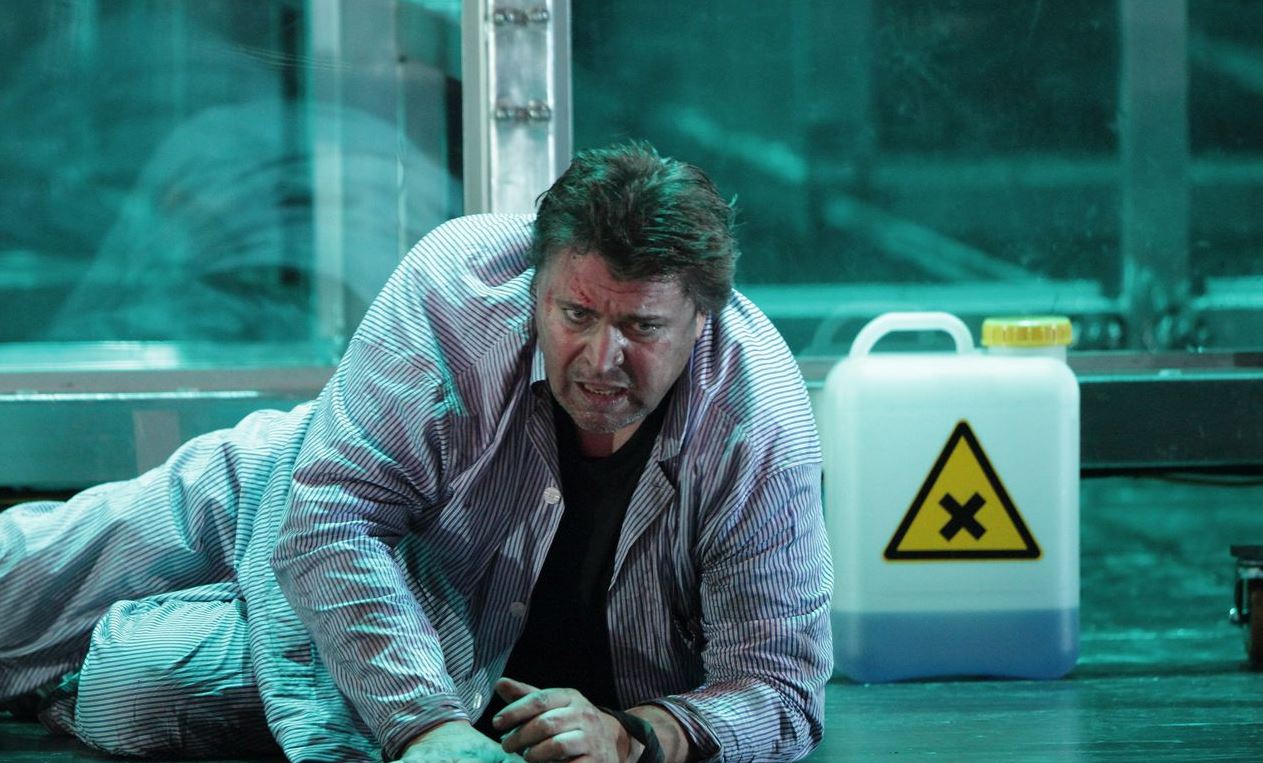
Florestan bemoans his fate. Just as if he were hallucinating, he has a vision of Leonore as an angel coming to his rescue.

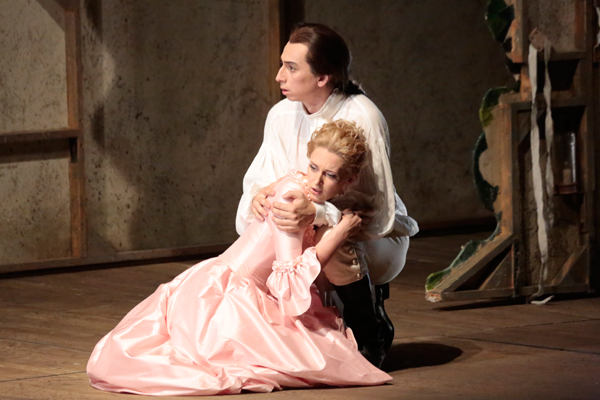
Rocco and Fidelio make their way down to Florestan’s dungeon and begin with the preparations for his murder. Horrified and yet filled with hope at the same time, Leonore recognizes her husband. Pizarro appears to kill Florestan. Fidelio succeeds in preventing the murder at the last moment by stepping between the prisoner and Pizarro and revealing herself as Florestan’s wife, just as a trumpet call rings out to announce the arrival of Fernando.

Justice has been established and there is rejoicing. Fernando, who had believed that his friend Florestan was dead, sets him and all the other prisoners free and Pizarro is punished.

GALLERY (click to enlarge)

Posted in OPera | Tagged , , , | Leave a comment

La Liberazione di Ruggiero dall’isola d’Alcina, practically unknown opera, performed at the Salon d’Hercule in the Chateau de Versailles

ruggieroversailles_logo

opera-v-concert_la-liberazione-caccini

Francesca Caccini (1587-1640)
La Liberazione di Ruggiero dall’Isola d’Alcina

Balletto con prologo e tre scene, Florence, 1625

Florence, beginning of February 1625. The Medici court is preparing grandiose celebrations to celebrate the official visit of the heir to the throne of Poland, Wladyslaw.

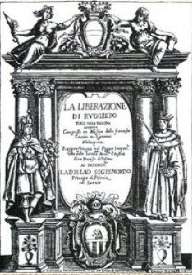
The crowning event of his visit is a performance of the “commedia in musica”: La Liberazione di Ruggiero dall’isola d’Alcina, an opera commissioned for this occasion by the grand-duchess of Tuscany, Maria Maddalena of Austria, widow of Cosimo da Medici (1590-1621). Ferdinando Saracinelli, superintendent of the Medici court is the author of the libretto of this “Balletto” (as it is called on the first page of the edition). The court composer Francesca Caccini, the first opera composer in history, wrote the music. The work so impressed the Polish Prince that it was also performed in Poland.

caccini_lib

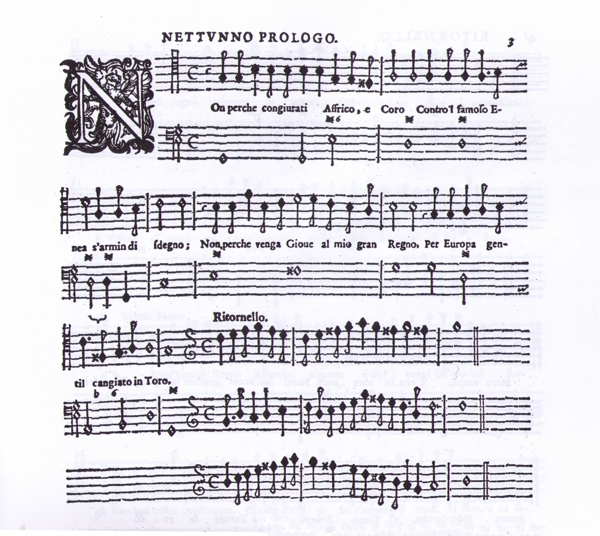
Liberazione_partThe wonderful score mixes penetrating recitatives with varied accompaniment, musical arias where one senses the subtle feminine touch, chorus interventions (canzonetta and madrigals) to represent court ladies, demons, enchanted trees, freed knights and sinfonias, colorful ritornelli and instrument interludes.

This practically unknown opera marks in fact an important stage in Italian music of the first half of the 17th century: the Salon d’Hercule will be an ideal setting for its revival by the inspired Paul Van Nevel.

Huelgas Ensemble – Paul Van Nevel

CAST AND CREATIVE TEAM

alcinaAchim Schulz, Ruggiero

Michaela Riener, Alcina

Sabine Lutzenberger, Melissa

Matthew Vine, Nettuno

Bernd Oliver Fröhlich, Vistola Fiume / Pastore

Dorothea Jacob, Sirena

Axelle Bernage, Nunzia

Matthew Vine, Astolfo


Huelgas Ensemble

Paul Van Nevel, conductor

Paul Van Nevel, Conductor

Paul Van Nevel, Conductor


Posted in OPera | Tagged , , , | Leave a comment

The Vocal Score of the MISERERE by Tommaso Traetta is now Available.

miserere_title

The Miserere, Psalm 50 of the Vulgata, interprets the feelings of repentance of David, King of Israel, guilty of adultery and murder.

Tommaso Traetta, thanks to the unique features of the Female Conservatory of Ospedaletto, had first brought into liturgical music the “virtuous” style without betraying the sacredness of the genre.

This composition presents, as a whole, a great structural balance. The alternation of solo Arias and choral pieces emphasizes the personal and universal sense of sin expressed by the sacred poet and intensely interpreted by the musician with unique adherence to the text.

Available, with a biography of the author and a brief history of the composition in four languages, now on Amazon and Barnes & Noble.

miserere_web_page

Posted in Music | Leave a comment

Il Barbiere di Siviglia at the Opera Bastille in Paris

Photo © Lola Guerrera / VOZ’image

Photo © Lola Guerrera / VOZ’image

Logo_OnPOpéra Bastille from 02 February to 04 March 2016
Opening night Tue. 2 Feb.

Il Barbiere di Siviglia

Opera Buffa in two acts (1816)

Music
Gioacchino Rossini
Libretto
Cesare Sterbini
Conductor
Giacomo Sagripanti
Director
Damiano Michieletto
Il Conte d’Almaviva
Lawrence Brownlee
Bartolo
Nicola Alaimo
Rosina
Pretty Yende
Figaro
Alessio Arduini
Basilio
Ildar Abdrazakov
Fiorello
Pietro Di Bianco
Berta
Anaïs Constans
Un Ufficiale
Laurent Laberdesque
Set design
Paolo Fantin
Costume design
Silvia Aymonino
Lighting design
Fabio Barettin
Chorus master
Alessandro Di Stefano

Paris Opera Orchestra and Chorus
Original production from the Grand Théâtre de Genève

French and English surtitles

© Bernard Coutant/OnP

© Bernard Coutant/OnP

barbiereQuote

“The Barber is one of the century’s masterpieces”. These words were written by the very Berlioz who in his youth had denounced not only Rossini, but also the “fanaticism he aroused in the fashionable circles of Paris”. Accordingly, the compliment, “repeated until exhaustion” – the composer’s own words – is all the greater. The work was so “brilliant” and “so finely orchestrated” that the “dilettanti of Rome”, enraged by the “slightest unforeseen innovation in melody, harmony, rhythm or instrumentation were ready to kill the young maestro”. Il Barbiere di Siviglia has been performed continually since its turbulent premiere on February 16th 1816.

The composer’s opera buffa transcends the spirit of Beaumarchais’ comedy and combines the absurd with a touch of satirical realism in a score where rhythm and virtuosity place the comic effects in an ongoing dramatic narration. As a result, the characters – Rosina in particular – gain a new degree of realism and break with the usual archetypes.

Damiano Michieletto’s giddying production embraces this perpetual motion and carries in its wake the happy couple formed by Lawrence Brownlee and Pretty Yende.

Posted in OPera | Tagged , , , | Leave a comment

Il Trovatore in Luxembourg

luxembourg_logoIL TROVATORE

Giuseppe Verdi (1813-1901)

Opera in four acts.


trovatoreluxembourg2Libretto by Salvadore Cammarano and Leone Emanuele Bardare based on the drama in Spanish “El Trovador” (1836) by Antonio García Gutiérrez. Premiered at the Teatro Apollo in Rome on 19 January 1853.

In Italian with surtitles in french & German.

PERFORMANCES
Saturday February 20, 2016
Tuesday February 23, 2016
Thursday February 25, 2016

trovatoreluxembourg1Il Trovatore, without a doubt one of Verdi’s most popular operas, is set in a 15th century Spanish town where the themes of obsession, revenge, war, and family are conveyed through vivid characters who present dramatic contrasts. Verdi-expert Roberto Rizzi Brignoli conducts the OPL and an illustrious cast in this co-production with Opéra de Lille and Théâtre de Caen. He graduated from the Giuseppe Verdi conservatory in Milan, but it was at the Teatro alla Scala that his passion for Verdi grew under the guidance of Riccardo Muti.

ARTISTIC TEAM

Musical direction Roberto Rizzi Brignoli
Staging Richard Brunel
Assistant to the staging Ester Pieri
Playwright Catherine Ailloud-Nicolas
Scénography Bruno de Lavenère
Lights Laurent Castaingt
Costumes Thibault Vancraenenbroeck

CAST

Le Comte de Luna Igor Golovatenko
Leonora Jennifer Rowley
Azucena Elena Gabouri
Ferrando Ryan Speedo Green
Inès Evgeniya Sotnikova
Ruiz Pascal Marin

Orchestre Orchestre Philharmonique du Luxembourg
Chœur Chœur de l’Opéra de Lille

Coproduction Opéra de Lille, Théâtre de Caen et Les Théâtres de la Ville de Luxembourg

Production créée le 14 janvier 2016 à l’Opéra de Lille

Représentations à Luxembourg en collaboration avec l’Orchestre Philharmonique du Luxembourg

 Location: Grand Théâtre / Grande Salle, Luxemboug

SYNOPSIS

Place: Biscay and Aragon (Spain)Time: Fifteenth century.

Act 1: The Duel

Scene 1: The guard room in the castle of Luna (The Palace of Aljafería, Zaragoza, Spain)

Ferrando, the captain of the guards, orders his men to keep watch while Count di Luna wanders restlessly beneath the windows of Leonora, lady-in-waiting to the Princess. Di Luna loves Leonora and is jealous of his successful rival, a troubadour whose identity he does not know. In order to keep the guards awake, Ferrando narrates the history of the count (Aria: Di due figli vivea padre beato / “The good Count di Luna lived happily, the father of two sons”): many years ago, a gypsy was wrongfully accused of having bewitched the youngest of the di Luna children; the child had fallen sick and for this the gypsy had been burnt alive as a witch, her protests of innocence ignored. Dying, she had commanded her daughter Azucena to avenge her, which she did by abducting the baby. Although the burnt bones of a child were found in the ashes of the pyre, the father refused to believe in his son’s death; dying, he commanded his firstborn, the new Count di Luna, to seek Azucena.

Scene 2: Garden in the palace of the princess

Leonora confesses her love for the Troubadour to her confidante, Ines (Tacea la notte placida / “The peaceful night lay silent”… Di tale amor / “A love that words can scarcely describe”), in which she tells how she fell in love with a mystery knight, victor at a tournament: lost track of him when a civil war broke out: then encountered him again, in disguise as a wandering troubadour who sang beneath her window. When they have gone, Count di Luna enters, intending to pay court to Leonora himself, but hears the voice of his rival, in the distance: (Deserto sulla terra / “Alone upon this earth”). Leonora in the darkness briefly mistakes the count for her lover, until the Troubadour himself enters the garden, and she rushes to his arms. The Count challenges his rival to reveal his true identity, which he does: Manrico, a knight now outlawed and under death sentence for his allegiance to a rival prince. Manrico in turn challenges him to call the guards, but the Count regards this encounter as a personal rather than political matter, and challenges Manrico instead to a duel over their common love. Leonora tries to intervene, but cannot stop them from fighting (Trio: Di geloso amor sprezzato / “The fire of jealous love” ).

Act 2: The Gypsy Woman

Scene 1: The gypsies’ camp

The gypsies sing the Anvil Chorus: Vedi le fosche notturne / “See! The endless sky casts off her sombre nightly garb…”. Azucena, the daughter of the Gypsy burnt by the count, is still haunted by her duty to avenge her mother (Aria: Stride la vampa / “The flames are roaring!”). The Gypsies break camp while Azucena confesses to Manrico that after stealing the di Luna baby she had intended to burn the count’s little son along with her mother, but overwhelmed by the screams and the gruesome scene of her mother’s execution, she became confused and threw her own child into the flames instead (Aria: Condotta ell’era in ceppi / “They dragged her in bonds”).

Manrico realises that he is not the son of Azucena, but loves her as if she were indeed his mother, as she has always been faithful and loving to him – and, indeed, saved his life only recently, discovering him left for dead on a battlefield after being caught in ambush. Manrico tells Azucena that he defeated di Luna in their earlier duel, but was held back from killing him by a mysterious power (Duet: Mal reggendo / “He was helpless under my savage attack”): and Azucena reproaches him for having stayed his hand then, especially since it was the Count’s forces that defeated him in the subsequent battle of Pelilla. A messenger arrives and reports that Manrico’s allies have taken Castle Castellor, which Manrico is ordered to hold in the name of his prince: and also that Leonora, who believes Manrico dead, is about to enter a convent and take the veil that night. Although Azucena tries to prevent him from leaving in his weak state (Ferma! Son io che parlo a te! / “I must talk to you”), Manrico rushes away to prevent her from carrying out this intent.

Scene 2: In front of the convent

Di Luna and his attendants intend to abduct Leonora and the Count sings of his love for her (Aria: Il balen del suo sorriso / “The light of her smile” … Per me ora fatale / “Fatal hour of my life”). Leonora and the nuns appear in procession, but Manrico prevents di Luna from carrying out his plans and takes Leonora away with him… although once again, leaving the Count behind unharmed, as the soldiers on both sides back down from bloodshed, the Count being held back by his own men.

Act 3: The Son of the Gypsy Woman

Scene 1: Di Luna’s camp Di Luna and his army are attacking the fortress Castellor where Manrico has taken refuge with Leonora (Chorus: Or co’ dadi ma fra poco / “Now we play at dice”). Ferrando drags in Azucena, who has been captured wandering near the camp. When she hears di Luna’s name, Azucena’s reactions arouse suspicion and Ferrando recognizes her as the murderer of the count’s brother. Azucena cries out to her son Manrico to rescue her and the count realizes that he has the means to flush his enemy out of the fortress. He orders his men to build a pyre and burn Azucena before the walls.

Scene 2: A chamber in the castle

Inside the castle, Manrico and Leonora are preparing to be married. She is frightened; the battle with di Luna is imminent and Manrico’s forces are outnumbered. He assures her of his love (Aria, Manrico: Ah sì, ben mio, coll’essere / “Ah, yes, my love, in being yours”), even in the face of death. When news of Azucena’s capture reaches him, he summons his men and desperately prepares to attack (Stretta: Di quella pira l’orrendo foco / “The horrid flames of that pyre”). Leonora faints.

Act 4: The Punishment

Scene 1: Before the dungeon keep

Manrico has failed to free Azucena and has been imprisoned himself. Leonora attempts to free him (Aria: D’amor sull’ali rosee / “On the rosy wings of love”; Chorus & Duet: Miserere / “Lord, thy mercy on this soul”) by begging di Luna for mercy and offers herself in place of her lover. She promises to give herself to the count, but secretly swallows poison from her ring in order to die before di Luna can possess her (Duet: Mira, d’acerbe lagrime / “See the bitter tears I shed”).

Scene 2: In the dungeon

Manrico and Azucena are awaiting their execution. Manrico attempts to soothe Azucena, whose mind wanders to happier days in the mountains (Duet: Ai nostri monti ritorneremo / “Again to our mountains we shall return”). At last the gypsy slumbers. Leonora comes to Manrico and tells him that he is saved, begging him to escape. When he discovers she cannot accompany him, he refuses to leave his prison. He believes Leonora has betrayed him until he realizes that she has taken poison to remain true to him. As she dies in agony in Manrico’s arms she confesses that she prefers to die with him than to marry another (Trio: Prima che d’altri vivere / “Rather than live as another’s”). The count has heard Leonora’s last words and orders Manrico’s execution. Azucena awakes and tries to stop di Luna. Once Manrico is dead, she cries: Egli era tuo fratello! Sei vendicata, o madre. / “He was your brother … You are avenged, oh mother!”

Synopsis Source: Wikipedia.org

Posted in OPera | Tagged , | Leave a comment

The Barber of Seville on tour in Wales and England

welshBannerBarber

Saturday, February 13, 2016 – Friday, April 8, 2016

New Production Spring 2016

Cities

The Bristol Hippodrome 15 Mar – 18 Mar

Milton Keynes Theatre 29 Mar – 1 Apr

Venue Cymru, Llandudno 8 Mar – 11 Mar

Birmingham Hippodrome 1 Mar – 4 Mar

Wales Millennium Centre, Cardiff 13 Feb – 25 Feb

Theatre Royal, Plymouth 5 Apr – 8 Apr

Mayflower Theatre, Southampton 22 Mar

The Barber of Seville should be available on the NHS. Upbeat and optimistic, Rossini’s sunniest creation is the perfect pick-me up. Its fantastic slapstick energy is destined to rub off on anyone who sees it.The pace is fast and never lets up from the start. Everyone is carried along by a whirlwind of crazy disguises, twists and turns and unlikely interventions. Barber opens with one of the best loved of all overtures, full of wit and playfulness. Figaro lets us know he is society’s problem solver in the great comic aria, ‘Largo al factotum’. Rosina’s sparkling aria ‘Una voce poco fa’ makes it very clear that she’s not someone you’d want to mess with.We have assembled an exceptional cast of comic performers including the peerless Andrew Shore as the greedy Doctor Bartolo. This is our first new production of The Barber of Seville for nearly 30 years. It is the perfect opportunity to bask in the warmth and sunniness of this ultimate feel-good opera with a sparkling new translation by Kelley Rourke.

Performances start at 7.15pm•

Running time approximately two hours and 50 minutes including one interval• Sung in English with surtitles in English (and Welsh in Cardiff and Llandudno)

Co-production with Grand Théâtre de Genève Supported by WNO Partners

Creative Team

Conductor James Southall

Director Sam Brown

Set Designer Ralph Koltai

Costume Designer Sue Blane

Lighting Designer Linus Fellbom

Assistant Set Designer Robin Don

Cast

Figaro Nicholas Lester

Rosina Claire Booth

Count Almaviva Nico Darmanin

Bartolo Andrew Shore

Basilio Richard Wiegold


Plot summary

Figaro, a quick-witted barber, agrees (for a generous sum) to help Count Almaviva woo Rosina, the closely-guarded ward of thegreedy Doctor Bartolo, who fancies her and her substantial inheritance for himself. Together,the lovers and their friseur plot an escape that involves bribery, subterfuge and numerous comic disguises along the way.

 SYNOPSIS

Act One

Fiorello, a servant to the young Count Almaviva, gathers a band of musicians by the window of an unknown lady. They accompany the serenade of the young Count Almaviva, who has disguised himself as ‘Lindoro’, a poor student, in order to win over the young woman on his own terms. She does not answer, despite the noisy commotion of the musicians. The Count meets a local barber, Figaro, a busy man who knows all the scandal and gossip of the town. Figaro tells the Count that the woman he has been serenading is Rosina, the ward of Doctor Bartolo, who keeps her and her generous dowry locked away, and plans to marry her himself. The Count vows to outwit him – and on Figaro’s advice, disguises himself as a drunken soldier with  orders to stay at Bartolo’s house that evening.

Rosina is also determined to defeat her guardian. ‘Lindoro’ has won her heart. Figaro encourages Rosina to give ‘Lindoro’ a sign of her affection. To Figaro’s surprise, Rosina presents him with a letter that she has already prepared, which the barber promises to deliver.

Doctor Bartolo is suspicious of Rosina. Don Basilio, Rosina’s music tutor, tells him that the Count Almaviva has developed an interest in his ward. According to Basilio, there is only one way to bring about the ruin of the Count: slander. Bartolo is intrigued, and vows to marry Rosina immediately.

Almaviva is disguised as a drunken soldier, and tells Doctor Bartolo that he has been ordered to station himself at Doctor Bartolo’s house for the night. In the confusion that follows, Almaviva slips Rosina a letter. The situation escalates, and there is such a disturbance that the neighbours call out the police. The drunken soldier is arrested – but all charges are dropped when the Count quietly reveals his true identity. Everyone agrees that the spectacle is enough to drive anyone to madness.

Act Two

Undeterred, Almaviva disguises himself as ‘Don Alonso,’ a music teacher and apprentice of Don Basilio. He tells Doctor Bartolo that his master is ill and that he will teach Rosina’s music lesson instead. To establish his credentials, he shows Doctor Bartolo the letter Rosina wrote to him. As the ‘music lesson’ commences, Rosina and her undercover admirer make plans to elope that night.

Figaro arrives to shave Doctor Bartolo, and hastily steals his keys. Basilio arrives unexpectedly, and before he can work out the real identity of ‘Don Alonso’, he is persuaded that he is too ill to teach. Doctor Bartolo settles down for his shave – but overhears the lovers plotting their elopement, and furiously chases them away. Bartolo’s former servant, Berta, is astounded at the power of love.

Bartolo and Basilio realise that ‘Alonso’ must have been Count Almaviva. On Bartolo’s orders, Basilio goes in search of a notary. Doctor Bartolo stuns Rosina with the news that ‘Lindoro’ is actually an agent for Count Almaviva, who intends to marry her. He shows Rosina the letter she wrote to Lindoro, who must have passed it to the Count Almaviva. Overwhelmed by Lindoro’s betrayal, she reveals the plans she had made to elope with him, and agrees to marry Doctor Bartolo.

During a thunderstorm , Figaro and Almaviva secretly enter the house. Rosina demands that they leave, until she learns that her ‘Lindoro’, ‘Don Alonso’, and the Count Almaviva are the same person. The happy lovers try to escape together, but are trapped. Basilio arrives with the notary who will marry Rosina to Bartolo. The Count instead uses the notary for his own purposes, and bribes Basilio to witness his own marriage to Rosina. Bartolo arrives to find that the happy couple are married.

Posted in OPera | Tagged , , | Leave a comment

Norma at the Florida Grand Opera

florida_logo florida_norma

by VINCENZO BELLINI

“If I were shipwrecked, I would leave all of my other operas and try to save Norma.”
—Vincenzo Bellini

NormaA clandestine love affair brings two extreme enemies together during a time of war. But when Norma discovers that her beloved now loves another, an impassioned new battle begins as betrayal, torment, and ferocity take the reins. The unforgettable conclusion entails an extraordinary public confession and the ultimate personal sacrifice.

The notoriously demanding title role is a thrilling challenge, and the opera rises to its greatest lyrical heights in the celebrated aria, “Casta diva.” By the end, you will understand why the spectacular conclusion of Norma has been called one of the finest things ever created for the stage.

schedule

Miami performances are at the Sanford and Dolores Ziff Ballet Opera House at the Adrienne Arsht Center for the Performing Arts of Miami-Dade County, 1300 Biscayne Boulevard, Miami.

Fort Lauderdale performances are at the Au-Rene Theater at the Broward Center for the Performing Arts, 201 SW 5th Avenue, Fort Lauderdale.


CAST
Norma Mlada Khudoley* [Jan 23, 30, Feb 11, 13]
Mary Elizabeth Williams* [Jan 24, 26, 29]
Adalgisa Dana Beth Miller [Jan 23, 24, 26]
Catherine Martin* [Jan 29, 30, Feb 11, 13]
Pollione Giancarlo Monsalve* [Jan 23, 30, Feb 11, 13]
Frank Porretta [Jan 24, 26, 29]
Oroveso Craig Colclough
Conductor Anthony Barrese
Director Nic Muni*
Production Cincinnati Opera
* = FGO debut

Sung in Italian with English and Spanish projected titles

Photo © Philip Groshong for Cincinnati Opera

GALLERY

This slideshow requires JavaScript.

Posted in OPera | Tagged , , | Leave a comment

The Marriage of Figaro at the Chateau de Versailles

versailles_logomarriagetitle

Opera Buffa in 4 acts. Libretto by Lorenzo da Ponte after Beaumarchais.
First performance at the Burgtheater in Vienna on 1st May 1786

Production : Drottningholms Slottsteater, Les Musiciens du Louvre Grenoble

Performances at the Royal Opera of Versailles, located in the grounds of the Castle, one of the major opera houses.

noces_de_figaro_c_mats_baker_10_web

Beaumarchais is the major theatre writer of the French pre-revolution years. His Marriage of Figaro created a major shock and was a tremendous success: Marie Antoinette herself played the part of Rosine in Versailles…
Very soon, all of Europe fell in love with this story which transcends social classes and embarks the public in an intrigue with a thousand twists and turns and an abundance of witticisms, Lorenzo da Ponte adapted the play for Mozart, and Le Nozze di Figaro, met with unfailing success since its first performances in Vienna. Figaro, the talented singer, finding incredible escpaaes from the most improbable situations. Cherubino, hidden in the countess’s bedroom, and the virtuoso musical ensembles, which close each action, make Le Nozze di Figaro one of the public’s favorites.

noces_de_figaro_c_mats_baker_7_web
In this new production of Le Nozze, Marc Minkowski returns to familiar Mozart regions, with singers who excel on major stages. His accomplice Ivan Alexandre, designed this creation for a legendary venue – the courtyard of Drottningholm Palace in Sweden. Built in 1766, in this royal summer residence, one hour away from Stockholm by boat, the court theatre is intact: it has kept its original machinery and many of the sets, which have made it into a conservatory of baroque theatre techniques. Linking this amazing place to the Royal Opera (1770) is evident from the point of view of style and promises great musical pleasures.
Extract from Le Nozze di Figaro by Marc Minkowski

noces_de_figaro_c_mats_baker_11_web

CAST AND CREATIVE TEAM

Robert Gleadow, Figaro

Lenneke Ruiten, Suzanne

Ana Maria Labin, The Countess

Florian Sempey, The Count

Ingeborg Gillebo,  Cherubino

Paolo Battaglia, Bartolo/Antonio

Anders J. Dahlin, Basilio/Curzio

Miriam Treichl, Marcelline

Hannah Hisahr, Barberine


Ivan Alexandre, Direction

Les Musiciens du Louvre,

Marc Minkowski, Conductor

Conductor Mark Minkowski

Conductor Mark Minkowski

Posted in OPera | Tagged , , | Leave a comment

The Endless Success of Lucia di Lammermoor in Liege

operaliegelogolucia_title

Lucia di Lammermoor

Season: 2015-2016
Length: 2:55
Song language : Italian
Conductor: Jesús López Cobos
Director:  Stefano Mazzonis di Pralafera
Choirmaster: Pierre Iodice
Artists: Annick Massis, Celso Albelo, Ivan Thirion, Roberto Tagliavini, Pietro Picone, Alexise Yerna, Denzil Delaere
Number of performances: 6
Dates: Tue, 17/11/2015 to Tue, 01/12/2015
Last performance at the Opera: May 2007.

lucia-c-opera-royal-de-wallonie-lorraine-wauters-26

Endless success

Donizetti is among the composers who saw glory and success in their lifetime. As a result, between two cities, while stopping off at home, he was snapped up by the Teatro San Carlo in Naples. He was bound by a contract and was obliged, this time, to honour a three-opera commission. He saw in Salvatore Cammarano a young librettist with a fiery nature to perfectly match the urgency of the moment.

Together, they pored over a work by Sir Walter Scott, The Bride of Lammermoor. They took a mere six weeks to compose Lucia di Lammermoor. The public’s enthusiasm was immediate. The composer added a feather to his cap: he had just saved the Theatre. Destiny smiled on him because, three days before the premiere, the death of Bellini made him the sole representative of the operatic art in Italy. This accident lends a surprising intensity to this tragedy, which will be borne by Annick Massis, and, for the first time in Liège, the Spanish tenor Celso Albelo. They make a dazzling duo.

lucia-alexise-yerna-celso-albelo-et-annick-massis-c-opera-royal-de-wallonie-lorraine-wauters-23

The Story

17th-century Scotland is marked by inter-clan warring. Edgardo and Lucia are in love, but are members of opposing clans. In addition, the beauty’s brother has promised her to another man. This is an impossible love that will drag her into madness and lead her, with her lover, to certain death.

lucia-c-opera-royal-de-wallonie-lorraine-wauters-28


(Libretto: Salvatore Cammarano after
Sir Walter Scott’s novel, The Bride of Lammermoor)

Video of Lucia di Lammermoor

GALLERY (Click to enlarge)

Posted in OPera | Tagged , , , , , , , | Leave a comment

Frédéric Verrières’ Opera “Mimi” with Croatian singers in Zagreb

croatianlogo

croatian_logoOn Monday, January 18, 2016. Frédéric Verrières’ opera Mimi conducted by Ivan Josip Skender and Darijan Ivezić and directed by Guillaume Vincent shall return to the CNT in Zagreb. The following performances are scheduled for January 19, 20 and 21, 2016.

Insight into the opening night will take place on Sunday, January 17, 2016 where a new contemporary opera piece Mimi by Frédéric Verièrres which is a free adaptation of Giacomo Puccini’ opera La Bohème will be presented by the moderator Branimir Pofuk, stage director Guillaume Vincent and conductor Ivan Josip Skender.

mimi1

The soloists of opera Mimi will perform several arias selected by the conductor. The soloists are Gorana Biondić, Mia Domaćina, Maja Posavec, Vanda Winter, Đani Stipaničev and Leon Košavić.

After the revival of Puccini’s opera La Bohème in December 2015 (after the idea of stage director and set designer Arnaud Bernard), the first premiere in the new 2016 is opera Mimi by Frédéric Verrières, realised as a co-production of the Parisian theatre Bouffes du Nord and the Croatian National Theatre in Zagreb. The Parisian world opening night of this work was held in November 2014, while the Croatian premiere with French performers was held in January 2015. The Croatian premiere led by Croatian singers with Ivan Josip Skender and Darijan Ivezić as conductors with Guillaume Vincent as stage director will be held on January 18, 2016. The leading roles are sung by singers Leon Košavić, Maja Posavec, Mia Domaćina, Đani Stipaničev, Gordana Biondić and Vanda Winter.

„Mimi is a work that was created after opera La Bohème: it is a special metamorphosis of that music material. From January, Mimi shall be performed with Croatian singers and conductor, so the performance is entirely revived and can be considered as the Croatian premiere” says the director of the CNT Opera, Nikša Bareza.

Opera Mimi questions one of Puccini’s famous works from a discourse of contemporaneity. Mimi that is freely reinterpreted by Frédéric Verrières, projects the heroine into the 21st century, analysing all the dimensions of love in a contemporary society. This story also speaks of art and poverty, but above all, about love. Love in all forms, because every character has his/her own vision of love that belongs only to him/her, regardless whether it is an idealised emotion, jealousy, sick love or the fatal one. Mimi by Frédéric Verrières is not a transposition of Puccini’s opera La Bohème; Mimi is a work taken out of the 19th century in a desire to sound and echo today. Mimi is considered from a double perspective: from the one of Puccini with which we are well acquainted and from the current one, which might serve as our contemporary.

Posted in OPera | Tagged , , | Leave a comment