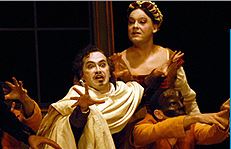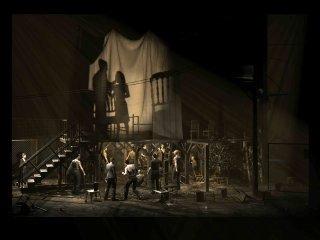
Canadian Premiere of Die Tote Stadt – The Dead City by Erich Wolfgang Korngold in Calgary

calgary_logo

dietotestadtdietotestadt_title2

Sat / jan 30 : 8:00PM

Wed / feb 03 : 7:30PM

Fri / feb 05 : 8:00PM

A story of heartache and spiritual ruin

Next January 30th, Calgary Opera presents the Canadian Premiere of Die Tote Stadt – The Dead City by Erich Wolfgang Korngold, also playing on February 3 & 5.

Calgary Opera welcomes back Maestro Bramwell Tovey as Conductor. Bramwell is a gifted Conductor and Musical Director, a published composer and a Juno and GRAMMY Award winner.

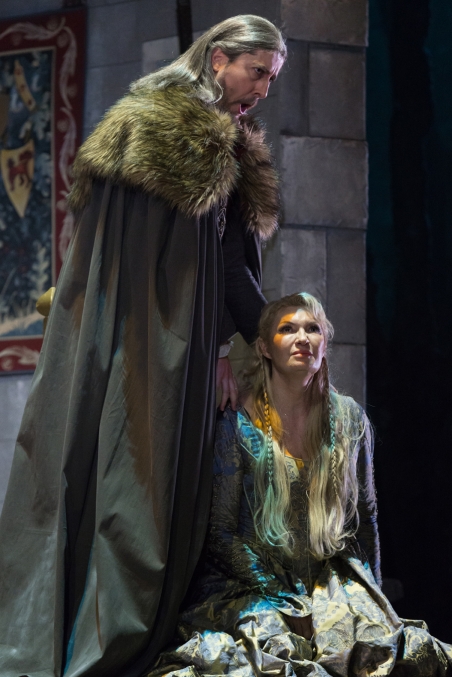
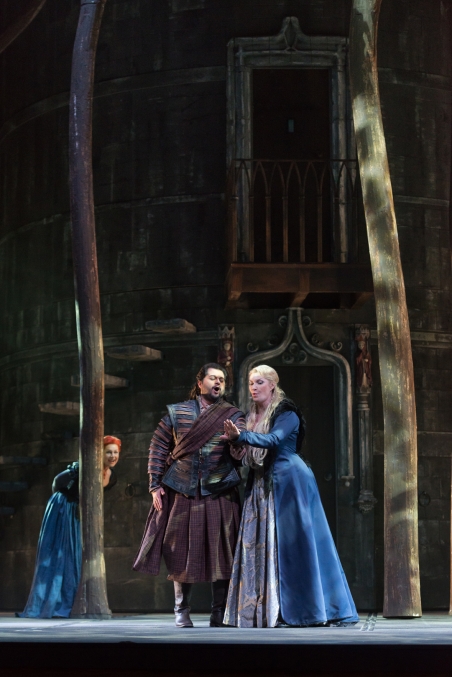
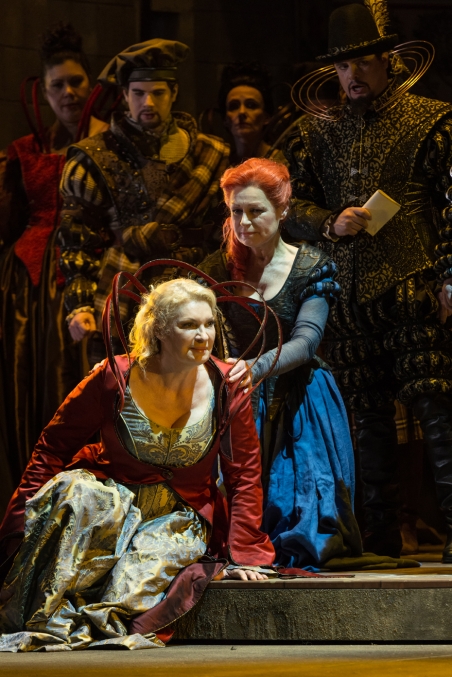
The production follows a man’s fight for his sanity as he’s tormented by desire for a seductress who bears a striking resemblance to his ghostly love. Die tote Stadt was a huge success, and ciricled the globe within two years of opening.

Years later, Erich Wolfgang Korngold went to Hollywood at the behest of Max Reinhardt, in order to adapt Mendelssohn’s score for the Warner Bros. film production of A Midsummer Night’s Dream. He later went on to compose the scores to many other Hollywood movies, and won the Oscar for his work composing The Adventures of Robin Hood. 

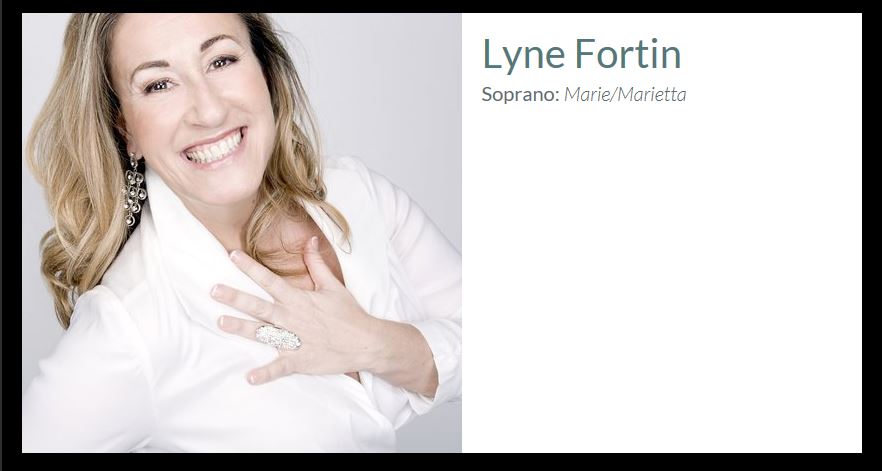
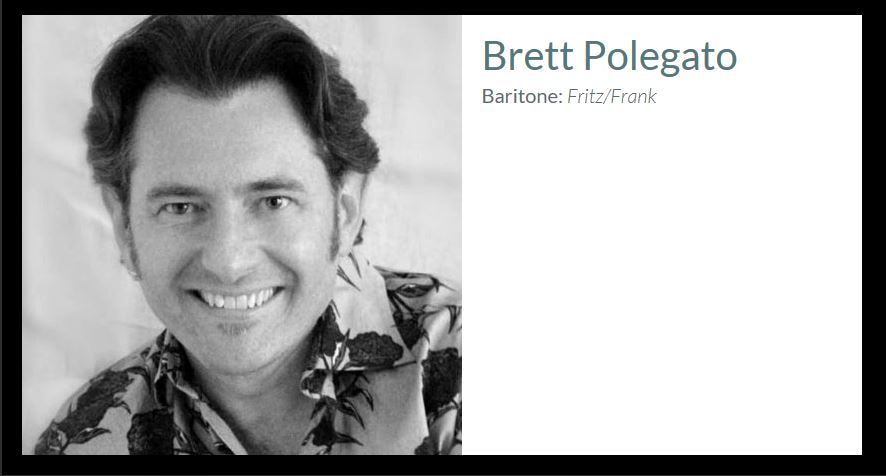
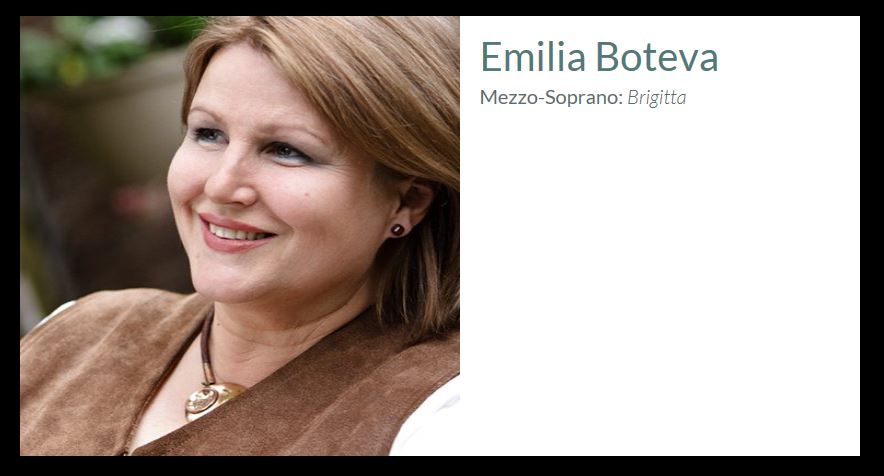
Die Tote Stadt stars Lyne Fortin as Marie/Marietta, David Pomeroy as Paul, Brett Polegato as Fritz/Frank and Emilia Boteva as Brigatta. Kelly Robinson directs.

cast1cast2cast3cast4cast5cast6

Video of Die Tote Stadt scene

SYNOPSIS

Act I

Paul is in the home he shared with his late wife, Marie, mourning her loss.  The decaying city around him serves as a constant reminder of the past.  Paul has transformed one of his rooms into a “temple of memories” in which he has enshrined relics and reminders of his life with Marie, including a treasured braid of her hair.  He is in an excitable state when his friend, Frank, comes to visit and Paul tells him of a young woman he just met.  Marietta, a dancer, bears an uncanny resemblance to Marie and he has invited her to his home in an effort to bring new life into this place of grief and death.  When the girl arrives, Paul is so overwhelmed that he attempts to embrace her on the spot.  Marietta pulls away, and in the ensuing “play,” she accidentally reveals

a portrait of his late wife.  Hearing friends singing in the street on their way to rehearsal, she departs, while Paul agonizes over his conflicting emotions: loyalty to his dead spouse and desire for her living double.  An apparition of Marie steps from her portrait, counseling Paul to choose the living as she morphs into an image of the dancer.

Act II

Weeks later, Paul continues to struggle with the boundary between fantasy and reality.  He tells his friend Frank about his agony, tormented by guilt.  He sees his housekeeper, Brigitta, who left his service due to his perceived “infidelity” to the dead Marie.  Frank, for all his well-intentioned efforts to help, is no longer perceived as a friend, but rather a contender for Marietta’s charms.  Marietta and her friends approach as Paul steps into the shadows to secretly observe her.  She begins to rehearse a scene she is performing in the ballet Robert le diable, in which her character rises from the tomb.  Paul confronts her, outraged at this mock resurrection and she sends her friends away.  Paul angrily denounces Marietta and claims her only attraction is her resemblance to his dead wife.  Marietta refuses to believe this and seduces Paul, suggesting they spend the night at his home in order to banish the ghost of Marie, once and for all.

Act III

The following morning, Marietta stands gazing at Marie’s portrait, triumphant.  A religious procession passes by and the couple watch from the window until Paul, seeing the bishop, falls to his knees.  Marietta is put off by Paul’s piety and she attempts to distract him.  They begin to quarrel, with Paul trying to defend himself while Marietta denounces him as a hypocrite and weakling.  She begins to dance erotically, taunting him, and drapes Marie’s braid around her neck.  Seized with rage, Paul strangles Marietta and is horrified as he watches her turn into Marie in death.  After a restless and exhausted sleep, Paul suddenly wakes and realizes that none of this actually occurred: the braid is in its usual place.  The housekeeper announces Marietta’s return for her umbrella and the roses she left behind when she hastily departed.  The young woman suggests to Paul that perhaps she should stay with him; however, Paul appears noncommittal.  After Marietta leaves, Frank tries to convince him to abandon Bruges—this city of death—forever.  The past is gone and, with it, the love of his life.

By Suzanne Calvin, Director of Media and Public Relations, The Dallas Opera

Posted in OPera | Tagged , , , | Leave a comment

Estonian National Opera set an audience record in 2015 with 185,000 guests

04.01.2016 / Rahvusooper Estonia

In 2015, the number of people attending the performances and concerts at the Estonian National Opera was 185,000, which is almost 35,000 more than the year before. A total of 356 performances and concerts were given with the average home stage turnout of 89% – an all-time record.

“We are extremely happy about the great audience interest, as this is the best acknowledgement to the family of the Estonia Theatre. The extra 60 seats added to the theatre hall during the summer renovation also had some impact. Unfortunately, once more we are forced to admit that the Estonia theatre hall is too small and we have reached the seating limit,” said Aivar Mäe, the General Manager of the Estonian National Opera.

traviataEstonia

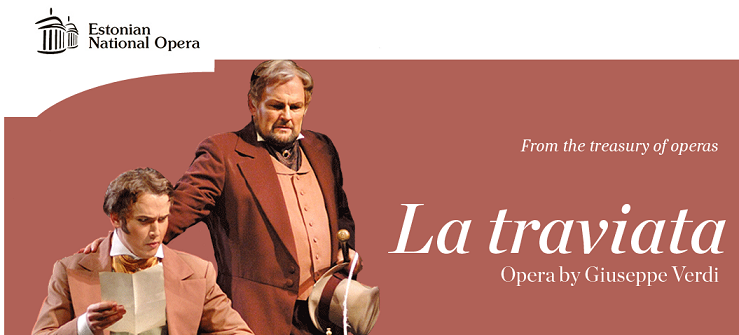
The most popular performances of the year included the operas “Carmen” (97%), “La traviata” (90%), and “Rinaldo” (87%); the ballets “The Nutcracker”, “Onegin”, “The Goblin”, and “Snow White and the 7 Dwarfs” (all 100%). The turnout for the musicals “Karlsson on the Roof” and “Man of La Mancha” was also 100%. The performance that attracted the greatest audience – 16,000 people – was the operetta “Die Zirkusprinzessin”. 65 performances and concerts were given outside the theatre building to 41,000 people.

In 2016, the audience of the Estonia Theatre will see several fascinating performances and concerts. First, the Estonian National Ballet will please the ballet fans – the beloved winter fairy tale “The Nutcracker” stays on the program until 27 January. In addition, “Cinderella” and “Medea” will be on stage again from January.

aida_estonia

The first premiere of the new year will take place on 22 January with the staging of Verdi’s famous masterpiece “Aida” with Tobias Kratzer, a rising star on opera stages worldwide, as the stage director. Although “Aida” is most famous for the grand Triumphal March, the opera also has many lyrically contemplative moments. This makes it a perfect fit for the stage of the Estonian National Opera. The leading roles are sung by Heli Veskus and Aile Asszonyi, and the conductor of the first performances is Vello Pärn.

15 April sees the premiere of Tchaikovsky’s evergreen “Swan Lake,” choreographed by Toomas Edur. The International Dance Day Ballet Gala on 29 April is dedicated to Tiit Härm, celebrating his 70th birthday in the spring.

The 110th season will get a grand ending on 3 June with the premiere of the musical “Fiddler on the Roof”. This musical, born half a century ago, became one of the most popular shows on Broadway, where it ran for more than 3,000 times. “Fiddler on the Roof” was first staged at the Estonian National Opera in 1989 by Georg Malvius, earning the title of the Theatrical Event of the Year. In the new staging, the leading roles are played by Mait Malmsten, Evelin Võigemast, and Helgi Sallo. The tickets for June performances have already been sold out, but it is still possible to purchase tickets to additional performances in August.

Just as in previous seasons, the family of the National Opera will be travelling all over Estonia to delight the residents of Pärnu, Tartu, Paide, and Jõhvi. This year’s guest performances will include Minkus’ ballet “La Bayadère,” Leigh’s musical “Man of La Mancha”, Verdi’s opera “La traviata,” and Kálmán’s operetta “Die Zirkusprinzessin.”

Posted in Article | Tagged | Leave a comment

Don Giovanni at the Bayerische Opera in Munich

dontitlebayerische_logoDramma giocoso in two acts

Composer Wolfgang Amadeus Mozart · Libretto by Lorenzo da Ponte
In Italian with German surtitles

Thursday, 14. January 2016
07:00 pm – 10:30 pm
Nationaltheater

Duration est. 3 hours 30 minutes · 1 Interval between 1. Akt and 2. Akt (est. 08:30 pm – 09:05 pm )

Conductor James Gaffigan

Stage director Stephan Kimmig

Scenography Katja Haß

Costumes Anja Rabes

Video Benjamin Krieg

Lights Reinhard Traub

Dramaturgie Miron Hakenbeck

Choir Director Stellario Fagone

don7


Don Giovanni
Erwin Schrott
Der Komtur
Goran Jurić
Donna Anna
Marina Rebeka
Don Ottavio
Dmitry Korchak
Donna Elvira
Véronique Gens
Leporello
Alex Esposito
Zerlina
Eri Nakamura
Masetto
Tareq Nazmi
  • Bayerisches Staatsorchester
  • Chorus of the Bayerische Staatsoper

SYNOPSIS

Act 1

The Commendatore’s Death or Unwelcome Side Effects
Don Giovanni’s servant Leporello is keeping watch while his master tries to seduce a woman. He complains about his working conditions. Don Giovanni is chased by Donna Anna, what has passed between them remains unclear. Anna tries to hold him back and unmask his true identity. The Commendatore, Anna’s father, appears on the scene, accuses Giovanni of having dishonoured his daughter and challenges him to a duel. Giovanni kills the Commendatore, he and Leporello escape. When Anna returns with her fiancé Don Ottavio, she finds her father dead. She makes her fiancé swear to take bloody revenge.

don6

Elvira or Yesterday’s Tears
Giovanni throws Leporello’s admonitions about his way of life to the winds. His desire is aroused by an unknown lady travelling alone. She is in search of a lover, who has walked out on her and whom she wishes to kill. As Giovanni approaches her, he recognizes her for Donna Elvira, a woman he left some time ago. He evades her accusations, leaving her with Leporello, who opens her eyes: She was not Giovanni’s first conquest, and will not be his last. In great detail and with obvious enjoyment, Leporello reveals the long list of Giovanni’s affairs.

Zerlina or Newfound Happiness
On the eve of their wedding, Zerlina and Masetto are celebrating with their friends. The cheerful party is disturbed by Giovanni’s appearance. Talking sweetly to Zerlina and threatening Masetto, he runs off with the bride. Meanwhile Leporello leads an enraged Masetto and the guests to Giovanni’s castle, where they are promised an extraordinary party. Alone with Zerlina, Giovanni disperses her doubts and pangs of conscience, proposes to her and almost succeeds in reaching his goal.

don10

When Women Meet
Elvira intrudes on their tête-à-tête and informs Zerlina about Giovanni’s lying and cheating. Giovanni unexpectedly runs into Donna Anna and Don Ottavio, who are looking for the Commendatore’s murderer. Again, Elvira intrudes and tries to warn Anna against Giovanni. Giovanni declares Elvira to be insane, but Elvira’s lamentations arouse Anna’s and Ottavio’s compassion. The tone of Giovanni’s hypocritical words leads Anna to recognize her father’s murderer, the man she encountered the previous night. Ottavio urges her to tell him the details of what happened. Recalling the traumatic night, Anna manages to keep Ottavio’s rising jealousy in check and commit him to her plans of revenge.

Pleasure That Knows No Limits
Zerlina apologizes to Masetto. Her remorse and seductive charms quickly restore the couple’s happiness, but Masetto remains suspicious and decides to keep an eye on Zerlina during the party. Zerlina is afraid of meeting Don Giovanni again. Don Ottavio, who wants to bring Giovanni to justice, sneaks into the party with Donna Anna and Donna Elvira, all wearing masks. Giovanni greets the unexpected guests and declares that any rules and limitations are suspended for the night. While the dancing continues, Giovanni once more manages to lure Zerlina away. But when she screams, the others rush to her rescue. When Giovanni tries to put the blame on Leporello, Don Ottavio, Donna Anna and Donna Elvira drop their masks and threaten him. Giovanni is cornered, but quickly regains the upper hand. With his incredible audacity, he paralyses his pursuers and escapes.

Act 2

A Comedy of Errors or Changing Identities
Giovanni continues to look for erotic adventures as if nothing had happened.
He exchanges clothes with Leporello. In the person of Giovanni, Leporello is supposed to try and seduce Elvira, while Giovanni chases a nameless maid. Leporello, who had intended to leave Don Giovanni, is persuaded with the help of money. Giovanni successfully entices Elvira with his song.
Heavily armed, Masetto and a number of his friends run into Giovanni, the man they are actually looking for, but because of the disguise take him for Leporello. Giovanni sends Masetto’s friends away, instructing them to circle the supposed Giovanni, strips Masetto of his weapons and almost beats him to death. Zerlina tends Masetto’s wounds.
Struggling to elude Elvira’s caresses under cover of the night, Leporello encounters Anna, Ottavio, Masetto and Zerlina. Everybody believes they have finally caught Giovanni. Elvira’s pleas to spare her husband are to no avail. Leporello clarifies the situation, reveals his true identity and narrowly escapes the others’ blows.

don11

In the Realm of the Dead
While Giovanni and Leporello reunite on the cemetery and the master brags about his amorous adventures, they hear the voice of the murdered Commendatore, urging them to leave this sacred place and let the dead rest in peace. Laughing, Giovanni asks a frightened Leporello to invite the Commendatore to dinner. The voice from the afterworld accepts the invitation.

Sighs in the Night
Don Ottavio once again offers to comfort Donna Anna and laments his rejected love. At first, Anna is angry, but then she reassures him by telling him that so shortly after her father’s death she was unable to commit herself and that it would take some time before she could open her heart to him.

A Lonely Supper or Every Man Dies Alone
Giovanni orders the food to be served and eats with insatiable hunger. Elvira appears uninvited. She accepts that Giovanni does not return her love, but wants to save him from demise and implores him to change his life. When he only laughs at her, she runs for the door, where she meets the Commendatore, risen from the grave. There is a knock on the door, and Giovanni orders Leporello to open. Frightened to death, Leporello reports that the dead man has indeed followed the invitation. The guest challenges Giovanni to return his visit. Giovanni accepts and in confirmation of his promise shakes the Commendatore by the hand, the coldness of which spells his imminent death. The Commendatore offers Giovanni one last chance to repent his deeds and thus save his soul. Even though he suffers immense turmoil, Giovanni proudly and stubbornly refuses to do so. As he is consumed by the flames of hell, a scream escapes his lips, telling of his last pleasure or first fear.

Epilogue or The Happiness of Those Remaining Behind
Ottavio, Anna, Elvira, Masetto and Zerlina arrive, wanting to arrest Giovanni for his murder. When Leporello recounts the terrible things he has seen, they realize they have come too late. They are quick to condemn the deceased villain. Before they part, they tell each other their plans for life after Giovanni.

 GALLERY (click to enlarge)

Posted in OPera | Tagged , , , | Leave a comment

Rusalka at the Minnesota Opera


rusalka_minnesota

minnesota_logo

Performances

  • Sat. Jan. 23, 2016 at 7:30pm
  • Thurs. Jan. 28, 2016 at 7:30pm
  • Sat. Jan. 30, 2016 at 7:30pm
  • Sun. Jan. 31, 2016 at 2pm

rusalka1

Rusalka

Dvorak’s Most Lyrical Music

Rusalka, a beautiful water nymph, falls in love with a prince, sacrificing her voice in return for entry into his human world. But betrayal condemns her to eternal solitude. Dvorak juxtaposes the mortal and the mythical with beautiful folk melodies and luminous arias, including Rusalka’s heartbreaking “Song to the Moon.” Kelly Kaduce returns to the stage in a reprisal of Minnesota Opera’s critically acclaimed production.Preliminary run time of 3 hours and 1 minute, including two intermissions.Sung in Czech with English translations projected above the stage.

GALLERY

This slideshow requires JavaScript.


cast_minnesota

creative_minnesota

DvorakAntonín Dvořák

b Nelahozeves (Bohemia), September 8, 1841

d Prague, May 1, 1904

Mostly known for his symphonies, concerti and chamber works, Antonín Dvořák composed 10 operas, an art form he once declared to be his preferred genre. Born to humble peasant stock, Dvořák barely escaped oblivion when he was sent to live with his aunt and uncle at the age of 12. There he fostered an interest in music, becoming adept on a number of instruments and graduating from Prague’s School of Organ in 1859. He joined a band of local players, which eventually became the pit orchestra of the city’s new Provisional Theater three years later. In 1863, he had the opportunity to play a concert of Wagner’s music, with the great composer himself conducting, and was influenced as a result. A violist for almost a decade, Dvořák would be exposed to a wide variety of operatic styles during this period, including works by Gioachino Rossini, Giuseppe Verdi, Giacomo Meyerbeer, Charles Gounod, Jacques Offenbach and Carl Maria von Weber.

At that time, the notion of opera in the Czech language was in its infancy (as the transitory word “provisional” in the theater’s title would seem to indicate). Then part of the Austrian Empire, Bohemia was required to use German as its official language. Only by the middle of the century were major works being performed in Czech. The leader of the movement was the theater’s director, Bedřich Smetana, whose operas began to define a national style. Other composers of note included Karel Šebor, Karel Bendl, Richard Rozkšný, Voitěch Hřimalý, Zdenděk Fibich, Karel Kovařovic, Otakar Ostrčil, Vítězslav Novák, Josef Bohuslav Foerster, and most notably, Leoš Janáček.

Not willing to succumb to this patriotic fervor, Dvořák was strangely out-of-pace with his contemporaries, often choosing subjects and locales far from his native lands. His first opera, Alfred (1870/1938; set to German text) tells the struggle between England’s Alfred the Great and the invading Danes. Vanda (1876), written in the style of French Grand Opera, is set among Polish royalty, and the equally epic Dimitrij (1882) plays out in the Russian court, a sort of sequel to Boris Godunov. Jakobin (1889), though taking place in Bohemia, has its undercurrents in the rhetoric of the French Revolution and the tried-and-true theme of Armida (1904) is set during the Medieval Crusades. Even Rusalka’s wispy milieu is indeterminate. Coupled with charges of excessive Wagnerism, Dvořák was one to step to his own tune.

Written by a composer with a rich musical palette underlying problematic texts (unfortunately, he was not a strong dramatist), Dvořák’s operas were met with mixed reviews and are seldom produced beyond the Czech border. His fame chiefly rests on his orchestral works, which after a few false starts, he began to tour around Europe. In 1891, he was invited by Jeanette Thurber (founder of the ill-fated American Opera Company, a brief rival to the newly opened Metropolitan Opera) to become the director of the National Conservatory of Music, a three-year commitment with generous summer breaks. Rather than returning to Prague, Dvořák spent his first vacation in Czech-populated Spillville, Iowa. A great lover of trains, the composer took many short trips around the Upper Midwest, including one to Minneapolis for a visit to Minnehaha Falls while considering a setting of Henry Wadsworth Longfellow’s Song of Hiawatha. From this period comes one of his most popular works, the Symphony No. 9 “From the New World” as well as several other regionally-inspired pieces, such as the two string quartets (in f and e-flat), both called the “American,” and the famous Cello Concerto in b minor.

Toward the end of his life, Dvořák turned away from “abstract” music to more programmatic works. Rusalka dates from this period as does Armida, his final opera. Sadly, the composer died within months of its controversial premiere, unable to defend its merits or revise accordingly

Posted in OPera | Tagged , , | Leave a comment

Cavalleria Rusticana/Pagliacci at the Metropolitan Opera in NYC

cavalleriatitlepagliaccititle
metlogoOpera’s indomitable double bill returns in Sir David McVicar’s searing production from the 2014–15 season. Tenor Yonghoon Lee and mezzo-soprano Violeta Urmana star in Cavalleria Rusticana, the tragedy of ancient codes and illicit love, Sicilian style. In the second half of the pair of verismo potboilers, tenor Roberto Alagna is the murderous clown Canio and soprano Barbara Frittoli is his philandering wife. Met Principal Conductor Fabio Luisi is on the podium.

Jan 21 – Feb 26 2016

cavalleria2

Cavalleria Rusticana, World premiere: Teatro Costanzi, Rome, 1890. Met company premiere: Chicago (on tour), December 4, 1891.

Pagliacci, World premiere: Teatro dal Verme, Milan, 1892. Met premiere: December 11, 1893.

Metropolitan opera poster from the 1983 premiere

Metropolitan opera poster from the 1983 premiere

Roberto Alagna as Canio

Roberto Alagna as Canio

Two tales of passion, jealousy, and death set in southern Italy, Cav/Pag have been all but inseparable on the opera stages of the world since the Met first presented them as a double bill in 1893. The overwhelming success of Cavalleria was crucial in launching the verismo movement, inspiring other composers (including Leoncavallo) to turn to stories and characters from real life, and often from society’s grungier elements.

CAST

cavalleriacast1 cavalleriacast2 Cavalleriacast3

The Setting

pagliacci7p

The setting of Cavalleria Rusticana in a Sicilian village is not merely picturesque. The village is, in a sense, a character in the opera—a crude place, untouched by modernity, close to nature’s cycles of life and death and the primitive human rituals associated with them. Pagliacci is originally set in Calabria, the Italian mainland region closest to Sicily. In the Met’s production, the action takes place in the same village across two generations, with Cavalleria set in 1900 and Pagliacci set in 1949.

GALLERY (Click to enlarge)

Cavalleria Rusticana

Pagliacci

Posted in OPera | Tagged , , , , , | Leave a comment

Turandot at the Metropolitan opera

turandottitlemetlogoNina Stemme takes on the title role of the proud princess of ancient China, whose riddles doom every suitor who seeks her hand, opposite Marco Berti as Calàf, the brave prince who sings “Nessun dorma” and wins her love. Anita Hartig and Leah Crocetto share the role of Liù, the faithful slave girl. Franco Zeffirelli’s golden production is conducted by Paolo Carignani.

January 11, 15, 18, 22,26, 30, 2016

turandotbottom

World premiere: Teatro alla Scala, Milan, April 1926. Met and U.S. premiere: November 16, 1926. Puccini’s final opera is an epic fairy tale set in a China of legend, loosely based on a play by 18th-century Italian dramatist Carlo Gozzi. Featuring a most unusual score with an astounding and innovative use of chorus and orchestra, it is still recognizably Puccini, bursting with instantly appealing melody. The unenviable task of completing the opera’s final scene upon Puccini’s sudden death was left to the composer Franco Alfano. Conductor Arturo Toscanini oversaw Alfano’s contribution and led the world premiere.

Production Franco Zeffirelli

Set Designer Franco Zeffirelli

Costume Designers Dada Saligeri

Costume Designers Anna Anni

Lighting Designer Gil Wechsler

Choreographer Chiang Ching

CAST  AND ARTISTIC TEAM

turandotcast1 turandotcast2 turandotcast3 turandotcast4 turandotcast5

In Gozzi’s play, the original commedia dell’arte characters wandered from Italy to China and were members of the Imperial court. Their comments satirized Venetian politics and mores of the times. Puccini and his librettists dispensed with any such relevance. The China of this opera, set in “legendary times,” is a mythical land where the clash of the sexes is drawn in high relief.

GALLERY

Posted in OPera | Tagged , , | Leave a comment

Stiffelio in Venice

fenice

verdi_Stifelio logofeniceSTIFFELIO

Music by Giuseppe Verdi

Venice: La Fenice Opera House

Conductor: Daniele Rustioni

Director: Johannes Weigand

Sets & Lights Designer: Guido Petzold

Costumes: Judith Fischer

NEXT show:2016-01-22

LAST show:2016-02-03

Stiffelio2 Cast

Stiffelio ⎮ Stefano Secco
Lina ⎮ Julianna Di Giacomo
Stankar ⎮ Dimitri Platanias
Raffaele ⎮ Carlo Bosi
Jorg ⎮ Simon Lim
Dorotea ⎮ Elisabetta Martorana

Conductor ⎮ Daniele Rustioni
Director ⎮ Johannes Weigand
Sets & Lights Designer ⎮Guido Petzold
Costumes ⎮Judith Fischer

La Fenice Orchestra & Choir

Chorus Master ⎮ Claudio Marino Moretti

La Fenice Opera House new production

Locandina1850Stiffelio is an opera in three acts by Giuseppe Verdi, from an Italian libretto by Francesco Maria Piave, based on the French play Le pasteur, ou L’évangile et le foyer by Émile Souvestre and Eugène Bourgeois, which had been translated into Italian by Gaetano Vestri as Stifellius.
Verdi’s experience in Naples for Luisa Miller had not been a good one and he returned home to Busseto to consider the subject for his next opera. The idea for Stiffelio came from his librettist and, entering into a contract with his publisher, Ricordi, he agreed to proceed, leaving the decision as to the location of the premiere to Ricordi. This became the Teatro Grande (now the Teatro Comunale Giuseppe Verdi) in Trieste and, in spite of difficulties with the censors which resulted in cuts and changes, the opera – Verdi’s 16th – was first performed on 16 November 1850.

Stiffelio_Inbal SYNOPSIS 

Act 1

Scene 1: Hall within Count Stankar’s castle

Stifellio, who is a minister, is expected to arrive from a mission at any moment. Lina his wife and Stankar her father, as well as cousins Federico and Dorotea, eagerly await. Raffaele, Lina’s lover, also waits. Stiffelio arrives then talks about how his boatman had told of a couple escaping from a castle window. The boatman said that the couple dropped a packet of letters and he holds these letters in his hand. He refuses to open the letters and burns them. Lina and Raffaele are secretly relieved. The latter tells Lina that they can meet next, and the location, when he leaves instructions inside a locked book in their library. After the greetings are over, Stiffelio and Lina are left to themselves. He sings “She has no word for me, not a glance…” He talks about the sins he’s witnessed and sings “Everywhere I saw virtue groan beneath the oppressor’s yoke…” He notices that Lina’s wedding ring is not on her finger. He sings, angrily, “Ah, clearly written on your brow is the shame that wages war in your heart…” Stankar arrives to escort Stiffelio to some celebrations being arranged for him. Lina is alone and remorseful and she sings “Let my sighs and tears ascend to thee, O merciful God…”

graveyard  Act 2

Setting: Graveyard near castle

Lia visits her mother’s grave and prays, and she sings “Ah, from among the ethereal thrones, where, blessed, you take your seat…” Raffaele joins her. She asks him to leave and he is sad. He sings “Lina, then you wish to destroy this unhappy, betrayed wretch…” He refuses to leave and sings “I stay…” Stankar arrives, tells his daughter to leave and challenges Raffaele to duel with him. Stiffelio arrives and tells them that they can’t fight in a cemetery. He tries to reconcile the pair by joining both of the men’s hands together in a peaceful gesture. Stankar tells Stiffelio that he’s now touched the hand of the man who betrayed him. Stiffelio doesn’t understand and wants the mystery explained further. Lina returns and demands forgiveness from Stiffelio and then the latter starts to understand the situation. He sings “It cannot be! Tell me at least that it is a lie!” He wants more explanation and challenges Raffaelo as he is poised to strike the younger man. Jorg arrives on the scene because he wants the priest to go to the church, as he points out the congregation waiting and singing for him. Stiffelio is conflicted and he drops his sword and ask for inspiration from God so he can give a good sermon. At the same time, he curses his wife.

 GiuseppeVerdi Act 3

Scene 1: Room – Count Stankar’s Castle

As he’s alone in his room, Stankar looks at a letter which says that Raffaele has fled and asked Lina to join him. He’s in despair and distraught over his daughter’s behavior, and sings “Lina, I thought that in you an angel brought me heavenly bliss”. He thinks about committing suicide and starts to write a letter to Stiffelio. Jorg enters the scene and says he’s tracked down Raffaele and that the latter will be returning to the castle. Stankar is joyous and sings “Oh, the inexpressible joy that floods this heart of mine!” He sees sweet revenge within reach and leaves.


Posted in OPera | Tagged , , , , | Leave a comment

Werther at the Opera Bastille in Paris

Photo © Maria Letizia Piantoni

Photo © Maria Letizia Piantoni


Logo_OnPOpéra Bastille from 20 January to 04 February 2016
Opening night Wednesday 20 January 2016
3h25 with 2 intervals


Werther

Drame lyrique in four acts and five scenes (1892)

MUSIC Jules Massenet
Libretto Edouard Blau Paul Milliet Georges Hartmann

After Johann Wolfgang von Goethe
In French

Conductor
Michel Plasson
Director
Benoît Jacquot
Werther
Piotr Beczala
Albert
Stéphane Degout
La Bailli
Paul Gay
Schmidt
Rodolphe Briand
Johann
Lionel Lhote
Charlotte
Elīna Garanča
Sophie
Elena Tsallagova
Brühlmann
Arto Sarkissian
Kätchen
Pauline Texier
Set design
Charles Edwards
Costume design
Christian Gasc
Lighting design
André Diot
After
Charles Edwards

Paris Opera Orchestra
Maîtrise des Hauts-de-Seine / Paris Opera Children’s Chorus
Original production from the Royal Opera House, Covent Garden London

French and English surtitles

werther8

WertherQuote

werther13“Nothing is more moving than this combination of pain and meditation, introspection and delirium portraying the unfortunate man contemplating himself in thought and succumbing to pain; directing his imagination towards himself; strong enough to watch himself suffer and yet incapable of bringing any relief to his tormented soul.” So wrote Madame de Staël in 1800. Fourteen years later, in De l’Allemagne, she restated her admiration for Werther and “all that Goethe’s genius could produce when he was passionate.”

wertherDvd Even though more than a century separates the publication of the novel from the creation of Massenet’s operatic drama, the composer remains faithful to Goethe’s truly personal literary model and captures the palpable signs of nascent romanticism – that Sturm und Drang whose turmoil would liberate all that was intimate.

In a discreet Clair de lune, the orchestra murmurs the silent empathy of two people holding each other by the arm for fear that their hands or their hearts might touch, until finally, in a febrile outburst of fervour, the tears of Charlotte, embodied by ElĪna Garanča, release the impassioned lyricism of inevitably doomed love.

Posted in OPera | Tagged , , , | Leave a comment

The Mikado at the English National Opera in London

mikado2

eno1

  • Running time: 2hr 40mins
  • Language: Sung in English, with lyrics projected above the stage
  • Signed Performance: 3 February 2016

mikado_perf


The Mikado cast and creative team

Conductor   Fergus Macleod

Director   Jonathan Miller

Revival Director    Elaine Tyler-Hall

Set Designer    Stefanos Lazaridis

Costume Designer   Sue Blane

Lighting Designer   Davy Cunningham

Choreographer    Anthony van Laast

Ko-Ko  Richard Suart

Nanki-Poo  Anthony Gregory

Yum-Yum  Mary Bevan

Pooh-Bah  Graeme Danby

Katisha  Yvonne Howard

The Mikado of Japan  Robert Lloyd

Pish-Tush  George Humphreys

Peep-Bo  Fiona Canfield

Pitti-Sing  Rachael Lloyd

Co-production with Houston Grand Opera and Los Angeles Music Center Opera

Supported by the van Steenis family in memory of Jhr Dr Dick van Steenis

Audio clips: © p1986 JAY Productions Ltd.  Used with permission and under license from JAY Productions Ltd.

Nanki-Poo loves Yum-Yum. Just one snag. She’s betrothed to Ko-Ko, the new Lord High Executioner. And Ko-Ko needs to find someone to execute – chop chop! Otherwise, it’s his own neck on the block. Maybe Ko-Ko and Nanki-Poo can come to some arrangement… without anyone losing their head?

‘Irresistible… a brilliant comic performance.’ ★★★★ The Stage

Set in an ever-so English 1930s seaside hotel, Jonathan Miller’s Marx Brothers-inspired song-and-dance Mikado is a popular hit with audiences of all ages. The combination of Gilbert’s virtuosic wit, Sullivan’s memorable melodies and Miller’s hilarious antics is irresistible.

‘Riotous production hits the funny bone once again’ ★★★★ What’sOnStage

Distinguished bass Robert Lloyd sings the genial Mikado for the first time, 46 years after making his ENO debut, while Richard Suart, the acknowledged master of the Lord High Executioner’s pathological ‘little list’, returns as Ko-Ko. ENO Harewood Artists Mary Bevan and Anthony Gregory play the lovers Yum-Yum and Nanki-Poo, while ENO Mackerras Conducting Fellow Fergus Macleod makes his company debut.

‘Feels as fresh as paint… this fine cast make the evening hum’ ★★★★The Guardian

mikado200

On Sunday 6 December 2015, Jonathan Miller’s production of The Mikado celebrated its 200th performance. Originally opening in September 1986, it has delighted audiences (and ENO staff) for almost 30 years. We’ve been looking back at some of our favourite memories.

Posted in OPera | Tagged , | Leave a comment

Il trovatore in Israel

logoisraelioperaIL TROVATORE

Saturday 02/01/2016  20:00
Monday  04/01/2016  20:00
Tuesday  05/01/2016  20:00
Thursday  07/01/2016  20:00
Friday  08/01/2016  13:00
Saturday  09/01/2016  20:00
Monday  11/01/2016  20:00
Tuesday  12/01/2016  20:00
Wednesday  13/01/2016  20:00
Friday  15/01/2016  13:00
Saturday  16/01/2016  20:00
Thursday  14/01/2016  20:00

trovatore3

Libretto Salvadore Cammarano
Conductor Daniel Oren
Director Michal Znaniecki
Video Artist Michal Rovner
Set Designer Luigi Scoglio
Costume Designer Giusi Giustino
Lighting Designer Bogumil Palewicz

Among the soloists:

Manrico Gustavo Porta 31.12, 2.1, 5.1, 8.1, 11.1, 13.1, 16.1
Alfred Kim 1.1, 4.1, 7.1, 9.1, 12.1 ,14.1, 15.1
Leonora Svetla Vassileva  2.1, 5.1, 7.1, 9.1, 13.1, 16.1
Dinara Alieva 31.12, 4.1, 8.1, 12.1, 15.1
Ira Bertman 1.1, 11.1, 14.1
  Azucena  Marianne Cornetti 31.12, 1.1, 2.1, 4.1
 Enkelejda Shkosa 5.1, 7.1, 8.1., 9.1, 11.1, 13.1, 16.1
 Svetlana Sandler 12.1, 14.1, 15.1
Di Luna              George Petean 31.12, 2.1,4.1, 5.1
Ionut Pascu 1.1, 7.1, 8.1, 9.1, 11.1, 12.1, 13.1, 14.1, 15.1, 16.1
Ferrando Carlo Striuli
Inez Alla Vasilevitsky 31.12, 1.1, 2.1, 5.1, 12.1, 13.1, 15.1
Anat Czarny  4.1, 7.1, 8.1, 9.1, 11.1, 14.1, 16.1
Ruiz Eitan Drori
Old Gypsy Vakhtang Megrelidze
Delivery person Liran Kopel

trovatore4The Israeli Opera Chorus
Chorus Master: Ethan Schmeisser

The Opera Orchestra – The Israel Symphony Orchestra Rishon LeZion

English & Hebrew Surtitles
Translation: Israel Ouval

SYNOPSIS

Act I: The Duel

Scene I 

Ferrando, the captain of the guard, and his men are standing by the door. The men are on guard by order of Count di Luna, who wishes to capture a troubadour (a minstrel knight) who has been heard on several occasions serenading the duchess Leonora, for whom the Count has a deep but unrequited love. At the men’s request Ferrando tells the story of Garzia, the Count’s brother. When still a baby, Garzia was found with an old gipsy hag at his cradle. She was driven off, but the boy’s health failed and it was believed that the gipsy had bewitched him. She was captured and burnt at the stake. Her daughter, Azucena, swore revenge on her mother’s death: on the day of her execution young Garzia disappeared and the burned remains of a baby were found in the ashes of the old gypsy’s funeral pyre. The old Count later died, and nothing was heard since of Azucena, although her mother’s spirit is said to have roamed the skies at night. The tale is interrupted by the chiming bells.

Scene II

trovatore5Leonora and her maid Inez are in the garden. Leonora tells her how she met a mysterious knight at a tournament and fell in love with him. The knight vanished when civil war broke out. At night she has heard her troubadour singing below her window. Inez suggests that Leonora forget her lover, but the latter says she would rather die than lose him. The Count enters, declaring his burning passion for Leonora. He is about to enter her apartment when he hears a distant serenade: it is Manrico, the troubadour, who has come to woo his love. Leonora hurries to greet her lover, but mistakenly addresses the Count, and is accused of treachery by Manrico.

Act II: The Gypsy

Scene I: An encampment of gypsies

Azucena relates the story of her mother’s death and the tragic events at the pyre. Manrico asks her whether he is really her son, and she hastens to reassure him. Manrico then tells of the duel between him and the Count and how he spared his life, for he was sure he had heard a voice from heaven which bid him do this. Ruiz, a messenger from the Prince of Biscay, enters with orders for Manrico to take command of the forces defending the fortress of Castellor, and at the same time bears the news that Leonora is about to enter a convent, thinking Manrico is dead.

trovatore

Scene II

The Count plans to carry Leonora off before she takes her vows. Nuns are heard from afar as Leonora and Inez enter. Just before the Count is about to seize Leonora, Manrico stands between them and his men surround the Count. Astonished, Leonora rushes into Manrico’s arms.

Act III: The Gypsy’s Son

Scene I: The camp of Count di Luna

The Count’s men are getting ready to attack Castellor. The Count himself is paining over his loss of Leonora, when Ferrando brings Azucena, who was captured while wandering near the encampment. She tries to divert attention from herself in a song, but Ferrando recognizes her as the gipsy who threw the brother of the Count into the fire. She further enrages the Count by calling for her rescue by her son Manrico, and he sentences her to be burned at the stake.

Scene II: A room adjoining the chapel at Castellor

Leonora is preparing for her wedding to Manrico. Just as they are about to enter the altar of the chapel, Ruiz enters with news of Azucena’s capture by the Count, and of her death sentence. Manrico drops Leonora’s hand and draws his sword, leading his men to the rescue of Azucena.

trovatore1

Act IV: The Execution

Scene I

Manrico’s rescue plan has failed. His men have retreated, and he has been thrown into a dungeon in the palace. Leonora arrives to try and save him, wearing a ring that conceals poison. Cries of Miserere are heard from within the castle serving as a background to the heart-broken lament of Leonora. Manrico is in despair as he cannot save Leonora. The Count enters and Leonora promises to wed him if he frees Manrico. The Count consents, not knowing that she is planning to take the poison.

trovatore2

Scene II A prison

Manrico and Azucena are awaiting their death in the tower. Azucena has a frightening vision of the death that awaits her. Manrico tries to calm her, and she finally falls asleep. Leonora hurries to tell Manrico that he is free. Manrico, suspecting her bargain with the Count, accuses her of betrayal. The poison which she has already drunk begins to take effect and she slowly sinks to her death. Count di Luna enters only to find Leonora dead in her lover’s arms. He orders the immediate death of Manrico, and summons Azucena to witness her son’s execution. As the fatal blow falls, she tells the Count that he has just killed his own brother, and finally her mother’s death has been avenged.

Posted in OPera | Tagged , , , , , , | Leave a comment