Il Barbiere di Siviglia at the Opera Bastille in Paris

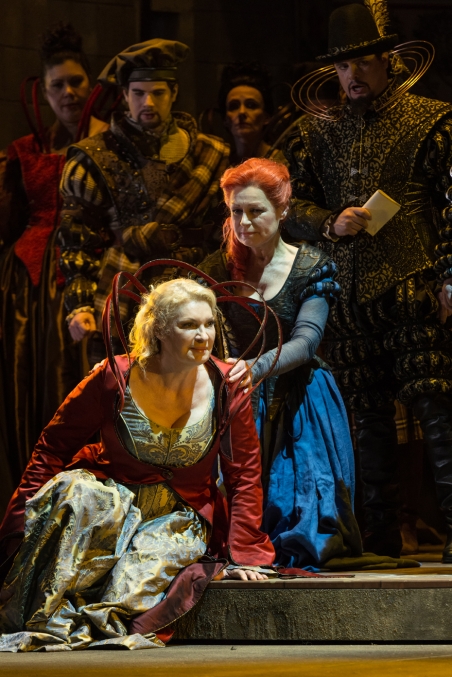
Photo © Lola Guerrera / VOZ’image

Photo © Lola Guerrera / VOZ’image

Logo_OnPOpéra Bastille from 02 February to 04 March 2016
Opening night Tue. 2 Feb.

Il Barbiere di Siviglia

Opera Buffa in two acts (1816)

Music
Gioacchino Rossini
Libretto
Cesare Sterbini
Conductor
Giacomo Sagripanti
Director
Damiano Michieletto
Il Conte d’Almaviva
Lawrence Brownlee
Bartolo
Nicola Alaimo
Rosina
Pretty Yende
Figaro
Alessio Arduini
Basilio
Ildar Abdrazakov
Fiorello
Pietro Di Bianco
Berta
Anaïs Constans
Un Ufficiale
Laurent Laberdesque
Set design
Paolo Fantin
Costume design
Silvia Aymonino
Lighting design
Fabio Barettin
Chorus master
Alessandro Di Stefano

Paris Opera Orchestra and Chorus
Original production from the Grand Théâtre de Genève

French and English surtitles

© Bernard Coutant/OnP

© Bernard Coutant/OnP

barbiereQuote

“The Barber is one of the century’s masterpieces”. These words were written by the very Berlioz who in his youth had denounced not only Rossini, but also the “fanaticism he aroused in the fashionable circles of Paris”. Accordingly, the compliment, “repeated until exhaustion” – the composer’s own words – is all the greater. The work was so “brilliant” and “so finely orchestrated” that the “dilettanti of Rome”, enraged by the “slightest unforeseen innovation in melody, harmony, rhythm or instrumentation were ready to kill the young maestro”. Il Barbiere di Siviglia has been performed continually since its turbulent premiere on February 16th 1816.

The composer’s opera buffa transcends the spirit of Beaumarchais’ comedy and combines the absurd with a touch of satirical realism in a score where rhythm and virtuosity place the comic effects in an ongoing dramatic narration. As a result, the characters – Rosina in particular – gain a new degree of realism and break with the usual archetypes.

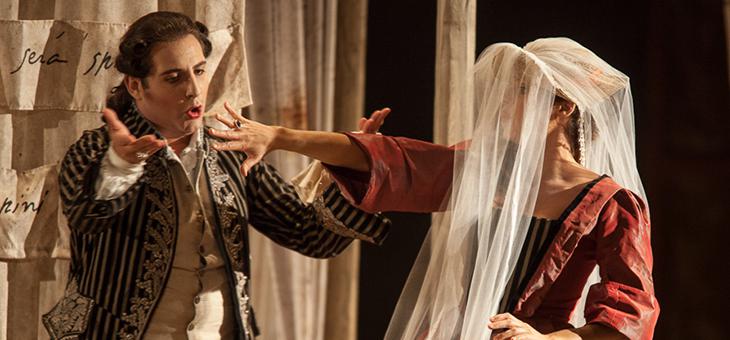
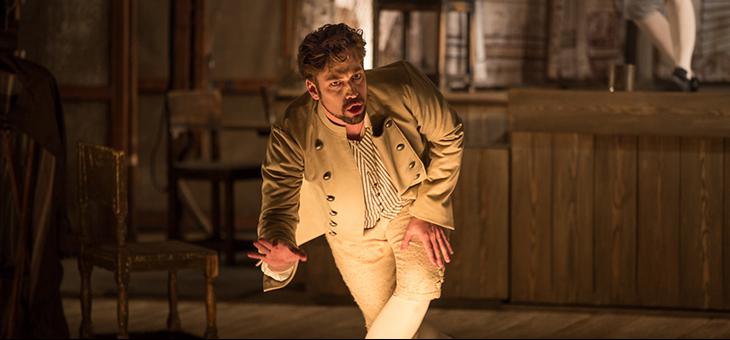
Damiano Michieletto’s giddying production embraces this perpetual motion and carries in its wake the happy couple formed by Lawrence Brownlee and Pretty Yende.

Posted in OPera | Tagged , , , | Leave a comment

Il Trovatore in Luxembourg

luxembourg_logoIL TROVATORE

Giuseppe Verdi (1813-1901)

Opera in four acts.
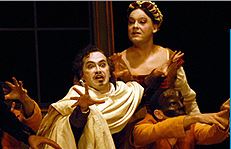
 

trovatoreluxembourg2Libretto by Salvadore Cammarano and Leone Emanuele Bardare based on the drama in Spanish “El Trovador” (1836) by Antonio García Gutiérrez. Premiered at the Teatro Apollo in Rome on 19 January 1853.

In Italian with surtitles in french & German.

PERFORMANCES
Saturday February 20, 2016
Tuesday February 23, 2016
Thursday February 25, 2016
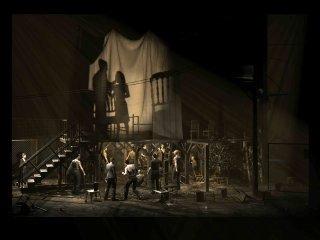
trovatoreluxembourg1Il Trovatore, without a doubt one of Verdi’s most popular operas, is set in a 15th century Spanish town where the themes of obsession, revenge, war, and family are conveyed through vivid characters who present dramatic contrasts. Verdi-expert Roberto Rizzi Brignoli conducts the OPL and an illustrious cast in this co-production with Opéra de Lille and Théâtre de Caen. He graduated from the Giuseppe Verdi conservatory in Milan, but it was at the Teatro alla Scala that his passion for Verdi grew under the guidance of Riccardo Muti.

ARTISTIC TEAM

Musical direction Roberto Rizzi Brignoli
Staging Richard Brunel
Assistant to the staging Ester Pieri
Playwright Catherine Ailloud-Nicolas
Scénography Bruno de Lavenère
Lights Laurent Castaingt
Costumes Thibault Vancraenenbroeck

CAST

Le Comte de Luna Igor Golovatenko
Leonora Jennifer Rowley
Azucena Elena Gabouri
Ferrando Ryan Speedo Green
Inès Evgeniya Sotnikova
Ruiz Pascal Marin

Orchestre Orchestre Philharmonique du Luxembourg
Chœur Chœur de l’Opéra de Lille

Coproduction Opéra de Lille, Théâtre de Caen et Les Théâtres de la Ville de Luxembourg

Production créée le 14 janvier 2016 à l’Opéra de Lille

Représentations à Luxembourg en collaboration avec l’Orchestre Philharmonique du Luxembourg

 Location: Grand Théâtre / Grande Salle, Luxemboug

SYNOPSIS

Place: Biscay and Aragon (Spain)Time: Fifteenth century.

Act 1: The Duel

Scene 1: The guard room in the castle of Luna (The Palace of Aljafería, Zaragoza, Spain)

Ferrando, the captain of the guards, orders his men to keep watch while Count di Luna wanders restlessly beneath the windows of Leonora, lady-in-waiting to the Princess. Di Luna loves Leonora and is jealous of his successful rival, a troubadour whose identity he does not know. In order to keep the guards awake, Ferrando narrates the history of the count (Aria: Di due figli vivea padre beato / “The good Count di Luna lived happily, the father of two sons”): many years ago, a gypsy was wrongfully accused of having bewitched the youngest of the di Luna children; the child had fallen sick and for this the gypsy had been burnt alive as a witch, her protests of innocence ignored. Dying, she had commanded her daughter Azucena to avenge her, which she did by abducting the baby. Although the burnt bones of a child were found in the ashes of the pyre, the father refused to believe in his son’s death; dying, he commanded his firstborn, the new Count di Luna, to seek Azucena.

Scene 2: Garden in the palace of the princess

Leonora confesses her love for the Troubadour to her confidante, Ines (Tacea la notte placida / “The peaceful night lay silent”… Di tale amor / “A love that words can scarcely describe”), in which she tells how she fell in love with a mystery knight, victor at a tournament: lost track of him when a civil war broke out: then encountered him again, in disguise as a wandering troubadour who sang beneath her window. When they have gone, Count di Luna enters, intending to pay court to Leonora himself, but hears the voice of his rival, in the distance: (Deserto sulla terra / “Alone upon this earth”). Leonora in the darkness briefly mistakes the count for her lover, until the Troubadour himself enters the garden, and she rushes to his arms. The Count challenges his rival to reveal his true identity, which he does: Manrico, a knight now outlawed and under death sentence for his allegiance to a rival prince. Manrico in turn challenges him to call the guards, but the Count regards this encounter as a personal rather than political matter, and challenges Manrico instead to a duel over their common love. Leonora tries to intervene, but cannot stop them from fighting (Trio: Di geloso amor sprezzato / “The fire of jealous love” ).

Act 2: The Gypsy Woman

Scene 1: The gypsies’ camp

The gypsies sing the Anvil Chorus: Vedi le fosche notturne / “See! The endless sky casts off her sombre nightly garb…”. Azucena, the daughter of the Gypsy burnt by the count, is still haunted by her duty to avenge her mother (Aria: Stride la vampa / “The flames are roaring!”). The Gypsies break camp while Azucena confesses to Manrico that after stealing the di Luna baby she had intended to burn the count’s little son along with her mother, but overwhelmed by the screams and the gruesome scene of her mother’s execution, she became confused and threw her own child into the flames instead (Aria: Condotta ell’era in ceppi / “They dragged her in bonds”).

Manrico realises that he is not the son of Azucena, but loves her as if she were indeed his mother, as she has always been faithful and loving to him – and, indeed, saved his life only recently, discovering him left for dead on a battlefield after being caught in ambush. Manrico tells Azucena that he defeated di Luna in their earlier duel, but was held back from killing him by a mysterious power (Duet: Mal reggendo / “He was helpless under my savage attack”): and Azucena reproaches him for having stayed his hand then, especially since it was the Count’s forces that defeated him in the subsequent battle of Pelilla. A messenger arrives and reports that Manrico’s allies have taken Castle Castellor, which Manrico is ordered to hold in the name of his prince: and also that Leonora, who believes Manrico dead, is about to enter a convent and take the veil that night. Although Azucena tries to prevent him from leaving in his weak state (Ferma! Son io che parlo a te! / “I must talk to you”), Manrico rushes away to prevent her from carrying out this intent.

Scene 2: In front of the convent

Di Luna and his attendants intend to abduct Leonora and the Count sings of his love for her (Aria: Il balen del suo sorriso / “The light of her smile” … Per me ora fatale / “Fatal hour of my life”). Leonora and the nuns appear in procession, but Manrico prevents di Luna from carrying out his plans and takes Leonora away with him… although once again, leaving the Count behind unharmed, as the soldiers on both sides back down from bloodshed, the Count being held back by his own men.

Act 3: The Son of the Gypsy Woman

Scene 1: Di Luna’s camp Di Luna and his army are attacking the fortress Castellor where Manrico has taken refuge with Leonora (Chorus: Or co’ dadi ma fra poco / “Now we play at dice”). Ferrando drags in Azucena, who has been captured wandering near the camp. When she hears di Luna’s name, Azucena’s reactions arouse suspicion and Ferrando recognizes her as the murderer of the count’s brother. Azucena cries out to her son Manrico to rescue her and the count realizes that he has the means to flush his enemy out of the fortress. He orders his men to build a pyre and burn Azucena before the walls.

Scene 2: A chamber in the castle

Inside the castle, Manrico and Leonora are preparing to be married. She is frightened; the battle with di Luna is imminent and Manrico’s forces are outnumbered. He assures her of his love (Aria, Manrico: Ah sì, ben mio, coll’essere / “Ah, yes, my love, in being yours”), even in the face of death. When news of Azucena’s capture reaches him, he summons his men and desperately prepares to attack (Stretta: Di quella pira l’orrendo foco / “The horrid flames of that pyre”). Leonora faints.

Act 4: The Punishment

Scene 1: Before the dungeon keep

Manrico has failed to free Azucena and has been imprisoned himself. Leonora attempts to free him (Aria: D’amor sull’ali rosee / “On the rosy wings of love”; Chorus & Duet: Miserere / “Lord, thy mercy on this soul”) by begging di Luna for mercy and offers herself in place of her lover. She promises to give herself to the count, but secretly swallows poison from her ring in order to die before di Luna can possess her (Duet: Mira, d’acerbe lagrime / “See the bitter tears I shed”).

Scene 2: In the dungeon

Manrico and Azucena are awaiting their execution. Manrico attempts to soothe Azucena, whose mind wanders to happier days in the mountains (Duet: Ai nostri monti ritorneremo / “Again to our mountains we shall return”). At last the gypsy slumbers. Leonora comes to Manrico and tells him that he is saved, begging him to escape. When he discovers she cannot accompany him, he refuses to leave his prison. He believes Leonora has betrayed him until he realizes that she has taken poison to remain true to him. As she dies in agony in Manrico’s arms she confesses that she prefers to die with him than to marry another (Trio: Prima che d’altri vivere / “Rather than live as another’s”). The count has heard Leonora’s last words and orders Manrico’s execution. Azucena awakes and tries to stop di Luna. Once Manrico is dead, she cries: Egli era tuo fratello! Sei vendicata, o madre. / “He was your brother … You are avenged, oh mother!”

Synopsis Source: Wikipedia.org

Posted in OPera | Tagged , | Leave a comment

The Barber of Seville on tour in Wales and England

welshBannerBarber

Saturday, February 13, 2016 – Friday, April 8, 2016
New Production Spring 2016

Cities

The Bristol Hippodrome 15 Mar – 18 Mar

Milton Keynes Theatre 29 Mar – 1 Apr

Venue Cymru, Llandudno 8 Mar – 11 Mar

Birmingham Hippodrome 1 Mar – 4 Mar

Wales Millennium Centre, Cardiff 13 Feb – 25 Feb

Theatre Royal, Plymouth 5 Apr – 8 Apr

Mayflower Theatre, Southampton 22 Mar

The Barber of Seville should be available on the NHS. Upbeat and optimistic, Rossini’s sunniest creation is the perfect pick-me up. Its fantastic slapstick energy is destined to rub off on anyone who sees it.The pace is fast and never lets up from the start. Everyone is carried along by a whirlwind of crazy disguises, twists and turns and unlikely interventions. Barber opens with one of the best loved of all overtures, full of wit and playfulness. Figaro lets us know he is society’s problem solver in the great comic aria, ‘Largo al factotum’. Rosina’s sparkling aria ‘Una voce poco fa’ makes it very clear that she’s not someone you’d want to mess with.We have assembled an exceptional cast of comic performers including the peerless Andrew Shore as the greedy Doctor Bartolo. This is our first new production of The Barber of Seville for nearly 30 years. It is the perfect opportunity to bask in the warmth and sunniness of this ultimate feel-good opera with a sparkling new translation by Kelley Rourke.

Performances start at 7.15pm•

Running time approximately two hours and 50 minutes including one interval• Sung in English with surtitles in English (and Welsh in Cardiff and Llandudno)

Co-production with Grand Théâtre de Genève Supported by WNO Partners

Creative Team

Conductor James Southall

Director Sam Brown

Set Designer Ralph Koltai

Costume Designer Sue Blane

Lighting Designer Linus Fellbom

Assistant Set Designer Robin Don

Cast

Figaro Nicholas Lester

Rosina Claire Booth

Count Almaviva Nico Darmanin

Bartolo Andrew Shore

Basilio Richard Wiegold


Plot summary

Figaro, a quick-witted barber, agrees (for a generous sum) to help Count Almaviva woo Rosina, the closely-guarded ward of thegreedy Doctor Bartolo, who fancies her and her substantial inheritance for himself. Together,the lovers and their friseur plot an escape that involves bribery, subterfuge and numerous comic disguises along the way.

 SYNOPSIS

Act One

Fiorello, a servant to the young Count Almaviva, gathers a band of musicians by the window of an unknown lady. They accompany the serenade of the young Count Almaviva, who has disguised himself as ‘Lindoro’, a poor student, in order to win over the young woman on his own terms. She does not answer, despite the noisy commotion of the musicians. The Count meets a local barber, Figaro, a busy man who knows all the scandal and gossip of the town. Figaro tells the Count that the woman he has been serenading is Rosina, the ward of Doctor Bartolo, who keeps her and her generous dowry locked away, and plans to marry her himself. The Count vows to outwit him – and on Figaro’s advice, disguises himself as a drunken soldier with  orders to stay at Bartolo’s house that evening.

Rosina is also determined to defeat her guardian. ‘Lindoro’ has won her heart. Figaro encourages Rosina to give ‘Lindoro’ a sign of her affection. To Figaro’s surprise, Rosina presents him with a letter that she has already prepared, which the barber promises to deliver.

Doctor Bartolo is suspicious of Rosina. Don Basilio, Rosina’s music tutor, tells him that the Count Almaviva has developed an interest in his ward. According to Basilio, there is only one way to bring about the ruin of the Count: slander. Bartolo is intrigued, and vows to marry Rosina immediately.

Almaviva is disguised as a drunken soldier, and tells Doctor Bartolo that he has been ordered to station himself at Doctor Bartolo’s house for the night. In the confusion that follows, Almaviva slips Rosina a letter. The situation escalates, and there is such a disturbance that the neighbours call out the police. The drunken soldier is arrested – but all charges are dropped when the Count quietly reveals his true identity. Everyone agrees that the spectacle is enough to drive anyone to madness.

Act Two

Undeterred, Almaviva disguises himself as ‘Don Alonso,’ a music teacher and apprentice of Don Basilio. He tells Doctor Bartolo that his master is ill and that he will teach Rosina’s music lesson instead. To establish his credentials, he shows Doctor Bartolo the letter Rosina wrote to him. As the ‘music lesson’ commences, Rosina and her undercover admirer make plans to elope that night.

Figaro arrives to shave Doctor Bartolo, and hastily steals his keys. Basilio arrives unexpectedly, and before he can work out the real identity of ‘Don Alonso’, he is persuaded that he is too ill to teach. Doctor Bartolo settles down for his shave – but overhears the lovers plotting their elopement, and furiously chases them away. Bartolo’s former servant, Berta, is astounded at the power of love.

Bartolo and Basilio realise that ‘Alonso’ must have been Count Almaviva. On Bartolo’s orders, Basilio goes in search of a notary. Doctor Bartolo stuns Rosina with the news that ‘Lindoro’ is actually an agent for Count Almaviva, who intends to marry her. He shows Rosina the letter she wrote to Lindoro, who must have passed it to the Count Almaviva. Overwhelmed by Lindoro’s betrayal, she reveals the plans she had made to elope with him, and agrees to marry Doctor Bartolo.

During a thunderstorm , Figaro and Almaviva secretly enter the house. Rosina demands that they leave, until she learns that her ‘Lindoro’, ‘Don Alonso’, and the Count Almaviva are the same person. The happy lovers try to escape together, but are trapped. Basilio arrives with the notary who will marry Rosina to Bartolo. The Count instead uses the notary for his own purposes, and bribes Basilio to witness his own marriage to Rosina. Bartolo arrives to find that the happy couple are married.

Posted in OPera | Tagged , , | Leave a comment

Norma at the Florida Grand Opera

florida_logo florida_norma

by VINCENZO BELLINI

“If I were shipwrecked, I would leave all of my other operas and try to save Norma.”
—Vincenzo Bellini

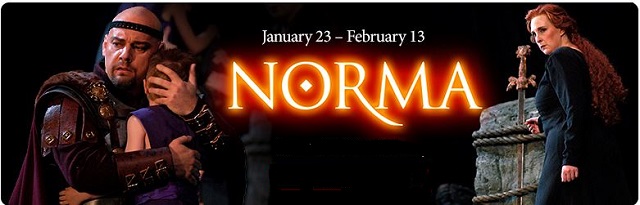
NormaA clandestine love affair brings two extreme enemies together during a time of war. But when Norma discovers that her beloved now loves another, an impassioned new battle begins as betrayal, torment, and ferocity take the reins. The unforgettable conclusion entails an extraordinary public confession and the ultimate personal sacrifice.

The notoriously demanding title role is a thrilling challenge, and the opera rises to its greatest lyrical heights in the celebrated aria, “Casta diva.” By the end, you will understand why the spectacular conclusion of Norma has been called one of the finest things ever created for the stage.

schedule

Miami performances are at the Sanford and Dolores Ziff Ballet Opera House at the Adrienne Arsht Center for the Performing Arts of Miami-Dade County, 1300 Biscayne Boulevard, Miami.

Fort Lauderdale performances are at the Au-Rene Theater at the Broward Center for the Performing Arts, 201 SW 5th Avenue, Fort Lauderdale.


CAST
Norma Mlada Khudoley* [Jan 23, 30, Feb 11, 13]
Mary Elizabeth Williams* [Jan 24, 26, 29]
Adalgisa Dana Beth Miller [Jan 23, 24, 26]
Catherine Martin* [Jan 29, 30, Feb 11, 13]
Pollione Giancarlo Monsalve* [Jan 23, 30, Feb 11, 13]
Frank Porretta [Jan 24, 26, 29]
Oroveso Craig Colclough
Conductor Anthony Barrese
Director Nic Muni*
Production Cincinnati Opera
* = FGO debut

Sung in Italian with English and Spanish projected titles

Photo © Philip Groshong for Cincinnati Opera

GALLERY

This slideshow requires JavaScript.

Posted in OPera | Tagged , , | Leave a comment

The Marriage of Figaro at the Chateau de Versailles

versailles_logomarriagetitle

Opera Buffa in 4 acts. Libretto by Lorenzo da Ponte after Beaumarchais.
First performance at the Burgtheater in Vienna on 1st May 1786

Production : Drottningholms Slottsteater, Les Musiciens du Louvre Grenoble

Performances at the Royal Opera of Versailles, located in the grounds of the Castle, one of the major opera houses.

noces_de_figaro_c_mats_baker_10_web

Beaumarchais is the major theatre writer of the French pre-revolution years. His Marriage of Figaro created a major shock and was a tremendous success: Marie Antoinette herself played the part of Rosine in Versailles…
Very soon, all of Europe fell in love with this story which transcends social classes and embarks the public in an intrigue with a thousand twists and turns and an abundance of witticisms, Lorenzo da Ponte adapted the play for Mozart, and Le Nozze di Figaro, met with unfailing success since its first performances in Vienna. Figaro, the talented singer, finding incredible escpaaes from the most improbable situations. Cherubino, hidden in the countess’s bedroom, and the virtuoso musical ensembles, which close each action, make Le Nozze di Figaro one of the public’s favorites.

noces_de_figaro_c_mats_baker_7_web
In this new production of Le Nozze, Marc Minkowski returns to familiar Mozart regions, with singers who excel on major stages. His accomplice Ivan Alexandre, designed this creation for a legendary venue – the courtyard of Drottningholm Palace in Sweden. Built in 1766, in this royal summer residence, one hour away from Stockholm by boat, the court theatre is intact: it has kept its original machinery and many of the sets, which have made it into a conservatory of baroque theatre techniques. Linking this amazing place to the Royal Opera (1770) is evident from the point of view of style and promises great musical pleasures.
Extract from Le Nozze di Figaro by Marc Minkowski

noces_de_figaro_c_mats_baker_11_web

CAST AND CREATIVE TEAM

Robert Gleadow, Figaro

Lenneke Ruiten, Suzanne

Ana Maria Labin, The Countess

Florian Sempey, The Count

Ingeborg Gillebo,  Cherubino

Paolo Battaglia, Bartolo/Antonio

Anders J. Dahlin, Basilio/Curzio

Miriam Treichl, Marcelline

Hannah Hisahr, Barberine


Ivan Alexandre, Direction

Les Musiciens du Louvre,

Marc Minkowski, Conductor

Conductor Mark Minkowski

Conductor Mark Minkowski

Posted in OPera | Tagged , , | Leave a comment

The Endless Success of Lucia di Lammermoor in Liege

operaliegelogolucia_title

Lucia di Lammermoor

Season: 2015-2016
Length: 2:55
Song language : Italian
Conductor: Jesús López Cobos
Director:  Stefano Mazzonis di Pralafera
Choirmaster: Pierre Iodice
Artists: Annick Massis, Celso Albelo, Ivan Thirion, Roberto Tagliavini, Pietro Picone, Alexise Yerna, Denzil Delaere
Number of performances: 6
Dates: Tue, 17/11/2015 to Tue, 01/12/2015
Last performance at the Opera: May 2007.

lucia-c-opera-royal-de-wallonie-lorraine-wauters-26

Endless success

Donizetti is among the composers who saw glory and success in their lifetime. As a result, between two cities, while stopping off at home, he was snapped up by the Teatro San Carlo in Naples. He was bound by a contract and was obliged, this time, to honour a three-opera commission. He saw in Salvatore Cammarano a young librettist with a fiery nature to perfectly match the urgency of the moment.

Together, they pored over a work by Sir Walter Scott, The Bride of Lammermoor. They took a mere six weeks to compose Lucia di Lammermoor. The public’s enthusiasm was immediate. The composer added a feather to his cap: he had just saved the Theatre. Destiny smiled on him because, three days before the premiere, the death of Bellini made him the sole representative of the operatic art in Italy. This accident lends a surprising intensity to this tragedy, which will be borne by Annick Massis, and, for the first time in Liège, the Spanish tenor Celso Albelo. They make a dazzling duo.

lucia-alexise-yerna-celso-albelo-et-annick-massis-c-opera-royal-de-wallonie-lorraine-wauters-23

The Story

17th-century Scotland is marked by inter-clan warring. Edgardo and Lucia are in love, but are members of opposing clans. In addition, the beauty’s brother has promised her to another man. This is an impossible love that will drag her into madness and lead her, with her lover, to certain death.

lucia-c-opera-royal-de-wallonie-lorraine-wauters-28


(Libretto: Salvatore Cammarano after
Sir Walter Scott’s novel, The Bride of Lammermoor)

Video of Lucia di Lammermoor

GALLERY (Click to enlarge)

Posted in OPera | Tagged , , , , , , , | Leave a comment

Frédéric Verrières’ Opera “Mimi” with Croatian singers in Zagreb

croatianlogo

croatian_logoOn Monday, January 18, 2016. Frédéric Verrières’ opera Mimi conducted by Ivan Josip Skender and Darijan Ivezić and directed by Guillaume Vincent shall return to the CNT in Zagreb. The following performances are scheduled for January 19, 20 and 21, 2016.

Insight into the opening night will take place on Sunday, January 17, 2016 where a new contemporary opera piece Mimi by Frédéric Verièrres which is a free adaptation of Giacomo Puccini’ opera La Bohème will be presented by the moderator Branimir Pofuk, stage director Guillaume Vincent and conductor Ivan Josip Skender.

mimi1

The soloists of opera Mimi will perform several arias selected by the conductor. The soloists are Gorana Biondić, Mia Domaćina, Maja Posavec, Vanda Winter, Đani Stipaničev and Leon Košavić.

After the revival of Puccini’s opera La Bohème in December 2015 (after the idea of stage director and set designer Arnaud Bernard), the first premiere in the new 2016 is opera Mimi by Frédéric Verrières, realised as a co-production of the Parisian theatre Bouffes du Nord and the Croatian National Theatre in Zagreb. The Parisian world opening night of this work was held in November 2014, while the Croatian premiere with French performers was held in January 2015. The Croatian premiere led by Croatian singers with Ivan Josip Skender and Darijan Ivezić as conductors with Guillaume Vincent as stage director will be held on January 18, 2016. The leading roles are sung by singers Leon Košavić, Maja Posavec, Mia Domaćina, Đani Stipaničev, Gordana Biondić and Vanda Winter.

„Mimi is a work that was created after opera La Bohème: it is a special metamorphosis of that music material. From January, Mimi shall be performed with Croatian singers and conductor, so the performance is entirely revived and can be considered as the Croatian premiere” says the director of the CNT Opera, Nikša Bareza.

Opera Mimi questions one of Puccini’s famous works from a discourse of contemporaneity. Mimi that is freely reinterpreted by Frédéric Verrières, projects the heroine into the 21st century, analysing all the dimensions of love in a contemporary society. This story also speaks of art and poverty, but above all, about love. Love in all forms, because every character has his/her own vision of love that belongs only to him/her, regardless whether it is an idealised emotion, jealousy, sick love or the fatal one. Mimi by Frédéric Verrières is not a transposition of Puccini’s opera La Bohème; Mimi is a work taken out of the 19th century in a desire to sound and echo today. Mimi is considered from a double perspective: from the one of Puccini with which we are well acquainted and from the current one, which might serve as our contemporary.

Posted in OPera | Tagged , , | Leave a comment

Canadian Premiere of Die Tote Stadt – The Dead City by Erich Wolfgang Korngold in Calgary

calgary_logo

dietotestadtdietotestadt_title2

Sat / jan 30 : 8:00PM

Wed / feb 03 : 7:30PM

Fri / feb 05 : 8:00PM

A story of heartache and spiritual ruin

Next January 30th, Calgary Opera presents the Canadian Premiere of Die Tote Stadt – The Dead City by Erich Wolfgang Korngold, also playing on February 3 & 5.

Calgary Opera welcomes back Maestro Bramwell Tovey as Conductor. Bramwell is a gifted Conductor and Musical Director, a published composer and a Juno and GRAMMY Award winner.

The production follows a man’s fight for his sanity as he’s tormented by desire for a seductress who bears a striking resemblance to his ghostly love. Die tote Stadt was a huge success, and ciricled the globe within two years of opening.

Years later, Erich Wolfgang Korngold went to Hollywood at the behest of Max Reinhardt, in order to adapt Mendelssohn’s score for the Warner Bros. film production of A Midsummer Night’s Dream. He later went on to compose the scores to many other Hollywood movies, and won the Oscar for his work composing The Adventures of Robin Hood. 

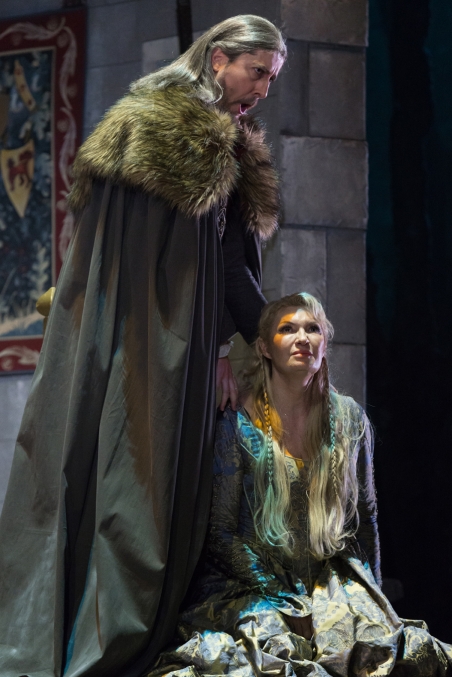
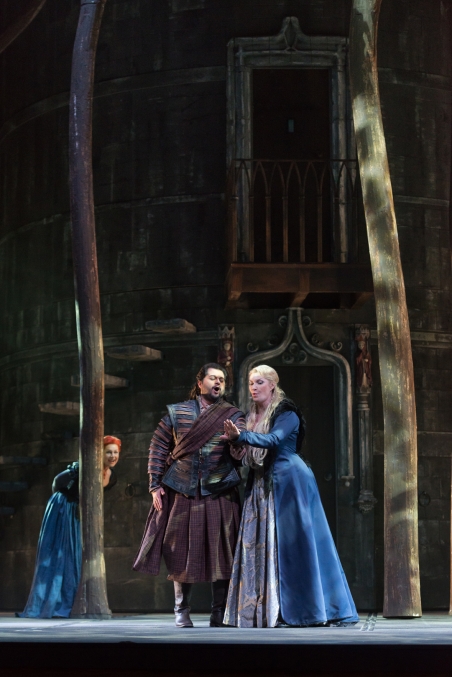
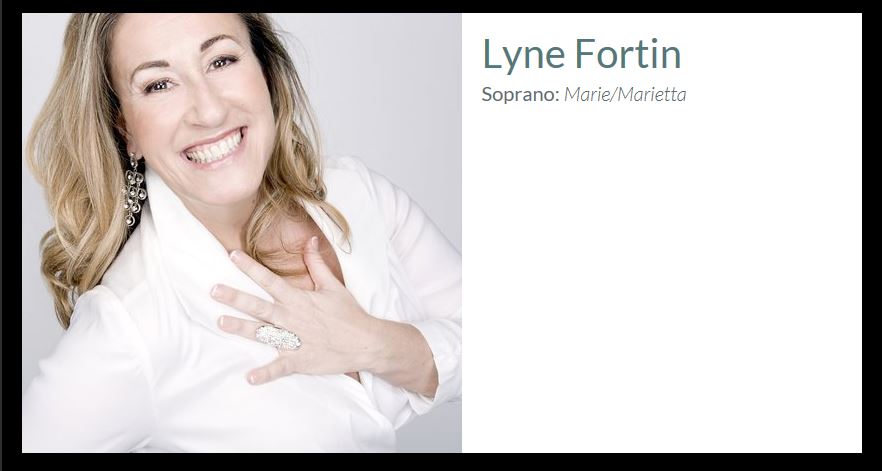
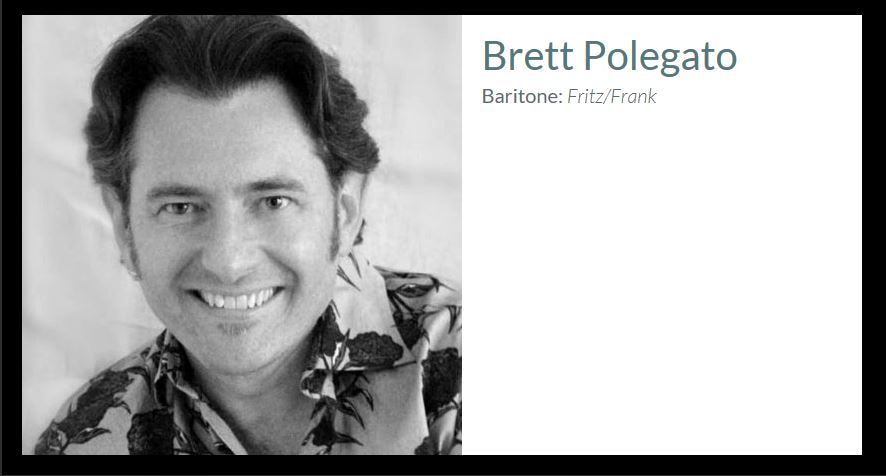
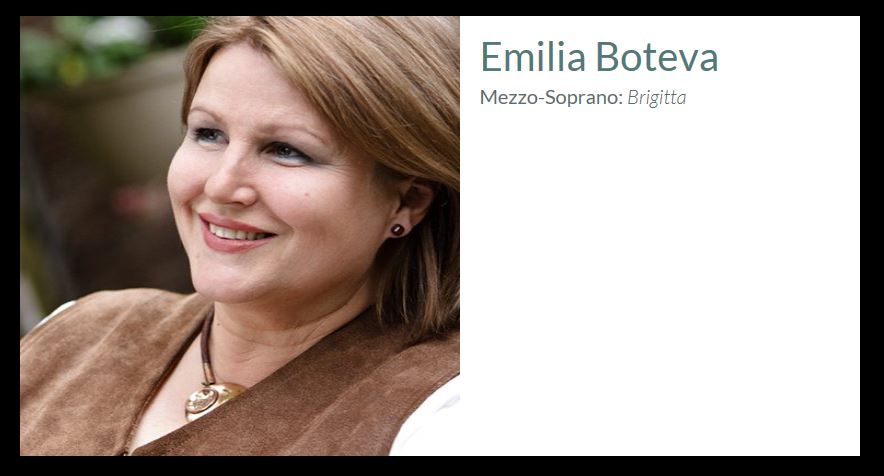
Die Tote Stadt stars Lyne Fortin as Marie/Marietta, David Pomeroy as Paul, Brett Polegato as Fritz/Frank and Emilia Boteva as Brigatta. Kelly Robinson directs.

cast1cast2cast3cast4cast5cast6

Video of Die Tote Stadt scene

SYNOPSIS

Act I

Paul is in the home he shared with his late wife, Marie, mourning her loss.  The decaying city around him serves as a constant reminder of the past.  Paul has transformed one of his rooms into a “temple of memories” in which he has enshrined relics and reminders of his life with Marie, including a treasured braid of her hair.  He is in an excitable state when his friend, Frank, comes to visit and Paul tells him of a young woman he just met.  Marietta, a dancer, bears an uncanny resemblance to Marie and he has invited her to his home in an effort to bring new life into this place of grief and death.  When the girl arrives, Paul is so overwhelmed that he attempts to embrace her on the spot.  Marietta pulls away, and in the ensuing “play,” she accidentally reveals

a portrait of his late wife.  Hearing friends singing in the street on their way to rehearsal, she departs, while Paul agonizes over his conflicting emotions: loyalty to his dead spouse and desire for her living double.  An apparition of Marie steps from her portrait, counseling Paul to choose the living as she morphs into an image of the dancer.

Act II

Weeks later, Paul continues to struggle with the boundary between fantasy and reality.  He tells his friend Frank about his agony, tormented by guilt.  He sees his housekeeper, Brigitta, who left his service due to his perceived “infidelity” to the dead Marie.  Frank, for all his well-intentioned efforts to help, is no longer perceived as a friend, but rather a contender for Marietta’s charms.  Marietta and her friends approach as Paul steps into the shadows to secretly observe her.  She begins to rehearse a scene she is performing in the ballet Robert le diable, in which her character rises from the tomb.  Paul confronts her, outraged at this mock resurrection and she sends her friends away.  Paul angrily denounces Marietta and claims her only attraction is her resemblance to his dead wife.  Marietta refuses to believe this and seduces Paul, suggesting they spend the night at his home in order to banish the ghost of Marie, once and for all.

Act III

The following morning, Marietta stands gazing at Marie’s portrait, triumphant.  A religious procession passes by and the couple watch from the window until Paul, seeing the bishop, falls to his knees.  Marietta is put off by Paul’s piety and she attempts to distract him.  They begin to quarrel, with Paul trying to defend himself while Marietta denounces him as a hypocrite and weakling.  She begins to dance erotically, taunting him, and drapes Marie’s braid around her neck.  Seized with rage, Paul strangles Marietta and is horrified as he watches her turn into Marie in death.  After a restless and exhausted sleep, Paul suddenly wakes and realizes that none of this actually occurred: the braid is in its usual place.  The housekeeper announces Marietta’s return for her umbrella and the roses she left behind when she hastily departed.  The young woman suggests to Paul that perhaps she should stay with him; however, Paul appears noncommittal.  After Marietta leaves, Frank tries to convince him to abandon Bruges—this city of death—forever.  The past is gone and, with it, the love of his life.

By Suzanne Calvin, Director of Media and Public Relations, The Dallas Opera

Posted in OPera | Tagged , , , | Leave a comment

Estonian National Opera set an audience record in 2015 with 185,000 guests

04.01.2016 / Rahvusooper Estonia

In 2015, the number of people attending the performances and concerts at the Estonian National Opera was 185,000, which is almost 35,000 more than the year before. A total of 356 performances and concerts were given with the average home stage turnout of 89% – an all-time record.

“We are extremely happy about the great audience interest, as this is the best acknowledgement to the family of the Estonia Theatre. The extra 60 seats added to the theatre hall during the summer renovation also had some impact. Unfortunately, once more we are forced to admit that the Estonia theatre hall is too small and we have reached the seating limit,” said Aivar Mäe, the General Manager of the Estonian National Opera.

traviataEstonia

The most popular performances of the year included the operas “Carmen” (97%), “La traviata” (90%), and “Rinaldo” (87%); the ballets “The Nutcracker”, “Onegin”, “The Goblin”, and “Snow White and the 7 Dwarfs” (all 100%). The turnout for the musicals “Karlsson on the Roof” and “Man of La Mancha” was also 100%. The performance that attracted the greatest audience – 16,000 people – was the operetta “Die Zirkusprinzessin”. 65 performances and concerts were given outside the theatre building to 41,000 people.

In 2016, the audience of the Estonia Theatre will see several fascinating performances and concerts. First, the Estonian National Ballet will please the ballet fans – the beloved winter fairy tale “The Nutcracker” stays on the program until 27 January. In addition, “Cinderella” and “Medea” will be on stage again from January.

aida_estonia

The first premiere of the new year will take place on 22 January with the staging of Verdi’s famous masterpiece “Aida” with Tobias Kratzer, a rising star on opera stages worldwide, as the stage director. Although “Aida” is most famous for the grand Triumphal March, the opera also has many lyrically contemplative moments. This makes it a perfect fit for the stage of the Estonian National Opera. The leading roles are sung by Heli Veskus and Aile Asszonyi, and the conductor of the first performances is Vello Pärn.

15 April sees the premiere of Tchaikovsky’s evergreen “Swan Lake,” choreographed by Toomas Edur. The International Dance Day Ballet Gala on 29 April is dedicated to Tiit Härm, celebrating his 70th birthday in the spring.

The 110th season will get a grand ending on 3 June with the premiere of the musical “Fiddler on the Roof”. This musical, born half a century ago, became one of the most popular shows on Broadway, where it ran for more than 3,000 times. “Fiddler on the Roof” was first staged at the Estonian National Opera in 1989 by Georg Malvius, earning the title of the Theatrical Event of the Year. In the new staging, the leading roles are played by Mait Malmsten, Evelin Võigemast, and Helgi Sallo. The tickets for June performances have already been sold out, but it is still possible to purchase tickets to additional performances in August.

Just as in previous seasons, the family of the National Opera will be travelling all over Estonia to delight the residents of Pärnu, Tartu, Paide, and Jõhvi. This year’s guest performances will include Minkus’ ballet “La Bayadère,” Leigh’s musical “Man of La Mancha”, Verdi’s opera “La traviata,” and Kálmán’s operetta “Die Zirkusprinzessin.”

Posted in Article | Tagged | Leave a comment

Don Giovanni at the Bayerische Opera in Munich

dontitlebayerische_logoDramma giocoso in two acts

Composer Wolfgang Amadeus Mozart · Libretto by Lorenzo da Ponte
In Italian with German surtitles

Thursday, 14. January 2016
07:00 pm – 10:30 pm
Nationaltheater

Duration est. 3 hours 30 minutes · 1 Interval between 1. Akt and 2. Akt (est. 08:30 pm – 09:05 pm )

Conductor James Gaffigan

Stage director Stephan Kimmig

Scenography Katja Haß

Costumes Anja Rabes

Video Benjamin Krieg

Lights Reinhard Traub

Dramaturgie Miron Hakenbeck

Choir Director Stellario Fagone

don7


Don Giovanni
Erwin Schrott
Der Komtur
Goran Jurić
Donna Anna
Marina Rebeka
Don Ottavio
Dmitry Korchak
Donna Elvira
Véronique Gens
Leporello
Alex Esposito
Zerlina
Eri Nakamura
Masetto
Tareq Nazmi
  • Bayerisches Staatsorchester
  • Chorus of the Bayerische Staatsoper

SYNOPSIS

Act 1

The Commendatore’s Death or Unwelcome Side Effects
Don Giovanni’s servant Leporello is keeping watch while his master tries to seduce a woman. He complains about his working conditions. Don Giovanni is chased by Donna Anna, what has passed between them remains unclear. Anna tries to hold him back and unmask his true identity. The Commendatore, Anna’s father, appears on the scene, accuses Giovanni of having dishonoured his daughter and challenges him to a duel. Giovanni kills the Commendatore, he and Leporello escape. When Anna returns with her fiancé Don Ottavio, she finds her father dead. She makes her fiancé swear to take bloody revenge.

don6

Elvira or Yesterday’s Tears
Giovanni throws Leporello’s admonitions about his way of life to the winds. His desire is aroused by an unknown lady travelling alone. She is in search of a lover, who has walked out on her and whom she wishes to kill. As Giovanni approaches her, he recognizes her for Donna Elvira, a woman he left some time ago. He evades her accusations, leaving her with Leporello, who opens her eyes: She was not Giovanni’s first conquest, and will not be his last. In great detail and with obvious enjoyment, Leporello reveals the long list of Giovanni’s affairs.

Zerlina or Newfound Happiness
On the eve of their wedding, Zerlina and Masetto are celebrating with their friends. The cheerful party is disturbed by Giovanni’s appearance. Talking sweetly to Zerlina and threatening Masetto, he runs off with the bride. Meanwhile Leporello leads an enraged Masetto and the guests to Giovanni’s castle, where they are promised an extraordinary party. Alone with Zerlina, Giovanni disperses her doubts and pangs of conscience, proposes to her and almost succeeds in reaching his goal.

don10

When Women Meet
Elvira intrudes on their tête-à-tête and informs Zerlina about Giovanni’s lying and cheating. Giovanni unexpectedly runs into Donna Anna and Don Ottavio, who are looking for the Commendatore’s murderer. Again, Elvira intrudes and tries to warn Anna against Giovanni. Giovanni declares Elvira to be insane, but Elvira’s lamentations arouse Anna’s and Ottavio’s compassion. The tone of Giovanni’s hypocritical words leads Anna to recognize her father’s murderer, the man she encountered the previous night. Ottavio urges her to tell him the details of what happened. Recalling the traumatic night, Anna manages to keep Ottavio’s rising jealousy in check and commit him to her plans of revenge.

Pleasure That Knows No Limits
Zerlina apologizes to Masetto. Her remorse and seductive charms quickly restore the couple’s happiness, but Masetto remains suspicious and decides to keep an eye on Zerlina during the party. Zerlina is afraid of meeting Don Giovanni again. Don Ottavio, who wants to bring Giovanni to justice, sneaks into the party with Donna Anna and Donna Elvira, all wearing masks. Giovanni greets the unexpected guests and declares that any rules and limitations are suspended for the night. While the dancing continues, Giovanni once more manages to lure Zerlina away. But when she screams, the others rush to her rescue. When Giovanni tries to put the blame on Leporello, Don Ottavio, Donna Anna and Donna Elvira drop their masks and threaten him. Giovanni is cornered, but quickly regains the upper hand. With his incredible audacity, he paralyses his pursuers and escapes.

Act 2

A Comedy of Errors or Changing Identities
Giovanni continues to look for erotic adventures as if nothing had happened.
He exchanges clothes with Leporello. In the person of Giovanni, Leporello is supposed to try and seduce Elvira, while Giovanni chases a nameless maid. Leporello, who had intended to leave Don Giovanni, is persuaded with the help of money. Giovanni successfully entices Elvira with his song.
Heavily armed, Masetto and a number of his friends run into Giovanni, the man they are actually looking for, but because of the disguise take him for Leporello. Giovanni sends Masetto’s friends away, instructing them to circle the supposed Giovanni, strips Masetto of his weapons and almost beats him to death. Zerlina tends Masetto’s wounds.
Struggling to elude Elvira’s caresses under cover of the night, Leporello encounters Anna, Ottavio, Masetto and Zerlina. Everybody believes they have finally caught Giovanni. Elvira’s pleas to spare her husband are to no avail. Leporello clarifies the situation, reveals his true identity and narrowly escapes the others’ blows.

don11

In the Realm of the Dead
While Giovanni and Leporello reunite on the cemetery and the master brags about his amorous adventures, they hear the voice of the murdered Commendatore, urging them to leave this sacred place and let the dead rest in peace. Laughing, Giovanni asks a frightened Leporello to invite the Commendatore to dinner. The voice from the afterworld accepts the invitation.

Sighs in the Night
Don Ottavio once again offers to comfort Donna Anna and laments his rejected love. At first, Anna is angry, but then she reassures him by telling him that so shortly after her father’s death she was unable to commit herself and that it would take some time before she could open her heart to him.

A Lonely Supper or Every Man Dies Alone
Giovanni orders the food to be served and eats with insatiable hunger. Elvira appears uninvited. She accepts that Giovanni does not return her love, but wants to save him from demise and implores him to change his life. When he only laughs at her, she runs for the door, where she meets the Commendatore, risen from the grave. There is a knock on the door, and Giovanni orders Leporello to open. Frightened to death, Leporello reports that the dead man has indeed followed the invitation. The guest challenges Giovanni to return his visit. Giovanni accepts and in confirmation of his promise shakes the Commendatore by the hand, the coldness of which spells his imminent death. The Commendatore offers Giovanni one last chance to repent his deeds and thus save his soul. Even though he suffers immense turmoil, Giovanni proudly and stubbornly refuses to do so. As he is consumed by the flames of hell, a scream escapes his lips, telling of his last pleasure or first fear.

Epilogue or The Happiness of Those Remaining Behind
Ottavio, Anna, Elvira, Masetto and Zerlina arrive, wanting to arrest Giovanni for his murder. When Leporello recounts the terrible things he has seen, they realize they have come too late. They are quick to condemn the deceased villain. Before they part, they tell each other their plans for life after Giovanni.

 GALLERY (click to enlarge)

Posted in OPera | Tagged , , , | Leave a comment