THE WONDERFUL VOICE OF FEDERICO CARDELLA: Entertainment = HOPERA. An exclusive interview.


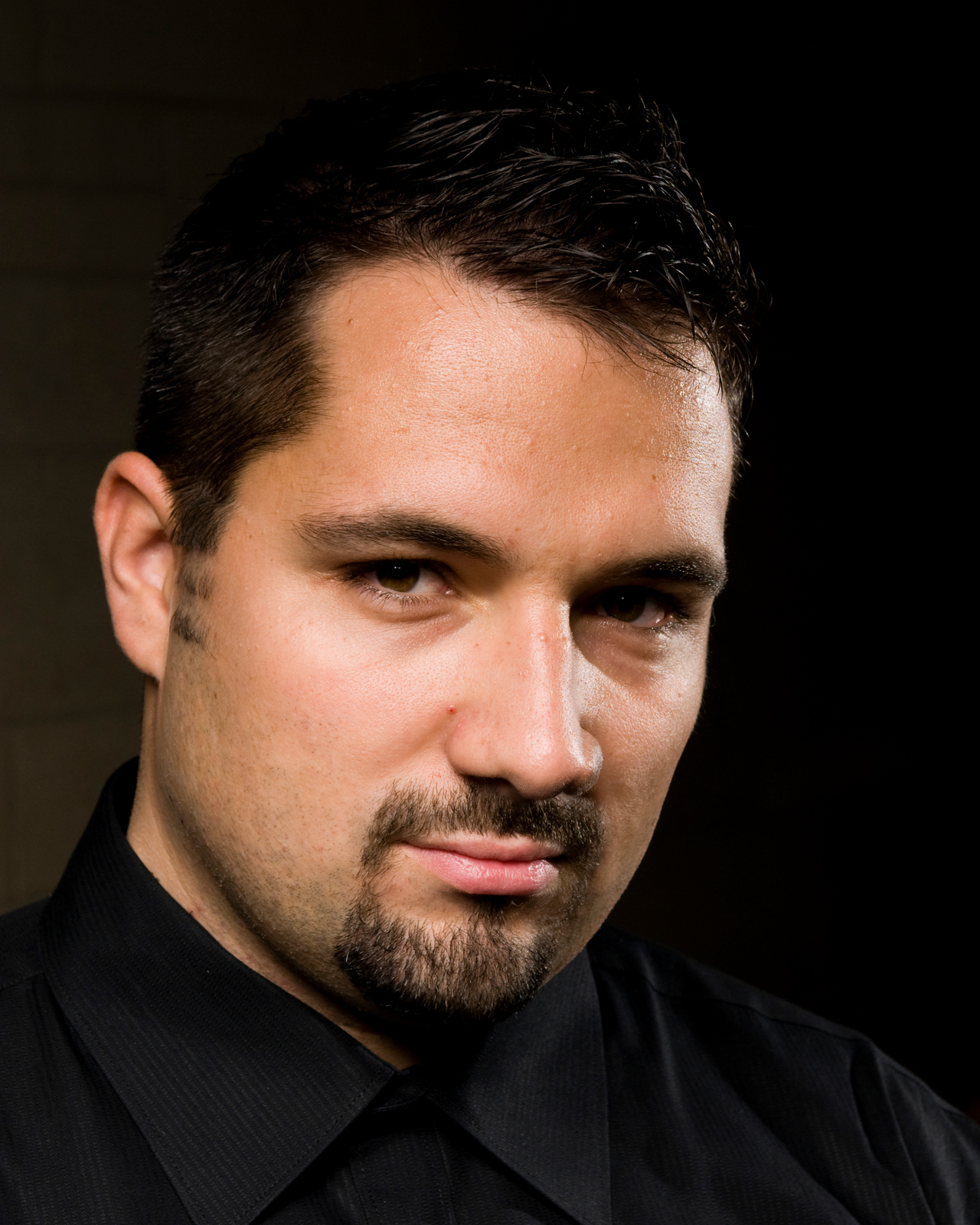
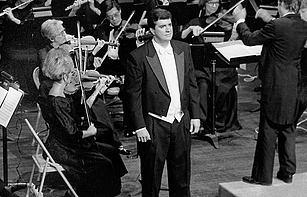
federico_opera Federico is a Boston born, Italian-American vocalist that sings adult contemporary pop, rock, gospel and classical music. One of ten children, he has  loved to sing ever since he  can remember. His goal as a singer is to help rejuvenate true love,faith and romance throughout the world.

Blest with a very dynamic and sturdy vocal instrument, and a careful study of the Italian Bel Canto & Appoggio breathing technique, Federico has stunned audiences worldwide with the strength and beauty of his range, alacrity & warm, golden, Italianate timbre. 
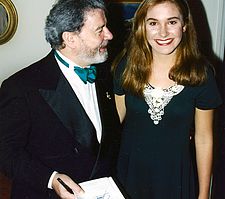
Federico's daughter Lindsay with James Galway @ Duke University. Lindsay performed with LSO on all Federico's albums.

Federico’s daughter Lindsay with James Galway @ Duke University. Lindsay performed with LSO on all Federico’s albums.

L’IDEA MAGAZINE: You affirm on your website that you started your singing career later in life than most professional singers. Could you elaborate on that? What was your inspiration?
FEDERICO CARDELLA: I was busy raising two daughters, Lindsay & Rebekah – life got in the way of a full time career in Opera. I worked to put them in College – one is a PA Dermatologist and graduate of Wake Forest, the other is a Theater actress and singer and attended to Royal Academy of Dramatic Arts in London.
I went to a Luciano Pavarotti Concert in Orlando and heard him sing Tosca’s Recondita Armonia by Puccini as his first selection – I thought it was so beautiful I cried and vowed to my wife that I wanted to try and learn to sing like this!

L’IDEA MAGAZINE: You had opera voice teachers who were renowned and respected, such as Vera Rosca, Jerome Hines, Ken Smith and Franco Corelli. What did you take from each of them?
FEDERICO CARDELLA: This is what I learned:

Vera Rosca – not to “spread”(ahhhhh) on the tenor notes E-Ab on the Ah vowel but open the throat more to round the sound like Domingo: awe.
Jerome Hines – taught me the best scales to practice- especially as I age, to prevent the chords from “bowing” and to keep the voice young sounding and strong even into my 80’s…
Ken Smith -through a series of seemingly animalistic vocal exercises, he was the first to teach me how to achieve true “squealo” ( i.e. -the primitive scream in the head) and head voice from Ab to Db – to listen, achieve and appreciate the richness and baritone space in the middle voice. He was first to teach me the tenor physical sensation of the voice through esoteric Caruso type teaching method.
Franco Corelli – take risks- be imperfect and crack if you must – but NAIL the high notes in the head – use the full thrust of air from the appoggio technique – it takes a certain body of diaphragm/largeness, large lungs, small chords and a big enough skull to ring the notes in the head to sound dramatic and dark – it’s the intangible result of great technique mixed with a linebacker’s body and skull with women size chords – basically there are few dramatic tenors because they are freaks of nature! lol It seems most people today settle for the “neck tie” El perfecto micro tenors – and the larger bodied tenors are too covered and sing too Germanic/Wagnerian. Caruso/Corelli/Pavarotti/Bjorling (the Swedish Caruso) represented the best in tenor singing – all of these men were massive in girth of diaphragm and had the strength of a rugby player when they sang. Corelli, most of all, taught me that the voice was strong – that you train it like a horse – not to pamper it like these thin sounding but “perfect” sounding micro tenors do today. I tell you there is no primitive scream or thrill in them and if their “polished” voices were put next to any of the above greats – these peep squeaks would not be heard!

federico1

L’IDEA MAGAZINE: Who is the singer who influenced you the most and why?
FEDERICO CARDELLA: Luciano Pavarotti  – because he showed me how to sing brightly/lightly in the middle voice with the least effort at almost speaking voice energy – in Italian called “Parlando” technique
Franco Corelli – because he taught me how to achieve in Caruso’s form the true Voce di Testa (Ringing voice in the head/skull) the primitive scream in the head – to go through the passaggio easily with the open throat and sub glottal breath support – there are only a handful of Tenors/Sopranos  in the world today who truly sing like Joan Sutherland, Maria Callas/ Corelli & Mario Del Monaco, Mario Lanza etc.
Sadly, most modern main stage tenors today are boring to listen to- though perfect in their pitch and placement they sound weak when nailing the high notes or just too covered – they do not have the clarion/clear ring at the top with the baritone power- pretty singing – but not powerful at all. There is great risk to sing BOTH brightly and with full baritone power at the top -I have heard none sing like young Carreras or as Pavarotti/Jussi Bjorling or Corelli in their prime. Yet the opera buff pundits say this small, new breed of some tiny, highly amplified, South American tenors singing a bunch of amplified hi C’s is better than the Italian large men greats. lol!!!! I rather hear a Corelli sing an exciting high A over their bright and thinned (but perfectly paced) high C or Db any day!
These little, small diaphragm tenors are going around accepting that they are the best tenors of all time by their shills in the Opera press. Corelli’s manly, heroic and unamplified tenor voice would blow ten of the Mets best tenors off the stage with one B natural if put side by side. They all only go to prove that the Golden Era of Opera is long dead. It is full of perfectly small, uninspiring perfect tenor voices – there is no soul weight or heroic sound in them- they strut around like peacocks – and the younger opera crowds don’t know any better. Sure, the older tenors applaud them too. They are trying to promote the industry. But in private they don’t approve.
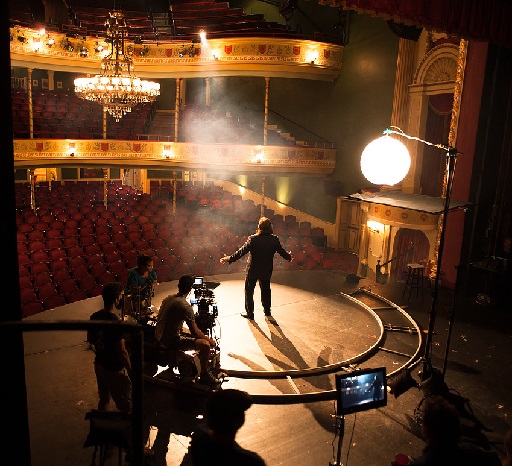
showtime

L’IDEA MAGAZINE: What opera character would you most intrigued to perform and why?
FEDERICO CARDELLA: Mario Cavaradossi, the painter in Puccini’s Tosca- I love all the drama in this 1800’s setting, but most of all- being a Verde/Puccini tenor – I am affixed to the tenor arias (equally so with Nessun Dorma – Turandot) Recondita Armonia and E Luce Van Le Stelle are my two favorite arias to hear and sing and why I was inspired to become an operatic tenor in the first place.

starwarsL’IDEA MAGAZINE: You recorded numerous tracks with the London Symphony Orchestra. Could you talk about that experience?
FEDERICO CARDELLA: In my opinion, the London Symphony is the best recording orchestra in the world, which is why George Lucas, Cameron and so many others use them for their movie sound tracks- when I recorded with them we had 100 pieces and did not shoot the glass, but they all played as one unit live. The 300 year old Brass sounds very powerful and unique, not to mention all the Strats in the violin section. That’s why Star Wars sound s like Star Wars!

federicomixL’IDEA MAGAZINE: One of your CDs was recorded as EDM (Electronic Digital Music).  What does that really mean? Did you have to make some voice adaptation for this occurrence?
FEDERICO CARDELLA: Yes, I had to learn to sing more contemporary, but without leaving my own voice to imitate Sting, or Michael Bolton or Bryan Adams or Zedd … the main vocal adaptation is to tighten up or shorten wave lengths of vibrato- especially on end notes- the big operatic wobble /vibrato not permitted. I had to raise my normally dropped larynx more in the passaggio and head voice, but still keeping the power tenor with the power groove; I gained a lot of respect for pop singers when I first tried this!
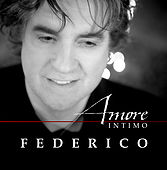
federico_ItalianL’IDEA MAGAZINE: Singing the old fashioned way seems to be the major theme of your style. Your repertoire comprises Christmas songs, Christian Hymns, arias from operas, pop songs and even EDM recordings. It is a vast and interesting repertoire. What is the goal of your singing? Just entertaining or a bit more?
FEDERICO CARDELLA: Entertainment = HOPERA – as it is called – I like the revolutionary and evolutionary convergence of the two styles – EDM/ Hip Hop with Opera and this can keep our young people still interested in the arias of old because it is the digital sound they have grown so accustomed to. So yes – a cultural invasion of a new genre I call (and now trademarked) HOPERA.
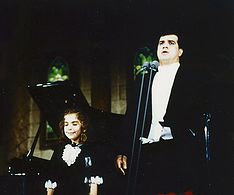
Federico's daughter Rebekah is the child soprano on all his recordings.

Federico’s daughter Rebekah is the child soprano on all his recordings.

L’IDEA MAGAZINE: In some of your recordings, there was the participation of your daughters Lindsay as flutist and Rebekah as singer in duets with you. How emotional was that experience?
FEDERICO CARDELLA: That is the best experience any performer can have – to record or perform live with family and the people you love the most. Very heart warming and cherished memories- forever recorded. Love my girls.

L’IDEA MAGAZINE: What new projects are you working on at the moment?
FEDERICO CARDELLA: A Broadway Musical

L’IDEA MAGAZINE: What is your most ambitious goal?
FEDERICO CARDELLA: To do a musical and then a major motion picture to follow- I have nearly finished the script for both…

L’IDEA MAGAZINE: Where are you going to perform in the next few months?
FEDERICO CARDELLA: On Broadway – we are close to closing a deal with a Theater for late summer 2016.

Note: to sample some of his wonderful music, visit http://www.federicomusic.com


Posted in Interview | Leave a comment

Die Fledermaus in Israel

logoisraelioperaDIE FLEDERMAUS

Thursday 11/02/2016 20:00
Friday 12/02/2016 13:00
Friday 12/02/2016 20:30

Music by Johann Strauss Jr.
Bubbling Viennese operetta comes direct from Budapest as the Budapest Operetta Theatre presents its champagne like production of Strauss’ ultimate operetta full with sweeping waltzes.

die5a

New Production | Sung in German | Duration: 2 hours and 30 minutes

Libretto: Karl Haffner & Richard Genee

Conductor          Laszlo Maklary  (KERO)
Director Miklos Gabor Kerenyi
Costumes Designer Tunde Kemenesi
Set Designer  Csorsz Khell
Choreographer  Jeno Locsei
Among the soloists
Rosalinde Monika Fischl
Timea Vermes
Eisenstein                Zsolt Vadasz
Zsolt Homonnay
Adele Anita Lukacs
Annamaria Zabradi
Falke   Soma Langer
Istvan Kristof
Alfred    Peter Balczo
Zsolt Vadasz
Frank Andras Farago
Soma Langer
Orlovsky  Karoly Peller
David Szabo
Ida Marika Oszvald
Szilvi Szendy
Blind   Otto Magocs
Robert Vanya
Ivan Lajos Flier
Frosch  Israel Katorza

The Budapest Operetta and Musical Theatre Choir
The Budapest Operetta and Musical Theatre Dancers
The Budapest Operetta and Musical Theatre Orchestra

die2

SYNOPSIS

Four years before the action of the opera begins

Gabriel von Eisenstein, a man of private means, and his friend the notary Dr. Falke, have been attending parties together for years. Upon returning from a lavish costume ball – which, as usual, involved heavy drinking – Eisenstein decides to play a dirty trick on his old friend, and leaves him sleeping in the park dressed in his magnificent bat costume. The next morning, wending his way home still dressed as a bat, to the great amusement of the passers-by and to his own great shame, Falke resolves to get even. Four years later his plan is ripe. Aided by the eccentric Russian Prince Orlofsky, who, bored with his own licentiousness, is always game for fresh diversions, he stages his spectacular revenge!

Act I

A room in Eisenstein’s house
Outside the house a voice is heard serenading Rosalinde, Eisenstein’s wife and the lady of the house. She recognizes the voice to be that of Alfred, an opera singer and her former lover, who was thought long gone and has now reappeared and is using all his vocal skills to tempt his still adored Rosalinde to a tête-à- tête. Adele, the Eisensenstein’s maid, has received a letter from her sister Ida, inviting her to a party at Prince Orlofsky’s. Now, in addition to debating what she could possibly wear to the sumptuous occasion, she contemplates how she might get the night off. Nothing, not even a “very sick aunt”, assists her in her pleas: Rosalinde refuses, as her husband is due to start a five day prison sentence that evening for assault. As Adele leaves the room, Alfred appears and is persuaded to leave only with the promise that he can return that evening, when Eisenstein has gone to jail.
Eisenstein returns from his court hearing. He is enraged, for his bungling lawyer, Dr. Blind, rather than reduce his sentence, has actually caused it to be increased to eight days. Falke opportunely appears and persuades Eisenstein to begin serving his sentence only the following morning and to enjoy his last evening of freedom with him at a party at Prince Orlofsky’s. Rosalinde and Adele reappear. Having promised Alfred he can return to see her, Rosalinde, who does not wish her maid present at the rendezvous, releases Adele for the night. Adele leaves as do Eisenstein and Falke, assuring Rosalinde that her husband is on his way to prison.

Alfred appears and, preparing himself for an intimate evening with Rosalinde, dons Eisenstein’s robe. They are interrupted by the prison governor, Frank, who, before repairing to Orlofsky’s party himself, has come to accompany Eisenstein to prison. Discovered alone with a man wearing her husband’s robe, Rosalinde protests at the notion that he could be anyone but her husband, and Alfred is forced to go along with the pretence so as not to compromise his beloved’s honor.

die1

Act II

Prince Orlofsky’s villa
The party at prince Orlofsky’s is in full swing. Champagne is flowing and Falke’s elaborate charade is starting to unfold. Adele, wearing her mistress’ dress, approaches Ida, who at first denies having sent her a letter but then promises to present Adele as a singer named Olga. Eisenstein, introduced as the Marquis Renard, soon spots Adele, but when he comments on her likeness to his maid, she dismisses the suggestion, and all agree that the confusion is the result of a merely coincidental – though most amazing – likeness. Eisenstein now finds himself obliged to converse with, of all people, the prison governor Frank, whom Falke presents as Chevalier Chagrin.

Falke has in the meantime informed Rosalinde that her husband has left home to go not to prison, but rather to Orlofsky’s party, and has invited her to join the festivities dressed as a Hungarian countess. She arrives at the party, and decides to present herself instead as a famous singer. Eisenstein is instantly fascinated by the exotic new guest, and attempts to seduce her with his well tried and tested ploy of the repeater watch. But he underestimates the cleverness of his present victim, who slyly pockets his watch. Falke persuades Rosalinde to prove she is indeed an artist, and she does so with a fiery csárdás. Orlofsky proposes a toast to champagne, the king of all wines. Merriment abounds, but when the clock strikes six, Frank and Eisenstein both rush off to prison – the one to work, the other to begin serving his sentence.

die3

Act III

The prison governor’s office
The drunken jailer Frosch, though annoyed by Alfred’s constant singing – whom he unsuccessfully tries to silence – is nevertheless enjoying his drink. No sooner does Frank arrive in high spirits, than Adele and Ida appear at his office seeking him. Adele confesses that she is not really an actress, but is convinced that all she needs in order to become one is a patron with some money and influence. Believing Frank to be the perfect candidate, she proceeds to demonstrate her talents to him, and he is soon persuaded. Eisenstein arrives to start his prison sentence. He is surprised to find “Chevalier Chagrin”, but even more so to learn from him that he had already personally arrested Eisenstein the night before. Falke appears followed by Dr. Blind, and Eisenstein, who is anxious to know who was discovered in his wife’s company, quickly exchanges clothes with Blind at Falke’s instigation. When Rosalinde comes to the prison, Eisenstein learns all he wanted to know at first hand. Indignant and outraged, he reveals his true identity. But Rosalinde has her own little surprise: she presents her husband with a repeater watch which she had  obtained from a certain  Marquis Renard.  The rest of the company arrives, and Falke reveals to Eisenstein that the whole affair has been his revenge for the bat incident. Eisenstein has no choice but to take this with good heart, and all agree that any misdemeanor should be blamed on King Champagne alone.

GALLERY

This slideshow requires JavaScript.

Posted in OPera | Tagged , , | Leave a comment

Tosca at the San Diego Opera

sandiego_logotoscaTitle

Step into the web of politics, police brutality, betrayal, jealousy and murder in Puccini’s blood-soaked and intense Tosca. In Rome, the fiery and celebrated singer Floria Tosca has no idea that her life, and that of the man she loves, will irrevocably change the very next day. In a whirlwind of events, Tosca is forced to save her rebellious lover from the tainted hands of the treacherous chief of police and must take a stand while looking death in the face. Will she murder for the man she loves? Will she save her lover in time? What will become of her?

With passionate arias and soaring, sensuous melodies, Tosca’s power and raw emotion will leave you breathless.

Performances

Sat, Feb 13 at 7pm
Tue, Feb 16 at 7pm
Fri, Feb 19 at 7pm
Sun, Feb 21 at 2pm

All performances at the San Diego Civic Theatre
2 hours and 40 minutes with two intermissions
In Italian with projected English supertitles

CAST

TOSCA

Alexia Voulgaridou

San Diego Opera Debut. Greek soprano Alexia Voulgaridou made her professional debut at the Prinzregententheater in Munich as Susanna in The Marriage of Figaro. Notable performances include Mimì in La bohème, Marguerite in Faust, and Cio-Cio San in Madama Butterfly for The Royal Opera, Covent Garden. Notable roles included Sophie in Der Rosenkavalier, Violetta in La traviata, Adina in The Elixir of Love and the three heroines in The Tales of Hoffmann. She sings regularly with the Hamburg State Opera, where her many roles include Marguerite, Blanche in Dialogues des Carmélites, Cio-Cio-San, Nedda in Cavalleria rusticana and Desdemona in Otello. Notable engagements elsewhere include the title role of Tosca and Magda in La rondine for Opera Australia, Mimì, Massenet’s Manon and Micaëla in Carmen at La Scala, the title role of Luisa Miller for Stuttgart State Opera, Maria in Mazepa for De Vlaamse Opera, Amelia Grimaldi in Simon Boccanegra in Toulouse and Anna Bolena in Turin and Palermo. Her concert performances include Verdi’s Requiem at the Ravenna Festival under Riccardo Muti. Her recordings include a solo album with Nicola Luisotti and the Munich Radio Orchestra on the Arte Nova label.

CAVARADOSSI

Gwyn Hughes Jones

San Diego Opera debut. Welsh tenor Gwyn Hughes Jones has sung at the Royal Opera, Covent Garden, English National Opera, Opéra National de Paris, Opéra de Lyon, La Monnaie Brussels and Norwegian National Opera. In America, he has appeared at the Metropolitan Opera, Lyric Opera of Chicago, San Francisco Opera, Los Angeles Opera, Washington National Opera and Sante Fe Opera. Roles include Manrico in Il trovatore, Calàf in Turandot, Duke of Mantua in Rigoletto, Pinkerton in Madama Butterfly, Rodolfo in La bohème, Nemorino in The Elixir of Love, Chevalier des Grieux in Manon Lescaut, and the title role of Faust. He has appeared with orchestras including the Academia Nazionale di Santa Cecilia, Trondheim Symfoniorkester, Israeli Philharmonic Orchestra, Royal Flanders Philharmonic Orchestra, London Symphony Orchestra, London Philharmonic Orchestra, London Sinfonietta and Royal Philharmonic Orchestra, and in recital at St Olaf Festival, Trondheim, Musashino Civic Cultural Hall, Tokyo, Wigmore Hall and Purcell Room, London, and Auditorium du Louvre, Paris. Recordings include Macduff in Verdi’s Macbeth. Recent roles include Pinkerton at the Metropolitan Opera and Walther von Stolzing Die Meistersinger von Nürnberg for English National Opera.

SCARPIA

Greer Grimsley

American bass-baritone Greer Grimsley made his San Diego Opera debut as Telramund in Lohengrin in 2000, returned for Pizarro in Fidelio in 2003, The High Priest of Dagon in Samson and Delilah in 2007, Scarpia in Tosca in 2009, Méphistophélès in Faust in 2010, and in 2012 as Jochanaan in Salome. He made his Metropolitan Opera debut as Captain Balstrode in Peter Grimes and has returned as Escamillo in Carmen, Jochanaan, Scarpia, Telramund, and Amfortas in Parsifal. Recent engagements include Wotan in Seattle Opera’s Ring Cycle, Don Pizarro in Fidelio with Opera Company of Philadelphia, Portland Opera and the Portuguese National Opera, Kurwenal in Tristan und Isolde at Lyric Opera of Chicago, John the Baptist with the companies of Santa Fe, Vancouver and San Francisco and Scarpia with L’Opera de Montreal, Opera Colorado and Lyric Opera of Kansas City. Other roles include The Flying Dutchman in Lithuania and Seattle Opera, the title role of Macbeth with Vancouver Opera, Amonasro in Aida with Portland Opera, Méphistophélès in Faust with New Orleans Opera, and the title role of Sweeney Todd with Vancouver Opera. A frequent singer in Europe, Grimsley has performed leading roles at Deutsche Oper Berlin, Teatro Comunale di Bologna, Royal Danish Opera, Prague National Theatre, Aarhus-Den Jyske Opera in Denmark, the Scottish Opera and the Stadttheater Basel in Switzerland, among others.

ANGELOTTI

Kristopher Irmiter

American bass-baritone Kristopher Irmiter made his San Diego Opera debut as Ned Keene in Peter Grimes in 2009, returning to sing Dr. Grenvil in La traviata in 2010, the Fifth Jew in Salome in 2012, and The Second Priest in 2013’s Murder in the Cathedral. The 2007 Grammy nominee has performed over 90 roles with more than 45 opera companies and made his Lyric Opera of Chicago debut as Scarpia in Tosca. Other credits include Daland in The Flying Dutchman for Opera Carolina, the title role of The Flying Dutchman for Michigan Opera Theatre and Utah Festival Opera, Scarpia for Arizona Opera, Méphistophélès in Faust for Lyric Opera Baltimore, The Immigration Officer in Flight for Austin Lyric Opera, Escamillo in Carmen and Don Alfonso in Così fan tutte for Opera Carolina, Raimondo in Lucia di Lammermoor for Opera Cleveland, Méphistophélès in Faust for Baltimore Lyric Opera, Rucker Lattimore in Cold Sassy Tree with Utah Opera and Atlanta Opera, the title role of Don Giovanni with Opera Carolina, Escamillo with San Francisco Opera, Capulet in Romeo and Juliet with Atlanta Opera, T.J. Rigg in the world premiere of Elmer Gantry with Nashville Opera, Mr. Redburn in Billy Budd with Pittsburgh Opera, Gremin in Eugene Onegin with the Todi Music Festival, and The Four Villains in The Tales of Hoffmann with Opera Lyra in Ottawa.

CONDUCTOR

Massimo Zanetti

Massimo Zanetti maintains a high-profile international career in the world’s leading opera houses and concert halls: a dynamic and accomplished presence, he is particularly noted for his expertise in the 19th century Italian repertoire.

He begins the 2015/16 season leading Verdi’s Don Carlos (French version) at the ABAO Bilbao and returns to the Berlin Staatsoper for Mozart’s Don Giovanni. In February 2016 he will conduct Puccini’s Tosca at the San Diego Opera, followed by Verdi’s Simon Boccanegra at Barcelona’s Gran Teatre del Liceu.

Zanetti will conduct the opening concert at the VII International Mstislav Rostropovich Festival in Moscow, leading Russian National Orchestra in the Mozart’s Requiem.

Recent season highlights included a return to Teatro alla Scala di Milano conducting Carmen and Il barbiere di Siviglia, Verdi’s I due Foscari featuring Placido Domingo at Gran Teatre del Liceu (Barcelona) and Verdi’s Otello at the Teatro Colón in Buenos Aires. Two highly acclaimed concert performances of Simon Boccanegra with the Wiener Symphoniker and Thomas Hampson in the title role at the Vienna Konzerthaus culminated in a live CD recording for Decca, as well as concerts with Anna Netrebko at the Théâtre des Champs-Elysées in Paris and at Palau de la Música Catalana in Barcelona.

As a guest conductor on the operatic stage, he has appeared with houses world-wide including Teatro alla Scala di Milano, Lyric Opera of Chicago, Royal Opera House (Covent Garden), Opéra de Paris (Bastille), Teatro del Maggio Musicale Fiorentino, Teatro dell’Opera di Roma, Teatro Comunale di Bologna, Teatro Regio di Torino, San Francisco Opera, San Diego Opera, Royal Swedish Opera, Opera Australia at the Sydney Opera House, Gran Teatre del Liceu (Barcelona), Teatro Real de Madrid, ABAO Bilbao, and the NCPA Beijing, among many others. He held the position of Music Director of the Flemish Opera from 1999–2002, leading highly-acclaimed productions including Salome and Pelléas et Melisande, in addition to many symphonic concerts as part of the season.

Over the last ten years, Zanetti has worked regularly at the Semperoper Dresden and has conducted new productions including Otello, Carmen, Le nozze di Figaro and Norma as well as several symphonic concerts with the Staatskapelle Dresden. He enjoys a close relationship with the Staatskapelle Berlin and is a regular guest also at Berlin’s Staatsoper. Following his debut with Norma in 2002, productions have included L’italiana in Algeri, Carmen, La Bohème, L’elisir d’amore, La Traviata and Don Carlo. After his debut in 2008 he has maintained a close collaboration with the Zürich Opera, most recently leading new productions of Luisa Miller and revivals of La fanciulla del West, Anna Bolena, Turandot, Otello and La Bohème. In 2007 he made his Bayerische Staatsoper debut with a new production of Luisa Miller and has returned for numerous revivals. Zanetti has also appeared at Teatro Regio di Parma’s prestigious Verdi Festival with Rigoletto (2008), Nabucco (2009 ), I Vespri Siciliani (2010) and Un ballo in maschera (2013), as well as Puccini’s Tosca.

As a symphonic conductor, Massimo Zanetti has worked regularly with the Czech Philharmonic, the Weimar Staatskapelle and the Konzerthausorchester Berlin, in addition to leading the Bamberger Symphoniker, Stuttgart Radio Symphony and NDR Symphony Orchestra Hamburg, Orchestre Philharmonique de Radio France, the Finnish and Swedish Radio Symphony Orchestras and the New Zealand Symphony. In the UK, Zanetti worked with the City of Birmingham Symphony and the Hallé Orchestra including both concerts and a UK tour. In Asia, he developed a close relationship with the NHK Symphony Tokyo, as well as with the China Philharmonic and Guangzhou Symphony Orchestras, a collaboration that will continue in forthcoming seasons. He has also worked with the National Symphony Orchestra of Taiwan and the Nagoya Symphony Orchestra. In 2014, Zanetti led the San Diego Symphony Orchestra in critically-acclaimed performances of Verdi’s Requiem.

Massimo Zanetti’s recordings include Flavio Testi’s Saül (Naïve, 2004) and a Decca release of Verdi’s Simon Boccanegra (2013), as well as DVD releases by C Major within the ‘Tutto Verdi’ project of Rigoletto (2008) and I Vespri Siciliani (2010) from the Teatro Regio di Parma.

Director

Lesley Koenig

American Director Lesley Koenig made her San Diego Opera debut in 1995 directing La bohème, returned in 1998 for The Marriage of Figaro, 2013 for Samson and Delilah and in 2014 for A Masked Ball. Koenig has been a stage director of opera for almost twenty years in top houses and festivals worldwide. She began her career at San Francisco Opera at 17 as a stage manager and was engaged as a stage director at the Metropolitan Opera when just 23 – the youngest director then hired to date. She has directed over 30 productions at the Met, including a highly acclaimed new production of Mozart’s Così fan tutte with Levine in 1996. She holds three shared Emmy Awards from the Met for Outstanding Classical Program in the Performing Arts. In 1998, Koenig took a sabbatical from her directing career to pursue further education and, in 2001, earned two Masters degrees from Stanford University, an MBA and an MA in Education. Shortly thereafter, she joined San Francisco Ballet as General Manager in charge of all operations, including managing the opening of over 60 new productions. Koenig subsequently left the Ballet and returned to the Metropolitan Opera as Assistant Manager and Director of Production. Most recently, she was General Director for Opera Boston, accepted a Fellowship at Stanford University in the Center for Philanthropy and Civil Society and consults with the Stanford’s Institute for Creativity and the Arts.

SYNOPSIS

Act I

The Church of Sant’ Andrea della Valle

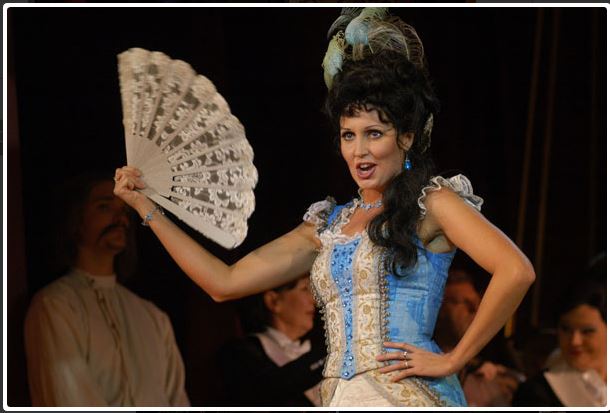
Angelotti, an escaped political prisoner, runs into the Attavanti chapel in the church of Sant’ Andrea della Valle. He hides as a Sacristan is heard. Mario Cavaradossi enters to work on his portrait of Mary Magdalene – inspired by the Marchesa Attavanti (Angelotti’s sister), whom he has seen but does not know. He compares the raven beauty of the singer Floria Tosca with that of the blonde Magdalene. When the Sacristan leaves, Angelotti comes out of hiding and is recognized by Cavaradossi, who gives him food and hurries him back into the chapel as Tosca is heard calling outside. She jealously questions Cavaradossi, and reminds him of their rendezvous that evening at his villa. Recognizing the Marchesa Attavanti in the painting, she explodes, but he reassures Tosca he is not having an affair with her. After she has gone, Mario and Angelotti flee to Mario’s villa. Soon after, the Sacristan returns with choirboys, announcing a celebration. Baron Scarpia, chief of the secret police, searches for Angelotti. Tosca returns looking for Cavaradossi, and in comes Scarpia who shows her a fan which he has just found, decorated with the Attavanti crest. Thinking Mario faithless, Tosca tearfully vows vengeance and leaves. Scarpia sends his men to follow her and schemes to get her in his power.

Act II

The Farnese Palace

In the Farnese Palace, Scarpia acknowledges his lust for Tosca. The spy Spoletta arrives with Mario, who is interrogated as Tosca’s voice is heard singing a cantata downstairs. She enters as her lover is being taken to an adjoining room to be tortured. Unnerved by his screams, she reveals Angelotti’s hiding place at the villa. Realizing what has happened, Mario turns on Tosca, but the officer Sciarrone rushes in announcing that Napoleon has won the Battle of Marengo, a defeat for Scarpia’s side. Mario shouts his defiance and is dragged out. Scarpia suggests Tosca yield herself to him in exchange for her lover’s life. Fighting off his embraces, she protests her fate to God, having dedicated her life to art and love. Under pressure from Scarpia, Tosca is forced to give in or see her lover killed. In front of Tosca, Scarpia orders a mock execution for the prisoner, after which he is to be freed. When Scarpia writes a safe-conduct for the lovers, Tosca snatches a knife from the table and kills him. Wrenching the document from his fingers, she slips from the room.

Act III

The Roof of Castel Sant’ Angelo

Awaiting execution at the Castel Sant’Angelo, Mario bribes the jailer to take a farewell note to Tosca. Writing it, overcome with memories of love, he gives way to despair. Tosca runs in telling him that it will be a mock execution and they will be able to escape. As the firing squad appears, she coaches Mario on how to fake his death convincingly. The soldiers fire and depart. Tosca urges Mario to hurry and get up, but when he fails to move, she discovers that Scarpia’s treachery has reached from beyond the grave: the bullets were real. Calling out that she and Scarpia will meet before God, Tosca leaps to her death.

Posted in OPera | Leave a comment

Donizetti’s Mary Stuart at the Seattle Opera

marytitlemarydatesmary1

By Gaetano Donizetti

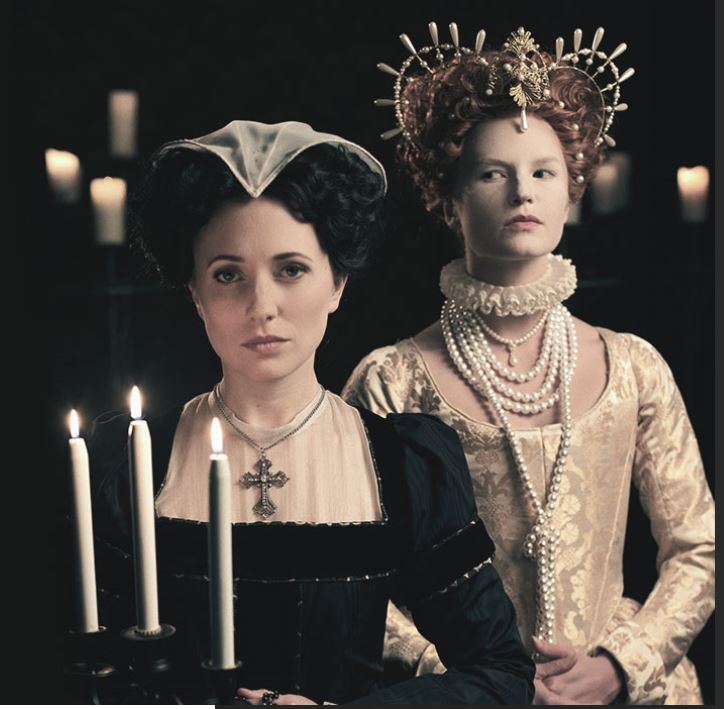
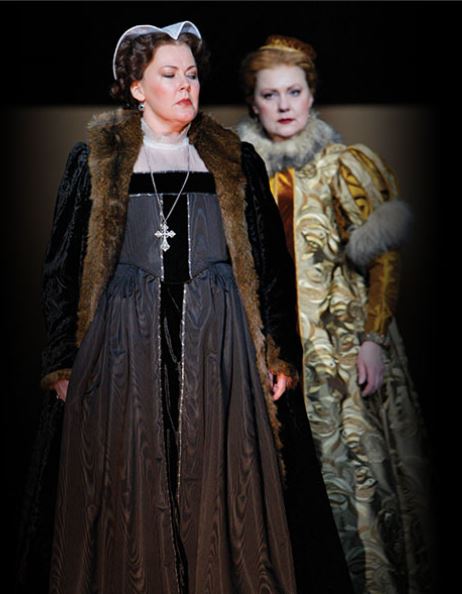
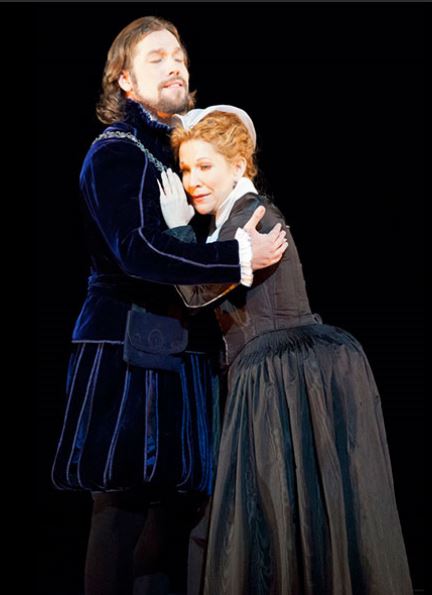
HISTORIC CONFRONTATION WITH SEARING EMOTIONS. Two icons of English royalty, Queen Elizabeth I and Mary Queen of Scots, clash in a powerful story of jealousy, pity, doubt, menace, exaltation, and remorse. Extravagant period costumes and virtuosic bel canto singing heighten the many moods of this haunting, unforgettable battle of wills. Does Elizabeth retain her nobility and show clemency to her rival? Or will spite and ambition drive her to seal Mary’s grisly fate? Join us at the palace and see!

joyce

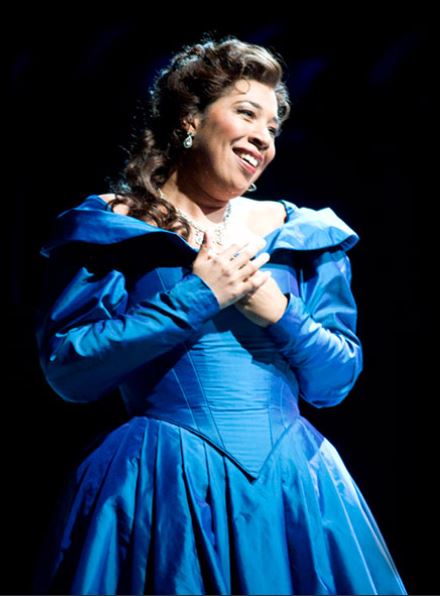
Joyce El Khoury makes her Seattle Opera debut as Maria Stuarda.

In Italian with English subtitles | at McCaw Hall
Approximate Running Time: 2 hours, 30 minutes with 1 intermission
Evenings at 7:30 PM. Sunday matinee at 2:00 PM.

– See more at: http://www.seattleopera.org/on-stage/mary-stuart/#sthash.A5dqRP9C.dpuf

Synopsis

England, 1587

What Has Come Before: Henry VIII of England broke with the Catholic Church and founded the Church of England, in part so he could divorce his first wife and marry Anne Boleyn. His daughter by Anne eventually became Elizabeth I. Henry’s older sister Margaret married the King of Scotland; their granddaughter, Mary Stuart (also known as Mary, Queen of Scots), became Elizabeth’s rival for the throne of England. When our opera begins, Elizabeth has had Mary imprisoned…

mary2

Act 1
Westminster palace, where Queen Elizabeth I is holding court. Elizabeth toys with the idea of marrying the King of France, although she is in love with someone else. She discusses the fate of Mary Stuart with two advisors, Talbot and Cecil. Talbot urges Elizabeth to show clemency, whereas Cecil warns her that Mary is a dangerous rival.

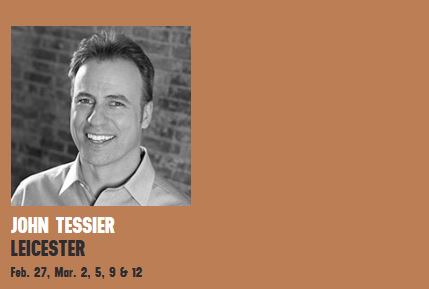
Elizabeth appoints her favorite, the Earl of Leicester, ambassador to France, and is annoyed when he shows no indication of regret that he must leave her. Talbot gives Leicester a letter from Mary asking him to arrange a meeting between her and Elizabeth. Leicester, who loves Mary, shows her message to Elizabeth. Elizabeth, jealous of Leicester’s fondness for Mary, agrees to the meeting.

mary3

Act 2
Mary Stuart is under house arrest at Fotheringay Castle, where she tells her attendant, Anna, about her happy childhood in France. Leicester appears and tells Mary that the Queen will visit her very soon. He encourages her to be humble and submissive. The Queen arrives with her entourage. Mary kneels before the Queen, but Elizabeth accuses Mary of having violated her first marriage and participated in the murder of her second husband. Goaded to fury, Mary publicly  insults Elizabeth, denouncing her as the illegitimate bastard of a whore—and sealing her own doom.

mary4

Act 3
At Westminster, Cecil shows Elizabeth evidence implicating Mary in a treasonous plot, and Elizabeth signs Mary’s death warrant. When Leicester begs her to spare Mary’s life, Elizabeth tells him he must witness the execution.

mary5

Mary, still a devout Catholic, refuses Cecil’s offer of a meeting with an Anglican minister. Talbot, secretly a Catholic priest, hears her final confession and comforts her. She tells her supporters that she is happy to return to God’s embrace. Three cannon shots signal her execution; Mary Stuart forgives Elizabeth, bids farewell to those she loves and calmly ascends the scaffold.

mary6

Photos copyright Michal Daniel

marycast1marycast2marycast3maryteam1 maryteam2 maryteam3


Posted in OPera | Tagged , , | Leave a comment

The Magic Flute in Finnish at the Kansallisooppera in Helsinki

logofinland

The Magic Flute

W. A. Mozart

iko_freese_berlin14This is a performance like none you have ever seen, opera or theatre. In this celebrated production created at the Komische Opera in Berlin, The Magic Flute is recast as a fantastic tale from the golden era of silent cinema. Combining animation with live singers, it brings a wholly new approach to the fantasy world of The Magic Flute. The familiary story of Tamino seeking Pamina and Papageno pining for Papagena and of the struggle between darkness and light is all there, as is Mozart’s wonderful music.

Duration 2 h 45 min, 1 intermission (intermission 25 min)

Performed in Finnish, surtitles in Finnish, Swedish and English

Upcoming performances

Main auditorium

  • Fri 26/02/2016 7:00 pm
  • Tue 01/03/2016 7:00 pm
  • Sat 05/03/2016 2:00 pm
  • Fri 11/03/2016 7:00 pm
  • Wed 16/03/2016 7:00 pm
  • Wed 06/04/2016 7:00 pm
  • Thu 14/04/2016 7:00 pm
  • Sat 23/04/2016 7:30 pm
  • Thu 28/04/2016 7:00 pm
  • Sat 30/04/2016 7:00 pm

Music Wolfgang Amadeus Mozart

iko_freese_berlin16

CREATIVE TEAM

michael_guttler

Conductor Michael Güttler

Director Suzanne Andrade, Barrie Kosky
Concept design Suzanne Andrade, Paul Barritt, Barrie Kosky
Visual design Esther Bialas
Dramaturgy Ulrich Lenz
Lighting design Diego Leetz
Animations Paul Barritt


iko_freese_berlin12

CAST

GALLERY (Click to enlarge) (Photos copyright Iko Freese, Berlin)

Posted in OPera | Tagged , | Leave a comment

Premiere of Le Nozze di Figaro in Zagreb

croatian_logocroatianlogonozze

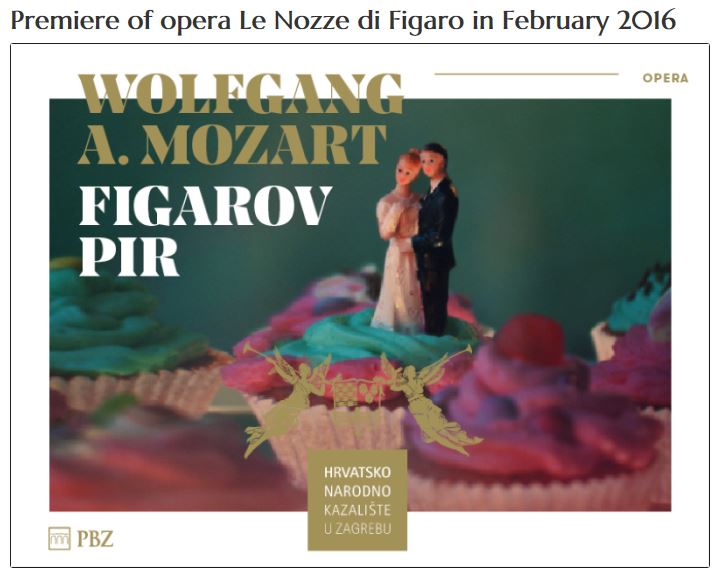
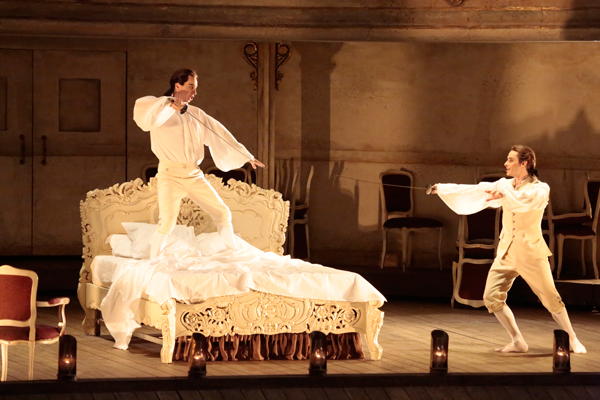
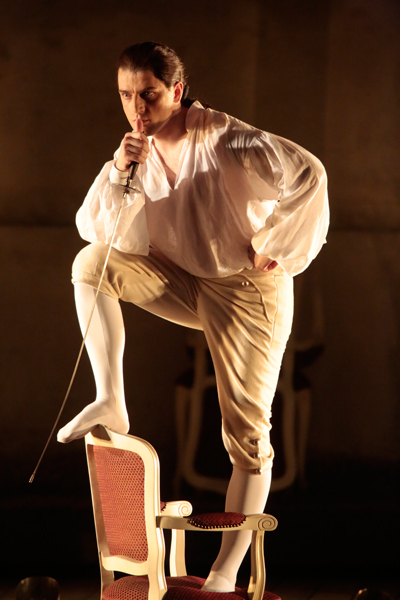
The premiere of Wolfgang Amadeus Mozart’s Le Nozze di Figaro is scheduled for Saturday, February 6, 2016. The conductor is Natalie Murray Beale, stage director Mauricio García Lozano, the set designer is Jorge Ballina, the costume designer is Eloise Kazan, assistant conductor Josip Šego, assistant stage director is Martina Zdilar Sertić, stage movement Ronald Savković, lighting designer is Aljaž Zalatel and the choir preparations are conducted by Nina Cossetto.

Marija Kuhar Šoša

Marija Kuhar Šoša

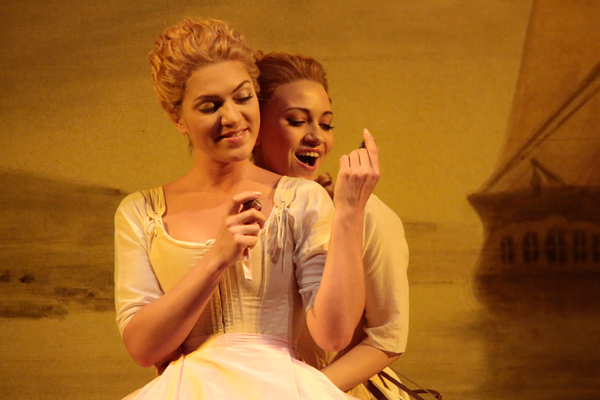
The cast includes: Matija Meić and Siniša Štork as Figaro, Ljubomir Puškarić and Davor Radić as Conte, Tamara Franetović – Felbinger and Adela Golac Rilović as Contessa, Marija Kuhar Šoša and Tanja Ruždjak as Susanna, Jelena Kordić and Martina Menegoni as Cherubino, Diana Hilje, Helena Lucić Šego and Dubravka Šeparović Mušović as Marcelina, Ivica Čikeš and Ivica Trubić as Don Bartolo, Nikša Radovanović and Božimir Lovrić as Don Basilio, Dario Čurić and Tvrtko Stipić as Don Curzio, Anabela Barić and Martina Klarić as Barbarina, Antonio Brajković and Alen Ruško as Antonio and the Orchestra and choir of the Opera of the CNT In Zagreb. Stage managers are Aleksandra Ćorluka and Zrinka Petrušanec, prompters are Marija Nacevska and Gordana Nikić, concert masters are Marco Graziani, Mojca Ramušćak and Vlatka Pehljan, and piano accompanists are Vjekoslav Babić, Darjana Blaće Šojat, Helena Borović, Silvana Čuljak and Darijan Ivezić.

Matija Meić

Matija Meić

The plot of this four-act opera is abundant in events around Count Almaviva who, enchanted by Susanna, the maid of his wife, wishes to use the privilege of the ius primae noctis, that is share her wedding bed. During this complicated and slightly unusual plot in which men and women experience their day filled with irresistible passion, there are many dramatic but also comic events going on and at the end the servants appear greater gentlemen than their masters. The entire story can be interpreted as a metaphor of various stages of love: page Cherubino and Barbarina stand for immature love; Susanna and Figaro for love that has just blossomed; the Count and Countess for love that had been influenced by time and Marcellina and Don Bartolo for mature love. Created after Beaumarchais’s comedy with the same title and the exceptional libretto of Lorenzo da Ponte, the opera had its world opening night in Vienna on May 1, 1786 and won great popularity despite its first series of only nine performances, because it openly mocked the upper class. It became one of the most successful Mozart’s works and is considered to be the cornerstone of standard opera repertoires.

Ljubomir Puškarić

Ljubomir Puškarić

Mauricio García Lozano, a Mexican theatre director, actor, interpreter, sound designer and pedagogue directed more than 50 performances of contemporary Mexican and foreign dramatists. In 2009, he directed his first opera production Mozart’s Don Giovanni for which he was declared a brilliant young Mexican theatre director by the Opera Now magazine. In 2010 on the stage of the Mexican national Opera he created a new production of Beethoven’s Fidelio with maestro Nikša Bareza.

Posted in OPera | Tagged , , , , , | Leave a comment

Così fan tutte, ossia La scuola degli amanti at the Bolshoi

cosi_titlecosi1

Libretto by Lorenzo da Ponte
Premiered on May 24, 2014

Presented with one interval.
Running time: 3 hours 40 minutes

  • 3 February 2016
  • 4 February 2016
  • 5 February 2016
  • 6 February 2016
  • 7 February 2016


The score has been made available by
Neue Mozart-Ausgabe, Bärenreiter-Verlag
Kassel · Basel · London · New York · Praha

Music Director: Stefano Montanari
Stage Director: Floris Visser
Set Designer: Gideon Davey
Costume Designer: Dieuweke van Reij
Lighting Designer: Alex Brok
Chorus Master: Valery Borisov
Dramaturg: Klaus Bertisch

cosi2Photos by Damir Yusupov.

CAST

Conductor Stefano Montanari
Fiordiligi, Lady from Ferrara and sister to Dorabella, living in Naples Ekaterina Morozova
Dorabella, Lady from Ferrara and sister to Fiordiligi, living in Naples Alexandra Kadurina
Guglielmo, Lover of Fiordiligi, a Soldier Alexander Miminoshvili
Ferrando, Lover of Dorabella, a Soldier Yuri Gorodetsky
Despina, a maid Nina Minasyan
Don Alfonso, an old philosopher Nikolai Kazansky
Hammerklavier Part Artem Grishaev

SYNOPSIS

ACT I

Ferrando is in love with Dorabella and Guglielmo is in love with Fiordiligi, her sister. Don Alfonso outrages the men by stating that the girls will sooner or later be unfaithful to them; he makes a bet with them that he can prove his words within the space of a day, but that Ferrando and Guglielmo must follow his orders completely during that time. Dorabella and Fiordiligi are waiting impatiently and longingly for their lovers. Alfonso, however, arrives instead and imparts the disastrous news that their fiances must leave immediately for the battlefield. The couples swear eternal fidelity and with great difficulty the sisters bid farewell to their lovers. Ferrando and Guglielmo leave for the front.

cosi3

Dorabella cannot restrain her despair. The servant girl Despina reacts matter-of-factly and advises the sisters to look for new lovers. Alfonso decides to involve Despina partially in his plans. He introduces her to two exotic foreigners whom he says are in love with Fiordiligi and Dorabella: Despina’s job is to help them obtain their desires. The men’s disguise is complete, for Despina does not recognise them. The sisters are horrified that strange men have gained access to their house. Fiordiligi is offended to the core by their shameless courting and proclaims the steadfastness of her and Dorabella’s fidelity.

Alfonso has to trust in Despina’s talents for the success of his next plan. She advises the foreigners to pretend to kill themselves for unrequited love. As a miracle-working doctor Despina then seems to save the lives of the two men with a magnet; their complete recovery, she says, can only be completed by a kiss from the two sisters. The women react with horrified indignation to such a suggestion.

cosi4

ACT II

Despina advises the sisters how to carry out a no-strings-attached flirtation with the two strangers; the two women are now prepared to allow themselves a little amusement with the men. Dorabella chooses the disguised Guglielmo and Fiordiligi the disguised Ferrando.

The men serenade the women, begging forgiveness for their forward behavior and promising to mend their ways. Alfonso and Despina arrange matters so that the new couples come closer together.

Dorabella is only too ready to exchange her locket with Ferrando’s picture for a medallion in the shape of a heart offered by the disguised Guglielmo. Their new relationship is thus confirmed.

cosi5

The disguised Ferrando has, however, been rejected with disgust by Fiordiligi. Alone, she nevertheless has to admit to herself that she has fallen in love with the newcomer. Filled with remorse, she begs forgiveness for her infidelity to Guglielmo.

Guglielmo finds it extremely difficult to defend his seduction of Ferrando’s fiancee to Ferrando himself.
Dorabella is ready to begin a new life with her new lover.

Fiordiligi is offended by her sister’s behaviour. However, she intends to flee her newly discovered love and decides to go to Guglielmo. She is trying on clothing left behind by Ferrando when the disguised Ferrando himself appears; Fiordiligi can resist him no longer. Don Alfonso explains the lesson that must be learnt from their experiences to the disillusioned men: such is women’s nature. Despina arrives with the message that the sisters are ready to marry the strangers and that the notary is standing by. A double wedding ceremony is improvised and both women have just signed the marriage contracts when Ferrando’s and Guglielmo’s return is announced. The supposed bridegrooms hide in an adjoining room — only to readopt their original characters and to give the sisters the fright of their lives at their supposed return. Don Alfonso shows them the marriage contracts. The boys react furiously, but the sisters beg for forgiveness. Ferrando and Guglielmo would love to believe them, but do not want to experience something like this ever again. Don Alfonso has won his bet: young people cannot arrive at adulthood emotionally unscathed.

Posted in OPera | Tagged , , | Leave a comment

Fidelio in Munich

bayerische_logofidelioTitle

Opera in two acts

Composer Ludwig van Beethoven · Libretto by Joseph Sonnleithner after the amendments by Georg Friedrich Treitschke after Jean-Nicolas Bouilly’s libretto “Léonore, ou L’Amour conjugal”
In German with German surtitles

Sunday, 07. February 2016
06:00 pm – 08:50 pm
Nationaltheater

Duration est. 2 hours 50 minutes · 1 Interval between 1. Akt and 2. AKt (est. 07:20 pm – 07:50 pm )

fidelio1

Conductor Zubin Mehta

Stage Director Calixto Bieito

Scenography Rebecca Ringst

Costumes Ingo Krügler

Licht Reinhard Traub

Choreography Heidi Aemisegger

Dramaturgy Andrea Schönhofer

Choir Director Sören Eckhoff

fidelio7


Don Fernando
Tareq Nazmi
Don Pizarro
Tomasz Konieczny
Florestan
Peter Seiffert
Leonore
Anja Kampe
Rocco
Franz-Josef Selig
Marzelline
Hanna-Elisabeth Müller
Jaquino
Dean Power
1. Gefangener
Joshua Owen Mills
2. Gefangener
Igor Tsarkov
  • Bayerisches Staatsorchester
  • Chorus of the Bayerische Staatsoper

SYNOPSIS

Florestan has disappeared. Leonore, his wife, is searching for him. She wants to rescue him. Pizarro, his enemy, has been persecuting him. He wants to kill Florestan.

Act One

Leonore suspects that her husband, Florestan, is being held prisoner by Pizarro in his fortress.

She alters her identity and, calling herself Fidelio, gets a job as an assistant to Rocco, who is the chief jailer in Pizarro’s prison.

Marzelline, Rocco’s daughter, has fallen in love with Fidelio. Jaquino, who also works for Rocco, is in love with Marzelline, but she now finds his affection a nuisance and would like to be rid of him. Rocco is convinced that money, not only love, is necessary in order to find happiness in life. He sides with his daughter and encourages her in her hopes for a new romance. Marzelline already imagines the fulfillment of her dream: she will be happily married to Fidelio and spend her life at his side. Having won the confidence of father and daughter, Leonore also hopes that she is getting closer to her goal, namely to find Florestan. Jaquino’s hopes are dashed, however, and his world falls apart.

Pizarro’s superior, Fernando, plans to inspect the prison as he has heard that people are being held there illegally. Pizarro gets himself into the mood for his revenge: Florestan must be killed before Fernando arrives and Rocco is given instructions to carry out the task – for which he will, of course, be generously rewarded. Rocco refuses to murder Florestan but, mindful of his duty, he agrees to assist Pizarro when the latter orders him to help him to carry out the murder himself.

fidelio10

Leonore, who has overheard the conversation between Pizarro and Rocco, is now determined to do whatever is necessary to rescue her husband. She allows the prisoners to go out into the prison yard for air but cannot find Florestan among them when she scans their desperate faces, so she persuades Rocco to allow her to accompany him down into the dungeons, where she suspects Florestan is being held.

Pizarro angrily gives orders for the prisoners to be returned to their cells. Rocco steps in front of Marzelline and Leonore to protect them. Mindful of the plot to get rid of Florestan, Pizarro does not punish Rocco for disobeying orders.

fidelio8

Act Two

Florestan bemoans his fate. Just as if he were hallucinating, he has a vision of Leonore as an angel coming to his rescue.

Rocco and Fidelio make their way down to Florestan’s dungeon and begin with the preparations for his murder. Horrified and yet filled with hope at the same time, Leonore recognizes her husband. Pizarro appears to kill Florestan. Fidelio succeeds in preventing the murder at the last moment by stepping between the prisoner and Pizarro and revealing herself as Florestan’s wife, just as a trumpet call rings out to announce the arrival of Fernando.

Justice has been established and there is rejoicing. Fernando, who had believed that his friend Florestan was dead, sets him and all the other prisoners free and Pizarro is punished.

GALLERY (click to enlarge)

Posted in OPera | Tagged , , , | Leave a comment

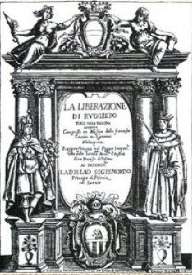
La Liberazione di Ruggiero dall’isola d’Alcina, practically unknown opera, performed at the Salon d’Hercule in the Chateau de Versailles

ruggieroversailles_logo

opera-v-concert_la-liberazione-caccini

Francesca Caccini (1587-1640)
La Liberazione di Ruggiero dall’Isola d’Alcina

Balletto con prologo e tre scene, Florence, 1625

Florence, beginning of February 1625. The Medici court is preparing grandiose celebrations to celebrate the official visit of the heir to the throne of Poland, Wladyslaw.

The crowning event of his visit is a performance of the “commedia in musica”: La Liberazione di Ruggiero dall’isola d’Alcina, an opera commissioned for this occasion by the grand-duchess of Tuscany, Maria Maddalena of Austria, widow of Cosimo da Medici (1590-1621). Ferdinando Saracinelli, superintendent of the Medici court is the author of the libretto of this “Balletto” (as it is called on the first page of the edition). The court composer Francesca Caccini, the first opera composer in history, wrote the music. The work so impressed the Polish Prince that it was also performed in Poland.

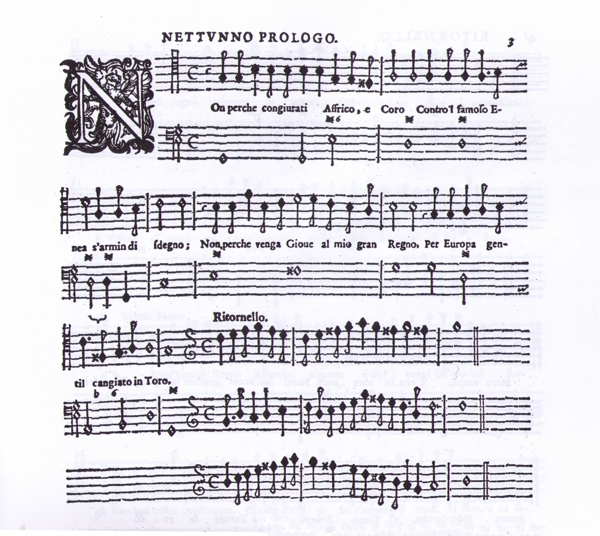
caccini_lib

Liberazione_partThe wonderful score mixes penetrating recitatives with varied accompaniment, musical arias where one senses the subtle feminine touch, chorus interventions (canzonetta and madrigals) to represent court ladies, demons, enchanted trees, freed knights and sinfonias, colorful ritornelli and instrument interludes.

This practically unknown opera marks in fact an important stage in Italian music of the first half of the 17th century: the Salon d’Hercule will be an ideal setting for its revival by the inspired Paul Van Nevel.

Huelgas Ensemble – Paul Van Nevel

CAST AND CREATIVE TEAM

alcinaAchim Schulz, Ruggiero

Michaela Riener, Alcina

Sabine Lutzenberger, Melissa

Matthew Vine, Nettuno

Bernd Oliver Fröhlich, Vistola Fiume / Pastore

Dorothea Jacob, Sirena

Axelle Bernage, Nunzia

Matthew Vine, Astolfo


Huelgas Ensemble

Paul Van Nevel, conductor

Paul Van Nevel, Conductor

Paul Van Nevel, Conductor


Posted in OPera | Tagged , , , | Leave a comment

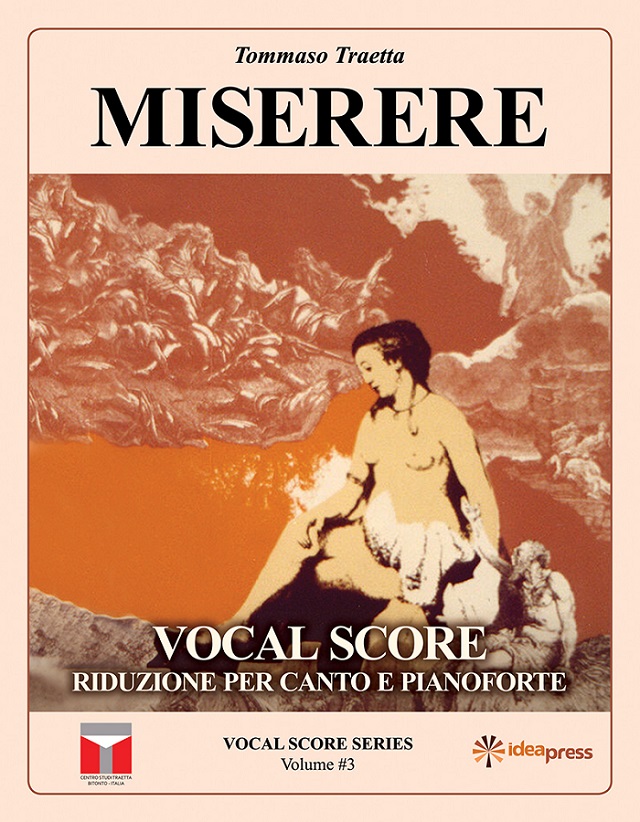
The Vocal Score of the MISERERE by Tommaso Traetta is now Available.

miserere_title

The Miserere, Psalm 50 of the Vulgata, interprets the feelings of repentance of David, King of Israel, guilty of adultery and murder.

Tommaso Traetta, thanks to the unique features of the Female Conservatory of Ospedaletto, had first brought into liturgical music the “virtuous” style without betraying the sacredness of the genre.

This composition presents, as a whole, a great structural balance. The alternation of solo Arias and choral pieces emphasizes the personal and universal sense of sin expressed by the sacred poet and intensely interpreted by the musician with unique adherence to the text.

Available, with a biography of the author and a brief history of the composition in four languages, now on Amazon and Barnes & Noble.

miserere_web_page

Posted in Music | Leave a comment