On Kozlova’s new podcast, “Pulse on Dance,” view a fascinating session with Jacqulyn Buglisi as she discusses her career, from early training to her days with the Martha Graham Dance Company.
THE ORCHESTRA OF THE BRONX will present its annual
HANDEL’S ‘MESSIAH’Joined by Soloists and Chorus of the BRONX OPERA
and 20+ guest speakers reading from the Messiah text
Sunday, December 7, 3 PM
Lovinger Theater at Lehman College,
250 Bedford Park Blvd. West
Free admission – all welcome
The Orchestra of The Bronx, led by founder/conductor Michael Spierman will return to the Lovinger Theater at Lehman College with its annual, free-to-the-public presentation of Handel’s “Messiah”.
The unique production includes 20+ guest speakers, reading brief passages from the oratorio created by Handel and premiered in Dublin in 1742.
Speakers – all with a connection to The Bronx – include judges, college and university presidents, government officials, an honor student, doctors, a hip-hop artist, a server in a local restaurant, a member of the State Assembly, and more! All will be on hand
to participate in the revered masterpiece that includes the celebrated Hallelujah Chorus.
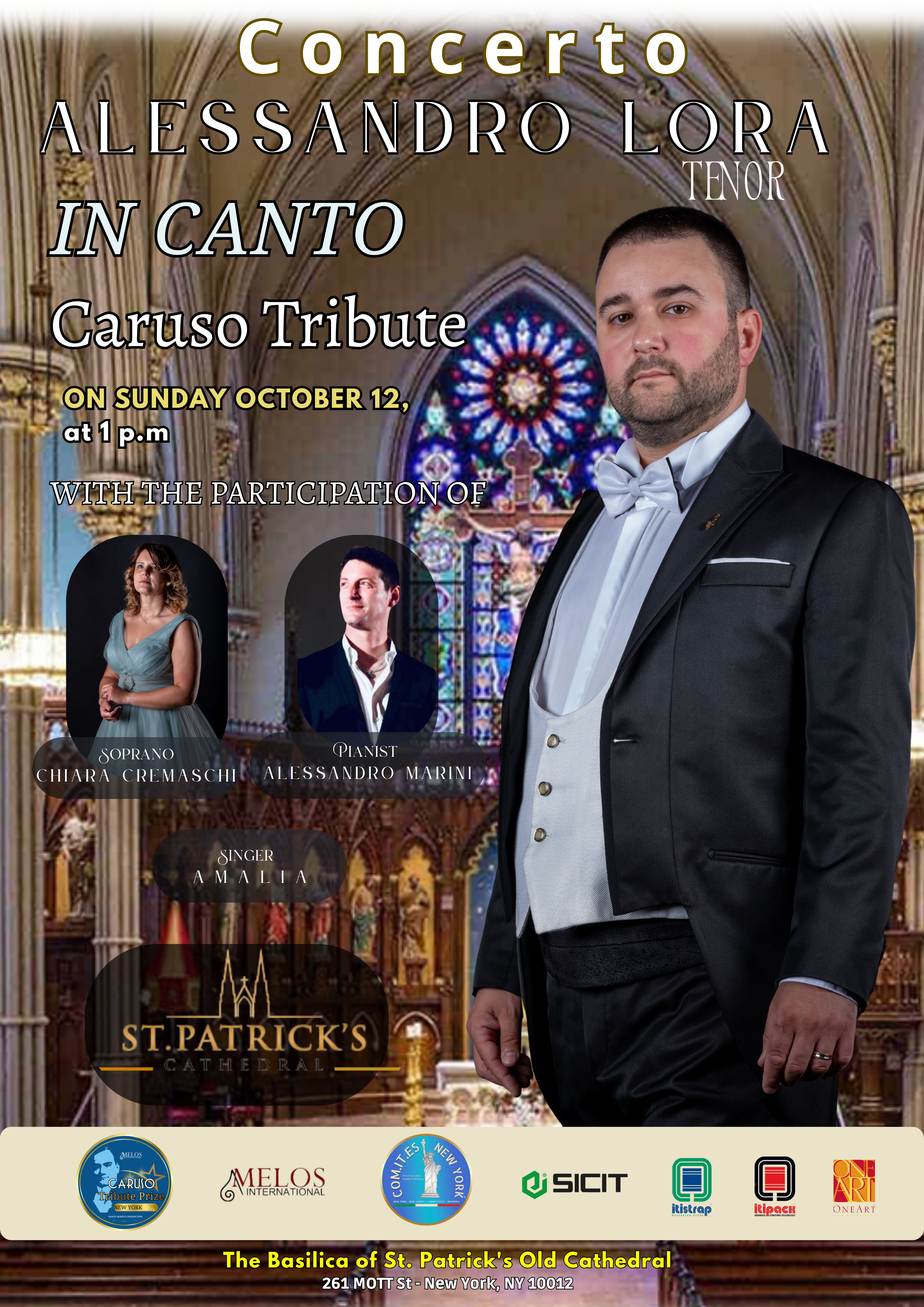
New York – Rising star of Italian pop–opera, Alessandro Lora, will soon bring the elegance of Italian bel canto to New York.
On October 12 at 1:00 pm, he will perform at the prestigious St. Patrick’s Old Cathedral, an iconic landmark in the heart of NEW YORK. He will share the stage with soprano Laura Cremaschi, pianist Alessandro Marini, and Spanish singer Amalia, in a concert celebrating the timeless beauty of Italian music.
The event will welcome ecclesiastical and civic authorities, as well as distinguished American cultural figures and VIPs.
Recently, Lora has performed alongside major Italian stars such as Arisa, Iva Zanicchi, Riccardo Fogli, and many others. His artistic journey will be further honored on October 14, when he will receive the prestigious Caruso Award at the Italian American Museum, under the artistic direction of Dante Mariti (Melos International). Among the other distinguished awardees are Katia Ricciarelli, Veronica Maya, Francesca Pascale and more.
The concert on October 12 is by invitation only.
For reservations and information: meloseventi@gmail.com
Dopo trent’anni al Maggio Musicale Fiorentino, il maestro Severi guida un progetto che guarda alla musica come relazione, per costruire un rapporto nuovo tra orchestra, direttore e pubblico
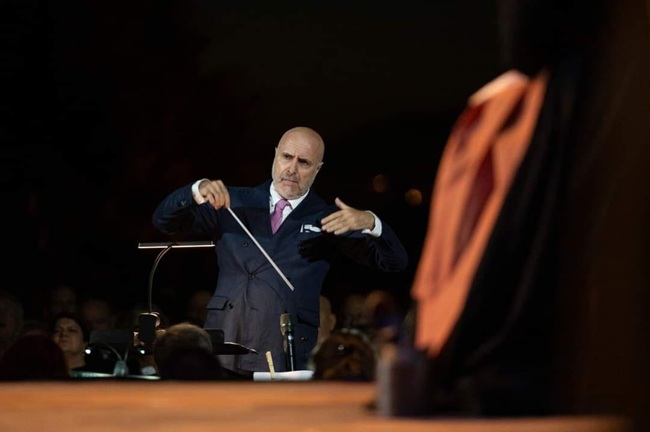
Riportare la musica classica tra la gente, senza barriere, e connetterla alle nuove generazioni: è questa la visione che guida il lavoro del Maestro Marco Severi, oggi protagonista di un nuovo allestimento de La Traviata. Il 28 luglio lo dirigerà all’aperto, in Piazza del Campo a Siena, dove l’opera torna dopo oltre vent’anni di assenza, trasformando uno spettacolo in una delle produzioni più attese della stagione estiva.
Ex primo violoncello dell’Orchestra del Maggio Musicale Fiorentino – ruolo ricoperto per tre decenni – Severi ha progressivamente affiancato alla carriera da strumentista quella da direttore, guidando orchestre in Italia e all’estero, con particolare attenzione al repertorio lirico e sinfonico.
La rappresentazione de La Traviata in Piazza del Campo non è solo un appuntamento culturale, ma un momento simbolico. È il ritorno della lirica nel cuore civico delle città, uno spazio che storicamente ha ospitato riti collettivi, civili e spirituali, e che oggi si riapre al gesto artistico come forma di partecipazione. Non un contenitore scenico, ma un luogo vivo, dove arte e comunità possono tornare a dialogare. Per Severi, dirigere in una cornice come questa è anche una forma di responsabilità:
«Dirigere in piazza – dichiara – restituisce dignità al suono. Portare l’opera fuori dai teatri non significa ridurla, ma ricondurla al centro della vita pubblica. Dove è nata, e dove dovrebbe tornare.»
È un’idea di musica che va oltre l’esecuzione tecnica: un atto civile, un invito a riscoprire la bellezza come bene comune. Un gesto che ha a che fare con il contesto, con le persone, con ciò che si vuole trasmettere davvero. In quest’ottica, il ruolo del direttore non si esaurisce nell’atto visibile, ma continua nel rapporto con l’orchestra e con chi ascolta. È lì che si gioca tutto: nel rendere possibile un tempo e uno spazio per la piena percezione della musica.
Una visione che si traduce nella pratica quotidiana: la direzione orchestrale, per Severi, non è mai un esercizio di controllo. Al contrario: è un lavoro sulla relazione. Un equilibrio che si costruisce prova dopo prova, senza forzature, lasciando che la musica fluisca dal confronto. È una concezione non gerarchica del podio, che chiama in causa la responsabilità di ciascun musicista e valorizza l’ascolto reciproco.
«La musica emerge dal confronto, non dall’imposizione – spiega –. Il direttore deve facilitare, non dominare.»
Lo stesso principio guida il suo rapporto con il pubblico. Spesso considerata distante, la musica classica va restituita come linguaggio vivo, umano. E per farlo, servono esperienze effettive, non operazioni di facciata.
«C’è bisogno di accorciare le distanze – conclude Severi –. Ma con contenuti, non con scorciatoie. La musica classica ha ancora molto da dire. Ma va fatta vivere con strumenti adeguati, senza mediazioni superflue.»
Negli ultimi due anni, secondo recenti osservatori, l’interesse degli under 35 verso la musica classica è cresciuto del 15%. Inoltre, da un’indagine condotta dal Royal Philharmonic Orchestra (“The evolution of the orchestral audience in the digital age”, Marzo 2024), il 65% degli under 35 la ascolta regolarmente, superando gli over 55 (57%) e confermando una partecipazione giovanile in crescita. Una tendenza che intercetta il lavoro di chi – come Severi – punta a recuperare il rapporto con le nuove generazioni, non con strategie d’immagine e artifici comunicativi, ma con contenuti, qualità e coerenza.
Alla fine di ogni concerto, il Maestro Severi saluta i presenti con una frase semplice: “Da cuore a cuore”. Una citazione legata alla Missa solemnis di Beethoven, in cui il compositore annotò sul manoscritto: «Vom Herzen – Möge es wieder – zu Herzen gehen» (“Dal cuore possa tornare al cuore”).
Non è un vezzo, ma un modo per richiamare alla musica la sua accezione originaria: passaggio, esperienza condivisa, linguaggio che unisce – prima ancora che esibizione.
Accanto all’attività trentennale al Maggio Musicale, Severi ha diretto titoli come Nabucco, Elisir d’amore, Tosca, Don Giovanni, La Bohème, lavorando con orchestre quali l’Orchestra Sinfonica di Sanremo, l’Orchestra della Città di Grosseto, i Solisti del Maggio e l’Orchestra Maderna. Ha collaborato con registi come Grisha Asagaroff e si è esibito in teatri quali il Goldoni di Livorno, il Sociale di Rovigo, il Verdi di Lucca, Torre del Lago, Cortona, Piombino.
Dopo vent’anni, l’opera torna in piazza. Ma ancor di più, torna l’idea che la cultura appartiene a chi la vive, e che la musica non ha bisogno di barriere per arrivare – da cuore a cuore.
Biografia. Dopo trent’anni come primo violoncello solista nell’Orchestra del Maggio Musicale Fiorentino, Marco Severi ha affiancato all’attività strumentale quella di direttore d’orchestra, dando vita a un percorso artistico che unisce rigore musicale e apertura al dialogo. La sua carriera lo ha portato a dirigere concerti sinfonici e opere liriche in Italia e all’estero, collaborando con teatri e orchestre come il Maggio Musicale Fiorentino, l’Orchestra Sinfonica di Sanremo, l’Orchestra della Città di Grosseto, i Solisti Fiorentini, l’Orchestra di Stato Rumena e l’Orchestra Maderna di Forlì. Negli anni ha diretto titoli del grande repertorio operistico – da “Nabucco” a “L’elisir d’amore”, da “Tosca” a “Don Giovanni” e “La Bohème” – lavorando con registi di fama internazionale come Grisha Asagaroff e cantanti del calibro di Valentina Boi, Samuele Simoncini, Giorgio Casciarri e Pedro Carrillo. Tra i progetti più recenti, spiccano la direzione di “Tosca” a San Miniato e Piombino, con oltre 1.200 spettatori, e il ritorno dell’opera lirica in Piazza del Campo a Siena dopo vent’anni di assenza, con una memorabile “Traviata” che ha riportato la grande musica nel cuore civico della città. La sua visione artistica parte da un’idea precisa: restituire alla musica il ruolo di linguaggio condiviso, capace di abbattere le barriere tra palcoscenico e pubblico, e di riavvicinare le nuove generazioni alla musica classica non attraverso artifici comunicativi, ma con qualità e autenticità. Per Severi, la direzione d’orchestra è un lavoro sulla relazione: un equilibrio che si costruisce prova dopo prova, dove la musica nasce dal confronto e dall’ascolto reciproco, e il podio non è un luogo di dominio, ma di responsabilità condivisa.
Saturday, June 14 at 8 PM Good Shepherd-Faith Presbyterian Church, 152 W. 66th St., free admission. Please register with audreyrosspub@aol.com for special seating. In celebration of its 20th Anniversary, the Orchestra, founded and conducted by Copenhagen’s Dorrit Matson, will perform music by Josefine Opsahl (premiere), Frank Foerster (premiere), Carl Nielsen, Edvard Grieg, Nikolaj Hess, and Johan Helmich Roman.
SCANDIA STRINGS
Sunday, June 15 at 2 PM, Fort Tryon Park Cloisters Lawn, North entrance to the Park. Free admission
A repeat of the Manhattan June 14th concert.
MIRO MAGLOIRE’S NEW CHAMBER BALLET
Friday & Saturday, June 20 & 21 at 7:30 PMMark Morris Dance Center, 3 Lafayette Avenue, Brooklyn
World premieres of Magloire’s Solos & Stanzas, music by Diane Mehta, and
In Between, music by Hyesun Sun Lee, a recent graduate of the
Manhattan School of Music, along with repeats of Magloire’s Nocturne,
music by Brahms, and an excerpt from Musik, to Beethoven. As
always, music is played live at NCB performances. Doori Na, violin,
and Melody Fader, piano.
SCANDIA STRING QUARTET
Friday June 20 at 6 PM
Fort Tryon Park Cloisters Lawn
North entrance to the Park
free admission
bring chair or blanket
Compositions by Christian Sinding, Carl Nielsen, Rued Langgaard, Edvard
Grieg, and a medley of Scandinavian Traditional Melodies
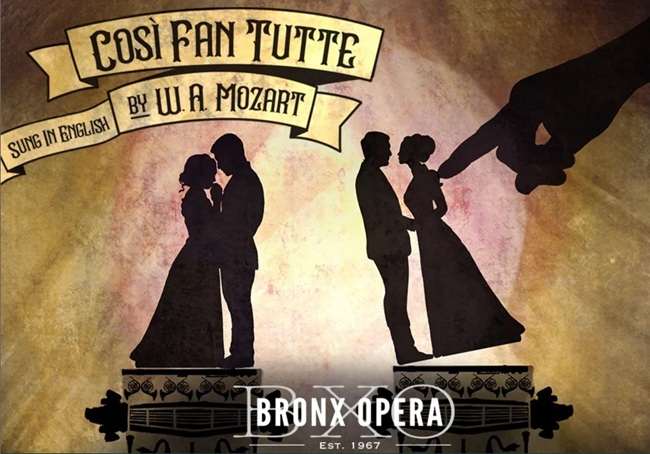
Bronx Opera Presents: Così fan tutteTickets are available now! Dates: Apr 26 – May 04 2025
Cast, Principals:
Fiordiligi: Alina Tamborini / Samantha Long
Dorabella: Linda Collazo / Miastasha Gonzalez-Colon
Guglielmo: Brian J. Alvarado / Johannes Linneballe
Ferrando: Gabriel Enrique Hernandez / Matthew youngblood
Despina: Caroline Tye / Emily Hughes
Don Alfonso: Samuel Rachmuth / Michael Niemann
Chorus: John Carr, Victoria Falcone, Anneke Honor, Kira Neary, Cophelia Pertez, Aaron Petrovich, Zachary Tirgan
Conductors: Michael Spierman / Eric Kramer
Stage Director: Benjamin Spierman
Set Designer: Kyle Higgins
Lighting Designer: Joshua Rose
Costume Designer: Eric Lamp
Chorus Master: Michael C. Haigler
The Bronx Opera is proud to present Mozart’s opera buffa in two acts, Cosi fan tutte, which has been translated to “So do they all” or “Women are like that”. Four performances, April 26 & 27 and May 3 & 4 at Lehman College’s Lovinger Theater in The Bronx
Mozart’s comic masterpiece, performed in English by The Bronx Opera, was premiered January 26, 1790 at Burgtheater in Vienna. Libretto is by Lorenzo Da Ponte, who also wrote Mozart’s Don Giovanni and The Marriage of Figaro.
The story begins with experimental philosopher Don Alfonso attempting to overturn the perfect worlds of two young men, Ferrando and Gugliemo. He bets them that both their fiancées will not stay faithful if tempted, and the challenge is accepted.
The fiancées, Fiordiligi and Dorabella, discover that their lovers are leaving to go to war, and suddenly two handsome strangers (Ferrando and Gugliemo in disguise) arrive on a mission of seduction. As Don Alfonso ups the ante and throws increasingly extreme situations at all four lovers, they begin to react emotionally and each character reveals who he or she really is. Who will end up with whom?
The subject matter did not offend Viennese sensibilities of the time, but in the 19th and early 20th centuries, it was considered risque, vulgar, and even immoral. The opera was rarely performed, but after World War II it regained a place in the standard operatic repertoire and is now frequently performed.
The Bronx Opera’s performances of Cosi fan tutte are part of the New York Opera Alliance (NYOA) season, which features performances in various venues by several local opera companies, opening with The Bronx Opera and running through June 30th. The consortium of NYC opera companies and producers was established to enhance and support the visibility and viability of opera in NYC. Founded in 2011, NYOA has grown from 13 organizations to close to 50, and has been fiscally sponsored by OPERA America.
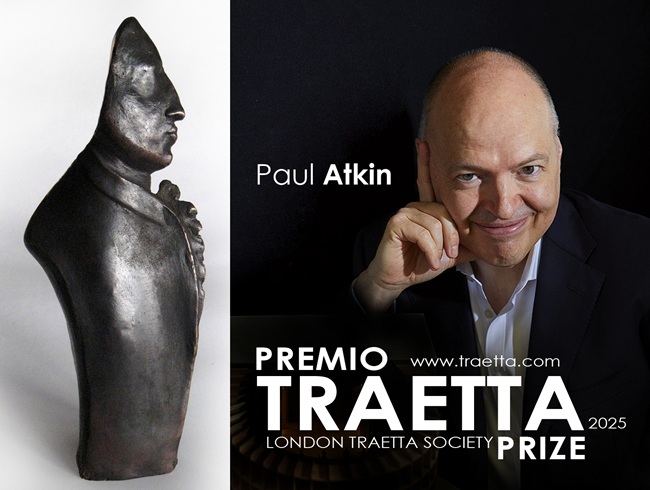
The English musicologist and entrepreneur Paul Atkin has been named the winner of the 17th Traetta Prize 2025 “in recognition of his extraordinary passion and dedication in bringing to life a visionary project that unites history, culture, and music.”
The Traetta Prize is awarded by the Traetta Society in recognition of achievements in rediscovering the roots of European music. It is named after the composer Tommaso Traetta (1727–1779) and is awarded annually during Traetta Week, a week of commemorative celebrations dedicated to the composer, taking place over the eight days between his birth and death anniversaries (March 30 – April 6).
The goal of the Traetta Prize is to honor individuals committed to expanding knowledge of 18th-century musical production. The award borrows Traetta’s name as a symbol of a long list of unjustly forgotten composers such as Leonardo Vinci, Pasquale Anfossi, Antonio Sacchini, Nicola Vaccaj, Leonardo Leo, Domenico Cimarosa, or Vicente Martín y Soler, among others.
Paul Atkin is the founder and driving force behind the project to rebuild the Teatro San Cassiano in Venice, the first public opera house in history. It was inaugurated in 1637 and later demolished. With a rigorous historical and philological approach, Atkin initiated an in-depth research project in 2015 to reconstruct the theater in its original form, relying on archival documents, architectural studies, and musicological research.
Since 2017, with the foundation of the Teatro San Cassiano Group, the project has gained the support of internationally renowned experts, including musicologists, conductors, and architects specializing in the reconstruction of historic theaters. Furthermore, it has received official support from the Municipality of Venice and the interest of major cultural and academic institutions, thus laying the foundation for the realization of a truly unique theater.
The reconstruction of the Teatro San Cassiano holds special significance for the Traetta Society, as Tommaso Traetta himself premiered two of his operas on that very stage: La Francese a Malghera in 1764 and Semiramide in 1765, the latter celebrating its 260th anniversary this year.
This project is not only an architectural endeavor but a far-reaching cultural initiative aimed at reviving the sound, stagecraft, and experience of 18th-century opera following historically informed criteria. Through his tireless dedication, Atkin demonstrates a deep conviction in the value of music as a shared heritage, capable of uniting past and future.
Paul Atkin – Winner of the Traetta Prize 2025 – Poses with the model of the Teatro San Cassiano
Prima esecuzione: 1 maggio 1786, Burgtheater di Vienna
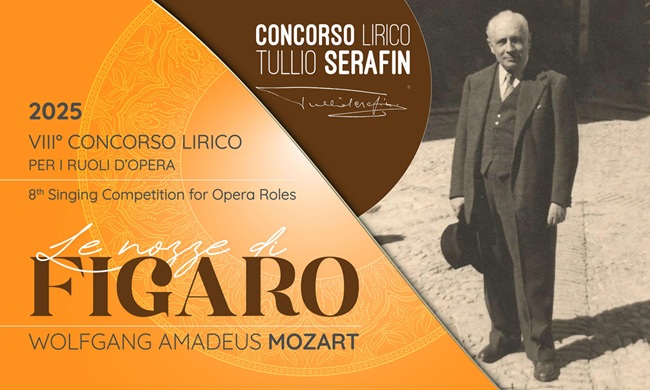
RUOLES ON COMPETITION FOR THE OPERA STUDIO:
Il Conte di Almaviva BARITON
La Contessa di Almaviva SOPRANO
Susanna, promessa sposa di Figaro SOPRANO
Figaro BASS – BARITONE
Cherubino, paggio del Conte SOPRANO
Marcellina SOPRANO
Bartolo, medico di Siviglia BASS
Basilio, maestro di musica TENOR*
Don Curzio, giudice TENOR*
Barbarina, figlia di Antonio SOPRANO
* Both roles of Basilio and Don Curzio will be assigned to one soloist
– PERFORMANCES AT TEATRO OLIMPICO DI VICENZA DURING 2025 FESTIVAL VICENZA IN LIRICA
Critics’ prize entitled to Lukas Franceschini
– awarded during the final round of the competition*
Audience prize entitled to Francesco Pacchiega
– awarded during the final round of the competition* offered by Valeria Rubini
Operabase Prize
– a 30% discount on ‘Industry Professional’ subscriptions to all finalists and a 50% discount on special prizes (the discount is only applicable on payment of the annual subscription
The number of candidates for each location is limited. Here you can verify availability for preliminary round of Tullio Serafin Opera Singing Competition *
April, 6 2025
TEATRO FILARMONICO DI VERONA Verona – IT
4 available places
April , 7 2025
TEATRO DELL’OPERA DI ROMA Rome – IT
15 available places
April, 9 and 10 2025
TEATRO OLIMPICO DI VICENZA Vicenza – IT
35 available places
April, 14 2025
ISTANBUL STATE OPERA AND BALLET Istanbul- TR
23 available places
April, 28 2025
TEATRO CARLO FELICE DI GENOVA Genoa- IT
20 available places
May, 6 2025
TEATRO REAL DI MADRID Madrid – ES
25 available places
May, 12 2025
TEATRO ALLA SCALA Milan -IT
20 available places
* The number of available places is updated daily and not automatically with the registrations received.
Fantasie Nègre: The Piano Music of Florence Price, a performance by Samantha Ege in Milton Court on Wednesday 24 November 2021 Photos by Mark Allan
Chicago, IL – February 3, 2025 – Acclaimed for her scholarly storytelling and world-premiere recordings of Black Renaissance repertoire by Florence Price and Margaret Bonds, musicologist-pianist Samantha Ege has been dubbed “our trusted guide through lesser-known piano works both dynamic and beautiful” by BBC Music Magazine. Next month, Ege releases her fifth album, Maestra, featuring the piano concertos of Julia Perry and Doreen Carwithen, including the first commercial recording of Perry’s Concerto for Piano and Orchestra in Two Uninterrupted Speeds. The album, which experiments with time, space, color, and texture, will be released by Lorelt Records on March 25, 2025 – the 101st anniversary of Perry’s birth. Ege is known for her determination to uncover and elevate music by oft-neglected composers, and her work has expanded public access to and understanding of a cadre of pioneering women. In addition to several premiere recordings of pivotal works by Black women, her contributions include academic publications, BBC radio documentaries, and her debut book, South Side Impresarios: How Race Women Transformed Chicago’s Classical Music Scene, just released in November 2024. “I love bringing different women’s voices into conversation with one another,” said Ege. “Even though Julia Perry and Doreen Carwithen never met, they had such ambition and drive in common. Sadly, they sank into obscurity in different ways – but on this album, they shine so brightly together.”
Photo of Julia Perry, courtesy of Talbott Music Library Special Collections and Westminster Choir College Archives.Photo of Doreen Carwithen, courtesy of the William Alwyn Foundation.
Born in Kentucky to a schoolteacher and amateur pianist, Julia Perry (1924-1979) studied in elite musical spaces – from Westminster Choir College and Juilliard to the private studios of Nadia Boulanger and Luigi Dallapiccola – earning admirers like Aaron Copland along the way. This premiere recording of Perry’s piano concerto features a haze of strings and winds and an irregular time signature that suspends reality, followed by a virtuosic, energetic movement with Afrodiasporic syncopations. “Perry’s Piano Concerto is a real celebration of her genius,” said Ege. “She’s built a whole universe, filling each musical measure with the brilliance of her own sonic cosmos. There’s also something so multidimensional about her exploration – her concerto isn’t in two movements, but in two speeds, as if she’s playing with spacetime. Yet this is no mere intellectual exercise; this music is vivid and alive, with so much color.”
An English contemporary of Perry, Doreen Carwithen (1922-2003) was a groundbreaking film composer in the male-dominated movie industry. Her Concerto for Piano and Strings is lush and cinematic with dramatic strings, shifting between muscular themes and introspective moods before breathing fire and catharsis into the concerto’s final moments.
The work offers a fascinating glimpse of the skilled musical storyteller before her identity was subsumed by her professor-turned-husband William Alwyn. When they eloped, Carwithen became Mary Alwyn, devoting herself entirely to promoting William’s work until his death. Ege’s artistic advocacy has brought fresh prominence to numerous women, recognizing their formative contributions despite immense adversity. The New York Times notes that this increased recognition is a “triumph indeed…a testament to how Ege has brought this music to the life it more than deserves.”
St. Mark’s Church, 131 East 10th Street (at 2nd Avenue)
Suggested contribution: $20
For reservations: 212.674.6377
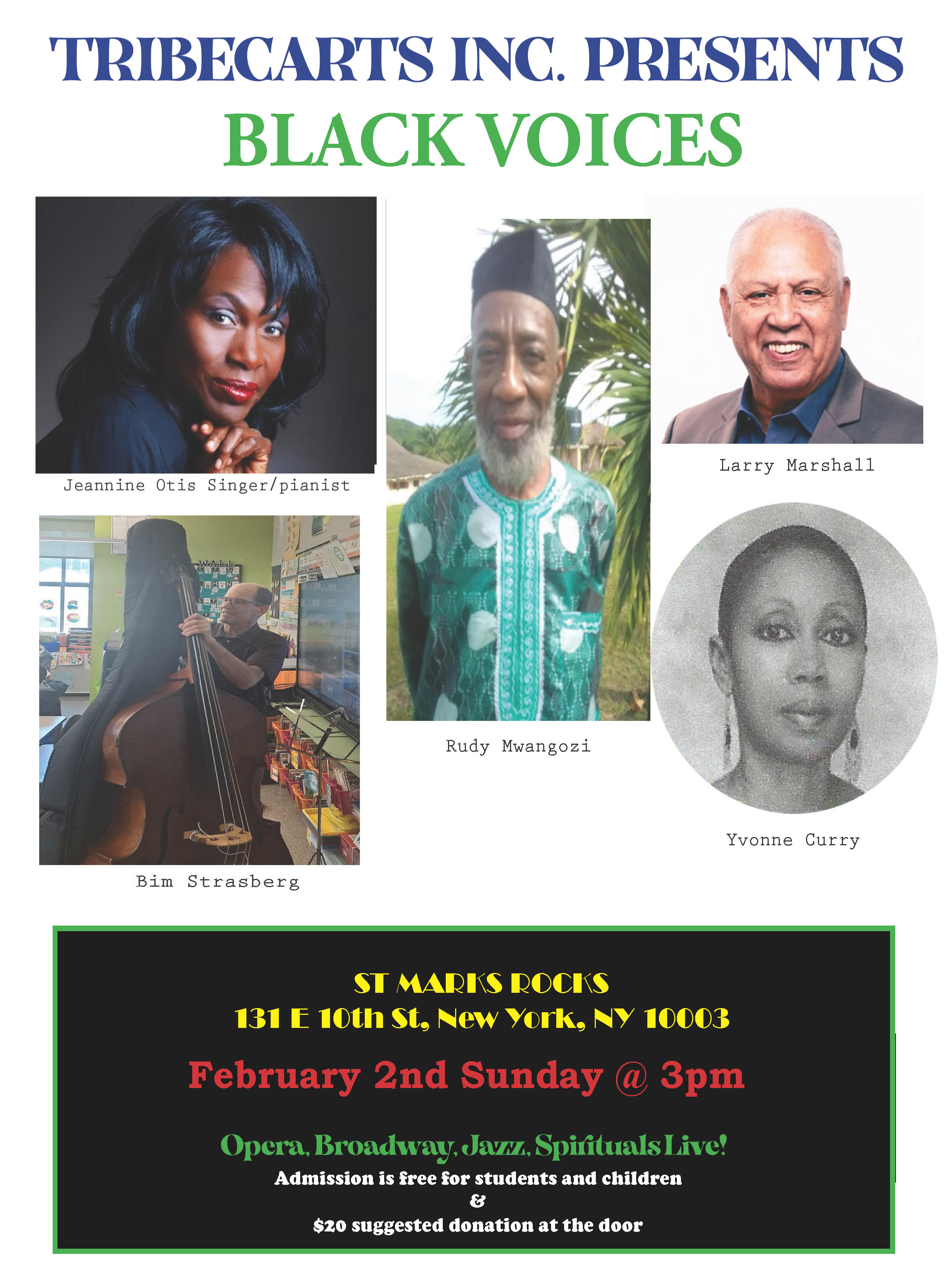
Maestro Alan Aurelia and Tribecarts present “Black Voices,” with a cast of superb black artists focusing on the music of Eubie Blake, Scott Joplin, and music from opera, Broadway, jazz, spirituals, and more, Sunday February 2 at 3 PM, at St. Mark’s Church, Second Avenue & 10th Street.
The cast includes Jeannine Otis, Yvonne Curry, Rudy Mwangozi, Bim Strasberg, Rick Cordova, and Larry Marshall, who will perform excerpts from his show about the trailblazer and first real African American star on Broadway, Bert Williams, considered the King of Black Vaudeville.
Alan Arthur Aurelia has spent his life in the arts. He is the son of Maestro Alan Aurelia, creator of the Riverside Opera Company in 1996 and Richmond County Orchestra in 1998. As a child, Alan studied music, but also greatly enjoyed behind-the-scenes work and was creating promotional materials and writing grants for the organizations by the age of fifteen.
He subsequently began to love music as a player and performer. He got his first electric bass when he graduated from high school, and his first double bass shortly thereafter.
Alan attended the College of Staten Island, where he received a BA in Music with a concentration on double bass performance. He also studied at the Hartt School, the University of Connecticut, and the U. of South Carolina. As a teacher, he has been on the faculties of Wagner College, the College of Staten Island, and BMCC.
Comfortable in many different music genres, Aurelia is music director of the Richmond County Orchestra, and the Riverside Opera Company. He has guest conducted in Romania, Mexico, and Italy, where he was proud to show his son the village of Avellino, home of his ancestors before they emigrated to the U.S. in 1900. Aurelia is also currently President of the Tribeca Music and Art in Manhattan.
The full vocal score of this magnificent opera is AVAILABLE FOR THE FIRST TIME IN HISTORY FROM AMAZON.COM or BARNES & NOBLE
The Vocal Score of the Munich version of the Stabat Mater by Tommaso Traetta is now available.
With biography and commentary in English, Italian, German and Japanese.
The full vocal score is AVAILABLE FOR THE FIRST TIME IN HISTORY FROM AMAZON.COM or BARNES & NOBLE
Doña Flor, the vocal score
The full vocal score of this magnificent opera is AVAILABLE NOW FROM AMAZON.COM
Parliamo del soprano Dominika Zamara, un’artista che si è ritagliata un posto di rilievo nel firmamento della musica colta. Polacca di nascita e italiana d’adozione, nel 2007 ha vinto una borsa di studio presso il Conservatorio di Verona, diplomandosi l’anno successivo con il massimo dei voti. È stato proprio dall’Italia, Paese in cui risiede, che […]
La magia della grande opera incontra uno dei luoghi più affascinanti del territorio vicentino. Venerdì 21 agosto alle ore 21, il Castello di Romeo di Montecchio Maggiore ospiterà “Le nozze di Figaro” di Wolfgang Amadeus Mozart, proposte in una coinvolgente riduzione in forma di concerto. Sarà il primo appuntamento di “Vicenza in Lirica fuori le mura”, il progetto che porta […]
Dopo il successo del mese scorso al Teatro alla Scala di Milano, interprete di Timur in Turandot di Puccini, un altro importante impegno di respiro internazionale per il basso salentino Adolfo Corrado. Dal 3 giugno all’11 luglio sarà all’Opéra National de Paris in scena ne “La Cenerentola” di Rossini. Il cantante nato e cresciuto nella piccola Supersano (Le), […]
Martedì 9 giugno i giovani talenti si contenderanno i ruoli de “Il barbiere di Siviglia” di Rossini in programma con il XIV° Festival “Vicenza in Lirica-Contesti”. Lucas Christ presiederà la giuria internazionale. Sarà ancora una volta il Teatro Olimpico di Vicenza ad accogliere la Finale del IX° “Concorso Lirico Tullio Serafin”, in programma martedì 9 […]
Prosegue il percorso internazionale di “Concetto Armonico APS” e del Festival “Vicenza in Lirica”, che tornano ad Ankara grazie alla collaborazione con l’Ambasciata d’Italia ad Ankara, con l’Opera e Balletto di Stato di Ankara e con la Fondazione Musicale Sevda-Cenap And rinnovando un legame culturale che si consolida ormai da tre anni.Questa sera, Mercoledì 6 maggio 2026 alle ore 20.30, sul […]
Dominika Zamara, soprano, è una voce affermata nel panorama musicale. Si laurea nel 2007 con il massimo dei voti. Il suo debutto nel mondo dell’opera risale al 2010 nel ruolo di Mimì nell’opera “La Bohème” di Puccini, sotto la direzione del maestro Enrico De Mori. Da lì in poi, un crescendo di successi che la […]
Torna a Trapani il Concorso Lirico Internazionale Giuseppe Di Stefano. L’Ente Luglio Musicale Trapanese – Teatro di Tradizione bandisce la XXI edizione, finalizzata alla scoperta e al lancio di emergenti voci liriche, in programma dal 13 al 16 maggio 2026, presso la Sala Grande del Complesso Monumentale San Domenico. Possono partecipare cantanti lirici di qualsiasi […]
Sold out e grande emozione nella Cattedrale di San Lorenzo, a Trapani, per il capolavoro incompiuto di Mozart, con la direzione di Nicola Kitharatzis e un cast di solisti di rilievo internazionale Trapani, 31 marzo 2026 – Si è aperta la 78ª Stagione del Luglio Musicale Trapanese con il Requiem in Re minore K. 626 […]
Al via il IV° “Sabbioneta chamber Opera festival – Residenze 2026” Un grande progetto internazionale dedicato ai giovani talenti della lirica e della musica antica Con grande entusiasmo, l’Associazione “Concetto Armonico APS”, in collaborazione con il Comune di Sabbioneta e la Fondazione Sabbioneta Heritage, annuncia il lancio della quarta edizione del “Sabbioneta chamber Opera festival – Residenze”, dove […]
Presentata la 78a Stagione del Luglio Musicale Trapanese Ventuno appuntamenti da marzo a dicembre. Si apre domenica 29 marzo con il Requiem di Mozart in Cattedrale: ingresso libero per la città. È stata presentata nella Sala Grande del Complesso San Domenico, a Trapani, la 78ª Stagione dell’Ente Luglio Musicale Trapanese, Teatro di Tradizione riconosciuto dal […]