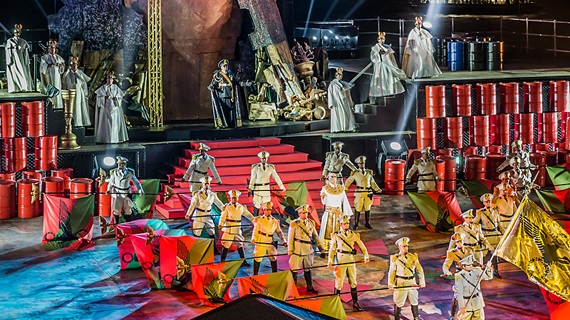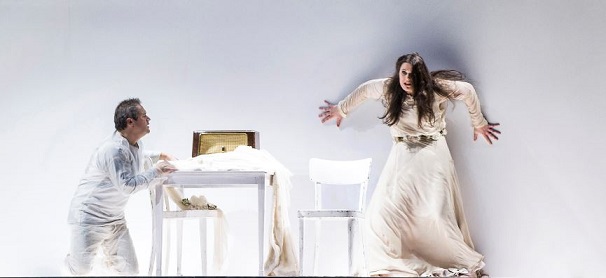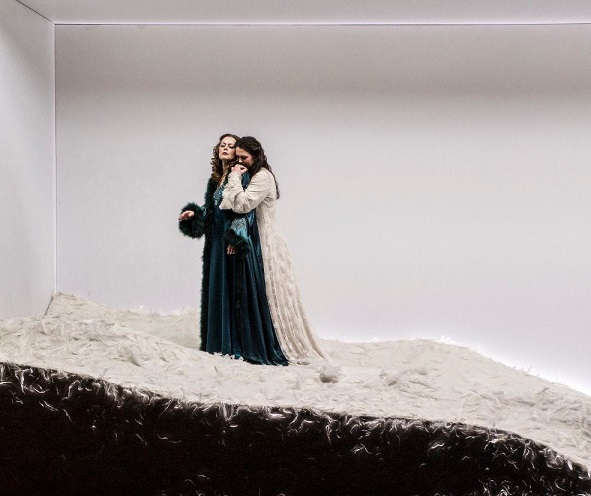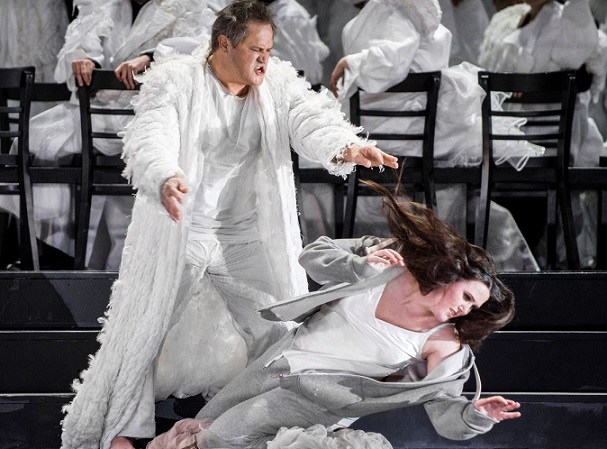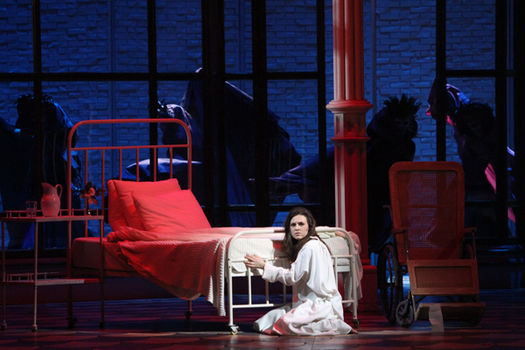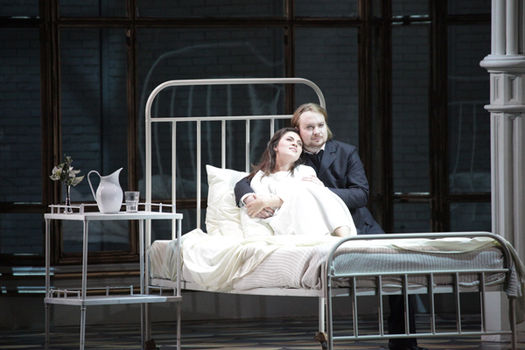
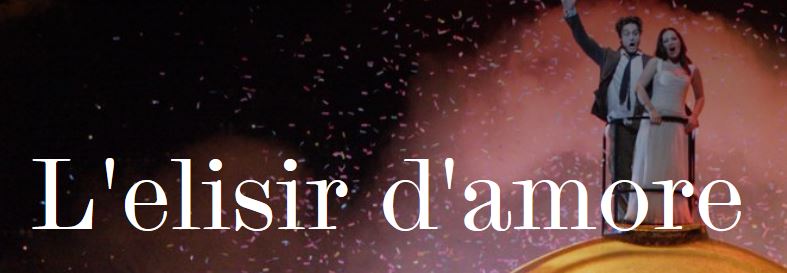
L’Elisir D’Amore at the Bayerische Staatsoper

bayerischeoperalogo

elisirMelodramma in two acts

Composer Gaetano Donizetti · Felice Romani after Augustin Eugène Scribe
Italian with German surtitles

Friday, 10. April 2015
07:00 pm – 09:45 pm
Nationaltheater

Sunday, 12. April 2015
07:00 pm – 09:45 pm
Nationaltheater

Wednesday, 15. April 2015
07:00 pm – 09:45 pm
Nationaltheater

Duration est. 2 hours 45 minutes · 1 Interval between 1. Akt and 2. Akt (est. 08:15 pm – 08:45 pm )

elisir1elisir2

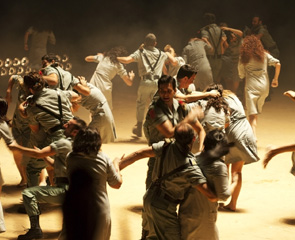
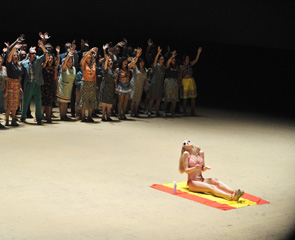
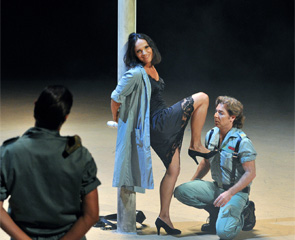
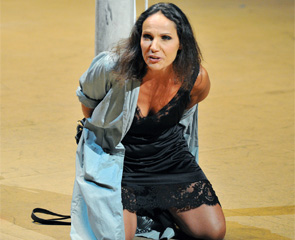
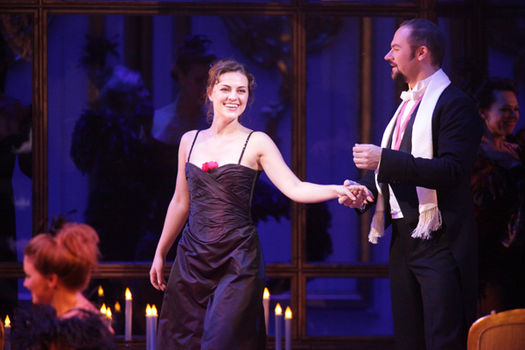
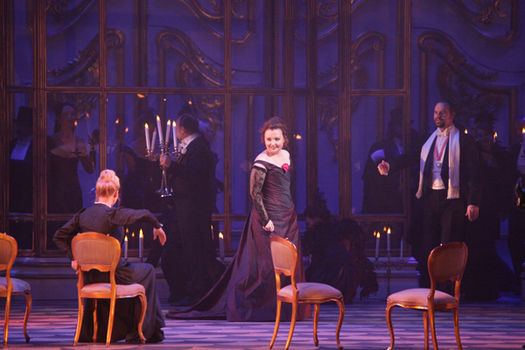
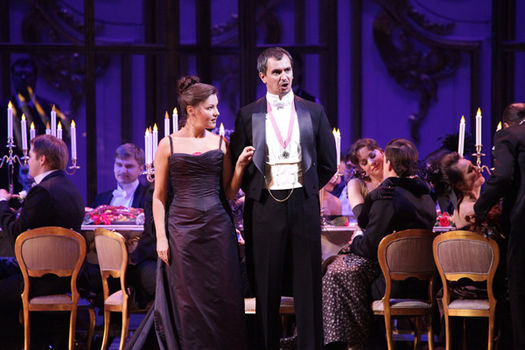
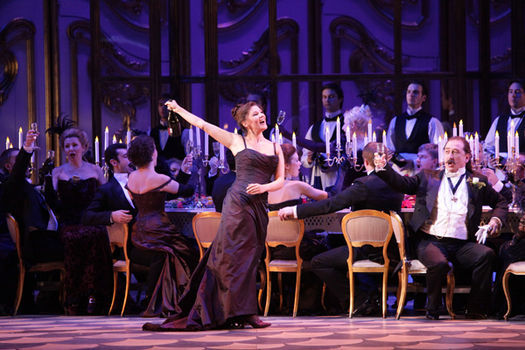
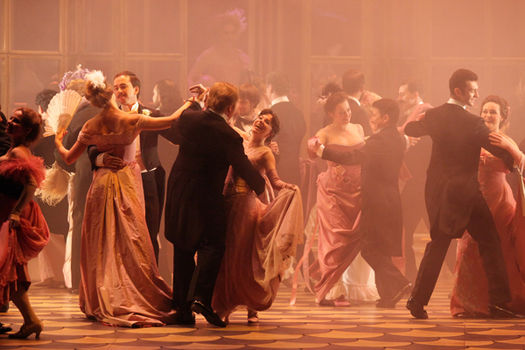
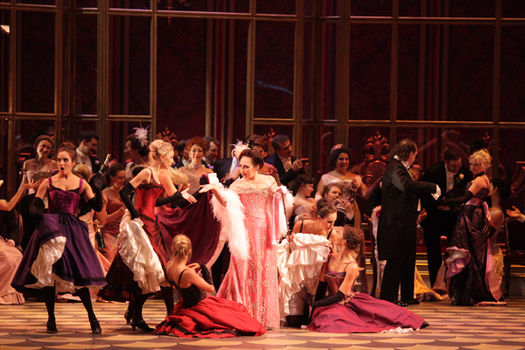
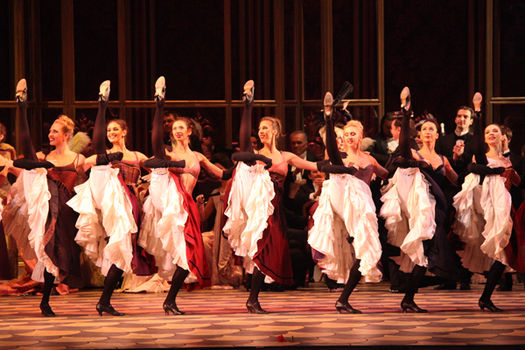
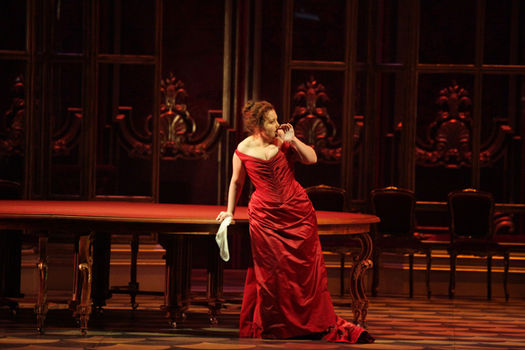
Variety is a scarce commodity in the glum little village depicted by Gaetano Donizetti and his librettist Felice Romani – the only prospects beyond the stifling confines of this backwater seem to be the illusion of a hero’s life as a soldier, even if it might lead to an untimely death.

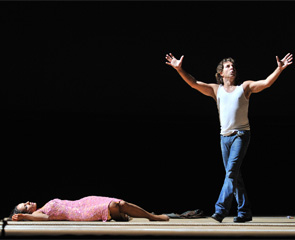
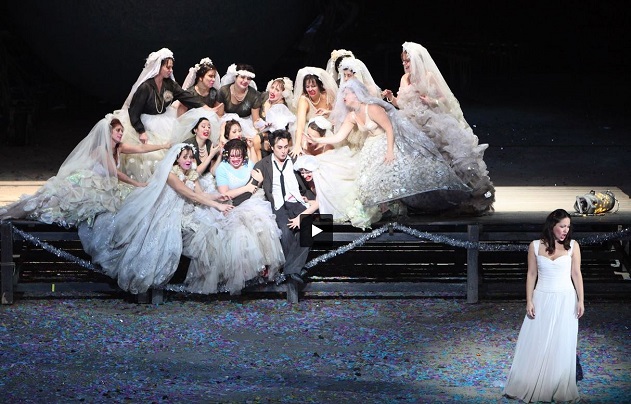
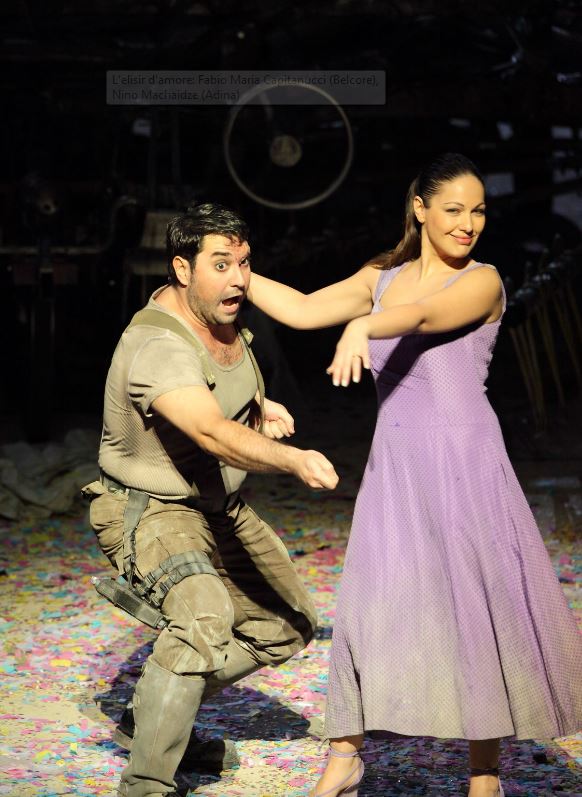
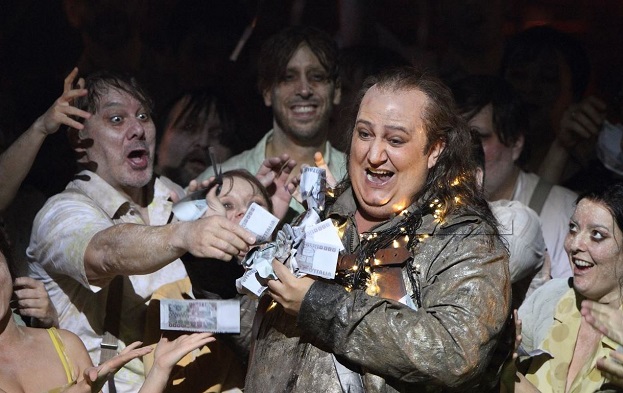
But what wonders a little bottle of Bordeaux can work! Shrinking violet Nemorino really turns up the volume courting Adina after just a couple of sips of the love elixir he purchased from miracle doctor, Dulcamara. And the potion promptly takes effect. Nemorino turns into a daredevil, preferring to die in battle rather than see his beloved Adina fall into the hands of strapping Sergeant Belcore. The ambitious Adina cannot resist the charms of the bold Nemorino – and even Dulcamara is flabbergasted at the energy and transformation released by his deception: this woebegone world of dolorous yearning is suddenly filled with color and fantasy.

And the listeners are left with the hope that this music might be able to transform them, too.
elisir3 elisir4

SYNOPSIS

Act One

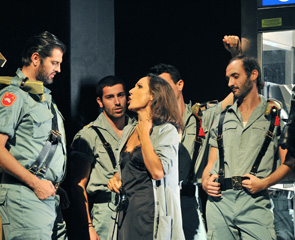
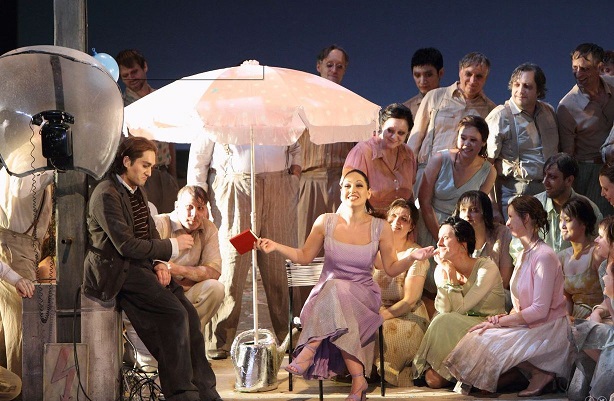
Nemorino is in love with Adina but has nobody in whom he can confide, least of all the woman he adores. He is full of admiration for her: she seems to him to be so clever and, above all, so very beautiful. He laments about himself, however, for being stupid and without means. For her part, Adina is interested in what she has just been reading, the story of Tristan and Isolde. She has also taken a fancy to Belcore, one of a detachment of soldiers stationed in the area. Belcore loses no time in proposing marriage to Adina the first time they meet – he urges her rapid acceptance – the wedding tomorrow and back to the battlefield the day after.
Nemorino is now forced to act: he begs for a word with Adina and tells her how desperately he loves her. But Adina rejects him, saying that his feelings are in vain and he should rather look after his sick old uncle.
elisir5 elisir6

A glimmer of hope now appears on the horizon for Nemorino, however, in the person of Dulcamara, who claims to be able to cure all the ailments in the world with his potions. Nemorino asks Dulcamara about the magic potion, an elixir of love, which he has heard Adina reading about in the story of Tristan and Isolde. Dulcamara, who never misses a chance to do business, sells the delighted Nemorino a love potion and promises him that the object of his passion will be his within twenty-four hours. Nemorino has hardly swallowed the elixir – which is a pure Bordeaux – before his self-esteem begins to grow. Nemorino no longer seems worried at the thought of Adina’s imminent wedding. This change in Nemorino, his seeming indifference, merely makes Adina defiant. She decides to marry Belcore that same day. Nemorino is horrified as he sees time working against him.
elisir7 elisir8

Act Two

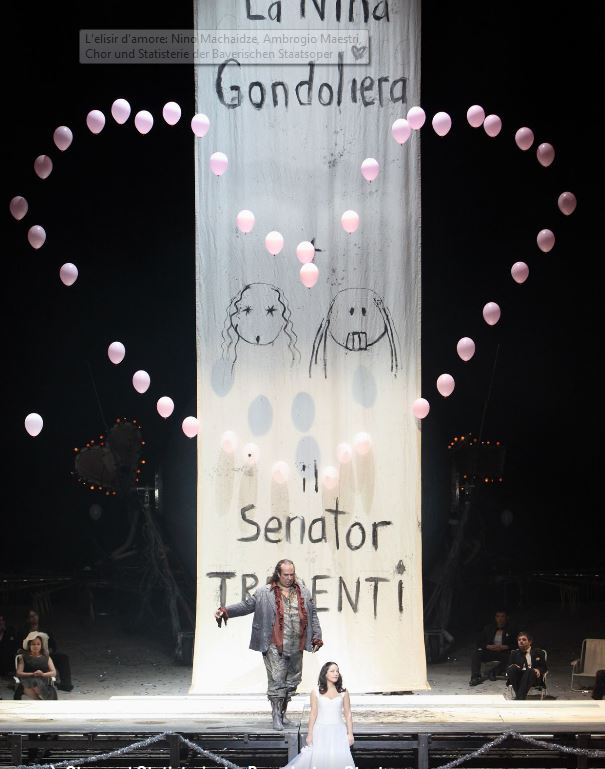
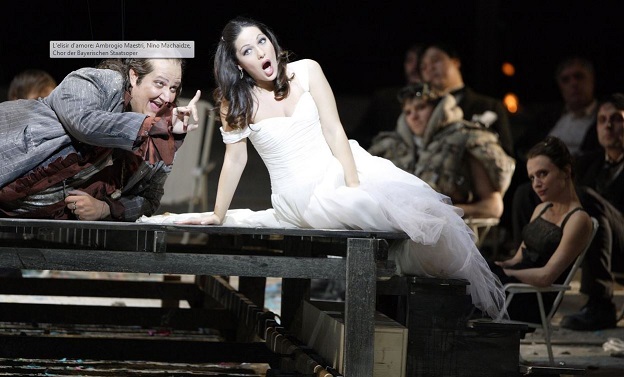
As part of the wedding celebrations Dulcamara wants to entertain the guests by singing a barcarolle with Adina; the story tells of how a young gondoliera, Nina, rejects a senator’s wealth in order to marry instead the poor young man, Zanetto, whom she loves.

Nemorino – now under pressure – asks Dulcamara for another dose of the elixir, but Dulcamara will not sell him one for less than 20 scudi and Nemorino no longer has enough money. Belcore, who sees in this a good opportunity to get rid of his rival, offers Nemorino 20 scudi if he will enlist in his regiment. Nemorino signs up with no hesitation.
elisir9 elisir10

When the rumour spreads that Nemorino’s uncle has died, leaving him a fortune, he suddenly becomes a good catch as a husband. Nemorino, who still has not heard the news, puts the amazing behaviour of the village girls down to the fact that the potion he has just bought and drunk is working. Adina, who also has no idea that Nemorino has become so wealthy, is astonished to see how popular he is with the girls – and learns from Dulcamara the supposed reason for Nemorino’s behaviour: the elixir. He also offers her a love potion but she declines with thanks – saying she prefers to rely on her own powers of judgement. Out of pity for Nemorino she buys him out of his contract with the military. Nemorino, however, would rather die on the battlefield than live without Adina. Adina finally admits her feelings for Nemorino and breaks her engagement to Belcore, who has no alternative than to follow orders and go off to war. Nemorino is overjoyed and puts his unexpected success with Adina down to Dulcamara’s potion – and the latter is also completely amazed by the miracles which his elixir has brought about.
elisir11 elisir12

Cast

Musikalische Leitung
Asher Fisch
Inszenierung
David Bösch
Bühne
Patrick Bannwart
Kostüme
Falko Herold
Licht
Michael Bauer
Dramaturgie
Rainer Karlitschek
Chor
Stellario Fagone

Adina
Ailyn Pérez
Nemorino
Matthew Polenzani
Belcore
Mario Cassi
Dulcamara
Ambrogio Maestri
Giannetta
Evgeniya Sotnikova
  • Bayerisches Staatsorchester
  • Chorus of the Bayerische Staatsoper
elisir13

Posted in OPera | Tagged , , , , | Leave a comment

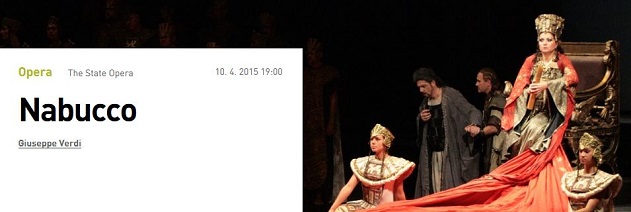
Nabucco in Prague

nabucconabuccodateConductor: Rastislav Štúr
Stage director: Karel Němec
Sets: Ulrich Hüstebeck
Costumes: Josef Jelínek
Chorus master: Adolf Melichar
Choreography: Otto Šanda

State Opera Orchestra

State Opera Chorus

Premiere: November 28, 1993

nabucco-1-1 nabucco-10

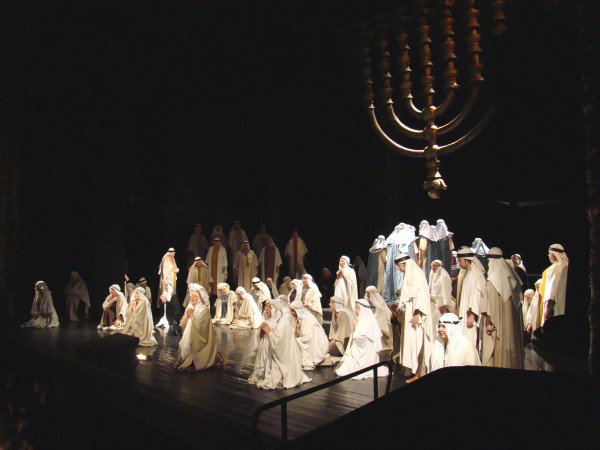
Nabucco (1842), Giuseppe Verdi’s third opera, was an immediate success. Yet it very nearly did not originate: the premiere of his second – comic – opera Un giorno di regno (A One-Day Reign) in 1840 was such a flop that the composer, heartbroken from the death of his wife Margherita, wanted to abandon his career as an opera creator. Only with difficulty did the impresario of Milan’s La Scala, Bartolomeo Merelli, persuade the less than thirty-year-old Verdi to set to music Temistocle Solera’s libretto treating an Old Testament theme. Under the command of Nabucco (Nebuchadnezzar), the Babylonians conquer Jerusalem, destroy the Temple of Solomon and subjugate the Jewish people.

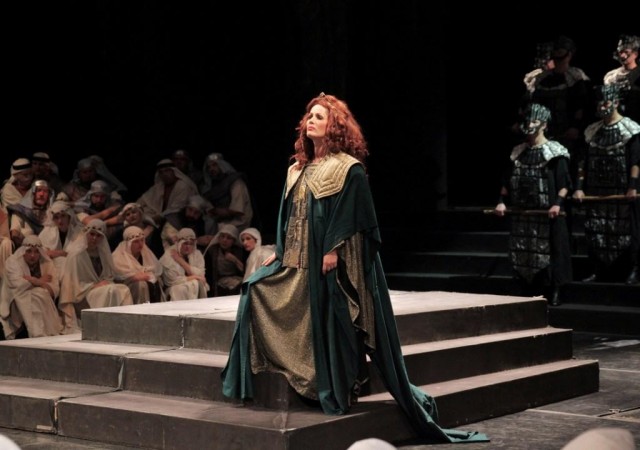
Nabucco, who is punished with madness by Jehovah, has to face machinations on the part of his supposed daughter, Abigaille. He ultimately admits his error and Jehovah’s power and gives the Jews back their freedom. The most impressive aspect of the opera is the mass scenes, one of which, the Chorus of Hebrew Slaves “Va, pensiero, sull’alli dorate” (Fly, thought, upon gilded wings) in Act 3, at the time became the expression of the Italian nation’s desire for independence and – together with the Triumph March from Verdi’s Aida – is among the most famous opera melodies there is. The premiere took place on 9 March 1842 at La Scala with Verdi’s second wife, Giuseppina Strepponi, in the role of Abigaille.

The opera is staged in Italian original version and Czech and English surtitles are used in the performance.

Photo: Greenberg, Josef Ptáček, Jan Kačír

Duration of the performance: 2 hours and 30 minutes, 1 intermission

nabucco-8 nabucco-11

nabuccocast1 nabuccocast2 nabuccocast3


nabucco-df-097web nabucco-df-338webnn

Posted in OPera | Tagged , , , | Leave a comment

Carmen in Barcelona

liceulogocarmenliceu

April 2015
Friday 17 20:00
Monday 20 20:00 PE
Thursday 23 20:00
Sunday 26 17:00
Wednesday 29 20:00
May 2015
Saturday (AD) 2

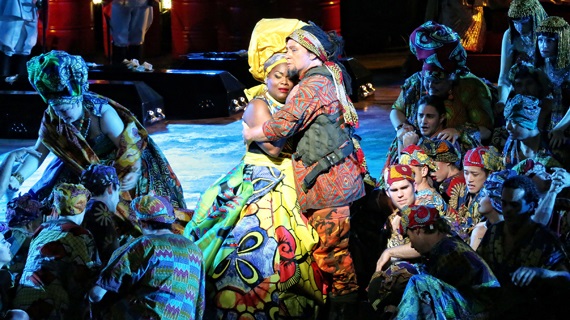
No sooner had Prosper Mérimée introduced the myth of the gypsy Carmen to the world in 1845 than she became the epitome of the femme fatale, an independent woman who rides rough-shod over the obstacles imposed by men, a sort of blank verse that threatens the rules of bourgeois, patriarchal society. Carmen is a worker, on the fringe of society, and a seductress. She lives and loves as she wishes and is predestined to tragedy by her radical sense of freedom. An officer, Don José, becomes infatuated with her, mistakes the promise of a night of love for a vow of eternal love, and finds himself drawn into a world of violence and lawlessness. Calixto Bieito’s production — set in a car cemetery in some southern land — shuns the folklore associated with Georges Bizet’s Carmen, though it does use patriotic clichés and symbols to call for women’s freedom in a male-dominated world.
Carmen-13Carmen-14


Carmen

Opéra-comique in four acts. Libretto by Henri Meilhac and Ludovic Halévy based on the novel by Prosper Mérimée. Music by Georges Bizet. Premiered on 2 March 1875 at the Opéra Comique in Paris. First Barcelona performance at the Teatre Líric on 2 August 1881. First staged at the Gran Teatre del Liceu on 26 January 1888. Last seen at the Gran Teatre del Liceu on 30 July 2011.
Carmen-01 Carmen-04 Carmen-05 Carmen-06

Conductor
Ainars Rubikis

Stage Direction
Calixto Bieito

Scenography
Alfons Flores

Costumes
Mercè Paloma

Lighting
Alberto Rodríguez

Co-production
Gran Teatre del Liceu, Teatro Massimo (Palermo), Teatro Regio (Turin) and La Fenice (Venice)

Symphony Orchestra and Chorus of the Gran Teatre del Liceu

Chorus director
Peter Burian

Cor Vivaldi-Petits Cantors de Catalunya
Children’s chorus director
Peter Burian

Carmen-09 Carmen-10 Carmen-11 Carmen-12

CAST
Zuniga Giovanni Battista Parodi
Moralès Àlex Sanmartí
Don José Nikolai Schukoff
Escamillo Massimo Cavalletti
Dancaïre Marc Canturri
Remendado Francisco Vas
Frasquita Núria Vilà
Mercédès Itxaro Mentxaka
Carmen Béatrice Uria-Monzon
Micaëla Evelin Novak

Carmen-16Carmen-17

Posted in OPera | Tagged , , , | Leave a comment

Turandot at the National Theatre in Prague

nationaltheatreturandot

Libretto: Giuseppe Adami, Renato Simoni
Conductor: Richard Hein
Stage director: Václav Věžník
Sets: Ladislav Vychodil
Costumes: Josef Jelínek
Chorus master: Adolf Melichar
Choreography: Otto Šanda

State Opera Orchestra

State Opera Chorus

Premiere: September 15, 1995

PERFORMANCES:

April 2015

  • 08 Wednesday

May 2015

  • 24 Sunday

June 2015

  • 16 Tuesday

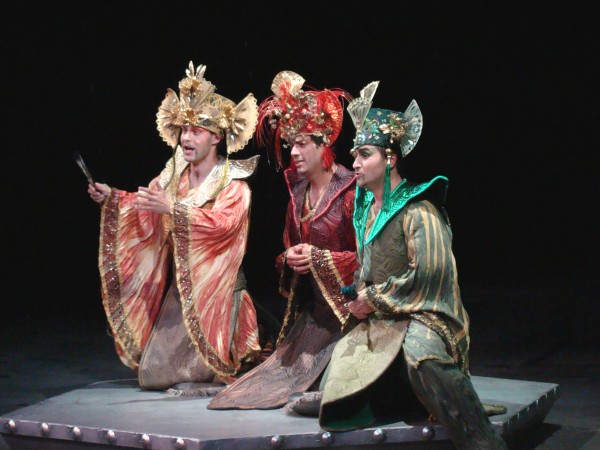
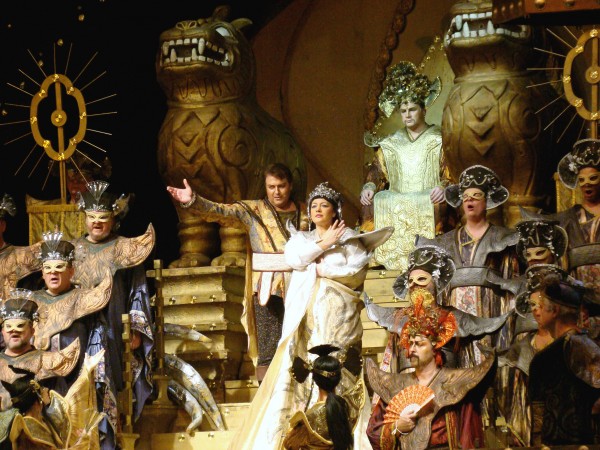
turandot-2 turandot-3 turandot-5
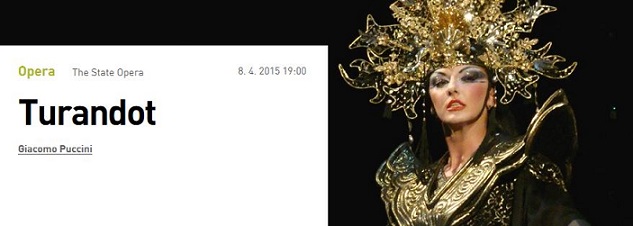
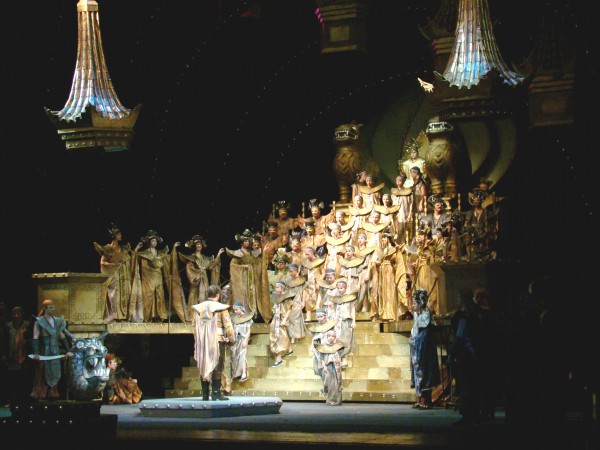
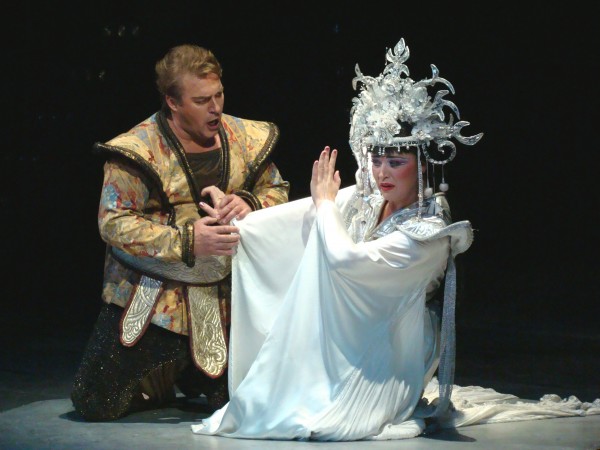
The Persian fairy-tale Turandot from the dervish Mokles’s 17th-century collection The One Thousand and One Nights has inspired numerous poets and composers. Giacomo Puccini worked on Giuseppe Adami and Renato Simoni’s libretto, based on Carlo Gozzi’s play, in the final years of his life, when he was fighting cancer of the larynx. Just as in the case of Madama Butterfly, he diligently strove to gain thorough knowledge of the culture and songs of an exotic, faraway land (in this case China). Puccini died before he managed to complete the opera: the task was undertaken by his friend and pupil Franco Alfano, who drew upon the 36 pages of sketches left by the composer.

The opera was premiered on 25 April 1926 at Milan’s La Scala, conducted by Arturo Toscanini, who paid tribute to the late Puccini when in Act 3, after the words “Liu, poesia!”, he laid down his baton, turned to the audience and announced: “Here the opera ends, because at this point the maestro died”. Alfano’s finale was only included in the next performance. The cruel and beautiful Princess Turandot tests her wooers with riddles and when they fail they are duly executed. Only Prince Calaf succeeds, and his love ultimately overwhelms Turandot’s coldness.

The opera is staged in Italian original version and Czech and English surtitles are used in the performance.

Photo: Dan Jäger

Duration of the performance: 2 hours and 40 minutes, 2 intermissions

turandot-8 turandot-9 turandot-13

CAST

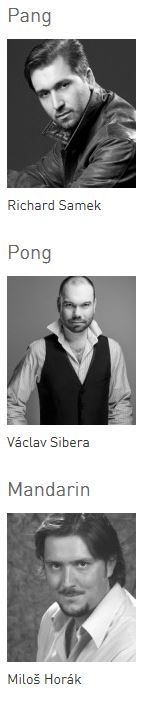
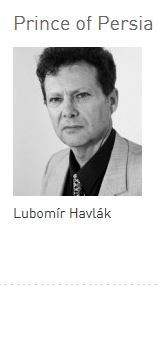
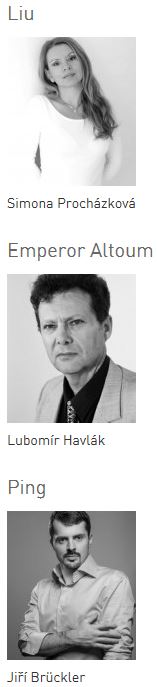
turandotcast1 turandotcast2


turandotcast3 turandotcast4

Posted in OPera | Tagged , , , , | Leave a comment

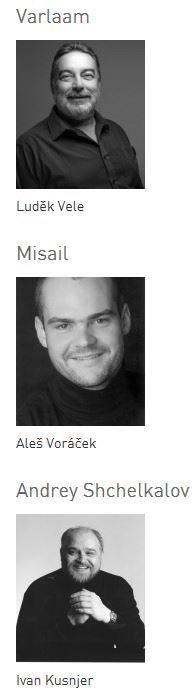
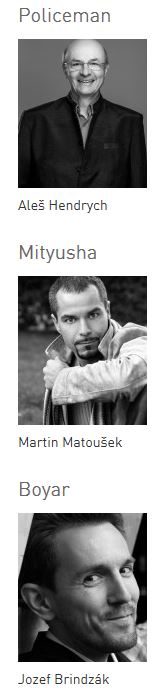
Boris Godunov at the State Opera in Prague

boris

nationaltheatre

Musical preparation: Petr Kofroň
Conductor: Petr Kofroň
Stage director: Linda Keprtová
Sets: Jan Štěpánek
Costumes: Eva Jiřikovská
Chorus master: Pavel Vaněk, Lukáš Vasilek, Jiří Chvála
Dramaturgy: Ondřej Hučín
Motion cooperation: Marcela Benoni
b-godunov-3381 b-godunov-3611 boris-godunov-foto-hana-smejkalova-2

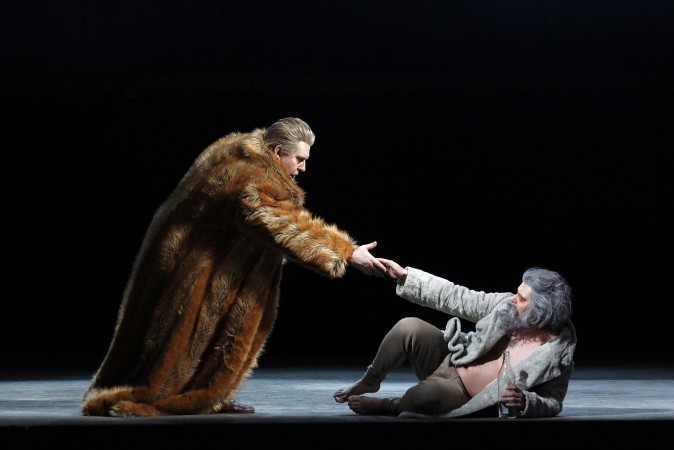
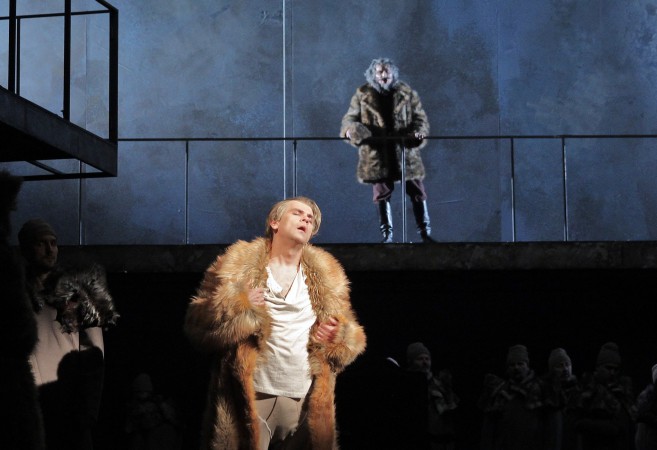
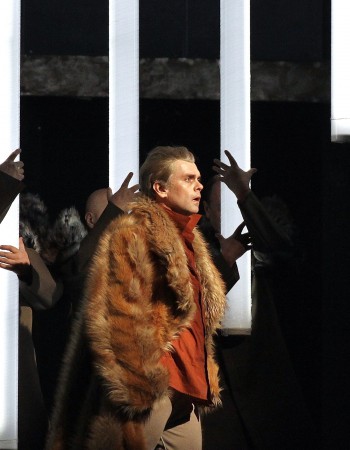
Even though one of the most celebrated historical operas of all time bears the name of a prominent Russian Tsar, Boris Godunov is not the one and only lead character in Mussorgsky’s fresco. Similarly to A. S. Pushkin’s eponymous drama, the opera is a Shakespearean, multivalent and multilayered study of human society on the threshold of a crisis – a crisis of authority, traditions and law, a crisis of morals. Pushkin ironically referred to his play as “a comedy about the real misery of the Moscow state, about Tsar Boris and Grishka Otrepyev”. Yet it is a comedy that chills. Following the death of the last Rurik dynasty members Ivan the Terrible and his sons Fyodor and little Dimitry, the Russian throne is vacated. At the time when there is no heir apparent, legitimate is the one who does the most to make himself legitimate and knows that the ends justify the means. Who will win over the ignorant common people believing in tall stories? Who will better cope with the mean tricks of the Boyars participating in the country’s administration? Who will be able to resist the pangs of conscience in himself? Welcome to the time of Griskhas, the time of self-appointed usurpers.

Duration: 3 hours and 15 minutes. One intermission.

boris-godunov-foto-hana-smejkalova-15 boris-godunov-foto-hana-smejkalova-17

Next
performances

April 2015

  • 07 Tuesday
  • 26 Sunday

May 2015

  • 24 Sunday
  • 31 Sunday

CAST

cast1 cast2cast3


cast4cast5cast6


boris-godunov-foto-hana-smejkalova-8Photos by Hana Smejkalova

Posted in OPera | Tagged , , | Leave a comment

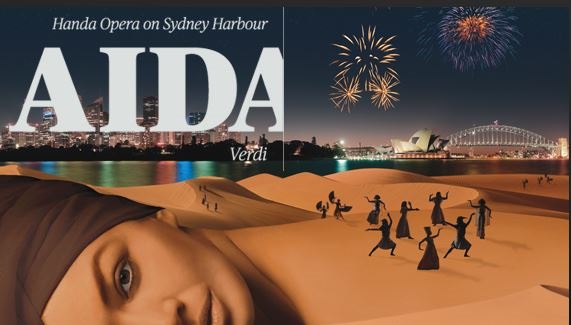
Handa Opera on Sydney Harbour – Aida

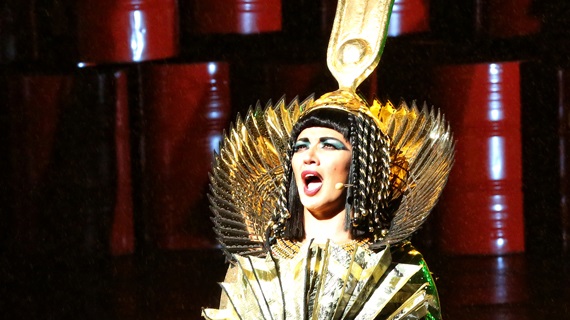
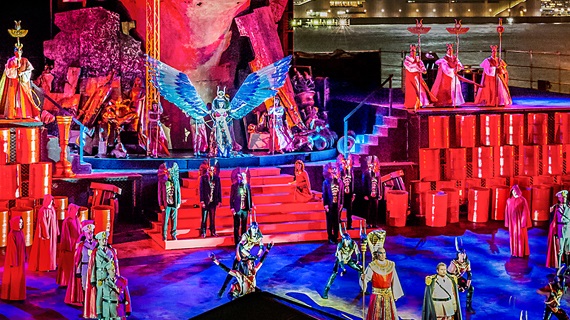
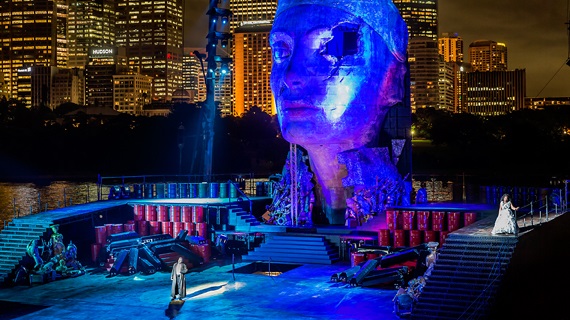
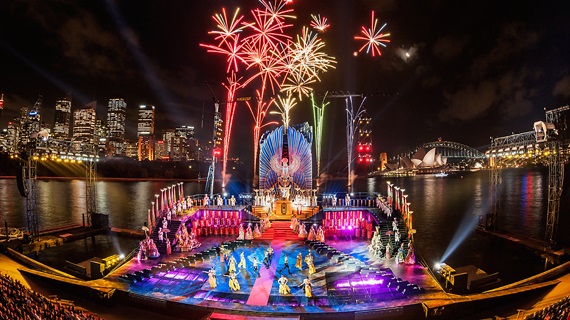
aidasidneyWhat grander setting could there be for such an opera than Sydney Harbour itself: awash with the light of the city and the Sydney Opera House silhouetted against the setting sun?

Description

In Aida, Verdi masterfully puts the intimate affairs of the heart against the grandeur of the universe: where kingdoms rise and fall and the sands of time grind onwards.

Handa Opera on Sydney Harbour has become a huge part of the cultural landscape, combining all of the things Sydney does best: world-class opera, champagne and fine dining, sunsets and spectacle on the harbour’s edge.

It’s a monumental undertaking, with a team of more than 700 people involved in the project before a single note is heard over the harbour.

Aida is the biggest opera we’ve ever performed on the opera stage. But amid all of the spectacle, the famous ‘Triumphal March’, battle scenes and ancient temples, there’s an emotional heart.

Long after the fireworks have faded from the sky and Amneris sings her quiet, concluding prayer, you’ll see the true mastery of this opera: it is at once an historic epic and an utterly relatable human tragedy.

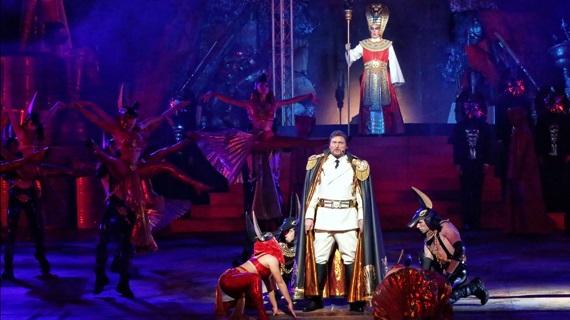
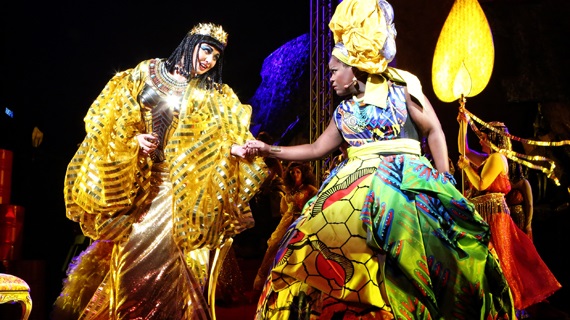
A setting like this demands a spectacular opera, so prepare for a performance of huge proportions. A royal love triangle, a war, and the famous ‘Triumphal March’ with Egyptians en masse will light up the waters of Sydney’s magnificent harbour.

Performed in Italian with English translations.aidasidney1 aidasidney2 aidasidney4


Artist Information

CONDUCTOR Brian Castles-Onion
DIRECTOR Gale Edwards
SET & COSTUME DESIGNER Mark Thompson

AIDA Latonia Moore/ Daria Masiero
RADAMÈS Walter Fracarro/ Arnold Rawls
AMNERIS Milijana Nikolic/ Jacqueline Dark
AMONASRO Michael Honeyman/ Warwick Fyfe
RAMFIS David Parkin/ Conal Coad
THE KING Gennadi Dubinsky
HIGH PRIESTESS Eva Kong
MESSENGER Benjamin Rasheed

aidasidney5 aidasidney6 aidasidney8 aidasidney9

 Performance Dates

aidasidney3 aidasidney11 aidasidney12 aidasidney13 aidasidney14

Reviews

“A bold, sumptuous vision” – Sydney Morning Herald

“The most spectacular harbourside production so far” – The Australian

“Spectacle all the way” – Daily Telegraph

“Grand and breathtaking” – The AU Review

Posted in OPera | Tagged , , , | Leave a comment

Rusalka at the National Theatre in Prague

nationaltheatre

rusalka

Libretto: Jaroslav Kvapil
Conductor: Jiří Štrunc
Stage director: Zdeněk Troška
Sets: Milan Ferenčík
Costumes: Josef Jelínek
Chorus master: Adolf Melichar
Choreography: Dana Morávková
Dramaturgy: Jitka Slavíková

State Opera Orchestra

State Opera Chorus

Premiere: May 5, 2005

rusalka-so-2 rusalka-so-a-polackova rusalka-so-df-018hsmejkalova rusalka-so-df-027hsmejkalova

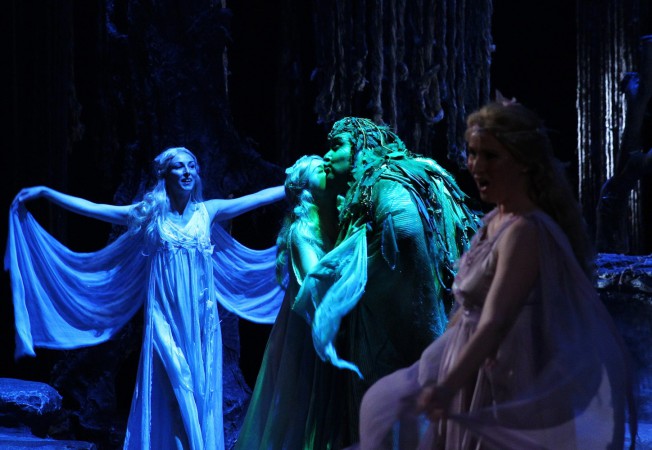
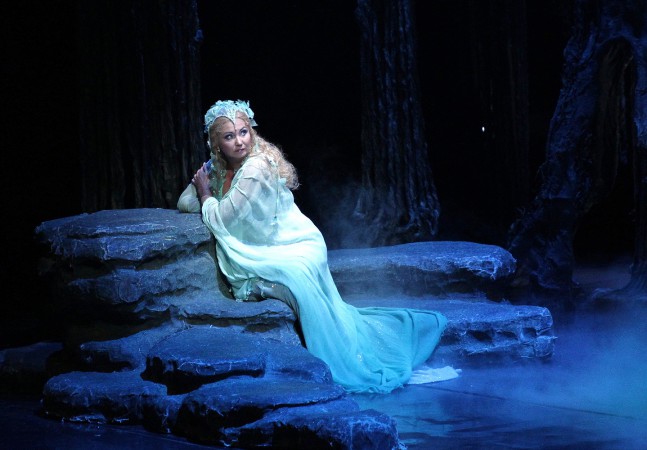
Antonín Dvořák based his most beautiful opera on the fairy tale The Little Mermaid by the famous Danish author Hans Christian Andersen. Pursuant to the story, the Czech poet Jaroslav Kvapil wrote one of the most poetic opera librettos there is. No wonder then that the fruit of the co-operation between the two creators, who were close both as artists and friends, was a magical, dreamy story of great, unfulfilled desire of the water nymph Rusalka, a work in which Dvořák’s musical genius reached its apex. The fairy-tale atmosphere inspired the composer to create singular, impressionistic music replete with melodic imagination and masterful instrumentation, a suggestive expression of the play of waves and the reflection of moonlight on the surface of a lake, as well as the magic of a fairy-tale dream. Since its premiere in 2005, the production of Rusalka directed by the popular film maker Zdeněk Troška has been one of the most successful titles performed at the State Opera.

The opera is staged in Czech original version and English surtitles are used in the performance.

Photo: František Ortmann

Duration of the performance: 3 hours and 10 minutes, 2 intermissions

rusalka-so-df-263hsmejkalova rusalka-so-df-288-hsmejkalova so-rusalka-053web so-rusalka-135web

PERFORMANCES

April 2015

  • 07 Tuesday

May 2015

  • 21 Thursday

June 2015

  • 24 Wednesday

August 2015

  • 28  Friday

CAST

rusalkacast1rusalkacast2


rusalkacast3 rusalkacast4


so-rusalka-467web so-rusalka-543web

Posted in OPera | Tagged , , , , | Leave a comment

Lohengrin in Oslo


logonorwaylohengrinOslo


4 hours and 20 minutes/ 2 intermissions

  • Performed in German/ Texted in Norwegian and English
  • 8 productions / From March 8. to April 11.
  • Premier March 8. 2015 / Main House / Opera

lohengrin3

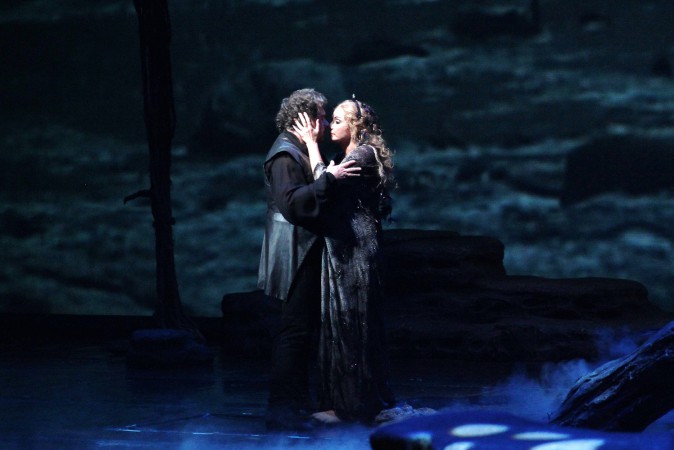
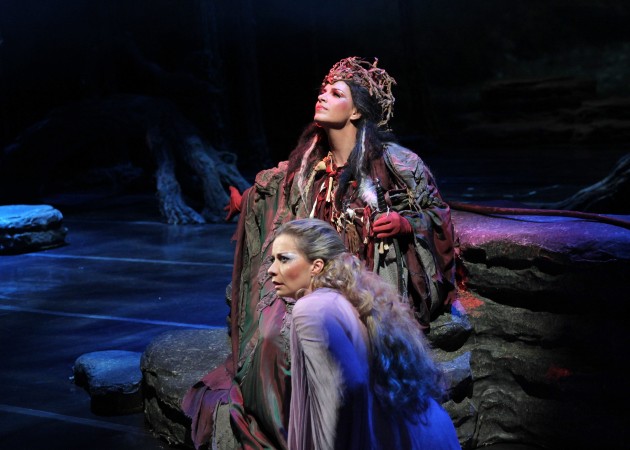
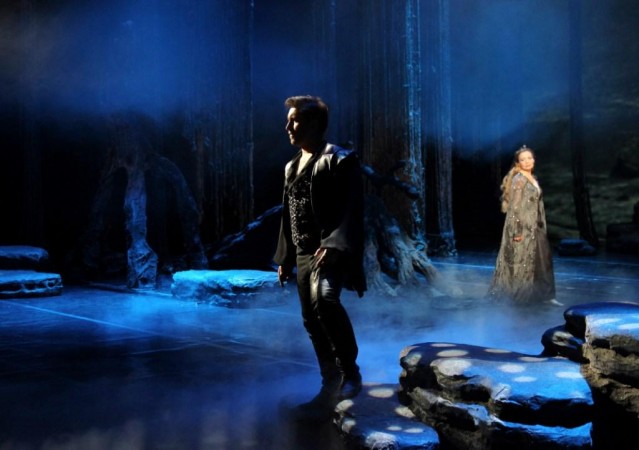
Lohengrin is Richard Wagner’s most romantic opera, with the premiere in 1850. This new production of Lohengrin by Johannes Erath is based on the universal conflict that is set out in Wagner’s music drama: between blind faith on the one hand and the need for knowledge and wisdom on the other.

Surrendering to a belief can truly be a blessing; however, with the human desire to see and understand, it can also lead to an intolerable situation. In a new light, love and trust can turn into naivety and ignorance.

Elsa of Brabant has been accused of the most heinous of crimes: murdering her brother. But one day a mysterious man who promises to help her appears. The price she must pay for his aid – and his love – is never to ask where he comes from, who he is or what he represents. But is this man truly the redeemer, or is he seeking his own redemption? And will Elsa be able to refrain from asking those questions?

lohengrin4 lohengrin5Together with the set designer Kaspar Glarner and the costume designer Christian Lacroix, Erath has maintained the fairy tale of the Lohengrin story, which is given a striking visual expression.

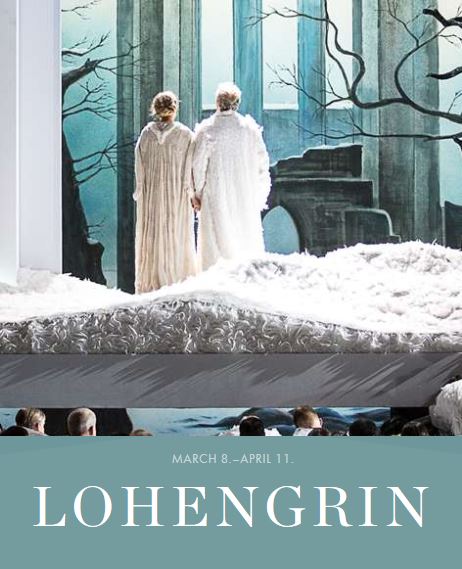
When the production first premiered in Graz September 2013, the utterly aesthetic sceneries were critically acclaimed. These are inspired by Caspar David Friedrich’s dramatic-romantic paintings of the monastery graveyard in the snow, encountering clean modernist surfaces – as an expression of the new world and the new art that Richard Wagner dreamed of. In this way, the story unfolds between different worlds and time levels, all while pointing to our eternal need for dreams, faith and fairy tales in the face of the ever-changing realities.

lohengrin7 lohengrin8

John Fiore Lecture Show and free introduction one hour before the performance.

  • Music and libretto : Richard Wagner
  • Conductor : John Helmer Fiore
  • Direction : Johannes Erath
  • Assisting direction: Mika Blauensteiner
  • Set design : Kaspar Glarner
  • Costumes : Christian Lacroix
  • Dramaturgy: Francis Hüsers, Bernd Krispin
  • Light design: Bernd Purkrabek

lohengrin6

  • Cast : The Opera Chorus, The Opera Orchestra

Main roles

  • Heinrich

    portrett_magne_fremmerlid
    Playing the following days
    • 4/11/2015
    • 4/7/2015
    • 3/28/2015
    • 3/25/2015
    • 3/22/2015
    • 3/14/2015
    • 3/11/2015
    • 3/8/2015
  • Lohengrin

    Paul_Groves
    Playing the following days
    • 4/11/2015
    • 4/7/2015
    • 3/28/2015
    • 3/25/2015
    • 3/22/2015
    • 3/14/2015
    • 3/11/2015
    • 3/8/2015
  • Elsa

    gravrok1
    Playing the following days
    • 4/11/2015
    • 4/7/2015
    • 3/28/2015
    • 3/25/2015
    • 3/22/2015
    • 3/14/2015
    • 3/11/2015
    • 3/8/2015
  • Telramund

    krinstiansen
    Playing the following days
    • 4/11/2015
    • 4/7/2015
    • 3/28/2015
    • 3/25/2015
    • 3/22/2015
    • 3/14/2015
    • 3/11/2015
    • 3/8/2015
  • Ortrud

    Elena_Zhidkova


SYNOPSIS

First Act

Elsa, daughter of the deceased Count of Brabant, is accused of murdering her brother Gottfried in order to help her secret lover seize the throne. The dispute is to be settled in the presence of the German King Henry via an ordeal by combat, the result of which will be taken as God’s judgement.

Elsa’s accuser, Friedrich von Telramund, is ready to fight. He once proposed to Elsa but was refused. However, Elsa has nobody to fight for her – until a miracle occurs: the Knight whom Elsa has dreamed of marrying comes to her aid, led there by a swan. He defeats Friedrich. But first, Elsa must promise never to ask the Knight his name and where he comes from.

Second Act

Ortrud, Friedrich von Telramund’s wife and the daughter of the old Duke of Frisia, puts her trust in dark magic and the pagan gods. Along with Friedrich she listens to the sounds of merry-making in the palace from which the pair are banished. They are out for revenge. Elsa, who has come out to breathe the fresh night air, takes pity on Ortrud and says that she must accompany Elsa into the church when she is married.

The sun rises.The Herald announces that Friedrich von Telramund is now outlawed, and that the Knight is appointed Commander of the Army and the Duke of Brabant. Four nobles from Brabant nevertheless join Friedrich.On the way into the church, the bridal procession is held up by Ortrud and Friedrich, who deride the unknown origins of the Knight and try to persuade Elsa to ask her bridegroom his name and where he comes from. But Elsa is unshakeable: her love will overcome the power of doubt. The wedding ceremony takes place in the church.

Third Act

As the bridal chorus fades, Elsa and her husband find themselves in the bridal chamber, alone together for the first time. Their love is about to be consummated, but Elsa can hold back no longer: of course she should know the name of her bridegroom before giving herself to him. He must be known to her. The Knight tries to stop her, but it is already too late: Elsa must know his name and where he comes from.

Suddenly Friedrich von Telramund bursts into the room, and the Knight kills him in self-defence. Once again, they must all gather in front of the king, where the Knight will answer Elsa’s questions for all to hear.Trumpets summon people and troops to King Henry once more.

Friedrich’s corpse is brought in, and the Knight relates the story of the previous night’s attack and of Elsa’s questions. He was sent from Montsalvat as the Knight of the Holy Grail, but now that his identity has been revealed, he can no longer stay. The Grail has already summoned him home. His father is King Parsifal, and his own name is Lohengrin. He greets the swan, which has arrived to lead him home, and bids them farewell.

In hateful triumph, Ortrud announces that the swan is the enchanted Gottfried. Lohengrin sends up a prayer and Gottfried, released from his enchantment, steps forward as the rightful Duke of Brabant.But Elsa falls to the ground dead.

Posted in OPera | Tagged , , , , | Leave a comment

Italian American Museum Presents “Signora Rossini: A Celebration of the Life of Isabella Colbran”

Signora Rossini: A Celebration of the Life of Isabella Colbran

whitelogo2Presents
Signora Rossini:
A Celebration of the Life of Isabella Colbran

rossinibride

Presented by

Divaria Productions

http://www.DivariaProductions.com

isabella-colbranDivaria Productions presents a preview of Sergio Ragni’s book based on the life of Spanish born opera singer, Isabella Colbran at the Italian American Museum this Thursday, April 2nd. Colbran (1785-1845), was the toast of opera stages throughout Europe in the early 19th century and subsequently became the wife of Italian opera composer Gioacchino Rossini (1792-1868). She collaborated with Rossini in the creation of a number of roles that remain in the repertory to this day. She was also the composer of four collections of songs.

About Divaria Productions:

Gioacchino Rossini

Gioacchino Rossini

Founded in 2011, Divaria Productions is dedicated to making extremely high quality opera both accessible and approachable, providing emerging artists with a platform to perform their work and reaching out to people who might otherwise be unable to attend opera including patients with Alzheimers’ and other ailments. To achieve our mission, we seek to create one of a kind quality experiences in intimate settings that make opera easy to digest and entertaining for a modern audience. Highlights of recent seasons have included the American premiere of Offenbach’s rare comedic operetta “The Babysitter” with the Salome Chamber Orchestra Hamptons Festival and partnering with the Italian Culture Institute of New York and the Basilica of St. Patrick’s Old Cathedral in an event commemorating the 175th anniversary of the death of Lorenzo Da Ponte, famous librettist for Mozart’s operas, first professor of Italian at Columbia University and one of New York’s first Italian immigrants.

Thursday, April 2nd, 6:00 P.M.

Italian American Museum

155 Mulberry Street

(Corner of Grand and Mulberry Streets)

New York, NY 10013

Suggested donation of $10 per person

RSVP Code: Rossini0402

For reservations, please call the

Italian American Museum at (212) 965-9000

or

email: ItalianAmericanMuseum@gmail.com

Posted in Lectures | Tagged , , , | Leave a comment

La Traviata at the Bolshoi in Moscow

bolshoilogo

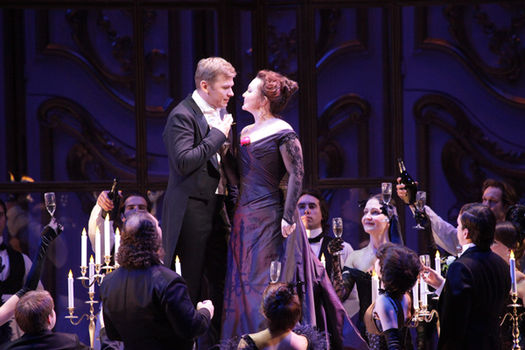
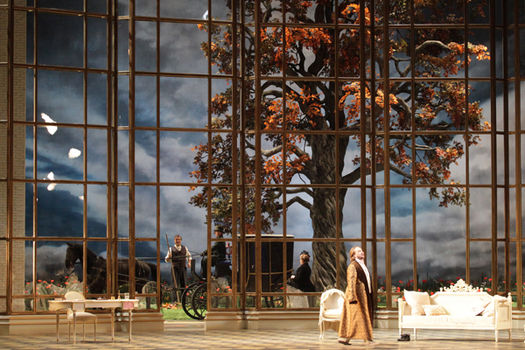
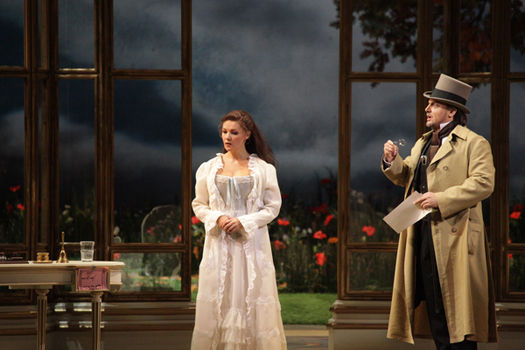
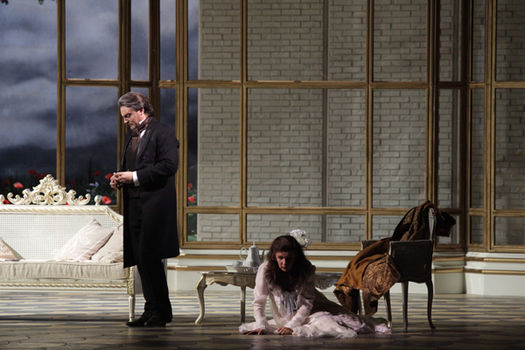
traviata

April 7, 8, 9, 10, 2015
June 10, 2015

Premiered on October 7, 2012.

Sung in Italian with Russian surtitles.

Running time: 2 hours 40 minutes.
Presented with one interval.

Libretto by Francesco Maria Piave based on the novel La dame aux Camélias by Alexandre Dumas, fils

Music Director: Laurent Campellone
Stage Director: Francesca Zambello
Associated Director: Julia Pevzner
Set Designer: Peter John Davison
Costume Designer: Tanya McCallin
Lighting Designer: Mark McCullough
Chorus Master: Valery Borisov
Choreographer: Ekaterina Mironova

preview_Traviata-1-photo-by-Damir-Yusupov preview_Traviata-2-photo-by-Damir-Yusupov preview_Traviata-3-photo-by-Damir-Yusupov preview_Traviata-4-photo-by-Damir-Yusupov

CAST

Conductor

Tugan Sokhiev
Violetta Valéry Dinara Alieva
Flora Bervoix Irina Dolzhenko
Annina Irina Udalova
Alfredo Germont Murat Karahan
Giorgio Germont, Alfredo’s father Vasily Ladyuk
Gastone, viscomte De Letorières Marat Gali
Baron Douphol Otar Kunchulia
Marquis D’obigny Nikolai Kazansky
Doctor Grenvil Daniil Chesnokov
Giuseppe, Violetta’s servant Vadim Tikhonov

preview_Traviata-5-photo-by-Damir-Yusupov preview_Traviata-6-photo-by-Damir-Yusupov preview_Traviata-7-photo-by-Damir-Yusupov preview_Traviata-8-photo-by-Damir-Yusupov

Synopsis

Part One
Alfredo Germont arrives at a party at the home of Violetta Valéry, a renowned courtesan. She is surprised to learn of his devotion to her, and of his concern during her recent illness. Alfredo leads a toast to love; Violetta responds with a toast to pleasure and excitement. Feeling faint, she excuses herself to rest. Alfredo follows and begs her to allow him to love and care for her. She tells him she is not interested in such heroic commitment, but invites him to return the next day. Alone, she wonders if she is capable of experiencing love. Dismissing the idea as nonsense, she determines to live for freedom and pleasure alone.

preview_Traviata-9-photo-by-Damir-Yusupov preview_Traviata-10-photo-by-Damir-Yusupov preview_Traviata-11-photo-by-Damir-Yusupov preview_Traviata-12-photo-by-Damir-Yusupov

Violetta flees her extravagant life in Paris to be with Alfredo. After learning that she plans to sell her belongings to maintain their country retreat, Alfredo goes to Paris to pay their debts. While he is away, Giorgio Germont visits Violetta. He tells her that Alfredo, his son, intends to give her all his possessions. She tells the elder Germont that she would never accept and reveals that she is making sacrifices to maintain their life together. Although impressed by her nobility, Germont begs her to leave his son, as her association with the family will ruin his daughter’s future prospects. Violetta finally agrees, asking only that, after her death, Germont tell his daughter the truth. Later, when Alfredo receives a letter from Violetta, claiming she no longer loves him, he is devastated.

preview_Traviata-13-photo-by-Damir-Yusupov preview_Traviata-14-photo-by-Damir-Yusupov preview_Traviata-15-photo-by-Damir-Yusupov preview_Traviata-16-photo-by-Damir-Yusupov

Part Two
Violetta attends a party with her new protector, Baron Douphol. The men gamble, and Alfredo is the winner. Violetta pulls Alfredo aside and begs him to leave; he refuses and threatens to duel with the Baron. Unable to break her promise to the elder Germont, Violetta insists that she loves the Baron. Furious and hurt, Alfredo calls the guests together and publicly insults Violetta.

preview_Traviata-17-photo-by-Damir-Yusupov preview_Traviata-19-photo-by-Damir-Yusupov preview_Traviata-20-photo-by-Damir-Yusupov preview_Traviata-22-photo-by-Damir-Yusupov

Now on her deathbed and tended by Annina, Violetta re-reads a letter from Giorgio Germont. According to the letter, Alfredo went abroad after dueling with the Baron; his father wrote to him there, explaining Violetta’s sacrifice. Alfredo arrives, asking forgiveness and pledging eternal love. Violetta expresses hope for their future together, but she is very weak. Alfredo sends Annina for the Doctor. He arrives with Giorgio Germont, who reproaches himself for his earlier behavior toward Violetta. He asks forgiveness and pledges to accept her as a daughter, but he is too late.

preview_Traviata-23-photo-by-Damir-Yusupov preview_Traviata-24-photo-by-Damir-Yusupov

Photos by Damir Yusupov

Posted in OPera | Tagged , , | Leave a comment