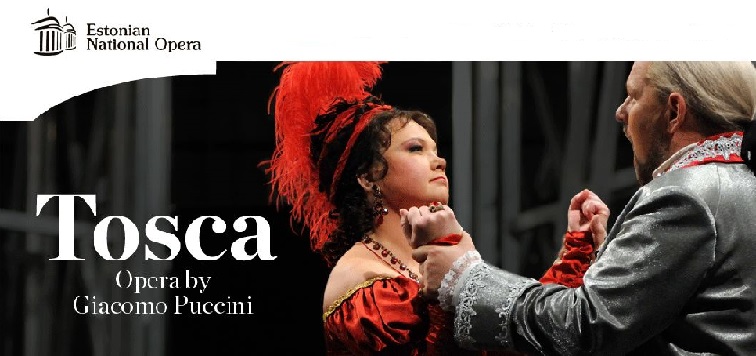
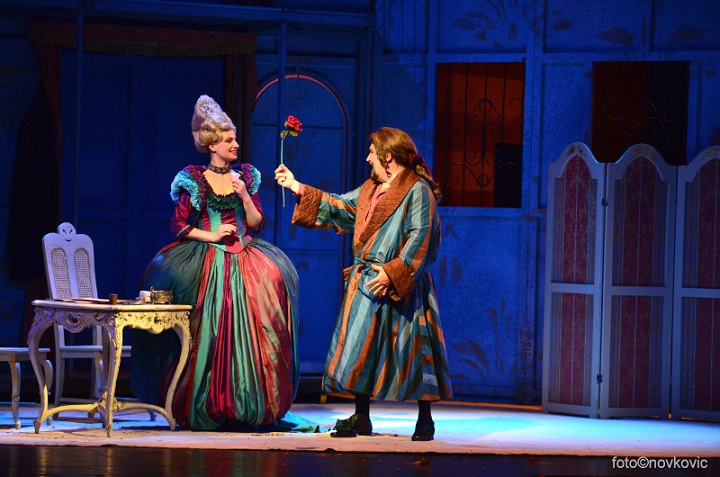
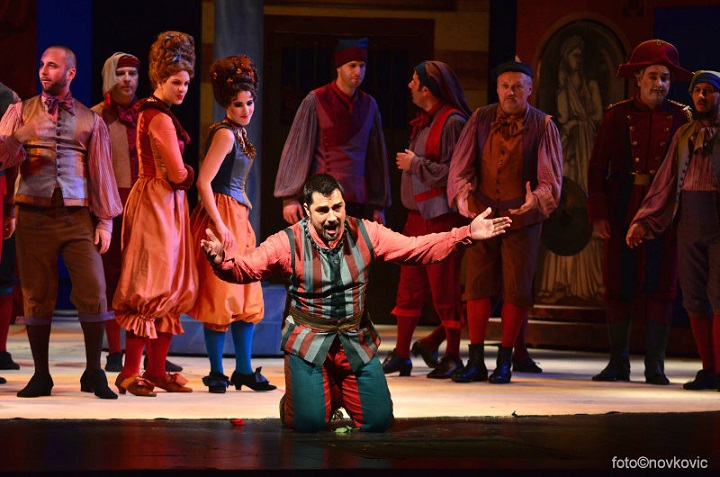
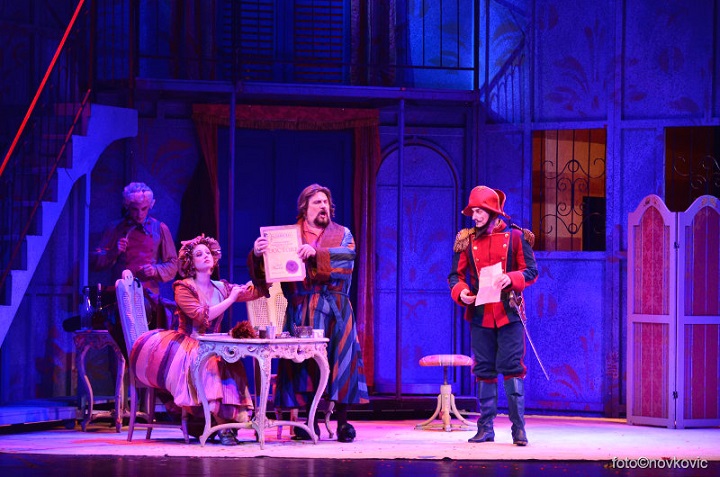
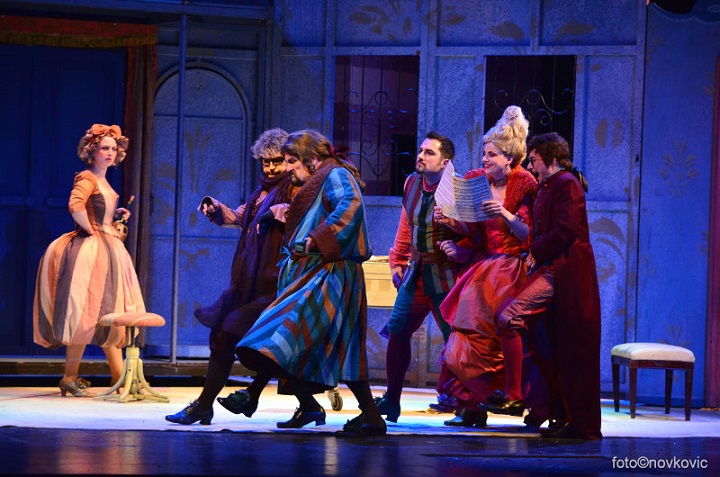
Tosca in Estonia

tosca

Tosca

Opera by Giacomo Puccini in three acts with two intervals

Libretto by Giuseppe Giacosa and Luigi Illica after Victorien Sardou’s play of the same name
Premiere on 13 May 2005

Sung in Italian with subtitles in Estonian and English
Approx. running time 2 h 50 min, two intermissions
March 12 & 14 2015, Cavaradossi sung by Carlo Barricelli (Italy)

T, 12 March 2015 / 19:00
S, 14 March 2015 / 19:00

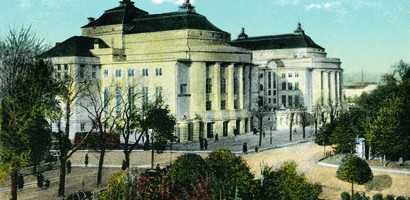
Tallinn Opera House Main Theater, Estonia

Tallinn Opera House Main Theater, Estonia

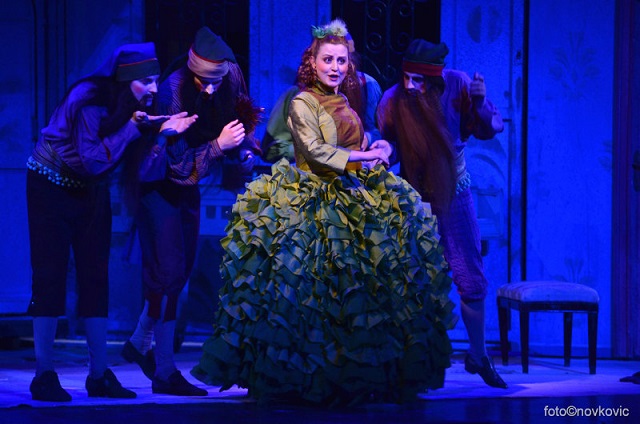
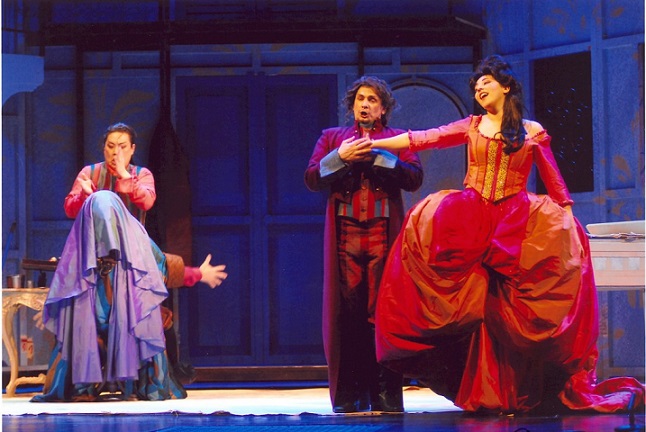
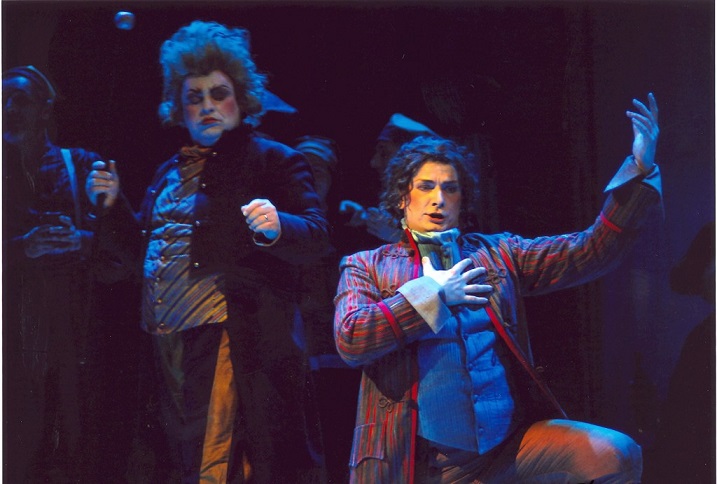
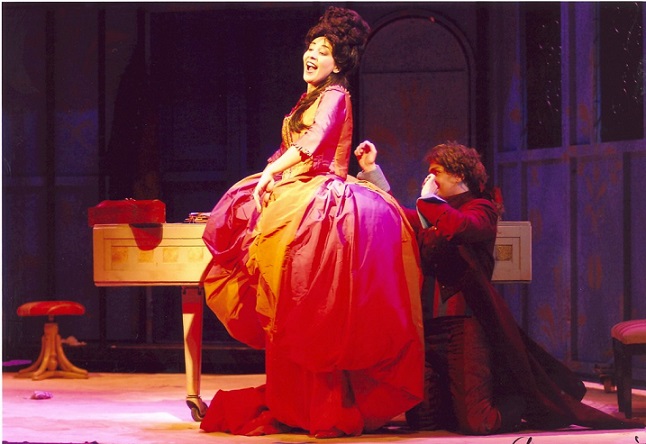
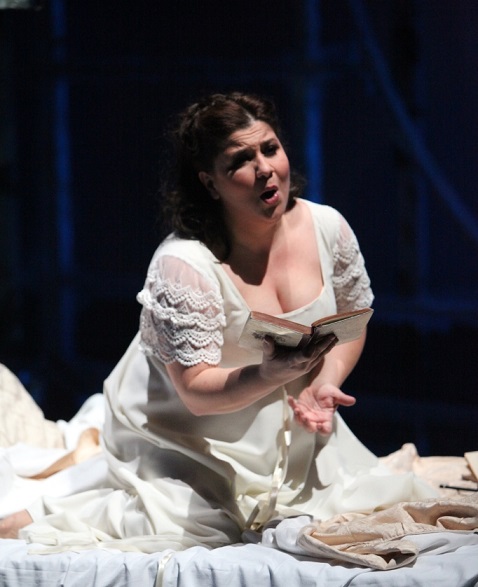
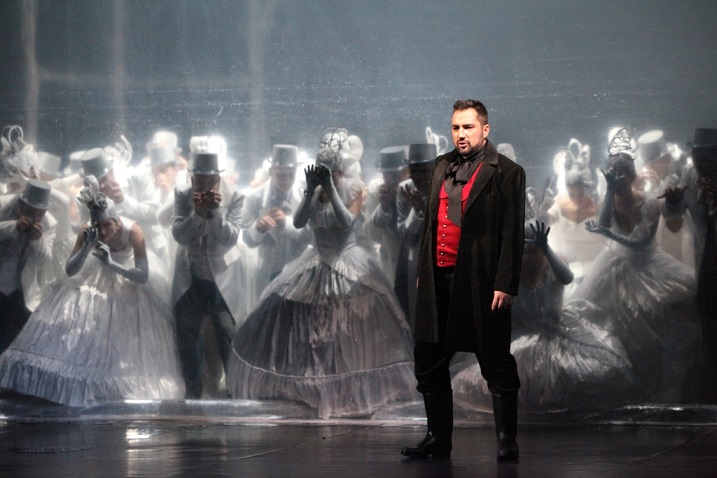
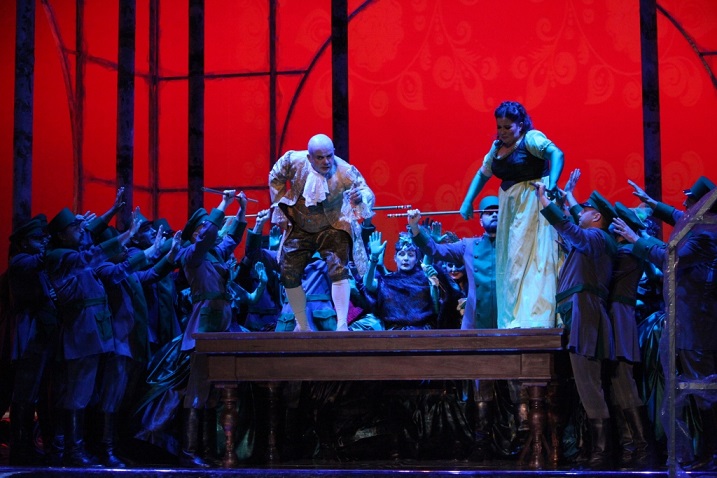
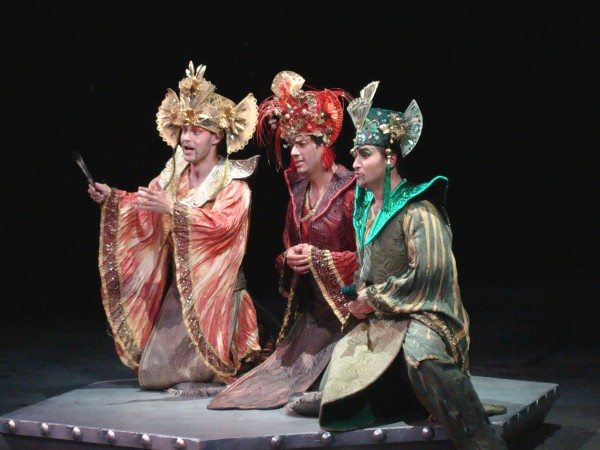
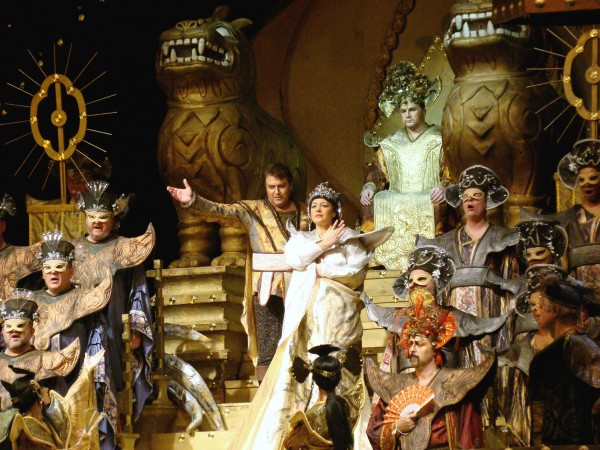
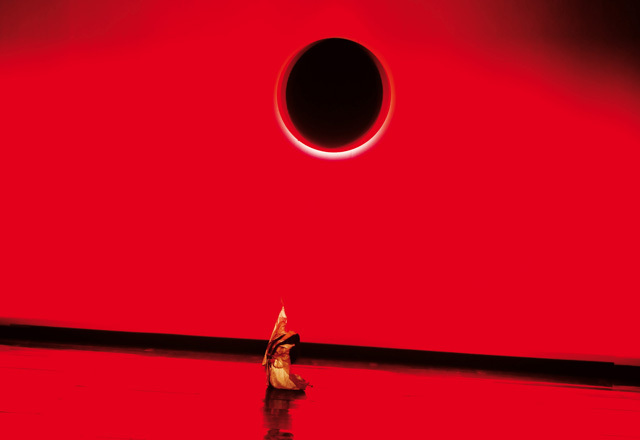
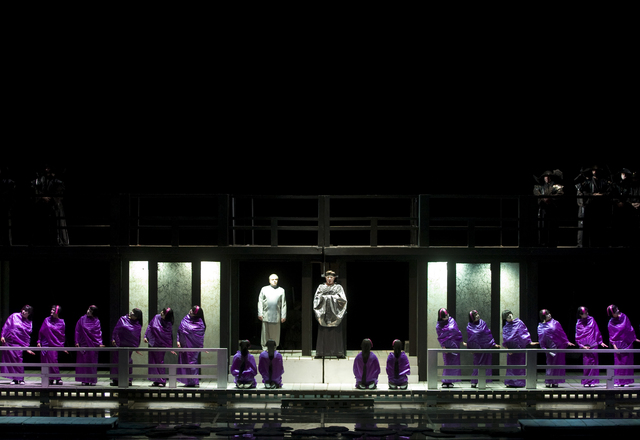
Puccini’s Tosca is one of the most popular operas in the world and it is not difficult to tell why. It is a passionate drama full of contrasts in which daily life might prove to be more unpredictable than the most adventurous dream. The love of the beautiful opera singer Tosca and an artist Cavaradossi is poisoned by the cruel and powerful police chief Scarpia, who entangles them in his stealthy plans. There is a struggle between love, political intrigues, confidence and thirst for power that knows no mercy. In the end, there are no winners…

As one of the greatest 20th century melody masters, Puccini has used bold colours and memorable melodies to create imaginative and enticing portraits for his characters. The highlights of the opera include one of the most beautiful arias in the soprano repertoire Vissi d’arte and one of the most famous tenor arias E lucevan le stelle that have won the hearts of both opera lovers as well as first-timers.

Posted in OPera | Tagged , , , , , | Leave a comment

Handel’s Alcina in Copenhagen

AlcinaEN_top415

Performance period: 21. Feb. – 14. Mar. 2015 at then Royal Danish Theatre of Copenhagen

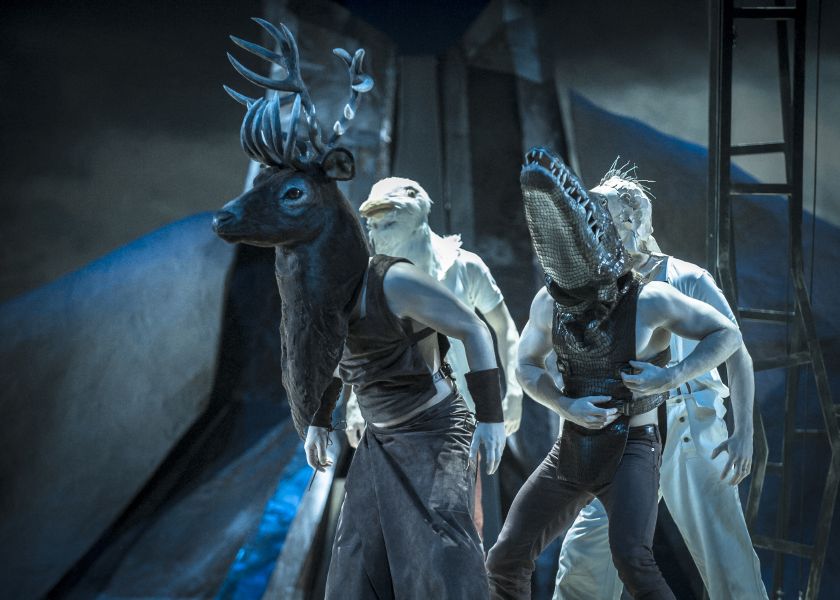
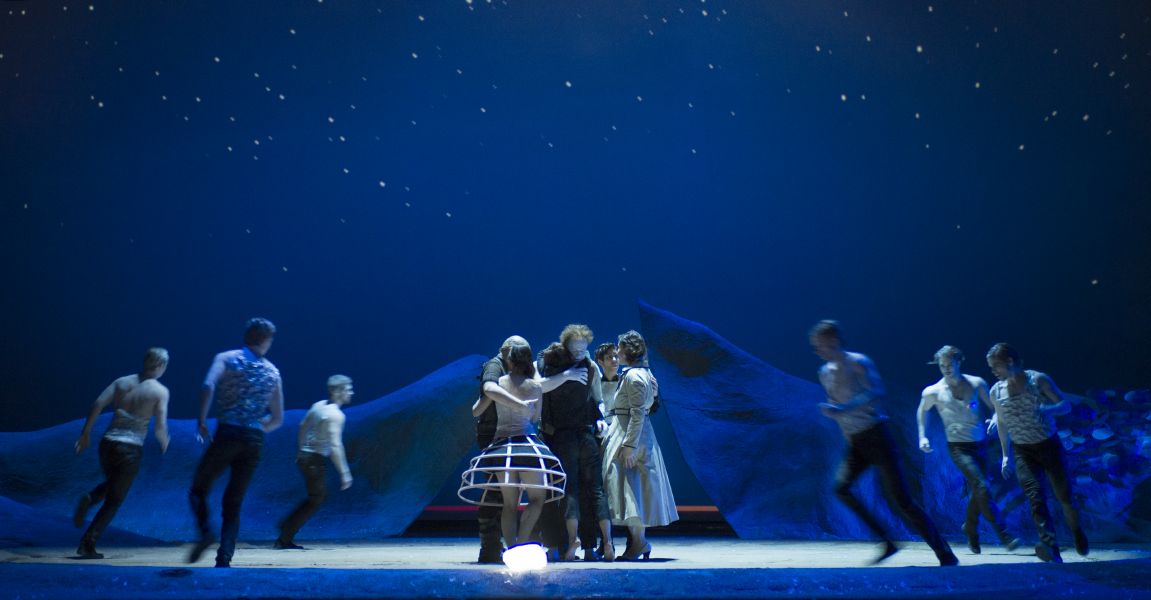
Dwelling on a desert island, the sorceress Alcina is so alluringly beautiful that all men must fall in love with her – and suffer the consequences that follow. For when Alcina tires of her lovers, she transforms them into rocks, bushes, trees or animals. But one day an unknown man arrives on Alcina’s island, and the ravishing sorceress soon learns the bittersweet taste of love.

Alcina_Foto_Joerg_Wiesner_001When Alcina tires of her lovers, she transforms them into rocks, bushes, trees or animals. But the day arrives when an unknown man arrives on the shores and the ravishing sorceress gets a taste of her own bittersweet medicine.Alcina_Foto_Joerg_Wiesner_002

The opera is a dramatic tale of a strong and powerful woman who lets evil rule her heart until love makes her vulnerable. In a series of powerful arias, Alcina struggles to regain control of her tempestuous emotions until she finally realizes that she, too, is nothing more than a passenger on a storm-tossed ship heading for the abyss. Handel’s Alcina premiered in 1735.Alcina_Foto_Joerg_Wiesner_003

With Alcina we once again present one of Handel’s many operas at the Old Stage, this time directed by the award winning, world-famous director Francisco Negrin, who also staged the Royal Danish Theatre’s Partenope (2008) and the Reumert-winning Giulio Cesare (2002). His most recent production at the Royal Danish Theatre was Janáček’s The Cunning Little Vixen in 2012.Alcina_Foto_Joerg_Wiesner_004

Alcina is performed in Italian with Danish supertitles.

Conductor: Lars Ulrik Mortensen | Director: Francisco Negrin | Set and costume design: Louis Desiré | Lighting design and video: Mikki Kunttu | Movement- and areal director: Ran Arthur Braun

Alcina_Foto_Joerg_Wiesner_005

Cast and conductor dates

<!–


–>

Alcina:
Inger Dam-Jensen
2/21, 2/23, 2/28, 3/4, 3/6, 3/8, 3/10, 3/14

Morgana:
Anke Briegel
2/21, 2/23, 2/28, 3/4, 3/6, 3/8, 3/10, 3/14

Oberto:
Hyon Lee
2/21, 2/23, 2/28, 3/4, 3/6, 3/8, 3/10, 3/14

Ruggiero:
Tuva Semmingsen
2/21, 2/23, 3/6, 3/8, 3/10, 3/14

Itziar Lesaka
2/28, 3/4

Bradamante:
Ruxandra Donose
2/21, 2/23, 2/28, 3/4, 3/6, 3/8, 3/10, 3/14

Oronte:
Marius Roth Christensen
2/21, 2/23, 2/28, 3/4, 3/6, 3/8, 3/10, 3/14

Melisso:
Wojtek Gierlach
2/21, 2/23, 2/28, 3/4, 3/6, 3/8, 3/10, 3/14

Astolfo:
Jakob Zethner
2/21, 2/23, 2/28, 3/4, 3/6, 3/8, 3/10, 3/14

Conductor:
Lars Ulrik Mortensen
2/21, 2/23, 2/28, 3/4, 3/6, 3/8, 3/10, 3/14

CAST

Inger_Dam_Jensen_cvsInger Dam-Jensen as Alcina

Soprano

Debut
1993 at the Royal Danish Opera.

At The Royal Danish Theatre
Roles include Cleopatra in Giulio Cesare, Zdenka in Arabella, Fiordiligi in Cosí fan tutte, Ophelia in Hamlet, Norina in Don Pasquale, Sophie in Der Rosenkavalier, Adina in L’elisir d’amore, Susanna in Le nozze di Figaro, Musetta in La bohème, Gilda in Rigoletto, Violetta in La traviata, Blondchen in Entführung aus dem Serail, Lucia in Lucia di Lammermoor, Liu in Turandot, Rosina in Barbiere di Siviglia, Ofelia in Hamlet, Michaëla in Carmen and Julie in Roméo et Juliette.

Releases
Her discography includes Peer Gynt for Teldec; Solomon under Paul McCreesh for Deutsche Grammophon, Ein deutsches Requiem for Chandos, and a selection of Carl Neilsen’s songs for Dacapo.

Prizes and scholarships
Winner of the coveted Cardiff Singer of the World Competition in 1993.


Anke-Briegel_cvsAnke Briegel as Morgana

Soprano

German soprano Anke Briegel has studied at the Hochschule für Musik und Theater in Hannover and at the Conservatorio Statale di Musica Luigi Cherubini in Florence, where she graduated in 2010. Her education was concluded with several master classes, amongst others with Aribert Reimann, Ileana Cotrubas and Barbara Bonney.

In 2004 she reached the final in the National Song Contest in Berlin and she was awarded the Music Prize of Ulm. In 2005 Anke Briegel had her debut as Warwara Dobrosjolowa in Arme Leute. Furthermore she performed at the Theater Bielefeld in the roles as Amor in Glucks Orfeo ed Euridice and Babarina in Le nozze de Figaro. In Hannover she has joined the cast of Hansel und Gretel and Il viaggo a Reims.

During season 10/11 Anke Briegel was a part of the Dortmund Theater ensemble. Her roles here included the title role of Hansel und Gretel, Musetta in La Boheme, Susanna in Le nozze de Figaro, and Adina in L’elisir d’amore. In 2012 she sung the part of Lucia in Schweitzers Rosamunde at the Schewtzingen Festival.
In 14/15 Anke Briegel can be heard here at the Royal Danish Opera in the roles of Pamina and Sophia in Der Rosenkavalier.
Lee-Hyon_cvsHyon Lee as Oberto

Hyon Lee makes her debut at the Royal Danish Opera as Oberto in Alcina.

itziar-lesaka_cvsItziar Lesaka as Ruggiero

During the 2014-2015 season Itziar Lesaka will make her house debut at the Royal Danish Opera in the role of Ruggiero (Alcina). She will also sing Carmen (in a chamber version), Jezibaba (Rusalka) and Baba the Turk (Rake’s Progress) at the Mecklenburgisches Staatstheater Schwerin (Germany) where she has been a soloist since 2010. Important role debuts in the last seasons in Schwerin have included: Dorabella (Così fan tutte), Rosina (Il Barbiere di Siviglia), Mrs. De Rocher (Dead Man Walking), Orlofsky (Die Fledermaus), Ruggiero ( Alcina), Cornelia (Giulio Cesare) and Suzuki (Madama Butterfly).
From 2001 through 2009, Itziar Lesaka was a regular guest at the Deutsche Oper am Rhein in Düsseldorf. Her interpretation of Melanto in Il ritorno d’Ulisse in patria under the stage direction of Christof Loy was very acclaimed by the german press. She was nominated for the best young singer by the “Opernwelt-Jahrbuch 2003”.
From 2004 to 2008, she was a member of the ensemble of the Staatstheater Kassel, where she sang parts such as Hänsel (Hänsel und Gretel), Cherubino (Le nozze di Figaro), Komponist (Ariadne auf Naxos) and Muse/Niklaus (Les Contes d‘Hoffmann).
She was also invited at the Oper Leipzig (Cherubino in Le nozze di Figaro), at the Staatstheater Hannover (Der Trommler in Kaiser von Atlantis) and at the festival Wiener Festwochen in Vienna with the production Mozart in Paris of Christof Loy.
Itziar Lesaka was born in San Sebastian (Basque Country, Spain). She studied singing, Lied and contemporany vocal music at the music university “Hochschule für Musik und darstellende Kunst” in Stuttgart (Germany).
Itziar Lesaka worked also with stage Directors like Christof Loy, Ursel Herrmann, David Freeman, Jérôme Savary, Gabriele Rech, Arila Siegert and Benno Besson and with music Directors like Baldo Podic, Hans Wallat, Stéphane Denève, Matthias Foremny and Jonathan Darlington.

Tuva_Semmingsen_cvs

Tuva Semmingsen as Ruggiero

Mezzo soprano.
Debut at the Royal Danish Theatre in 1999 as Cherubino in Mozart’s Le nozze di Figaro.

At The Royal Danish Theatre
Cherubino in Mozart’s Le nozze di Figaro. Pernille in Nielsen’s Maskarade. Sesto in Handel’s Julius Caesar. Titte Mortensen in Fuzzy’s children’s opera Sorceress Mortensen and the Fat Turkey. Rosina in Rossini’s Il barbiere di Siviglia. The title role in Rossini’s La cenerentola. Minerva and Melanto in Monteverdi’s Il ritorno d’Ulisse in patria. Lola in Mascagni’s Cavalleria rusticana.

Other engagements
Performed Cherubino in Mozart’s Le nozze di Figaro at Teatro La Fenice in Venice in 2000. Performed at Wigmore Hall with the King’s Consort in 2002. Has performed with the Oslo Philharmonic, the Norwegian Opera Orchestra, the King’s Consort, Concerto Copenhagen, Neues Bachisches Collegium, Leipzig, and the Danish National Symphony Orchestra. Rosina in Rossini’s Il barbiere di Siviglia in Nancy, France, May 2005.

Releases
Among her recordings are three Vivaldi CDs with the King’s Consort on the Hyperion label.

Prizes and scholarships
Recipient of the 2001 Norwegian Naxos Award. Recipient of the 2004 Aalborg Opera Prize and Elisabeth Dons Mindelegat 2004.


Ruxandra-Donose_cvsRuxandra Donose as Bradamante

What distinguishes Ruxandra Donose
among the most renowned mezzo-sopranos of the younger generation is the complexity of her artistic personality. The tone of her voice is at the same time particular, dark, warm, sensuous and noble and her vocal range is large and flawless as concerns the homogeneity of her registers.

Her excellent singing technique ensures her easiness and accuracy in virtuousity scores, but also the ample phrasing, finely nuanced in an impeccable legato, in „line scores“.
Ruxandra Donose is both an attractive presence on the stage and a very gifted actress, convincing in the most diverse feminine roles and also in male roles (in disguise). Her sharp intelligence, her thorough musical and general knowledge, an altogether remarkable feeling for the style, allow Ruxandra Donose to tackle at the highest artistic level not only an extremely diverse opera repertoire, but also the lied and the vocal-symphonic ones.
These are the premises of a solid career, in full swing, built step by step from the very beginning.

Born in Bucharest, in a family of musicians, Ruxandra Donose appeared on the concert stage as early as her childhood, as a pianist. A graduate of the Music University of Bucharest (the class of Georgeta Stoleriu), she also attended summer courses for lied – oratorio in Weimar with Lore Fischer. Since 1992 she studies in Vienna with Carol Blaickner-Mayo and Carol Byers. She has been awarded a great number of national and international prizes being among others, laureate of the International Competition of Munich (1990) and of Washington (1991).
Soloist of the Opera Houses of Constanta – Romania (1989-1991), Basel – Switzerland (1991-1992) and Vienna – Austria (1992-1998) Ruxandra Donose has carried on at the same time a very rich stage and concert activity in a great many other musical centres of the world, acquiring in 10 years of career an impressive artistic record.

Roth-Christensen_cvsMarius Roth Christensen as  Oronte


Wojtek_Gierlach_cvsWojtek Gierlach as Melisso

Bass
Wojtek Gierlach graduated at the Warsaw Chopin Music Academy with Professor Kazimierz Pustelak, receiving the Magna cum Laude Distinction. He has since been awarded many prizes at international vocal competitions including the Ada Sari (1999 – 1st place); Bilbao (2000 – 2nd place), the main award in the Premio Caruso (Milan 2001); and the Francesco Viñas in Barcelona (2004 – 3rd place).

Wojtek Gierlach made his professional debut in 1999 with the Warsaw Chamber Opera in the title role of Handel’s Imeneo. With this company he also toured Holland, Japan and France as Don Giovanniin Mozart’s masterpiece.
He has also sung Don Basilio in Il Barbiere di Siviglia with Deutsche Oper Berlin, Mustafa in L’Italiana in Algeri with Teatro National Sao Carlos Lisbon, at the Teatro Alighieri di Ravenna and at Minnesota Opera, Figaro in Le Nozze di Figaro at the Teatr Wielki Warsaw and at the Teatro Petruzzelli Bari,Alidoro in La Cenerentola with , Festival d’Aix-en-Provence and at the Stadttheater Klagenfurt, Argenio in Imeneo for Opera Ireland Dublin,Melisso in Alcina with Opera Nacional de Bordeaux,Orbazzano in Tancredi with Teatro Maestranza in Seville,Leporello withNico Opera Cape Town and sang Assur in Semiramide at the Teatro Verdi di Pisa.

Some of his other critically acclaimed performances include Colline in La Bohème, Raimondo in Lucia di Lammermoor, Duce Alfonso in Lucerezia Borgia and Escamillo in Carmen at Warsaw Teatr Wielki, Conte Rodolfo in Sonnambula for the Theater St Gallen, Salieri in Rimsky-Korsakov’s Mozart and Salieri at the Teatro Filarmónica Oviedo, Timur in Turandot at the Auditorio de Tenerife, Commendatore in Ramón Carnicer’s Il Dissoluto Punito at La Coruña Mozart Festival, Gouverneur in Le Comte Ory at Wildbad Belcanto Opera Festival; Lord Sidney and Don Profondo in Il Viaggio a Reims at Rossini Opera Festival Pesaro, Orfeo at Slovenske Narodne Divadlo Bratislava, Domoslav in Berggeist by Spohr during the 13th LvB Easter Festival and Mephisto in Le Damantion de Faust with Kraków Philharmonic Orchestra.

Wojtek Gierlach has collaborated with many orchestras, taking part in concerts both in his home country and across Europe. His appearances have included Bach’s Mass in B minor, conducted by Helmuth Rilling at the Warsaw Philharmonic, Bach’s Magnificat with National Orchestra of Spain under Mireia Barera, Mozart’s Reqiuem with Sinfonietta Cracovia conducted by Marc Minkowski, Verdi’s Requiem, conducted by Kai Baumann at the Polish Baltic Philharmonic, Beethoven’s Symphony No. 9 with Orquesta de Navarra under Antoni Wit, Penderecki’s Seven Gates of Jerusalem with National Polish Radio Symphony Orchestra in Katowice under the composer’s baton.

Salieri’s The Passion of Jesus Christ, which he performed with I Solisti Veneti, conducted by Claudio Scimone (the concert was broadcast by RAI – Italian Television), Rossini’s Stabat Mater with Orquesta del Principado de Asturias with Alberto Zedda as conductor, Penderecki’s Dies Irae with Simon Bolivar Orchestra and Arvo Pärt’s Passion in Prague’s Spring Festival are a part of his oratorio repertoire.

Wojtek Gierlach recorded Mose in Egitto and La Donna del Lago by Rossini and Meyerbeer’s Semiramide under Richard Bonynge for NAXOS. For the IBERATOUR he has recorded Il dissoluto punito by Ramón Carnicer, conducted by Alberto Zedda. His other recordings include G.S.Mayr’s Medea in Corinto (Oehms) Luigi Mosca’s L’Italiana in Algieri (Bongiovanni), Lodoïska by Cherubini and Euryanthe by Weber conducted by Łukasz Borowicz for LvB and POLSKIE RADIO label.

Alcina_Foto_Joerg_Wiesner_006

Alcina_Foto_Joerg_Wiesner_007

Alcina_Foto_Joerg_Wiesner_009

Photo credit Joerg Wiesner


Posted in OPera | Tagged , | Leave a comment

Il barbiere di Siviglia at the Croatian National Theatre in Zagreb

croatianlogo

Gioachino Rossini

The Barber of Seville (Il barbiere di Siviglia)

barber13

Rossini’s most popular opera is considered the best comic opera ever. The libretto was written by Cesare Sterbini, following Le Barbier de Seville, the first part of the Figaro trilogy by Beaumarchais. The opera was written in only three weeks (the overture was “borrowed” from Rossini’s less successful opera Aureliano in Palmira). The opening night was a fiasco, thanks to the loud, fidgety audience and a series of accidents on the stage during the performance. The second performance was much better received and the opera was soon staged on all big European stages and became one of the most frequently staged works in the history of opera. It is interesting that the same destiny was shared by the Beaumarchais’s drama, which was rejected at the opening night, but became a hit within one week after the premiere.

Performances:

Tuesday, January 27 2015 at 19,30
Tuesday, January 28 2015 at 19,30
Tuesday, January 30 2015 at 19,30

Libretto Cesare Sterbini based upon Pierre-Augustin Caron de Beaumarchais
Translation of the Libretto Jasna Žarić
Conductors Josip Šego, Gianluca Marcianó
Director Krešimir Dolenčić
Set Designer Dinka Jeričević
Costume Designer Ana Gecan Savić
Light Designer Deni Šesnić
Assistant Conductor and Language Instructor Gianluca Marcianó
Quire Conductor Ivan Josip Skender
Choreographer Mateja Pučko-Petković
Assistant Director Jasna Žarić
Assistant Costume Designer Andrea Kuštović

Premiere 12. may 2006.

barber1 barber2 barber3 barber4barber5 barber6 barber7 barber8barber9barber10 barber12 barber14 barber15barber23 barber16 barber17 barber18 barber19 barber20 barber21 barber22

Posted in OPera | Tagged , , , , , , | Leave a comment

The opera Eugene Onegin at the Croatian National Theater in Zagreb

croatianlogoOn Tuesday, January 13 and 14, 2015  the CNT Opera performed P.I. Tchaikovsky’s famous opera Eugene Onegin with Niksa Bareza as conductor and in the stage direction of Michał Znaniecki who is also the costume designer. Luigi Scoglio is the set designer, Diana Theocharidis the choreographer and Bogumił Palewitcz the light designer. The upcoming performances are scheduled for January  24, 2015 and February 2 and 24, 2015.

onegincroatia2The cast for this season is Cecilija Car and Zeljka Martic (Larina), Valentina Fijacko and Adela Golac Rilovic (Tatyana), Jelena Kordic (Olga), Neda Martic and Branka Sekulic Copo (Filipyevna), Robert Kolar and Ljubomir Puskaric (Onegin), Domagoj Dorotic and Stjepan Franetovic (Lensky), Luciano Batinic and Ivica Cikes (Gremin), Mario Bokun and Ladislav Vrgoc (Triquet), Robert Palic and Alen Rusko (Zaretsky) and Ante Batinic and Antonio Brajkovic (Captain).

onegincroatia3Like most Russian composers from the period of Romanticism, even the greatest among them, Pyotr Ilych Tchaikovsky based some of his stage works on the works of the Russian romanticist Alexandre Sergeyevich Pushkin. One of the most beautiful creations of the romantic opera opus has been created after Pushkin’s novel in verse Eugene Onegin. A very few operas have such perfectly fused and inseparable two most important components, music and text. Tchaikovsky set to music Pushkin’s exceptional literary model almost in a perfect manner, breathing into it some entirely specific components which, according to many, make this most beautiful Slavic opera very demanding and challenging.

onegincroatia4In it Tchaikovsky finally achieved a complete realisation of his yearnings in construction of a stage work. The opera plot is initiated by lyrical emotions experienced by its characters turning Onegin into a real intimate psychological drama. After Onegin, the operas took another direction and it is no wonder that this work was one of the first opera staging of the great Russian theatre master Konstantin Stanislavsky.

onegincroatia5The opera focuses on the deeply experienced drama of its protagonists, subduing the exterior events and thus giving up the cliché of only one dramatic peak, since the first act is the drama of Tatyana, the second that of Lensky and the third that of Onegin. Every act is a separate whole, but all three of them are tightly connected into a single unity. onegincroatia6Tchaikovsky gave this work a crossheading, Lyrical scenes, and thus created a prototype of a psychological opera in which music does not describe, but deepens the presented events. Although the work is titled after the young, indifferent and rich Eugene Onegin, the main character is the dreamlike girl Tatyana who, living far deep in the Russian province of the 19th century, yields to the fantasies, idealising a random acquaintance Onegin unworthy of her true love. The author, beside Tatyana who is his favourite character, describes the poet Lensky, Onegin’s friend whom he kills in a duel because of a whim, with a lot of fancy.

onegincroatia7In a combination of personal tragedies of the characters, it is possible to recognise a characteristic idea of the author on the weakness of man in achieving happiness that everyone craves for. Lensky’s aria before his death, and the famous night scene in which Tatyana is writing a love letter to Onegin, are considered among the most beautiful music numbers in the Slavic opera literature.

onegincroatia8This title was first performed at the Zagreb Opera in 1897 (the first translation by Duro Devic, followed by Ferdo Miler, Milutin Cihlar Nehajev and Stanko Gasparovic). The performance had seven productions until today (1910, 1923, 1932, 1939 1956, 1965 and 1998.). In December 2014, the performance shall be performed at the Croatian National Theatre Ivan noble Zajc in Rijeka

onegincroatia11onegincroatia12onegincroatia13onegincroatia14onegincroatia15onegincroatia16onegincroatia17onegincroatia18

Posted in OPera | Tagged , , , , , , , , , , , , , , , , , , | Leave a comment

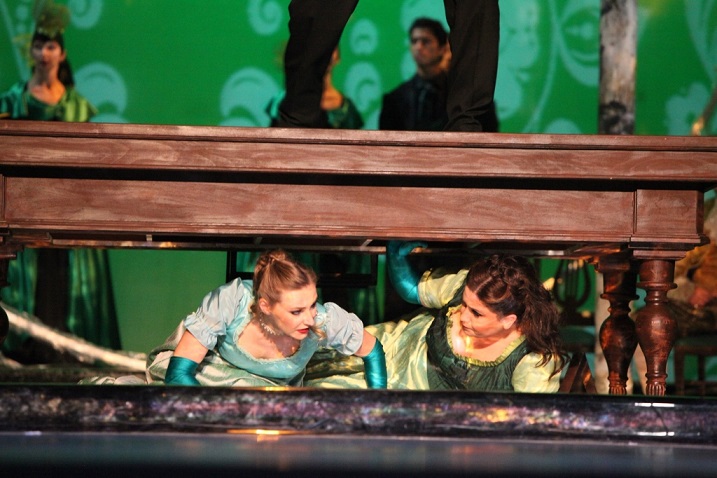
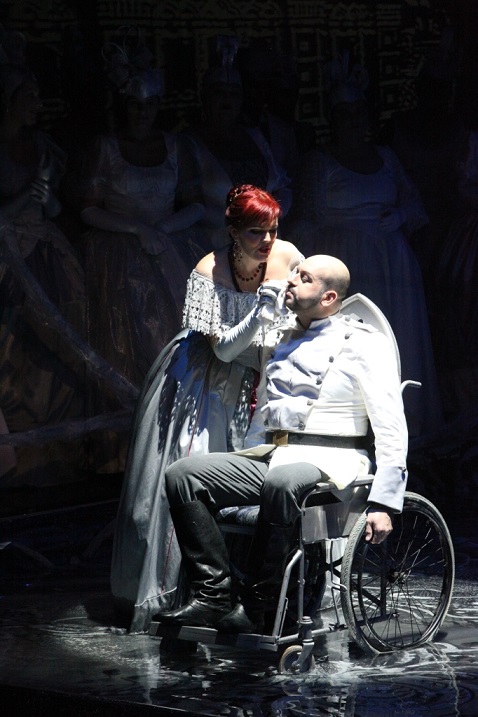
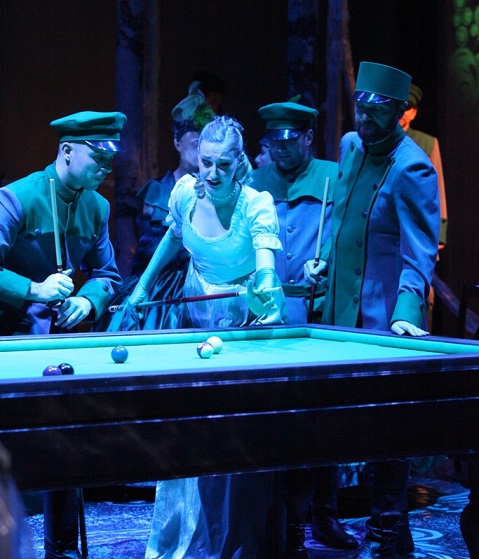
Rinaldo in Estonia

rinaldo

Rinaldo

Opera by Georg Friedrich Händel in two acts

Libretto by Giacomo Rossi based on Aaron Hill and Torquato Tasso
World premiere on February 24, 1711 at Queen’s Theatre
Premiere at the Estonian National Opera on September 18, 2014

In Italian, with subtitles in Estonian and English
Approx running time 2 h 40 min
Strobo light is used in the production
S, 8 February 2015 / 17:00
S, 7 March 2015 / 19:00
S, 29 March 2015 / 17:00

Tallinn Opera House Main Theater, Estonia

Tallinn Opera House Main Theater, Estonia

Stage Director William Relton:
“When I first saw “Rinaldo”, nothing had prepared me for the delight which I felt while watching this masterpiece for the first time. It was his first opera written for London, not only that, it was the first opera in the Italian language to be written for the London stage. The premiere of “Rinaldo”, loosely based on Tasso’s epic poem “Gerusalemme liberata” (Jerusalem delivered), took place at the Queen’s Theatre in the Haymarket in early 1711 and was a huge hit. Gorgeous arias, a fabulous, extravagant plot, dramatic characters, all that one could wish for, were present. Conquest, magic, deception, thwarted love, betrayal, sex, violence, abduction, an heroic quest, battles; it seemed as if Händel had thrown every single theatrical device in the book at it. “Rinaldo” went on to be the most performed of Händel’s operas during his lifetime. The opera was so successful that it was given in a fairly extensively revised version in 1731, however we are basing our performing edition on the original 1711 score. And what of the music? Even for Händel this opera has a large number of “hit” arias that leaves one gasping. And then there is of course the incomparable “Lascia ch’io pianga” sung by Almirena in the middle of Act 2. One of Händel’s most beautiful and celebrated arias. A treat indeed!”

Staging team
Conductors
: Andres Mustonen, Risto Joost
Stage Director: William Relton (England)
Designer: Cordelia Chisholm (England)
Lighting Designer: Johanna Town (England)
Movement Director: Kati Kivitar

Cast:
Rinaldo, a crusader, a hero: Monika-Evelin Liiv, Annaliisa Pillak
Goffredo, head of the Christians, leader of the First Crusade: Oliver Kuusik, Mati Turi
Almirena, Goffredo’s daughter: Heli Veskus, Olga Zaitseva
Argante, Saracen king of Jerusalem: Rauno Elp, Aare Saal
Armida, sorceress, Queen of Damascus, Argante’s mistress: Helen Lepalaan, Kristel Pärtna
Sirens: Kadri Kipper, Juuli Lill, Olga Zaitseva
A magician: Märt Jakobson, Mart Laur
Eustazio, Goffredo’s brother: Mart Madiste, Roman Chervinko
A herald: Ivo Onton, Mati Vaikmaa

Tllinn Opera House

Tllinn Opera House

Posted in OPera | Tagged , , , | Leave a comment

Der fliegende Holländer at the Royal Opera House in London

logoRoyalHouse

Der fliegende Holländer

5–24 February 2015
Main Stage

Tim Albery’s acclaimed production is a darkly insightful account of Wagner’s early masterpiece, The Flying Dutchman.

The Story

The Flying Dutchman has been cursed for eternity. Once every seven years he is allowed to come ashore to seek redemption. He may have found it in Senta, a woman who longs for escape from her dreary life.

Senta accepts the Dutchman’s offer of marriage. But the Dutchman wrongly suspects her of unfaithfulness. Thinking he’s protecting her, he leaves to resume his endless voyaging. Senta is left alone.

dutchman1Background

Shortly before the premiere of Der fliegende Holländer in Dresden, Wagner had returned from a deeply unsuccessful two-year stint in Paris. He had gone there to make his fortune, but found his way barred by a strict class-based system. One of the bitterest blows came when Léon Pillet, director of the Paris Opéra, accepted his libretto for Der fliegende Holländer – but then commissioned a score not from Wagner but from French composer Pierre-Louis Dietsch. But the Dresden premieres of first Rienzi in October 1842 and Der fliegende Holländer in January 1843 were immense successes, and marked the beginning of Wagner’s career as one of the greatest operatic composers.

dutchman2

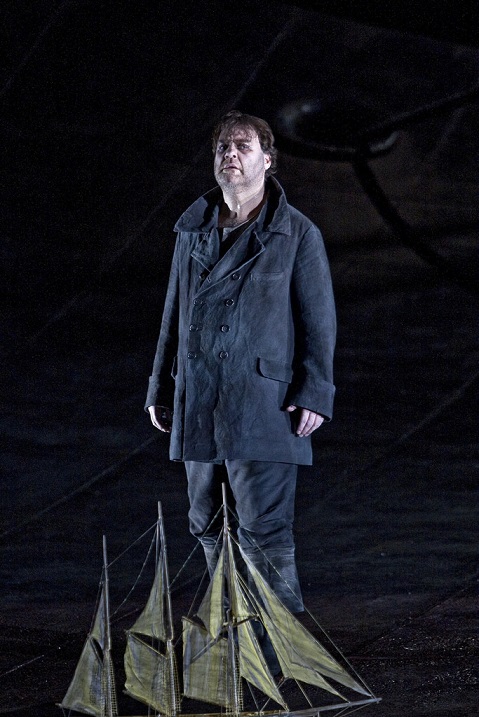
Tim Albery’s Olivier-nominated production for The Royal Opera delves deep into the psychology of Wagner’s cursed wanderer and his beloved Senta, detailing the monomania and uncompromising idealism that finally drives them apart. Michael Levine’s elemental single set is dominated by a rolling metal hull that represents the Dutchman’s phantom ship, the poverty of Senta’s home and the treacherous sea.

Tim Albery’s acclaimed production is a darkly insightful account of Wagner’s early masterpiece, starring Bryn Terfel conducted by Andris Nelsons.

Thanks to

Generous philanthropic support from

Marina Hobson OBE and the Wagner Production Syndicate

Running time

The performance lasts about 2 hours 20 minutes; there is no interval

Language

Sung in German with English surtitles

CAST

nelsons_jpg_cfAndris Nelsons

Conductor

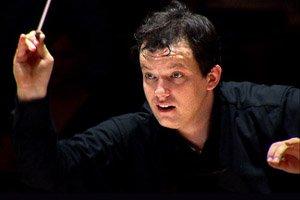
Latvian conductor Andris Nelsons made his Royal Opera debut in December 2009 with La bohème, and has since returned to The Royal Opera to conduct Madama Butterfly, Salome and Elektra. In the 2014/15 Season he returns to conduct Der fliegende Holländer for the Company.

Born into a family of musicians, Nelsons first became interested in opera aged five after seeing Tannhäuser. He learnt piano, trumpet and singing, and began his career as a trumpeter with Latvian National Opera. He studied conducting in St Petersburg and with Mariss Jansons, who remains his mentor. Nelsons was Principal Conductor of Latvian National Opera 2003–7, at the start of the 2008/9 season became Principal Conductor with the City of Birmingham Symphony Orchestra and in March 2013 was appointed Music Director of Boston Symphony Orchestra.

As well as his busy schedule with the CBSO, Nelsons works with many international orchestras including the Royal Concertgebouw, Vienna Philharmonic and the Philharmonia Orchestra. Opera engagements include Lohengrin (Bayreuth Festival), Eugene Onegin, Carmen and Tosca (Vienna State Opera), La bohème (Berlin State Opera) and Queen of Spades (Metropolitan Opera, New York). Nelsons’s recordings include works by Tchaikovsky, Richard Strauss and Stravinsky with the CBSO on Orfeo and Opus Arte DVDs of La bohème and Lohengrin.

Bryn-Terfel_jpg_cfBryn Terfel (The Dutchman)

Bass-Baritone

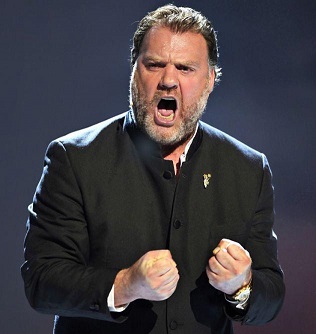
Welsh bass-baritone Bryn Terfel made his Royal Opera debut in 1992 as Masetto (Don Giovanni) and has since sung Figaro (Le nozze di Figaro), Jokanaan (Salome), Balstrode (Peter Grimes), Falstaff, Don Giovanni, Méphistophélès (Faust), Wotan (Der Ring des Nibelungen), Scarpia (Tosca), Gianni Schicchi and the Dutchman (Der fliegende Holländer), and in gala performances for The Royal Opera. In the 2014/15 Season he returns to sing Dulcamara (L’elisir d’amore) and the Dutchman.

Terfel was born in North Wales into a music-loving family and studied at the Guildhall School of Music and Drama with Rudolf Piernay. In 1989 he won the Lieder Prize in the BBC Cardiff Singer of the World Competition. He made his professional debut in 1990 as Guglielmo (Così fan tutte) with Welsh National Opera. He now sings at the world’s leading opera houses, including the Metropolitan Opera, New York, La Scala, Milan, and Vienna State Opera. Along with major roles in operas by Mozart, Verdi, Wagner and Puccini, his repertory includes Nick Shadow (The Rake’s Progress), the four villains (Les Contes d’Hoffmann) and Sweeney Todd. In 2010 he sang Hans Sachs (Die Meistersinger von Nürnberg) to great acclaim with WNO.

Terfel appears regularly at the BBC Proms, including at the Last Night of the Proms in 2008 and in 2013. He is a recording artist with Deutsche Grammophon and also appears on many opera DVDs. Terfel was made a CBE in 2003 and was awarded The Queen’s Medal for Music in 2006. His interests away from singing include vintage wines, golf and art.

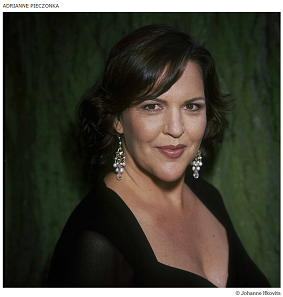
pieczonkaAdrianne Pieczonka (Sents)

Soprano

Canadian soprano Adrianne Pieczonka made her Royal Opera debut as Donna Anna (Don Giovanni) and has since sung Chrysothemis (Elektra) for the Company. In the 2014/15 Season she returns to sing Senta (Der fliegende Holländer).

Pieczonka grew up in Burlington and studied at the University of Western Ontario and at the Opera School of the University of Toronto. She moved joined the Vienna Volksoper in 1989 and in 1991 became a member of the Vienna State Opera. Concurrent engagements included her debuts at Glyndebourne Festival, as Donna Elvira (Don Giovanni), and at the Metropolitan Opera, New York, as Liza (Queen of Spades).

Pieczonka’s repertory ranges from Mozart to Britten. She is particularly well known for her interpretations of Wagner and Strauss heroines, with engagements including Sieglinde (Die Walküre) for Bayreuth Festival, Canadian Opera Company and Metropolitan Opera, New York, Senta for Bayreuth Festival and Paris Opéra and the Marschallin (Der Rosenkavalier), Ariadne and Arabella for major European companies including Vienna State Opera. Her other repertory includes Leonore (Fidelio), the Empress (Die Frau ohne Schatten), Amelia Grimaldi (Simon Boccanegra) and Tosca. Her recordings include Lohengrin under Bychkov and discs of Puccini arias and music by Wagner and Strauss. Pieczonka was made a Kammersängerin of Vienna State Opera in 2007.

Michael KönigKoenig (Erik)

Tenor

German-Canadian tenor Michael König makes his Royal Opera debut in the 2014/15 Season as Erik (Der fliegende Holländer).

König was born in Mutlangen and began his singing career as a member of the Schwäbisch Gmünd St Michael’s boys’ choir. He went on to study in Karlsruhe and at the Mannheim Conservatory with Rudolf Piernay. His early engagements included Jeník (The Bartered Bride) for Glyndebourne Festival, Narraboth (Salome) and Tamino (Die Zauberflöte) in Frankfurt and Lensky (Eugene Onegin) for Basle Opera. He currently sings for Europe’s major opera companies, including Hamburg State Opera, Frankfurt Opera, Berlin State Opera, Bavarian State Opera, Liceu, Barcelona, Teatro Real, Madrid, and La Scala, Milan, and has also appeared with the Canadian Opera Company. He made his Bayreuth Festival in 2012 as Erik and appeared as Max in Jens Neubert’s film Hunter’s Bride, adapted from Der Freischütz.

König’s repertory includes Florestan (Fidelio), Max (Der Freischütz), Lohengrin, Tannhäuser, Emperor (Die Frau ohne Schatten), Bacchus (Ariadne auf Naxos), Guido (Eine florentinische Tragödie), Jim Mahony (Aufstieg und Fall der Stadt Mahagonny), Andrey Khovansky (Khovanshchina), Grigory/The Pretender (Boris Godunov), Sergey (Lady Macbeth of Mtsensk) and Leper (St François d’Assise). His many concert appearances include Beethoven’s Symphony no.9 at the BBC Proms.

Peter RosepeterRose (Daland)

Bass

British bass Peter Rose made his Royal Opera debut in 1988 as Lord Rochefort (Anna Bolena) and has since sung roles including King Marke (Tristan und Isolde), the Commendatore (Don Giovanni), Lorenz von Pommersfelden (Mathis der Maler), Ramfis (Aida), Cadmus (Semele), Fasolt (Das Rheingold), Cardinal of Lorraine (Palestrina), Timur (Turandot), Kecal (The Bartered Bride), Athlete (Lulu), Baron Ochs (Der Rosenkavalier) and Prince Gremin (Eugene Onegin). He returns in the 2014/15 Season to sing Daland (Der fliegende Holländer).

Rose studied music at the University of East Anglia and singing at the Guildhall School of Music and Drama and the National Opera Studio. He was a member of the Glyndebourne Chorus in 1986 and that year went on to make his professional debut as the Commendatore for Glyndebourne on Tour. He performs regularly for leading opera companies, including La Scala, Milan, Bavarian State Opera, Hamburg State Opera, Deutsche Oper Berlin, Berlin State Opera, Semperoper Dresden, Paris Opéra, Vienna State Opera, Liceu, Barcelona, and Rome Opera. His roles for English National Opera include Boris Godunov, and for the Metropolitan Opera, New York, Bottom (A Midsummer Night’s Dream), La Roche (Capriccio) and Baron Ochs.

Other roles include Osmin (Die Entführung aus dem Serail), Don Basilio (Il barbiere di Siviglia), Philip II (Don Carlos), Falstaff, Hunding (Die Walküre), Gurnemanz (Parsifal) and Claggart (Billy Budd). He is a prolific concert artist, and has sung under such conductors as Daniel Barenboim, Carlo Maria Giulini, Carlos Kleiber, Lorin Maazel and Simon Rattle, with the world’s leading orchestras.

Lyon-EdEd Lyon (Sailor)

Tenor

British tenor Ed Lyon made his Royal Opera debut in 2008 as Lysander (A Midsummer Night’s Dream) and has since sung Pane (La Calisto), Hylas (Les Troyens), Dancing Master (Ariadne auf Naxos) and Amidas/Wind (L’Ormindo at the Sam Wanamaker Playhouse, Shakespeare’s Globe) for the Company, and Gernando (Haydn’s L’isola disabitata) with members of The Royal Opera at the Hobart Baroque Festival. In the 2014/15 Season he returns to sing Sailor Tristan und Isolde and Steersman (Der fliegende Holländer for The Royal Opera.

Lyon studied history of art at St John’s College, Cambridge, where he was a choral scholar, and went on to train at the Royal Academy of Music and the National Opera Studio. He has appeared for all the major British companies, and for such international companies as the Opéra-Comique, Teatro Real, Madrid, Theater an der Wien and Netherlands Opera. His wide repertory includes such roles as Hippolyte (Hippolyte et Aricie), Don Ottavio (Don Giovanni), Tamino (Die Zauberflöte) and Freddy Eynsford-Hill (My Fair Lady).

Lyon has sung at in concert major venues worldwide, including the Royal Festival Hall and Royal Albert Hall in London, the Salle Pleyel in Paris, the Berlin Philharmonie and the Alice Tully Hall, New York, in repertory ranging from Bach’s B Minor Mass to Maxwell Davies’s Solstice of Light. His recordings include a CD of Alexander’s Feast (Ludus Baroque) and a DVD of Les Troyens (Royal Opera).

maryCatherine Wyn-Rogers (Mary)

Mezzo-Soprano

British mezzo-soprano Catherine Wyn-Rogers made her Royal Opera debut in 1989 as Schwertleite (Die Walküre). Her roles since have included Third Lady (Die Zauberflöte), Mrs Sedley and Auntie (Peter Grimes), First Norn (Götterdämmerung), Erda (Das Rheingold and Siegfried), Sosostris (The Midsummer Marriage), Voice of Lucrezia (Palestrina), Magdalene (Die Meistersinger von Nürnberg), Cornelia (Giulio Cesare in Egitto), Spirit of Antonia’s mother (Les Contes d’Hoffmann) and Geneviève (Pelléas et Mélisande). She has performed Song of the Earth for The Royal Ballet. In the 2014/15 Season she returns to sing Mary (Der fliegende Holländer).

Wyn-Rogers studied at the Royal College of Music. She sings for leading companies and houses including Bavarian State Opera, Teatro Comunale, Florence, Palau de les Arts Reina Sofía, Valencia, La Scala, Milan, Houston Grand Opera, English National Opera and Glyndebourne Festival. Her repertory includes Marcellina (Le nozze di Figaro), Waltraute (Götterdämmerung), Filipyevna (Eugene Onegin), Adelaide (Arabella), Mrs Herring (Albert Herring), Bianca (The Rape of Lucretia) and Mrs Grose (The Turn of the Screw).

Wyn-Rogers enjoys a prolific concert career, including appearances with all the major British orchestras, with period ensembles including The English Concert, the Academy of Ancient Music and The Sixteen, and at the Three Choirs, Edinburgh and Aldeburgh festivals and the BBC Proms. She has sung in recital at the Wigmore Hall among many other venues. Her many recordings range from Handel’s Samson and Messiah with Harry Christophers to Poulenc songs with Malcolm Martineau. She lives in Gloucestershire, where she is active in local music.


Posted in OPera | Tagged , , , | Leave a comment

“Singing has filled my life”; Interview to Carlo Colombara in Catania

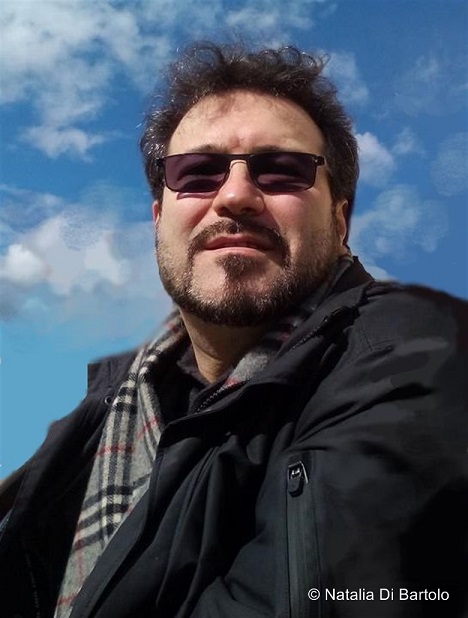
Interview by Natalia Di Bartolo
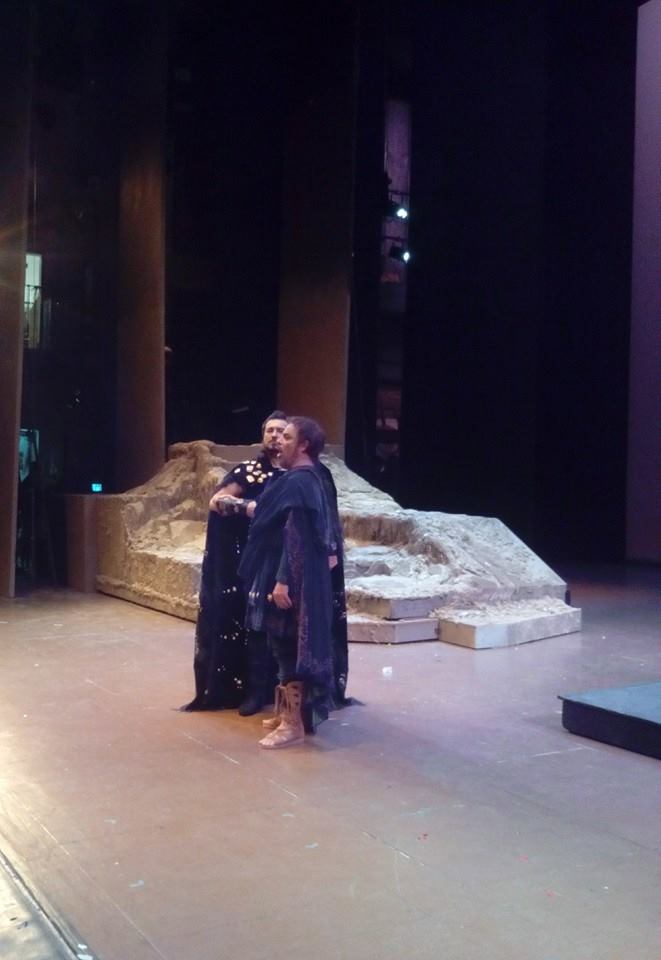
I meet up with operatic bass Carlo Colombara on a warm December afternoon at the artists’ entrance of Teatro Massimo Bellini, Catania. They are rehearsing the last opera of the 2014 season, Attila by Giuseppe Verdi, and it is only two days to the opening on 4th December 2014.
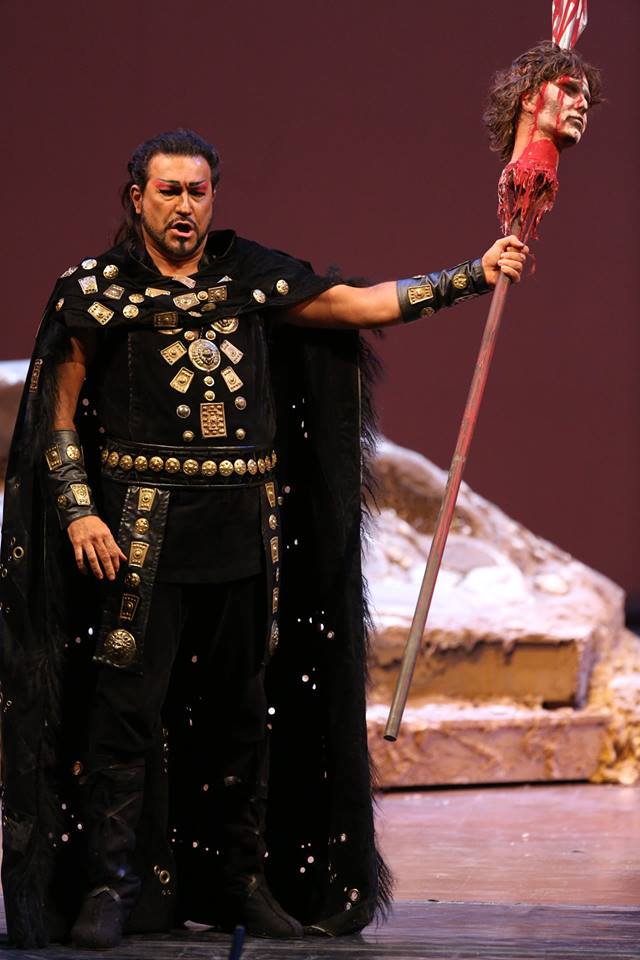
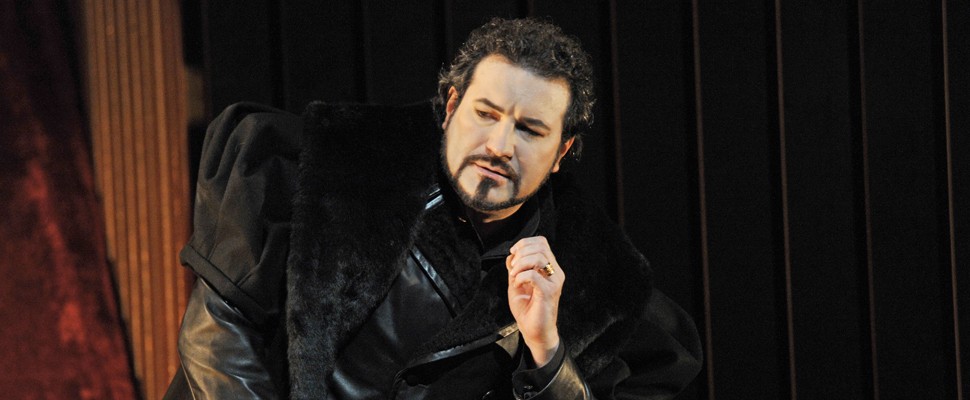
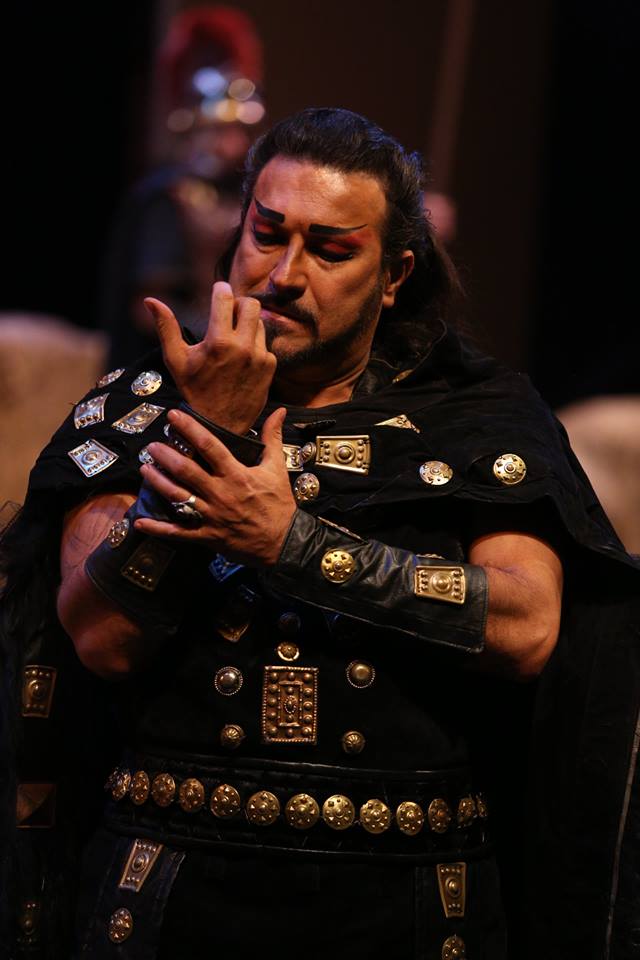
As I see him, so impressive in his looks, yet so kindly and simple in his manners, I almost struggle to imagine him playing the cruel ruler of the Huns… However, I can still hear his voice during the rehearsal… I find it undoubtedly fitting for the role, just as perfect as Carlo himself when made up and dressed as a barbarian. I’ve seen him already, and it almost feels as though he was undergoing a metamorphosis to “be” Attila.
We go upstairs to his dressing room. The chair seems to become infinitely tiny beneath him. I’m on the padded one and the armchair remains empty. “It’s not an armchair fit for Attila”, he
remarks. We both smile.
On we go with the interview! Let’s start with the customary questions: which operas have you sung in Catania and when?
I sang Norma in ’89-’90, which was repeated the following year. Then Simon Boccanegra with Bruson in 2001, under Bartoletti’s conduction, and now Attila.

On 1st December you were awarded the Danzuso Prize here in Catania…
Yes, and I was very pleased. It’s an extremely prestigious award and it was a lovely soirée. I got the chance to sing an aria from Attila – I had it ready.

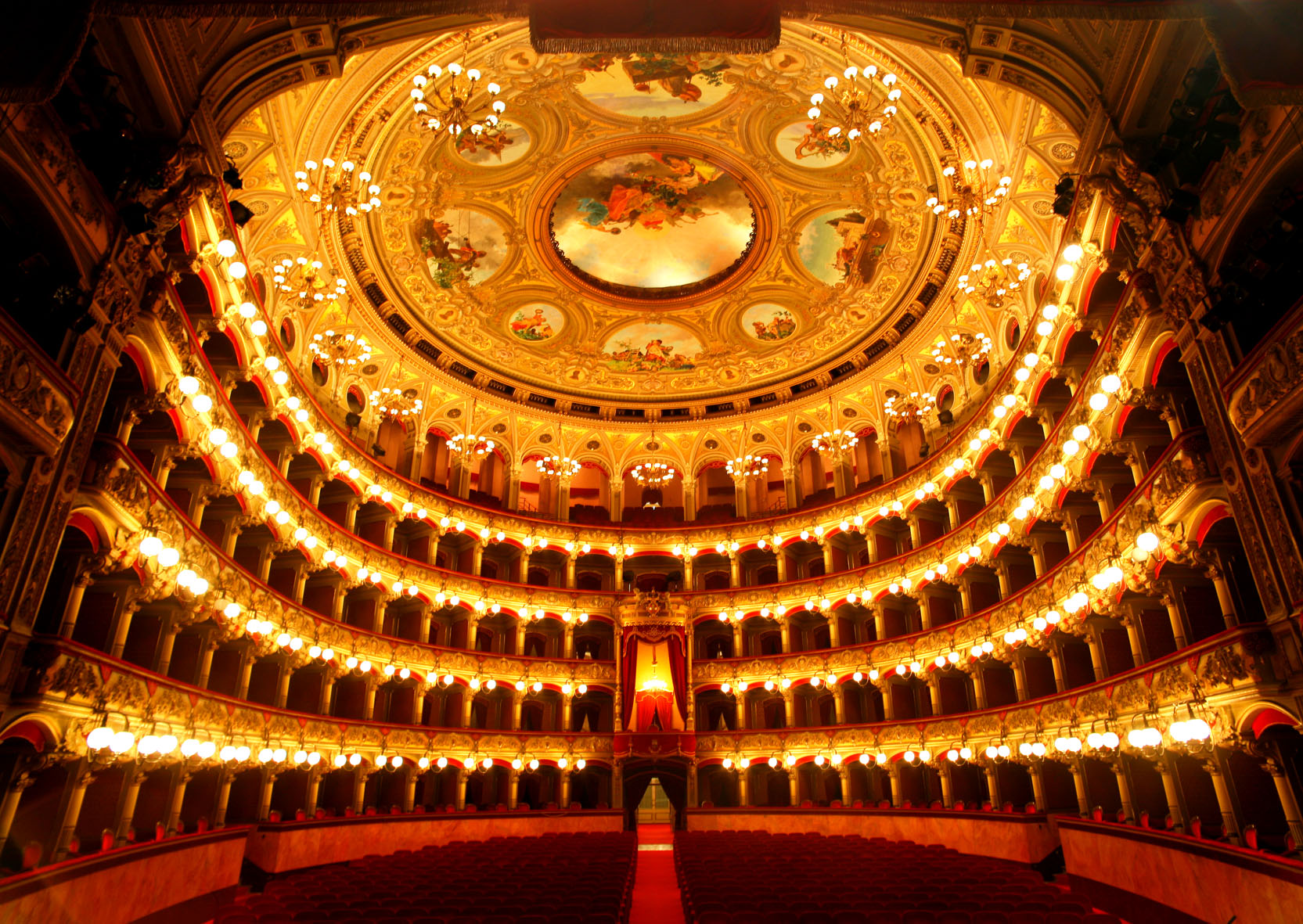
Bellini Theater in Catania

Bellini Theater in Catania

You’re rehearsing at Teatro Bellini, in my hometown. Enrico Caruso used to say it boasts the perfect acoustics: do you confirm that? Could you tell me something about it?
Yes, I absolutely confirm it. After the completion of restoration works years ago, people say the acoustics aren’t as perfect as they used to, but I still think they’re excellent! If only they were like this [everywhere]…

Speaking of acoustics, where have you found similarly ideal conditions and where, on the contrary, have you come across less-than-ideal acoustics?
As for other theatres… The Met in NYC has excellent acoustics, but it’s just so huge! Instead, La Scala and the [Teatro] Regio in Turin don’t have the perfect acoustics. As for the [Teatro] Comunale in Florence… it’s just the worst of the lot. However, it also depends on which spot the singer is placed. Such concert halls from the 1970s as the Royal Festival Hall have dreadful acoustics. In conclusion, I think theatres with too much velvet don’t really work. You do have plenty of velvet here in Catania, but who built the theatre did have the brains… [Carlo smiles].

Thank you, on behalf of architect Carlo Sada… The opening of Attila is around the corner. What is your take on this “villain”?
Usually “villains” are extremely appeased by the composer, and the same applies to Attila. Actually, when he dies he almost inspires pity as he sings in the quartet where Odabella, Foresto and Ezio plot against him and make him seem very humane – which is quite unlikely a thing in terms of historic reality. When one sings opera, they should relate to the libretto only, while still keeping an eye on the historical figure (like I do) if it is taken from history indeed. There’s no point in “playing the barbarian” on stage, when the libretto puts much gentler words on your lips.

I find this exceedingly important: librettists are often underestimated…
Librettos have their limits, but they’re functional. Some librettos are beautiful, such as those by Da Ponte and Romani, whereas others (like Solera’s Attila we’re speaking of) are quite ugly, and yet they do work! So my Attila for Catania, just like in any other production, is what the librettist intended for.
With regard to this production, Attila’s character is displayed just the way director Pirrotta and I wanted. We happened to agree on everything. He’s abrupt, heroic at times… He’s a leader and a god in the eyes of the people, but – I’ll say it again – he’s also very humane.10410317_985343504841998_5200133968643281076_n
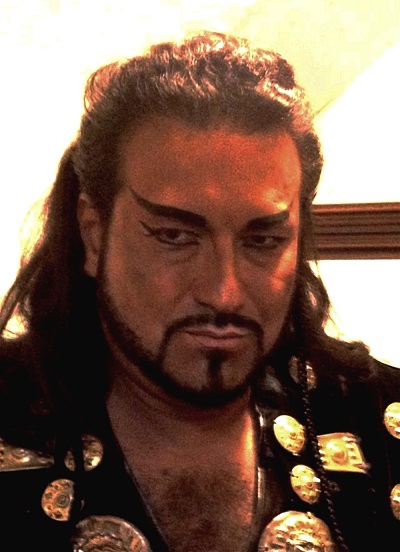
We are talking about “characters”: to what extent acting and stage art count in order to perfect the portrayal of a character? What do you think is the role of acting in Melodrama and what is your opinion about Theatre/Drama and Opera?
Over the years I’ve perceived that acting a role has become growingly important. Once they would be satisfied with the purely vocal ability of a singer, but it’s not like that any longer. Nowadays, media and – above all – stage direction force the singer to resemble an actor. I said “resemble” because the actor can take a breathe wherever he wants, he can play the role in different ways according to situations – and that’s different for singers. I once discussed this with my friend Glauco Mauri, who conducted me in Naples for Macbeth. First in the matinée and then at the evening recital he was acting in The Tempest by Shakespeare. I asked him: “How do you do that? Aren’t you tired?”. “My dear – he replied – at 14h30 I play my character in a certain way; then, after I get tired from directing, I play it differently: it’ll be much more sore…”. In turn, this led me to understand that singing is a great deal more difficult than acting.CarloColombaraOn12
Us singers have to follow the conductor, sing a tempo, mind the intonation – and sometimes we’re bound by impossible tessiture. We have a number of things to keep under control. However, if you manage to detach yourself from these problems – for you have internalised them – then you can just throw yourself into acting. I’ve partially succeeded at this and it feels so good! Moses and Zachary aren’t characters who need to be acted – actually, the less you move, the more visible you get. They are convincing because they are hieratic, and they needn’t gesture or anything. On the other hand, Attila feels much better to be acted in this sense.
Problems arouse when directors ask singers to deliver a prosaic, actor-like interpretation. Then again: acting and singing are two different jobs.

10859347_992102460832769_83663474_nDo you deem them to be in mutual conflict?
Conflict springs out when directors ask of singers things that go against the music, i.e. when they completely overturn the text for the sake of their own needs. Once the director has grasped the “limits” a given role poses on a singer, he won’t overturn a thing. Instead, when you come across directors who distort everything, then they’ll offend the singer, the audience and the composer himself. Mind you, there are so many of them. This is particularly fashionable in Germany right now. Opera doesn’t belong to the theatre director, just as I don’t belong to theatre. When I venture into something that is not within my field of expertise, I’ll always be respectful and mindful. This doesn’t always happen. Oftentimes directors stomp into the room like Frankensteins and I find it extremely uncivilised from an artistic perspective. The intelligence of the director must encompass the knowledge of the music and of the limits of a singer. Some singers are more apt to acting than others, but they all have to sing. There’s no point in having a Turandot who can act. Vocally speaking, Turandot must be able to complete the opera.

Cattura5We have talked about directors. Let’s talk about conductors now… You have worked with the greatest in the world…
Yes, I’ve been conducted by almost all of them. It’d be easier to say who doesn’t make the list, such as Abbado. As for the others, I’ve worked with them all over the past thirty years. You work well with great conductors: it might sound incredible, but I never experienced any problems with them. Problems come with the smaller ones. Some of them have gained prestige thanks to the corporate record companies that have made them big… But it’s extraordinary to work with who is really great. I’m talking about Muti, Metha, late Maazel, Pappano – with whom I’ve worked very well and I genuinely hope that I’ll be working with him again, because “he’s just a good guy”…

Their role is vital in terms of staging the opera…

CatturaBOf course. The great successes in history (see Abbado’s productions in the 1970s) featured great directors, as well as important singers on stage and a functional direction to say the least. For example, an exemplary production is that of Simon Boccanegra by Abbado. In order to achieve such results you really need all these ingredients: opera houses should always take this into account.

What do you think about conductors who claim to alter the tempo?
People who claim any right are not “theatre people”, but “people lent to the theatre”. Tempo and certain dynamics not only are to be respected, but also adapted to the singers. That’s what big composers used to do for the singers, changing the accents, the notes… They loved singers. I wish I could find in conductors at least half of the love composers used to invest in: I’m happy when it happens.

Speaking of singers… You travel the world doing renowned masterclasses. The next one will be held in Sofia, right after your recitals in Catania. How would you define the different types of voices of the Opera?
There are dark and clear voices, small and big ones – those are the most common definitions. However, there are many others: there are also short and long voices, voices with a massive extension, immense voices… A few examples of great voices: Callas, Dimitrova, Nilsson… And present-day Guleghina.

What do you think about your students?
10849780_989381211104894_675147707977323542_nThe students who come to me are often affected by the fact that the big Italian tradition has lost its way partially, because people, schools and the establishment have lost interest. Once, they would come to Italy to study with the big Campogalliani, Enrico Pola, and so on. There used to be a number of great maestros in Italy. Mine, Paride Venturi, attracted students even from Japan. Nowadays there is but a handful of maestros who teach the right vocal technique: most of the times I have to repair the disasters perpetrated by other professors…
I find singers who sing without appoggio, hence their voice tends to bleach out… There aren’t dramatic voices any longer. On one hand, it’s because the diapason is too high – almost half a tone higher than during Verdi’s times. It was 4.32 back then, whereas now it’s 4.42 – 4.40, officially. So just go and figure the devastation for dramatic voices! Moreover, these guys need to do their studying! I would never go without a solid three hours of studying, and I would bring my homework at home, too. Instead, students are distracted today: from their mobiles ringing, to a myriad of trivial reasons. The first thing I tell them when I start my lessons is: “Have you turned your mobiles off?”, because that hour is to be fully dedicated to singing. Our job tracks back to 1700, 1800. Nowadays there are hectic schedules and stress, and everything just runs so fast. If we want to study like we used to, we ought to go against these paces – and that’s what I try to explain to my students, mostly.1-73c31aa74d

How long does it take for a voice to acquire the qualities that will make it stand out? And what “comes next” for that voice?
It depends on the singer. Some singers “get it all” in one year, whereas others won’t understand a thing for ten years. As soon as the voice is ready and it can carry on a whole opera, then it’s ready!
As for what “comes next”, twenty years ago I’d have said: as soon as you’re ready, go on and audition, and I’d have suggested which opera houses to go to. Ten years ago I’d have said: go on and audition with a good agent. Today I say: find yourself a good agent, and… Are you sure you want to sing?

Emerging talents see their careers open up. Yours is incredible. How important a role have your personal qualities, hard studying and luck played in building up your career?
Luck does exist, but I think bad luck plays a greater role. However, putting luck and bad luck aside, I’d say that self-criticism is what really counts. Even today, whenever I listen back to myself all I hear is the defects. That’s the way to be, or else you won’t go forward – you’ll go backwards, instead. I detect my flaws at once, and I want to adjust them immediately. This is what makes you carry on. So it takes studying, studying, studying; self-criticism, listening to everybody and then carrying on with your own brains, if you’ve got any. The singer is a complex of many small things. Flexibility counts a lot, in order to go a tempo, follow the conductor, and (I won’t say to accept compromises, but at least to) be able to put up with a discussion with directors. It takes an extremely strong-will mind, because it’s a really tough job – and it entails lots of sacrifice, too. I’ve been doing this job for over thirty years. Thankfully, I have the same passion I had when I was fifteen, or else…
Today, working in the theatre is so extenuating that even if I resorted to not singing anymore I would have my reasons – but I do want to continue doing it, because I love it!

b_800_600_0_00___images_artImages_Colombara_Don_PasqualeYou said that one of the major moments of your career was the ever-so-famous, so-called “Macbeth to the cube” with Muti at La Scala in 1997. How did you get to this moment?
It was Bruson to come up with this definition for that Macbeth, because of the set design.
As for my career, the fundamental thing was starting to work with Riccardo Muti. Solti had Muti listen to me, Muti chose me and then he confirmed me for twelve running seasons at La Scala. I owe a great deal to Muti, but I did earn it all: he didn’t give me anything away as a gift.

And what happened next? Huge successes, great colleagues, big productions…
Successes weren’t always big, and neither were my colleagues – but there’s been such a continuity in my career that I’ve never stopped in thirty years (thank God)!

A fundamental moment was the Turandot in the Forbidden City in Beijing, China. It was a much suffered tour because the heat was unbearable – but it was a huge media event. And then there are many other small things, except for the worldwide telecast from La Scala – although I wasn’t singing major parts like Attila or Boris.

I never really “boomed”. My fortune is that I’ve never been within a big event. Had it been like that, all the rest would have seemed much, much smaller. Instead, I’ve been doing many important things that were not bombarded by media coverage. I find this important, in terms of keeping a firm career. A number of singers have been skyrocketed so high and then they fell down miserably in a handful of years…

As of lately, your career goes on with world premieres, such as El Juez (The Judge) by Kolonovitz, that you have played alongside Josè Carreras in 2014. What kind of experience was it for you?
1510711_4856179857741_2091456386411319831_n (1)Firstly, I’ve found a friend, because Josè is a great person. We staged this opera in Bilbao in a beautiful environment. It’s a contemporary opera, but it’s suitable for all ears because it features almost musical-like moments together with more contemporary arrangements. This kind of opera is more difficult, even just to listen to, even for me… I’m referring to uber-modernist opera, with its dissonances and all the rest. I’m not particularly fond of this genre – actually I feel completely repulsed by it. It sounds very much like “smart holidays” to me, and it doesn’t interest me. Even more so, as I was studying El Juez I thought: why on earth am I doing this? To study an opera in Spanish and stage it once only in Bilbao. Instead, we took it to Austria and we’ll be taking it to Saint Petersburg in January 2015, then back to Vienna and Spain. So it turned out to be a real pleasure doing it.
What I really enjoyed was having the composer right by my side. I suppose I experienced a bit of what [singers] would go through in 1800 whenever I told him: “Instead of singing this H that I can’t hit quite well, couldn’t we do a B flat?” He’d look at me and say: “Yes, yes!”, and he’d change it. This is something that really excited me.

So, despite everything, you did enjoy this modern role you took on. Speaking of roles, you (with your Verdi voice pour excellence) have stated to love Don Carlo’s Philip II above all roles. I share this passion with you and I will ask you: is Don Carlo your favourite opera, as it is mine, too? Or is it the character you prefer?

I think Don Carlo is the most beautiful opera ever written. To think what’s inside it…! In a mere ten bars Wagner would have written four operas. For me, Don Carlo is Verdi’s absolute apex: a smooth [masterpiece] from beginning to end. Philip II is one of those characters who are simultaneously so strong and delicate, so rich of thoughts – and perhaps he wasn’t like that in the actual reality.

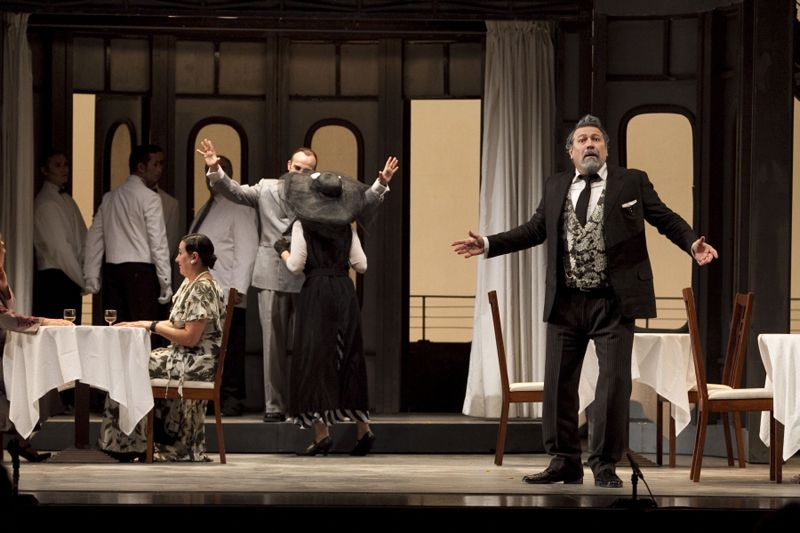
10644826_10203757708200674_6850086748076669007_n1I agree completely! You have switched from such dramatic roles to Don Pasquale, the only role for an opera buffa you ever played. Did you fully tune in with the character or only on a vocal point of view? Would you enjoy playing another similar role or do you prefer sullen melodramas? And why?
All it takes is to watch it on YouTube… You can find the full version of this Don Pasquale and you’ll see how fully I did tune in with the character and how much I enjoyed myself playing him. I wouldn’t know about other roles for opera buffa, though. I’m more cut out for dramatic roles, which I prefer. Then again, when I find myself caught up in them, it feels like going to parties: I detest parties, I love silence and I don’t enjoy chaos. Still, once I’m in, I do enjoy myself madly. I suppose I was born in the wrong era: I don’t like to hurry or rush. I probably should have been born no less than twenty years before.

And speaking of age… The operatic bass is a long-lived voice. How come?
It’s long-lived because the chord of a double bass is less delicate than that of a violin… Well, it is long-lived, but only to a certain extent. Some basses have lost their voice after just twenty years, and others after a mere five years.

What is the secret to maintain a long-lived voice? Let’s break the urban legends about anchovies, scarves and foulards, and being on vocal rest for days. What is the right care for the voice?
You’ll spoil your veins with anchovies: they’re so salty! In order to maintain your vocal chords healthy and keep up your artistic level you should try and lead the most serene life possible outside of the theatre, because everything effects the chords. It’s not easy, because nuisances are always around the corner. Therefore a singer should be mollycoddled in order to live well, yet living mollycoddled wouldn’t help you with the acting. If you haven’t put up with negative experiences or sorrows you won’t be able to convey them on stage. Moderation and self-restraint are of paramount importance: you may eat whatever you want, but moderately. As for the rest, some colleagues have a relentless sexual activity… You need self-restraint with everything, sex included! You should behave like an athlete. If you’re fifty and you wish to produce the same vocal performances of when you were twenty-five, you must work twice as hard, because your physique has aged. So you need to know what to give up and use common sense at all times. As for vocal rest… Especially when I have a recital the next day, I won’t shut up completely, but just speak quietly as I’m doing now.

It doesn’t really sound like you’re speaking that quietly…
Well, I am…

13891185683_4af708990f_bThis just leaves room to imagine your performance abilities… And what about scarves and foulards?
No. It’s wrong to cover yourself up too much. I did it for a long time, but as soon as you take your scarf off you’re more prone to getting a cold. You need common sense for this, too. Having brains must prevail on being in the dumps.

Speaking of voice, what about live voices and recorded voices? Does the voice gain from being recorded or not?
It’s a great gain for ugly voices for sure… It’s the beautiful voices – especially the “big” ones – that have everything to lose from being recorded. If we listen to the recordings of Del Monaco or Dimitrova, we’ll notice a definitely diminished performance than the live ones on stage.
When I’m recording in the studio, what matters to me is forgetting that I’m making a record, and pretend to be singing in the theatre. Nowadays they make a number of records that are all the same, and they’re all equally very little expressive. Instead, you need to convey this expressiveness in the recordings, too.

Speaking of records, your new CD is coming out in 2015. Correct?
It’ll be out during the Expo in Milan. I’ve really nurtured this CD. It’ll come out with a major record label. I like it a lot especially because it’s not boring. I’m singing Semiramide, Don Carlos in French (I’ve already recorded it in Italian!), Don Chisciotte and Wotan farewell from Valkiria: there’ll be something for everyone. Now we are speaking about singing in languages that are not Italian. What do you think about those? And French, especially… Singing in a foreign language can destroy one’s voice. Italian is the perfect language for bel canto. When I’m singing in Russian or German, I keep singing Italian style. If they complain about my pronunciation, I just won’t bother – because my vocal chords aren’t to be damaged. When singing in German on the consonants or in French, with all those vowels of their that are terrible to sing, you risk a lot. Have you ever wondered why there hasn’t been a single French dramatic voice in a hundred years? I think they care too much about pronunciation. Therefore, if you want to listen to French singing of definitely dramatic voices you must adapt to what Corelli, Freni or Ghiurov did by modifying the pronunciation. Vowels must be rounded, and Italian is the sovereign language. I’m absolutely sure of it.

CatturaCarloNext commitments?
After my masterclass in Sofia, I have two concerts. A charity gig in the province of Bologna with mezzosoprano Luciana D’Intinto for the Istituto di Ricerca Oncologica, plus the “Golden Voices” in Neufchatel with soprano Daria Maseiro. Then Aida at La Scala, Nabucco in Tel Aviv, Maria Stuarda in Paris and Mephistopheles in Mexico City.

I know you have been absent from NYC Metropolitan since 2011…
I sang in NYC with Caterina Cornaro at the Carneige Hall. I did Aida and then I returned in 2011 with Nabucco.

Any desire to return to the States – and to the Met in particular?

Any singer who’d be asked this question (just as if you asked them about La Scala) would answer: yes! I found a very laid-back and generous audience at the Met, not to mention custom designers and make-up artists. They have sensational make-up artists who manage to do wonders in a couple of minutes! The make-up for Aida was quite complex. I thought to myself: “God knows how long it’ll take them”, and instead I was ready in five minutes. They are extremely professional. I have good memories about Chicago, too, where I played Norma once. I remember it was absolutely freezing (-10C during the day and -20C at night), but it was extremely beautiful going to the opera house. The atmosphere felt very familiar and cosy.

What do you think about the future of Opera?
I’d like to be certain that Opera did have a future… As of now, I’m quite dubious and I shiver. I’d like to have a certainty, i.e. that schools started to take children to the theatre again. Schools should commit to taking pupils to the theatre at least four, five times a year – to see both drama and opera. I deem it a moral duty. You can’t expect that from parents, for they might not have that sort of upbringing or they might be interested in different genres of music. Still, it’s essential for teachers. Children should be taken to the theatre when they’re six years of age, that’s when they’re still more “pure”. That’s because when you’re six you have a kind of pureness that disappears by the time you are twelve, considering all the technological devices out there. As they are twelve, they’ve already gained an immense quantity of information. On the contrary, when they are six they are not familiar with these modern, mischievous devices and they are highly receptive.

I wish for theatre to gain a new audience and that it will survive another five hundred years just as it’s survived for the past half millennium. It’s just beautiful to have a passion for such a pure thing. For instance, I deem football frenzy a very ephemeral passion. Instead, the passion for theatre is something that completes you and, just like reading, it betters society. I read quite a lot. I read with great pleasure when I have the time. I’ve just finished an essay by Minarini about Attila in Venice and I’ve now started a novel. I love reading, music, theatre… We’ll be extremely poor in the future without these things.

10859551_992103430832672_385420084_nYour dream-role: are you playing it, are you going to play it or will it remain a dream?
The role I’ve always dreamt of is Carlo V in Ernani, because I dreamt to be a baritone. Since I became a bass, the role I’d always dreamt of and that I eventually managed to play is Filippo II, as I was saying earlier. However, I have another one, Boris, and I’m playing it in Bulgaria – which is the motherland of the biggest basses. It’s going to be very exciting.

Your eyes almost shimmer out of tenderness toward your characters… Thank you, Carlo, for you amiable availability. “Bearing” a one-hour interview is not insignificant… I could do two, with all this material.
59 minutes to be exact. I checked on your timer [he smiles]. No, seriously… It’s beautiful this way: do one only. And why did you say “bear”? It was a pleasure. We share a passion for Don Carlo, after all. We are both Verdi men… Two gourmands.

[This time, I find myself smiling…]

Phots courtesy NATALIA DI BARTOLO, GIACOMO ORLANDO

Posted in Interview | Tagged | Leave a comment

Giovanni Paisiello’s Il Barbiere di Siviglia in Vienna

barbiere1

Il Barbiere di Siviglia

by Giovanni Paisiello

at the Theater an der Wien in Vienna

Monday February 16, 2015

Wednesday February 18, 2015

Friday February 20, 2015

Monday February 23, 2015

Wednesday February 25, 2015

Friday February 27, 2015

barbiere
SYNOPSIS

Pierre-Augustin Caron de Beaumarchais (1732-1799), watchmaker to the court, inventor, author, diplomat and adventurer, offered Le barbier de Séville to the Comédiens Italiens as an opera libretto in 1772. When it was rejected,
he rewrote it as a play which became a triumphant success at the Comédie-Française in 1775. Beaumarchais had so many ideas for the fate awaiting the characters surrounding Figaro, his jack of all trades, that he created an entire trilogy which precisely reflects the rapid developments of social structures in the last third of the 18th century. Giovanni Paisiello set the first play to music in 1782 as a commission for Catherine the Great in Saint Petersburg, and it soon became immensely popular all over Europe.

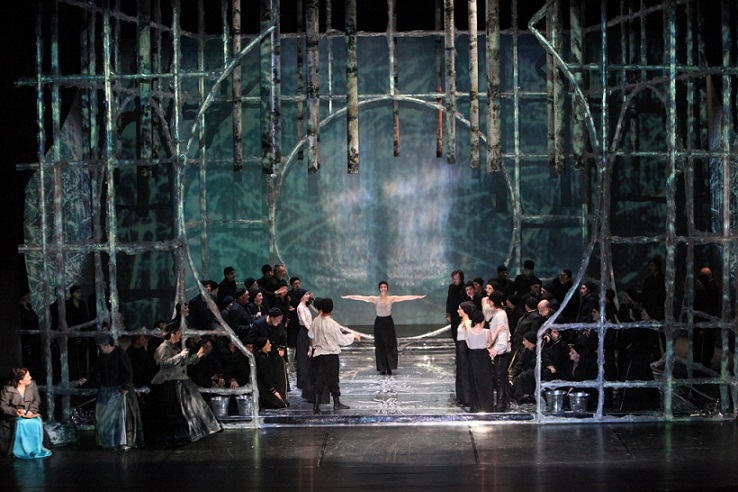
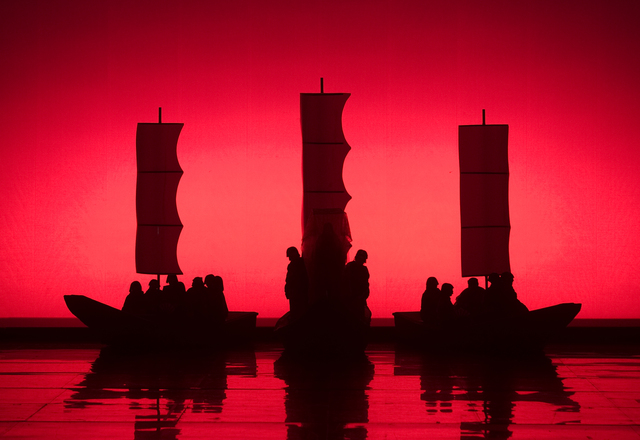
In Seville, Rosina is being kept from prying eyes in the house of her guardian Bartolo. Because the young lady is beautiful and wealthy, Bartolo intends to marry her. But Rosina has another admirer: a student by the name of Lindoro has secretly been courting her for some time, and she finds the young man considerably more attractive than her guardian. Lindoro is in fact the notorious womanizer Count Almaviva in disguise. This time, however, he is genuinely in love and wants to make Rosina his wife, even though she is a commoner. He secures the aid of Figaro who, as a physician, apothecary and barber, is free to enter Bartolo’s house. In the meantime, Bartolo has heard that the infamous Almaviva is in town and rightly guesses that he may have his ward in his sights. He tries to bring the date of his own wedding forward, but Figaro and Almaviva hatch counter-plots. In the end, Bartolo loses out: Count Almaviva abandons his disguise and makes Rosina his countess.
Posted in OPera | Tagged , , , , , | Leave a comment
Turandot at the Czech National Theatre in Prague

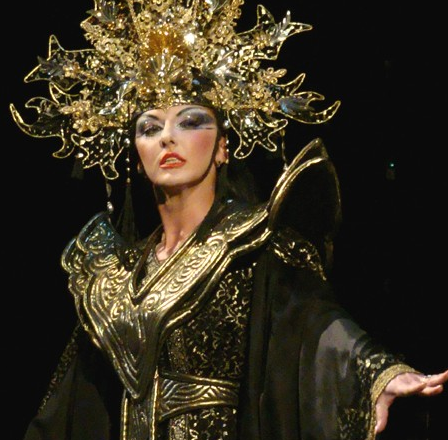
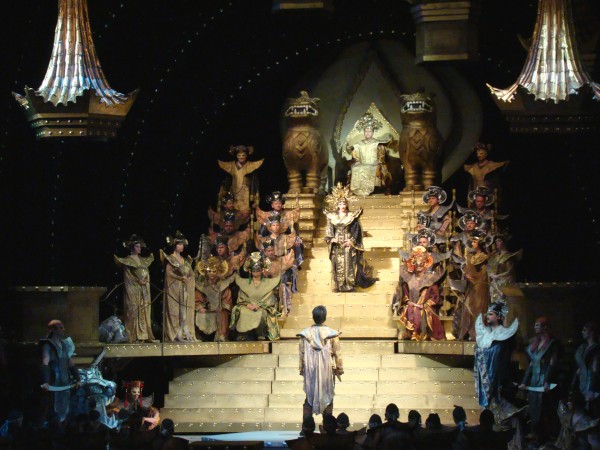
turandotnationaltheatreturandot1Libretto: Giuseppe Adami, Renato Simoni
Conductor: Enrico Dovico
Stage director: Václav Věžník
Sets: Ladislav Vychodil
Costumes: Josef Jelínek
Chorus master: Adolf Melichar
Choreography: Otto Šanda

State Opera Orchestra

State Opera Chorus

Premiere: September 15, 1995

The Persian fairy-tale Turandot from the dervish Mokles’s 17th-century collection The One Thousand and One Nights has inspired numerous poets and composers. Giacomo Puccini worked on Giuseppe Adami and Renato Simoni’s libretto, based on Carlo Gozzi’s play, in the final years of his life, when he was fighting cancer of the larynx. Just as in the case of Madama Butterfly, he diligently strove to gain thorough knowledge of the culture and songs of an exotic, faraway land (in this case China). Puccini died before he managed to complete the opera: the task was undertaken by his friend and pupil Franco Alfano, who drew upon the 36 pages of sketches left by the composer. turandot-2

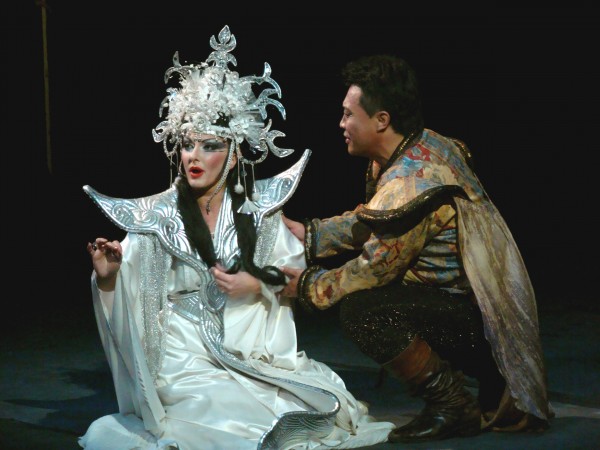
The opera was premiered on 25 April 1926 at Milan’s La Scala, conducted by Arturo Toscanini, who paid tribute to the late Puccini when in Act 3, after the words “Liu, poesia!”, he laid down his baton, turned to the audience and announced: “Here the opera ends, because at this point the maestro died”. Alfano’s finale was only included in the next performance. The cruel and beautiful Princess Turandot tests her wooers with riddles and when they fail they are duly executed. Only Prince Calaf succeeds, and his love ultimately overwhelms Turandot’s coldness.turandot-3

The opera is staged in Italian original version and Czech and English surtitles are used in the performance.

Photo: Dan Jäger

Duration of the performance: 2 hours and 40 minutes, 2 intermissions

PERFORMANCES

Sunday February 1, 2015

Thursday March 19, 2015

Wednesady April 8, 2015

turandot-5

CAST

Turandot Anda-Louise Bogza

Kalaf Michal Lehotský

Timur Oleg Korotkov

Liu Jitka Burgetová

Emperor Altoum Lubomír Havlák

Ping Jiří Brückler

Pang Richard Samek

Pong Václav Sibera

Mandarin Roman Vocel

Prince of Persia Lubomír Havlák

turandot-8turandot-9 turandot-13


Posted in OPera | Leave a comment

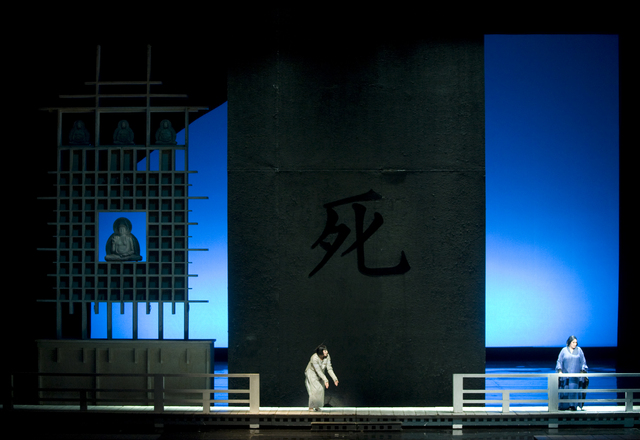
MADAME BUTTERFLY at the Moniuszko Auditorium in Warsaw

polandlogoFri 7:00pm February 6, 2015

Moniuszko Auditorium

b1MADAME BUTTERFLY

Giacomo Puccini

Japanese tragedy in three acts
Libretto: Giuseppe Giacosa and Luigi Illica
World premiere: Regio Teatro alla Scala, Milan, 17/02/1904
Polish premiere: Teatr Wielki, Warsaw, 3/12/1908
Premiere of this production: 29/05/1999
Original language version with Polish surtitles
duration: 3 hrs 20 min., including: 2 intermissionsb2 b3

Artistic Team:

Conductor: Andriy Yurkevych, Piotr Staniszewski (26 March 2015)
Direction: Mariusz Treliński
Set Design: Boris Kudlička
Costumes: Magdalena Tesławska, Paweł Grabarczyk
Movement: Emil Wesołowski
Chorus Master: Bogdan Gola
Lights: Stanisław Zięba

Soloists, Chorus and Orchestra of Teatr Wielki – Polish National Opera
Photo: Krzysztof Bieliński
Poster for the production, designed by Andrzej Pągowski

b4 b5

Cast:

Madame Butterfly – Alketa Cela
Suzuki – Hanna Hipp
Kate – Aleksandra Orłowska-Jabłońska
Pinkerton – Jacek Laszczkowski
Sharpless – ***
Goro – Mateusz Zajdel
Yamadori – Krzysztof Szmyt
Bonzo – Mieczysław Milun
The Imperial Commissioner – Łukasz Motkowicz

b6 b7

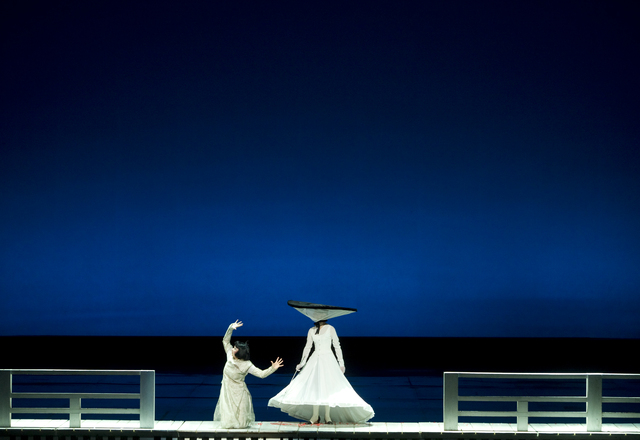
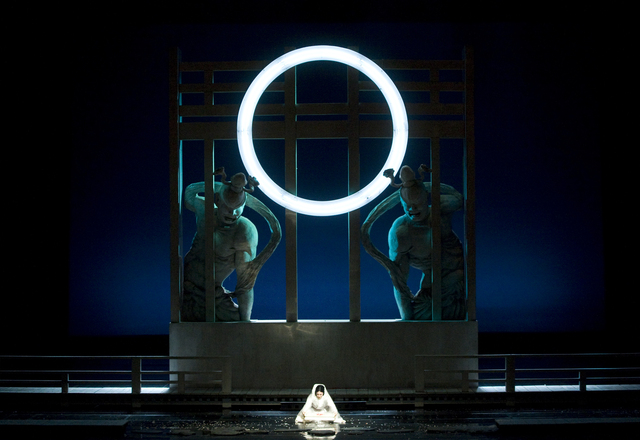
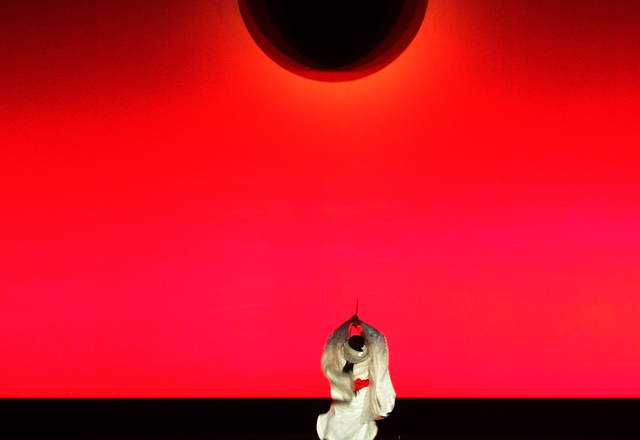
He’s rich, handsome, hungry for ever new erotic conquests; she’s beautiful, poor, trusting, madly in love. They are the protagonists of a story as old as the world, its schematic structure verging on banality. However, it is a plot excellent for uplifting repetition by opera composers, and many before Puccini did copy it. The Italian composer tossed the story into Japanese surroundings, highlighting them with references to traditional music from the Land of Cherry Blossoms, only to completely abandon the “made in Japan” poetics elsewhere. Mariusz Treliński did much the same in his (large stage) opera debut, which could actually explain the great mystery of its spectacular success in Poland, the United States, Russia, Israel, Italy, Spain and Oman. Giving up realistic details but not that special Japanese atmosphere, the director – supported by Boris Kudlička’s phenomenal stage design – very subtly invoked the convention of Kabuki theatre but also Robert Wilson’s theatre and, finally, his own experience with film. This cultural melange of different arts and inspirations has resulted in a show of historical importance that in a way splits the contemporary history of Polish opera productions into what came before and what came after the premiere of Butterfly by Treliński and Kudlička.

b8 b9

Posted in OPera | Tagged , , , , , | Leave a comment