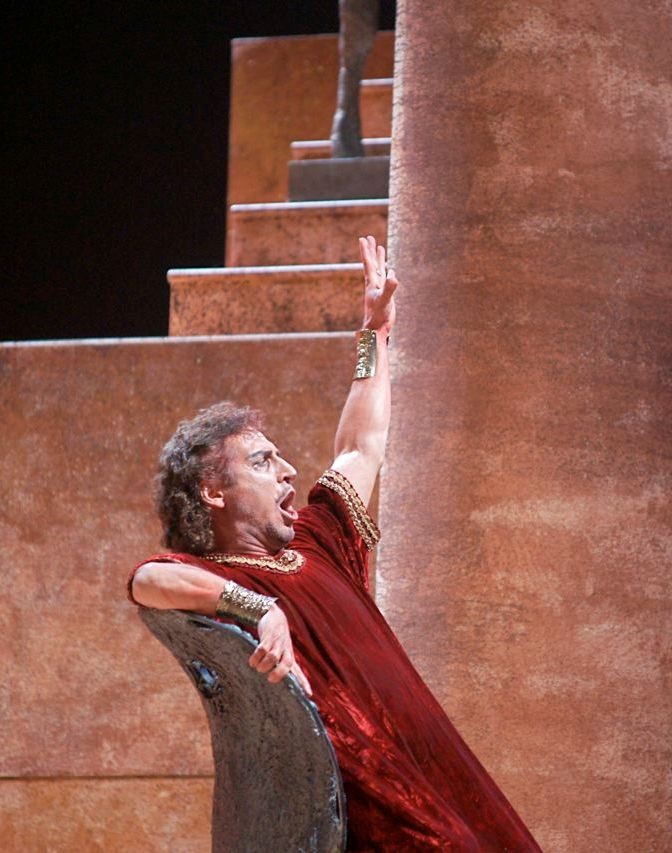
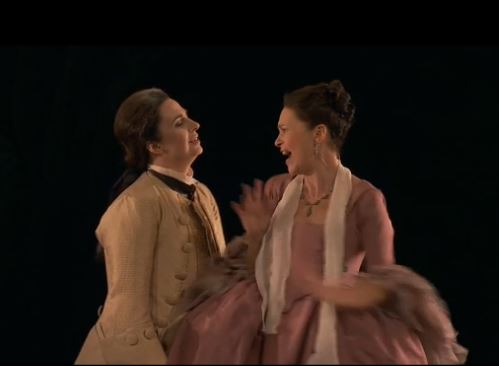
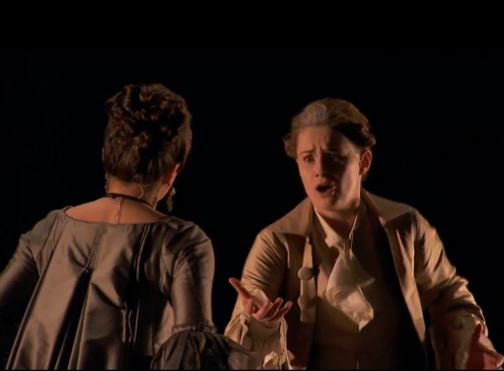
“L’Elisir d’Amore” in Israel

israeliopera

L’elisir d’amore

Gaetano Donizetti

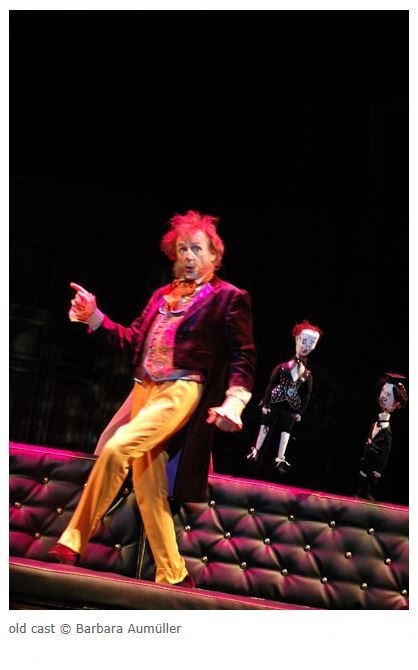
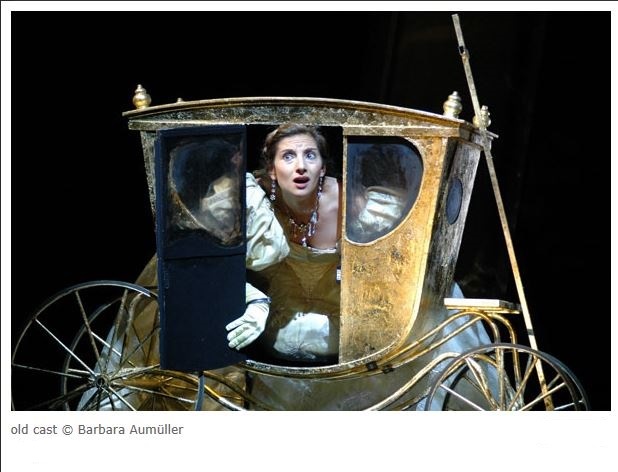
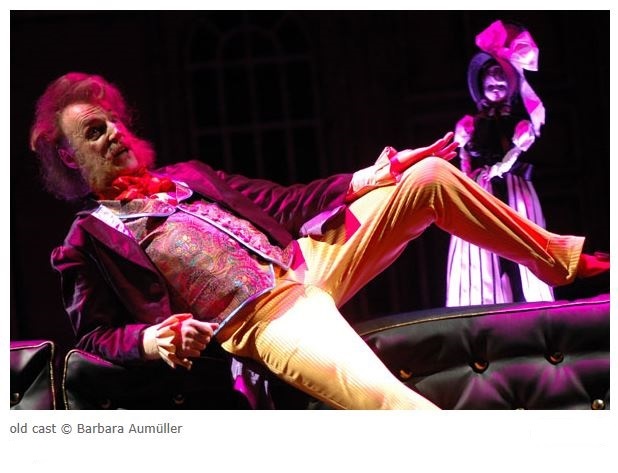
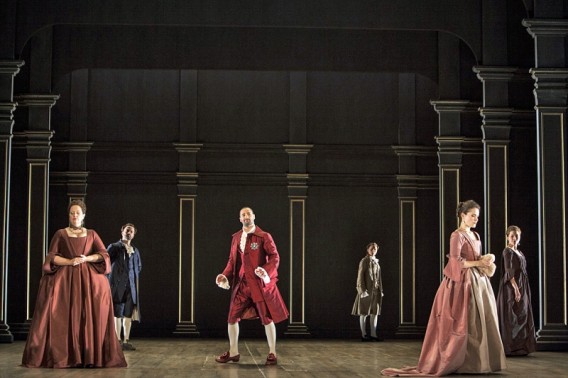
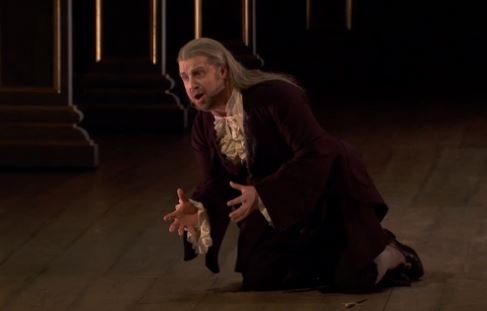
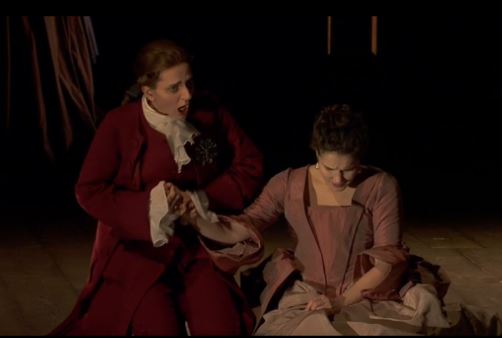
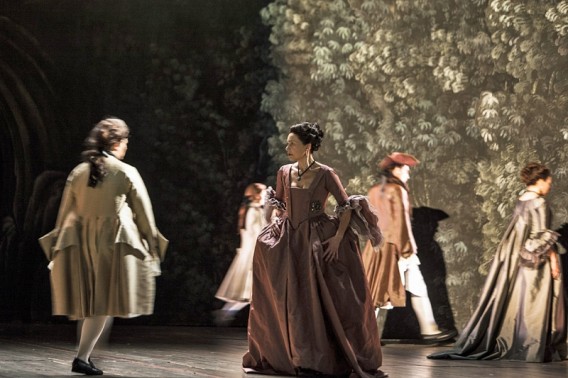
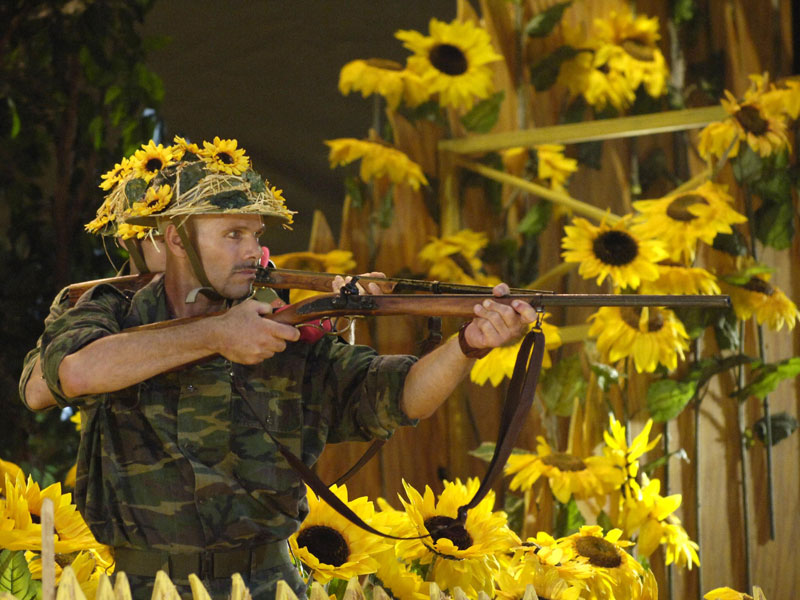
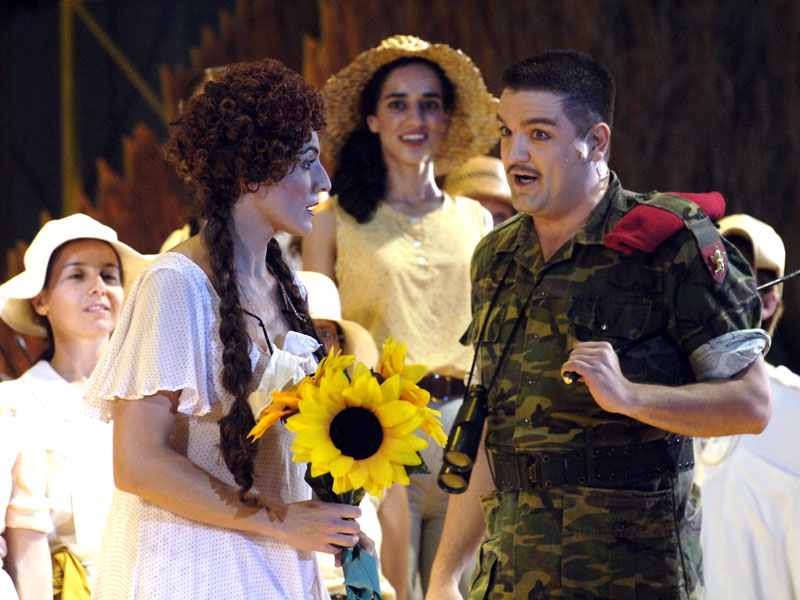
A magical Mediterranean love story in which Adina enjoys teasing Nemorino until she finally does say “I do”. Omri Nitzan’s beloved, colorful and very genuine production returns to the stage after a long absence.

From the repertoire | Sung in Italian | Duration: Two hours and 45 minutes

Libretto: Felice Romani

shikuya

Conductor Omer M. Wellber
Eithan Schmeisser
Director Omri Nitzan
Revival Director Gadi Shechter
Choreography Ophir Lavie
Set & Costume Designer Ruth Dar
Lighting Revival Eyal Levi

Among the soloists

Adina Hila Baggio
Alla Vasilevitsky
Nemorino Stefan Pop
Alexey Dolgov
Belcore Andrei Bondarenko
Riccardo Novaro
Dulcamara Bruno de Simone
Vladimir Braun
Gianetta Efrat Ashkenazi
Anat Czarny
Mrs. Dulcamara Yael Levita
Photographer, Notary Eyal Seri
Adina as an adolescent Hadas Jacobi
Nemorino as an Adolescent Ofir Lavie
Adina as a Child Ori Manor
Tamar Armel
Nemorino as a Child Yonatan Glazer
Shahar Levi

The Israeli Opera Chorus
Chorus Master: Ethan Schmeisser

The Opera Orchestra – The Israel Symphony Orchestra Rishon LeZion

English & Hebrew Surtitles
Translation: Israel Ouval

Day Date Hour Back Stage Tours Opera Talkback
* WED 11.3.15 20:00
** FRI 13.3.15 13:00 The performance is dedicated in loving memory of Dr. Israel (Rolly) Yovel
SAT 14.3.15 20:00
SUN 15.3.15 20:00 18:30 After the show
MON 16.3.15 20:00
TUE 17:3.15 20:00
THU 19.3.15 20:00 18:30 After the show
FRI 20.3.15 13:00
SAT 21.3.15 20:00
SUN 22.3.15 20:00 18:30 After the show

* PREMIÈRE
** Towards Opening – SAT 7.3.15, 11:00
*** A pre-performance lecture (in Hebrew) is held one hour before every performance. Free admission for tickets holders.

shikuyb

Synopsis

L’elisir d’amore

Two strangers intrude upon the serenity of the closed community of a pastoral village. They are the sergeant Belcore, a womanizing braggart soldier and Dulcamara, a charlatan doctor. They stir up emotions in the peaceful village in an ever-widening plot, and eventually succeed in bringing Nemorino and Adina together, helping them fulfill their love, while overcoming the emotional and social drawbacks which had characterized their relations twenty-four hours earlier.

ACT I
Scene i
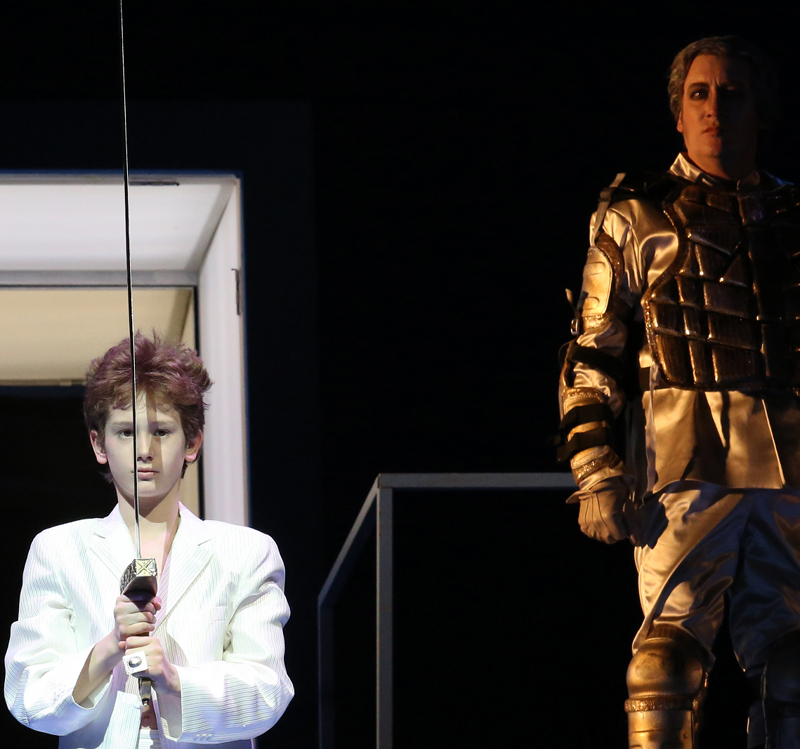
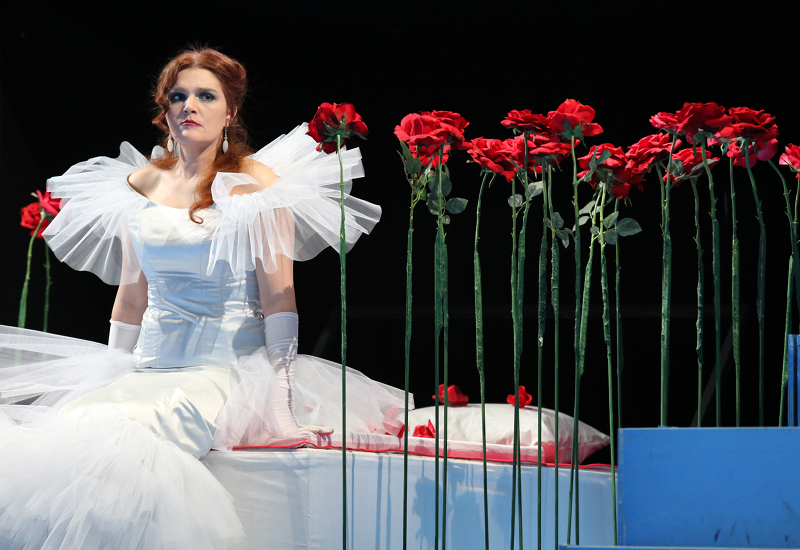
The curtain rises revealing a pastoral landscape of a provincial village. Farmers are resting in the field, and in the background, Adina, a rich and capricious lass, is sitting under a tree, reading a book. Nemorino, one of the villagers, a simple and shy youth, looks at Adina yearningly, contemplating how he could make her fall in love with him. After all she is rich and learned while he is considered to be a good-for-nothing. Suddenly, Adina bursts out laughing and recounts to the villagers the legend of the miraculous love elixir which helped Tristan conquer Isolde’s heart. A military march heralds the approach of soldiers, led by Belcore, a sergeant full of his own importance and manly charm who immediately proposes to Adina. Stunned, Nemorino is amazed by this unexpected rival, and confesses his love to Adina, but she refuses him, explaining that she is simply unable to return anybody’s love.

Scene ii
The entire village is excited by the arrival of Dr. Dulcamara, a garrulous charlatan, traveling salesman offering various elixirs and especially an antidote for all ailments. Upon Nemorino‘s request, the “doctor” prepares a love potion for him, explaining that it takes effect only after 24 (ample time for Dulcamara to leave the village). Nemorino drinks the love potion, hours he potion, unaware that it is nothing but Bordeaux wine, and becomes tipsy, believing, in his naivete, that tomorrow all his sufferings will come to an end as Adina will be bound to return his love. Adina, surprised by Nemorino’s changed behavior, and wanting to aggravate him, agrees to marry Belcore in six days time. Nemorino ,who is certain that potion will work within twenty-four hours, causing Adina to love him forever, is not worried. But as Belcore suddenly receives an order to leave the village immediately, Adina decides to marry him on the spot. Her provocation has turned into a dangerous adventure. Nemorino’s despair is total and all the villagers ridicule the lovesick simpleton fool.

shikuycACT II
Scene i
The villagers gather at Adina and Belcore’s wedding reception, all except Nemorino. But Adina’s revenge cannot be complete without his being there, and so she postpones the final signature of the nuptial agreement. Nemorino is searching for Dulcamara and when he finds him, pleads for an additional potion. Dulcamara indeed offers another potion which might help, but Nemorino does not have the money to pay for it. In his total despair and in order to get the necessary funds, he decides to join the army. Belcore willingly offers Nemorino the enlistment grant, believing that this is his opportunity to get rid of this ridiculous pestering rival. In his naivete, Nemorino believes that the additional potion will make Adina love him.

Scene ii
News spread through the village that Nemorino has inherited a fortune from his rich uncle has died. The ridiculed simpleton suddenly becomes a most sought after bachelor and believes that it is the result of the love potion. Adina is surprised when Dulcamara tells her that Nemorino has joined the army, and realizes that his love for her is strong and sincere. She if profoundly moved by the fact that he was actually willing to sacrifice his freedom for her and all her emotional barriers and shattered. She realizes that she truly loves Nemorino. Adina buys back Nemorino’s enlistment papers from Belcore and presents them to Nemorino, confessing her love for him. After all the trials and tribulations, Nemorino and Adina make peace with each other and with themselves. Dulcamara, who is about to leave the provincial village, informs everybody about Nemorino’s new fortune and takes advantage of the situation to market his new potion which he claims makes women love the men who love them. Belcore, confident of his male charm, leaves for another village searching for new love, while Nemorino and Adina hurry to the marriage canopy.

Posted in OPera | Tagged , , , , , , | Leave a comment

Wagner’s “Lohengrin” in Croatia

croatianLogo

Richard Wagner

Lohengrin

Conductor Nikša Bareza
Director Kurt Josef Schildknecht

March 2015

1_1

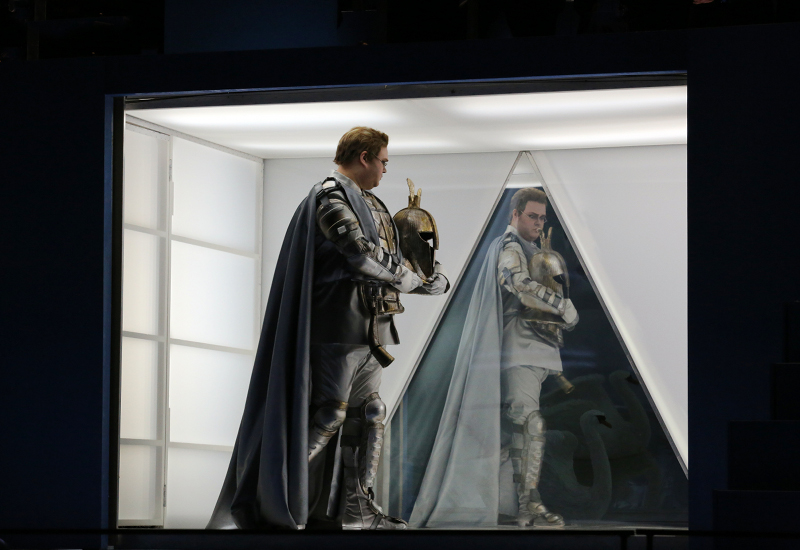
Wagner’s Lohengrin, partly a fairy-tale, partly a historical myth and partly a tragic love story, raises a serious issue: can absolute trust and unconditional love exist in a world in which the absolute does not exist and in which almost everything is pre-determined? This opera written after a mediaeval legend about Lohengrin, the knight of the Holy Grail, is considered to be one of the most beautiful works of German romanticism in which music, through a hypnotically unbroken flow of sounds, unites the soloists, choir and orchestra into a unique and unrepeatable artistic expression. After the demanding production of Parsifal, this is again a co-production of the CNT in Zagreb and the Mainfranken Theatre Würzburg. With the opening night of the equally challenging Lohengrin, we shall mark the Wagner Year.

2_3_4_6__

5__-744x1024 8__ 9__11_10_

Posted in OPera | Tagged , , , | Leave a comment

Wagner’s “Die Meistersinger von Nürnberg” in Finland

logofinlandThe Finnish National Opera Presents:

wagnerDie Meistersinger von Nürnberg

Richard Wagner

Young Walther finds himself compelled to win a singing competition, because the prize is the hand of Eva in marriage. Entrants need to be well versed in the ancient rules of the mastersingers to even be allowed to enter the competition, but Walther is inspired to sing of love in a new style. Die Meistersinger von Nürnberg is a grandiose opera by Wagner setting a good-humoured story about the encounter of old and new worlds.

In this opera, Wagner depicts young love and laughter instead of the epic canvases for which he is better known. For all its light-heartedness, the story is also a serious exploration of the tensions between freedom and strict rules in art. Harry Kupfer, who previously directed the impressive Parsifal, sets the Medieval tale in war-torn Germany in the modern era.

Duration 5 h 30 min, 2 intermissions
Performed in German, surtitles in Finnish, Swedish and English.
  • Conductor Michael Güttler
  • Director Harry Kupfer
  • Sets Hans Schavernoch
  • Costumes Yan Tax
  • Lighting design Jürgen Hoffmann
  • Choreography Derek Gimpel

    Upcoming performances

    Main auditorium

    • Fri 13/03/2015 5:00 pm
    • Tue 17/03/2015 5:00 pm
    • Wed 25/03/2015 5:00 pm
    • Sat 04/04/2015 2:00 pm
    • Sat 11/04/2015 2:00 pm
    • Sat 18/04/2015 2:00 pm

CAST

Posted in OPera | Tagged , , , | Leave a comment

Faust at the Opera National de Paris

faustFaust

GOUNOD

Opéra Bastille – First performance on 2 March 2015 – 7:30PM

faustcalendar

OPERA IN FIVE ACTS (1859)
MUSIC BY CHARLES GOUNOD (1818-1893)
LIBRETTO BY JULES BARBIER AND MICHEL CARRÉ
Performed in French

New version

The emblematic French opera, one of its greatest successes and, at the same time, in a way, its memory. Gounod recalled having the book by Goethe by his side throughout his youth, even in the gardens of the Villa Medici where he was a “pensionnaire.” Twenty years later, Carvalho finally agreed to commission Gounod and he had good reason to: Faust brought prosperous times to the Théâtre-Lyrique and then to the Opéra. From there, the work became famous throughout the world and the Metropolitan in New York chose it for its inaugural opening evening on 22 October 1883, where the greatest singers made their mark. Jean de Reszké and Muratore as Faust, Faure – the creator –, Maurel, Delmas and Marcoux as Méphisto and, for Marguerite, Christine Nilsson, Patti, Melba, Farrar, Garden… Few works have been so loved and respected as this Faust… And indeed, the work, more faithful than we might imagine to Goethe, inspired in Gounod a youthful, turbulent lyricism, pleasures and unforgettable trepidation.
Piotr Beczala and Krassimira Stoyanova embody the legendary doomed lovers.

Michel Plasson Conductor
Jean-Romain Vesperini Stage director
Johan Engels Sets
Cédric Tirado Costumes
François Thouret Lighting
Selin Dündar Choreography
José Luis Basso Choruses master
Artist Note Rôle
Piotr Beczala
Faust
Michael Fabiano
(25, 28 March)
Faust
Ildar Abdrazakov
Méphistophélès
Jean-François Lapointe
Valentin
Damien Pass
Wagner
Krassimira Stoyanova
Marguerite
Anaïk Morel
Siebel
Doris Lamprecht
Dame Marthe
Paris Opera Orchestra and Chorus
Posted in OPera | Tagged , , | Leave a comment

La Traviata in Bulgaria

stateoperalogoroussetraviatabulgaria

27/02/2015 (19:00)

Composer: Giuseppe Verdi

La traviata is an opera in three acts by Giuseppe Verdi set to an Italian libretto by Francesco Maria Piave. It is based on La dame aux Camélias, a play adapted from the novel by Alexandre Dumas, fils. The opera was originally entitled Violetta, after the main character. It was first performed on 6 March 1853 at the La Fenice opera house in Venice.

5traviataGuest artist
Conductor  Salvatore Cicero

Characters
Violetta ValÃry, a courtesan
Alfredo Germont, a young bourgeois from a provincial family
Giorgio Germont, Alfredo’s father
Flora Bervoix, Violetta’s friend
Annina, Violetta’s maid
Gastone, Alfredo’s friend
Dottore Grenvil
Commissioner

1traviata 2traviata3traviata 7traviata 8traviata 9traviata 10traviata 12traviata

Posted in OPera | Tagged | Leave a comment

Parsifal at the Oper Frankfurt

frankfurtlogoPARSIFAL

Richard Wagner 1813 – 1883
Opera in three acts
Libretto by the Composer
First performed July 26th 1882, Festspielhaus, Bayreuth
Sung in German with German surtitles
Performances
Sunday 15.03.2015
21.03.2015 |29.03.2015 |03.04.2015 |06.04.2015

1parsifal
——————————————————————————–
About the Piece
——————————————————————————–
Wagner’s opera is full of allegory. Amfortas, guardian of the Holy Grail, was seduced by Kundry and wounded by Klingsor when he entered his magic garden, where he also lost the Sacred Spear. Gurnemanz, the wisest of the brotherhood, thinks Parsifal, a simple young man, might be the one who will be able to close these wounds again, but years are to pass before this turns out to be the case, years before he returns, with the Sacred Spear, is annointed and the Holy Grail – “It shall be hidden no more” – is revealed. The most mysterious character in the work is Kundry, who was cursed to wander the earth forever for laughing at Jesus’ sufferings. She returns at the end of the opera and washes Parsifal’s feet. He baptises her and she sinks, lifeless, to the floor. It is extraordinary how this production holds you spellbound from start to finish.

2parsifalWagner’s opera is full of allegory. Amfortas, guardian of the Holy Grail, was seduced by Kundry and wounded by Klingsor when he entered his magic garden, where he also lost the Sacred Spear. Gurnemanz, the wisest of the brotherhood, thinks Parsifal, a simple young man, might be the one who will be able to close these wounds again, but years are to pass before this turns out to be the case, years before he returns, with the Sacred Spear, is annointed and the Holy Grail – “It shall be hidden no more” – is revealed. The most mysterious character in the work is Kundry, who was cursed to wander the earth forever for laughing at Jesus’ sufferings. She returns at the end of the opera and washes Parsifal’s feet. He baptises her and she sinks, lifeless, to the floor. It is extraordinary how this production holds you spellbound from start to finish.3parsifal

Cast


Conductor
Bertrand de Billy
Director
Christof Nel
Revival rehearsed by
Orest Tichonov
Scenic Analysis
Martina Jochem
Stage Designer
Jens Kilian
Costume Designer
Ilse Welter
Lighting Designer
Olaf Winter
Dramaturge
Norbert Abels
Chorus Master
Tilman Michael

4parsifal

Parsifal
Frank van Aken
Gurnemanz
Franz-Josef Selig
Kundry
Claudia Mahnke
Amfortas
Johannes Martin Kränzle
Klingsor
Simon Bailey
Titurel
Magnús Baldvinsson
Blumenmädchen
Louise Alder
Karen Vuong
Judita Nagyová
Elizabeth Reiter
Jenny Carlstedt
Maria Pantiukhova *

5parsifal
Gralsritter
Hans-Jürgen Lazar
Gralsritter
Iurii Samoilov
Knappe
Elizabeth Reiter
Knappe
Jenny Carlstedt
Knappe
Michael Porter *
Knappe
Michael McCown

Oper Frankfurt’s Orchestra, Chorus and Extra Chorus

* Member of the Opera Studio

7parsifal 6parsifal

Posted in OPera | Tagged , , | Leave a comment

Paisiello’s “Il Barbiere di Siviglia” in Brussels

logolamonnaiebarbiere
Il Barbiere di Siviglia (in concert)
As in the work of the same name by Rossini, Paisiello’s opera, written for the court of Catherine II in St. Petersburg, was based on Beaumarchais’ Le Barbier de Séville. The reason for this choice was the success of the play itself in Saint Petersburg. It is apparent from one of his letters that Paisiello received extremely precise instructions from the court : ‘What I should also advise you is to be brief, and use very few recitatives, because people don’t understand the language.’ Although the situation is completely different now, in the early 19th century Paisiello’s opera was a formidable rival to Rossini’s version. In the context of the opera buffa of the time, his opera was a masterpiece : with no complexity of characterisation or tonal style, but inventive and sharp in its development of comical situations packed with amorous entanglements. René Jacobs will quite definitely do full justice to its comic timing.

Co-production Festival van Vlaanderen-Brussel / KlaraFestival, Bozar Music
Co-presentation La Monnaie / De Munt

Music direction ¦ René Jacobs
PERFORMERS ¦ Topi Lehtipuu
Mari Eriksmoen
Bartolo ¦ Pietro Spagnoli
Figaro ¦ Andrè Schuen
Don Basilio ¦ Fulvio Bettini
Orchestra ¦ Freiburger Barockorchester
Members of the Young Artist’s Programme of the Wiener Kammeroper

Il Barbiere di Siviglia (in concert)

Ovvero La Precauzione inutile, dramma giocoso per musica tradotto liberamente dal francese, da rappresentarsi nel Teatro Imperiale del corte, l’anno 1782.
Libretto di Giuseppe Petrosellini
Premiere Hermitage-Theater, St. Petersburg, Russia

Venue
Bozar, Center for fine Arts ,
23, rue Ravenstein – 1000 Brussels

Posted in OPera | Tagged , , , , | Leave a comment

Tosca in Estonia

tosca

Tosca

Opera by Giacomo Puccini in three acts with two intervals

Libretto by Giuseppe Giacosa and Luigi Illica after Victorien Sardou’s play of the same name
Premiere on 13 May 2005

Sung in Italian with subtitles in Estonian and English
Approx. running time 2 h 50 min, two intermissions
March 12 & 14 2015, Cavaradossi sung by Carlo Barricelli (Italy)

T, 12 March 2015 / 19:00
S, 14 March 2015 / 19:00

Tallinn Opera House Main Theater, Estonia

Tallinn Opera House Main Theater, Estonia

Puccini’s Tosca is one of the most popular operas in the world and it is not difficult to tell why. It is a passionate drama full of contrasts in which daily life might prove to be more unpredictable than the most adventurous dream. The love of the beautiful opera singer Tosca and an artist Cavaradossi is poisoned by the cruel and powerful police chief Scarpia, who entangles them in his stealthy plans. There is a struggle between love, political intrigues, confidence and thirst for power that knows no mercy. In the end, there are no winners…

As one of the greatest 20th century melody masters, Puccini has used bold colours and memorable melodies to create imaginative and enticing portraits for his characters. The highlights of the opera include one of the most beautiful arias in the soprano repertoire Vissi d’arte and one of the most famous tenor arias E lucevan le stelle that have won the hearts of both opera lovers as well as first-timers.

Posted in OPera | Tagged , , , , , | Leave a comment

Handel’s Alcina in Copenhagen

AlcinaEN_top415

Performance period: 21. Feb. – 14. Mar. 2015 at then Royal Danish Theatre of Copenhagen

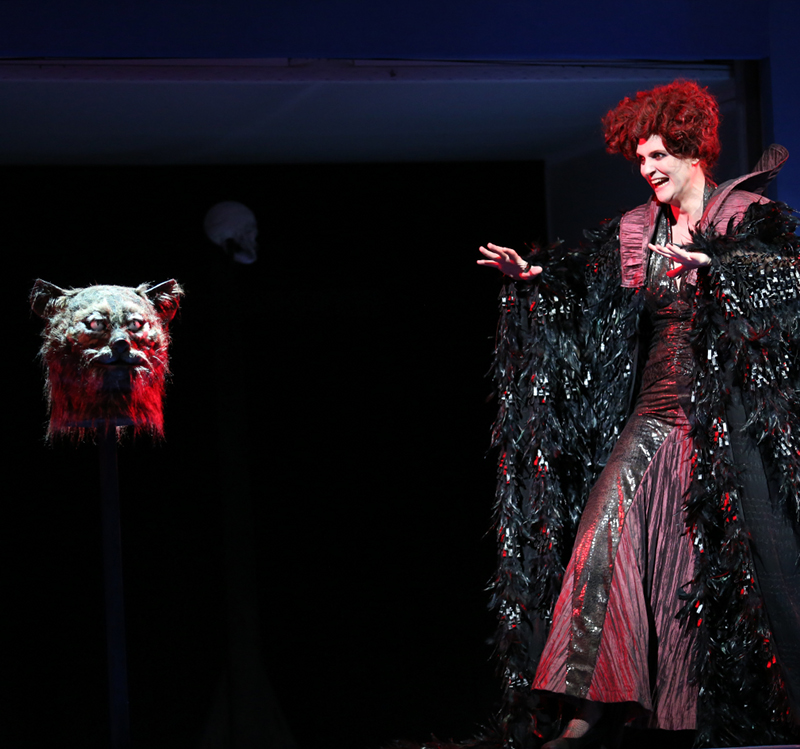
Dwelling on a desert island, the sorceress Alcina is so alluringly beautiful that all men must fall in love with her – and suffer the consequences that follow. For when Alcina tires of her lovers, she transforms them into rocks, bushes, trees or animals. But one day an unknown man arrives on Alcina’s island, and the ravishing sorceress soon learns the bittersweet taste of love.

Alcina_Foto_Joerg_Wiesner_001When Alcina tires of her lovers, she transforms them into rocks, bushes, trees or animals. But the day arrives when an unknown man arrives on the shores and the ravishing sorceress gets a taste of her own bittersweet medicine.Alcina_Foto_Joerg_Wiesner_002

The opera is a dramatic tale of a strong and powerful woman who lets evil rule her heart until love makes her vulnerable. In a series of powerful arias, Alcina struggles to regain control of her tempestuous emotions until she finally realizes that she, too, is nothing more than a passenger on a storm-tossed ship heading for the abyss. Handel’s Alcina premiered in 1735.Alcina_Foto_Joerg_Wiesner_003

With Alcina we once again present one of Handel’s many operas at the Old Stage, this time directed by the award winning, world-famous director Francisco Negrin, who also staged the Royal Danish Theatre’s Partenope (2008) and the Reumert-winning Giulio Cesare (2002). His most recent production at the Royal Danish Theatre was Janáček’s The Cunning Little Vixen in 2012.Alcina_Foto_Joerg_Wiesner_004

Alcina is performed in Italian with Danish supertitles.

Conductor: Lars Ulrik Mortensen | Director: Francisco Negrin | Set and costume design: Louis Desiré | Lighting design and video: Mikki Kunttu | Movement- and areal director: Ran Arthur Braun

Alcina_Foto_Joerg_Wiesner_005

Cast and conductor dates

<!–


–>

Alcina:
Inger Dam-Jensen
2/21, 2/23, 2/28, 3/4, 3/6, 3/8, 3/10, 3/14

Morgana:
Anke Briegel
2/21, 2/23, 2/28, 3/4, 3/6, 3/8, 3/10, 3/14

Oberto:
Hyon Lee
2/21, 2/23, 2/28, 3/4, 3/6, 3/8, 3/10, 3/14

Ruggiero:
Tuva Semmingsen
2/21, 2/23, 3/6, 3/8, 3/10, 3/14

Itziar Lesaka
2/28, 3/4

Bradamante:
Ruxandra Donose
2/21, 2/23, 2/28, 3/4, 3/6, 3/8, 3/10, 3/14

Oronte:
Marius Roth Christensen
2/21, 2/23, 2/28, 3/4, 3/6, 3/8, 3/10, 3/14

Melisso:
Wojtek Gierlach
2/21, 2/23, 2/28, 3/4, 3/6, 3/8, 3/10, 3/14

Astolfo:
Jakob Zethner
2/21, 2/23, 2/28, 3/4, 3/6, 3/8, 3/10, 3/14

Conductor:
Lars Ulrik Mortensen
2/21, 2/23, 2/28, 3/4, 3/6, 3/8, 3/10, 3/14

CAST

Inger_Dam_Jensen_cvsInger Dam-Jensen as Alcina

Soprano

Debut
1993 at the Royal Danish Opera.

At The Royal Danish Theatre
Roles include Cleopatra in Giulio Cesare, Zdenka in Arabella, Fiordiligi in Cosí fan tutte, Ophelia in Hamlet, Norina in Don Pasquale, Sophie in Der Rosenkavalier, Adina in L’elisir d’amore, Susanna in Le nozze di Figaro, Musetta in La bohème, Gilda in Rigoletto, Violetta in La traviata, Blondchen in Entführung aus dem Serail, Lucia in Lucia di Lammermoor, Liu in Turandot, Rosina in Barbiere di Siviglia, Ofelia in Hamlet, Michaëla in Carmen and Julie in Roméo et Juliette.

Releases
Her discography includes Peer Gynt for Teldec; Solomon under Paul McCreesh for Deutsche Grammophon, Ein deutsches Requiem for Chandos, and a selection of Carl Neilsen’s songs for Dacapo.

Prizes and scholarships
Winner of the coveted Cardiff Singer of the World Competition in 1993.


Anke-Briegel_cvsAnke Briegel as Morgana

Soprano

German soprano Anke Briegel has studied at the Hochschule für Musik und Theater in Hannover and at the Conservatorio Statale di Musica Luigi Cherubini in Florence, where she graduated in 2010. Her education was concluded with several master classes, amongst others with Aribert Reimann, Ileana Cotrubas and Barbara Bonney.

In 2004 she reached the final in the National Song Contest in Berlin and she was awarded the Music Prize of Ulm. In 2005 Anke Briegel had her debut as Warwara Dobrosjolowa in Arme Leute. Furthermore she performed at the Theater Bielefeld in the roles as Amor in Glucks Orfeo ed Euridice and Babarina in Le nozze de Figaro. In Hannover she has joined the cast of Hansel und Gretel and Il viaggo a Reims.

During season 10/11 Anke Briegel was a part of the Dortmund Theater ensemble. Her roles here included the title role of Hansel und Gretel, Musetta in La Boheme, Susanna in Le nozze de Figaro, and Adina in L’elisir d’amore. In 2012 she sung the part of Lucia in Schweitzers Rosamunde at the Schewtzingen Festival.
In 14/15 Anke Briegel can be heard here at the Royal Danish Opera in the roles of Pamina and Sophia in Der Rosenkavalier.
Lee-Hyon_cvsHyon Lee as Oberto

Hyon Lee makes her debut at the Royal Danish Opera as Oberto in Alcina.

itziar-lesaka_cvsItziar Lesaka as Ruggiero

During the 2014-2015 season Itziar Lesaka will make her house debut at the Royal Danish Opera in the role of Ruggiero (Alcina). She will also sing Carmen (in a chamber version), Jezibaba (Rusalka) and Baba the Turk (Rake’s Progress) at the Mecklenburgisches Staatstheater Schwerin (Germany) where she has been a soloist since 2010. Important role debuts in the last seasons in Schwerin have included: Dorabella (Così fan tutte), Rosina (Il Barbiere di Siviglia), Mrs. De Rocher (Dead Man Walking), Orlofsky (Die Fledermaus), Ruggiero ( Alcina), Cornelia (Giulio Cesare) and Suzuki (Madama Butterfly).
From 2001 through 2009, Itziar Lesaka was a regular guest at the Deutsche Oper am Rhein in Düsseldorf. Her interpretation of Melanto in Il ritorno d’Ulisse in patria under the stage direction of Christof Loy was very acclaimed by the german press. She was nominated for the best young singer by the “Opernwelt-Jahrbuch 2003”.
From 2004 to 2008, she was a member of the ensemble of the Staatstheater Kassel, where she sang parts such as Hänsel (Hänsel und Gretel), Cherubino (Le nozze di Figaro), Komponist (Ariadne auf Naxos) and Muse/Niklaus (Les Contes d‘Hoffmann).
She was also invited at the Oper Leipzig (Cherubino in Le nozze di Figaro), at the Staatstheater Hannover (Der Trommler in Kaiser von Atlantis) and at the festival Wiener Festwochen in Vienna with the production Mozart in Paris of Christof Loy.
Itziar Lesaka was born in San Sebastian (Basque Country, Spain). She studied singing, Lied and contemporany vocal music at the music university “Hochschule für Musik und darstellende Kunst” in Stuttgart (Germany).
Itziar Lesaka worked also with stage Directors like Christof Loy, Ursel Herrmann, David Freeman, Jérôme Savary, Gabriele Rech, Arila Siegert and Benno Besson and with music Directors like Baldo Podic, Hans Wallat, Stéphane Denève, Matthias Foremny and Jonathan Darlington.

Tuva_Semmingsen_cvs

Tuva Semmingsen as Ruggiero

Mezzo soprano.
Debut at the Royal Danish Theatre in 1999 as Cherubino in Mozart’s Le nozze di Figaro.

At The Royal Danish Theatre
Cherubino in Mozart’s Le nozze di Figaro. Pernille in Nielsen’s Maskarade. Sesto in Handel’s Julius Caesar. Titte Mortensen in Fuzzy’s children’s opera Sorceress Mortensen and the Fat Turkey. Rosina in Rossini’s Il barbiere di Siviglia. The title role in Rossini’s La cenerentola. Minerva and Melanto in Monteverdi’s Il ritorno d’Ulisse in patria. Lola in Mascagni’s Cavalleria rusticana.

Other engagements
Performed Cherubino in Mozart’s Le nozze di Figaro at Teatro La Fenice in Venice in 2000. Performed at Wigmore Hall with the King’s Consort in 2002. Has performed with the Oslo Philharmonic, the Norwegian Opera Orchestra, the King’s Consort, Concerto Copenhagen, Neues Bachisches Collegium, Leipzig, and the Danish National Symphony Orchestra. Rosina in Rossini’s Il barbiere di Siviglia in Nancy, France, May 2005.

Releases
Among her recordings are three Vivaldi CDs with the King’s Consort on the Hyperion label.

Prizes and scholarships
Recipient of the 2001 Norwegian Naxos Award. Recipient of the 2004 Aalborg Opera Prize and Elisabeth Dons Mindelegat 2004.


Ruxandra-Donose_cvsRuxandra Donose as Bradamante

What distinguishes Ruxandra Donose
among the most renowned mezzo-sopranos of the younger generation is the complexity of her artistic personality. The tone of her voice is at the same time particular, dark, warm, sensuous and noble and her vocal range is large and flawless as concerns the homogeneity of her registers.

Her excellent singing technique ensures her easiness and accuracy in virtuousity scores, but also the ample phrasing, finely nuanced in an impeccable legato, in „line scores“.
Ruxandra Donose is both an attractive presence on the stage and a very gifted actress, convincing in the most diverse feminine roles and also in male roles (in disguise). Her sharp intelligence, her thorough musical and general knowledge, an altogether remarkable feeling for the style, allow Ruxandra Donose to tackle at the highest artistic level not only an extremely diverse opera repertoire, but also the lied and the vocal-symphonic ones.
These are the premises of a solid career, in full swing, built step by step from the very beginning.

Born in Bucharest, in a family of musicians, Ruxandra Donose appeared on the concert stage as early as her childhood, as a pianist. A graduate of the Music University of Bucharest (the class of Georgeta Stoleriu), she also attended summer courses for lied – oratorio in Weimar with Lore Fischer. Since 1992 she studies in Vienna with Carol Blaickner-Mayo and Carol Byers. She has been awarded a great number of national and international prizes being among others, laureate of the International Competition of Munich (1990) and of Washington (1991).
Soloist of the Opera Houses of Constanta – Romania (1989-1991), Basel – Switzerland (1991-1992) and Vienna – Austria (1992-1998) Ruxandra Donose has carried on at the same time a very rich stage and concert activity in a great many other musical centres of the world, acquiring in 10 years of career an impressive artistic record.

Roth-Christensen_cvsMarius Roth Christensen as  Oronte


Wojtek_Gierlach_cvsWojtek Gierlach as Melisso

Bass
Wojtek Gierlach graduated at the Warsaw Chopin Music Academy with Professor Kazimierz Pustelak, receiving the Magna cum Laude Distinction. He has since been awarded many prizes at international vocal competitions including the Ada Sari (1999 – 1st place); Bilbao (2000 – 2nd place), the main award in the Premio Caruso (Milan 2001); and the Francesco Viñas in Barcelona (2004 – 3rd place).

Wojtek Gierlach made his professional debut in 1999 with the Warsaw Chamber Opera in the title role of Handel’s Imeneo. With this company he also toured Holland, Japan and France as Don Giovanniin Mozart’s masterpiece.
He has also sung Don Basilio in Il Barbiere di Siviglia with Deutsche Oper Berlin, Mustafa in L’Italiana in Algeri with Teatro National Sao Carlos Lisbon, at the Teatro Alighieri di Ravenna and at Minnesota Opera, Figaro in Le Nozze di Figaro at the Teatr Wielki Warsaw and at the Teatro Petruzzelli Bari,Alidoro in La Cenerentola with , Festival d’Aix-en-Provence and at the Stadttheater Klagenfurt, Argenio in Imeneo for Opera Ireland Dublin,Melisso in Alcina with Opera Nacional de Bordeaux,Orbazzano in Tancredi with Teatro Maestranza in Seville,Leporello withNico Opera Cape Town and sang Assur in Semiramide at the Teatro Verdi di Pisa.

Some of his other critically acclaimed performances include Colline in La Bohème, Raimondo in Lucia di Lammermoor, Duce Alfonso in Lucerezia Borgia and Escamillo in Carmen at Warsaw Teatr Wielki, Conte Rodolfo in Sonnambula for the Theater St Gallen, Salieri in Rimsky-Korsakov’s Mozart and Salieri at the Teatro Filarmónica Oviedo, Timur in Turandot at the Auditorio de Tenerife, Commendatore in Ramón Carnicer’s Il Dissoluto Punito at La Coruña Mozart Festival, Gouverneur in Le Comte Ory at Wildbad Belcanto Opera Festival; Lord Sidney and Don Profondo in Il Viaggio a Reims at Rossini Opera Festival Pesaro, Orfeo at Slovenske Narodne Divadlo Bratislava, Domoslav in Berggeist by Spohr during the 13th LvB Easter Festival and Mephisto in Le Damantion de Faust with Kraków Philharmonic Orchestra.

Wojtek Gierlach has collaborated with many orchestras, taking part in concerts both in his home country and across Europe. His appearances have included Bach’s Mass in B minor, conducted by Helmuth Rilling at the Warsaw Philharmonic, Bach’s Magnificat with National Orchestra of Spain under Mireia Barera, Mozart’s Reqiuem with Sinfonietta Cracovia conducted by Marc Minkowski, Verdi’s Requiem, conducted by Kai Baumann at the Polish Baltic Philharmonic, Beethoven’s Symphony No. 9 with Orquesta de Navarra under Antoni Wit, Penderecki’s Seven Gates of Jerusalem with National Polish Radio Symphony Orchestra in Katowice under the composer’s baton.

Salieri’s The Passion of Jesus Christ, which he performed with I Solisti Veneti, conducted by Claudio Scimone (the concert was broadcast by RAI – Italian Television), Rossini’s Stabat Mater with Orquesta del Principado de Asturias with Alberto Zedda as conductor, Penderecki’s Dies Irae with Simon Bolivar Orchestra and Arvo Pärt’s Passion in Prague’s Spring Festival are a part of his oratorio repertoire.

Wojtek Gierlach recorded Mose in Egitto and La Donna del Lago by Rossini and Meyerbeer’s Semiramide under Richard Bonynge for NAXOS. For the IBERATOUR he has recorded Il dissoluto punito by Ramón Carnicer, conducted by Alberto Zedda. His other recordings include G.S.Mayr’s Medea in Corinto (Oehms) Luigi Mosca’s L’Italiana in Algieri (Bongiovanni), Lodoïska by Cherubini and Euryanthe by Weber conducted by Łukasz Borowicz for LvB and POLSKIE RADIO label.

Alcina_Foto_Joerg_Wiesner_006

Alcina_Foto_Joerg_Wiesner_007

Alcina_Foto_Joerg_Wiesner_009

Photo credit Joerg Wiesner


Posted in OPera | Tagged , | Leave a comment

Il barbiere di Siviglia at the Croatian National Theatre in Zagreb

croatianlogo

Gioachino Rossini

The Barber of Seville (Il barbiere di Siviglia)

barber13

Rossini’s most popular opera is considered the best comic opera ever. The libretto was written by Cesare Sterbini, following Le Barbier de Seville, the first part of the Figaro trilogy by Beaumarchais. The opera was written in only three weeks (the overture was “borrowed” from Rossini’s less successful opera Aureliano in Palmira). The opening night was a fiasco, thanks to the loud, fidgety audience and a series of accidents on the stage during the performance. The second performance was much better received and the opera was soon staged on all big European stages and became one of the most frequently staged works in the history of opera. It is interesting that the same destiny was shared by the Beaumarchais’s drama, which was rejected at the opening night, but became a hit within one week after the premiere.

Performances:

Tuesday, January 27 2015 at 19,30
Tuesday, January 28 2015 at 19,30
Tuesday, January 30 2015 at 19,30

Libretto Cesare Sterbini based upon Pierre-Augustin Caron de Beaumarchais
Translation of the Libretto Jasna Žarić
Conductors Josip Šego, Gianluca Marcianó
Director Krešimir Dolenčić
Set Designer Dinka Jeričević
Costume Designer Ana Gecan Savić
Light Designer Deni Šesnić
Assistant Conductor and Language Instructor Gianluca Marcianó
Quire Conductor Ivan Josip Skender
Choreographer Mateja Pučko-Petković
Assistant Director Jasna Žarić
Assistant Costume Designer Andrea Kuštović

Premiere 12. may 2006.

barber1 barber2 barber3 barber4barber5 barber6 barber7 barber8barber9barber10 barber12 barber14 barber15barber23 barber16 barber17 barber18 barber19 barber20 barber21 barber22

Posted in OPera | Tagged , , , , , , | Leave a comment