
Interview by Natalia Di Bartolo
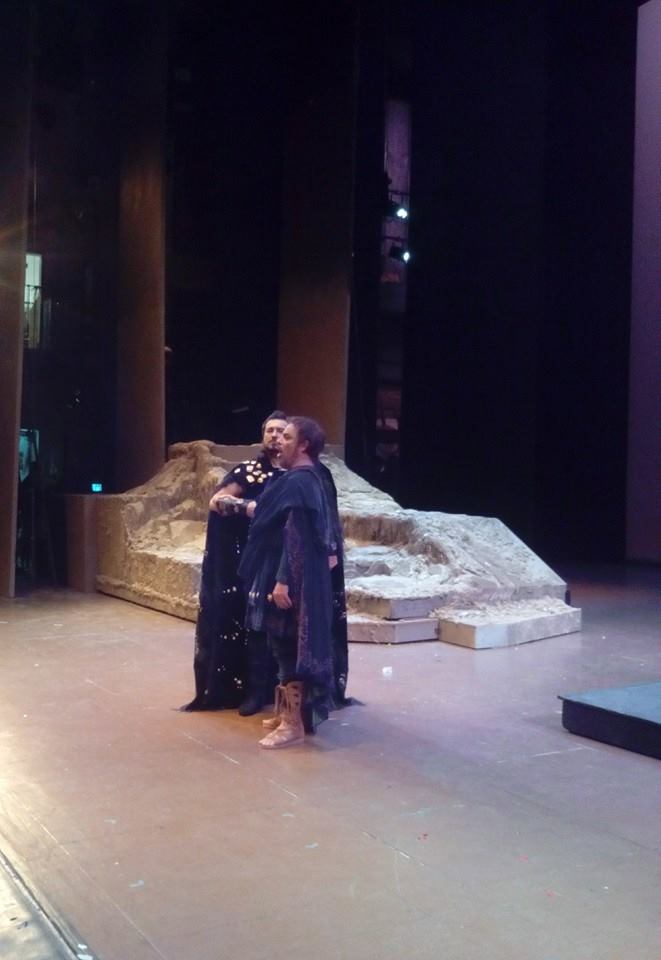
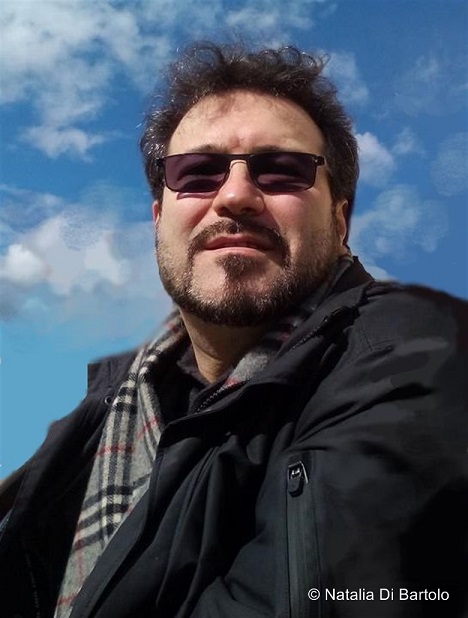
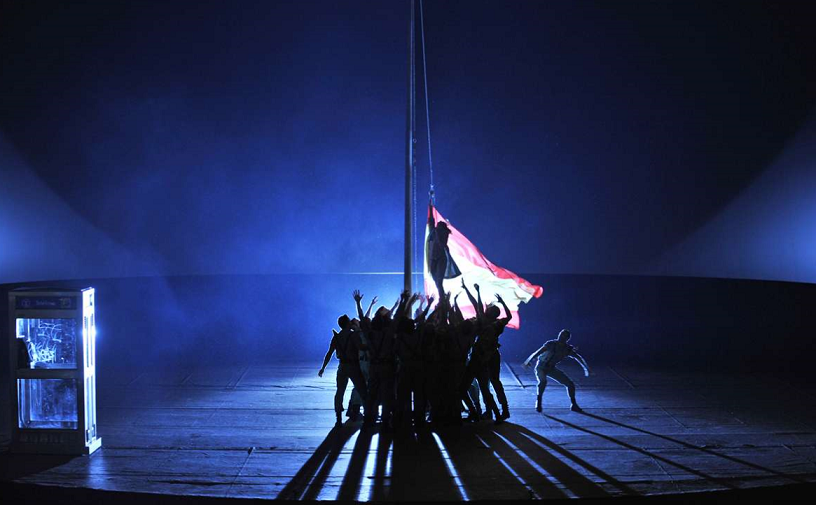
I meet up with operatic bass Carlo Colombara on a warm December afternoon at the artists’ entrance of Teatro Massimo Bellini, Catania. They are rehearsing the last opera of the 2014 season, Attila by Giuseppe Verdi, and it is only two days to the opening on 4th December 2014.
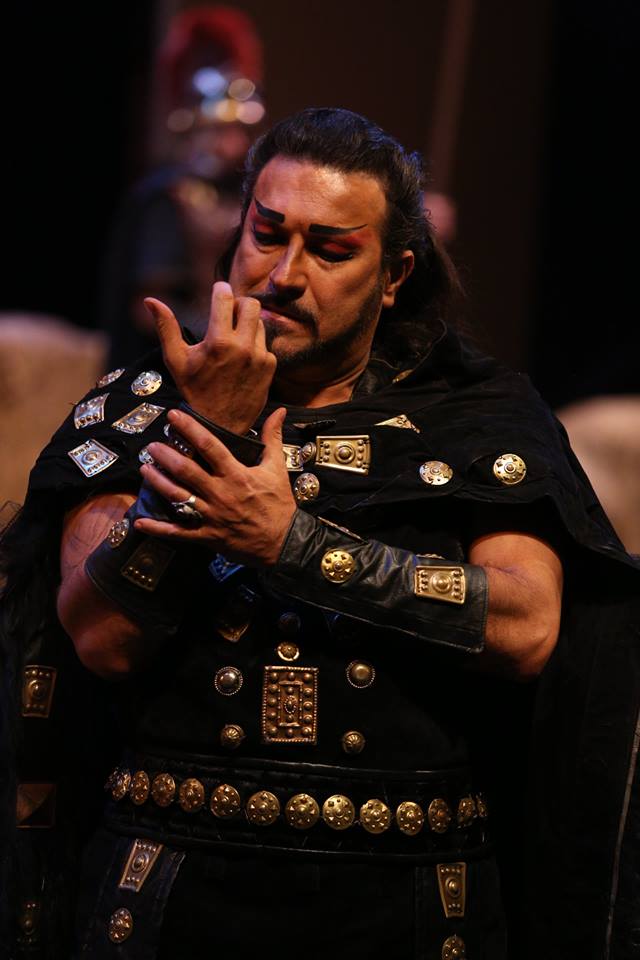
As I see him, so impressive in his looks, yet so kindly and simple in his manners, I almost struggle to imagine him playing the cruel ruler of the Huns… However, I can still hear his voice during the rehearsal… I find it undoubtedly fitting for the role, just as perfect as Carlo himself when made up and dressed as a barbarian. I’ve seen him already, and it almost feels as though he was undergoing a metamorphosis to “be” Attila.
We go upstairs to his dressing room. The chair seems to become infinitely tiny beneath him. I’m on the padded one and the armchair remains empty. “It’s not an armchair fit for Attila”, he
remarks. We both smile.
On we go with the interview! Let’s start with the customary questions: which operas have you sung in Catania and when?
I sang Norma in ’89-’90, which was repeated the following year. Then Simon Boccanegra with Bruson in 2001, under Bartoletti’s conduction, and now Attila.
On 1st December you were awarded the Danzuso Prize here in Catania…
Yes, and I was very pleased. It’s an extremely prestigious award and it was a lovely soirée. I got the chance to sing an aria from Attila – I had it ready.
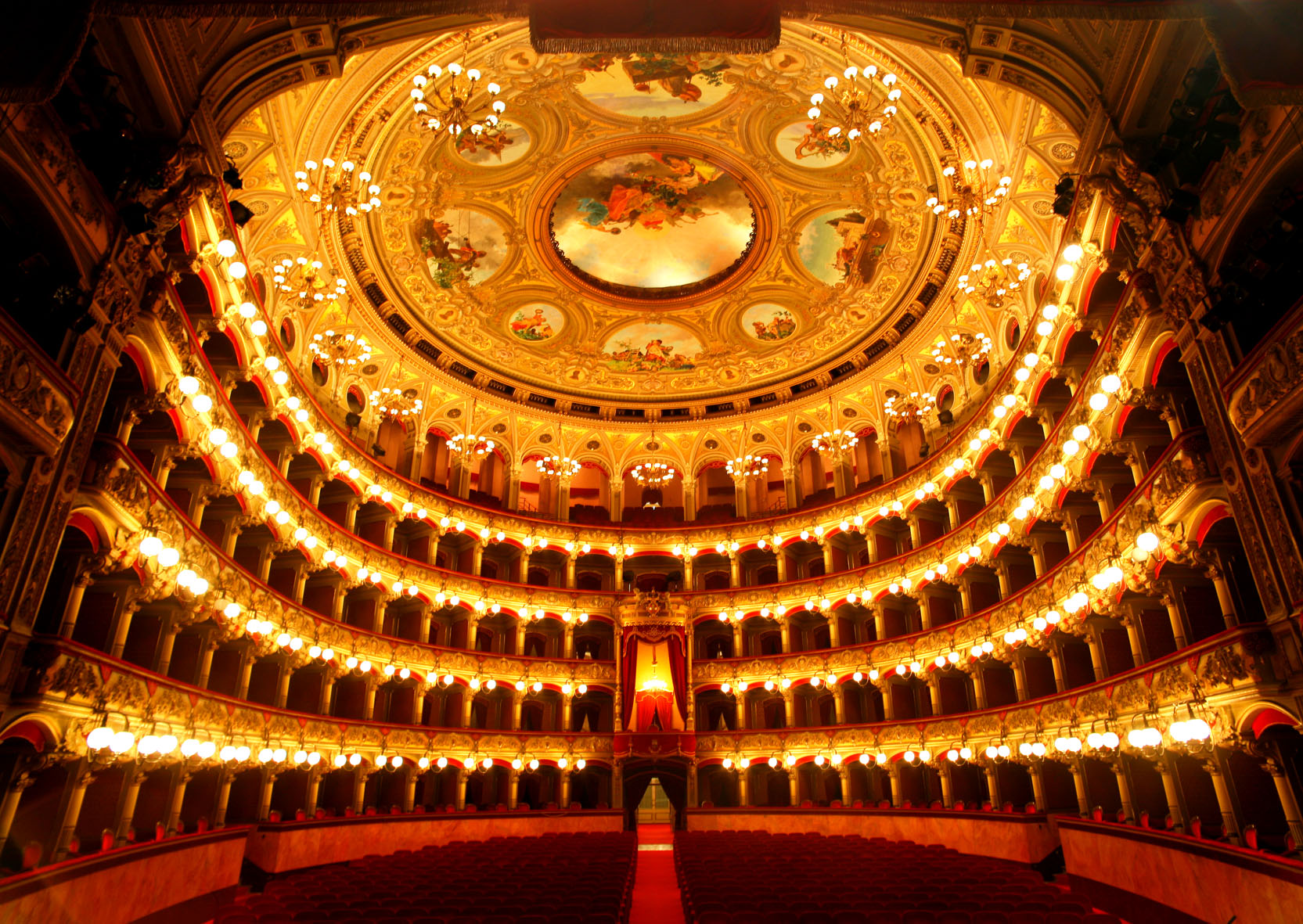
Bellini Theater in Catania
You’re rehearsing at Teatro Bellini, in my hometown. Enrico Caruso used to say it boasts the perfect acoustics: do you confirm that? Could you tell me something about it?
Yes, I absolutely confirm it. After the completion of restoration works years ago, people say the acoustics aren’t as perfect as they used to, but I still think they’re excellent! If only they were like this [everywhere]…
Speaking of acoustics, where have you found similarly ideal conditions and where, on the contrary, have you come across less-than-ideal acoustics?
As for other theatres… The Met in NYC has excellent acoustics, but it’s just so huge! Instead, La Scala and the [Teatro] Regio in Turin don’t have the perfect acoustics. As for the [Teatro] Comunale in Florence… it’s just the worst of the lot. However, it also depends on which spot the singer is placed. Such concert halls from the 1970s as the Royal Festival Hall have dreadful acoustics. In conclusion, I think theatres with too much velvet don’t really work. You do have plenty of velvet here in Catania, but who built the theatre did have the brains… [Carlo smiles].
Thank you, on behalf of architect Carlo Sada… The opening of Attila is around the corner. What is your take on this “villain”?
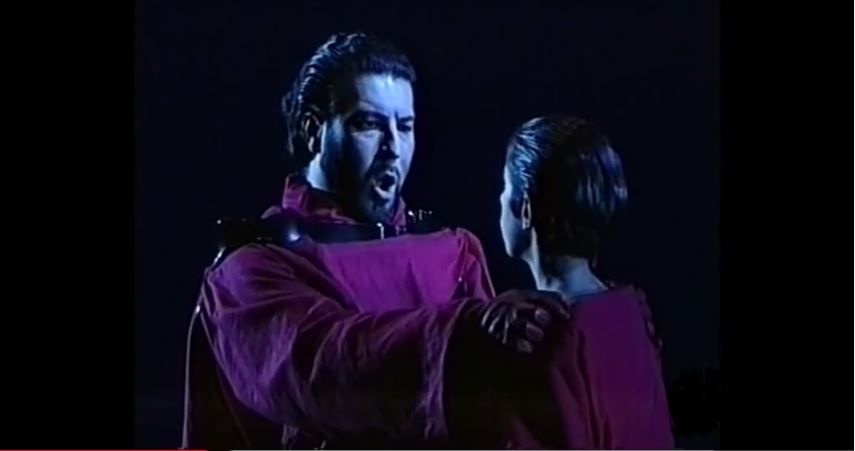
Usually “villains” are extremely appeased by the composer, and the same applies to Attila. Actually, when he dies he almost inspires pity as he sings in the quartet where Odabella, Foresto and Ezio plot against him and make him seem very humane – which is quite unlikely a thing in terms of historic reality. When one sings opera, they should relate to the libretto only, while still keeping an eye on the historical figure (like I do) if it is taken from history indeed. There’s no point in “playing the barbarian” on stage, when the libretto puts much gentler words on your lips.
I find this exceedingly important: librettists are often underestimated…
Librettos have their limits, but they’re functional. Some librettos are beautiful, such as those by Da Ponte and Romani, whereas others (like Solera’s Attila we’re speaking of) are quite ugly, and yet they do work! So my Attila for Catania, just like in any other production, is what the librettist intended for.
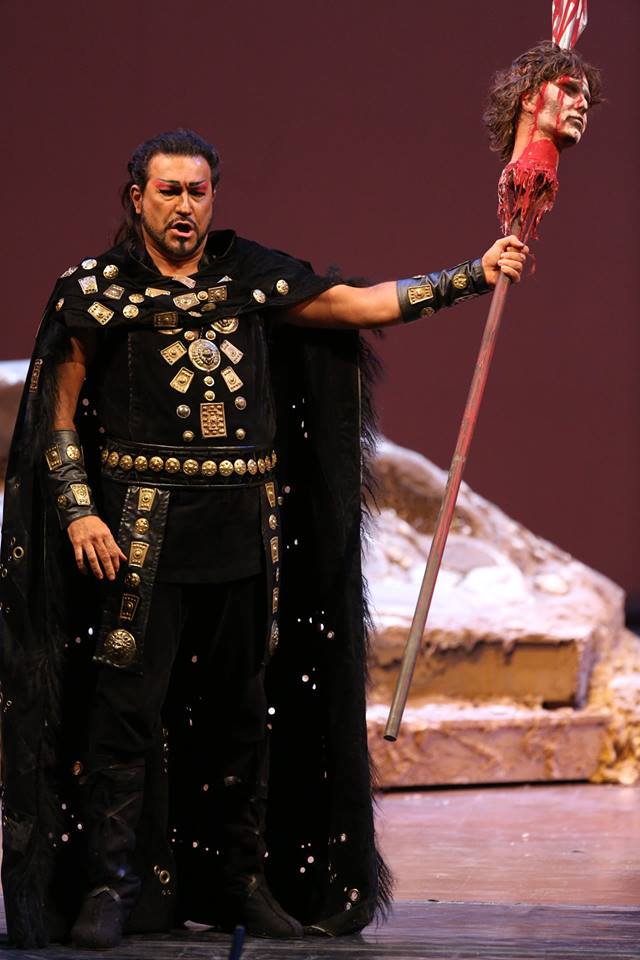
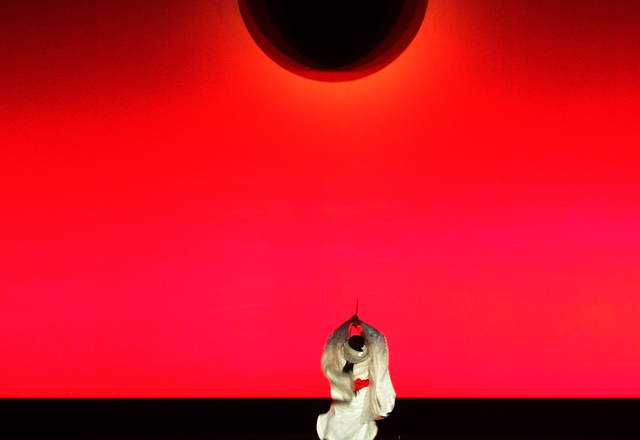
With regard to this production, Attila’s character is displayed just the way director Pirrotta and I wanted. We happened to agree on everything. He’s abrupt, heroic at times… He’s a leader and a god in the eyes of the people, but – I’ll say it again – he’s also very humane.
We are talking about “characters”: to what extent acting and stage art count in order to perfect the portrayal of a character? What do you think is the role of acting in Melodrama and what is your opinion about Theatre/Drama and Opera?
Over the years I’ve perceived that acting a role has become growingly important. Once they would be satisfied with the purely vocal ability of a singer, but it’s not like that any longer. Nowadays, media and – above all – stage direction force the singer to resemble an actor. I said “resemble” because the actor can take a breathe wherever he wants, he can play the role in different ways according to situations – and that’s different for singers. I once discussed this with my friend Glauco Mauri, who conducted me in Naples for Macbeth. First in the matinée and then at the evening recital he was acting in The Tempest by Shakespeare. I asked him: “How do you do that? Aren’t you tired?”. “My dear – he replied – at 14h30 I play my character in a certain way; then, after I get tired from directing, I play it differently: it’ll be much more sore…”. In turn, this led me to understand that singing is a great deal more difficult than acting.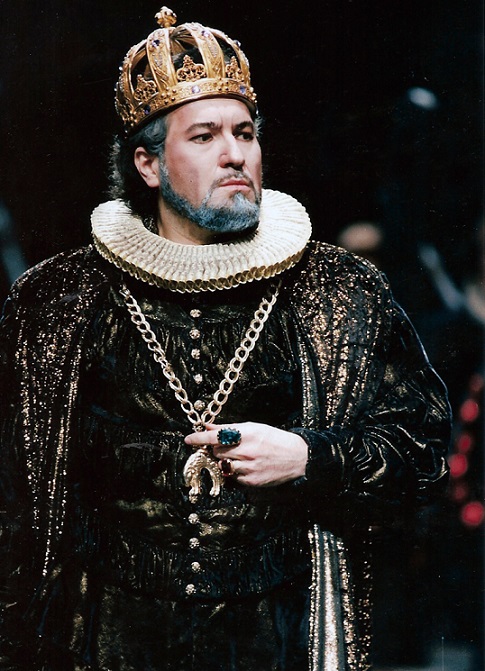
Us singers have to follow the conductor, sing a tempo, mind the intonation – and sometimes we’re bound by impossible tessiture. We have a number of things to keep under control. However, if you manage to detach yourself from these problems – for you have internalised them – then you can just throw yourself into acting. I’ve partially succeeded at this and it feels so good! Moses and Zachary aren’t characters who need to be acted – actually, the less you move, the more visible you get. They are convincing because they are hieratic, and they needn’t gesture or anything. On the other hand, Attila feels much better to be acted in this sense.
Problems arouse when directors ask singers to deliver a prosaic, actor-like interpretation. Then again: acting and singing are two different jobs.
 Do you deem them to be in mutual conflict?
Conflict springs out when directors ask of singers things that go against the music, i.e. when they completely overturn the text for the sake of their own needs. Once the director has grasped the “limits” a given role poses on a singer, he won’t overturn a thing. Instead, when you come across directors who distort everything, then they’ll offend the singer, the audience and the composer himself. Mind you, there are so many of them. This is particularly fashionable in Germany right now. Opera doesn’t belong to the theatre director, just as I don’t belong to theatre. When I venture into something that is not within my field of expertise, I’ll always be respectful and mindful. This doesn’t always happen. Oftentimes directors stomp into the room like Frankensteins and I find it extremely uncivilised from an artistic perspective. The intelligence of the director must encompass the knowledge of the music and of the limits of a singer. Some singers are more apt to acting than others, but they all have to sing. There’s no point in having a Turandot who can act. Vocally speaking, Turandot must be able to complete the opera.
 We have talked about directors. Let’s talk about conductors now… You have worked with the greatest in the world…
Yes, I’ve been conducted by almost all of them. It’d be easier to say who doesn’t make the list, such as Abbado. As for the others, I’ve worked with them all over the past thirty years. You work well with great conductors: it might sound incredible, but I never experienced any problems with them. Problems come with the smaller ones. Some of them have gained prestige thanks to the corporate record companies that have made them big… But it’s extraordinary to work with who is really great. I’m talking about Muti, Metha, late Maazel, Pappano – with whom I’ve worked very well and I genuinely hope that I’ll be working with him again, because “he’s just a good guy”…
Their role is vital in terms of staging the opera…
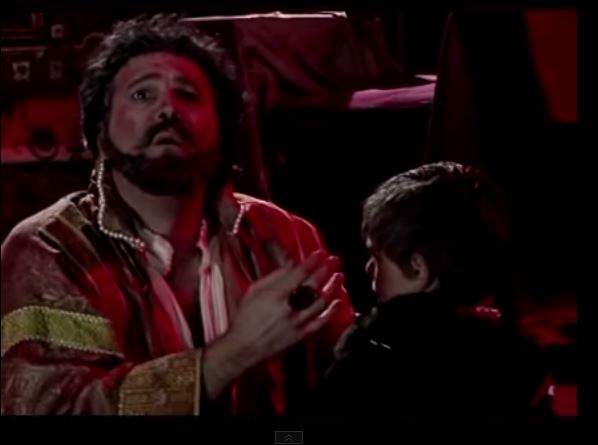 Of course. The great successes in history (see Abbado’s productions in the 1970s) featured great directors, as well as important singers on stage and a functional direction to say the least. For example, an exemplary production is that of Simon Boccanegra by Abbado. In order to achieve such results you really need all these ingredients: opera houses should always take this into account.
What do you think about conductors who claim to alter the tempo?
People who claim any right are not “theatre people”, but “people lent to the theatre”. Tempo and certain dynamics not only are to be respected, but also adapted to the singers. That’s what big composers used to do for the singers, changing the accents, the notes… They loved singers. I wish I could find in conductors at least half of the love composers used to invest in: I’m happy when it happens.
Speaking of singers… You travel the world doing renowned masterclasses. The next one will be held in Sofia, right after your recitals in Catania. How would you define the different types of voices of the Opera?
There are dark and clear voices, small and big ones – those are the most common definitions. However, there are many others: there are also short and long voices, voices with a massive extension, immense voices… A few examples of great voices: Callas, Dimitrova, Nilsson… And present-day Guleghina.
What do you think about your students?
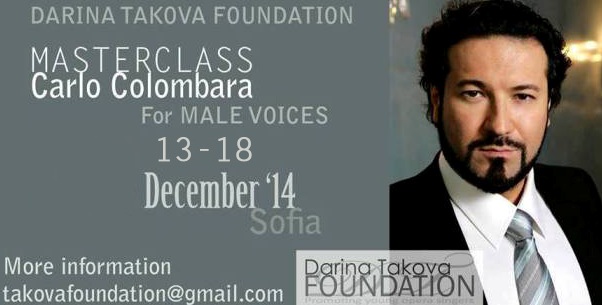 The students who come to me are often affected by the fact that the big Italian tradition has lost its way partially, because people, schools and the establishment have lost interest. Once, they would come to Italy to study with the big Campogalliani, Enrico Pola, and so on. There used to be a number of great maestros in Italy. Mine, Paride Venturi, attracted students even from Japan. Nowadays there is but a handful of maestros who teach the right vocal technique: most of the times I have to repair the disasters perpetrated by other professors…
I find singers who sing without appoggio, hence their voice tends to bleach out… There aren’t dramatic voices any longer. On one hand, it’s because the diapason is too high – almost half a tone higher than during Verdi’s times. It was 4.32 back then, whereas now it’s 4.42 – 4.40, officially. So just go and figure the devastation for dramatic voices! Moreover, these guys need to do their studying! I would never go without a solid three hours of studying, and I would bring my homework at home, too. Instead, students are distracted today: from their mobiles ringing, to a myriad of trivial reasons. The first thing I tell them when I start my lessons is: “Have you turned your mobiles off?”, because that hour is to be fully dedicated to singing. Our job tracks back to 1700, 1800. Nowadays there are hectic schedules and stress, and everything just runs so fast. If we want to study like we used to, we ought to go against these paces – and that’s what I try to explain to my students, mostly.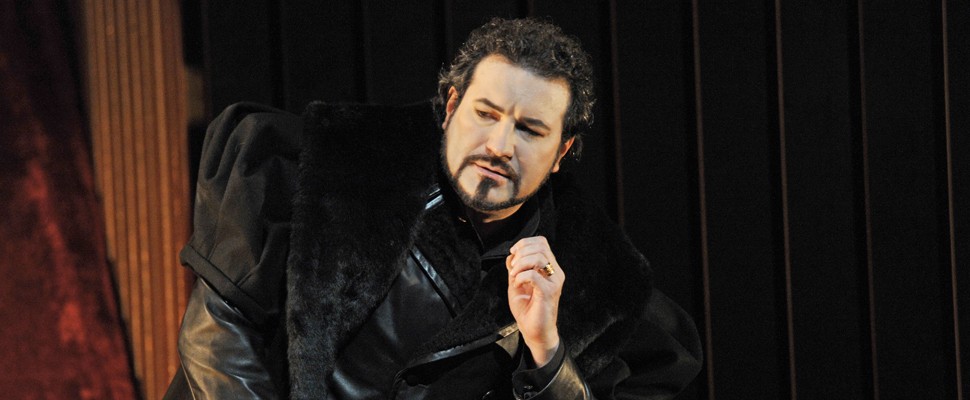
How long does it take for a voice to acquire the qualities that will make it stand out? And what “comes next” for that voice?
It depends on the singer. Some singers “get it all” in one year, whereas others won’t understand a thing for ten years. As soon as the voice is ready and it can carry on a whole opera, then it’s ready!
As for what “comes next”, twenty years ago I’d have said: as soon as you’re ready, go on and audition, and I’d have suggested which opera houses to go to. Ten years ago I’d have said: go on and audition with a good agent. Today I say: find yourself a good agent, and… Are you sure you want to sing?
Emerging talents see their careers open up. Yours is incredible. How important a role have your personal qualities, hard studying and luck played in building up your career?
Luck does exist, but I think bad luck plays a greater role. However, putting luck and bad luck aside, I’d say that self-criticism is what really counts. Even today, whenever I listen back to myself all I hear is the defects. That’s the way to be, or else you won’t go forward – you’ll go backwards, instead. I detect my flaws at once, and I want to adjust them immediately. This is what makes you carry on. So it takes studying, studying, studying; self-criticism, listening to everybody and then carrying on with your own brains, if you’ve got any. The singer is a complex of many small things. Flexibility counts a lot, in order to go a tempo, follow the conductor, and (I won’t say to accept compromises, but at least to) be able to put up with a discussion with directors. It takes an extremely strong-will mind, because it’s a really tough job – and it entails lots of sacrifice, too. I’ve been doing this job for over thirty years. Thankfully, I have the same passion I had when I was fifteen, or else…
Today, working in the theatre is so extenuating that even if I resorted to not singing anymore I would have my reasons – but I do want to continue doing it, because I love it!
 You said that one of the major moments of your career was the ever-so-famous, so-called “Macbeth to the cube” with Muti at La Scala in 1997. How did you get to this moment?
It was Bruson to come up with this definition for that Macbeth, because of the set design.
As for my career, the fundamental thing was starting to work with Riccardo Muti. Solti had Muti listen to me, Muti chose me and then he confirmed me for twelve running seasons at La Scala. I owe a great deal to Muti, but I did earn it all: he didn’t give me anything away as a gift.
And what happened next? Huge successes, great colleagues, big productions…
Successes weren’t always big, and neither were my colleagues – but there’s been such a continuity in my career that I’ve never stopped in thirty years (thank God)!
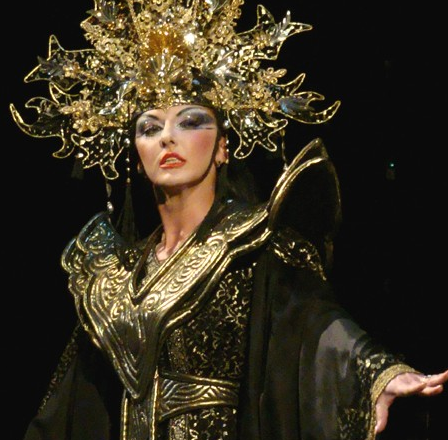
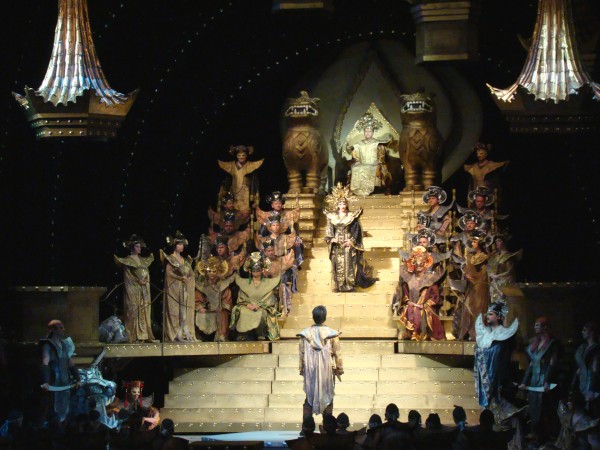
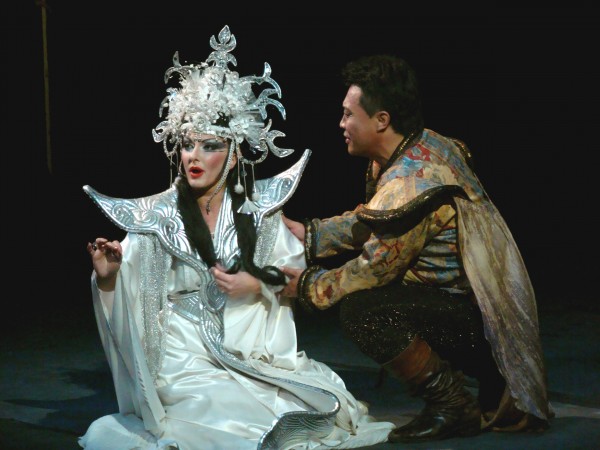
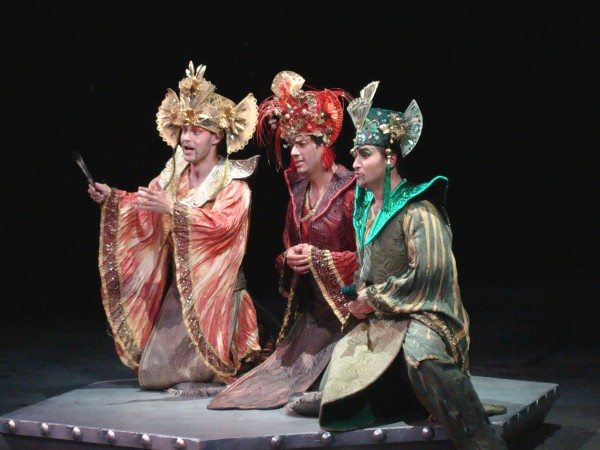
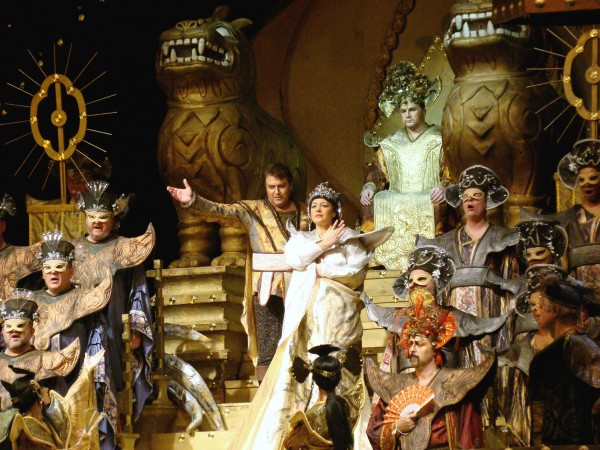
A fundamental moment was the Turandot in the Forbidden City in Beijing, China. It was a much suffered tour because the heat was unbearable – but it was a huge media event. And then there are many other small things, except for the worldwide telecast from La Scala – although I wasn’t singing major parts like Attila or Boris.
I never really “boomed”. My fortune is that I’ve never been within a big event. Had it been like that, all the rest would have seemed much, much smaller. Instead, I’ve been doing many important things that were not bombarded by media coverage. I find this important, in terms of keeping a firm career. A number of singers have been skyrocketed so high and then they fell down miserably in a handful of years…
As of lately, your career goes on with world premieres, such as El Juez (The Judge) by Kolonovitz, that you have played alongside Josè Carreras in 2014. What kind of experience was it for you?
 Firstly, I’ve found a friend, because Josè is a great person. We staged this opera in Bilbao in a beautiful environment. It’s a contemporary opera, but it’s suitable for all ears because it features almost musical-like moments together with more contemporary arrangements. This kind of opera is more difficult, even just to listen to, even for me… I’m referring to uber-modernist opera, with its dissonances and all the rest. I’m not particularly fond of this genre – actually I feel completely repulsed by it. It sounds very much like “smart holidays” to me, and it doesn’t interest me. Even more so, as I was studying El Juez I thought: why on earth am I doing this? To study an opera in Spanish and stage it once only in Bilbao. Instead, we took it to Austria and we’ll be taking it to Saint Petersburg in January 2015, then back to Vienna and Spain. So it turned out to be a real pleasure doing it.
What I really enjoyed was having the composer right by my side. I suppose I experienced a bit of what [singers] would go through in 1800 whenever I told him: “Instead of singing this H that I can’t hit quite well, couldn’t we do a B flat?” He’d look at me and say: “Yes, yes!”, and he’d change it. This is something that really excited me.
So, despite everything, you did enjoy this modern role you took on. Speaking of roles, you (with your Verdi voice pour excellence) have stated to love Don Carlo’s Philip II above all roles. I share this passion with you and I will ask you: is Don Carlo your favourite opera, as it is mine, too? Or is it the character you prefer?
I think Don Carlo is the most beautiful opera ever written. To think what’s inside it…! In a mere ten bars Wagner would have written four operas. For me, Don Carlo is Verdi’s absolute apex: a smooth [masterpiece] from beginning to end. Philip II is one of those characters who are simultaneously so strong and delicate, so rich of thoughts – and perhaps he wasn’t like that in the actual reality.
 I agree completely! You have switched from such dramatic roles to Don Pasquale, the only role for an opera buffa you ever played. Did you fully tune in with the character or only on a vocal point of view? Would you enjoy playing another similar role or do you prefer sullen melodramas? And why?
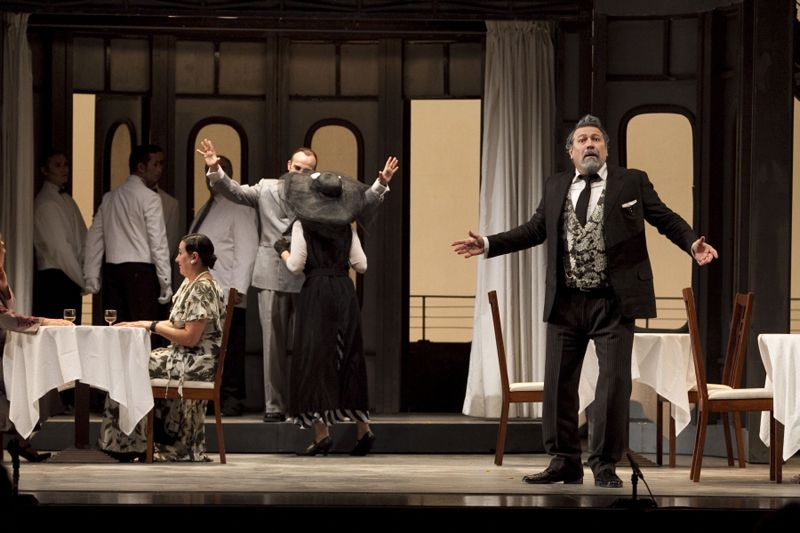
All it takes is to watch it on YouTube… You can find the full version of this Don Pasquale and you’ll see how fully I did tune in with the character and how much I enjoyed myself playing him. I wouldn’t know about other roles for opera buffa, though. I’m more cut out for dramatic roles, which I prefer. Then again, when I find myself caught up in them, it feels like going to parties: I detest parties, I love silence and I don’t enjoy chaos. Still, once I’m in, I do enjoy myself madly. I suppose I was born in the wrong era: I don’t like to hurry or rush. I probably should have been born no less than twenty years before.
And speaking of age… The operatic bass is a long-lived voice. How come?
It’s long-lived because the chord of a double bass is less delicate than that of a violin… Well, it is long-lived, but only to a certain extent. Some basses have lost their voice after just twenty years, and others after a mere five years.
What is the secret to maintain a long-lived voice? Let’s break the urban legends about anchovies, scarves and foulards, and being on vocal rest for days. What is the right care for the voice?
You’ll spoil your veins with anchovies: they’re so salty! In order to maintain your vocal chords healthy and keep up your artistic level you should try and lead the most serene life possible outside of the theatre, because everything effects the chords. It’s not easy, because nuisances are always around the corner. Therefore a singer should be mollycoddled in order to live well, yet living mollycoddled wouldn’t help you with the acting. If you haven’t put up with negative experiences or sorrows you won’t be able to convey them on stage. Moderation and self-restraint are of paramount importance: you may eat whatever you want, but moderately. As for the rest, some colleagues have a relentless sexual activity… You need self-restraint with everything, sex included! You should behave like an athlete. If you’re fifty and you wish to produce the same vocal performances of when you were twenty-five, you must work twice as hard, because your physique has aged. So you need to know what to give up and use common sense at all times. As for vocal rest… Especially when I have a recital the next day, I won’t shut up completely, but just speak quietly as I’m doing now.
It doesn’t really sound like you’re speaking that quietly…
Well, I am…
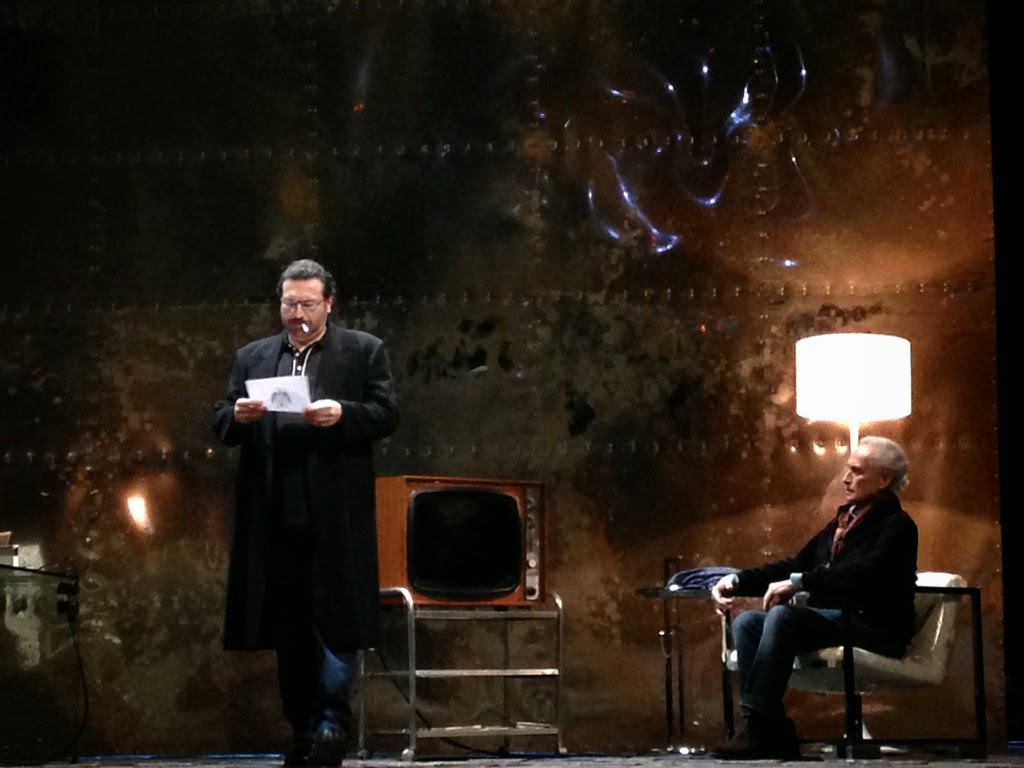 This just leaves room to imagine your performance abilities… And what about scarves and foulards?
No. It’s wrong to cover yourself up too much. I did it for a long time, but as soon as you take your scarf off you’re more prone to getting a cold. You need common sense for this, too. Having brains must prevail on being in the dumps.
Speaking of voice, what about live voices and recorded voices? Does the voice gain from being recorded or not?
It’s a great gain for ugly voices for sure… It’s the beautiful voices – especially the “big” ones – that have everything to lose from being recorded. If we listen to the recordings of Del Monaco or Dimitrova, we’ll notice a definitely diminished performance than the live ones on stage.
When I’m recording in the studio, what matters to me is forgetting that I’m making a record, and pretend to be singing in the theatre. Nowadays they make a number of records that are all the same, and they’re all equally very little expressive. Instead, you need to convey this expressiveness in the recordings, too.
Speaking of records, your new CD is coming out in 2015. Correct?
It’ll be out during the Expo in Milan. I’ve really nurtured this CD. It’ll come out with a major record label. I like it a lot especially because it’s not boring. I’m singing Semiramide, Don Carlos in French (I’ve already recorded it in Italian!), Don Chisciotte and Wotan farewell from Valkiria: there’ll be something for everyone. Now we are speaking about singing in languages that are not Italian. What do you think about those? And French, especially… Singing in a foreign language can destroy one’s voice. Italian is the perfect language for bel canto. When I’m singing in Russian or German, I keep singing Italian style. If they complain about my pronunciation, I just won’t bother – because my vocal chords aren’t to be damaged. When singing in German on the consonants or in French, with all those vowels of their that are terrible to sing, you risk a lot. Have you ever wondered why there hasn’t been a single French dramatic voice in a hundred years? I think they care too much about pronunciation. Therefore, if you want to listen to French singing of definitely dramatic voices you must adapt to what Corelli, Freni or Ghiurov did by modifying the pronunciation. Vowels must be rounded, and Italian is the sovereign language. I’m absolutely sure of it.
 Next commitments?
After my masterclass in Sofia, I have two concerts. A charity gig in the province of Bologna with mezzosoprano Luciana D’Intinto for the Istituto di Ricerca Oncologica, plus the “Golden Voices” in Neufchatel with soprano Daria Maseiro. Then Aida at La Scala, Nabucco in Tel Aviv, Maria Stuarda in Paris and Mephistopheles in Mexico City.
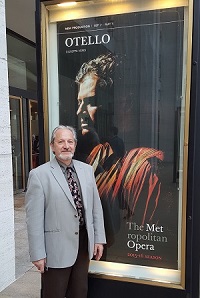
I know you have been absent from NYC Metropolitan since 2011…
I sang in NYC with Caterina Cornaro at the Carneige Hall. I did Aida and then I returned in 2011 with Nabucco.
Any desire to return to the States – and to the Met in particular?
Any singer who’d be asked this question (just as if you asked them about La Scala) would answer: yes! I found a very laid-back and generous audience at the Met, not to mention custom designers and make-up artists. They have sensational make-up artists who manage to do wonders in a couple of minutes! The make-up for Aida was quite complex. I thought to myself: “God knows how long it’ll take them”, and instead I was ready in five minutes. They are extremely professional. I have good memories about Chicago, too, where I played Norma once. I remember it was absolutely freezing (-10C during the day and -20C at night), but it was extremely beautiful going to the opera house. The atmosphere felt very familiar and cosy.
What do you think about the future of Opera?
I’d like to be certain that Opera did have a future… As of now, I’m quite dubious and I shiver. I’d like to have a certainty, i.e. that schools started to take children to the theatre again. Schools should commit to taking pupils to the theatre at least four, five times a year – to see both drama and opera. I deem it a moral duty. You can’t expect that from parents, for they might not have that sort of upbringing or they might be interested in different genres of music. Still, it’s essential for teachers. Children should be taken to the theatre when they’re six years of age, that’s when they’re still more “pure”. That’s because when you’re six you have a kind of pureness that disappears by the time you are twelve, considering all the technological devices out there. As they are twelve, they’ve already gained an immense quantity of information. On the contrary, when they are six they are not familiar with these modern, mischievous devices and they are highly receptive.
I wish for theatre to gain a new audience and that it will survive another five hundred years just as it’s survived for the past half millennium. It’s just beautiful to have a passion for such a pure thing. For instance, I deem football frenzy a very ephemeral passion. Instead, the passion for theatre is something that completes you and, just like reading, it betters society. I read quite a lot. I read with great pleasure when I have the time. I’ve just finished an essay by Minarini about Attila in Venice and I’ve now started a novel. I love reading, music, theatre… We’ll be extremely poor in the future without these things.
 Your dream-role: are you playing it, are you going to play it or will it remain a dream?
The role I’ve always dreamt of is Carlo V in Ernani, because I dreamt to be a baritone. Since I became a bass, the role I’d always dreamt of and that I eventually managed to play is Filippo II, as I was saying earlier. However, I have another one, Boris, and I’m playing it in Bulgaria – which is the motherland of the biggest basses. It’s going to be very exciting.
Your eyes almost shimmer out of tenderness toward your characters… Thank you, Carlo, for you amiable availability. “Bearing” a one-hour interview is not insignificant… I could do two, with all this material.
59 minutes to be exact. I checked on your timer [he smiles]. No, seriously… It’s beautiful this way: do one only. And why did you say “bear”? It was a pleasure. We share a passion for Don Carlo, after all. We are both Verdi men… Two gourmands.
[This time, I find myself smiling…]
Phots courtesy NATALIA DI BARTOLO, GIACOMO ORLANDO


































 Opera, My Love Magazine