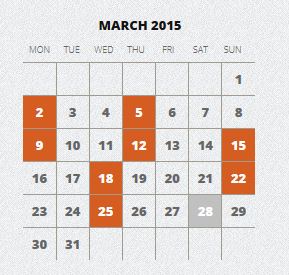
Opéra Bastille – First performance on 2 March 2015 – 7:30PM
OPERA IN FIVE ACTS (1859)
MUSIC BY CHARLES GOUNOD (1818-1893)
LIBRETTO BY JULES BARBIER AND MICHEL CARRÉ
Performed in French
New version
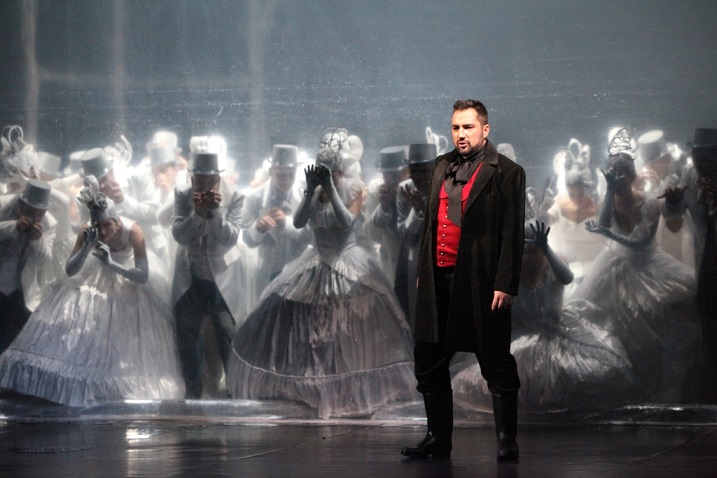
The emblematic French opera, one of its greatest successes and, at the same time, in a way, its memory. Gounod recalled having the book by Goethe by his side throughout his youth, even in the gardens of the Villa Medici where he was a “pensionnaire.” Twenty years later, Carvalho finally agreed to commission Gounod and he had good reason to: Faust brought prosperous times to the Théâtre-Lyrique and then to the Opéra. From there, the work became famous throughout the world and the Metropolitan in New York chose it for its inaugural opening evening on 22 October 1883, where the greatest singers made their mark. Jean de Reszké and Muratore as Faust, Faure – the creator –, Maurel, Delmas and Marcoux as Méphisto and, for Marguerite, Christine Nilsson, Patti, Melba, Farrar, Garden… Few works have been so loved and respected as this Faust… And indeed, the work, more faithful than we might imagine to Goethe, inspired in Gounod a youthful, turbulent lyricism, pleasures and unforgettable trepidation.
Piotr Beczala and Krassimira Stoyanova embody the legendary doomed lovers.
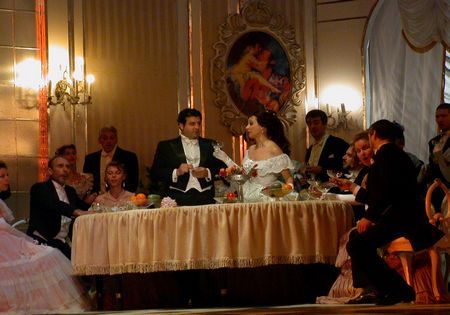
La traviata is an opera in three acts by Giuseppe Verdi set to an Italian libretto by Francesco Maria Piave. It is based on La dame aux Camélias, a play adapted from the novel by Alexandre Dumas, fils. The opera was originally entitled Violetta, after the main character. It was first performed on 6 March 1853 at the La Fenice opera house in Venice.
Guest artist Conductor Salvatore Cicero
Characters Violetta ValÃry, a courtesan Alfredo Germont, a young bourgeois from a provincial family Giorgio Germont, Alfredo’s father Flora Bervoix, Violetta’s friend Annina, Violetta’s maid Gastone, Alfredo’s friend Dottore Grenvil Commissioner
Richard Wagner 1813 – 1883
Opera in three acts
Libretto by the Composer
First performed July 26th 1882, Festspielhaus, Bayreuth
Sung in German with German surtitles Performances
Sunday 15.03.2015
21.03.2015 |29.03.2015 |03.04.2015 |06.04.2015
——————————————————————————– About the Piece
——————————————————————————–
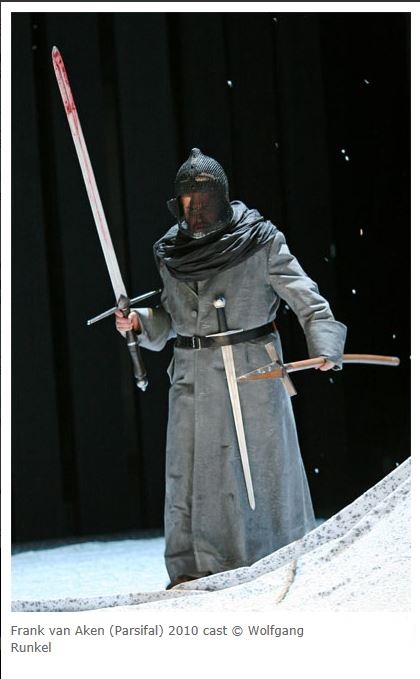
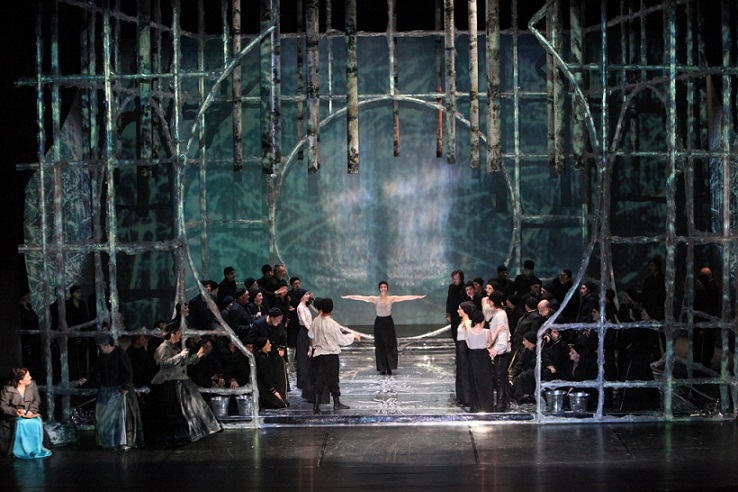
Wagner’s opera is full of allegory. Amfortas, guardian of the Holy Grail, was seduced by Kundry and wounded by Klingsor when he entered his magic garden, where he also lost the Sacred Spear. Gurnemanz, the wisest of the brotherhood, thinks Parsifal, a simple young man, might be the one who will be able to close these wounds again, but years are to pass before this turns out to be the case, years before he returns, with the Sacred Spear, is annointed and the Holy Grail – “It shall be hidden no more” – is revealed. The most mysterious character in the work is Kundry, who was cursed to wander the earth forever for laughing at Jesus’ sufferings. She returns at the end of the opera and washes Parsifal’s feet. He baptises her and she sinks, lifeless, to the floor. It is extraordinary how this production holds you spellbound from start to finish.
Wagner’s opera is full of allegory. Amfortas, guardian of the Holy Grail, was seduced by Kundry and wounded by Klingsor when he entered his magic garden, where he also lost the Sacred Spear. Gurnemanz, the wisest of the brotherhood, thinks Parsifal, a simple young man, might be the one who will be able to close these wounds again, but years are to pass before this turns out to be the case, years before he returns, with the Sacred Spear, is annointed and the Holy Grail – “It shall be hidden no more” – is revealed. The most mysterious character in the work is Kundry, who was cursed to wander the earth forever for laughing at Jesus’ sufferings. She returns at the end of the opera and washes Parsifal’s feet. He baptises her and she sinks, lifeless, to the floor. It is extraordinary how this production holds you spellbound from start to finish.
Cast
Conductor Bertrand de Billy
Director Christof Nel
Revival rehearsed by Orest Tichonov
Scenic Analysis Martina Jochem
Stage Designer Jens Kilian
Costume Designer Ilse Welter
Lighting Designer Olaf Winter
Dramaturge Norbert Abels
Chorus Master Tilman Michael
Il Barbiere di Siviglia (in concert)
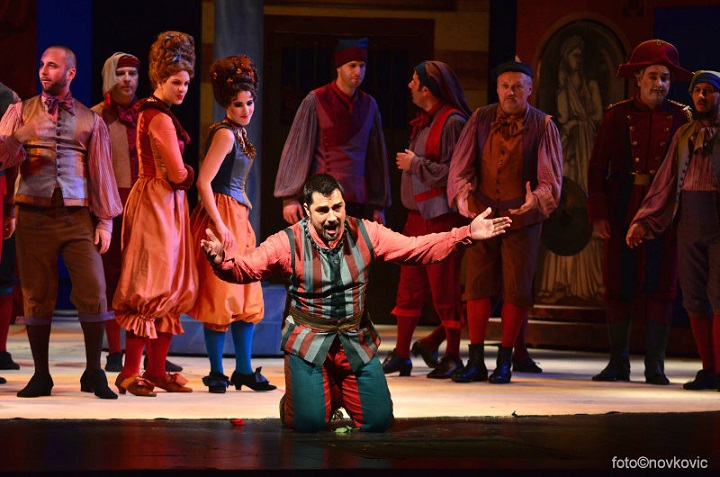
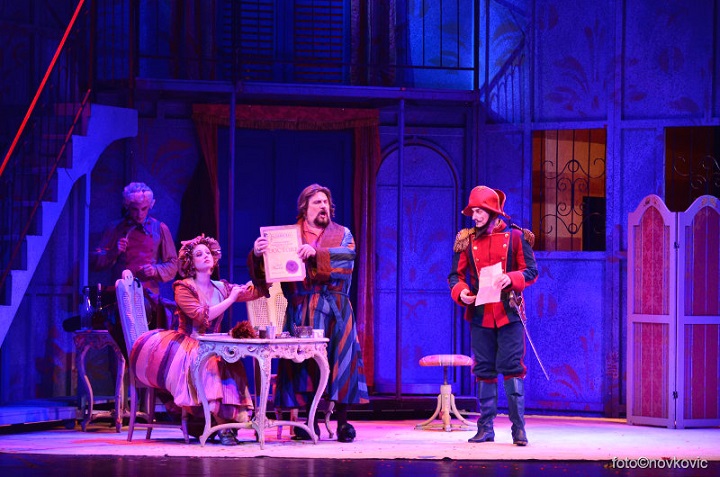
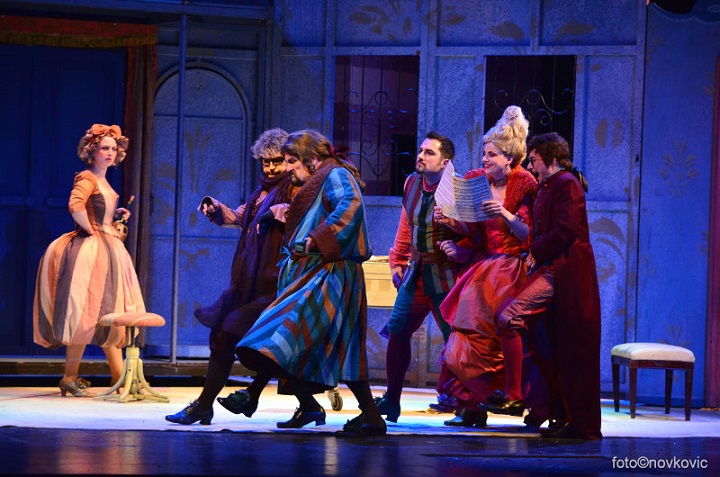
As in the work of the same name by Rossini, Paisiello’s opera, written for the court of Catherine II in St. Petersburg, was based on Beaumarchais’ Le Barbier de Séville. The reason for this choice was the success of the play itself in Saint Petersburg. It is apparent from one of his letters that Paisiello received extremely precise instructions from the court : ‘What I should also advise you is to be brief, and use very few recitatives, because people don’t understand the language.’ Although the situation is completely different now, in the early 19th century Paisiello’s opera was a formidable rival to Rossini’s version. In the context of the opera buffa of the time, his opera was a masterpiece : with no complexity of characterisation or tonal style, but inventive and sharp in its development of comical situations packed with amorous entanglements. René Jacobs will quite definitely do full justice to its comic timing.
Co-production Festival van Vlaanderen-Brussel / KlaraFestival, Bozar Music
Co-presentation La Monnaie / De Munt
Music direction
¦
René Jacobs
PERFORMERS
¦
Topi Lehtipuu
Mari Eriksmoen
Bartolo
¦
Pietro Spagnoli
Figaro
¦
Andrè Schuen
Don Basilio
¦
Fulvio Bettini
Orchestra
¦
Freiburger Barockorchester
Members of the Young Artist’s Programme of the Wiener Kammeroper
Il Barbiere di Siviglia (in concert)
Ovvero La Precauzione inutile, dramma giocoso per musica tradotto liberamente dal francese, da rappresentarsi nel Teatro Imperiale del corte, l’anno 1782.
Libretto di Giuseppe Petrosellini
Premiere Hermitage-Theater, St. Petersburg, Russia
Opera by Giacomo Puccini in three acts with two intervals
Libretto by Giuseppe Giacosa and Luigi Illica after Victorien Sardou’s play of the same name
Premiere on 13 May 2005
Sung in Italian with subtitles in Estonian and English
Approx. running time 2 h 50 min, two intermissions
March 12 & 14 2015, Cavaradossi sung by Carlo Barricelli (Italy)
T, 12 March 2015 / 19:00 S, 14 March 2015 / 19:00
Tallinn Opera House Main Theater, Estonia
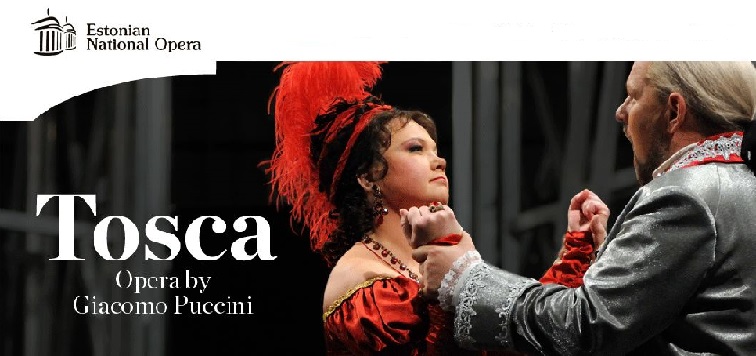
Puccini’s Tosca is one of the most popular operas in the world and it is not difficult to tell why. It is a passionate drama full of contrasts in which daily life might prove to be more unpredictable than the most adventurous dream. The love of the beautiful opera singer Tosca and an artist Cavaradossi is poisoned by the cruel and powerful police chief Scarpia, who entangles them in his stealthy plans. There is a struggle between love, political intrigues, confidence and thirst for power that knows no mercy. In the end, there are no winners…
As one of the greatest 20th century melody masters, Puccini has used bold colours and memorable melodies to create imaginative and enticing portraits for his characters. The highlights of the opera include one of the most beautiful arias in the soprano repertoire Vissi d’arte and one of the most famous tenor arias E lucevan le stelle that have won the hearts of both opera lovers as well as first-timers.
Performance period: 21. Feb. – 14. Mar. 2015 at then Royal Danish Theatre of Copenhagen
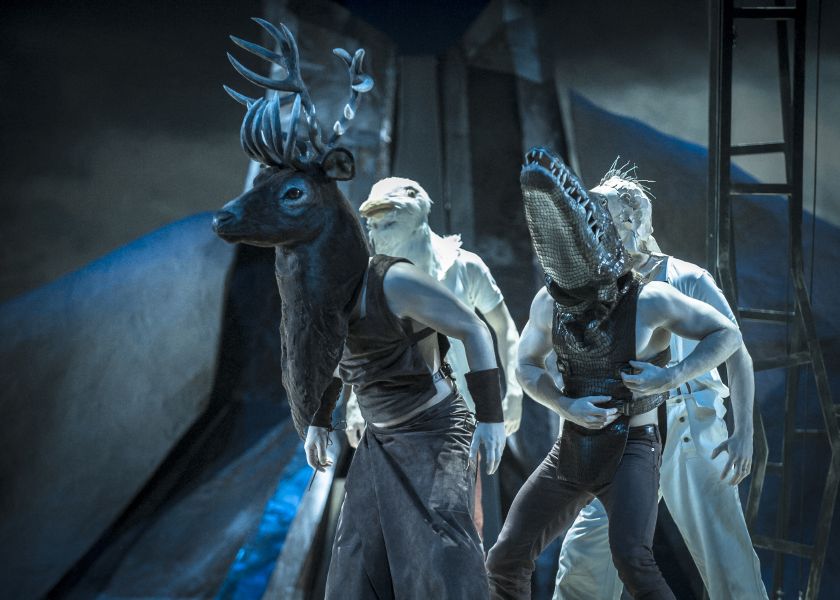
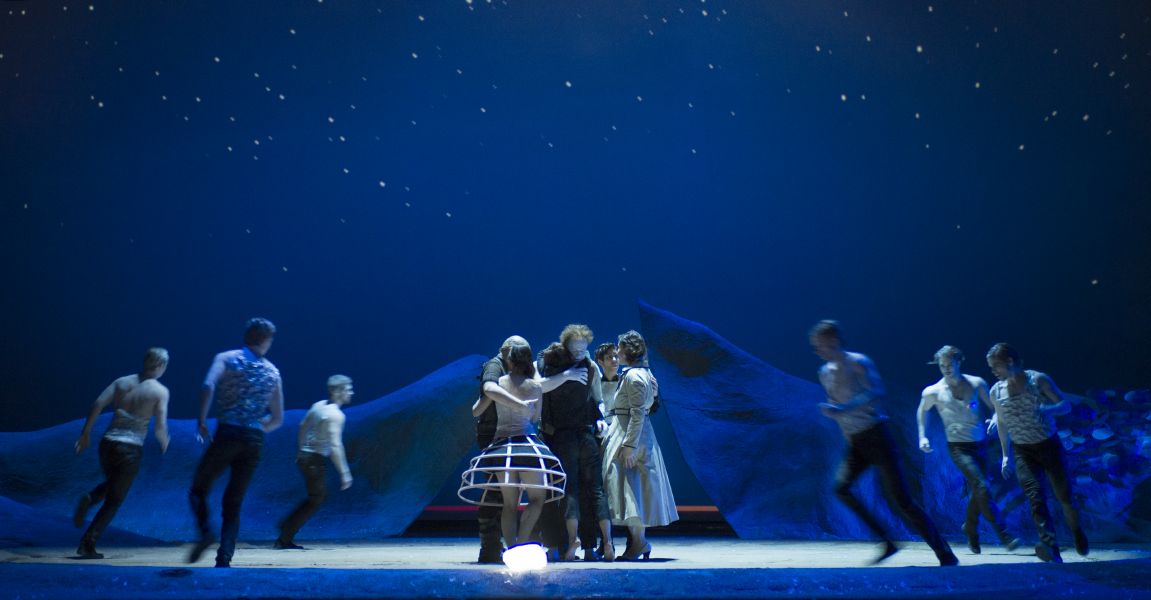
Dwelling on a desert island, the sorceress Alcina is so alluringly beautiful that all men must fall in love with her – and suffer the consequences that follow. For when Alcina tires of her lovers, she transforms them into rocks, bushes, trees or animals. But one day an unknown man arrives on Alcina’s island, and the ravishing sorceress soon learns the bittersweet taste of love.
When Alcina tires of her lovers, she transforms them into rocks, bushes, trees or animals. But the day arrives when an unknown man arrives on the shores and the ravishing sorceress gets a taste of her own bittersweet medicine.
The opera is a dramatic tale of a strong and powerful woman who lets evil rule her heart until love makes her vulnerable. In a series of powerful arias, Alcina struggles to regain control of her tempestuous emotions until she finally realizes that she, too, is nothing more than a passenger on a storm-tossed ship heading for the abyss. Handel’s Alcina premiered in 1735.
With Alcina we once again present one of Handel’s many operas at the Old Stage, this time directed by the award winning, world-famous director Francisco Negrin, who also staged the Royal Danish Theatre’s Partenope (2008) and the Reumert-winning Giulio Cesare (2002). His most recent production at the Royal Danish Theatre was Janáček’s The Cunning Little Vixen in 2012.
Alcina is performed in Italian with Danish supertitles.
Conductor: Lars Ulrik Mortensen | Director: Francisco Negrin | Set and costume design: Louis Desiré | Lighting design and video: Mikki Kunttu | Movement- and areal director: Ran Arthur Braun
At The Royal Danish Theatre Roles include Cleopatra in Giulio Cesare, Zdenka in Arabella, Fiordiligi in Cosí fan tutte, Ophelia in Hamlet, Norina in Don Pasquale, Sophie in Der Rosenkavalier, Adina in L’elisir d’amore, Susanna in Le nozze di Figaro, Musetta in La bohème, Gilda in Rigoletto, Violetta in La traviata, Blondchen in Entführung aus dem Serail, Lucia in Lucia di Lammermoor, Liu in Turandot, Rosina in Barbiere di Siviglia, Ofelia in Hamlet, Michaëla in Carmen and Julie in Roméo et Juliette.
Releases Her discography includes Peer Gynt for Teldec; Solomon under Paul McCreesh for Deutsche Grammophon, Ein deutsches Requiem for Chandos, and a selection of Carl Neilsen’s songs for Dacapo.
Prizes and scholarships Winner of the coveted Cardiff Singer of the World Competition in 1993.
Anke Briegel as Morgana
Soprano
German soprano Anke Briegel has studied at the Hochschule für Musik und Theater in Hannover and at the Conservatorio Statale di Musica Luigi Cherubini in Florence, where she graduated in 2010. Her education was concluded with several master classes, amongst others with Aribert Reimann, Ileana Cotrubas and Barbara Bonney.
In 2004 she reached the final in the National Song Contest in Berlin and she was awarded the Music Prize of Ulm. In 2005 Anke Briegel had her debut as Warwara Dobrosjolowa in Arme Leute. Furthermore she performed at the Theater Bielefeld in the roles as Amor in Glucks Orfeo ed Euridice and Babarina in Le nozze de Figaro. In Hannover she has joined the cast of Hansel und Gretel and Il viaggo a Reims.
During season 10/11 Anke Briegel was a part of the Dortmund Theater ensemble. Her roles here included the title role of Hansel und Gretel, Musetta in La Boheme, Susanna in Le nozze de Figaro, and Adina in L’elisir d’amore. In 2012 she sung the part of Lucia in Schweitzers Rosamunde at the Schewtzingen Festival.
In 14/15 Anke Briegel can be heard here at the Royal Danish Opera in the roles of Pamina and Sophia in Der Rosenkavalier. Hyon Lee as Oberto
Hyon Lee makes her debut at the Royal Danish Opera as Oberto in Alcina.
Itziar Lesaka as Ruggiero
During the 2014-2015 season Itziar Lesaka will make her house debut at the Royal Danish Opera in the role of Ruggiero (Alcina). She will also sing Carmen (in a chamber version), Jezibaba (Rusalka) and Baba the Turk (Rake’s Progress) at the Mecklenburgisches Staatstheater Schwerin (Germany) where she has been a soloist since 2010. Important role debuts in the last seasons in Schwerin have included: Dorabella (Così fan tutte), Rosina (Il Barbiere di Siviglia), Mrs. De Rocher (Dead Man Walking), Orlofsky (Die Fledermaus), Ruggiero ( Alcina), Cornelia (GiulioCesare) and Suzuki (Madama Butterfly).
From 2001 through 2009, Itziar Lesaka was a regular guest at the Deutsche Oper am Rhein in Düsseldorf. Her interpretation of Melanto in Il ritorno d’Ulisse in patria under the stage direction of Christof Loy was very acclaimed by the german press. She was nominated for the best young singer by the “Opernwelt-Jahrbuch 2003”.
From 2004 to 2008, she was a member of the ensemble of the Staatstheater Kassel, where she sang parts such as Hänsel (HänselundGretel), Cherubino (Le nozze di Figaro), Komponist (Ariadne auf Naxos) and Muse/Niklaus (Les Contes d‘Hoffmann).
She was also invited at the Oper Leipzig (Cherubino in Le nozze di Figaro), at the Staatstheater Hannover (Der Trommler in Kaiser von Atlantis) and at the festival Wiener Festwochen in Vienna with the production Mozart in Paris of Christof Loy.
Itziar Lesaka was born in San Sebastian (Basque Country, Spain). She studied singing, Lied and contemporany vocal music at the music university “Hochschule für Musik und darstellende Kunst” in Stuttgart (Germany).
Itziar Lesaka worked also with stage Directors like Christof Loy, Ursel Herrmann, David Freeman, Jérôme Savary, Gabriele Rech, Arila Siegert and Benno Besson and with music Directors like Baldo Podic, Hans Wallat, Stéphane Denève, Matthias Foremny and Jonathan Darlington.
Tuva Semmingsen as Ruggiero
Mezzo soprano.
Debut at the Royal Danish Theatre in 1999 as Cherubino in Mozart’s Le nozze di Figaro.
At The Royal Danish Theatre Cherubino in Mozart’s Le nozze di Figaro. Pernille in Nielsen’s Maskarade. Sesto in Handel’s Julius Caesar. Titte Mortensen in Fuzzy’s children’s opera Sorceress Mortensen and the Fat Turkey. Rosina in Rossini’s Il barbiere di Siviglia. The title role in Rossini’s La cenerentola. Minerva and Melanto in Monteverdi’s Il ritorno d’Ulisse in patria. Lola in Mascagni’s Cavalleria rusticana.
Other engagements Performed Cherubino in Mozart’s Le nozze di Figaro at Teatro La Fenice in Venice in 2000. Performed at Wigmore Hall with the King’s Consort in 2002. Has performed with the Oslo Philharmonic, the Norwegian Opera Orchestra, the King’s Consort, Concerto Copenhagen, Neues Bachisches Collegium, Leipzig, and the Danish National Symphony Orchestra. Rosina in Rossini’s Il barbiere di Siviglia in Nancy, France, May 2005.
Releases Among her recordings are three Vivaldi CDs with the King’s Consort on the Hyperion label.
Prizes and scholarships Recipient of the 2001 Norwegian Naxos Award. Recipient of the 2004 Aalborg Opera Prize and Elisabeth Dons Mindelegat 2004.
Ruxandra Donose as Bradamante
What distinguishes Ruxandra Donose among the most renowned mezzo-sopranos of the younger generation is the complexity of her artistic personality. The tone of her voice is at the same time particular, dark, warm, sensuous and noble and her vocal range is large and flawless as concerns the homogeneity of her registers.
Her excellent singing technique ensures her easiness and accuracy in virtuousity scores, but also the ample phrasing, finely nuanced in an impeccable legato, in „line scores“.
Ruxandra Donose is both an attractive presence on the stage and a very gifted actress, convincing in the most diverse feminine roles and also in male roles (in disguise). Her sharp intelligence, her thorough musical and general knowledge, an altogether remarkable feeling for the style, allow Ruxandra Donose to tackle at the highest artistic level not only an extremely diverse opera repertoire, but also the lied and the vocal-symphonic ones.
These are the premises of a solid career, in full swing, built step by step from the very beginning.
Born in Bucharest, in a family of musicians, Ruxandra Donose appeared on the concert stage as early as her childhood, as a pianist. A graduate of the Music University of Bucharest (the class of Georgeta Stoleriu), she also attended summer courses for lied – oratorio in Weimar with Lore Fischer. Since 1992 she studies in Vienna with Carol Blaickner-Mayo and Carol Byers. She has been awarded a great number of national and international prizes being among others, laureate of the International Competition of Munich (1990) and of Washington (1991).
Soloist of the Opera Houses of Constanta – Romania (1989-1991), Basel – Switzerland (1991-1992) and Vienna – Austria (1992-1998) Ruxandra Donose has carried on at the same time a very rich stage and concert activity in a great many other musical centres of the world, acquiring in 10 years of career an impressive artistic record.
Marius Roth Christensen as Oronte
Wojtek Gierlach as Melisso
Bass
Wojtek Gierlach graduated at the Warsaw Chopin Music Academy with Professor Kazimierz Pustelak, receiving the Magna cum Laude Distinction. He has since been awarded many prizes at international vocal competitions including the Ada Sari (1999 – 1st place); Bilbao (2000 – 2nd place), the main award in the Premio Caruso (Milan 2001); and the Francesco Viñas in Barcelona (2004 – 3rd place).
Wojtek Gierlach made his professional debut in 1999 with the Warsaw Chamber Opera in the title role of Handel’s Imeneo. With this company he also toured Holland, Japan and France as Don Giovanniin Mozart’s masterpiece.
He has also sung Don Basilio in Il Barbiere di Siviglia with Deutsche Oper Berlin, Mustafa in L’Italiana in Algeri with Teatro National Sao Carlos Lisbon, at the Teatro Alighieri di Ravenna and at Minnesota Opera, Figaro in Le Nozze di Figaro at the Teatr Wielki Warsaw and at the Teatro Petruzzelli Bari,Alidoro in La Cenerentola with , Festival d’Aix-en-Provence and at the Stadttheater Klagenfurt, Argenio in Imeneo for Opera Ireland Dublin,Melisso in Alcina with Opera Nacional de Bordeaux,Orbazzano in Tancredi with Teatro Maestranza in Seville,Leporello withNico Opera Cape Town and sang Assur in Semiramide at the Teatro Verdi di Pisa.
Some of his other critically acclaimed performances include Colline in La Bohème, Raimondo in Lucia di Lammermoor, Duce Alfonso in Lucerezia Borgia and Escamillo in Carmen at Warsaw Teatr Wielki, Conte Rodolfo in Sonnambula for the Theater St Gallen, Salieri in Rimsky-Korsakov’sMozart and Salieri at the Teatro Filarmónica Oviedo, Timur in Turandot at the Auditorio de Tenerife, Commendatore in Ramón Carnicer’sIl Dissoluto Punito at La Coruña Mozart Festival, Gouverneur in Le Comte Ory at Wildbad Belcanto Opera Festival; Lord Sidney and Don Profondo in Il Viaggio a Reims at Rossini Opera Festival Pesaro, Orfeo at Slovenske Narodne Divadlo Bratislava, Domoslav in Berggeist by Spohr during the 13th LvB Easter Festival and Mephisto in Le Damantion de Faust with Kraków Philharmonic Orchestra.
Wojtek Gierlach has collaborated with many orchestras, taking part in concerts both in his home country and across Europe. His appearances have included Bach’s Mass in B minor, conducted by Helmuth Rilling at the Warsaw Philharmonic, Bach’s Magnificat with National Orchestra of Spain under Mireia Barera, Mozart’s Reqiuem with Sinfonietta Cracovia conducted by Marc Minkowski, Verdi’s Requiem, conducted by Kai Baumann at the Polish Baltic Philharmonic, Beethoven’s Symphony No. 9 with Orquesta de Navarra under Antoni Wit, Penderecki’s Seven Gates of Jerusalem with National Polish Radio Symphony Orchestra in Katowice under the composer’s baton.
Salieri’s The Passion of Jesus Christ, which he performed with I Solisti Veneti, conducted by Claudio Scimone (the concert was broadcast by RAI – Italian Television), Rossini’s Stabat Mater with Orquesta del Principado de Asturias with Alberto Zedda as conductor, Penderecki’s Dies Irae with Simon Bolivar Orchestra and Arvo Pärt’s Passion in Prague’s Spring Festival are a part of his oratorio repertoire.
Wojtek Gierlach recorded Mose in Egitto and La Donna del Lago by Rossini and Meyerbeer’s Semiramide under Richard Bonynge for NAXOS. For the IBERATOUR he has recorded Il dissoluto punito by Ramón Carnicer, conducted by Alberto Zedda. His other recordings include G.S.Mayr’s Medea in Corinto (Oehms) Luigi Mosca’s L’Italiana in Algieri (Bongiovanni), Lodoïska by Cherubini and Euryanthe by Weber conducted by Łukasz Borowicz for LvB and POLSKIE RADIO label.
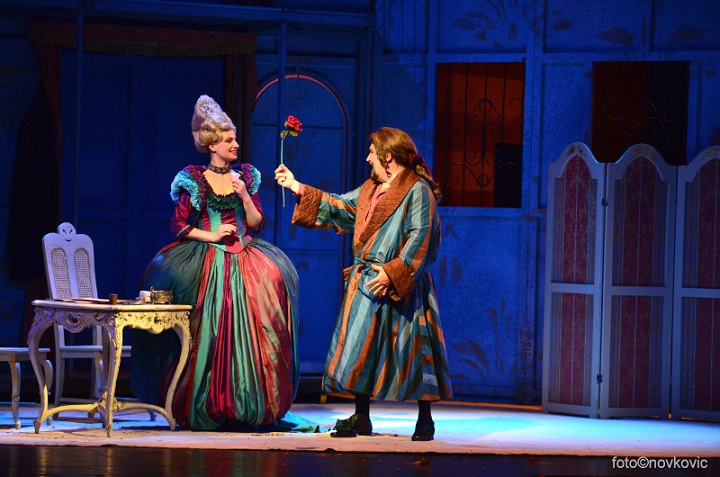
Rossini’s most popular opera is considered the best comic opera ever. The libretto was written by Cesare Sterbini, following Le Barbier de Seville, the first part of the Figaro trilogy by Beaumarchais. The opera was written in only three weeks (the overture was “borrowed” from Rossini’s less successful opera Aureliano in Palmira). The opening night was a fiasco, thanks to the loud, fidgety audience and a series of accidents on the stage during the performance. The second performance was much better received and the opera was soon staged on all big European stages and became one of the most frequently staged works in the history of opera. It is interesting that the same destiny was shared by the Beaumarchais’s drama, which was rejected at the opening night, but became a hit within one week after the premiere.
Performances:
Tuesday, January 27 2015 at 19,30
Tuesday, January 28 2015 at 19,30
Tuesday, January 30 2015 at 19,30
Libretto Cesare Sterbini based upon Pierre-Augustin Caron de Beaumarchais Translation of the Libretto Jasna Žarić Conductors Josip Šego, Gianluca Marcianó Director Krešimir Dolenčić Set Designer Dinka Jeričević CostumeDesigner Ana Gecan Savić LightDesigner Deni Šesnić Assistant Conductor and Language Instructor Gianluca Marcianó Quire Conductor Ivan Josip Skender Choreographer Mateja Pučko-Petković Assistant Director Jasna Žarić Assistant Costume Designer Andrea Kuštović
On Tuesday, January 13 and 14, 2015 the CNT Opera performed P.I. Tchaikovsky’s famous opera EugeneOneginwith Niksa Bareza as conductor and in the stage direction of Michał Znaniecki who is also the costume designer. Luigi Scoglio is the set designer, Diana Theocharidis the choreographer and Bogumił Palewitcz the light designer. The upcoming performances are scheduled for January 24, 2015 and February 2 and 24, 2015.
The cast for this season is Cecilija Car and Zeljka Martic (Larina), Valentina Fijacko and Adela Golac Rilovic (Tatyana), Jelena Kordic (Olga), Neda Martic and Branka Sekulic Copo (Filipyevna), Robert Kolar and Ljubomir Puskaric (Onegin), Domagoj Dorotic and Stjepan Franetovic (Lensky), Luciano Batinic and Ivica Cikes (Gremin), Mario Bokun and Ladislav Vrgoc (Triquet), Robert Palic and Alen Rusko (Zaretsky) and Ante Batinic and Antonio Brajkovic (Captain).
Like most Russian composers from the period of Romanticism, even the greatest among them, Pyotr Ilych Tchaikovsky based some of his stage works on the works of the Russian romanticist Alexandre Sergeyevich Pushkin. One of the most beautiful creations of the romantic opera opus has been created after Pushkin’s novel in verse Eugene Onegin. A very few operas have such perfectly fused and inseparable two most important components, music and text. Tchaikovsky set to music Pushkin’s exceptional literary model almost in a perfect manner, breathing into it some entirely specific components which, according to many, make this most beautiful Slavic opera very demanding and challenging.
In it Tchaikovsky finally achieved a complete realisation of his yearnings in construction of a stage work. The opera plot is initiated by lyrical emotions experienced by its characters turning Onegin into a real intimate psychological drama. After Onegin, the operas took another direction and it is no wonder that this work was one of the first opera staging of the great Russian theatre master Konstantin Stanislavsky.
The opera focuses on the deeply experienced drama of its protagonists, subduing the exterior events and thus giving up the cliché of only one dramatic peak, since the first act is the drama of Tatyana, the second that of Lensky and the third that of Onegin. Every act is a separate whole, but all three of them are tightly connected into a single unity. Tchaikovsky gave this work a crossheading, Lyrical scenes, and thus created a prototype of a psychologicalopera in which music does not describe, but deepens the presented events. Although the work is titled after the young, indifferent and rich Eugene Onegin, the main character is the dreamlike girl Tatyana who, living far deep in the Russian province of the 19th century, yields to the fantasies, idealising a random acquaintance Onegin unworthy of her true love. The author, beside Tatyana who is his favourite character, describes the poet Lensky, Onegin’s friend whom he kills in a duel because of a whim, with a lot of fancy.
In a combination of personal tragedies of the characters, it is possible to recognise a characteristic idea of the author on the weakness of man in achieving happiness that everyone craves for. Lensky’s aria before his death, and the famous night scene in which Tatyana is writing a love letter to Onegin, are considered among the most beautiful music numbers in the Slavic opera literature.
This title was first performed at the Zagreb Opera in 1897 (the first translation by Duro Devic, followed by Ferdo Miler, Milutin Cihlar Nehajev and Stanko Gasparovic). The performance had seven productions until today (1910, 1923, 1932, 1939 1956, 1965 and 1998.). In December 2014, the performance shall be performed at the Croatian National Theatre Ivan noble Zajc in Rijeka
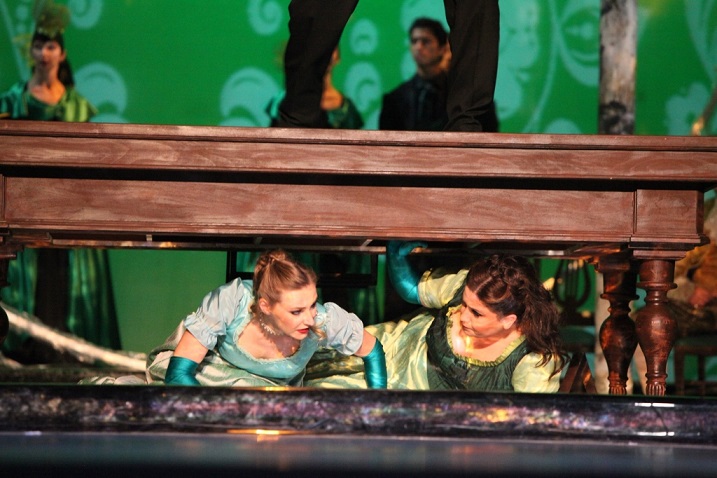
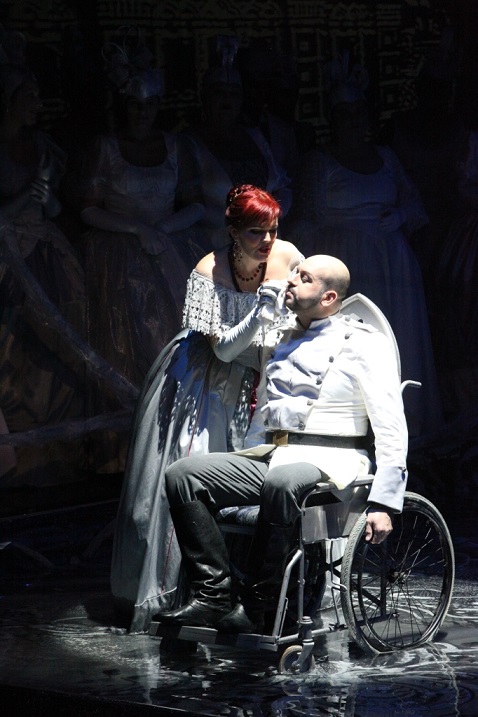
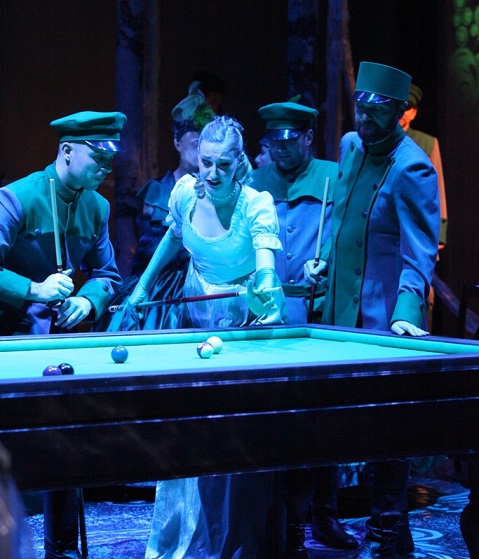
Libretto by Giacomo Rossi based on Aaron Hill and Torquato Tasso
World premiere on February 24, 1711 at Queen’s Theatre
Premiere at the Estonian National Opera on September 18, 2014
In Italian, with subtitles in Estonian and English
Approx running time 2 h 40 min
Strobo light is used in the production S, 8 February 2015 / 17:00 S, 7 March 2015 / 19:00 S, 29 March 2015 / 17:00
Tallinn Opera House Main Theater, Estonia
Stage Director William Relton:
“When I first saw “Rinaldo”, nothing had prepared me for the delight which I felt while watching this masterpiece for the first time. It was his first opera written for London, not only that, it was the first opera in the Italian language to be written for the London stage. The premiere of “Rinaldo”, loosely based on Tasso’s epic poem “Gerusalemme liberata” (Jerusalem delivered), took place at the Queen’s Theatre in the Haymarket in early 1711 and was a huge hit. Gorgeous arias, a fabulous, extravagant plot, dramatic characters, all that one could wish for, were present. Conquest, magic, deception, thwarted love, betrayal, sex, violence, abduction, an heroic quest, battles; it seemed as if Händel had thrown every single theatrical device in the book at it. “Rinaldo” went on to be the most performed of Händel’s operas during his lifetime. The opera was so successful that it was given in a fairly extensively revised version in 1731, however we are basing our performing edition on the original 1711 score. And what of the music? Even for Händel this opera has a large number of “hit” arias that leaves one gasping. And then there is of course the incomparable “Lascia ch’io pianga” sung by Almirena in the middle of Act 2. One of Händel’s most beautiful and celebrated arias. A treat indeed!”
Staging team
Conductors: Andres Mustonen, Risto Joost Stage Director: William Relton (England) Designer: Cordelia Chisholm (England) Lighting Designer: Johanna Town (England) Movement Director: Kati Kivitar
Cast: Rinaldo, a crusader, a hero: Monika-Evelin Liiv, Annaliisa Pillak Goffredo, head of the Christians, leader of the First Crusade: Oliver Kuusik, Mati Turi Almirena, Goffredo’s daughter: Heli Veskus, Olga Zaitseva Argante, Saracen king of Jerusalem: Rauno Elp, Aare Saal Armida, sorceress, Queen of Damascus, Argante’s mistress: Helen Lepalaan, Kristel Pärtna Sirens: Kadri Kipper, Juuli Lill, Olga Zaitseva A magician: Märt Jakobson, Mart Laur Eustazio, Goffredo’s brother: Mart Madiste, Roman Chervinko A herald: Ivo Onton, Mati Vaikmaa
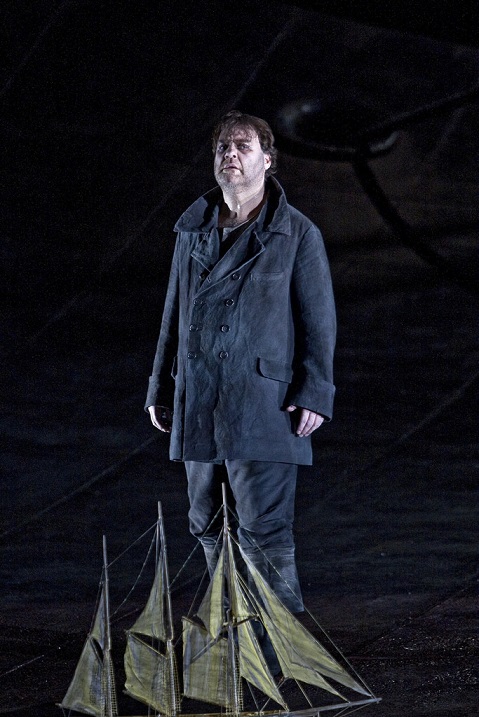
Tim Albery’s acclaimed production is a darkly insightful account of Wagner’s early masterpiece, The Flying Dutchman.
The Story
The Flying Dutchman has been cursed for eternity. Once every seven years he is allowed to come ashore to seek redemption. He may have found it in Senta, a woman who longs for escape from her dreary life.
Senta accepts the Dutchman’s offer of marriage. But the Dutchman wrongly suspects her of unfaithfulness. Thinking he’s protecting her, he leaves to resume his endless voyaging. Senta is left alone.
Background
Shortly before the premiere of Der fliegende Holländer in Dresden, Wagner had returned from a deeply unsuccessful two-year stint in Paris. He had gone there to make his fortune, but found his way barred by a strict class-based system. One of the bitterest blows came when Léon Pillet, director of the Paris Opéra, accepted his libretto for Der fliegende Holländer – but then commissioned a score not from Wagner but from French composer Pierre-Louis Dietsch. But the Dresden premieres of first Rienzi in October 1842 and Der fliegende Holländer in January 1843 were immense successes, and marked the beginning of Wagner’s career as one of the greatest operatic composers.
Tim Albery’s Olivier-nominated production for The Royal Opera delves deep into the psychology of Wagner’s cursed wanderer and his beloved Senta, detailing the monomania and uncompromising idealism that finally drives them apart. Michael Levine’s elemental single set is dominated by a rolling metal hull that represents the Dutchman’s phantom ship, the poverty of Senta’s home and the treacherous sea.
Tim Albery’s acclaimed production is a darkly insightful account of Wagner’s early masterpiece, starring Bryn Terfel conducted by Andris Nelsons.
Thanks to
Generous philanthropic support from
Marina Hobson OBE and the Wagner Production Syndicate
Running time
The performance lasts about 2 hours 20 minutes; there is no interval
Language
Sung in German with English surtitles
CAST
Andris Nelsons
Conductor
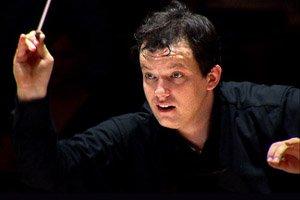
Latvian conductor Andris Nelsons made his Royal Opera debut in December 2009 with La bohème, and has since returned to The Royal Opera to conduct Madama Butterfly, Salome and Elektra. In the 2014/15 Season he returns to conduct Der fliegende Holländer for the Company.
Born into a family of musicians, Nelsons first became interested in opera aged five after seeing Tannhäuser. He learnt piano, trumpet and singing, and began his career as a trumpeter with Latvian National Opera. He studied conducting in St Petersburg and with Mariss Jansons, who remains his mentor. Nelsons was Principal Conductor of Latvian National Opera 2003–7, at the start of the 2008/9 season became Principal Conductor with the City of Birmingham Symphony Orchestra and in March 2013 was appointed Music Director of Boston Symphony Orchestra.
As well as his busy schedule with the CBSO, Nelsons works with many international orchestras including the Royal Concertgebouw, Vienna Philharmonic and the Philharmonia Orchestra. Opera engagements include Lohengrin (Bayreuth Festival), Eugene Onegin, Carmen and Tosca (Vienna State Opera), La bohème (Berlin State Opera) and Queen of Spades (Metropolitan Opera, New York). Nelsons’s recordings include works by Tchaikovsky, Richard Strauss and Stravinsky with the CBSO on Orfeo and Opus Arte DVDs of La bohème and Lohengrin.
Bryn Terfel (The Dutchman)
Bass-Baritone
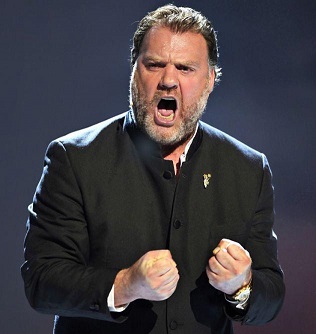
Welsh bass-baritone Bryn Terfel made his Royal Opera debut in 1992 as Masetto (Don Giovanni) and has since sung Figaro (Le nozze di Figaro), Jokanaan (Salome), Balstrode (Peter Grimes), Falstaff, Don Giovanni, Méphistophélès (Faust), Wotan (Der Ring des Nibelungen), Scarpia (Tosca), Gianni Schicchi and the Dutchman (Der fliegende Holländer), and in gala performances for The Royal Opera. In the 2014/15 Season he returns to sing Dulcamara (L’elisir d’amore) and the Dutchman.
Terfel was born in North Wales into a music-loving family and studied at the Guildhall School of Music and Drama with Rudolf Piernay. In 1989 he won the Lieder Prize in the BBC Cardiff Singer of the World Competition. He made his professional debut in 1990 as Guglielmo (Così fan tutte) with Welsh National Opera. He now sings at the world’s leading opera houses, including the Metropolitan Opera, New York, La Scala, Milan, and Vienna State Opera. Along with major roles in operas by Mozart, Verdi, Wagner and Puccini, his repertory includes Nick Shadow (The Rake’s Progress), the four villains (Les Contes d’Hoffmann) and Sweeney Todd. In 2010 he sang Hans Sachs (Die Meistersinger von Nürnberg) to great acclaim with WNO.
Terfel appears regularly at the BBC Proms, including at the Last Night of the Proms in 2008 and in 2013. He is a recording artist with Deutsche Grammophon and also appears on many opera DVDs. Terfel was made a CBE in 2003 and was awarded The Queen’s Medal for Music in 2006. His interests away from singing include vintage wines, golf and art.
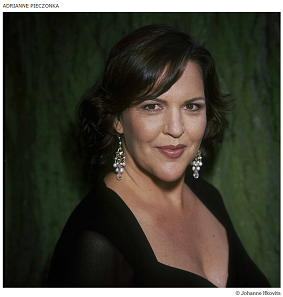
Adrianne Pieczonka (Sents)
Soprano
Canadian soprano Adrianne Pieczonka made her Royal Opera debut as Donna Anna (Don Giovanni) and has since sung Chrysothemis (Elektra) for the Company. In the 2014/15 Season she returns to sing Senta (Der fliegende Holländer).
Pieczonka grew up in Burlington and studied at the University of Western Ontario and at the Opera School of the University of Toronto. She moved joined the Vienna Volksoper in 1989 and in 1991 became a member of the Vienna State Opera. Concurrent engagements included her debuts at Glyndebourne Festival, as Donna Elvira (Don Giovanni), and at the Metropolitan Opera, New York, as Liza (Queen of Spades).
Pieczonka’s repertory ranges from Mozart to Britten. She is particularly well known for her interpretations of Wagner and Strauss heroines, with engagements including Sieglinde (Die Walküre) for Bayreuth Festival, Canadian Opera Company and Metropolitan Opera, New York, Senta for Bayreuth Festival and Paris Opéra and the Marschallin (Der Rosenkavalier), Ariadne and Arabella for major European companies including Vienna State Opera. Her other repertory includes Leonore (Fidelio), the Empress (Die Frau ohne Schatten), Amelia Grimaldi (Simon Boccanegra) and Tosca. Her recordings include Lohengrin under Bychkov and discs of Puccini arias and music by Wagner and Strauss. Pieczonka was made a Kammersängerin of Vienna State Opera in 2007.
Michael König (Erik)
Tenor
German-Canadian tenor Michael König makes his Royal Opera debut in the 2014/15 Season as Erik (Der fliegende Holländer).
König was born in Mutlangen and began his singing career as a member of the Schwäbisch Gmünd St Michael’s boys’ choir. He went on to study in Karlsruhe and at the Mannheim Conservatory with Rudolf Piernay. His early engagements included Jeník (The Bartered Bride) for Glyndebourne Festival, Narraboth (Salome) and Tamino (Die Zauberflöte) in Frankfurt and Lensky (Eugene Onegin) for Basle Opera. He currently sings for Europe’s major opera companies, including Hamburg State Opera, Frankfurt Opera, Berlin State Opera, Bavarian State Opera, Liceu, Barcelona, Teatro Real, Madrid, and La Scala, Milan, and has also appeared with the Canadian Opera Company. He made his Bayreuth Festival in 2012 as Erik and appeared as Max in Jens Neubert’s film Hunter’s Bride, adapted from Der Freischütz.
König’s repertory includes Florestan (Fidelio), Max (Der Freischütz), Lohengrin, Tannhäuser, Emperor (Die Frau ohne Schatten), Bacchus (Ariadne auf Naxos), Guido (Eine florentinische Tragödie), Jim Mahony (Aufstieg und Fall der Stadt Mahagonny), Andrey Khovansky (Khovanshchina), Grigory/The Pretender (Boris Godunov), Sergey (Lady Macbeth of Mtsensk) and Leper (St François d’Assise). His many concert appearances include Beethoven’s Symphony no.9 at the BBC Proms.
Peter Rose (Daland)
Bass
British bass Peter Rose made his Royal Opera debut in 1988 as Lord Rochefort (Anna Bolena) and has since sung roles including King Marke (Tristan und Isolde), the Commendatore (Don Giovanni), Lorenz von Pommersfelden (Mathis der Maler), Ramfis (Aida), Cadmus (Semele), Fasolt (Das Rheingold), Cardinal of Lorraine (Palestrina), Timur (Turandot), Kecal (The Bartered Bride), Athlete (Lulu), Baron Ochs (Der Rosenkavalier) and Prince Gremin (Eugene Onegin). He returns in the 2014/15 Season to sing Daland (Der fliegende Holländer).
Rose studied music at the University of East Anglia and singing at the Guildhall School of Music and Drama and the National Opera Studio. He was a member of the Glyndebourne Chorus in 1986 and that year went on to make his professional debut as the Commendatore for Glyndebourne on Tour. He performs regularly for leading opera companies, including La Scala, Milan, Bavarian State Opera, Hamburg State Opera, Deutsche Oper Berlin, Berlin State Opera, Semperoper Dresden, Paris Opéra, Vienna State Opera, Liceu, Barcelona, and Rome Opera. His roles for English National Opera include Boris Godunov, and for the Metropolitan Opera, New York, Bottom (A Midsummer Night’s Dream), La Roche (Capriccio) and Baron Ochs.
Other roles include Osmin (Die Entführung aus dem Serail), Don Basilio (Il barbiere di Siviglia), Philip II (Don Carlos), Falstaff, Hunding (Die Walküre), Gurnemanz (Parsifal) and Claggart (Billy Budd). He is a prolific concert artist, and has sung under such conductors as Daniel Barenboim, Carlo Maria Giulini, Carlos Kleiber, Lorin Maazel and Simon Rattle, with the world’s leading orchestras.
Ed Lyon (Sailor)
Tenor
British tenor Ed Lyon made his Royal Opera debut in 2008 as Lysander (A Midsummer Night’s Dream) and has since sung Pane (La Calisto), Hylas (Les Troyens), Dancing Master (Ariadne auf Naxos) and Amidas/Wind (L’Ormindo at the Sam Wanamaker Playhouse, Shakespeare’s Globe) for the Company, and Gernando (Haydn’s L’isola disabitata) with members of The Royal Opera at the Hobart Baroque Festival. In the 2014/15 Season he returns to sing Sailor Tristan und Isolde and Steersman (Der fliegende Holländer for The Royal Opera.
Lyon studied history of art at St John’s College, Cambridge, where he was a choral scholar, and went on to train at the Royal Academy of Music and the National Opera Studio. He has appeared for all the major British companies, and for such international companies as the Opéra-Comique, Teatro Real, Madrid, Theater an der Wien and Netherlands Opera. His wide repertory includes such roles as Hippolyte (Hippolyte et Aricie), Don Ottavio (Don Giovanni), Tamino (Die Zauberflöte) and Freddy Eynsford-Hill (My Fair Lady).
Lyon has sung at in concert major venues worldwide, including the Royal Festival Hall and Royal Albert Hall in London, the Salle Pleyel in Paris, the Berlin Philharmonie and the Alice Tully Hall, New York, in repertory ranging from Bach’s B Minor Mass to Maxwell Davies’s Solstice of Light. His recordings include a CD of Alexander’s Feast (Ludus Baroque) and a DVD of Les Troyens (Royal Opera).
Catherine Wyn-Rogers (Mary)
Mezzo-Soprano
British mezzo-soprano Catherine Wyn-Rogers made her Royal Opera debut in 1989 as Schwertleite (Die Walküre). Her roles since have included Third Lady (Die Zauberflöte), Mrs Sedley and Auntie (Peter Grimes), First Norn (Götterdämmerung), Erda (Das Rheingold and Siegfried), Sosostris (The Midsummer Marriage), Voice of Lucrezia (Palestrina), Magdalene (Die Meistersinger von Nürnberg), Cornelia (Giulio Cesare in Egitto), Spirit of Antonia’s mother (Les Contes d’Hoffmann) and Geneviève (Pelléas et Mélisande). She has performed Song of the Earth for The Royal Ballet. In the 2014/15 Season she returns to sing Mary (Der fliegende Holländer).
Wyn-Rogers studied at the Royal College of Music. She sings for leading companies and houses including Bavarian State Opera, Teatro Comunale, Florence, Palau de les Arts Reina Sofía, Valencia, La Scala, Milan, Houston Grand Opera, English National Opera and Glyndebourne Festival. Her repertory includes Marcellina (Le nozze di Figaro), Waltraute (Götterdämmerung), Filipyevna (Eugene Onegin), Adelaide (Arabella), Mrs Herring (Albert Herring), Bianca (The Rape of Lucretia) and Mrs Grose (The Turn of the Screw).
Wyn-Rogers enjoys a prolific concert career, including appearances with all the major British orchestras, with period ensembles including The English Concert, the Academy of Ancient Music and The Sixteen, and at the Three Choirs, Edinburgh and Aldeburgh festivals and the BBC Proms. She has sung in recital at the Wigmore Hall among many other venues. Her many recordings range from Handel’s Samson and Messiah with Harry Christophers to Poulenc songs with Malcolm Martineau. She lives in Gloucestershire, where she is active in local music.
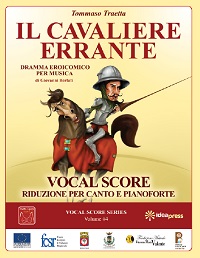
The full vocal score of this magnificent opera is AVAILABLE FOR THE FIRST TIME IN HISTORY FROM AMAZON.COM or BARNES & NOBLE
The Vocal Score of the Munich version of the Stabat Mater by Tommaso Traetta is now available.
With biography and commentary in English, Italian, German and Japanese.
The full vocal score is AVAILABLE FOR THE FIRST TIME IN HISTORY FROM AMAZON.COM or BARNES & NOBLE
Doña Flor, the vocal score
The full vocal score of this magnificent opera is AVAILABLE NOW FROM AMAZON.COM
Torna a Trapani il Concorso Lirico Internazionale Giuseppe Di Stefano. L’Ente Luglio Musicale Trapanese – Teatro di Tradizione bandisce la XXI edizione, finalizzata alla scoperta e al lancio di emergenti voci liriche, in programma dal 13 al 16 maggio 2026, presso la Sala Grande del Complesso Monumentale San Domenico. Possono partecipare cantanti lirici di qualsiasi […]
Sold out e grande emozione nella Cattedrale di San Lorenzo, a Trapani, per il capolavoro incompiuto di Mozart, con la direzione di Nicola Kitharatzis e un cast di solisti di rilievo internazionale Trapani, 31 marzo 2026 – Si è aperta la 78ª Stagione del Luglio Musicale Trapanese con il Requiem in Re minore K. 626 […]
Al via il IV° “Sabbioneta chamber Opera festival – Residenze 2026” Un grande progetto internazionale dedicato ai giovani talenti della lirica e della musica antica Con grande entusiasmo, l’Associazione “Concetto Armonico APS”, in collaborazione con il Comune di Sabbioneta e la Fondazione Sabbioneta Heritage, annuncia il lancio della quarta edizione del “Sabbioneta chamber Opera festival – Residenze”, dove […]
Presentata la 78a Stagione del Luglio Musicale Trapanese Ventuno appuntamenti da marzo a dicembre. Si apre domenica 29 marzo con il Requiem di Mozart in Cattedrale: ingresso libero per la città. È stata presentata nella Sala Grande del Complesso San Domenico, a Trapani, la 78ª Stagione dell’Ente Luglio Musicale Trapanese, Teatro di Tradizione riconosciuto dal […]
La Società Dante Alighieri e il Teatro dell’Opera di Roma presenteranno mercoledì prossimo, 4 febbraio, alle ore 17.30 a Palazzo Firenze (Roma), “Inferno”, l’opera, in chiave contemporanea composta da Lucia Ronchetti, è ispirata alla prima cantica della Commedia di Dante Alighieri.Durante la conferenza interverranno Alessandro Masi, Segretario generale della Società Dante Alighieri, Giuliano Danieli, Fondazione Teatro dell’Opera di Roma, Lucia Ronchetti, Compositrice, […]
Il cuore del melodramma italiano e il romanticismo europeo approdano al Cairo per una grande serata di cultura. Un quintetto di artisti d’eccezione guiderà il pubblico in un viaggio emozionante tra le arie, i duetti e i capolavori pianistici più amati di sempre con “Opera Concert – Recital for 4 voices and piano”, in programma il 5 febbraio alle […]
Recensione di Salvatore Margarone La ripresa al Teatro Filarmonico di Verona del Don Giovanni di Mozart, nell’allestimento firmato da Enrico Stinchelli e già presentato nella stagione 2019, conferma le perplessità emerse fin dal suo debutto. La regia, improntata a un sostanziale rispetto letterale del libretto, si colloca su un piano prevalentemente illustrativo, rinunciando a un’elaborazione […]
L’imponente Aida di Giuseppe Verdi, nel leggendario allestimento firmato da Franco Zeffirelli, sarà in Australia a febbraio 2027. Dopo il rinvio annunciato alcuni mesi fa, sono ora state definite le nuove date dell’evento: venerdì 26 e sabato 27 febbraio 2027. La Fondazione Arena di Verona porterà in scena all’Adelaide Oval l’opera regina, nell’ambito dell’Adelaide Festival 2027.A 25 anni esatti dal suo debutto in Arena, […]
Articolo di Gianluca Macovez Il Maestro di canto pronto ad inaugurare l’Accademia del Belcanto nel New Jersey Su questo sito qualche tempo fa avevamo pubblicato un’intervista a Massimo Iannone, Maestro di canto di valore internazionale. Ci piace parlare di nuovo di questo artista, perché da allora la sua attività ha avuto un deciso incremento: lasciata […]
Sala gremita e grande partecipazione di pubblico per “Un viaggio a Venezia”, il concerto di Natale dedicato ad Antonio Vivaldi che ha concluso la prima serie di quattro appuntamenti musicali di “L’anima italiana – I Maestri della Musica Classica”, progetto ideato e promosso dalla Società delle Associazioni Italiane di Ginevra (SAIG) che rende omaggio a otto tra i più celebri compositori italiani, […]

 Faust
Faust












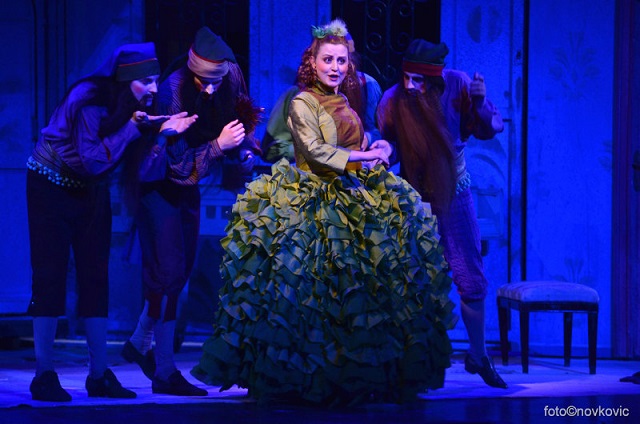
 Inger Dam-Jensen as Alcina



































 Opera, My Love Magazine