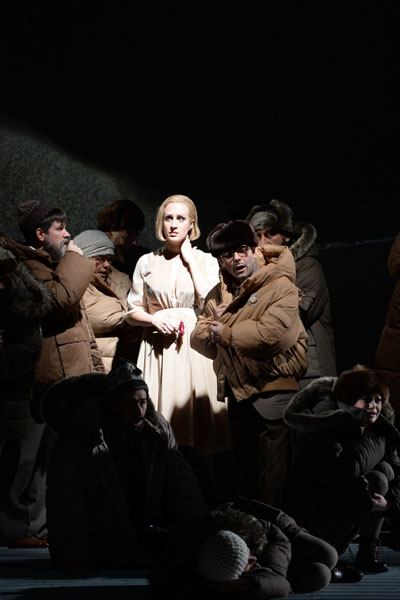
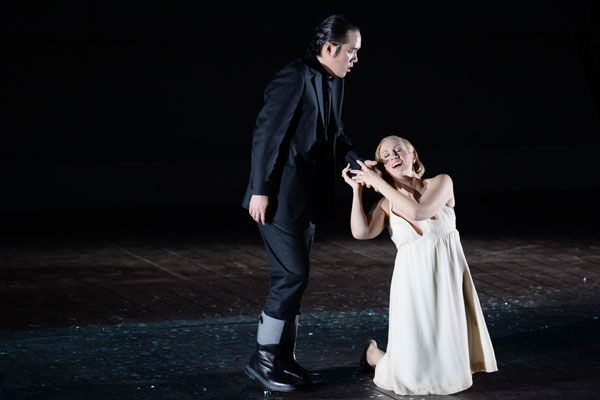
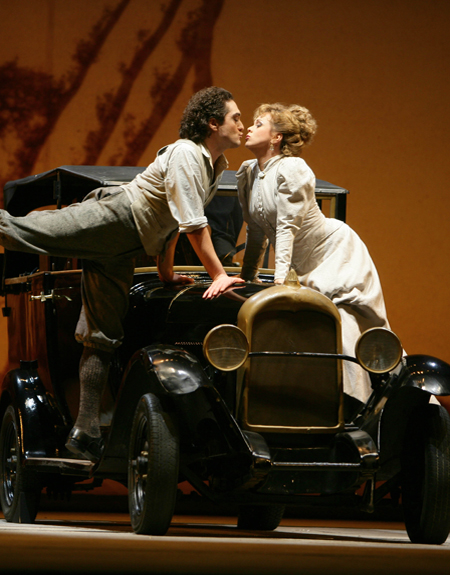
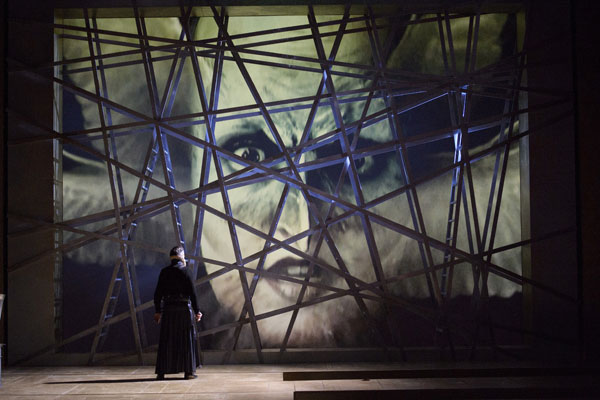
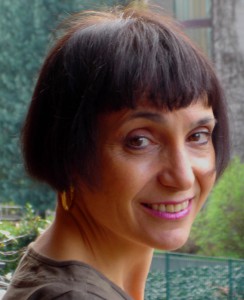
 Eleonora Firenze, undisputed talent and boundless energy, returned to prominence in recent days with the official presentation made at Palazzo Marino, Sala Franco Brigida, City of Milan, on November 24, 2014 of the show she directed, Stazioni di Transito, which will performed at the Teatro Rosetum in Milan on 7th and 8th of February 2015.

Consisting of two interesting works, as different in composition as in the historical period in which they were written, “Stazioni di Transito” is her idea and a challenge to the public, perhaps a little addicted, not to say it has become lazy, in a choice of operas in a very limited range. The Emperor of Atlantis by Viktor Ullmann is one of two works that make up this magnificent spectacle designed by the friendly Milanese director (Leccese by birth). Written in the concentration camp of Terezin with a libretto by Peter Kien, who was also detained there (both the composer and the librettist were sent to the gas chambers of Auschwitz with almost all other prisoners of the camp), this work has never been performed in Terezin. It was first performed in Amsterdam in 1975.
The other work, very well-known and represented, is one of the first operas in absolute: “The Lament of Arianna,” by the composer Claudio Monteverdi. Eleonora has kindly agreed to an interview before the premiere of the show.
 Eleonora, in 2008 you won the national competition for new authors “Scena in corto” with your stage show, Vita in “Gioco.” Would you tell us something about it?
The experience of writing Vita in “Gioco” was born from the desire to try my hand in a form of expression that took into account some lessons of aesthetics that I was following in that period in college, especially the Aesthetics of the Ugly by Karl Rosenkranz. I wanted to be able to represent a dramatic situation in essence, coming to the sensitivity of the reader and the viewer, using a method based on the contrast; not on the drama, for example, but on its comical outlook, sentence by sentence, situation to situation, deliberately, to obtain a desired effect. I lived it in that period as an exercise and also as a game. It was March 2007; after a few months I made my daughter Martina Galletta, then a student of the School of Dramatic Arts Paolo Grassi in Milan, read the script and I got her positive judgment. This gave me courage to make the director Mina Mezzadri also read it. I was interviewing her at that time for a book I published later on. The original title of the play was Scherzo. Usually so severe and categorical in her judgments, she said: “you have named it Scherzo (Joke), but the things you say are very serious.” This made me happy. She added that the sense of the text came loud and clear and it had theatrical strength.
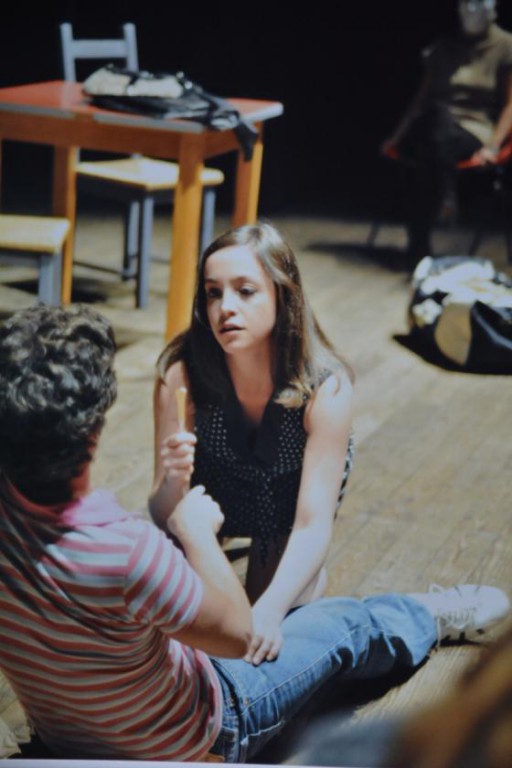
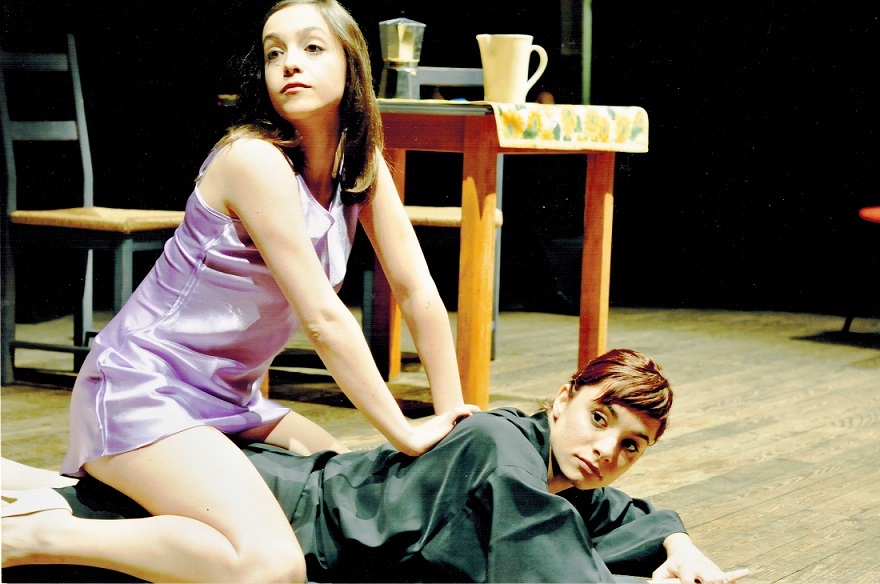
Martina Galletta and Valerio Napoli in Vita in “Gioco”
The coincidence would have it that, surfing the web, I came across an ad for a national competition for new authors organized by the Teatro Nuovo in Varese, “Scena in Corto,” with the sponsorship of various cultural and social associations in Lombardy, as well as the University of Insubria. I decided to send my text with the title Vita in “Gioco” (Life at “Play”). After a few months I got a call from the direction of the contest informing me of the selection of my work, along with that of other eight authors, for the production of a show to be staged at the Teatro Nuovo in Varese in May 2008.
I was very happy about that, but also worried by the need to create a company in a short time and give the start to the entire production process. I started with the cast, involving actresses (Martina Galletta, Elisa Langone, Giovanardi and Rosa Eleonora Sarti) and actors (Federico Valerio Manfredi and Naples) of the School of Dramatic Arts Paolo Grassi in Milan. I dealt directly with the ideation and recovery of all the scenic elements, albeit reduced to essentials, as well as the payment of all the members of the cast, though with a low budget. I asked the company I worked for to take a vacation in the most intensive rehearsal period, and used evenings and holidays for the initial rehearsals. Thanks to the Paolo Grassi School I could make use of their rehearsal rooms. Incidentally I also had available an assistant director of that School, now director of media at La Scala in Milan, Stefano Pintor.
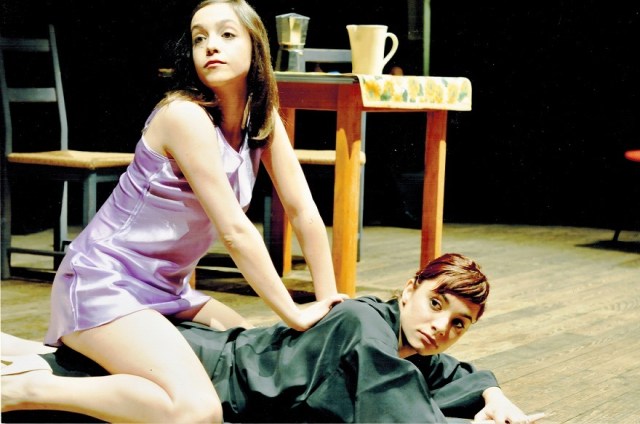
Vita in “Gioco”. Martina Galletta and Elisa Langone
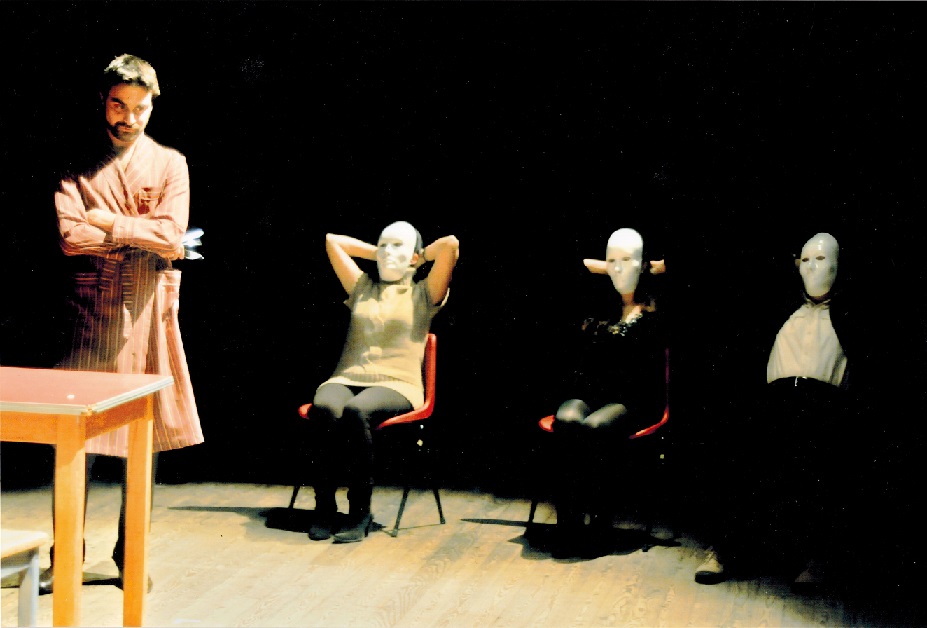
The play is divided into ten scenes and a closure in the form of dance, on the music of Strange I’ve seen your face before (Libertango) sung by Grace Jones. In the background, a pendulum beats time with its movement and its sound. On stage, the characters: father, mother and teenage daughter and her boyfriend; two prostitutes, their neighbors. To observe, on the stage, six figures with a neutral mask, like mannequins without expression that repeated mechanical gestures simultaneously. This is a representation which has the rhythm of camera frames on sequences of much characterized imagery. The goal is to return the path of change, both individual and in a relationship within a family, through the eyes of some different realities where the values have an illuminating depth and they are the harbinger of questions about the meaning of life and the quality of their relationships, but not only so. You also want to think about reality and image, of reality and fiction, of assets and liabilities in relation to the input and the oppression of the media dimension in our lives.
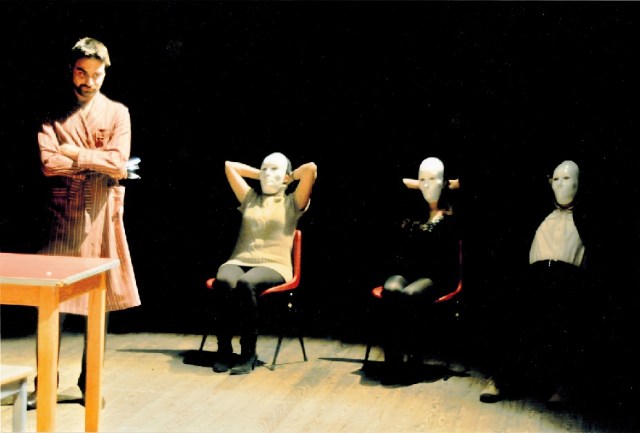
Vita in “Gioco.” Federico Manfredi and cother mambers of the cast.
This was the synopsis: “Different people that, in a few glimpses of daily life, lay bare their weaknesses and their desires. The smile is the medium that takes the audience on this family and social tour, but it is a bitter smile. A sort of grotesque reality, where there are the characters, with their history and their path to a change towards a new identity, but there is also an audience, on the stage, watching them. So viewers in the audience are seen in a strange mirror, where suddenly there is a new reality, the media, with which to compare and reflect. Meanwhile, time passes for those who want it to pass and stops for those who want to live it. ”
On this text I then made a special operation in 2011, turning it into an opera libretto in rhyme, with seven- and eleven-syllable. I asked a young English composer if he would compose music to make a small opera buffa in ten scenes of this text. The composer accepted; he is David William Jackson, and the work is called Silvia. It will be staged at the Teatro Rosetum of Milan in the next June 2015.
In 2009 you published the book Mina Mezzadri. The secret of an elsewhere – The directing of a free woman. Woman and director interesting and certainly at the forefront, Mezzadri has been the first director of the Italian theater. What made you decide to write this book and how was it received?
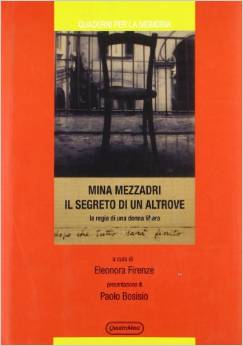 Yes, Mina Mezzadri was our (Italian) first woman director. In those years, I had just graduated with a degree in Cultural Assets and I was reading a book discovered by chance while in search of news of Gordon Craig, a great set designer of the twentieth century: The first woman director. Edith Craig, between revolution of the scene and culture of women. This book, written by Roberta Gandolfi, spoke of Edith Craig, sister of Gordon, precisely, but less known and remembered. Gandolfi’s research emphasized the important changes introduced by Edith Craig in theater production in the early years of the twentieth century. I do not want to go into the merits, leaving the reader the pleasure of discovering this great forerunner of the capacity of women in a directing role as well as a creative one. My curiosity moved on to Italian reality in the world of filmmaking and I wanted to study the personality of our first woman director, Mina Mezzadri. I would have really liked to write about her and her work. I managed to miraculously find a contact to ask an appointment at her home in Brescia. It was a wonderful meeting where I asked Mina if she was available to the many meetings necessary to collect her experience and write a book. I prepared an initial set up of the chapters already with titles.
For a year and a half we met on weekends. I recorded the meetings. She gave me many addresses of her actors and collaborators, and many reviews, drawings, sketches and photographs of the scenes. Besides her, I met several of her actors, actresses and set designers, including Enrico Job, and her dearest friends, including Lina Wertmuller. To all, I asked to tell me about their experience with Mina; interviews that make up the third part of the book. The first section tells of the first phase of the life of Mina Mezzadri, the most personal and intimate. In the second, instead, I confront all her directions, with the story of her intentions, and an overview of the theater critique of various Italian and European newspapers.
Integral parts of the book are the four photographic sections, divided between references to personal life and professional life; photographs selected and digitized by me. The serious illness of Mina took her away in August 2008. She could only see the first draft of the first part of the book. She had no desire to talk about herself. The pain changed her, but the time spent with her, I remember it with much pleasure. Despite the opinions of many people who saw her as too radical, I became rather fond of her. When she trusted someone, she opened up and made herself amiable; it was impossible not to care for her.
The book was presented in the foyer of the Teatro Grande in Brescia and at the Castello Sforzesco in Milan, with the presence of important representatives of the world of culture, such as the professors of theater history Sisto Dalla Palma and Paolo Bosisio, of the community, such as the Councilor for Culture of the Municipality of Milan Massimiliano Finazzer Flory and the Honorable Sandro Fontana. There were also representatives of the Arts, such as Franco Sangermano, a gorgeous actor who worked with her on several important shows by Strindberg, and Renato Borsoni, actor and set designer from Brescia, her primary collaborator since the time of the Loggia. But to enjoy such a magical path, you have to read her story; it’s worth it. The book is on sale in bookstores, starting with Feltrinelli, or by order via Internet. It has garnered success and it is in major national libraries as well as in universities. I wanted to highlight the fact that Mina Mezzadri was the first female leader in the nascent Italian theatrical direction.
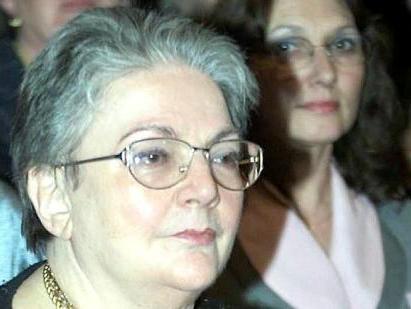
Mina Mezzadri
She was a director who had also as a fundamental characteristic the experimentation of new theatrical languages as well as a desire to re-read the classical and modern texts in light of the comparison with the contemporary, cutting down the conformism and challenging, with the never useless provocation, respectability, hypocrisy, preconceptions and stereotypes. Also a playwright, her plays have caused quite a stir. One for all: “Obedience is no longer a virtue” for which she was accused of insulting the Armed Forces and of incitement to conscientious objection. Her particular character, her personality never willing to compromise and never interested in the success for itself, have meant that Mina Mezzadri has not registered as much notoriety as other colleagues of hers and above all she has not occupied roles in the theater that she would have surely deserved and would have performed with equal competence. She was a free woman. One day, speaking of her students, she said to me: “I hope I do not ever see them integrate; hope to die first.”
From your resume, one can deduce that you are a person interested in various aspects of show business. You feel attracted equally to all these facets of the theater or do you prefer one in particular?
I am very attracted and intrigued by all forms of expression of man and life. Thus, since the theater often encloses many in a single event, be it prose or lyric, there I go with the desire to express myself and to see the work done and the artists. But I must say that every expression of art totally catches me, fascinates me and stimulates me in turn to an artistic production, even if purely at the amateur level. Of course I have to deal with my skills or lack of them in some fields, not allowing it to bring me down, though, because after all, a problem or a deficiency can also turn into an opportunity, especially when the desire is too strong to remain trapped by the chains of fear or of being judged by others. My attempts in the various disciplines are many. From the production of short plays, the conception of sets, from painting to sculpture, even more to the production of objects on the basis of the discovery of materials that stimulate my imagination.
A few months ago I made an object that could be considered contemporary art in wood and 22 karats gold on a platform of an experimental material not yet on the market. I called it “Life”. I’d like to display it at the next show “Stazioni di Transito” in a small showcase of the theater; it’s not for sale.
In the course of your various studies (Eleonora Firenze has earned three degrees) you had the opportunity to meet many important directors. Who is the director who most impressed you and why?
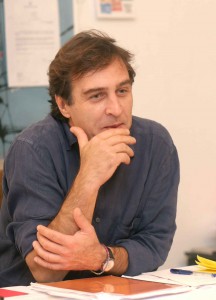
Daniele Abbado
The most significant director for me, in terms of depth of thought, coherence and ability to synthesize and staging was Mina Mezzadri. I followed some live rehearsals of major directors, such as Daniele Abbado at La Scala in Milan or Damiano Michieletto at La Fenice in Venice. I really appreciated the quality of their directing management, although it was very different between the two. Then I could also hear the experiences of Gianfranco De Bosio, a great director of Italian opera; he was one of my teachers, along with Quirino Principe, one of the most respected Italian musicologists. An important aspect for me is mainly to detect the differences and appreciate the similarities between the different directors. This allows me to get to the essence of directing management, while leaving open the possibility of expression.
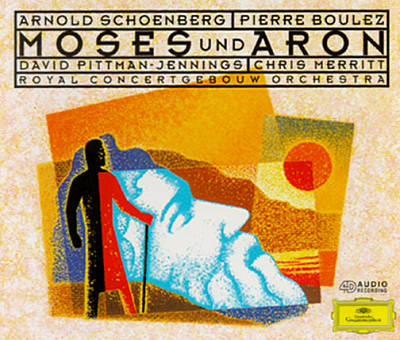
For your Master, you prepared a draft of direction and set design, with a full scale model of the scene, for Arnold Schoenberg’s opera Moses und Aron, which was then presented by your direction teacher, Maestro Gianfranco De Bosio, at the Accademia di Belle Arti Cignaroli in Verona. Have you pursued on other occasions this interest in the set design, or was it a purely learning experience?
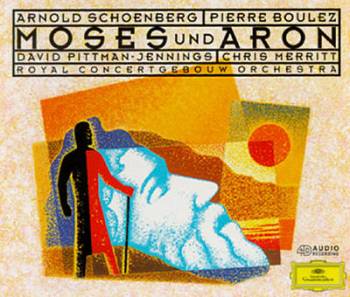 The set design is closely linked to the idea of directing; it is often difficult to be able to split the roles. The director at the end borders on the role of designer, more often than vice versa, unless you are talking about very special set designers, the big ones, one for all my experience Enrico Job.
Even now that I’m working on directing operas, my main concern is to render with the scene what I mean, even before than with the actors. The agreement with a designer, if it happens at this stage, means that it is successful and very rewarding. Otherwise it means that, after deciding that scene to do, I need a designer to take care of the technical and operational parts. About my project for Moses und Aron, I am thoroughly convinced that I chose a very interesting scene; definitely not neutral, just to follow the teachings of Mina Mezzadri. I wonder if I will ever find some theater interested in producing it. My project, complete with all the directing and scenic description, including the lighting system, was for the theater in Berlin, although another site would be even better in my mind, but it’s a secret for now.
The coupling of an opera by Monteverdi (Il lamento di Arianna) with one by Viktor Ullmann (The Emperor of Atlantis) in your show “Transit Stations” (Stazioni di Transito) is very challenging for you and exciting for the audience. Would you talk a little about the reasons of this your choice?The show, which I gave the title “Transit Stations” includes these two works, very far apart chronologically and musically. My intention is to have a look on different themes, with a thread that is change, metamorphosis, the path of men in search of a landing, through the passions, the pain and the strength of life, but not detached from social changes and the musical communicative modality continually evolving, with a perennial search of the expression of their feelings. The path is built by countless transit stations, often painful, where we express our dismay and where we gather forces for a new path.
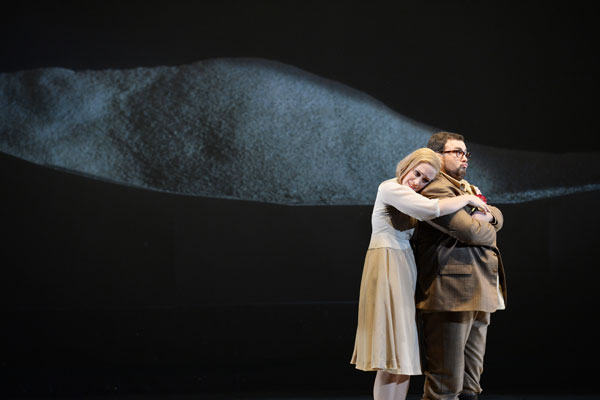
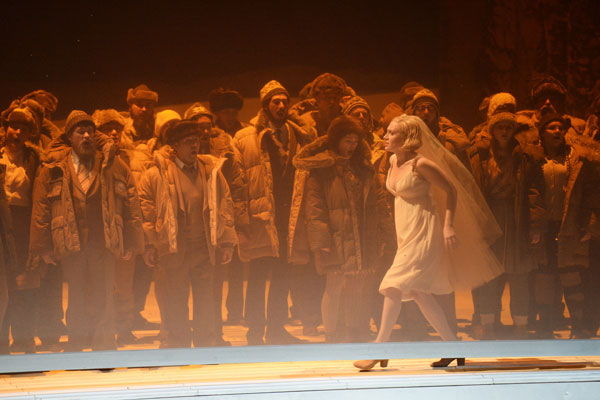
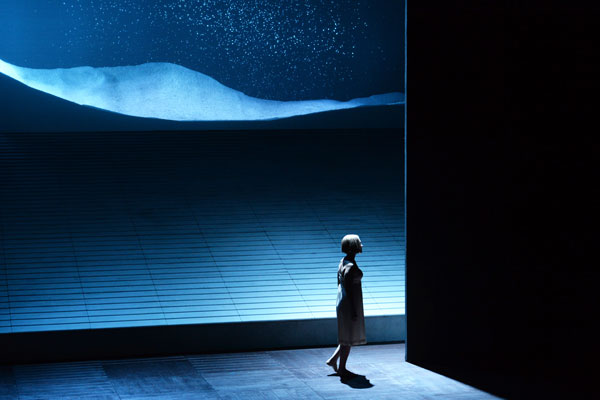
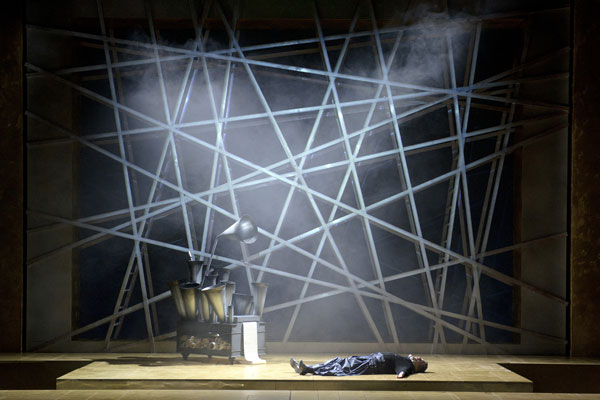
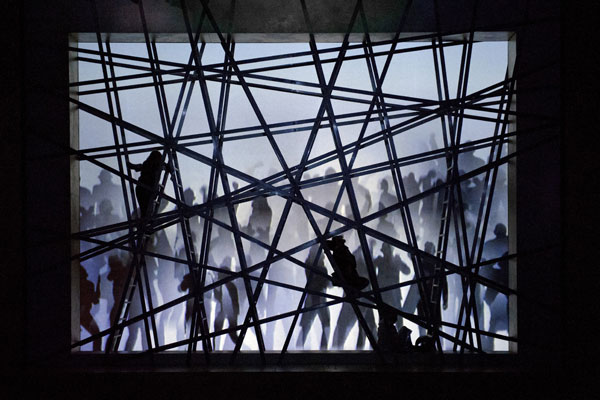
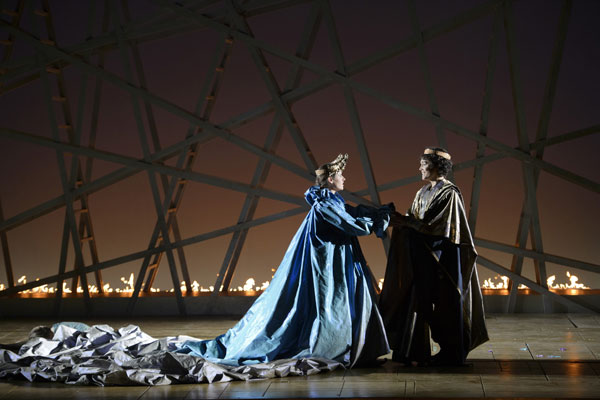
 My Arianna is Muslim and wears a headscarf. I imagined a scene occupied by a multitude of faces, mounted on metal rods; the works are by Giorgio Guidi. These are the men who leave their country to despair and facing the Mediterranean Sea to reach our own, with the hope of a better life. These faces increasingly lose their identity. These men leave their women, who remain for the most alone and widows. Those who manage to reach their men are in a different reality. Their landscapes are far away. The need to integrate conflicts with the one to remain attached to their origins and these veils do not know whether to stay on their heads or to fly away. Men who reach Italy do not find what they had hoped, but inhuman camps, labor camps where they are exploited and treated like animals, urban suburbs where they are isolated, delinquency that involves them, politicians who exploit the needs. So we are not so far away from the concentration camps as thought. Men grouped, isolated, not respected, without identity.
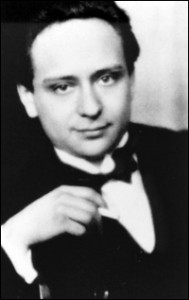
Viktor Ullmann
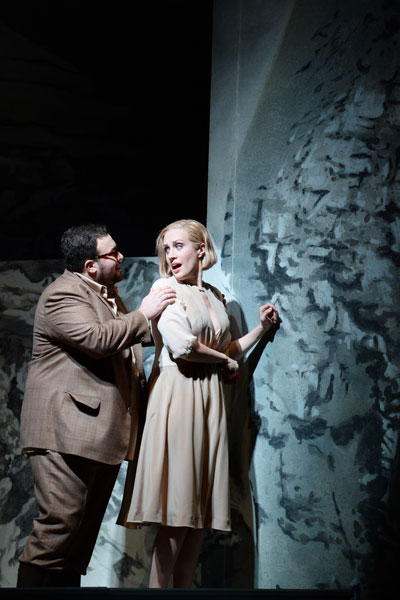
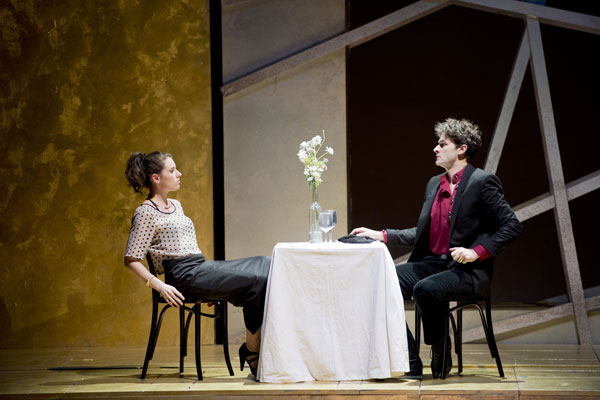
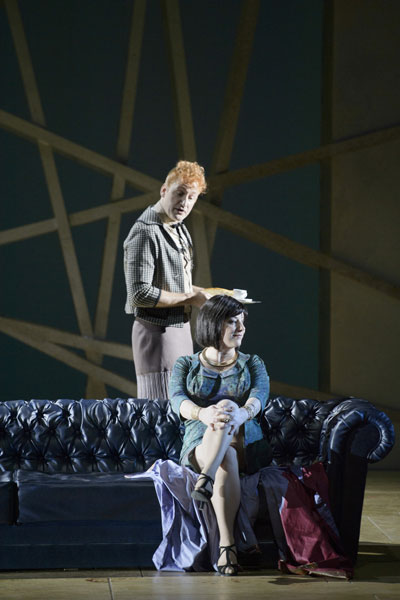
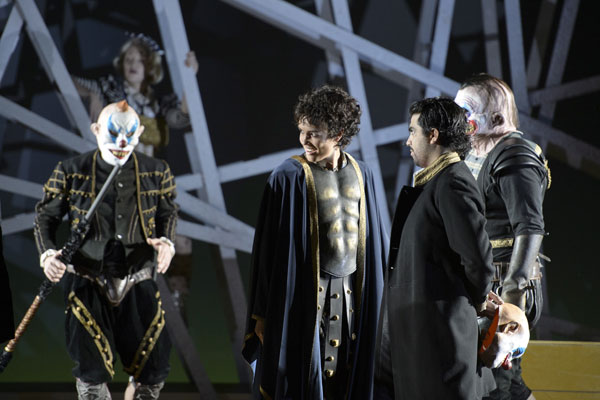
This is the link to The Emperor of Atlantis, the story of the revenge of Death of those who wanted to rob its place. It refuses to kill people, unless first dies the Emperor. A surreal story, very allusive to the context in which Terezin was written by Viktor Ullmann and Peter Kien, a young painter, poet and librettist. The tone is grotesque and the intention is to win with the music and the art upon the tragedy of the Holocaust.
The show ends with a brief revival of The Lament of Arianna, however, interpreted by a countertenor, instead of by a soprano. To represent again the changes, the loss, the search for a landing, this Arianna enter into a work of Davide Dall’Osso, a sculpture of a woman created with a blend of polycarbonate, then carved. Once again, the reference is to Ovid’s Metamorphoses, where passions have always had as a result a change, a transformation, but in an animal or a rock or a tree. As if to say that for everything there is a price to pay.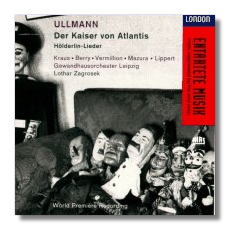
For this show, you’ve also designed the costumes. Have taken a choice linked to an historical representation or to an artistic stylization?
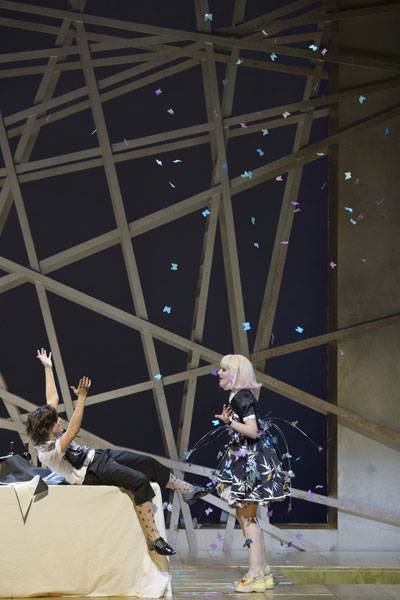
I wanted to work primarily on contrasts. I imagined then a surreal scene where objects are deformed and wrapped, showing bumps and improbable colors alluding to an amusement park as to what regards the scenes in which there is the Emperor of Atlantis, to avenge and return to him the role that wanted to be of the artists of Terezin. The costumes, instead, are realistic, original military uniforms. The effect is that of a surreal situation, precisely, where the message passes through the interaction between the actors and the scenes themselves.
What difference did you find in directing these two works, so distant in time and in their conception? Any difficulties?
More than finding difficulty I found the pleasure to appreciate the differences and highlight them. The important thing for me is to highlight the progression, the changes, and the evolution of music and of individual and collective, social cases. These two operas allowed me to do just that.

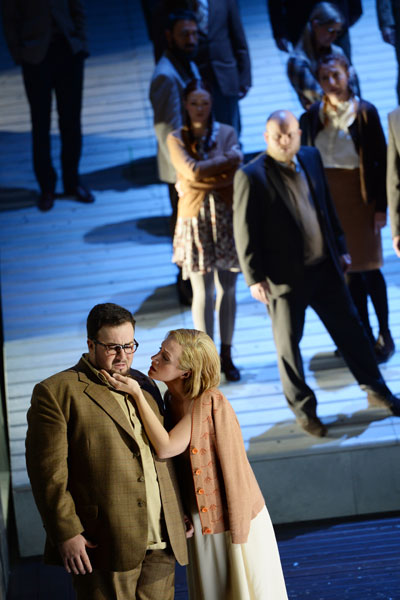
 ARIADNE AUF NAXOS