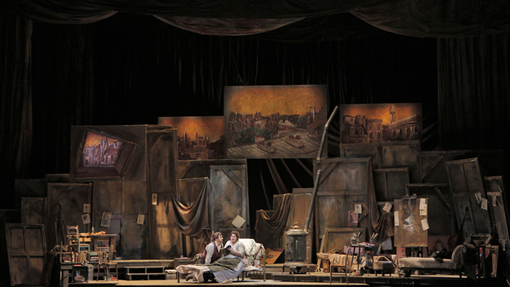
Interview with Maestro Giuseppe Sabbatini

8268395588_f72940f58a_zInterview by Natalia Di Bartolo for L’Idea Magazine, November 30, 2014

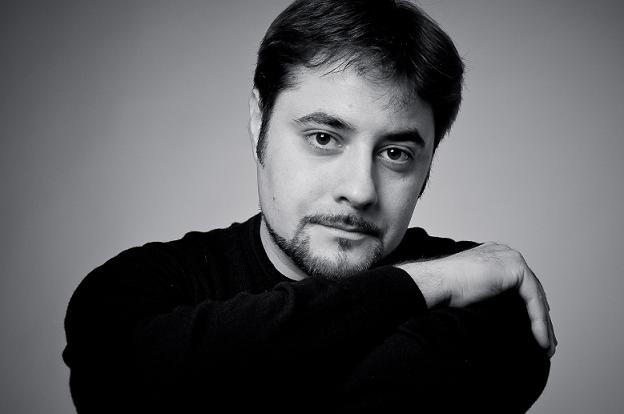
Maestro Giuseppe Sabbatini, a tenor of international fame, retired from his active career seven years ago, now dedicates himself to conducting: music is his blood flow, his cultural and intellectual nourishment, the expression of his personality and his constantly renewed vitality of refined musician, of various tastes.
Now he directs with excitement and joy the musical works that once he was singing on stage.

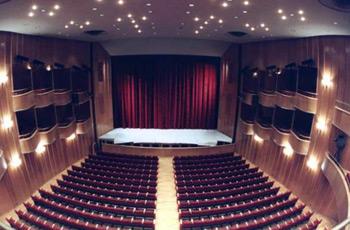
In a theater he feels at home, around the world … and I meet him in Italy after returning from his last project- conducting L’Elisir d’amore by Gaetano Donizetti, November 9, 2014, in the great Yokosuka Theatre, Japan, which this year celebrates the 20th anniversary of the inauguration.10311759_876911178999504_317868119470943094_ncopyright
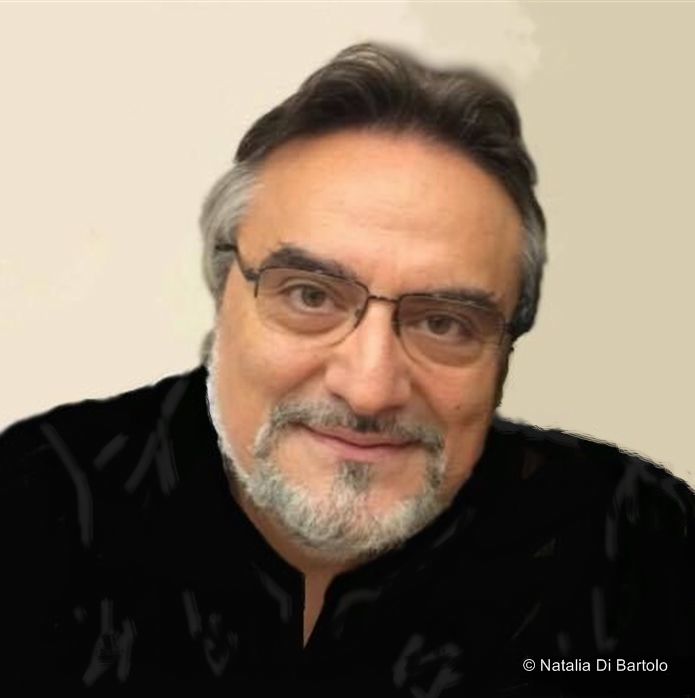
L’IDEA MAGAZINE: Maestro Sabbatini, you always claim to be “happy”, while being in Japan …
GIUSEPPE SABBATINI: Yes, it’s true … I feel well in Japan, I made my debut there, there I started my career as a tenor; I find myself among people who appreciate me greatly, people that respect me and that respond in the highest level to my musical expectations, also in teaching.
Everything is well received.

Catturasabba9L’IDEA MAGAZINE: What is your role at the time as a musician in the Land of the Rising Sun?
GIUSEPPE SABBATINI: I am a Director of Studies at Suntory Hall Opera Academy, where I teach Singing.
2014-2015 is the 4th academic year, each course including two years of study: we started in 2011.
Soul creator of the Academy is Mrs. Keiko Manabe, providing continues support for all of us, using her great talent of an artistic manager.
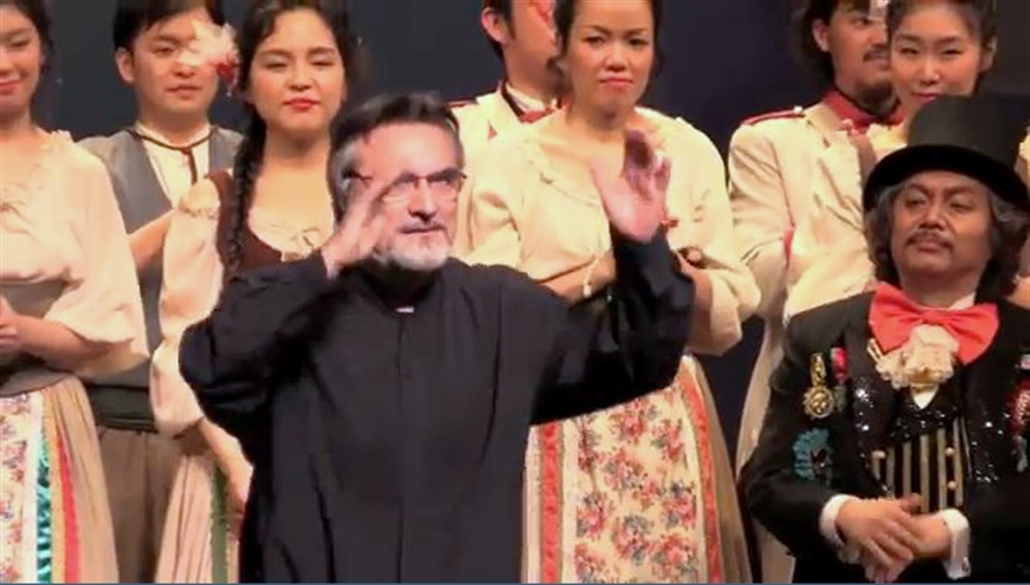
Catturasabba6

L’IDEA MAGAZINE: How does the Academy operate in general and how does it work, putting on stage these events, including L’Elisir d’Amore- this year’s big achievement? Nemorino was an important role in your career …
GIUSEPPE SABBATINI: Yes, L’Elisir, this year…Nemorino is a character that I sang many times. We did a performance in the Theatre of Yokosuka: I sang there Gounod’s Romeo et Juliette in October 2003; last year we made there a production of Mozart’s Così fan tutte, always with students of the Academy. As for the Academy, all the teaching staff is at a really high level: I have four assistants/colleagues among the best teachers of singing at the Tokyo’s Universities; a renowned pianist teaches piano accompaniment to the students (we have also a Korrepetitor section for pianist students).
Altogether there are six teachers, with different skills and specializations (Bel Canto, Baroque, German and French Repertoires, Verismo).
It is a great benefit for the boys and girls that study; they are getting the best possible.
By the way this Academy is all sponsored by Suntory, important Japanese company, without even one yen disbursement from the students!
For them, the two years course of studying with us is totally for free. This is an extremely important fact for us.
As for the performances within the Academy itself, we try to put on stage a title that will be useful for the artistic and musical development of our already graduated, also actual, advanced students. For vacant roles we do casting.
In May I started working on the music… We mount all the work; about a month before the performance we start building everything together; in Japan the performers and the chorus work separately also with the stage director, Michiko Taguchi.

Catturasabba23

L’IDEA MAGAZINE: A really great help!
GIUSEPPE SABBATINI: Absolutely! Stage direction, sets and costumes. Ms. Taguchi lives in Italy for the past 40 years … she studied Lyric singing and is the preferred Japanese language’s interpreter for Maestro Muti. She knows all the parts by heart, and is extraordinary. We like very much to work with the students in a “traditional” way, without too much dwelling on the interpretation, but going in deep for all that is “real”… They will have time to work and change the characters of the roles! Picasso began with incredibly real drawings, as great as he was, and arrived to Guernica after a long journey! The settings, then, are absolutely “essential.”

L’IDEA MAGAZINE: The procedure of work?
GIUSEPPE SABBATINI: According to the organization, this year, as last year of the study, we did orchestra rehearsals of the 1st act on the first day and 2nd in the second day.
The general rehearsal followed.1459242_735077966545948_5282239116525866572_n

L’IDEA MAGAZINE: And the young of the Academy? How do they respond?
GIUSEPPE SABBATINI: Oh, for them I’m really very happy, and proud.
The soprano Yuko Sato, who sang the role of Adina, had the Honour Diploma of our Academy in 2012, the first two years of ”Sabbatini’s era”. Adina … very, very good! Beautiful phrasing and control of the voice: very interesting. Katsuhiko Nakashima was Nemorino: the Furtiva lagrima was a real jewell … the tenor, although possessing limited vocal power, has a great musical taste … one can hear that he sings baroque style … and singing, has a great stage presence. The bassoon player from the orchestra, also, played the introduction very, very well.
Toru Kaku sang Belcore; a light baritone that is constantly singing chamber music (specializing in German Lieder); he did very well, as well as Giannetta, Taeko Shimizu- she graduated in 2012, together with Yuko Sato, during the 1st period of my teaching at the Academy. And then Dulcamara, Hideya Masuhara … the protagonist of the evening. He has a great stage presence … well put and with excellent vocal pronunciation. He studied in Parma, for four years, at the Conservatory of Parma. Well done, really bravi, all the soloists!Catturacoro

L’IDEA MAGAZINE: The chorus?
GIUSEPPE SABBATINI: Another satisfaction! The Suntory Hall Academy Opera Chorus is our pride because the group included sixteen singers and 60% of them were students and former students of the Academy… these guys had the great opportunity to have the experience of singing in a choir, while at the same time, as soloists, they are studying with me and my assistants/colleagues.

L’IDEA MAGAZINE: And the Conductor Sabbatini? What do you think?
GIUSEPPE SABBATINI: What can I say about him? That he is always attentive to the details in the score and loves to color the music regarding the meaning of the words…even when he’s conducting the Suntory Hall Chamber Opera Orchestra Academy.

L’IDEA MAGAZINE: I meant, about his conducting?
GIUSEPPE SABBATINI: Well, for that I can say- respecting the score in every little detail, I “dramatized” the indications!

L’IDEA MAGAZINE: In what way?
GIUSEPPE SABBATINI: In the score there are many “crowns” that would not have sense musically, if not interpreted them as a part of some action on stage. Me, together with the stage director, tried to exploit and enhance them!
L’Elisir of course it is still a “melodramma giocoso”, with a particular way of the orchestra “commenting” the phrases of the soloists, especially when there are phrases interspersed with homorhythm by the whole orchestra. I did ask for extended breaks in some cases … I slowed down or accelerated these “omoritmie” (it’s what I call them).
I try to explain the words: there are times, such as Nemorino/Belcore duet , where the orchestra plays all together the same rhythm, for example when Nemorino sings “Venti scudi?” – Belcore: “Su due piedi” – Nemorino “Ebben vada: li prepara” … etc. … Or, rather, when Dulcamara sings: “Ho qui una canzonetta”- (orchestra) -” di fresco data fuori’ – (orchestra) – “vivace, graziosa” – (orchestra) – “che gusto vi può dar!” The first two sentences are the same, but the third (“vivace e graziosa”) I asked to be played faster and staccato at the end. So you “ruled” the score in a personal and original philological and very resourceful way.

IMG_0552

L’IDEA MAGAZINE: But what would Donizetti think?
GIUSEPPE SABBATINI: I think he would’ve been content! For already 182 years everyone tells their own version…I wanted to tell mine… in this way to me the opera seems different and fresh!

Catturasabba14

L’IDEA MAGAZINE: The audience responded with big and warm applause…
GIUSEPPE SABBATINI: Yes, it was a good audience. The “Navigator” Satoshi Asaoka was telling in detail the story before the beginning of each act. It was a big success for everybody: I am satisfied with everything together, including the warm response of the public.

Thank you, Maestro Sabbatini for your well-known frankness and your detailed explanations. We look forward to hear you live!
Inevitable curiosity …

Photos: © Yokosuka Arts Theatre, © Natalia Di Bartolo

Posted in Interview | Tagged , , , , , | Leave a comment

Le Nozze di Figaro at the Met in NYC


bbfigaroim2

Le Nozze di Figaro

Approximate running time 3 hrs. 34 min.

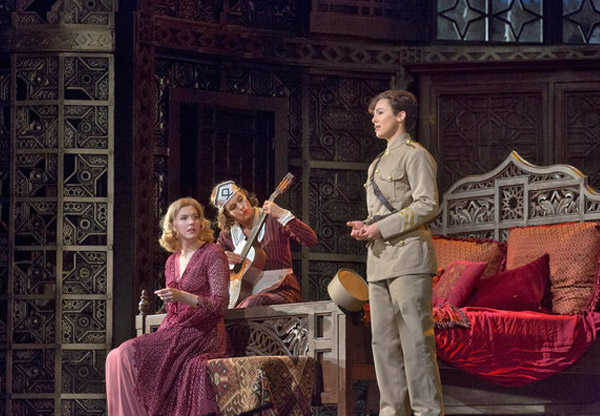
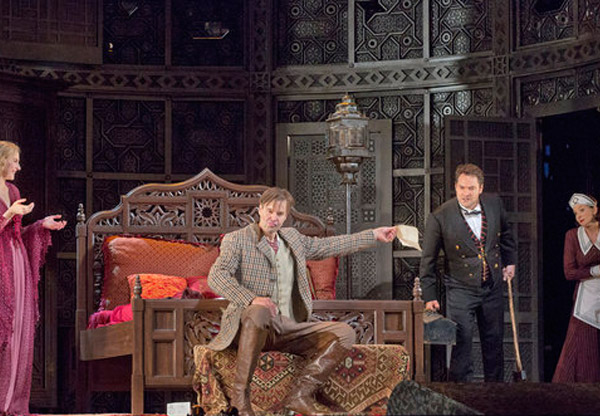
Richard Eyre’s season-opening new production of Mozart’s eternal masterpiece is set in an 18th-century manor house in Seville during the 1930s. Erwin Schrott in the title role leads a stellar cast that also includes Mariusz Kwiecien as the Count and Danielle de Niese as Susanna, along with Met debutantes Rachel Willis-Sørensen as the Countess and Serena Malfi as Cherubino. Edo de Waart conducts.

Production a gift of Mercedes T. Bass, and Jerry and Jane del Missier

“A sparkling new production… joyful music-making… A memorable performance of Mozart’s immortal comedy.” (Associated Press)
“A swiftly paced, playful evening… Eyre skillfully built the comic ensembles to climaxes that made you laugh out loud… A happy Marriage at the Met.” (Wall Street Journal)
“A ravishing, intricately wrought evening of music, humor and emotional depth… An evening like this is the strongest argument for the continued vigor of the Met.” (New York Magazine)

Production Team

Production: Richard Eyre
Set & Costume Designer: Rob Howell
Lighting Designer: Paule Constable
Choreographer: Sara Erde

CAST

willissorensenrachelRachel Willis-Sørensen as The Countess

<!–


–> SOPRANO (Tri-Cities, Washington)
DEBUT SEASON
REPERTORY The Countess, Le Nozze di Figaro


daniellediniese_artistpageDanielle de Niese as Susanna

Hometown Melbourne, Australia
Met debut Barbarina in Le Nozze di Figaro (1998)
Performance history Ariel in The Enchanted Island, Despina in Così fan tutte, Susanna in Le Nozze di Figaro, Euridice in Orfeo ed Euridice, Cleopatra in Giulio Cesare, the Child in L’Enfant et les Sortilèges, Poussette in Manon, Papagena in Die Zauberflöte, and a Flower Maiden in Parsifal


marius-kwiecien_artistpageMariusz Kwiecień as the Count

Hometown Kraków, Poland
Met debut Kuligin in Káťa Kabanová (1999)
Performance history More than 150 performances of 15 roles, including the title role of Don Giovanni, Belcore in L’Elisir d’Amore, Malatesta in Don Pasquale , Escamillo in Carmen, Guglielmo in Così fan tutte, Count Almaviva in Le Nozze di Figaro, Marcello in La Bohéme, and Enrico in Lucia di Lammermoor


malfiserenaSerena Malfi as Cherubino

<!–


–> MEZZO-SOPRANNO (Naples, Italy)
DEBUT SEASON
REPERTORY Cherubino, Le Nozze di Figaro


schrotterwinErwin Schrott as Figaro

<!–


–> BASS (Montevideo, Uruguay)
DEBUT Colline, La Bohème, 2000
REPERTORY Figaro, Le Nozze di Figaro


Performance Dates

  • Thursday, December 4, 2014, 7:30 pm
  • Monday, December 8, 2014, 7:30 pm
  • Friday, December 12, 2014, 7:30 pm
  • Monday, December 15, 2014, 7:30 pm
  • Saturday, December 20, 2014, 12:00 pm
Ildar Abdrazakov (Figaro), Marlis Petersen (Susanna) Photo: Ken Howard/Met Opera

Ildar Abdrazakov (Figaro), Marlis Petersen (Susanna)
Photo: Ken Howard/Met Opera

SYNOPSIS
Act I
Count Almaviva’s country estate near Seville, late 18th century. The servants Figaro and Susanna are preparing for their wedding. Figaro is furious when his bride tells him that the count has made advances toward her and vows to outwit his master (“Se vuol ballare”). The scheming Dr. Bartolo appears with his housekeeper, Marcellina, who wants Figaro to marry her. When she runs into Susanna, the two women trade insults. The page Cherubino enters; finding Susanna alone, he explains to her that he is in love with all women (“Non so più”). He hides when the count—who is angry because he caught Cherubino flirting with Barbarina, the gardener’s daughter—shows up. The count again pursues Susanna, but conceals himself when the music master, Basilio, approaches. When Basilio tells Susanna that Cherubino has a crush on the countess, the count furiously steps forward. He becomes further enraged when he discovers the page in the room. Figaro returns with a group of peasants who praise the count for renouncing the traditional feudal right of a nobleman to take the place of a manservant on his wedding night. The count orders Cherubino to join his regiment in Seville and leaves Figaro to cheer up the unhappy adolescent (“Non più andrai”).

Isabel Leonard (Cherubino), Marlis Petersen (Susanna) Photo: Ken Howard/Met Opera

Isabel Leonard (Cherubino), Marlis Petersen (Susanna)
Photo: Ken Howard/Met Opera

Act II
The countess laments that her husband no longer loves her (“Porgi, amor”). Encouraged by Figaro and Susanna, she agrees to set a trap for him: they will send Cherubino, disguised as Susanna, to a rendezvous with the count. The page sings a song he has written in honor of the countess (“Voi, che sapete”), after which Susanna begins to dress him in girls’ clothes (“Venite, inginocchiatevi”). When she goes off to find a ribbon, the count knocks and is annoyed to find the door locked. Cherubino hides in the closet. The countess admits her husband, who, when he hears a noise, is skeptical of her story that Susanna is in the closet. Taking his wife with him, he leaves to get tools to force the door. Meanwhile, Susanna, who has reentered unseen and observed everything, helps Cherubino escape through the window before taking his place in the closet. When the count and countess return, both are stunned to find Susanna inside. All seems well until the gardener Antonio appears, complaining that someone has jumped from the window, ruining his flowers. Figaro, who has rushed in to announce that everything is ready for the wedding, pretends that it was he who jumped. When Bartolo, Marcellina, and Basilio appear, waving a court summons for Figaro, the delighted count declares the wedding postponed.

Ildar Abdrazakov (Figaro), Isabel Leonard (Cherubino) Photo: Ken Howard/Met Opera

Ildar Abdrazakov (Figaro), Isabel Leonard (Cherubino)
Photo: Ken Howard/Met Opera

Act III
Susanna leads the count on with promises of a rendezvous, but he grows doubtful when he overhears her conspiring with Figaro. He vows revenge (“Vedrò, mentr’io sospiro”). The countess recalls her past happiness (“Dove sono”). Marcellina wins her case but then, noticing a birthmark on Figaro’s arm, is astonished to discover that he is her long lost son, fathered by Bartolo. The joyful parents agree to marry as well. Susanna and the countess continue their conspiracy against the count and compose a letter to him confirming the rendezvous with Susanna that evening in the garden (Duet: “Che soave zeffiretto”). Later, during Figaro and Susanna’s wedding ceremony, the bride slips the letter to the count.

Amanda Majeski (Countess), Marlis Petersen (Susanna), Isabel Leonard (Cherubino) Photo: Ken Howard/Met Opera

Amanda Majeski (Countess), Marlis Petersen (Susanna), Isabel Leonard (Cherubino)
Photo: Ken Howard/Met Opera

Act IV
In the garden, Barbarina tells Figaro and Marcellina about the planned rendezvous between the count and Susanna. Thinking that his bride is unfaithful, Figaro rages against all women (“Aprite un po’ quegl’occhi”). He leaves, just missing Susanna and the countess, who are dressed for their masquerade. Alone, Susanna sings a love song (“Deh! vieni, non tardar”). Figaro, hidden nearby, thinks she is speaking to the count. Susanna conceals herself in time to see Cherubino declare his love to the disguised countess—until the count chases him away to be alone with “Susanna.” Soon Figaro understands what is going on and, joining in the fun, makes exaggerated advances towards Susanna in her countess disguise. The count returns, finding Figaro with his wife, or so he thinks. Outraged, he calls everyone to witness his verdict. At that moment, the real countess reveals her identity. Realizing the truth, the count asks for his wife’s forgiveness. The couples are reunited, and so ends this mad day.

Amanda Majeski (Countess), Peter Mattei (Count), Ildar Abdrazakov (Figaro), Marlis Petersen (Susanna) Photo: Ken Howard/Met Opera

Amanda Majeski (Countess), Peter Mattei (Count), Ildar Abdrazakov (Figaro), Marlis Petersen (Susanna)
Photo: Ken Howard/Met Opera

Posted in OPera | Tagged , , | Leave a comment

La Grande-Duchesse de Gérolstein in Geneve

duchesse

La Grande-Duchesse de Gérolstein

Opéra-bouffe in 3 acts and 4 tableaux by Jacques Offenbach
Libretto by Henri Meilhac and Ludovic Halévy.
First performed at Théâtre des Variétés in Paris on 12 April 1867.

Production of the Grand Théâtre de Genève
At the Grand Théâtre de Genève

Sung in French with English and French surtitles
Mon 15 dec 14 – 19:30
Wed 17 dec 14 – 19:30
Fri 19 dec 14 – 19:30
Sun 21 dec 14 – 15:00
Tue 23 dec 14 – 19:30
Fri 26 dec 14 – 19:30
Mon 29 dec 14 – 19:30
Wed 31 dec 14 – 19:30

“One couldn’t dream of a more hilarious assault on military vainglory, with all its plumes and braids and paraphernalia.” La Grande-Duchesse de Gérolstein discharges the full satirical fire-power of Jacques Offenbach’s comic operas on the world of warmongering. In the imaginary Grand Duchy of Gerolstein, plots are hatched, strategies developed and wars are even simulated to satisfy the whims of the Grand Duchess, who is besotted with the manly young soldier Fritz, who unfortunately only has eyes for his fiancée Wanda. With a premiere during the Paris Exhibition of 1867, in the presence of French Emperor Napoleon III, the Prussian King (soon to be Kaiser) Wilhelm and many other royal and political personalities in Paris for the event, La Grande-Duchesse du Gérolstein played to full house after full house, leaving the audience in stitches. With a drum roll and the boom of canons echoing General Boum’s bombastics, Offenbach’s beloved operetta is a fitting conclusion to a year of lyric victories!

Musical Director Franck Villard

Stage Director and Costume Designer Laurent Pelly

Associate Stage Director Christian Räth

Set Designer Chantal Chantal

Associate Costume Designer Jean-Jacques Delmotte

Libretto & dialogue adaptation Agathe Mélinand

Choreographer Laura Scozzi

Lighting Designer Joël Adam

CAST

La Grande-Duchesse Ruxandra Donose

Ruxandra Donose

Ruxandra Donose

Bénédicte Tauran

Bénédicte Tauran

Wanda Bénédicte Tauran

Fritz Fabio Trümpy

Le Général Boum Jean-Philippe Lafont

Le Baron Puck Boris Grappe

Le Prince Paul Rodolphe Briand

Le Baron Grog Michel de Souza

Népomuc Fabrice Farina

Iza Julienne Walker

Olga Marina Lodygensky

Amélie Marion Jacquemet

Charlotte Ahlima Mhamdi

A notary Nicolas Carré

Grand Théâtre Opera Chorus
Director Alan Woodbridge
Orchestre de la Suisse Romande

Posted in OPera | Tagged , , | Leave a comment

La Boheme directed By Zeffirelli at the MET

bbbohemephoto2

La Bohème

Metropolitan Opera, NYC

Thursday, November 20, 20147:30 pm

Approximate running time 2 hrs. 55 min.Franco Zeffirelli’s classic take on Puccini’s most popular opera, the immortal tale of tragic young love, is set among the rooftops of bohemian Paris. The role of the fragile Mimì is shared by Sonya Yoncheva, Angela Gheorghiu, and Kristine Opolais, with Ramón Vargas, Bryan Hymel, and Jean-François Borras as the love-sick poet Rodolfo. Riccardo Frizza conducts.

Sonya Yoncheva as Mimì “is the real deal… Her first-act aria built to a gently riveting reverie, and she grew in tragic stature as the opera went on… Subtle, thoughtful and heart-rending, [her Act III “Addio”] seemed like the work of a veteran artist. But astonishingly, this was Ms. Yoncheva’s first staged performance of the role. Her delicate, dreamy, detailed Mimì has arrived more or less fully formed…” (New York Times)

boheme1

SYNOPSIS

Act I
Paris, the 1830s. In their Latin Quarter garret, the near-destitute artist Marcello and poet Rodolfo try to keep warm on Christmas Eve by feeding the stove with pages from Rodolfo’s latest drama. They are soon joined by their roommates—Colline, a philosopher, and Schaunard, a musician, who brings food, fuel, and funds he has collected from an eccentric student. While they celebrate their unexpected fortune, the landlord, Benoit, comes to collect the rent. After making the older man drunk, they urge him to tell of his flirtations, then throw him out in mock indignation at his infidelity to his wife. As his friends depart to celebrate at the Café Momus, Rodolfo remains behind to finish an article but promises to join them later. There is another knock at the door—the visitor is Mimì, a pretty neighbor, whose candle has gone out on the stairway. As she enters the room she suddenly feels faint. Rodolfo gives her a sip of wine, then helps her to the door and relights her candle. Mimì realizes she lost her key when she fainted, and as the two search for it, both candles are blown out. Rodolfo finds the key and slips it into his pocket. In the moonlight, he takes Mimì’s hand and tells her about his dreams. She recounts her life alone in a lofty garret, embroidering flowers and waiting for the spring. Rodolfo’s friends are heard outside, calling him to join them. He responds that he is not alone and will be along shortly. Happy to have found each other, Mimì and Rodolfo embrace and leave, arm in arm, for the café.

Act II
Amid the shouts of street hawkers near the Café Momus, Rodolfo buys Mimì a bonnet and introduces her to his friends. They all sit down and order supper. The toy vendor Parpignol passes by, besieged by children. Marcello’s former sweetheart, Musetta, makes a noisy entrance on the arm of the elderly but wealthy Alcindoro. The ensuing tumult reaches its peak when, trying to gain Marcello’s attention, she sings a waltz about her popularity. Complaining that her shoe pinches, she sends Alcindoro off to fetch a new pair. The moment he is gone, she falls into Marcello’s arms and tells the waiter to charge everything to Alcindoro. Soldiers march by the café, and as the bohemians fall in behind, Alcindoro rushes back with Musetta’s shoes.

Act III
At dawn on the snowy outskirts of Paris, a customs official admits farm women to the city. Guests are heard drinking and singing within a tavern. Mimì arrives, searching for the place where Marcello and Musetta now live. When the painter appears, she tells him of her distress over Rodolfo’s incessant jealousy. She says she believes it is best that they part. Rodolfo, who has been asleep in the tavern, comes outside. Mimì hides nearby, though Marcello thinks she has left. Rodolfo tells his friend that he wants to separate from Mimì, blaming her flirtatiousness. Pressed for the real reason, he breaks down, saying that her coughing can only grow worse in the poverty they share. Overcome with emotion, Mimì comes forward to say goodbye to her lover. Marcello runs back into the tavern upon hearing Musetta’s laughter. While Mimì and Rodolfo recall past happiness, Marcello returns with Musetta, quarreling about her flirting with a customer. They hurl insults at each other and part, but Mimì and Rodolfo decide to remain together until spring.

bohemeAct IV
Months later in the garret, Rodolfo and Marcello, now separated from their girlfriends, lament their loneliness. Colline and Schaunard bring a meager meal. To lighten their spirits the four stage a dance, which turns into a mock duel. At the height of the hilarity Musetta bursts in with news that Mimì is outside, too weak to come upstairs. As Rodolfo runs to her aid, Musetta relates how Mimì begged to be taken to Rodolfo to die. She is made as comfortable as possible, while Musetta asks Marcello to sell her earrings for medicine and Colline goes off to pawn his overcoat. Left alone, Mimì and Rodolfo recall their meeting and their first happy days, but she is seized with violent coughing. When the others return, Musetta gives Mimì a muff to warm her hands and prays for her life. Mimì slowly drifts into unconsciousness. Schaunard realizes that she is dead, and Rodolfo is left desperate.

Production Team:

Production: Franco Zeffirelli
Set Designer: Franco Zeffirelli
Costume Designer: Peter J. Hall
Lighting Designer: Gil Wechsler

CAST:

frizzariccardoRiccardo Frizza

CONDUCTOR (Brescia, Italy)
DEBUT Rigoletto, 2009
REPERTORY La Bohème

yonchevasonyaSonya Yoncheva (Mimi)

SOPRANO (Plovdiv, Bulgaria)
DEBUT Gilda, Rigoletto, 2013
REPERTORY Musetta, La Bohème

papatanasiumyrtonewMyrtò Papatanasiu (Musetta)

SOPRANO (Larissa, Greece)
DEBUT SEASON
REPERTORY Musetta, La Bohème

vargasramonRamón Vargas (Rodolfo)

TENOR (Mexico City, Mexico)
DEBUT Edgardo, Lucia di Lammermoor, 1992
REPERTORY Rodolfo, La Bohème

bizicdavidDavid Bizic (Marcello)

BARITONE (Belgrade, Sebria)
DEBUT Albert, Werther, 2014
REPERTORY Marcello, La Bohème

arduinialessioAlessio Arduini (Schaunard)

BARITONE (Desenzano, Italy)
DEBUT SEASON
REPERTORY Schaunard, La Bohème

rosematthewMatthew Rose (Colline)

BASS (Brighton, England)
DEBUT SEASON Colline, La Bohème, 2011
REPERTORY Colline, La Bohème; Nightwatchman, Die Meistersinger von Nürnberg

delcarlojohnJohn Del Carlo (Benoit/Alcindoro)

BASS-BARITONE (San Francisco, California)
DEBUT Kothner, Die Meistersinger von Nürnberg, 1993
REPERTORY Dr. Bartolo, Le Nozze di Figaro; Benoit/Alcindoro, La Bohème

Posted in OPera | Leave a comment

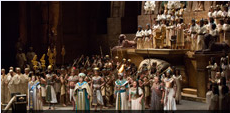
AIDA at the Metropolitan Opera in NYC

bbaida1

AidaAida

Metropolitan Opera, NYC

Wednesday, November 19, 2014   7:30 pm

Approximate running time 3 hrs. 40 min.

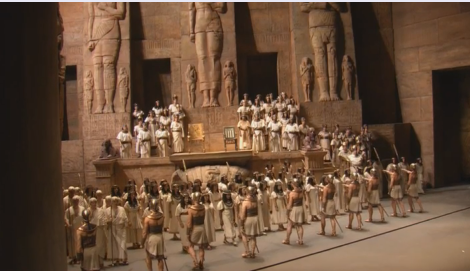
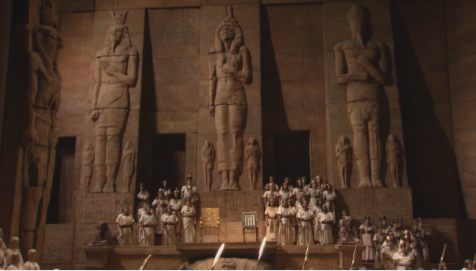
Grand opera at its grandest: the splendors of ancient Egypt return to the stage of the Met. Verdi’s mythic love triangle features Liudmyla Monastyrska, Tamara Wilson, and Oksana Dyka sharing the title role, with Olga Borodina and Violeta Urmana as Amneris and Marcello Giordani and Marco Berti singing Radamès. Marco Armiliato and Plácido Domingo share conducting duties.

aida1

SYNOPSIS

Act I
Egypt, during the reign of the pharaohs. At the royal palace in Memphis, the high priest Ramfis tells the warrior Radamès that Ethiopia is preparing another attack against Egypt. Radamès hopes to command his army. He is in love with Aida, the Ethiopian slave of Princess Amneris, the king’s daughter, and he believes that victory in the war would enable him to free her and marry her. But Amneris loves Radamès, and when the three meet, she jealously senses his feelings for Aida. A messenger tells the king of Egypt and the assembled priests and soldiers that the Ethiopians are advancing. The king names Radamès to lead the army, and all join in a patriotic anthem. Left alone, Aida is torn between her love for Radamès and loyalty to her native country, where her father, Amonasro, is king. She prays to the gods for mercy.

In the temple of Vulcan, the priests consecrate Radamès to the service of the god. Ramfis orders him to protect the homeland.

aida2

Act II
Ethiopia has been defeated, and Amneris waits for the triumphant return of Radamès. When Aida approaches, the princess sends away her other attendants so that she can learn her slave’s private feelings. She first pretends that Radamès has fallen in battle, then says he is still alive. Aida’s reactions leave no doubt that she loves Radamès. Amneris, certain she will be victorious over her rival, leaves for the triumphal procession.

Aida3

At the city gates the king and Amneris observe the celebrations and crown Radamès with a victor’s wreath. Captured Ethiopians are led in. Among them is Amonasro, Aida’s father, who signals his daughter not to reveal his identity as king. Radamès is impressed by Amonasro’s eloquent plea for mercy and asks for the death sentence on the prisoners to be overruled and for them to be freed. The king grants his request but keeps Amonasro in custody. The king declares that as a victor’s reward, Radamès will have Amneris’s hand in marriage.

Aida4

Act III
On the eve of Amneris’s wedding, Ramfis and Amneris enter a temple on the banks of the Nile to pray. Aida, who is waiting for Radamès, is lost in thoughts of her homeland. Amonasro suddenly appears. Invoking Aida’s sense of duty, he makes her agree to find out from Radamès which route the Egyptian army will take to invade Ethiopia. Amonasro hides as Radamès arrives and assures Aida of his love. They dream about their future life together, and Radamès agrees to run away with her. Aida asks him about his army’s route, and just as he reveals the secret, Amonasro emerges from his hiding place. When he realizes that Amonasro is the Ethiopian king, Radamès is horrified by what he has done. While Aida and Amonasro try to calm him, Ramfis and Amneris step out of the temple. Father and daughter are able to escape, but Radamès surrenders to the priests.

Aida5

Act IV
Radamès awaits trial as a traitor, believing Aida to be dead. Even after he learns that she has survived, he rejects an offer by Amneris to save him if he renounces Aida. When he is brought before the priests, he refuses to answer their accusations and is condemned to be buried alive. Amneris begs for mercy, but the judges will not change their verdict. She curses the priests.
Aida has hidden in the vault to share Radamès’s fate. They express their love for the last time while Amneris, in the temple above, prays for Radamès’s soul.

Aida6

CAST:

armiliatomarcoMarco Armiliato

CONDUCTOR (Genoa, Italy)
COMPANY DEBUT Il Trovatore, 1998
HOUSE DEBUT La Bohème, 1998
REPERTORY Aida, La Traviata

monastyrskaliudmylaLiudmyla Monastyrska (Aida)

SOPRANO (Kiev, Ukraine)
DEBUT Aida, Aida, 2012
REPERTORY Aida, Aida

borodinaolgaOlga Borodina (Amneris)

MEZZO-SOPRANO (St. Petersburg, Russia)
COMPANY DEBUT Concert, 1997
HOUSE DEBUT Marina, Boris Godunov, 1997
REPERTORY Amneris, Aida

marcellogiordani_artistpageMarcello Giordani (Radamès)

Hometown Augusta, Italy
Company debut Nemorino in L’Elisir d’Amore (1993)
House debut Rodolfo in La Bohème (1995)
Performance history More than 200 appearances in 26 roles, including Paolo in Francesca da Rimini, Dick Johnson in La Fanciulla del West, Pinkerton in Madama Butterfly, Faust in La Damnation de Faust, Edgardo in Lucia di Lammermoor, des Grieux in Manon and Manon Lescaut, Calàf in Turandot, Don José in Carmen, Cavaradossi in Tosca, Adorno in Simon Boccanegra, Alfredo in La Traviata, and the title roles of Benvenuto Cellini and Ernani

marcello_Giordani in Macbeth

Marcello Giordani in Macbeth

zeljkolucic_artistpageŽeljko Lučić (Amonasro)

Hometown Zrenjanin, Serbia
Met debut Barnaba in La Gioconda (2006)
Performance history Title roles of Rigoletto, Macbeth, and Nabucco, Germont in La Traviata, Count di Luna in Il Trovatore, and Enrico in Lucia di Lammermoor

belosselskiydmitryDmitry Belosselskiy (Ramfis)

BASS (Pavlograd, Ukraine)
DEBUT Zaccaria, Nabucco, 2011
REPERTORY Ramfis, Aida; Old Convict, Lady Macbeth of Mtsensk; de Silva, Ernani

howardsolomanSoloman Howard (The King)

BASS (Washington, D.C.)
DEBUT SEASON
REPERTORY The King, Aida

Production Team

Production: Sonja Frisell
Set Designer: Gianni Quaranta
Costume Designer: Dada Saligeri
Lighting Designer: Gil Wechsler
Choreographer: Alexei Ratmansky

Giuseppe Verdi
Aida
Libretto by Antonio Ghislanzoni

Premiere: Cairo Opera House, 1871
This grandest of grand operas features an epic backdrop for what is in essence an intimate love story. Set in ancient Egypt and packed with magnificent choruses, complex ensembles, and elaborate ballets, Aida never loses sight of its three protagonists: Amneris, the proud daughter of the pharaoh; her slave, Aida, who is the princess of the rival kingdom of Ethiopia; and Radamès, the Egyptian warrior they both love. Few operas have matched Aida in its exploration of the conflict of private emotion and public duty, and perhaps no other has remained to the present day so unanimously appreciated by audiences and critics alike.

The Creators
Giuseppe Verdi (1813–1901) is the composer of 28 operas that premiered over a period of 54 years. His works continue to form the core of the international opera repertory, cherished equally for their unforgettable music and their humanity. The story of Aida was the creation of Auguste Mariette (1821–1881), an extraordinary French archaeologist who was the founder of the Egyptian Museum of Cairo (and whose reputation for great archaeological successes was somewhat tainted when he accidentally blew up an intact tomb). Camille du Locle (1832–1903), who collaborated on the scenario with Mariette and suggested the story to Verdi, had worked with the composer on the libretto of Don Carlos. An opera impresario in Paris, he commissioned Carmen from Georges Bizet for the Opéra Comique in 1875. Aida’s librettist, Antonio Ghislanzoni (1824–1893), was a novelist and poet as well as the creator of some 85 librettos, most of which are forgotten today. He had previously worked with Verdi on the revision of La Forza del Destino (1869).

The Setting
The libretto indicates merely that the opera takes place in “ancient Egypt, in the time of the pharaohs.” This may sound vague, but it was a clear direction to approach the drama as myth rather than anthropology or history. Europe’s fascination with the ancient Nile civilization had been piqued with stories from Napoleon’s Egyptian expedition at the end of the 18th century, and continued into the mid-19th century with the numerous archaeological discoveries being taken from the sands of Egypt and shipped to museums in the European capitals.

The Music
The score of Aida is a sophisticated example of Italian Romanticism, imbued with a convincingly mysterious and exotic hue. Making no claims to authenticity (nobody knows what music in ancient Egypt sounded like), Verdi created a unique musical palette for this opera. The grandeur of the subject is aptly conveyed with huge patriotic choruses (Acts I and II) and the unforgettable Triumphal March in Act II. These public moments often serve as frames for the solos of the leading tenor and soprano: his grueling “Celeste Aida” right at the beginning of Act I, her demanding “Ritorna vincitor!” that follows, and her great internal journey, “O patria mia,” in Act III. Perhaps most impressive in this drama of public versus private needs are the instances of solo voice pitted directly against complex ensembles and vast choruses: the tenor in the temple scene in Act I, the mezzo-soprano in the judgment scene in Act IV, and especially the soprano in the great triumphal scene in Act II.

Aida at the Met
The opera came to the Met during the “German Seasons” of the 1880s and
was performed in German until 1891. (The Met’s 1883–84 season was a financial disaster, so for a few seasons the company hired less expensive German singers and had them sing in their native language.) Aida has been among the most popular operas in the Met’s repertory since those early days. Conductor Arturo Toscanini inaugurated his Met career with a spectacular new production of Aida (even though the previous production was only a year old) for opening night of the 1909–10 season. That performance featured the Met debut of Czech sensation Emmy Destinn (who would sing the title role 52 times at the Met through 1920), American mezzo Louise Homer (who sang Amneris 97 times between 1900 and 1927), Enrico Caruso (91 performances as Radamès at the Met between 1903 and 1919), and the great baritone Pasquale Amato (79 appearances between 1903 and 1919). Other unforgettable and frequent Aidas at the Met include Zinka Milanov (75 performances, 1938–1958), Elisabeth Rethberg (67 performances, 1922–1942), and the legendary Leontyne Price (42 performances from 1961 until her farewell appearance at the Met in 1985). The current production by Sonja Frisell, with sets by the acclaimed film production designer Gianni Quaranta (A Room With a View), premiered in 1988 with James Levine conducting a cast headed by Leona Mitchell, Fiorenza Cossotto, Plácido Domingo, Sherrill Milnes, and Paul Plishka.

Posted in OPera | Leave a comment

Il Barbiere di Siviglia at the Metropolitan Opera in New York

bbbarbierephoto

Il Barbiere di Siviglia

Metropolitan Opera, NYC

Tuesday, November 18, 2014   7:30 pm

Approximate running time 3 hrs. 0 min.

In Bartlett Sher’s effervescent production of Rossini’s most popular opera, Isabel Leonard is the beautiful and feisty Rosina, who won’t be kept under lock and key. Lawrence Brownlee is her conspiring flame, Almaviva, and Christopher Maltman is the omnipotent barber, Figaro. Michele Mariotti conducts.

SYNOPSIS

Act I
Seville. Count Almaviva comes in disguise to the house of Doctor Bartolo to serenade Rosina. Bartolo keeps her confined to the house, and Almaviva decides to wait until daylight. Figaro the barber, who knows all the town’s secrets and scandals, arrives. He explains to Almaviva that Rosina is Bartolo’s ward, not his daughter, and that the doctor intends to marry her. Figaro devises a plan: the Count will disguise himself as a drunken soldier quartered at Bartolo’s house to gain access to the girl. Almaviva is excited while Figaro looks forward to a nice cash pay-off.
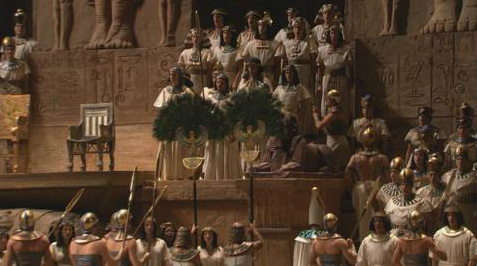
Rosina reflects on the voice that has enchanted her and resolves to use her considerable wiles to meet the Count, who she thinks is a poor student named Lindoro. Bartolo appears with Rosina’s music master, Don Basilio, who warns him that Count Almaviva, Rosina’s admirer, has been seen in Seville. Bartolo decides to marry Rosina immediately. Basilio suggests slander as the most effective means of getting rid of Almaviva. Figaro, who has overheard the plot, warns Rosina and promises to deliver a note from her to Lindoro. Suspicious, Bartolo tries to prove that Rosina has written a letter, but she outwits him at every turn. Angry at her defiance, Bartolo warns her not to trifle with him.
Isabel Leonard as Rosina

Isabel Leonard as Rosina

Almaviva arrives, disguised as a drunken soldier, and secretly passes Rosina a note, while Bartolo argues that he has exemption from billeting soldiers. Figaro announces that a crowd has gathered in the street, curious about all the noise coming from inside the house. The civil guard bursts in to arrest Almaviva but when he secretly reveals his true identity to the captain he is instantly released. Everyone except Figaro is amazed by this turn of events.

Act II
Bartolo suspects that the “soldier” was a spy planted by Almaviva. The Count returns, this time disguised as Don Alonso, a music teacher and student of Don Basilio. He has come to give Rosina her music lesson in place of Basilio, who, he says, is ill at home. “Don Alonso” also tells Bartolo that he is staying at the same inn as Almaviva and has found the letter from Rosina. He offers to tell her that it was given to him by another woman, seemingly to prove that Lindoro is toying with Rosina on Almaviva’s behalf. This convinces Bartolo that “Don Alonso” is indeed a student of Don Basilio and he allows him to give Rosina her music lesson. She sings an aria, and, with Bartolo dozing off, Almaviva and Rosina express their love.

Figaro arrives to give Bartolo his shave and manages to snatch the key that opens the balcony shutters. Suddenly Basilio shows up looking perfectly healthy. Almaviva, Rosina, and Figaro convince him with a quick bribe that he is sick with scarlet fever. Basilio leaves, confused but richer. Almaviva plots with Rosina to elope that night while Bartolo gets his shave. When the doctor hears the phrase “my disguise,” he furiously realizes he has been tricked again. Everyone leaves.

The maid Berta comments on the crazy household. Basilio is summoned and told to bring a notary so Bartolo can marry Rosina that evening. Bartolo then shows Rosina her letter to Lindoro. Heartbroken and convinced that she has been deceived, she agrees to marry Bartolo and tells him of the plan to elope with Lindoro. A storm passes. Figaro and the Count climb over the wall. Rosina is furious until Almaviva reveals his true identity. Basilio arrives with the notary. Bribed and threatened, he agrees to be a witness to the marriage of Rosina and Almaviva. Bartolo appears with soldiers, but it is too late. Almaviva explains to Bartolo that it is useless to protest and Bartolo accepts that he has been beaten. Figaro, Rosina, and the Count celebrate their good fortune.


mariottimicheleMichele Mariotti

CONDUCTOR (Urbino, Italy)
DEBUT Carmen, 2012
REPERTORY La Donna del Lago, Il Barbiere di Siviglia


Leonard,-Isabel-(Jared-Slater)Isabel Leonard (Rosina)

Hometown: New York, New York
Met debut Stéphano in Roméo et Juliette (2007)
Performance history Blanche in Dialogues des Carmélites, Rosina in The Barber of Seville, Miranda in The Tempest, Dorabella in Così fan tutte, Zerlina in Don Giovanni, and Cherubino in Le Nozze di Figaro


brownleelawrenceLawrence Brownlee (Count Almaviva)

TENOR (Youngstown, Ohio)
DEBUT Count Almaviva, Il Barbiere di Siviglia, 2007
REPERTORY Count Almaviva, Il Barbiere di Siviglia


maltmanchristopherChristopher Maltman (Figaro)

BARITONE (Cleethorpes, England)
DEBUT Harlequin, Ariadne auf Naxos, 2005
REPERTORY Figaro, Il Barbiere di Siviglia


muraromaurizioMaurizio Muraro (Dr. Bartolo)

BASS-BARITONE (Como, Italy)
DEBUT Dr. Bartolo, Le Nozze di Figaro, 2005
REPERTORY Dr. Bartolo, Le Nozze di Figaro


burchuladzepaataPaata Burchuladze (Don Basilio)

BASS (Tbilisi, Republic of Georgia)
DEBUT Ramfis, Aida, 1989
REPERTORY Don Basilio, Il Barbiere di Siviglia


Production Team

Production: Bartlett Sher
Set Designer: Michael Yeargan
Costume Designer: Catherine Zuber
Lighting Designer: Christopher Akerlind
Posted in OPera | Tagged , , | Leave a comment

“The Murderess” premieres in Greece!

Giorgos Koumendakis

The murderess

Libretto by Yannis Svolos, based on the eponymous novel by Alexandros Papadiamantis
Conductor: Vassilis Christopoulos
Director: Alexandros Efklidis

PREMIERE 19 NOVEMBER 2014
19, 21, 23, 26 November 2014

Megaron, the Athens Concert Hall – Alexandra Trianti Hall
World premiere – Commissioned by the Greek National Opera
Perfomances begin at 20.00

murderessSets: Petros Touloudis
Costumes: Petros Touloudis – Ioanna Tsami
Lighting: Vinicio Chelli
Video production: Andreas Diktyopoulos
Chorus master: Agathangelos Georgakatos
Children’s Chorus Mistress: Mata Katsouli

CAST:

Frangoyannoù (The murderess): Irini Tsirakidou (19, 23/11), Julia Souglakou (21, 26/11), Maroussò Elena Kelessidi (19, 23/11), Marina Fideli (21, 26/11)

The soprano Marina Fideli

The soprano Marina Fideli

Ioassaf: Tassos Apostolou
Delcharò: Georgia Eliopoulos (19, 23/11), Zoe Kappou (21, 26/11)
Yannis Perivolàs: Kostis Rasidakis (19, 23/11), Costas Mavrogenis (21, 26/11)
Yannoù: Ines Zikou (19, 23/11), Eleni Davou (21, 26/11)
Xenoula’s mother: Evdokia Hadjioannou
First police officer: Nikos Stefanou (19, 21, 26/11), Dimitris Nalbantis (23/11)
Magistrate: Vangelis Maniatis (19, 21, 23/11), Nikos Karagkiaouris (26/11)
Second police officer/Assessor: Dimitris Nalbantis (19, 21, 26/11), Charalambos Velissarios (23/11)

Zenia Argenti

Zenia Argenti

Kriniò: Niki Chaziraki (19, 23/11) Zenia Argenti (21, 26/11)
Toula: Vassia Zacharopoulou (19, 23/11), Dimitra Kotidou (21, 26/11)
Myrsouda: Theodora Baka (19, 23/11), Miranda Makrynioti (21, 26/11)
Doctor: Dionyssis Tsantinis, Amersa: Ines Zikou (19, 23/11), Eleni Davou (21, 26/11)
Konstantìs: Vangelis Maniatis (19, 23/11), Nikolaos Karagkiaouris (21, 26/11)
Polyphonic ensemble:
Irini Derebei
Maria Melachrinou
Martha Mavroidi
Maria Kotti

The Greek National Orchestra

The Greek National Orchestra

With the GNO Orchestra, Chorus and the GNO Children’s Chorus, in the framework of its educational programme

The world premiere of George Koumendakis’s new opera, commissioned by the Greek National Opera, will be given on 19 November 2014 at Megaron the Athens Concert Hall (Alexandra Trianti Hall). Yannis Svolos’s libretto is based on The Murderess one of the greatest works of Modern Greek literature, by Alexandros Papadiamantis. This season’s major production will be directed by Alexandros Efklidis. The GNO Orchestra will be conducted by Vassilis Christopoulos.
The GNO, by commissioning a new opera to George Koumendakis, proves its support to Greek creativity. Koumendakis is one the most important Greek composers with a clear and distinct personal idiom combining in a productive manner the contemporary music language with elements of the Greek folk tradition. This aspect of Koumendakis’s music matches ideally with Papadiamantis’s Murderess, a masterwork of the Modern Greek literature, on which this new opera is based.

The composer Giorgos Koumendakis

The composer Giorgos Koumendakis

Koumendakis’s music does not attempt to revive an era, but to create an “inner revival” of the psyche of Frangoyannoù herself, the leading female character of the work. The composition follows every step of the Murderess, sometimes expressing her mental state, sometimes sinking into the gloominess of her dark soul. Occasionally, she gives the world a straight stare and at times she is lost in reverie. There are times we sense the boundless loneliness she experiences, whereas some other times sarcasm comes to release some of the pressure of the emotionally charged plot.
“I allowed the music to wander and express without constraints the inner psyche of Frangoyannoù, reaching to areas that reason fails to see. I tried to reach for the hidden corners of the psychopathological, psychoneurotic, dynamic, austere and undoubtedly complex personality incarnated through the compelling approach of the Grand Papadiamantis. In fact, much too often, the dividing line between the heroine and the author fades, becoming a single character inside me. While I was composing The Murderess, I tried to forget her physical appearance, her age, the features of her face and turn to and reach out for the mind, which, according to Papadiamantis, “is exalted”.”
The action of the opera follows the action of the novella itself, focusing though on the essentials. Hadoula or Frangoyannoù is the leading character; a wretched middle-aged woman who has spent her life serving others: her parents, her husband, her children, her grandchildren. Her exhaustion and the realisation of the unfavourable position of women in poor, agrarian societies such as hers, leads her to the conviction that her mission in life is to free the world from the burden of girls. She sets about strangling her newly-born granddaughter and she commits yet again the crime of murder by drowning other girls too. The authorities pursue her in the mountains, and Frangoyannoù decides to confess her sins. However, in her effort to reach to the hermitage of Aghios Sostis, she is lost at sea.
The Murderess is placed under the heading Literaturoper, for it is an opera directly based on a literary piece of work. Surely, this is not a novel attempt; on the contrary, it is encountered in the very heart of the first stages of the opera history in the early 17th century, and much more intensely during the 18th, 19th and 20th centuries, whereby the libretto is written in distinct accordance to the original literary text. Theatre and literature works by Ancient Greek authors, as well as by Metastasio, Shakespeare, Hugo, Mérimée, Goethe, Scott, Buchner, D’Annunzio, Hofmannstahl, Maeterlinck, Dostoyevsky, Gogol and Kazantzakis have been the basis of successful operas by baroque, classical, romantic and modern composers. Librettist Yannis Svolos says: “When I proposed George Koumendakis to compose an opera based on The Murderess by Papadiamantis, I was motivated by the intriguing core of the novella, the confrontation with the emotions that pile up through time in this emblematic piece of work, and also by my curiosity to watch it and hear it, while it is set in a contemporary musical language.”

The Director Alexandros Efklidis

The Director Alexandros Efklidis

The Murderess will be presented on stage under the direction of Alexandros Efklidis. Petros Touloudis designed the visual and stage installation, as well as the costumes along with Ioanna Tsami, whereas Vinicio Chelli is the production’s lighting designer. Alexandros Efklidis states: “George Koumendakis’s opera focuses on the character traits of the Murderess; through music, it highlights an element hard to render via a conventional staging of the novella: the heroine’s soul. What is at stake in this approach is whether it will manage to render this very element, breathing life into the nightmarish world of Frangoyannoù on stage. Consequently, the opera is played out as a monodrama through the subjective and disordered glance of its protagonist. After all, George Koumendakis’ Murderess oscillates between major and minor scales: the four chorus ensembles and the grand orchestra are conceived for the purpose of rendering these subtle, inner nuances of the heroine’s soul which is the ultimate focal point of the action. The first staging of an opera is an immense – and rare – challenge for the creative team, as its members are required to stage the work without having heard it before and to work directly from the composer’s score.”
The stage installation by Petros Touloudis shows the landscape of a settlement by the sea. The Greek nature, the open horizon, as well as the unexpected turn of the pursuit (Act 2) are rendered with sensitivity and originality. So, instead of watching the Murderess taking to the mountains – as described by Papadiamantis in his novella –, we see that things work the other way round on stage: the Μurderess does not move; on the contrary, it is nature that revolves around her, surrounds her and chokes her, until she perishes.
Vassilis Christopoulos, the distinguished maestro and former Art Director of the Athens State Orchestra (KOA), is the conductor of the production. Apart from the solo singers, the composition requires a big symphonic orchestra (GNO Orchestra), three on-stage solo musicians (bayan, saxophone, percussions), as well as four choirs. In the background of the stage, the male chorus, chanting as an isokrate (ison holders or drone keepers in Byzantine music), focuses on the inflictions of human nature, whereas a large-scale female vocal ensemblefunctions as a mirror of the daily life. A much smaller second female ensemble of four women chanting funeral songs (mirologistres), performs choral parts based on the polyphonic tradition of Epirus. The GNO Children Choir (Chorus Mistress: Mata Katsouli) plays and sings the part of a young chorus, which feeds Frangoyannoù’s criminal nature. Agathangelos Georgakatos is the GNO Chorus Master.
Composer George Koumendakis says characteristically that the eponymous role is “of huge dimensions”, while it requires unprecedented stamina because Frangoyannoù is roughly two hours on stage, observing and manipulating everything. The leading role will be sung by Irini Tsirakidou (first cast) and Julia Souglakou (second cast).
Irini Tsirakidou made her debut with the opera Simon Boccanegra, as Amelia Grimaldi. She enjoys an international career of important performances in major opera houses and concert halls, such as La Scala of Milan, the Royal Opera House in London, the Gran Teatre del Liceu in Barcelona, the Carnegie Hall in New York, as well as in other lyric theatres in Europe,  and North and South America (Bilbao, Rome, Trieste, Dallas, Tulsa, Minnesota, Strasburg, St Petersburg, Santiago, Amsterdam et. al.). She has won the Maria Callas Debut Artist of the Year Award for her performance in Rossini’s Ermione at the Dallas Opera.
Julia Souglakou studied singing in Athens and London on a “Maria Callas” scholarship. She has appeared in the Greek National Opera, Megaron the Athens Concert Hall, Megaron the Thessaloniki Concert Hall, the Athens and Epidaurus Festivals, as well as at the Maggio Musicale Fiorentino. She has interpreted the roles of Donna Anna and Donna Elvira (Don Giovanni), Countess Almaviva (Le nozze di Figaro), Nedda (I pagliacci), Freia (Das Rheingold), Lady Macbeth (Macbeth), Leonora (Il trovatore), Mother (Il prigioniero), Brünnhilde (Götterdämmerung), and the leading roles in Anna Bolena and La Gioconda. She has also given chamber music concerts and personal recitals.
The cast of the production gives the public an excellent opportunity to enjoy the performances of renowned Greek singers (Elena Kelessidi, Tassos Apostolou, Nikos Stefanou, Dimitris Nalbantis, etc.), along with the voices of younger artists (Vangelis Maniatis, Niki Haziraki, Dionyssis Tsantinis and others).

Posted in OPera | Leave a comment

La Boheme in Athens, Greece

boheme
Giacomo Puccini

La bohème

Conductor: Lukas Karytinos
Director: Lina Wertmüller

PREMIERE 6 DECEMBER 2014
6, 7, 10, 12, 13, 14, 28, 30, 31 December 2014

Olympia Theatre
Perfomances begin at 20.00 (on 31/12, at 18.30)

Revival Director: Katerina Petsatodi
Sets- costumes: Enrico Job
Lighting: tba
Chorus master: Agathangelos Georgakatos
Children’s Chorus mistress: Mata Katsouli

The tenor Luciano Ganci

The tenor Luciano Ganci

Rodolfo: Luciano Ganci (6, 12, 14, 28, 30/12)
Yannis Christopoulos (7, 10, 13, 31/12)
Mimì: Cellia Costea (6, 12, 14, 28, 30/12)
Anna Stylianaki (7, 10, 13, 31/12)
Μarcello: Dionyssis Sourbis (6, 7, 28, 31/12)
Κyros Patsalides (10, 12, 13, 14, 30/12)
Schaunard: Akis Laloussis (6, 12, 14, 28, 30/12)
Zafiris Koutelieris (7, 10, 13, 31/12)
Colline: Τassos Apostolou (6, 12, 14, 28, 30/12)
Petros Magoulas (7, 10, 13, 31/12)
Μusetta: Μaria Mitsopoulou (6, 12, 14, 31/12)
Vassiliki Karayanni (7, 13, 28/12)
Katia Paschou (10, 30/12)
Benoit: Pavlos Maropoulos (6, 12, 14, 28, 30/12)
Panagiotis Athanasopoulos (7, 10, 13, 31/12)
Αlcindoro: Christos Amvrazis (6, 12, 14, 28, 30/12)
Kostas Dotsikas (7, 10, 13, 31/12)
Parpignol: Thanassis Evangelou (6, 12, 14, 28, 30/12)
Stavros Giannoulis (7, 10, 13, 31/12)
Sergeant: Nikos Karagkiaouris (6, 12, 14, 28, 30/12)
Theodore Moraitis (7, 10, 13, 31/12)
Customs Official: Pavlos Sampsakis (6, 12, 14, 28, 30/12)
Nikos Syropoulos (7, 10, 13, 31/12)
The Greek National Orchestra

The Greek National Orchestra

With the GNO Orchestra, Chorus and members of the GNO Children’s Chorus, in the framework of its educational programme

The Greek National Opera re-emerges with one of its oldest productions:  a work loved by the audience all over the world, Puccini’s popular La Bohème, in the version of the celebrated Italian director, Lina Wertmüller Images evoking nostalgic postcards flooded with colour, and sets and costumes inspired by Toulouse-Lautrec’s Paris will revive at the Olympia Theatre stage. The plot is about the love of a poet, Rodolfo, for a seamstress, Mimi, against the backdrop of a freezing Paris in Christmas, from the moment they first meet until the death of the girl from tuberculosis.
  • greektheaterOLYMPIA THEATRE
    Akadimias 59-61, 10679 Athens
    Panepistimio METRO Station
    Box Office
    Monday
    9.00-16.00
    Tuesday to Sunday 9.00-21.00
    Tel.: +30 210 3662100
    Fax: +30 210 3662019
    Email: info@nationalopera.gr


Posted in OPera | Leave a comment

La Bohème at the San Francisco Opera

La Bohème

sanfranciscologoMUSIC BY Giacomo Puccini

Libretto by Luigi Illica and Giuseppe Giacosa

NEW PRODUCTION

Boheme_SFOA5_P

Fri 12/5/14 7:30pm    Sun 12/7/14 2:00pm

When an aspiring poet falls in love with a fragile seamstress, their intense passion is only matched by their youthful idealism. Can their tender relationship survive the cruelties of life? John Caird, the director of two of the biggest stage hits of recent years, Les Misérables and Nicholas Nickleby, brings his unique touch to this new production of Puccini’s beloved opera. Resident Conductor Giuseppe Finzi leads two superb casts. One is headed by the “warm, luminous tone and urgently communicative phrasing” (TheClassicalReview.com) of Greek soprano Alexia Voulgaridou in her Company debut, the “intensely expressive” Michael Fabiano (The New York Times) and Nadine Sierra, whose commanding artistry inspires “awe and delight” (San Francisco Chronicle). The other features Leah Crocetto, “a major operatic star” (San Francisco Chronicle), “stylish and brilliant” young tenor Giorgio Berrugi (Examiner.com) and the “passionately lyrical” Ellie Dehn (The New York Times)
Sung in Italian with English supertitles
Approximate running time: 2 hours, 20 minutes including one intermissionPre-Opera Talks are free to ticketholders and take place in the Opera House in the Orchestra section, 55 minutes prior to curtain.Co-production with Houston Grand Opera and Canadian Opera Company

Boheme_SFOA1_P Boheme_SFOA2_P

CAST
Mimì Leah Crocetto
Rodolfo Giorgio Berrugi *
Musetta Ellie Dehn
Marcello Brian Mulligan
Colline Christian Van Horn
Schaunard Hadleigh Adams
Benoit Dale Travis
Alcindoro Dale Travis

*San Franciso Opera debut

Production Credits

Conductor Giuseppe Finzi
Director John Caird *
Production Designer David Farley
Lighting Designer Michael James Clark
Chorus Director Ian Robertson

Boheme_SFOA8_P Boheme_SFOB2_P

Synopsis

ACT I
Christmas Eve

As Marcello paints, Rodolfo, unable to write, gazes through the windows at the smoking chimneys of the Parisian rooftops. The bohemians are suffering from the cold. Marcello is about to sacrifice one of the sparse furnishings to the empty stove when Rodolfo has an inspiration: pages of his drama will warm them. Colline returns from a fruitless visit to the pawnbrokers. As the fire dies, Schaunard saves the day by arriving with food, firewood, and pockets full of money. The table is already laid before Schaunard can announce that for Christmas they will dine out. The friends are about to leave when Benoit, the landlord, comes for the rent. The bohemians trick him into talking about his amours; then, feigning moral indignation, they throw him out, unpaid. The friends leave, but Rodolfo stays behind to finish an article he is writing.

Presently, there is a knock on the door. A young woman enters. She asks if she may light her candle and Rodolfo invites her in. As soon as her candle is lighted, she departs only to return moments later in search of her key. Rodolfo secretly finds and pockets the lost key. As they continue to search, their hands touch. He tells her of his life as a penniless poet. She enchants Rodolfo with a description of her modest existence as a seamstress. As she ends her narrative, the voices of Rodolfo’s friends rise from the street, urging him to hurry. Rodolfo goes to the window and tells them to meet later at the Café Momus. He turns to Mimì and declares his love, which she timidly admits is returned.

Boheme_SFOB4_P Boheme_SFOB7_PACT II

A holiday crowds mills about the small square in the Latin Quarter dominated by the Café Momus. Enjoying the Christmas spirit, the bohemians spend their money: Schaunard buys a horn, Colline an overcoat, and Rodolfo purchases a bonnet for Mimì. They meet at the café and order dinner, after Rodolfo has presented Mimì to his friends.

Musetta and Alcindoro, an elderly admirer whom she orders around like a pet poodle, take the table adjoining the friends. Marcello studiously avoids looking at Musetta, with whom he has recently broken up. Musetta tries to attract his attention by staging a temper tantrum. Raising her voice so that all may hear, Musetta delivers an oration on her beauty and its devastating effects. She decides it is time to rid herself of Alcindoro and feigns a terrible pain in her foot. Musetta sends Alcindoro off for a new pair of shoes. The merry making is dampened by the arrival of the bill. The bohemians search their pockets hopelessly until Musetta takes the bill from the waiter and deposits it together with her own. She announces that Alcindoro will pay both bills on his return. Alcindoro returns with Musetta’s new shoes and is confronted with the bills.

Boheme_SFOB9_PACT III
February

At dawn, the city’s early risers begin their daily routines, while the revelers in a tavern continue the night’s festivities. Mimì asks directions of a sergeant who points out the tavern decorated with Marcello’s paintings. She asks the innkeeper to send Marcello out to her. Tearfully, she appeals to him for help. She refuses to go into the tavern because Rodolfo, who has left her, is inside. Marcello promises to talk to him. Rodolfo attempts to justify his cruelty to Mimì on the grounds of her coquettishness, but Marcello sees through the pretext. Rodolfo admits that the still loves Mimì, but says he cannot endure watching her health fail because of his inability to provide for her. Coughing and violent sobs betray Mimì’s presence. Rodolfo takes her into his arms, while Marcello charges into the tavern to investigate the cause of a burst of Musetta’s brazen laughter. Mimì says goodbye to Rodolfo and tells him they must part without bitterness. They quickly realize that they cannot go through with the separation. Their decision to stay together until spring is made against the background of violent quarreling between Musetta and Marcello.

ACT IV

Sadly reminiscing about their broken love affairs, Marcello and Rodolfo try to work. Both try unsuccessfully to appear pleased that their former companions are flourishing. Schaunard and Colline arrive with frugal provisions and a more cheerful outlook. They fall upon the food and stage a mock ball which is followed by a simulated duel. At the height of their clowning, Musetta appears. Mimì is waiting on the stairs; she is seriously ill. Rodolfo rushes to Mimì and brings her in. Musetta sends Marcello to pawn a pair of earrings and bring back a doctor. Colline bids a fond farewell to his overcoat which is destined for the same fate as Musetta’s jewels. One by one the friends find discreet reasons to leave. The lovers are alone. Feeble attempts at their former banter are succeeded by reminiscences of their love. Musetta returns with a muff to warm Mimì’s hands. Marcello announces that a doctor is on the way. Mimì falls asleep as Musetta murmurs a prayer. Rodolfo notices that a change has come over his friends, who already know what he only now realizes: Mimì is dead.

Posted in OPera | Tagged , , , , , | Leave a comment

Giuseppe Verdi’s Don Carlo at the New National Theatre in Tokyo

mainmenuTokyo

Music by Giuseppe VERDI
Opera in 4 acts
Sung in Italian with Japanese surtitles
Opera Palace

This is a masterwork from VERDI’s mature period. At the centre of this massive historic drama is the grief of a prince, whose sweetheart becomes his father’s bride. Confrontations in politics, religion and in the relationship between father and son, love and jealousy, friendship, as well as complicated intertwinement, between the characters are all expressed in the stately, dignified music. The staging by Marco Arturo MARELLI comprises a space surrounded by prison-like walls and a symbolic cross. It was first presented in 2006 and is here being re-presented 8 years later.

doncarloThe title role is played by Sergio ESCOBAR, a lyrical tenor whose star is ascending, and who is being besieged with offers from prestigious conductors and opera houses. Markus WERBA will sing Rodrigo, the core role in this opera. Pietro RIZZO, a familiar face from the successful NNTT productions of Il trovatore in 2011 and Rigoletto in 2013, will be conducting.

Staff

Conductor Pietro RIZZO 1

Production and Scenery Design Marco Arturo MARELLI 2

Costume Design Dagmar NIEFIND-MARELLI

Lighting Design YAGI Maki


1

2

Cast

Filippo II Rafal SIWEK 3

Don Carlo Sergio ESCOBAR 4

Rodrigo Markus WERBA 5

Elisabetta di Valois Serena FARNOCCHIA 6

La Principessa d’Eboli Sonia GANASSI 7

Il Grande Inquisitore TSUMAYA Hidekazu 8

Un frate OTSUKA Hiroaki

Tebaldo YAMASHITA Makiko

Il Conte di Lerma/Un araldo reale MURAKAMI Toshiaki

Una voce dal cielo UNOKI Eri


3

4

5

6

7

8

Chorus New National Theatre Chorus

Orchestra Tokyo Philharmonic Orchestra

Posted in OPera | Tagged | Leave a comment