La Boheme in Athens, Greece

boheme
Giacomo Puccini

La bohème

Conductor: Lukas Karytinos
Director: Lina Wertmüller

PREMIERE 6 DECEMBER 2014
6, 7, 10, 12, 13, 14, 28, 30, 31 December 2014

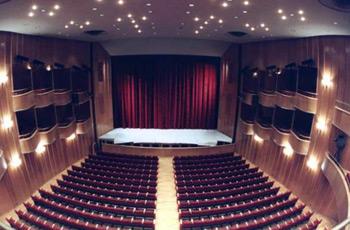
Olympia Theatre
Perfomances begin at 20.00 (on 31/12, at 18.30)

Revival Director: Katerina Petsatodi
Sets- costumes: Enrico Job
Lighting: tba
Chorus master: Agathangelos Georgakatos
Children’s Chorus mistress: Mata Katsouli

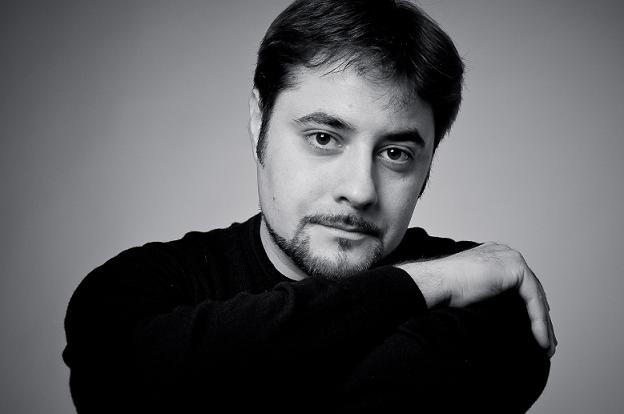
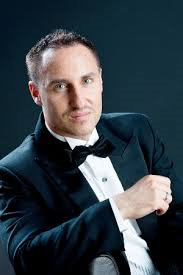
The tenor Luciano Ganci

The tenor Luciano Ganci

Rodolfo: Luciano Ganci (6, 12, 14, 28, 30/12)
Yannis Christopoulos (7, 10, 13, 31/12)
Mimì: Cellia Costea (6, 12, 14, 28, 30/12)
Anna Stylianaki (7, 10, 13, 31/12)
Μarcello: Dionyssis Sourbis (6, 7, 28, 31/12)
Κyros Patsalides (10, 12, 13, 14, 30/12)
Schaunard: Akis Laloussis (6, 12, 14, 28, 30/12)
Zafiris Koutelieris (7, 10, 13, 31/12)
Colline: Τassos Apostolou (6, 12, 14, 28, 30/12)
Petros Magoulas (7, 10, 13, 31/12)
Μusetta: Μaria Mitsopoulou (6, 12, 14, 31/12)
Vassiliki Karayanni (7, 13, 28/12)
Katia Paschou (10, 30/12)
Benoit: Pavlos Maropoulos (6, 12, 14, 28, 30/12)
Panagiotis Athanasopoulos (7, 10, 13, 31/12)
Αlcindoro: Christos Amvrazis (6, 12, 14, 28, 30/12)
Kostas Dotsikas (7, 10, 13, 31/12)
Parpignol: Thanassis Evangelou (6, 12, 14, 28, 30/12)
Stavros Giannoulis (7, 10, 13, 31/12)
Sergeant: Nikos Karagkiaouris (6, 12, 14, 28, 30/12)
Theodore Moraitis (7, 10, 13, 31/12)
Customs Official: Pavlos Sampsakis (6, 12, 14, 28, 30/12)
Nikos Syropoulos (7, 10, 13, 31/12)
The Greek National Orchestra

The Greek National Orchestra

With the GNO Orchestra, Chorus and members of the GNO Children’s Chorus, in the framework of its educational programme

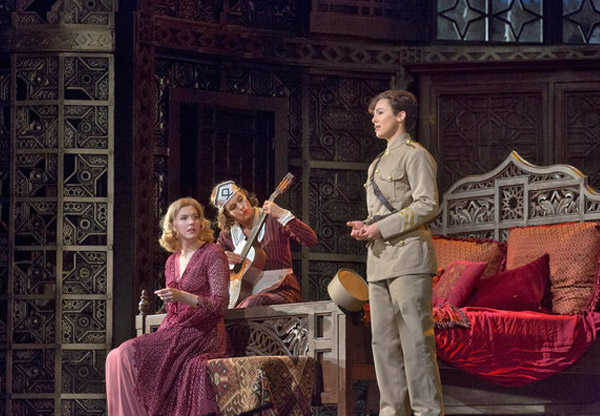
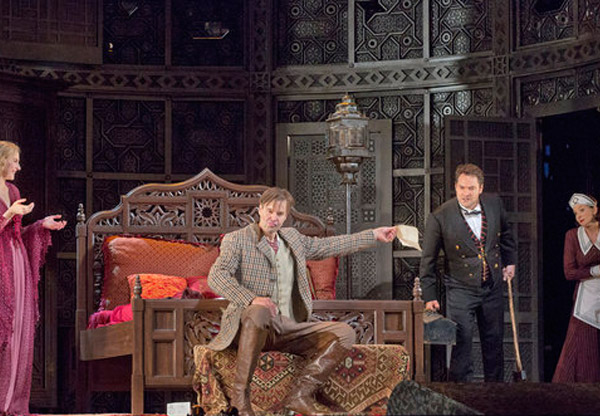
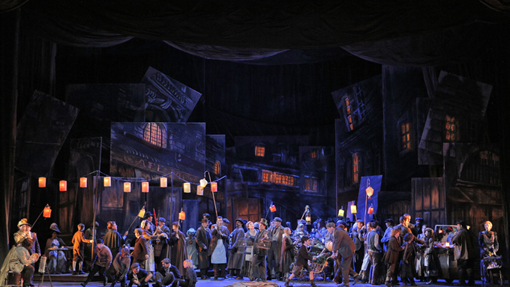
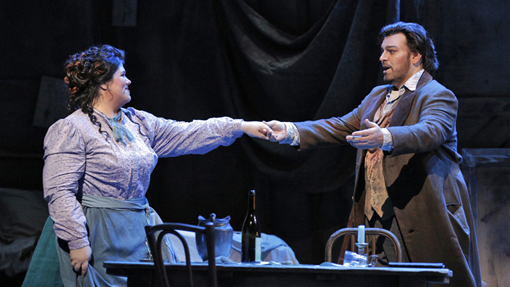
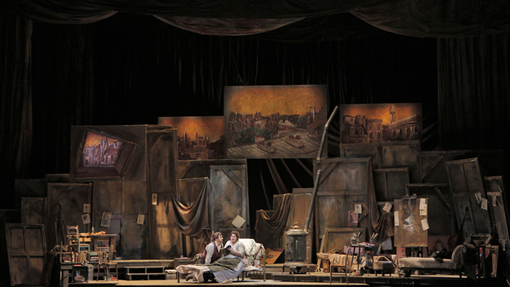
The Greek National Opera re-emerges with one of its oldest productions:  a work loved by the audience all over the world, Puccini’s popular La Bohème, in the version of the celebrated Italian director, Lina Wertmüller Images evoking nostalgic postcards flooded with colour, and sets and costumes inspired by Toulouse-Lautrec’s Paris will revive at the Olympia Theatre stage. The plot is about the love of a poet, Rodolfo, for a seamstress, Mimi, against the backdrop of a freezing Paris in Christmas, from the moment they first meet until the death of the girl from tuberculosis.
  • greektheaterOLYMPIA THEATRE
    Akadimias 59-61, 10679 Athens
    Panepistimio METRO Station
    Box Office
    Monday
    9.00-16.00
    Tuesday to Sunday 9.00-21.00
    Tel.: +30 210 3662100
    Fax: +30 210 3662019
    Email: info@nationalopera.gr


Posted in OPera | Leave a comment

La Bohème at the San Francisco Opera

La Bohème

sanfranciscologoMUSIC BY Giacomo Puccini

Libretto by Luigi Illica and Giuseppe Giacosa

NEW PRODUCTION

Boheme_SFOA5_P

Fri 12/5/14 7:30pm    Sun 12/7/14 2:00pm

When an aspiring poet falls in love with a fragile seamstress, their intense passion is only matched by their youthful idealism. Can their tender relationship survive the cruelties of life? John Caird, the director of two of the biggest stage hits of recent years, Les Misérables and Nicholas Nickleby, brings his unique touch to this new production of Puccini’s beloved opera. Resident Conductor Giuseppe Finzi leads two superb casts. One is headed by the “warm, luminous tone and urgently communicative phrasing” (TheClassicalReview.com) of Greek soprano Alexia Voulgaridou in her Company debut, the “intensely expressive” Michael Fabiano (The New York Times) and Nadine Sierra, whose commanding artistry inspires “awe and delight” (San Francisco Chronicle). The other features Leah Crocetto, “a major operatic star” (San Francisco Chronicle), “stylish and brilliant” young tenor Giorgio Berrugi (Examiner.com) and the “passionately lyrical” Ellie Dehn (The New York Times)
Sung in Italian with English supertitles
Approximate running time: 2 hours, 20 minutes including one intermissionPre-Opera Talks are free to ticketholders and take place in the Opera House in the Orchestra section, 55 minutes prior to curtain.Co-production with Houston Grand Opera and Canadian Opera Company
Boheme_SFOA1_P Boheme_SFOA2_P

CAST
Mimì Leah Crocetto
Rodolfo Giorgio Berrugi *
Musetta Ellie Dehn
Marcello Brian Mulligan
Colline Christian Van Horn
Schaunard Hadleigh Adams
Benoit Dale Travis
Alcindoro Dale Travis

*San Franciso Opera debut

Production Credits

Conductor Giuseppe Finzi
Director John Caird *
Production Designer David Farley
Lighting Designer Michael James Clark
Chorus Director Ian Robertson

Boheme_SFOA8_P Boheme_SFOB2_P

Synopsis

ACT I
Christmas Eve

As Marcello paints, Rodolfo, unable to write, gazes through the windows at the smoking chimneys of the Parisian rooftops. The bohemians are suffering from the cold. Marcello is about to sacrifice one of the sparse furnishings to the empty stove when Rodolfo has an inspiration: pages of his drama will warm them. Colline returns from a fruitless visit to the pawnbrokers. As the fire dies, Schaunard saves the day by arriving with food, firewood, and pockets full of money. The table is already laid before Schaunard can announce that for Christmas they will dine out. The friends are about to leave when Benoit, the landlord, comes for the rent. The bohemians trick him into talking about his amours; then, feigning moral indignation, they throw him out, unpaid. The friends leave, but Rodolfo stays behind to finish an article he is writing.

Presently, there is a knock on the door. A young woman enters. She asks if she may light her candle and Rodolfo invites her in. As soon as her candle is lighted, she departs only to return moments later in search of her key. Rodolfo secretly finds and pockets the lost key. As they continue to search, their hands touch. He tells her of his life as a penniless poet. She enchants Rodolfo with a description of her modest existence as a seamstress. As she ends her narrative, the voices of Rodolfo’s friends rise from the street, urging him to hurry. Rodolfo goes to the window and tells them to meet later at the Café Momus. He turns to Mimì and declares his love, which she timidly admits is returned.

Boheme_SFOB4_P Boheme_SFOB7_PACT II

A holiday crowds mills about the small square in the Latin Quarter dominated by the Café Momus. Enjoying the Christmas spirit, the bohemians spend their money: Schaunard buys a horn, Colline an overcoat, and Rodolfo purchases a bonnet for Mimì. They meet at the café and order dinner, after Rodolfo has presented Mimì to his friends.

Musetta and Alcindoro, an elderly admirer whom she orders around like a pet poodle, take the table adjoining the friends. Marcello studiously avoids looking at Musetta, with whom he has recently broken up. Musetta tries to attract his attention by staging a temper tantrum. Raising her voice so that all may hear, Musetta delivers an oration on her beauty and its devastating effects. She decides it is time to rid herself of Alcindoro and feigns a terrible pain in her foot. Musetta sends Alcindoro off for a new pair of shoes. The merry making is dampened by the arrival of the bill. The bohemians search their pockets hopelessly until Musetta takes the bill from the waiter and deposits it together with her own. She announces that Alcindoro will pay both bills on his return. Alcindoro returns with Musetta’s new shoes and is confronted with the bills.

Boheme_SFOB9_PACT III
February

At dawn, the city’s early risers begin their daily routines, while the revelers in a tavern continue the night’s festivities. Mimì asks directions of a sergeant who points out the tavern decorated with Marcello’s paintings. She asks the innkeeper to send Marcello out to her. Tearfully, she appeals to him for help. She refuses to go into the tavern because Rodolfo, who has left her, is inside. Marcello promises to talk to him. Rodolfo attempts to justify his cruelty to Mimì on the grounds of her coquettishness, but Marcello sees through the pretext. Rodolfo admits that the still loves Mimì, but says he cannot endure watching her health fail because of his inability to provide for her. Coughing and violent sobs betray Mimì’s presence. Rodolfo takes her into his arms, while Marcello charges into the tavern to investigate the cause of a burst of Musetta’s brazen laughter. Mimì says goodbye to Rodolfo and tells him they must part without bitterness. They quickly realize that they cannot go through with the separation. Their decision to stay together until spring is made against the background of violent quarreling between Musetta and Marcello.

ACT IV

Sadly reminiscing about their broken love affairs, Marcello and Rodolfo try to work. Both try unsuccessfully to appear pleased that their former companions are flourishing. Schaunard and Colline arrive with frugal provisions and a more cheerful outlook. They fall upon the food and stage a mock ball which is followed by a simulated duel. At the height of their clowning, Musetta appears. Mimì is waiting on the stairs; she is seriously ill. Rodolfo rushes to Mimì and brings her in. Musetta sends Marcello to pawn a pair of earrings and bring back a doctor. Colline bids a fond farewell to his overcoat which is destined for the same fate as Musetta’s jewels. One by one the friends find discreet reasons to leave. The lovers are alone. Feeble attempts at their former banter are succeeded by reminiscences of their love. Musetta returns with a muff to warm Mimì’s hands. Marcello announces that a doctor is on the way. Mimì falls asleep as Musetta murmurs a prayer. Rodolfo notices that a change has come over his friends, who already know what he only now realizes: Mimì is dead.

Posted in OPera | Tagged , , , , , | Leave a comment

Giuseppe Verdi’s Don Carlo at the New National Theatre in Tokyo

mainmenuTokyo

Music by Giuseppe VERDI
Opera in 4 acts
Sung in Italian with Japanese surtitles
Opera Palace

This is a masterwork from VERDI’s mature period. At the centre of this massive historic drama is the grief of a prince, whose sweetheart becomes his father’s bride. Confrontations in politics, religion and in the relationship between father and son, love and jealousy, friendship, as well as complicated intertwinement, between the characters are all expressed in the stately, dignified music. The staging by Marco Arturo MARELLI comprises a space surrounded by prison-like walls and a symbolic cross. It was first presented in 2006 and is here being re-presented 8 years later.

doncarloThe title role is played by Sergio ESCOBAR, a lyrical tenor whose star is ascending, and who is being besieged with offers from prestigious conductors and opera houses. Markus WERBA will sing Rodrigo, the core role in this opera. Pietro RIZZO, a familiar face from the successful NNTT productions of Il trovatore in 2011 and Rigoletto in 2013, will be conducting.

Staff

Conductor Pietro RIZZO 1

Production and Scenery Design Marco Arturo MARELLI 2

Costume Design Dagmar NIEFIND-MARELLI

Lighting Design YAGI Maki


1

2

Cast

Filippo II Rafal SIWEK 3

Don Carlo Sergio ESCOBAR 4

Rodrigo Markus WERBA 5

Elisabetta di Valois Serena FARNOCCHIA 6

La Principessa d’Eboli Sonia GANASSI 7

Il Grande Inquisitore TSUMAYA Hidekazu 8

Un frate OTSUKA Hiroaki

Tebaldo YAMASHITA Makiko

Il Conte di Lerma/Un araldo reale MURAKAMI Toshiaki

Una voce dal cielo UNOKI Eri


3

4

5

6

7

8

Chorus New National Theatre Chorus

Orchestra Tokyo Philharmonic Orchestra

Posted in OPera | Tagged | Leave a comment

OPERA “PUNCH AND JUDY” BY HARRISON BIRTWISTLE WINNER OF TWO GREAT PRIZES IN BUDAPEST

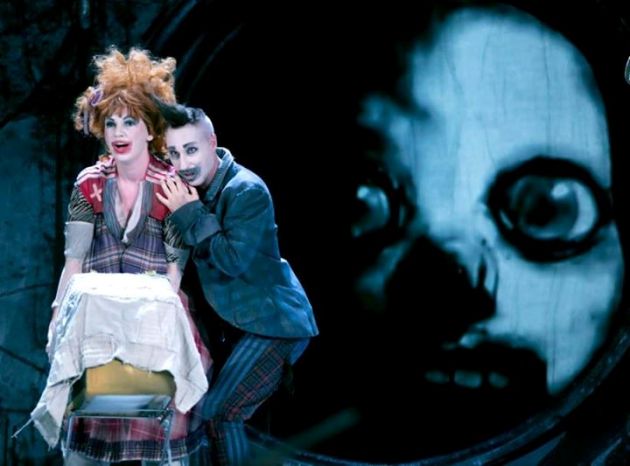
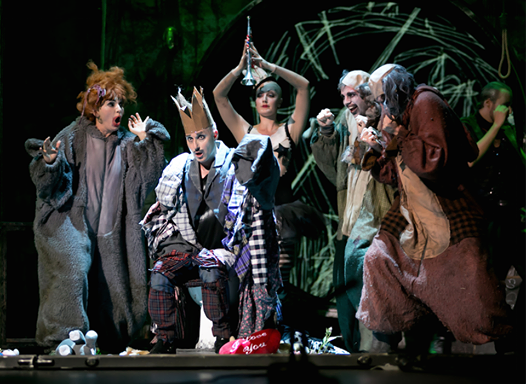
Mr. Punch (derived from the Italian character Pulcinella) and his wife Judy are puppet characters, who are popular in England and occupy a status comparable to that of the Kasperltheater genre in Austria. Typically, a hand puppeteer will present several brief sequences that usually lead to conflicts of a somewhat rough and naive nature. These usually include violence, and it was this violence in Harrison Birtwhistle’s opera Punch and Judy that sparked off heated debate in the wake of its 1968 world premiere. To this day, the opera has retained its polarizing effect.

armel-operafet-puncs-and-judy

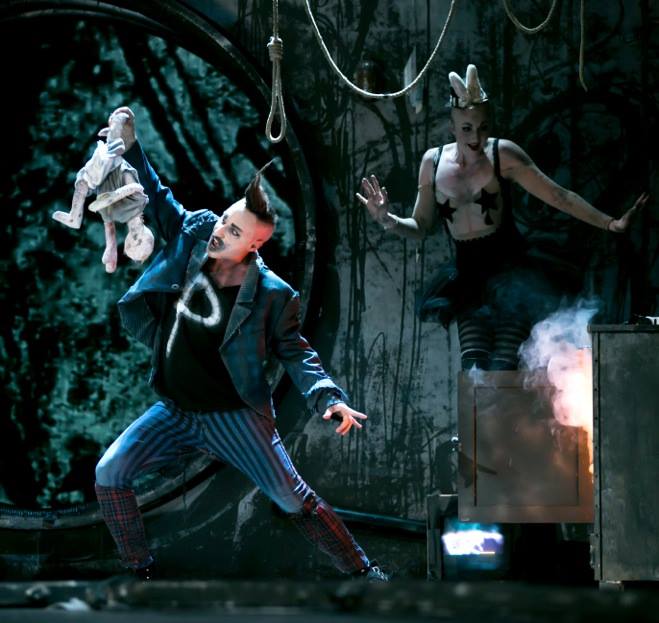
Just a few minutes into the action, Mr. Punch brutally murders his own child and Judy –and as the plot progresses, he ends up killing almost everyone else he encounters. He allows only Pretty Polly -whom he practically worships -/to stay alive. But eventually, Punch is overcome by horrible nightmares and the music begins to change in character…

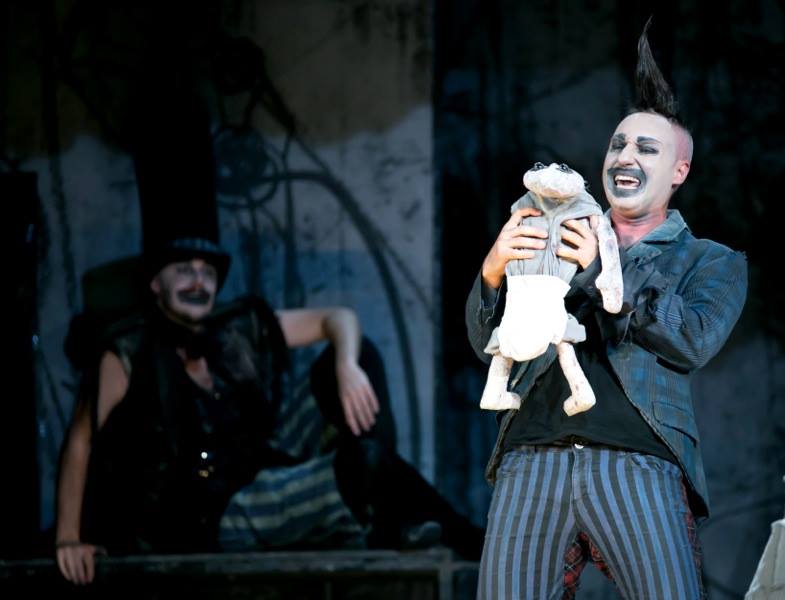
10703572_723407504404645_5375735756551272416_nPaul Griffiths once wrote that Birtwistle’s Mr. Punch is the diametric opposite of Petrushka in Stravinsky’s eponymous ballet. While Petrushka is a puppet, which behaves more and more like a human being, Mr. Punch is a human being, who treats those surrounding him like puppets –carelessly, brutally, and devoid of conscience.

Harrison Birtwistle and his librettist Stephen Pruslin created a stylized tragedy full of grotesque moments. The music is as capable of portraying a monstrous being as it is of portraying love. Their work opens up a positively other-worldly realm, with insane twists and the atmosphere of the marketplace.Written commissioned by Aldeburgh Festival, the work is presented as a tragic comedy, focuses on the adventures of Punch, a mad man suffering from severe personality disorders.

10701973_723407391071323_4197965706741301479_nThe Opera, in the production of Neue Oper Wien (Wien, Austria), in october 2014 won the great prize of the jury at the ARMEL FESTIVAL and the audience prize at ARTE LIVE TELEVISION, in Budapest.

A tragical comedy or comical tragedy in one act. Scenario and libretto written by Stephen PRUSLIN, Director: Leonard PRINSLOO, Conductor: Walter KOBÉRA.

10609528_723407354404660_6182004286197680360_nPunch – Richard RITTELMANN (Hungary) Judy; Fortune teller – Manuela LEONHARTSBERGER Choregos; Jack Ketch – Till VON ORLOWSKY Pretty Polly; Witch – Jennifer YOON Lawyer – Lorin WEY Doctor – Johannes SCHWENDINGER Dancer – Evamaria MAYER

WITH: amadeus ensemble-wien Set and costume – Monika BIEGLER Video design – Bernd PREIML Lighting design – Norbert CHMEL Language coach – Stephen CHAUNDRY Musical coach – Anna SUSHON Musical assistant – Jack RIDLEY Dramaturgy – Axel PETRI-PREIS Stage manager – Lucija DEDIC Assistant – Thomas WAHL Production manager – Su PITZEK Technical director – Norbert CHMEL Make-up artist – Henriette ZWÖLFER Assitant director – Barbara PREIS Orchestra management – Wolfgang TROJAN Stage construction – winter artservice

This Opera’s production will be performed at the theatre Opera of Avignon on june 2015.

rittermanRichard RITTELMANN (baritone, Hungary) – Punch Richard Rittelmann debuted at the age of 22 at the Opéra National de Lyon in Doktor Faust (Busoni). Since then he has been a winner at various international competitions. His discography covers a wide repertoire, from baroque to classical, romantic, 20th-century and contemporary repertoire, including some world premieres. His most memorable roles include Harlekin in Ariadne auf Naxos (Strauss), Le Bret in Cyrano de Bergerac (Alfano), Figaro in Il barbiere di Siviglia (Rossini), Danilo in The Merry Widow (Lehár), Tarquinius in The Rape of Lucretia (Britten), and Pelléas in Pelléas et Mélisande (Debussy), for which he gained worldwide reputation…

neueNEUE OPER WIEN The Neue Oper Wien was founded in 1990. The company specialises in modern music theatre, with the uncompromising policy of selecting only works from the 20th and 21st centuries. New discoveries as well as world and local premieres are central to the company’s work. Its objective is to revive modern opera repertoire. The Viennese audience enthusiastic about the works of Benjamin Britten was impressed by the Neue Oper Wien, when they staged Billy Budd for the first time in Austria in 1996. The first performance of Lachenmann’s Das Mädchen mit den Schwefelhölzern was also put on stage by the Neue Oper Wien in 2003 – this production was a sensational success and drew much international attention. Lacking its own venue or a constant company, the Neue Oper Wien could remain flexible; it regularly changes the venue of its performances. It selects stages for the work to be to be performed, with the constant modification of the space, the scenery is adapted closely to the space, aiming at the best acoustic effect possible. Under the leadership of Walter Kobéra, the Neue Oper Wien has demonstrated that innovation and popular success are not mutually exclusive, and that modern opera and innovative stagings need not distract lovers of music from this genre, but rather lead to intense discussions between audience and artists. The Neue Oper Wien considers the music theatre as a laboratory of “new music,” a forum to discuss timely social issues.

Posted in OPera | Tagged , | Leave a comment

Rossini Opera Festival 2015 preliminary program

logofestivalRossiniRecent decisions of the government, inviting the drawing-up of triennial artistic projects, have led the organizers to change the order of presentation of the operas that they are planning to stage in the next few years. The 2015 Festival will offer a particularly brilliant program, opening with Damiano Michieletto’s legendary production of La gazza ladra, which won the 2007 Abbiati Prize for stage direction. Another welcome return will be that of Graham Vick, who, on the heels of his recent international successes, will stage a new version of the farsa semiseria [serio-comic one-act opera] L’inganno felice, not performed in Pesaro for 21 years. The third opera on the bill is La gazzetta, directed by Marco Carniti, in a new production that will restore the complete score as originally performed, including the lost quintet that has recently been re-discovered. Among the various performances that, as always, frame the operas, we can announce two great sacred works: the rarely heard Messa di gloria and, on the last night of the Festival, both the Rossini and the Pergolesi settings of the Stabat Mater.

2015preliminare_Page_1

rossini

Posted in OPera | Tagged | Leave a comment

Menotti’s “Amahl and the Night Visitors” in Iowa

Des Moines Metro Opera 

PRESENTS:

Menotti / Amahl and the Night Visitors

Menotti / Amahl and the Night Visitors
Presenting Premier Sponsor is American Equity

Opera in One Act
Libretto by Gian Carlo Menotti
First performance: NBC Television Opera Theatre in New York City, Broadcast on December 24, 1951
Performed in English

While giving shelter to the three Wise Men on their journey to find the newborn Child, a poor mother and her crippled son, Amahl, discover the healing power of love. Amahl and the Night Visitors has become a holiday classic for the whole family. Hoyt Sherman Place Theatre will provide the historic backdrop for this beautiful production. In many places around the world, Gian Carlo Menotti’s Amahl and the Night Visitors rings in the Holiday Season. Originally composed for television in 1951, the opera is a delightful and touching story of a poor woman and her child who play hosts to three mysterious strangers bearing gold, frankincense and myrrh.

This production is presented in memory of Wendy Waugaman, who was a remarkable president of the Des Moines Metro Opera Board of Directors and a passionate entrepreneur in bringing new audiences to this dynamic art form. American Equity is the Premier Presenting Sponsor and Wendy’s many friends and colleagues are working together with Des Moines Metro Opera to bring this production to the stage in her honor. Support for Amahl and the Night Visitors has generously been provided by the many colleagues and friends of Wendy Waugaman. Presenting Premier Sponsor is American Equity Investment Life Insurance and Presenting Sponsor is Sammons Financial Group. Additional support provided by Major Sponsors Lou Waugaman and Marla Lacey/Steve Znerold and Supporting Sponsors Athene USA, Brokers International Ltd, David E. Franasiak, Knapp Properties, Skadden, Arps, Slate, Meagher & Flom LLP, and Bankers Trust/Ruan Transportation.

7:30 EVENING December 6 | December 7
2:00 MATINEE December 7

CAST:
Amahl, a crippled boy Pierce Mansfield
His Mother Julie Makerov
King Kaspar Edwin Griffith
King Melchior Todd Thomas
King Balthazar Patrick Blackwell
The Page Craig Irvin

Chorus of Shepherds and Villagers

PRODUCTION:
Conductor David Neely
Stage Director Robert L. Larsen
Musical Preparation Kyle Naig
Set Designer Steven J. McLean
Costume Supervisor Virginia McKeever
Lighting Designer James R. Trenberth
Make-Up/Hair Designer Joanne Weaver
Costumes Malabar, LTD.
Choreographer Albert Adams

Cast, production and opera are subject to change without notice.

Des Moines Metro Opera
106 West Boston Avenue, Indianola, IA 50125

Posted in Music, OPera | Tagged , , , , , , , | Leave a comment

TOSCA at the Royal Danish Theater in Copenhagen

Experience one of the world’s most cherished tragic operas, by Puccini. The story of Tosca, who sets out to save her beloved, is rife with jealousy, murder, lust and deception.
Add to this Puccini’s marvellous music and beautiful arias and the opera stage is set for a night of emotion.
Tosca is in love with artist Mario Cavaradossi but is pursued by the chief of police, Scarpia, who uses every means, even miscarriage of justice, fraud and murder in order to conquer this beautiful woman. Scarpia’s predator instinct and Tosca’s personality clash with disastrous consequences.
If you have not previously experienced Puccini’s masterful opera then you can expect a sensation – and if you are already familiar with Tosca you can look forward to a moving reunion. Peter Langdal’s successful staging has played to full houses in previous seasons. The title role is performed by Ylva Kihlberg.
Starring as Tosca’s beloved Mario Cavaradossi is the young Italian-Brazilian tenor Tiago Arancam who is taking the world’s opera stages by storm.
Tosca is performed in Italian with Danish supertitles.

Video on Tosca

Performance period: 12. Oct. – 02. Dec. 2014
Duration: 2 hours 30 minutes. 2 intervals.

tosca1Tosca2

Synopsis

<!–


–>

Act 1

In the church of Sant’Andrea della Valle

toscadenmark2Cesare Angelotti, a political prisoner, has escaped from the Castel Sant’Angelo in Rome. He seeks refuge in the family chapel at the church of Sant’Andrea della Valle using a key hidden by his beautiful sister, Marchioness Attavanti. The Sacristan turns up but thinks that the noise at the door was made by the artist Mario Cavaradossi. The painter is currently working on a depiction of the Madonna inspired by the Marchioness, who has sat for the portrait in the church over the last couple of days. The artist also likens the portrait to a miniature of the woman he loves, the singer Floria Tosca.

toscadenmark1Once the Sacristan has left, Angelotti comes out of hiding and recognises Cavaradossi – a friend whom he can trust in his struggle for the republic. Cavaradossi gives him the lunch basket prepared by the Sacristan but urges Angelotti to hide in the far end of the chapel when he hears Tosca, who goaded by jealousy pounds on the church door and calls out to her lover, convinced as she is that he has locked the door to seek privacy with another woman. He lets her in.

toscadenmark3Cavaradossi attempts to reassure Tosca, but she notices that the eyes of the Madonna on the portrait resemble those of Marchioness Attavanti and she accuses him of cheating on her. He, however, assures her that she has nothing to fear. When Tosca has left the church Cavaradossi fetches Angelotti and together they find the women’s clothing that Angelotti has hidden as disguise for his escape. Cavaradossi advises Angelotti to seek refuge in his personal villa. No sooner has Angelotti left the church before canon fire is heard from the Castel Sant’Angelo, signalling that the jailbreak has been discovered. Cavaradossi decides to accompany Angelotti through Rome.

toscadenmark4The Sacristan returns with tidings of the defeat of Napoleon by the Austrians, thus securing the continued rule of monarchy in Rome. The church chorists rejoice in the prospect of grand celebrations to be held at Palazzo Farnese the same evening, including a cantata by none other than Floria Tosca. There is also promise of a bonus to be paid for the Te Deum, staged by the church as part of the festivities. Baron Scarpia of the secret police turns up, which immediately quells the jubilation, although revellers are quick to reassure him that their jubilant behaviour is a mere expression of their joy of victory.

toscadenmark5Scarpia and his henchmen look for leads in their search for Angelotti. They soon find Attavanti’s fan in the church, which Scarpia uses to convince Tosca – the object of his desire – of Cavaradossi’s faithlessness. He sends a spy to trail Tosca while she hastens to Cavaradossi fearing she will find him in the arms of his mistress.

Act 2

At Scarpia’s office in Palazzo Farnese

toscadenmark6Tosca and Baron Scarpia are to rendezvous the same evening, following her performance. Scarpia hopes his scheme will work – soon Tosca will be his! Scarpia is unsuccessful in his pursuit of Angelotti but his men arrest Cavaradossi instead on the charge of abetting a fugitive. He refuses to reveal Angelotti’s hideout and Scarpia orders him to be interrogated in the next room.

When Tosca arrives her dilemma soon dawns on her: she can only save her beloved Cavaradossi from torture if she reveals Angelotti’s hideout. At first she refuses to cooperate but is soon unnerved by Cavaradossi’s harrowing agony and reveals Angelotti’s whereabouts. Cavaradossi has, however, confessed to republican leanings and is to be executed at dawn the next day, unless Tosca yields herself to Scarpia.

toscadenmark7However, Angelotti commits suicide in his hiding place before the arrival of Scarpia’s men. So is Cavaradossi now to face the firing squad? Initially, Tosca agrees to Scarpia’s conditions for Cavaradossi’s release but she also demands free passage out of Rome for them both. Scarpia issues a pass and orders a mock execution of Cavaradossi using blanks. toscadenmark11But Tosca has a trump up her sleeve. She stabs Scarpia with a dagger and flees from the room with the pass in her hand.

Act 3

At the top of Castel Sant’Angelo

toscadenmark12At the break of dawn, Cavaradossi prepares himself for death. He bribes a guard to bring a farewell letter to Tosca and he recalls their happiest hours together.

toscadenmark16Tosca, in reply, shares the good news with him and they rejoice in the prospect of starting a new life together far from Rome. Cavaradossi faces the firing squad with a self-assured air as the soldiers raise their muskets. When the shots are fired he falls down to the ground. Tosca’s future happiness now depends on the unfolding events of the next few seconds….

toscadenmark13

toscadenmark15


Posted in OPera | Leave a comment

Don Giovanni at LaMonnaie/De Munt in Bruxelles

dongiovannibrux‘As the hero of the opera, Don Giovanni is the denominator of the piece, he gives it its name as the hero usually does, but he does more than this : he is the common denominator. Compared to his existence, all others are merely derivative.’ So wrote the Danish philosopher Kierkegaard, who, like many others, was fascinated by Mozart’s 1787 opera. ‘It is this absolute centrality that makes this work exercise the power of illusion more than any other.’ Does this work, the second joint venture by Mozart and the librettist Da Ponte, need any further introduction ? This ‘dramma giocoso’ can hardly be categorised : opera seria, opera buffa ? – Don Giovanni is universal, enigmatic, superhuman, mythical. After Così fan tutte and La Clemenza di Tito, Ludovic Morlot will conduct his third opera by Mozart at La Monnaie. For those who are familiar with Warlikovski’s approach, it will come as no surprise that Don Giovanni will be presented as a dark, desperate character.

Rehearsing Don Giovanni

dongiov_brux6

dongiov_brux1

dongiov_brux5

dongiov_brux3

dongiov_brux2

dongiov_brux4

New productionProduction La Monnaie / De Munt
With the support of Electrabel

Don Giovanni
Music direction ¦ Ludovic Morlot
Director ¦ Krzysztof Warlikowski
Set design & costumes ¦ Malgorzata Szczesniak
Lighting ¦ Felice Ross
Dramaturgy ¦ Christian Longchamp
Choreography ¦ Claude Bardouil
Video ¦ Denis Guéguin
Chorus direction ¦ Martino Faggiani

CAST:
Don Giovanni ¦ Jean-Sébastien Bou
Il Commendatore ¦ Sir Willard White
Donna Anna ¦ Barbara Hannigan
Don Ottavio ¦ Topi Lehtipuu
Donna Elvira ¦ Rinat Shaham
Leporello ¦ Andreas Wolf
Masetto ¦ Jean-Luc Ballestra
Zerlina ¦ Julie Mathevet
Orchestra & chorus ¦ La Monnaie Symphony Orchestra & Chorus

02, 04, 07, 09, 11, 14, 16, 18, 20, 23, 26, 28 & 30 December

Don Giovanni
Dramma giocoso in due atti, KV.527 (1787)
Libretto di Lorenzo da Ponte
Premiere Nationaltheater, Praha, 29/10/1787

Posted in OPera | Tagged | Leave a comment

“Lady Macbeth of Mtsensk” in Norway

logonorwayAn Opera by Dmitri Shostakovich
8 productions From September 4. to October 3.
Performed in Russian Texted in Norwegian and English
3 hours and 15 minutes

At the Den Norske opera & Ballet Thater in Oslo

macbeth2A starkly cold fishing village in Northern Norway, a male-dominated society, a loveless marriage, an absent husband, a warm and willing lover, a quick-tempered father-in-law, a poisoned meal, a hidden body, a surprising return, a wedding with complications and a woman with sensational dynamism. These are the main ingredients of Dmitri Shostakovich’s tragic satire Lady Macbeth of Mtsensk, staged here in a new production by Ole Anders Tandberg.

Macbeth3

The opera is based on an 1865 novel by Nikolai Leskov. Inspired by Shakespeare’s Macbeth it depicts an unscrupulous woman who kills both her father-in-law and husband in order to follow her desires and satisfy her lusts. But Shostakovich’s music gives her a depth that makes her more sympathetic. The composer justified this choice thus: «To Leskov the woman is a murderer. I see her as a complex, tragic force of nature. She is a woman full of love, a deeply sensitive woman, in no way without feelings.» The result is a fascinating woman: strong and weak, affectionate and ambitious, sensitive and brutal, uncertain and unscrupulous, warm and cool, calculating and unpredictable. With the story of this dynamic woman, Shostakovich moves in the area between tragedy and comedy. The music is a blend of grotesque, beautiful, lyrical, dramatic, ironic and humorous – like a little scary laughter in the cold darkness.

macbeth4

macbeth6

macbeth7

macbeth10     macbeth9

Lady Macbeth of Mtsensk is a co-production with Deutsche Oper Berlin, and has its Berlin premiere on 25 January 2015.

Premiere discussion one week before the premiere / free introduction one hour before the performance

Original title : Ledi Makbet Mtsenskogo Uyezda
Music : Dmitri Shostakovich
Libretto : Alexander Preis and Dmitri Shostakovich
Conductor: Oleg Caetani
Direction : Ole Anders Tandberg
Choreographer: Jeanette Langert
Set design : Erlend Birkeland
Costumes : Maria Geber
Lighting design : Ellen Ruge
Cast: The Opera Chorus, The Opera Orchestra

CAST: Main roles

Svetlana_Sozdateleva3

Svetlana Sozdateleva

Svetlana Sozdateleva as

Katerina Lvovna Izmajlova

Svetlana Sozdateleva has been a leading soloist at Helikon Opera Moscow since 1999 and performed Katerina Izmailova in Lady Macbeth of Mtsensk, Liza in The Queen of Spades, Maria in Mazeppa, Lady Macbeth in Macbeth, Abigaille in Nabucco, Emilia Marty in The Makropulos Case, Carmen, Madame Lidoine in Dialogues des
Carmelites, Dvořák’s Rusalka, Stefanie in Giordano’s Siberia, and Isabella in Wagner’s Das Liebesverbot. She also sang Katerina in Lady Macbeth of Mtsensk (Radio France Festival, Montpelier, Ravenna Festival 2003), Abigaille in Nabucco
(Dijon, Mariinsky Theatre St. Petersburg, Shalyap in Opera Festival Kazan, Russia, Eva Marton Festival Miskolc,Hungary), Renata in The Fiery Angel (La Monnaie Brussels, Komische Oper Berlin), Lady Macbeth in Macbeth (Glyndebourne Festival),
Isolde, cover and Kostelnička in Jenufa (both Glyndebourne), Tosca (Latvian National Opera Riga), Sieglinde in Die Walküre (Russian National Orchestra, Kent Nagano), Shostakovich’s 14th Symphony (Russian National Orchestra, Sir Mark Elder).Upcoming engagements include Renata in The Fiery Angel (Deutsche Oper am Rhein), Amelia in Un Ballo in Maschera (Helikon Opera Moscow), and Fevronia in The Legend of the invisible city of Kitezh (Gran Teatre del Liceu, Barcelona) among others. Sozdateleva is nominated for the award DER FAUST in 2014.

Alexey_Kosarev_Gjestesolist_Nasjonaloperaen

Alexey Kosarev

Alexey Kosarev as Sergej

The Moscow born tenor Alexey Kosarev graduated from the Gnessin State Musical College.

He made his debut as Harlequin in Pagliacci in Helikon Opera Theatre in Moscow where he sang for 10 years main tenor parts such as Alfredo in La Traviata, Lykov in The Tsar’s Bride, Alfred in Die Fledermaus, Lensky in Eugene Onegin, Duca in Rigoletto, Macduff in Macbeth, and Sergey in Lady Macbeth Of The Mtsensk District.

Other engagements include Sergey in Lady Macbeth Of The Mtsensk District (Musiktheater im Revier Gelsenkirchen, Staatsoper Hannover, Oldenburgisches Staatstheater, Theater Freiburg, Festival Internacional de Santander, and Festival de Radio France et Montpellier), Macduff in Macbeth and Manrico in Il Trovatore (Landestheater Detmold), Prince Vasiliy Golitsin in Khovanshchina (Deutsche Nationaltheater and Staatskapelle Weimar), Vodemon in Iolanta (Deutsche Kammerphilharmonie Bremen), Alfredo in La Traviata, Manrico in Il Trovatore, Cavaradossi in Tosca and Radames in Aida (Oldenburgisches Staatstheater), Pinkerton in Madama Butterfly (Oldenburgisches Staatstheater and Staatstheater Mainz), the title role in G. Kingsley & M. Kunze‘s Raoul (Theater Bremen), Herr Hermann in Hindemith’s Neues vom Tage (Landestheater Linz), Calaf in Turandot, Macduff in Macbeth, Prinz in Dvorak’s Rusalka, Radames in Aida, the title role in Don Carlo, Rodolfo in La bohème, Hans in The Bartered Bride, and Tambourmajor in Wozzeck (Freiburg), Hoffmann in Les contes d’Hoffmann (Freiburg and Theater Flensburg), Hermann in The Queen of Spades (St-Pölten Festspiele), Lykov in The Tsar’s Bride (Opernhaus Zürich), Husar in Mavra (Opéra National de Paris), and Alfred in Die Fledermaus (Rostropovich Festival Evian)

Recent and upcoming engagements are Boris in Katja Kabanova (Opéra de Dijon), Sergey in Lady Macbeth Of The Mtsensk District (Pfalztheater Kaiserslautern), and
Manrico in Il Trovatore (Landestheater Detmold), among others.

magne_fremmerlid

Magne Fremmerlid

Magne Fremmerlid as

Boris Timofeevich Izmajlov

«Exceptional», «clear as ever» and «one of his finest performances ever» are just some phrases critics have used to describe Magne Fremmerlid in the past couple of years.

A member of the Norwegian National Opera soloist ensemble since 1997, Fremmerlid’s diverse repertoire includes roles as Scarpia in Tosca, Sarastro in The Magic Flute, Colline in La Bohème, the Commendatore in Don Giovanni, Fafner in Das Rheingold, Hagen in Götterdämmerung, the Water Goblin in Rusalka, King Mark in Tristan und Isolde, Hermann in Tannhäuser, Stuart in Around the World in 80 Days and Time/Neptune in The Return of Ulysses to his Homeland. In September 2012 he gave a solo recital in the Second House with Boris Schäfer.

Fremmerlid’s stylistic range is extensive, including both the opera Querini on the island of Røst and the jazz opera Storkaren (The High Flyer) as part of the Fjord Cadenza Festival.

He is also a sought-after concert and oratorio singer, and has been a soloist a number of times with Oslo Philharmonic Orchestra, Bergen Philharmonic Orchestra and Stavanger Symphony Orchestra.

Marius-Roth-Christensen-Gjestesolist

Marius Roth Christensen

Marius Roth Christensen as Zinovij Borisovich Izmajlov

Marius Roth Christensen has a versatile career. He first became known as the guitarist and vocalist of the rock band Seigmen. He later studied at Østlandet Music Conservatory and the National Academy of Operatic Art.

Roth Christensen made his debut at the Norwegian National Opera in 2006, in the role of Tamino in The Magic Flute. He has been a member of the soloist ensemble since 2013, and we have seen him in roles likelike Beppe in Pagliacci, Alfredo in La traviata, the White Minister in Le Grand Macabre and Der Steuermann in The Flying Dutchman.

His roles on opera stages around Norway include Rodolfo in La Bohème, Tamino in The Magic Flute, Rinuccio in Gianni Schicci, Bastien in Bastien und Bastienne and Turiddu in Cavalleria rusticana. He has also sung in several musicals, including West Side Story, Jesus Christ Superstar, Carousel and Fiddler on the Roof. In 2012 he had his debut at the Lyric Opera Dublin in the role of Pinkerton in Madama Butterfly.

Earlier this year he sang Don Ottavio in Don Giovanni – a role he will do again this fall. In addition he will do Zinovij Borisovich Izmajlov in Lady Macbeth of Mtsensk and Alfredo in La Traviata.

Knut_Skram_2

Knut Skram

Knut Skram as Gammel tvangsarbeider


Other roles

Aksinja
Hege Høisæter

Lærer
Svein Erik Sagbråten

Politibetjent/formann
Per Andreas Tønder

Politikommissær
Jens-Erik Aasbø

Prest
Ketil Hugaas

Sersjant/gårdskar/fengselsvakt
Halvor Melien

Sonetka, tvangsarbeiderinne
Tone Kummervold

Tvangsarbeiderinne
Oksana Myronchuk

Ynkelig mann
Thor Inge Falch

Posted in OPera | Tagged , , , , | Leave a comment

Andrzej Czajkowski’s THE MERCHANT OF VENICE in Poland

polandlogo
Sun 6:00pm October 26, 2014

Moniuszko Auditorium

The Grand Theatre – National Opera in Warsaw, Plac Teatralny 1, Warszawa, POLAND

polandlogo2THE MERCHANT OF VENICE

Opera in three acts
Libretto: John O’Brien after William Shakespeare’s play

World premiere: Bregenzer Festspiele, Austria, 18/07/2013
Polish premiere: 24/10/2014
In the original English with Polish surtitles

Conductor: Lionel Friend
Director: Keith Warner
Set and Costume Designer: Ashley Martin-Davis
Choreography: Michael Barry
Lighting Designer: Davy Cunningham
Chorus Master: Bogdan Gola
Chorus Master of the children’s choir: Danuta Chmurska

Chorus and Orchestra of Teatr Wielki – Polish National Opera,
Władysław Skoraczewski “Artos” Children’s Choir, extras

Co-production: Bregenzer Festspiele
Adam Mickiewicz Institute, Warsaw

Poster designed by Adam Żebrowski

Cast:

Jessica – Marisol Montalvo
Portia – Sarah Castle
Nerissa – Verena Gunz
Antonio – Christopher Robson
Bassanio – Charles Workman
Shylock – Lester Lynch
Lorenzo – Jason Bridges
Salerio – Adrian Clarke
Solanio – Rafał Pawnuk
Gratiano – Philip Smith
Duke of Venice – Dariusz Machej
Boy – Katarzyna Trylnik
Duke of Marocco – Gregory Lockett
Duke of Arragon/Freud – Juliusz Kubiak

His appearance in the piano firmament almost 60 years ago was compared with the exploding stardom of Glenn Gould. Claiming that the globe had at least 150 virtuosos better than him and only a few better composers, André Tchaikowsky was wrong in one thing: that such a numerous group played the piano better than he did. The score of The Merchant of Venice was written with an awareness of the existence of many musical languages. Probably the most important among them was Alban Berg’s style, but one can also sense an affinity with the sound world of Aribert Reimann’s operas. The Merchant of Venice delights with its brilliant musical dramaturgy and its characters; written in all seriousness, it can also surprise with a musical joke – for instance in the famous Shakespearian scene of choosing a bride which includes an ironic quotation of the fate motif from Tchaikovsky’s (Pyotr Tchaikovsky’s!) Symphony No. 4. The world premiere of The Merchant, delayed by over 30 years, directed brilliantly by Keith Warner (the pr sent show is a co-production with the Bregenz Festival), received the prestigious International Opera Award in April 2014. One could feel totally pleased about this if not for the fact that the projects defeated by Tchaikowsky included Paweł Szymański’s Qudsja Zaher staged by the Polish National Opera in 2013.

Posted in OPera | Leave a comment