“Heggie / Dead Man Walking” in Des Moines

Des Moines Metro Opera 

PRESENTS:

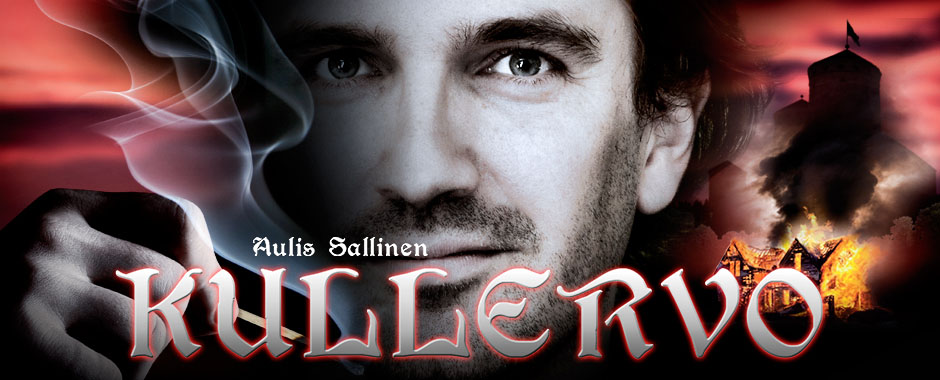
Heggie / Dead Man Walking

Heggie / Dead Man Walking*

An opera in two acts
Libretto by Terrence McNally after the book by Sister Helen Prejean
First performance: San Francisco; San Francisco Opera, October 7, 2000
Performed in English with supertitles above the stage

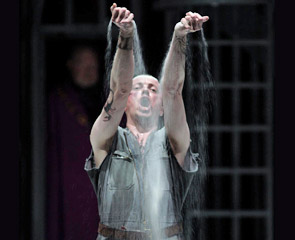
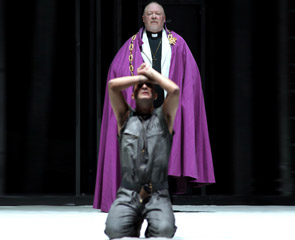
Based on the extraordinary book of the same name by Sister Helen Prejean, Dead Man Walking was Heggie’s first opera, with a libretto by Terrence McNally. It premiered in 2000 at the San Francisco Opera, and has since been performed numerous times across the United States and throughout Europe. From its shocking beginning to its emotionally searing final scene, this opera changes everyone who encounters it. Its stunning score and intense story combine into a work that “must be reckoned something of a masterpiece – a gripping, enormously skillful marriage of words and music to tell a story of love, suffering and spiritual redemption” (San Francisco Chronicle).

*Parental advisory: This opera contains nudity, graphic violence, and explicit language, and is not recommended for anyone under age 18.

EVENING SHOWS June 28 | July 8 | July 11 | July 19
SUNDAY MATINEE July 6

CAST:
Sister Helen Prejean, a young nun from Louisiana Elise Quagliata
Joseph De Rocher, a death row inmate at Angola State Penitentiary David Adam Moore
Mrs. Patrick De Rocher, Joseph’s mother Margaret Lattimore
Sister Rose, co-worker and close friend to Sister Helen Karen Slack
George Benton, prison warden Kyle Abertson
Father Grenville, prison chaplain TBA
Kitty Hart, mother of the murdered girl TBA
Owen Hart, father of the murdered girl Wayne Tigges
Jade Boucher, mother of the murdered boy TBA
Howard Boucher, father of the murdered boy TBA
Motorcycle Cop, baritone Kenneth Stavert
Older Brother, half-brother to Joseph TBA
Younger Brother, half-brother to Joseph TBA
Sister Catherine TBA
Sister Lillianne TBA
Prison Guard 1 Kasey Yeargain
Prison Guard 2 TBA
First mother TBA
Mrs. Charlton TBA
Teenage Girl TBA
Teenage Boy TBA
Anthony De Rocher TBA
Jimmy TBA

Setting: In and around Angola Prison, Louisiana, 1980s.

PRODUCTION:
Conductor David Neely
Stage Director Kristine McIntyre
Associate Conductor Aaron Breid
Assistant Stage Director Octavio Cardenas
Chorus Master Lisa Hasson
Musical Preparation Yasuko Oura
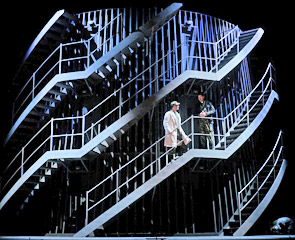
Set Designer R. Keith Brumley
Costume Supervisor TBA
Lighting Designer Barry Steele
Make-Up/Hair Designer TBA
Children’s Chorus Preparation Dennis Hendrickson
Costumes TBA
Sound Designer TBA

Cast, production and opera are subject to change without notice.

SYNOPSIS:

Louisiana, 1980s

Prologue
A teenage boy and girl are parked near a secluded lake at night, on a date. They have the radio on in their car and are making out to its music. Brothers Anthony and Joseph De Rocher emerge from the shadows and turn the radio off. They attack the teens, raping the girl and eventually shooting the boy. When the girl screams, Joseph stabs her until she is silent.

Act I
Scene 1: Hope House, run by the Sisters of Saint Joseph of Medaille
Sister Helen, with the aid of some of the other sisters, is teaching the children a hymn. After the children leave, Sister Helen reveals to her colleagues that she has heard from Joseph De Rocher, a death row inmate she has been corresponding with, asking her to be his spiritual advisor and that she has decided to accept. The sisters warn Helen of the dangers, but she is firm.

Scene 2: The drive to the prison
Helen drives to Louisiana State Penitentiary and muses on her acceptance of De Rocher’s offer. She is stopped by a motorcycle policeman for speeding, but he lets her off with a warning.

Scene 3: Angola State Prison
Helen arrives at the prison and is met by Father Grenville, the prison chaplain.

Scene 4: Father Grenville’s office
Father Grenville criticizes Sister Helen’s choice to work with De Rocher, claiming that the man is unreachable. Helen responds that it is her duty to attempt to help him. She meets with the prison warden, George Benton, who asks many of the same questions and also criticizes her decision.

Scene 5: Death Row
Warden Benton and Sister Helen walk through Death Row to reach the visiting room. They’re accosted by the inmates, who in turn, shout profanities at Sister Helen and ask her to say prayers for them.

Scene 6: Death Row visiting room
Sister Helen and Joseph De Rocher meet. He asks Sister Helen to speak at the pardon board hearing on his behalf. He seems convinced that she will not return to help him; she assures him that such is not the case.

Scene 7: The pardon board hearing
Sister Helen is present with De Rocher’s mother, who pleads with the pardon board on his behalf. Owen Hart, father of the murdered girl, lashes out in anger.

Scene 8: The courthouse parking lot
The four parents of De Rocher’s victims speak angrily to his mother and to Sister Helen, who attempts to calm both sides in the debate. The parents accuse her of not understanding their pain and sorrow. Word comes from the pardon board: De Rocher has not been granted a pardon. Barring intercession from the governor, he is to die.

Scene 9: Death Row visiting room
De Rocher is convinced that Helen has abandoned him; she enters, late, and tells him that she has not and will not. He is angry and rejects all her suggestions to confess and make peace with his actions. The warden enters and tells Helen to leave.

Scene 10: The prison waiting room
Helen is attempting to find money to get food from the vending machine, having forgotten to eat. She begins to hear the voices in her head of the parents, the children at Hope House, Father Grenville, the motorcycle policeman, Warden Benton, and her colleagues, all telling her to stop attempting to help De Rocher. The warden enters to tell her that the governor has refused to act to save De Rocher and gives Helen some money for the machine. She faints.

Act II
Scene 1: Joseph De Rocher’s prison cell
A guard enters and tells De Rocher, who is doing pushups, that his execution date has been set for August 4. The guard leaves; Joseph contemplates his fate.

Scene 2: Sister Helen’s bedroom
Helen wakes up in terror from a nightmare, alarming Sister Rose, who begs her to stop working with De Rocher; Rose reminds her that she has not slept well since she began helping him. Helen says she cannot; the two women pray for the strength to forgive De Rocher.

Scene 3: Joseph’s cell
It is the evening of the date set for the execution. Joseph and Sister Helen talk, discovering a shared love for Elvis. For the first time, Joseph admits that he is afraid. Sister Helen reassures him, urging him to confess and make peace with what he has done; again he refuses. The warden enters and informs them that Mrs. De Rocher is there to see him.

Scene 4: The visiting room
Mrs. De Rocher and her two younger sons are there. Joseph visits with them and attempts to apologize; she will have none of it, preferring to believe to the end that he is innocent. She asks Helen to take a last picture of her family together. The guards lead Joseph away; she looks after him, near tears, eventually losing control. She thanks Helen for all that she has done.

Scene 5: Outside the Death House
Helen speaks with the victims’ parents. One of them, Owen Hart, takes her aside and confesses that he is less sure of what he wants now than he was; he tells her that he and his wife have separated due to the stress they have felt. Helen attempts to console him; they agree to part as “Fellow victims of Joseph De Rocher.”

Scenes 6/7: Joseph’s holding cell
Helen and De Rocher converse for one last time; once again she attempts to get him to confess to the murders. This time something in him snaps; he breaks down and tells her the entire story. He expects Helen to hate him; instead, she says she forgives him and that she will be “the face of love” for him. He thanks her. Father Grenville enters and begins the final preparations for the execution.

Scene 8: March to the execution chamber/The execution chamber
Guards, inmates, the warden, the parents, the chaplain, and protesters assembled outside the prison sing the Lord’s Prayer as Sister Helen reads a passage from the book of Isaiah. They approach the death chamber, and Helen is separated from De Rocher. The warden asks if he has any last words; he says he does and asks forgiveness from the parents of the murdered teenagers. The warden gives the nod, and the execution proceeds. De Rocher dies thanking Helen for her love. The opera ends as Sister Helen repeats her hymn.

Des Moines Metro Opera
106 West Boston Avenue, Indianola, IA 50125

Posted in Music, OPera | Tagged , , , , , , , | Leave a comment

“La Traviata” in Des Moines

Des Moines Metro Opera 

PRESENTS:

Verdi / La Traviata

Verdi / La Traviata (The Fallen Woman)*

An opera in four acts
Libretto by Francesco Maria Piave after Alexandre Dumas fils’ play La dame aux camélias
First performance: Venice; Teatro La Fenice, March 6, 1853
Performed in Italian with English supertitles above the stage

Some operas sweep through vast swaths of history; some turn on mistaken identity, political intrigue, magic, envy, or greed. But La Traviata breaks the mold. Verdi and his librettist, Francesco Maria Piave, spin a tale of social expectation and conflict – a story about a courtesan who falls in love and ultimately sacrifices everything for her love. Verdi makes us care so deeply about his heroine that her heart and happiness carry the tale. For more than a century and a half, audiences have adored this heroine and the score Verdi considered his most meaningful.

EVENING SHOWS June 27 | July 4 | July 12 | July 17
SUNDAY MATINEES June 29 | July 20
June 27 performance is at 8pm. All other evening performances are at 7:30pm.
CAST:
Violetta Valéry, a courtesan Caitlin Lynch
Flora Bervoix, her friend Ashley Dixon
Annina, Violetta’s maid TBA
Alfredo Germont Diego Silva
Giorgio Germont, his father Todd Thomas
Gastone, Vicomte de Letorières Brenton Ryan
Baron Duphol, Violetta’s protector Luis Orozco
Marchese D’Obigny, friend of Flora TBA
Doctor Grenvil TBA
Flora’s Servant TBA

Ladies and gentlemen, friends of Violetta and Flora, matadors, picadors, gypsies, servants and masquers

Setting:In and around Paris, 1870s

PRODUCTION:
Conductor David Neely
Stage Director Lillian Groag
Associate Conductor Michael Spassov
Assistant Stage Director Daniel Witzke
Chorus Master Lisa Hasson
Musical Preparation Elden Little
Set Designer Robert Little
Costume Supervisor TBA
Lighting Designer Barry Steele
Make-Up/Hair Designer TBA
Costumes TBA
Choreographer TBA

Cast, production and opera are subject to change without notice

Synopsis

Act I
The opera opens at the home of courtesan Violetta Valéry, who is throwing a raucous party. One of the guests, Alfredo Germont, is introduced to Violetta and reveals that he has loved her from afar for some time, which Violetta laughs off before asking him to lead the party in a drinking song. The guests leave to dance, but Violetta is too weak due to her affliction with consumption, and Alfredo stays behind with her. Alfredo promises to love and care for her, but she makes clear that she only lives a life of pleasure. After he leaves, Violetta is somewhat overcome by his tenderness, but she resolves to stick with her earlier declarations.

Act II
Alfredo and Violetta have been living together happily in the countryside for three months. Alfredo discovers that Violetta has been selling her possessions in order to finance their household and he leaves for Paris to raise money. Germont, Alfredo’s father, arrives unexpectedly and asks Violetta to end her relationship with Alfredo since it jeopardizes his daughter’s upcoming marriage. Violetta eventually agrees and decides to return to her life as a courtesan. Alfredo returns and she reassures him of her love, even as she is departing for Paris. She leaves a note for Alfredo, informing him that she is returning to her former patron, Baron Douphol. Germont tries to reassure his distraught son, asking him to return to their home in Provence, but Alfredo vows revenge and leaves for Paris.

Act III
Alfredo arrives at a lively party thrown by Flora Bervoix, a close friend of Violetta’s. Violetta and the Baron soon appear, having reunited. The Baron challenges Alfredo to a card game and loses a great deal of money. Alfredo tries to get Violetta to leave the party with him, but she refuses. Angered, Alfredo summons the party guests and throws the money he has won at Violetta’s feet. The Baron challenges Alfredo to a duel.

Act IV
Violetta is mortally ill. Both Germont and Alfredo travel to Paris in order to see her, but Violetta wonders whether she will live until their arrival. Alfredo rushes in and they declare their mutual love. Alfredo begins to describe a new life he has planned for them away from Paris, but it is obvious that Violetta’s death is imminent. Violetta gives her portrait to Alfredo with the hope that he will think of her even after he finds someone else. After a final moment of strength, she dies.

*Scenery for this production is jointly produced and owned by Des Moines Metro Opera and Virginia Opera

Des Moines Metro Opera
106 West Boston Avenue, Indianola, IA 50125

Posted in Music, OPera | Tagged , , , , , , , | 1 Comment

CARMEN in Santa Fe

The SANTA FE OPERA Presents:

Carmen

8:30 pm June 27; July 2, 5, 11, 18
8:00 pm July 28; August 2, 6, 11, 16, 20, 23
<!– read more –>

2014 Carmen Large

What makes Carmen the world’s most popular opera? Simple: It sizzles. Carmen is an archetypal love story of irresistible dramatic sweep, a meditation on fate and freedom, and an unforgettable portrait of the definitive femme fatale. But most of all, it is music: the highest expression of Bizet’s genius, a trove of melodies that capture all the sun and sensuality of Carmen herself. The international cast for this Carmen comes to Santa Fe from many countries. Argentinian Daniela Mack (6/27-7/18) and Ana María Martínez from Puerto Rico (7/28-8/23) share the title role. Don José, Roberto De Biaso, has catapulted to the forefront of romantic tenors in only seven years since his debut in Bergamo, Italy. The swaggering toreador Escamillo is sung by the bass-baritone Kostas Smoriginas, praised as “utterly charismatic, physically and vocally” (The Guardian) in this role. The exciting young Scottish maestro Rory Macdonald conducts. Stephen Lawless, whose imaginative productions of The Elixir of Love (2009) and Faust (2011) captivated audiences, will direct.

Synopsis

Composer Georges Bizet
Librettists Henri Meilhac and Ludovic Halévy

Sung in French

ACT I
Near a cigarette factory in a square, a group of soldiers gather. Micaëla, a peasant girl approaches them and inquires about a corporal, Don José. She is teased and leaves. Don José arrives at the changing of the guard and learns that Micaëla has been looking for him. The factory bell rings and the men watch the women – especially the gypsy Carmen – arrive in the square. She tells the men about love and freedom. The one man who pays her no attention, Don José, is the one Carmen throws a flower to. The women return to work and José hides the flower. Micaëla returns with a letter and kisses from his mother.

A fight breaks out at the cigarette factory involving Carmen, and Lieutenant Zuniga orders José to take Carmen to prison. She seduces José and suggests a rendezvous at Pastia’s tavern. He agrees to let her escape, and then he himself is arrested.

ACT II
At Lillas Pastia’s tavern, Carmen, Frasquita, and Mercédes celebrate the gypsy life. The toreador Escamillo enters and flirts with Carmen. The smugglers Dancaïre and Remendado enter and explain their latest operation to Carmen and her friends. She refuses to join them as she is in love with and waiting for José. He arrives at the tavern and she dances for him. When a bugle sounds, José says he must return to the barracks and she becomes angry. José shows her the flower she gave him that he had kept throughout prison. Carmen insists that if he really loved her, he would desert the army. Zuniga interrupts the pair, provoking José, and the smugglers return and disarm Zuniga. José now has no choice but to join the gypsies.

ACT III
In a mountain hideaway, Carmen and José quarrel. She tells him her love is waning and that he should return to his mother. Carmen joins Frasquita and Mercédes who find wealth and fortune in their fortune cards, but Carmen only finds death for herself and José. Micaëla wanders into the mountains and is startled by a gunshot: José has fired at Escamillo who is in search of Carmen. The two fight until the smugglers break it up. The toreador invites everyone, especially Carmen, to a bullfight. Micaëla appears and pleads with José to return to his dying mother, and José agrees but warns Carmen that she will see him again.

ACT IV
At a bullfight, a crowd cheers for Ecamillo’s arrival. Carmen and the toreador declare their love for each other although José is nearby. José begs Carmen to start a new life with him, but she says their affair is over. She says she loves Escamillo and throws at José the ring he gave her. He stabs her to death.

Artists

  • Carmen (6/27 – 7/18) – Daniela Mack
  • Carmen (7/28 – 8/23) – Ana María Martínez
  • Don José – Roberto De Biasio
  • Escamillo – Kostas Smoriginas
  • Micaëla – Joyce El-Khoury
  • Zuniga – Evan Hughes
  • Le Remendado – Noah Baetge
  • Conductor – Rory Macdonald
  • Director – Stephen Lawless
  • Scenic Designer – Benoit Dugardyn
  • Costume Designer – Jorge Jara
  • Lighting Designer – Pat Collins
  • Choreographer – Nicola Bowie
Posted in Music, OPera | Tagged , , , , , , , , | Leave a comment

“Il prigioniero” and “Suor Angelica” in Barcelona

logoliceu 

Presents:

Il prigioniero / Suor Angelica

Luigi Dallapiccola / Giacomo Puccini

22, 25 and 27 June and 1 and 4 July 2014
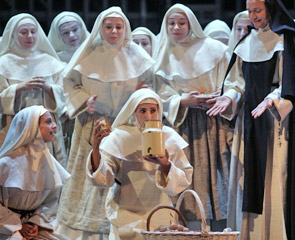
Prisoners of grief

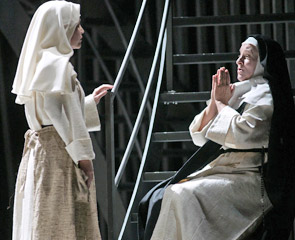
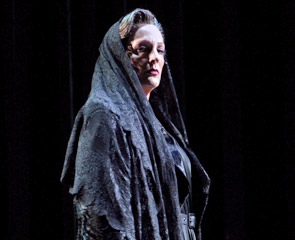
Though the musical distance between Puccini and Dallapiccola may seem to make this double bill incongruous, in fact they share the same vision of the human grief caused by loss of freedom. Each features a prisoner: one is the captive of a political dictatorship, the other of ideological tyranny, but both are the victims of an obscurantism they cannot escape, even at the price of an illusory transfiguration. Both works also draw inspiration from the composer’s own family: Iginia, Puccini’s elder sister, took the veil at the Augustinian convent of Saint Nicholas, while Laura Coen, Dallapiccola’s wife, was a Jew in Mussolini’s Italy. Suor Angelica was the last Italian melodramma whereas the mother in the prologue to Il Prigioniero is the coryphaeus of the tragedy: Romanticism versus post-Cubist neoclassicism.  But the grief is the same, the violation of feelings and rights is identical.  


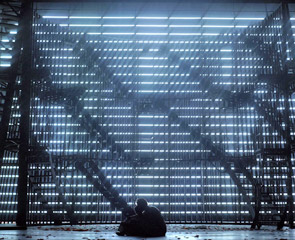
Il prigioniero. Opera comprising a prologue and one act. Libretto and music by Luigi Dallapiccola, based on La torture par l’espérance by Auguste Villiers de l’Isle-Adam and La Légende d’Ulenspiegel et de Lamme Goedzak by Charles de Coster. Premiered on 20 May 1950 at the Teatro Comunale in Florence. First performance at the Gran Teatre del Liceu.

Suor Angelica. Opera in one act. Libretto by Giovacchino Forzano. Music by Giacomo Puccini. Premiered on 14 December 1918 at the Metropolitan Opera House in New York. First staged at the Gran Teatre del Liceu on 21 December 1948. Most recent performance at the Gran Teatre del Liceu: 10 November 1987.

Conductor
Josep Pons

Stage direction
Lluís Pasqual

Scenography
Paco Azorín

Costume
Isidre Prunés

Lighting
Pascal Mérat

New Co-production
Gran Teatre del Liceu / Teatro Real (Madrid)

Cast 
Ievgueni Nikitin, Jeanne-Michèle Charbonnet, Robert Brubaker, Albert Casals and Toni Marsol.
(Il prigioniero)

Barbara Frittoli, Dolora Zajick, Gemma Coma-Alabert, Marina Rodríguez-Cusí, Itxaro Mentxaka, Auxiliadora Toledano, Anna Tobella, Sandra Ferrández, Inés Moraleda and others.
(Suor Angelica)

Symphony Orchestra and Chorus of the Gran Teatre del Liceu

PHOTOS:

Il Prigioniero

Prigioniero_8_02 Prigioniero_1_02 Prigioniero_2_02 Prigioniero_4_02 Prigioniero_6_02 Prigioniero_7_02

Suor Angelica

Suor_Angelica6_02 Suor_Angelica1_02 Suor_Angelica2_02 Suor_Angelica3_02 Suor_Angelica4_02 Suor_Angelica5_02

Photos: Teatro Real / Javier del Real

Posted in Music, OPera | Tagged , , , , , , , , , , , , , , , , , , | Leave a comment

La traviata in Vienna

La_Traviata_Giordano-Kurzak-webvienna

The Vienna Opera House Presents:

La traviata

Giuseppe Verdi

May 22, 2014

“Speaking as an expert, RIGOLETTO is my favorite opera, and speaking as a layman, LA TRAVIATA is my favorite.” (Giuseppe Verdi)

  • CAST and Artistic Team
  • Louis Langrée | Conductor
  • Jean-François Sivadier | Director
  • Alexandre de Dardel | Stage
  • Virginie Gervaise | Costumes
  • Cecile Kretschmar | Make up
  • Philippe Berthomé | Lights
  • Boris Nebyla | Choreography
  • Veronique Timsit | Assistant Director
  • Myrtò Papatanasiu | Violetta Valéry
  • Piero Pretti | Alfred Germont
  • Giovanni Meoni | George Germont

La_Traviata_51095Scene 1
Violetta Valéry, a radiant and well-to-do Parisian courtesan, who seems to have fully recovered from a serious illness, is giving a festive party attended by many prominent personages in high society. Gastone, one of her host of admirers, introduces Alfredo
Germont, who has long worshipped her from afar. Alfredo sings a toast in praise of love, to which Violetta responds by extolling a life given over solely to pleasure. But as she bids her guests join in the dancing she is racked by a sudden spasm of coughing and giddiness. Alfredo avows his love, and though Violetta cannot at first bring herself to believe that he is in earnest she is deeply touched by his declaration. However, she makes it clear to him that she can only offer friendship, not love; and handing him a camellia she tells him that when it begins to droop he may come to her again. Left alone, she is assailed by misgivings about her past life: perhaps she is beginning to fall in love with Alfredo after all?

La_Traviata_42284_ELLEN_DUMITRESCU_BELKINA

ELLEN, DUMITRESCU, BELKINA

Scene 2
Violetta and Alfredo have been living for the last three months in a country villa and are ecstatically happy. But through Violetta’s maid Annina, who has just returned from Paris, Alfredo learns that Violetta has been spending her savings on paying for their life at the villa. Alfredo thereupon decides to go to Paris to raise some money out of his own resources. Just as Violetta has opened a letter from her friend Flora inviting her to a ball a caller is announced: it is Alfredo’s father Giorgio, who accuses Violetta of living on his son. Violetta explains that on the contrary it is she who has spent all her savings that on Alfredo, and that it is for love of him that she has abandoned her former life. Giorgio Germont, who is a highly respected figure in society, then appeals to Violetta: his daughter’s happiness is at stake as her fiancé is threatening to break off the engagement because of her brother Alfredo’s scandalous association with a courtesan. Giorgio begs Violetta to salve the honour of his family by giving Alfredo up, but not to tell Alfredo of his father’s visit. Deeply distressed, Violetta consents and leaves a note for Alfredo
saying that she has been unfaithful to him and is leaving. On his return from Paris Alfredo is stunned by Violetta’s abrupt departure, but refuses to obey his father’s command to return to the family home. Suddenly his eye falls on Flora’s invitation,
which confirms his suspicions: he resolves to go to the party himself and settle with Violetta.

Scene 3

La_Traviata_Kammerer-Kushpler-web

Kammere and Kushpler

The guests at Flora’s party in costume and masked. Alfredo arrives and joins a group of cardplayers. Presently Violetta enters arm-in-arm with Baron Douphol, an old admirer of hers. Alfredo, who has enjoyed a run of luck with the cards, challenges his supposed rival to a game, but Violetta intervenes, fearing that it will come to a duel between the two men. True to her promise to Giorgio Germont not to reveal her real reason for leaving his son, Violetta tells Alfredo that she was really in love with Douphol all the time. Blind with rage, and in full view of Flora’s guests, Alfredo flings his winnings at Violetta’s feet as payment for her ”services“. Suddenly Giorgio Germont appears: full of remorse for having unfairly forced Violetta to conceal her love for his son, he expresses his disgust at his son’s behaviour.

La_Traviata_Giordano-Kurzak_2-web

Giordano and Kurzak

Scene 4
Violetta is desperately ill, physically and mentally, and the doctor tells Annina that it can only be a matter of hours. Violetta rallies when a letter arrives from Alfredo’s father with the news that Alfredo has been told the truth about her having spent her savings on his behalf, and that following a duel in which the Baron was slightly wounded. Alfredo had to flee the country, but is now on his way back to implore her forgiveness. Alfredo arrives and embraces her passionately: in her ecstasy Violetta looks forward to a complete recovery. But only for a moment: she now realizes that she is at death’s door, and by the time Alfredo’s father arrives to embrace his son’s betrothed, it is too late.

La_Traviata_Kurzak-Keenlyside-webLa_Traviata_Giordano-web LaTraviata_20111003_HPK_DSC4762 La_Traviata_Kurzak_2-web La_Traviata_Kurzak_1-web La_Traviata_Keenlyside_2-web La_Traviata_Keenlyside_1-web  La_Traviata_51115 La_Traviata_51114 La_Traviata_51112 La_Traviata_51092

Posted in OPera | Tagged , , , , | Leave a comment

Marseille Opera presents “La traviata”

Marseille Opera Presents:

from June 17th – 22nd, 2014

La Traviata

Giuseppe Verdi

Tuesday June 17th, 2014 > 8:00PM
Wednesday June 18th, 2014 > 8:00PM
Thursday June 19th, 2014 > 8:00PM
Friday June 20th, 2014 > 8:00PM
Saturday June 21st, 2014 > 8:00PM
Sunday June 22nd, 2014 > 2:30PM

 An often unattainable dream for many singers, Violetta remains the most popular female operatic figure – the most beautiful of roles and also the most daunting…

 La Traviata

Opera in 3 acts
Libretto by Francesco Maria PIAVE.
From « La Dame aux Camélias » by Alexandre DUMAS son.
First performed in Venice, Teatro La Fenice, on March 6th, 1853.
Last performed at Marseille Opera, on January 8th, 2006.

NEW PRODUCTION

Conductor : Lawrence FOSTER (17, 19, 21 june)
Conductor : Eun Sun KIM (18, 20, 22 june)
Director : Renée AUPHAN
Assistant Director : Chantal GRAF
Scenic Designer : Christine MAREST
Costume Designer : Katia DUFLOT
Lighting Designer : Roberto VENTURI

CAST

Violetta : Zuzana MAKOUÁ (17, 19, 21 june)
Violetta : Mihaela MARCU (18, 20, 22 june)
Flora : Sophie PONDJICLIS
Annina : Christine TOCCI

Alfredo : Teodor ILINČAI (17, 19, 21 june)
Alfredo : Bülent BEZDÜZ (18, 20, 22 june)
Germont : Marc BARRARD (17, 19, 21 june)
Germont : Estefan FLORIN (18, 20, 22 june)
The Baron : Jean-Marie DELPAS
The Marquis : Christophe GAY
The Doctor : Alain HERRIAU
Gaston : Carl GHAZAROSSIAN

Marseille Opera Orchestra and Chorus

Posted in Music, OPera | Tagged , , , , , , , , | Leave a comment

I vespri siciliani in Madrid

Teatro Real de Madrid Presents:

detalle_1780I vespri siciliani

(In concert version)

Giuseppe Verdi (1813-1901)

Information

This opera marks a transition in Verdi’s work, and is presented in its concert version, which allows the audience to better appreciate the small improvements made to a work of art in constant transformation. After composing La traviata, Busetto went in search of a new way of expressing himself musically, departing from the formulas used in previous operas, such as Ernani or Luisa Miller, and making unexpected musical transitions. I vespri siciliani has become an essential link to works such as Don Carlo and Otello. This opera is part of the project started by the Teatro Real (Royal Theatre) to show grand opera works: so far Les Huguenots and Rienzi have been performed and, in the future, the programme will include works such as La juive and Guillaume Tell.

Program

Opera in five acts in concert version
Libretto by Eugène Scribe amd Charles Duveyrier

Teatro Real Chorus and Orchestra
(Coro Intermezzo / Orquesta Sinfónica de Madrid)

Production Team & Cast

  • Musical director: James Conlon
  • Guido di Monforte: Alexey Markov
  • El señor de Bethune: Francisco Tojar
  • El conde Vaudemont: Luis Cansino
  • Arrigo: Piero Pretti
  • Giovanni di Procida: Ferruccio Furlanetto
  • La duquesa Elena: Julianna Di Giacomo
  • Ninetta: Adriana di Paolo
  • Danieli: Antonio Lozano
  • Tebaldo: Alejandro González
  • Roberto: Fernando Radó
  • Manfredo: Eduardo Santamaría
    vespri
  • Performance Dates
  • 11 JUN (W) 19:00h
    Turn Y
  • 14 JUN (S) 19:00h
    Turn X
  • 17 JUN (T) 19:00h
    Turn Popular II

Main Hall

Teatro Real de Madrid, Dirección: Plaza de Isabel II, s/n. 28013 Madrid

Posted in OPera | Tagged , , | Leave a comment

“Cavalleria Rusticana” & “Pagliacci in Shangai with Bellini Opera House

31st Shanghai Spring International Music Festival Closing Ceremony——Bellini Opera House from Italy Presents:Italian Operas “Cavalleria Rusticana ” & “Pagliacci”

logo3

shangai1

Time:May 18, 2014, 7:15pm

Venue:Shanghai Culture Square


image


Program

              Orchestra: Teatro Massimo Bellini Orchestra

              Choir: Choir of Teatro Massimo Bellini

              Choir of Shanghai Conservatory of Music

              Choir of Shanghai YK Pao School

              Conductor: XU Zhong、Antonio Manuli

              Lola : Sabina Beani

              Program:

              Mascagni: Cavalleria Rusticana

              Casting:

              Santuzza:Dimitra Theodossiou

              Lola :Sabina Beani

              Turiddu :Richard Wolfgang Bauer

              Mamma Lucia :Francesca Aparo

              Alfio :Paolo La Delfa

————————————Intermission————————————

              Leoncavallo: Pagliacci

              Casting:

              Canio: Richard Wolfgang Bauer

              Nedda: DanielaSchillaci

              Tonio: Kamie Hayato

              Beppe: Roberto Iuliano

              Silvio: Salvo Todaro

              Director: Luca Verdone

              Sets Design and Supervise: Salvatore Tropea

              Costume : Alberto Spiazzi、Huang Hua Lin、Yu Zheng

              Stylist:Yao Yu Ting

shangai_robertoiuliano

Roberto Iuliano

Daniela Schillaci

Daniela Schillaci

shangai_sabina

Sabina Beani

Teatro Bellini in Catania

Teatro Bellini in Catania

Posted in OPera | Tagged , , , , | Leave a comment

Teatro Sociale of Bergamo wins “Europa Nostra Conservation Award”

europa_nostra_internationaal_logoAwards print

ITALY, Bergamo
Conservation

TEATRO SOCIALE

2014

bergamo1Bergamo’s Teatro Sociale is a fine antique wooden theater “all’italiana” built in 1804. It enjoyed a mixed first century, but finally succumbed to competition and closed in 1929, functioning thereafter as a cinema and exhibition hall. By the end of the 20th century it was in an advanced state of decay. Demolition seemed its inevitable fate.

bergamo2But the corner was turned. The municipal authority, as owners, first planned a partial restoration of the ground floor only as an exhibition area. Then, however, its ambitions grew and proposals for a more comprehensive renewal were drawn up. In the end, the courage and funds were found to complete a full authentic restoration of the original building, making as much use as possible of whatever original features could be saved, and using modern methods to secure the structure and guarantee comfort and safety. The reward has been the re-establishment of a fine historic theater in the very center of the urban space, which has revitalized the surrounding area and indeed the whole town.

bergamo3“What impressed the jury with this project was the ingenuity in combining a minimal amount of inevitable new work with highly skilled, but again minimal, intervention in the restoration of the old. This is always a difficult balance and has been accomplished here with exceptional results, partly by the employment of a wide range of experts and partly with the enlightened patronage of the Municipality of Bergamo.”bergamo4

bergamo5

bergamo6bergamo7

Posted in Article | Tagged , , | 2 Comments

The MIKADO at the HAWAII OPERA THEATRE

Slideshow Image 1

The HAWAII OPERA THEATRE Presents:

The Mikado

Forbidden love… Deception… Comedy? Only at the Opera!

Performance Schedule

  • June 13, Friday, 8:00pm
  • June 14, Saturday, 8:00pm
  • June 15, Sunday, 4:00pm
  • June 20, Friday, 8:00pm
  • June 21, Saturday, 2:00pm
  • June 22, Sunday, 4:00pm

All performances at the Blaisdell Concert Hall.

Sung in English with English text projected above the stage.

  • THE MIKADO:
    Jamie Offenbach
  • NANKI-POO:
    Joshua Kohl
  • KOKO:
    Curt Olds
  • POOH-BAH:
    John Mount
  • PISH-TUSH:
    Leon Williams
  • YUM-YUM:
    Sarah Asmar
  • KATISHA:
    Victoria Livengood
  • CONDUCTOR:
    Tim Shaindlin
  • STAGE DIRECTOR:
    Henry Akina

Slideshow Image 2

Set in Japan, this satire on English mores of the time weaves the two cultures seamlessly together with humorous lyrics and elaborate plot twists.

Nanki-Poo, the son of the Mikado, flees his home to avoid an arranged marriage to an older woman only to find himself falling in love with the beautiful Yum-Yum, who is also betrothed… to her guardian, Ko-Ko, the Lord High Executioner!!!

Will Nanki-Poo find love or face the wrath of the Mikado for defying his order? Find out in Gilbert and Sullivan’s romp through the mythical and nonsensical fantasy world of The Mikado.

Meet the Stars

jamieoffenbach 

Jamie Offenbach

Jamie J.Offenbach presented an unusual visual picture as a rail-thin Mikado, but his rich, resonant voice belied the appearance of his frame. Commentators have often pointed out the sadistic nature of many of Gilbert’s jokes, and Offenbach brought out this aspect of the character with relish.”

Honolulu Star Advertiser

joshuakohl 

Joshua Kohl

Joshua Kohl was a brazen Nanki-Poo, with an excellent lyric tenor voice.

The KC Independent

sarahasmar 

Sarah Asmar

Sarah Asmar was a delight as Mabel (Pirates of Penzance), with a clear chime-like soprano that danced up and down the scales in “Poor Wandering One.” Her performance sparkled with wit.

Idaho Statesman

curtolds 

Curt Olds

In the role of Ko-Ko Curt Olds’ clear diction and comic timing made the dialogue lively and humorous, while he sacrificed nothing in the integrity of his singing.

Honolulu Star Advertiser

Slideshow Image 3

Posted in Music, OPera | Tagged , , , , , , , , | Leave a comment