San Diego Opera Continues Its Battle for Survival

From:bwwopera By Erica Miner

2351FB78C-F7D2-D07F-7FE022375AB84EA1On Thursday, April 17, controversy over the closure of San Diego Opera took a startling turn when a Town Hall meeting with the theme, “San Diego Opera Moves Forward: Alternative models of Opera in America” for supporters of the company’s survival, and a meeting of the Opera’s Board of Directors, took place simultaneously. The atmosphere at the former (which I attended) was upbeat and hopeful and ended with cheers from the overflow crowd at the Civic Plaza Copper Room. The latter reportedly was chaotic and contentious and resulted in walkouts and multiple resignations from Board members, including its president, Karen Cohn.

audience2Those who have followed SDO’s journey since General Director Ian Campbell made his shocking announcement on March 19 of the company’s impending closure are familiar with the circumstances. Citing declines in ticket sales and donations, and the near-depletion of a $10 million dollar endowment, Campbell encouraged SDO’s board to shut down the company’s operations at the end of the current season, with the final performance scheduled on April 13. The board voted 33-1 in favor of Campbell’s recommendation.

Volatile reaction came swiftly from company members, longtime SDO supporters and opera lovers, not only locally, but also across the entire US via the Internet and social media. 400 employees, including singers, San Diego Symphony musicians, stagehands, staff members and many more, were in danger of losing their incomes. Battle lines were drawn as San Diegans stood up to voice their opposition to the planned closure.

Before long it was evident that the implications reached far beyond San Diego. In fact, the situation aroused concerns nationwide about the future of opera. Well-established New York City Opera had already closed in recent months. The Met was having labor disputes that portended possibly insurmountable difficulties. The potential demise of SDO had opened a Pandora’s box of fear and worry among opera aficionados. So many people love opera; how could this beloved art form suddenly be poised on the chopping block?

panel5However, it also became clear that SDO was not going to go down without a fight. The crusade to save the company has received almost daily coverage from local media. A group of employees, staff and opera supporters formed a “White Knight Committee” (WKC) to fight the closing and to pressure the board to rescind its decision. Via emails and the Internet the WKC called for opera lovers to sign an online “Save San Diego Opera” petition; over 20,000 signatures signaled an overwhelming desire to keep the company alive. Company singers filed a lawsuit to force SDO to submit arbitration over their contracts. Little known facts about the company’s financials began to circulate. Campbell was mercilessly criticized for giving up on the company, and for drawing a salary that was inordinately generous, given the company’s financial precariousness. The high-rent penthouse SDO offices were cited as exceedingly posh and expensive.

Clearly, if the opera were to survive change was needed, in the form of economizing, cutting down expenses, and choosing new leadership. The WKC and its proponents insisted the opera was salvageable and mounted a persuasive campaign to prove their hypothesis. Nightly features began to appear on local San Diego TV stations. “Can the Opera Be Saved?” was a recurrent theme in the media, one of many arias that were being composed in the opera within an opera of the company’s saga. Soon, public outcry motivated a pressured Board to extend the closure deadline to April 29. The “Save SDO” movement gained momentum at an accelerated pace, resulting in the April 17 “San Diego Opera Moves Forward” Town Hall Meeting at Civic Plaza.

420 attendees in the Copper Room and numerous others who watched via live stream on monitors in the hallway listened carefully as three opera-expert panelists discussed viable alternatives to keep SDO alive. Nicolas Reveles, the Opera’s Geisel Director of Education and Outreach and well known to San Diego opera aficionados as the company’s superbly knowledgeable pre-opera lecturer, moderated the discussion. Presenters Marc, Scorca, President and CEO of the national organization Opera America, and David Devan, General Director of Opera Philadelphia, informed the audience as to the types of business models that other US opera companies have implemented to bring opera into the 21st century.

Reveles started by defining opera. Grand Opera in a 3,000-seat theatre no longer was relevant to SDO, he claimed. New business models using smaller theaters and different types of operas such as musical theater, Baroque operas with smaller casts and orchestras, and Mexican-themed operas such as Cruzar la Cara de la Luna, which was performed in the 2012-2013 SDO season, were necessary to enable the company to adhere to the realistic budget realities of our times and to attract audiences. Opera is an art form that tells stories in music, using classic issues involving community, politics, and (audience laughter here) political corruption.

SDO SOS FightScorca cited difficulties in the state of opera over the past decade: increases in the “Opera Price Index” of two to two-and-a-half times the cost of living increase; a decrease in audience attendance of as much as 24% in top-level companies; more sophisticated audiences resistant to subscriptions; competition for audiences in entertainment and philanthropic dollars. Nonetheless he gave examples of a positive nature. In recent years the number of opera companies across the US has increased from 120 to 500. Opera is now a multimedia art form; young artists of unprecedented high quality are creating their own companies and finding donors. Specialty companies are commissioning new works. Smaller venues are being balanced by HD transmissions in stadiums. Companies such as Dallas Opera, which cut back from five to three productions, are now able to slowly increase the number of productions while still reducing costs.

Devan presented a similar view in what amounted to a much-needed pep talk for a crowd hungry for good news. He pointed out that, just as Philadelphia was not New York, San Diego was not Los Angeles, and needed to come up with its own unique “SDO plan.” As a smaller city, Philadelphia had faced a challenge he called “subscriber crisis.” Opera, competing with such media as Netflix, was a waning model, too costly to remain the same, an art form that needed to reach beyond the opera house, with a civic footprint as important as its product footprint. Philadelphia Opera reinvented itself by creating partnerships in innovative co-productions with such established musical entities as the Philadelphia Orchestra and Curtis Institute of Music; balancing major opera performances in large venues with chamber operas in smaller venues; creating a Composer-in-Residence program; broadcasting at Independence Mall; and fueling innovation by asking people to commit to investing in new ideas through a “Venture Philanthropy” concept. These efforts have garnered numerous positive results, including an increase of 24% in ticket yield among the coveted 25 to 34 age group. He emphasized that “Version 2.0” for San Diego would necessitate a long-term plan. The enthused listeners seemed more than willing to devote the time and energy needed.

As the meeting ended, news filtered in via text from the Board meeting. Board President Karen Cohn had resigned along with twelve other Board Members. Ian Campbell and his former wife Ann Spira Campbell had walked out prematurely. A cheer emanated from the crowd when it was announced that the San Diego Opera Association had deferred its previously announced April 29 date for closure of operations to at least May 19, to permit the reconstituted Board and the Special Committee led by Board secretary Carol Lazier to explore opportunities to continue the Opera Association’s mission.

Later news revealed that Lazier, who earlier this month had donated $1 million to explore new ways forward for the opera company, was named acting board president. New hope emerged for a retooled, “fiscally responsible” 2015 SDO season, with advice coming from outside experts including Opera America. A meeting of the Opera Association Members is being organized for the near future.

Whether plans for a resurrected San Diego Opera with new donor and fundraising options will come to fruition remains to be seen. What is clear thus far is that passionate lovers of opera in our city have not been willing to give up the battle. That fervor seems unlikely to diminish any time soon.   https://www.facebook.com/savesandiegoopera

Photo credits: SaveSanDiego.org (logos) John Menier (photos)

Posted in Article | Tagged , , , , , , , | Leave a comment

MOSES und ARON in Wales

Moses-und-Aron-(Stuttgart-Opera)-Chris-Merritt-(Aron)-Photo-A_T_-Schaefer-11_jpg_0

WELSH NATIONAL OPERA PRESENTS:

Moses und Aron

Schoenberg

New Production

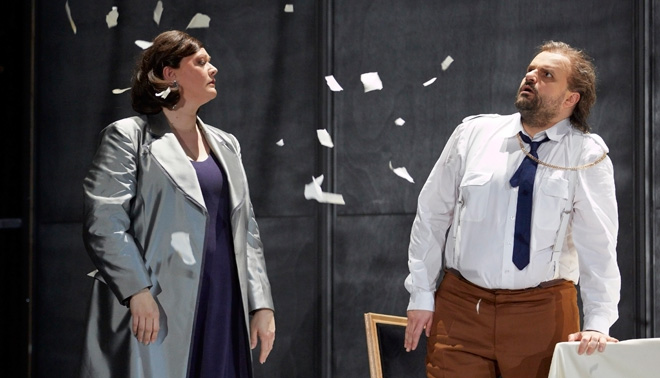
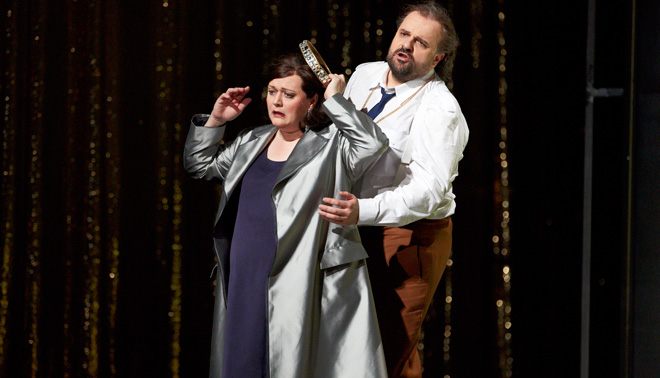
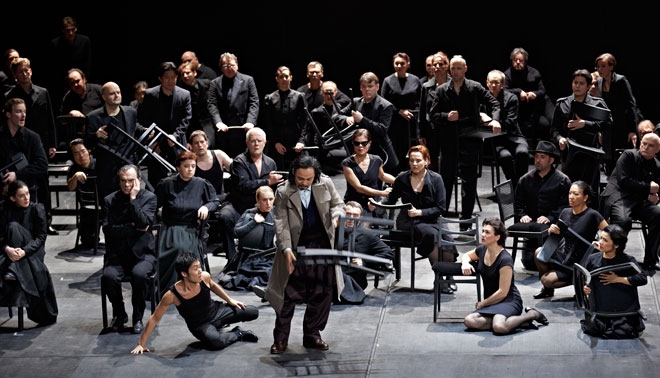
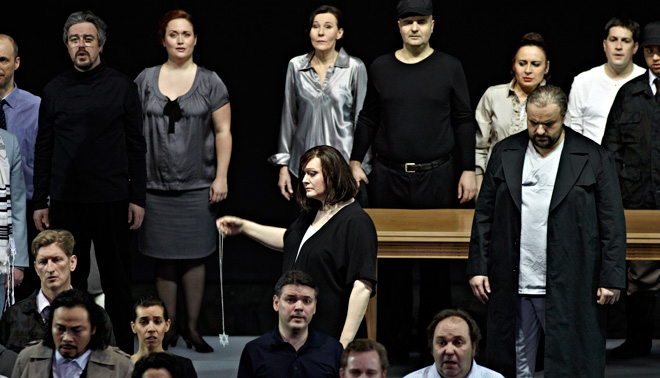
Imagine you’ve been told the most important thing man has ever been told. What you have been told will change the world and save mankind. You must now share what you have heard, you are God’s spokesperson on earth. Imagine, however, that you are overcome with despair that you find yourself unable to find the right words to communicate God’s will. This is Moses’ tragedy in Moses und Aron. It is impossible not to listen to Schoenberg’s ‘fragmentary masterpiece’ and not be stunned by his achievement. Moses und Aron reaches to the outer limits of what opera was capable of in the last century. It’s a sound so unique, so urgent that you might be forgiven for thinking that it has come down from heaven itself. Welsh National Opera is proud to stage this rarely performed opera in Sergio Morabito and Jossi Wieler’s highly charged production. Moses und Aron is a huge undertaking for both performers and audiences but the rewards will be extraordinary. Supported by the Colwinston Charitable Trust and The John S Cohen Foundation.

Conductor: Lothar Koenigs

Directors: Jossi Wieler and Sergio Morabito

Based on an original design by Anna Viebrock

Lighting Designer: Tim Mitchell

Lighting Design Assistant: Simon Spencer

MOSES-~3

Cast

Moses: Sir John Tomlinson

Aron: Rainer Trost

A Young Maiden / First Naked Virgin: Elizabeth Atherton

A Young Man: Alexander Sprague

Another Man / Ephraimite: Daniel Grice

A Priest: Richard Wiegold

Sick Woman / 4th Naked Virgin: Rebecca Afonwy-Jones


SYNOPSIS

Act One

Moses hears the voice of God. It asks him to lead his people out of Egyptian servitude and to instil in them a belief in the One and Only. Moses quails at the task, pleading old age and the ‘clumsiness of his tongue’. The voice promises him the help of his brother Aron, whose words will work miracles in the minds of the people.

The two brothers, Moses and Aron, are both inspired and daunted by the divine mission. They struggle to find an explanation of that which cannot be explained: an understanding of the invisible and inconceivable God.

The news spreads that Moses has returned, together with Aron, in order to announce a new god. The people, who have suffered since Moses killed an Egyptian slave-driver, are apprehensive and fear retribution.

The people besiege Moses and Aron with questions about the new god. Their disappointment turns to rage when they are unable to understand that this god is invisible. Moses is frustrated when he is unable to explain how God can be perceived only within oneself but Aron tries to help the people understand by performing three miracles of transformation.

Aron interprets the miracle of the staff transforming itself into a snake as an allegory of divine law: spiritual flexibility is required for its understanding. Authority and intelligence, which are necessary qualities for leaders, are united in Moses and Aron. Moses’s hand, which appears leprous, is healed when he places it over his heart, where God dwells. Pouring Nile water, which appears to change to blood, Aron explains that the blood of the Hebrews has been nurturing the land of their oppressors for generations. God would free them and lead them to a land where milk and honey flow. The power of the Egyptians, however, would be washed away in the floods of the Nile.

Aaron’s inspired words reach the people’s hearts. They become aware of being chosen and, led by Moses and Aron, venture to begin the fight for freedom.

Act Two

The people’s exodus from Egypt has led them into the wasteland. Moses has been on the mountain of revelation for forty days and has not yet returned. The people have lost their belief in him and want to turn away from the invisible god. Aron is unable to explain his brother’s actions. The people plead with the elders to be given back the old gods and their laws. Aron is ready for a compromise and prepares to provide them with an image of their longings and wishes.

The people become more and more enthralled by the drawing power of the image. It shows the preparation of animal sacrifices, the dances of the slaughterers, the slaughter of the animals, burnt offerings, the miraculous healing of a sick woman and the ritual murder of a young man protesting against idolatry. After much drinking and dancing the worship culminates in the ritual sacrifice of four naked virgins. Devastation, suicide and erotic orgies follow.

Moses descends from the mountain. At his words, the image, created by Aaron, vanishes. Moses challenges his brother’s decision to act against the divine command. Aron insists on the people’s need of the image, which he had used to fill the vacuum Moses had left. For Moses, an existence without the idea of God seems worthless.

Aron argues that the laws which Moses has been given by God can only give the people a limited view, that they struggle to understand. In despair, Moses destroys the laws. Aron denounces him, saying that he will continue to keep the idea of God alive by putting it into words. He joins the people as they continue their journey to the promised land.

Moses is left behind. Aron has put words and images to that which cannot be expressed and has destroyed his brother’s absolute perception of God. For Moses, God has become silent.

Moses-und-Aron-(Stuttgart-Opera)-Chris-Merritt-(Aron)-Photo-A_T_-Schaefer-24_jpg

General information:

All performances start at 8pm.

Running time approximately 2 hour 10 minutes with one interval.

Sung in German with surtitles in English (and Welsh in Cardiff).

Production originated at Stuttgart Opera.

Free pre-performance talks
Prior to every performance of Moses und Aron and Nabucco.

The Whole Story
Thursday 22 May – Tuesday 3 June
The Whole Story is the perfect introduction to the Faith season. Before the performances begin, our team of experts will guide you through the music, stories and background to each opera.

David Pountney in Conversation
Friday 23 May
David Pountney and a key figure from the arts explore the Faith theme.


Posted in OPera | Tagged , , , , | Leave a comment

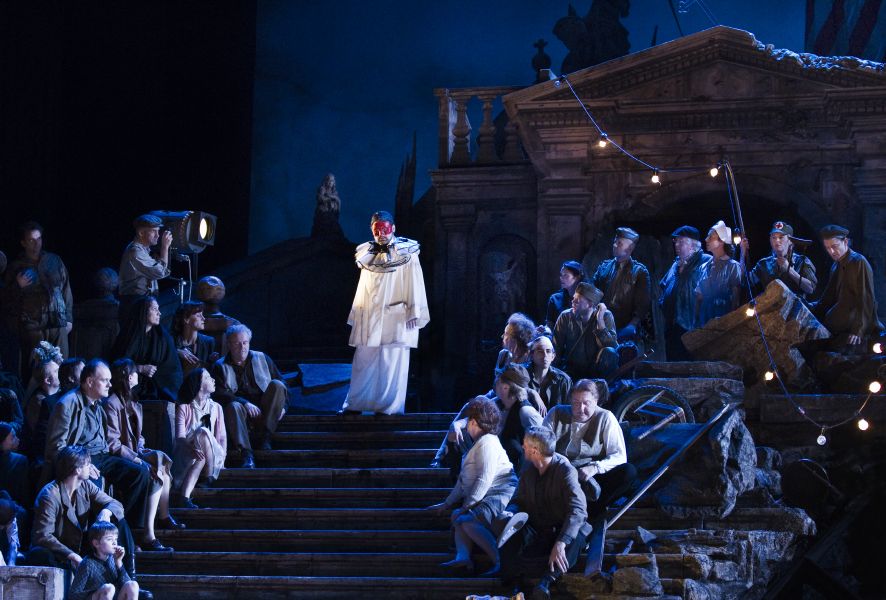
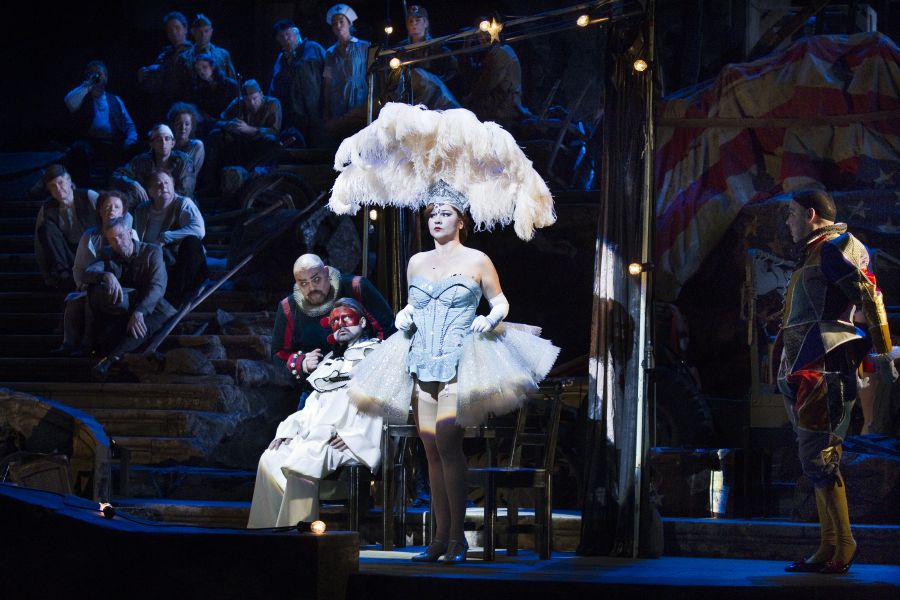
Cavalleria Rusticana and Pagliacci in Copenhagen

The Royal Danish Opera Presents:

CavalleriaRusticananeEN_top415

Stage: Operaen Store Scene
Title: Cavalleria Rusticana & Bajadser
Artform: Opera
Performance period: 17. May. – 10. Jun. 2014
Duration: 2 hours 30 minutes incl. interval.
Price: 795kr – 125kr
Dates: 17/05, 20/05, 24/05, 27/05, 31/05, 02/06, 04/06, 06/06, 10/06

Take a journey to Sicily’s hot-blooded world of seduction and jealousy in two classic operas visually linked by impressive set design.

Strong Italian temperaments are at play under the baking sun of Southern Italy in these two performances about hypocrisy and murder. Studded with catchy melodies, both operas are in musical consonance with Puccini works such as Tosca and La bohème. Critically acclaimed set designer Mia Stensgaard has created extraordinary sets for the performance evocative of the torrid Sicilian heat. If you’ve never been to see an opera before, this two-opera performance is a very fine place to begin.

Many new singers are featured in the cast list, including Stig Andersen, Johan Reuter, Anne Margrethe Dahl, Niels Jørgen Riis and Audun Iversen, and the young star conductor Joana Mallwitz leads The Royal Danish Orchestra and the Royal Danish Opera Chorus.

Cavalleria rusticana & Pagliacci is performed in Italian with Danish supertitles.

Co-production with the Norwegian National Opera.
Nykredit is the exclusive production sponsor forCavalleria rusticana & Pagliacci.
The Danish Research Foundation is the principal sponsor of the Royal Danish Opera.

Production Team
Conductor: Joana Mallwitz
Stage direction: Kasper Holten (Cavalleria rusticana) and Paul Curran (I Pagliacci) | Set design: Mia Stensgaard
Costume design: Anja Vang Kragh
Lighting design: Bruno Poet
The Royal Danish Orchestra • The Royal Danish Opera Chorus

_86F5059d _86F1028d _86F0475d _86F5809d _86F5291d _86F0761d _86F0383d _86F0666d _86F0062d _86F5668d _86F5076d _86F0550d _86F0059d_86F5809d _86F5934d _86F20282d _B1G1066d _B1G1336d _MG_9500d _MG_9601d

_86F1118d _86F1176d _86F1639d _86F2020d _86F2251d _86F2642d _86F2924d _86F5059d _86F5076d _86F5111d _86F5291d _86F5521d

Cast

  • Anne Margrethe Dahl
  • Randi Stene
  • Tamta Tarieli

  • Niels Jørgen Riis

  • Johanne Bock

  • Johan Reuter
  • Hanne Fischer
  • Tuva Semmingsen
  • Stig Fogh Andersen
  • Sine Bundgaard

  • Kristin Lewis

  • Michael Kristensen

  • Gert Henning-Jensen
  • Audun Iversen
  • Palle Knudsen

The Danish Boys’ Choir | The Danish Girls’ Choir

Posted in OPera | Tagged , , , , | Leave a comment

Nabucco in Wales

 WELSH NATIONAL OPERA PRESENTS:Nabucco_gallery06

NABUCCO

Giuseppe Verdi

New Production

When Nabucco is struck by lightning he proclaims himself to be a god. Others think he is a mad man, a tyrant, yesterday’s news, a father and possibly even a liberator. In the final reckoning how will Nabucco be judged? Best known for ‘Va, pensiero – The Chorus of the Hebrew Slaves’, Nabucco is a rich treasure by the young Verdi that all fans of his work will want to discover. Nabucco is the operatic equivalent of a 1950s biblical Hollywood epic with its rousing, soaring score. We are delighted to present Nabucco once again as the company who re-introduced it to British audiences a century after it was last performed on these shores. Rudolf Frey’s production set in the modern day puts the WNO Chorus at the heart of the drama. Nabucco will send you home humming the tunes and tapping your feet for days to come. Supported by the Colwinston Charitable Trust, WNO Partners and the Nabucco Circle.

PERFORMANCES:

Wales Millennium Centre, Cardiff 31 May – 14 June

Birmingham Hippodrome 19 Jun – 21 June

Olavinlinna Castle, Savonlinna, Finland 29 Jul – 2 Aug –

ARTISTIC TEAM

Conductor: Xian Zhang (ex 8 June) tbc (8 June)

Director: Rudolf Frey

Set Designer: Ben Baur

Costume Designers: Silke Willrett and Marc Weeger

Lighting Designer: Tim Mitchell

Choreographer: Beate Vollack

Nabucco_gallery01 Nabucco_gallery02

Cast

Nabucco: David Kempster

Abigaille: Mary Elizabeth Williams

Zaccaria: Kevin Short

Fenena: Justina Gringyte

Ismaele: Robyn Lyn Evans

High Priest: James Platt

All performances start at 7.15pm except 8 June at 4pm Running time approximately 2 hours 50 minutes with one interval Sung in Italian with surtitles in English (and Welsh in Cardiff)

Nabucco_gallery03 Nabucco_gallery04 Nabucco_gallery05 Nabucco_gallery07

SYNOPSIS

The Hebrews pray to God for protection from the Babylonians, who are at the gates of the temple, led by their king, Nabucco. Zaccaria, the High Priest of the Hebrews, holds a vital hostage: Nabucco’s daughter, Fenena. Leaving her in the care of the Hebrew prince, Ismaele, Zaccaria leads his people into battle.

Fenena and Ismaele fell in love when she helped to secure his release from prison in Babylon. Now he is determined to set her free. As they plan their escape, Nabucco’s other daughter, Abigaille, breaks in with a band of Babylonian soldiers disguised as Hebrews. Abigaille also loves Ismaele and offers to save the Hebrew people if he will love her in return. He refuses.

The defeated Hebrews are pursued by the Babylonians. As Nabucco is about to enter the Temple, Zaccaria threatens to kill Fenena if he commits this sacrilegious intrusion. Ismaele intervenes and disarms Zaccaria. With his daughter safe, Nabucco orders the destruction of the Temple. The Hebrews are driven into exile.

Abigaille has found a document that proves that she is not Nabucco’s daughter, but the child of a slave. She swears vengeance against the king and against Fenena, whom Nabucco has appointed as regent while he is still embroiled in the war against the Hebrews. The High Priest of Baal brings news to Abigaille that Fenena has set the Hebrews free. He and his followers have spread a rumour that Nabucco has died in battle and he urges Abigaille to seize the throne.

Zaccaria intends to convert Fenena to the Jewish faith. The Hebrews attack Ismaele for his betrayal of them but are astounded to discover that Fenena has been converted.

As the High Priest of Baal and Abigaille attempt to usurp Fenena’s position as regent, Nabucco returns unexpectedly. He spurns the gods of both Baal and the Hebrews and declares that he himself is the only true god. At these words he is struck down and driven mad. Abigaille seizes power.

The demented Nabucco interrupts the celebrations of Abigaille’s accession to the throne. She taunts her father and tricks him into signing a warrant for the execution of Fenena and the Hebrews. When he realizes what he has done, Nabucco begs Abigaille to show mercy, but she refuses. He attempts to find the document that proves her lowly birth but she produces it herself and tears it up in front of him.

Nabucco sees Fenena being led to her execution and prays to the god of the Hebrews for help and forgiveness. He is restored to sanity and goes to rescue his daughter.

Fenena and the condemned Hebrews resign themselves to death but Nabucco arrives just in time to save them. He gives orders to destroy the image of Baal and, proclaiming his conversion to their faith, promises the Hebrews that he will rebuild the Temple.

Abigaille has taken poison, but before she dies she begs the god of the Hebrews for forgiveness. Zaccaria returns the crown to Nabucco.

Free pre-performance talks
Prior to every performance of Moses und Aron and Nabucco.

The Whole Story
Thursday 22 May – Tuesday 3 June
The Whole Story is the perfect introduction to the Faith season. Before the performances begin, our team of experts will guide you through the music, stories and background to each opera.

David Pountney in Conversation
Friday 23 May
David Pountney and a key figure from the arts explore the Faith theme.

Images by A.T. Schaefer

Nabucco_gallery08 Nabucco_gallery09 Nabucco_gallery10 Nabucco_gallery11 Nabucco_gallery12 Nabucco_gallery13 Nabucco_gallery14 Nabucco_gallery15 Nabucco_gallery16 Nabucco_gallery17 Nabucco_gallery19 Nabucco_gallery20

See more at: http://www.wno.org.uk/nabucco

Posted in OPera | Tagged , , , , | Leave a comment

Rigoletto in Tel Aviv

Rigoletto

Giuseppe Verdi 

The womanizing Duke sings La donna e` mobile as he enjoys his ongoing conquests, while his jester Rigoletto plans a personal vendetta in Verdi’s popular opera about blind love, hate and the wish for revenge.

Libretto: Francesco Maria Piave after Victor Hugo’s Le Roi S’amuse
First Performance: Teatro La Fenice, Venice, March 11, 1851
First Performance at the Israeli Opera: March 29, 1997
First Performance of this production in the current season: June 30, 2012 

Conductor                                Daniel Cohen 
    Eithan Schmeisser
Director   David Pountney
Revival Director   Gadi Schechter
Set Designer   Stefanos Lazaridis
Costume Designer   Sue Wilmington
Lighting Designer   Paul Pyant
Soloists                  
Rigoletto   Carlos Almaguer  
Gilda   Hila Baggio
The Duke of Mantua   Jean-Frarcois Borras 
    Given Nkosi
    Ivan Magri
Sparafucile   Vladimir Braun
Maddalena   Goldman Na’ama
Monterone   Noah Briger
Borsa   Guy Mannheim
Giovanna   Shay Bloch 
The Israeli Opera Chorus
Chorus Master:Eithan Schmeisser
The Opera Orchestra –The Israel Symphony Orchestra Rishon LeZion
Sung in Italian
Surtitles in English and Hebrew
Surtitles: Israel Ouval
  
Length of performance: approx. two hours and 40 minutes
Day                       Opera Date  Hour back stage tours Talkback
*SAT 17.5.14 11:00    
**WED 21.5.14 20:00    
***FRI 23.5.14 13:00    
SAT 24.5.14 21:00 18:30  
MON 26.5.14 20:00 18:30 After the show
WED 28.5.14 20:00   After the show
FRI 30.5.14 13:00    
WED 25.6.14 20:00 18:30 After the show
FRI 27.6.14 13:00    
SAT 28.6.14 21:00 18:30  
MON 30.6.14 20:00   After the show

*    Towards Opening: 17.5.14,  SAT, 11:00
**   Première Performance
*** The performance is dedicated to the memory of our beloved Shimshon Zelig – 23.5.13, 13:00

Act I
Scene i
The Duke of Mantua takes advantage of a party in honor of the Count and Countess Ceprano to seduce the Countess, but for him one woman is never sufficient for long. He talks with excitement about his next victim: a girl he has followed in disguise from church every Sunday. Rigoletto, his jester, mocks the enraged Ceprano. But Marullo, a courtier, has discovered a strange secret about Rigoletto himself: he has a mistress! Ceprano hatches a plot with the courtiers to punish the jester. Monterone forces his way in to denounce the Duke for seducing and debasing his daughter. Rigoletto answers him with vicious mockery. Monterone hurls a father’s curse at both Duke and jester.

Scene ii
Rigoletto meets Sparafucile who offers his services as an assassin. After this chance encounter, Rigoletto reflects on the similarities of their professions: the one wounds with a knife, the other with his tongue. Gilda presses Rigoletto to reveal his identity and her real name and background. But Rigoletto is only obsessed with the need for Gilda to remain hidden from contact with the outside world. He begs Giovanna to keep his daughter safe, but she has already arranged for Gilda’s admirer (the Duke in disguise) to meet her. Rigoletto leaves for work, and Giovanna leaves Gilda alone with the Duke, who says he is a poor student called Gualtier Malde. His seduction of Gilda is interrupted by the courtiers, intent on punishing Rigoletto by abducting his “mistress”. Rigoletto returns unexpectedly, but they trick him into believing they are abducting the Countess Ceprano. When he discovers the truth, Rigoletto realizes that Monterone’s curse is taking effect.

Act II
The Duke is furious that Gilda has been abducted. The courtiers try to placate him by relating their trick on Rigoletto. Gradually the Duke realizes that it is the same girl and that she is now in the palace. The Duke leaves to complete his seduction. Rigoletto comes to search for Gilda, and eventually realizes that she is with the Duke. Even when they are told Gilda is not his mistress but his daughter, the courtiers ignore the jester’s pleas for help. Gilda finally appears, torn between guilt and love for the Duke. Monterone is led past, lamenting the ineffectuality of his curse. Rigoletto swears to avenge him, but Gilda, still besotted, pleads mercy for the Duke.

Act III
On Rigoletto’s instructions, Sparafucile has used his sister Maddalena to lure the Duke, now disguised as a soldier, to his squalid bar by the river. Rigoletto brings Gilda, who still believes the Duke loves her, to witness his infidelity. Once she has seen enough, Rigoletto orders her to go home and disguise herself as a young man in preparation for their escape from the city. Rigoletto now pays Sparafucile his first installment. As the storm breaks, Gilda returns and overhears Maddalena pleading with Sparafucile to spare the attractive young soldier. Sparafucile agrees only if a substitute victim appears by midnight. Gilda sacrifices herself to save the Duke’s life. Rigoletto returns to collect the corpse, but as he is about to throw the sack with the corpse in the river, he hears the Duke nonchalantly singing in the distance. Opening the sack, he discovers his daughter. Monterone’s curse has been fulfilled.

(Photos: Yossi Zwecker)

Posted in Music, OPera | Tagged , , , , , , , , | Leave a comment

TURANDOT in Montreal

acc_turandotHome   PRESENTS:

TURANDOT

Giacomo Puccini

DURATION: 3 HRS.
INTERMISSION: 2
HALL: WILFRID-PELLETIER
VENUE: PLACE DES ARTS
PREOPERA : 6:30 pm

  •  17 May 2014
  •  20 May 2014
  •  22 May 2014
  •  24 May 2014

Synopsis

Puccini

TURANDOT

Puccini’s last opera is his most impressive and most lavish. Larger-than-life characters, and voices that measure up to their excessiveness. A torrent of captivating melodies, starting with the immortal Nessun dorma. An international cast, including a favourite of Montreal audiences, the incredibly moving Hiromi Omura as Liù.

SYNOPSIS

Prince Calaf is in love with the cruel Princess Turandot. To marry her, he must solve three riddles, with a wrong answer resulting in his decapitation. With the help of his faithful servant Liù, Calaf will triumph, and love will melt the princess’s icy heart.


  • Opera: in 3 acts
  • Libretto: Giuseppe Adami and Renato Simoni, after Carlo Gozzi’s tale
  • Premiere: Teatro alla Scala, Milan, April 25, 1926
  • Sung in Italian with French-English surtitles
  • Production : Opera Australia

Presented for the last time at the company: October 2004

Composer


  • Giacomo Puccini

    Lucca, 1858 – Brussels, 1924

    Puccini is the most popular Italian opera composer after Verdi. Born to a long line of composers and organists, he lost his father at the age of five. His musical training was taken over by his uncle, and at 16, he entered the Istituto Musicale Pacini, where he composed his first works. Lucca, the town of his birth, enjoyed a rich cultural life, with regular visits from touring theatrical companies. In 1876, in Pisa, Puccini fell in love for the first time: a performance of Verdi’s Aida sealed his fate as an opera composer. He continued his studies at the Milan Conservatory under Amilcare Ponchielli, composing instrumental and vocal pieces, including the Messa di gloria (1880). His first attempt at opera was Le villi, entered — but not selected — in a competition for one-act operas. However, a performance of the same opera at the renowned Teatro dal Verme in Milan in 1884 launched his career. It was there that publisher Giulio Ricordi noticed him and assured him unwavering support. Only with his third opera, Manon Lescaut (1893), did Puccini begin to achieve any success. Ricordi found him two excellent librettists, Luigi Illica and Giuseppe Giacosa, who co-wrote the librettos for his immensely popular works: La Bohème (1896), Tosca (1900), and Madama Butterfly (1904). Puccini closely oversaw the writing of his librettos, starting and abandoning numerous projects, which considerably slowed his output. After The Girl of the Golden West, which premiered at the Metropolitan Opera in New York in 1910, he began the composition of a triptych of one-act operas, Il tabarro, Suor Angelica, and Gianni Schicchi, which also received their first performances at the Met in 1918. He was unable to complete his last opera, Turandot, which was performed posthumously at La Scala in 1926.

  • Cast

Turandot Galina Shesterneva / Calaf Kamen Chanev / Liù Hiromi Omura / Timur Grigori Soloviov / Conductor Paul Nadler / Stage Director and Choreographer Graeme Murphy / Sets and Costume Designer Kristian Fredrikson /  Chœur de l’Opéra de Montréal Orchestre Métropolitain

  • Josh Whelan
  • Jean-Michel Richer (Canada)
  • Aaron Sheppard (Canada)
  • Kristian Fredrikson (New Zealand)
  • Paul Nadler (USA)
  • Galina Shesterneva (Russia)
  • Hiromi Omura (Japan)
  • Kamen Chanev (Bulgaria)
  • Grigori Soloviov (Russia)
  • Graeme Murphy (Australia)
Posted in Music, OPera | Tagged , , , , , , , , | Leave a comment

CARMEN at the Deutsche Oper Berlin: Review

By Natalia Di Bartolo; Reblogged from Operalibera.net

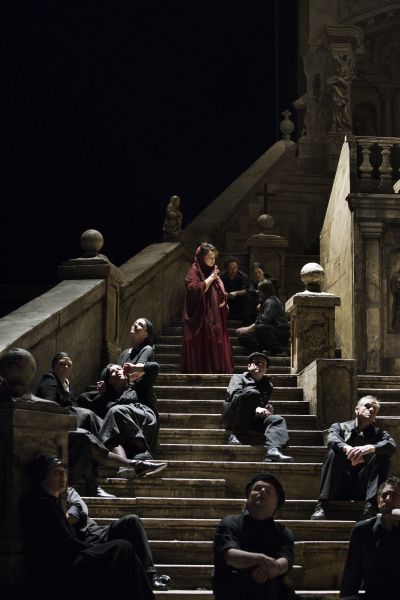
Immediately after the extraordinary success of “Les Troyens (The Trojans)“, the masterpiece by Hector Berlioz in which Roberto Alagna stood out as Aeneas, the Deutsche Oper Berlin offered a second work with AlagnaCarmen. The first performance was held on10th April 2014.

A show of quality, which allowed the two main solists to share the stage again and triumph together, the great tenor as Don José andBéatrice Uria-Monzon as Carmen. The two artists have already met on several occasions asCarmen and Don José: they are two partners who know each other very well, who share a great complicity and appear in perfect harmony both as singers and actors. This gives rise to a certainly unequaled emotion: their interpretation of Bizet’s opera was magical. Both demonstrated such a stage presence and involvement that emotion ran high from the beginning to the end. Their passionate commitment never impaired their vocal performance.

b_200_150_16777215_00___images_artImages_NataliaDiBartolo_10151960_723658421008081_6663950579376068107_n.jpgCarmen by Béatrice Uria-Monzon is graceful and elegant, never vulgar, but more suffering and less brazen than by other performers. She perfectly met the vocal requirements as desired by Bizet, while providing a very personal reading of her singing at the same time.

In a great vocal shape, Roberto Alagna, as always, completely merged in his character, one of his favorite roles he said: expressiveness, vocal technique, perfect diction and phrasing, an always colorful and splendid timbre in top notes and a role where he sounds really good. His capacity to constantly produce nuances both in singing and playing is a rich source of expressiveness. The famous tenor portrayed a vulnerable and defeated Don José, but at the same time violent, which is something that is rarely emphasized: whoever is able to kill, as it happens in the final scene of the opera, must necessarily be predisposed to do so. It is perceptible in his behavior from the beginning, since Carmenmade this dark side of his personality come out.b_200_150_16777215_00___images_artImages_NataliaDiBartolo_10153274_723658627674727_6492778259538065254_n.jpg

And with the great Robertostaged by Soren Schumacher, this predisposition appears with a great supremacy. His portraying is sometimes very intense, as relevant and specifically thought, than credible and realistic, to which Carmen naturally and accurately responds, causing a thrilling emotion… Given the similarities between the two characters of Don José and Otello, this is not without giving us a promising foretaste of the performance that the brilliant French-Sicilian artist plans to give as theMoorish Verdi’s character (in August, at the ‘Chorégies d’Orange’). We are looking forward to hearing and seeing it.b_200_150_16777215_00___images_artImages_NataliaDiBartolo_1939984_725125644194692_8664372548024603993_n.jpg

Among the other singers and DOB Chorus, all of whom have proven their value, a special mention should be given to the delicious Elena Tsallagova, a young talented Micaela. Over time and experience, she will certainly be able to give a greater depth to her interpretation, better demonstrating the sweetness of her character.

b_200_150_16777215_00___images_artImages_NataliaDiBartolo_10153034_723658831008040_322774486300668305_n.jpgThe excellent work of Maestro Giuseppe Finzi conducting the DOB Orchestraproved to be quite relevant. He retained control of a long and difficult score which, because of its specific features, may tend to erode or become dangerously noisy, to the detriment of the sound’s quality and especially of the orchestral color.

b_200_150_16777215_00___images_artImages_NataliaDiBartolo_10155852_723658264341430_8905308460697090213_n.jpgA gorgeous success and a touching roar of applause, particularly when the singers came out at the first curtain call, obviously still marked by the emotion of their final scene, as we can imagine.

Posted in Article | Tagged , , , | Leave a comment

LES CONTES D’HOFFMANN in Madrid

TEATRO REAL OF MADRID PRESENTS:

hoffman  LES CONTES D’HOFFMANN

Jacques Offenbach (1819-1880)

MAY 17 – JUNE 21

In the new version of Les contes d’Hoffmann, by Jacques Offenbach, which will be presented to the public in Madrid, Nicklausse, the muse and alter ego of Hoffmann, sings: “On est grand par l’amour, mais plus grand par les pleurs” (One is enriched by love, but also by sadness). This it the main motif in the work by, “the ever cheerful Offenbach” and it appears in a work that is part of the same romantic movement that spans from Victor Hugo to Thomas Mann, passing by Berlioz. The common link between the work by these men is that art and inspiration come from the suffering and sadness in the world. This makes it the only opera by Offenbach in which art triumphs over the pain of love.

Opéra fantastique in five acts
Libretto by Jules Barbier, after the play by Barbier and Michel Carré, based on the stories of E.T.A. Hoffmann

New production of Teatro Real

Teatro Real Chorus and Orchestra
(Coro Intemezzo / Orquesta Sinfónica de Madrid)

hoffman2Production Team

  • Musical director: Sylvain Cambreling
  • Stage Director: Christoph Marthaler
  • Set and costume designer: Anna Viebrock
  • Chorus Master: Andrés Máspero

CAST:

  • Hoffmann: Eric Cutler (May. 17, 21, 25, 28 · Jun. 3, 6, 9, 12, 15) ; Jean-Noël Briend (May. 31 · Jun. 18, 21)
  • La Musa / Nicklausse: Anne Sofie von Otter (May. 17, 21, 25, 28 · Jun. 3, 6, 9, 12, 15); Hannah Esther Minutillo (May. 31 · Jun. 18, 21)

  • Lindorf / Coppélius / Dr. Miracle / Dapertutto: Vito Priante

  • Andrés / Cochenille / Frantz / Pitichinaccio: Christoph Homberger

  • Olympia: Ana Durlovski

  • Antonia / Giulietta*: Measha Brueggergosman

  • Voice of Antonia ´s mother: Lani Poulson

  • Nathanaël: Gerardo López

  • Spalanzani: Graham Valentine

  • Hermann: Tomeu Bibiloni

  • Schlemil: Isaac Galán

  • Maítre Luther / Crespel: Jean-Philippe Lafont

  • Stella: To be announced

*Ainhoa Arteta was going to sing the role of Giulietta.
Instead of her, Measha Brueggergosman will perform the mentioned role.

Performance Dates

  • 17 MAY (S) 19:00h
  • 21 MAY (W) 19:00h
  • 25 MAY (S) 18:00h
  • 28 MAY (W) 19:00h
  • 31 MAY (S) 19:00h
  • 3 JUN (T) 19:00h
  • 6 JUN (F) 19:00h
  • 9 JUN (M) 19:00h
  • 12 JUN (T) 19:00h
  • 15 JUN (S) 18:00h
  • 18 JUN (W) 19:00h
  • 21 JUN (S) 19:00h
  • Place:Main Hall

    teatro Real

    TEATRO REAL OF MADRID

Posted in OPera | Tagged , , , , , , | Leave a comment

NCPA´s Production of Verdi´s Nabucco

The National Centre for the Performing Arts of Beijing Presents:
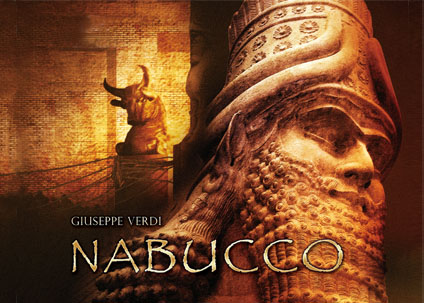
nabuccoChina

NCPA´s Production of Verdi´s Opera Nabucco
NCPA Opera Festival 2014
 

Venue: Beijing Opera House
Dates: Apr. 24, 2014-Apr. 27, 2014
Duration: approximate 150 mins
intermission included

Nabucco (short for Nabucodonosor, English Nebuchadnezzar) is an opera in four acts by Giuseppe Verdi to an Italian libretto by Temistocle Solera, based on the Biblical story and the 1836 play by Auguste Anicet-Bourgeois and Francis Cornue. It is Verdi’s third opera and the one which is considered to have permanently established his reputation as a composer. Nabucco follows the plight of the Jews as they are assaulted, conquered, and subsequently exiled from their homeland by the Babylonian King Nabucco (in English, Nebuchadnezzar). The historical events are used as background for a romantic and political plot. Its first performance took place on 9 March 1842 at the Teatro alla Scala, Milan under the original name of Nabucodonosor. The definitive name of Nabucco for the opera (and its protagonist) was first used at a performance at the San Giacomo Theatre of Corfu in September, 1844. Nonetheless, a more plausible alternative for the establishment of this abbreviated form claims that it was the result of a revival of the opera in Teatro Giglio of Lucca.

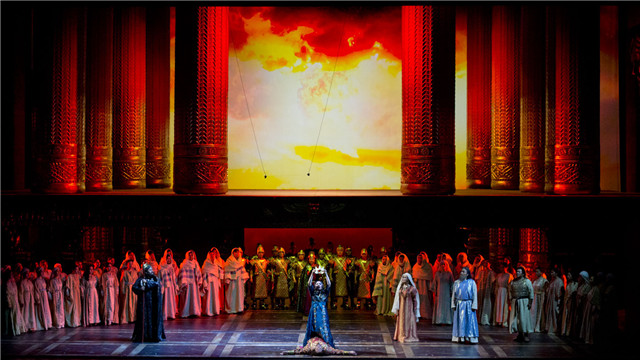
Nabucco is NCPA’s second Giuseppe Verdi’s opera of the year. It’s worth mentioning that famous stage designer Ezio Frigerio and costume designer Franca Squarciapino, who has won the Oscar Award of Best Costume Design for the movie Cyrano de Bergerac, has participated in the production.

nabucco1

Composer: Giuseppe Verdi
Libretto: Temistocle Solera
Conductor: Eugene Kohn
Director: Gilbert Deflo
Set Design: Ezio Frigerio
Costume Design: Franca Squarciapino
Lighting Design: Vinicio Cheli
Projection Design: Sergio Metalli
Chorus: NCPA Chorus
Orchestra: NCPA Orchestra

nabucco2 nabucco3

CAST AND ARTISTIC TEAM

   Gilbert Deflo Director
Gilbert Deflo was born in Belgium in 1944. He graduated from Institut National Supérieur des Arts du spectacle et des techniques de diffusion (INSAS), and advanced his studies at Piccolo Teatro di Milano with famous director Giorgio Strehler. Deflo directed L’Amour des trois oranges, his first work in Frankfurt. As a resident director of Théatre Royal de la Monnaie, Deflo directed many different works during the period from 1981 to 1989. In 1989, he began his career in Italy and traveled around Palermo, Catania, Macerata and Milan. His productions included Carmen, Tosca, Falstaff, etc. Deflo is also an active director on the international stage. He had directed Il Barbiere di Siviglia, Danse macabre, Pelleas et Melisande in Hamburg, Die Frau Ohne Schatten in The Welsh National Opera, Aida in Scottish Opera, The Queen of Spades in Barcelona, etc. He produced many baroque operas, such as L’incoronazione di Poppea, Nostos Il Ritorno in Montpellier, Croesus in Berlin, etc.


His recent productions include Semiramide in Théatre des Champs-élysées, Cavalleria rusticana, Pagliacci in Arena di Verona, Manon Lescaut in Cagliari, etc.


Ezio Frigerio Set Design
Ezio Frigerio (b. Erba, Milan, 1930) is an Italian costume designer and art director.

After finishing architecture studies, he approached theatre art by realising the costumes for Casa di Bambola and L’opera da 3 soldi, two plays directed by Giorgio Strehler at Piccolo Teatro in the 1955-56 theatre season. From then on a fertile artistic marriage started between art director and producer, setting up several unique productions as I giganti della montagna (1966), Santa Giovanna dei macelli (1970), Re Lear (1972), Il temporale (1980), L’Illusion Comique, which premiered in 1984 at Théatre de l’Odéon in Paris, La grande magia, which premiered in 1985 and was reprised several times.

The collaboration with Strehler made Frigerio enter the world of opera: Mozart’s Le Nozze di Figaro, Don Giovanni and Così fan tutte were realized by Strehler and Frigerio between 1973 and 1996. Così fan tutte was being staged just before Strehler died.

Frigerio also created stage designs for the Burgtheater in Vienna: Trilogie der Sommerfrische (Trilogia della villeggiatura) by Carlo Goldoni, directed by Strehler, 1974; Judith by Hebbel, directed by Gerhard Klingenberg, 1975.

Other operatic stage designs include: Cherubini’s Medea, directed by Liliana Cavani, for the Opéra National de Paris; Strauss’ Elektra, directed by Nuria Espert, for De Munt Theatre in Brussels; Verdi’s Ernani, directed by Luca Ronconi, 1980, Beethoven’s Fidelio, directed by Werner Herzog in 1999 for the Teatro alla Scala in Milan; Bellini’s Norma, directed by Piero Faggioni, for the Vienna State Opera in 1977; Verdi’s Rigoletto, for the Polish National Opera in 1997.

Frigerio also created the sets for Liliana Cavani’s movie Galileo e i Cannibali and Jean-Paul Rappeneau’s Cyrano de Bergerac, which got an Oscar nomination in 1991.

Frigerio often collaborates with Italian costume designer Franca Squarciapino who is also Frigerio’s partner in life.

Frigerio designed the grave of Rudolf Nureyev.


Franca Squarciapino Costume Design
Franca Squarciapino is an Italian costume designer who won the Academy Award for Costume Design in 1990 for Cyrano de Bergerac. She has spent much of her career designing costumes for major theatres and opera houses, including the Burgtheater in Vienna, Royal Opera at Covent Garden, the Metropolitan Opera, the Vienna State Opera, and Zurich Opera among others.

She frequently collaborates with Ezio Frigerio, who is also her partner and husband in life.

Awards:
Volavérunt(1999): Goya Awards for Best Costume Design(nomination)

La femme de chambre du Titanic(1998): Goya Awards for Best Costume Design

Le hussard sur le toit(1995): SNGCI’s Nastri d’Argento Awards, César Awards (nomination)

Le colonel Chabert(1994): SNGCI’s Nastri d’Argento Awards , César Awards (nomination)

Louis, enfant roi(1993): César Awards (nomination)

Cyrano de Bergerac(1990): César Awards, BAFTA Film Award for Best Costume Design, SNGCI’s Nastri d’Argento Awards, Academy Award for Costume Design, European Film Awards


Vinicio Cheli Lighting Design
Vinicio Cheli was the lighting designer for NCPA’s production of Tosca in May 2011, Der Fliegende Hollander in April 2012 and Un Ballo in Maschera in May 2012. From 1974 to 1979, Vinicio Cheli works at the ‘Maggio Musicale Fiorentino’ involved in all productions. Since 1979 he joined the ‘Piccolo Teatro’ of Milan and became the light collaborator of Giorgio Strehler , he making the entire production of Piccolo until 1989. Since 1987, for four years, he worked with the ‘Rossini Opera Festival’ to produce shows with several directors.

At the same time since 1989 he worked at the Salzburg Festival, Theatre Champs-Elysees, Chalet Theatre in Paris with the set design by Pier Luigi Pizzi, then respondeed to the La Scala in Milan. Recollaborated some years with the Teatro La Fenice in Venice.

The 90s of the last century saw himwork in the Opera Bastille, National Theatre of Prague,Festival of Aix en Provance, Ravenna Festival, the Opera of Monte Carlo, Opera of Geneva, Maggio Musical Fiorentino, Baroque Festival of Versailles, Opera Garnier in Paris, Easter Festival in Salzburg, Teatro Liceu in Barcelona, Atticus Theater in Athens, Ginza Saison Theater in Tokyo, Theatre of the axes of Brussels, Amsterdam Opera, Teatro Comunale of Bologna, Teatro dell’Opera in Rome, Opera of Toulouse, National Theatre of Catalunya in Barcelona,Teatro Real Madrid, Metropolitain in New York, and collaborated with P.L.Pizzi,Ezio, Frigerio, Hugo de Ana, KM Gruber, Henning Brockaus, Claudio Abbado, Riccardo Muti, to name just a few.

In the new miennium, Vinicio Cheli continued to expand his collaboration with Ezio Frigerio, Hugo de Ana, F. Zeffirelli, V. Gergiev, Claudio Abbado, Nicola Joel, Quirino Conti, Mario Gas, in productions covering a vast realm of the opera repertoire.

In 2010, he set up La donna del lago of Rossini direqued by Luis Pasqual with scenes by Ezio Frigerio and costumes by Franca Squarciapino; Boris Godunojv directed by Andrei Konchalovsky

In the beginning of 2011, he worked in Senso a new opera directed scenes and costumes by Hugo De Ana. July 2011 ‘Medea’ directed by Theodorakis in Syros Festival of the Aegean. In November of 2011, he worked in ‘The sleeping beauty’, first ballet of reopening of Bolshoi Theater. Vinicio Cheli also taught theatrical lighting at the New Academy of Fine Arts in Milan and at the Professional School of La Scala.


Sergio Metalli Projection Design
Sergio Metalli was born in Rimini in 1956 and he is dedicated to his passion for electronics that bring him to choose studies along those lines.His versatility led him to perform collaborations in all areas at the highest levels like the State television, to have daily collaborations with artists like Dario Fo, Tonino Guerra, Mietta Corli, Hugo de Ana, Nicolas Joel, Ezio Frigerio, Josep Maria Flotats, Lindsay Kemp, Pier’Alli, Gianni Quaranta, Raffaele Curi, Lluis Pasqual, José Carlos Plaza, Tito Egurza, Margherita Palli, Luca Ronconi, William Landi, Peter Stein, Vladimir Vasiliev and many others passing from international conferences until the Theatre which he has a very special feeling.

In over a decade of successful career he has made over 360 productions and he has worked with major opera theatres around the world.


Yuan Chenye as Nabucco
As a young singer, baritone Yuan Chenye’s developed his craft as a member of the finest training programs in the business, including the Houston Grand Opera Studio and the San Francisco Opera’s Merola Program. Mr. Yuan proved his mettle as an up and coming singer when performing the role of Germont in La Traviata with San Francisco Opera. Since being a member of the Houston Grand Opera Studio he has been invited back to sing many roles including, Tonio in I Pagliacci, Escamillo in Carmen, Marcello in La Bohème, and Bhaer in Little Women which aired on PBS’s Great Performances and released on CD by Ondine.

Mr. Yuan’s clear and supple voice, matched with his facility to portray vastly different characters, have earned him international acclaim. For his Rigoletto with the Welsh National Opera, The Evening Herald described him as, ‘…outstanding in the title role, combining great vocal power with heartfelt emotion.’ Mr. Yuan has put his stamp on this title role having performed it with Houston Grand Opera, Michigan Opera Theatre, Minnesota Opera, Lyric Opera of San Antonio, Sacramento Opera, Palm Beach Opera, Opera St. Louis, and the Welsh National Opera which was broadcast live on BBC.

In addition to performing with many of the United States and Canada’s premiere Opera Houses and Symphonies, Mr. Yuan has favored the stage of many highly acclaimed venues stretching across Europe and Asia, including his native country China. Mr. Yuan is widely known for his compelling interpretations of the standard repertoire such as Mozart, Beethoven, Puccini and Verdi; however, this auspicious baritone is no stranger to the challenge of a world premiere. Mr. Yuan sang the Dragon King in the premiere Legend of Yao Ji. In Beijing, at the National Centre for the Performing arts, he showcased his seasoned artistry in the roles of Cheng Ying in Chinese Orphan and Zhou Luoping in A Village Teacher.

Mr. Yuan’s schedule continues to be exciting, including upcoming performances of Marcello in La Bohème with the Hangzhou Philharmonic Orchestra and Chou En-Lai in Adams’ Nixon in China with San Francisco Opera and at the Culture Center in Hong Kong, a role with which Mr. Yuan is especially familiar. ‘Yuan sang Chou En-Lai with a gorgeous, burnished baritone, his poise bringing the mysterious figure to life.'(Kansas City Star)

Just a few of Mr. Yuan’s symphony performances include: Beethoven’s Ninth Symphony with Singapore Symphony Orchestra, excerpts of Adams’ Nixon in China with the Chicago Symphony and as a soloist in the Domingo Gala at Kennedy Center.


Vladimir Stoyanov as Nabucco
Born in Pernik, Bulgaria, he studied Singing at the Academy of Music of Sofia, and he later perfected himself at the Bulgarian Academy of Arts and Culture in Rome under the guidance of Nicola Ghiuselev.

In 1996, he debuted in Don Carlos in Sofia. He had his Italian debut in 1998 in Macbeth at Teatro di San Carlo of Naples.

Since then, his international career has brought him to the most important opera houses of the world. Particularly noteworthy was his debut at Teatro Alla Scala of Milan in La Forza Del Destino, I Vespri siciliani in Busseto and in Ravenna under the direction of Pier Luigi Pizzi, La Traviata at Teatro Regio of Parma, the opening of the Teatro La Fenice in Le Roi De Lahore, his debut at the Opernhaus of Zürich together with Tsarskaya Nevesta, Attila at Teatro di San Carlo of Naples and Giancarlo Menotti’s Il Console at Teatro Regio of Turin.

In 2008, his debut at the Metropolitan in New York in Pique Dame and in Lucia di Lammermoor, his return to Zürich in Don Carlo, Le Cid and Boris Godunov.

During the 2009 season he sang the main role in Macbeth at the Staatsoper of Berlin, in La Traviata at Teatro La Fenice of Venice, in La Favorita in Seville.


Sun Xiuwei as Abigaille
She once played the role of Turandot in NCPA’s production of Turandot, and the role of Tosca in the premiere of NCPA’s production of Tosca.

Sun Xiuwei studied vocal composition under a famous opera sopranist in Milan, Italy. She competed in many kinds of contests around the world within less than two years and won first prize six times. In 1994, she began her opera career with her first singing engagement of G. Verdi’s La Traviata at the Tokyo Opera House. She sang in Norma, La Traviata, La Forza Del Destino, Trovatore, tilla, Suor Angelica, Andrea Chenier, Il Corsaro, Macbeth, Turandor, Pagliacci, and Requiem. She also sang Cio-Cio San in Madama Butterfly by G.Puccini, after her debut this production in Verona Di Arena, Italy, 1997, she played in this opera more than two hundred times around the world. She sang at opera houses in Roma, Bologna, Palermo, Trieste, Genova, Vanezia, Torre Di Lago, Catania, Verona, Italy; Berlin, Bonn and Carlsruhe, Germany; Nizza, France; Zurich, Switzerland; Oslo, Norway; Helsinky, Finland; Bilbao, Spain; Serbia; Washington, Los Angeles, Detroit, Philadelphia in the United States; Toronto, Canada; and Santiago, Chili. She worked with famous cantors like Arena, Bartoletti, Domingo, Gatti, Nagano, Oren, Palombo, Renzetti,and Rizzi e Santi. She is one of the few Chinese sopranists that are still active on European opera stages.


Anna Markarova as Abigaille
Anna Markarova graduated from the Rostov State Rachmaninoff Conservatoire (class of Prof. Khudoverdova) and continued her studies at the Stuttgart Academy (with Prof. Ingeborg Wamser).

In 2006 Anna became a soloist with the Mariinsky Academy of Young Singers, and since 2010 she has been a soloist with the Mariinsky Opera Company and roles she has performed at the Mariinsky Theatre include Princess Clarice in The Love for Three Oranges, Korobochka in Dead Souls (concert), Grusha the Gypsy in The Enchanted Wanderer, Rosina in Il barbiere di Siviglia, Odabella in Attila, Elisabeth de Valois in Don Carlo, Cio-Cio-San in Madama Butterfly, title role in Aida, Leonora in La forza del destino, Lady Macbeth in Macbeth, Amelia in Un ballo in maschera, Prima Donna, Ariadne in Ariadne auf Naxos. Her repertoire also includes Liza in The Queen of Spades, Tatiana in Eugene Onegin, Yaroslavna in Prince Igor, title role in Turandot, title role in Tosca, Abigaille in Nabucco, Eboli in Don Carlo, title role in Carmen, and Katerina Ismailova in Lady Macbeth from Mtsensk.

The singer’s concert repertoire includes the soprano parts in Verdi’s Requiem, Beethoven’s Symphony No. 9, Mahler’s Symphony No. 8, Rossini’s Stabat Mater, and Orff’s Carmina Burana.

Anna Markarova has toured throughout Russia and abroad. She has appeared at Symphony Hall in Birmingham, the Royal Albert Hall in London, the Philharmonic Hall in Dublin, the Théatre du Chatelet in Paris, the Gulbenkian Centre in Lisbon and in various towns throughout France, Spain, Switzerland, Finland and Austria. Under the baton of Valery Gergiev she has appeared at the Red Sea Festival in Israel as Marina Mniszek in Boris Godunov, Santuzza in Cavalleria rusticana (in concert), and Cassandra and Didon in Les Troyens. In the season 2011-2012, together with the Mariinsky Opera Company took part in the festival in Mikkeli (Finland) and the Gergiev Festival in Rotterdam (Netherlands).

Regularly she performs at the Easter Festival and at the Stars of the White Nights music festival in Russia.

Among recent recordings of Anna Markarova is Verdi’s Attila for the Mariinsky label (Valery Gergiev, conductor, with Ildar Abdrazakov).


Sergey Artamonov as Zaccaria

Orlin Anastassov as Zaccaria

Jin Zhengjian as Ismaele
He has sung the role of Lenski in NCPA’s production of Eugene Onegin, Gastone in the NCPA production of La Traviata, Tu Angu in NCPA opera The Chinese Orphan, Steuermann in NCPA’s production of Der Fliegende Hollaender, Roderigo in NCPA’s production of Otello. He is a national A-class performer in China as well as NCPA’s resident artist.

Since 2005, Jin Zhengjian has sung Jiao Daxing in China’s original opera Wild Prairie for more than 30 times in various versions of the opera, including the 20th anniversary version, NCPA concert version, and mini-theater version.

In 2007, Jin participated in the premiere of Wagner’s Tristan and Isolde in China, as the only Chinese performer in the opera and working with China Philharmonic and numerous world-class artists. In 2008, he performed in the premiere of the original Chinese opera Farewell to My Concubine (as Han Xin) in Beijing, and the six-city tour in the U.S., which was called the ‘Ice-breaking Trip of Chinese Opera in America’. In April, 2008, he sang in the French opera Le roi d’Ys (as Mylio) in NCPA. His performance was highly praised by the French, and, as a consequence, he was sponsored by the French government to study in France. In June, 2008, he sang the leading role in the original Chinese opera Goodbye Again, Cambridge (as Xu Zhimo). In November, 2009, Goodbye Again, Cambridge, with Jin as the leading role, was staged in the Multi-functional Theatre in NCPA. In May and September, 2009, he sang in the premiere and second public performance of the Chinese original opera The Song of Youth, successfully portraying two distinctively different characters, Lu Jiachuan and Yu Yongze, in the opera. In 2010 and 2011, he sang Gastone in La Traviata in NCPA.

He has performed in many important events including Handel’s oratorio Messiah as soloist or leading singer. As a Chinese artist, he has visited countries and regions including Austria, Germany, France, Italy, Slovenia, the U.S., Canada, Japan, South Korea, Hong Kong, Macao, and Taiwan.

The Fifth Sister, with Jin as the leading role, won the New Production Award and Grand Award of the Splendor Award in the 7th China Art Festival in 2004 and was named one of the 30 Works of Excellence on the Nation’s Stage in 2005. In 1999, he was a finalist in the Japan Shizuoka International Singing Competition. As a Singer of Excellence, he took part in the Concert of Singers of Excellence in China zone of the Shen Xiang International Singing Competition.

In 2000, he won a silver prize in the BBK Young Singer Competition held by CCTV. In the same year, he won a Lark Cup silver prize for professional singers.

NCPA Chorus

NCPA Chorus was established on December 8, 2009, whose members were carefully selected from famous music schools in and out of China. Now the Chorus invites Wu Lingfen as the conductor, with many artists well-known in China and abroad giving instructions. Affiliated to NCPA, the highest palace of performing arts in China, the Chorus adheres to NCPA’s guiding principles of “for the people, for the arts, and for the world”. The Chorus mainly stages operas and concerts, and also takes part in kinds of cultural communication and arts outreach events.

Ever since its establishment, the Chorus has actively performed in more than 20 operas of NCPA production, such as NCPA’s commission operas Xi Shi, The Chinese Orphan, and The Ballad of Canal, as well as other classical operas in and out of China: The White-Haired Girl, The Red Guards on Honghu Lake, Le Nozze di Figaro, Il Barbiere di Siviglia, L’italiana in Algeri, Rigoletto,La Traviata, Otello, Der Fliegende Hollander, Lohengrin, Carmen, Turandot andTosca, etc. Its artistic quality receives rave acclaims from both the critics and the audience.

Besides operas, the Chorus has participated in many grand vocal works and themed concerts, such as Beethoven’s Symphony No. 9, Mahler’s Symphony No.2 and No.8, and the grand music and dance epic Road to Revive, etc. As NCPA’s resident chorus, it has been to Singapore, South Korea, Hong Kong and Japan to participate in performances and arts exchange, both to wide acclaims.

The Chorus has cooperated with many well-known artists ever since its establishment, receiving high praises from them all. Plácido Domingo once said it was his honor to cooperate with these talented young artists; Lorin Maazel ever praised it “a chorus full of passion”, so and so forth. On the stage of NCPA, the Chorus has cooperated with such directors as Francesca Zambello, Giancarlo Del Monaco, Chen Xinyi, Cao Qijing, Liao Xianghong, such conductors as Lorin Maazel, Daniel Oren, Lu Jia, Li Xincao, Zhang Guoyong, such vocalists as Plácido Domingo, Leo Nucci, Inva Mula, Brandon Jovanovich, Dai Yuqiang, Wei Song, Warren Mok, He Hui, Dilbèr, Zhang Liping, to name just a few. With more than a hundred performances each year, the Chorus is surely to play an active role in the further development of NCPA.


NCPA Orchestra
China NCPA Orchestra is the resident orchestra of the National Centre for the Performing Arts of China (NCPA), balancing a busy and distinguished performance schedule with a reputation as one of China’s most adventurous and dynamic orchestras. Established in March 2010, the orchestra is composed of distinguished musicians from around the world, performing more than a dozen operas, ballets and regular symphonic seasons every year. Maestro Lu Jia took up the post of Principal Conductor in February 2011, succeeding Chen Zuohuang, the current Laureate Conductor, NCPA’s Music Artistic Director and also one of the founders of the orchestra.

The NCPA Orchestra demonstrates an abiding commitment to high levels of artistic excellence and prides itself on its long-term collaborations with the finest musicians of our day. Artists associated with the orchestra in the past two years include Lorin Maazel, Christoph Eschenbach, Vladimir Ashkenazy, Yan Pascal Tortelier, Gunter Herbig, Gilbert Varga, Lang Lang, Stephen Kovacevich, Leo Nucci, Wang Yuja and Han-Na Chang. Maestro Lorin Maazel praised the orchestra as “a hard-working excellence with great passion” after a series of concerts and the NCPA’s new La Traviata in June 2010.

In its first season of 2011, China NCPA Orchestra gained critical acclaim for its performances in NCPA’s new productions of Tosca (Directed by Giancarlo Del Monaco), Il Barbiere di Siviglia (co-produced with Castleton Festival), Die Fledermaus, and a new composed opera The Chinese Orphan. Apart from that, the orchestra was also deeply involved in NCPA’s 2011 Gustav Mahler Project. Under the batons of maestros including Christoph Eschenbach, Yoel Levi, Jun Maerkl and Chen Zuohuang, the orchestra completed Mahler’s Symphonies No. 1, 2, 3, 8 and 10.

In the season of 2012, China NCPA Orchestra won a highly successful acclaim for two NCPA’s new productions: Der Fliegende Hollander and Lohengrin, both Wagner’s operas were Chinese premiere. It continually collaborates with prominent musicians around the world for concert programs, including Maestro Vladimir Ashkenazy, Yan Pascal Tortelier and the legendary pianist Rudolf Buchbinder.

In addition to its extensive domestic performances, the NCPA Orchestra also received a widespread international praise in 2012. The orchestra was invited by Kissingen Summer Music Festival and Schleswig-Holstein Musik Festival in July 2012, and kicked off his first German tour in Nürnberg, Hamburg and Berlin under the baton of Christoph Eschenbach and Chen Zuohuang. This was followed by a successful concert at the Sydney Opera House with Maestro Chen Zuohuang in November.

In the season of 2013, the NCPA orchestra presents colorful programs on the commemoration of Wagner, Verdi and Britten, highlighting the Ring without words with 12 principals from Berlin Philharmonic under the baton of Lorin Maazel. NCPA’s new opera productions that the orchestra is involved include Les Contes d’Hoffmann, Otello and Nabucco, which features her second successful collaboration with Placido Domingo.

The NCPA orchestra aims to build up a world-class orchestra with operation and management conforming to global practices while incorporating Chinese characteristics. Devoted to educational and outreach activities, the Orchestra also has presented a series of Weekend Matinee Concerts since its establishment. With specially selected repertoire, performances of high quality and extremely low ticket prices, these concerts have won great acclaim from both audience and critics. The orchestra is now embarking on a similar path with the complete Beethoven symphonies with Maestro Lu Jia.

SYNOPSIS

In Jerusalem and Babylon 587 BC. Nabucco, the king of Babylon, has invaded Jerusalem. The Israelites are denouncing their impending doom. After that, Nabucco takes the city and expels Jews. It is the patriotic feeling of Jews that touches and makes Verdi think about his own country which is still under the invasion of Austria. Verdi puts his emotions into music. And the opera is fulfilled with passionate spirits.

Posted in OPera | Tagged , | Leave a comment

“The Abduction from the Seraglio” in Utah

UTAH OPERA PRESENTS:

CAPITOL THEATRE

MAY 10, 12, 14 & 16 (7:30 PM)
MAY 18, 2014 (2 PM)

The Abduction from the Seraglio tells of a fair damsel who, like most operatic damsels, finds herself in great distress! Will the dashing nobleman rescue her from her Turkish keepers and the powerful ruler who desires to possess her? Or will the true lovers die in the attempt.

After a season of filled with passion, drama, and grandeur, Utah Opera ends the season with something light and fun. Mozart’s incomparable skill for vocal melody and dramatic tension are on full display in the exotic, colorful production that you’re guaranteed to love.

CAST

Constanze: Celena Shafer
Belmonte: Andrew Stenson
Blonde: Amy Owens
Osmin: Gustav Andreassen Conductor: Gary Thor Wedow
Director: Chas Rader-Shieber

The Abduction from the Seraglio Synopsis

ACT I. Turkey, 1700s. Pasha Selim has bought three Europeans from pirates – Constanze, a Spanish woman of good family; Blonde, her English maid; and Pedrillo, servant of Constanze’s fiancé, Belmonte. Belmonte has traced them to a seaside palace, where Constanze has become the pasha’s favorite and Pedrillo the gardener. Blonde has been given as a gift by the pasha to his overseer, Osmin. Belmonte’s first encounter is with Osmin, who acts polite until Belmonte mentions Pedrillo, the custodian’s rival for Blonde. He drives Belmonte away and then rails at Pedrillo, who has come in hopes of making peace with him. Belmonte returns to find his former servant, who tells him the pasha loves Constanze but will not force himself on her. Pedrillo will try to arrange a meeting between Constanze and Belmonte and an escape by boat with Blonde, if they can get past Osmin. In hiding, Belmonte yearns for Constanze, who soon appears with Pasha Selim. When the pasha asks her why she is always depressed by his courtship of her, Constanze replies she cannot forget her love for her fiancé from whom she was separated. After she leaves, Pedrillo introduces Belmonte to the pasha as a promising young architect. Selim welcomes him and, departing, arranges a conference for the next day. Osmin bars the way when Belmonte and Pedrillo try to enter the palace, but he is confused easily, and the two foreigners march him around in circles. Dizzy, Osmin does not notice they have gained access.

ACT II. In a garden, Blonde confounds Osmin with her cleverness and faces him down when he threatens her. Constanze finds Blonde and complains of her sad state, which does not improve when the pasha again asks her to marry him. She proudly refuses, preferring torture, even death. When they have gone, Blonde and Pedrillo dance into the garden, discussing their plan of escape: they will get Osmin drunk, and all four lovers will leave on Belmonte’s ship. Later, Pedrillo goes about his business, finding Osmin cooperative, though drinking wine is against the Moslem religion. Thoroughly inebriated, the fat man weaves away with the bottle, leaving the coast clear for Belmonte to meet Constanze. Their reunion is shared by Blonde and Pedrillo.

ACT III. Just before midnight, Pedrillo places a ladder against the ladies’ window and sings a serenade, the signal for escape. But he wakes Osmin, who is not too hung over to realize what is going on and takes them all to the pasha, who is angry. Belmonte suggests the pasha collect a handsome ransom from his wealthy family, the Lostados. At this, the pasha realizes that Belmonte is the son of an old enemy, the man who exiled him from his own country. But eventually he decides that rather than take blood for blood he will repay evil with good, freeing Constanze and Belmonte, even Blonde and Pedrillo. This does not sit well with Osmin, who will lose Blonde, but he is promised other rewards. The grateful lovers praise their benefactor as they prepare to set sail.

Posted in Music, OPera | Tagged , , , , , , , , | Leave a comment