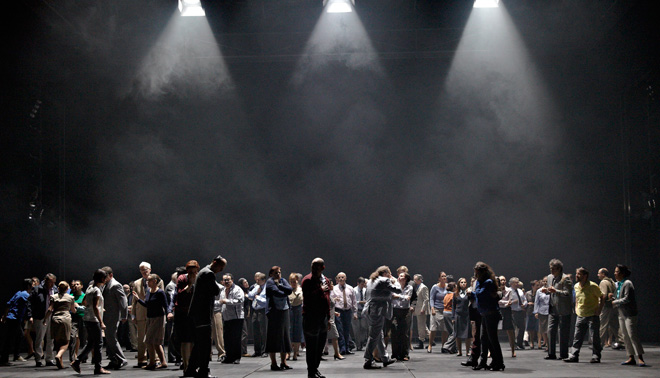
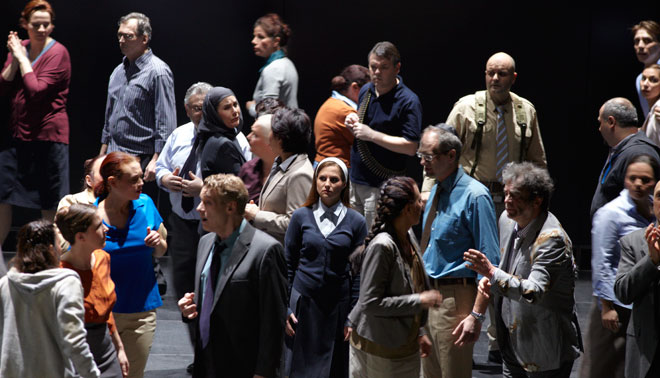
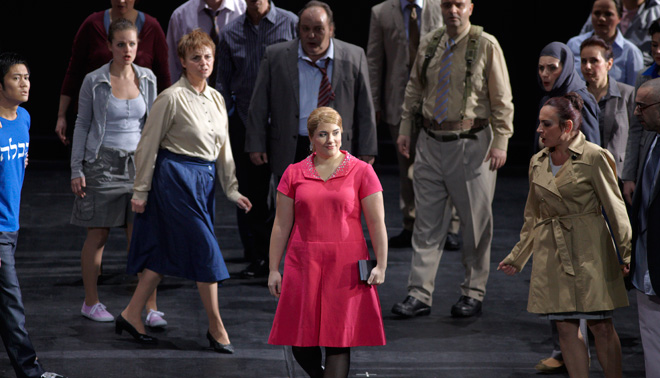
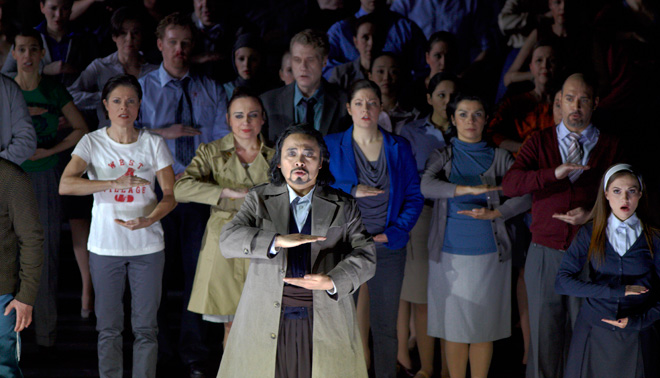
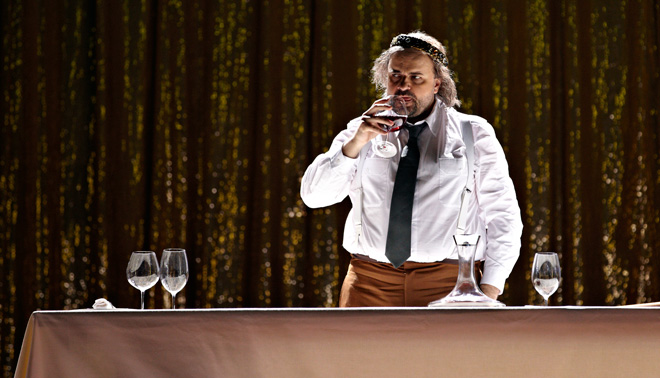
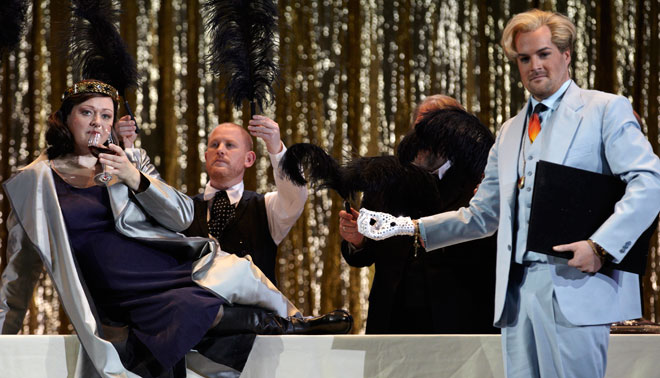
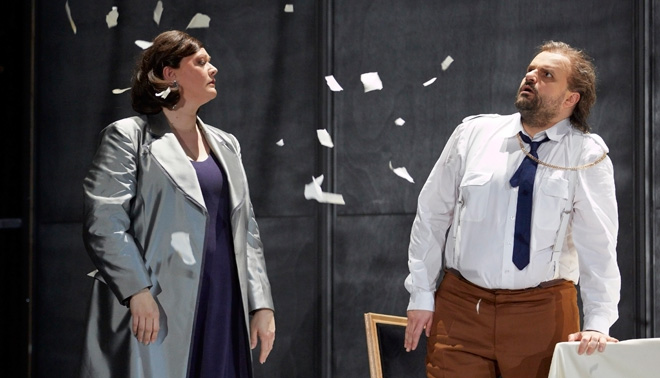
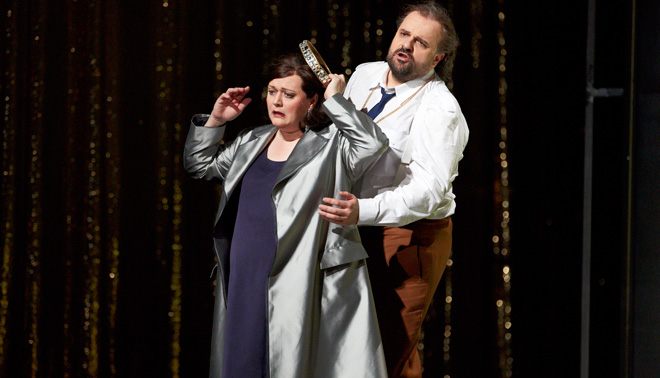
“L’Incoronazione di Poppea” by Claudio Monteverdi in Paris

L’OPERA DE PARIS PRESENTS:

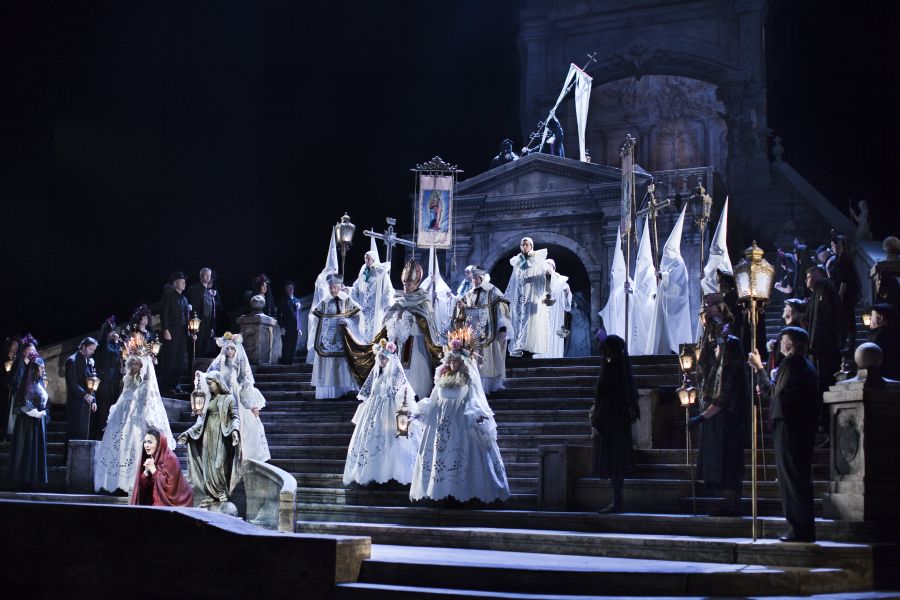
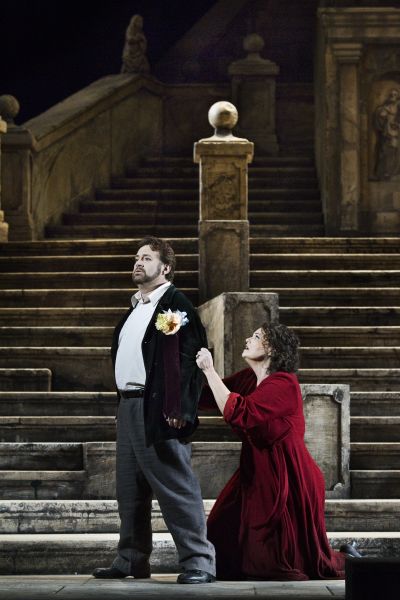
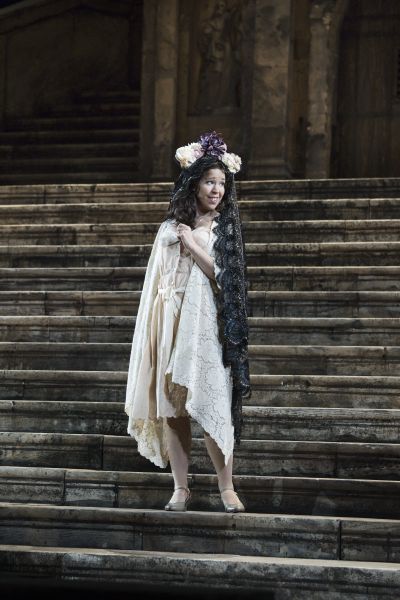
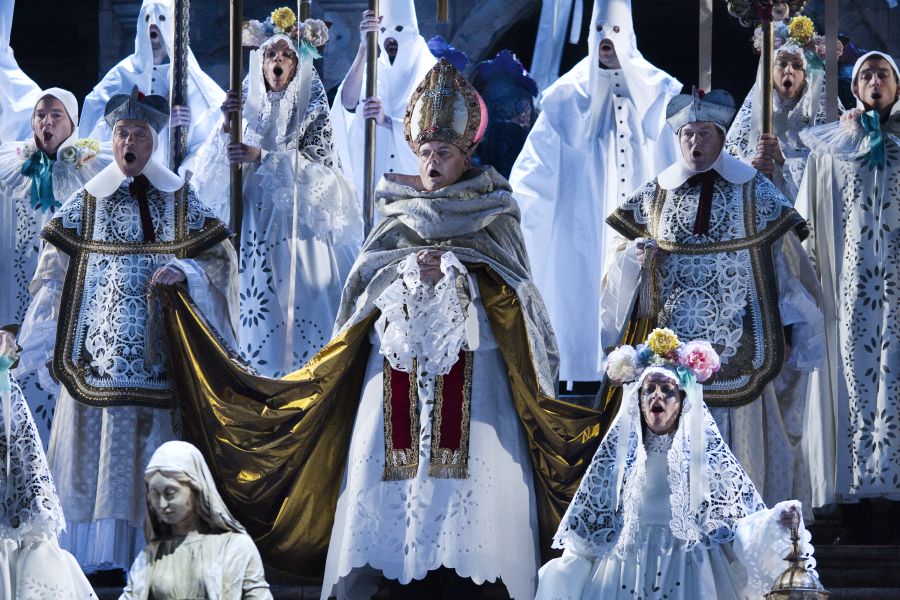
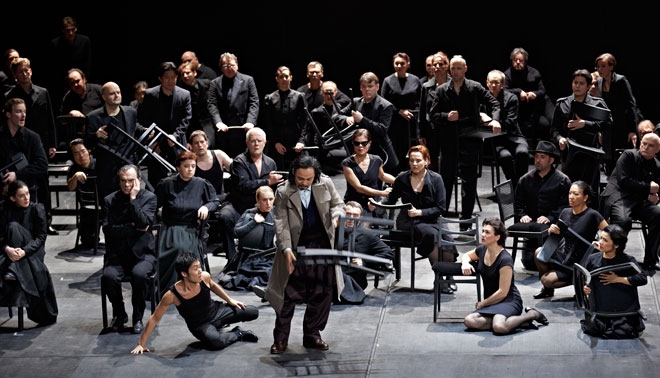
L’Incoronazione di Poppea

(THE CORONATION OF POPPAEA)

OPERA IN A PROLOGUE AND THREE ACTS (1643)

MUSIC BY CLAUDIO MONTEVERDI (1567-1643)

LIBRETTO BY GIOVANNI FRANCESCO BUSENELLO

Performed in Italian

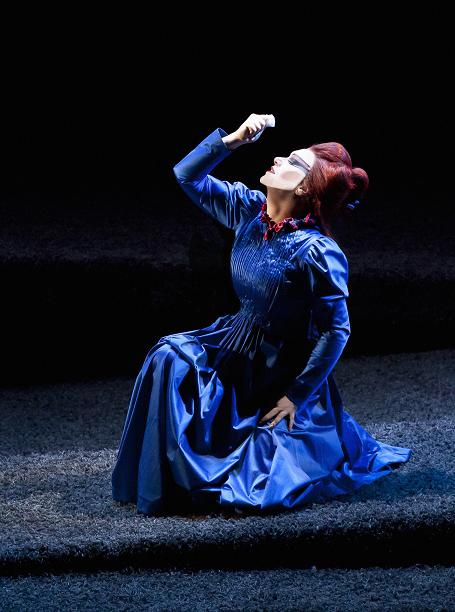
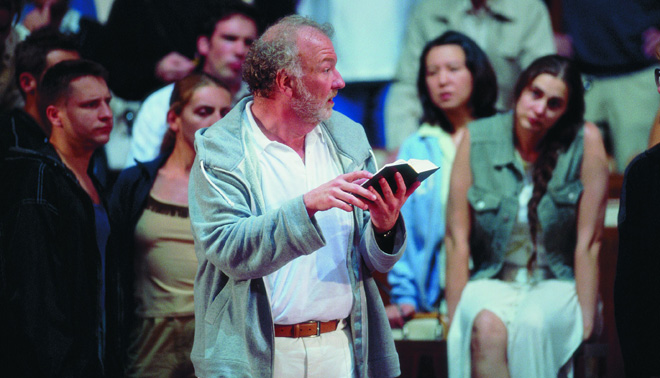
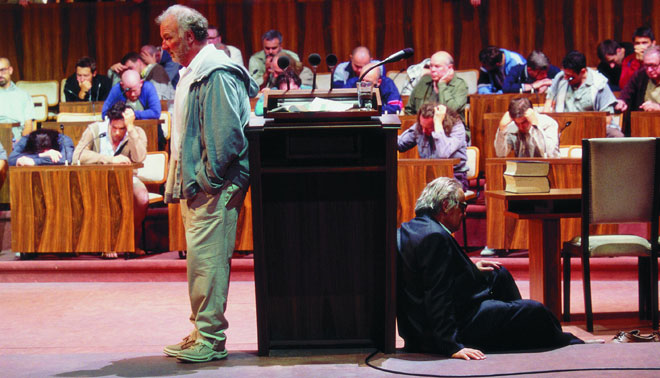
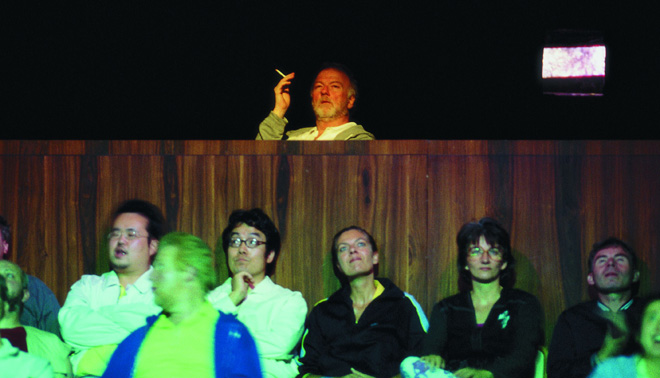
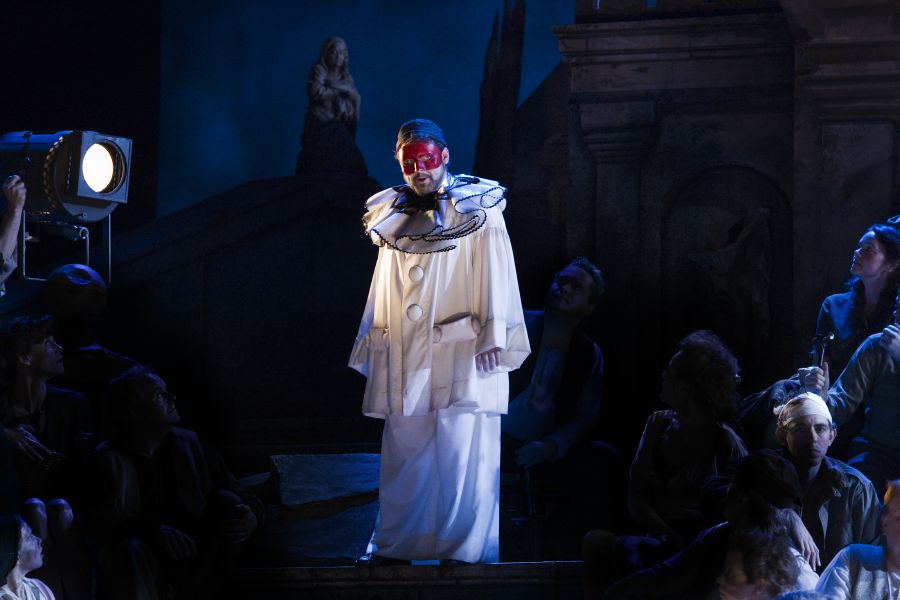
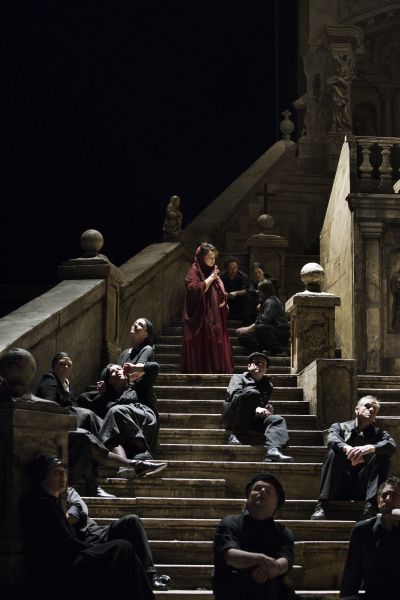
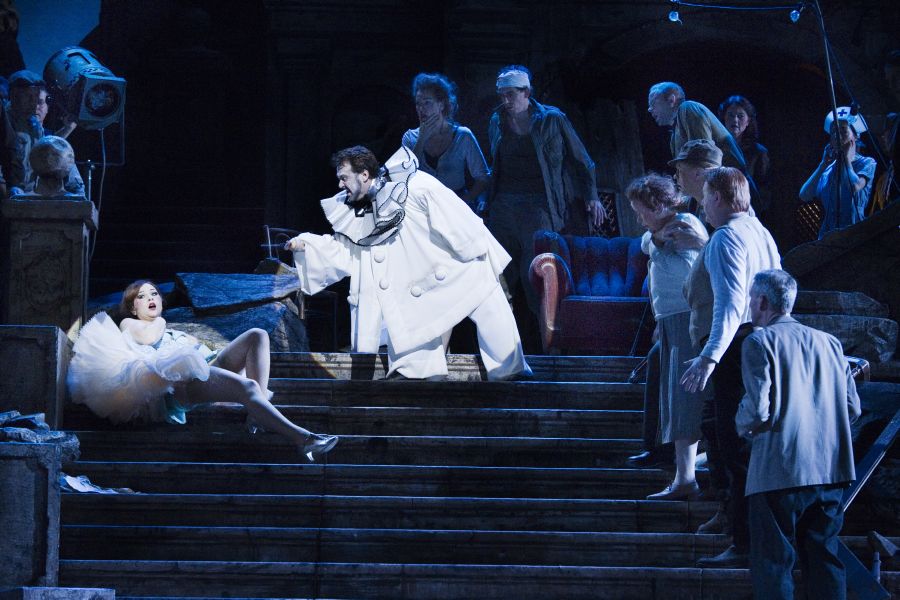
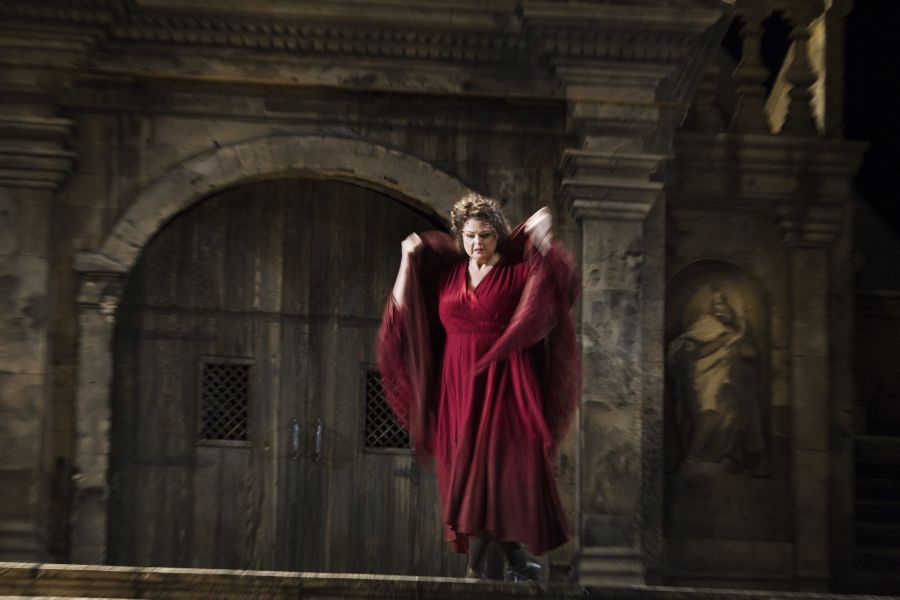
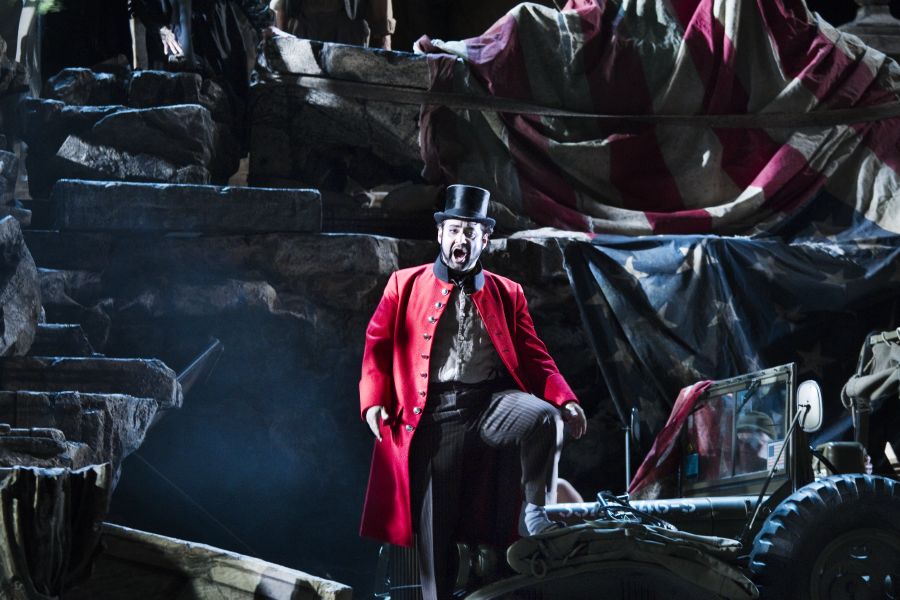
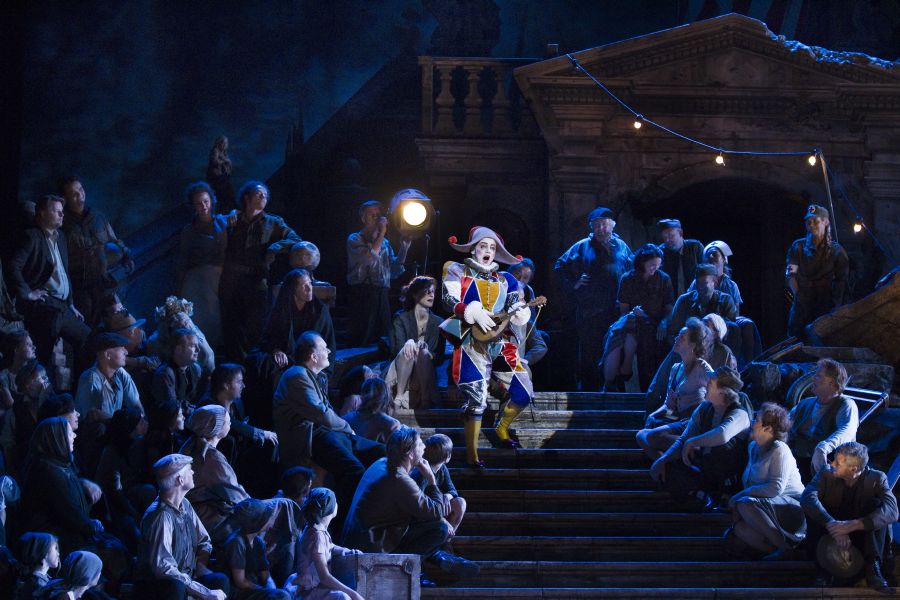
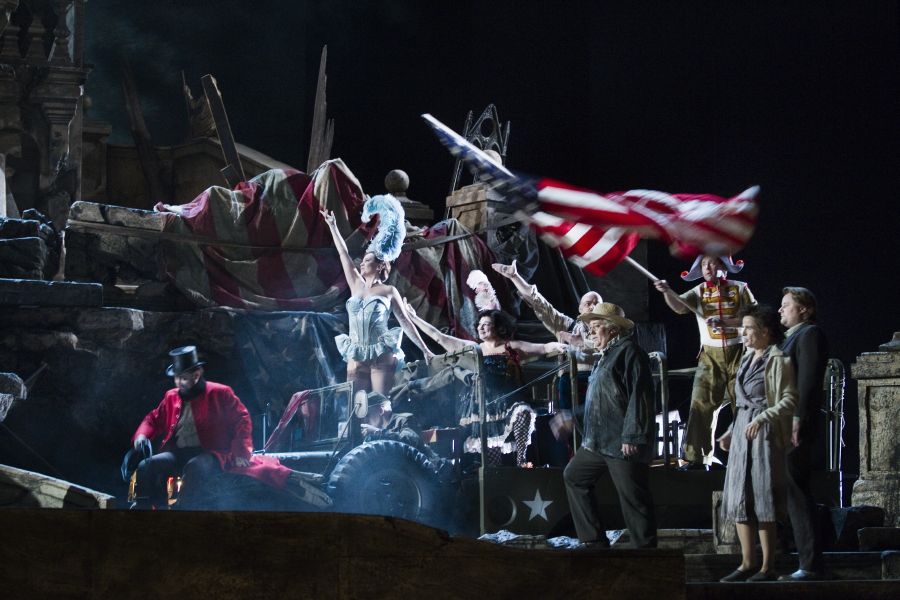
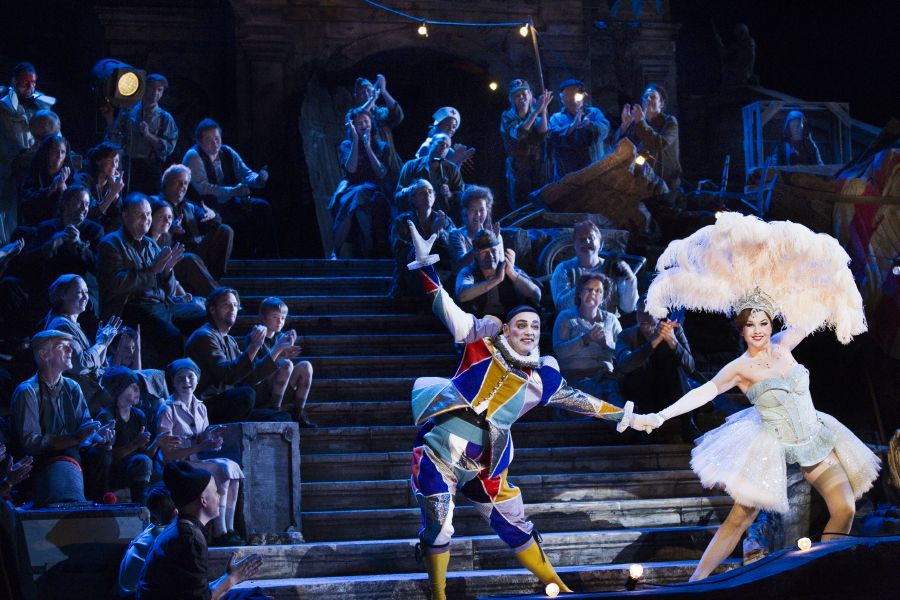
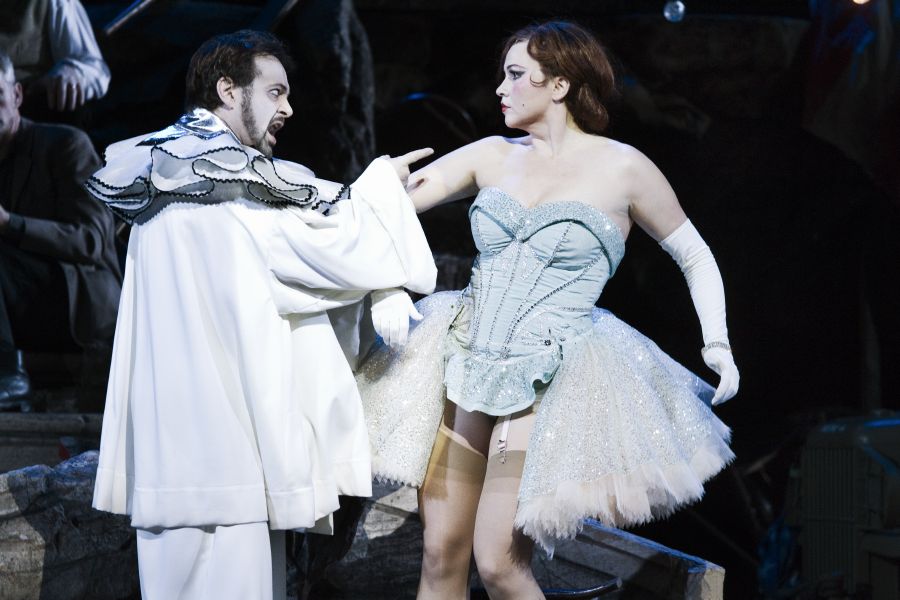
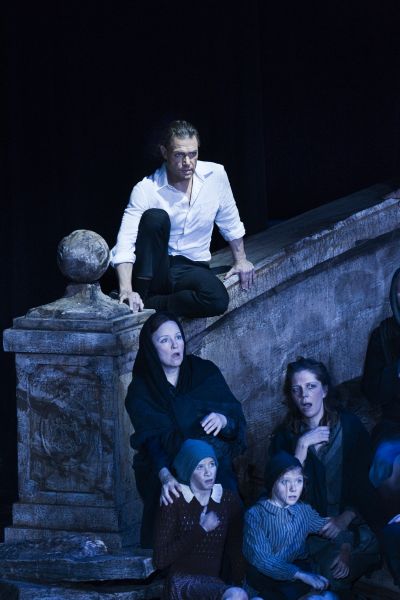
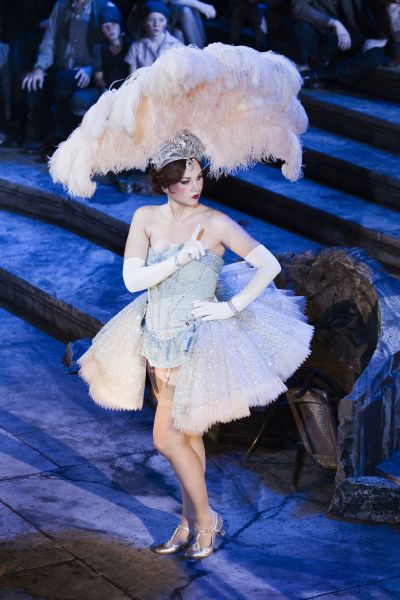
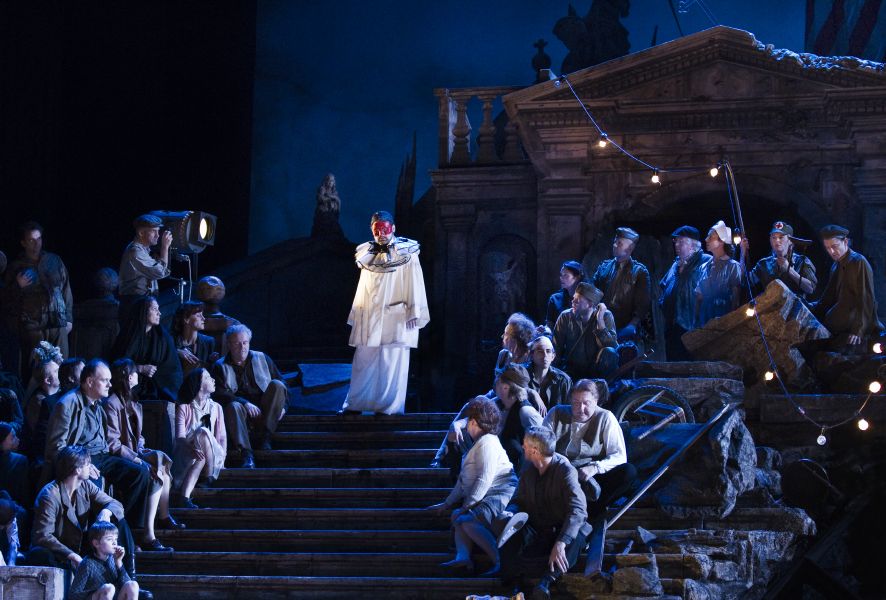
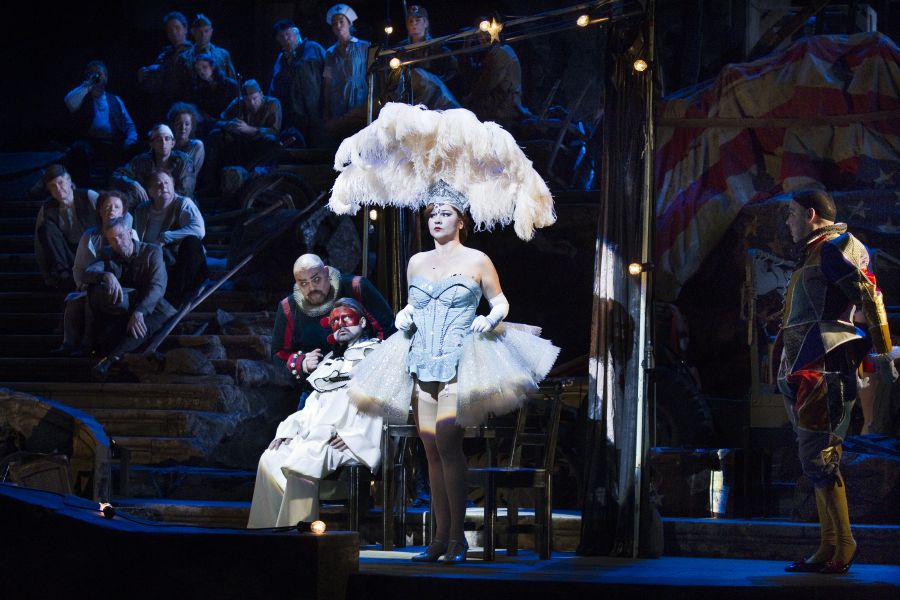
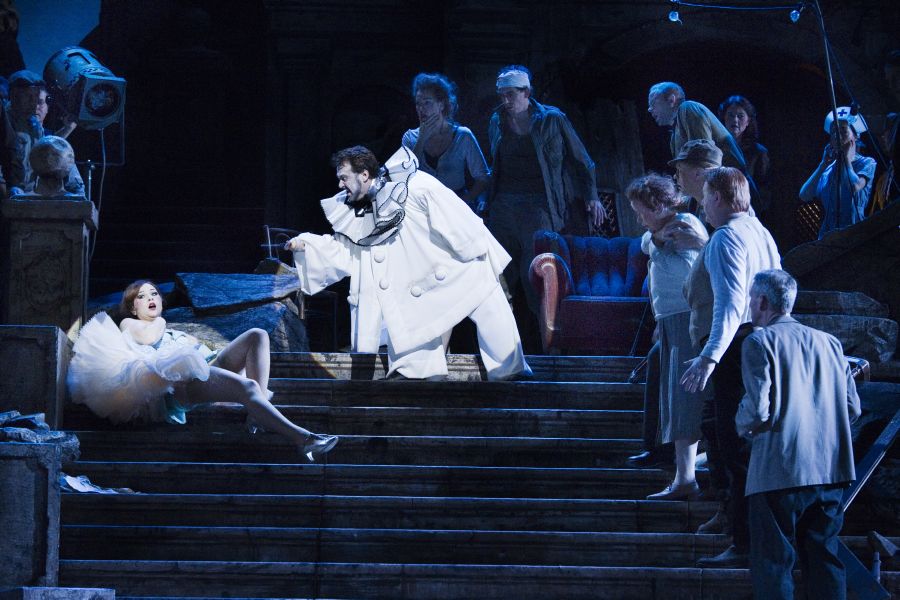
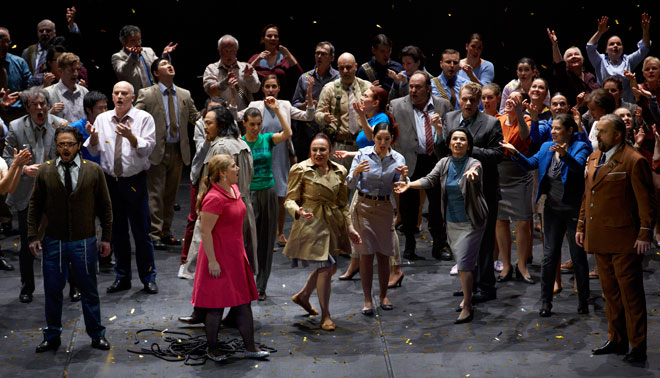
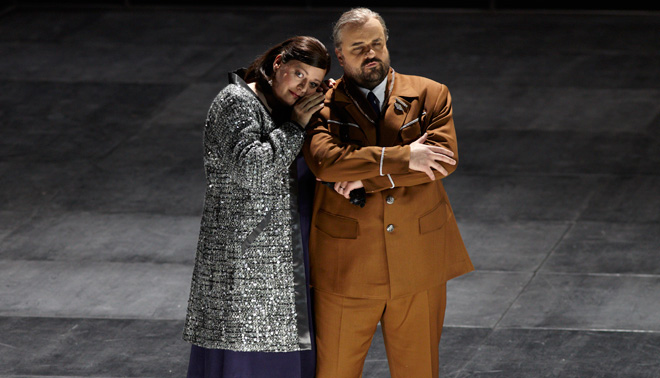
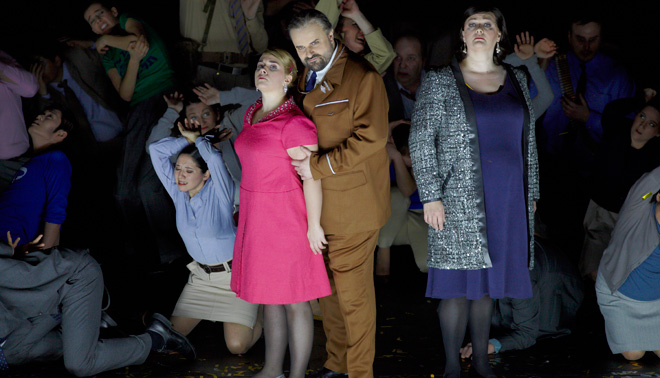
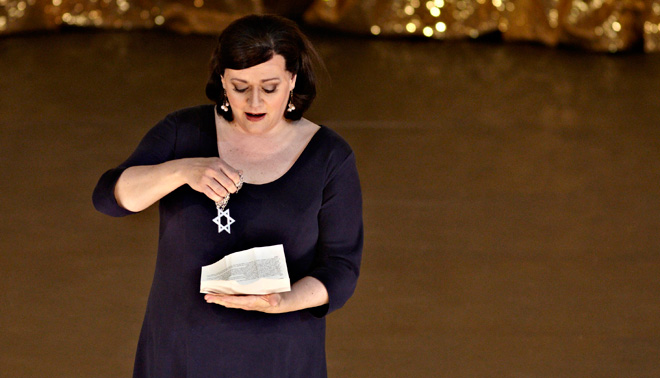
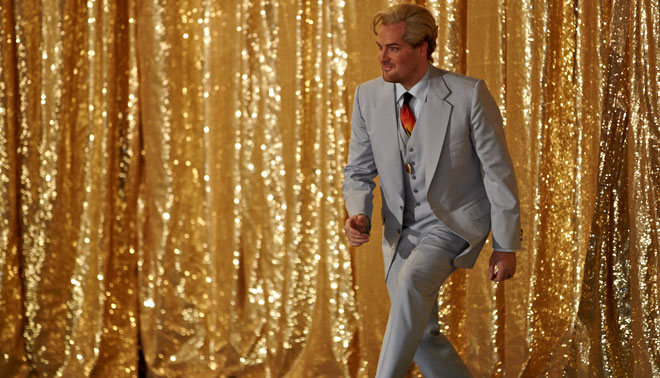
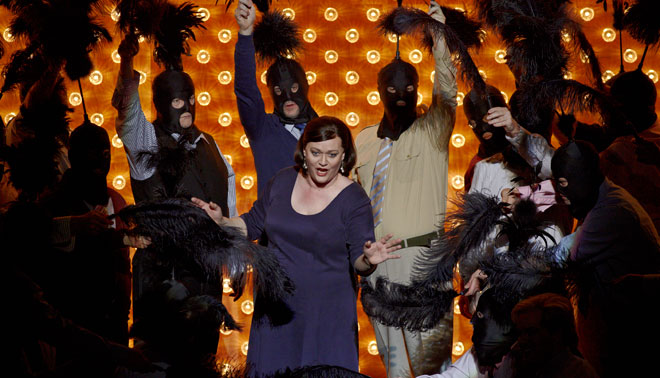
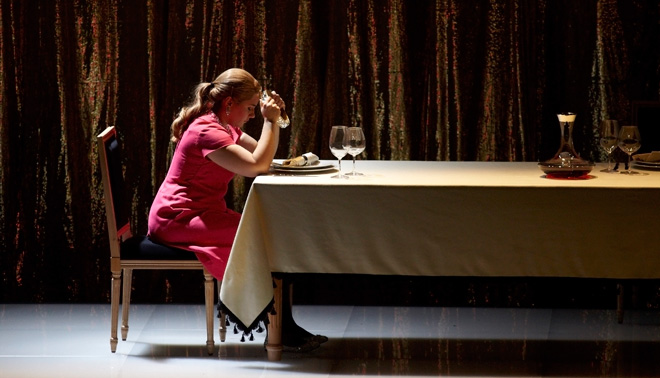
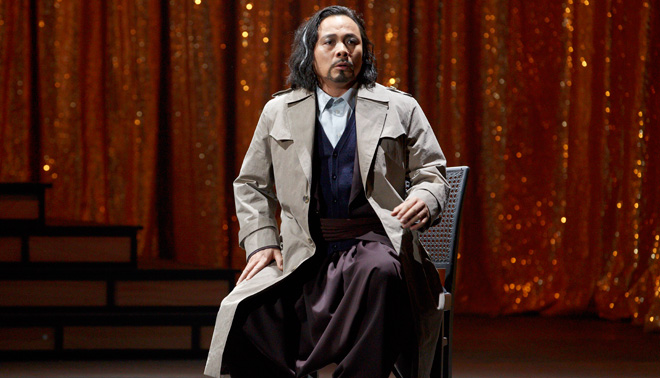
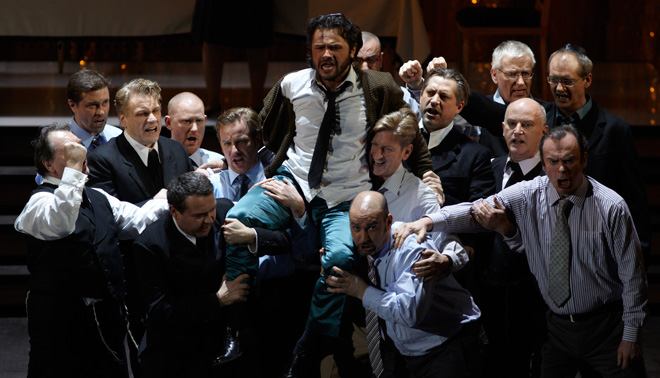
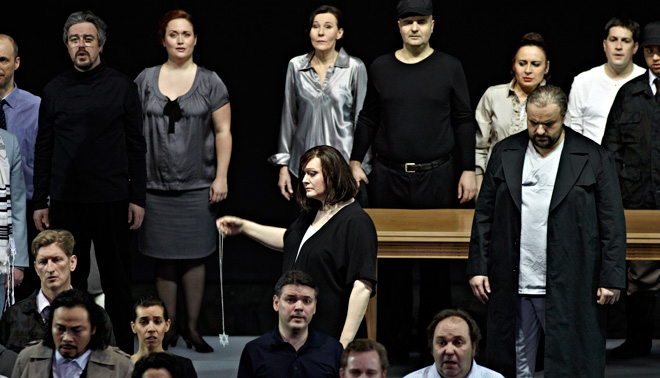
Neither Fortune nor Virtue can vie with Love who, with a mere wave of the hand, can change the world: such is the message conveyed by Monteverdi’s exquisitely enrapturing music. A poet of space and movement, director Robert Wilson writes a new chapter in his history with the Paris Opera.

incoronazione-di-poppea

poppee-2

Rinaldo Alessandrini Conductor
Robert Wilson Stage director
Giuseppe Frigeni Co-stage director
Robert Wilson, Annick Lavallée-Benny Sets
Jacques Reynaud Costumes
A. J. Weissbard, Robert Wilson Lighting

Gaëlle Arquez La Fortuna, Drusilla
Jael Azzaretti La Virtù, Damigella
Amel Brahim-Djelloul Amore
Varduhi Abrahamyan Ottone
Karine Deshayes Poppea
Jeremy Ovenden Nerone
Manuel Nuñez Camelino Arnalta
Monica Bacelli Ottavia
Giuseppe de Vittorio Nutrice
Andrea Concetti Seneca
Marie-Adeline Henry Valletto
Nahuel di Pierro Mercurio
Salvo Vitale Secondo Tribuno, Famigliare di Seneca
Valerio Contaldo Soldato pretoriano, Lucano, Famigliare di Seneca, Secondo Console
Furio Zanasi Soldato pretoriano, Liberto, Primo Tribuno
portadalibretolip315

Concerto Italiano

June 2014
Mon Tue Wed Thu Fri Sat Sun
1
2 3 4 5 6 7 8
9 10 11 12 13 14 15
16 17 18 19 20 21 22
23 24 25 26 27 28 29
30

Neither Fortune nor Virtue can vie with Love who, with a mere wave of the hand, can transform the world: such is the message conveyed by L’Incoronazione di Poppea, Monteverdi’s last masterpiece. Thirty five years had passed since his Orfeo, which had opened the era of the favola in musica. In the City of the Doges, riven by vice in Rome’s eyes, the composer wrote his opera about desire and seduction in which Poppea’s beauty bewitches Nero and provokes the death of Seneca, the banishment of Othon and the repudiation of Octavia. One by one, the pillars of morality crumble before we can bond with any of the characters, leaving us with the exquisitely delightful music. In the twilight of his life, Monteverdi invites us into a sensorial world where “the voice becomes a kiss before turning into profound utterance” (Starobinski). With “Poppea,” producer Robert Wilson, the poet of movement and space, writes a new chapter in his history with the Paris Opera.

The composer

Claudio Monteverdi was born in Cremona in 1567 and died in Venice in 1643. The eldest of five children, he studied music with Marc’Antonio Ingegneri before being taken on, in 1590, as a singer and viol player at Vincenzo Gonzaga’s court of Mantua where he would remain for twenty-two years and compose numerous pieces of chamber and church music. In 1601, he was appointed as the Duke’s choirmaster. From then onwards he took an ever-growing interest in the experiments of the Florentine humanists and his research led to the creation of the lyric drama (Orfeo in 1607, Arianna in 1608). In 1612, upon the death of Vincenzo Gonzaga, Monteverdi resigned from his post and succeeded in being appointed to Saint Mark’s in Venice, taking with him his brother, Giulio Cesare, also a composer and singer, and his two sons. However in 1631 he lost his son Francesco to the plague and possibly his other son too. In 1632 Monteverdi was ordained priest. From then on he was to devote himself entirely to Venice, composing for his church, as well as for private and public events and following his students: Francesco Cavalli and Heinrich Schütz among others. When Venice opened its opera houses to paying audiences Monteverdi was soon drawn back to his former passion. After a revival of Arianna and several works which have not survived, he wrote Il ritorno d’Ulisse (1641) and then L’Incoronazione di Poppea (1642). He died the following year after a short journey to Cremona and Mantua.

The work

L’Incoronazione di Poppea is the last of the three operas by Monteverdi which have come down to us in a rela­tively complete form, even though certain musicologists contest that he was the sole author of the work. The libretto, inspired by the Annals of both Tacitus and Suetonius, was written by Gian Francesco Busenello, a Venitian aristocrat who had been trained as a lawyer and was a member of the Accademia degli Incogniti, the city’s principal intellectual society. He chose an episode from the life of Nero – thus making the work the first ever opera based on historical events – painting a stri­king picture of human passions, skilfully contrasting virtue, embodied by Seneca, with evil, represented by Poppea and Nero’s adulterous love. However, in order to satisfy the public of the times, and in contrast with Orfeo, intended only for the eyes and ears of the court of Mantua, he added secondary plots and characters of low birth, reflecting the behaviour of the main protagonists and sometimes even dialoguing with them. The work thus alternates tragic scenes and more comic ones, nobles and commoners, attaining a dramatic force reminiscent of Shakespeare.
From a musical point of view, Monteverdi demonstrates a great liberty of language, always finding a suitable solution to each theatrical difficulty. He makes great use of recitative, but also composes numerous arias that are distributed fairly among the various characters. The couple formed by Poppea and Nero is of course at the heart of his inspiration. The various editions of the work that have come down to us provide only the vocal line and bass continuo and thus often require orchestration before they may be performed. However, Monteverdi clearly used few instruments, preferring to concentrate on the vocal line and its multiple structural possibilities.

The first performance

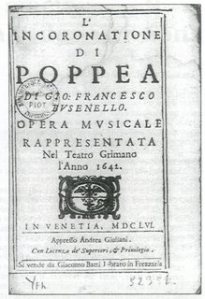
L’Incoronazione di Poppea was first performed in the autumn of 1642 at the Teatro Grimano in Venice.

The work at the Paris Opera

After being performed at the Opéra-Comique, L’Inco­ronazione di Poppea was first performed at the Palais Garnier in March 1978, in the version orchestrated by Raymond Leppard and conducted by Julius Rudel in a staging by Gunther Rennert, with Gwyneth Jones, Jon Vickers, Christa Ludwig, Richard Stilwell, Nicolai Ghiaurov, Jocelyne Taillon and Valerie Masterson. In 2005, a new production staged by David Alden and conducted by Ivor Bolton was presented at the Palais Garnier, with Anna Caterina Antonacci as Poppea.

logo France Musique en direct sur France Musique et en UER le 14/06

COPRODUCTION WITH THE TEATRO ALLA SCALA, MILAN
The American Friends Oof the Paris Opera & Ballet     Florence Gould FoundationWITH THE EXCEPTIONAL SUPPORT OF THE AMERICAN FRIENDS OF THE PARIS OPERA & BALLET⁄FLORENCE GOULD AMERICAN ARTISTS FUN

Posted in Music, OPera | Tagged , , , , , , | Leave a comment

Opera San Jose: Irene Dalis Vocal Competition 2014

San-Jose-Theaters-header414b
WHEN:
May 10, 2014 @ 3:00pm
WHERE:
California Theatre
COST:
$50-$150

Opera San Jose, in association with Arts Management Services of San Francisco, presents the Eighth Annual Irene Dalis Vocal Competition at the California Theatre.

irene-dalis-competition

Last year’s winners.

Dan Montez, the noted tenor and artistic director of the Taconic Opera who was interviewed by me in 2010, will  be one of three finalist judges in this vocal competition. Before leaving for San Jose`, Mr. Montez announced that he will also be there to say farewell in a special tribute event to his mentor and diva extraordinaire Irene Dalis, who is stepping down as OSJ General Director, and he declared: “The opera world will feel this loss as will I. She has been such an inspiration to me throughout my life.”

Ten finalists will compete for $50,000 in cash prizes: First prize ($15,000), second prize ($10,000) and third prize ($5,000.) In addition, a  $5,000 prize for Audience Favorite will be selected by voting during the final intermission. The remaining seven contenders will receive $2,000 each as Encouragement awards.To purchase tickets ($50 and $150), call the OSJ Box Office at (408) 437-4450.

Posted in Article | Tagged , , | Leave a comment

The Heavenly Voice Of Elizabeth Blancke-Biggs

By Tiziano Thomas Dossena; as appeared on L’Idea Magazine N.6, 2014

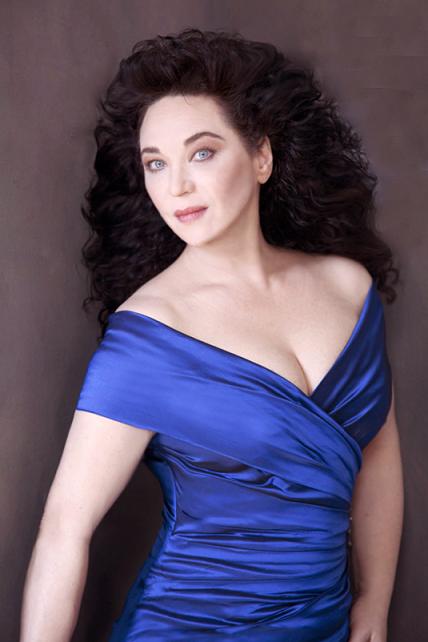
Having a powerful voice with an extended range, a deep knowledge of the techniques involved and being able also to sing masterfully “Bel canto”, the soprano Elizabeth Blancke-Biggs is a true ”Italian Dramatic Soprano” and a “Lirico Spinto”, internationally applauded for her vocal renditions and her convincing acting. I caught the beautiful singer between performances and asked her a few questions…

L’Idea: Elizabeth, was singing always your passion? How did you start in opera and when? 

1MyFirstHeadshot copy

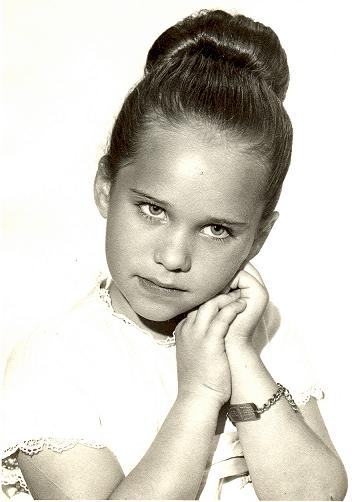
Elizabeth’s first head shot at 5 years old

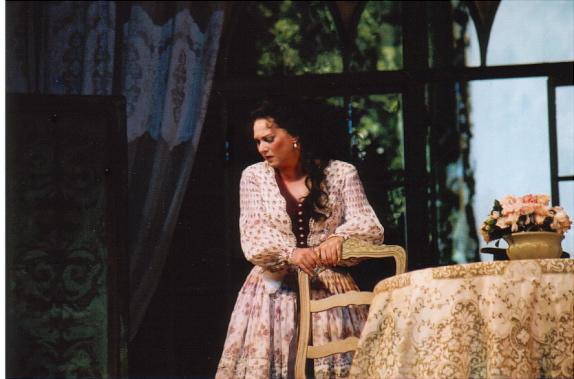
Elizabeth Blancke-Biggs: I was interested in Opera from a very young age. I started by singing in the Children’s choruses in a local company in the L.A. area run by a Sicilian family who owned wineries. I sang in many different operas, like Carmen, Tosca, Pagliacci etc. It was a unique opportunity to sit next to Italians and learn to sing these beautiful works. I then graduated to bigger parts like Frasquita in Carmen, all while still a teenager. I simultaneously sang Operettas and Musical Theater roles. I sang my first full Orchestra production as Maria in West Side Story at 15. I did a lot of dancing and movement in these pieces and I think was really great training to be able to sing and move together. In fact, I am a very physical singer and I find that incorporating movement frees me vocally. I went on to sing Bel Canto roles like Norina and Rosina, and gradually moved into full lyric repertoire like Mimi and Liu. Eventually I added the larger Bel Canto roles and in fact made my two important debuts in this repertoire, my Italian Debut at the Teatro Regio in Torino as Donizetti’s Maria Stuarda in a Jonathan Miller Production conducted by Evelino Pido and my Metropolitan Opera debut as Violetta in La Traviata in the Zeffirelli production conducted by Marcello Viotti. I continued to mix big Puccini and big Bel Canto for many seasons, eventually moving toward the most dramatic roles including Norma, and Puccini heroines like Minnie in La Fanciulla and the big Verdi heroines like Lady Macbeth and Abigaille. This is a progression that used to be considered quite normal and in fact was the career path of singers like Gencer, Caballé, and Scotto, and my esteemed teacher Virginia Zeani among others.

L’Idea: Who was your singing idol? Did you ever have a singer in mind as a reference for your singing?
Elizabeth Blancke-Biggs: I had a few different singing idols. For the raw drama fused with music I loved to listen to both Callas and Scotto. For pure beauty of tone I seemed to be drawn to Spanish singers such as Caballé, De Los Angeles and Lorengar, and the Italians like Ponselle and Muzio. I listen to many different recordings when preparing a piece, not only for the various singers’ interpretations but also to hear what various Maestri do with the music as well, in regard to tempi and interpretation.

1EBB MC Concert Use

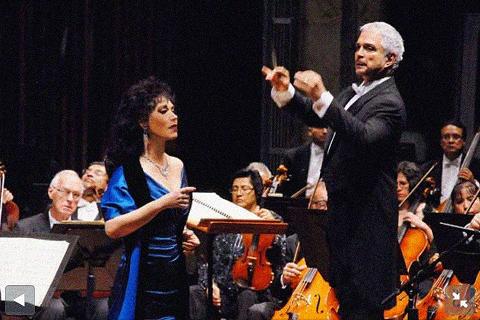
Verdi Concert – Bellas Artes Mexico City with Sinfonica de Bellas Atres and Enrique Patron de Rueda conductor

L’Idea: You have been called an “Italian Dramatic Soprano” and a “Lirico Spinto”. Could you explain what that really means? 
Elizabeth Blancke-Biggs: An Italian Dramatic Soprano is quite a different animal than a Wagnerian Soprano. The Italian Dramatic repertoire requires many more vocal effects and an extended range to at least High C. There are role requirements such as using full chest for dramatic reasons in parts like Abigaille and Lady Macbeth, along with the need for fil di voceand high piano passages like the ones that occur in the Gran Scena di Sonnambulismo… which ends on a piano D flat. This makes the Italian Dramatic repertoire more technically demanding. A Lirico Spinto is a category that used to mean one who can sing pretty and then when needed give a little “push” to the voice for dramatic effect, like during the big scenes in Aida Act 3 or the confrontation with the Baritone in Il Trovatore.

1EBB BackstageUSE

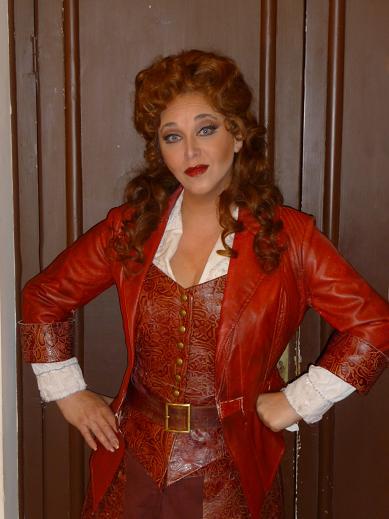
Minnie La Fanciulla – Centennial Production Teatro Massimo Palermo

L’Idea: Who is the character you played that was the most liked by you and why? Who was the most intriguing character you played?
Elizabeth Blancke-Biggs: I obviously enjoy playing Women on the Edge! I love Lady Macbeth because she is one of the most fully realized dramatic roles that I get to sing in an opera. I also love some of the Puccini characters for their down-to-earth personas and more through composed dramatic singing lines. I especially love Tosca because she is so like my own personality, and then there is Minnie in La Fanciulla del West, which is very dear to me, since I grew up in the West and even rode horses. I think the actual act of getting thrown off a horse and getting back on is a very useful mental lesson for continuing in a profession like music!  

opera macbeth mvd2013 Elizabeth Blancke Biggs y Dario Solari

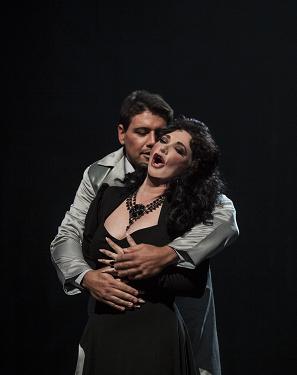
Lady Macbeth – Teatro Solis – Montevideo Uruguay with Dario Solari as Macbeth

L’Idea: The Verdi’s bicentennial has been celebrated all over the world, and you were a pivotal part of that. Could you tell me more about that?

Elizabeth Blancke-Biggs: I did a lot of Verdi this year as I do every year. I started the year with a wonderful concert with the Orquesta Sinfonica de Bellas Artes in Mexico City, singing seven of the most challenging Verdi pieces in the repertoire. I was a great thrill to me to sing these pieces on the very same stage as the amazing Maria Callas. I then went to the Teatro Solis in Montevideo to reprise Lady Macbeth in a beautiful production featuring a terrific international cast, in a co-production with the “Orquesta Filarmónica”. I finished the year with another Verdi Aria concert in Mexico, this time at the Sala Nezahaulcóyotl for the UNAM. I will continue with more Verdi in January, when I go to the Grand Theatre de Geneve to reprise Abigaille in Nabucco.

Untitled-1L’Idea: Did you find any particular character or part difficult to interpret and why? 
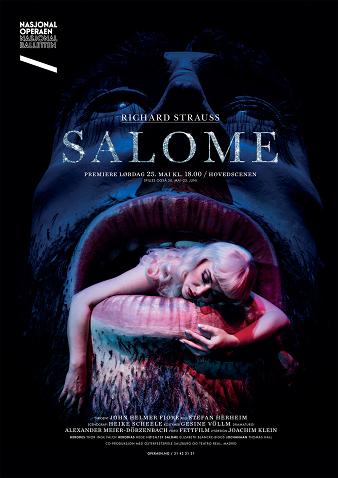
Elizabeth Blancke-Biggs: Many if not all the roles I sing are considered “difficult.” They are vocally all demanding and some require such dramatic intensity that they are exhausting, emotionally and physically. In particular, the production of Salomé I sang in the fabulous Stefan Herheim production from Salzburg was very demanding physically, and basically required running and climbing, and even dancing all while singing some of Strauss’ most beautiful and dramatic music. While these roles are demanding, they are also some of the most rewarding experiences as well! I always feel so fortunate to be able to inhabit these amazing women. Working with Stefan was also so rewarding. It was supposed to be a revival and ended up being a total re-staging because he wanted to fit the show with my personality rather than imposing one….a very unusual and exciting collaboration. 

1Act2tablefix_1

Vioetta – La Traviata – Metropolitan Opera; Zeffirelli production

L’Idea: Who were the most interesting Artistic Directors and Conductors you met and worked with? 
Elizabeth Blancke-Biggs: Obviously my MET Debut was such a wonderful experience… I mean, to be able to sing Violetta in the gorgeous and touching Zeffirelli production… it was like a dream come true!! I also did a very interesting Macbeth production with the Director Hugo de Ana which was a sort of Kabuki type interpretation. I enjoyed this version because, while being innovative, it also paralleled the social parameters of the grasping and social climbing couple in their bloody rise to power. I find that these sorts of ideas work best if the two worlds of the original and the modern have these  commonalities. I have also enjoyed collaborating with Michael (Mo. Michael Recchiuti) on several occasions, it is always such a pleasure to make music with the person that knows you the best, and can anticipate your needs vocally and dramatically. I particularly enjoyed singing Trovatore and Ernani with him, as he worked with all the best of the “Old School” Italian Maestri and helped me learn to inhabit those styles to better understand the true Verdi singing.

1EBB-Bartoletti MassimoUSE

Backstage with Maestro Bruno Bartoletti

L’Idea: Which is the theater that impressed you the most?
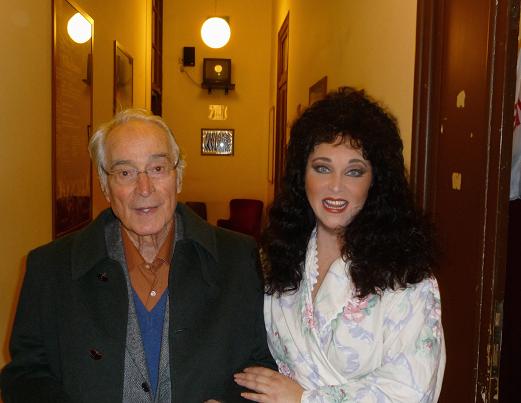
Elizabeth Blancke-Biggs: The Den Norske Opera in Oslo is an amazing organization, both artistically and in an administrative sense. The building is an architectural marvel, large and impressive while still maintaining an outstanding acoustic presence (this is why I have agreed to go back to Oslo for my debut as Turandot). And, of course, the MET is a fantastic place to work. The technical prowess and sheer number of performances is daunting and their technical staff makes it all seem like business as usual! And the Teatro Massimo in Palermo, where I sang the Centennial production of La Fanciulla del West, is an amazing theater. It is so beautiful and representative of the word “Grand” Opera. It was so rewarding to work in this marvelous theater and to be conducted by dear Mo. Bruno Bartoletti in one of his final shows…what a fortunate experience.

1EBB POSTER3L’Idea: What projects are you working on?
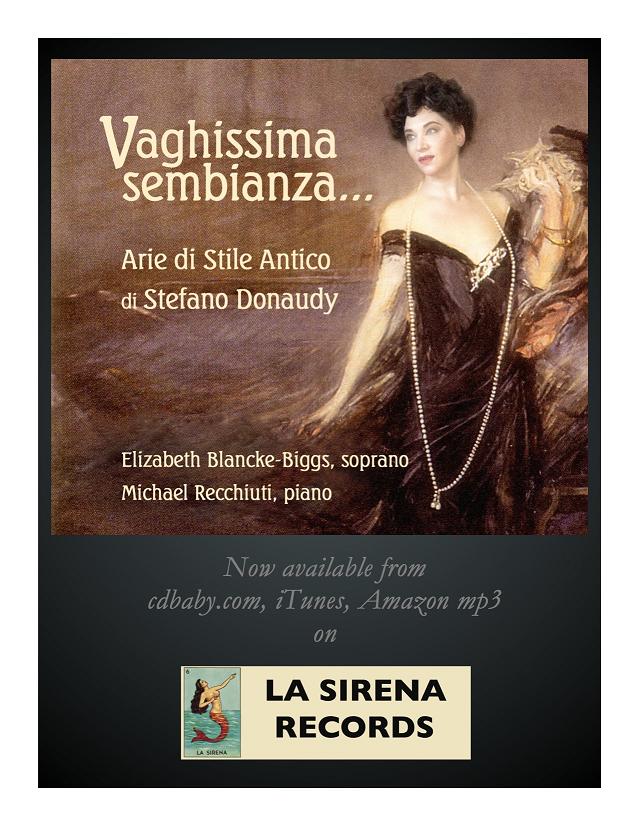
Elizabeth Blancke-Biggs: I just completed a project that is very dear to my heart. Michael (Mo. Recchiuti) and I recorded 28 of the songs of Sicilian composer Stefano Donaudy entitled “Vaghissima sembianza.” A few of the songs were very popular for a time and were recorded by many of the singers of the  “Golden Age,” including Ponselle, Muzio, Caruso and Gigli. They then fell out of popularity. We were eager to re-introduce them to modern audiences. The music is lovely and evocative of the Italian spirit. They are a sweet travelogue of the many styles of Italian song throughout history, including Gigues, Frottolas, and Tarantellas, along with the more well-known sentimental songs like “O del mio amato ben” and “Vaghissima sembianza.”

1EBB USE Macbeth Letter

Macbeth – Santiago Chile – Hugo de Ana production

L’Idea: Are the audiences in Central and South America different in behavior and response than the ones in USA and Italy?  
Elizabeth Blancke-Biggs: Audiences in Latin America tend to be a bit more enthusiastic and less self-conscious. They don’t seem to feel the need to behave differently because they are at an Opera concert as opposed to a Pop concert. I find this enthusiasm for music in all its forms quite infectious. It is really quite a thrill to sing for an audience that yells and applauds like you are a “Rock Star!” It is one of the reasons I enjoy singing in Latin countries. The audiences in Italy and America tend to be more reserved… but it is possible to whip them in to a frenzy if you put on an exciting show. No matter how controlled a society, there is always the visceral thrill of an exciting performance that will engage them. In fact, I was amazed at the LONG and enthusiastic curtain calls we took after the Salomé in Oslo; the audience really let themselves be inspired and moved by that wild and crazy production and Strauss’ amazing Music.

1Act III Naples

Tosca Act III with Dinyar Vania (Tenor)

L’Idea: Do you have any suggestions for a young person interested in singing in operas?  
Elizabeth Blancke-Biggs: Don’t go into music expecting to be a Star or to be loved. You must sing because you cannot imagine doing anything else in the world; there is no greater gift than to try to bring something of yourself to the composer and his art! That is all the glory… art for art’s sake.

L’Idea: Do you think there should be more done in the USA to attract the young people to opera? How would you go about that?
Elizabeth Blancke-Biggs: Well…. that’s a long speech. We used to have a lot of music in the schools; I myself was introduced to music in this way, and I think it was very important for young people to learn about these things, whether they are planning a career in Music or not. It helps the mind to focus and forget about life and to channel problems creatively. I would hope that we can once again return to a Nation that values great Art and Artists. I really think the only answer is re-introducing music back into the curriculum; that way it is a part of life for children of all ethnicities and economic backgrounds. Some of the greatest Artists came from very humble backgrounds.

1AbigailleFIX 2 copy

Abigaille – Nabucco – Teatro Municipal Santiago, Chile

1EBB body 4warm

Posted in Interview | Tagged , , , , , | Leave a comment

AUDITIONING FOR THE MET ORCHESTRA

by William Short, principal bassoonist; as published on http://www.MetOperaMusicians.org

Winston Churchill once said, “[Democracy] is the worst form of government except all those others that have been tried from time to time.” Much the same can be said for orchestral auditions – they are a flawed system of objectively judging what is ultimately a subjective art form. Orchestral musicians devote themselves to the collective endeavor of ensemble playing; auditions put them into a harsh, solo spotlight, under which they must jump through whatever musical “hoops” the audition committee sets before them. It is the worst way of choosing the best musician – except for all the others.

Every orchestra uses a slightly different system to make sure that they find the right person for the job, and to make that process as painless as possible for both auditioner and auditionee. The MET Orchestra is no exception. We take a great deal of pride in running the fairest, most effective auditions we can. I sat down with Rob Knopper, percussionist, and Boris Allakhverdyan, principal clarinetist, to discuss their experiences in this unique system of interviewing for a dream job.

GETTING THE BALL ROLLING

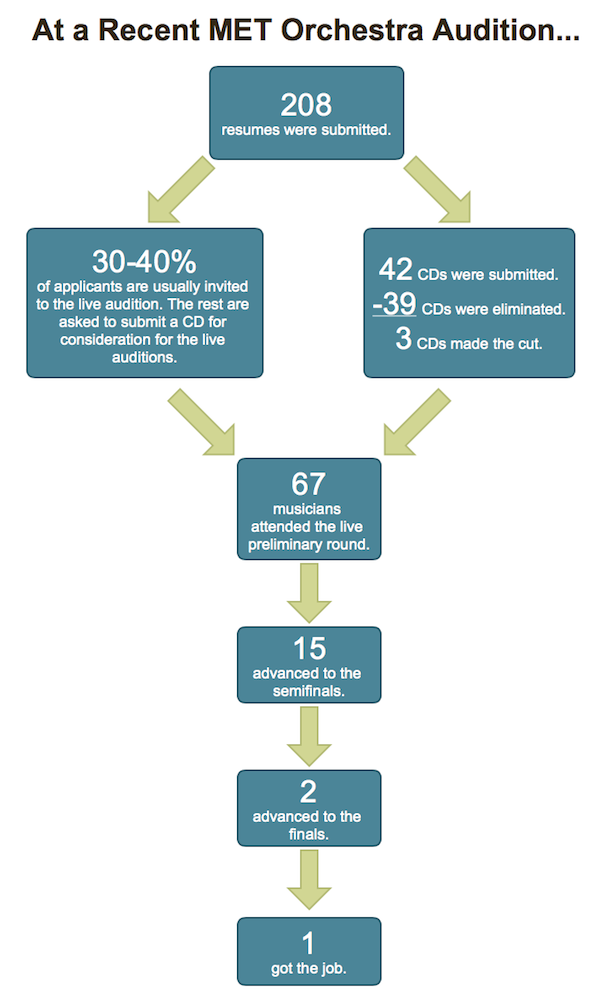
When an audition is announced, all interested musicians submit a resume. A committee of orchestra members reviews the resumes to determine which applicants will be invited directly to the live audition, and which will be asked to submit a preliminary recording. Boris was invited directly to the live audition, having already played professionally for four years in the Kansas City Symphony, advanced to later rounds in recent major auditions, and performed as a substitute with several major orchestras.

Rob, on the other hand, was asked to submit a CD. He describes the process of recording simply: “It’s kind of terrible.” When it was done, he says, he enjoyed the feeling of having “conquered something [he] didn’t know how to do,” but remembers that at the time, he would “listen to a thirteen-second excerpt and say, ‘OK, I hear sixty-five things that were wrong with that.’” Over time, he says, the takes improved, but so did his standards, until “the tiny errors became…so clear.” He “hadn’t thought about anything else for hours.” Arriving at the end of the recording process, he says, combines knowing that the final product represents the best of what one can do and being intimately aware of everything that is still wrong with it.

In the end, he made it through. Both Rob and Boris were on their way to audition for the MET Orchestra.

GEARING UP

Rob views the audition itself as little more than an endpoint of a much longer and more important preparation process, which he treats with an almost obsessive passion. “[The preparation] is what I have control over. Of course, every rejection I got – and there were tons of them – hurt in its own way, but as long as I was able to say, ‘OK, this preparation process yields this result,’ I was driven to keep changing things up.” Eventually, he found the process that worked for him, although he says that it took him from age sixteen to twenty-four, encompassing some sixty auditions experiences. His unique system of preparation gave him a tremendous confidence boost. He knew that he had put “as much work as possible into it,” and that very few others had done the same.

Boris actually had less time to prepare for his MET audition than he would ordinarily like, since he had another major audition several weeks before. He prefers to spend six or seven weeks preparing for an audition; for the MET, he only had four. However, he says he also felt “fresher,” describing previous auditions as often feeling that he had “peaked already. [The MET audition] was not like that.” He describes, amazingly, actually enjoying the audition process: “I like how concentrated I am at the auditions. They put me in a completely different mindset – I care about each note.” He feels that he concentrates more under pressure, and that an audition provides more pressure than virtually any performance.

HOW TO PICK UP CRASH CYMBALS, AND OTHER TALES FROM BEHIND THE SCREEN

1397695226039

Why is there so much pressure? In part, because the candidates must prepare an exhaustive list of some of the most important and demanding parts ever written for their instrument. For Boris’ audition, the list included a solo concerto plus eighteen excerpts from fourteen operas. Rob’s audition included even more excerpts from both the symphonic and operatic repertoire, in which he had to demonstrate his abilities on no fewer than nine different instruments.

Both Boris and Rob note that the lists contained a great deal of unfamiliar music, which presented both a challenge and effectively evened the playing field. Rob notes, “You’re not testing [who has the most] years of experience…everyone has exactly the same amount of time to prepare.” Why is the opera repertoire so little-known among orchestrally-trained musicians? Students in conservatory and university music programs are not exposed to the same quantity of operatic literature as they are to symphonic literature, so any opera audition will likely include music that most of the candidates have not played (or even heard) before.

Boris notes that some of the most difficult excerpts included Strauss’ Der Rosenkavalier, Verdi’s I Vespri Siciliani, and the overture to Smetana’s The Bartered Bride. A deceptively difficult excerpt comes from the onstage banda in Mozart’s Don Giovanni – it sounds simple and easy, but controlling the quality of articulation (not too hard, not too soft) is very difficult. Largo al factotum from Rossini’s Il barbiere di Siviglia provides similar challenges – it can easily sound too harsh. Stylistic differences between, say, Wagner and Verdi, Mozart and Puccini, are of the utmost importance.

Rob notes that, while the typical “major” percussion instruments, such as snare drum and xylophone, are vitally important and quite difficult, so are excerpts for more unexpected instruments, such as crash cymbals. Rob describes a nearly five-month process of learning to pick up and position crash cymbals in such a way that they make no noise until he wants them to. An excerpt from Götterdämmerung that consisted of pairs of very loud cymbal crashes entailed the following: he would pick up the cymbals separately, pressing one against his chest and gently positioning a corner of the other against it. He then moved both against his chest, lined them up, and rubbed them against each other ever-so-gently to ensure that they were exactly even. The committee could hear none of this. Only then could he proceed with the excerpt at hand.

THE AUDITION
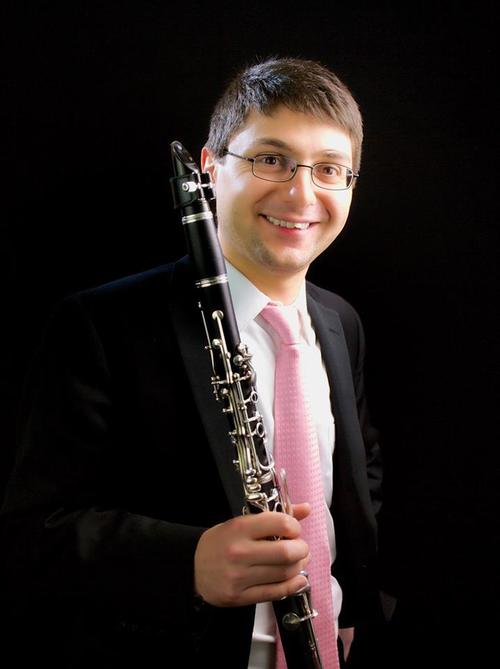
Boris Allakhverdyan

Boris Allakhverdyan (Photo by Pedro Díaz)

Once any audition has begun, its unpredictability becomes readily apparent. Boris felt that his preliminary round was “good, but nothing extraordinary. It was just fine.” He advanced to the semifinal round, which was on a different day, after all preliminary auditions had concluded. He found that this gap effectively eliminated whatever confidence the thrill of advancing may have given him – it was his weakest round. He prepared himself to be eliminated. He describes running out of breath in one excerpt and recovering less gracefully than he would have liked, but he still advanced – and at that point he felt that he could relax. In this particular audition, there would be several “final” rounds – until the committee gave a majority vote to one candidate – but Boris says he felt “good [about the final rounds]…better than the first two.” By the end, he felt that he was finally able to “lighten” his playing: before, “the sound was a little forced…I pushed too hard. I tried too hard.” The lightness he finally achieved contrasted with his determination: “I had been to the finals [of other auditions] a couple of times; I had been runner-up a couple of times, so this time I thought, ‘I gotta do it. I can’t be runner-up again…I have to own it.’”

On the other hand, Rob describes “almost being on autopilot” due to the nature of his preparation. Despite this, there was still a voice in the back of his head that knew that he wasn’t practicing anymore. This time it was real. As with any audition, some things went well and some things went less well. He advanced through to a second preliminary round, which included more instruments than the first, and again played well enough to advance.

It is notoriously difficult to gauge how one has done at an audition – virtually every musician has experienced the feeling of elation at having “knocked it out of the park,” only to be eliminated. Conversely, like Boris, Rob recalls feeling that his semifinal round in the MET audition was, if not a total failure, borderline. He left the building, sulked a bit, and hoped for the best: he felt that, “If I get through, I’m lucky. If I get cut, I understand.”

Ultimately, he was the only candidate to receive enough votes to advance, and thus was awarded the position without having to play what would then be an arbitrary final round. His “borderline” audition turned out better than he ever could have hoped.

AFTER THE AUDITION

Everyone reacts to the news that they have won a job in the MET Orchestra differently. One member of the orchestra reportedly ran screaming through the hallways. Boris had a somewhat different response: “I had a glass of beer with the people I was staying with. I was on the phone with everybody. I slept for probably two or three hours, then I had a flight early in the morning for a rehearsal in Kansas City. It hadn’t sunk in yet; it came two or three weeks later.”

“I lost my mind, but I tried to contain my own excitement, sitting around there with a bunch of very disappointed people,” says Rob. “I went down and met the committee, but I didn’t remember a single one of their names. I was just thinking, ‘Oh my God, I have to tell my Dad…I have to call my old teachers…Do I have to get a new bank account?’ I had never really considered what happens after you win.” He says that the moment when he won was “the ultimate turning point. Your life was going in one direction and now it’s going in a different direction.”

THE X-FACTOR: WHAT MAKES MET AUDITIONS DIFFERENT?

“I love it.” That was Boris’ immediate reaction when asked how he feels about the fact that, in all MET Orchestra auditions, the screen (which divides the candidate from the committee) stays up through the very end. “I concentrate on my playing, not on how I look. Sometimes I sit with my legs crossed, and I prefer that! I play better like that! All four auditions I have won were screened [until the end].” In auditions in which the screen comes down, “I think about ‘looking good’ too much…I feel like I shouldn’t just play musically, I should look musical, too. They’re looking at you, not at the music.”

Rob Knopper in the stage band costume for La Bohème (Photo by Pedro Díaz)

Rob Knopper in the stage band costume for La Bohème (Photo by Pedro Díaz)

The MET Orchestra has several such policies that are either unusual or unique in the world of orchestral auditions. The committee is not allowed any communication or discussion amongst itself before voting on a candidate; no candidate is ever cut off mid-round; perhaps most unusually, the MET Orchestra always offers a job to a candidate at the end of an audition. Boris freely admits that this is what convinced him to take the audition. Because he knew that someone would win the job, he felt that it was important to take the audition, even though it came only three weeks after an audition for another major orchestra and shared none of the same audition repertoire.

Rob says these policies had a similar effect on his decision to audition: he chose not to audition for another orchestra because it would interfere with his preparation for the MET audition. “I knew that I should stay focused and put everything into this MET audition. [Because its policies are so fair], I knew the most important thing was to put the most work and energy into it, so it drove me to work harder. It was the ‘X Factor.’”

Rob notes that, “The audition process should benefit all parties. The process is just a majority vote, and everyone has a different perspective on what’s [musically] important. The orchestra members each vote their own musical conscience. The process ensures that the winner will have the best combination of the different qualities that everyone is looking for. The individual musician knows that it is a fair process, so they know that working harder and smarter will not only help them get a job, it will help them keep it.”

Ultimately, Rob adds, audiences should be the single greatest benefactor of the audition process. Audiences validate the lifetime of work necessary to perform at the highest level, and transform it into experiences that are variously shattering and uplifting, disturbing and amusing. This presents a great responsibility to those performers who are entrusted with bringing great art to life, and that is what auditions are all abou

Posted in Article | Tagged , , , , | Leave a comment

San Diego Opera Continues Its Battle for Survival

From:bwwopera By Erica Miner

2351FB78C-F7D2-D07F-7FE022375AB84EA1On Thursday, April 17, controversy over the closure of San Diego Opera took a startling turn when a Town Hall meeting with the theme, “San Diego Opera Moves Forward: Alternative models of Opera in America” for supporters of the company’s survival, and a meeting of the Opera’s Board of Directors, took place simultaneously. The atmosphere at the former (which I attended) was upbeat and hopeful and ended with cheers from the overflow crowd at the Civic Plaza Copper Room. The latter reportedly was chaotic and contentious and resulted in walkouts and multiple resignations from Board members, including its president, Karen Cohn.

audience2Those who have followed SDO’s journey since General Director Ian Campbell made his shocking announcement on March 19 of the company’s impending closure are familiar with the circumstances. Citing declines in ticket sales and donations, and the near-depletion of a $10 million dollar endowment, Campbell encouraged SDO’s board to shut down the company’s operations at the end of the current season, with the final performance scheduled on April 13. The board voted 33-1 in favor of Campbell’s recommendation.

Volatile reaction came swiftly from company members, longtime SDO supporters and opera lovers, not only locally, but also across the entire US via the Internet and social media. 400 employees, including singers, San Diego Symphony musicians, stagehands, staff members and many more, were in danger of losing their incomes. Battle lines were drawn as San Diegans stood up to voice their opposition to the planned closure.

Before long it was evident that the implications reached far beyond San Diego. In fact, the situation aroused concerns nationwide about the future of opera. Well-established New York City Opera had already closed in recent months. The Met was having labor disputes that portended possibly insurmountable difficulties. The potential demise of SDO had opened a Pandora’s box of fear and worry among opera aficionados. So many people love opera; how could this beloved art form suddenly be poised on the chopping block?

panel5However, it also became clear that SDO was not going to go down without a fight. The crusade to save the company has received almost daily coverage from local media. A group of employees, staff and opera supporters formed a “White Knight Committee” (WKC) to fight the closing and to pressure the board to rescind its decision. Via emails and the Internet the WKC called for opera lovers to sign an online “Save San Diego Opera” petition; over 20,000 signatures signaled an overwhelming desire to keep the company alive. Company singers filed a lawsuit to force SDO to submit arbitration over their contracts. Little known facts about the company’s financials began to circulate. Campbell was mercilessly criticized for giving up on the company, and for drawing a salary that was inordinately generous, given the company’s financial precariousness. The high-rent penthouse SDO offices were cited as exceedingly posh and expensive.

Clearly, if the opera were to survive change was needed, in the form of economizing, cutting down expenses, and choosing new leadership. The WKC and its proponents insisted the opera was salvageable and mounted a persuasive campaign to prove their hypothesis. Nightly features began to appear on local San Diego TV stations. “Can the Opera Be Saved?” was a recurrent theme in the media, one of many arias that were being composed in the opera within an opera of the company’s saga. Soon, public outcry motivated a pressured Board to extend the closure deadline to April 29. The “Save SDO” movement gained momentum at an accelerated pace, resulting in the April 17 “San Diego Opera Moves Forward” Town Hall Meeting at Civic Plaza.

420 attendees in the Copper Room and numerous others who watched via live stream on monitors in the hallway listened carefully as three opera-expert panelists discussed viable alternatives to keep SDO alive. Nicolas Reveles, the Opera’s Geisel Director of Education and Outreach and well known to San Diego opera aficionados as the company’s superbly knowledgeable pre-opera lecturer, moderated the discussion. Presenters Marc, Scorca, President and CEO of the national organization Opera America, and David Devan, General Director of Opera Philadelphia, informed the audience as to the types of business models that other US opera companies have implemented to bring opera into the 21st century.

Reveles started by defining opera. Grand Opera in a 3,000-seat theatre no longer was relevant to SDO, he claimed. New business models using smaller theaters and different types of operas such as musical theater, Baroque operas with smaller casts and orchestras, and Mexican-themed operas such as Cruzar la Cara de la Luna, which was performed in the 2012-2013 SDO season, were necessary to enable the company to adhere to the realistic budget realities of our times and to attract audiences. Opera is an art form that tells stories in music, using classic issues involving community, politics, and (audience laughter here) political corruption.

SDO SOS FightScorca cited difficulties in the state of opera over the past decade: increases in the “Opera Price Index” of two to two-and-a-half times the cost of living increase; a decrease in audience attendance of as much as 24% in top-level companies; more sophisticated audiences resistant to subscriptions; competition for audiences in entertainment and philanthropic dollars. Nonetheless he gave examples of a positive nature. In recent years the number of opera companies across the US has increased from 120 to 500. Opera is now a multimedia art form; young artists of unprecedented high quality are creating their own companies and finding donors. Specialty companies are commissioning new works. Smaller venues are being balanced by HD transmissions in stadiums. Companies such as Dallas Opera, which cut back from five to three productions, are now able to slowly increase the number of productions while still reducing costs.

Devan presented a similar view in what amounted to a much-needed pep talk for a crowd hungry for good news. He pointed out that, just as Philadelphia was not New York, San Diego was not Los Angeles, and needed to come up with its own unique “SDO plan.” As a smaller city, Philadelphia had faced a challenge he called “subscriber crisis.” Opera, competing with such media as Netflix, was a waning model, too costly to remain the same, an art form that needed to reach beyond the opera house, with a civic footprint as important as its product footprint. Philadelphia Opera reinvented itself by creating partnerships in innovative co-productions with such established musical entities as the Philadelphia Orchestra and Curtis Institute of Music; balancing major opera performances in large venues with chamber operas in smaller venues; creating a Composer-in-Residence program; broadcasting at Independence Mall; and fueling innovation by asking people to commit to investing in new ideas through a “Venture Philanthropy” concept. These efforts have garnered numerous positive results, including an increase of 24% in ticket yield among the coveted 25 to 34 age group. He emphasized that “Version 2.0” for San Diego would necessitate a long-term plan. The enthused listeners seemed more than willing to devote the time and energy needed.

As the meeting ended, news filtered in via text from the Board meeting. Board President Karen Cohn had resigned along with twelve other Board Members. Ian Campbell and his former wife Ann Spira Campbell had walked out prematurely. A cheer emanated from the crowd when it was announced that the San Diego Opera Association had deferred its previously announced April 29 date for closure of operations to at least May 19, to permit the reconstituted Board and the Special Committee led by Board secretary Carol Lazier to explore opportunities to continue the Opera Association’s mission.

Later news revealed that Lazier, who earlier this month had donated $1 million to explore new ways forward for the opera company, was named acting board president. New hope emerged for a retooled, “fiscally responsible” 2015 SDO season, with advice coming from outside experts including Opera America. A meeting of the Opera Association Members is being organized for the near future.

Whether plans for a resurrected San Diego Opera with new donor and fundraising options will come to fruition remains to be seen. What is clear thus far is that passionate lovers of opera in our city have not been willing to give up the battle. That fervor seems unlikely to diminish any time soon.   https://www.facebook.com/savesandiegoopera

Photo credits: SaveSanDiego.org (logos) John Menier (photos)

Posted in Article | Tagged , , , , , , , | Leave a comment

MOSES und ARON in Wales

Moses-und-Aron-(Stuttgart-Opera)-Chris-Merritt-(Aron)-Photo-A_T_-Schaefer-11_jpg_0

WELSH NATIONAL OPERA PRESENTS:

Moses und Aron

Schoenberg

New Production

Imagine you’ve been told the most important thing man has ever been told. What you have been told will change the world and save mankind. You must now share what you have heard, you are God’s spokesperson on earth. Imagine, however, that you are overcome with despair that you find yourself unable to find the right words to communicate God’s will. This is Moses’ tragedy in Moses und Aron. It is impossible not to listen to Schoenberg’s ‘fragmentary masterpiece’ and not be stunned by his achievement. Moses und Aron reaches to the outer limits of what opera was capable of in the last century. It’s a sound so unique, so urgent that you might be forgiven for thinking that it has come down from heaven itself. Welsh National Opera is proud to stage this rarely performed opera in Sergio Morabito and Jossi Wieler’s highly charged production. Moses und Aron is a huge undertaking for both performers and audiences but the rewards will be extraordinary. Supported by the Colwinston Charitable Trust and The John S Cohen Foundation.

Conductor: Lothar Koenigs

Directors: Jossi Wieler and Sergio Morabito

Based on an original design by Anna Viebrock

Lighting Designer: Tim Mitchell

Lighting Design Assistant: Simon Spencer

MOSES-~3

Cast

Moses: Sir John Tomlinson

Aron: Rainer Trost

A Young Maiden / First Naked Virgin: Elizabeth Atherton

A Young Man: Alexander Sprague

Another Man / Ephraimite: Daniel Grice

A Priest: Richard Wiegold

Sick Woman / 4th Naked Virgin: Rebecca Afonwy-Jones


SYNOPSIS

Act One

Moses hears the voice of God. It asks him to lead his people out of Egyptian servitude and to instil in them a belief in the One and Only. Moses quails at the task, pleading old age and the ‘clumsiness of his tongue’. The voice promises him the help of his brother Aron, whose words will work miracles in the minds of the people.

The two brothers, Moses and Aron, are both inspired and daunted by the divine mission. They struggle to find an explanation of that which cannot be explained: an understanding of the invisible and inconceivable God.

The news spreads that Moses has returned, together with Aron, in order to announce a new god. The people, who have suffered since Moses killed an Egyptian slave-driver, are apprehensive and fear retribution.

The people besiege Moses and Aron with questions about the new god. Their disappointment turns to rage when they are unable to understand that this god is invisible. Moses is frustrated when he is unable to explain how God can be perceived only within oneself but Aron tries to help the people understand by performing three miracles of transformation.

Aron interprets the miracle of the staff transforming itself into a snake as an allegory of divine law: spiritual flexibility is required for its understanding. Authority and intelligence, which are necessary qualities for leaders, are united in Moses and Aron. Moses’s hand, which appears leprous, is healed when he places it over his heart, where God dwells. Pouring Nile water, which appears to change to blood, Aron explains that the blood of the Hebrews has been nurturing the land of their oppressors for generations. God would free them and lead them to a land where milk and honey flow. The power of the Egyptians, however, would be washed away in the floods of the Nile.

Aaron’s inspired words reach the people’s hearts. They become aware of being chosen and, led by Moses and Aron, venture to begin the fight for freedom.

Act Two

The people’s exodus from Egypt has led them into the wasteland. Moses has been on the mountain of revelation for forty days and has not yet returned. The people have lost their belief in him and want to turn away from the invisible god. Aron is unable to explain his brother’s actions. The people plead with the elders to be given back the old gods and their laws. Aron is ready for a compromise and prepares to provide them with an image of their longings and wishes.

The people become more and more enthralled by the drawing power of the image. It shows the preparation of animal sacrifices, the dances of the slaughterers, the slaughter of the animals, burnt offerings, the miraculous healing of a sick woman and the ritual murder of a young man protesting against idolatry. After much drinking and dancing the worship culminates in the ritual sacrifice of four naked virgins. Devastation, suicide and erotic orgies follow.

Moses descends from the mountain. At his words, the image, created by Aaron, vanishes. Moses challenges his brother’s decision to act against the divine command. Aron insists on the people’s need of the image, which he had used to fill the vacuum Moses had left. For Moses, an existence without the idea of God seems worthless.

Aron argues that the laws which Moses has been given by God can only give the people a limited view, that they struggle to understand. In despair, Moses destroys the laws. Aron denounces him, saying that he will continue to keep the idea of God alive by putting it into words. He joins the people as they continue their journey to the promised land.

Moses is left behind. Aron has put words and images to that which cannot be expressed and has destroyed his brother’s absolute perception of God. For Moses, God has become silent.

Moses-und-Aron-(Stuttgart-Opera)-Chris-Merritt-(Aron)-Photo-A_T_-Schaefer-24_jpg

General information:

All performances start at 8pm.

Running time approximately 2 hour 10 minutes with one interval.

Sung in German with surtitles in English (and Welsh in Cardiff).

Production originated at Stuttgart Opera.

Free pre-performance talks
Prior to every performance of Moses und Aron and Nabucco.

The Whole Story
Thursday 22 May – Tuesday 3 June
The Whole Story is the perfect introduction to the Faith season. Before the performances begin, our team of experts will guide you through the music, stories and background to each opera.

David Pountney in Conversation
Friday 23 May
David Pountney and a key figure from the arts explore the Faith theme.


Posted in OPera | Tagged , , , , | Leave a comment

Cavalleria Rusticana and Pagliacci in Copenhagen

The Royal Danish Opera Presents:

CavalleriaRusticananeEN_top415

Stage: Operaen Store Scene
Title: Cavalleria Rusticana & Bajadser
Artform: Opera
Performance period: 17. May. – 10. Jun. 2014
Duration: 2 hours 30 minutes incl. interval.
Price: 795kr – 125kr
Dates: 17/05, 20/05, 24/05, 27/05, 31/05, 02/06, 04/06, 06/06, 10/06

Take a journey to Sicily’s hot-blooded world of seduction and jealousy in two classic operas visually linked by impressive set design.

Strong Italian temperaments are at play under the baking sun of Southern Italy in these two performances about hypocrisy and murder. Studded with catchy melodies, both operas are in musical consonance with Puccini works such as Tosca and La bohème. Critically acclaimed set designer Mia Stensgaard has created extraordinary sets for the performance evocative of the torrid Sicilian heat. If you’ve never been to see an opera before, this two-opera performance is a very fine place to begin.

Many new singers are featured in the cast list, including Stig Andersen, Johan Reuter, Anne Margrethe Dahl, Niels Jørgen Riis and Audun Iversen, and the young star conductor Joana Mallwitz leads The Royal Danish Orchestra and the Royal Danish Opera Chorus.

Cavalleria rusticana & Pagliacci is performed in Italian with Danish supertitles.

Co-production with the Norwegian National Opera.
Nykredit is the exclusive production sponsor forCavalleria rusticana & Pagliacci.
The Danish Research Foundation is the principal sponsor of the Royal Danish Opera.

Production Team
Conductor: Joana Mallwitz
Stage direction: Kasper Holten (Cavalleria rusticana) and Paul Curran (I Pagliacci) | Set design: Mia Stensgaard
Costume design: Anja Vang Kragh
Lighting design: Bruno Poet
The Royal Danish Orchestra • The Royal Danish Opera Chorus

_86F5059d _86F1028d _86F0475d _86F5809d _86F5291d _86F0761d _86F0383d _86F0666d _86F0062d _86F5668d _86F5076d _86F0550d _86F0059d_86F5809d _86F5934d _86F20282d _B1G1066d _B1G1336d _MG_9500d _MG_9601d

_86F1118d _86F1176d _86F1639d _86F2020d _86F2251d _86F2642d _86F2924d _86F5059d _86F5076d _86F5111d _86F5291d _86F5521d

Cast

  • Anne Margrethe Dahl
  • Randi Stene
  • Tamta Tarieli

  • Niels Jørgen Riis

  • Johanne Bock

  • Johan Reuter
  • Hanne Fischer
  • Tuva Semmingsen
  • Stig Fogh Andersen
  • Sine Bundgaard

  • Kristin Lewis

  • Michael Kristensen

  • Gert Henning-Jensen
  • Audun Iversen
  • Palle Knudsen

The Danish Boys’ Choir | The Danish Girls’ Choir

Posted in OPera | Tagged , , , , | Leave a comment

Nabucco in Wales

 WELSH NATIONAL OPERA PRESENTS:Nabucco_gallery06

NABUCCO

Giuseppe Verdi

New Production

When Nabucco is struck by lightning he proclaims himself to be a god. Others think he is a mad man, a tyrant, yesterday’s news, a father and possibly even a liberator. In the final reckoning how will Nabucco be judged? Best known for ‘Va, pensiero – The Chorus of the Hebrew Slaves’, Nabucco is a rich treasure by the young Verdi that all fans of his work will want to discover. Nabucco is the operatic equivalent of a 1950s biblical Hollywood epic with its rousing, soaring score. We are delighted to present Nabucco once again as the company who re-introduced it to British audiences a century after it was last performed on these shores. Rudolf Frey’s production set in the modern day puts the WNO Chorus at the heart of the drama. Nabucco will send you home humming the tunes and tapping your feet for days to come. Supported by the Colwinston Charitable Trust, WNO Partners and the Nabucco Circle.

PERFORMANCES:

Wales Millennium Centre, Cardiff 31 May – 14 June

Birmingham Hippodrome 19 Jun – 21 June

Olavinlinna Castle, Savonlinna, Finland 29 Jul – 2 Aug –

ARTISTIC TEAM

Conductor: Xian Zhang (ex 8 June) tbc (8 June)

Director: Rudolf Frey

Set Designer: Ben Baur

Costume Designers: Silke Willrett and Marc Weeger

Lighting Designer: Tim Mitchell

Choreographer: Beate Vollack

Nabucco_gallery01 Nabucco_gallery02

Cast

Nabucco: David Kempster

Abigaille: Mary Elizabeth Williams

Zaccaria: Kevin Short

Fenena: Justina Gringyte

Ismaele: Robyn Lyn Evans

High Priest: James Platt

All performances start at 7.15pm except 8 June at 4pm Running time approximately 2 hours 50 minutes with one interval Sung in Italian with surtitles in English (and Welsh in Cardiff)

Nabucco_gallery03 Nabucco_gallery04 Nabucco_gallery05 Nabucco_gallery07

SYNOPSIS

The Hebrews pray to God for protection from the Babylonians, who are at the gates of the temple, led by their king, Nabucco. Zaccaria, the High Priest of the Hebrews, holds a vital hostage: Nabucco’s daughter, Fenena. Leaving her in the care of the Hebrew prince, Ismaele, Zaccaria leads his people into battle.

Fenena and Ismaele fell in love when she helped to secure his release from prison in Babylon. Now he is determined to set her free. As they plan their escape, Nabucco’s other daughter, Abigaille, breaks in with a band of Babylonian soldiers disguised as Hebrews. Abigaille also loves Ismaele and offers to save the Hebrew people if he will love her in return. He refuses.

The defeated Hebrews are pursued by the Babylonians. As Nabucco is about to enter the Temple, Zaccaria threatens to kill Fenena if he commits this sacrilegious intrusion. Ismaele intervenes and disarms Zaccaria. With his daughter safe, Nabucco orders the destruction of the Temple. The Hebrews are driven into exile.

Abigaille has found a document that proves that she is not Nabucco’s daughter, but the child of a slave. She swears vengeance against the king and against Fenena, whom Nabucco has appointed as regent while he is still embroiled in the war against the Hebrews. The High Priest of Baal brings news to Abigaille that Fenena has set the Hebrews free. He and his followers have spread a rumour that Nabucco has died in battle and he urges Abigaille to seize the throne.

Zaccaria intends to convert Fenena to the Jewish faith. The Hebrews attack Ismaele for his betrayal of them but are astounded to discover that Fenena has been converted.

As the High Priest of Baal and Abigaille attempt to usurp Fenena’s position as regent, Nabucco returns unexpectedly. He spurns the gods of both Baal and the Hebrews and declares that he himself is the only true god. At these words he is struck down and driven mad. Abigaille seizes power.

The demented Nabucco interrupts the celebrations of Abigaille’s accession to the throne. She taunts her father and tricks him into signing a warrant for the execution of Fenena and the Hebrews. When he realizes what he has done, Nabucco begs Abigaille to show mercy, but she refuses. He attempts to find the document that proves her lowly birth but she produces it herself and tears it up in front of him.

Nabucco sees Fenena being led to her execution and prays to the god of the Hebrews for help and forgiveness. He is restored to sanity and goes to rescue his daughter.

Fenena and the condemned Hebrews resign themselves to death but Nabucco arrives just in time to save them. He gives orders to destroy the image of Baal and, proclaiming his conversion to their faith, promises the Hebrews that he will rebuild the Temple.

Abigaille has taken poison, but before she dies she begs the god of the Hebrews for forgiveness. Zaccaria returns the crown to Nabucco.

Free pre-performance talks
Prior to every performance of Moses und Aron and Nabucco.

The Whole Story
Thursday 22 May – Tuesday 3 June
The Whole Story is the perfect introduction to the Faith season. Before the performances begin, our team of experts will guide you through the music, stories and background to each opera.

David Pountney in Conversation
Friday 23 May
David Pountney and a key figure from the arts explore the Faith theme.

Images by A.T. Schaefer

Nabucco_gallery08 Nabucco_gallery09 Nabucco_gallery10 Nabucco_gallery11 Nabucco_gallery12 Nabucco_gallery13 Nabucco_gallery14 Nabucco_gallery15 Nabucco_gallery16 Nabucco_gallery17 Nabucco_gallery19 Nabucco_gallery20

See more at: http://www.wno.org.uk/nabucco

Posted in OPera | Tagged , , , , | Leave a comment

Rigoletto in Tel Aviv

Rigoletto

Giuseppe Verdi 

The womanizing Duke sings La donna e` mobile as he enjoys his ongoing conquests, while his jester Rigoletto plans a personal vendetta in Verdi’s popular opera about blind love, hate and the wish for revenge.

Libretto: Francesco Maria Piave after Victor Hugo’s Le Roi S’amuse
First Performance: Teatro La Fenice, Venice, March 11, 1851
First Performance at the Israeli Opera: March 29, 1997
First Performance of this production in the current season: June 30, 2012 

Conductor                                Daniel Cohen 
    Eithan Schmeisser
Director   David Pountney
Revival Director   Gadi Schechter
Set Designer   Stefanos Lazaridis
Costume Designer   Sue Wilmington
Lighting Designer   Paul Pyant
Soloists                  
Rigoletto   Carlos Almaguer  
Gilda   Hila Baggio
The Duke of Mantua   Jean-Frarcois Borras 
    Given Nkosi
    Ivan Magri
Sparafucile   Vladimir Braun
Maddalena   Goldman Na’ama
Monterone   Noah Briger
Borsa   Guy Mannheim
Giovanna   Shay Bloch 
The Israeli Opera Chorus
Chorus Master:Eithan Schmeisser
The Opera Orchestra –The Israel Symphony Orchestra Rishon LeZion
Sung in Italian
Surtitles in English and Hebrew
Surtitles: Israel Ouval
  
Length of performance: approx. two hours and 40 minutes
Day                       Opera Date  Hour back stage tours Talkback
*SAT 17.5.14 11:00    
**WED 21.5.14 20:00    
***FRI 23.5.14 13:00    
SAT 24.5.14 21:00 18:30  
MON 26.5.14 20:00 18:30 After the show
WED 28.5.14 20:00   After the show
FRI 30.5.14 13:00    
WED 25.6.14 20:00 18:30 After the show
FRI 27.6.14 13:00    
SAT 28.6.14 21:00 18:30  
MON 30.6.14 20:00   After the show

*    Towards Opening: 17.5.14,  SAT, 11:00
**   Première Performance
*** The performance is dedicated to the memory of our beloved Shimshon Zelig – 23.5.13, 13:00

Act I
Scene i
The Duke of Mantua takes advantage of a party in honor of the Count and Countess Ceprano to seduce the Countess, but for him one woman is never sufficient for long. He talks with excitement about his next victim: a girl he has followed in disguise from church every Sunday. Rigoletto, his jester, mocks the enraged Ceprano. But Marullo, a courtier, has discovered a strange secret about Rigoletto himself: he has a mistress! Ceprano hatches a plot with the courtiers to punish the jester. Monterone forces his way in to denounce the Duke for seducing and debasing his daughter. Rigoletto answers him with vicious mockery. Monterone hurls a father’s curse at both Duke and jester.

Scene ii
Rigoletto meets Sparafucile who offers his services as an assassin. After this chance encounter, Rigoletto reflects on the similarities of their professions: the one wounds with a knife, the other with his tongue. Gilda presses Rigoletto to reveal his identity and her real name and background. But Rigoletto is only obsessed with the need for Gilda to remain hidden from contact with the outside world. He begs Giovanna to keep his daughter safe, but she has already arranged for Gilda’s admirer (the Duke in disguise) to meet her. Rigoletto leaves for work, and Giovanna leaves Gilda alone with the Duke, who says he is a poor student called Gualtier Malde. His seduction of Gilda is interrupted by the courtiers, intent on punishing Rigoletto by abducting his “mistress”. Rigoletto returns unexpectedly, but they trick him into believing they are abducting the Countess Ceprano. When he discovers the truth, Rigoletto realizes that Monterone’s curse is taking effect.

Act II
The Duke is furious that Gilda has been abducted. The courtiers try to placate him by relating their trick on Rigoletto. Gradually the Duke realizes that it is the same girl and that she is now in the palace. The Duke leaves to complete his seduction. Rigoletto comes to search for Gilda, and eventually realizes that she is with the Duke. Even when they are told Gilda is not his mistress but his daughter, the courtiers ignore the jester’s pleas for help. Gilda finally appears, torn between guilt and love for the Duke. Monterone is led past, lamenting the ineffectuality of his curse. Rigoletto swears to avenge him, but Gilda, still besotted, pleads mercy for the Duke.

Act III
On Rigoletto’s instructions, Sparafucile has used his sister Maddalena to lure the Duke, now disguised as a soldier, to his squalid bar by the river. Rigoletto brings Gilda, who still believes the Duke loves her, to witness his infidelity. Once she has seen enough, Rigoletto orders her to go home and disguise herself as a young man in preparation for their escape from the city. Rigoletto now pays Sparafucile his first installment. As the storm breaks, Gilda returns and overhears Maddalena pleading with Sparafucile to spare the attractive young soldier. Sparafucile agrees only if a substitute victim appears by midnight. Gilda sacrifices herself to save the Duke’s life. Rigoletto returns to collect the corpse, but as he is about to throw the sack with the corpse in the river, he hears the Duke nonchalantly singing in the distance. Opening the sack, he discovers his daughter. Monterone’s curse has been fulfilled.

(Photos: Yossi Zwecker)

Posted in Music, OPera | Tagged , , , , , , , , | Leave a comment

TURANDOT in Montreal

acc_turandotHome   PRESENTS:

TURANDOT

Giacomo Puccini

DURATION: 3 HRS.
INTERMISSION: 2
HALL: WILFRID-PELLETIER
VENUE: PLACE DES ARTS
PREOPERA : 6:30 pm

  •  17 May 2014
  •  20 May 2014
  •  22 May 2014
  •  24 May 2014

Synopsis

Puccini

TURANDOT

Puccini’s last opera is his most impressive and most lavish. Larger-than-life characters, and voices that measure up to their excessiveness. A torrent of captivating melodies, starting with the immortal Nessun dorma. An international cast, including a favourite of Montreal audiences, the incredibly moving Hiromi Omura as Liù.

SYNOPSIS

Prince Calaf is in love with the cruel Princess Turandot. To marry her, he must solve three riddles, with a wrong answer resulting in his decapitation. With the help of his faithful servant Liù, Calaf will triumph, and love will melt the princess’s icy heart.


  • Opera: in 3 acts
  • Libretto: Giuseppe Adami and Renato Simoni, after Carlo Gozzi’s tale
  • Premiere: Teatro alla Scala, Milan, April 25, 1926
  • Sung in Italian with French-English surtitles
  • Production : Opera Australia

Presented for the last time at the company: October 2004

Composer


  • Giacomo Puccini

    Lucca, 1858 – Brussels, 1924

    Puccini is the most popular Italian opera composer after Verdi. Born to a long line of composers and organists, he lost his father at the age of five. His musical training was taken over by his uncle, and at 16, he entered the Istituto Musicale Pacini, where he composed his first works. Lucca, the town of his birth, enjoyed a rich cultural life, with regular visits from touring theatrical companies. In 1876, in Pisa, Puccini fell in love for the first time: a performance of Verdi’s Aida sealed his fate as an opera composer. He continued his studies at the Milan Conservatory under Amilcare Ponchielli, composing instrumental and vocal pieces, including the Messa di gloria (1880). His first attempt at opera was Le villi, entered — but not selected — in a competition for one-act operas. However, a performance of the same opera at the renowned Teatro dal Verme in Milan in 1884 launched his career. It was there that publisher Giulio Ricordi noticed him and assured him unwavering support. Only with his third opera, Manon Lescaut (1893), did Puccini begin to achieve any success. Ricordi found him two excellent librettists, Luigi Illica and Giuseppe Giacosa, who co-wrote the librettos for his immensely popular works: La Bohème (1896), Tosca (1900), and Madama Butterfly (1904). Puccini closely oversaw the writing of his librettos, starting and abandoning numerous projects, which considerably slowed his output. After The Girl of the Golden West, which premiered at the Metropolitan Opera in New York in 1910, he began the composition of a triptych of one-act operas, Il tabarro, Suor Angelica, and Gianni Schicchi, which also received their first performances at the Met in 1918. He was unable to complete his last opera, Turandot, which was performed posthumously at La Scala in 1926.

  • Cast

Turandot Galina Shesterneva / Calaf Kamen Chanev / Liù Hiromi Omura / Timur Grigori Soloviov / Conductor Paul Nadler / Stage Director and Choreographer Graeme Murphy / Sets and Costume Designer Kristian Fredrikson /  Chœur de l’Opéra de Montréal Orchestre Métropolitain

  • Josh Whelan
  • Jean-Michel Richer (Canada)
  • Aaron Sheppard (Canada)
  • Kristian Fredrikson (New Zealand)
  • Paul Nadler (USA)
  • Galina Shesterneva (Russia)
  • Hiromi Omura (Japan)
  • Kamen Chanev (Bulgaria)
  • Grigori Soloviov (Russia)
  • Graeme Murphy (Australia)
Posted in Music, OPera | Tagged , , , , , , , , | Leave a comment