CARMEN at the Deutsche Oper Berlin: Review

By Natalia Di Bartolo; Reblogged from Operalibera.net

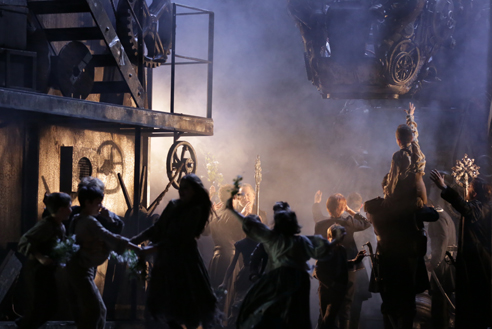
Immediately after the extraordinary success of “Les Troyens (The Trojans)“, the masterpiece by Hector Berlioz in which Roberto Alagna stood out as Aeneas, the Deutsche Oper Berlin offered a second work with AlagnaCarmen. The first performance was held on10th April 2014.

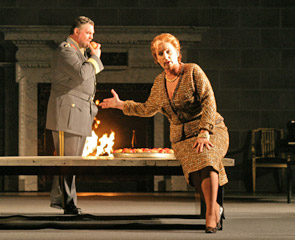
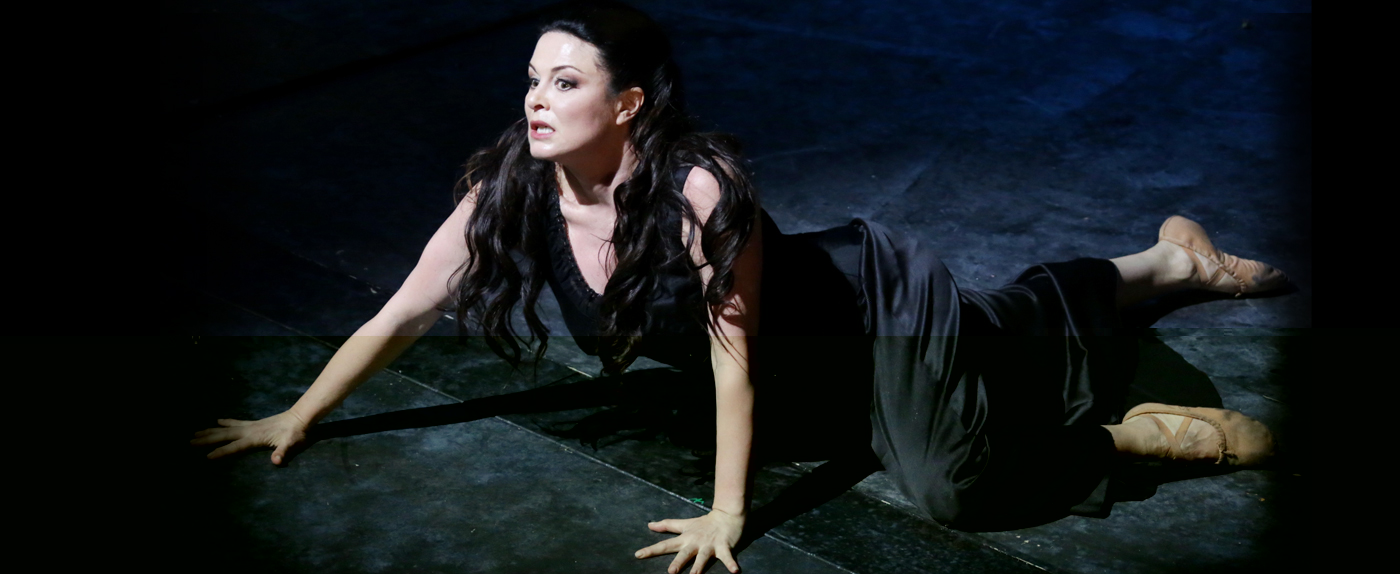
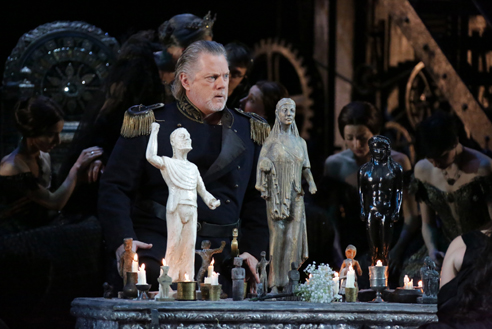
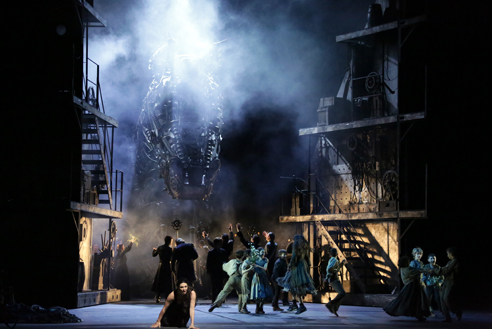
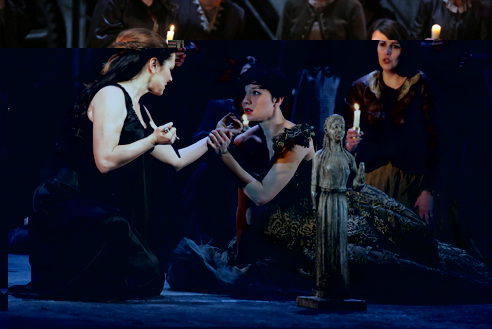
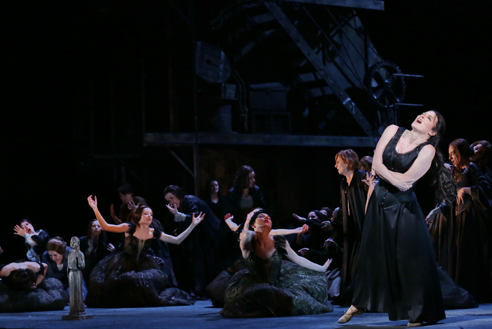
A show of quality, which allowed the two main solists to share the stage again and triumph together, the great tenor as Don José andBéatrice Uria-Monzon as Carmen. The two artists have already met on several occasions asCarmen and Don José: they are two partners who know each other very well, who share a great complicity and appear in perfect harmony both as singers and actors. This gives rise to a certainly unequaled emotion: their interpretation of Bizet’s opera was magical. Both demonstrated such a stage presence and involvement that emotion ran high from the beginning to the end. Their passionate commitment never impaired their vocal performance.

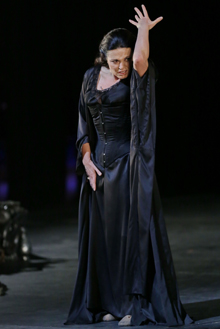
b_200_150_16777215_00___images_artImages_NataliaDiBartolo_10151960_723658421008081_6663950579376068107_n.jpgCarmen by Béatrice Uria-Monzon is graceful and elegant, never vulgar, but more suffering and less brazen than by other performers. She perfectly met the vocal requirements as desired by Bizet, while providing a very personal reading of her singing at the same time.

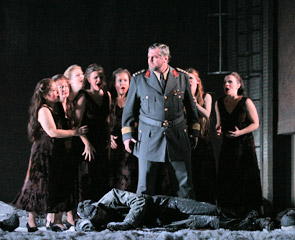
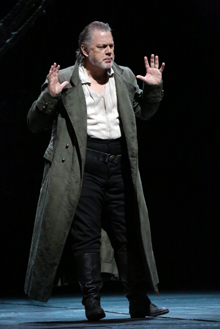
In a great vocal shape, Roberto Alagna, as always, completely merged in his character, one of his favorite roles he said: expressiveness, vocal technique, perfect diction and phrasing, an always colorful and splendid timbre in top notes and a role where he sounds really good. His capacity to constantly produce nuances both in singing and playing is a rich source of expressiveness. The famous tenor portrayed a vulnerable and defeated Don José, but at the same time violent, which is something that is rarely emphasized: whoever is able to kill, as it happens in the final scene of the opera, must necessarily be predisposed to do so. It is perceptible in his behavior from the beginning, since Carmenmade this dark side of his personality come out.b_200_150_16777215_00___images_artImages_NataliaDiBartolo_10153274_723658627674727_6492778259538065254_n.jpg

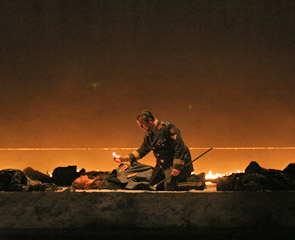
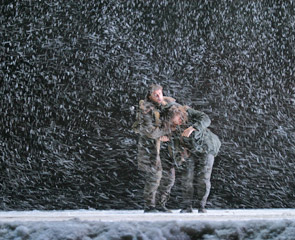
And with the great Robertostaged by Soren Schumacher, this predisposition appears with a great supremacy. His portraying is sometimes very intense, as relevant and specifically thought, than credible and realistic, to which Carmen naturally and accurately responds, causing a thrilling emotion… Given the similarities between the two characters of Don José and Otello, this is not without giving us a promising foretaste of the performance that the brilliant French-Sicilian artist plans to give as theMoorish Verdi’s character (in August, at the ‘Chorégies d’Orange’). We are looking forward to hearing and seeing it.b_200_150_16777215_00___images_artImages_NataliaDiBartolo_1939984_725125644194692_8664372548024603993_n.jpg

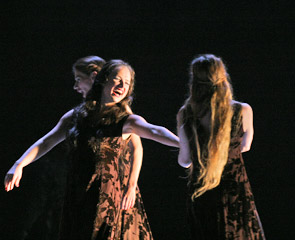
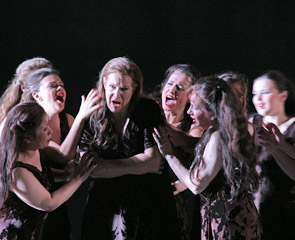
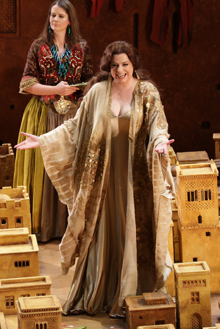
Among the other singers and DOB Chorus, all of whom have proven their value, a special mention should be given to the delicious Elena Tsallagova, a young talented Micaela. Over time and experience, she will certainly be able to give a greater depth to her interpretation, better demonstrating the sweetness of her character.

b_200_150_16777215_00___images_artImages_NataliaDiBartolo_10153034_723658831008040_322774486300668305_n.jpgThe excellent work of Maestro Giuseppe Finzi conducting the DOB Orchestraproved to be quite relevant. He retained control of a long and difficult score which, because of its specific features, may tend to erode or become dangerously noisy, to the detriment of the sound’s quality and especially of the orchestral color.

b_200_150_16777215_00___images_artImages_NataliaDiBartolo_10155852_723658264341430_8905308460697090213_n.jpgA gorgeous success and a touching roar of applause, particularly when the singers came out at the first curtain call, obviously still marked by the emotion of their final scene, as we can imagine.

Posted in Article | Tagged , , , | Leave a comment

LES CONTES D’HOFFMANN in Madrid

TEATRO REAL OF MADRID PRESENTS:

hoffman  LES CONTES D’HOFFMANN

Jacques Offenbach (1819-1880)

MAY 17 – JUNE 21

In the new version of Les contes d’Hoffmann, by Jacques Offenbach, which will be presented to the public in Madrid, Nicklausse, the muse and alter ego of Hoffmann, sings: “On est grand par l’amour, mais plus grand par les pleurs” (One is enriched by love, but also by sadness). This it the main motif in the work by, “the ever cheerful Offenbach” and it appears in a work that is part of the same romantic movement that spans from Victor Hugo to Thomas Mann, passing by Berlioz. The common link between the work by these men is that art and inspiration come from the suffering and sadness in the world. This makes it the only opera by Offenbach in which art triumphs over the pain of love.

Opéra fantastique in five acts
Libretto by Jules Barbier, after the play by Barbier and Michel Carré, based on the stories of E.T.A. Hoffmann

New production of Teatro Real

Teatro Real Chorus and Orchestra
(Coro Intemezzo / Orquesta Sinfónica de Madrid)

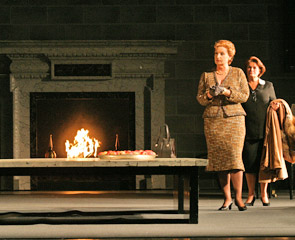
hoffman2Production Team

  • Musical director: Sylvain Cambreling
  • Stage Director: Christoph Marthaler
  • Set and costume designer: Anna Viebrock
  • Chorus Master: Andrés Máspero

CAST:

  • Hoffmann: Eric Cutler (May. 17, 21, 25, 28 · Jun. 3, 6, 9, 12, 15) ; Jean-Noël Briend (May. 31 · Jun. 18, 21)
  • La Musa / Nicklausse: Anne Sofie von Otter (May. 17, 21, 25, 28 · Jun. 3, 6, 9, 12, 15); Hannah Esther Minutillo (May. 31 · Jun. 18, 21)

  • Lindorf / Coppélius / Dr. Miracle / Dapertutto: Vito Priante

  • Andrés / Cochenille / Frantz / Pitichinaccio: Christoph Homberger

  • Olympia: Ana Durlovski

  • Antonia / Giulietta*: Measha Brueggergosman

  • Voice of Antonia ´s mother: Lani Poulson

  • Nathanaël: Gerardo López

  • Spalanzani: Graham Valentine

  • Hermann: Tomeu Bibiloni

  • Schlemil: Isaac Galán

  • Maítre Luther / Crespel: Jean-Philippe Lafont

  • Stella: To be announced

*Ainhoa Arteta was going to sing the role of Giulietta.
Instead of her, Measha Brueggergosman will perform the mentioned role.

Performance Dates

  • 17 MAY (S) 19:00h
  • 21 MAY (W) 19:00h
  • 25 MAY (S) 18:00h
  • 28 MAY (W) 19:00h
  • 31 MAY (S) 19:00h
  • 3 JUN (T) 19:00h
  • 6 JUN (F) 19:00h
  • 9 JUN (M) 19:00h
  • 12 JUN (T) 19:00h
  • 15 JUN (S) 18:00h
  • 18 JUN (W) 19:00h
  • 21 JUN (S) 19:00h
  • Place:Main Hall

    teatro Real

    TEATRO REAL OF MADRID

Posted in OPera | Tagged , , , , , , | Leave a comment

NCPA´s Production of Verdi´s Nabucco

The National Centre for the Performing Arts of Beijing Presents:
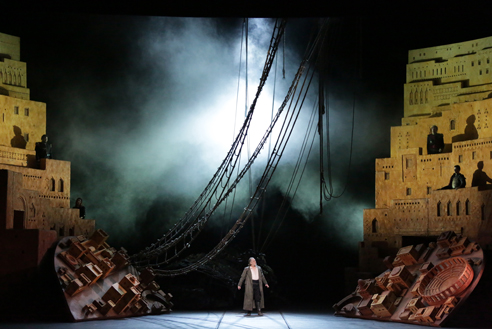
nabuccoChina

NCPA´s Production of Verdi´s Opera Nabucco
NCPA Opera Festival 2014
 

Venue: Beijing Opera House
Dates: Apr. 24, 2014-Apr. 27, 2014
Duration: approximate 150 mins
intermission included

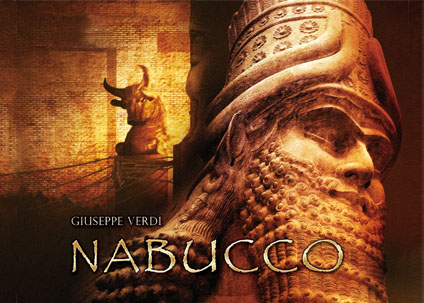
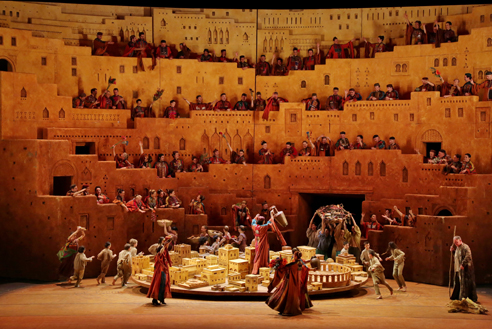
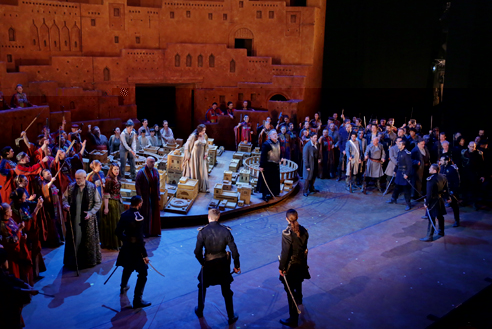
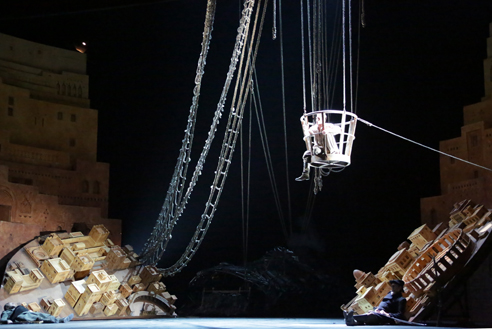
Nabucco (short for Nabucodonosor, English Nebuchadnezzar) is an opera in four acts by Giuseppe Verdi to an Italian libretto by Temistocle Solera, based on the Biblical story and the 1836 play by Auguste Anicet-Bourgeois and Francis Cornue. It is Verdi’s third opera and the one which is considered to have permanently established his reputation as a composer. Nabucco follows the plight of the Jews as they are assaulted, conquered, and subsequently exiled from their homeland by the Babylonian King Nabucco (in English, Nebuchadnezzar). The historical events are used as background for a romantic and political plot. Its first performance took place on 9 March 1842 at the Teatro alla Scala, Milan under the original name of Nabucodonosor. The definitive name of Nabucco for the opera (and its protagonist) was first used at a performance at the San Giacomo Theatre of Corfu in September, 1844. Nonetheless, a more plausible alternative for the establishment of this abbreviated form claims that it was the result of a revival of the opera in Teatro Giglio of Lucca.

Nabucco is NCPA’s second Giuseppe Verdi’s opera of the year. It’s worth mentioning that famous stage designer Ezio Frigerio and costume designer Franca Squarciapino, who has won the Oscar Award of Best Costume Design for the movie Cyrano de Bergerac, has participated in the production.

nabucco1

Composer: Giuseppe Verdi
Libretto: Temistocle Solera
Conductor: Eugene Kohn
Director: Gilbert Deflo
Set Design: Ezio Frigerio
Costume Design: Franca Squarciapino
Lighting Design: Vinicio Cheli
Projection Design: Sergio Metalli
Chorus: NCPA Chorus
Orchestra: NCPA Orchestra

nabucco2 nabucco3

CAST AND ARTISTIC TEAM

   Gilbert Deflo Director
Gilbert Deflo was born in Belgium in 1944. He graduated from Institut National Supérieur des Arts du spectacle et des techniques de diffusion (INSAS), and advanced his studies at Piccolo Teatro di Milano with famous director Giorgio Strehler. Deflo directed L’Amour des trois oranges, his first work in Frankfurt. As a resident director of Théatre Royal de la Monnaie, Deflo directed many different works during the period from 1981 to 1989. In 1989, he began his career in Italy and traveled around Palermo, Catania, Macerata and Milan. His productions included Carmen, Tosca, Falstaff, etc. Deflo is also an active director on the international stage. He had directed Il Barbiere di Siviglia, Danse macabre, Pelleas et Melisande in Hamburg, Die Frau Ohne Schatten in The Welsh National Opera, Aida in Scottish Opera, The Queen of Spades in Barcelona, etc. He produced many baroque operas, such as L’incoronazione di Poppea, Nostos Il Ritorno in Montpellier, Croesus in Berlin, etc.


His recent productions include Semiramide in Théatre des Champs-élysées, Cavalleria rusticana, Pagliacci in Arena di Verona, Manon Lescaut in Cagliari, etc.


Ezio Frigerio Set Design
Ezio Frigerio (b. Erba, Milan, 1930) is an Italian costume designer and art director.

After finishing architecture studies, he approached theatre art by realising the costumes for Casa di Bambola and L’opera da 3 soldi, two plays directed by Giorgio Strehler at Piccolo Teatro in the 1955-56 theatre season. From then on a fertile artistic marriage started between art director and producer, setting up several unique productions as I giganti della montagna (1966), Santa Giovanna dei macelli (1970), Re Lear (1972), Il temporale (1980), L’Illusion Comique, which premiered in 1984 at Théatre de l’Odéon in Paris, La grande magia, which premiered in 1985 and was reprised several times.

The collaboration with Strehler made Frigerio enter the world of opera: Mozart’s Le Nozze di Figaro, Don Giovanni and Così fan tutte were realized by Strehler and Frigerio between 1973 and 1996. Così fan tutte was being staged just before Strehler died.

Frigerio also created stage designs for the Burgtheater in Vienna: Trilogie der Sommerfrische (Trilogia della villeggiatura) by Carlo Goldoni, directed by Strehler, 1974; Judith by Hebbel, directed by Gerhard Klingenberg, 1975.

Other operatic stage designs include: Cherubini’s Medea, directed by Liliana Cavani, for the Opéra National de Paris; Strauss’ Elektra, directed by Nuria Espert, for De Munt Theatre in Brussels; Verdi’s Ernani, directed by Luca Ronconi, 1980, Beethoven’s Fidelio, directed by Werner Herzog in 1999 for the Teatro alla Scala in Milan; Bellini’s Norma, directed by Piero Faggioni, for the Vienna State Opera in 1977; Verdi’s Rigoletto, for the Polish National Opera in 1997.

Frigerio also created the sets for Liliana Cavani’s movie Galileo e i Cannibali and Jean-Paul Rappeneau’s Cyrano de Bergerac, which got an Oscar nomination in 1991.

Frigerio often collaborates with Italian costume designer Franca Squarciapino who is also Frigerio’s partner in life.

Frigerio designed the grave of Rudolf Nureyev.


Franca Squarciapino Costume Design
Franca Squarciapino is an Italian costume designer who won the Academy Award for Costume Design in 1990 for Cyrano de Bergerac. She has spent much of her career designing costumes for major theatres and opera houses, including the Burgtheater in Vienna, Royal Opera at Covent Garden, the Metropolitan Opera, the Vienna State Opera, and Zurich Opera among others.

She frequently collaborates with Ezio Frigerio, who is also her partner and husband in life.

Awards:
Volavérunt(1999): Goya Awards for Best Costume Design(nomination)

La femme de chambre du Titanic(1998): Goya Awards for Best Costume Design

Le hussard sur le toit(1995): SNGCI’s Nastri d’Argento Awards, César Awards (nomination)

Le colonel Chabert(1994): SNGCI’s Nastri d’Argento Awards , César Awards (nomination)

Louis, enfant roi(1993): César Awards (nomination)

Cyrano de Bergerac(1990): César Awards, BAFTA Film Award for Best Costume Design, SNGCI’s Nastri d’Argento Awards, Academy Award for Costume Design, European Film Awards


Vinicio Cheli Lighting Design
Vinicio Cheli was the lighting designer for NCPA’s production of Tosca in May 2011, Der Fliegende Hollander in April 2012 and Un Ballo in Maschera in May 2012. From 1974 to 1979, Vinicio Cheli works at the ‘Maggio Musicale Fiorentino’ involved in all productions. Since 1979 he joined the ‘Piccolo Teatro’ of Milan and became the light collaborator of Giorgio Strehler , he making the entire production of Piccolo until 1989. Since 1987, for four years, he worked with the ‘Rossini Opera Festival’ to produce shows with several directors.

At the same time since 1989 he worked at the Salzburg Festival, Theatre Champs-Elysees, Chalet Theatre in Paris with the set design by Pier Luigi Pizzi, then respondeed to the La Scala in Milan. Recollaborated some years with the Teatro La Fenice in Venice.

The 90s of the last century saw himwork in the Opera Bastille, National Theatre of Prague,Festival of Aix en Provance, Ravenna Festival, the Opera of Monte Carlo, Opera of Geneva, Maggio Musical Fiorentino, Baroque Festival of Versailles, Opera Garnier in Paris, Easter Festival in Salzburg, Teatro Liceu in Barcelona, Atticus Theater in Athens, Ginza Saison Theater in Tokyo, Theatre of the axes of Brussels, Amsterdam Opera, Teatro Comunale of Bologna, Teatro dell’Opera in Rome, Opera of Toulouse, National Theatre of Catalunya in Barcelona,Teatro Real Madrid, Metropolitain in New York, and collaborated with P.L.Pizzi,Ezio, Frigerio, Hugo de Ana, KM Gruber, Henning Brockaus, Claudio Abbado, Riccardo Muti, to name just a few.

In the new miennium, Vinicio Cheli continued to expand his collaboration with Ezio Frigerio, Hugo de Ana, F. Zeffirelli, V. Gergiev, Claudio Abbado, Nicola Joel, Quirino Conti, Mario Gas, in productions covering a vast realm of the opera repertoire.

In 2010, he set up La donna del lago of Rossini direqued by Luis Pasqual with scenes by Ezio Frigerio and costumes by Franca Squarciapino; Boris Godunojv directed by Andrei Konchalovsky

In the beginning of 2011, he worked in Senso a new opera directed scenes and costumes by Hugo De Ana. July 2011 ‘Medea’ directed by Theodorakis in Syros Festival of the Aegean. In November of 2011, he worked in ‘The sleeping beauty’, first ballet of reopening of Bolshoi Theater. Vinicio Cheli also taught theatrical lighting at the New Academy of Fine Arts in Milan and at the Professional School of La Scala.


Sergio Metalli Projection Design
Sergio Metalli was born in Rimini in 1956 and he is dedicated to his passion for electronics that bring him to choose studies along those lines.His versatility led him to perform collaborations in all areas at the highest levels like the State television, to have daily collaborations with artists like Dario Fo, Tonino Guerra, Mietta Corli, Hugo de Ana, Nicolas Joel, Ezio Frigerio, Josep Maria Flotats, Lindsay Kemp, Pier’Alli, Gianni Quaranta, Raffaele Curi, Lluis Pasqual, José Carlos Plaza, Tito Egurza, Margherita Palli, Luca Ronconi, William Landi, Peter Stein, Vladimir Vasiliev and many others passing from international conferences until the Theatre which he has a very special feeling.

In over a decade of successful career he has made over 360 productions and he has worked with major opera theatres around the world.


Yuan Chenye as Nabucco
As a young singer, baritone Yuan Chenye’s developed his craft as a member of the finest training programs in the business, including the Houston Grand Opera Studio and the San Francisco Opera’s Merola Program. Mr. Yuan proved his mettle as an up and coming singer when performing the role of Germont in La Traviata with San Francisco Opera. Since being a member of the Houston Grand Opera Studio he has been invited back to sing many roles including, Tonio in I Pagliacci, Escamillo in Carmen, Marcello in La Bohème, and Bhaer in Little Women which aired on PBS’s Great Performances and released on CD by Ondine.

Mr. Yuan’s clear and supple voice, matched with his facility to portray vastly different characters, have earned him international acclaim. For his Rigoletto with the Welsh National Opera, The Evening Herald described him as, ‘…outstanding in the title role, combining great vocal power with heartfelt emotion.’ Mr. Yuan has put his stamp on this title role having performed it with Houston Grand Opera, Michigan Opera Theatre, Minnesota Opera, Lyric Opera of San Antonio, Sacramento Opera, Palm Beach Opera, Opera St. Louis, and the Welsh National Opera which was broadcast live on BBC.

In addition to performing with many of the United States and Canada’s premiere Opera Houses and Symphonies, Mr. Yuan has favored the stage of many highly acclaimed venues stretching across Europe and Asia, including his native country China. Mr. Yuan is widely known for his compelling interpretations of the standard repertoire such as Mozart, Beethoven, Puccini and Verdi; however, this auspicious baritone is no stranger to the challenge of a world premiere. Mr. Yuan sang the Dragon King in the premiere Legend of Yao Ji. In Beijing, at the National Centre for the Performing arts, he showcased his seasoned artistry in the roles of Cheng Ying in Chinese Orphan and Zhou Luoping in A Village Teacher.

Mr. Yuan’s schedule continues to be exciting, including upcoming performances of Marcello in La Bohème with the Hangzhou Philharmonic Orchestra and Chou En-Lai in Adams’ Nixon in China with San Francisco Opera and at the Culture Center in Hong Kong, a role with which Mr. Yuan is especially familiar. ‘Yuan sang Chou En-Lai with a gorgeous, burnished baritone, his poise bringing the mysterious figure to life.'(Kansas City Star)

Just a few of Mr. Yuan’s symphony performances include: Beethoven’s Ninth Symphony with Singapore Symphony Orchestra, excerpts of Adams’ Nixon in China with the Chicago Symphony and as a soloist in the Domingo Gala at Kennedy Center.


Vladimir Stoyanov as Nabucco
Born in Pernik, Bulgaria, he studied Singing at the Academy of Music of Sofia, and he later perfected himself at the Bulgarian Academy of Arts and Culture in Rome under the guidance of Nicola Ghiuselev.

In 1996, he debuted in Don Carlos in Sofia. He had his Italian debut in 1998 in Macbeth at Teatro di San Carlo of Naples.

Since then, his international career has brought him to the most important opera houses of the world. Particularly noteworthy was his debut at Teatro Alla Scala of Milan in La Forza Del Destino, I Vespri siciliani in Busseto and in Ravenna under the direction of Pier Luigi Pizzi, La Traviata at Teatro Regio of Parma, the opening of the Teatro La Fenice in Le Roi De Lahore, his debut at the Opernhaus of Zürich together with Tsarskaya Nevesta, Attila at Teatro di San Carlo of Naples and Giancarlo Menotti’s Il Console at Teatro Regio of Turin.

In 2008, his debut at the Metropolitan in New York in Pique Dame and in Lucia di Lammermoor, his return to Zürich in Don Carlo, Le Cid and Boris Godunov.

During the 2009 season he sang the main role in Macbeth at the Staatsoper of Berlin, in La Traviata at Teatro La Fenice of Venice, in La Favorita in Seville.


Sun Xiuwei as Abigaille
She once played the role of Turandot in NCPA’s production of Turandot, and the role of Tosca in the premiere of NCPA’s production of Tosca.

Sun Xiuwei studied vocal composition under a famous opera sopranist in Milan, Italy. She competed in many kinds of contests around the world within less than two years and won first prize six times. In 1994, she began her opera career with her first singing engagement of G. Verdi’s La Traviata at the Tokyo Opera House. She sang in Norma, La Traviata, La Forza Del Destino, Trovatore, tilla, Suor Angelica, Andrea Chenier, Il Corsaro, Macbeth, Turandor, Pagliacci, and Requiem. She also sang Cio-Cio San in Madama Butterfly by G.Puccini, after her debut this production in Verona Di Arena, Italy, 1997, she played in this opera more than two hundred times around the world. She sang at opera houses in Roma, Bologna, Palermo, Trieste, Genova, Vanezia, Torre Di Lago, Catania, Verona, Italy; Berlin, Bonn and Carlsruhe, Germany; Nizza, France; Zurich, Switzerland; Oslo, Norway; Helsinky, Finland; Bilbao, Spain; Serbia; Washington, Los Angeles, Detroit, Philadelphia in the United States; Toronto, Canada; and Santiago, Chili. She worked with famous cantors like Arena, Bartoletti, Domingo, Gatti, Nagano, Oren, Palombo, Renzetti,and Rizzi e Santi. She is one of the few Chinese sopranists that are still active on European opera stages.


Anna Markarova as Abigaille
Anna Markarova graduated from the Rostov State Rachmaninoff Conservatoire (class of Prof. Khudoverdova) and continued her studies at the Stuttgart Academy (with Prof. Ingeborg Wamser).

In 2006 Anna became a soloist with the Mariinsky Academy of Young Singers, and since 2010 she has been a soloist with the Mariinsky Opera Company and roles she has performed at the Mariinsky Theatre include Princess Clarice in The Love for Three Oranges, Korobochka in Dead Souls (concert), Grusha the Gypsy in The Enchanted Wanderer, Rosina in Il barbiere di Siviglia, Odabella in Attila, Elisabeth de Valois in Don Carlo, Cio-Cio-San in Madama Butterfly, title role in Aida, Leonora in La forza del destino, Lady Macbeth in Macbeth, Amelia in Un ballo in maschera, Prima Donna, Ariadne in Ariadne auf Naxos. Her repertoire also includes Liza in The Queen of Spades, Tatiana in Eugene Onegin, Yaroslavna in Prince Igor, title role in Turandot, title role in Tosca, Abigaille in Nabucco, Eboli in Don Carlo, title role in Carmen, and Katerina Ismailova in Lady Macbeth from Mtsensk.

The singer’s concert repertoire includes the soprano parts in Verdi’s Requiem, Beethoven’s Symphony No. 9, Mahler’s Symphony No. 8, Rossini’s Stabat Mater, and Orff’s Carmina Burana.

Anna Markarova has toured throughout Russia and abroad. She has appeared at Symphony Hall in Birmingham, the Royal Albert Hall in London, the Philharmonic Hall in Dublin, the Théatre du Chatelet in Paris, the Gulbenkian Centre in Lisbon and in various towns throughout France, Spain, Switzerland, Finland and Austria. Under the baton of Valery Gergiev she has appeared at the Red Sea Festival in Israel as Marina Mniszek in Boris Godunov, Santuzza in Cavalleria rusticana (in concert), and Cassandra and Didon in Les Troyens. In the season 2011-2012, together with the Mariinsky Opera Company took part in the festival in Mikkeli (Finland) and the Gergiev Festival in Rotterdam (Netherlands).

Regularly she performs at the Easter Festival and at the Stars of the White Nights music festival in Russia.

Among recent recordings of Anna Markarova is Verdi’s Attila for the Mariinsky label (Valery Gergiev, conductor, with Ildar Abdrazakov).


Sergey Artamonov as Zaccaria

Orlin Anastassov as Zaccaria

Jin Zhengjian as Ismaele
He has sung the role of Lenski in NCPA’s production of Eugene Onegin, Gastone in the NCPA production of La Traviata, Tu Angu in NCPA opera The Chinese Orphan, Steuermann in NCPA’s production of Der Fliegende Hollaender, Roderigo in NCPA’s production of Otello. He is a national A-class performer in China as well as NCPA’s resident artist.

Since 2005, Jin Zhengjian has sung Jiao Daxing in China’s original opera Wild Prairie for more than 30 times in various versions of the opera, including the 20th anniversary version, NCPA concert version, and mini-theater version.

In 2007, Jin participated in the premiere of Wagner’s Tristan and Isolde in China, as the only Chinese performer in the opera and working with China Philharmonic and numerous world-class artists. In 2008, he performed in the premiere of the original Chinese opera Farewell to My Concubine (as Han Xin) in Beijing, and the six-city tour in the U.S., which was called the ‘Ice-breaking Trip of Chinese Opera in America’. In April, 2008, he sang in the French opera Le roi d’Ys (as Mylio) in NCPA. His performance was highly praised by the French, and, as a consequence, he was sponsored by the French government to study in France. In June, 2008, he sang the leading role in the original Chinese opera Goodbye Again, Cambridge (as Xu Zhimo). In November, 2009, Goodbye Again, Cambridge, with Jin as the leading role, was staged in the Multi-functional Theatre in NCPA. In May and September, 2009, he sang in the premiere and second public performance of the Chinese original opera The Song of Youth, successfully portraying two distinctively different characters, Lu Jiachuan and Yu Yongze, in the opera. In 2010 and 2011, he sang Gastone in La Traviata in NCPA.

He has performed in many important events including Handel’s oratorio Messiah as soloist or leading singer. As a Chinese artist, he has visited countries and regions including Austria, Germany, France, Italy, Slovenia, the U.S., Canada, Japan, South Korea, Hong Kong, Macao, and Taiwan.

The Fifth Sister, with Jin as the leading role, won the New Production Award and Grand Award of the Splendor Award in the 7th China Art Festival in 2004 and was named one of the 30 Works of Excellence on the Nation’s Stage in 2005. In 1999, he was a finalist in the Japan Shizuoka International Singing Competition. As a Singer of Excellence, he took part in the Concert of Singers of Excellence in China zone of the Shen Xiang International Singing Competition.

In 2000, he won a silver prize in the BBK Young Singer Competition held by CCTV. In the same year, he won a Lark Cup silver prize for professional singers.

NCPA Chorus

NCPA Chorus was established on December 8, 2009, whose members were carefully selected from famous music schools in and out of China. Now the Chorus invites Wu Lingfen as the conductor, with many artists well-known in China and abroad giving instructions. Affiliated to NCPA, the highest palace of performing arts in China, the Chorus adheres to NCPA’s guiding principles of “for the people, for the arts, and for the world”. The Chorus mainly stages operas and concerts, and also takes part in kinds of cultural communication and arts outreach events.

Ever since its establishment, the Chorus has actively performed in more than 20 operas of NCPA production, such as NCPA’s commission operas Xi Shi, The Chinese Orphan, and The Ballad of Canal, as well as other classical operas in and out of China: The White-Haired Girl, The Red Guards on Honghu Lake, Le Nozze di Figaro, Il Barbiere di Siviglia, L’italiana in Algeri, Rigoletto,La Traviata, Otello, Der Fliegende Hollander, Lohengrin, Carmen, Turandot andTosca, etc. Its artistic quality receives rave acclaims from both the critics and the audience.

Besides operas, the Chorus has participated in many grand vocal works and themed concerts, such as Beethoven’s Symphony No. 9, Mahler’s Symphony No.2 and No.8, and the grand music and dance epic Road to Revive, etc. As NCPA’s resident chorus, it has been to Singapore, South Korea, Hong Kong and Japan to participate in performances and arts exchange, both to wide acclaims.

The Chorus has cooperated with many well-known artists ever since its establishment, receiving high praises from them all. Plácido Domingo once said it was his honor to cooperate with these talented young artists; Lorin Maazel ever praised it “a chorus full of passion”, so and so forth. On the stage of NCPA, the Chorus has cooperated with such directors as Francesca Zambello, Giancarlo Del Monaco, Chen Xinyi, Cao Qijing, Liao Xianghong, such conductors as Lorin Maazel, Daniel Oren, Lu Jia, Li Xincao, Zhang Guoyong, such vocalists as Plácido Domingo, Leo Nucci, Inva Mula, Brandon Jovanovich, Dai Yuqiang, Wei Song, Warren Mok, He Hui, Dilbèr, Zhang Liping, to name just a few. With more than a hundred performances each year, the Chorus is surely to play an active role in the further development of NCPA.


NCPA Orchestra
China NCPA Orchestra is the resident orchestra of the National Centre for the Performing Arts of China (NCPA), balancing a busy and distinguished performance schedule with a reputation as one of China’s most adventurous and dynamic orchestras. Established in March 2010, the orchestra is composed of distinguished musicians from around the world, performing more than a dozen operas, ballets and regular symphonic seasons every year. Maestro Lu Jia took up the post of Principal Conductor in February 2011, succeeding Chen Zuohuang, the current Laureate Conductor, NCPA’s Music Artistic Director and also one of the founders of the orchestra.

The NCPA Orchestra demonstrates an abiding commitment to high levels of artistic excellence and prides itself on its long-term collaborations with the finest musicians of our day. Artists associated with the orchestra in the past two years include Lorin Maazel, Christoph Eschenbach, Vladimir Ashkenazy, Yan Pascal Tortelier, Gunter Herbig, Gilbert Varga, Lang Lang, Stephen Kovacevich, Leo Nucci, Wang Yuja and Han-Na Chang. Maestro Lorin Maazel praised the orchestra as “a hard-working excellence with great passion” after a series of concerts and the NCPA’s new La Traviata in June 2010.

In its first season of 2011, China NCPA Orchestra gained critical acclaim for its performances in NCPA’s new productions of Tosca (Directed by Giancarlo Del Monaco), Il Barbiere di Siviglia (co-produced with Castleton Festival), Die Fledermaus, and a new composed opera The Chinese Orphan. Apart from that, the orchestra was also deeply involved in NCPA’s 2011 Gustav Mahler Project. Under the batons of maestros including Christoph Eschenbach, Yoel Levi, Jun Maerkl and Chen Zuohuang, the orchestra completed Mahler’s Symphonies No. 1, 2, 3, 8 and 10.

In the season of 2012, China NCPA Orchestra won a highly successful acclaim for two NCPA’s new productions: Der Fliegende Hollander and Lohengrin, both Wagner’s operas were Chinese premiere. It continually collaborates with prominent musicians around the world for concert programs, including Maestro Vladimir Ashkenazy, Yan Pascal Tortelier and the legendary pianist Rudolf Buchbinder.

In addition to its extensive domestic performances, the NCPA Orchestra also received a widespread international praise in 2012. The orchestra was invited by Kissingen Summer Music Festival and Schleswig-Holstein Musik Festival in July 2012, and kicked off his first German tour in Nürnberg, Hamburg and Berlin under the baton of Christoph Eschenbach and Chen Zuohuang. This was followed by a successful concert at the Sydney Opera House with Maestro Chen Zuohuang in November.

In the season of 2013, the NCPA orchestra presents colorful programs on the commemoration of Wagner, Verdi and Britten, highlighting the Ring without words with 12 principals from Berlin Philharmonic under the baton of Lorin Maazel. NCPA’s new opera productions that the orchestra is involved include Les Contes d’Hoffmann, Otello and Nabucco, which features her second successful collaboration with Placido Domingo.

The NCPA orchestra aims to build up a world-class orchestra with operation and management conforming to global practices while incorporating Chinese characteristics. Devoted to educational and outreach activities, the Orchestra also has presented a series of Weekend Matinee Concerts since its establishment. With specially selected repertoire, performances of high quality and extremely low ticket prices, these concerts have won great acclaim from both audience and critics. The orchestra is now embarking on a similar path with the complete Beethoven symphonies with Maestro Lu Jia.

SYNOPSIS

In Jerusalem and Babylon 587 BC. Nabucco, the king of Babylon, has invaded Jerusalem. The Israelites are denouncing their impending doom. After that, Nabucco takes the city and expels Jews. It is the patriotic feeling of Jews that touches and makes Verdi think about his own country which is still under the invasion of Austria. Verdi puts his emotions into music. And the opera is fulfilled with passionate spirits.

Posted in OPera | Tagged , | Leave a comment

“The Abduction from the Seraglio” in Utah

UTAH OPERA PRESENTS:

CAPITOL THEATRE

MAY 10, 12, 14 & 16 (7:30 PM)
MAY 18, 2014 (2 PM)

The Abduction from the Seraglio tells of a fair damsel who, like most operatic damsels, finds herself in great distress! Will the dashing nobleman rescue her from her Turkish keepers and the powerful ruler who desires to possess her? Or will the true lovers die in the attempt.

After a season of filled with passion, drama, and grandeur, Utah Opera ends the season with something light and fun. Mozart’s incomparable skill for vocal melody and dramatic tension are on full display in the exotic, colorful production that you’re guaranteed to love.

CAST

Constanze: Celena Shafer
Belmonte: Andrew Stenson
Blonde: Amy Owens
Osmin: Gustav Andreassen Conductor: Gary Thor Wedow
Director: Chas Rader-Shieber

The Abduction from the Seraglio Synopsis

ACT I. Turkey, 1700s. Pasha Selim has bought three Europeans from pirates – Constanze, a Spanish woman of good family; Blonde, her English maid; and Pedrillo, servant of Constanze’s fiancé, Belmonte. Belmonte has traced them to a seaside palace, where Constanze has become the pasha’s favorite and Pedrillo the gardener. Blonde has been given as a gift by the pasha to his overseer, Osmin. Belmonte’s first encounter is with Osmin, who acts polite until Belmonte mentions Pedrillo, the custodian’s rival for Blonde. He drives Belmonte away and then rails at Pedrillo, who has come in hopes of making peace with him. Belmonte returns to find his former servant, who tells him the pasha loves Constanze but will not force himself on her. Pedrillo will try to arrange a meeting between Constanze and Belmonte and an escape by boat with Blonde, if they can get past Osmin. In hiding, Belmonte yearns for Constanze, who soon appears with Pasha Selim. When the pasha asks her why she is always depressed by his courtship of her, Constanze replies she cannot forget her love for her fiancé from whom she was separated. After she leaves, Pedrillo introduces Belmonte to the pasha as a promising young architect. Selim welcomes him and, departing, arranges a conference for the next day. Osmin bars the way when Belmonte and Pedrillo try to enter the palace, but he is confused easily, and the two foreigners march him around in circles. Dizzy, Osmin does not notice they have gained access.

ACT II. In a garden, Blonde confounds Osmin with her cleverness and faces him down when he threatens her. Constanze finds Blonde and complains of her sad state, which does not improve when the pasha again asks her to marry him. She proudly refuses, preferring torture, even death. When they have gone, Blonde and Pedrillo dance into the garden, discussing their plan of escape: they will get Osmin drunk, and all four lovers will leave on Belmonte’s ship. Later, Pedrillo goes about his business, finding Osmin cooperative, though drinking wine is against the Moslem religion. Thoroughly inebriated, the fat man weaves away with the bottle, leaving the coast clear for Belmonte to meet Constanze. Their reunion is shared by Blonde and Pedrillo.

ACT III. Just before midnight, Pedrillo places a ladder against the ladies’ window and sings a serenade, the signal for escape. But he wakes Osmin, who is not too hung over to realize what is going on and takes them all to the pasha, who is angry. Belmonte suggests the pasha collect a handsome ransom from his wealthy family, the Lostados. At this, the pasha realizes that Belmonte is the son of an old enemy, the man who exiled him from his own country. But eventually he decides that rather than take blood for blood he will repay evil with good, freeing Constanze and Belmonte, even Blonde and Pedrillo. This does not sit well with Osmin, who will lose Blonde, but he is promised other rewards. The grateful lovers praise their benefactor as they prepare to set sail.

Posted in Music, OPera | Tagged , , , , , , , , | Leave a comment

TURANDOT in Detroit

DETROIT OPERA HOUSE Presents:

turandot551g

Turandot

Opera in three acts
Music: Giacomo Puccini
Libretto: Giuseppe Adami and Renato Simoni
Premiere: Milan, 1926

Running time: About 2.5 hrs
Sung in Italian with English translations projected above the stage

PERFORMANCE DATES:

Sat May 10, 2014 730p

Wed May 14, 2014 730p

Fri May 16, 2014 730p

Sat May 17, 2014 730p

Sun May 18, 2014 230p

Ancient Peking is the backdrop for the myth of the beautiful, bloodthirsty, Princess Turandot. Resolved to never let any man possess her, she decrees that any suitor must answer three riddles or die. Puccini’s final opera is also his most musically adventurous.

Starring

liseLindstrom200.jpg LISE LINDSTROM, Turandot
Lindstrom is cool and imperious as the callous queen-to-be, but her voice is warm, rich and lustrous (never shrill) with an evenness of tone. Turandot is known as one of the hardest roles in the dramatic soprano repertoire, but Lindstrom never falters, particularly in her all-over-the-scales second-act aria “In Questa Reggia.”-North County Times
othalieGraham200.jpg OTHALIE GRAHAM, Turandot
[As Turandot] timbre and power were thrilling – steely ring from top to bottom – and her path from imperiousness to passion was convincing.-Boston Globe
 donataDAnnunzioLombardi200.jpg DONATA D’ANNUZIO LOMBARDI, Liu
Lombardi’s sweet, expressive, technically flawless control of the material, and her expertly measured mastery of the stage.-l’Opera
liseLindstrom200.jpg
LISE LINDSTROM
Soprano
Role: Turandot
Dates: May 10, 14, 17
othalieGraham200.jpg
OTHALIE GRAHAM
Soprano
Role: Turandot
Dates: May 16, 18
rudyPark200.jpg
RUDY PARK
Tenor
Role: Calaf
Dates: May 10, 14, 17
 eugeneVillanueva200.jpgEUGENE VILLANUEVA
Baritone
Role: Ping
juliusAhn200.jpg 
JULIUS AHN

Baritone
Role: Pang
josephHu200.jpgJOSEPH HU
Tenor
Role: Pong
donataDAnnunzioLombardi200.jpg  DONATA D’ANNUNZIO LOMBARDI
Soprano
Role: Liu
valerioGalli200b.jpg  VALERIO GALLI
Conductor
garnettBruce200.jpg GARNETT BRUCE
Director

SYNOPSIS

Act I

Outside the Imperial Palace in Peking, a mandarin reads an edict to the crowd: any prince seeking to marry the princess Turandot must answer three riddles. If he fails, he will die. The most recent suitor, the Prince of Persia, is to be executed at the moon’s rising. Among the onlookers are the slave girl Liù, her aged master, and the young Calàf, who recognizes the old man as his long lost father, Timur, vanquished King of Tartary. When Timur reveals that only Liù has remained faithful to him, Calàf asks why. She replies that once, long ago, Calàf smiled at her. The mob cries for blood but greets the rising moon with a sudden fearful silence. When the Prince of Persia is led to his execution, the crowd calls upon the princess to spare him. Turandot appears, and with a contemptuous gesture orders that the execution proceed. As the victim’s death cry is heard from the distance, Calàf, transfixed by the beauty of the unattainable princess, strides to the gong that announces a new suitor. Suddenly Turandot’s three ministers, Ping, Pang, and Pong, appear to discourage him. Timur and the tearful Liù also beg him not to risk his life (“Signore, ascolta!”). Calàf tries to comfort her (“Non piangere, Liù”) but then strikes the gong and calls Turandot’s name.

Act II

Inside the palace, Ping, Pang, and Pong lament Turandot’s bloody reign, praying that love will conquer her heart and restore peace. The three let their thoughts wander to their peaceful country homes (Trio: “Ho una casa nell’Honan”), but the noise of the people gathering to hear Turandot question the new challenger calls them back to reality.

The old emperor asks Calàf to reconsider, but he will not be dissuaded. Turandot enters and describes how her beautiful ancestor, Princess Lou-Ling, was abducted and killed by a conquering prince. In revenge, she has turned against men and determined that none shall ever possess her (“In questa reggia”). Facing Calàf, she poses her first question: What is born each night and dies each dawn? “Hope,” Calàf answers, correctly. Turandot continues: What flickers red and warm like a flame, yet is not a flame? “Blood,” Calàf replies after a moment’s thought. Shaken, Turandot delivers the third riddle: What is like ice but burns? Tense silence prevails until Calàf triumphantly cries, “Turandot!” The crowd erupts in joy, and the princess vainly begs her father not to give her to the stranger. Hoping to win her love, Calàf offers Turandot a challenge of his own: if she can learn his name by dawn, he will forfeit his life.

Act III

In the Imperial Gardens, Calàf hears a proclamation: on pain of death no one in Peking shall sleep until Turandot learns the stranger’s name. Calàf is certain of his victory (“Nessun dorma!”), but Ping, Pang, and Pong try to bribe him to leave the city. As the fearful mob threatens him to learn his name, soldiers drag in Liù and Timur. Calàf tries to convince the crowd that neither of them knows his secret. When Turandot appears, commanding Timur to speak, Liù replies that she alone knows the stranger’s identity and will never reveal it. She is tortured but remains silent. Impressed by such fortitude, Turandot asks Liù’s secret. It is love, she replies. When the soldiers intensify the torture, Liù tells Turandot that she, too, will know the joys of love (“Tu, che di gel sei cinta”). Then she snatches a dagger and kills herself. The crowd forms a funeral procession and the body is taken away. Turandot remains alone to confront Calàf, who impetuously kisses her (Duet: “Principessa di morte!”). Knowing emotion for the first time, Turandot weeps (“Del primo pianto”). Calàf, now sure of winning her, reveals his identity.

Once again before the emperor’s throne, Turandot declares she knows the stranger’s name: it is “Love.”

Posted in Music, OPera | Tagged , , , , , , , , | Leave a comment

Die Walküre in Barcelona

logoliceu

Presents:

 Walkure17_02Die Walküre

Richard Wagner

19, 22, 23, 25, 27, 28, 30 and 31 May and 3 June 2014

Chronicles of a great war

The first part of Wagner’s great mythological system is the building of Walhalla, the mansion of the gods. The second part – recounted in Die Walküre – is the evolution of human society, with its laws and taboos. The prologue to The Valkyrie shows the terrible consequences that inevitably arise in a place isolated from the world and set aside for the gods. Theft, murder and the devastation of land and culture are rampant. This opera, dominated by the horrors of war and tribal conflict and revenge, is a gloomy poem about apocalyptic prophecies and the betrayal of debased humanity, about the spread of moral corruption to an environment contaminated by the action of Man. Robert Carsen’s production is the follow-up to the first ‘day’ of his Ring Cycle. In it he presents an environmentally pessimistic vision with close affinities to Schopenhauer’s philosophy, itself the key to the evolution of Richard Wagner’s Weltanschauung.


Music drama in three acts. The first ‘day’ of the tetralogy Der Ring des Nibelungen (The Ring of the Nibelung). Libretto and music by Richard Wagner. Premiered on 26 June 1870 at the Royal Theatre in Munich. First performed at the Gran Teatre del Liceu on 25 January 1899. Most recent performance at the Gran Teatre del Liceu: 7 July 2003.


The Ring of the Nibelung cycle at the Liceu.

The Ring of the Nibelung is a cycle of four musical dramas with text and music by Richard Wagner, which has its central theme the possession of a magic ring, forged by the Nibelung Alberich, which grants anyone possessing it the power to rule the world. All of its inhabitants ─ gods, men and Nibelung ─ are overcome by the desire to possess the ring, except for the protagonist: Siegfried, a hero who is free from the gregarious servitude of power and gold. “The Ring of the Nibelung” – preceded by the prelude (Das Rheingold) – is the story of the origin (Die Walküre), the glory (Siegfried) and the defeat (Götterdämmerung) of this hero. This way, Wagner wanted to create a myth ─ like the great myths of Greek civilisation ─ that was not a mere anecdote but a fable on human nature with a universal and timeless value, and he based it on mediaeval epic texts (twelfth-thirteenth centuries) such as the “Song of the Nibelung” in order to create a genuinely German mythology.

Robert Carsen, stage director of the cycle, has designed a drama far removed from grandiloquence that invites the spectator to focus on the essence of the work.

Conductor
Josep Pons

Stage direction
Robert Carsen

Scenography and Costumes
Patrick Kinmonth

Lighting
Manfred Voss

Production
Buhnen der Stadt Koln (Colonia)

Symphony Orchestra of the Gran Teatre del Liceu

CAST

<:section>

 
Sieglinde Anja Kampe 19, 22, 25, 28 and 31 May, 3 Jun
Eva Maria Westbroek 23, 27 and 30 May
Siegmund Klaus Florian Vogt 19, 22, 25, 28 and 31 May, 3 Jun
Frank Van Aken 23, 27 and 30 May
Brünnhilde Irene Theorin 19, 22, 25, 28 and 31 May, 3 Jun
Catherine Foster 23, 27 and 30 May
Wotan Albert Dohmen 19, 22, 25, 28 and 31 May, 3 Jun
Greer Grimsley 23, 27 and 30 May
Hunding Eric Halfvarson 19, 22, 25, 28 and 31 May, 3 Jun
Ante Jerkunica 23, 27 and 30 May
Fricka Mihoko Fujimura 19, 22, 25, 28 and 31 May, 3 Jun
Katarina Karnéus 23, 27 and 30 May
Helmwige Daniela Köhler  
Orlinde Maribel Ortega  
Gerhilde Susana Cordón  
Siegrune Kai Rüütel  
Waltraute Pilar Vázquez  
Rossweisse Ana Häsler  
Grimgerde Anna Tobella  
Schwertleite Kismara Pessatti


Walkure24_02 Walkure1_02 Walkure4_02 Walkure5_02 Walkure9_02 Walkure10_02 Walkure11_02 Walkure13_02 Walkure18_02 Walkure20_02 Walkure22_02 Walkure23_02

Posted in Music, OPera | Tagged , , , , , | Leave a comment

NCPA´s Production of Verdi´s La Traviata with Andrea Battistoni

The National Centre for the Performing Arts of Beijing Presents:

traviataChina

NCPA´s Production of Verdi´s La Traviata

NCPA Opera Festival 2014

Venue:Beijing Opera House
Dates:Apr. 10, 2014-Apr. 12, 2014

Duration:approximate 180 mins
intermission included

La Traviata is the last part of ‘Popular Trilogy’ by Verdi, the Italian romanticist composing master. It’s also one of the best-selling classical works in the world opera history. The original version of the story is from Dumas Fils’ famous novel Lady of the Camellias. The whole opera consists of three acts. It was initially performed in Teatro La Fenice on Mar. 6, 1853. After further adaptation, it became one of the most popular works in different opera houses universally and was performed again and again. Many arias with elegant melody enjoy great popularity and are engraved on the mind of the audience. Among Verdi’s pieces, it has the greatest number of famous selections, which can be compete with Bizet’s Carmen. Dumas Fils once hailed: ’50 years later, people may not remember my novel, but Verdi makes it immortal.’

In 2010, National Centre for the Performing Arts (NCPA) has organized an international crew. The world top conducting maestro, Lorin Maazel, is invited to be its conductor and Artistic Director. The renowned Italian stage designer, Benito Leonori, will create a magic stage set in NCPA with flowing light and shadow as well as presenting a classical and fantastic banquet for vision and hearing.

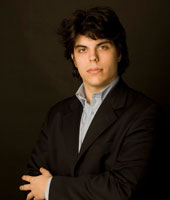
CONDUCTOR: Andrea Battistoni
battistoni

Born in Verona in 1987, Andrea Battistoni is one of the rising young talents at the international level.

In January 2011 he was appointed First Guest Conductor at the Teatro Regio in Parma, with a three-year engagement for two operas and two symphonic productions a year.

He started his career at a very young age performing in many notable theatres such as Theater Basel, Verdi/Trieste, San Carlo/Naples, Filarmonico/Verona, La Fenice/Venice, Lirico/Cagliari, Massimo/Palermo, and Regio/Parma. He also led some prestigious orchestras: St. Petersburg State Symphony Orchestra, Orchestra di Padova e del Veneto, Orchestra Filarmonica Marchigiana, Orchestra da Camera di Mantova, Orchestra dei Pomeriggi Musicali di Milano, Royal College of Music Orchestra Manchester, Orchestra dell’Arena di Verona, Orchestra Giovanile Italiana, and Orchestra Haydn di Bolzano e Trento.

He took part in several festivals such as “Michelangeli” of Brescia and Bergamo, Verona Contemporanea, Festival Giovane at Rossini Opera Festival, Valle d’Itria of Martina Franca, Settimane Musicali di Stresa e del Lago Maggiore, Festival Verdi in Parma where he met distinguished soloists like Ivo Pogorelich, Enrico Dindo, Sergej Krylov, Thomas Demenga, and Mario Brunello.

Andrea Battistoni has already conducted operas including La Bohème, Il Viaggio a Reims, Il Matrimonio Segreto, Attila and La Traviata. Other engagements included the 2011 season opening concert at Teatro Regio in Parma and the return to I Pomeriggi Musicali and Orchestra Filarmonica Marchigiana.

Among his recent successes: a symphonic concert at the Teatro Lirico in Cagliari, Il Barbiere di Siviglia in Parma, Arena di Verona and Venice, the symphonic debut with the Maggio Musicale Orchestra of Florence, Rigoletto in Macerata. Rigoletto and symphonic concerts at the Filarmonico in Verona, Falstaff at the Festival Verdi in Parma and Nabucco in Tokyo with the Tokyo Philharmonic.

Noteworthy his debut at the Teatro alla Scala in Milano and the historical production of Le Nozze di Figaro and at the Teatro Regio in Parma with Stiffelio, Il Trovatore in concert form at the Deutsche Oper Berlin, La Bohème in Naples and La Traviata at the Maggio Musicale Fiorentino.

His upcoming engagements include: debut with the Accademia di Santa Cecilia in Rome, MITO Festival leading the Orchestra Filarmonica della Scala, La Bohème at the Dresden Semperoper and at the Valencia Palau de Les Arts, Attila at the Teatro Filarmonico in Verona, Macbeth at the Teatro Carlo Felice in Genova, several concerts in the main American Universities in New York, Boston, Chicago and Miami, La Traviata at the Arena di Verona and a new production of Nabucco at the Deutsche Oper Berlin.

CAST

Apr. 10 Apr. 11 Apr. 12
Violetta Zhang Liping Zhou Xiaolin Zhang Liping
Alfredo Wang Chuanyue Warren Mok Wang Chuanyue
Germont Liao Changyong Zhang Feng Liao Changyong
Flora Yang Yanting Chen Yajie Yang Yanting

Zhang Liping as Violetta
Zhang Liping currently is Chair and Professor of the Vocal Music and Opera Department of China Central Conservatory of Music. In March 2004, she became the first Chinese in history to perform as the diva in the opera Madama Butterfly at the Metropolitan Opera in New York. Meanwhile, she is also the first Chinese opera singer to perform the leading cast in the Royal Opera House, Convent Garden, where she has starred in a number of opera works, including the extremely difficult Lucia di Lammermo, which is regarded by the House as a box office draw.


Zhang Liping has also cast leading roles on the stages of Teatro Regio di Parma, Munich State Opera, Deutsche Oper Berlin, Barcelona Opera House, Teatro La Fenice, in almost 20 operas including Rigoletto, Madama Butterfly, La Boheme, Lucia di Lammermo, Turandot, La Traviata, Carmen, Faust, The Marriage of Figaro and The Magic Flute. At the invitation of Mr. Webber, Father of music opera, Zhang appeared in the premiere of his new play True Love Never Dies in London, and recorded the theme song in Chinese.

EMI Classics released Zhang Liping’s debut disc Arias in 2008, which has won worldwide acclaims. In 2009, Zhang saw some of her works collected into EMI’s best annual opera selections CD, along with those of such giant singers as Callas, Domingo and Carreras. She performed Violetta in NCPA’s production of La Traviata under the baton of Maestro Lorin Maazel. She played Xi Shi in the first NCPA-commission Opera Xi Shi, and Desdemona in NCPA’s production of Otello.


Zhou Xiaolin as Violetta
Zhou graduated from Central Conservatory of Music where she has studied with Yang Xiaoping and serves as soloist of PLA’s General Political Department Opera Troupe, gaining in popularity in recent years. In 2007, she won recognition in the training program run by the Central City Opera House, Colorado, U.S. in the summer of 2007, receiving full scholarship and was invited to participate in the world premiere of Poet Li Bai composed by Chinese composer Guo Wenjing. It is worth mentioning that she succeeded in holding recitals in Tokyo and Osaka, Japan and won an award in Neue Stimmen International Singing Competition, came in first and won Anna and John J Sie award in Carlo Bergorzi Maestro Class, the golden prize in China Gold Bell Award Bel Canto Group and the second prize in Wenhua Vocal Competition awarded by Ministry of Culture.

Zhou performed as the soprano soloist in Mahler’s Symphony No. 2 with German Philharmonic Orchestra during its China tour, in Beethoven Symphony No.9 conducted by Lorin Maazel as a soprano cantor and in Mahler’s Symphony No. 2 conducted by Vladimir Ashkenazy as the soprano cantor. Additionally, she sang the role of Mimi in La Bohème by Puccini, starred Yang Caihong in A Village Teacher, the NCPA’s first realistic opera, and appeared as Micaela in Carmen by Georges Bizet, Princess in NCPA’s Chinese Orphan, and Antonia/Stella in NCPA’s Les Contes d’Hoffmann.


Wang Chuanyue as Alfredo
Wang Chuanyue is a young tenor from Opera Troupe of the General Political Department. He graduated from Vocal Department of China Central Conservatory of Music where he scored the highest in five consecutive years.

He has been the lead role in Donizetti’s Don Pasquale and Verdi’s La Traviata. In 2005 he was auditioned to be a student of Bergonzi’s International Master Class. In 2008 he enrolled in the Opera Centre of Juilliard School studying after professor Edith Bers, Dean of Vocal Department.

Wang had wonderful performances in both the 11th and the 13th China CCTV Young Singers Competition, and he is also a winner of many national and international competitions, such as Excellent Awards among Chinese competitors in the 12th Neue Stimmen International Singing Competition(2005), the second prize in the audition of Chinese competitors in the 3rdInternational Vocal Competition(2007) hosted by Chinese Musicians Association, Excellent Awards in the 26th International Hans Gabor Belvedere Singing Competition(2007), the fourth prize in the 4th China International Vocal Competition(2008) hosted by China’s Ministry of Culture, the first prize in the International Artists’ Vocal Competition(2009), and the first prize in the 5th China International Vocal Competition(2011).


Warren Mok as Alfredo
Warren Mok once performed in NCPA’s productions of Carmen, Die Fledermaus, La Boheme, The Chinese Orphan,Turandot, Der Fliegende Hollander and Lohengrin.

In 2008, Mok was awardedCavaliere dell’ Ordine della Stella della Solitarita’ Italiana from the Government of Italy, Chevalier dans l’Ordre des Arts et des Lettres from the French Government, in 2011 he just received the Medal of Honor from the Hong Kong Government. All awards honor his contribution to bring the cultural exchanges between Hong Kong, Italy & France, mainland China.

since his European début in 1987 at the Deutsche Opera Berlin Mok has been making frequent guest appearances throughout the world, including Deutsche Opera Berlin, Paris Opera, Teatro dell’Opera di Roma, Opera Australia in Sydney Opera House, Teatro di Bologna Comunale, Teatro Carlo Felice Genova, Teatro Maggio Musicale Fiorentino, Opera de Nice, Opera de Lyon, Teatro Colon in Buenos Aires, The Netherlands Opera, Leipzig Opera, Royal Danish Opera, Teatro di San Carlos Lisbon, Seattle Opera, Bolshoi Theatre, Warsaw Opera, Teatro Lirico di Cagliari in Italy, ABAO Bilbao, Opera Ireland, Teatro di Palma di Mallorca, Nancy Opera France, Bergen Opera Norway, Latvian National Opera, Lithuanian National Opera, Orlando Opera Florida, Hawaii Opera Theater, concert halls in New York’s Carnegie Hall, London’s Royal Albert Hall, Berlin Philharmonie, Vienna Musik Verein, Tokyo Suntori Hall, Seoul, Prague and Zurich.

His operatic repertoire exceeds 60 roles including Calaf (Turandot), Cavaradossi (Tosca), Rodolfo (La Bohème), Don Jose (Carmen), Riccardo (Masked Ball), Radames (Aida), Duke (Rigoletto), Alfredo (La Traviata), Don Carlos, Romeo , Faust, Werther, and many others.

In 2009, he sang Ariadne auf Naxos at Teatro Carlo Felice, Manon Lescaut at Opera de Nice, Turandot at Savonlinna Festival. Opera, La Boheme at National Centre for Performing Arts in Beijing. In Summer, he performed Tosca & Carmen at Caracalla with Teatro Dell’Opera di Roma.He also sang in famous Director Zhang Yi Mo’s Turandot at Olympic Stadium in Beijing.

In 2010, he started the year to perform Adriana Lecouvreur in Teatro del Maggio Musicale Fiorentino, Tosca in Opera di Roma & Teatro Carlo Felice, Carmen in National Centre for Performing Arts in Beijing. He produced Manon & La Boheme with Opera Hong Kong, Il Trovatore in Macau International Music Festival, numerous concerts/TV appearances in China.

In 2011, He sang a world premier opera Sun Yat Sen, Tosca in West Palm Beach Opera, in Guangzhou Opera House, Francesca da Rimini in Teatro Verdi Triete, Die Fledermaus at National Centre for Performing Arts Beijing, Turandot in Seoul Arts Centre.

In 2012, He sang Wagner’s Der Fliegende Hollander and Lohengrin at NCPA, producing Carmen & La Travaita with Opera Hong Kong & Shanghai Opera House. He is the current Artistic Director of Opera Hong Kong & Macau International Music Festival.


Liao Changyong as Germont
Liao Changyong has played in NCPA’s La Traviata, Il barbiere di Siviglia and Un Ballo in Maschera.

Liao Changyong is an outstanding Asian vocalist taking an active part in the global stage. He ever studied with the famous vocal music educator Zhou Xiaoyan and tenor Luo Wei. In 1995, Liao Changyong obtained his master’s degree at Shanghai Conservatory of Music. Over the years, Liao has won many international vocal music awards. From 1996-1997, he was respectively the highest-class winner of the 41st Toulouse International Voice Competition (France), Placido Domingo World Opera Competition and Norwegian Queen Sonja’s International Vocal Music Competition within one year, thereby shocking the world music circles.

Liao Changyong’s footprints spread all over the world. He has cooperated with more than a dozen of world-renowned orchestras and opera masters such as Placido Domingo, Jose Carreras and Ruth Ann Swansm to perform successful operas and dozens of concerts. In 2002, New York Opera House Symphony Orchestra and Carnegie Hall awarded Liao Changyong with ‘Distinguished Artist Award’, and specifically held his solo concert in Carnegie Hall. Afterwards, he cooperated with New York Opera House Symphony Orchestra, Michigan Opera, Washington National Opera, Royal Opera House (the Netherlands) and other organs to stage such operas as Attila, Il Pirata, Trovatore, Un Ballo In Maschera, La Traviata, Il barbiere di Siviglia, Don Carlo and Carmen. Liao Changyong is praised by local media as ‘the most outstanding artist’. The New York Times and Opera Magazine speak highly of Liao Changyong’s performance and singing.

Liao Changyong is Vice President of Chinese Musicians Association, Vice President of Shanghai Musicians Association and Dean of Vocal Music Department in Shanghai Conservatory of Music.


NCPA Chorus
choruschinaThe NCPA Chorus was established on December 8, 2009, whose members were carefully selected from famous music schools in and out of China. Now the Chorus invites Wu Lingfen as the conductor, with many artists well-known in China and abroad giving instructions. Affiliated to NCPA, the highest palace of performing arts in China, the Chorus adheres to NCPA’s guiding principles of “for the people, for the arts, and for the world”. The Chorus mainly stages operas and concerts, and also takes part in kinds of cultural communication and arts outreach events.

Ever since its establishment, the Chorus has actively performed in more than 20 operas of NCPA production, such as NCPA’s commission operas Xi Shi, The Chinese Orphan, and The Ballad of Canal, as well as other classical operas in and out of China: The White-Haired Girl, The Red Guards on Honghu Lake, Le Nozze di Figaro, Il Barbiere di Siviglia, L’italiana in Algeri, Rigoletto,La Traviata, Otello, Der Fliegende Hollander, Lohengrin, Carmen, Turandot andTosca, etc. Its artistic quality receives rave acclaims from both the critics and the audience.

Besides operas, the Chorus has participated in many grand vocal works and themed concerts, such as Beethoven’s Symphony No. 9, Mahler’s Symphony No.2 and No.8, and the grand music and dance epic Road to Revive, etc. As NCPA’s resident chorus, it has been to Singapore, South Korea, Hong Kong and Japan to participate in performances and arts exchange, both to wide acclaims.

The Chorus has cooperated with many well-known artists ever since its establishment, receiving high praises from them all. Plácido Domingo once said it was his honor to cooperate with these talented young artists; Lorin Maazel ever praised it “a chorus full of passion”, so and so forth. On the stage of NCPA, the Chorus has cooperated with such directors as Francesca Zambello, Giancarlo Del Monaco, Chen Xinyi, Cao Qijing, Liao Xianghong, such conductors as Lorin Maazel, Daniel Oren, Lu Jia, Li Xincao, Zhang Guoyong, such vocalists as Plácido Domingo, Leo Nucci, Inva Mula, Brandon Jovanovich, Dai Yuqiang, Wei Song, Warren Mok, He Hui, Dilbèr, Zhang Liping, to name just a few. With more than a hundred performances each year, the Chorus is surely to play an active role in the further development of NCPA.


NCPA Orchestra
The China NCPA Orchestra is the resident orchestra of the National Centre for the Performing Arts of China (NCPA), balancing a busy and distinguished performance schedule with a reputation as one of China’s most adventurous and dynamic orchestras. Established in March 2010, the orchestra is composed of distinguished musicians from around the world, performing more than a dozen operas, ballets and regular symphonic seasons every year. Maestro Lu Jia took up the post of Principal Conductor in February 2011, succeeding Chen Zuohuang, the current Laureate Conductor, NCPA’s Music Artistic Director and also one of the founders of the orchestra.

The NCPA Orchestra demonstrates an abiding commitment to high levels of artistic excellence and prides itself on its long-term collaborations with the finest musicians of our day. Artists associated with the orchestra in the past two years include Lorin Maazel, Christoph Eschenbach, Vladimir Ashkenazy, Yan Pascal Tortelier, Gunter Herbig, Gilbert Varga, Lang Lang, Stephen Kovacevich, Leo Nucci, Wang Yuja and Han-Na Chang. Maestro Lorin Maazel praised the orchestra as “a hard-working excellence with great passion” after a series of concerts and the NCPA’s new La Traviata in June 2010.

In its first season of 2011, China NCPA Orchestra gained critical acclaim for its performances in NCPA’s new productions of Tosca (Directed by Giancarlo Del Monaco), Il Barbiere di Siviglia (co-produced with Castleton Festival), Die Fledermaus, and a new composed opera The Chinese Orphan. Apart from that, the orchestra was also deeply involved in NCPA’s 2011 Gustav Mahler Project. Under the batons of maestros including Christoph Eschenbach, Yoel Levi, Jun Maerkl and Chen Zuohuang, the orchestra completed Mahler’s Symphonies No. 1, 2, 3, 8 and 10.

In the season of 2012, China NCPA Orchestra won a highly successful acclaim for two NCPA’s new productions: Der Fliegende Hollander and Lohengrin, both Wagner’s operas were Chinese premiere. It continually collaborates with prominent musicians around the world for concert programs, including Maestro Vladimir Ashkenazy, Yan Pascal Tortelier and the legendary pianist Rudolf Buchbinder.

In addition to its extensive domestic performances, the NCPA Orchestra also received a widespread international praise in 2012. The orchestra was invited by Kissingen Summer Music Festival and Schleswig-Holstein Musik Festival in July 2012, and kicked off his first German tour in Nürnberg, Hamburg and Berlin under the baton of Christoph Eschenbach and Chen Zuohuang. This was followed by a successful concert at the Sydney Opera House with Maestro Chen Zuohuang in November.

In the season of 2013, the NCPA orchestra presents colorful programs on the commemoration of Wagner, Verdi and Britten, highlighting the Ring without words with 12 principals from Berlin Philharmonic under the baton of Lorin Maazel. NCPA’s new opera productions that the orchestra is involved include Les Contes d’Hoffmann, Otello and Nabucco, which features her second successful collaboration with Placido Domingo.

The NCPA orchestra aims to build up a world-class orchestra with operation and management conforming to global practices while incorporating Chinese characteristics. Devoted to educational and outreach activities, the Orchestra also has presented a series of Weekend Matinee Concerts since its establishment. With specially selected repertoire, performances of high quality and extremely low ticket prices, these concerts have won great acclaim from both audience and critics. The orchestra is now embarking on a similar path with the complete Beethoven symphonies with Maestro Lu Jia.

Posted in OPera | Tagged , , , , , , , | Leave a comment

Les Troyens at Teatro Alla Scala

logoTAS

PRESENTS

troyens-5-1400x574Les Troyens

Hector Berlioz

Grand-Opéra in five acts
Libretto by Hector Berlioz

New Production
In coproduction with Royal Opera House, London;
San Francisco Opera and Wiener Staatsoper

From 8 to 30 April 2014

Running Time: 5 hours 20 minutes intermissions included

Sung in French with electronic libretto in Italian, English, French

Notes on the performances
The grandiose idea of giving a musical form to the Aeneid led to Berlioz creating a powerful tragedy, which is unique in recreating with classical precision the shadows of the past as imagined by Virgil’s poem. It is the finest posthumous masterpiece in the history of opera: the French musician died without ever seeing it on stage. He had conceived, at the same time as Wagner conceived his “tetralogy”, a grand-opéra with a cast of twenty formed by two operas: a “dilogy” set in two different locations – La prise de Troie and Les Troyens à Cartage – in each of which we witness the destiny of two women who are defeated by their fate, the unheeded prophetess Cassandre and the abandoned queen Didon. For these two archetypal heroines it would have been impossible to find finer performers than Anna Caterina Antonacci and Daniela Barcellona. Alongside them will be young talent like Paolo Fanale, Maria Radner, Alexandre Duhamel, Fabio Capitanucci. The role of Aenea is played by virtuoso Gregory Kunde. The monumental drama will feature the opera debut on the La Scala podium of Antonio Pappano, who is seen as one of the finest contemporary performers. This foreboding and bellicose work of classical antiquity is brought to life and given a form – from the wooden horse, to royal hunts– by specialist Scottish director David McVicar, whose career spans more than thirty operas. The grandiose idea of giving a musical form to the Aeneid led to Berlioz creating a powerful tragedy, which is unique in recreating with classical precision the shadows of the past as imagined by Virgil’s poem. It is the finest posthumous masterpiece in the history of opera: the French musician died without ever seeing it on stage. He had conceived, at the same time as Wagner conceived his “tetralogy”, a grand-opéra with a cast of twenty formed by two operas: a “dilogy” set in two different locations – La prise de Troie and Les Troyens à Cartage – in each of which we witness the destiny of two women who are defeated by their fate, the unheeded prophetess Cassandre and the abandoned queen Didon. For these two archetypal heroines it would have been impossible to find finer performers than Anna Caterina Antonacci and Daniela Barcellona. Alongside them will be young talent like Paolo Fanale, Maria Radner, Alexandre Duhamel, Fabio Capitanucci. The role of Aenea is played by virtuoso Gregory Kunde. The monumental drama will feature the opera debut on the La Scala podium of Antonio Pappano, who is seen as one of the finest contemporary performers. This foreboding and bellicose work of classical antiquity is brought to life and given a form – from the wooden horse, to royal hunts– by specialist Scottish director David McVicar, whose career spans more than thirty operas. The grandiose idea of giving a musical form to the Aeneid led to Berlioz creating a powerful tragedy, which is unique in recreating with classical precision the shadows of the past as imagined by Virgil’s poem. It is the finest posthumous masterpiece in the history of opera: the French musician died without ever seeing it on stage. He had conceived, at the same time as Wagner conceived his “tetralogy”, a grand-opéra with a cast of twenty formed by two operas: a “dilogy” set in two different locations – La prise de Troie and Les Troyens à Cartage – in each of which we witness the destiny of two women who are defeated by their fate, the unheeded prophetess Cassandre and the abandoned queen Didon. For these two archetypal heroines it would have been impossible to find finer performers than Anna Caterina Antonacci and Daniela Barcellona. Alongside them will be young talent like Paolo Fanale, Maria Radner, Alexandre Duhamel, Fabio Capitanucci. The role of Aenea is played by virtuoso Gregory Kunde. The monumental drama will feature the opera debut on the La Scala podium of Antonio Pappano, who is seen as one of the finest contemporary performers. This foreboding and bellicose work of classical antiquity is brought to life and given a form – from the wooden horse, to royal hunts– by specialist Scottish director David McVicar, whose career spans more than thirty operas.

troyen1 troyen9 troyen12

Direction

Conductor
Antonio Pappano
Staging
David McVicar
Sets
Es Devlin
Costumes
Moritz Junge
Lights
Wolfgang Göbbel
Choreography
Lynne Page

CAST

Enée
Gregory Kunde
Chorèbe
Fabio Capitanucci
Panthée
Alexandre Duhamel
Narbal
Giacomo Prestia
Iopas
Shalva Mukeria
Ascagne
Paola Gardina
Cassandre
Anna Caterina Antonacci
Didon
Daniela Barcellona
Anna
Maria Radner
Hylas
Paolo Fanale
Priam
Mario Luperi
Un chef Grec
Ernesto Panariello
L’ombre d’Hector
Deyan Vatchkov
Hèlénus
Oreste Cosimo
1er soldat Troyen
Guillermo Esteban Bussolini
2eme soldat Troyen
Alberto Rota
Un soldat
Luciano Andreoli
Le Dieu Mercure
Emidio Guidotti
Hécuba
Elena Zilio

troyen2troyen3  troyen4 troyen5 troyen6 troyen7 troyen8 troyen10 troyen11

Synopsis

The Sack of Troy
Act I
The Greeks have raised their siege of Troy,

and the Trojans, after so many years of war,
at last come out of their walls in exultance.
Believing it to be an offering to Pallas, they
decide to bring into the city the great wooden
horse which the Greeks have abandoned.
All the people think they are safe, and pay no
heed to the prophecies of Cassandra, who instead
sees the departure of the Greeks only
as a trick which will bring about the ruin and

death of all the Trojans.

Fate will have it that Troy shall perish.While
the population celebrates their regained freedom
with games in honour of the gods,
strange events occur. Aeneas reports that
Laocoön struck the wooden horse with a
spear and was immediately devoured by two
hideous snakes. Fearing sacrilege, Priam orders
that the horse be drawn at once into the
city. In vain Cassandra insists on her prophecies
and tries to convince the blinded crowd
of the ruin that awaits them.
Act II
Shortly afterwards, during the night, the

ghost of Hector appears before Aeneas and
announces that Troy is about to be taken by
the Greeks. His destiny is to go to Italy to
found a new city and to die there in glory.As
the Greeks take possession of the city’s walls
and palaces, spreading fire and death,Aeneas
fights the last battle and opens a breach for
himself with his trusty companions, taking
with him Priam’s treasure. Cassandra and the
Trojan women kill themselves rather than fall
into the hands of the conquerors.
The Trojans at Carthage
Act III
The scene is in Carthage, the new city ruled

by Dido. The people are celebrating their
newfound prosperity and wealth. The queen,
during a ceremony, receives the homage of
her hardworking people. The arrival of
foreigners from the sea is announced and Dido
welcomes them cordially. They are the
Trojans, led by Aeneas, whose presence upsets
the queen. At that very moment news
comes that Iarbas, king of the Numidians, is
making ready to conquer Carthage by force.
Aeneas offers to fight beside the Carthaginians
against the barbarian king.
Act IV
Aeneas has won the war against the Numidians

and he and his men have lingered in the
pleasant land of Carthage. In a forest close to
the cit y walls, the royal couple have gone
hunting. The spirits and creatures of the forest
are disturbed by the intrusion of the hunting
party as they ride through the trees. A
storm gathers and violently breaks. Dido and
Aeneas are separated from the others and
take shelter from the storm. Finally, they acknowledge
their love and their union is consummated.
The passion of the lovers is reflected
in the wildness of the storm. The spirits
dance in ecstasy, but the cries that resound
through the forest are of Aeneas’ inevitable
destiny: ‘Italy!’.
The hero and the queen have fallen in love
and their love is looked upon kindly by Dido’s
sister, Anna, but worries the faithful
Narbal. Great festivities. Hunting and dancing
are organized. Aeneas, forgetting the orders
of the gods who wish his destiny to be
fulfilled in Italy, abandons himself to passion.
Dido forgets her faithfulness to her dead husband.
But Mercury intervenes with a warning
cry: Italy!
Act V
Aeneas cannot escape his fate. He is persecuted

by apparitions of the dead and must
make up his mind to depart. Despite his love
for Dido, he must give orders for the fleet to
sail. The separation between the two lovers is
at once dramatic and tender. Dido returns in
despair to her chambers, torn between hate
and love. She asks her sister to implore
Aeneas to stay, but is informed that the Trojan
fleet has already set sail. The queen has a
sacrifice prepared for the gods of Hades, and
on the pyre she kills herself with a sword. She
has a vision of future revenge on Rome by
the hand of Hannibal, but then the prophecy
turns into the total triumph of Rome. The
Carthaginians curse the Romans’ future,
while the complete triumph of the Roman
Empire is announced. The will of the gods is
carried out and Dido’s sacrifice remains fruitless.
Posted in OPera | Tagged , , , , , , , , , , , , | Leave a comment

“La Bohème” in Milwaukee

THE FLORENTINE OPERA COMPANY (Milwaukee) PRESENTS:

bohemeflorentine

Puccini’s ‘Tragic Romance’ Markes the Finale of the 80th Season

Opera’s most touching tale of tragic romance will transport you to 19th century Paris with La Bohème. The Florentine brings the 2013-2014 season to a grand finale with the soaring score of Giacomo Puccini, featuring soprano Alyson Cambridge in her Florentine Opera debut as Mimi alongside rising star and recording artist, tenor Noah Stewart (Don José in Carmen 2012) as Rodolfo. Soprano Katrina Thurman (Musetta), baritone Corey McKern (Marcello), bass-baritone Matthew Treviño (Colline) make their Florentine debuts. Maestro Joseph Rescigno conducts the Milwaukee Symphony Orchestra and the Florentine Opera Chorus in this production directed by General Director William Florescu.

Opera’s most beloved work brings the Florentine’s monumental 2013-2014 Season to a close in grand opera style.

Sung in Italian with English supertitles projected above the stage

Featured artists include:

Alyson Cambridge . . . . . . . . . . . . . . . . . . .Mimi*

Noah Stewart . . . . . . . . . . . . . . . . . . . . . .Rodolfo

Katrina Thurman . . . . . . . . . . . . . . . . . . . .Musetta*

Corey McKern . . . . . . . . . . . . . . . . . . . . . .Marcello*

Matthew Treviño . . . . . . . . . . . . . . . . . . . .Colline*

Scott Johnson . . . . . . . . . . . . . . . . . . . . . Schaunard (past FO Studio Artist)

William Florescu. . . .. . . . . . . . . . . . . . . . .Stage Director

Joseph Rescigno . . . . . . . . . . . . . .Conductor

Giacomo Puccini

(December 22, 1858 – November 29, 1924)

Puccini was born in Lucca, Italy, a member of a large family with a five-generation lineage of musicians going back to the early 18th century. His first job, at age 14, was as an organist to the two churches of Lucca, but he quickly became more interested in opera than church music. A performance of Verdi’s Aida at Pisa in 1876 made such an impact on him that he decided to follow his heart and began to pursue operatic composition. With a scholarship and financial support from a wealthy uncle, he was able to enter the Milan Conservatory in 1880. While in Milan, he came into contact with a group of Milanese artists, called the Scapigliati, who lived the Bohemian lifestyle.

Puccini wrote his first opera, Le villi, a “dramatic legend” about mythical, vampire-like creatures found in Italian mythology, in 1884. It was successful, and opened at the La Scala in Milan the next year. His second opera, Edgar, was a less well-received, but his third, Manon Lescaut, was celebrated, and established him on the international operatic scene. Around this time, the composer met Elvira Gemignani, wife of a merchant in Lucca. They carried on an illicit affair, and she gave birth to his son in 1886. Eventually, the two married following the death of her first husband. She is said to have been an unfit partner for Puccini, limiting his intellectual pursuits, controlling him emotionally, and ferociously cutting him off from most personal relationships with friends and other artists.

His next opera, La Bohème was at first less successful than Manon Lescaut, although it later went on to grow in fame. After producing Tosca and Madama Butterfly, Puccini was embroiled in a domestic scandel in 1909 that resulted in a court case and large amounts of negative publicity. Puccini’s jealous wife accused him of having had an intimate affair with his servant girl, Doria. Eventually the girl herself committed suicide in 1909 as a result. Today, scholars are still intrigued by the affair and work to prove or disprove Puccini’s innocence. Consensus indicates that it was most likely a fabrication of his wife. The experience took its toll on the very sensitive composer, and its deep psychological effects were a main factor in the long period before he began work on his next opera.

In the single decade before his death, Puccini completed La Rondine, and the trilogy of Il Tabarro , Suor Angelica and Gianni Schicchi. His final opera, the lavish fairy tale Turandot, was unfinished at his death in 1924, but was completed by his colleague Franco Alfano and premiered in 1926. It remains one of his most admired works. During its composition, he moved to Viareggio and in 1923, he developed cancer of the throat. Although he sought treatment at a Brussels clinic, his heart could not stand the strain and he died on November 29, 1924. All Italy went into mourning and two years later, his remains were interred at his house at Torre del Lago. After his wife’s death in 1930, the house was turned into a museum where fans from around the world could come to celebrate one of opera’s greatest composers.

Posted in Music, OPera | Tagged , , , , , , , | 1 Comment

Édouard Lalo’s “Le Roi d’Ys” in Marseille

from May 10th – 18th, 2014

Le Roi d’Ys

Édouard Lalo

Saturday May 10th, 2014 > 8:00PM
Tuesday May 13th, 2014 > 8:00PM
Thursday May 15th, 2014 > 8:00PM
Sunday May 18th, 2014 > 2:30PM
The tragedy of two sisters in love with the same man, but above all a splendid and essential milestone in French music, soaring to great heights of power and invention. 
 

Le Roi d’Ys

Opera in 3 acts
Libretto by Edouard BLAU.
First performed at Opéra-Comique, Paris, on May 7th, 1888.
Last performed at Marseille Opera, on March 23rd, 1994.

Coproduction Opéra de Saint-Étienne / Opéra Royal de Wallonie

Conductor : Lawrence FOSTER
Director : Jean-Louis PICHON
Assistant Director : Sylvie AUGET
Scenic Designer : Alexandre HEYRAUD
Costume Designer : Frédéric PINEAU
Lighting Designer : Michel THEUIL

CAST

Rozenn : Inva MULA
Margared : Béatrice URIA-MONZON

Mylio : Florian LACONI
Karnak : Philippe ROUILLON
The King : Nicolas COURJAL
Saint Corentin : Patrick DELCOUR
Jahel : Marc SCOFFONI

Marseille Opera Orchestra and Chorus

Posted in Music, OPera | Tagged , , , , | Leave a comment