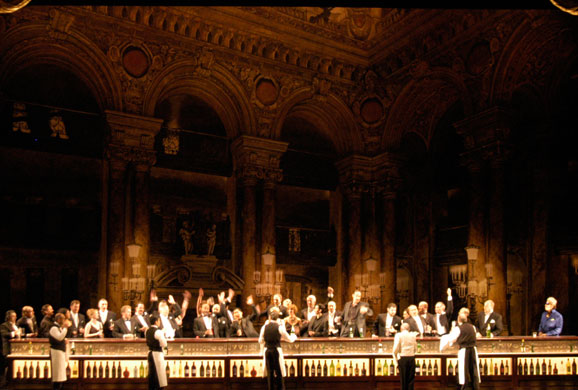
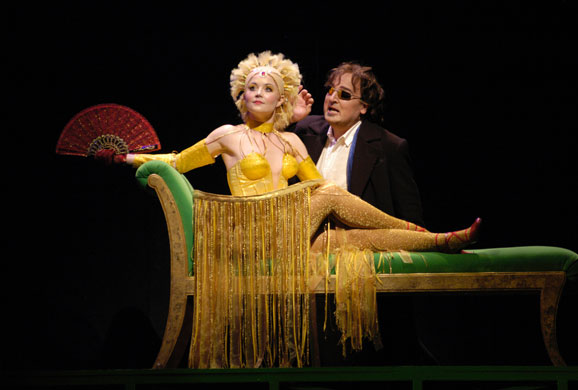
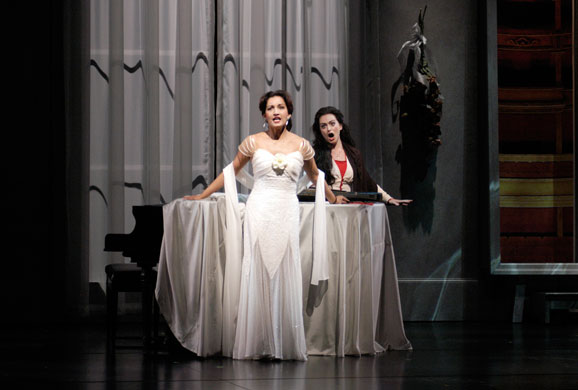
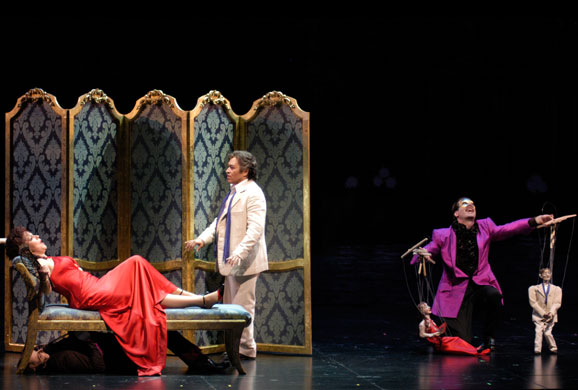
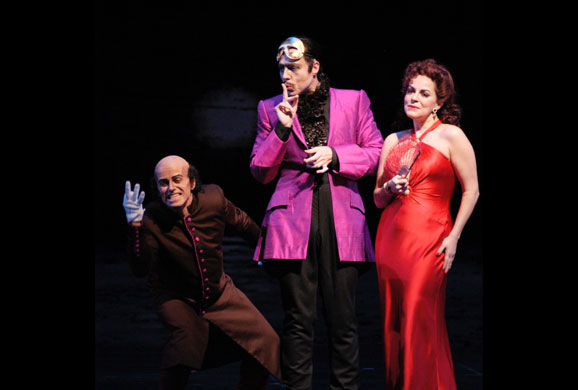
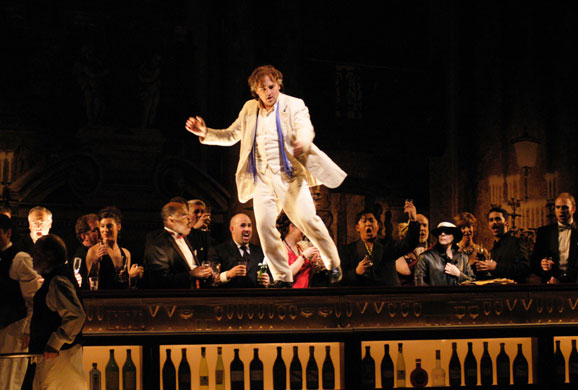
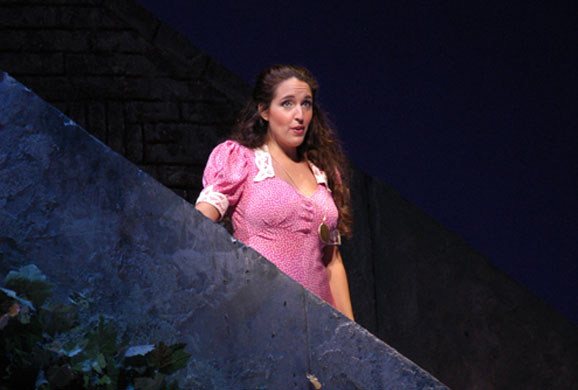
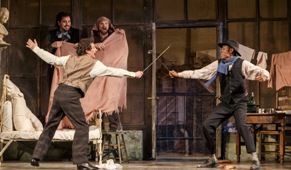
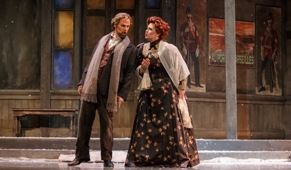
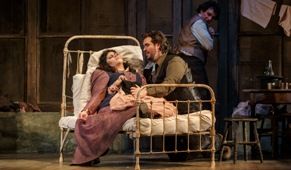
ORPHÉE in Pittsburgh

Orphee

ORPHÉE

April 26, 29; May 2, 4, 2014
Benedum Center

Music by Philip Glass • Libretto by Philip Glass, based on Cocteau’s Orphée
ORPHÉE is part of Pittsburgh Opera’s 2014 American Opera Series

* The Sunday, May 4 performance of ORPHÉE is at 3:00 PM.

THE LIFE OF AN ARTIST, BETWEEN WORLDS
OF THE LIVING AND THE DEAD

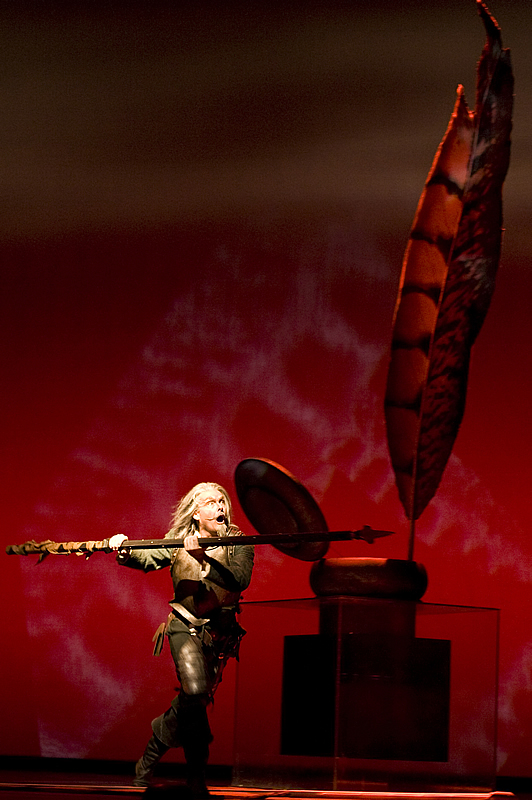
The myth of Orpheus and Eurydice gets a “lyrical, even seductive” (Washington Times) makeover from Philip Glass, via French visionary Jean Cocteau: the poet Orphée becomes involved with a mysterious Princess. Love eventually triumphs…but not without a price.

The Cast

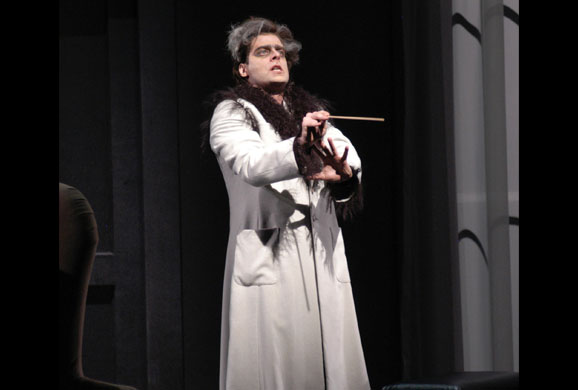
Matthew Worth Caroline Worra Heather Buck Jonathan Boyd
Matthew Worth
Orphée
Caroline Worra **
Eurydice
Heather Buck +
Princess
Jonathan Boyd +
Heurtebise
Resident Artist Daniel Curran Resident Artist Samantha Korbey Adam Fry Resident Artist Alex DeSocio
Daniel Curran *
Cegeste
Samantha Korbey *
Aglaonice
Adam Fry **
Poet
Alex DeSocio *
Police Commissioner
Resident Artist Phillip Gay Christopher Toeller Dimitrie Lazich
Phillip Gay *
Judge
Christopher Toeller
Reporter/Glazier
Dimitrie Lazich
Policeman

Creative Team

Conductor
Antony Walker
Stage Director Sam Helfrich
Set Designer(s) Andrew Lieberman
Costume Designer Kaye Voyce
Lighting Designer Aaron Black
Assistant Conductor Glenn Lewis
Chorus Master Mark Trawka
Associate Coach/Pianist James Lesniak
Hair & Makeup Designer James D. Geier
Assistant Director George Cederquist *

+ Pittsburgh Opera debut
* Pittsburgh Opera Resident Artist
** Pittsburgh Opera Resident Artist alumni

Original production by Glimmerglass Festival.

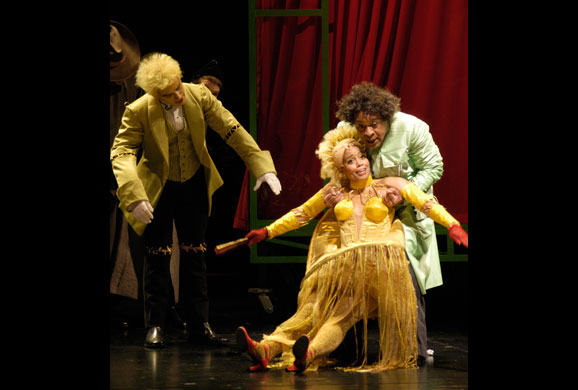
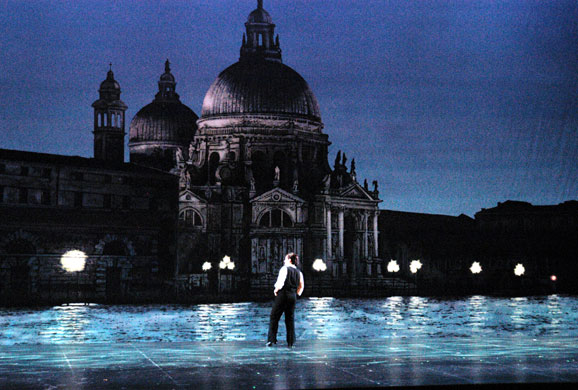
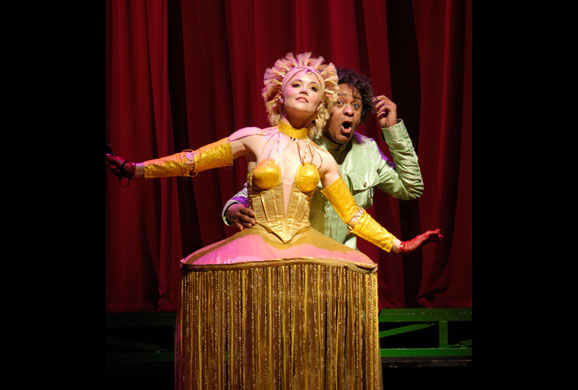
Photos from the performance

Performance Details & Resources

PERFORMANCE LOCATION • All performances of ORPHÉE will be at the Benedum Center.
PARKING Get real-time parking information at Park PGH. See a map of Cultural District parking facilities here.
RUN TIME • ORPHÉE will last about 2 hours and 10 minutes, including 1 intermission.
OPERA FAQs Get answers to frequently-asked questions like “what’s a good opera for kids? or “what should I wear?”
PRE-OPERA TALKS begin 1 hour before each performance of ORPHÉE.
UNDERSTAND EVERY WORD: English texts are projected above the stage at all Benedum Center and CAPA performances.
AUDIO DESCRIPTION is offered at the Tuesday, April 29 performance of ORPHÉE.
Posted in OPera | Tagged , , , , , , | Leave a comment

Massenet’s DON QUICHOTTE in Toronto

Canadian Opera Company   PRESENTS:

DON QUICHOTTE

Jules Masenet

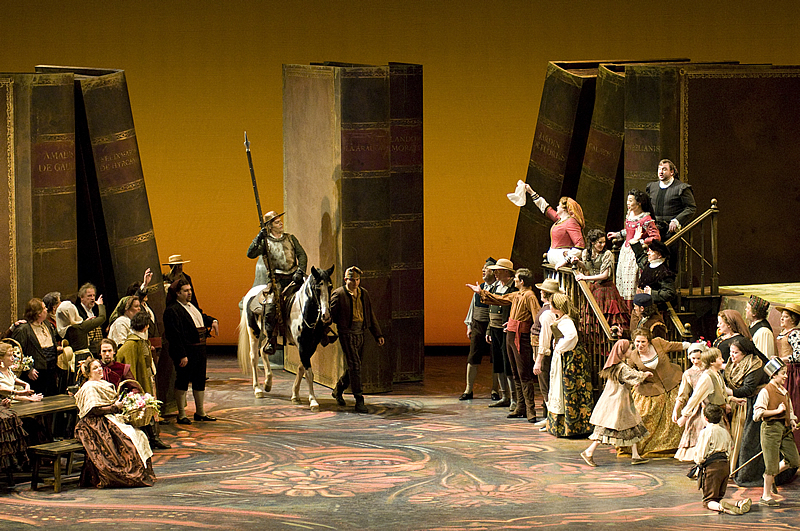
John Relyea (centre, on horse) as Don Quichotte in the Seattle Opera production of Don Quichotte.
 

A romantic French take on Spain’s greatest literary hero, starring the incomparable Ferruccio Furlanetto.

 Based on the same classic novel that inspired the Broadway hit Man of La Mancha, Don Quichotte is Massenet’s affectionate portrayal of literature’s ultimate dreamer, Don Quixote. Ferruccio Furlanetto, opera’s pre-eminent bass, stars in his intensely moving signature role. Lush melodies and Spanish dance rhythms conjure up medieval Spain at the end of the age of chivalry. In this enchanting production, characters spring out of giant leather-bound storybooks as windmills are fashioned from oversized quills.

MAY 9 TO 24, 2014


On stage at the Four Seasons Centre, 145 Queen St. W., Toronto.
Performance time is approximately two hours, 25 minutes including one intermission.
Sung in French with English SURTITLES™.

Cast 

Don Quichotte: Ferruccio Furlanetto

Sancho Panza: Quinn Kelsey

Dulcinée: Ekaterina Gubanova

<!–Pedro:

Garcias:

Juan:

Rodriguez:

–>

Creative Team


Conductor: Johannes Debus

Director: Linda Brovsky

Set Designer: Donald Eastman

Costume Designer: Christina Poddubiuk

Lighting Designer: Connie Yun

Choreographer: Sara de Luis

Chorus Master: Sandra Horst

With the COC Orchestra and Chorus

Performance Dates & Times

  • Fri. May 9, 2014 at 7:30 p.m.
  • Sun. May 11, 2014 at 2 p.m.
  • Wed. May 14, 2014 at 7:30 p.m.
  • Sat. May 17, 2014 at 7:30 p.m.
  • Tues. May 20, 2014 at 7:30 p.m.
  • Thurs. May 22, 2014 at 7:30 p.m.
  • Sat. May 24, 2014 at 4:30 p.m.

SYNOPSIS

Act I

Dulcinée is courted by four suitors during a party in a crowded square. When Don Quichotte and his faithful servant Sancho Panza arrive, Juan mocks his eccentric nature, but another suitor, Rodriguez, defends Quichotte, reminding everyone of the knight’s noble ambitions. As the party breaks up, Don Quichotte serenades Dulcinée, only to be interrupted by Juan who challenges him to a duel. Dulcinée intervenes and sends Juan away, chastising Quichotte for his temper. She tells him how Ténébrun, a bandit, has stolen her necklace, and asks Quichotte to retrieve it for her. Quichotte vows to find and return the necklace.


Act II

On their quest, Don Quichotte and Sancho Panza roam through the countryside. Sancho is resentful of being on this mission solely at Dulcinée’s whim, and launches into a tirade against women. However, Don Quichotte has mistaken some windmills on the horizon for giants, and charges to attack them. Alas, his attack fails as he gets caught on one of the windmill’s blades.


Act III

Quichotte and Sancho are taking a well-deserved rest when the bandits catch up to them. Don Quichotte, however, wins the criminals over by explaining his purpose in life – his quest as a knight errant, to right all wrongs, to love the poor, and even to honour bandits like his present attackers. They are so moved by this explanation that they hand over the necklace.


Act IV

At home, Dulcinée is once again surrounded by suitors, but ignores their compliments. She dreams of a love of another kind. Sancho arrives and announces his master. Dulcinée greets them playfully and is delighted at the return of her necklace. She rewards the Don with a kiss, and he declares his love for her, asking for her hand in marriage. Dulcinée lets him down gently, despite the mockery of the crowd. Sancho lashes out at the others to protect his master.


Act V

Later, Don Quichotte and Sancho are alone and the Don is close to death. He thinks of all the ways he should have rewarded Sancho for his loyal service, and promises him an “island of dreams.” As he dies, he dreams of his Dulcinée.


Quichotte_large05 Quichotte_large02 Quichotte_large03 Quichotte_large04

Posted in Music, OPera | Tagged , , , , , , , , | Leave a comment

“Salome” in Philadelphia

PHILADELPHIA OPERA Presents:

Salome_1200x430

Richard Strauss

Salome

May 8, 10, 2014 | Verizon Hall
Opera with The Philadelphia Orchestra

A historic collaboration.  A provocative masterpiece.

The Philadelphia Orchestra and Opera Philadelphia will team up for a first-ever collaboration in the 2013-2014 Season—a theatrically-inspired production of Richard Strauss’s compelling and provocative masterpiece, Salome. Two performances only, on Thursday, May 8 and Saturday, May 10, 2014 in the Kimmel Center’s Verizon Hall, will be led by Philadelphia Orchestra Music Director Yannick Nézet-Séguin!

Celebrate the 150th anniversary of the composer’s birth with a timeless treatment of an age-old, biblical tale, as Verizon Hall is transformed with custom-built staging elements, stylized costumes, theatrical lighting, and innovative design elements. The result is a completely immersive, 4-D concert environment—one that transports the audience into the heart of the action, with the musical score as the driving force. See and hear The Philadelphia Orchestra on stage alongside opera stars Camilla Nylund (Salome), Birgit Remmert (Herodias), John Mac Master (Herod), Alan Held (John the Baptist), and Andrew Staples (Narraboth).

Ticketing update: These performances are sold out on subscription. Ticket availability may change and we encourage you to check again. Please e-mail patronservices@philorch.org if you require further assistance.

All dates, programs, prices, and artists subject to change. All tickets are subject to availability and additional fees.

Venue:

Verizon Hall at the Kimmel Center for the Performing Arts
300 S Broad Street, Philadelphia, PA 19102

Schedule Details:

Thursday, May 8, 2014 at 8:00 pm
Saturday, May 10, 2014 at 8:00 pm

Estimated Running Time:

Approximately 1 hour and 45 minutes with no intermission

Language: Performed in German with English supertitles

Cast


Camilla Nylund*
as Salome

Birgit Remmert*
as Herodias


Alan Held*
as Jochanaan

Andrew Staples*
as Narraboth

Cecelia Hall
as Page of Herodias


Wayne Tigges*
as First Nazarene

Keith Miller*
as First Soldier

Donovan Singletary*
as Second Soldier


Dominic Armstrong
as First Jew

Roy Hage*
as Second Jew

Joseph Gaines
as Third Jew


Corey Bix*
as Fourth Jew

Nicholas Masters
as Fifth Jew

Eric Dubin
as Second Nazarene & Cappadocian


Alison Sanders
as Slave

Creative Team

*Opera Philadelphia Debut

Synopsis

Introduction

Considered scandalous when it premiered in 1905, and banned for years in the U.S. and elsewhere, Strauss’s adaptation of Oscar Wilde’s play is among the most important musical works of the 20th century. Mahler, who attended the 1906 premiere along with Puccini, Zemlinsky, and Schoenberg, praised the piece as “one of the greatest masterworks of our time.” This fast-paced, one-act opera is known as much for its revolutionary use of large-scale orchestra and virtuosic singers as it is for its graphic depiction of this deeply psychological tale. At the core of this erotically-charged opera set in biblical times exists a tangled and disturbed triangle: the persecuted John the Baptist, a lecherous King Herod, and the monarch’s pathologically seductive stepdaughter, Salome, who eventually demands the head of the imprisoned prophet on a silver platter. This virtuosic score of massive proportions culminates with the famous and controversial “Dance of the Seven Veils,” as well as an explicit scene with the beheaded prisoner.

Synopsis

Time: Circa A.D. 30
Place: The Great Terrace of Herod’s Palace on the Sea of Gaiilee
Opera in One Act

Herod, King of Judea, is feasting with his court in the palace of Tiberias on the Sea of Galilee. From the terrace, Narraboth, the Captain of the Guard, gazes at the King’s beautiful stepdaughter, Salome, with whom he is in love, and ignores the warnings of the Page, who loves and admires him. Salome comes out to look at the moonlight and to escape the noise and vulgarity of the banquet. She hears the voice of Jochanaan (John the Baptist), imprisoned by Herod in a cistern beneath the terrace. He is announcing the coming of the Messiah. Fascinated, she asks to see him and when the guards refuse for fear of disobeying the King’s orders, she persuades Narraboth to do as she asks.

The Prophet emerges and denounces Herod and his wife Herodias, Salome’s mother, who has married her murdered husband’s brother. Salome is filled with desire for him. When he tells her to leave everything to seek the Son of Man, she only answers, “Who is he, the Son of Man? Is he as beautiful as thou art?” and sings ecstatically of his beauty and her desire to kiss his mouth. Narraboth, unable to bear it, kills himself, but she barely notices that he took his life. Jochanaan curses Salome when he realizes that she is the daughter of Herodias and descends once more into his dungeon. Herod comes out of the palace. His lust for Salome provokes a quarrel with Herodias who demands the death of Jochanaan for his insults to her. But Herod holds him in awe, considering him to be a holy man, and the Jews come forward to dispute his teachings.

In need of a diversion, Herod begs Salome to dance. At first unwilling, she consents when Herod promises her anything she desires. The dance finished, she throws herself on the floor in front of Herod and demands the head of Jochanaan. His desire for her gives way to abhorrence, but he agrees at last. From the cistern, the executioner hands up the head on a silver platter and she seizes it in a frenzy of joy.

He who has despised her love must now accept it, she who had craved for him can sate herself in kissing his mouth as longs as she pleases. Sick with horror, King Herod shouts to the guards to kill her, and she is crushed to death beneath their shields.

Composer

 In the last two decades of the nineteenth century and the first of the twentieth century, Richard Strauss became a very popular topic of conversation in Europe. His operas, Salome (1905) and Elektra (1909) provoked both discussion and scandal as his work seemed too progressive for his audiences. “As a result, his musically challenging operas received negative critical response. 

Strauss was born in 1864 in the German state of Bayern, the first child of Franz and Josephine Strauss. His father was a skilled musician and consequently a great influence on his musical development. At the age of four and a half Richard began playing the piano and violin, and at the age of six he began to compose his first pieces. His first compositions were heavily influenced by his father’s musical preferences, Mozart, Haydn and Beethoven.

Although Franz’s conservative outlook tried to steer his son toward academia first, Richard’s schooling lasted only a short time. In 1884, Strauss’ musical career began when Hans von Buelow, the director of the Meininger Hoflkapelle appointed the 23-year old assistant conductor of his orchestra, one of the finest European orchestras at the time. This appointment proved to be the first and most important step for Strauss as a conductor and composer. Influenced by Alexander Ratter, a violinist of the Meininger orchestra, and freed from the musical taste of his father, Strauss started to compose “modern” music.

From the start, Strauss’ compositions divided audiences, but he but he felt that such reactions were an indication that he was doing something right. Instead of hindering his work he felt complimented, his innovative style a mark of the musical genius misunderstood by society.

As his reputation preceded him, Strauss became a director of the much large Munich Orchestra in 1886. Here he continued the concept of transferring literary pieces into musical form through the genre of the ‘tone poem.’ In the midst of his aspiring career, Strauss married the soprano singer Pauline d’Ahna in 1894.

Richard directed several of the great European orchestras spending a few years with the Weimar Hofkapelle, the King’s Opera in Berlin and later moved on to the Vienna Opera in Austria. During this period Strauss began composing operas and had his first work, Guntram, open in 1894.

In 1903 he saw Oscar Wilde’s play, Salome, and was so fascinated, that after the performance he went straight home to begin composing music for the opera. Two years later, Strauss’ Salome opened in Dresden and shocked audiences. As a result of its controversial content, many European opera companies refused to perform Salome for fear of censorship. Strauss felt that in order to drive the drama in a play like Salome, it was necessary to compose music that intensified both the actions and emotions of the characters. Strauss had succeeded in creating an innovative style of opera with unusual music. The vocalist and musicians were challenged to follow his difficult and at times atonal verses while the audience was challenged to appreciate it.

In 1904, he travelled to the United States where he conducted his music in many major concert halls. During this tour, he conducted the Philadelphia Orchestra at the Academy of Music on March 4th and 5th.

Strauss continued his musical originality with Elektra (1909) and later with Der Rosenkavalier (1911) both composed with noted writer Hugo von Hofmannsthal. These were the last important operas that Strauss composed and which challenged the musical world. In the following years Richard Strauss wrote operas like Ariadne auf Naxos, Die Frau ohne Schatten, and Intermezzo which did not enjoy nearly the same degree of success. Strauss, still working on his old formulas, did not notice that European music was moving in a another direction.

When the Nazi party came into power in the 1930s, Strauss was appointed president of the Reichmusikkammer, the government department responsible for regulating art and culture. He had never interested himself in politics because, in his experience, governments shifted like sand.

Strauss had worked in Germany before the unification, under the Kaiser’s united German government, through the First World War, under the new Weimar Republic, and now was confronted by working under the fourth government of his life, the Nazis. Strauss thought that the Nazis were simply a new band in the long parade of governments whose time would soon pass. As a result of these experiences, he accepted the position because it enabled him to continue to compose and support his family.

Strauss seemed to be pro-Nazi when he stepped in to conduct a Berlin Philharmonic Orchestra concert when the Jewish conductor Bruno Walter was denied permission. He then donated his fee to the musicians. He was not an anti-Semite. His daughter-in-law was Jewish as were his grandchildren.

Soon after Hitler came to power in January of 1933, a law was issued that all German theaters could no longer perform any piece of music or staged drama in which non-Aryans performed or had any part in the production. As a result, Mendelssohn’s music was banned. However, Strauss had already begun to work on a new opera with his Jewish librettist Stefan Zweig. The work on the opera Die schweigsame Frau continued despite the law. Zweig was unsure it would be heard. Strauss had to go to both Goebbels and Hitler to get permission for the opera to be performed.

In a letter to Zweig, that the Nazis opened, he wrote that he conducted the concert years earlier only for the sake of “the orchestra.” This was not the answer the Nazis expected. It was obvious that he was not one of them. A few weeks later, when his and Zweig’s opera was about to be premiered the Dresden Opera, he asked to see the stage bill. When he saw that Stefan Zweig’s name was not on it, he threatened to leave the city unless his name was added. They did as he had requested but as a result, the manager of the opera house was fired from his post.

Soon the Nazis were at Strauss’ door and he was told to resign his post as president of the Reichsmusikkammer because of his “poor health.” Later, when he refused to allow the government to house armament workers in his villa, the government took it from him. It was the destruction of the opera houses and concert halls of Germany, the center of his reality, that caused him to realize the times. The total war destruction of the centers of the performing arts left him deeply depressed.

After the war, he worked with the new occupation government and was given permission to go to Switzerland where he composed an Oboe concerto for an American soldier, John de Lance, who was the principal oboist of the Philadelphia Orchestra. In 1948, he wrote his five last songs for orchestra and voice. He died in his sleep in 1949 at the age of eighty-five.

Posted in Music, OPera | Tagged , , , , , , , , | Leave a comment

Rusalka at the Royal Opera House Muscat (Oman)

The Royal Opera House Muscat Presents:

Antonín Dvořák’s

“Rusalka”

May 8 & May 10, 2013


Rusalka is Czech composer Antonín Dvořák’s most beloved opera and one of the most achingly beautiful of all operatic works. Janáček Opera of the National Theatre Brno, Czech Republic, presents this national treasure of Czech operatic repertoire.

The tale, a mix of Czech mythology and the classic tale of the Little Mermaid, paints the tragedy of Rusalka, a water nymph who strikes a sorry deal with a witch in order to follow her love for a human, a prince. Under the musical direction of Jaroslav Kyzlink and the dramatic leadership of innovative theatre director Vladimír Morávek, the new staging is a vital fairy tale, “a mystery about love, defeat and salvation.” The work has been increasingly recognized as a major part of Dvořák’s oeuvre; a celebration of love stronger than death, and forgiveness stronger than hate.

Antonín Dvořák (1841-1904)
RUSALKA
Opera in three acts. Libretto by Jaroslav Kvapil.
Scenic poem of Vladimír Morávek

Musical study: Jaroslav Kyzlink
Conductor: Jaroslav Kyzlink
Direction: Vladimír Moráve
Stage: Daniel Dvořák
Costumes: Sylva Zimula Hanákov
Choreography: Ladislava Košíková
Choirmaster: Pavel Koňárek

Premiere on 24 February 2012 in the Janáček Theatre

Characters and cast:
Rusalka (a water nymph): Maria Kobielska, Anna Wierzbicka
Prince: Peter Berger, Richard Samek
Vodník (a water goblin): Gustáv Beláček
Foreign princess: Daniela Straková-Šedrlová, Iveta Jiříková
Ježibaba (a witch): Helena Zubanovich, Veronika Hajnová
Cook: Martina Králíková
Gamekeeper: Jiří Klecker
1st nymph: Tereza Merklová Kyzlinková
2nd nymph: Jitka Klečanská 
3rd nymph: Hana Kopřivová
Hunter: Igor Loškár
Choir and orchestra of the Janáček Opera of The National Theatre Brno
Artistic Director of the Janáček Opera: prof. Eva Blahova

SYNOPSIS: 

ACT 1
The moon rises over a lake in a forest clearing and its rays light up the sparkling water. The wood nymphs run mischievously into the glade and play around the water sprite. One water nymph (Rusalka) is sad, for she has fallen in love with a prince who often comes to the lake. She wants to become human and yearns for a human soul so that she may be close to him. The water sprite warns her against worldly things, for he knows well that human love is not forever. Rusalka has made up her mind, however, and the water sprite sends her to the witch, for she is the only one who can help. The witch agrees to turn Rusalka into a girl, but the price is a high one – in her human form she’ll be unable to speak and, should she prove to be unable to hold on to the prince’s love, she’ll become a will-o’-the-wisp for eternity. At dawn the prince arrives at the lake. He finds Rusalka and is so taken by her beauty that he brings her back to his castle.

ACT 2
At the castle, preparations for the prince’s marriage to Rusalka are in full sway. An unknown princess arrives, and the prince succumbs to her provocative nature and sensuality, which are so different from Rusalka’s cold beauty, that he begins to court her. Rusalka fears for her love and runs to the water sprite for advice. He advises her to fight for it, but it is too late. The prince has completely fallen for the charms of the exotic princess and spurns Rusalka. The water sprite promises revenge.

ACT 3
Rusalka returns to her home lake. She is now a will-o’-the-wisp alluring wayfarers into the swamp. The witch offers her a way out – if she is able to kill the person who had hurt her so much, she would become a fairy once more. Rusalka refuses, for she is still in love with the prince. The prince is not content either. The charm of the princess has quickly worn off, and the prince now wanders aimlessly around the castle in search of his lost love. He returns to the lake and calls for Rusalka. She appears before him, but warns that her kiss would mean his death. The prince cannot bear to live without her and throws himself into her deathly embrace.

Posted in Music, OPera | Tagged , , , , , , , | Leave a comment

Massenet’s “Thaïs” in Florida

Florida Grand Opera Presents:


Thaïs


Jules Massenet


Tristan & IsoldeThis opera by Jules Massenet is set in ancient Egypt, where the seduction comes in the form of a beautiful courtesan named Thaïs. A monk makes it his mission to redeem her, but becomes obsessed with her erotic allure. Redemption or lust – what proves stronger?

Eglise Gutiérrez Thaïs (May 3, 6, 15, 17)
Angela Mortellaro Thaïs (May 4, 10)
Kristopher Irmiter Athanaël
Martin Nusspaumer Nicias
Adam Lau Palémon
Ramón Tebar Conductor
Renaud Doucet Stage Director
Opera Theatre of Saint Louis with Opéra de Montréal Production

MIAMI
Adrienne Arsht Center for the Performing Arts
of Miami-Dade County
Sanford and Dolores Ziff Ballet Opera House
May 3, 2014, at 7:00 p.m. – Opening Night
May 4, 2014, matinee at 2 p.m.
May 6 & 10, 2014, at 8:00 p.m.FORT LAUDERDALE
Broward Center for the Performing Arts / Au-Rene Theater
May 15 & 17, 2014, at 7:30 p.m.

Posted in OPera | Tagged , , , , , , , | Leave a comment

“The Tales of Hoffmann” in Seattle

Seattle Opera Presents:

Hphoto_03

The Tales of Hoffmann

Jacques Offenbach 

<!–
Approximate Running Time: 3 hours and 30 minutes, with 2 intermissions
McCaw Hall

–>

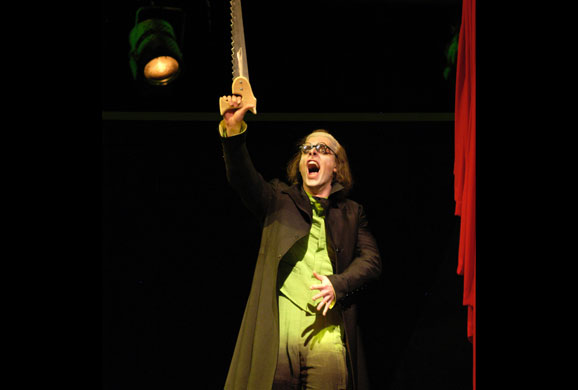
One of the most talked-about productions in Seattle Opera history returns to McCaw Hall for a glorious season finale. An endlessly inventive poet regales his drinking buddies with stories of romancing three fantastic women. A trio of colorful villains foils our hero at every turn. Three fabulous shows in one, Offenbach’s sumptuous collage of whimsy, creativity, heartbreak, and artistic salvation enchants and delights with luminous music and compelling theater. Not to be missed.
In French with English subtitles | at McCaw Hall
Approximate Running Time: 3 hours, 30 minutes, with 2 intermissions

Audio described performance for visually impaired patrons available on Sunday, May 4. Description begins 10 minutes prior to the beginning of the matinee.

Performance Dates

Sat, May 3, 2014 7:30 PM
Sun, May 4, 2014 2:00 PM
Thu, May 8, 2014 7:30 PM
Sat, May 10, 2014 7:30 PM
Wed, May 14, 2014 7:30 PM
Fri, May 16, 2014 7:30 PM
Sat, May 17, 2014 7:30 PM

Synopsis

Long Story Short
Eccentric writer tells the stories of his three great failed romances while screwing up the fourth. But at least he has his art.

Who’s Who?

Five characters appear in each tale:
Hoffmann

is the great German writer who, in this opera, likes to sing in French.
Nicklausse is a teenage boy who follows Hoffmann everywhere. The mezzo-soprano who plays him also plays the Muse, the goddess of art and Hoffmann’s guardian angel.
The Enemy, also known as Councilor Lindorf, Coppélius, Dr. Miracle, and Dappertutto, is a shape-shifting demon with frightening magical powers, always out to destroy Hoffmann.
The Woman also takes on various forms; she is Olympia, a pretty doll; Antonia, a sickly young woman of great talent and promise; Giulietta, a high-class courtesan; and Stella, a star performer with a voice of gold.
The Servant always has some defect: he is Andrès, an imbecile; Cochenille, a broken robot; Franz, who cannot hear; and Pitichinaccio, who is deformed.

The Other Characters Include:
Nathanaël
and Hermann, students and friends of Hoffmann and Nicklausse.
Spalanzani, a mad scientist interested in creating artificial intelligence.
Councilor Crespel, Antonia’s father, a violin-maker.
The Portrait of Antonia’s Dead Mother, which can come to life and sing.
Peter Schlemil, Giulietta’s most recent lover.

When?
E. T. A. Hoffmann was born in 1776 and died in 1822. The action presumably occurs when he’s a young man, at the beginning of the nineteenth century.

What’s Going On?
PROLOGUE.
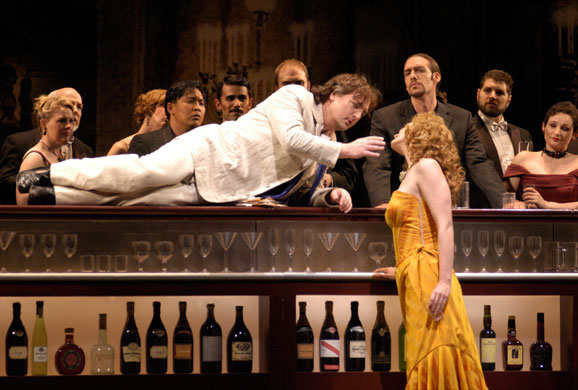
The great writer, Hoffmann, stumbles into a bar for a drink during an intermission of Don Giovanni, which is playing nearby in a production starring La Stella, the current mistress of his heart. His friends, a rowdy gang of students, encourage him to entertain them with the stories of his previous love affairs. The three acts of the opera thus take place as flashbacks…

OLYMPIA. When Hoffmann was a young man, he toyed with the idea of giving up poetry and becoming a scientist. Accordingly, he apprenticed himself to Spalanzani, a famous inventor who had recently finished creating a very life-like robotic doll. Spalanzani introduced the doll to Hoffmann as his daughter, Olympia; and Hoffmann, seeing the doll through rose-tinted glasses sold to him by Spalanzani’s business associate Coppélius, fell in love with her. At Olympia’s debutante ball, Hoffmann amused all of Spalanzani’s guests by failing to notice that he had fallen in love with a robot.

Meanwhile, Coppélius, who had manufactured Olympia’s eyes, discovered that Spalanzani had cheated him. The inventor paid his supplier with a check from the banking house of Elias, and when Coppélius discovered that Elias had gone bankrupt, he crashed the party and ripped Olympia into pieces. Hoffmann was devastated to find that a) his beloved was dead, b) she was never alive, and c) everyone was laughing at him.

ANTONIA. Some years later, Hoffmann was found romancing Antonia, a girl from a musical family: her father, Crespel, was a violin-maker and her mother a great soprano who died of a strange disease that made singing lethal for her. Crespel kept Antonia healthy by locking her away in his middle-class house, away from admirers like the poet Hoffmann, who might encourage her to sing, and away from the wicked Dr. Miracle, the quack whose tinctures and potions only hastened his wife’s untimely demise. But Hoffmann and Miracle found their way to Antonia nevertheless. When Hoffmann finally understood Antonia’s predicament, he offered to marry her and set up an orderly household, like that of her father. But Miracle told Antonia she would be a fool to deny the world her beautiful voice, to silence herself for the sake of bourgeois respectability. The portrait of Antonia’s dead mother came to life and implored her daughter to sing. The girl did, and it killed her. Her wretched father made a stab at Hoffmann, whom he blamed for his daughter’s death; but Hoffmann’s teenage amanuensis Nicklausse saved his life, and the devastated poet escaped.

GIULIETTA. Some time later, Hoffmann and Nicklausse turned up in Venice, gambling and whoring in that infamous cesspool of vice. Hoffmann fell for a beautiful courtesan named Giulietta, who was in the business of selling her favors in exchange for men’s souls. She had just handed over the shadow of Peter Schlemil to Dapertutto, who kept her well-supplied with the jewelry she so craved. Dapertutto encouraged her to go after Hoffmann next. She made Hoffmann think she was falling in love with him and begged him to give her his reflection as a memento of him. No sooner had he agreed than Hoffmann found he couldn’t see himself if he looked in a mirror. Hoffmann killed Schlemil in a duel, to get him out of the way, only to watch Giulietta run off with another admirer, the deformed midget Pitichinaccio. Hoffmann managed to escape with Nicklausse, but Dapertutto kept his soul.

EPILOGUE. Hoffmann has been telling stories through the entire second act of Stella’s performance, and when she comes by the tavern, she finds him a bitter, self-pitying, drunken mess. She leaves on the arm of Councilor Lindorf, who bears an uncanny resemblance, in voice and appearance, to Coppélius, Miracle, and Dapertutto. But still faithful to Hoffmann is Nicklausse, who turns out to be the Muse of Poetry. Women may fail Hoffmann, but art will never desert him.

Artists

Hoffmann
William Burden
Russell Thomas *
The Villains
Nicolas Cavallier
Alfred Walker *
The Muse/Nicklausse
Kate Lindsey
The Heroines
Norah Amsellem
Leah Partridge †*
Crespel
Andrea Silvestrelli
The Henchmen
Keith Jameson
Spalanszani
Steven Cole
Antonia’s Mother
Tichina Vaughn
Conductor
Yves Abel
Stage Director
Chris Alexander
Set Designer
Robert A. Dahlstrom
Costume Designer
Marie Theresa Cramer
Lighting Designer
Robert Wierzel
Sets & Costumes
Seattle Opera 

† Seattle Opera debut
* On May 4 and 16 only

Russell Thomas is a former Seattle Opera Young Artist

Hphoto_15 Hphoto_01 Hphoto_02  Hphoto_04 Hphoto_05 Hphoto_06 Hphoto_07 Hphoto_08 Hphoto_09 Hphoto_10 Hphoto_11 Hphoto_12

Posted in OPera | Tagged , , , , , , , | Leave a comment

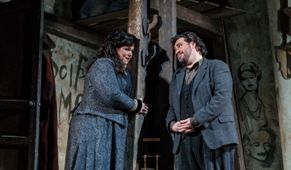
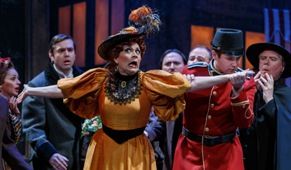
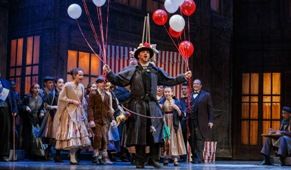
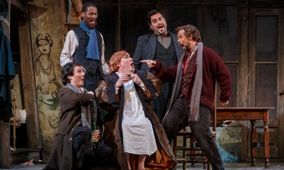
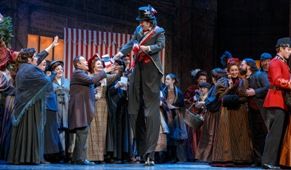
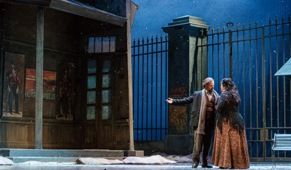
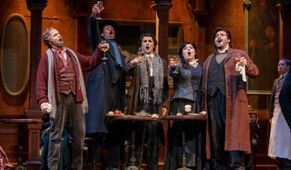
LA BOHÈME in Pittsburgh

La bohème

LA BOHÈME

March 29; April 1, 4, 6, 2014
Benedum Center

Music by Giacomo Puccini • Libretto by Luigi Illica

boheme1 - CopyROMANCE, FRIENDSHIP, AND A STRUGGLE
FOR SURVIVAL IN THE CITY OF LIGHTS

It’s Christmas Eve in Paris, and a young poet meets the love of his life. Their time together is a poignant picture of poverty and illness, shared by friends. The entrancing set captures the charm and vigor of 19th-century Paris.

The Cast

Leah Crocetto Craig Verm Eric Barry Sari Gruber
Leah Crocetto +
Mimi
David Lomeli
Rodolfo 3/29, 4/1, 4/4
Eric Barry
Rodolfo 4/3, 4/6
Sari Gruber
Musetta
Troy Cook Oren Gradus Resident Artist Phillip Gay Resident Artist Alex DeSocio
Troy Cook +
Marcello
Kevin Glavin **
Benoit/Alcindoro
Philip Gay *
Colline
Dimitrie Lazich
Schaunard

Creative Team

Conductor
Antony Walker
Director Tomer Zvulun
Co-Director
Helena Binder
Set Designer(s) Michael Yeargan
Costume Designer Martin Pakledinez *
Lighting Designer Andrew Ostrowski
* deceased
Assistant Conductor Glenn Lewis
Chorus Master Mark Trawka
Associate Coach/Pianist James Lesniak
Hair & Makeup Designer James D. Geier
Assistant Director George Cederquist *

+ Pittsburgh Opera debut
* Pittsburgh Opera Resident Artist
** Pittsburgh Opera Resident Artist alumni

Production owned by Pittsburgh Opera.

Photo Album Click here

boheme3 - Copy boheme7 - Copy boheme5 boheme2 - Copy boheme4 - Copy boheme8 - Copy boheme6boheme11

boheme10 boheme9

SYNOPSIS

Act I
Paris, the 1830s. In their Latin Quarter garret, the near-destitute painter Marcello and poet Rodolfo try to keep warm on Christmas Eve by feeding the stove with pages from Rodolfo’s latest drama. They are soon joined by their roommates—Colline, a philosopher, and Schaunard, a musician, who brings food, fuel, and funds. When the landlord, Benoit, comes to collect the rent, they ply the older man with wine, then throw him out. As his friends leave for the Café Momus, Rodolfo promises to join them later, remaining behind to write. There is a knock at the door; the visitor is a pretty neighbor, Mimì, whose candle has gone out on the stairway. Rodolfo relights it. Mimì realizes she has lost her key, and in the confusion, both candles are blown out. As the two search for the key in the moonlight, their hands meet. Rodolfo tells Mimì his dreams (“Che gelida manina”). She then recounts her life alone in a lofty garret, embroidering flowers and waiting for the spring (“Mi chiamano Mimì”). Rodolfo’s friends are heard outside, urging him to join them; he calls back that he is not alone and will be along shortly. Expressing their joy in finding each other (Duet: “O soave fanciulla”), Mimì and Rodolfo embrace and leave for the café.

Act II
At the Café Momus, Rodolfo introduces Mimì to his friends. Marcello’s former sweetheart, Musetta, makes a noisy entrance on the arm of the elderly but wealthy Alcindoro. The ensuing tumult reaches its peak when, trying to regain Marcello’s attention, she sings a waltz about her popularity (“Quando me’n vo’”). Sending Alcindoro off on an errand, she falls into Marcello’s arms and tells the waiter to charge everything to Alcindoro. Soldiers march by the café, and the bohemians fall in behind.

Act III
At dawn by a tavern on the snowy outskirts of Paris, a customs official admits farm women to the city. Mimì wanders in, searching for the place where Marcello and Musetta now live. When the painter emerges, she tells him of her distress over Rodolfo’s incessant jealousy (Duet: “O buon Marcello, aiuto!”). She says she believes it is best that they part. When Rodolfo appears from the tavern, Mimì hides nearby, though Marcello thinks she has gone. The poet tells Marcello that he wants to separate from his sweetheart, citing her fickleness; pressed for the real reason, he breaks down, saying that her coughing can only grow worse in the poverty they share; he’s desperately afraid she will die from her illness. Overcome with tears, Mimì stumbles forward to bid her lover farewell (“Donde lieta uscì”). While Mimì and Rodolfo recall past happiness, Musetta quarrels with Marcello, who has caught her flirting (Quartet: “Addio dolce svegliare”). The painter and his mistress part, hurling insults at each other, but Mimì and Rodolfo decide to remain together until spring.

boheme12Act IV
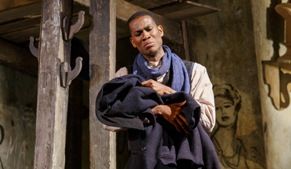
Now separated from their girlfriends, Rodolfo and Marcello lament their loneliness in the garret (Duet: “O Mimì, tu più non torni”). Colline and Schaunard bring a meager meal. To lighten their spirits the four stage a dance, when suddenly Musetta bursts in to tell them that Mimì is outside, too weak to come upstairs. Rodolfo carries her in, while Musetta asks Marcello to sell her earrings for medicine and Colline goes off to pawn his overcoat (“Vecchia zimarra”). Left alone, Mimì and Rodolfo recall their first meeting and their happy days, but she is seized with violent coughing (Duet: “Sono andati?”). The others return and Mimì drifts into unconsciousness. When Rodolfo at last realizes that she is dead, he throws himself despairingly on her body, calling her name.

— courtesy of Opera News, edited

Posted in OPera | Tagged , , , , | 1 Comment

“DON CARLO” in Vancouver

 PRESENTS:


GIUSEPPE VERDI

First VO production in 40 years!
A magnificent drama of a king’s brutal power and a son’s brash rebellion
In Italian with English SURTITLES™

May 3, 8, 10, 11 (matinée), 2014
Evening performances 7:30pm.
Matinée performances 2:00pm.
OPENS May 3, 2014!

►In the war-torn 16th century, peace between France and Spain is secured when a French princess, Elisabeth de Valois, is given in marriage to Spain’s King Philip. The King’s son, Carlo, is shattered, for he is in love with her. When Carlo dares to defend the Flemish people from Philip’s persecution, he incites both his father’s fury and the awesome authority of the Grand Inquisitor. Believing that he has been doubly betrayed, Philip arrests Carlo and Elisabeth. In the dramatic final scene at the tomb of Charles V, a ghostly friar rescues Carlo from the wrath of Church and State.

Spectacular on a grand scale and also extraordinarily intimate, Don Carlo is one of Verdi’s most impressive works. His orchestral colours are brilliant, his choruses are powerful, and his music for the monstrous yet very human king, the terrifying Inquisitor, and the heroic lovers is magnificent.

This production will be the Milan version: 4 acts without the Fontainebleau scene

► All performances are at the Queen Elizabeth Theatre
► Approximate running time: 3 hours 5 minutes (including one intermission)
 

CAST & CREATIVE TEAM

Conducted by JONATHAN DARLINGTON

JONATHAN DARLINGTON
CONDUCTOR


Directed by PAUL PEERS

PAUL PEERS
DIRECTOR


Don Carlo ANDREA CARE

ANDREA CARE
DON CARLO

Elisabeth JONI HENSON

JONI HENSON
ELISABETH


Eboli MARY PHILLIPS

MARY PHILLIPS
EBOLI


Rodrigo BRETT POLEGATO

BRETT POLEGATO
RODRIGO


King Philip PETER VOLPE

PETER VOLPE
KING PHILIP


The Grand Inquisitor GREGORY FRANK

GREGORY FRANK
THE GRAND INQUISITOR


Friar

TBA
FRIAR


Tebaldo KRISTIN HOFF

KRISTIN HOFF
TEBALDO


Count Lerma MARTIN SADD

MARTIN SADD
COUNT LERMA


Celestial Voice MELANIE KRUEGER

MELANIE KRUEGER
CELESTIAL VOICE


Royal Herald

TBA
ROYAL HERALD


Chorus Director / Associate Conductor LESLIE DALA

LESLIE DALA
ASSOCIATE CONDUCTOR / CHORUS DIRECTOR


Lighting Designer GERALD KING

GERALD KING
LIGHTING DESIGNER


Musical Preparation KINZA TYRRELL

KINZA TYRRELL
MUSICAL PREPARATION


  TINA CHANG

TINA CHANG
MUSICAL PREPARATION


  KIMBERLEY-ANN BARTCZAK

KIMBERELY-ANN BARTCZAK
MUSICAL PREPARATION


Stage Manager SHEILA MUNN

SHEILA MUNN
STAGE MANAGER


Fight Director TBA

TBA
FIGHT DIRECTOR


Assistant Director FANNY GILBERT-COLLET
Posted in Music, OPera | Tagged , , , , , , , , | Leave a comment

Washington National Opera: The Magic Flute

THE KENNEDY CENTER Presents:

Washington National Opera: The Magic Flute

A love-struck prince sets out on a fantastic adventure to rescue the Queen of the Night’s daughter in Mozart’s final opera. This “zesty and imaginative new production” (San Francisco Chronicle) is certain to captivate audiences of all ages.

The Magic Flute (Cory Weaver - San Francisco Opera)

Wolfgang Amadeus Mozart’s
The Magic Flute
(Die Zauberflöte)
Libretto by Emanuel Schikaneder
New production
Co-production with San Francisco Opera Association, Opera Omaha, Lyric Opera of Kansas City, and Opera Carolina
 
A prince’s quest leads to love at first sight–but to prove his worth in marriage, he must first survive trials of wisdom and devotion. Lost in a faraway land, young Tamino is enlisted by the Queen of the Night to rescue her lovely daughter Pamina from the hands of Sarastro, an evil sorcerer. With the aid of a magic flute and the bumbling, lovelorn Papageno by his side, Tamino sets out on a fantastic adventure filled with danger and temptation, culminating in one final test at a mystical temple.
 
Mozart’s final opera, The Magic Flute is simultaneously a delightful fairy tale and a profound reflection on spiritual enlightenment. Sung in English–and featuring a colorful kaleidoscope of sets and costumes by Japanese American artist Jun Kaneko–it’s also a perfect opera for the entire family. American director Harry Silverstein, whose The Marriage of Figaro wowed WNO audiences in 2010, directs an attractive young cast, many in their WNO debuts. Conducted by WNO Music Director Philippe Auguin, this “zesty and imaginative new production” (San Francisco Chronicle) is guaranteed to captivate audiences of all ages.
 
“A feast for the eyes, a feast for the ears… a masterpiece of conception and execution!”
–Opera Today

The Queen of the Night: Kathryn Lewek (5/3, 8, 11, 15, 18), Anna Siminska (5/5, 7, 10, 17)
Pamina: Eri Nakamura (5/5, 7, 10, 17), Maureen McKay (5/3, 8, 11, 15, 18)
Tamino: Joseph Kaiser (5/3, 8, 11, 15, 18), Paul Appleby (5/5, 7, 10, 17)
Papageno: Joshua Hopkins (5/3, 8, 11, 15, 18), Kostas Smoriginas (5/5, 7, 10, 17)
Sarastro: Soloman Howard (5/5, 7, 10, 17), Jordan Bisch (5/3, 8, 11, 15, 18)

May 16: Domingo-Cafritz Young Artist Performance (Casting TBD)

Conductor: Philippe Auguin
Director: Harry Silverstein
Lighting Designer: Paul Pyant
Set & Costume Designer: Jun Kaneko

Performed in English with projected English titles. Titles may not be visible from the rear of the orchestra.

~~~~~~~~~~~~~~~

COME EARLY FOR FREE OPERA INSIGHTS
Musicologist Saul Lilienstein leads the Thursday, May 8 Opera Insight, starting 1 hour and 15 minutes before the performance and lasting 35–40 minutes. All other Opera Insights start 1 hour before the performance and last 20–25 minutes.Informative and entertaining, Opera Insights take you inside the composer’s mind, behind the scenes of planning a production, and into the history and social context of each opera.
These lectures are free, but patrons must present a ticket from any performance of The Magic Flute.

STAY AFTER FOR A FREE ARTIST Q&A ON THE MAGIC FLUTE
Following these performances:
Monday evening, May 5
Sunday matinees, May 11 & 18
Join WNO artists for a unique opportunity to ask questions about the production.
All discussions begin immediately after the performance and are free with your ticket.

~~~~~~~~~~~~~~~

Performance Timing: Act I – 74 min.; Intermission – 20 min.; Act II – 89 min. (Approx. 3 hours)

Artists

  • Kathryn Lewek (uncredited) Kathryn Lewek, The Queen of the Night
  • Anna Siminska (uncredited) Anna Siminska, The Queen of the Night
  • Eri Nakamura (uncredited) Eri Nakamura, Pamina
  • Maureen McKay (uncredited) Maureen McKay, Pamina
  • Joseph Kaiser (uncredited) Joseph Kaiser, Tamino
  • Paul Appleby (Ken Howard) Paul Appleby, Tamino
  • Joshua Hopkins (uncredited) Joshua Hopkins, Papageno
  • Kostos Smortiginas (Tomas Kauneckas) Kostas Smoriginas, Papageno
  • Soloman Howard (Unknown) Soloman Howard, Sarastro
  • Jordan Bisch (uncredited) Jordan Bisch, Sarastro
  • PHILIPPE AUGUIN (Dario Acosta) Philippe Auguin, conductor
  • Harry Silverstein (uncredited) Harry Silverstein, director
  • general artist image Paul Pyant, lighting designer
  • Jun Kaneko (uncredited) Jun Kaneko, set & costume designer

IMAGES

The Magic Flute 
The Magic Flute   The Magic Flute   The Magic Flute

Posted in Music, OPera | Tagged , , , , , , , | Leave a comment

“I Puritani” in Boston


BOSTON LYRIC OPERA PRESENTS:

Bellini | I Puritani

I_Puritani_688x688_web

May 2, 4m, 7, 9, 11m, 2014

New BLO production. Sung in Italian with projected English translation.
May 2, 4m, 7, 9, 11m, 2014 at the Citi Performing Arts CenterSM Shubert Theatre.
Evening performances at 7:30pm. Matinees (m) at 3pm. New BLO production

Elvira has been promised to one man, but loves another. When she believes the object of her affection has betrayed her, she descends into madness. Bellini’s bel canto gem unfolds during a tumultuous English civil war and features mad scenes filled with pathos and achingly beautiful music.

Troy Cook and Paul Whelan are the men trying to arrange marriage for Elvira. John Tessier and Sarah Coburn, acclaimed for their roles in BLO’s The Barber of Seville, sing the roles of the lovers with Coburn delivering the famous tour de force soprano arias.

Creative Team  
Conductor David Angus
Stage Director Crystal Manich
Set Designer John Conklin
Costume Designer Catherine Zuber
Lighting Designer Paul Hackenmueller
Wigs and Makeup Designer Jason Allen
   

Cast  
Elvira Sarah Coburn
Arturo John Tessier
Riccardo Troy Cook*
Giorgio Paul Whelan*
Gualtiero Liam Moran#
Bruno Omar Najmi#
Enrichetta Chelsea Basler#

*BLO debut 
#BLO Emerging Artist 

SYNOPSIS

I Puritani is set in the Puritan fortress at Plymouth during the English Civil War. The Puritans, led by Oliver Cromwell, have inflicted a crushing defeat on troops loyal to Charles I (the Cavaliers) and taken parliamentary power. Although the King has been tried and executed (his widow, Henrietta, plays a significant role in the opera) the Cavaliers fight on.

But the main thrust of the opera lies not to so much this specific historical context but in its dramatic and expressively poignant music and its vivid psychological study of an emotionally vulnerable woman physically and mentally isolated within a rigidly militaristic world of men. She is caught up, with them, in the brutalizing confusion and chaos of a civil war that can destroy the passions of the heart.

I Puritani was written in three acts – the BLO production will be played in two parts with one intermission. I Puritani will be sung in Italian. The equivalent (sung) Italian names appear in the synopsis in parenthesizes.

Part 1 

The Puritan governor Lord Walton (Lord Gualterio Valton) had  promised his daughter Elvira to Sir Richard Forth (Sir Riccardo Forth) a captain in his army but persuaded by his brother George (Sir Giorgio Valton) that she is desperately in love with a cavalier –  Sir Arthur  Talbot (Lord Arturo Talbo) agrees to the marriage in spite of the political consequences. Richard is deeply frustrated and bitterly angry at the decision while Elvira is surprised at her father’s change of heart but obviously overjoyed. The wedding is prepared and Arthur arrives for the ceremony. Walton explains that he must take a female political prisoner who has been held in the fortress to London to stand trial. Arthur recognizes her as Henrietta (Enrichetta di Francia) widow of the executed King. To save her from certain death, he smuggles her out of the castle by disguising her in Evira’s wedding veil and passing her off as his bride to be. Richard surprises them, challenges Arthur to a duel but in the end but allows them to pass hoping thereby to forever disgrace his rival. Elvira informed of their escape can only assume that Arthur has cruelly humiliated and publicly betrayed her and her confused mind begins to splinter.  She sees herself as the figure of the white- veiled Henrietta (“He looks at her and call her his bride – Is Elvira the lady? Am I no longer Elvira”) She deliriously imagines the happy transports of the wedding but then she berates Arthur’s cruelty  and treachery and cries out – ” Cruel man  do you abandon  me who loves you so much? Burning wrath sweeps through me…fury tears my heart….this burning fever will destroy me.”

Part 2

Arthur has been condemned to death for treason. George sees Elvira senseless with despair, weeping, unable to find any relief – wandering aimlessly – now  joyfully recreating  her lost marriage ceremony and her passionate reunion with Arthur – now bemoaning her happiness seeming lost forever. He implores Richard to put aside his hatred and vengeful pursuit and to save Arthur’s life fearing that Elvira will die of grief if she should learn of his death. The passion of his appeal wins over Richard and he agrees.

Arthur having led Henrietta to safety, returns to Plymouth to reunite with Elvira. Although closely pursued by puritan soldiers, he makes contact with her and explains the real reason for his sudden disappearance. Comforted, she regains her lucidity for a time but her mental stability has been shattered and suddenly relapsing into delusion she has a vision that Arthur will desert her once again. She calls for the soldiers who arrest him and take him to be executed, but word of a pardon arrives and it seems that Arthur is saved and can be united with Elvira.

Posted in Music, OPera | Tagged , , , , , , , , , | Leave a comment