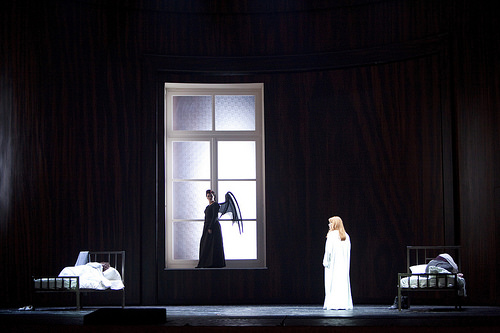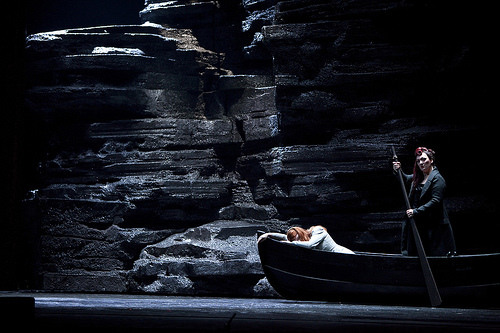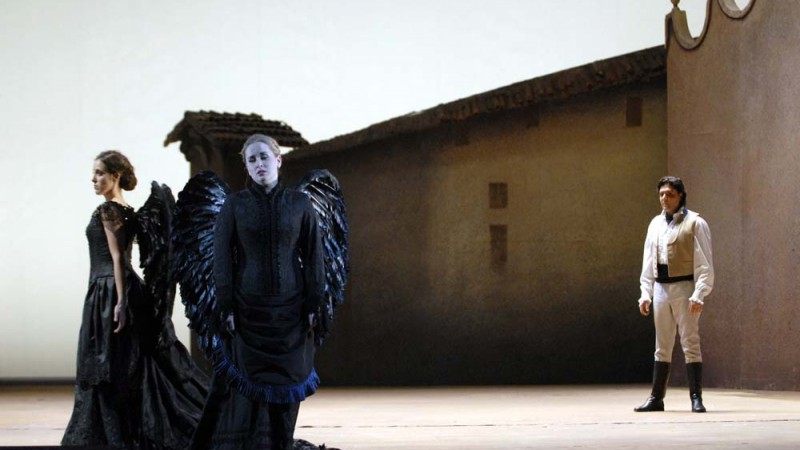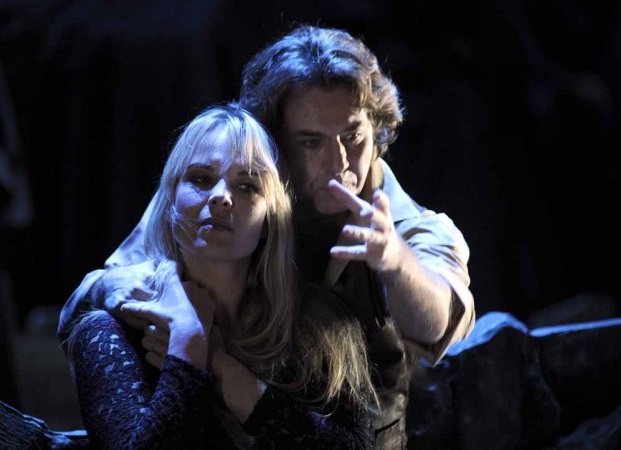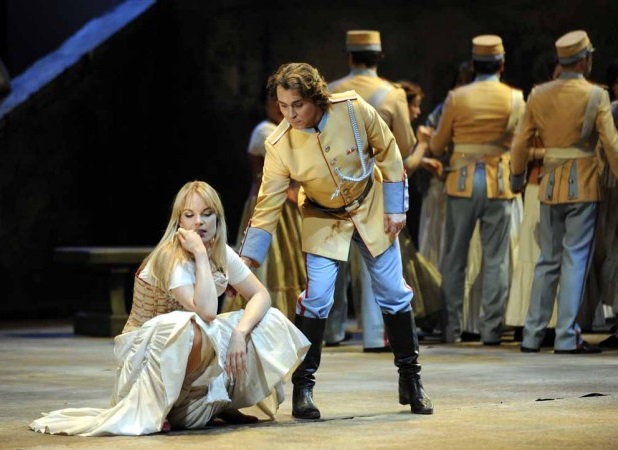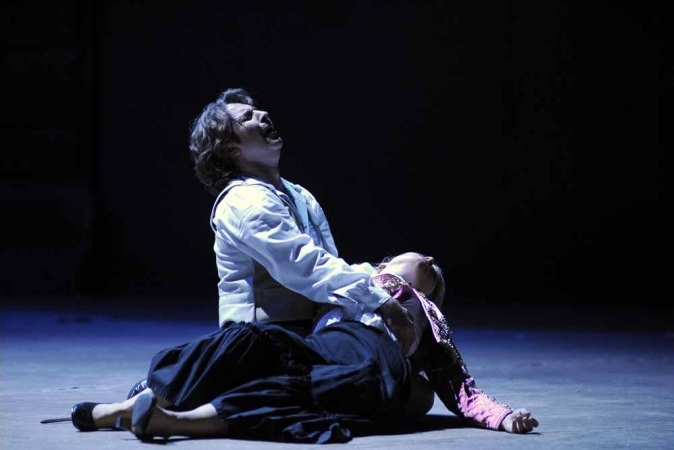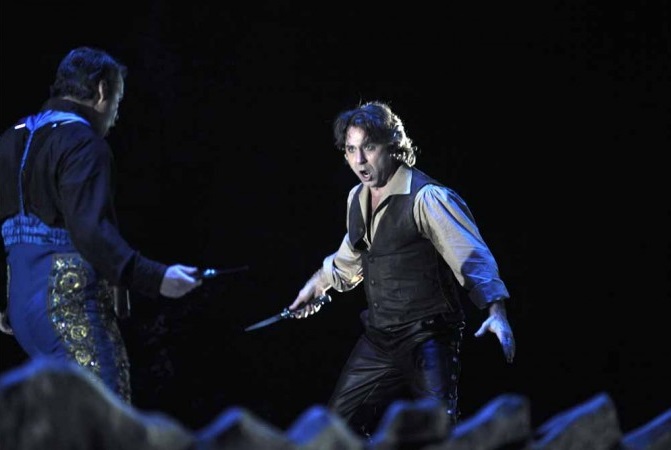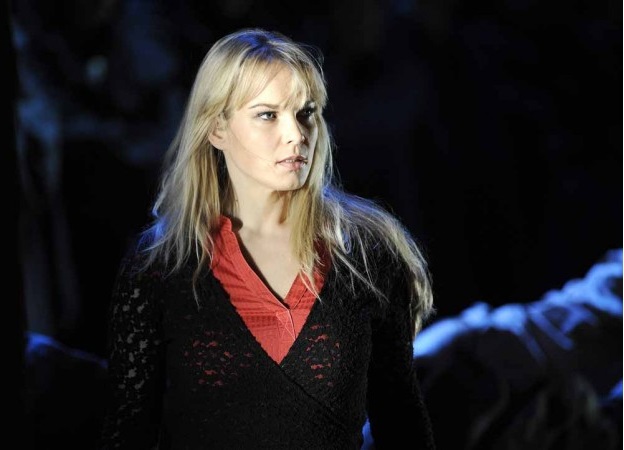
MANON LESCAUT in Baden Baden

Festspielhouse Baden Baden Presents:

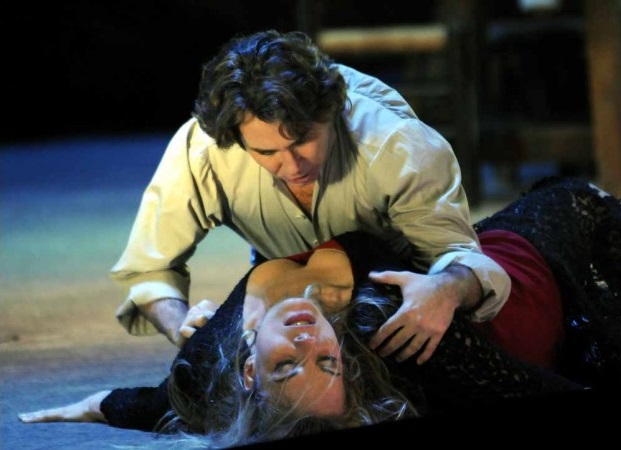
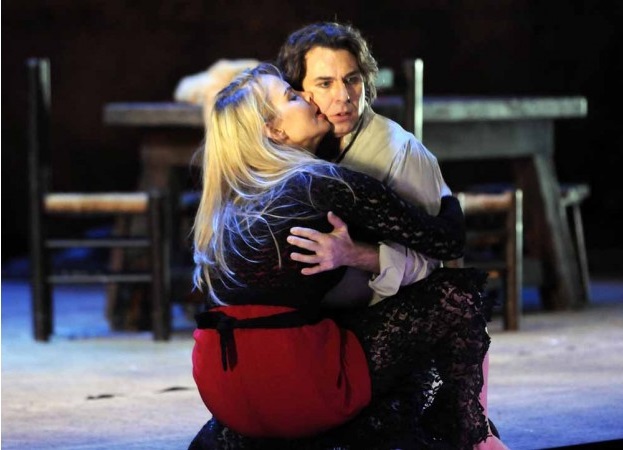
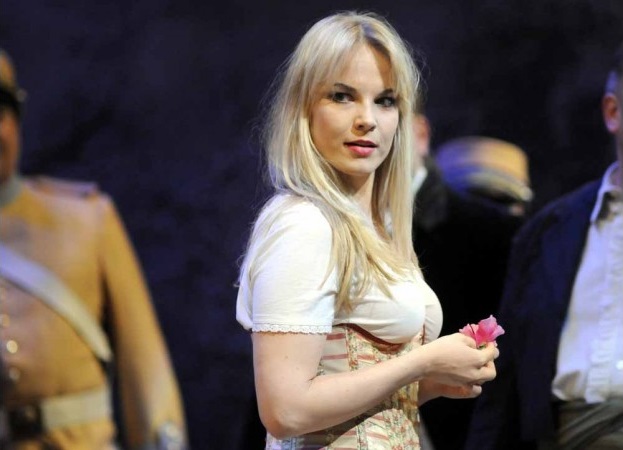
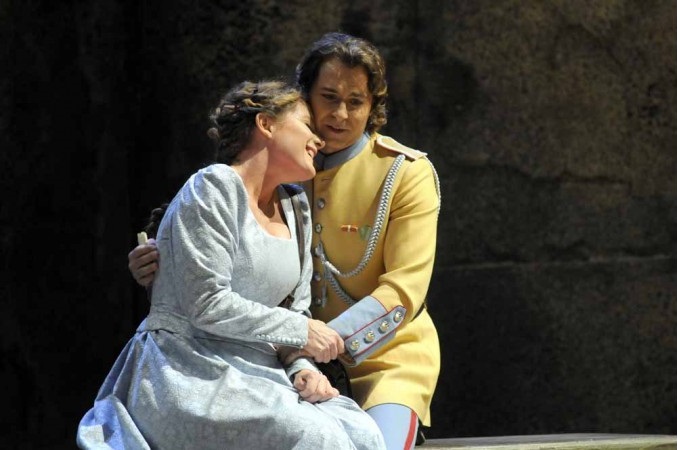
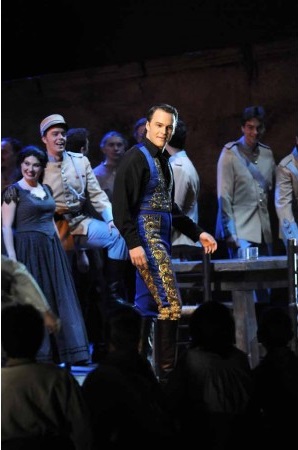
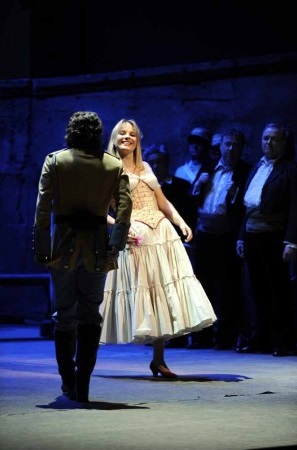
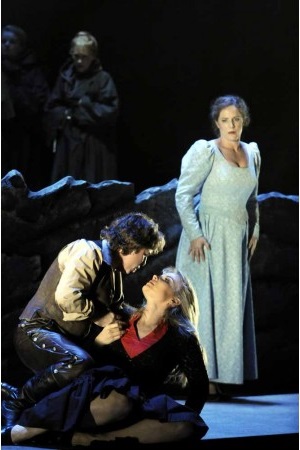
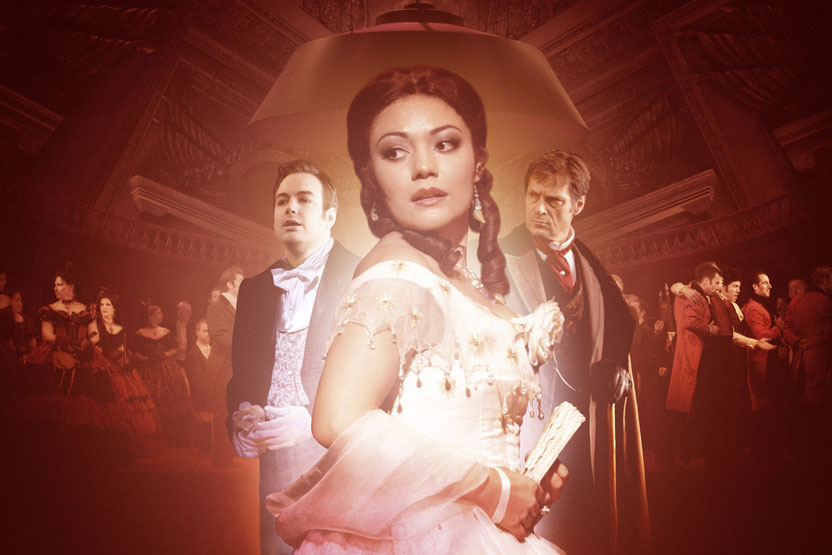
Puccini: MANON LESCAUT

Berlin Philharmonic Orchestra & Sir Simon Rattle

  • Sat., 12. April 2014, 18:00 o’clock
  • Wed., 16. April 2014, 18:00 o’clock
  • Mon., 21. April 2014, 18:00 o’clock
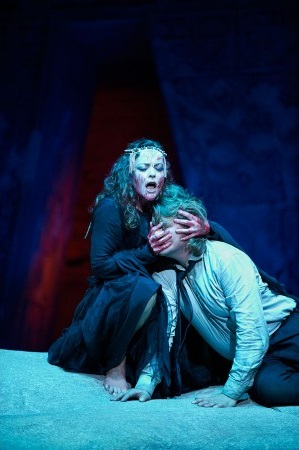
 lescautbadenEva-Maria Westbroek © pr

A rococo beauty who ultimately drags everything into the abyss, Puccini’s Manon Lescaut is never fully satisfied. She becomes addicted to the admiring glances she receives from others, and the luxury and diamonds in which she bathes don’t warm her for long. In this, his first successful opera, the composer paints a portrait of a woman who has everything, only to lose it because she is incapable of holding on to anything. Likewise Puccini, who identified closely with his heroine, helping himself to many things. He took the orchestra from Verdi, expanding it with phrases and themes he found in Wagner and the French people. To all of this he added something from within himself – a melody more breathless than that of Verdi, but in many ways, sweeter. Add to that an ingenious fire in which ideas flow and the themes are inspired. The fact that the Berlin Philharmonic Orchestra turn to Puccini – this beloved yet ostracized composer – is symbolic. Here is someone who was thought to be outmoded for a long time, but there is really so much more to be discovered about him and his work. The tale of one who becomes a model but remains a girl, is very contemporary.

In Italian with German and English surtitles.CAST AND ARTISTIC TEAM:

Sir Simon Rattle Musical direction
Richard Eyre Direction
Robert Howell Stage

Fotini Dimou Costume Design

Peter Mumford Light Design

Berlin Philharmonic Orchestra
Philharmonia Choir Vienna

Eva-Maria Westbroek Manon Lescaut
Lester Lynch Lescaut, her brother
Massimo Giordano Renato Des Grieux
Liang Li Geronte de Ravoir
Bogdan Mihai Edmondo
Magdalena Kožená Singer

Giacomo Puccini
Manon Lescaut – Opera in four acts

A coproduction between the Festspielhaus Baden-Baden and the Metropolitan Opera New York.

 
Posted in Music, OPera | Tagged , , , , , , , | Leave a comment

The “Magic Flute” in Minnesota

Komische Oper Berlin "DIE ZAUBERFLOETE"

MINNESOTA OPERA PRESENTS:

The Magic Flute

by Wolfgang Amadeus Mozart

Performances

  • Sat. 4/12/14 at 7:30pm
  • Sun. 4/13/14 at 2pm
  • Tues. 4/15/14 at 7:30pm
  • Wed. 4/16/14 at 7:30pm
  • Thur. 4/17/14 at 7:30pm
  • Fri. 4/18/14 at 7:30pm
  • Sat. 4/19/14 at 7:30pm
  • Wed. 4/23/14 at 7:30pm
  • Sun. 4/27/14 at 2pm

Love conquers all.

Mozart’s masterful comedy is richly reimagined in a boundary-busting production created by director Barrie Kosky and British theatre group 1927. Connecting the tale’s enduring meaning with modern metaphor, this extraordinary staging has thrilled audiences with its stunning interaction between film animation and live performance.

A production of the Komische Oper Berlin. Presented in co-production with LA Opera.

Sung in German with English translations projected above the stage.

Synopsis

Act I

Pursued by a serpent, Prince Tamino falls faint from exhaustion. Three Ladies in the service of the Queen of the Night slay the monster, then admire Tamino’s beauty. They fight over who will remain with him while the others fetch the Queen. Not coming to any resolution, all three depart.  
Tamino revives and observes the approach of Papageno, who catches birds for the Queen. In the course of becoming acquainted, Papageno claims he killed the serpent. The Three Ladies return and seal his mouth for telling the lie. They show Tamino a portrait of the Queen’s daughter, Pamina, and Tamino immediately falls in love with her visage. The Queen of the Night appears and asks he rescue Pamina from the temple of the tyrant Sarastro, where she is being held captive. As a reward, the young couple will be wed. Tamino agrees enthusiastically, and the Three Ladies give him a magic flute for protection. Restoring Papageno’s power of speech, they order him to accompany Tamino. He receives a set of magic bells. Three Spirits will guide their journey.

At Sarastro’s temple, Monostatos is charged with guarding Pamina, whom he treats harshly. Papageno enters, and both men startle one another with their unusual appearance and momentarily flee. Papageno is the first to return, recognizes Pamina as the Queen’s daughter and tells her of the ardent young prince who has been sent to her rescue. She takes pleasure in the prospect of love, and Papageno too pines for his perfect mate.

Elsewhere in the temple, Tamino comes upon the inner sanctuary, but is barred entrance. A priest tells him he has been deceived by a mother’s tears – Sarastro is not the evil person she described. Feeling lost, Tamino plays his magic flute and hears Papageno’s pipe in response; he then follows its sound. Back in Monostatos’s lair, Pamina and Papageno face recapture, but Papageno plays his magic bells, charming Monostatos and his slaves and allowing their escape.

Sarastro enters magnificently, and Pamina admits her attempt to flee, but only to escape Monostatos’ amorous advance. Still, she misses her mother, but Sarastro proclaims there is still much for her to learn from his tutelage. Tamino is brought in and embraces Pamina, while Monostatos is punished for his dereliction.


Act II

Sarastro announces before the Speaker and the priests Tamino’s wish to enter the sanctuary of wisdom and his willingness to undergo the trials of initiation. Papageno is more reluctant, but is promised a pretty wife, Papagena, as his reward. The first test is one of silence, a task Papageno has some difficulty achieving, especially when tempted by the Three Ladies.

Elsewhere, Monostatos continues his lusty pursuit of Pamina, but is deterred by the arrival of the Queen of the Night. The Queen pleads with her daughter – the seat of power rests with the all powerful Circle of the Sun, which was wrongly taken from her and given to Sarastro. Pamina must kill him and take the Circle back – if she doesn’t, her mother will disown her. After the Queen’s angry departure, Monostatos offers to help in exchange for Pamina’s love. When she refuses, Monostatos again threatens her but is interrupted by Sarastro, who knows of the Queen’s plot. He forgives Pamina’s part in it, and Monostatos is banished from the Brotherhood.

Tamino and Papageno continue to wait out their oath of silence, augmented by thirst and fasting. An old woman offers Papageno water and soon admits that her boyfriend’s name is “Papageno.” Before her identity is revealed, she is sent away with a clap of thunder. The Three Spirits then pay a visit and offer refreshments. Papageno eats heartily while Tamino plays his flute. The music brings forth Pamina, who is distressed when Tamino does not respond to her inquiries. She fears his love has vanished and considers taking her own life.

Papageno tries to catch up to Tamino but is denied entry to the inner temple. The Speaker denounces him, stating that he will never know true enlightenment, yet Papageno is hardly bothered, for all he wants is a wife. He plays his bells, and the old woman reappears. Under threat of imprisonment, he begrudgingly agrees to be her husband. She is immediately transformed into a beautiful young woman, Papagena, but is whisked away by the Speaker – Papageno is not yet worthy.

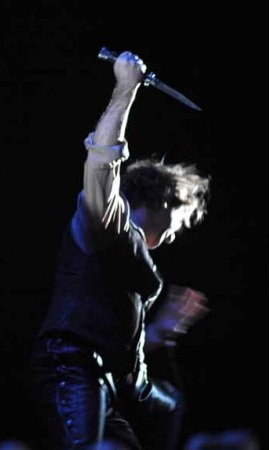
Demented by Tamino’s seemingly broken vow, Pamina wanders aimlessly, dangerously clutching a dagger. The Three Spirits take her to Tamino, who is about to undergo the trials of water and fire. Pamina and Tamino reaffirm their love, and she resolves to go through the ordeals at his side.

Missing Papagena terribly, Papageno is about to hang himself, but is saved by the Three Spirits. He is told to play the magic bells, and to his great joy, Papagena is soon restored to him. They rejoice in a future together.

Now in league with the dark side, Monostatos leads the Queen and her ladies in one last attempt against Sarastro, but all are vanquished. Dressed in priestly robes, Tamino and Pamina usher in a new era of truth, beauty and wisdom.

Cast & Creative Team

Music by Wolfgang Amadeus Mozart

Libretto by Emanuel Schikaneder

World premiere at the Theater auf der Wieden, Vienna September 30, 1791

Creative Team

Conductor Aaron Breid
Production Suzanne Andrade and Barrie Kosky for Komische Oper Berlin
Animation Designer Paul Barritt
Concept 1927 (Suzanne Andrade and Paul Barritt) and Barrie Kosky
Set and Costume Designer Esther Bialas
Stage Director Tobias Ribitzki

The Cast

Tamino, a prince Julien Behr*
Aaron Blake
Pamina, daughter of the Queen Layla Claire*
Christie Hageman
Papageno, a birdcatcher Andrew Wilkowske*
Jesse Blumberg
Sarastro, High Priest of the Sun Christian Zaremba
The Queen of the Night Jennifer O’Loughlin
Three Ladies, attendants to the Queen Rebecca Krynski, Shannon Prickett, Victoria Vargas
Monostatos, overseer at the temple John Robert Lindsey
Papagena Tricia Van Ee
First Priest/Man in Armor Robb Asklof
Second Priest/Man in Armor Matthew Opitz
Three Spirits tba

* Performs on April 12, 13, 15, 17 and 19


Wolfgang Amadeus Mozart

<:section>

Wolfgang Amadeus Mozart

Salzburg, January 27, 1756; d Vienna, December 5, 1791

Child wonder, virtuoso performer and prolific creative artist, Mozart is the first composer whose operas have never been out of repertory. His prodigious talents were apparent very early in his life; by the age of four he could reproduce on the keyboard a melody played to him, at five he could play the violin with perfect intonation and at six he composed his first minuet.

A musician himself, Wolfgang’s father, Leopold, immediately saw the potential of his son’s talents. With the mixed motives of religious piety and making a tidy profit, Leopold embarked on a series of concert tours showing off the child’s extraordinary talents. Often playing with his sister Maria Anna (“Nannerl”), herself an accomplished musician, young Wolfgang charmed the royal courts of Europe, from those of Austrian Empress Maria Theresa, French king Louis xv and English king George iii, to the lesser principalities of Germany and Italy.

As Mozart grew older, his concert tours turned into a search for permanent employment, but this proved exceedingly difficult for a German musician in a market dominated by Italian composers. Although many of his early operas were commissioned by Milanese and Munich nobles (MitridateAscanio in AlbaLucio SillaLa finta giardiniera), he could not rise beyond Konzertmeister of the Salzburg archbishopric. When the new prince archbishop, Count Hieronymus Colloredo, was appointed in 1771, Mozart also found he was released for guest engagements with less frequency. Though his position improved and a generous salary was offered, the composer felt the Salzburg musical scene was stifling for a man of his enormous talent and creativity.

Things came to a head in 1781 immediately after the successful premiere of Mozart’s first mature work, Idomeneo, in Munich. The archbishop, then visiting Vienna, insisted the composer join him there. Never did Mozart better understand his position in the household than during that sojourn, when he was seated at the dinner table below the prince’s personal valets and just above the cooks. He requested to be permanently discharged from his duties, and after several heated discussions his petition was granted, punctuated by a parting kick in the pants.

Now completely on his own for the first time, Mozart embarked on several happy years. He married Constanze Weber, sister to his childhood sweetheart Aloysia, and premiered a new work, Die Entführung aus dem Serail (The Abduction from the Seraglio), at the Burgtheater. Mozart also gave concerts around Vienna, presenting a number of new piano concertos and symphonies. His chief concern was to procure a position at the imperial court. A small commission came his way from the emperor for a one-act comedy, Der Schauspieldirektor (The Impresario), given in the same evening as Antonio Salieri’s Prima la musica, e poi le parole (First the music, then the words), to celebrate the visit of the emperor’s sister, Marie Christine, and her husband, joint rulers of the Austrian Netherlands.

The Marriage of Figaro, Mozart’s first true masterpiece for the imperial court, premiered at the Burgtheater in 1786 and went on to Prague the following year where it was a huge success. Don Giovanni premiered in Prague in 1787 to great acclaim, but its Vienna premiere in 1788 was coolly received. By this time, Mozart had received a minor Imperial posting, Kammermusicus, which required him to write dances for state functions. The position was hardly worthy of his skills and generated only a modest income, a weighty concern now that debts had begun to mount. Joseph ii commissioned another opera from Mozart, Così fan tutte, which premiered January 26, 1790. The emperor was too ill to attend the opening and died the following month. His brother, Leopold ii, assumed leadership, and Mozart hoped to be appointed Kapellmeister – instead he merely received a continuance of his previous position.

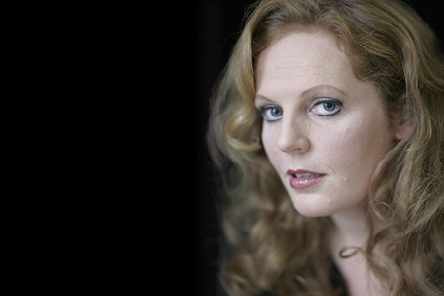
Crisis hit in 1791. Constanze’s medical treatments at Baden and the birth of a second child pushed their finances to a critical point. Mozart’s friend and fellow Freemason, the impresario Emanuel Schikaneder, suggested he try his luck with the suburban audiences at his Theater auf der Wieden. Composition of The Magic Flute began early that summer but had to be halted when two generous commissions came his way: a requiem for an anonymous patron (who hoped to pass it off as his own composition), and an opera seria to celebrate the new emperor’s coronation as King of Bohemia. La clemenza di Tito premiered September 6, and The Magic Flute was completed in time to open September 30. The Requiem, however, remained unfinished, and as Mozart’s health began to fail, the composer feared he was writing his own death mass. In December Mozart died at the age of 35 and was given a simple funeral by his impoverished widow, then buried in a mass grave on the outskirts of Vienna.

Posted in Music, OPera | Tagged , , , , , , , , | Leave a comment

Simon Boccanegra in Valencia with Placido Domingo

simonBoccanegra

logo_palauSIMON BOCCANEGRA

Giuseppe Verdi

27th, 30th March 2014 · 3rd, 6th, 9th April 2014 – The performances start at 8:00 pm. Sundays and holidays, at 7:00 pm; Sala Principal

Opera with a prologue and three acts · Music by Giuseppe Verdi. Libretto by Francesco Maria Piave revised by Arrigo Boito, Antonio García Gutiérrez. Premieres: Venice, Teatro La Fenice, 12th March 1857 (original version). Milano, Teatro alla Scala, 24th March 1881 (final version)

Conductor Evelino Pidò Jordi Bernàcer (9)
Stage Director Lluís Pasqual
Set Designer Ezio Frigerio
Costume Designer Franca Squarciapino
Lighting Designer Albert Faura
Production Palau de les Arts Reina Sofía
Ballet de la Generalitat Inmaculada Gil-Lázaro, directora
Cor de la Generalitat Valenciana Francesc Perales, director
Orquestra de la Comunitat Valenciana
27th, 30th March 2014 3rd, 6th, 9th April 2014 Sala Principal

Simon Boccanegra Plácido Domingo

Amelia Grimaldi Guanqun Yu

Jacopo Fiesco Vitalij Kowaljow

Gabriele Adorno Ivan Magrì

Paolo Albiani Gevorg Hakobyan

Pietro Sergey Artamonov

S Y N O P S I S


Prologue A square in Genoa, near the palace of Jacopo Fiesco and the Church of San Lorenzo. Around 1339. The silversmith Paolo Albiani obtains support from Pietro for the election of the pirate Simon Boccanegra as the new doge, in exchange for some kind of recompense. Reluctantly Boccanegra accepts this position, hoping it will enable him to become reconciled with his enemy Jacopo Fiesco, as he is in love with his daughter Maria. The couple has a daughter, whom old Fiesco intends to bring up.
Simon runs into Fiesco and tries to convince him that they should forget the confrontations they have had in the past. Fiesco, visibly mourning Maria’s sudden death (which he hides from his rival), is inflexible to any reconciliation. Only if Simon gives him his granddaughter will he agree to it. The pirate explains that the little girl has disappeared and therefore he cannot do as he asks. Fiesco leaves and Simon enters the palace to meet Maria. He is horrified when he discovers Maria’s body. Dawn breaks. The crowd proclaims Simon Boccanegra doge of Genoa.

Act I Scene I Twenty-five years have passed. Jacopo Fiesco has changed his name to Andrea Grimaldi to hide his identity, and has brought up and adopted an orphaned girl -of unknown origin- with the name of Amelia Grimaldi. The girl is really Maria Boccanegra, the daughter of Simon Boccanegra and Jacopo Fiesco’s granddaughter.
In the gardens of the Grimaldi  Palace, overlooking the sea, Amelia has an amorous rendezvous with the nobleman Gabriele Adorno. She tells him that the doge is about to arrive at the palace to ask for her hand in marriage on behalf of Paolo Albiani, a man trusted by the doge who finds Amelia attractive. So Gabriele gets in before the doge and asks Fiesco for permission to marry Amelia, to which the old man agrees. The doge arrives with Albiani. During his conversation with Amelia, Simon discovers to his surprise that she is his daughter, and that she is in love with Gabriele. He understands the young girl’s feelings and decides not to go ahead with the marriage proposal he had in mind. Albiani is not at all pleased and begins to plot to kidnap Amelia.

Scene II A chamber in the doge’s Palace in Genoa. The doge, sitting on his throne, presides over a meeting attended by advisers, consuls and condestables from the military. Gabriele bursts into the room, accuses the doge of being responsible for Amelia being kidnapped, and confronts him. But the young girl has managed to escape and she interrupts the meeting to tell her side of the story, clearly proving that Simon has had nothing to do with the matter. All eyes turn to Albiani. The doge brings order to the disrupted meeting and orders for Fiesco and Gabriele to be sent to prison. At the same time, he exhorts Albiani, who has been his right-hand man up until then, to curse the person guilty of kidnapping Amelia (who is none other than himself).

Act II A chamber in the doge’s Palace. Albiani, who is planning to kill Simon, offers to set Fiesco and Gabriele free from prison if they help him commit the crime. Fiesco refuses and goes back to prison. Albiani pours poison into the doge’s drink in case his initial plan fails. Really, he wants Gabriele to kill the doge, so he locks him in the chamber so that he will surprise Simon when he enters and kill him. He has previously led Gabriele to believe that Amelia and Simon are lovers. Amelia enters and tries to convince her sweetheart that his suspicions are unfounded. The doge is heard approaching and Gabriele hides on the balcony. Amelia begs her father to forgive Gabriele, the man she loves. The doge agrees and, feeling tired, drinks from the poisoned bottle and falls asleep. Gabriele takes advantage of the situation and tries to kill him. But Amelia stops him, telling him that Simon is her father. The doge forgives his future son-in-law and they go out together to calm the rebellious mob that is gathering at the palace gates.

Act III The doge has managed to calm the mob and forgives all the conspirators, except for Paolo Albiani, who is sentenced to death. Albiani tells Fiesco that the doge will die within a few hours because he has poisoned him. Simon enters weak and ill. Fiesco reveals his identity and is pleased he can get his revenge at last. When the doge tells him that Amelia Grimaldi is his granddaughter, Fiesco becomes emotional and is reconciled with him. The poison has taken effect, however, and the doge dies, but first he is able to bless the union between his daughter Amelia and Gabriele, and name his son-in-law as the new doge of Genoa. Fiesco goes onto the balcony and tells the crowd that Gabriele Adorno is the new doge, while they all join in prayer for the death of Simon Boccanegra.


Posted in OPera | Tagged , , , | Leave a comment

MADAMA BUTTERFLY at the Opera National de Paris

Logo_OnP

MADAMA BUTTERFLY

GIACOMO PUCCINI

March 12, 2014
MADAME BUTTERFLY, JAPANESE TRAGEDY IN THREE ACTS (1904)
MUSIbutterflyC BY GIACOMO PUCCINI (1858-1924)

LIBRETTO BY LUIGI ILLICA AND GIUSEPPE GIACOSA BASED ON THE PLAY BY DAVID BELASCO, ADAPTED FROM A SHORT STORY BY JOHN LUTHER LONG
PERFORMED IN ITALIAN

Undoubtedly one of the most beautiful and most comprehensive portraits of a woman in the history of opera—but also one of the most terrible, since it is a tale of humiliation and deceit which ultimately leads to death. From its advent in the 1890s, “verismo” had relied on excessive, melodramatic librettos and effective, uncompromising theatricality. It had also relied on a power of expression that transformed the slightest word into imprecation. This was true for a work like Cavalleria rusticana or Tosca, Puccini’s preceding work. In “Butterfly” though, there is nothing of the sort: there is little or no action, just the slow poetry of the soul. Certainly, there are words but they are pared down to perfection to become almost incidental. Compared to the devouring passion expressed in each intonation of Santuzza or Manon Lescaut, Butterfly contrasts silence and heartrending song with an unearthly modesty. Svetla Vassileva, who gained fame in Paris in Francesca da Rimini, plays the distraught young woman in this sensitive and flawless production by Bob Wilson.

Daniele Callegari Conductor
Robert Wilson Stage director and sets
Frida Parmeggiani Costumes
Heinrich Brunke et Robert Wilson Lighting
Suzushi Hanayagi Choreography
Holm Keller Dramaturgy
Alessandro Di Stefano Chorus master
Svetla Vassileva
Cio-Cio San
Cornelia Oncioiu
Suzuki
Teodor Ilincai
F. B. Pinkerton
Gabriele Viviani
Sharpless
Carlo Bosi
Goro
Florian Sempey
Il Principe Yamadori
Marianne Crebassa
Kate Pinkerton
Scott Wilde
Lo Zio bonzo
Paris Opera Orchestra and Chorus

Video Preview:  Madama Butterfly in Paris

The composer

Giacomo Puccini — born in 1858 in Lucca, died in 1924 in Brussels. Born into a family of organists from Lucca (his father was a theoretician and a famous teacher), Puccini studied at the Milan Conservatory under Ponchinelli, amongst others. He wrote around ten operas, most of which have become pillars of the operatic repertory (Manon Lescaut, La Bohème, Tosca, La Fanciulla del West, Il Trittico, Turandot) and several religious works (Salva regina, Messa di Gloria). Considered as one of the principal representatives of the verismo movement, which was the extension into music of naturalism in literature, Puccini stands apart because of the sophistication of his musical style and the rejection of the brutality that often characterized the movement.

The work

The libretto of Madama Butterfly is drawn from a novella by John Luther Long, which had already given rise to a play by David Belasco seen by Puccini in English in London in 1900. Through the story of the seduction and abandonment of a Japanese girl by an American officer, it presents the confrontation between two worlds. The first, Japanese, is anchored in its customs and traditions, and the second, American, all-conquering and carefree, the symbol of the new world. In a first two-act version, which was not a success, the character of Pinkerton is vulgar, uncouth, selfish, disdainful of Japanese customs and above all cowardly. It was when he came to revise the opera, extending it from two to the three acts that had initially been envisaged, that Puccini transformed the character, making him more human and less cynical, and, in a short air added at the last moment, giving him feelings of remorse.
Before composing his « Japanese tragedy », Puccini did research into traditional Japanese music and into the timbres of female voices in that country. The work is centred on the character of Cio-Cio-San, whose aria « Un bel dì, vedremo » is one of the most famous and most intense in the repertory.
Of all his operas, Madama Butterfly is the one Puccini preferred, the one he could listen to without wearying of it, considering it his « most sincere and most expressive ».

The first performance

The first two-act version was created on 17 February 1904 at La Scala in Milan ; the second, in three acts, on 28 May of the same year at the Teatro Grande in Brescia.

The work at the Paris Opera

After numerous performances at the Opéra-Comique, the integral version ofMadama Butterfly was first given at the Palais Garnier on 23 June 1978 in a la Scala di Milano production, directed by Jorge Lavelli (scenery and costumes by Max Bignens) and conducted by Georges Prêtre. It was interpreted by Teresa Zylis-Gara (Cio-Cio-San), Jocelyne Taillon (Suzuki), Franco Tagliavini (Pinkerton) and Tom Krause (Sharpless). In 1983 Massimo Bogianckino presented both versions of the work in alternation in a production directed by Pierluigi Samaritani (who was also responsible for sets and costumes). Alain Lombard conducted the three-act version and Miguel Angel Gomez-Martinez the two-act one. The principal performers were Raina Kabaivanska / Hélène Garetti (Cio-Cio-San), Christa Ludwig / Anna Ringart (Suzuki), Ernesto Veronelli / Maurizio Frusoni (Pinkerton) and Giorgio Zancanaro / Alessandro Corbelli (Sharpless). Madama Butterfly entered the repertory of the Opéra Bastille in November 1993, conducted by Myung-Whun Chung, and with Diana Soviero, Nicoletta Curiel, Johan Botha and William Stone in the principal roles. It is this production which is being presented today.

Posted in OPera | Tagged , , , , , , , , , , | Leave a comment

Strauss’ “Die Frau ohne Schatten” at the Royal Opera House in London

logoRoyalHouse

Die Frau ohne Schatten

Music by Richard Strauss, libretto by Hugo von Hofmannsthal

14 March–2 April 2014
Main Stage
Director Claus Guth reveals the darker elements of Strauss’s exotic fairytale in a striking new production.

A co-production with Teatro alla Scala, Milan

DieFrau1

Generous philanthropic support from

Sir Simon and Lady Robertson, Hamish and Sophie Forsyth, The Friends of Covent Garden and an anonymous donor

Running time

About 4 hours 10 minutes | Including two intervals

Language

Sung in German with English surtitles

Credits

Director
Claus Guth
Designs
Christian Schmidt
Dramaturg
Ronny Dietrich
Lighting design
Olaf Winter
Video design
Andi A. Müller

DieFrau2 DieFrau3 DieFrau4 DieFrau5 DieFrau6 DieFrau7 DieFrau8 DieFrau9

CAST

Bychkov Orchestra           Orchestra of the Royal Opera House

The Emperor       
Botha
The Empress       
Magee
The Nurse       
Schuster
Barak       
Reuter
Barak’s Wife       
Pankratova
One-Eyed Brother       
Clarke
One-Armed Brother       
White
Hunchback Brother       
Francis
Spirit Messenger       
Holland
Voice of a Falcon       
Hovhannisyan
Guardian of the Threshold       
Bijelic
Voice from Above       
Carby
Apparition of a Youth       
Butt Philip
First Nightwatchman       
de Souza
Second Nightwatchman       
Kim
Voice of Unborn Child       
James
Voice of Unborn Child       
Howarth
Voice of Unborn Child       
Karyazina
Chorus       
Royal Opera Chorus

DieFrau10

Background

Die Frau ohne Schatten (The Woman without a Shadow) was conceived by Richard Strauss and librettist Hugo von Hofmannsthal with the model of Mozart’s Die Zauberflöte in mind: a fairytale with a strong moral dimension. Although the narrative was largely Hofmannsthal’s invention, he drew on a diverse range of sources, from The Arabian Nights to Grimm’s fairytales. The opera was completed during World War I and received its premiere in 1919.

Die Frau ohne Schatten is one of Strauss’s mightiest and most demanding scores. It draws on the resources of a huge orchestra that includes extensive percussion, an organ, thunder and wind machines, as well as a glass harmonica. Musical highlights include a tender, yearning duet for the dyer Barak and his wife, an impassioned solo scene for the Empress as she struggles to maintain her integrity rather than steal a mortal woman’s shadow, and the opera’s ecstatic finale. Claus Guth’s striking production emphasizes the dark undercurrents of Strauss’s opera and powerfully evokes the Empress’s plight as a woman trapped between two repressive worlds.

Opera Essentials: Die Frau ohne Schatten

A quick guide to Richard Strauss and Hugo von Hofmannsthal’s mystical masterpiece.

By Kate Hopkins (Opera and Music Publications Officer)

The Story Begins…

The Emperor has married a woman from the spirit world, who, as a supernatural being, casts no shadow. After a year, the Empress is told that if she cannot obtain a shadow within three days she will be forced to return to the spirit world and her husband will turn to stone. To what extremes will she go to acquire a mortal shadow?

Strauss’s Fairytale Opera

Strauss and Hofmannsthal began work on Die Frau ohne Schatten in 1911. They intended it to be their answer to Mozart’s Die Zauberflöte; a fairytale with a strong moral and spiritual dimension. Hofmannsthal became so excited by the subject that he wrote a full prose narrative to accompany the opera. The story was largely Hofmannsthal’s invention, though he drew on a wide range of material to inspire him, including passages from the Arabian Nights, Grimms’ fairytales, other German fairytales and Goethe’s Faust.

Troubling Emotions

Claus Guth’s psychological production, originally shown at La Scala, Milan, brings out the darker aspects of Hofmannsthal’s fable, asking questions about female independence and repression. It movingly depicting the plight of the Empress trapped between two repressive worlds.

A Singers’ Showpiece

The five principal roles in Die Frau ohne Schatten are among the most challenging in all of Strauss’s operas. All have exquisite music, including two mighty monologues for the Emperor, several dramatic dialogues and a tender, yearning duet in Act III for Barak and his Wife. Another highlight is an impassioned solo scene for the Empress in Act III, as she struggles to maintain her integrity rather than steal a mortal woman’s shadow.

A Richly-Coloured Score

Strauss employs a massive orchestra for Die Frau ohne Schatten – including divided violas and cellos, quadruple winds, extensive percussion and an organ, thunder machine, wind machine and glass harmonica. However, there are also passages of extremely delicate scoring that depict the characters’ more tender emotions. Particularly striking passages include the singing of the Nightwatchmen at the end of Act I and the final, joyous ensemble of Act III.

Die Frau ohne Schatten runs from 14 March–2 April 2014.

The production is staged with generous philanthropic support from Sir Simon and Lady Robertson, Hamish and Sophie Forsyth, The Friends of Covent Garden and an anonymous donor.

Posted in OPera | Tagged , , , , , , , , , , , , , , | 1 Comment

La Bohème in Helsinki

logofinland

FINNISH NATIONAL OPERA- HELSINKI

large_1934_

La Bohème

Giacomo Puccini

It is a frigid winter in Paris; the moon shines over the roofs of the city. But the virtues of art and romance warm the hearts of the young bohemians, just like the music of Puccini feeds the audience’s soul.

The cold hands of Mimì light a fire in Rodolfo’s heart, but their moments of happiness are soon over and tubercular Mimì’s hands never warm again. The incandescent melodies of Puccini wrap the young band of artists in their loving arms. One of the world’s most beloved operas, La Bohème is presented as a fresh new production under the direction of Katariina Lahti

Duration 2 h 30 min, 1 intermission
Performed in Italian, with Finnish, Swedish and English surtitles.
  • Conductor Michael Güttler / Mikhail  Agrest
  • Director Katariina Lahti
  • Choreography Riikka Räsänen
  • Sets Mark Väisänen
  • Costumes Anna Sinkkonen
  • Projection Jenni Valorinta
Posted in OPera | Tagged , , | Leave a comment

CARMEN IN BERLIN WITH GASTON RIVERO, DIRECTED BY GIUSEPPE FINZI

Deutsche Oper Berlin Presents

Carmen1Carmen

Georges Bizet (1838 – 1875)

Opéra comique in four acts by Georges Bizet; Libretto by Meilhac and Ludovic Halévy, based on a novella by Prosper Mérimée; First performed on 3rd March 1875, in Paris; Premiered at the Deutsche Oper Berlin on 11th May 1979; Revised version on 8th March 2008
In French with German surtitles

Thu 10. April 2014 19:30h  Family performance / Family Day
Sun 13. April 2014 18:00h
Thu  1. May 2014 18:00h
Sun  4. May 2014 18:00h  last performance this season

3 hrs 15 mins / 1 interval

Photographs Carmen © 2010, Bettina Stöß

Carmen2 Carmen3 Carmen7 Carmen8 Carmen9 Carmen10 Carmen11 Carmen13 Carmen15 Carmen16

Cast

Conductor Giuseppe Finzi
Stage direction Søren Schuhmacher
based on a production by Peter Beauvais
Stage design, Costume design Pier Luigi Samaritani
Setting, revised version Norbert Bellen
Choir Conductor William Spaulding
Children’s choir Christian Lindhorst
Carmen Kate Aldrich
Frasquita Siobhan Stagg
Mercédès Katarina Bradic
Micaëla Elena Tsallagova
Don José Gaston Rivero
Moralès Stephen Barchi
Zuniga Ben Wager
Escamillo Bastiaan Everink
Remendado Paul Kaufmann
Dancairo Jörg Schörner
A citizen Marek Picz
Andres Sungjin Kown
Chorus Kinderchor der Deutschen Oper Berlin
Chor der Deutschen Oper Berlin
Orchestra Orchester der Deutschen Oper Berlin

Carmen4 Carmen6 Carmen12 Carmen14

Information

Sensuous, offensive and devoid of all civic sense of morality: CARMEN, Georges Bizet’s story of a fatal love triangle, scandalised the audience at its premiere at the Paris Opéra Comique in 1875 and spent years playing to small, fringe audiences as a result – unimaginable today, the work being the household name among operas. The tale of Carmen and Don José, at once banal and existential, ends with an inevitably tragic murder. Carmen’s absolute need for freedom and her insistence on relationships based on complete independence and equality make her irresistible to Don José, who nonetheless proves unable to tolerate her urge to defend her liberty. A victim of his own desire, he is finally driven to destroy his lover and himself with her.
To convey this tragic material Bizet succeeded in using the medium of an opéra comique that presents us with all the emotions and traits of the human condition – levity, drabness, silliness and stoniness, seduction and playfulness, cruelty and destiny. Of all the familiar features of the work, perhaps the best known is the original Cuban »habanera« used by the tobacco worker Carmen to attract the attention of Don José. The music of the opera, filled with catchy melodies, is dominated by dance routines and Spanish rhythms. The savage, romantic country beyond the Pyrenees enthralled Georges Bizet among many others, and »Carmen« is today considered the central work expressing French yearnings for their unknown, idealised neighbour to the south. In 19th-century Paris this operatic depiction of fated lovers, with its erotic overtones and its tension between absolute devotion and undiluted liberty, could only be performed where bourgeois boundaries, both spatial and ideological, had been rejected.

The Children’s Chorus is supported by Berliner Volksbank and Berliner Morgenpost

Posted in OPera | Tagged , , , , , , | Leave a comment

La traviata in London

logoRoyalHouse La traviata

La Traviata is an opera in three acts by Giuseppe Verdi set to an Italian libretto by Francesco Maria Piave. It is based on the novel La Dame aux Camélias by Alexandre Dumas, fils, published in 1848.

Wednesday 30 April 2014, 1pm

traviataRoyalHouse

Credits

Director
Richard Eyre
Revival Director
Daniel Dooner
Set designs
Bob Crowley
Lighting design
Jean Kalman
Director of movement
Jane Gibson

Performers

Conductor
Dan Ettinger
Violetta Valéry
Diana Damrau
Alfredo Germont
Francesco Demuro
Giorgio Germont
Dmitri Hvorostovsky
Baron Douphol
Michel de Souza
Doctor Grenvil
Jihoon Kim
Flora Bervoix
Nadezhda Karyazina
Marquis D’Obigny
Jeremy White
Gastone de Letorières
Luis Gomes
Annina
Sarah Pring
Chorus
Royal Opera Chorus
Orchestra
Orchestra of the Royal Opera House
Royal Opera House
Bow Street
Covent Garden
London
WC2E 9DD

SYNOPSIS

ACT I

In her Paris salon, the courtesan Violetta Valéry greets party guests, including Flora Bervoix, the Marquis d’Obigny, Baron Douphol, and Gastone, who introduces a new admirer, Alfredo Germont. This young man, having adored Violetta from afar, joins her in a drinking song (Brindisi: “Libiamo”). An orchestra is heard in the next room, but as guests move there to dance, Violetta suffers a fainting spell, sends the guests on ahead, and goes to her parlor to recover. Alfredo comes in, and since they are alone, confesses his love (“Un dì felice”). At first Violetta protests that love means nothing to her. Something about the young man’s sincerity touches her, however, and she promises to meet him the next day. After the guests have gone, Violetta wonders if Alfredo could actually be the man she could love (“Ah, fors’è lui”). But she decides she wants freedom (“Sempre libera”), though Alfredo’s voice, heard outside, argues in favor of romance.

ACT II

Some months later Alfredo and Violetta are living in a country house near Paris, where he praises their contentment (“De’ miei bollenti spiriti”). But when the maid, Annina, reveals that Violetta has pawned her jewels to keep the house, Alfredo leaves for the city to settle matters at his own cost. Violetta comes looking for him and finds an invitation from Flora to a party that night. Violetta has no intention of going back to her old life, but trouble intrudes with the appearance of Alfredo’s father. Though impressed by Violetta’s ladylike manners, he demands she renounce his son: the scandal of Alfredo’s affair with her has threatened his daughter’s engagement (“Pura siccome un angelo”). Violetta says she cannot, but Germont eventually convinces her (“Dite alla giovine”). Alone, the desolate woman sends a message of acceptance to Flora and begins a farewell note to Alfredo. He enters suddenly, surprising her, and she can barely control herself as she reminds him of how deeply she loves him (“Amami, Alfredo”) before rushing out. Now a servant hands Alfredo her farewell note as Germont returns to console his son with reminders of family life in Provence (“Di Provenza”). But Alfredo, seeing Flora’s invitation, suspects Violetta has thrown him over for another lover. Furious, he determines to confront her at the party.

At her soirée that evening, Flora learns from the Marquis that Violetta and Alfredo have parted, then clears the floor for hired entertainers – a band of fortune-telling Gypsies and some matadors who sing of Piquillo and his coy sweetheart (“E Piquillo un bel gagliardo”). Soon Alfredo strides in, making bitter comments about love and gambling recklessly at cards. Violetta has arrived with Baron Douphol, who challenges Alfredo to a game and loses a small fortune to him. Everyone goes in to supper, but Violetta has asked Alfredo to see her. Fearful of the Baron’s anger, she wants Alfredo to leave, but he misunderstands her apprehension and demands that she admit she loves Douphol. Crushed, she pretends she does. Now Alfredo calls in the others, denounces his former love and hurls his winnings at her feet (“Questa donna conoscete?”). Germont enters in time to see this and denounces his son’s behavior. The guests rebuke Alfredo and Douphol challenges him to a duel.

ACT III

In Violetta’s bedroom six months later, Dr. Grenvil tells Annina her mistress has not long to live: tuberculosis has claimed her. Alone, Violetta rereads a letter from Germont saying the Baron was only wounded in his duel with Alfredo, who knows all and is on his way to beg her pardon. But Violetta senses it is too late (“Addio del passato”). Paris is celebrating Mardi Gras and, after revelers pass outside, Annina rushes in to announce Alfredo. The lovers ecstatically plan to leave Paris forever (“Parigi, o cara”). Germont enters with the doctor before Violetta is seized with a last resurgence of strength. Feeling life return, she staggers and falls dead at her lover’s feet.

Posted in OPera | Tagged , , , | Leave a comment

Parsifal in Berlin

Parsifal11

DEUTSCHE OPER BERLIN PRESENTS

PARSIFAL

Richard Wagner (1813 – 1883)

Opera and poem by Richard Wagner; First performed on 26th July, 1882 in Bayreuth; Premiered at the Deutsche Oper Berlin on 21. October, 2012

In German language with surtitles

Performances

Sat  5. April 2014 17:00h
Fri 18. April 2014 17:00h
Mon 21. April 2014 16:00h  last performance this season

5 hrs 30 mins / 2 intervals

Photographs Parsifal © 2012, Matthias Baus
Parsifal1 Parsifal2 Parsifal4 Parsifal5 Parsifal6 Parsifal7 Parsifal9 Parsifal13 Parsifal14

Cast

Conductor Axel Kober
Stage Production Philipp Stölzl
Co-Regie Mara Kurotschka
Stage-Design Conrad Moritz Reinhardt
Philipp Stölzl
Costume-Design Kathi Maurer
Chorus Master William Spaulding
Light-Design Ulrich Niepel
Children’s Chorus Christian Lindhorst
Amfortas Bo Skovhus
Titurel Albert Pesendorfer
Gurnemanz Hans-Peter König
Parsifal Stefan Vinke
Klingsor Bastiaan Everink
Kundry Evelyn Herlitzius
First Knight of the Grail Burkhard Ulrich
Second Knight of the Grail Andrew Harris
First Squire Siobhan Stagg
Second Squire Christina Sidak
Third Squire Paul Kaufmann
Fourth Squire Alvaro Zambrano
Klingsor´s Flower Maiden Siobhan Stagg
Martina Welschenbach
Katarina Bradic
Elena Tsallagova
Christina Sidak
Dana Beth Miller
A Voice Dana Beth Miller
Chorus Chor der Deutschen Oper Berlin
Kinderchor der Deutschen Oper Berlin
Orchestra Orchester der Deutschen Oper Berlin
Dance Opernballett der Deutschen Oper Berlin

Richard Wagner’s PARSIFAL tells the story of a “pure-hearted fool”, who is unaware of his vocation and true nature. Parsifal is caught between two opposing worlds – the ascetic society of the Knights of the Holy Grail and Klingsor’s erotically charged magic garden. There, Parsival attains enlightenment from the kiss of a woman and is able to gain redemption for Amfortas, the suffering Grail king, and the Knights of the Grail. Borrowing freely from a diverse range of sagas, Christian and Buddhist motifs and Schopenhauer’s ideas, Richard Wagner created his own mythical tale. Wagner, too, was plagued for decades by a fear of disaster and a constant thirst for redemption. With his PARSIFAL he addressed head-on the question of redemption, both private and social, and conjured his own utopia in the chaste, male world of the Knights of the Grail.

The premiere of Richard Wagner’s PARSIFAL, his Bühnenweihfestspiel or ‘festival drama for the consecration of the stage’, represented the climax of festivities to mark the 100th anniversary of the Deutsche Oper Berlin. General Music Director Donald Runnicles teams up with film and opera director Philipp Stölzl, who has twice come up with spectacular and suggestive images for the works of Richard Wagner – in 2009 with THE FLYING DUTCHMAN at the Theater Basel and in 2010 with RIENZI at the Deutsche Oper Berlin.

Kindly supported by Förderkreis der Deutschen Oper Berlin, by Stiftung Deutsche Klassenlotterie Berlin and Mercedes Benz

Parsifal3 Parsifal8  Parsifal12

Posted in OPera | Tagged , , , , , | Leave a comment

MADAMA BUTTERFLY IN OTTAWA, CANADA

MB_banner_EN_Opera LyraOpera Lyra Ottawa Presents:

MADAMA BUTTERFLY

By Giacomo Puccini

Libretto by Luigi Illica & Giuseppe Giacosa

April 19, 21, 23, & 26, 2014

8:00 PM
National Arts Centre
Southam Hall
Ottawa

One of the most famous and beautiful operas of all time, Madama Butterfly is set in Japan in the late 1880’s.  It tells the hauntingly tragic tale of a young woman who is known as Madama Butterfly. She falls in love with and marries an American naval officer, a love that ultimately leads to tragic consequences.

Cast Listing and Characters

Cio-Cio San – Shu-Ying Li

Pinkerton – Antoine Belanger

Sharpless – James Westman

Suzuki – Arminè Kassabian

Goro – Joseph Hu

Bonze – Valerian Ruminski

Yamadori – Gene Wu

Imperial Commisioner – Brian Wehrle

Conductor – Tyrone Paterson

Chorus Master –  Laurence Ewashko
Opera Lyra Ottawa Chorus
National Arts Centre Orchestra
Estimated performance time: 3 hours
MadamaButterfly_banner_new
Posted in Music, OPera | Tagged , , , , , | Leave a comment