Opera by Menotti: The Old Maid and the Thief in the FRINGE WORLD Festival 2014


loveoperawa's avatar

POSTER/FLYER

“What curse for a woman, is a timid man.”

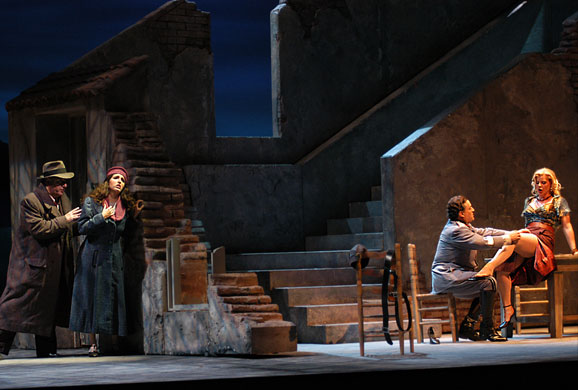
Perth, Western Australia, 12 December 2013 – Love Opera!, a new performance ensemble formed for FRINGE WORLD Festival 2014, presents The Old Maid and the Thief, the first time full length opera is programmed in the FRINGE WORLD Festival. Composed by Italian-American Gian Carlo Menotti, this quirky comedy is performed in the English language.

The Old Maid and the Thief farcically explores the secrets hidden within a small town. Miss Todd, a local busybody, and her maid Laetitia compete for the affection of a handsome wanderer, Bob. Secrets are kept and complications begin when the women learn that a criminal matching Bob’s description has just escaped from a local prison.

“Menotti’s opera is funny yet poignant, short, sung in English, and is an unusual and rarely performed opera. It’s a perfect fit for the FRINGE WORLD Festival” said soprano, Jenna Robertson. Director Kathryn Osborne said “I come from a devised theatre…

View original post 124 more words

Posted in OPera | Leave a comment

Seattle Opera Presents “Rigoletto”

Seattle Opera Presents:

Rigoletto

Giuseppe Verdi

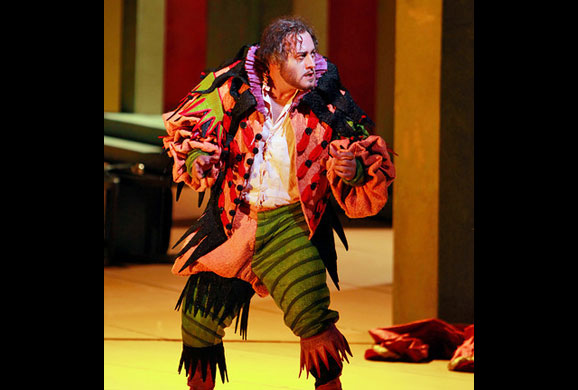
Hugely popular ever since its Venice premiere, Verdi’s tense and brutal tale of a deformed court jester caught in a web of corruption, lechery, and revenge runs the full emotional gamut in true operatic fashion. The iconic melodrama boasts an action-packed plot, memorably complex characters, and a hit parade of brilliant music.

In Italian with English subtitles | at McCaw Hall
Approximate Running Time: 3 hours, with 2 intermissions

Audio described performance for visually impaired patrons available on Sunday, January 12. Description begins 10 minutes prior to the beginning of the matinee.

Performance Dates

Sat, Jan 11, 2014 7:30 PM

Sun, Jan 12, 2014 2:00 PM

Wed, Jan 15, 2014 7:30 PM

Sat, Jan 18, 2014 7:30 PM

Wed, Jan 22, 2014 7:30 PM

Fri, Jan 24, 2014 7:30 PM

Sat, Jan 25, 2014 7:30 PM

Synopsis

Long Story Short
Playboy duke seduces and abandons pretty virgin. When her hunchbacked father, the duke’s jester, tries to be avenged, it backfires horribly.

Who’s Who?
The Duke of Mantua
is an attractive young nobleman who spends his leisure time seducing every woman he sees.
Rigoletto, the Duke’s court jester, is a nasty, miserable old hunchback.
Gilda, Rigoletto’s daughter, is innocent, virginal, and far too good for this wicked world.
Giovanna is the unreliable duenna Rigoletto has hired to keep an eye on Gilda.
Count Ceprano is one of the Duke’s courtiers. All the courtiers loathe Rigoletto, but Ceprano more so than most.
Countess Ceprano, his wife, is quite the beauty.
Count Monterone is an old nobleman whose daughter has been ruined by the Duke.
Sparafucile is a hired assassin who runs a seedy inn on the outskirts of town.
Maddalena is Sparafucile’s attractive sister. She dances in the streets in order to lure men to Sparafucile’s tavern, where he kills them and dumps their bodies in the river.

Where and When?
In Mantua, a city in northern Italy. Seattle Opera’s 2014 production is set in the 1930s.

What’s Going On?
That irrepressible bad boy, the Duke of Mantua, is at it again. He’s just had his way with the beautiful daughter of Count Monterone, and next on his list is a pretty girl he’s seen in church. But at one of his many parties, his eye is caught by the lovely Countess Ceprano, wife of another courtier. Rigoletto, the wicked jester who encourages the Duke’s licentious ways, suggests the Duke kidnap Ceprano’s lovely wife and throw the husband in prison, banish him, or behead him. Ceprano and the other courtiers vow revenge on Rigoletto, who, they learn, keeps a mistress himself: a beauty hidden away in a remote house. But Rigoletto laughs them off: as the Duke’s favorite, he is untouchable.

Into the middle of their bacchanal bursts Count Monterone, who tells the Duke he will be avenged for his daughter’s honor. When Rigoletto ridicules him, the old man curses both the Duke and his vicious jester. The Duke’s bodyguards drag Monterone off to prison while Rigoletto cringes in terror of the curse.

Rigoletto’s career (if you can call it that) is all about inciting the Duke to sleep with every woman he sees. His home life, on the other hand, is all about preventing his beloved daughter, Gilda, from sleeping with anyone. Gilda is the one ray of light in Rigoletto’s terrible life, and he keeps her a virtual prisoner in the house. She is only allowed outside to go to church, and doesn’t even know her father’s name or what he does.

Her naiveté makes her easy prey for the Duke, who comes calling one night while Rigoletto is away. Gilda recognizes the handsome young man who goes to her church; he tells her he is a poor student named Gualtier Maldé and wins a declaration of love from her lips. Later that night, she is musing over his name when the courtiers appear on the street below her balcony, wearing masks. They have come to abduct Rigoletto’s “mistress.” Rigoletto shows up, and they tell him they are planning to abduct Countess Ceprano as a surprise for the Duke. Rigoletto wants to help, so they give him a mask; but it’s really a blindfold, and Rigoletto doesn’t see that he is in fact helping them abduct his own daughter until it’s too late.

The next day, the Duke is lamenting Gilda’s sudden disappearance when his courtiers tell him, “We’ve got her downstairs.” He immediately dashes off to have his way with her. It doesn’t take Rigoletto long to figure out what is going on: but the courtiers, astonished (and pleased) to find out that she is really the jester’s daughter, gang up and prevent him from helping her. Soon enough she emerges from the Duke’s room, a virgin no longer.

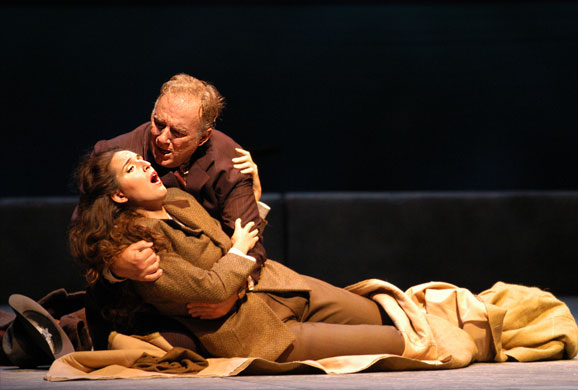
Rigoletto vows he himself will bring about Monterone’s vengeful curse on the Duke. He hires Sparafucile to kill him, and before long the Duke (this time disguised as a soldier) is wooing Sparafucile’s sister Maddalena with great success. Rigoletto takes Gilda, who still loves the Duke, to Sparafucile’s inn so she can see him seducing another woman. It breaks her heart, but still she loves him. Gilda cannot stay away, and when she figures out what Sparafucile means to do, she finds a terrible way to defy her father and rescue her beloved—and fulfills old Monterone’s curse.

Artists

Rigoletto
Marco Vratogna
Hyung Yun †*
Gilda
Nadine Sierra
Jennifer Zetlan *
Duke of Mantua
Francesco Demuro
Rolando Sanz †*
Sparafucile
Andrea Silvestrelli
Maddalena
Sarah Larsen
Count Monterone
Donovan Singletary
Conductor
Riccardo Frizza
Stage Director
Linda Brovsky
Set Designer
Robert A. Dahlstrom
Costume Designer
Marie Anne Chiment
Lighting Designer
Thomas C. Hase
Choreographer
Nicola Bowie
Sets & Costumes
Seattle Opera 

† Seattle Opera debut
* On January 12 and 24 only

Sarah Larsen is a former Seattle Opera Young Artist

photo_11 photo_05 photo_07 photo_08 photo_09 photo_10

Posted in OPera | Tagged , , , , , , , | Leave a comment

DIE FLEDERMAUS in Chicago.

The Lyric Opera of Chicago presents a comic operetta that leaves you dancing in the aisles!

DIE FLEDERMAUS

  • by Johann Strauss Jr
  • In German with projected English texts. 

    Strauss’s Die Fledermaus is a new-to-Chicago production. Production owned by San Francisco Opera Association.

  • Running time: 3h, 28m

2013: DECEMBER 10, 13, 16, 18, 21

2014: JANUARY, 10, 12, 15, 18

Waltzes galore and more…it’s the world’s favorite operetta, and it’s laughter all the way.

Two friends angle to “out-prank” each other, a wife contemplates a tenorial fling, her maid schemes to break into showbiz, and Vienna’s favorite prince encourages us all to party on!

“This production is a delightful reminder of how much pleasure can be had from Johann Strauss, Jr.’s operetta…American director E. Loren Meeker brings it to life with energy and abundant charm.” Opera News


Lyric Opera presentation of Johann Strauss, Jr.’s Die Fledermaus generously made possible by the Donna Van Eekeren Foundation and Katherine A. Abelson and Robert J. Cornell.

Starring

  • Juliane Banse

    Rosalinde

    Juliane Banse

    With her sensual, smoky high sopran, “Juliane Banse is capivating.” The New York Times

  • Bo Skovhus

    Eisenstein

    Bo Skovhus

    Superstar Bo Skovhus “makes a handsome and dashing philanderer.” Chicago Tribune

  • Daniela Fally

    Adele

    Daniela Fally 

    Daniela Fally: “Amazing top notes, laser beam accuracy, plummy tone, and oh, what trills.” Opera News

  • Adrian Eröd

    Falke

    Adrian Eröd 

    Adrian Eröd, “one of the great music theater discoveries of the last decade” (Die Presse, Vienna) will shine as the crafty Falke!

  • Michael Spyres

    Alfred

    Michael Spyres

    With his “gorgeous lyric tenor” (Opera News), Michael Spyres will be ideal as the would-be-seducer Alfred.

    Die Fledermaus - Juliane Banse Rosalinde
    Juliane Banse*
    Die Fledermaus - Bo Skovhus Eisenstein
    Bo Skovhus
    Die Fledermaus - Daniela Fally Adele
    Daniela Fally*
    Die Fledermaus - Adrian Erod Falke
    Adrian Eröd
    Die Fledermaus - Michael Spyres Alfred
    Michael Spyres*
    Die Fledermaus - Emily Fons Prince Orlofsky
    Emily Fons† †
    Die Fledermaus - Andrew Shore Frank
    Andrew Shore
    Die Fledermaus - David Cangelosi Dr. Blind
    David Cangelosi† †
    Die Fledermaus - Fred Wellisch Frosch
    Fred Wellisch
    Die Fledermaus - Julie Anne Miller Ida
    Julie Anne Miller
    Die Fledermaus - Will Liverman Ivan
    Will Liverman
    Die Fledermaus - Ward Stare Conductor
    Ward Stare


    Director
    E. Loren Meeker**


    Set Designer
    Wolfram Skalicki    


    Die Fledermaus - Thierry Bosquet Costume Designer
    Thierry Bosquet


    Die Fledermaus - Duane Schuler Lighting Designer
    Duane Schuler


    Chorus Master
    Michael Black


    Choreographer
    Daniel Pelzig


LIFE’S A BALL

High style and comedy in 3/4 time
Die Fledermaus

by Magda Krance 

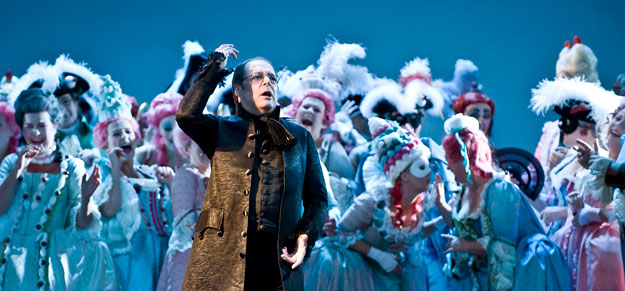
Imagine a city full of the rich young and restless. They dress extravagantly and dance madly till dawn. They prank each other and disguise themselves to relieve ennui. They’re fabulously decadent, and their bad behavior often lands them in jail.

Narcissistic millennials? Denizens of the heady Jazz Age? True enough. But back in the mid-1800s, that description fit the refined hedonism of “New Vienna” like a kid glove. The city was flush with nouveau-riche entrepreneurs and speculators spending lavishly on magnificent mansions and endless parties. Johann Strauss, Jr. (1825-99) cranked out 200+ dance tunes before he turned 30, quickly surpassing his father’s output and popularity. The rock-star composer-conductor had six orchestras playing multiple gigs nightly. As Hector Berlioz observed, “The youth of Vienna gives rein to its passion for dancing…I spent whole nights watching these incomparable waltzers whirling around in great clouds…. what an influence [Strauss] has already had on the musical taste of Europe as a whole.”

Johannes Brahms also sang Strauss’s praise: “There is a master of the orchestra, so great a master that one never fails to hear a single note of any instrument.” Even Richard Strauss (no relation) declared, “How could I have composed [the Rosenkavalier waltzes] without thinking of the laughing genius of Vienna?”

In the early 1870s J. Strauss turned to operetta; his first efforts succeeded despite weak libretti. The third, Die Fledermaus, became the dazzling charmer for the ages after it premiered in 1874 – even though the glittering world it depicts had been seriously shaken just 11 months earlier, after a ginormous stock-market crash ravaged the Austro-Hungarian economy. Strauss could’ve called it The Way We Were

But you can’t keep the ebullient Viennese down, and the “Black Friday” gloom had mostly dissipated when Strauss’s irrepressible Fledermaus first kicked up its heels.

The opening measures snap and crackle with the promise of intoxicating merriment and mischief. The overture music pops and sparkles like – what else? – champagne. Coyly feminine musical phrases alternate with manly swaggering, which signals a cascade of lively deceptions and intrigues to come. The orchestra hesitates tipsily before accelerating to a dizzying gallop.

By the time the curtain rises you’ll be under the influence, fully primed for a roaring good time. As essayist Gordon Stewart noted, “the complete distillation of gaiety and joie de vivre that the composer put into Die Fledermaus has never been The operetta has been seen four times previously at Lyric since 1982.

“We’ve chosen to present a traditional, beautiful, very entertaining and very funny production,” says general director Anthony Freud of the San Francisco Opera production (new to Chicago) directed by E. Loren Meeker (Lyric directorial debut) and designed by Wolfram Skalicki (sets), Thierry Bosquet (costumes), and Duane Schuler (lighting). Music director Sir Andrew Davis praises the “dream cast”:

Juliane Banse (Rosalinde) is “a wonderful actress with a beautiful, beautiful voice. Bo Skovhus (Eisenstein) is one of the great European artists – we had terrific fun in Die Meistersinger. I’ve heard excellent things about Daniela Fally (Adele), Michael Spyres (Alfred), and Adrian Eröd (Dr. Falke). Emily Fons (Prince Orlofsky) is exceptional at portraying adolescent males – most recently Cherubino at Santa Fe Opera. Andrew Shore (Frank) is a terrific comedian, as we recall from his Falstaff and Pooh-Bah in The Mikado.”

The Fledermaus tale twists like a bat in flight: ardent tenor Alfred serenades his former sweetheart, Rosalinde (now respectably married), to her professed horror and secret delight. Her husband, prosperous Gabriel von Eisenstein, is off to jail for a minor infraction – how convenient! His hapless lawyer, Dr. Blind, has actually caused a longer sentence.

The maid Adele wheedles for the night off, having received an invitation to Prince Orlofsky’s ball. Dr. Falke drops by to invite Eisenstein to flirt and feast at the ball, telling Rosalinde he’s escorting her husband to jail. Alfred sneaks in to continue his wooing, but is foiled when the prison warden Frank comes for Rosalinde’s husband (whom Alfred pretends to be) and hustles Alfred off to jail so he can proceed to the same ball. And – an invitation comes for The Good Wife, so off she goes as well!

Got all that? It gets worse, and thus better. Everyone (but Alfred) arrives at the prince’s party in masks, having been invited incognito by Falke. He presents the bored young host with the evening’s diversion, “The Bat’s Revenge,” hearkening back to when Eisenstein had ditched the passed-out doctor on a park bench – dressed in a bat costume and mocked by passersby. Falke introduces Eisenstein and his would-be jailer as “Marquis Renard” and “Chevalier Chagrin” (their faux-français bumbling is hilarious), Adele as the actress Olga, and Rosalinde as a Hungarian countess. Mirthful misbehavior abounds, all abetted by champagne. The action shifts to the jail in the early morning, where further amusing complications and embarrassments ensue. Ultimately, champagne takes the blame and all is forgiven in the frothy finale.

The melodies of Die Fledermaus are hummably familiar and perennially fresh, engendering affection for characters who might otherwise seem less than charming: straying spouses, a scheming maid, a revenge-driven prankster, a lousy lawyer, dissolute nobility, overserved guests. Note that the second acts of Die Fledermaus and Verdi’s La traviata depict the beau monde/demimonde revels perfectly summarized by Prince Orlofsky’s jaded motto, “Chacun à son goût!” (Everyone to his taste). As Stewart observed, “After 1850 there grew up in [Vienna] a nightlife that had not existed before…gentlemen were not accompanied by their wives, whose image of respectability excluded them from such orgies of pleasure…the only chance a respectable woman had was to attend a masked ball where one could pleasantly play with fire and a man could seek adventure. The masked ball was a symptom of the moral attitude of the time.”

A little darkness below the surface makes Die Fledermaus glitter gaily all the more. “The Bat’s Revenge” will brighten Lyric’s stage immeasurably during the long midwinter evenings of December and January.


Posted in Music, OPera | Tagged , , , , , , , | Leave a comment

The Swedish Royal Opera Presents ANDREA CHENIER

The Swedish Royal Opera Presents:

ANDREA CHENIER

Love in the shadow of the guillotine

andreachenier_fst1

The poet Chénier fighting for freedom, love and poetry. The butler Gérard becomes a revolutionary leader to avenge the oppression and injustice. Both love Madeleine a spoiled aristocrats. Her life changes when she is thrown out of the chaotic Paris and she will experience both human wretchedness that sacrifice. The revolution eats its own children and love the couple goes to the guillotine singing high C.

Umberto Giordano’s opera Andrea Chénier is a large fresco of the French Revolution, its hopes and horrors depicted in bright, vivid images with a gallery of intriguing minor characters. The 10th, 15th and 19 January sung the title role of the world-famous tenor José Cura. In other performances singing the Italian tenor Riccardo Massi, who later starred in critical and audience success Turandot.

andreachenier_fst2

Press Quotes

“Class Drama with verve” SvD

 Music Umberto Giordano

Libretto Luigi Illica

Director Dmitri Bertman

Sets Hartmut Schörghofer

Costume Corinna Crome

Lighting Hans-Åke Sjöquist

Choreography Edvald Smirnoff

The performance lasts Act I = 60 minutes / Pause 25 minutes / Act II = 60 minutes.

Total length of conceptions about 2 hours 25 minutes.

Performed in Italian with Swedish text on surtitles.

Friday, January 10 19:00

Wednesday, January 15 19:00

Sunday, January 19 15:00

Wednesday, January 22 19:00

Monday, January 27 19:00

Monday, February 3 19:00 

andreachenier_fst3

Cast

André Chénier    José Cura  Riccardo Massi

Charles Gérard   Alberto Gazale
Madeleine de Coigny  Maria Jose Siri
Bersi  Susann Végh
Countess de Coigny / Old Madelon  Marianne Eklöf
Rocher Linus Börjesson
Fleville, poet / Fouquier Tinville  Kristian Flor
Mathieu / sansculotte Johan Edholm
Abbe, poet / incroyable Magnus Kyhle
Waiter / Dumas / jailer Michael Schmidberger
Conductor Pier Giorgio Morandi

The Royal Opera Chorus
Chorus master: Folke Alin and Christina Hornell
Royal Opera Orchestra

 andreachenier_fst4
andreachenier_fst5
Posted in Music, OPera | Tagged , , , , , | Leave a comment

La Traviata in Chicago.

The Lyric Opera of Chicago presents a love story as unforgettable as Giuseppe Verdi’s sweeping and spectacular melodies:

LA TRAVIATA

In Italian with projected English texts.

DECEMBER 12, 15 & 20

Verdi’s La Traviata is a new production. Coproduction of Lyric Opera of Chicago, Houston Grand Opera, and Canadian Opera Company.

  • Running time: 2h, 58m

Profoundly moving and emotionally overwhelming—Verdi’s music says it all in this lush new production.

Violetta is the most desirable courtesan in Paris. Sought after by society’s most important men and wealthy in her own right, she is perfectly content—until she falls in love with Alfredo Germont. But when Alfredo’s father insists that she’ll ruin Alfredo’s family name, she selflessly pushes away the only man she’s ever loved. Will they ever be together again? Yes, but by then it’s much, much too late.

A new production from Arin Arbus, called “a star in the making” by The New York Times

New Lyric Opera production of Giuseppe Verdi’s La Traviata generously made possible by the Julius Frankel Foundation in honor of Nelson D. Cornelius, Stefan Edlis and Gael Neeson, Sylvia Neil and Daniel Fischel, and Helen and Sam Zell.

Starring

  • Marina Rebeka

    Violetta

    Marina Rebeka


    Making her Chicago debut, radiant Marina Rebeka boasts “gleaming tone and fearless coloratura…she is a star.” San Francisco Chronicle

  • Joseph Calleja

    Alfredo

    Joseph Calleja

    Joseph Calleja owns “the most thrilling lyric tenor sound since Pavarotti.” Associated Press

  • Quinn Kelsey

    Giorgio Germont

    Quinn Kelsey 

    Quinn Kelsey: With his dark, exciting voice, “he could be the Verdi baritone we’ve been waiting for.” Chicago Sun-Times

    <!–
    Start of DoubleClick Floodlight Tag: Please do not remove
    Activity name of this tag: Lyric Opera of Chicago – La Traviata – RMKT
    URL of the webpage where the tag is expected to be placed: http://www.lyricopera.org/traviata/
    This tag must be placed between the and tags, as close as possible to the opening tag.
    Creation Date: 10/31/2013
    –>


    • by Giuseppe Verdi
    • In Italian with projected English texts.Verdi’s La Traviata is a new production. Coproduction of Lyric Opera of Chicago, Houston Grand Opera, and Canadian Opera Company.
    • Running time: 2h, 58m

    Profoundly moving and emotionally overwhelming—Verdi’s music says it all in this lush new production.

    Violetta is the most desirable courtesan in Paris. Sought after by society’s most important men and wealthy in her own right, she is perfectly content—until she falls in love with Alfredo Germont. But when Alfredo’s father insists that she’ll ruin Alfredo’s family name, she selflessly pushes away the only man she’s ever loved. Will they ever be together again? Yes, but by then it’s much, much too late.

    A new production from Arin Arbus, called “a star in the making” by The New York Times.

    New Lyric Opera production of Giuseppe Verdi’s La Traviata generously made possible by the Julius Frankel Foundation in honor of Nelson D. Cornelius, Stefan Edlis and Gael Neeson, Sylvia Neil and Daniel Fischel, and Helen and Sam Zell.

    Starring

    • Marina Rebeka

      Violetta

      Marina Rebeka


      Making her Chicago debut, radiant Marina Rebeka boasts “gleaming tone and fearless coloratura…she is a star.” San Francisco Chronicle

    • Joseph Calleja

      Alfredo

      Joseph Calleja


      Joseph Calleja owns “the most thrilling lyric tenor sound since Pavarotti.” Associated Press

    • Quinn Kelsey

      Giorgio Germont

      Quinn Kelsey


      Quinn Kelsey: With his dark, exciting voice, “he could be the Verdi baritone we’ve been waiting for.” Chicago Sun-Times

      CAST

    La Traviata - Marina Rebeka Violetta
    Marina Rebeka*
    La Traviata - Joseph Calleja Alfredo
    Joseph Calleja
    La Traviata - Quinn Kelsey Giorgio Germont
    Quinn Kelsey† †
    La Traviata - J'nai Bridges Flora
    J’nai Bridges† 
    La Traviata - Julie Anne Miller Annina
    Julie Anne Miller† 
    La Traviata - Adam Bonanni Gastone
    Adam Bonanni† 
    La Traviata - Adam Bonanni Giuseppe
    John Irvin† 
    La Traviata - Nicholas Pallesen Baron
    Nicholas Pallesen
    La Traviata - Will Liverman Marquis
    Will Liverman† 
    La Traviata - Richard Ollarsaba Dr. Grenvil
    Richard Ollarsaba† 
    La Traviata - Anthony Clark Evans Commissioner
    Anthony Clark Evans† 
    La Traviata - Massimo Zanetti Conductor
    Massimo Zanetti
    La Traviata - Arin Arbus Director
    Arin Arbus*
      Set Designer
    Riccardo Hernandez 
      Costume Designer
    Cait O’Connor 
      Lighting Designer
    Marcus Doshi* 
      Projection Designer
    Christopher Ash* 
      Chorus Master
    Michael Black 
      Choreographer
    Austin McCormick*

    *Lyric Debut
    † current member, Ryan Opera Center
    † † alumnus/ alumna, Ryan Opera Center

    LA TRAVIATA–THE STORY OF THE OPERA

    TIME: Around 1860
    PLACE: In and near Paris

    ACT ONE
    A salon in Violetta’s home

    A party is in progress at the Paris home of a beautiful courtesan, Violetta Valéry, who only recently has revived from serious illness. Gastone de Letorières introduces her to Alfredo Germont, his friend from the country. Violetta’s current lover, Baron Douphol, is irritated with Alfredo because during Violetta’s recent illness, Alfredo came to her home each day to express his concern. Gastone encourages Alfredo to lead a drinking song (Brindisi: Libiamo ne’ lieti calici). 

    The guests move into the next room for dancing, but Violetta, feeling faint, stays behind. She is startled by the reappearance of Alfredo and gently rebuffs him when he declares his love (Duet: Un dì felice). Finally she gives him a flower, telling him to return when it has faded. Overjoyed – since this means he will see her the next day – he leaves, followed moments later by the other guests, who affectionately bid their hostess goodnight.

    Violetta wonders if Alfredo offers the true love she thought would never be hers (Aria: Ah! fors’è lui). She laughs off the idea, declaring that her life will remain a whirl of pleasure (Cabaletta: Sempre libera).

    Intermission

    ACT TWO
    Scene 1. A country house

    Five months later Alfredo is blissfully happy living with Violetta in the country, far from Paris society (Aria: De’ miei bollenti spiriti). When Alfredo learns from the maid, Annina, that Violetta has been selling her possessions to pay their expenses, he rushes off to Paris to raise the necessary funds (Cabaletta: O mio rimorso). Violetta is perplexed by Alfredo’s sudden departure. She receives an invitation to a party to be given by her friend, Flora Bervoix, that evening in Paris and quickly dismisses it.

    A visitor arrives: Alfredo’s father, who is outraged by his son’s liaison with Violetta. She responds that she is a lady and will not be insulted in her own house. Germont insists that Violetta give up Alfredo for the sake of his family: Alfredo has a sister whose chances for a prosperous marriage would be doomed by Alfredo’s relationship with Violetta. Having assumed that Violetta is after his son’s money, he is surprised to see that she loves Alfredo unselfishly. She is eventually convinced by Germont’s appeal and agrees to leave Alfredo (Duet: Dite alla giovine), knowing that it will hasten her death. Germont urges her to live and attempts to console her with the thought that heaven will reward her sacrifice. He embraces her and leaves. Violetta decides to go to Flora’s party that night and writes a farewell note to Alfredo. When he returns, she begs him simply to love her as much as she loves him and then runs from the room.

    The confused Alfredo is surprised when a messenger delivers the farewell note from Violetta. He reads only a few lines before despair overwhelms him, but his father appears and offers comfort. He begs his son to return to the family in Provence (Aria: Di Provenza il mar), and urges Alfredo to seek solace in their embrace (Cabaletta: No, non udrai rimproveri). Noticing Flora’s invitation, Alfredo assumes that Violetta has returned to her old life – and to her old lover. He resolves to seek revenge at the party.

    Scene 2. Flora’s mansion

    At Flora’s home, everyone enjoys vigorous Spanish entertainment (Chorus: Noi siamo zingarelle). Alfredo startles the guests by arriving without Violetta. She soon arrives, escorted by Baron Douphol, who battles Alfredo at the gaming table. Alfredo wins every game and large sums of money. When supper is announced, all adjourn to the dining room, but the distraught Violetta soon reappears, having asked to see Alfredo privately. Fearing Douphol’s jealousy, she begs Alfredo to leave immediately. He refuses, finally drawing from her a false confession that she loves Douphol. Summoning the guests, Alfredo humiliates and denounces Violetta and throws his winnings at her feet as payment for her services. She faints, to the horror of all present, who castigate Alfredo for his behavior. Germont, who has followed his son to the party, reproaches him for insulting a woman, even in anger. Now revived, Violetta laments that Alfredo will never understand the sacrifice she made for love (Ensemble: Alfredo, Alfredo).

    Intermission

    ACT THREE

    Violetta’s bedroom

    One month later, Violetta lies dying in her Paris home. Dr. Grenvil encourages her, but admits to Annina that Violetta has only a few hours to live. Violetta asks Annina to distribute her remaining money to the poor. Left alone, she rereads a letter from Germont: Alfredo, having wounded the baron in a duel, is traveling abroad. Germont has written him of Violetta’s sacrifice, and Alfredo – accompanied by his father – will soon return to ask her forgiveness. Violetta knows that it is too late (Aria: Addio del passato).

    Annina reappears, asking her mistress if she feels well enough to hear some unexpected, joyous news. Within seconds Violetta is in Alfredo’s arms. He convinces her that she will regain her health once they start life together again, far from Paris (Duet: Parigi, o cara). Violetta wishes to go to church to offer a prayer of thanksgiving. She attempts to dress, but her energy is gone. In anger and despair, she asks how God can let her die so young.

    When Germont arrives, he is horrified to see Violetta in such terrible condition. She gives Alfredo a miniature of herself in happier days, and asks that he give it to the woman he will one day marry (Finale: Prendi, quest’è l’immagine). Violetta suddenly declares that she has found new strength, but then falls lifeless.


    A Conversation with the Director

    Arin Arbus, who debuts at Lyric Opera with La traviata, spoke during spring 2013 with the company’s manager of media relations, Magda Krance. (Edited by Lyric dramaturg Roger Pines)

    How have you immersed yourself in the story, the music, and the backstory of La traviata?

    I started working on it about a year ago. It was fascinating to read both the Dumas fils novel and his play, to see what Verdi and his librettist, Francesco Maria Piave, were working from and to make note of the things they changed. I also read about Marie Duplessis, the courtesan Dumas fils fell in love with, who was the inspiration for his novel.

    Because the opera rests so deeply upon 19th-century bourgeois concepts of morality, it has been important for me to gain an understanding of the values of the world that Verdi is depicting, and to understand the life and trade of a Parisian courtesan of the time. There really isn’t an equivalent in our world – certainly it’s very different from our contemporary understanding of prostitution. I actually think that’s one of the aspects of the opera that is most challenging to convey to contemporary audiences. But it’s crucial – Violetta’s shame and her precarious financial situation are at the crux of the dramaturgy. 

    All the history and backstory goes into the stew of my imagination, but ultimately one has to simply focus on the opera itself. The music reveals the story in an incredibly specific way, and that is of the greatest interest.

    What draws you to this opera? 

    The music. The story, which depicts a beautiful love destroyed by a petty and cruel world. I love the intimacy and the intensity of the piece, the tragedy of it, the poetry within the music, the ways the melodies are woven through, the passion expressed by the characters. And I love Violetta’s fierce thirst for life in the face of death, her self-loathing, her loneliness, the wild parties.

    How do you keep the opera’s timeliness/timelessness without transposing it into a current setting? 

    For me, it’s not the setting that makes something relevant to an audience. I have seen many plays, operas, and films that were set in our contemporary world that had little relevance or power, just as I have seen many period pieces that speak to me directly and feel of the moment – and vice versa. The setting is not the determinant, it’s just the surface. It’s the immediacy and truth of the characters, their situations, the imagery, language, music, ideas, themes, and passions that make a piece timely and profound.

    In this case, we’re setting La traviata around the time that Verdi wrote the opera, as it was originally conceived, because the circumstances surrounding Violetta are incredibly specific. To move it out of that time, I feel, would change or lower the stakes.

    What intrigues, moves, and/or frustrates you about the three central characters?

    Violetta is a successful courtesan, a girl who is dying. She is lonely, sad, theatrical, practical, passionate, so filled with longing. She knows how to throw a great party.

    One of the big questions is: why does Violetta agree to break it off with Alfredo? Why does Germont get to her? It’s one of the mysteries of the piece. I think she believes that a courtesan, a fallen woman, doesn’t get to fall in love. She cannot escape her past. She knows better than to fall in love, but does it anyway. She sacrifices her one shot at love and happiness because she believes she doesn’t deserve it. She has digested the values of her world and has come to believe that they are correct. That’s what destroys her.

    Alfredo comes from a sheltered, conventional, bourgeois world. He is adventurous. He comes to Paris and is knocked out by this remarkable woman – he’s never met anyone like her. He loves, despite the expectations of his family and the world. How brave! He is naïve, impulsive, inexperienced, has a temper, is a rebel. The thing that frustrates me about him is his foolishness when it comes to money. I don’t understand why it doesn’t occur to him that Violetta is paying their way in the country.

    Germont is a sinister figure in the opera, but he’s actually a very ordinary, familiar, bourgeois family man. That’s what makes him so dangerous – he thinks he knows what’s best. He represents the moral conventions of 19th-century Paris and probably 19th-century Italy. Surprisingly, he comes to love Violetta.

    How do you envision the chorus’s role?

    In a certain sense La traviata is a story about profane love – a love that is a kind of rebellion against the world. Germont reveals the values of the world Alfredo rebels against, while the chorus reveals the world from which Violetta tries to escape. Her life as a courtesan is one of excess, debauchery, empty pleasure, superficiality, and disease. The chorus must convey this.

    What are the inspirations for the visual world you’re creating with your collaborators?

    Here are some images that come to mind: a frail girl putting on a big dress, brightly colored damask wallpaper, a man in a woman’s wig, bull heads, skeletons, Spanish lace, iridescent bird wings, colored paper lanterns, dancing shadows, Ingmar Bergman’s figures on the horizon from The Seventh Seal, sunlight breaking through the trees, pastel colored cakes, carnival parades, 19th-century Parisian interiors, daguerreotypes, white plaster walls, confetti….


Posted in Music, OPera | Tagged , , , , , , , | Leave a comment

MUSIC MANUSCRIPTS ONLINE

Beethoven and magnifying glass image
The Morgan Library & Museum

presents:

Music Manuscripts Online

Beethoven’s manuscript for his Violin and Piano Sonata, op. 96 in G major, purchased by Pierpont Morgan in 1907
The goal of the Music Manuscripts Online project has been to create and to provide online access to high-quality images and descriptions of music manuscripts owned by The Morgan Library & Museum.

Since the project began in 2007, more than 900 manuscripts containing approximately 42,000 pages have been digitized and described. These include works by J. S. Bach, Beethoven, Brahms, Chopin, Debussy, Fauré, Haydn, Liszt, Mahler, Massenet, Mendelssohn, Mozart, Puccini, Schubert, and Schumann, among many others.

Images and descriptions of these manuscripts will be available on the Morgan’s Web site for study by scholars, musicians, and the general public. Over time, enhancements will be added, such as images of watermarks (see, for example, Mozart’s autograph manuscript of Der Schauspieldirektor, Cary 331) and essays about the manuscripts by leading scholars.

The initial release of the Music Manuscripts Online Web pages provides access to digitized versions of more than forty music manuscripts, selected as a representative sample of the Morgan’s holdings. Additional images and descriptions will be added as the reviewing process continues. Please note that images of works still under copyright will be accessible only on-site until copyright restrictions on these works expire.

Below two of the precious manuscripts.

Act I; [No. 2.] Ballata: “Questa o quella”, p. 46 (52 of 950)
Verdi, Giuseppe, 1813-1901. Rigoletto . Rigoletto : copyist’s manuscript, 1857?
Accession Number: Cary 609 (Record ID: 115855)


Album leaf, recto (1 of 2)
Verdi, Giuseppe, 1813-1901. Traviata. Atto 1o (Album leaf) . La traviata, act 1 (album leaf) : manuscript in the hand of Désirée Artôt , 1861 Dec.
Accession Number: Cary 84 (Record ID: 114159)
Posted in Books, Exhibits | Tagged , , , , , , , | Leave a comment

“Treasures from the Vault” at the Morgan Library & Museum: Beethoven Ninth’s original scores.

Treasures from the Vault

October 8, 2013 through February 9, 2014

Domenico Scarlatti (1685–1757)

Fuga K. 30, 1756 (?)
The Morgan Library & Museum; Mary Flagler Cary Music Collection, 2011


The Morgan Library & Museum is home to some of the world’s greatest collections of medieval manuscripts, printed books and bindings, literary manuscripts, private letters and correspondence, and original music. Treasures from the Vault, an ongoing exhibition series, features works drawn from these diverse collections in the sumptuous setting of Pierpont Morgan’s 1906 Library. Highlights from this season’s selection include a newly identified copyist manuscript for the music of Domenico Scarlatti and Antonio Soler, both of whom were in service to the Spanish court of Maria Bárbara; two volumes from the first edition of Laurence Sterne’s The Life and Opinions of Tristram Shandy, Gentleman; Thomas Cromwell’s letter encouraging what would become King Henry VIII’s disastrous marriage to Anne of Cleves; two sixteenth-century maps, published three years after Hernán Cortés’s conquest of the Valley of Mexico; and an early draft of the scene between Cassio and Iago from Verdi’s Otello.115854v_0001

Verdi, Giuseppe, 1813-1901. Otello. Atto 3o, Scena 5a (Sketches) . Otello, Act 3, Scene 5 (draft) : autograph manuscript, 1887?
Accession Number: Cary 208 (Record ID: 115854)


20131108_194513The exhibits also displays two original scores of Beethoven’s Ninth Symphony, which had not been together since 1824.


Posted in Exhibits | Tagged , , , , , , , | Leave a comment

“ALCINA” at l’Opera National de Paris

Logo_OnPL’Opera National de Paris Presents:

ALCINA

OPERA SERIA IN THREE ACTS (1735)

MUSIC BY GEORGE FRIDERIC HANDEL (1685-1759)

ANONYMOUS LIBRETTO ADAPTED FROM RICCARDO BROSCHI’S OPERA “L’ISOLA DI ALCINA” BASED ON ARIOSTO’S “ORLANDO FURIOSO”

Performed in ItalianAlcina_visuelFrance2

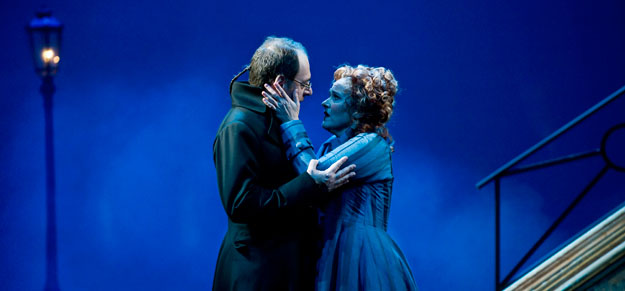
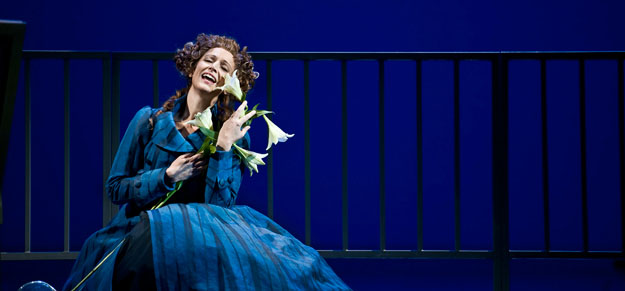
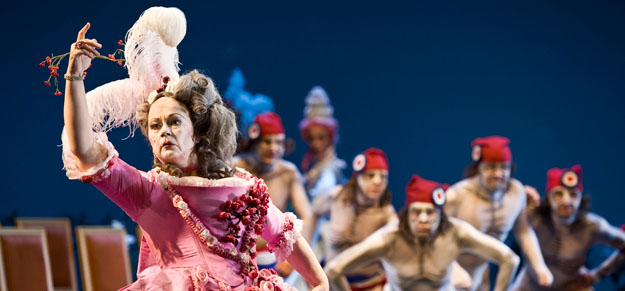
Handel’s treatment of the sorceress who transforms men into beast, rock or tree, is a humane and moving portrait of suffering womanhood. Robert Carsen’s production finely exploits this web of hidden desires.

Christophe Rousset Conductor
Robert Carsen Stage director
Tobias Hoheisel Sets and costumes
Jean Kalman Lighting
Philippe Giraudeau Choreographic movements
Ian Burton Dramaturge
Alessandro Di Stefano Chorus master

Myrto Papatanasiu Alcina
Anna Goryachova Ruggiero
Sandrine Piau Morgana
Patricia Bardon Bradamante
Cyrille Dubois Oronte
Michał Partyka Melisso

Paris Opera Chorus
Les Talens Lyriques 

ANNENBERG FOUNDATION/GRoW
WITH THE EXCEPTIONAL SUPPORT OF THE ANNENBERG FOUNDATION⁄ GRoW 

“From Alcina you will receive the sceptre and the power and you will be the happiest of mortals. But you will soon become no more than beast, tree or rock.”  These words are taken from Handel’s third opera,  inspired by the poem Orlando Furioso and first performed in London in 1735. From Medea to Carmen, the operatic stage has been unceasingly haunted by bewitching temptresses and their spellbound victims. Alcina is no exception: she seduces her victims to the point where they forget their homeland and can no longer distinguish between the delights of headlong passion and the dangers of perverted love. It will take all the tenacity of a Bradamante disguised as a warrior to deliver her fiancé Ruggiero from the clutches of the sorceress. Handel’s stroke of genius was to look beyond the supernatural and depict Alcina as a woman who suffers. The voice of the vanquished enchantress is profoundly human and touching, inspiring in the listener a strange compassion. Robert Carsen, whose production brought Alcina into the Paris Opera repertoire, manipulates this ambiguity, a chiaroscuro of emotions and hidden desire, with consummate finesse.

The composer

George Frideric Handel was born on 23 February 1685 at Halle and died on 14 April 1759 in London. After studying at the University of Halle and travelling to Italy, where, under the influence of well-known composers such as Corelli and Scarlatti, he composed several lyric works (Rodrigo, Agrippina, Aci, Galatea e Polifemo), Handel settled in London in 1710. The first of his operas to be performed at the Queen’s Theatre, Haymarket, Rinaldo, also the first Italian opera to have been written for a London theatre, was a triumph. There followed a considerable number of works composed for the Haymarket Theatre (Teseo, Amadigi, etc.) and for the Royal Academy of Music (Radamisto, Giulio Cesare, Tamerlano, Rodelinda, etc.) Because of political intrigues and disagreements between the singers, the Royal Academy of Music was soon to be closed down and replaced a year later by another institution of the same name whose fate was no better. It finished ruined, for the competition it faced from a rival company made famous by the famous castrato Farinelli was too much for it to stand. Handel began to have less success with his operas and turned his genius to the oratorio (he had already composed Saul and Israel in Egypt). Between 1741 and the end of his life he was to compose some of his greatest works : Messiah, Semele, Hercules, Susanna, Solomon, Jephta, Judas Maccabaeus. Handel remained in England and took English citizenship. He died in London at the age of 74 and was buried in Westminster Abbey.

Alcina_visuelFrance

The work

Along with Orlando and Ariodante, Alcina is the third of Handel’s operas to draw its inspiration from Ariosto’s Orlando Furioso. The libretto, which is a sort of variant on the myth of Circe, is based on that of L’Isola di Alcina, a work which Riccardo Broschi (the brother of Farinelli) first had performed in Rome in 1728 and which Handel had most probably discovered on a trip to Italy the following year. Unlike Ariodante, a much more human drama, Alcina is a “magical” opera abounding in the supernatural effects and magical transformations so beloved of the Baroque opera public. The choice of a work rich in effects of this sort is also a reflection of this particular period of Handel’s life. After the seasons at the Haymarket and the two Royal Academies of Music, Handel had moved to the Theatre Royal at Covent Garden directed by John Rich, who was particularly attentive to the quality of staging of his productions. Moreover, the theatre was equipped with special stage machinery for creating illusions designed to focus the audience’s attention on the action on stage. All the ingredients for a grand spectacle were thus present and indeed the work received a triumphal welcome.
From a musical point of view, Alcina is an opera seria, that is to say a work composed of arias linked by recitative. Handel wrote brilliant airs for each character designed to show off the vocal virtuosity of the singers and the different aspects of their talent. The role of Ruggiero, initially written for a castrato, is today interpreted by a mezzo-soprano. It was for this role that the composer wrote the famous air “Verdi prati” that Giovanni Carestini, the alto castrato who created the role, at first refused because he considered it unworthy of his talent. The title role, particularly rich and moving, depicts a woman in all the splendour of her seduction yet also in the depths of amorous despair and solitude.

The first performance

Alcina was first performed on 16 April 1735 at Covent Garden, London.

The work at the Paris Opera

Alcina was presented at the Palais Garnier for the first time in 1999, in a production by Robert Carsen, sets and costumes by Tobias Hoheisel, with Renée Fleming (Alcina), Susan Graham (Ruggiero), Natalie Dessay (Morgana), Kathleen Kuhlmann (Bradamante) under the direction of William Christie (Orchestre et Chœurs des Arts Florissants). It is this production that is revived today.

PERFORMANCE DATES:

January 2014
Mon Tue Wed Thu Fri Sat Sun
    1 2 3 4 5
6 7 8 9 10 11 12
13 14 15 16 17 18 19
20 21 22 23 24 25 26
27 28 29 30 31    
 
 
February 2014
Mon Tue Wed Thu Fri Sat Sun
          1 2*
3 4 5 6 7 8 9
10 11 12 13 14 15 16
17 18 19 20 21 22 23
24 25 26 27 28    
Posted in Music, OPera | Tagged , , , , | Leave a comment

Carmen in Belgrade

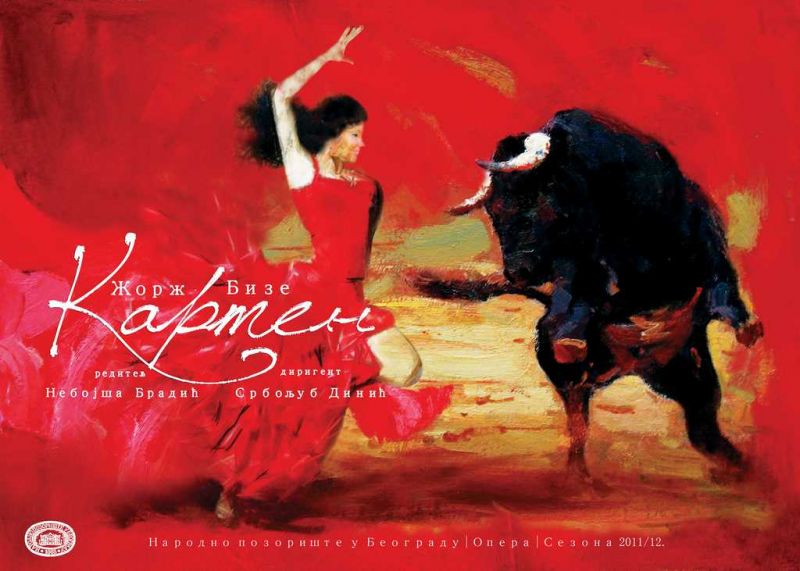
carmenBelgradePoster

logo_engbelgrade

The National Theatre of Belgrade presents:

CARMEN

Georges Bizet

on December 11, 2013

CARMEN – MERIMEE’S, BIZET’S AND OURS
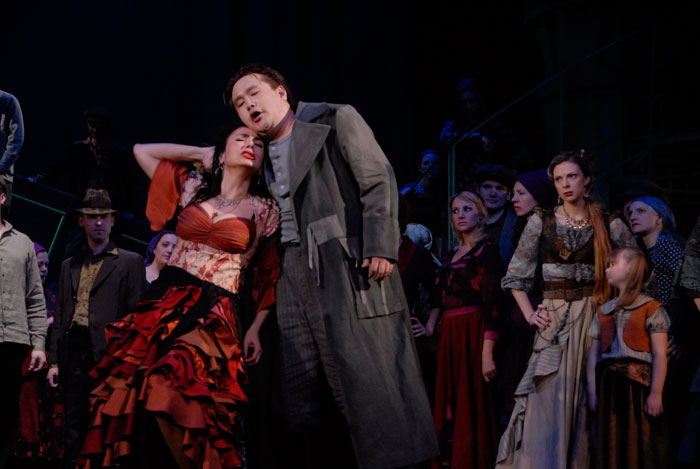
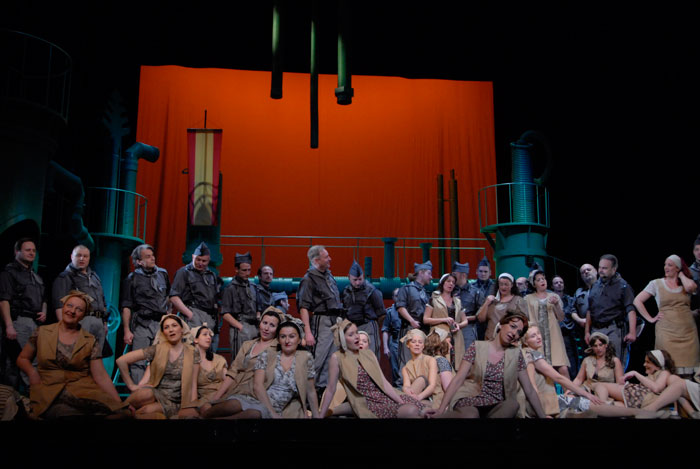
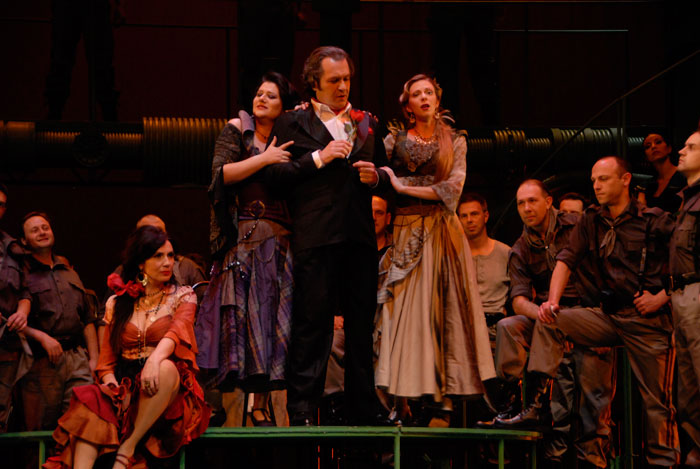
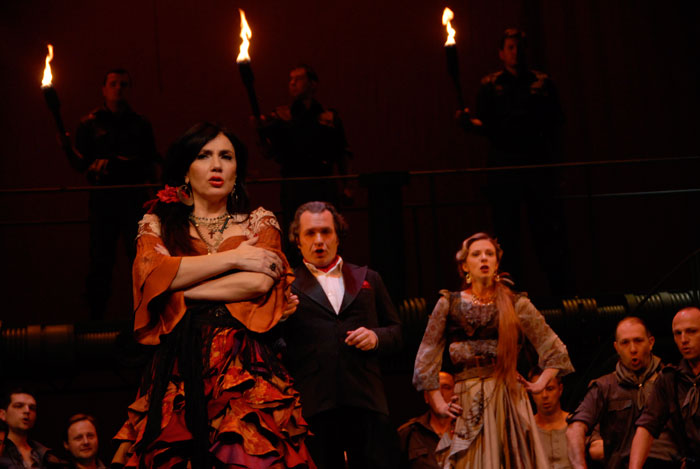
Georges Bizet’s opera Carmen is one of the most powerful artistic triumphs of passion over sentimental love. With regards to Merimee’s novella, the opera represents a grand poetic expansion as a result of thoughtful structural changes.
Don Jose’s destiny is to get outside of dreariness and pale emotional duties of everyday life and to become a part of a deep new world – the world of passion outside the law. On stage, he has been often perceived as a bad soldier who neglects his duties in order to follow the dangerous seductress. However, Don Jose’s life starts only when he meets Carmen, love resembles the second birth, transforming him into a full blooded man. Comments which say that he shows weakness by abandoning Carmen cannot be accepted, because he does so, only not in a straight line and faithfully until the end. He goes back to his dying mother, instead of responding to the challenge Carmen gives him: he is not a free man and this is why he eventually loses her.
Introduction of Micaela’s character into the opera was necessary. She represents Christianity, family bonds, legitimacy and sentimental love. The passion has ruined all these. Micaela and Don Jose share a musical vocabulary of gentle and intensive emotions; these are directly opposed to Carmen’s songs and dances. Bizet masterly uses this contrast throughout the opera. In Don Jose – Micaela duet in the first act, they easily find common musical expressions to evoke memories of his loving mother. Don Jose’s duet with Carmen stands in contrast to the duet with Micaela. Duet with Carmen has been set in a completely different way. Dramatic contrast of Don Jose’s lyric voice in aria La fle¬ur que tu m’ava¬is je¬tee and tarantella rhythm in Carmen’s La bas dans la mon¬tag¬ne do not come together as a balanced duet. It has obviously been done intentionally, with simple music means which indicate that the characters do not share the same words or the same values.
Escamillo is the next significant operatic “addition” to Prosper Merimee’s story. Escamillo is an embodiment of manliness; Bizet achieves this in confrontation duet in III act. Don Jose wishes to confirm his passion and skill by confronting the famous toreador. Although Carmen leaves Don Jose for Escamillo, this doesn’t mean that one should compare the two loves. Escamillo is ready, without too much impatience, to wait for his turn amongst the ones Carmen chooses. When Escamillo, facing danger of death in the arena, addresses Carmen in a short duet in IV act, it is only to promise that he will say her name the next time he kills a bull. Escamillo forcefully defies destiny by risking his life in every encounter with a bull, and these tests are his greatest passion.
Everlasting fascination with Carmen, and the mystery of her, lay in the fact that there is neither a psychological definition for deep motives of her actions, nor the hierarchy of her motives. Carmen never explains herself; she only stresses her necessity to remain free. Does she love Don Jose? Carmen never says that. Nevertheless, she chooses him by giving him a flower in the first act. Why? Probably because he is different from other men: he pays no attention to her. Destiny has touched them, suddenly and strangely. Carmen has been disappointed with Don Jose’s hesitation and she provokes him for it. However, she is deeply interested in a man who thinks love is not a game and who becomes fatally attached to her. In the end, Carmen provokes death, despite all warnings that she will encounter Don Jose. The fact that she decides not to attend the event, where she would triumph, in order to see Don Jose, speaks a lot about Carmen.
Such provocative behaviour is not a masked suicide, nor an idealist’s attempt to sublime her love; it is something absurd in its rationality, something that Carmen simply must do to remain herself. Carmen’s death is radically opposite to Isolde’s death, whose blissful joy in death comes from her mystic belief into transcendent and eternal love. Tristan and Isolde are passive victims of Eros, while Carmen and Don Jose are active in both love and death. After killing Carmen, not Escamillo – which would seem more rational – Don Jose fulfils his need to possess her. Carmen expresses her will and firmly confirms the autonomy of her personality with bold confrontations with Don Jose. She bravely chooses her destiny. Nietzsche considered this the essentially tragic thing: meeting the death – with a goal to accept, not to deny it.
Nebojša Bradić

CARMEN

Georges Bizet

Premieres March 24, 25, April 7 2012. / Main stage

Opera in four acts
Libretto, by Meilhac and Halevy based on P. Merimee’s novella
Interval takes place after the second act

Director Nebojša Bradić, guest artist
Conductors Srboljub Dinić, guest artist, Zorica Mitev Vojnović, Ana Zorana Brajović
Set Designer Geroslav Zarić
Costume Designer Katarina Grčić Nikolić
Choreographer Emilia Jovanović
Chorus Master Đorđe Stanković
French Language Instructor Gorjana Ilić
Assistant Director Aleksandar Nikolić
Assistant Set Designer Vladislava Kanington
Assistant Choreographer Tina Leposavić

Premiere cast:

Carmen Dragana Del Monako / Aleksandra Angelov / Jadranka Jovanović
Don Jozé, Corporal Hon Li / Janko Sinadinović
Escamillo, Toreador Miodrag D. Jovanović / Nebojša Babić / Aleksandar Stamatović
Zuniga, Lieutenant Dragoljub Bajić / Vuk Matić / Mihailo Šljivić
Moralès, Corporal Vuk Zekić / Vladimir Andrić
Micaëla, a Village Maiden Suzana Šuvaković Savić / Sofija Pižurica / Ivana Petrović, guest artist
Frasquita, a Gipsy Ivanka Raković Krstonošić / Biljana Soldo / Svetlana Bojčević Cicović / Marija Mitić
Mercédès, a Gipsy Iva Profaca / Ljubica Vraneš / Željka Zdjelar
Le Dancaïre, Smuggler Pavle Žarkov / Ljubodrag Begović
Le Remendado, Smuggler Darko Đorđević / Danilo Stošić
A Gipsy Girl Nina Rakić
Manuelita, a Maiden Mirela Čubra
Lillas Pastia, an Innkeeper  Dejan Vasiljević
Flower Girl Neda Božić Pivarski
Ballet Soloists Olga Olćan / Sanja Ninković, Igor Pastor / Balit Raušer
Soldiers, children, cigarette factory workers, Gipsies, smugglers, people

In Seville and its surroundings  
ORCHESTRA, CHORUS AND BALLET ENSEMBLE OF THE NATIONAL THEATRE
Concertmistresses Edit Makedonska / Vesna Jansens
Children’s Choir “Horislavci“, led by Draško Janković and Aleksandra Stanković
Stage music led by Đorđe Stanković
Music Associates: Srđan Jaraković, Nevena Živković, Nada Matijević, Ivan Jovanović, Tatjana Ščerbak Pređa
Stage Managers:  Branislava Pljaskić, Ana Milićević, Mirjana Goločevac
Prompters: Silvija Pec, Biljana Manojlović
Producers: Maša Milanović Minić, Snježana Vujasinović Đorđević, Ivana Čavlina*, Filip Dukanić*
* Students of the Academy of Arts in Belgrade in training
Light operator Miodrag Milivojević
Make-up Dragoljub Jeremić
Set crew Chief Nevenko Radanović
Sound Operator Perica Ćurković

Sets and costumes were manufactured in the workshops of the Nathional theatre in Belgrade. 


     NEBOJŠA BRADIĆ
Bradić was born on 3rd August 1956 in Trstenik. He graduated from the Theatre and Radio Directing Department at the Faculty of Dramatic Arts in Belgrade. From 1981 to 1996 he was engaged as a director, artistic manager and general manager at the Theatre of Kruševac. During season 1996-97, he was a general manager of “Atelje 212” Theatre. In period 1997–1999, he was a general manager of the National Theatre in Belgrade. In period 2000–2008, he was a manager and artistic director of the Belgrade Drama Theatre. Starting from 7 July 2008 until 14 March 2011, he was the Minister of Culture and Information with the Government of the Republic of Serbia.
He directed more than 80 theatre productions in Serbia, Croatia, Bosnia and Greece. Bradić focused mainly on contemporary national literature and dramatisations (The Damned Yard, The Dervish and Death, The Golden Fleece, Roots, The Fortress). He directed a number of operas and musicals as well. He is one of the founders of the Belgrade Dance Festival and Dunavfest.
Bradić authored My Brother (in National Theatre of Republika Srpska, 2010) and The Night in the Titanic Inn (Knjaževski-Serbian Theatre, 2011) dramas, as well as a number of essays on theatre and literature. He is a professor of acting at the Academy of Fine Arts in Belgrade. Productions directed by Nebojša Bradić were performed in theatres in former Yugoslav republics, Italy, Austria, Hungary, England, USA, Czech Republic, Switzerland, Ukraine, Russia, Greece, Albania, Turkey, etc.
Bradić has won a number of prestigious national and international theatre awards. Namely, he is the first recipient of “Nikola Peca Petrović“ Award for the Best Yugoslav Theatre Manager; nine awards for best direction at the “Joakim Vujić” Theatre Festival; Sterija Awards for best contemporary stage adaptation, dramatisation and direction; awards for directing and dramatisations at theatre festivals in Bosnia and Herzegovina (Brčko, Zenica, Doboj), as well as awards for best direction at JoakimInterFest and the International Festival of Classical Arts in Vršac and the “Joakim Vujić Ring“ Award. Bradić also received the “Golden Knight” Award for direction at the Moscow Festival for his production of The Golden Fleece by Borislav Pekić and he received the Award for Best Dramatization for Dervish and Death by Meša Selimović at the Istanbul Festival.


     SRBOLJUB DINIĆ
Dinić was born in 1969 in Niš. He attended the Belgrade Music Academy, where he studied piano and chamber music. He studied conducting with Wolfgang Ott in Germany. In 2001, he was engaged as a Principal Conductor at the Opera Berne by Maestro Miguel Gomez-Martinez. In 2004, he became Chief Conductor and since 2007 he has been the Musical Director of Opera Berne.
Dinić has conducted a great variety of operas including Manon, Don Giovanni, The Magic Flute, Die Entführung Aus Dem Serail, Idomeneo, I Puritani, Andrea Chenier, Carmen, La Wally, Cavalleria Rusticana, Mazeppa, La Forza del Destino, La Traviata, Macbeth, Nabucco, Aida, Falstaff, Rigoletto, Il Barbiere di Siviglia, Medea (Cherubini), Un Ballo In Maschera, Les Contes D’hoffmann, Die Fledermaus, Der Rosenkavalier, Der Fliegende Hollander, Trois Oranges, Rake’s Progress etc.
He collaborated with: The Bern Symphony Orchestra, The Basel Symphony Orchestra (Switzerland); Staatsorchester Stuttgart, Würtemberg Philharmonic Orchestra, München Symphonicker, Essener Philharmoniker (Germany); Orquestra di Valencia (Spain); Theatro Massimo Orchestra, Verona Symphony Orchestra (Italy); Belgrade Symphony Orchestra, Belgrade Philharmonic Orchestra, Niš Symphony Orchestra (Serbia); Taipei Symphony Orchestra, Shanghai Symphony Orchestra…
Recent activities:
2006 –  Festival of Avanches, Switzerland (Il Trovatore); Tosca, Madama Butterfly and Norma at the Staatstheater Stuttgart (also in 2007 and 2008)
2007 – Verdi’s Requiem, Niš; a series of gala concerts in Switzerland and Italy, with Agnes Baltsa and Würtemberg Philharmonic Orchestra and Münchner Symphonikern
2008 – a series of gala concerts (Asia Tour), with Salvatore Licitra
2009 – Bellini’s I Puritani in Savonlinna Festival (Finland); La Boheme (September 29 a live performance on SF1) and Eugene Onegin and Dialoges des Carmelites at the Opera Berne; a series of gala concerts with Ramon Vargas in Switzerland and Germany with Würtemberg Philharmonic Orchestr; a benefit concert in Bern, with Noemi Nadelman and The Bern Symphony Orchestra
2010 – “open air” Aida; Carmina Burana in Teatro Massimo, Palermo
2011 – Tosca at Savonlinna Festival (Finland) – Finale from Savonlinna Opera Festival’s International Opera Singing Competition; La Gioconda in Palermo with Teatro Massimo; Der Fliegende Hollander and Rake’s Progress at the Opera Berne
2012 – Eugen Onegin in Aalto-Musiktheater Essen; Lucia di Lammermoor at the Opera Berne; now preparing the Premiere Carmen in National Theater Belgrade (March) and Jenufa in National Theater Zagreb (April).

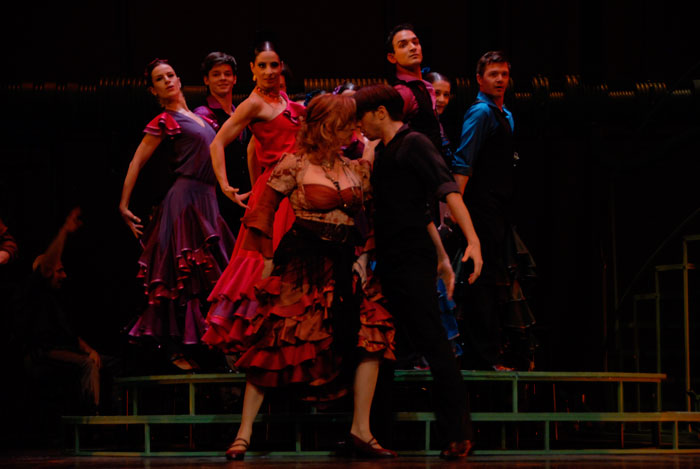
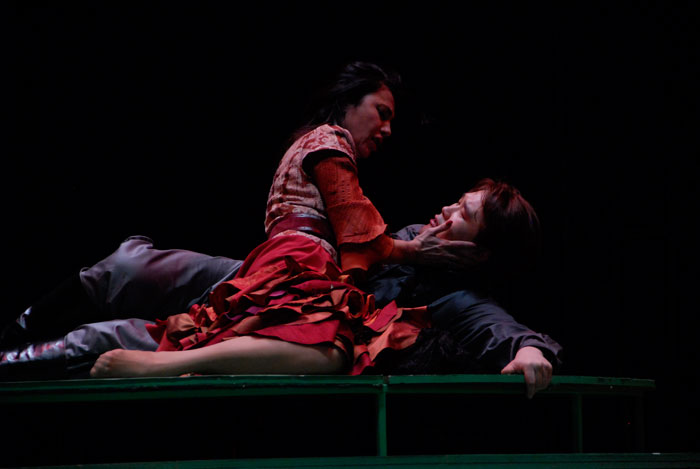
karmen2 1karmen7 1karmen8 1karmen9 1karmen10 1karmen11 2karmen1 2karmen2 2karmen4 2karmen5 2karmen7 2karmen8 karmen1

Posted in OPera | Tagged , , , , , , , , , | 1 Comment

Vancouver Opera Presents “ALBERT HERRING”


Presents: 

BENJAMIN BRITTEN

A charming comic depiction of English village life
In English with SURTITLES™
COMPANY PREMIERE
Co-produced with Pacific Opera Victoria

November 30, December 5, 7, 8 (matinée), 2013
Evening performances 7:30pm.
Matinée performances 2:00pm.

“Thoroughly engaging … an excellent entry point for opera newcomers … rich with charm to satisfy longtime fans.” – The Georgia Straight
Read the full review

“…genuine charm…attractive staging and fine singing” – The Vancouver Sun
Read the full review

►The busybodies of the Loxford May Day committee cannot find a virtuous female to be May Queen, so they name as May King the over-protected grocer’s son, Albert Herring. Following an extravagant crowning ceremony, at which Albert gets tipsy on rum-spiked lemonade, he decides to cut his mother’s apron strings and venture into the sensual world he sees others enjoying. After a frantic search by the entire town, Albert reappears, having enjoyed a night of debauchery. Depending on your point of view, he has been either ruined or saved.

This brilliant comedy by England’s greatest opera composer is a fast-paced, witty, and devastatingly satirical portrayal of the quaint characters of a closed-in (and now vanished) community. Employing a cleverly constituted chamber orchestra, Britten uses his prodigious powers of melodic invention and parody to explore society’s attitudes toward an odd but innocent individual. VO’s new co-production is set in East Suffolk at the time of the opera’s 1947 premiere.

► All performances are at the Queen Elizabeth Theatre
► Approximate running time: 2 hours 43 minutes (including one intermission)


CAST & CREATIVE TEAM

Conductor LESLIE DALA

LESLIE DALA
Conductor
Toronto, ON

Last VO Appearance:
Conductor, The Magic Flute, 2013
Recent Appearances:
The Tales of Hoffman and Carmen with UBC Opera
Music for China, presented by Soundstreams Canada, with performances in Toronto, Shanghai and Beijing
Albert Herring with Pacific Opera Victoria
Upcoming Engagements:
Messiah with the Vancouver Bach Choir and the Vancouver Symphony Orchestra
Albert Herring with the University of Toronto Opera Division
Mr. Dala is the Music Director of the Vancouver Bach Choir and the Music Director of the Vancouver Academy of Music Symphony.


More about Leslie Dala

Mr. Dala’s appearance is supported by a gift from The Illahie Foundation

Directed by GLYNIS LEYSHON

GLYNIS LEYSHON
Director
Victoria, BC

Last VO Appearance:
Rigoletto, 2009
Recent Appearances:
Falstaff and Albert Herring with Pacific Opera Victoria
For The Pleasure of Seeing Her Again with National Arts Centre
La traviata with Calgary Opera
God of Carnage with Belfry Theatre, Victoria
Upcoming Engagements:
Madama Butterfly with Calgary Opera
Proud with Belfry Theatre, Victoria
Ms. Leyshon’s appearance is supported by a gift from Mike & Kathy Gallagher
Albert Herring LAWRENCE WILIFORD

LAWRENCE WILIFORD
Tenor
Victoria, BC
Albert Herring

Vancouver Opera DébutRecent Appearances:
Belmonte in Die Entführung aus dem Serail with Opera Atelier
Elijah (Mendelssohn) with The Colorado Symphony
Mass in B Minor (Bach) with Elmer Iseler Singers
Requiem (Mozart) with National Arts Centre Orchestra
Upcoming Engagements:
Messiah (Handel) with Philharmonia Baroque Orchestra
Recording: Britten: Divine Musick: The Late Works for Tenor and Harp (ATMA Classique, 2010)


More about Lawrence Wiliford

Mr. Wiliford’s appearance is supported by a gift from Mary Tait & Bill Sirett

Lady Billows SALLY DIBBLEE

SALLY DIBBLEE
Soprano
Fredericton, NB
Lady Billows

Last Vancouver Opera Appearance:
Pat Nixon in Nixon in China, 2010
Recent Appearances:
Soloist, Requiem (Fauré) with Symphony New Brunswick
The Merry Widow with The Newfoundland Symphony
Lady Billows in Albert Herring with Pacific Opera Victoria
Elizabetta in Maria Stuarda with Pacific Opera Victoria
Upcoming Engagements:
Cio-Cio-San in Madame Butterfly with Calgary Opera
Soloist, Symphony No. 9 (Beethoven) with Symphony New Brunswick
Ms. Dibblee’s appearance is supported by a gift from Mr. & Mrs. Gordon Christopher
Nancy SYLVIA SZADOVSZKI

SYLVIA SZADOVSZKI
Mezzo-Soprano
Vancouver, BC
Nancy
Last VO Appearance:
Papagena in The Magic Flute, 2013
Recent Appearances:
Kate in The Pirates of Penzance with Vancouver Opera
Rosina in Der Barbier von Sevilla with Theater Hof, Germany
Mercedes in Carmen with Pacific Opera Victoria
Hansel in Hansel & Gretel with Vancouver Opera In Schools
Upcoming Engagements:
Soloist, Messiah with the Vancouver Bach Choir and the Vancouver Symphony Orchestra
Soloist, Choral Fantasy (Beethoven) with the Vancouver Metropolitan Orchestra
Ms. Szadovszki’s appearance is supported by a gift from Lis & Bruce Welch

Sid AARON DURAND

AARON DURAND
Baritone
100 Mile House, BC
Sid

Last VO Appearance:
Sciarrone in Tosca, 2013
Recent Appearances:
The Speaker in The Magic Flute with Vancouver Opera
Javan in When the Sun Comes Out with the Queer Arts Festival
Soloist, Symphony No. 9 (Beethoven) with Vancouver Academy Orchestra
Samuel in The Pirates of Penzance with Vancouver Opera
Upcoming Engagements:
Soloist, Messiah with Victoria Symphony
Masetto in Don Giovanni with Vancouver Opera
Mr. Durand’s appearance is supported by a gift from Mrs. Irene McEwen
Florence SUSAN PLATTS

SUSAN PLATTS
Mezzo-Soprano
Victoria, BC
Florence Pike

Vancouver Opera Début
Recent Appearances:
Symphony No.8 (Mahler) with the American Symphony Orchestra at Carnegie Hall
Nixon in China with BBC Symphony Orchestra Proms Concert
Florence Pike in Albert Herring with Pacific Opera Victoria
Rosamunde (Schubert) with the Montreal Symphony Orchestra
 Upcoming Engagements:
Symphony No. 8 (Mahler) with the Royal Scottish National Orchestra
Sea Pictures (Elgar) with the Louisville Orchestra
Mr. Platts’s appearance is supported by a gift from a donor who wishes to remain anonymous

Miss Wordsworth MELANIE KRUEGER

MELANIE KRUEGER
Soprano
Abbotsford, BC
Miss Wordsworth

 Last VO Appearance:
Isabel in The Pirates of Penzance, 2012

Recent Appearances:
Lillian Alling with the Banff Centre for the Performing Arts
Sharon in Master Class with The Arts Club Theatre Company
Annina in La traviata with Vancouver Opera
Les Noces (Stravinsky) with the Vancouver Bach Choir
Upcoming Engagements:
The Voice from Heaven in Don Carlo with Vancouver Opera

More about Melanie Krueger
Ms. Krueger’s appearance is supported by a gift from a donor who wishes to remain anonymous

Mrs. Herring REBECCA HASS

REBECCA HASS
Mezzo-Soprano
Coldwater, ON
Mrs. Herring

Last VO Appearance:
Third Secretary in Nixon in China, 2010Recent Appearances:
Mrs. Herring in Albert Herring with Pacific Opera Victoria
Marquis of Berkenfeld in La fille du regiment with Manitoba Opera
Lady in Waiting in Macbeth with Pacific Opera Victoria
Azucena in Il trovatore with Astoria Music Festival, Oregon
Upcoming Engagements:
Writer/Contributor, CBC Radio
Guest Host, Saturday Afternoon at the Opera, CBC Radio 2
Ms. Hass’s appearance is supported by a gift from Val & Dick Bradshaw

Mr. Gedge PETER MCGILLIVRAY

PETER MCGILLIVRAY
Baritone
Prince Albert, SK
Mr. Gedge

Vancouver Opera Début
Recent Appearances:
Sharpless in Madama Butterfly with Opéra de Québec
Vicar Gedge in Albert Herring and Noye in Noye’s Fludde with Pacific Opera Victoria
Thomas in Shelter with Tapestry New Opera / Edmonton Opera
Stubb in Moby Dick with Calgary Opera
Upcoming Engagements:
Dr. Falke in Die Fledermaus with Edmonton Opera
Schaunard in La bohème with Manitoba OperaMore about Peter McGillivray
Mr. McGillivray’s appearance is supported by a gift from Mr. Ken & Mrs. Ellen Mahon
Mr. Upfold MICHAEL COLVIN

 MICHAEL COLVIN
Tenor
Toronto, ON
Mr. Upfold
Last VO Appearance:
Belmonte in The Abduction from the Seraglio (concert), 2004
Recent Appearances:
Bob Boles in Peter Grimes with Accademia Nazionale do Santa Cecilia, Italy and with London Philharmonic Orchestra
L’Aumonier in Dialogues of the Carmelites with the Canadian Opera Company
Red Whiskers / Captain Vere (cover) in Billy Budd with English National Opera
 

Upcoming Engagements:
Bob Boles / Peter Grimes (cover) in Peter Grimes with English National Opera
Dr. Caius in Falstaff / Goro in Madama Butterfly with the Canadian Opera Company

More about Michael Colvin
 

Mr. Colvin’s appearance is supported by a gift from Alan & Gwendoline Pyatt

Superintendent Budd GILES TOMKINS

GILES TOMKINS
Bass-baritone
Toronto, ON
Superintendent Budd

 Last VO Appearance:
Sergeant of Police in The Pirates of Penzance, 2012
Recent Appearances:
Superintendent Budd in Albert Herring with Pacific Opera Victoria
Black Bob in The Little Sweep with Pacific Opera Victoria / Belfry Theatre
Colline in La bohème with Kingston Symphony Orchestra
Oberto with Opera in Concert, Toronto
Upcoming Engagements:
Leporello (March 7 & 9 performances) in Don Giovanni with Vancouver Opera
Colline in La bohème with Manitoba Opera

More about Giles Tomkins
Mr. Tomkins`s appearance is supported by a gift from Mrs. Barbara Lowy

Emmie MARIA BAMFORD

MARIA BAMFORD
Soprano
Vancouver, BC
Emmie

Vancouver Opera Début
Recent Appearances:
Mi in Land of Smiles with the Vancouver Symphony Orchestra
Gretel in Hansel und Gretel with UBC Opera
Klina in The Inventor with the Vancouver Symphony Orchestra and UBC Opera
Soloist, Carmina Burana with UBC Symphonic Wind Ensemble
Cis SIMONE MCINTOSH

SIMONE MCINTOSH
Soprano
Vancouver, BC
Cis

Last VO Appearance:
Rosie (Understudy) in The Barber of Barkerville (Vancouver Opera In Schools), 2013
Recent Appearances:
Giulietta in The Tales of Hoffman with UBC Opera
Fox in The Cunning Little Vixen with European Music Academy
Sister St. Charles in Dialogues of the Carmelites with UBC Opera
Upcoming Engagements:
Cherubino in The Marriage of Figaro with Burnaby Lyric Opera
Fox in The Cunning LIttle Vixen with UBC Opera
Harry EVA TAVARES

EVA TAVARES
Soprano
Langley, BC
Harry

 Last VO Appearance:
Naomi (Understudy) in Naomi’s Road (Vancouver Opera In Schools), 2013
Recent Appearances:
Oscar in Viva Verdi! with UBC Opera
Cecily in Ernest in Love with Applause! Musicals
Mi in Land of Smiles with the Vancouver Symphony Orchestra
Chorus and Olympia (Understudy) in Les contes d’Hoffman with UBC Opera
Upcoming Engagements:
Light for the Child with musica intima

Assistant Conductor KINZA TYRRELL

KINZA TYRRELL
Conductor
Victoria, BC

Last VO Appearance:
Children’s Chorus Director / Principal Répétiteur, Tosca, 2013
Recent Appearances:
Conductor, Le nozze di Figaro with Vancouver Summer Opera Studio
Diction Specialist at Opera Nuova
Piano Soloist in The Four Temperaments (Hindeminth) with Edmonton Symphony and Calgary Philharmonic
Upcoming Engagements:
Visiting Teacher with Calgary Opera’s Young Artist Program
Trio Recital on ‘Cap Classic’ series at Capilano UniversityMs. Tyrrell is the Music Director of Vancouver Opera In Schools and Vancouver Summer Opera Studio, and Répétiteur at Opera Nuova, COSI Centre for Opera Studies in Italy, and Opera as Theatre at the Banff Centre
Ms. Tyrrell’s appearance is supported by a gift from a donor who wishes to remain anonymous

Set & Costume Designer PATRICK CLARK

PATRICK CLARK
Scenic & Costume Designer
Fredericton, NB

 Vancouver Opera Début
Recent Appearances:
Tartuffe with National Theatre Centre, Ottawa
The Mousetrap with Theatre Aquarius
The Norman Conquests with Soulpepper Theatre
Private Lives with Theatre New Brunswick
Upcoming Engagements:
Good People with Manitoba Theatre
Beaux Strategem with Stratford Festival

Mr. Clark is a member of the Associated Designers of Canada and The Royal Canadian Academy of the Arts.

Lighting Designer MICHAEL WALTON

MICHAEL WALTON
Lighting Designer
Stratford, ON

 Vancouver Opera Début
Recent Appearances:
Venus in Fur with Canadian Stage Company
Fiddler on the Roof, Othello, and The Three Musketeers with the Stratford Festival
Maria Stuarda with Pacific Opera Victoria
Yoshimi Battles the Pink Robots and Sideways with La Jolla Playhouse, California
Upcoming Engagements:
Cosi fan tutte with the Canadian Opera Company
King Lear, A Midsummer Night’s Dream and Antony and Cleopatra with the Stratford Festival

Wig Designer STACEY BUTTERWORTH

STACEY BUTTERWORTH
Wig Designer
Vancouver, BC

Last VO Appearance:
Tosca, 2013
Recent Appearances:
Wig design and construction, Bard on the Beach 2013
American Hustle feature film – wig maker for Jennifer Lawrence
Fox Catcher feature film – wig maker for Channing Tatum
Moneyball feature film – wig maker for Brad Pitt
Upcoming Engagements:
Conflagration feature film
The Interview feature film – wig maker for Seth Rogan
The Strain television production, directed by Guillermo del Toro, Toronto
Ms. Butterworth has been Wig Designer at Vancouver Opera since 1995. Stacey Butterworth Wig Creations is one of the top suppliers of custom made wigs in North America, supplying film, television, theatre and opera.
Musical Preparation TINA CHANG

TINA CHANG
MUSICAL PREPARATION

TaiwanLAST VO APPEARANCE
Musical Preparation, Tosca, 2013

RECENT APPEARANCES
Pianist, Recital with Vancouver Opera’s Yulanda M. Faris Young Artists Program at YVR
Pianist, Cinderella with Vancouver Opera In Schools
Pianist and Coach with the Atelier Lyrique at l’Opéra de Montréal

Musical Preparation, Tea: A Mirror of Soul, 2013

  KIMBERLEY-ANN BARTCZAK

KIMBERELY-ANN BARTCZAK
MUSICAL PREPARATION

LAST VO APPEARANCE:
Musical Preparation, Tosca, 2013
RECENT APPEARANCES
Répétiteur, University of Toronto opera program
Accompanist, Women’s Chorus at the University of Toronto and the Mississauga Festival Choir
 UPCOMING APPEARANCES
Music Director, Talk Opera with Opera 5
Pianist and coach, Opera on the Avalon and St. Andrews Opera Workshop

Stage Manager SHEILA MUNN

SHEILA MUNN
STAGE MANAGER

Vancouver, BC
LAST VO APPEARANCE
Tosca, 2013RECENT APPEARANCES
When The Sun Comes Out with Queer Arts Festival
Dialogues des Carmélites, The Merry Widow and Albert Herring with UBC Opera Ensemble
The Magic Flute, The Pirates of Penzance, La Bohème, Aida, The Barber of Seville, Roméo et Juliette, La Traviata, La Clemenza di Tito, Lucia di Lammermoor, Lillian Alling, Madama Butterfly, The Marriage of Figaro, Nixon in China, Norma, Salome, Rigoletto, Carmen, Eugene Onegin, Fidelio, The Italian Girl in Algiers, Cavalleria Rusticana/I Pagliacci, Tosca, Ariadne auf Naxos, The Magic Flute, and Macbeth with Vancouver Opera.
 

Assistant Director FANNY GILBERT-COLLET
Posted in Music, OPera | Tagged , , , , , , , , | Leave a comment