International Brazilian Opera Company will present scenes from four new operas in New York.

International Brazilian Opera Company will present scenes from four new operas by composers João MacDowell, Thiago Tiberio and Luigi Porto.

There is no limit to what can be done in new opera, but how far can they go? Maybe you can help…

LUIGI PORTO AT THE PIANO
luigiportoAt iBoc they aim to mix ideas from both Brazilian and international artists to create new approaches for the genre. iBoc’s core team has members from Brazil, Russia, Ukraine, Italy, Portugal and the United States  and they hope to have even more diversity as their team grows. Through collaboration and shared perspectives, they believe opera can be relevant to large audiences.

They also believe that opera is the multimedia event of the future. Not only does opera unite all art forms, the genre has a lot of potential for creative development. Most opera companies now have access to contemporary performance techniques, yet they keep repeating a repertoire that was written in the 19th century. The iBoc creative team consists of professional composers, singers, musicians, film-makers, mixed media artists, choreographers and performance artists. They are dedicated to producing unique and refreshing performances.


New York City – Baruch’s Egelman Recital Hall, March 7th & 8th Program:

•”O Sonho de Ianadi”, an aria from “Watunna—A criação do mundo segundo os índios do Orinoco”, opera in Portuguese by Thiago Tiberio

•”Provvisorietá (Provisoriedade)” an aria from “Anita” opera in Italian and Portuguese by Luigi Porto, libretto by Andrea Amoroso

• “I Don’t Want to Die” a trio from “Cries and Whispers”, opera in Portuguese and English by Joao MacDowell

– Intermission-

• 12 scenes from from “Tamanduá – A Brazilian Opera” in Portuguese and English by João MacDowell

The International Brazilian Opera Company has underway a Kickstarter to provide funds for its March performance in NYC.

Information regarding the Kickstarter may be found on:

http://www.kickstarter.com/projects/joaomacdowell/iboc-debut-concerts

iboc tee_shirt

Posted in OPera | Tagged , , , , , , , , | 2 Comments

World Premiere of “The King’s Man” in Kentucky

Kentucky Opera

PRESENTS:

World Premiere of The King’s Man

  • Revolution and revolutionary!

October 11, 2013 at 8pm – Comstock Hall – UofL Campus
October 12, 2013 at 2pm – Comstock Hall – UofL Campus

KingsManDanse166x225The American Revolution is the backdrop of The King’s Man as the relationship between Benjamin Franklin and his son William Franklin is challenged as the men take different sides in defining the direction of the country. “Revolutionary” describes The Rite of Spring and its aftermath as the creators deal with the fallout from its opening night riots in Danse Russe. These two new one-acts are the works of Pulitzer Prize winning composer Paul Moravec and librettist Terry Teachout, who is the drama critic for The Wall Street Journal.


Production Sponsored by Reverend Alfred R. Shands III

The King’s Man – The Cast


Marco Cammarota

Marco Cammarota+ as William Franklin


Cesar Mendez-Silvagnoli

César Méndez-Silvagnoli+ as Benjamin Franklin


Danielle Messina

Danielle Messina+ as Mary

Danse Russe – The Cast


Raymond

Brad Raymond+ as Igor Stravinsky


Arnold

John Arnold+ as Pierre Monteux


Gonzalez

Sergio Gonzalez+ as Vaslav Nijinsky


Smith-Kotlarek

Christiaan Smith-Kotlarek+ as Sergei Diaghilev


Creative Team


Moravec

Paul Moravec, composer


Teachout

Terry Teachout, librettist

The King’s Man

Music by Paul Moravec
Libretto by Terry Teachout

World Premiere

Setting:  1785 in the London library of William Franklin

At dawn, Mary and William’s manservant are preparing their London library for a visit from Ben.

William enters, visibly anxious and distressed. Mary, who only knows Ben from his reputation and is young and naïve, doesn’t understand. She asks the manservant to bring in a bust of Franklin as a surprise. William explodes, singing an arietta in which he pours out his resentment of his father (It was my kite) and reads from Ben’s chilly letter suggesting a meeting in London.  Apologetically, William tries to explain to Mary that there is more to Ben than his public “statuarial” side and his proverbs, that Ben Franklin is in fact a worldly, self-interested careerist.  Ben arrives and the resemblance between the two men is striking. Here we see the public Ben, genial and ceremonial. Mary excuses herself.

The conversation between the two men starts out stiff but cordial, then Ben brings up the subject of William’s debts. Ben says, “I paid for everything.” William: “You loaned me everything. You were never a generous father. Always the Puritan prig—and hypocrite.” Ben’s arietta: “What could you have expected of me? I was born on a Sunday, born in the long shadow of God.”

Anger mounts and we discover the real reason for it—the two men tried to kill one another. A flashback to see Ben signing William’s death warrant as William waits in prison, mourning the death of his wife and expecting to be taken out and shot at any moment.

Present day: Ben reminds William that what has come between them is more than merely personal, that William was a traitor to the land of his birth and that Ben’s first loyalty is to America—even beyond loyalty to his son.

The situation is clearly hopeless and Ben storms out of the library and the house, slamming the two doors behind him. An angry, then despondent William sweeps the bust of his father off his desk and falls into his chair with his head in his hands as Mary tries to comfort him.

Ben has returned to Philadelphia. His manservant brings in the letter from Washington. Ben reads it, then reads the disinheritance portion of the will. Manservant, a faithful retainer, says, “You owe it to him to tell him what you’re doing.” Exits, and Ben writes three false starts on a letter—the first cold, the second angry, the third an attempt at reconciliation. He can finish none of them and tears up the three letters.

The Forgotten Franklin 

Terry Teachout

EVERYBODY IN AMERICA knows who Benjamin Franklin was, more or less, and most people even have a pretty good idea of what he looked like. But William Franklin, Ben’s illegitimate son, is known only to those who are well read in American history, even though the story of his stormy relationship with his famous father is a fascinating and disturbing tale. Unlike Ben, William was a Tory who chose to remain loyal to King George III throughout the Revolutionary War, a decision that got him tossed into prison and nearly cost him his life. It also led to a permanent break between father and son, who saw each other only once more after William fled to England in 1782. Their final meeting, and the complicated events that led up to it, are what The King’s Man is about.

Paul Moravec, my operatic collaborator, has long been fascinated by Ben Franklin, so much so that he composed a piece called Useful Knowledge that is based on his writings. When we decided to write a companion piece to Danse Russe, our second opera, a backstage comedy about the making of The Rite of Spring, Paul suggested that we might look to Franklin as a possible subject. It soon became clear to both of us that Ben’s break with William was not just dramatic but positively operatic. While my libretto is a fictionalized account of their quarrel that takes liberties with the facts, it is firmly rooted in historical truth. To be sure, we don’t know all that much about the particulars of the two men’s relationship—neither one of them left behind anything like a frank account of how they felt about one another—I think the way that we portray them in The King’s Man is entirely plausible. Few things, after all, are as fraught with tension and resentment as the relationship between a father of genius and a son who is merely talented, and that is what Paul and I have sought to explore.

The King’s Man was specifically written to be performed in tandem with Danse Russe. Yes, Danse Russe is a giddy farce with touches of tenderness and The King’s Man is a dark domestic drama, but both works are one-act historical operas of similar length that are performed by the same vocal and instrumental forces. We hope they add up to a satisfying night at the theater—one that is both entertaining and thought-provoking.

Terry Teachout is the drama critic of The Wall Street Journal and the author of Duke: A Life of Duke Ellington, Pops: A Life of Louis Armstrong, and Satchmo at the Waldorf, a one-man play about Armstrong. He has also written the libretti for three operas by Paul Moravec, The Letter, Danse Russe, and The King’s Man.


Danse Russe

Music by Paul Moravec
Libretto by Terry Teachout

First performed April 28, 2011 at the Kimmel Center, Philadelphia, PA with Center City Opera and members of Orchestra 2001

Setting:  Before, during and after the May 1913 premiere of Stravinsky’s The Rite of Spring and the subsequent riot

Told in a one-act vaudeville style as Igor Stravinsky thinks back to the opening night of The Rite of Spring; the other players arrive including producer Sergei Diaghilev, ballet dancer Vaslav Nijinsky and conductor Pierre Monteux.  Each discusses his role in the creation of the ballet and it is clear that none of them like Diaghilev.

Diaghilev suggests that this new work should create a scandal and he wants to be astonished.  Stravinsky and Nijinsky agree.  Stravinsky and Diaghilev rhapsodize about the Russian spring and Nijinsky recalls when he first met Diaghilev.  Diaghilev continues to push Stravinsky and Nijinsky to make their new ballet brutal, crude, modern and scary.  Stravinsky is still a little concerned over this approach but he and Monteux admit that they will do whatever Diaghilev asks.  As Stravinsky composes, the others start to see the possibilities and they realize the audience will likely respond with “boos” and “hisses”.

Opening night and as the audience responds negatively to the ballet, the men tell them all to go to hell.

Stravinsky returns to his reminiscence of that partnership and realizes that all of the others are either dead (Monteux and Diaghilev) or in a mad house (Nijinsky).  He is alone.  He remembers the time before the war, a world of kings and queens and czars – destroyed by blood and iron.  Although he has never returned to Russia, he tries to remember the Russian spring and how very beautiful it was.


Posted in Music, OPera | Tagged , , , , , , , | Leave a comment

“Cosi` Fan Tutte” in Toronto

Cosi` Fan Tutte

Wolfgang Amedeus Mozart

Atom Egoyan explores love, fidelity and the frailties of the human condition.

Celebrated director Atom Egoyan returns to the COC, bringing his signature style to this wry comedy about two couples gambling with faith and desire. Featuring a cast of exciting young opera stars and distinguished, seasoned veterans, this work is full of both farce and folly. Yet Mozart’s sublime musical depiction of the honest and intimate struggles of love and temptation is truly one of the greatest pieces about relationships ever written.

Canadian Opera Company

JANUARY 18 to FEBRUARY 21, 2014


On stage at the Four Seasons Centre, 145 Queen St. W., Toronto.
Performance time is approximately three hours, 5 minutes including one intermission.
Sung in Italian with English SURTITLES™.

Conductor: Johannes Debus
Director: Atom Egoyan
Set & Costume Designer: Debra Hanson

Fiordiligi: Layla Claire
Dorabella: Wallis Giunta
Ferrando: Paul Appleby
Guglielmo: Robert Gleadow
Despina: Tracy Dahl
Don Alfonso: Thomas Allen


New Canadian Opera Company Production

SYNOPSIS

Act I

Don Alfonso, a gentleman, goads two young soldiers into a wager regarding their fiancées’ fidelity. Ferrando and Guglielmo are convinced their lovers – Dorabella and Fiordiligi, respectively – are true to them, and agree to test the women’s faithfulness through trickery. The men agree to do everything Don Alfonso asks.

Sisters Dorabella and Fiordiligi are met in their garden by Don Alfonso. He tells them that their fiancés have been recalled to military duty. The two soldiers arrive to bid their unhappy fiancées farewell. The sisters are inconsolable. Once the men have departed, their maid Despina suggests that Dorabella and Fiordiligi amuse themselves in the meantime by meeting other men. The women refuse to be unfaithful to their lovers.

Don Alfonso speaks privately with Despina, enlisting her aid in introducing two prospective lotharios to the sisters. He then presents to Despina two “Albanians,” who are none other than Guglielmo and Ferrando in disguise. When Fiordiligi and Dorabella arrive, the men proclaim their affection. The women demand that the strangers leave their house.

Later that day, the Albanians burst into the garden where the two sisters still sit, lamenting the absence of their sweethearts. The men drink what they claim is poison, expressing their wish to die for love. A doctor arrives (Despina in disguise) and “revives” the two men.


Act II

Despina attempts to persuade Dorabella and Fiordiligi to be more receptive to the Albanians’ advances. The sisters reluctantly agree that a flirtation might prove a welcome distraction in the absence of their fiancés. The men return once more to serenade the sisters, and this time Dorabella exchanges words of love with Guglielmo – to his astonishment. Ferrando has less luck with Fiordiligi.

Ferrando is told of his lover’s betrayal and vows revenge. Don Alfonso reminds the soldiers that the test is not yet over.

Dorabella confesses her new fondness for her Albanian to Despina. Fiordiligi admits that she also has feelings for the Albanian (the disguised Ferrando), but scolds her sister’s lack of control and vows to remain true to her fiancé. But when Ferrando returns, secretly accompanied by Guglielmo and Don Alfonso, Fiordiligi yields to his advances.

Ferrando and Guglielmo lament their lovers’ betrayal and express a desire for revenge. Don Alfonso urges the now-bitterly-disillusioned soldiers to marry the women.

Wedding preparations are quickly made. Don Alfonso produces a notary – Despina in disguise – who in turn produces a marriage contract. A drum is heard, signaling the return of the soldiers. Having hastily removed their disguises, Ferrando and Guglielmo appear and feign outrage at the incriminating scene. But when they put on their Albanian disguises, the truth comes out.

In the final chorus all four lovers, in the spirit of reconciliation, sing hopefully of accepting life as it presents itself and maintaining a sense of humour. But will they be able to when faced with an uncertain future?

Artist Basics: Layla Claire

What she’s doing with us: Hailing from Penticton, B.C., soprano Layla Claire makes her COC debut at the Four Seasons Centre for the Performing Arts as Fiordiligi in Atom Egoyan’s brand new production of Mozart’s romantic comedy, Così fan tutte.

Where you might have seen her: Well-known for her skills with Mozart’s repertoire, Layla has performed a variety of roles onstage at Palm Beach Opera, Tanglewood Festival, Curtis Opera Theatre, Glyndebourne, Aix-en-Provence and at the Metropolitan Opera. While at the Met, she also performed the role of Helena in the world premiere of The Enchanted Island.

Her background: Layla earned an undergraduate and a master’s degree from the University of Montreal, continued her studies at the Curtis Institute in Philadelphia and took her talents to the Metropolitan Opera’s Lindemann Young Artist Development Program. (Two of her Così co-stars, Paul Appleby and Wallis Giunta, also graduated from the Lindemann program.)

Interviews and profiles: Layla was featured in Opera News last year about her time spent at the Lindemann program, a Toronto Star article profiled her performance as Sandrina in La finta giardiniera at the 2012 Aix Festival, and she is featured in a coaching session with conductor James Levine in the PBS documentary, America’s Maestro. Most recently, she participated in a Q&A in a CBC Music blog post about being awarded the illustrious Virginia Parker Prize by the Canada Council for the Arts.

What’s next for Layla: Before she heads to Toronto for Così in the winter, Layla stars as Pamina in The Magic Flute at the Pittsburgh Opera, and next spring she performs the same role at the Minnesota Opera.

You can follow Layla on Twitter @laylaclairesop or on Facebook.

Watch Layla perform with Elizabeth DeShong (our Cenerentola from 2010) in this clip from The Enchanted Island.

Performance Dates & Times

  • Sat. Jan. 18, 2014 at 7:30 p.m.
  • Fri. Jan. 24, 2014 at 7:30 p.m.
  • Wed. Jan. 29, 2014 at 7:30 p.m.
  • Sat. Feb. 1, 2014 at 4:30 p.m.
  • Thurs. Feb. 6, 2014 at 7:30 p.m.
  • *Fri. Feb. 7, 2014 at 7:30 p.m.*
  • Sun. Feb. 9, 2014 at 2 p.m.
  • Sat. Feb. 15, 2014 at 7:30 p.m.
  • Tues. Feb. 18, 2014 at 7:30 p.m.
  • Fri. Feb. 21, 2014 at 7:30 p.m.

* Special Ensemble Studio Performance


“Las Dos Fridas” painting by Frida Kahlo © 2011 Banco de México Diego Rivera & Frida Kahlo Museums Trust. Av. Cinco de Mayo No. 2, Col. Centro, Del. Cuauhtémoc 06059, México, D. F.


Posted in Music, OPera | Tagged , , , , , , , , | Leave a comment

Macbeth in Greece

logogreekopera 

Presents:

Giuseppe Verdi

macbeth2Macbeth

Conductor: Myron Michailidis
Director: Lorenzo Mariani

PREMIERE 17 JANUARY 2014
17, 18, 19, 21, 22, 24, 25, 26 January 2014

Athens Concert Hall – Alexandra Trianti Hall
Performances begin at 20.00

Sets: Maurizio Balo
Costumes: Silvia Aymonino
Choreography: Renato Zanella
Lighting: Linus Fellbom
Chorus Master: Agathangelos Georgakatos

Macbeth:   Dimitris Tiliakos (17, 19, 21/1)
   Dimitri Platanias (18, 24, 26/1)
   Tassis Christoyannis (22, 25/1)
Banco:  Tassos Apostolou (17, 19, 21, 25/1)
   Petros Magoulas (18, 22, 24, 26/1)
Lady Macbeth:  Dimitra Theodossiou (6, 11, 14/12)
   Tatiana Melnychenko (18, 22, 24, 26/1)
Woman in attendance on Lady Macbeth:  Antonia Kalogirou (17, 19, 21, 25/1)
   Sophia Kyanidou (18, 22, 24, 26/1)
Macduff:  Dimitris Paksoglou (17, 19, 21/1)
   Angelo Simo (18, 22, 26/1)
   Filippos Modinos (22, 25/1)
Malcolm:  Charalambos Alexandropoulos (17, 19, 21, 25/1)
   George Zografos (18, 22, 24, 26/1)
A Doctor / A Servant of Macbeth:  Dionyssis Tsantinis (17, 19, 21, 25/1)
   Pavlos Sampsakis (18, 22, 24, 26/1)
A Murderer / A Herald:  Christos Amvrazis (17, 19, 21, 25/1)
   Nikos Syropoulos (18, 22, 24, 26/1)
First Apparition:  Pavlos Maropoulos (17, 19, 21, 25/1)
   Theodore Moraitis (18, 22, 24, 26/1)
Second Apparition:  Maria Zoi (17, 19, 21, 25/1)
   Vassiliki Petrogianni (18, 22, 24, 26/1)
Third Apparition:  Marilena Striftompola (17, 19, 21, 25/1)
   Diamanti Kritsotaki (18, 22, 24, 26/1)

 
scala_macbethOne of Verdi’s most thrilling operas, Macbeth is the GNO’s first production for 2014 and will be staged at the Athens Concert Hall’s Alexandra Trianti Hall at the beginning of the New Year. Based on the play of the same title by William Shakespeare, the opera offers a rare insight into the psychology of the leading roles, General Macbeth and his wife, two ruthless characters prepared to go to extremes in order to take the throne of Scotland. The powerful and dramatic music evokes the intensity of the characters and the action. The opera will be presented together with the ballet that Verdi composed for the Paris staging of the piece. The direction is by the acclaimed opera director Lorenzo Mariani, who has worked on numerous major productions with leading opera companies in Europe and the United States.
The main roles are performed by: Dimitris Tiliakos, Dimitris Platanias, Tasis Christoyiannopoulos, Dimitra Theodosiou and Tatiana Melnychenko
With the participation of the GNO Orchestra and Choir

Posted in Music, OPera | Tagged , , , , , , , , , | Leave a comment

LAFAYETTE OPERA Presents “Les Femmes Vengées”

LFV banner

LAFAYETTE OPERA Presents:
Les Femmes Vengées

opéra-comique by Philidor and Sedaine

Friday, January 17, 2014, 7:30 p.m., The Kennedy Center Terrace Theater  

Thursday, January 23, 2014, following Così fan tutte,

Rose Theater, Frederick P. Rose Hall, Home of Jazz at Lincoln Center

Saturday, February 1, 2014, 9:00 p.m., Versailles

Sunday, February 2, 2014, 8:00 p.m., Versailles

Cosi-4800Among the precedents for Mozart and Da Ponte’s final masterpiece, Così fan tutte, was Les Femmes Vengées (The Avenging Wives), a 1775 opéra-comique by Philidor and Sedaine. A mirror image of Così’s plot, Les Femmes Vengées continues the story of the four fickle lovers, but this time it’s the women who humorously uncover their husband’s infidelities.   

On January 16th and 17th, Opera LafayetteCosi-5094 presents the American premiere of Les Femmes Vengées as a one-act opera at the Kennedy Center’s Terrace  

For performances in New York and Versailles, Opera Lafayette will reproduce the innovative set created for Les Femmes Vengées , and concieve and perform Cosi and Les Femmes with the same cast and set as a three-act opera with one continuous story line.  

Philidor and Sedaine’s Les Femmes Vengées appeared in Vienna in 1776, a year after its debut in Paris. Mozart’s Così fan tutte was performed in Paris and in French as an opéra-comique thoughout the latter half of the 19th century. Opera Lafayette presents Cosi in this French version to shed new light on a familiar work and to integrate it with one of its most successful forerunners. Les Femmes Vengées will be an American premiere.

Posted in Music, OPera | Tagged , , , , , , , | Leave a comment

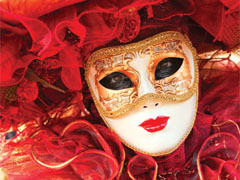
“Un ballo in maschera” in Tel Aviv

Un ballo in maschera
Giuseppe Verdi

Amelia is married to Renato yet she loves Riccardo. Renato is Riccardo’s best friend. Riccardo is the Governor. Ulrica the fortune teller prophesizes that Riccardo will be murdered. Love, hate, spite and revenge in one of Verdi’s most beloved operas.

Libretto: Somma after the libretto of Eugene Scribe for Auber’s opera Gustave III ou Le Bal Masque


masksIsrael


Conductor Daniele Callegari
  Eithan Schmeisser
Director Michal Znaniecki
Associate director Zosia Dowjat
Set Designer Luigi Scoglio
Costume Designer Joanna Medynska
Lighting and Projection Designer         Bogumil Palewicz
Choreographer Katarzyna Aleksander Kmiec


Among the Soloists:
 

Riccardo Kamen Chanev
  Christian Mogosan
Amelia Ira Bertman
  Mirela Gradinaru
Renato Boaz Daniel
  Ionut Pascu
Ulrica Dalia Schechter
  Svetlana Sandler
Oscar Hila Fahima
  Shiri Hershkovitz
Sam Vladimir Braun
Tom Noah Briger
Silvano Oded Reich

The Israeli Opera Chorus
Chorus Master: Ethan Schmeisser
The Opera Orchestra – The Israel Symphony Orchestra Rishon LeZion
Surtitles in Hebrew and English
Translation: Israel Ouval

New Production
Sung in Italian
Duration: Three hours

Day   Date              Hour        back stage tours   Opera Talkback
FRI 17.1.14 13:00    
SAT 18.1.14 20:00    
*SUN 19.1.14 20:00    
TUE 21.1.14 20:00   After the show
WED 22.1.14 20:00   After the show
THU 23.1.14 20:00 18:30  
FRI 24.1.14 13:00    
SAT 25.1.14 20:00    
TUE 28.1.14 20:00 18:30 After the show
WED 29.1.14 20:00 18:30 After the show
FRI 31.1.14 13:00    
SAT            1.2.14 20:00 18:30  

* PREMIÈRE 
** TOWARDS OPENING –  11.1.14 SAT 11:00 

Un ballo in maschera

ACT I
Scene i
The governor’s mansion
 
Riccardo, the governor of Boston, is giving an audience. Oscar, his page, brings him the list of guests invited to a masked ball. Riccardo is overjoyed to see included the name of Amelia, the wife of his secretary Renato, with whom – despite his conscience¬- he is in love. The faithful Renato tells him of a plot against his life but Riccardo brushes the warning aside. A judge arrives with papers to sign, banishing a fortune-teller named Ulrica for her evil influence. Oscar intercedes for her. Riccardo, for a lark, suggests that they all go in disguise to the dwellings of the sorceress and test her powers. The conspirators, Samuel and Tom, fall in with the scheme, seeing in it an opportunity to carry out their plot against Riccardo.

Scene ii
Ulrica’s place

Riccardo enters disguised as a fisherman. Without his knowledge, Amelia also comes to consult the fortune-teller. Concealed, Riccardo hears Amelia ask for a magic potion, which will uproot her love to Riccardo from her heart. Ulrica tells her of such a herb which can only be gathered at midnight in the place where the gallows stand. When Amelia leaves, Riccardo asks to have his fortune told. Ulrica tells him he will die by the hand of the friend who will next shake his hand. Renato enters. Riccardo goes forward and grasps his hand. He tells Ulrica this is the hand of his most trusted friend.

ACT II
Midnight, in a deserted field, beside the gallows

Amelia, veiled, comes to pluck the magic herb, when Riccardo arrives. They proclaim their love to each other but Amelia begs Riccardo to leave her. At that point Renato comes into view. Amelia, seeing her husband, lowers her veil in fright. Renato has come to warn his master that conspirators are lying in wait for him. Riccardo consents to escape through a side path but asks Renato to promise that he will escort the veiled lady back to the city without attempting to find out who she is. As they leave, Renato and Amelia fall into the hands of the conspirators who, enraged at the loss of the governor, insist at least on knowing his sweetheart. They try to pull off Amelia’s veil. Renato draws his gun. To stop bloodshed Amelia reveals herself. Renato sees his own wife.
ACT III
Scene i
Renato’s house

Renato prepares to kill his wife. Amelia begs to be allowed to embrace their son before she dies. When she goes out he gazes at the portrait of Riccardo which hangs on the wall, decides it is he on whom he must vent his wrath. He joins Samuel and Tom in their plot to murder the Governor. They draw lots; Amelia is commanded to pick the paper from an urn. It bears the name of Renato. The page Oscar arrives with the invitation to the masked ball.

Scene ii
A ballroom in Riccardo’s mansion

Riccardo decides to give up Amelia and send her and Renato abroad. Renato learns from Oscar what disguise Riccardo is wearing to the ball. Amelia also recognizes Riccardo, begs him to flee his impending death, but he refuses. As they bid each other farewell, Renato, unobserved, comes between them and shoots Riccardo. Too late, Renato hears from the dying ruler of Amelia’s innocence. With his last words Riccardo pardons all.

Posted in Music, OPera | Tagged , , , , | Leave a comment

The New National Theatre of Tokyo will perform “Carmen”

mainmenuTokyo

Presents:

carmenTokyo

Carmen

    • 2013/2014 Season
    • Georges Bizet: Carmen
      Opera in 3 Acts
      Sung in French with Japanese Supertitles
    • OPERA HOUSE
  • PERFORMANCES

    2014
    January 19 January 22 January 26 January 29 February 1
    Sunday Wednesday Sunday Wednesday Saturday
    2:00
    *
    2:00
     
    2:00
    *
     
     
    2:00


    6:30
    *


This NNTT repertory production was directed by Uyama Hitoshi. This latest incarnation will be conducted by the dynamic Ainars Rubikis, making his NNTT debut. Mr. Rubikis has been serving as Music Director of the Novosibirsk Opera and Ballet Theatre since 2012. Carmen will be sung by Ketevan Kemoklidze, a young singer who is gaining much notice of late. Ms. Kemoklidze is a popular mezzo soprano who combines fine singing abilities, good looks, and acting skills. This production marks her much-anticipated debut in the title role. The role of Don José will be sung by Gaston Rivero, who has performed the role with both the l’Opera de Lausanne on their Japan tour and with the Deutsche Oper Berlin. Hamada Rie will sing Micaëla, reprising the role that earned her favorable notice during the previous run of Carmen here at NNTT.

STAFF

Conductor : Ainars Rubikis
Production : Uyama Hitoshi
Scenery Design : Shima Jiro
Costume Design : Ogata Kikuko
Lighting Design : Sawada Yuji
Choreographer : Ishii Jun


(Conductor)
Ainars Rubikis

(Production)
Uyama Hitoshi

CAST

Carmen : Ketevan Kemoklidze
Don Jose : Gaston Rivero
Escamillo : Dmitry Ulyanov
Micaela : Hamada Rie
Zuniga : Tsumaya Hidekazu
Morales : Masu Takashi
Le Dancaire : Tani Tomohiro
Le Remendado : Ono Mitsuhiko
Frasquita : Hirai Kaori
Mercedes : Shimizu Kasumi

Chorus : New National Theatre Chorus
Orchestra : Tokyo Symphony Orchestra

Photos

(Carmen)
Ketevan Kemoklidze
Photos

(Don Jose)
Gaston Rivero
Photos

(Escamillo)
Dmitry Ulyanov
Photos

(Micaela)
Hamada Rie
Photos

(Zuniga)
Tsumaya Hidekazu

SYNOPSIS

A cigarette factory girl, Carmen, admired by men of the town, takes an interest in Don José, who is indifferent to her, and seeks to win his attention by tossing him a rose. Although he loves Micaëla, he soon becomes captivated by Carmen and is persuaded to desert the Army and throw in his lot with smugglers. But Carmen becomes disillusioned with José and gives her heart to the toreador Escamillo. In front of the bullring, from which loud cheering can be heard, José, consumed by jealous rage, stabs Carmen in the heart.

Posted in Music, OPera | Tagged , , , , , , | 1 Comment

Massenet’s “WERTHER” at l’Opera National de Paris

Logo_OnP

L’Opera National de Paris Presents:

WERTHER

LYRIC DRAMA IN FOUR ACTS AND FIVE SCENES (1892)

MUSIC BY JULES MASSENET (1842-1912)
POEM BY EDOUARD BLAU, PAUL MILLIET AND GEORGES HARTMANN BASED ON JOHANN WOLFGANG VON GOETHE

Performed in FrenchwertherFrance

Werther is a long requiem, a “lacrimosa dies illa”, a day full of tears and, without doubt, the most personal of all Massenet’s works. Roberto Alagna and Karine Deshayes portray the two unhappy lovers in the now legendary production of Benoît Jacquot, conducted by Michel Plasson.

Michel Plasson Conductor
Benoît Jacquot Stage Director
Charles Edwards Sets
Christian Gasc Costumes
André Diot Lighting (after Charles Edwards)

Roberto Alagna ⁄ NN (12 Févr.) Werther
Jean-François Lapointe Albert
Jean-Philippe Lafont Le Bailli
Luca Lombardo Schmidt
Christian Tréguier Johann
Karine Deshayes Charlotte
Hélène Guilmette Sophie

Paris Opera Orchestra and Chorus
Maîtrise des Hauts-de-Seine⁄ Paris Opera children’s Chorus

Original production by Royal Opera House, Covent Garden, London

Présentation

In Massenet’s masterpiece, from the moment the moonlight idyll is revealed and then shattered, the tears never cease to flow. “My entire being weeps”, says Werther. This is a far cry from the furtive tears or the violent sobbing usually associated with opera. These tears fall slowly and inexorably, one by one, in “patient drops”, as Charlotte says: in four acts, they will accomplish their work. Charlotte cannot hold back her tears when she rereads Werther’s letters and her tears are the only part of her, the only sacrifice that Werther dares to ask of her. She weeps before Sophie, her angel of consolation; her tears flow again on reading Ossian; they fall once more over Werther’s blood-soaked body. These final tears he refuses, however, for he is now free and happy. Werther is a long requiem, a “lacrimose dies illa”, truly a day of tears and, without doubt, the most personal of all Massenet’s works. Roberto Alagna and Karine Deshayes portray the two unhappy lovers in the now legendary production by Benoît Jacquot, conducted by Michel Plasson.

The composer

Jules Massenet was born on May 12th 1842 in Montaud, France and died on August 13th 1912 in Paris. After receiving a musical education from his mother who gave lessons to balance the family budget, Massenet entered the Conservatoire at a very early age and studied theory of music, piano and harmony before joining Ambroise Thomas’s composition class in 1861. In 1863 he won the Grand Prix de Rome and spent two years at the Villa Medici where he composed numerous outlines for projects which would form the basis of his future works. The first of these, performed after his return to France, was Grand’-Tante, a one-act opera commissioned by the directors of the Opéra-Comique. There followed, among others: Don César de Bazan (1872), Le Roi de Lahore (1877), Hérodiade (1881), Manon (1884), Le Cid (1885), Esclarmonde (1889), Thaïs (1894), Sapho (1897), Cendrillon (1899) and Don Quichotte (1910).
Massenet soon gained the stature of an “official composer”. Awarded the Légion d’Honneur, appointed Professor of Composition at the Conservatoire and elected to the Académie des Beaux-Arts, his influence was such that certain composers like Debussy did not hesitate to “Massenetise” their cantatas in order to win the Prix de Rome. From a musical point of view, Massenet preferred to work within the existing musical tradition rather than to break with it.

The work

The libretto is based on Goethe’s famous epistolary novel that Massenet probably knew from his stay in Bayreuth in 1886. Unlike the librettos of Gounod’s Faust or Ambroise Thomas’ Mignon, it follows the original text very closely. Nevertheless the importance given to Charlotte’s role is one of the essential differences: relegated to the background in the novel (where the hero, the author of the letters, acted alone), she plays just as important a role as Werther himself in the opera. The work is clearly modelled on the French conception of a typically German romance. The episodes are linked together in a style reminiscent of genre painting, each act bearing a title as if it were a chapter in a picture book. Given this aesthetic structure, the most successful episodes are those born of each character’s inner struggles, resulting from the interchange – conflicting or otherwise – between Werther, Charlotte and Albert and giving rise to extensive melancholic outpourings.
The orchestration reflects the work’s overall conception. Although making use of a large-scale orchestra, Massenet’s transparent musical texture is often suggestive of chamber music. The vocal style does not aim at virtuoso effects, preferring as it does dialogue and dramatic interaction. The interplay between the different musical motifs and their relationship with the characters establishes a parallel with Wagner’s leitmotifs. However Massenet distances himself from the latter, seeking rather to create a French “fin de siècle” style, characterised by its delicacy, elegance and sensibility.
From the very first performance of his opera, where the title Mattia Battistini, a baritone with a agile and effortless high range, asked him to write a new baritone version for him. This version was completed ten years later in 1902.

The first performance

Werther was first performed at the Imperial Opera of Vienna on February 16th 1892, in German, with the composer himself conducting.

The work at the Paris Opera

Werther’s Parisian career took place, for the most part, at the Opéra-Comique, where the opera had been performed 1389 times by 1978. Among the countless singers who tackled the main roles were Georges Thill, Raoul Jobin, Albert Lance, Alain Vanzo (Werther), Ninon Vallin, Denise Scharley, Rita Gorr, Nadine Denize (Charlotte), Jean Vieuille, Gabriel Bacquier, Yves Bisson (Albert). The work was not performed at the Palais Garnier until 1984, under the baguette of Georges Prêtre, with Alfredo Kraus / Neil Schicoff (Werther), Lucia Valentini-Terrani / Tatiana Troyanos (Charlotte) and Gino Quilico (Albert). In 2009, a new production was presented in the Opéra Bastille, staged by Jürgen Rose, with alternately Rolando Villazon and Ludovic Tézier in the title-role and Susan Graham in the part of Charlotte. The opera was back at the Opéra Bastille in 2010, staged by Benoît Jacquot, with Jonas Kaufmann and Sophie Koch. It is this production which is being performed this season.

January 2014
Mon Tue Wed Thu Fri Sat Sun
    1 2 3 4 5
6 7 8 9 10 11 12
13 14 15 16 17 18 19
20 21 22* 23 24 25* 26
27 28 29* 30 31    
 
 
February 2014
Mon Tue Wed Thu Fri Sat Sun
          1 2
3 4 5* 6 7 8 9
10 11 12* 13 14 15 16
17 18 19 20 21 22 23
24 25 26 27 28  
Posted in Music, OPera | Tagged , , , , , , | Leave a comment

Peter Bruun’s “All the world, goodnight” in Copenhagen

logoDenmark

The Royal Danish Theater Presents:

There once was a ship called the Unicorn. On May 9, 1619, it was sent off on an expedition to the North in order to find a sea route to India and China, the Northwest Passage, which could make the Christian IV, the King of Denmark, rich and powerful.

There once was a ship captain called Jens Munk. Three times Jens Munk searched for a way to the East through the Northern passages and all three times the ice tested him. The third time he found a way through, only to end up once again in a sea of ice. He and his crew wintered in the huge Hudson Bay in an attempt to find the Northwest Passage. At Christmas, hope was not yet lost; the crew was still optimistic and alive. But over the course of the winter, scurvy overpowered the crew one by one. The number of corpses per day was very accurately noted by Jens Munk in the margin of his logbook. When spring came, only three were alive.

All the World, Goodnight is an opera about being stuck in ice, about letting go of life and seizing it again.
About the one who seeks but does not always find.
About the one who dares but does not always wins.

All the World, Goodnight is directed by Rolf Heim, who’s credits include the theater concerts Leonard Cohen and Nick Cave at Aarhus Theatre, and The Motion Demon with FIGURA.

Music and libretto for All the World, Goodnight are created by Peter Bruun and Ursula Andkjær Olsen, the authors of FIGURA Ensemble’s opera MIKI ALONE, which in 2008 was awarded the Nordic Council Music Prize.

Thanks to the National Arts Council, the Danish Arts Foundation, Denmarks Nationalbank’s Anniversary Foundation of 1968, Danish-Icelandic Foundation, Danish Composers’ Society and KODA’s National Funds, The Foundation for Danish-Icelandic Cooperation, Nordic Culture Point, Koda-Drama, Queen Margrethe and Prince Henrik’s Foundation and The Sonning Foundation.

Stage: Operaen Takkelloftet
Title: All the World, Goodnight
Artform: Opera
Performance period: 13. Jan. – 17. Jan. 2014
Duration: Unknown (TBD)
Price: 195kr
Dates: 13/01, 14/01, 15/01, 16/01, 17/01

Posted in Music, OPera | Tagged , , , , , , , | Leave a comment

COSÌ FAN TUTTE at OPERA LAFAYETTE (Washington, New York and Versailles)

Cosi banner

Cosi-4973Cosi-5039

OPERA LAFAYETTE  Presents:

COSÌ FAN TUTTE 

Wolfgang Amadeus Mozart

Friday, October 18, 2013, 7:30 p.m., Kennedy Center Terrace Theater

Saturday, October 19, 2013, 2:00 p.m., Kennedy Center Terrace Theater

Thursday, January 23, 2014, 6:30, Rose Theater, Frederick P. Rose Hall,

Home of Jazz at Lincoln Center

Thursday, January 30, 2014, 8:00 p.m., Versailles

Saturday, February 1, 2014, 4:00 p.m., Versailles

Sunday, February 2, 2014, 3:00 p.m., Versailles

Among the precedents for Mozart and Da Ponte’s final masterpiece, Così fan tutte, was Les Femmes Vengées (The Avenging Wives), a 1775 opéra-comique by Philidor and Sedaine. In a mirror image of Così’s plot, the women humorously uncover, punish, and forgive their husband’s infidelities. With a cast of six vocalists nearly identical to Così, Opera Lafayette reproduces the innovative set created for Les Femmes Vengées, and conceives and performs both operas with the same cast and set, and with a continuous story line. In Così, the pairs of lovers begin their familiar exploration of love and deception, guided by Don Alphonso’s challenge to the men; in Les Femmes Vengées, the four are older, married couples, and it is Despina’s counterpart Madame Riss who leads the wives to a better understanding of their husbands. 

Philidor and Sedaine’s Les Femmes Vengées appeared in Vienna in 1776, a year after its debut in Paris. Mozart’s Così fan tutte was performed in Paris and in French as an opéra-comique thoughout the latter half of the 19th century. Opera Lafayette presents Cosi in this French version to shed new light on a familiar work and to integrate it with one of its most successful forerunners. Les Femmes Vengées will be an American premiere.

Artists

Ryan Brown, conductor

Nick Olcott, director

Misha Kachman, set designer

Kendra Rai, costume designer

Colin K. Bills, lighting designer

Pascale BeaudinFleurdelise

Blandine StaskiewiczDorabelle
Alex Dobson,* Guillaume

Antonio Figueroa, Fernand

Claire Debono, Delphine

Bernard DeletréDon Alphonse

Jeffrey Thompson, peintre

Opera Lafayette Orchestra

Synopsis

Act I- In a small provincial town, a painter, Monsieur Riss, prepares to finish his latest work, a martial tableau.  His friend, Don Alphonse, has convinced two young soldiers, Fernand and Guillaume, to pose for the painting.  Because the modeling will take several days, Riss has also invited the soldiers’ fiancées, sisters Dorabelle and Fleurdelise, to accept his hospitality.  When the sisters respond to the painter’s flirtatious greeting, Don Alphonse hints that the young ladies might not be as virtuous as they should be.

The two defend their fiancées heatedly and enter into a bet with Don Alphonse.Confident of their lovers’ fidelity, Fernand and Guillaume promise to do whatever hesays they must to put the women to the test.  While Don Alphonse gives them their orders, the sisters look at the sketches for the painting and vie with each other over whose betrothed is the more handsome.  Both declare that they could never be unfaithful to their loves.

The men return and announce that they have been called back to the army for overseas deployment.  After many tearful farewells, the two appear to depart, and Don Alphonse joins the ladies in praying for the soldiers’ safe passage. 

The ladies’ maid, Delphine, who has been enjoying some time with with Monsieur Riss, finds Dorabelle giving vent to a wild expression of grief.  When she learns the reason, Delphine mocks her mistresses’naïveté: the soldiers will surely be enjoying themselves while they’re away, and the women should do the same.  The sisters haughtily reject Delphine’s advice. She soon gets chance to prove them wrong when Don Alphonse enlists her help in introducing the ladies to two handsome strangers visiting from foreign shores.  The strangers are, of course, Fernand and Guillaume in disguise, but neither Delphine nor the sisters recognize them.  Each man chooses to woo the other’s fiancée, but Fleurdelise ensures that they have no success.   Sure of their victory, the men demand that Don Alphonse settle the wager, but he insists that the test is not over yet.

 As the sisters lament their plight, Don Alphonse launches a second onslaught.  The two men pretend to have taken poison in a fit of lovelorn desperation.  Delphine convinces Fleurdelise and Dorabelle that they are to blame for this suicide attempt.  Stricken with guilt, the sisters promise to do anything to save the men’s lives, and Delphine suggests a little tenderness. As the women hold and stroke the men, Delphine disguises herself as a doctor and returns to “draw out” the poison by means of a powerful magnet.  The men, brought back to life, beg a kiss from the ladies.  They refuse, but Don Alphonse and Delphine suspect that their outrage is too extreme to be real.  Even the two lovers begin to fear that the women are succumbing to their advances. 

Act II- Don Alphonse reminds us of his conviction that nothing is as changeable as a woman’s heart, and Delphine attempts once again to convince the women that there’s no harm in seeing other men while their fiancées are away.  This time her reasoning has the desired effect, and the two decide to engage in a little harmless flirting.  The “exotic strangers” serenade the sisters, and Don Alphonse and Delphine give the four a lesson in courtship.  As Fernand and Fleurdelise stroll in the garden, Guillaume makes his first serious play for Dorabelle: he gives her a heart-shaped locket in exchange for the one she hadbeen wearing, which he knows was a gift from Fernand.  Dorabelle and Guillaume declare their love for each other. 

They withdraw, and Fleurdelise runs in, Fernand in pursuit.  She begs him to leave her, but when he does, she realizes that she is in love with him.  She struggles with her conscience, begging forgiveness from her absent lover.

When the two men meet, Guillaume shows his friend the locket received from Dorabelle, and Fernand is furious at her betrayal.  All women are weak in the face of temptation, responds Guillaume.  His superiority as a lover made his success with Dorabelle inevitable, just as Fleurdelise’s yielding to Fernand’sinferior advances would be unthinkable.  Enraged, Fernand determines to even the score.

As Delphine congratulates Dorabelle on finally acting like a woman of experience, Fleurdelise arrives to confess her infatuation with the handsome “stranger.”  She vows not to give in, however, and demands a soldier’s uniform in order to join her fiancée on the battlefield and die at his side.  Once she encounters her new love, however, she melts, and the two exchange tender vows.

The men face having lost the bet.  Delphine arrives to announce that a notary will arrive for a double wedding, and Don Alphonse comforts the men with the maxim, “Così fan tutte” – all women act like that.

The wedding proceeds with toasting and the arrival of the notary, once again Delphine in disguise.  Just as the women sign the contract, Don Alphonse announces the return to the soldiers, to the consternation of the woman and the astonishment of the men.  The “strangers” appear to hide, but in fact make a quick change back into their uniforms and pretend to “return from war.”  They unmask Delphine and discover the marriage contract. 

The men vow revenge and the women beg forgiveness, but Don Alphonse tells them that he played this trick on them for their own good: to learn that the heart is a changeable thing.   The men forgive the women, the women forgive the men, and the four lovers choose to do what their hearts tell them.

The only person still smarting from the trick is Delphine.  Even as she accepts Monsieur Riss’ proposal, she vows revenge on the men who duped her.

SOCIAL COMEDIES IN MIRROR IMAGES:
Così fan tutte and Les Femmes Vengées On March 20, 1775, the Comédie Italienne premiered a new opéra-comique, Les Femmes Vengées (The Avenged Women), by Francois-André-Danican Philidor (1726-1795) to a play in verse by Michel-Jean Sedaine (1719-1797). It was well received, and broke a long spell of lukewarm receptions to Philidor’s stage works since the huge success of Tom Jones in 1766. Les Femmes Vengées was still being performed in the repertory of the Comédie Italienne when Mozart and his mother arrived in Paris three years later on March 23, 1778. Mozart would stay in Paris six months, trying to establish himself as a composer and gain a permanent appointment. He failed and left on September 26, 1778, saddened by the death of his mother a few months before and reluctant to return to his underappreciated position in Salzburg. During Mozart’s stay, the Comédie Italienne was a thriving theater with a varied repertory that attracted a large following. The Opéra, on the other hand – despite the renewed interest brought about by Gluck, whose Armide had been premiere the previous September – saw its box office receipts steadily declining. To remedy that situation, its new director, Anne-Pierre-Jacques de Vismes (1746-1819), decided to call in an Italian troupe in the hopes of bringing back a disaffected public. His aim was to rekindle the controversy between French and Italian music known as La Querelle des Bouffons which had proven to be so beneficial both artistically and financially to the Opéra once before, in 1752-3. Thus, for the next two seasons (June 1778 to March 1780), a recently engaged Italian troupe, performing alongside the French troupe, gave the Paris premieres of a dozen Italian operas by Piccinni, Paisiello, Anfossi, Ciampi, Traeta, and Sacchini. Mozart’s only commission for the Paris Opera, the ballet Les Petits Riens (The Trifles) KV.299b, was premiered on the opening night of the “Italian Season” on June 11, 1778, featuring Piccinni’s Le Finte Gemelle (The Faked Twins), and passed almost unnoticed. 

Nothing is known of Mozart’s reaction to any of the works staged in Paris. During his stay, the Paris Opera performed, besides the Italian operas alluded to above, Gluck’s Armide, Alceste, Iphigénie en Aulide and Orphée, Piccinni’s Roland, Philidor’s Ernelinde, and Rousseau’s Le Devin du village, among others, while at the Comédie Italienne works of Duni, Monsigny, Grétry, Philidor, and many others were performed. It is tantalizing to notice some coincidences between a few of these works and Mozart’s later compositions. On August 13, 1778, the Paris Opera premiered Anfossi’s “Il Curioso Indiscreto”. When that work was performed later in Vienna on June 30, 1783, Mozart composed no less than three arias to be interpolated in these performances: “Vorrei spiegarvi” KV. 418 and “No, no, che non sei capace” K.V.419 for soprano and “Per pieta, non ricercate” KV. 420. 

Sedaine and Philidor’s Les Femmes Vengées was performed at Comédie Italienne seven times during Mozart’s stay in Paris (May 7, May 25 June 6, June 22, August 1, August 13 and August 29) and the similarity of plots between it and Da Ponte and Mozart’s Così fan tutte is striking. One is the mirror image of the other and both show a predilection for parallel structures.

Sedaine took the story of Les Femmes Vengées from a tale by Jean de La Fontaine (1621-1696), Les Rémois, which was published in his third book of tales in 1671. This was the fourth time that Sedaine crafted a libretto from a tale of La Fontaine. He had previously written On ne s’avise jamais de tout (1761) and Le Faucon (1772) for Monsigny, and Le Magnifique (1773) for Grétry. 

The sources for Da Ponte’s Così fan tutte are more numerous and complex. In 1837, the writer Friedrich Heinse claimed that “… Mozart was in fact expressly commissioned by Joseph II to compose this libretto. According to rumors, an incident that had actually happened at that time in Vienna between two officers and their lovers, which was similar to the plot of the libretto, offered the emperor the occasion of honoring his court poet Gemaria [recte: Da Ponte] with the commission to make this piece of gossip into a Drama giocoso da mettersi in musica [to be set to music].” This claim is very questionable and not a shred of evidence has been brought to light in support of it. In fact Così fan tutte is the only original libretto of Da Ponte that Mozart set to music: Le Nozze di Figaro was based on the comedy by Pierre-Augustin Caron de Beaumarchais, Le Mariage de Figaro, while Don Giovanni was a reworking of an older libretto by Giovanni Bertati, Il convitato di pietra set to music in 1785 by Giuseppe Gazzaniga. 

Da Ponte’s plot is inspired in part by the Greek myth of Cephalus and Procris, both as recounted in Ovid’s Metamorphosis, book 7, and its rendition in canto 43 of Ariosti’s Orlando Furioso. It also takes elements from a story in Boccaccio’s Decameron (Second day, ninth tale) and perhaps even from a play by Pierre Carlet de Chamblain de Marivaux (1688-1763), La Dispute. This latter had been translated into German and then made into a singspiel libretto, Die Kinder der Natur (The Children of Nature), set to music by Franz Aspelmayr (1728-1786) and performed in Vienna in 1778. Certainly, the gradual arousal of love in the sisters’ hearts – and, in the case of Fiordiligi, the struggle against it – owes a lot to Marivaux’s theater plays, in particular Les Fausses Confidences (The False Confidences) and Le Jeu de L’Amour et du Hasard (The Game of Love and Chance). 

Besides purely literary sources, there are librettos that may have inspired Da Ponte, chief among them Goldoni’s La pescatrici. Goldoni’s work was set to music by Nicolo Piccinni in 1766 and Joseph Haydn in 1770, and it is interesting to note that Mozart invited Haydn to his house to hear a rehearsal of Così fan tutte on December 31, 1789. Other librettos which might have inspired Da Ponte are Vadé’s Les Troqueurs (The Barterers), set to music by Antoine Dauvergne in 1752 and enthusiastically received in Vienna in 1758, as well as Sedaine’s Les Femmes Vengées, set by Philidor and first performed in Vienna on January 25, 1776.

French culture was very prominent at the Vienna court ever since Empress Maria-Theresa married French-speaking Francis Stephen of Lorraine in 1736. It was further strengthened when the catholic French kingdom allied itself with the catholic court of Vienna in the Seven Year War (1756-1763). This alliance was sealed by the wedding of the youngest daughter of the empress Maria Theresa, Marie-Antoinette, to the heir to the throne of France, the future king Louis XVI, in 1770.

The entertaining and educational value of theater was considered so important in Vienna that it was unique among the German-speaking cities of the time in having a permanent troupe of Italian singers as well as a French theatrical company performing in the court theater (Burgtheater), in addition to a German theatrical troupe at the Carinthian Gate Theater (Kärtnertor Theater). Furthermore, the appointment of Count Giacomo Durazzo (1717-1794) to be head of the imperial theaters in 1754 brought a director sympathetic to French as well as Italian culture, and one with access to the intellectual elite of Europe. Durazzo had a long a fruitful correspondence with Charles-Simon Favart (1710-1792), one of the dramatists at the Comédie Italienne in Paris, and whom he used as his agent to bring to Vienna the successful opéra-comiques created in Paris. 

It is Durazzo, who, recognizing the genius of Gluck, fostered the composer’s career by first by asking him to adapt opéra-comique scores to the capabilities of the French actors/singers in Vienna – transposing arias to fit an actor’s tessitura and substituting new arias where the original ones were deemed too difficult or inappropriate – and then by asking him to compose new music to the librettos sent by Favart from Paris. These included La Fausse esclave (1758), and Le Diable à quatre (1759), which had been created in Paris in 1756 to a libretto by Sedaine with music by Philidor and other composers, as well as La Rencontre imprévue (1764), an air of which was to be used by Mozart for a set of piano variations (KV 455, composed in 1784). 

The French troupe in Vienna did not limit itself to opéra-comique. It also regularly performed spoken French theater at the Burgtheater, presenting works by Marivaux, Jean-Francois Regnard (1655-1709) and Jean Galbert de Campistron (1656-1723), not to mention the classics of Moliere, Racine and Corneille.

From such a rich background, Da Ponte crafted a libretto whose text often paraphrases his sources, and occasionally cites them verbatim. Because of this diversity, Da Ponte’s comedy can be read on many levels: It is at the same time a “demonstration comedy” (as are so many of Marivaux’s plays), a sentimental comedy, and a social comedy. Consequently, it is arguably Da Ponte’s best libretto.

Da Ponte’s original libretto of Così fan tutte was first given to Salieri, who composed two trios before giving it up. It then went to Mozart, who rose to the challenge of this text, much to the chagrin of Salieri. Working closely with Da Ponte, Mozart brought several modifications to the libretto, not least by having the words “Così fan tutte” introduced in the arioso in which Don Alfonso sums up the lesson to the two sorry officers. Mozart was then able to compose music that underscores the humanity of the characters while matching the rich ambiguities of the libretto. The opera was premiered in Vienna on January 26, 1790. It was well received and was repeated another four times until February 20, when all theaters were closed for a period of mourning: Emperor Joseph II had passed away. 

Così fan tutte and Les Femmes Vengées present themselves as lessons of behavior: one is a lesson to naïve lovers (Così, is even subtitled The School for Lovers), the other to philandering husbands. It is unclear from either libretto whether the “lesson” was heeded. Both, however, can also be read as a social commentary on women in eighteenth century. Da Ponte clearly underscores the dominant male view that women are pliable and inconstant, while Sedaine demonstrates the new assertive role that women were beginning to take in French society. In Les Femmes vengées, Sedaine foreshadows the modern bourgeois marriage of companionship, as opposed to the subservient traditional union between a dominating husband and a meek wife (Mrs. Ris and Mr. Ris are very much equals). 

There are also similarities in the musical treatment of both comedies. In their respective genres, opéra-comique for Les Femmes Vengées and opera-buffa for Così fan tutte, both works show an increase in the relative number of ensembles (duets, trios, etc.). Besides the two finales, Così fan tutte has 29 numbers of which 16 are ensembles, while Les Femmes Vengées, apart from the final vaudeville, has 15 numbers of which 7 are ensembles.

More subtly, there are a number of melodic turns and harmonic progressions in Philidor’s score that anticipate Mozart. Mozart’s extraordinary memory and capacity to absorb all the styles of music he encountered in his travels is well documented. Furthermore, thanks to Gluck, French opéra-comique had become a key element in the Viennese classical style developed in the 1760s. Thus the genre of opéra-comique was likely to have influenced Mozart both directly during his stay in Paris and indirectly through the Viennese school led by Gluck. 

We can subscribe to the statement of French musicologists Jean and Brigitte Massin who wrote: “Of Mozart’s reactions to these performances (those taking place at the Paris Opera and at the Comédie Italienne during his stay) we know nothing, save what his music reveals to us.” This is one of the reasons Opera Lafayette chose to perform both works this season. 

-Nizam Peter Kettaneh

Director’s Note 

Most people now consider Così fan tutte a masterpiece. Together with Le nozze di Figaro and Don Giovanni, Mozart’s other two collaborations with librettist Lorenzo da Ponte, Così fan tutte has come to represent the pinnacle of the 18th-century opera.

This was not always so.

Beethoven deemed the story beneath Mozart’s dignity. Wagner asserted that such a worthless libretto led Mozart to write inferior music. Lesser critics simply called the opera immoral. Throughout the 19th century, new libretti with completely different stories were grafted onto the music. Only in the 20th century did the opera in its original form attain the status it enjoys today.

 A central criticism has been that Così’s music is the most heartfelt at the very moments in the opera when the characters are being the most deceitful. In their initial pairings, the two couples relate to each other in ensembles only. The music makes no differentiation between the sets of lovers and offers no definition of the individuals. There are no love duets, no moments of intimacy. It is lovely music, but rather formal. Only later, as each man disguises himself and attempts to seduce his friend’s fiancée, do the scenes contain duets – perhaps the most tender and passionate Mozart ever wrote.

Musical scholars and opera directors have found various ways to explain this apparent contradiction. This production reflects my own view. I don’t want to give too much away in these notes, so let it suffice to say that I think Mozart knew exactly what he was doing. Few have understood the human heart as well as he, and his music reflects exactly what is happening to the four lovers in this story. 

Pairing Così fan tutte with Les Femmes Vengées (written only fifteen years apart) was a stroke of brilliance on the part of Opera Lafayette. The characters bear remarkable similarities, and their milieus are much the same. These could very well be the same people.

Our shift in the opera’s locale hints at a possible reason for the opera’s initial chilly reception: perhaps Così fan tutte was simply too French. The German playwright Rochlitz wrote in 1801, “The German audience has altogether too much heaviness and too little frivolity of temperament for this sort of comedy.” The opera’s matter-of-fact acceptance of the frailties and vagaries of the human heart may have been too Gallic for its contemporary Teutonic audience to bear. 

Linking these two stories gives us a delicious opportunity. In Così, we see what happens when young, idealistic lovers encounter temptation for the first time. In Les Femmes Vengées, we get to see them ten years later, when the bloom is off the romance and the realities of married life have taken over.

The conversation between great works of art is always worth hearing. This chat we’ve put together between Mozart and Philidor offers some particularly interesting listening.

-Nick Olcott

 Opera Lafayette | 10 Fourth Street, NE, Washington, DC 20002

Posted in Music, OPera | Tagged , , , , , , , | Leave a comment