Vancouver Opera Presents “ALBERT HERRING”


Presents: 

BENJAMIN BRITTEN

A charming comic depiction of English village life
In English with SURTITLES™
COMPANY PREMIERE
Co-produced with Pacific Opera Victoria

November 30, December 5, 7, 8 (matinée), 2013
Evening performances 7:30pm.
Matinée performances 2:00pm.

“Thoroughly engaging … an excellent entry point for opera newcomers … rich with charm to satisfy longtime fans.” – The Georgia Straight
Read the full review

“…genuine charm…attractive staging and fine singing” – The Vancouver Sun
Read the full review

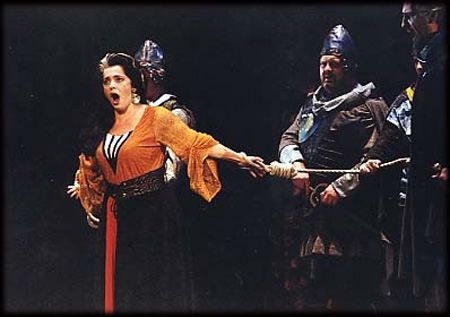
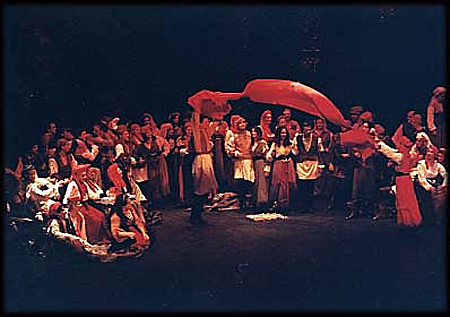
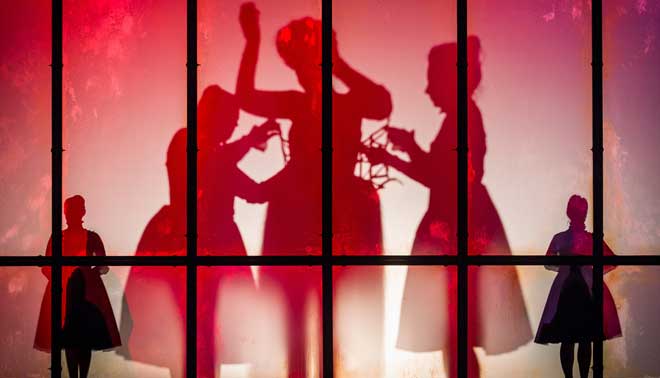
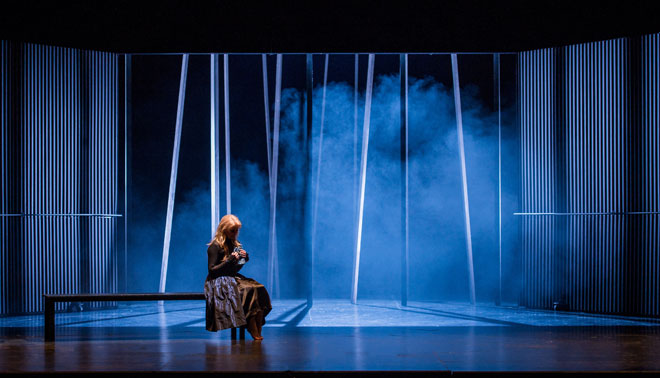
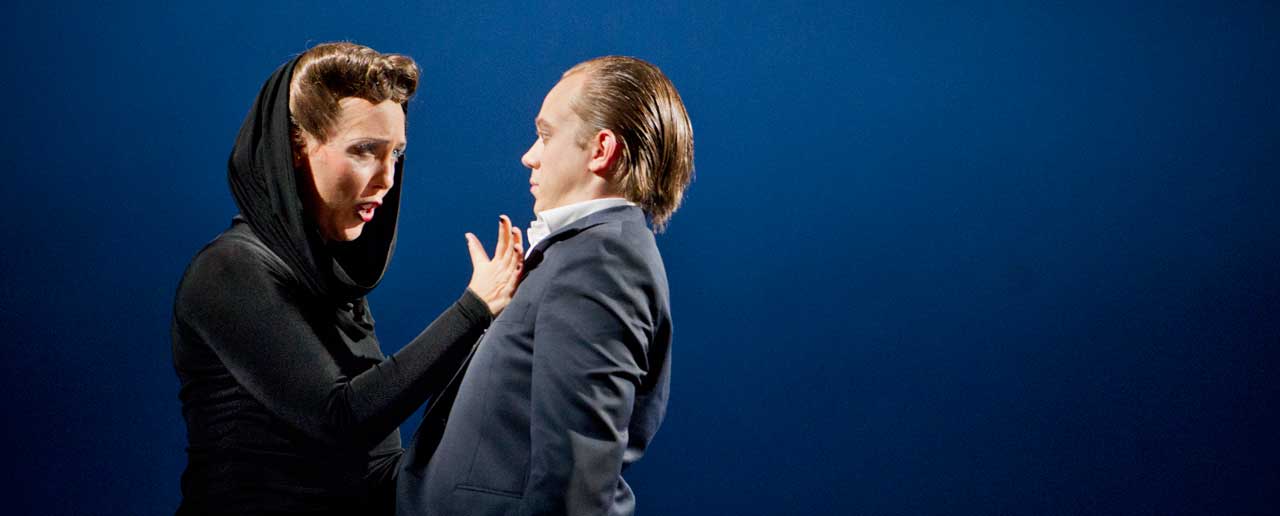
►The busybodies of the Loxford May Day committee cannot find a virtuous female to be May Queen, so they name as May King the over-protected grocer’s son, Albert Herring. Following an extravagant crowning ceremony, at which Albert gets tipsy on rum-spiked lemonade, he decides to cut his mother’s apron strings and venture into the sensual world he sees others enjoying. After a frantic search by the entire town, Albert reappears, having enjoyed a night of debauchery. Depending on your point of view, he has been either ruined or saved.

This brilliant comedy by England’s greatest opera composer is a fast-paced, witty, and devastatingly satirical portrayal of the quaint characters of a closed-in (and now vanished) community. Employing a cleverly constituted chamber orchestra, Britten uses his prodigious powers of melodic invention and parody to explore society’s attitudes toward an odd but innocent individual. VO’s new co-production is set in East Suffolk at the time of the opera’s 1947 premiere.

► All performances are at the Queen Elizabeth Theatre
► Approximate running time: 2 hours 43 minutes (including one intermission)


CAST & CREATIVE TEAM

Conductor LESLIE DALA

LESLIE DALA
Conductor
Toronto, ON

Last VO Appearance:
Conductor, The Magic Flute, 2013
Recent Appearances:
The Tales of Hoffman and Carmen with UBC Opera
Music for China, presented by Soundstreams Canada, with performances in Toronto, Shanghai and Beijing
Albert Herring with Pacific Opera Victoria
Upcoming Engagements:
Messiah with the Vancouver Bach Choir and the Vancouver Symphony Orchestra
Albert Herring with the University of Toronto Opera Division
Mr. Dala is the Music Director of the Vancouver Bach Choir and the Music Director of the Vancouver Academy of Music Symphony.


More about Leslie Dala

Mr. Dala’s appearance is supported by a gift from The Illahie Foundation

Directed by GLYNIS LEYSHON

GLYNIS LEYSHON
Director
Victoria, BC

Last VO Appearance:
Rigoletto, 2009
Recent Appearances:
Falstaff and Albert Herring with Pacific Opera Victoria
For The Pleasure of Seeing Her Again with National Arts Centre
La traviata with Calgary Opera
God of Carnage with Belfry Theatre, Victoria
Upcoming Engagements:
Madama Butterfly with Calgary Opera
Proud with Belfry Theatre, Victoria
Ms. Leyshon’s appearance is supported by a gift from Mike & Kathy Gallagher
Albert Herring LAWRENCE WILIFORD

LAWRENCE WILIFORD
Tenor
Victoria, BC
Albert Herring

Vancouver Opera DébutRecent Appearances:
Belmonte in Die Entführung aus dem Serail with Opera Atelier
Elijah (Mendelssohn) with The Colorado Symphony
Mass in B Minor (Bach) with Elmer Iseler Singers
Requiem (Mozart) with National Arts Centre Orchestra
Upcoming Engagements:
Messiah (Handel) with Philharmonia Baroque Orchestra
Recording: Britten: Divine Musick: The Late Works for Tenor and Harp (ATMA Classique, 2010)


More about Lawrence Wiliford

Mr. Wiliford’s appearance is supported by a gift from Mary Tait & Bill Sirett

Lady Billows SALLY DIBBLEE

SALLY DIBBLEE
Soprano
Fredericton, NB
Lady Billows

Last Vancouver Opera Appearance:
Pat Nixon in Nixon in China, 2010
Recent Appearances:
Soloist, Requiem (Fauré) with Symphony New Brunswick
The Merry Widow with The Newfoundland Symphony
Lady Billows in Albert Herring with Pacific Opera Victoria
Elizabetta in Maria Stuarda with Pacific Opera Victoria
Upcoming Engagements:
Cio-Cio-San in Madame Butterfly with Calgary Opera
Soloist, Symphony No. 9 (Beethoven) with Symphony New Brunswick
Ms. Dibblee’s appearance is supported by a gift from Mr. & Mrs. Gordon Christopher
Nancy SYLVIA SZADOVSZKI

SYLVIA SZADOVSZKI
Mezzo-Soprano
Vancouver, BC
Nancy
Last VO Appearance:
Papagena in The Magic Flute, 2013
Recent Appearances:
Kate in The Pirates of Penzance with Vancouver Opera
Rosina in Der Barbier von Sevilla with Theater Hof, Germany
Mercedes in Carmen with Pacific Opera Victoria
Hansel in Hansel & Gretel with Vancouver Opera In Schools
Upcoming Engagements:
Soloist, Messiah with the Vancouver Bach Choir and the Vancouver Symphony Orchestra
Soloist, Choral Fantasy (Beethoven) with the Vancouver Metropolitan Orchestra
Ms. Szadovszki’s appearance is supported by a gift from Lis & Bruce Welch

Sid AARON DURAND

AARON DURAND
Baritone
100 Mile House, BC
Sid

Last VO Appearance:
Sciarrone in Tosca, 2013
Recent Appearances:
The Speaker in The Magic Flute with Vancouver Opera
Javan in When the Sun Comes Out with the Queer Arts Festival
Soloist, Symphony No. 9 (Beethoven) with Vancouver Academy Orchestra
Samuel in The Pirates of Penzance with Vancouver Opera
Upcoming Engagements:
Soloist, Messiah with Victoria Symphony
Masetto in Don Giovanni with Vancouver Opera
Mr. Durand’s appearance is supported by a gift from Mrs. Irene McEwen
Florence SUSAN PLATTS

SUSAN PLATTS
Mezzo-Soprano
Victoria, BC
Florence Pike

Vancouver Opera Début
Recent Appearances:
Symphony No.8 (Mahler) with the American Symphony Orchestra at Carnegie Hall
Nixon in China with BBC Symphony Orchestra Proms Concert
Florence Pike in Albert Herring with Pacific Opera Victoria
Rosamunde (Schubert) with the Montreal Symphony Orchestra
 Upcoming Engagements:
Symphony No. 8 (Mahler) with the Royal Scottish National Orchestra
Sea Pictures (Elgar) with the Louisville Orchestra
Mr. Platts’s appearance is supported by a gift from a donor who wishes to remain anonymous

Miss Wordsworth MELANIE KRUEGER

MELANIE KRUEGER
Soprano
Abbotsford, BC
Miss Wordsworth

 Last VO Appearance:
Isabel in The Pirates of Penzance, 2012

Recent Appearances:
Lillian Alling with the Banff Centre for the Performing Arts
Sharon in Master Class with The Arts Club Theatre Company
Annina in La traviata with Vancouver Opera
Les Noces (Stravinsky) with the Vancouver Bach Choir
Upcoming Engagements:
The Voice from Heaven in Don Carlo with Vancouver Opera

More about Melanie Krueger
Ms. Krueger’s appearance is supported by a gift from a donor who wishes to remain anonymous

Mrs. Herring REBECCA HASS

REBECCA HASS
Mezzo-Soprano
Coldwater, ON
Mrs. Herring

Last VO Appearance:
Third Secretary in Nixon in China, 2010Recent Appearances:
Mrs. Herring in Albert Herring with Pacific Opera Victoria
Marquis of Berkenfeld in La fille du regiment with Manitoba Opera
Lady in Waiting in Macbeth with Pacific Opera Victoria
Azucena in Il trovatore with Astoria Music Festival, Oregon
Upcoming Engagements:
Writer/Contributor, CBC Radio
Guest Host, Saturday Afternoon at the Opera, CBC Radio 2
Ms. Hass’s appearance is supported by a gift from Val & Dick Bradshaw

Mr. Gedge PETER MCGILLIVRAY

PETER MCGILLIVRAY
Baritone
Prince Albert, SK
Mr. Gedge

Vancouver Opera Début
Recent Appearances:
Sharpless in Madama Butterfly with Opéra de Québec
Vicar Gedge in Albert Herring and Noye in Noye’s Fludde with Pacific Opera Victoria
Thomas in Shelter with Tapestry New Opera / Edmonton Opera
Stubb in Moby Dick with Calgary Opera
Upcoming Engagements:
Dr. Falke in Die Fledermaus with Edmonton Opera
Schaunard in La bohème with Manitoba OperaMore about Peter McGillivray
Mr. McGillivray’s appearance is supported by a gift from Mr. Ken & Mrs. Ellen Mahon
Mr. Upfold MICHAEL COLVIN

 MICHAEL COLVIN
Tenor
Toronto, ON
Mr. Upfold
Last VO Appearance:
Belmonte in The Abduction from the Seraglio (concert), 2004
Recent Appearances:
Bob Boles in Peter Grimes with Accademia Nazionale do Santa Cecilia, Italy and with London Philharmonic Orchestra
L’Aumonier in Dialogues of the Carmelites with the Canadian Opera Company
Red Whiskers / Captain Vere (cover) in Billy Budd with English National Opera
 

Upcoming Engagements:
Bob Boles / Peter Grimes (cover) in Peter Grimes with English National Opera
Dr. Caius in Falstaff / Goro in Madama Butterfly with the Canadian Opera Company

More about Michael Colvin
 

Mr. Colvin’s appearance is supported by a gift from Alan & Gwendoline Pyatt

Superintendent Budd GILES TOMKINS

GILES TOMKINS
Bass-baritone
Toronto, ON
Superintendent Budd

 Last VO Appearance:
Sergeant of Police in The Pirates of Penzance, 2012
Recent Appearances:
Superintendent Budd in Albert Herring with Pacific Opera Victoria
Black Bob in The Little Sweep with Pacific Opera Victoria / Belfry Theatre
Colline in La bohème with Kingston Symphony Orchestra
Oberto with Opera in Concert, Toronto
Upcoming Engagements:
Leporello (March 7 & 9 performances) in Don Giovanni with Vancouver Opera
Colline in La bohème with Manitoba Opera

More about Giles Tomkins
Mr. Tomkins`s appearance is supported by a gift from Mrs. Barbara Lowy

Emmie MARIA BAMFORD

MARIA BAMFORD
Soprano
Vancouver, BC
Emmie

Vancouver Opera Début
Recent Appearances:
Mi in Land of Smiles with the Vancouver Symphony Orchestra
Gretel in Hansel und Gretel with UBC Opera
Klina in The Inventor with the Vancouver Symphony Orchestra and UBC Opera
Soloist, Carmina Burana with UBC Symphonic Wind Ensemble
Cis SIMONE MCINTOSH

SIMONE MCINTOSH
Soprano
Vancouver, BC
Cis

Last VO Appearance:
Rosie (Understudy) in The Barber of Barkerville (Vancouver Opera In Schools), 2013
Recent Appearances:
Giulietta in The Tales of Hoffman with UBC Opera
Fox in The Cunning Little Vixen with European Music Academy
Sister St. Charles in Dialogues of the Carmelites with UBC Opera
Upcoming Engagements:
Cherubino in The Marriage of Figaro with Burnaby Lyric Opera
Fox in The Cunning LIttle Vixen with UBC Opera
Harry EVA TAVARES

EVA TAVARES
Soprano
Langley, BC
Harry

 Last VO Appearance:
Naomi (Understudy) in Naomi’s Road (Vancouver Opera In Schools), 2013
Recent Appearances:
Oscar in Viva Verdi! with UBC Opera
Cecily in Ernest in Love with Applause! Musicals
Mi in Land of Smiles with the Vancouver Symphony Orchestra
Chorus and Olympia (Understudy) in Les contes d’Hoffman with UBC Opera
Upcoming Engagements:
Light for the Child with musica intima

Assistant Conductor KINZA TYRRELL

KINZA TYRRELL
Conductor
Victoria, BC

Last VO Appearance:
Children’s Chorus Director / Principal Répétiteur, Tosca, 2013
Recent Appearances:
Conductor, Le nozze di Figaro with Vancouver Summer Opera Studio
Diction Specialist at Opera Nuova
Piano Soloist in The Four Temperaments (Hindeminth) with Edmonton Symphony and Calgary Philharmonic
Upcoming Engagements:
Visiting Teacher with Calgary Opera’s Young Artist Program
Trio Recital on ‘Cap Classic’ series at Capilano UniversityMs. Tyrrell is the Music Director of Vancouver Opera In Schools and Vancouver Summer Opera Studio, and Répétiteur at Opera Nuova, COSI Centre for Opera Studies in Italy, and Opera as Theatre at the Banff Centre
Ms. Tyrrell’s appearance is supported by a gift from a donor who wishes to remain anonymous

Set & Costume Designer PATRICK CLARK

PATRICK CLARK
Scenic & Costume Designer
Fredericton, NB

 Vancouver Opera Début
Recent Appearances:
Tartuffe with National Theatre Centre, Ottawa
The Mousetrap with Theatre Aquarius
The Norman Conquests with Soulpepper Theatre
Private Lives with Theatre New Brunswick
Upcoming Engagements:
Good People with Manitoba Theatre
Beaux Strategem with Stratford Festival

Mr. Clark is a member of the Associated Designers of Canada and The Royal Canadian Academy of the Arts.

Lighting Designer MICHAEL WALTON

MICHAEL WALTON
Lighting Designer
Stratford, ON

 Vancouver Opera Début
Recent Appearances:
Venus in Fur with Canadian Stage Company
Fiddler on the Roof, Othello, and The Three Musketeers with the Stratford Festival
Maria Stuarda with Pacific Opera Victoria
Yoshimi Battles the Pink Robots and Sideways with La Jolla Playhouse, California
Upcoming Engagements:
Cosi fan tutte with the Canadian Opera Company
King Lear, A Midsummer Night’s Dream and Antony and Cleopatra with the Stratford Festival

Wig Designer STACEY BUTTERWORTH

STACEY BUTTERWORTH
Wig Designer
Vancouver, BC

Last VO Appearance:
Tosca, 2013
Recent Appearances:
Wig design and construction, Bard on the Beach 2013
American Hustle feature film – wig maker for Jennifer Lawrence
Fox Catcher feature film – wig maker for Channing Tatum
Moneyball feature film – wig maker for Brad Pitt
Upcoming Engagements:
Conflagration feature film
The Interview feature film – wig maker for Seth Rogan
The Strain television production, directed by Guillermo del Toro, Toronto
Ms. Butterworth has been Wig Designer at Vancouver Opera since 1995. Stacey Butterworth Wig Creations is one of the top suppliers of custom made wigs in North America, supplying film, television, theatre and opera.
Musical Preparation TINA CHANG

TINA CHANG
MUSICAL PREPARATION

TaiwanLAST VO APPEARANCE
Musical Preparation, Tosca, 2013

RECENT APPEARANCES
Pianist, Recital with Vancouver Opera’s Yulanda M. Faris Young Artists Program at YVR
Pianist, Cinderella with Vancouver Opera In Schools
Pianist and Coach with the Atelier Lyrique at l’Opéra de Montréal

Musical Preparation, Tea: A Mirror of Soul, 2013

  KIMBERLEY-ANN BARTCZAK

KIMBERELY-ANN BARTCZAK
MUSICAL PREPARATION

LAST VO APPEARANCE:
Musical Preparation, Tosca, 2013
RECENT APPEARANCES
Répétiteur, University of Toronto opera program
Accompanist, Women’s Chorus at the University of Toronto and the Mississauga Festival Choir
 UPCOMING APPEARANCES
Music Director, Talk Opera with Opera 5
Pianist and coach, Opera on the Avalon and St. Andrews Opera Workshop

Stage Manager SHEILA MUNN
SHEILA MUNN
STAGE MANAGER

Vancouver, BC
LAST VO APPEARANCE
Tosca, 2013RECENT APPEARANCES
When The Sun Comes Out with Queer Arts Festival
Dialogues des Carmélites, The Merry Widow and Albert Herring with UBC Opera Ensemble
The Magic Flute, The Pirates of Penzance, La Bohème, Aida, The Barber of Seville, Roméo et Juliette, La Traviata, La Clemenza di Tito, Lucia di Lammermoor, Lillian Alling, Madama Butterfly, The Marriage of Figaro, Nixon in China, Norma, Salome, Rigoletto, Carmen, Eugene Onegin, Fidelio, The Italian Girl in Algiers, Cavalleria Rusticana/I Pagliacci, Tosca, Ariadne auf Naxos, The Magic Flute, and Macbeth with Vancouver Opera.
 

Assistant Director FANNY GILBERT-COLLET
Posted in Music, OPera | Tagged , , , , , , , , | Leave a comment

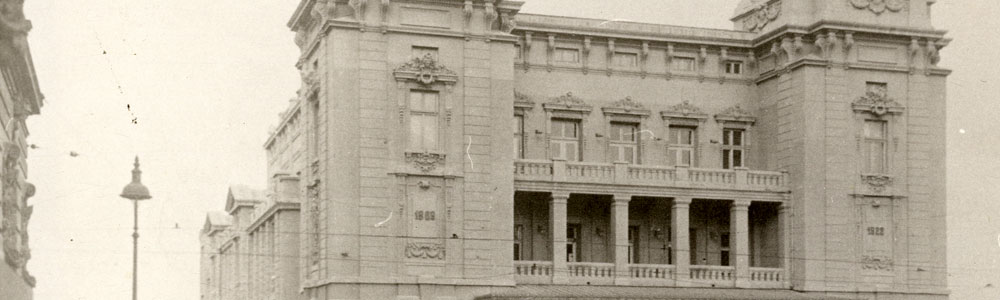
“Il trovatore” in Belgrade

logo_engbelgrade

nationaltheatrebelgrade

The National Theatre of Belgrade (Serbia) presents:

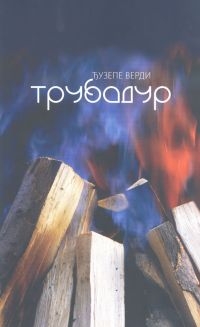
Trubadur_plakat

IL TROVATORE

Giuseppe Verdi

on December 7, 2013


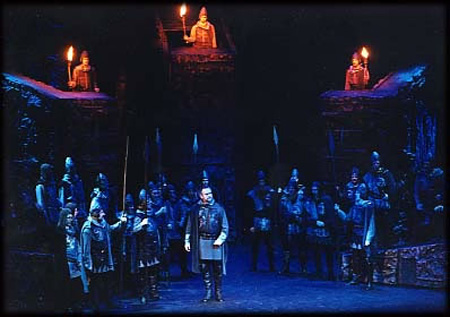
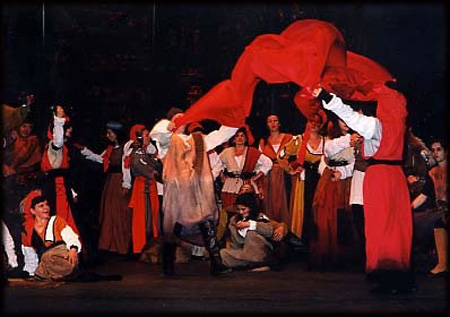
trubadur_10 trubadur_1 trubadur_2 trubadur_3 trubadur_4 trubadur_5 trubadur_6 trubadur_7 trubadur_8 trubadur_9

Posted in OPera | Tagged | Leave a comment

Verdi in Eléphant Paname: exhibit and concert.

VERDI
in Eléphant Paname

Friday, September 27, 2013 > Sunday, January 5, 2014

Admission 9€, Reduced rate 7€ (with ID)


This year marks the 200th anniversary of the birth of Giuseppe Verdi, the most frequently performed opera composer. Many bicentenary events have been organised around the world in 2013 to celebrate Verdi’s life and work.
It is only fitting and proper that the French capital should offer an ambitious and comprehensive tribute to this genius, who had many of his greatest successes in Milan and Paris, both home to famous temples of opera in the nineteenth century and since. 

The aptly named Éléphant Paname has taken up this beautiful challenge. Dedicated to culture and dance, this magnificent nineteenth-century jewel of a place, just steps from the Palais Garnier opera house, nourishes the romantic spirit in all its visitors. Laurent Fiat and Fanny Fiat, the two young co-founders and co-directors of this unique multi-arts centre, driven by their noble and far-reaching commitments as ardent lovers of culture, are thus giving Verdi a compelling homage, in a truly Parisian venue.
Laurent and Fanny are especially pleased to be assisted in their endeavours by Franco Moretti, general director of the Fondazione Festival Pucciniano, but also Corrado Mingardi of the Museo Nazionale Giuseppe Verdi and the opera critic Elena Formica.

In recognition of this gratifying, yet demanding task, the aim of “Verdi at Éléphant Paname” is to expand understanding of this composer who dominated nineteenth-century Romantic opera, bringing Italian melodrama to its zenith, through portraits, manuscripts and other documents as well as performance excerpts. The exhibition seeks to capture the diversity and contradictions of Verdi’s genius. His personality is clearly one that must be explored in all its strength of character. Verdi was a figure deeply rooted in his native land who created works of unparalleled dramatic power. Therefore, in order to truly understand Verdi and his music, one must allow oneself to be swept away by theatrical illusion. By adopting this concept, the exhibition invites visitors to experience the play-within-a-play aspects tying together Verdi’s life and his body of work, musical compositions that stage the drama of human passions and emotions with unprecedented force, retaining a universal, timeless appeal. Painted and sculpted portraits of Verdi, stage costumes and props, set designs, sketches of costumes, first-edition libretti, original manuscripts, letters, reproductions of posters, filmed excerpts of operas, arias and scenes, interviews with experts in the field and opera connoisseurs, explanatory texts, quotations by the Maestro – all of these elements are among those offered to illustrate in a lively and comprehensive fashion the theme of this fascinating exhibition.
backgroundLAURENT FIAT

I discovered Verdi, Puccini and Italian opera during a year spent studying Italian Renaissance painting in Florence. My entire time there glided by to the strains of opera, which has left a lasting impression and often serves for me as a source of inspiration. In 2013, the world celebrates the 200th anniversary of Verdi’s birth. I knew immediately this would be the ideal opportunity to pay homage to him, while also reconnecting with my formative experience in Florence.

In 2010, my sister Fanny Fiat and I were introduced by a mutual friend to Franco Moretti, general manager of the Puccini Festival in Torre del Lago. Interested in adding dance shows to the bill at the festival, he extended an invitation to Compagnie Julien Lestel, with whom my sister danced. An appearance was scheduled for 2011, which was a huge success! We have kept up close ties with Mr. Moretti ever since.

When we conceived the idea of presenting a Verdi exhibition, it was entirely natural for us to ask Mr. Moretti to help us with this project, as a leading Italian opera specialist and a man of great sensitivity and intelligence. Upon hearing of our plans, he immediately shared his enthusiasm, accepting our invitation to serve as the exhibition’s coordinator. It is thanks to his efforts that we are able to present such an exceptional collection of objects relating to Verdi. Without Franco Moretti’s invaluable assistance, this exhibition would never have taken the impressive shape it has today.

Laurent Fiat 
Co-Founder, Éléphant Paname

FRANCO MORETTI

Two hundred years after his birth, Giuseppe Verdi remains the most frequently performed opera composer in the world: just in the last five years, more than 2,500 performances of his masterpieces have been given in the world’s opera houses. This lasting appeal amply attests to the great vitality of this Italian genius, now celebrated in Paris with a major bicentenary exhibition at Éléphant Paname, an event that of course pays tribute to his operas, but also to the man who lived many of the most important moments of his life in Paris.

“Verdi at Éléphant Paname” will also honour the composer’s birthday on 10 October, along with the rest of the world, although Verdi himself was not sure of the exact date of his birth. He first saw the light of day in Le Roncole, a small village near Busseto in the Duchy of Parma, at the time under French rule. “L’Italiano”, as the conductor Riccardo Muti calls Verdi in the title of a recent book devoted to the composer, was thus born a citizen of France, as is clear from the baptism certificate held at Busseto town hall and presented in the exhibition.
A small town located in the southern portion of the beautifully verdant Po valley, Busseto always held an important place in Verdi’s heart. It was sufficiently close to Milan, which along with Paris was home to a temple of opera in the nineteenth century, a century that Verdi saw through to its conclusion, drawing his last breath not far from La Scala on 27 January 1901.

Early in his career, Verdi often dreamed of staging his operas in Paris, for he knew that if his talent were to be recognised by the audiences of the Opéra, he would have a permanent place in the Mount Olympus of music. Nevertheless, throughout his life he retained a certain mistrust, or fear perhaps, of the French capital’s cultural circles and fashionable salons. And it was this world that Verdi, inspired by Dumas, would depict in La Traviata, the most Parisian of his operas, first performed at the Teatro la Fenice in Venice. Jérusalem would be his first work for the Paris stage, an opera presented as entirely new although it was in fact an adaptation of I Lombardi[JS1] . This production, and those to follow, earned Verdi a strong following in France and soon he would be decorated with the Légion d’Honneur. He brandishes its cross with great pride in the portrait from around 1870, also shown in the exhibition (graciously loaned by the Amici di Verdi in Busseto).

Paris marked a major turning point in Verdi’s life. Although he had planned to make only a short visit, in order to see to the successful conclusion of his business arrangements and sign contracts, in the end Verdi stayed much longer in a city that, if his letters are to be believed, he did not care for too much. Within the Ricordi archives, we find numerous letters written by Verdi to his Italian publisher (some of which are included in the exhibition, thanks to the support of Pier Luigi Ledda) to explain his delays and speak of his plans to return home soon. In actual fact, at this same time in Paris, Verdi fell in love with the woman who would become his second wife, also serving as a skilled intermediary and the composer’s most trusted advocate for the remainder of his career, the soprano Giuseppina Strepponi, who after a career of crowning achievements, was then a successful singing teacher for high-society ladies in Paris.

Verdi’s stay in Paris was interrupted by the vicissitudes of history. Inspired by the Risorgimento uprisings, and in particular by the “Five Days” of Milan, he decided to return to his adopted city and live out his days as a patriot. It was not by chance that during the uprisings chasing the Austrians from their city, Milanese audience members forced Austrian officers from their seats in La Scala’s orchestra section with cries of “Viva VERDI!”, whose hidden political meaning, well known by both the oppressed and their oppressors, was “Long live Vittorio Emanuele, Re D’Italia”, the rallying cry for the independent kingdom of Italy that was to be formed just a few years later with assistance from the French, among others, all lending their precious support to this Turin-born Savoy king, a prime mover in the unification of the peninsula. When I reflect on these tumultuous years, I cannot help but wonder how much more difficult, compared to today, it would have been to convey emotions and passions from the stage that, outside the theatre, did not bring to mind some virtual or digital world, but clearly related to movements playing out in the streets and squares surrounding the very theatre itself.

This exhibition, organised by the Fondazione Festival Pucciniano, is made possible thanks to the support of leading institutions that, in the name of Verdi, work to raise awareness of the history of opera. We thus wish to acknowledge the assistance of the Carrara-Verdi family, heirs to the composer’s estate, who live year-round in parts of the magnificent villa that Verdi had built on his own farmland in Sant’Agata just outside Busseto, where he lived from 1824. Among this town’s cultural institutions, we express our warm gratitude to the Museo di Casa Barezzi and the Biblioteca del Monte di Pietà. We also wish to thank the Teatro Regio di Parma which, apart from its acclaimed seasonal programming, also organises the Festival Verdi each year; the Fondazione Cariparma; the Teatro alla Scala and Professor Corrado Mingardi. We urge you to visit Verdi’s native region to discover ancient traditions and (why not?) thrill your taste buds by savouring the culinary delights that the composer speaks of so often in his letters. Over the years, exhibitions dedicated to opera have emerged as one of the most effective introductions to this unique and unusual theatrical genre, especially for young people and all those who do not regularly attend performances of these works.

An opera, whether by Verdi, Puccini or any other composer, combines several arts – music, recitation, dance, painting – that ultimately merge to create a magical moment in the theatre, this same magic that fascinated Parisian audiences in Verdi’s time and that I hope will continue to fascinate those of today, in particular thanks to this lively exhibition, which would not have been possible were it not for the intuition and passion of Laurent Fiat, Fanny Fiat and their entire team at Éléphant Paname.

Franco Moretti 
Exhibition Coordinator
General Manager, Fondazione Festival Pucciniano

Franco Moretti has previously organised, promoted and coordinated a number of major exhibitions, in collaboration with Ricordi, including “Nessun Dorma! The Opera Art Exhibition”, presented at the opera houses of Beijing and Canton

ÉLÉPHANT PANAME ART AND DANCE CENTER OPENED 7 DAYS A WEEK, EXHIBITIONS TUESDAY TO SUNDAY 11:00AM-7:00PM, THURSDAYS TILL

Posted in Exhibits, Music | Tagged , , , , , , , | Leave a comment

Welsh National Opera presents “Tosca”

Welsh National Opera Presents: 

“Tosca”

Giacomo Puccini

toscawebgallery03

Floria Tosca stands in shock, clutching a dagger in her bloodstained hands. An hour before she was singing hymns in church. How did she come to this?

Tosca is a fast-paced operatic thriller. From the first shattering bars Puccini’s mastery puts you on the edge of your seat and keeps you there. Michael Blakemore’s classic period production returns with American soprano Mary Elizabeth Williams and Austrian baritone Claudio Otelli making their WNO debuts.

Recommended by Classic FM 

“OK, so you know an aria from this? Not enough! You’re missing out. Blazing with dramatic music, the Orchestra propels you towards tragedy . Chorus? Magnificence in Act 1, distant sadness in Act 2. You’d better see it. Go on, jump…”

Peter Harrap
Chorus & Orchestra Director

SYNOPSIS

Angelotti, who has just escaped from prison, finds a key left for him in a church by his sister, the Marchesa Attavanti, and hides in the Attavanti chapel. The sacristan grumbles about having to clean the painter Cavaradossi’s brushes. The painter himself returns to his work and, when Angelotti emerges from hiding, promises to help him but tells him to hide again when they hear Tosca approaching. Tosca, easily aroused to jealousy, suspects Cavaradossi of having an affair with the Marchesa. Cavaradossi manages to reassure her of his love before she leaves.

toscawebgallery02Angelotti tells the painter that his sister has left him some woman’s clothes and that he intends to escape in disguise. Cavaradossi mentions a hiding-place in his garden in case of emergency. They hear a shot, indicating that the escape has been discovered, and Cavaradossi rushes Angelotti to his safe house.

The sacristan announces a grand Te Deum to celebrate a report of a victory over the ruling regime. Excitement at this news is cut short by the arrival of Scarpia, on Angelotti’s track. A search of the church reveals a fan with the crest of the Attavanti and, when Tosca returns looking for Cavaradossi, Scarpia uses it to inflame her jealousy, as a way of winning Tosca for himself.

toscawebgallery01Scarpia waits for Tosca, who is singing at an official reception to celebrate the victory. Spoletta informs him that Angelotti has still not been found but that Cavaradossi has been arrested. Under interrogation, Cavaradossi denies any knowledge of Angelotti and as Tosca arrives he is led off to torture. At first she refuses to tell Scarpia anything, but finally she can bear Cavaradossi’s suffering no longer and reveals Angelotti’s hiding place. When Cavaradossi is brought in and hears Scarpia ordering the arrest of Angelotti it is obvious that Tosca has betrayed him. At this moment the news of a serious defeat for the current regime is announced. Cavaradossi is triumphant and Scarpia orders his execution.

Tosca begs for the life of her lover and Scarpia names his price: she must have sex with him in exchange for Cavarodossi’s freedom. Seeing no alternative, she agrees, and Scarpia orders Spoletta to perform a mock execution of Cavaradossi, after which he and Tosca will be able to escape. As he claims his reward, however, Tosca kills him.

toscawebgallery04Cavaradossi awaits execution, remembering the happiness Tosca has brought him. Tosca then tells him what has happened and prepares him for the mock execution. She realises too late that she has been deceived by Scarpia: the execution was real. Tosca pays for Scarpia’s murder with her own life.

Conductor Lothar Koenigs (21 Sep; 15, 19 & 22 Oct; 12 & 16 Nov)
Simon Phillippo (28 Sept; 3, 8,12 & 26 Oct; 5, 9, 19, 23, 26 & 30 Nov)
Original Director Michael Blakemore
Revival Director Benjamin Davis 
Designer
Ashley Martin-Davis
Lighting Designer Mark Henderson

Cast includes
Floria Tosca Mary Elizabeth Williams
Mario Cavaradossi Gwyn Hughes Jones
Scarpia Claudio Otelli
Angelotti Daniel Grice
Sacristan William Robert Allenby

Running time approximately 2 hours 45 minutes including two intervals

Sung in Italian with surtitles in English (and Welsh in Cardiff, Swansea and Llandudno)

Co-production with State Opera of South Australia

Welsh National Opera
Wales Millennium Centre
Bute Place Cardiff CF10 5AL

Posted in OPera | Tagged , , , , , , , , , | Leave a comment

VLAAMSEOPERA presents “Der Rosenkavalier” in Belgium (Christoph Waltz directs)

derrosenkavalier_web

Der Rosenkavalier

Richard Strauss (1864 – 1949)


  • Dmitri Jurowski   
    • Musical direction: Dmitri Jurowski / Philipp Pointner
  • Christoph Waltz
  • Director: Christoph Waltz
  • Maria Bengtsson
    • Medewerker kostuum: Katarina Jockwer
  • Albert Pesendorfer
    • Die Feldmarschallin: Maria Bengtsson
  • Stella Doufexis
    • Baron Ochs: Albert Pesendorfer
  • Michael Kraus
  • Octavian: Stella Doufexis


der_rosenkavalier

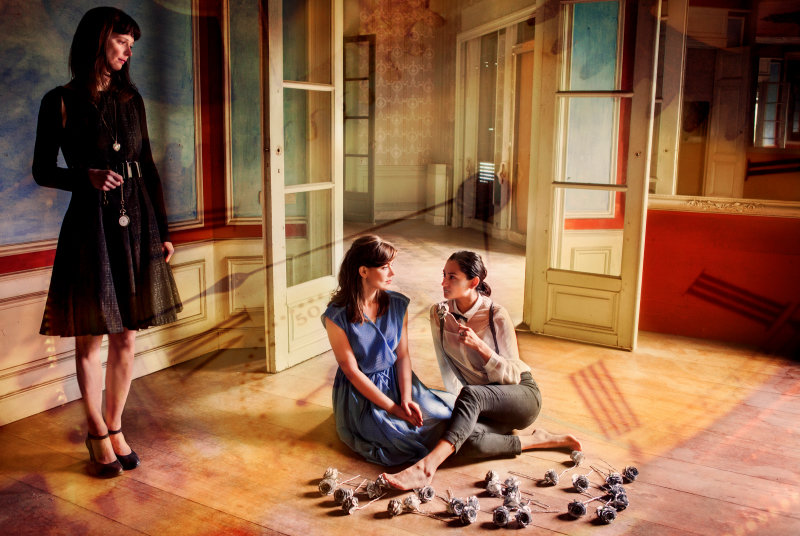
In 18th-century Vienna, the Marschallin, a mature but attractive princess, arranges a marriage between her skirt-chasing nephew Baron Ochs and the beautiful Sophie. The Marschallin’s young lover Octavian sets out as the ‘Rosenkavalier’: he informs Sophie of the proposal by handing her a silver rose, but falls in love with her himself. While the amorous adventures play out, the melancholy Marschallin tries to come to terms with growing older. A powerful story, packed with romantic intrigue and always hovering between laughter and tears: the perfect mix for a true crowd-pleaser. The sensual late romantic music, with the waltz in a leading role, does the rest.

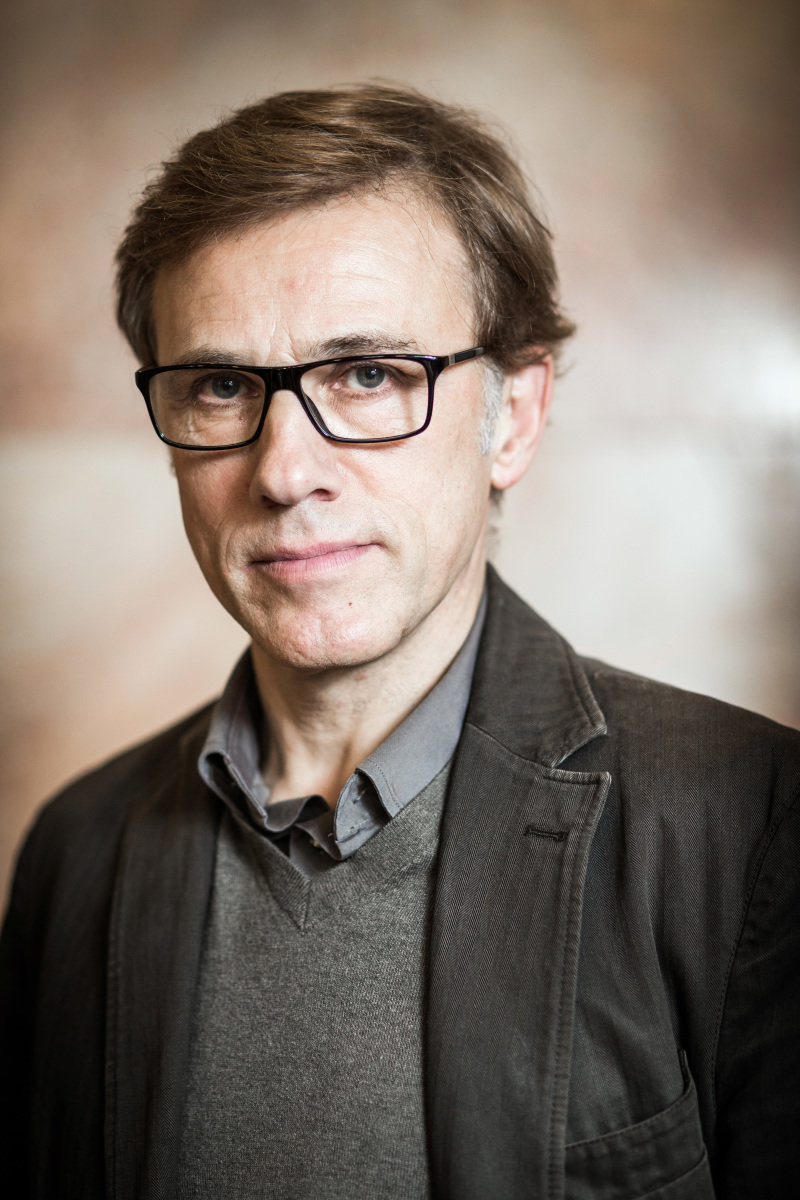
christoph_waltz-9714As far as the directing is concerned, it’s a significant first: two-time Oscar-winning actor Christoph Waltz will be making his opera debut in Antwerp and Ghent, before moving on to Luxemburg and London. He will be familiar to film lovers from his leading roles in films such as Inglorious Basterds and Django unchained (Tarantino), and Carnage (Polanski). In this production, Waltz will be seeking out the border between private and public, with the baroque grandeur of old Vienna as his backdrop.

Language: German. Surtitles: Dutch.

Tickets from € 14.00 to € 160.00

Calendar

Vlaamse Opera Antwerpen

Frankrijklei 3
Antwerpen


  • Sun 15 Dec 2013 – 19:00
  • Tue 17 Dec 2013 – 19:00
  • Fri 20 Dec 2013 – 19:00
  • Sun 22 Dec 2013 – 15:00
  • Thu 26 Dec 2013 – 19:00
  • Sat 28 Dec 2013 – 19:00

Vlaamse Opera Gent

Schouwburgstraat 3
9000 Gent


  • Thu 09 Jan 2014 – 19:00
  • Sat 11 Jan 2014 – 19:00
  • Tue 14 Jan 2014 – 19:00
  • Fri 17 Jan 2014 – 19:00
  • Sun 19 Jan 2014 – 15:00

Team

Waltz is chiefly known as an actor, but has built up experience as a director in his home country. Born in Vienna into a theatrical family, he is certain to deliver a nuanced take on this popular work. Three delightful soprano parts among the leading roles betray Strauss’s preference for the female singing voice. With the Swede Maria Bengtsson and the German-Greek Stella Doufexis, Flanders Opera has secured a truly star-studded cast. The young German soprano Christiane Karg had the honour of being crowned by industry magazine Opernwelt as the ‘Up-and-coming vocal talent of 2009’.

SYNOPSIS

We are in Vienna in 1740, the period under Empress Maria Theresia. Count Octavian is the young lover of Princess Werdenberg, a more mature woman who goes though life under the name of ‘Marschallin’ (‘Marshal’s wife’). After a merry carnival party, Octavian has stayed with the Marschallin and they relive their first night of love as if in a dream. The bad-mannered Baron Ochs auf Lerchenau enters the princess’s house in a rush. He is looking for a young nobleman who is willing to hand a silver rose – a mark of his love – to his future bride, in accordance with the wishes of Faninal, his future father-inlaw. The Marschallin considers Octavian perfect for the task of marriage intermediary or ‘Rosenkavalier’. At the same time, Ochs tries to arrange a rendezvous with the maid ‘Mariandl’ – a rapidly improvised metamorphosis on the part of Octavian. At Faninal’s house, Octavian meets the young Sophie, Ochs’ future bride. There is immediate enchantment on both sides. Sophie flirts openly with Octavian and resists the forced marriage. When the two young people are caught enjoying a tentative kiss, Ochs’ challenges Octavian to a duel. Ochs suffers a scratch. His rage soon gives way to humour and exuberance when he is left alone with a bottle of wine. And the incident with Octavian fades into the background completely when he receives an invitation to a rendezvous with ‘Mariandl’.  A carnival ball is being held in an obscure tavern in a suburb of Vienna. The innkeeper offers a storeroom for the rendezvous between Ochs and Octavian, who is dressed up as the maid. At the very last moment the aim of the arrangement is achieved: to expose Ochs as a shameless womanizer in Faninal’s presence and to declare his forthcoming marriage to Sophie null and void. After a great many intrigues and lots of dressing up, the Marschallin, Octavian and Sophie are left together. Octavian feels caught between his feelings for the two women. The Marschallin, full of melancholy, bids farewell to a dream of love and tries to reconcile herself to ageing. The two youngsters fall into each other’s arms.

Posted in OPera | Tagged , , , , , , , | Leave a comment

La bohème Gala – New Year’s Eve at Sydney Opera House

NYE-australia1

The last night of 2013 is the first night of La bohème. If ever there was a night to dress up, this is it.

With VIP access you’ll leave the crowds behind as you enter the Sydney Opera House, then settle back for an evening with Rodolfo, Mimì, Marcello and Musetta in Gale Edwards’ decadent and dazzling production.

Then, with a heart full of song, stroll out onto the Opera House balcony to see the fireworks the whole world watches.

nyeaustralia2

Giacomo Puccini’s “La bohème”

Gale Edwards’ lavish production inhabits 1930s Berlin, a hub for young impoverished creatives contending with the high cost of round-the-clock hedonism in a city seething with glitzy excess.

Berlin, midwinter, 1934. A painter, a musician, a philosopher and a poet are having a night on the town. Café Momus is too pricey for them – they’ve nothing to weigh down those moth-eaten pockets. But why worry? The landlord is sorted, the bar tab can wait. They’re young and their lofty ideals will keep body and soul together.

And then there’s love. Ah, love. That tingle of electricity as two hands meet. The fire in the eyes of the girl you want so badly. Love will keep us warm, won’t it? Find out, when Puccini’s bohemian boys wake up.

Conductor Andrea Licata
Director Gale Edwards
Set Designer Brian Thomson
Costume Designer Julie Lynch
Lighting Designer John Rayment
   
Mimi Nicole Car
Rodolfo Ji-Min Park
Musetta Sharon Prero
Marcello Giorgio Caoduro
Colline Richard Anderson
Schaunard Shane Lowrencev
Benoit Graeme Macfarlane
Alcindoro Tom Hamilton
Parpignoi Benjamin Rasheed
Officer Clifford Plumpton
Sergeant Malcolm Ede

Australian Opera and Ballet Orchestra

Opera Australia Chorus

Opera Australia Children’s Chorus

If you have further queries about this New Year’s Eve event, please contact the Special Events team on events@opera-australia.org.au, or contact their Box Office during business hours (Australian eastern standard time).

Posted in Music, OPera | Tagged , , , , | Leave a comment

Donizetti’s Tudor trilogy in Wales…

Welsh National Opera Presents:

iamtudor_banner_0 

The Tudors Trilogy

Gaetano Donizetti

New Production

The Tudors is a landmark event. It is the first time Donizetti’s ‘Three Queens’ operas will have been performed together in Britain. Each opera is a complete experience and can be enjoyed on its own. By experiencing all three on consecutive evenings you have an opportunity to lose yourself in potent drama and beautiful music. 

The Tudors will be performed by our world-class Chorus and Orchestra joined by an exceptional cast on a single epic set in costumes which evoke the period with a modern twist. Book for more than one opera and you can make great savings. Please note that bookings of two operas or more cannot be booked online. Call your local venue or book by post or in person. 

Details of all performances of The Tudors Trilogy at each venue are below. 

Birmingham Hippodrome

Anna Bolena 13 November 7pm
Maria Stuarda 14 November 7.15pm
Roberto Devereux 15 November 7.15pm

Venue Cymru, Llandudno

Anna Bolena 20 November 7pm
Maria Stuarda 21 November 7.15pm
Roberto Devereux 22 November 7.15pm

The Mayflower Theatre, Southampton

Anna Bolena 27 November 7pm
Maria Stuarda 28 November 7.15pm
Roberto Devereux 29 November 7.15pm


annabolena_1140_review_0Anna Bolena

Anne is the original Boleyn girl. Few figures in British history have dominated the imaginations of writers, painters and film directors quite like her. Donizetti’s re-imagining of Anne’s final days in the scheming court of Henry VIII is a touching one. It is a portrait of an innocent stranded in a nest of vipers. You will find it hard not to care deeply for her.

Director Alessandro Talevi’s production will highlight personalities over pageantry, and what personalities! Anna Bolena is an exhilarating jewel of bel canto opera filled with poignant arias and moving duets waiting to be discovered by you.

Supported by a lead gift from the Peter Moores Foundation’s Swansong Project and WNO Bel Canto Syndicate.

SYNOPSIS:

Courtiers discuss the state of royal affairs: Queen Anne’s star is sinking since King Henry VIII has fallen in love with another woman. The Queen admits to her lady-in-waiting, Jane Seymour, that she is troubled, and remembers the happiness of her first love.

Jane, who is in fact the King’s new lover, is conscience-stricken but realizes that it is too late to turn back when the King declares his love for her, promising marriage and glory.

Anne’s brother, Lord Rocheford, is surprised to meet Lord Percy, the queen’s former lover. Percy has been called back from exile by the King, who now arrives with a hunting party, followed by Anne and her women. The King has devised Percy’s return as a trap for his wife and orders an officer to spy on the couple.

The page Smeaton, who is in love with the Queen, is on his way to her apartments to return a miniature portrait of her that he had stolen. He hides when Anne appears with Rocheford, who persuades his sister to admit Percy, who is still in love with her. Anne admits that the King no longer loves her but says that she remains faithful. The King bursts in on them and Anne, Percy and Smeaton are arrested.

Anne has been imprisoned and Jane attempts to persuade her to confess her love for Percy, thereby allowing the King to remarry. Anne refuses, and curses the woman who will be her successor. Jane admits that she will be Anne’s successor.

Smeaton has falsely testified to being the Queen’s lover, believing that his confession would save Anne’s life. Anne and Percy are brought before the council. Percy claims that he and Anne are married in the eyes of heaven. Jane pleads with the King to spare Anne’s life but is dismissed. The council’s verdict is announced: the royal marriage is dissolved and Anne must be executed, along with her accomplices.

Anne feverishly imagines that it is her wedding day and remembers her girlhood love for Percy. Her fellow prisoners are brought in and, when the sounds of celebration are heard, Anne realises that the King’s new marriage is inevitable and curses him and his new wife before being led away for execution.

Creative team
Conductor Daniele Rustioni (until 6 Nov)
Andrew Greenwood (from 13 Nov)
Director Alessandro Talevi
Designer Madeleine Boyd
Lighting Designer Matthew Haskins
Movement Maxine Braham

Cast includes
Anne Boleyn Serena Farnocchia (until 23 Oct)
Linda Richardson (from 6 Nov)
Henry VIII Alastair Miles
Jane Seymour Katharine Goeldner
Lord Percy Robert McPherson
Smeaton Faith Sherman
Lord Rocheford Daniel Grice
Lord Hervey Robyn Lyn Evans

annabolenagallery_mark01 annabolenagallery_mark02 annabolenagallery_mark03 annabolenagallery_mark04 annabolenagallery_mark05

ms_webgallery6Maria Stuarda

What would have happened had Elizabeth I and Mary Queen of Scots met face to face? A thrilling imagining of this showdown is at the heart of Maria Stuarda. Donizetti’s riveting opera transports you to a Britain at war with itself and overcome by uncertainty and strife.

Rudolf Frey’s production shines a light on the striking parallels between the two heroines: the imprisoned Mary and Queen Elizabeth; a woman shackled by the demands of office.

Supported by a lead gift from the Peter Moores Foundation’s Swansong Project. Supported by WNO Friends and WNO Idloes Owen Society and WNO Bel Canto Syndicate.

The Court awaits the arrival of Queen Elizabeth, who is expected to announce her marriage to the Duke of Anjou. Elizabeth reveals that she is still undecided as whether to unite the thrones of England and France by this marriage but assures her Court that she will only act for the good of the people. Aside, she confesses her secret love for Robert Dudley, Earl of Leicester. Talbot and the courtiers then plead for mercy towards Mary Stuart, Queen of Scots, imprisoned at Fotheringhay, but Elizabeth is unwilling to relent, a course in which she is encouraged by Sir William Cecil.

Leicester arrives and is ordered by Elizabeth to take her ring to the French envoy as a token of her provisional acceptance of the marriage proposal. Deeply hurt by his cool reaction to this news, the Queen departs. Talbot tells Leicester of a meeting with Mary and gives him a portrait of her, along with a letter begging for his help. Leicester vows to secure Mary’s freedom. When Elizabeth returns she demands to see the letter he is holding. Despite her anger at Mary’s aspirations to the English crown and her intense jealousy of Leicester’s affections, she reluctantly agrees to visit her.

Mary and her companion, Hannah, recollect their early life in France. Hearing the sounds of the Royal Hunt, Mary realizes that Elizabeth is in the vicinity. Leicester arrives and explains that the Hunt is only a pretext for Elizabeth to visit Mary and persuades her to be submissive if she hopes for mercy. As the two women meet for the first time, each feels instant hostility towards the other. Mary humbles herself but Elizabeth responds by accusing her of treachery, murder and debauchery. Mary, taunted beyond endurance, denounces Elizabeth as the bastard daughter of Anne Boleyn.

Cecil urges Elizabeth to sign the order for Mary’s execution, following her complicity in the Babington plot to assassinate the Queen, but Elizabeth is still undecided; she cannot bring herself to condemn an annointed monarch. Cecil eventually succeeds in persuading Elizabeth to sign the warrant. When Leicester learns that Mary has been condemned to death he makes a final plea for her life, upbraiding Elizabeth for her cruelty when she refuses to yield. He is then detailed by the Queen to witness Mary’s execution.

Mary is visited by Talbot and Cecil; the latter hands her the death sentence and leaves her alone with Talbot. He tells her of Elizabeth’s decision that Leicester is to witness her execution. Mary becomes distraught and imagines that she sees the ghosts of her former husband and lover, Darnley and Rizzio. Talbot urges her to place her trust in heaven and to prepare to face her death with resignation.

A waiting crowd watches the preparations for Mary’s execution. Mary bids them farewell and they join her in a final prayer for heavenly pardon. Mary forgives Elizabeth and prays for the welfare of England. She breaks down when Leicester arrives, protesting her innocence and asking him to support her as the hour of her death approaches. A final cannon shot is heard and Mary is led out to the scaffold.

ms_webgallery2 ms_webgallery1

Conductor Graeme Jenkins (until 7 Nov)
Robin Newton (from 14 Nov)
Director Rudolf Frey
Designer Madeleine Boyd
Lighting Designer Matthew Haskins

Cast includes
Queen Elizabeth Adina Nitescu
Mary Stuart Judith Howarth
Leicester Bruce Sledge
Talbot Alastair Miles
Cecil Gary Griffiths

ms_webgallery4 ms_webgallery5

Roberto Devereux

robertodevereux11_0Elizabeth I may rule the world but she does not rule her own heart. When her favourite, Robert Devereux, the Earl of Essex is threatened with charges of treason she strives to save him. Should he ever be arrested he simply has to present her ring to ensure his freedom.<

The public and the private clash with fatal consequences in the trilogy’s final instalment as Elizabeth’s grip on the throne begins to loosen. Roberto Devereux is an explosive operatic drama that enthrals throughout, culminating in a shattering finale.

Supported by a lead gift from the Peter Moores Foundation’s Swansong Project and WNO Bel Canto Syndicate.

In order to prevent rumours and to protect her own reputation, Queen Elizabeth I has sent her lover, Roberto Devereux, on a military mission to Ireland. In his absence, his enemies at court plan to push through a charge of treason against him in Parliament.

Sarah, Duchess of Nottingham anxiously waits for news of Devereux, with whom she had a secret affair some years earlier. Queen Elizabeth has agreed to see Devereux now that he has returned from Ireland. Cecil announces that Parliament is waiting for an answer from the Queen regarding the charges against Devereux.

Devereux obtains an audience with the Queen and she expresses her love for him, overheard by Sarah. Elizabeth gives Devereux a ring, to be returned to her if he is ever in danger, and demands to know whether he loves another woman and, if so to name her.

The Duke of Nottingham, a supporter and ally of Devereux, talks to him about his situation and his concerns about his own wife’s fidelity. Nottingham leaves to attend a meeting at which he hopes to express his support for Devereux.

Sarah and Devereux admit their love for one another but acknowledge that it has no future. He gives her the Queen’s ring and she gives him an embroidered scarf.

Cecil informs the Queen of Parliament’s decision: Devereux is to be sentenced to death for treason. The Queen resists signing the death sentence until she learns that a scarf was found with Devereux when he was arrested. She is shown the scarf, on which she discovers an embroidered declaration of love. Nottingham also sees and recognises the scarf. Elizabeth signs the death warrant.

Sarah receives a letter from Devereux, asking her to take his ring to the Queen and beg for mercy on his behalf. The Duke of Nottingham prevents her from leaving.

Devereux regrets a life of lies and indecision. Cecil comes to take him to the place of execution.

The Queen grieves for Devereux’s impending death. Sarah manages to reach her and gives her the ring. Elizabeth realises that Sarah is her rival. She tries to stop the execution but it is too late. Holding the Duke of Nottingham and Sarah responsible for the death of Devereux, Elizabeth longs for her own death, announcing that James, son of Mary Queen of Scots, will be King after her.

robertodevereux01_0 robertodevereux02_0 robertodevereux03_0 robertodevereux04

Conductor Daniele Rustioni (until 8 Nov)
Christian Capocaccia (from 15 Nov)
Director Alessandro Talevi
Designer Madeleine Boyd
Lighting Designer Matthew Haskins
Movement Maxine Braham

Cast includes
Robert Devereux Leonardo Capalbo
Queen Elizabeth Alexandra Deshorties
Sarah the Duchess of Nottingham Leah-Marian Jones
Duke of Nottingham David Kempster
Walter Raleigh William Robert Allenby
Cecil Geraint Dodd

robertodevereux05_0 robertodevereux06 robertodevereux07 robertodevereux08 robertodevereux09 robertodevereux10_0

Posted in Music, OPera | Tagged , , , , , , , , | Leave a comment

“Orphée aux Enfers” in Marseille

Marseille Opera presents:

from December 27th, 2013 – January 5th, 2014

Orphée aux Enfers

Jacques Offenbach
Friday December 27th, 2013 > 8:00PM
Saturday December 28th, 2013 > 8:00PM
Sunday December 29th, 2013 > 2:30PM
Tuesday December 31st, 2013 > 8:00PM
Friday January 3rd, 2014 > 8:00PM
Sunday January 5th, 2014 > 2:30PM

ADDITIONAL PERFORMANCE
SATURDAY DECEMBER 28TH, 2013 AT 08:00PM

This joyous descent into Pluto’s Underworld domain inspired Offenbach’s “Infernal Gallop” which became universally known as the lovely “French Cancan”.

DURATION : 2H50 (including intermission)

Orphée aux enfers

Opéra bouffon in 2 acts
Libretto by Hector CRÉMIEUX and Ludovic HALÉVY.
First performed in Paris, Bouffes-Parisiens, on Octobre 21st, 1858.
Last performed at Marseille Opera, on December 31st, 1993.
Wallonia Royal Opera and Metz Opera-Theatre Production

Conductor : Samuel JEAN
Director : Claire SERVAIS
Scenic Designer : Dominique PICHOU
Costume Designer : Jorge JARA
Lighting Designer : Jacques CHATELET
Choreographer : Barry COLLINS

CAST

Eurydice : Brigitte HOOL
L’Opinion Publique : Marie-Ange TODOROVITCH
Cupidon : Chloé BRIOT
Diane : Jennifer MICHEL
Vénus : Delia NOBLE
Junon : Anne-Marguerite WERSTER
Minerve : Jennifer COURCIER

Orphée : Philippe TALBOT
Aristée /Pluton : Loïc FÉLIX
Jupiter : Francis DUDZIAK
Mercure : Franck CASSARD
John Styx : Yves COUDRAY
Mars : Jean-Michel MUSCAT

Marseille Opera Orchestra and Chorus

Posted in Music, OPera | Tagged , , , , , | Leave a comment

The Swedish Royal Opera Presents The Magic Flute

The Swedish Royal Opera Presents:

The Magic Flute

A magical opera adventure

The Queen of the Night gives Tamino the task of freeing her daughter Pamina who have been abducted by Sarastro. If Tamino is successful he will win Pamina’s hand in marriage. He is accompanied by Papageno. A magic flute and an enchanted glockenspiel will help them. But nothing is quite as it seems. Are both Pamina’s mother and Sarastro evil? Or neither? Soon Tamino, Papageno and Pamina face some difficult tests…

Mozart’s beloved opera The Magic Flute is a fairy tale in which light, darkness, love and the power of music is in focus. This production, directed by Ole Anders Tandberg, played to packed halls in the autumn of 2012. Now it makes a welcome return!

fst_trollflojten2

Press Quotes


“A lavish staging” “a given success” (DN)

“The stage machinery is booming with trap doors, light sensations and effects” (SvD)

“Forthright, witty and entertaining”
(UNT)

“Freshness and credibility”
“a funny performance”

(SR, Kulturnytt)

fst_trollflojten3b

MusicWolfgang Amadeus Mozart

Libretto Emanuel Schikaneder

Translation Ulf Peter Hallberg

Registration and set design Ole Anders Tandberg

Costumes Maria Geber

Light Ellen Ruge

Choreography Anna Koch

Artistic Director Catherine Aronsson

PERFORMANCES:

Thursday, December 26 15:00
Saturday, January 18 15:00
Tuesday, January 21 19:00
Tuesday, February 11 19:00
Thursday, February 13 12:00
Saturday, February 15 15:00
Wednesday, February 19 19:00
Wednesday, March 5 19:00
Friday, March 7 19:00
Tuesday, March 11 19:00
Wednesday, March 19 19:00
Friday, March 28 19:00

CAST:

Tamino Conny Thimander Daniel Johansson

Pamina Sara Widén Magdalena Risberg

Queen of the Night Carolina Andersson

Sarastro Lennart Forsen 

Papageno Carl Ackerfeldt

Papagena True Gibbs

*Monostatos Daniel Ralphsson

Speaker Mattias Olsson

*Three ladies Marianne Hellgren Staykov  Susann Végh  Katarina Leoson

Death Guard Jesper Taube

Speaker Pintsaar

Conductor Lawrence Rene

SYNOPSIS

Act I

Tamino has gone astray and suddenly assaulted by a snake. He faints, but is rescued by three ladies and meet at the awakening fowlers Papageno. Tamino thinks that Papageno is the one who saved him from the snake, which Papageno not deny.

The three ladies will return and show Tamino a portrait of a girl, Pamina, Night queen’s daughter. They tell us that Pamina has been abducted by Sarastro and Tamino gives the mission to find and free her. To help get him a magic flute to use when in danger. Papageno, his companion who was also given a tool to use in case of danger, a carillon.

Pamina flees from his captors, Monostatos, just when Papageno appears, who tells her that Tamino is going to help her.

Three boys have shown Tamino way to the Temple of Wisdom where he was informed that Pamina is alive. With the help of The Magic Flute, he calls on Papageno, but he can not keep up before Tamino has gone. Monostatos and his bodyguards take Papageno and Pamina to catch, but by the time the game succeed Papageno bewitch them.

Sarastro together Pamina and Tamino, after which he commands his brothers to lead them to conducting the house.
 

Act II

Along with the Brotherhood finds Sarastro Tamino is worthy of being initiated and Pamina shall be his. The first consideration is to remain silent, even if they were tempted by the siren calls of women and seduction attempts.

Monostatos seeking to impose itself Pamina, who at the last moment saved by the Queen of the Night.

When nightfall arrives Queen of the Night and giving her daughter a dagger and orders her to kill Sarastro. Pamina hear Tamino’s flute and find him so, but is met by his silence. She believes that his love for her is gone.

Papageno, who find it difficult to respect the trials, is happy if he gets a glass of wine and a girl. Pamina’s despair at Tamino’s silence and desires rather death, but hindered by the three boys who says that Tamino loves her. She reunited with Tamino and together, they undergo the final trial.

Meanwhile Papageno with their chimes and by means of the three boys found their Papagena.

Together with Night queen searches Monostatos prevent Tamino and Pamina compound, but without success. Tamino and Pamina hailed like the gods of Sarastro and his circle.

startsida_trollflojten4b

If the advent

The Magic Flute is Mozart’s last opera. He wrote a few months before he died. The assignment came from Emanuel Schikaneder who wanted an opera in German to his theater outside Vienna, the Theater auf der Wieden, a scene that attracted a large and broad audience. Schikaneder was theater director, singer, actor, writer and please return in a comic role in the theater that he created himself following the example of commedia dell’arte. This figure was a gardener and his name was Anton. He asked Mozart to create a role in a new opera that reminded him Anton, also, he wanted a piece that contained so many amazing scenes as possible so that the theater’s advanced stage machinery could be used.

The result was a work that is unlike anything else. It mixes high and low, comedy and seriousness, spoken dialogue, virtuosic koloraturarior and chorales. Mozart seems to have wanted to summarize everything he already achieved for the opera stage in a final musical drama will.

Opinions on this Mozart’s last opera diverge. Ingmar Bergman saw performances in the opera when he was little and longed all her life after getting set up. Wolfgang Hildesheimer, who wrote Mozart biography that became the basis for the film Amadeus, felt much better about Don Giovanni.

I saw Bergman’s films as a child and was immediately captivated. In all cases of some parts. Others had me harder; processions, morality, religious mysticism. Maybe it was about the child’s unwillingness to listen to the adults’ sermons about life. That love is the greatest of all, I wanted to discover for yourself, do not get told me from the stage.

Die Zauberflöte has often been criticized for its lack of text and its absurd logic. That there are tricky parts of the text is correct. The description of Monostatos is racist. He is black, arbitrary and violent. Women are either naive or squab prattle witches and above all subordinate officers, at least if you believe Sarastro and his helpers. But the image of women change when you start to listen to the music. Mozart wrote great music to their female characters and Pamina is perhaps the gestalt of all Mozart’s roles would be most deeply human.

Criticism of muddled dramaturgy and immunological processes are unnecessarily harsh. Sure, it may seem odd that the Queen of the Night in the beginning of the opera stands out as the good, the hapless mother and Sarastro as the bad guy who abducted her daughter, and then halfway through the piece interchanged, the bad becomes good, good becomes evil . But really, I think the story will win on the unexpected turn. The picture of reality may Tamino must constantly re-evaluated, he must walk a new path, and it makes the story more believable and scenically more exciting. So it’s also in real life.

I find it hard to believe that two such experienced stage foxes Schikaneder and Mozart did not know what they were doing. A closer look at the action notice also that the story follows the mythical hero of the fairy tale classic dramaturgy. An unexpected event puts the main character in flux (the snake), he gets an assignment (save Pamina) and embarks on a journey. On the way, he meets a strange figure (three boys) who leads him on, he may also be a magic thing to help him along the way (The Magic Flute). He meets resistance, is undergoing trials (trials and tribulation temple), the hardest is a meeting with death (Pamina’s death wish). He overcomes the danger, success is continued on the other side, and return to the world with a new realization about himself.

Mozart himself had full control over the plant’s dramatic and musical form. His ability to create characters with music is unparalleled. Is it possible at all to imagine Papageno or Queen of the Night without music? I can not. They have become universal characters that appear less clear with each new generation to meet them. Therefore, they can also be reinterpreted again and again. How they look, in which time they are placed on the stage, their music sounds as crystal clear. The music is their soul and their fate.

There are only two letter quotes from Mozart Magic Flute from the time of inception. In one, he writes to his wife Constanze in crisis cure in Baden along with Franz Xaver Süss.

“Neither my work makes me more happy, then I’m used to interrupt me and talk a few words with you, and this pleasure is now unfortunately is impossible – if I go up to the piano and sing anything from opera, so I must stop immediately – it raises too much sense to me. ”

We do not know what Mozart sang the opera. But it’s hard not to see parallels between Mozart’s Pamina’s grief and sense of utter hopelessness as portrayed in her aria in the second act. During these last months of his life Mozart lived alone, abandoned by all, even his wife, increasingly aware of their own failure in a city that no longer wanted to hear his music. Rarely has the feeling of abandonment and loneliness portrayed as strong. Pamina sings “If you do not love me more, then get the death comfort me.” But really, the words superfluous. She might as well sing their final statements in a vowel. Try to hum the melody you will hear. Again, it is the music that is the feeling, again becomes Mozart tones of the human voice.

Katarina Aronsson Dramaturg at the Royal Opera

Posted in Music, OPera | Tagged , , , , , , , , , | Leave a comment

“The Magic Flute” at the Metropolitan Opera

The Metropolitan Opera of New York presents:

magicFluteThe Magic Flute

Approximate running time 1 hrs. 40 min.

Julie Taymor’s fanciful production—complete with dancing bears and giant flamingos—is sung in English and runs a brisk 100 minutes in this abridged holiday version for families. The winning cast includes Alek Shrader as Tamino, Eric Owens as Sarastro, and Nathan Gunn as the winsome Papageno.

Performance Dates/Tickets and Info

  • Monday, December 16, 2013, 7:30 pmGlover; Stober, Shagimuratova, Shrader, Gunn, Shenyang, Owens
  • Saturday, December 21, 2013, 8:00 pmGlover; Stober, Shagimuratova, Shrader, Gunn, Shenyang, Owens
  • Tuesday, December 24, 2013, 7:00 pmGlover; Stober, Shagimuratova, Shrader, Gunn, Shenyang, Owens
  • Thursday, December 26, 2013, 11:00 amGlover; Stober, Shagimuratova, Shrader, Gunn, Shenyang, Owens
  • Saturday, December 28, 2013, 8:00 pmGlover; Dunleavy, Lewek, Plenk, Moore, Robbins, Owens
  • Monday, December 30, 2013, 11:00 amGlover; Stober, Lewek, Shrader, Gunn, Shenyang, Owens
  • Thursday, January 2, 2014, 7:00 pmGlover; Stober, Lewek, Shrader, Gunn, Shenyang, Owens
  • Saturday, January 4, 2014, 1:00pmGlover; Stober, Lewek, Shrader, Gunn, Shenyang, Owens

Synopsis

The Magic Flute

A mythical land between the sun and the moon. Three ladies in the service of the Queen of the Night save Prince Tamino from a serpent. When they leave to tell the queen, the birdcatcher Papageno appears (“I’m Papageno”). He boasts to Tamino that it was he who killed the creature. The ladies return to give Tamino a portrait of the queen’s daughter, Pamina, who they say has been enslaved by the evil Sarastro. Tamino immediately falls in love with the girl’s picture (“This portrait’s beauty”). The queen, appearing in a burst of thunder, tells Tamino about the loss of her daughter and commands him to rescue her (“My fate is grief”). The ladies give a magic flute to Tamino and silver bells to Papageno to ensure their safety on the journey and appoint three spirits to guide them (Quintet: “Hm! hm! hm! hm!”).

Sarastro’s slave Monostatos pursues Pamina but is frightened away by Papageno. The birdcatcher tells Pamina that Tamino loves her and is on his way to save her. Led by the three spirits to the temple of Sarastro, Tamino learns from a high priest that it is the Queen, not Sarastro, who is evil. Hearing that Pamina is safe, Tamino charms the wild animals with his flute, then rushes off to follow the sound of Papageno’s pipes. Monostatos and his men chase Papageno and Pamina but are left helpless when Papageno plays his magic bells. Sarastro enters in great ceremony. He punishes Monostatos and promises Pamina that he will eventually set her free. Pamina catches a glimpse of Tamino, who is led into the temple with Papageno.

Sarastro tells the priests that Tamino will undergo initiation rites (“O Isis and Osiris”). Monostatos tries to kiss the sleeping Pamina (“Men were born to be great lovers”) but is surprised by the appearance of the Queen of the Night. The Queen gives her daughter a dagger and orders her to murder Sarastro (“Here in my heart, Hell’s bitterness”).

Sarastro finds the desperate Pamina and consoles her, explaining that he is not interested in vengeance (“Within our sacred temple”). Tamino and Papageno are told by a priest that they must remain silent and are not allowed to eat, a vow that Papageno immediately breaks when he takes a glass of water from a flirtatious old lady. When he asks her name, the old lady vanishes. The three spirits appear to guide Tamino through the rest of his journey and to tell Papageno to be quiet. Tamino remains silent even when Pamina appears. Misunderstanding his vow for coldness, she is heartbroken (“Now my heart is filled with sadness”).

The priests inform Tamino that he has only two more trials to complete his initiation. Papageno, who has given up on entering the brotherhood, longs for a wife instead (“A cuddly wife or sweetheart”). He eventually settles for the old lady. When he promises to be faithful she turns into a beautiful young Papagena but immediately disappears.

Pamina and Tamino are reunited and face the ordeals of water and fire together, protected by the magic flute.

Papageno tries to hang himself on a tree but is saved by the three spirits, who remind him that if he uses his magic bells he will find true happiness. When he plays the bells, Papagena appears and the two start making family plans (Duet: “Pa-pa-pa-pageno!”). The Queen of the Night, her three ladies, and Monostatos attack the temple but are defeated and banished. Sarastro blesses Pamina and Tamino as all join in hailing the triumph of courage, virtue, and wisdom.

Images (Photo: Ken Howard/Metropolitan Opera)

magicflute1 magicflute2 magicflute3 magicflute4 magicflute5

Posted in Music, OPera | Tagged , , , , , , , , | 1 Comment