Donizetti’s Tudor trilogy in Wales…

Welsh National Opera Presents:

iamtudor_banner_0 

The Tudors Trilogy

Gaetano Donizetti

New Production

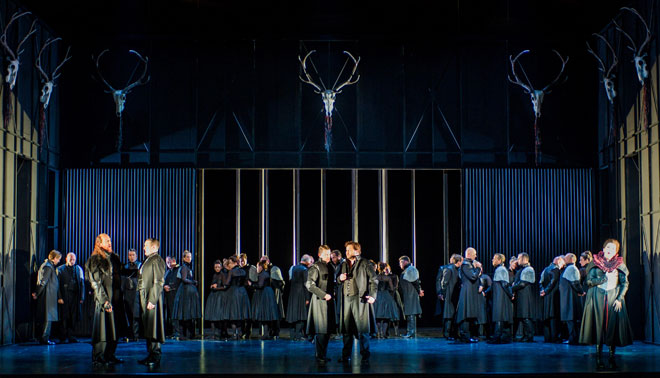
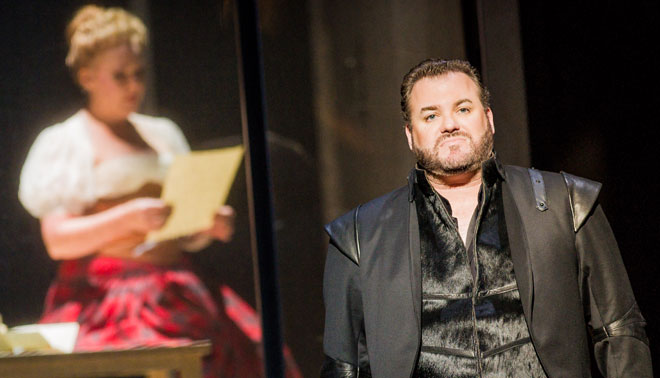
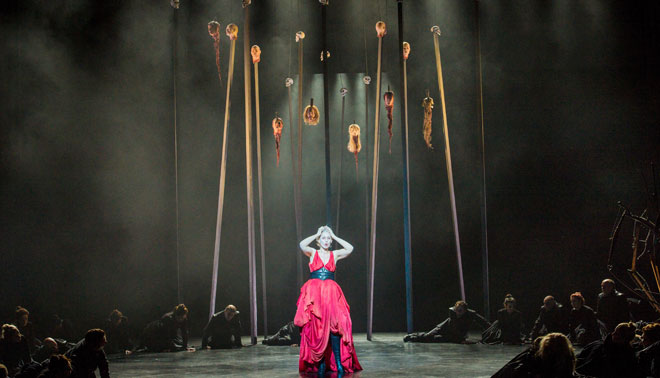
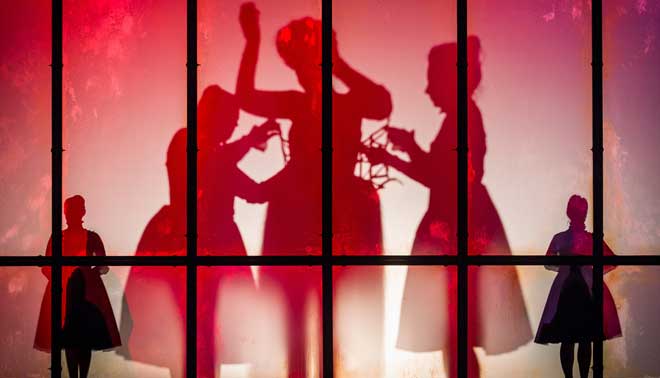
The Tudors is a landmark event. It is the first time Donizetti’s ‘Three Queens’ operas will have been performed together in Britain. Each opera is a complete experience and can be enjoyed on its own. By experiencing all three on consecutive evenings you have an opportunity to lose yourself in potent drama and beautiful music. 

The Tudors will be performed by our world-class Chorus and Orchestra joined by an exceptional cast on a single epic set in costumes which evoke the period with a modern twist. Book for more than one opera and you can make great savings. Please note that bookings of two operas or more cannot be booked online. Call your local venue or book by post or in person. 

Details of all performances of The Tudors Trilogy at each venue are below. 

Birmingham Hippodrome

Anna Bolena 13 November 7pm
Maria Stuarda 14 November 7.15pm
Roberto Devereux 15 November 7.15pm

Venue Cymru, Llandudno

Anna Bolena 20 November 7pm
Maria Stuarda 21 November 7.15pm
Roberto Devereux 22 November 7.15pm

The Mayflower Theatre, Southampton

Anna Bolena 27 November 7pm
Maria Stuarda 28 November 7.15pm
Roberto Devereux 29 November 7.15pm


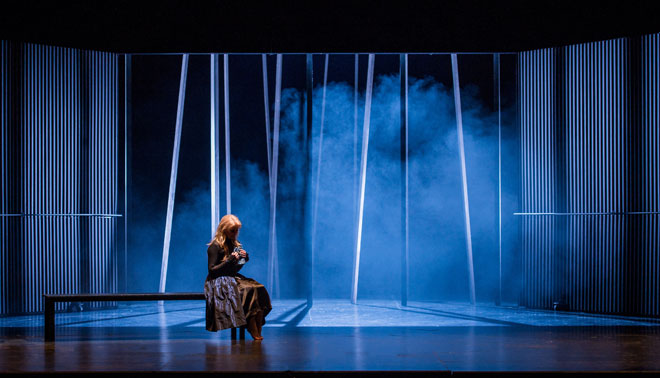
annabolena_1140_review_0Anna Bolena

Anne is the original Boleyn girl. Few figures in British history have dominated the imaginations of writers, painters and film directors quite like her. Donizetti’s re-imagining of Anne’s final days in the scheming court of Henry VIII is a touching one. It is a portrait of an innocent stranded in a nest of vipers. You will find it hard not to care deeply for her.

Director Alessandro Talevi’s production will highlight personalities over pageantry, and what personalities! Anna Bolena is an exhilarating jewel of bel canto opera filled with poignant arias and moving duets waiting to be discovered by you.

Supported by a lead gift from the Peter Moores Foundation’s Swansong Project and WNO Bel Canto Syndicate.

SYNOPSIS:

Courtiers discuss the state of royal affairs: Queen Anne’s star is sinking since King Henry VIII has fallen in love with another woman. The Queen admits to her lady-in-waiting, Jane Seymour, that she is troubled, and remembers the happiness of her first love.

Jane, who is in fact the King’s new lover, is conscience-stricken but realizes that it is too late to turn back when the King declares his love for her, promising marriage and glory.

Anne’s brother, Lord Rocheford, is surprised to meet Lord Percy, the queen’s former lover. Percy has been called back from exile by the King, who now arrives with a hunting party, followed by Anne and her women. The King has devised Percy’s return as a trap for his wife and orders an officer to spy on the couple.

The page Smeaton, who is in love with the Queen, is on his way to her apartments to return a miniature portrait of her that he had stolen. He hides when Anne appears with Rocheford, who persuades his sister to admit Percy, who is still in love with her. Anne admits that the King no longer loves her but says that she remains faithful. The King bursts in on them and Anne, Percy and Smeaton are arrested.

Anne has been imprisoned and Jane attempts to persuade her to confess her love for Percy, thereby allowing the King to remarry. Anne refuses, and curses the woman who will be her successor. Jane admits that she will be Anne’s successor.

Smeaton has falsely testified to being the Queen’s lover, believing that his confession would save Anne’s life. Anne and Percy are brought before the council. Percy claims that he and Anne are married in the eyes of heaven. Jane pleads with the King to spare Anne’s life but is dismissed. The council’s verdict is announced: the royal marriage is dissolved and Anne must be executed, along with her accomplices.

Anne feverishly imagines that it is her wedding day and remembers her girlhood love for Percy. Her fellow prisoners are brought in and, when the sounds of celebration are heard, Anne realises that the King’s new marriage is inevitable and curses him and his new wife before being led away for execution.

Creative team
Conductor Daniele Rustioni (until 6 Nov)
Andrew Greenwood (from 13 Nov)
Director Alessandro Talevi
Designer Madeleine Boyd
Lighting Designer Matthew Haskins
Movement Maxine Braham

Cast includes
Anne Boleyn Serena Farnocchia (until 23 Oct)
Linda Richardson (from 6 Nov)
Henry VIII Alastair Miles
Jane Seymour Katharine Goeldner
Lord Percy Robert McPherson
Smeaton Faith Sherman
Lord Rocheford Daniel Grice
Lord Hervey Robyn Lyn Evans

annabolenagallery_mark01 annabolenagallery_mark02 annabolenagallery_mark03 annabolenagallery_mark04 annabolenagallery_mark05

ms_webgallery6Maria Stuarda

What would have happened had Elizabeth I and Mary Queen of Scots met face to face? A thrilling imagining of this showdown is at the heart of Maria Stuarda. Donizetti’s riveting opera transports you to a Britain at war with itself and overcome by uncertainty and strife.
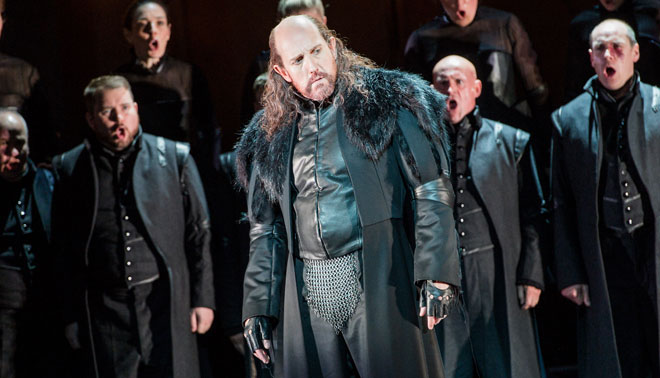
Rudolf Frey’s production shines a light on the striking parallels between the two heroines: the imprisoned Mary and Queen Elizabeth; a woman shackled by the demands of office.

Supported by a lead gift from the Peter Moores Foundation’s Swansong Project. Supported by WNO Friends and WNO Idloes Owen Society and WNO Bel Canto Syndicate.

The Court awaits the arrival of Queen Elizabeth, who is expected to announce her marriage to the Duke of Anjou. Elizabeth reveals that she is still undecided as whether to unite the thrones of England and France by this marriage but assures her Court that she will only act for the good of the people. Aside, she confesses her secret love for Robert Dudley, Earl of Leicester. Talbot and the courtiers then plead for mercy towards Mary Stuart, Queen of Scots, imprisoned at Fotheringhay, but Elizabeth is unwilling to relent, a course in which she is encouraged by Sir William Cecil.

Leicester arrives and is ordered by Elizabeth to take her ring to the French envoy as a token of her provisional acceptance of the marriage proposal. Deeply hurt by his cool reaction to this news, the Queen departs. Talbot tells Leicester of a meeting with Mary and gives him a portrait of her, along with a letter begging for his help. Leicester vows to secure Mary’s freedom. When Elizabeth returns she demands to see the letter he is holding. Despite her anger at Mary’s aspirations to the English crown and her intense jealousy of Leicester’s affections, she reluctantly agrees to visit her.

Mary and her companion, Hannah, recollect their early life in France. Hearing the sounds of the Royal Hunt, Mary realizes that Elizabeth is in the vicinity. Leicester arrives and explains that the Hunt is only a pretext for Elizabeth to visit Mary and persuades her to be submissive if she hopes for mercy. As the two women meet for the first time, each feels instant hostility towards the other. Mary humbles herself but Elizabeth responds by accusing her of treachery, murder and debauchery. Mary, taunted beyond endurance, denounces Elizabeth as the bastard daughter of Anne Boleyn.

Cecil urges Elizabeth to sign the order for Mary’s execution, following her complicity in the Babington plot to assassinate the Queen, but Elizabeth is still undecided; she cannot bring herself to condemn an annointed monarch. Cecil eventually succeeds in persuading Elizabeth to sign the warrant. When Leicester learns that Mary has been condemned to death he makes a final plea for her life, upbraiding Elizabeth for her cruelty when she refuses to yield. He is then detailed by the Queen to witness Mary’s execution.

Mary is visited by Talbot and Cecil; the latter hands her the death sentence and leaves her alone with Talbot. He tells her of Elizabeth’s decision that Leicester is to witness her execution. Mary becomes distraught and imagines that she sees the ghosts of her former husband and lover, Darnley and Rizzio. Talbot urges her to place her trust in heaven and to prepare to face her death with resignation.

A waiting crowd watches the preparations for Mary’s execution. Mary bids them farewell and they join her in a final prayer for heavenly pardon. Mary forgives Elizabeth and prays for the welfare of England. She breaks down when Leicester arrives, protesting her innocence and asking him to support her as the hour of her death approaches. A final cannon shot is heard and Mary is led out to the scaffold.

ms_webgallery2 ms_webgallery1

Conductor Graeme Jenkins (until 7 Nov)
Robin Newton (from 14 Nov)
Director Rudolf Frey
Designer Madeleine Boyd
Lighting Designer Matthew Haskins

Cast includes
Queen Elizabeth Adina Nitescu
Mary Stuart Judith Howarth
Leicester Bruce Sledge
Talbot Alastair Miles
Cecil Gary Griffiths

ms_webgallery4 ms_webgallery5

Roberto Devereux

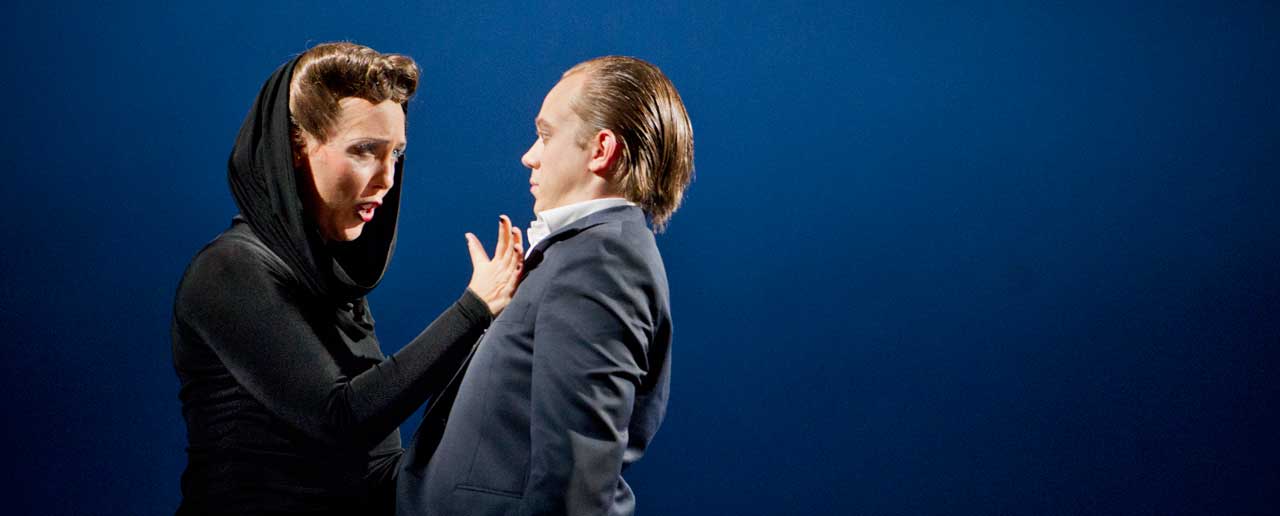
robertodevereux11_0Elizabeth I may rule the world but she does not rule her own heart. When her favourite, Robert Devereux, the Earl of Essex is threatened with charges of treason she strives to save him. Should he ever be arrested he simply has to present her ring to ensure his freedom.<

The public and the private clash with fatal consequences in the trilogy’s final instalment as Elizabeth’s grip on the throne begins to loosen. Roberto Devereux is an explosive operatic drama that enthrals throughout, culminating in a shattering finale.

Supported by a lead gift from the Peter Moores Foundation’s Swansong Project and WNO Bel Canto Syndicate.

In order to prevent rumours and to protect her own reputation, Queen Elizabeth I has sent her lover, Roberto Devereux, on a military mission to Ireland. In his absence, his enemies at court plan to push through a charge of treason against him in Parliament.

Sarah, Duchess of Nottingham anxiously waits for news of Devereux, with whom she had a secret affair some years earlier. Queen Elizabeth has agreed to see Devereux now that he has returned from Ireland. Cecil announces that Parliament is waiting for an answer from the Queen regarding the charges against Devereux.

Devereux obtains an audience with the Queen and she expresses her love for him, overheard by Sarah. Elizabeth gives Devereux a ring, to be returned to her if he is ever in danger, and demands to know whether he loves another woman and, if so to name her.

The Duke of Nottingham, a supporter and ally of Devereux, talks to him about his situation and his concerns about his own wife’s fidelity. Nottingham leaves to attend a meeting at which he hopes to express his support for Devereux.

Sarah and Devereux admit their love for one another but acknowledge that it has no future. He gives her the Queen’s ring and she gives him an embroidered scarf.

Cecil informs the Queen of Parliament’s decision: Devereux is to be sentenced to death for treason. The Queen resists signing the death sentence until she learns that a scarf was found with Devereux when he was arrested. She is shown the scarf, on which she discovers an embroidered declaration of love. Nottingham also sees and recognises the scarf. Elizabeth signs the death warrant.

Sarah receives a letter from Devereux, asking her to take his ring to the Queen and beg for mercy on his behalf. The Duke of Nottingham prevents her from leaving.

Devereux regrets a life of lies and indecision. Cecil comes to take him to the place of execution.

The Queen grieves for Devereux’s impending death. Sarah manages to reach her and gives her the ring. Elizabeth realises that Sarah is her rival. She tries to stop the execution but it is too late. Holding the Duke of Nottingham and Sarah responsible for the death of Devereux, Elizabeth longs for her own death, announcing that James, son of Mary Queen of Scots, will be King after her.

robertodevereux01_0 robertodevereux02_0 robertodevereux03_0 robertodevereux04

Conductor Daniele Rustioni (until 8 Nov)
Christian Capocaccia (from 15 Nov)
Director Alessandro Talevi
Designer Madeleine Boyd
Lighting Designer Matthew Haskins
Movement Maxine Braham

Cast includes
Robert Devereux Leonardo Capalbo
Queen Elizabeth Alexandra Deshorties
Sarah the Duchess of Nottingham Leah-Marian Jones
Duke of Nottingham David Kempster
Walter Raleigh William Robert Allenby
Cecil Geraint Dodd

robertodevereux05_0 robertodevereux06 robertodevereux07 robertodevereux08 robertodevereux09 robertodevereux10_0

Posted in Music, OPera | Tagged , , , , , , , , | Leave a comment

“Orphée aux Enfers” in Marseille

Marseille Opera presents:

from December 27th, 2013 – January 5th, 2014

Orphée aux Enfers

Jacques Offenbach
Friday December 27th, 2013 > 8:00PM
Saturday December 28th, 2013 > 8:00PM
Sunday December 29th, 2013 > 2:30PM
Tuesday December 31st, 2013 > 8:00PM
Friday January 3rd, 2014 > 8:00PM
Sunday January 5th, 2014 > 2:30PM

ADDITIONAL PERFORMANCE
SATURDAY DECEMBER 28TH, 2013 AT 08:00PM

This joyous descent into Pluto’s Underworld domain inspired Offenbach’s “Infernal Gallop” which became universally known as the lovely “French Cancan”.

DURATION : 2H50 (including intermission)

Orphée aux enfers

Opéra bouffon in 2 acts
Libretto by Hector CRÉMIEUX and Ludovic HALÉVY.
First performed in Paris, Bouffes-Parisiens, on Octobre 21st, 1858.
Last performed at Marseille Opera, on December 31st, 1993.
Wallonia Royal Opera and Metz Opera-Theatre Production

Conductor : Samuel JEAN
Director : Claire SERVAIS
Scenic Designer : Dominique PICHOU
Costume Designer : Jorge JARA
Lighting Designer : Jacques CHATELET
Choreographer : Barry COLLINS

CAST

Eurydice : Brigitte HOOL
L’Opinion Publique : Marie-Ange TODOROVITCH
Cupidon : Chloé BRIOT
Diane : Jennifer MICHEL
Vénus : Delia NOBLE
Junon : Anne-Marguerite WERSTER
Minerve : Jennifer COURCIER

Orphée : Philippe TALBOT
Aristée /Pluton : Loïc FÉLIX
Jupiter : Francis DUDZIAK
Mercure : Franck CASSARD
John Styx : Yves COUDRAY
Mars : Jean-Michel MUSCAT

Marseille Opera Orchestra and Chorus

Posted in Music, OPera | Tagged , , , , , | Leave a comment

The Swedish Royal Opera Presents The Magic Flute

The Swedish Royal Opera Presents:

The Magic Flute

A magical opera adventure

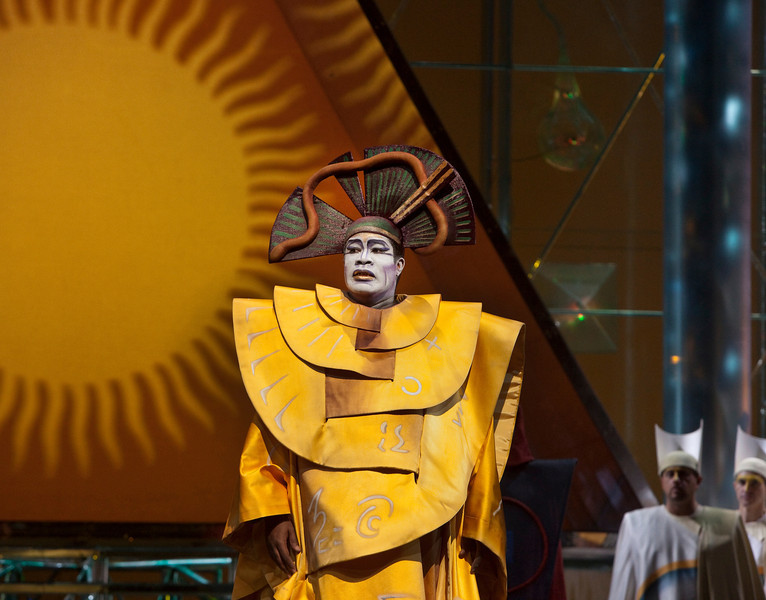
The Queen of the Night gives Tamino the task of freeing her daughter Pamina who have been abducted by Sarastro. If Tamino is successful he will win Pamina’s hand in marriage. He is accompanied by Papageno. A magic flute and an enchanted glockenspiel will help them. But nothing is quite as it seems. Are both Pamina’s mother and Sarastro evil? Or neither? Soon Tamino, Papageno and Pamina face some difficult tests…

Mozart’s beloved opera The Magic Flute is a fairy tale in which light, darkness, love and the power of music is in focus. This production, directed by Ole Anders Tandberg, played to packed halls in the autumn of 2012. Now it makes a welcome return!

fst_trollflojten2

Press Quotes


“A lavish staging” “a given success” (DN)

“The stage machinery is booming with trap doors, light sensations and effects” (SvD)

“Forthright, witty and entertaining”
(UNT)

“Freshness and credibility”
“a funny performance”

(SR, Kulturnytt)

fst_trollflojten3b

MusicWolfgang Amadeus Mozart

Libretto Emanuel Schikaneder

Translation Ulf Peter Hallberg

Registration and set design Ole Anders Tandberg

Costumes Maria Geber

Light Ellen Ruge

Choreography Anna Koch

Artistic Director Catherine Aronsson

PERFORMANCES:

Thursday, December 26 15:00
Saturday, January 18 15:00
Tuesday, January 21 19:00
Tuesday, February 11 19:00
Thursday, February 13 12:00
Saturday, February 15 15:00
Wednesday, February 19 19:00
Wednesday, March 5 19:00
Friday, March 7 19:00
Tuesday, March 11 19:00
Wednesday, March 19 19:00
Friday, March 28 19:00

CAST:

Tamino Conny Thimander Daniel Johansson

Pamina Sara Widén Magdalena Risberg

Queen of the Night Carolina Andersson

Sarastro Lennart Forsen 

Papageno Carl Ackerfeldt

Papagena True Gibbs

*Monostatos Daniel Ralphsson

Speaker Mattias Olsson

*Three ladies Marianne Hellgren Staykov  Susann Végh  Katarina Leoson

Death Guard Jesper Taube

Speaker Pintsaar

Conductor Lawrence Rene

SYNOPSIS

Act I

Tamino has gone astray and suddenly assaulted by a snake. He faints, but is rescued by three ladies and meet at the awakening fowlers Papageno. Tamino thinks that Papageno is the one who saved him from the snake, which Papageno not deny.

The three ladies will return and show Tamino a portrait of a girl, Pamina, Night queen’s daughter. They tell us that Pamina has been abducted by Sarastro and Tamino gives the mission to find and free her. To help get him a magic flute to use when in danger. Papageno, his companion who was also given a tool to use in case of danger, a carillon.

Pamina flees from his captors, Monostatos, just when Papageno appears, who tells her that Tamino is going to help her.

Three boys have shown Tamino way to the Temple of Wisdom where he was informed that Pamina is alive. With the help of The Magic Flute, he calls on Papageno, but he can not keep up before Tamino has gone. Monostatos and his bodyguards take Papageno and Pamina to catch, but by the time the game succeed Papageno bewitch them.

Sarastro together Pamina and Tamino, after which he commands his brothers to lead them to conducting the house.
 

Act II

Along with the Brotherhood finds Sarastro Tamino is worthy of being initiated and Pamina shall be his. The first consideration is to remain silent, even if they were tempted by the siren calls of women and seduction attempts.

Monostatos seeking to impose itself Pamina, who at the last moment saved by the Queen of the Night.

When nightfall arrives Queen of the Night and giving her daughter a dagger and orders her to kill Sarastro. Pamina hear Tamino’s flute and find him so, but is met by his silence. She believes that his love for her is gone.

Papageno, who find it difficult to respect the trials, is happy if he gets a glass of wine and a girl. Pamina’s despair at Tamino’s silence and desires rather death, but hindered by the three boys who says that Tamino loves her. She reunited with Tamino and together, they undergo the final trial.

Meanwhile Papageno with their chimes and by means of the three boys found their Papagena.

Together with Night queen searches Monostatos prevent Tamino and Pamina compound, but without success. Tamino and Pamina hailed like the gods of Sarastro and his circle.

startsida_trollflojten4b

If the advent

The Magic Flute is Mozart’s last opera. He wrote a few months before he died. The assignment came from Emanuel Schikaneder who wanted an opera in German to his theater outside Vienna, the Theater auf der Wieden, a scene that attracted a large and broad audience. Schikaneder was theater director, singer, actor, writer and please return in a comic role in the theater that he created himself following the example of commedia dell’arte. This figure was a gardener and his name was Anton. He asked Mozart to create a role in a new opera that reminded him Anton, also, he wanted a piece that contained so many amazing scenes as possible so that the theater’s advanced stage machinery could be used.

The result was a work that is unlike anything else. It mixes high and low, comedy and seriousness, spoken dialogue, virtuosic koloraturarior and chorales. Mozart seems to have wanted to summarize everything he already achieved for the opera stage in a final musical drama will.

Opinions on this Mozart’s last opera diverge. Ingmar Bergman saw performances in the opera when he was little and longed all her life after getting set up. Wolfgang Hildesheimer, who wrote Mozart biography that became the basis for the film Amadeus, felt much better about Don Giovanni.

I saw Bergman’s films as a child and was immediately captivated. In all cases of some parts. Others had me harder; processions, morality, religious mysticism. Maybe it was about the child’s unwillingness to listen to the adults’ sermons about life. That love is the greatest of all, I wanted to discover for yourself, do not get told me from the stage.

Die Zauberflöte has often been criticized for its lack of text and its absurd logic. That there are tricky parts of the text is correct. The description of Monostatos is racist. He is black, arbitrary and violent. Women are either naive or squab prattle witches and above all subordinate officers, at least if you believe Sarastro and his helpers. But the image of women change when you start to listen to the music. Mozart wrote great music to their female characters and Pamina is perhaps the gestalt of all Mozart’s roles would be most deeply human.

Criticism of muddled dramaturgy and immunological processes are unnecessarily harsh. Sure, it may seem odd that the Queen of the Night in the beginning of the opera stands out as the good, the hapless mother and Sarastro as the bad guy who abducted her daughter, and then halfway through the piece interchanged, the bad becomes good, good becomes evil . But really, I think the story will win on the unexpected turn. The picture of reality may Tamino must constantly re-evaluated, he must walk a new path, and it makes the story more believable and scenically more exciting. So it’s also in real life.

I find it hard to believe that two such experienced stage foxes Schikaneder and Mozart did not know what they were doing. A closer look at the action notice also that the story follows the mythical hero of the fairy tale classic dramaturgy. An unexpected event puts the main character in flux (the snake), he gets an assignment (save Pamina) and embarks on a journey. On the way, he meets a strange figure (three boys) who leads him on, he may also be a magic thing to help him along the way (The Magic Flute). He meets resistance, is undergoing trials (trials and tribulation temple), the hardest is a meeting with death (Pamina’s death wish). He overcomes the danger, success is continued on the other side, and return to the world with a new realization about himself.

Mozart himself had full control over the plant’s dramatic and musical form. His ability to create characters with music is unparalleled. Is it possible at all to imagine Papageno or Queen of the Night without music? I can not. They have become universal characters that appear less clear with each new generation to meet them. Therefore, they can also be reinterpreted again and again. How they look, in which time they are placed on the stage, their music sounds as crystal clear. The music is their soul and their fate.

There are only two letter quotes from Mozart Magic Flute from the time of inception. In one, he writes to his wife Constanze in crisis cure in Baden along with Franz Xaver Süss.

“Neither my work makes me more happy, then I’m used to interrupt me and talk a few words with you, and this pleasure is now unfortunately is impossible – if I go up to the piano and sing anything from opera, so I must stop immediately – it raises too much sense to me. ”

We do not know what Mozart sang the opera. But it’s hard not to see parallels between Mozart’s Pamina’s grief and sense of utter hopelessness as portrayed in her aria in the second act. During these last months of his life Mozart lived alone, abandoned by all, even his wife, increasingly aware of their own failure in a city that no longer wanted to hear his music. Rarely has the feeling of abandonment and loneliness portrayed as strong. Pamina sings “If you do not love me more, then get the death comfort me.” But really, the words superfluous. She might as well sing their final statements in a vowel. Try to hum the melody you will hear. Again, it is the music that is the feeling, again becomes Mozart tones of the human voice.

Katarina Aronsson Dramaturg at the Royal Opera

Posted in Music, OPera | Tagged , , , , , , , , , | Leave a comment

“The Magic Flute” at the Metropolitan Opera

The Metropolitan Opera of New York presents:

magicFluteThe Magic Flute

Approximate running time 1 hrs. 40 min.

Julie Taymor’s fanciful production—complete with dancing bears and giant flamingos—is sung in English and runs a brisk 100 minutes in this abridged holiday version for families. The winning cast includes Alek Shrader as Tamino, Eric Owens as Sarastro, and Nathan Gunn as the winsome Papageno.

Performance Dates/Tickets and Info

  • Monday, December 16, 2013, 7:30 pmGlover; Stober, Shagimuratova, Shrader, Gunn, Shenyang, Owens
  • Saturday, December 21, 2013, 8:00 pmGlover; Stober, Shagimuratova, Shrader, Gunn, Shenyang, Owens
  • Tuesday, December 24, 2013, 7:00 pmGlover; Stober, Shagimuratova, Shrader, Gunn, Shenyang, Owens
  • Thursday, December 26, 2013, 11:00 amGlover; Stober, Shagimuratova, Shrader, Gunn, Shenyang, Owens
  • Saturday, December 28, 2013, 8:00 pmGlover; Dunleavy, Lewek, Plenk, Moore, Robbins, Owens
  • Monday, December 30, 2013, 11:00 amGlover; Stober, Lewek, Shrader, Gunn, Shenyang, Owens
  • Thursday, January 2, 2014, 7:00 pmGlover; Stober, Lewek, Shrader, Gunn, Shenyang, Owens
  • Saturday, January 4, 2014, 1:00pmGlover; Stober, Lewek, Shrader, Gunn, Shenyang, Owens

Synopsis

The Magic Flute

A mythical land between the sun and the moon. Three ladies in the service of the Queen of the Night save Prince Tamino from a serpent. When they leave to tell the queen, the birdcatcher Papageno appears (“I’m Papageno”). He boasts to Tamino that it was he who killed the creature. The ladies return to give Tamino a portrait of the queen’s daughter, Pamina, who they say has been enslaved by the evil Sarastro. Tamino immediately falls in love with the girl’s picture (“This portrait’s beauty”). The queen, appearing in a burst of thunder, tells Tamino about the loss of her daughter and commands him to rescue her (“My fate is grief”). The ladies give a magic flute to Tamino and silver bells to Papageno to ensure their safety on the journey and appoint three spirits to guide them (Quintet: “Hm! hm! hm! hm!”).

Sarastro’s slave Monostatos pursues Pamina but is frightened away by Papageno. The birdcatcher tells Pamina that Tamino loves her and is on his way to save her. Led by the three spirits to the temple of Sarastro, Tamino learns from a high priest that it is the Queen, not Sarastro, who is evil. Hearing that Pamina is safe, Tamino charms the wild animals with his flute, then rushes off to follow the sound of Papageno’s pipes. Monostatos and his men chase Papageno and Pamina but are left helpless when Papageno plays his magic bells. Sarastro enters in great ceremony. He punishes Monostatos and promises Pamina that he will eventually set her free. Pamina catches a glimpse of Tamino, who is led into the temple with Papageno.

Sarastro tells the priests that Tamino will undergo initiation rites (“O Isis and Osiris”). Monostatos tries to kiss the sleeping Pamina (“Men were born to be great lovers”) but is surprised by the appearance of the Queen of the Night. The Queen gives her daughter a dagger and orders her to murder Sarastro (“Here in my heart, Hell’s bitterness”).

Sarastro finds the desperate Pamina and consoles her, explaining that he is not interested in vengeance (“Within our sacred temple”). Tamino and Papageno are told by a priest that they must remain silent and are not allowed to eat, a vow that Papageno immediately breaks when he takes a glass of water from a flirtatious old lady. When he asks her name, the old lady vanishes. The three spirits appear to guide Tamino through the rest of his journey and to tell Papageno to be quiet. Tamino remains silent even when Pamina appears. Misunderstanding his vow for coldness, she is heartbroken (“Now my heart is filled with sadness”).

The priests inform Tamino that he has only two more trials to complete his initiation. Papageno, who has given up on entering the brotherhood, longs for a wife instead (“A cuddly wife or sweetheart”). He eventually settles for the old lady. When he promises to be faithful she turns into a beautiful young Papagena but immediately disappears.

Pamina and Tamino are reunited and face the ordeals of water and fire together, protected by the magic flute.

Papageno tries to hang himself on a tree but is saved by the three spirits, who remind him that if he uses his magic bells he will find true happiness. When he plays the bells, Papagena appears and the two start making family plans (Duet: “Pa-pa-pa-pageno!”). The Queen of the Night, her three ladies, and Monostatos attack the temple but are defeated and banished. Sarastro blesses Pamina and Tamino as all join in hailing the triumph of courage, virtue, and wisdom.

Images (Photo: Ken Howard/Metropolitan Opera)

magicflute1 magicflute2 magicflute3 magicflute4 magicflute5

Posted in Music, OPera | Tagged , , , , , , , , | 1 Comment

“The Woman without a Shadow” at the Metropolitan opera

The Metropolitan Opera of New York presents:

dieFrau

Die Frau ohne Schatten
(The Woman without a Shadow)

Tuesday, November 26, 2013, 7:30 pm – 11:32 pm

CAST

ConductorVladimir Jurowski
The EmpressAnne Schwanewilms
The Dyer’s WifeChristine Goerke
The NurseIldikó Komlósi
The EmperorTorsten Kerl
BarakJohan Reuter

THE PRODUCTION TEAM

Production: Herbert Wernicke
Sets, Costumes, and Lighting:Herbert Wernicke

Approximate running time 4 hrs. 2 min.

A legendary Met production directed by the late Herbert Wernicke returns for the first time in ten years. The fantastical genius of the Strauss score and the Hofmannsthal libretto will be interpreted by conductor Vladimir Jurowski and a thrilling cast. Anne Schwanewilms and Torsten Kerl are the otherworldly Empress and Emperor, and Johan Reuter is Barak. Christine Goerke, the rising dramatic soprano star, returns to the Met as the Dyer’s Wife, whose shadow the Empress must win to free herself from a fatal decree.

Vladimir Jurowski “conducts with abiding passion, sensitivity and propulsion. The Met orchestra plays virtuosically for him… Christine Goerke imbues the mood swings of the Dyer¹s Wife with gutsy ardour and vocal grandeur… Richard Paul Fink makes a major impression in the minor duties of the Spirit Messenger.” (Financial Times)

“…an overwhelming artistic experience. It’s how you dream opera ought to be.” (New York Observer)

Christine Goerke “has a voice of immense force and wide-ranging expressivity… Absolutely go see her…” (Alex Ross, “The Rest Is Noise”)

“Enchanting… Wernicke’s production captures the wondrous fantasy of the opera and exposes its human core.” (New York Times)

“Enthralling… an engrossing, visually beautiful… realization” (New York Times)

“Dazzling… Wernicke’s sets, costumes, lighting and stage action do a marvelous job of bringing to life the work.” (AP)

The world of the invisible spirit god Keikobad is mysterious and unfathomable and encompasses the past, the present, and the hereafter.

Synopsis

Act I
Twelve months have passed since the Emperor has taken as his wife the daughter of the spirit god Keikobad, whose mother was a mortal woman.

For the 12th time in one year a messenger from Keikobad demands from the Empress’s Nurse information on the condition of the Empress, who is the daughter of Keikobad and a mortal woman. As a half-spirit, she can neither bear children nor cast a “shadow.” If she seeks closeness to humans, her father’s empire will be threatened. The Empress must acquire a “shadow” within three days or she will have to return to her father, and her husband, the Emperor, will be turned into stone.

Coming from his wife’s chamber, the Emperor tells the Nurse of his plans to go hunting. He reminisces about how he won the Empress to be his wife: While he was hunting a white gazelle that cast no shadow, the wings of his red hunting falcon blinded the animal. When she fell and he attacked her with a spear, the gazelle changed into a woman. The falcon was wounded and lost. The wily Nurse finds out that the Emperor will be gone for three days. He admonishes her to be vigilant and departs.

The Empress awakens and mourns the loss of a talisman that gave her the power of transformation. She longs for the body of the white gazelle and for the wings of a bird. The long lost falcon returns, and when the Empress recognizes him she detects tears in his eyes. He tells her that she cannot cast a “shadow” and that the Emperor must turn to stone. Frightened by the ominous prophecy, the Empress begs the Nurse for help. With malicious eagerness, the Nurse shows her the way to the world of humans, where a “shadow” can be found. They delve into the abyss of the human world.

In the shabby world of the dyer Barak and his Wife, his three brothers fight over a small piece of bread. The Dyer’s Wife separates the fighting men. Barak comes home and sends away his quarrelling brothers who deeply resent their sister-in-law. His Wife has lost her patience but her annoyance is deflected by Barak’s pity. He repeats his wish to have children, but she closes her mind to his entreaties and continues her defensive nagging. Barak, loaded with his goods, leaves the house.

Disguised as servants. the Nurse and the Empress appear on the staircase connecting the Empress’s glass world with the abyss of the human world. In the home of the dyer Barak, his frightened Wife is suspicious about the Nurse’s flattery. The Empress is enthralled with the human woman. The Wife feels mocked. The Nurse awakens her curiosity with a remark about a secret and entices her to make a bargain for the “shadow” that she, as a human, can cast. She tempts the hesitating woman with jewelry and transforms her into a princess surrounded by slaves. Barak’s Wife admires herself in the mirror and succumbs to the magic when the Apparition of a Young Man appears. When the Empress urgently questions her about the bargain for the “shadow,” the Young Man Vanishes.

As the Wife is about to conclude the agreement, she hears Barak return. She feels guilty because she has not prepared her husband’s evening meal and divides the bed. The Nurse and the Empress promise to return for the next three days. Left alone, Barak’s Wife is alarmed by the sound of invisible children’s voices. She imagines that they are reproaching her as a cold-hearted mother. Barak returns. The Wife keeps her promise to the Nurse of denying herself to her husband as the two go off to separate beds. The night watchmen’s call extols the glories of marriage and parenting.
Act II
The next morning at Barak’s home. The servants (the Nurse and the Empress in disguise) escort the departing Barak. As soon as he is gone, the Nurse calls upon the Apparition of a Young Man. The woman believes she hates her husband and thinks it would be easy to deceive him. When Barak returns he interrupts the encounter between the woman and the Young Man. For the first time the Empress shows her compassion for the dyer and her doubts about the machinations of the Nurse. Barak is accompanied by his brothers and a throng of beggar children. He is happy, but his Wife turns her back on him. He generously invites the children and the people from the street to dine at his house. The Wife refuses all food.

Searching for his wife, the Emperor roams through the dreary forest and finds his red falcon, who guides him to the Empress’s house. He finds the house to be empty. The Emperor’s suspicions flare up and he hides and watches the furtive return of the Nurse and the Empress. The Emperor erupts with jealousy and wants to kill his wife. He embarks on his path of trial and suffering with the falcon as his guide.

Barak is working, and the Nurse and his Wife impatiently wait for him to depart. He is tired and wants a drink. The Nurse drugs his drink and he falls asleep. Again the Nurse summons the Apparition of a Young Man. The Dyer’s Wife is at first reluctant, displaying heightened resistance, then approaches the apparition. At the last moment she becomes aware of her guilt, recoils, and calls out for Barak to help, awakening the drugged man who looks around bewildered. The gloating Nurse makes the Apparition of a Young Man vanish. Barak’s Wife believes herself free and leaves accompanied by the Nurse. The Empress is filled with compassion and affection for Barak.

The Empress is entwined in the Nurse’s evil game; she is innocently guilty. The spirit child is increasingly attracted to the human world, while the lowly and demonic Nurse detests anything human. Attracted to the humans, the Empress hears Barak’s soul speak to her in a nightmarish vision. His essence moves her; she feels guilty because for her benefit he will be deprived of his life’s happiness. She senses that everything human is dying under her touch. The call of the falcon echoes in her. In a lucid dream she sees herself in the greatest torment and anguish and her husband already turned to stone. She feels for Barak. She cannot help the one and she is bringing doom to the other. Only her death seems to be a solution.

The third night has fallen. The Nurse fears that she has conjured Keikobad’s anger with her wicked intrigue. The demonic evil drives her on her path to perdition. The Empress has matured through her insights. She wants to stay among the humans. The Dyer’s Wife pounces on Barak with false confessions of her own unfaithfulness. Barak and his brothers discern that the woman is no longer the same: she has sold her soul, her “shadow.” Angered, the dyer wants to kill her,but is restrained by his brothers. The Nurse encourages the Empress to steal her ownerless “shadow,” but the Empress refuses to commit the robbery. Her newly acquired human emotion, compassion, drives her to self-sacrifice. The pact is foiled. The deal has failed. The Nurse leads the Empress back to the spirit world. Barak and his Wife remain behind bewildered.

Act III
The same night. Barak and his Wife find themselves mired in a deep emotional conflict and at the mercy of tormenting thoughts, remorse, and recognition. They must pass the last great test separated from each other. They now realize the inseparability of their love, and they are consumed by reproach and hope. A voice from above shows them the steps that will lead them upward to freedom from his labyrinth of guilt, despair, and unfulfilled longing.

A boat without a pilot approaches. It brings the Empress and the Nurse to the gates of the spirit world. The Empress remembers the mysterious gate from her dream—she recognizes the pre-ordained path and parts forever from the Nurse, who desperately attempts to hold her back. The Empress is admitted through the gate and enters the spirit world. The Nurse is damned and expelled from the spirit life. The boat carries her back to the human world as Barak and his Wife appear seeking each other.

The Empress wants to submit to her father’s judgment. On her way to him she happens on a body of gleaming golden water. The Guardian of the Threshold extols Barak’s Wife’s “shadow” and exhorts the Empress to drink from the water of life. Guilt-ridden, the Empress recalls her attempt at defrauding Barak and retreats from the beckoning water. The water vanishes. The Empress continues searching for her invisible father; she wants to hear his sentence.

When the hall opens the Emperor is visible, rigid and stony. Only his eyes seem to live. The Empress shrinks back in horror. Once again, the Guardian of the Threshold calls out to encourage her to accept Barak’s Wife’s “shadow” and to drink of the water. After a harrowing inner fight, the Empress refuses. With this, she has won. Keikobad passes his sentence: the Emperor is released from his suffering. Barak finds his Wife. The rapturous couples are reunited. The power of self-sacrificing love, the awareness of the responsibility toward the present and the future of humanity, and the willingness to suffer and even to face death have helped both couples pass the tests. —Herbert Wernicke

Richard Strauss
Die Frau ohne Schatten
Libretto by Hugo von Hofmannsthal

Premiere: Vienna State Opera, 1919
The fourth collaboration of Richard Strauss and librettist Hugo von Hofmannsthal was in many ways their most ambitious: a heavily symbolic morality tale about love and marriage that unfolds in a fairy-tale world of multiple dimensions, from the gritty and earthy to the ethereal. The authors saw their work as a thematic heir to Mozart’s Die Zauberflöte, but the two operas—separated by 130 years of music history—present radically different profiles. Die Frau ohne Schatten (“The Woman without a Shadow”) is a highly poetic fantasy replete with the psychoanalytical asides typical of the Viennese milieu in which it was created. Its five lead roles are daunting even by Strauss’s demanding standards, while the orchestral requirements and staging challenges alone assure this opera a unique spot in the repertory. The story concerns two couples: the Emperor and Empress—he a mortal human, she the daughter of the spirit god Keikobad—and Barak the Dyer (the opera’s only character who has a name), a poor but decent man, and his dissatisfied young wife. Between them stands the Empress’s Nurse, a diabolical woman of the spirit world who hates anything human. After a year of marriage, the Empress is still without a shadow—Hofmannsthal’s symbol for motherhood. If she doesn’t acquire one within three days, she will return to her father and the Emperor will be turned to stone. In order to prevent this, the Nurse plots to steal a shadow from the Dyer’s Wife, and the Empress must confront the implications of her choices and the challenge of becoming a complete human being. Strauss and Hofmannsthal’s creation of such a grand tale of husbands, wives, and children was informed by the trauma of World War I and the collapse of the Habsburg Empire. The resulting opera is unique: a colossal structure of lofty fantasy that glorifies the simple pleasures of family life and love over exotic illusions of happiness.

The Creators
Richard Strauss (1864–1949) composed an impressive body of orchestral works and songs before turning to opera. After two early failures, Salome (1905) caused a theatrical sensation, and the balance of his long career was largely dedicated to the stage. His next opera, Elektra(1909), was his first collaboration with Hugo von Hofmannsthal (1874–1929), a partnership that became one of the most remarkable in theater history. Hofmannsthal emerged as an author and poet within the fervent intellectual atmosphere of Vienna at the turn of the last century. The two artists’ personalities were very different—Hofmannsthal enjoyed the world of abstract ideas, while Strauss was famously simple in his tastes—which makes their collaboration all the more remarkable.

The Setting
The opera takes place in the mythical Empire of the South-Eastern Islands. The story moves between the humble dwelling of the Dyer and his Wife, in and around the palace of the Emperor and the Empress, in the forest, and in a grotto beneath the realm of the spirit god Keikobad.

The Music
Strauss’s score calls for extraordinarily large musical forces, including an on-stage orchestra of winds and brass (plus thunder machine and organ), in addition to a large pit orchestra with such augmentations as glass harmonica, two celestas, and an extravagant percussion section that features a slapstick, castanets, and Chinese gongs. The opera begins without a prelude; orchestral interludes throughout the three acts convincingly facilitate the transitions between the levels of existence. The vocal writing is remarkable, including such unusual touches as the three sopranos and three baritones that represent the voices of the Dyer’s and his Wife’s unborn children. The Emperor’s heroic solo scene (Act II, Scene 2) is a notable and rare example of Strauss’s extended writing for tenor. All five lead roles require great strength, stamina, and musicality: beyond penetrating the dense orchestration, the singers are also expected to produce elegant and even delicate passages (the Empress’s entrance aria includes coloratura and trills). The final moments of Act I offer a good example of some of Strauss’s surprising musical effects: while much of the opera’s otherworldly music is assigned to the spirit world, one of the score’s most ravishing sequences is sung by three offstage baritones who wander through the dirty town as Night Watchmen, urging husbands and wives to love and cherish each other throughout the dark hours.

Die Frau ohne Schatten at the Met
The Met premiere of Die Frau ohne Schatten was a memorable event: a spectacular staging directed and designed by Nathaniel Merrill and Robert O’Hearn, unveiled as the fourth of nine new productions during the company’s inaugural season at Lincoln Center, on October 2, 1966. Karl Böhm conducted a cast led by Leonie Rysanek, Christa Ludwig, Irene Dalis, James King, and Walter Berry in his Met debut. Others artists who appeared in this production include Inge Borkh, Helga Dernesch, and Bernd Weikl. Erich Leinsdorf led five memorable performances in 1981 with singers including Eva Marton, Mignon Dunn, and Birgit Nilsson in her final staged Met performance. The current production by Herbert Wernicke (which remained his only Met staging) premiered in 2001, with Christian Thielemann conducting Deborah Voigt, Gabriele Schnaut, Reinhild Runkel, Thomas Moser, and Wolfgang Brendel.

dieFrau1 dieFrau2 dieFrau3 dieFrau4 dieFrau5 dieFrau6 dieFrau7 dieFrau8 dieFrau9 dieFrau10

Posted in Music, OPera | Tagged , , , , , , , , | Leave a comment

“Eugene Onegin” at the Metropolitan Opera

Saturday, November 23, 2013, 8:00 pm – 11:25 pm

onegin1

CAST

Conductor: Alexander Vedernikov
Tatiana: Marina Poplavskaya
Olga: Elena Maximova
Lenski: Rolando Villazón
Onegin: Peter Mattei
Gremin: Stefan Kocán

THE PRODUCTION TEAM

Production: Deborah Warner
Set Designer:Tom Pye
Costume Designer: Chloe Obolensky
Lighting Designer: Jean Kalman
Video Designers: Ian William Galloway, Finn Ross
Choreographer: Kim Brandstrup

Scenarios of unrequited love are the stock-in-trade of opera composers, but with Eugene Onegin Tchaikovsky achieved something far beyond another varia-
tion on an all-too-familiar theme. For Deborah Warner, whose new production opens the Met season on September 23, the opera offers “a complete portrait of the human condition, viewed through the frame of the young approaching
life and love for the first time.”

Capturing that may sound like a tall order, but a sensitive presentation of Tchaikovsky’s richly lyrical masterpiece can rank among the most moving experiences an audience can have in the opera house. The Met’s new Onegin features the added benefit of a dream cast conducted by the remarkable Russian maestro Valery Gergiev. Anna Netrebko under- takes the role of the shy ingénue Tatiana, whose heart is broken after she confesses her love to the charming but uninterested Onegin. Polish baritone Mariusz Kwiecien, another Met favorite, takes on the title role, and tenor Piotr Beczala is the poet Lenski, Onegin’s ill-fated friend who hot-headedly challenges him to a duel over a meaningless flirtation. (Later in the season, a second cast will include Marina Poplavskaya, Peter Mattei, and Rolando Villazón in an eagerly anticipated return to the Met stage.)

Onegin was once considered “exotic” by virtue of its Russianness—completed in 1881, it took until 1920 to have its American premiere, when the Met introduced the work in an Italian translation— but today it is recognized as a core repertory work, a counterpart to the ceremonial grandeur and mystery of Mussorgsky’s epic Boris Godunov. Both operas now form the twin pillars of the Russian repertoire regularly produced around the world.

Tchaikovsky’s ability to give dimension to his characters through music, says Warner, is extraordinary. “It’s as big and luxurious a subject as talking about character in Shakespeare.” She sees the core of the opera as an exploration of “lost opportunity” resulting from “the fabulous mistakes these young people make.” Warner expresses an intense sympathy for what the characters endure that mirrors Tchaikovsky’s own compassion for the plight of these figures.

The match of composer and subject matter in Eugene Onegin has come to seem inevitable. Curiously, though, Tchaikovsky initially balked when a singer friend casually suggested making an opera out of the epic novel-in-verse Alexander Pushkin had published between 1825 and 1832. There were at least two good reasons for his hesitation. Pushkin’s Eugene Onegin had acquired a sacrosanct status that might be compared to that of Goethe’s Faustin Western Europe. To meddle with such an icon was to invite criticism from the start.

In fact there’s always been a contingent ready to accuse Tchaikovsky of being unfaithful to the spirit of Pushkin’s creation. On a purely practical level, Tchaikovsky worried that Eugene Onegin was inherently undramatic, at least in the sense of a clear linear plot. The essence
of Pushkin’s epic, after all, is to be found in its narrative style and tone, not in
the loosely strung-together sequence of incidents it recounts. Fortunately for opera lovers, Tchaikovsky overcame his doubts. The chief reason usually cited (and one suggested by the composer himself) is that a real-life episode prompted his change of heart. In the spring of 1877, Antonina Milyukova, one of his former students, sent an epistolary confession of love—an uncanny echo of the central incident of the opera’s first act, the effects of which ripple through the tragic series of misunderstandings between Tatiana and Onegin.

It’s hard to tell whether art imitated life or vice versa. The sudden appearance of Antonina’s pleading letters may have sensitized Tchaikovsky to the hidden potential of Pushkin’s work. Or his recent thinking about Onegin may have caused him to resolve not to repeat the hero’s cold rejection of a vulnerable young woman.

Whichever was the case, Tchaikovsky made a hasty decision to marry Antonina in July. Contemporary scholarship
has called into question the standard moralizing depictions of a composer “tormented” by his preference for his own sex. His failed attempt at a heterosexual marriage—it didn’t last even three months, and Tchaikovsky deserted his new bride by early fall—may actually have attuned him all the more to the value of emotional honesty in a way that directly inspired
his work on Eugene Onegin. Despite
the personal crisis of his ill-advised marriage, Tchaikovsky in fact benefited from a creative surge around this time, completing the score by early 1878.

The matter of emotional honesty—and its consequences—is, for Warner, the key to the sensibility of the operatic Onegin: “What matters most to me here is the pursuit of truth.Onegin is on a par with Chekhov. It is absolutely the same territory. You want to believe these people are living and breathing and feeling utterly honestly, truthfully.”

Such an interpretation accords well with Tchaikovsky’s own perception of the path he was embarking on with Eugene Onegin. What he originally feared as a liability—the perceived lack of a traditional external plot—allowed him to focus on an innovative approach for which his musical sensibility was extremely well suited. “Let my opera be undramatic, let it have little action,” Tchaikovsky wrote to his brother Modest, who had a hand in the libretto crafted from Pushkin’s text by Konstantin Shilovsky and the composer himself, “but I am in love with the
image of Tatiana. I am enraptured with Pushkin’s verse, and I am writing music for them because I feel drawn to them.”

The limitations of operatic convention had frustrated Tchaikovsky’s previous efforts for the stage, and he even decided to destroy the scores of his first two operas. A year before plunging into Onegin, in 1876, the composer had made the pilgrimage to Bayreuth for the world premiere of the entire Ring cycle and found himself distinctly under- whelmed by the Wagnerian cosmos of gods and heroes. The “unheroic” events of Pushkin’s story, by contrast, opened the door to a lyrical, emotional realism
of enormous theatrical potential. Within
a framework that includes references
to the spectacle of grand opera—in the famous dance music pulsating through the party scenes that serve as structural pillars—Tchaikovsky sculpts an intensely intimate drama of the inner lives of his characters. Artifice and convention are ironically contrasted with the spontaneity of untrammeled feeling. Tellingly, the score’s most admired passages are essentially character monologues. Even the powerful final confrontation between Tatiana and Onegin unfolds as a sequence of solos: this is a tragic love story with no love duets.

Warner’s reference to Anton Chekhov is particularly apt. The playwright, whom Tchaikovsky befriended in his later years, expressed admiration for the manner in which Onegin had been adapted to the stage. (The two artists even came close to collaborating on one of the great “what-if” operas.) Onegin’s dramaturgical structure as a chain of emotionally revealing vignettes is stylisticaly similar to many of Chekhov’s plays, and instead of labeling Eugene Onegin an opera, Tchaikovsky called it “lyric scenes.”

Thus Warner’s new production forwards the setting by a few notches, from the time of Pushkin to the later
19th century, as to be contemporaneous with Chekhov and Tchaikovsky. In part, she explains, this was because the earlier time frame happens to fall smack in the middle of what’s become associated with “the cliché of operatic costume.” Her goal, with the help of costume designer Chloe Obolensky’s ravishingly detailed work,
is to create an impression of “wonderful clothes, not costumes” so that “you feel you’re walking directly into the period.” Tom Pye’s set designs and Jean Kalman’s lighting, meanwhile, establish a “glassy, icy” look for the piece as whole. One major change since the production’s first outing in London is the visual concept for the three scenes of the first act. Now they are seen to transpire in a large area suggesting an underused conservatory “with lots of glass and sun-bleached blinds… a sleepy atmosphere. It’s Tatiana’s favorite place in the house.”

Warner is particularly excited about 
the casting of Netrebko. “At the height of her powers as an opera singer, Anna is a major actress,” she declares. The production signals a turning point in Netrebko’s career as well. Surprisingly, the Russian soprano, who is starring in the Met’s season-opening production for the third year in a row, waited until this spring
to make her role debut as Tatiana—in
a production at the Vienna Staatsoper, which prompted the New York Times to rave about her “outpouring of gorgeous sound and heartfelt emotion that few could match today, none so idiomatically.” Netrebko believes she recently reached the right point in her career to take on this signature role of the Russian repertoire, “because my voice has changed. I’m a different person. I look different, and I’m different in my mind. It’s time to say goodbye to the –inas,” she says, referring to the ingénues of the bel canto repertoire.

It’s often been remarked that the opera’s true central figure is Tatiana, and Netrebko explains that there’s more than meets the eye in the emotional journey Tchaikovsky has her travel. The relation- ship between Onegin and Tatiana, she says, should be depicted “not as a sentimental story but something much deeper. If you try to portray it simply as a love story, it’s silly. That has nothing to do with Pushkin or Tchaikovsky. Russian characters are complicated by nature. As a girl, she’s rustic and lives in her own world. No one understands her. Even her mother tells her as she reads, ‘In real life there are no heroes.’ Tatiana sees Onegin as a soul mate because neither of them wants to belong to the ‘real world.’”

By the final act, though, Tatiana has followed the pattern of her mother and accepted adulthood in an arranged marriage to the kind, predictable Prince Gremin. When she encounters Onegin again, years after being crushed by his rejection, Netrebko says, “it’s not that
she takes revenge on him for initially rejecting her, but that she is bound to a specific society. She wanted to break out of this world as a girl, but as an adult she becomes a part of it; it cannot be changed. And I think it kills her.”

Netrebko describes the challenge of Tchaikovsky’s deceptive simplicity in this score. When she was first learning the Letter Scene a decade ago with Gergiev, “he told me: ‘There are four phrases with the same melody, but you have to sing them in different ways!’ It ultimately sounds very simple, but that’s the hardest part of all. But I love the Letter Scene because, as challenging as it is, it’s so full of color and internal feelings, impressions, experience.” And she looks forward to teaming up once again with the extraordinary Mariusz Kwiecien, who sang the plucky Belcore last season to her Adina in L’Elisir d’Amore and who has made Onegin a calling-card role, scoring major successes in Paris, London, and Madrid. “Mariusz is a stage animal,” Netrebko says. “He has a beautiful dark voice and a free range. I think he’s old-fashioned in a good way. I love performing with him.”

Since Warner’s previous work—particularly her stagings of Shakespeare and Samuel Beckett—has ignited a bit of controversy, the director admits that some might be puzzled by an approach to Onegin that seems, on the surface at least, more or less traditional. Yet she hopes the production can transcend the usual categories existing somewhere on
a spectrum “from traditional to cutting edge or provocative. I think that with Pushkin’s text, with Tchaikovsky’s music, we’re in pursuit of truth.” And what ultimately matters, for Warner, “is that we affect the hearts of the audience.” —Thomas May

This article was first published in the Met’s Season Book and Playbill in September 2013.

onegin2 onegin3 onegin4 onegin5 onegin6 onegin7 onegin8 onegin9 onegin10 onegin11 onegin13 ongin12

Posted in Music, OPera | Tagged , , , , , , , | 1 Comment

Maria Stuarda at the Royal Opera house Muscat in Oman

The Royal Opera House Muscat (Oman) Presents:

Gaetano Donizetti’s

“Maria Stuarda”

December 12 & 14, 2013

Gaetano Donizetti wrote three operas loosely based on the lives of three Tudor Queens – Anne Boleyn, Mary Stuart, and Elizabeth I. The Welsh National Opera presents a new production of Maria Stuarda, the second opera of the so called Tudor Trilogy. This fascinating story imagines a confrontation between two women pitched in a battle for the British Isles: Queen Elizabeth I and Mary Queen of Scots. Gaetano Donizetti’s riveting opera transports us to a Britain at war with itself where the two cousins – and adversaries for the British throne – face off in a series of intensely dramatic confrontations.
This half-truth, half-fiction story brilliantly illuminates the ironic parallels between its two heroines and offers a poignant look at pride, uncertainty and personal lives being swept up in the fate of nations.
Welsh National Opera, 12th & 14th December 2013, Royal opera House Muscat

CREATIVE TEAM:
Conductor: Graeme Jenkins
Director:Rudolf Frey
Designer: Madeleine Boyd
Lighting Designer: Matthew Haskins

SOLOISTS:

Elisabetta (Elizabeth), Queen of England: Adina Nitescu
Giorgio (George) Talbot, Earl of Shrewsbury: Alastair Miles
Guglielmo Cecil (Lord William Cecil): Gary Griffiths
Roberto (Robert), Earl of Leicester: Bruce Sledge
Anna (Hannah), Kennedy Maria’s companion: Rebecca Afonwy-Jones
Maria Stuarda (Mary Stuart), Queen of Scotland: Judith Howard

SYNOPSIS:The Court awaits the arrival of Queen Elizabeth, who is expected to announce her marriage to the Duke of Anjou. Elizabeth reveals that she is still undecided on whether or not to unite the thrones of England and France by this marriage, but assures her Court that she will only act for the good of the people. Aside, she confesses her secret love for Robert Dudley, Earl of Leicester. Talbot and the courtiers then plead for mercy towards Mary Stuart, Queen of Scots, imprisoned at Fotheringhay, but Elizabeth is unwilling to relent, a course in which she is encouraged by Sir William Cecil. Leicester arrives and is ordered by Elizabeth to take her ring to the French envoy as a token of her provisional acceptance of the marriage proposal. Deeply hurt by his cool reaction to this news, the Queen departs. Talbot tells Leicester of a meeting with Mary and gives him a portrait of her, along with a letter begging for his help. Leicester vows to secure Mary’s freedom. When Elizabeth returns she demands to see the letter he is holding. Despite her anger at Mary’s aspirations to the English crown and her intense jealousy of Leicester’s affections, she reluctantly agrees to visit her.

Mary and her companion, Hannah, recollect their early life in France. Hearing the sounds of the Royal Hunt, Mary realizes that Elizabeth is in the vicinity. Leicester arrives and explains that the Hunt is only a pretext for Elizabeth to visit Mary and persuades her to be submissive if she hopes for mercy. As the two women meet for the first time, each feels instant hostility towards the other. Mary humbles herself but Elizabeth responds by accusing her of treachery, murder and debauchery. Mary, taunted beyond endurance, denounces Elizabeth as the unlawful daughter of Anne Boleyn. Cecil urges Elizabeth to sign the order for Mary’s execution, following her complicity in the Babington plot to assassinate the Queen, but Elizabeth is still undecided; she cannot bring herself to condemn an anointed monarch. Cecil eventually succeeds in persuading Elizabeth to sign the warrant.

When Leicester learns that Mary has been condemned to death he makes a final plea for her life, upbraiding Elizabeth for her cruelty when she refuses to yield. He is then detailed by the Queen to witness Mary’s execution. Mary is visited by Talbot and Cecil; the latter hands her the death sentence and leaves her alone with Talbot. He tells her of Elizabeth’s decision that Leicester is to witness her execution. Mary becomes distraught and imagines that she sees the ghosts of her former husband and lover, Darnley and Rizzio. Talbot urges her to place her trust in Heaven and to prepare to face her death with resignation.

A waiting crowd watches the preparations for Mary’s execution. Mary bids them farewell and they join her in a final prayer for heavenly pardon. Mary forgives Elizabeth and prays for the welfare of England. She breaks down when Leicester arrives, protesting her innocence and asking him to support her as the hour of her death approaches. A final cannon shot is heard and Mary is led out to the scaffold.

Posted in Music, OPera | Tagged , , , , | 1 Comment

DON PASQUALE in Manitoba

Manitoba Opera 35th Anniversary Season

PRESENTS:

Don PasqualeSaturday, November 23, 8pm
Tuesday, November 26, 7pm
Friday, November 29, 8pm

Music by Gaetano Donizetti
Sung in Italian with projected English translations.

Please note: There will be a gun shot in the show.

Running time is approximately 2 hours and 40 minutes.

A rootin’ tootin’ opera!

Saddle up for an evening of light-hearted laughter with this classic, very human tale of an ornery old fool cured of his desire to marry a much younger woman. Bachelorhood never looked so good!

Donizetti’s joyful music comes alive in this Hollywood version of the American West complete with bubble baths, bar girls and a Mariachi band.

Don Pasquale

Music by Gaetano Donizetti
Libretto by Giovanni Ruffini and the composer
First performance: Théâtre Italien, Paris, January 3, 1843
Act I
The old bachelor Don Pasquale plans to marry in order to punish his rebellious nephew, Ernesto, who is in love with the young widow Norina. Pasquale wants an heir so he can cut the young man off without a penny. He consults Dr. Malatesta, who suggests as a bride his own beautiful younger sister (“Bella siccome un angelo”). Feeling his youth returning, the delighted Pasquale tells Malatesta to arrange a meeting at once. Ernesto enters and again refuses to marry a woman of his uncle’s choice. Pasquale tells him that he will have to leave the house, then announces his own marriage plans to his astonished nephew. With no inheritance, Ernesto sees his dreams evaporating. To make matters worse, he learns that his friend Malatesta has arranged Pasquale’s marriage.

On her terrace, Norina laughs over a silly romantic story she’s reading. She is certain of her own ability to charm a man (“Quel guardo il cavaliere”). Malatesta arrives. He is in fact plotting on her and Ernesto’s behalf and explains his plan: Norina is to impersonate his (nonexistent) sister, marry Pasquale in a mock ceremony, and drive him to such desperation that he will be at their mercy. Norina is eager to play the role if it will help her win Ernesto (Duet: “Pronta io son”).

Act II
Ernesto, who knows nothing of Malatesta’s scheme, laments the loss of Norina, imagining his future as an exile (“Cercherò lontana terra”). He leaves when Pasquale appears, impatient to meet his bride-to-be. The old man is enchanted when Malatesta introduces the timid “Sofronia” and decides to get married at once. During the wedding ceremony, Ernesto bursts in and accuses Norina of faithlessness. Malatesta quickly whispers an explanation and Ernesto plays witness to the wedding contract. As soon as the document is sealed and Pasquale has signed over his fortune to his bride, Norina changes her act from demure girl to willful shrew. The shocked Pasquale protests, while Norina, Ernesto, and Malatesta enjoy their success (Quartet: “È rimasto là impietrato”).

Act III
Pasquale’s new “wife” has continued her extravagant ways and amassed a stack of bills. When servants arrive carrying more purchases, Pasquale furiously resolves to assert his rights as husband. Norina enters, dressed elegantly for the theater, and gives him a slap when he tries to bar her way. He threatens her with divorce, while she, in an aside, expresses sympathy for the old man’s pain (Duet: “Signorina, in tanta fretta”). As she leaves, she drops a letter implying that she has a rendezvous with an unknown suitor in the garden that night. The desperate Pasquale sends for Malatesta and leaves the servants to comment on working in a household fraught with such confusion. Malatesta then tells Ernesto to make sure that Pasquale will not recognize him when he plays his part in the garden that evening. Alone with Pasquale, Malatesta assures him they will trap “Sofronia” in a compromising situation (Duet: “Cheti, cheti, immatinente”). Pasquale agrees to leave everything to Malatesta.

In the garden, Ernesto serenades Norina, who responds rapturously (Duet: “Tornami a dir che m’ami”). They are interrupted by Pasquale and Malatesta—too late to catch the young man, who slips into the house while “Sofronia” plays the innocent wife. Malatesta announces that Ernesto is about to introduce his own bride, Norina, into the house. “Sofronia” protests she will never share the roof with another woman and threatens to leave. Pasquale can hardly contain his joy and grants permission for Ernesto to marry Norina, with his inheritance. When Sofronia turns out to be Norina, Pasquale accepts the situation with good humor, gives the couple his blessing, and joins in observing that marriage is not for an old man (Finale: “La morale in tutto questo”).

The Artists

Peter StrummerDon Pasquale
Peter Strummer
“There could hardly be a better Pasquale…”
– Daily Camera

Nikki EinfeldNorina
Nikki Einfeld
“…a fresh voice, and a real flair for comedy, a delightful singing actress…”
– Vancouver Sun

Brett PolegatoDr. Malatesta
Brett Polegato
“…lyric baritone carried magnificently…considerable presence.”
– Classical Source

Michele AngeliniErnesto
Michele Angelini
“…a voice of silken loveliness as well as graceful agility.”
– Dallas Morning News

Michele AngeliniDirector
Rob Herriot

Tyrone PatersonConductor
Tyrone Paterson

Posted in Music, OPera | Tagged , , , , , , , | Leave a comment

The Swedish Royal Opera Presents TURANDOT

The Swedish Royal Opera Presents:

TURANDOT

turandot_sweden7

Awesome game of love

He who wishes to marry Princess Turandot must first solve three riddles. Wrong answer punishable by beheading. Prince Calaf, who is in Peking, in enamoured by the beauty of the cruel princess and decides to try and win her heart. His aged fatherTimur and the slave girl Liu, who is in love with Calaf, try with all their might to dissuade him from accepting the challenge. But Calaf is unshakable and love wins.

Puccini’s music for the tale of the cruel Turandot and her suitors is beautiful, dramatic and deeply moving. Tenor Arian Nessun Dorma is one of opera’s most famous and beloved. The set had its premiere at the Royal Opera House in February 2013 and became a public and kritkersuccé. In the title role, we see star soprano Erika Sunnegårdh. 

turandot_sweden1Press Quotes

“A performance of the highest class”
“the audience gasping for breath”

(SvD) 


Music Giacomo Puccini

Text Giuseppe Adami and Renato Simoni

Director, set design and lighting Marco Arturo Marelli

Costume Dagmar Niefind Marelli

The performance lasts Act I = 1 hour 20 minutes / Pause 25 minutes / Act II = 40 minutes

Overall performance length approximately 2 hours 25 minutes.

Performed in Italian with surtitles in Swedish translation.

<:article id=ensemble>

turandot_sweden9 turandot_sweden6

Select performance

  • Thursday, November 21 19:00
  • Tuesday, November 26 19:00
    Thursday, November 28 19:00
  • Wednesday, December 4 19:00
  • Saturday, December 7 15:00
  • Tuesday, December 10 19:00
  • Cast Tuesday, November 26 19:00
Turandot
Erika Sunnegårdh
Altoum
Magnus Kyhle
Timur
Michael Schmidberger
Calaf
Thiago Arancam
Liù
Magdalena Risberg
Ping
Linus Börjesson
Pang
Daniel Ralphsson
Pong
Conny Thimander
A mandarin
Ian Power
Conductor
Lawrence Renes

The Royal Opera Chorus Chorus master: Folke Alin and Christina Hornell Children’s Choir of Adolf Fredrik’s Music Classes Royal Orchestra

SYNOPSIS

Act I

Princess Turandot must remain intact and have decided with his father, Emperor Altoum that she will only marry the suitor who can solve her three riddles. The corresponding errors are beheaded. Prince of Persia has just failed. Greedy waiting crowd at the executioner and the spectacle that his execution is. There is also the aged king Timur, who lives in exile with his faithful slave girl Liù. When Timur suddenly collapses, a stranger to the rescue. It turns out to be the son Calaf, also in exile, and that Timur thought was dead.

The execution of the Persian prince turned mob bloodlust to compassion and Turandot begs for mercy, but she allows herself to be persuaded. Calaf is spellbound by her revelation while Timur and Liù advises him to register as a suitor. Officials Ping, Pang and Pong portrays the terrible consequences of his spell can lead to, and the voices of already executed beseech him. Calaf is not listening, but hurries to the bell to hear the mysteries.

Act II

Ping, Pang and Pong are tired of all executions. They dream of a better China, where one man rules and the cruel machinery ceases. Only when Turandot marries the country can access the ro.Man preparing the next round with riddles. People pay tribute to the aged Emperor, and then try to dissuade the stranger, but Calaf stands by his decision. Turandot explains his motives: no one will take her, because her ancestor Lo-u-Ling once been raped and killed by a foreign prince. Until then, she had lived happily.

Calaf correctly answer three riddles. The people cheering. Turandot refuses, however, to keep his promise and tries to persuade her father not to give her away as a slave to this stranger. Calaf, who did not want her to be true to him by compulsion but of love, gives Turandot a riddle to solve: until the next morning, she will have figured out his name. If she answers correctly, he will free her from the promise and himself to death.  

Break

Act III

Turandot is the penalty of death commanded the people that no one may sleep until the stranger’s name is revealed. Terror reigns. Love dreaming about Turandot Calaf frees him from loneliness. Ping, Pang and Pong wake him from his dream and tries to bribe him. He will reveal his name and then escape. The crowd agrees: tell us your name, otherwise we will kill you. It then tries to get Timur and Liù to reveal the name. Turandot orders the Timur be tortured. To protect Timur Liù argues that only she knows the name, but she refuses to reveal it. After the torture Turandot asks Liù what allowed her to persevere. She replies that it is her love and decides to sacrifice his own life. She says Turandot only be defeated by the prince blazing love. ” Liu’s suicide silence the mockery and murder lust. Timur announces that the guilty must be punished. The people moving and turning to the princess and the Alien Prince. At dawn’s light visible Turandot and Calaf together.

Marco Arturo Marelli,
(Translation: Claes Wahlin)

Erika Sunnegårdh about their role in nature

Turandot is not another role like

“The big challenge with Turandot is to expose her humanity. If it is assumed that she is a cold and cruel man will be difficult to befoga the huge reversal or metamorphosis that needs to happen pretty quickly in the third act. I feel it’s always a little disconcerting when people reduce the woman to what takes place within the confines of the opera, rather than seeking reasons for her actions further back in time. You have to find what the cold surface veil over what it distracts from. As an actor, you always want to the internal conflict … try to put your finger on the pulse of what drives every word and action. Humans can generally be divided into two groups – those that move in the direction that they want, and those who move away from what they do not want to … Turandot is moving away from vulnerability, powerlessness, surrender. She bases her prejudices on what she has available: especially Lou-Ling, who was raped and dominated to the death of a prince who should have been her equal. Turandot has no illusions about what awaits one in marriage princess. By constructing a stupid game of their lives (both her ​​own and that of any prince), she creates a situation where the structure within which she lives does not have the power to determine her most intimate fate. Only insert from a very unlikely candidate to break through her ​​protective mechanism. The emotional armor is there that she actually has self-respect – in a world that does not value women unless they sacrifice everything for a man (Liu!). , it is extremely difficult is that Puccini himself did not manage to break through the male-centered and female-spirited stereotype. He argued that this reversal, from ice to warmth and love, would be the most passionate music ever written. After writing Liu’s death drove him still firm, and did not come forward before he died a few years later … Probably frustrated to leave their own goals unachieved. Perhaps Puccini himself not “hear” what it would go for. Was it easier to conclude by making Liù (the “other” woman – the one who has no responsibility to provide any real future) to a victim of love, than to see a powerful woman choose intimacy and vulnerability with a powerful man? And musically seduced us yet again of that unrequited love, self-sacrifice, and a seemingly innocent death is the very, very finest available. It felt perhaps even Puccini himself? Maybe you can not continue past something so extraordinarily beautiful that Liu’s death? Vocal’s role, at least as far as it is written by Puccini, beautifully carved in a high dramatic soprano. But the composers who took over after Puccini, Franco Alfano, falls head over heels for cliché to give the internal conflict darker timbres. Thus falls Turandot tone, and the essence of the character is also lost. Finding Turandot in these lower passages is really a challenge. Turandot reflects much that is unique in my voice. I can sink my teeth into her while knowing that there is so much to give. It is a blessing! Turandot is not like any other role.


Royal Opera AB
Box 160 94,
103 22 STOCKHOLM

Posted in Music, OPera | Tagged , , , , , , | Leave a comment

Sally Beamish and her new opera (Interview)


Sally Beamish and her new operaSally Beamish and her new opera (Interview by Scotland Opera)

Posted by Scotlandopera.org on October 11, 2013

Sally Beamish is a remarkably talented and versatile composer, her output including symphonies, concertos for violin, viola, cello, oboe, saxophone, trumpet percussion, flute and accordion. She has composed film scores, theatre music and music for amateurs.  Fans of Scottish Opera will remember her for her opera. In 1996, she composed Monster! to a libretto by Janice Galloway. This was a first opera for them both, based on the life of Mary Shelley, and first performed by our national company at the Theatre Royal. 

She has written much for the voice since, and with Hagar in the Wilderness, to a libretto by Clara Glynn, Sally returns to work in the operatic form.  On the afternoon of the Scottish premiere (part of the St Andrews Voices festival), Sally spared some time from her hugely busy schedule to speak to Opera Scotland.

What was your first experience of opera?

My first experience of opera was going to Sadler’s Wells with my mother, who was playing in the orchestra in Peter Grimes.  I went to the dress rehearsal.  She asked me to meet her back stage. I must have been eight years old at the time. As I went back stage I bumped into Peter Pears in a corridor in full costume – that made a lasting impression!  Apparently I went home afterwards and started writing my own storm music!

What are you working on now?

I’m writing a string trio for the Britten Sinfonia and I’m in the middle of the premiere tour of new music for the SCO commemorating the battle of Flodden Field 1513.  It’s called Flodden, with soprano and orchestra. It’s not a million miles away from opera, but writing for voice in rather a different way.  Shuna Scott Sendall (who is singing) has very much an operatic soprano voice.  As with Hagar, the themes are of motherhood and loss.  I’m looking at it very much through the eyes of the women left behind.

Are there any plans to bring back Monster, your first opera?

I don’t know of any plans.  It’s a big piece and it would be wonderful if it was revisited.  There are lots of things I’d like to change.  A first opera is quite a fundamental step.  I’d like the chance to look at it again ten years on.  I’d tweak it and make it more concise perhaps. I’d like the chance to do that.

What do you think of the operatic scene these days?

I think it’s very interesting the number of small scale operas that have been commissioned. Maybe that’s budget driven, but it’s very positive. There are lots of small operas in different genres. I went to the opera festival Tête à Tête and saw three operas end to end. They were all completely different: one was for singing actors.  There are so many types of singers – music theatre, traditional, amateurs, children – and each produce a different sound with different characteristics and so as a composer you have to be careful about different things. In opera, with trained classical voices, you have to be aware of the need for clarity which is often a problem, particularly high up.  It is very difficult to hear the vowel sounds at that pitch.  If you want something to be heard you don’t set it right at the top of the voice, whereas with music theatre, the voice moves smoothly from speech into song and so you get very much the same personality. I love that.

What did you think of Scottish Opera’s Five:15?

Five:15 was a fantastic achievement. It is very difficult to use a fifteen minute slot, you have to be very clever to make it work. It’s one reason I chose Clara to do the libretto for Hagar in the Wilderness – the commission was for a thirty minute piece. She’s often had to write for the forty-five minute slot after the Archers on Radio 4!

Thanks very much, and all the best tonight and for the future.

Posted in Music, OPera | Tagged , , , , , , | Leave a comment