MUSIC MANUSCRIPTS ONLINE

Beethoven and magnifying glass image
The Morgan Library & Museum

presents:

Music Manuscripts Online

Beethoven’s manuscript for his Violin and Piano Sonata, op. 96 in G major, purchased by Pierpont Morgan in 1907

The goal of the Music Manuscripts Online project has been to create and to provide online access to high-quality images and descriptions of music manuscripts owned by The Morgan Library & Museum.

Since the project began in 2007, more than 900 manuscripts containing approximately 42,000 pages have been digitized and described. These include works by J. S. Bach, Beethoven, Brahms, Chopin, Debussy, Fauré, Haydn, Liszt, Mahler, Massenet, Mendelssohn, Mozart, Puccini, Schubert, and Schumann, among many others.

Images and descriptions of these manuscripts will be available on the Morgan’s Web site for study by scholars, musicians, and the general public. Over time, enhancements will be added, such as images of watermarks (see, for example, Mozart’s autograph manuscript of Der Schauspieldirektor, Cary 331) and essays about the manuscripts by leading scholars.

The initial release of the Music Manuscripts Online Web pages provides access to digitized versions of more than forty music manuscripts, selected as a representative sample of the Morgan’s holdings. Additional images and descriptions will be added as the reviewing process continues. Please note that images of works still under copyright will be accessible only on-site until copyright restrictions on these works expire.

Below two of the precious manuscripts.

Act I; [No. 2.] Ballata: “Questa o quella”, p. 46 (52 of 950)
Verdi, Giuseppe, 1813-1901. Rigoletto . Rigoletto : copyist’s manuscript, 1857?
Accession Number: Cary 609 (Record ID: 115855)


Album leaf, recto (1 of 2)
Verdi, Giuseppe, 1813-1901. Traviata. Atto 1o (Album leaf) . La traviata, act 1 (album leaf) : manuscript in the hand of Désirée Artôt , 1861 Dec.
Accession Number: Cary 84 (Record ID: 114159)
Posted in Books, Exhibits | Tagged , , , , , , , | Leave a comment

“Treasures from the Vault” at the Morgan Library & Museum: Beethoven Ninth’s original scores.

Treasures from the Vault

October 8, 2013 through February 9, 2014

Domenico Scarlatti (1685–1757)

Fuga K. 30, 1756 (?)
The Morgan Library & Museum; Mary Flagler Cary Music Collection, 2011


The Morgan Library & Museum is home to some of the world’s greatest collections of medieval manuscripts, printed books and bindings, literary manuscripts, private letters and correspondence, and original music. Treasures from the Vault, an ongoing exhibition series, features works drawn from these diverse collections in the sumptuous setting of Pierpont Morgan’s 1906 Library. Highlights from this season’s selection include a newly identified copyist manuscript for the music of Domenico Scarlatti and Antonio Soler, both of whom were in service to the Spanish court of Maria Bárbara; two volumes from the first edition of Laurence Sterne’s The Life and Opinions of Tristram Shandy, Gentleman; Thomas Cromwell’s letter encouraging what would become King Henry VIII’s disastrous marriage to Anne of Cleves; two sixteenth-century maps, published three years after Hernán Cortés’s conquest of the Valley of Mexico; and an early draft of the scene between Cassio and Iago from Verdi’s Otello.115854v_0001

Verdi, Giuseppe, 1813-1901. Otello. Atto 3o, Scena 5a (Sketches) . Otello, Act 3, Scene 5 (draft) : autograph manuscript, 1887?
Accession Number: Cary 208 (Record ID: 115854)


20131108_194513The exhibits also displays two original scores of Beethoven’s Ninth Symphony, which had not been together since 1824.


Posted in Exhibits | Tagged , , , , , , , | Leave a comment

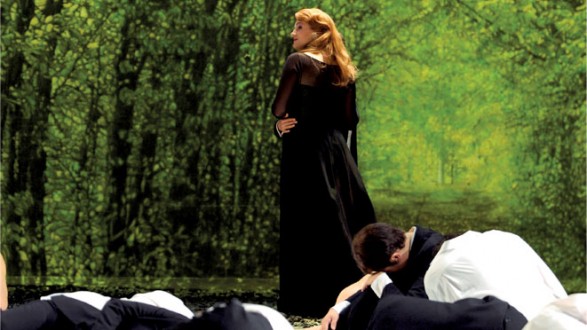
“ALCINA” at l’Opera National de Paris

Logo_OnPL’Opera National de Paris Presents:

ALCINA

OPERA SERIA IN THREE ACTS (1735)

MUSIC BY GEORGE FRIDERIC HANDEL (1685-1759)

ANONYMOUS LIBRETTO ADAPTED FROM RICCARDO BROSCHI’S OPERA “L’ISOLA DI ALCINA” BASED ON ARIOSTO’S “ORLANDO FURIOSO”

Performed in ItalianAlcina_visuelFrance2

Handel’s treatment of the sorceress who transforms men into beast, rock or tree, is a humane and moving portrait of suffering womanhood. Robert Carsen’s production finely exploits this web of hidden desires.

Christophe Rousset Conductor
Robert Carsen Stage director
Tobias Hoheisel Sets and costumes
Jean Kalman Lighting
Philippe Giraudeau Choreographic movements
Ian Burton Dramaturge
Alessandro Di Stefano Chorus master

Myrto Papatanasiu Alcina
Anna Goryachova Ruggiero
Sandrine Piau Morgana
Patricia Bardon Bradamante
Cyrille Dubois Oronte
Michał Partyka Melisso

Paris Opera Chorus
Les Talens Lyriques 

ANNENBERG FOUNDATION/GRoW
WITH THE EXCEPTIONAL SUPPORT OF THE ANNENBERG FOUNDATION⁄ GRoW 

“From Alcina you will receive the sceptre and the power and you will be the happiest of mortals. But you will soon become no more than beast, tree or rock.”  These words are taken from Handel’s third opera,  inspired by the poem Orlando Furioso and first performed in London in 1735. From Medea to Carmen, the operatic stage has been unceasingly haunted by bewitching temptresses and their spellbound victims. Alcina is no exception: she seduces her victims to the point where they forget their homeland and can no longer distinguish between the delights of headlong passion and the dangers of perverted love. It will take all the tenacity of a Bradamante disguised as a warrior to deliver her fiancé Ruggiero from the clutches of the sorceress. Handel’s stroke of genius was to look beyond the supernatural and depict Alcina as a woman who suffers. The voice of the vanquished enchantress is profoundly human and touching, inspiring in the listener a strange compassion. Robert Carsen, whose production brought Alcina into the Paris Opera repertoire, manipulates this ambiguity, a chiaroscuro of emotions and hidden desire, with consummate finesse.

The composer

George Frideric Handel was born on 23 February 1685 at Halle and died on 14 April 1759 in London. After studying at the University of Halle and travelling to Italy, where, under the influence of well-known composers such as Corelli and Scarlatti, he composed several lyric works (Rodrigo, Agrippina, Aci, Galatea e Polifemo), Handel settled in London in 1710. The first of his operas to be performed at the Queen’s Theatre, Haymarket, Rinaldo, also the first Italian opera to have been written for a London theatre, was a triumph. There followed a considerable number of works composed for the Haymarket Theatre (Teseo, Amadigi, etc.) and for the Royal Academy of Music (Radamisto, Giulio Cesare, Tamerlano, Rodelinda, etc.) Because of political intrigues and disagreements between the singers, the Royal Academy of Music was soon to be closed down and replaced a year later by another institution of the same name whose fate was no better. It finished ruined, for the competition it faced from a rival company made famous by the famous castrato Farinelli was too much for it to stand. Handel began to have less success with his operas and turned his genius to the oratorio (he had already composed Saul and Israel in Egypt). Between 1741 and the end of his life he was to compose some of his greatest works : Messiah, Semele, Hercules, Susanna, Solomon, Jephta, Judas Maccabaeus. Handel remained in England and took English citizenship. He died in London at the age of 74 and was buried in Westminster Abbey.

Alcina_visuelFrance

The work

Along with Orlando and Ariodante, Alcina is the third of Handel’s operas to draw its inspiration from Ariosto’s Orlando Furioso. The libretto, which is a sort of variant on the myth of Circe, is based on that of L’Isola di Alcina, a work which Riccardo Broschi (the brother of Farinelli) first had performed in Rome in 1728 and which Handel had most probably discovered on a trip to Italy the following year. Unlike Ariodante, a much more human drama, Alcina is a “magical” opera abounding in the supernatural effects and magical transformations so beloved of the Baroque opera public. The choice of a work rich in effects of this sort is also a reflection of this particular period of Handel’s life. After the seasons at the Haymarket and the two Royal Academies of Music, Handel had moved to the Theatre Royal at Covent Garden directed by John Rich, who was particularly attentive to the quality of staging of his productions. Moreover, the theatre was equipped with special stage machinery for creating illusions designed to focus the audience’s attention on the action on stage. All the ingredients for a grand spectacle were thus present and indeed the work received a triumphal welcome.
From a musical point of view, Alcina is an opera seria, that is to say a work composed of arias linked by recitative. Handel wrote brilliant airs for each character designed to show off the vocal virtuosity of the singers and the different aspects of their talent. The role of Ruggiero, initially written for a castrato, is today interpreted by a mezzo-soprano. It was for this role that the composer wrote the famous air “Verdi prati” that Giovanni Carestini, the alto castrato who created the role, at first refused because he considered it unworthy of his talent. The title role, particularly rich and moving, depicts a woman in all the splendour of her seduction yet also in the depths of amorous despair and solitude.

The first performance

Alcina was first performed on 16 April 1735 at Covent Garden, London.

The work at the Paris Opera

Alcina was presented at the Palais Garnier for the first time in 1999, in a production by Robert Carsen, sets and costumes by Tobias Hoheisel, with Renée Fleming (Alcina), Susan Graham (Ruggiero), Natalie Dessay (Morgana), Kathleen Kuhlmann (Bradamante) under the direction of William Christie (Orchestre et Chœurs des Arts Florissants). It is this production that is revived today.

PERFORMANCE DATES:

January 2014
Mon Tue Wed Thu Fri Sat Sun
    1 2 3 4 5
6 7 8 9 10 11 12
13 14 15 16 17 18 19
20 21 22 23 24 25 26
27 28 29 30 31    
 
 
February 2014
Mon Tue Wed Thu Fri Sat Sun
          1 2*
3 4 5 6 7 8 9
10 11 12 13 14 15 16
17 18 19 20 21 22 23
24 25 26 27 28    
Posted in Music, OPera | Tagged , , , , | Leave a comment

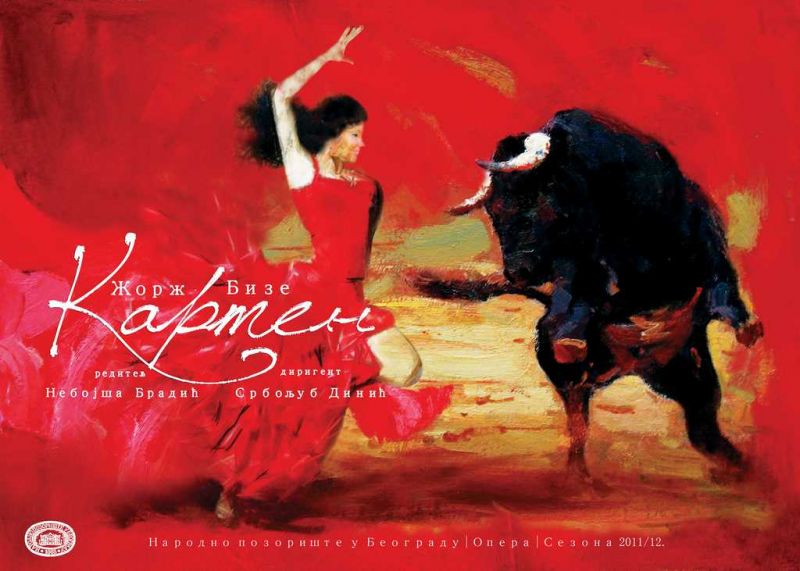
Carmen in Belgrade

carmenBelgradePoster

logo_engbelgrade

The National Theatre of Belgrade presents:

CARMEN

Georges Bizet

on December 11, 2013

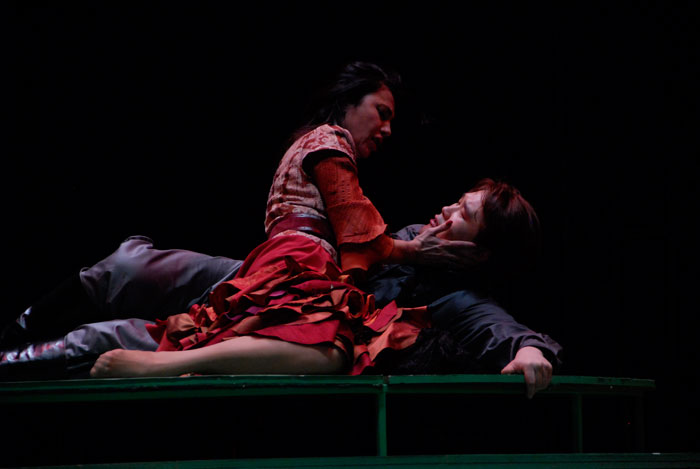
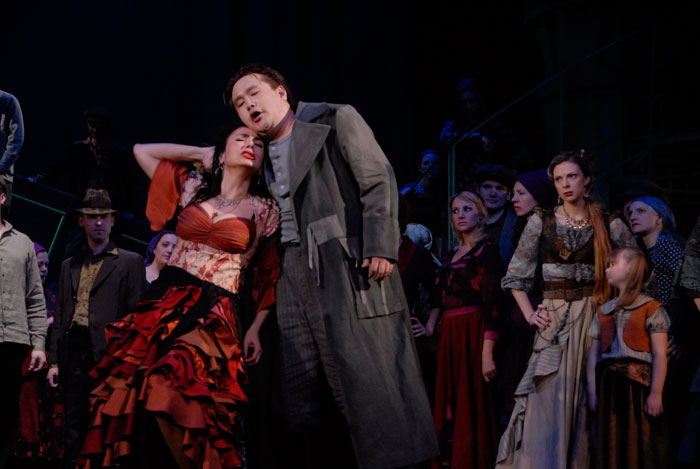
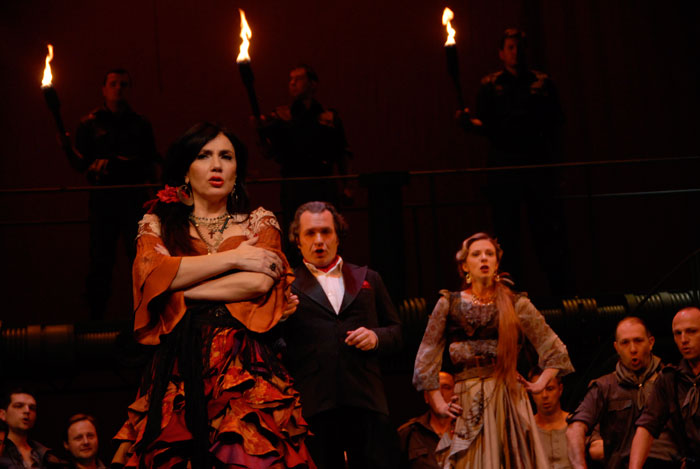
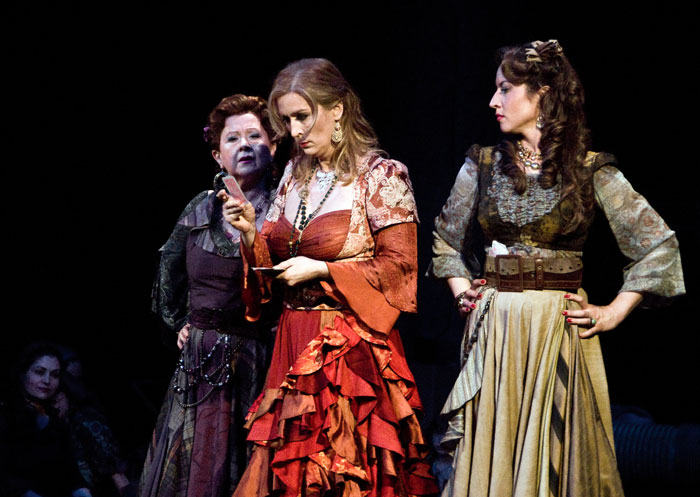
CARMEN – MERIMEE’S, BIZET’S AND OURS
Georges Bizet’s opera Carmen is one of the most powerful artistic triumphs of passion over sentimental love. With regards to Merimee’s novella, the opera represents a grand poetic expansion as a result of thoughtful structural changes.
Don Jose’s destiny is to get outside of dreariness and pale emotional duties of everyday life and to become a part of a deep new world – the world of passion outside the law. On stage, he has been often perceived as a bad soldier who neglects his duties in order to follow the dangerous seductress. However, Don Jose’s life starts only when he meets Carmen, love resembles the second birth, transforming him into a full blooded man. Comments which say that he shows weakness by abandoning Carmen cannot be accepted, because he does so, only not in a straight line and faithfully until the end. He goes back to his dying mother, instead of responding to the challenge Carmen gives him: he is not a free man and this is why he eventually loses her.
Introduction of Micaela’s character into the opera was necessary. She represents Christianity, family bonds, legitimacy and sentimental love. The passion has ruined all these. Micaela and Don Jose share a musical vocabulary of gentle and intensive emotions; these are directly opposed to Carmen’s songs and dances. Bizet masterly uses this contrast throughout the opera. In Don Jose – Micaela duet in the first act, they easily find common musical expressions to evoke memories of his loving mother. Don Jose’s duet with Carmen stands in contrast to the duet with Micaela. Duet with Carmen has been set in a completely different way. Dramatic contrast of Don Jose’s lyric voice in aria La fle¬ur que tu m’ava¬is je¬tee and tarantella rhythm in Carmen’s La bas dans la mon¬tag¬ne do not come together as a balanced duet. It has obviously been done intentionally, with simple music means which indicate that the characters do not share the same words or the same values.
Escamillo is the next significant operatic “addition” to Prosper Merimee’s story. Escamillo is an embodiment of manliness; Bizet achieves this in confrontation duet in III act. Don Jose wishes to confirm his passion and skill by confronting the famous toreador. Although Carmen leaves Don Jose for Escamillo, this doesn’t mean that one should compare the two loves. Escamillo is ready, without too much impatience, to wait for his turn amongst the ones Carmen chooses. When Escamillo, facing danger of death in the arena, addresses Carmen in a short duet in IV act, it is only to promise that he will say her name the next time he kills a bull. Escamillo forcefully defies destiny by risking his life in every encounter with a bull, and these tests are his greatest passion.
Everlasting fascination with Carmen, and the mystery of her, lay in the fact that there is neither a psychological definition for deep motives of her actions, nor the hierarchy of her motives. Carmen never explains herself; she only stresses her necessity to remain free. Does she love Don Jose? Carmen never says that. Nevertheless, she chooses him by giving him a flower in the first act. Why? Probably because he is different from other men: he pays no attention to her. Destiny has touched them, suddenly and strangely. Carmen has been disappointed with Don Jose’s hesitation and she provokes him for it. However, she is deeply interested in a man who thinks love is not a game and who becomes fatally attached to her. In the end, Carmen provokes death, despite all warnings that she will encounter Don Jose. The fact that she decides not to attend the event, where she would triumph, in order to see Don Jose, speaks a lot about Carmen.
Such provocative behaviour is not a masked suicide, nor an idealist’s attempt to sublime her love; it is something absurd in its rationality, something that Carmen simply must do to remain herself. Carmen’s death is radically opposite to Isolde’s death, whose blissful joy in death comes from her mystic belief into transcendent and eternal love. Tristan and Isolde are passive victims of Eros, while Carmen and Don Jose are active in both love and death. After killing Carmen, not Escamillo – which would seem more rational – Don Jose fulfils his need to possess her. Carmen expresses her will and firmly confirms the autonomy of her personality with bold confrontations with Don Jose. She bravely chooses her destiny. Nietzsche considered this the essentially tragic thing: meeting the death – with a goal to accept, not to deny it.
Nebojša Bradić

CARMEN

Georges Bizet

Premieres March 24, 25, April 7 2012. / Main stage

Opera in four acts
Libretto, by Meilhac and Halevy based on P. Merimee’s novella
Interval takes place after the second act

Director Nebojša Bradić, guest artist
Conductors Srboljub Dinić, guest artist, Zorica Mitev Vojnović, Ana Zorana Brajović
Set Designer Geroslav Zarić
Costume Designer Katarina Grčić Nikolić
Choreographer Emilia Jovanović
Chorus Master Đorđe Stanković
French Language Instructor Gorjana Ilić
Assistant Director Aleksandar Nikolić
Assistant Set Designer Vladislava Kanington
Assistant Choreographer Tina Leposavić

Premiere cast:

Carmen Dragana Del Monako / Aleksandra Angelov / Jadranka Jovanović
Don Jozé, Corporal Hon Li / Janko Sinadinović
Escamillo, Toreador Miodrag D. Jovanović / Nebojša Babić / Aleksandar Stamatović
Zuniga, Lieutenant Dragoljub Bajić / Vuk Matić / Mihailo Šljivić
Moralès, Corporal Vuk Zekić / Vladimir Andrić
Micaëla, a Village Maiden Suzana Šuvaković Savić / Sofija Pižurica / Ivana Petrović, guest artist
Frasquita, a Gipsy Ivanka Raković Krstonošić / Biljana Soldo / Svetlana Bojčević Cicović / Marija Mitić
Mercédès, a Gipsy Iva Profaca / Ljubica Vraneš / Željka Zdjelar
Le Dancaïre, Smuggler Pavle Žarkov / Ljubodrag Begović
Le Remendado, Smuggler Darko Đorđević / Danilo Stošić
A Gipsy Girl Nina Rakić
Manuelita, a Maiden Mirela Čubra
Lillas Pastia, an Innkeeper  Dejan Vasiljević
Flower Girl Neda Božić Pivarski
Ballet Soloists Olga Olćan / Sanja Ninković, Igor Pastor / Balit Raušer
Soldiers, children, cigarette factory workers, Gipsies, smugglers, people

In Seville and its surroundings  
ORCHESTRA, CHORUS AND BALLET ENSEMBLE OF THE NATIONAL THEATRE
Concertmistresses Edit Makedonska / Vesna Jansens
Children’s Choir “Horislavci“, led by Draško Janković and Aleksandra Stanković
Stage music led by Đorđe Stanković
Music Associates: Srđan Jaraković, Nevena Živković, Nada Matijević, Ivan Jovanović, Tatjana Ščerbak Pređa
Stage Managers:  Branislava Pljaskić, Ana Milićević, Mirjana Goločevac
Prompters: Silvija Pec, Biljana Manojlović
Producers: Maša Milanović Minić, Snježana Vujasinović Đorđević, Ivana Čavlina*, Filip Dukanić*
* Students of the Academy of Arts in Belgrade in training
Light operator Miodrag Milivojević
Make-up Dragoljub Jeremić
Set crew Chief Nevenko Radanović
Sound Operator Perica Ćurković

Sets and costumes were manufactured in the workshops of the Nathional theatre in Belgrade. 


     NEBOJŠA BRADIĆ
Bradić was born on 3rd August 1956 in Trstenik. He graduated from the Theatre and Radio Directing Department at the Faculty of Dramatic Arts in Belgrade. From 1981 to 1996 he was engaged as a director, artistic manager and general manager at the Theatre of Kruševac. During season 1996-97, he was a general manager of “Atelje 212” Theatre. In period 1997–1999, he was a general manager of the National Theatre in Belgrade. In period 2000–2008, he was a manager and artistic director of the Belgrade Drama Theatre. Starting from 7 July 2008 until 14 March 2011, he was the Minister of Culture and Information with the Government of the Republic of Serbia.
He directed more than 80 theatre productions in Serbia, Croatia, Bosnia and Greece. Bradić focused mainly on contemporary national literature and dramatisations (The Damned Yard, The Dervish and Death, The Golden Fleece, Roots, The Fortress). He directed a number of operas and musicals as well. He is one of the founders of the Belgrade Dance Festival and Dunavfest.
Bradić authored My Brother (in National Theatre of Republika Srpska, 2010) and The Night in the Titanic Inn (Knjaževski-Serbian Theatre, 2011) dramas, as well as a number of essays on theatre and literature. He is a professor of acting at the Academy of Fine Arts in Belgrade. Productions directed by Nebojša Bradić were performed in theatres in former Yugoslav republics, Italy, Austria, Hungary, England, USA, Czech Republic, Switzerland, Ukraine, Russia, Greece, Albania, Turkey, etc.
Bradić has won a number of prestigious national and international theatre awards. Namely, he is the first recipient of “Nikola Peca Petrović“ Award for the Best Yugoslav Theatre Manager; nine awards for best direction at the “Joakim Vujić” Theatre Festival; Sterija Awards for best contemporary stage adaptation, dramatisation and direction; awards for directing and dramatisations at theatre festivals in Bosnia and Herzegovina (Brčko, Zenica, Doboj), as well as awards for best direction at JoakimInterFest and the International Festival of Classical Arts in Vršac and the “Joakim Vujić Ring“ Award. Bradić also received the “Golden Knight” Award for direction at the Moscow Festival for his production of The Golden Fleece by Borislav Pekić and he received the Award for Best Dramatization for Dervish and Death by Meša Selimović at the Istanbul Festival.


     SRBOLJUB DINIĆ
Dinić was born in 1969 in Niš. He attended the Belgrade Music Academy, where he studied piano and chamber music. He studied conducting with Wolfgang Ott in Germany. In 2001, he was engaged as a Principal Conductor at the Opera Berne by Maestro Miguel Gomez-Martinez. In 2004, he became Chief Conductor and since 2007 he has been the Musical Director of Opera Berne.
Dinić has conducted a great variety of operas including Manon, Don Giovanni, The Magic Flute, Die Entführung Aus Dem Serail, Idomeneo, I Puritani, Andrea Chenier, Carmen, La Wally, Cavalleria Rusticana, Mazeppa, La Forza del Destino, La Traviata, Macbeth, Nabucco, Aida, Falstaff, Rigoletto, Il Barbiere di Siviglia, Medea (Cherubini), Un Ballo In Maschera, Les Contes D’hoffmann, Die Fledermaus, Der Rosenkavalier, Der Fliegende Hollander, Trois Oranges, Rake’s Progress etc.
He collaborated with: The Bern Symphony Orchestra, The Basel Symphony Orchestra (Switzerland); Staatsorchester Stuttgart, Würtemberg Philharmonic Orchestra, München Symphonicker, Essener Philharmoniker (Germany); Orquestra di Valencia (Spain); Theatro Massimo Orchestra, Verona Symphony Orchestra (Italy); Belgrade Symphony Orchestra, Belgrade Philharmonic Orchestra, Niš Symphony Orchestra (Serbia); Taipei Symphony Orchestra, Shanghai Symphony Orchestra…
Recent activities:
2006 –  Festival of Avanches, Switzerland (Il Trovatore); Tosca, Madama Butterfly and Norma at the Staatstheater Stuttgart (also in 2007 and 2008)
2007 – Verdi’s Requiem, Niš; a series of gala concerts in Switzerland and Italy, with Agnes Baltsa and Würtemberg Philharmonic Orchestra and Münchner Symphonikern
2008 – a series of gala concerts (Asia Tour), with Salvatore Licitra
2009 – Bellini’s I Puritani in Savonlinna Festival (Finland); La Boheme (September 29 a live performance on SF1) and Eugene Onegin and Dialoges des Carmelites at the Opera Berne; a series of gala concerts with Ramon Vargas in Switzerland and Germany with Würtemberg Philharmonic Orchestr; a benefit concert in Bern, with Noemi Nadelman and The Bern Symphony Orchestra
2010 – “open air” Aida; Carmina Burana in Teatro Massimo, Palermo
2011 – Tosca at Savonlinna Festival (Finland) – Finale from Savonlinna Opera Festival’s International Opera Singing Competition; La Gioconda in Palermo with Teatro Massimo; Der Fliegende Hollander and Rake’s Progress at the Opera Berne
2012 – Eugen Onegin in Aalto-Musiktheater Essen; Lucia di Lammermoor at the Opera Berne; now preparing the Premiere Carmen in National Theater Belgrade (March) and Jenufa in National Theater Zagreb (April).

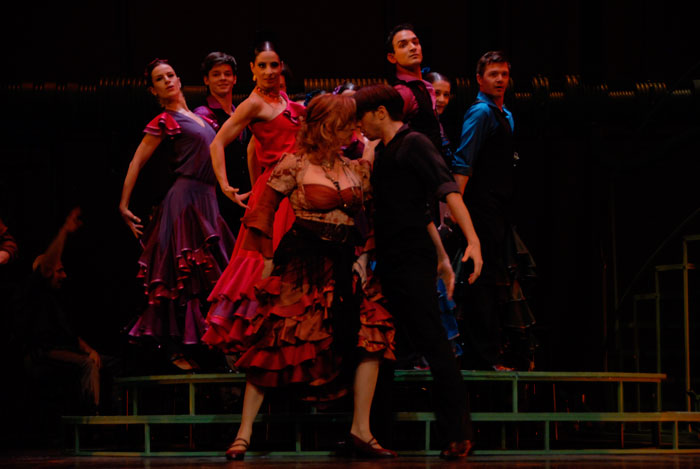
karmen2 1karmen7 1karmen8 1karmen9 1karmen10 1karmen11 2karmen1 2karmen2 2karmen4 2karmen5 2karmen7 2karmen8 karmen1

Posted in OPera | Tagged , , , , , , , , , | 1 Comment

Vancouver Opera Presents “ALBERT HERRING”


Presents: 

BENJAMIN BRITTEN

A charming comic depiction of English village life
In English with SURTITLES™
COMPANY PREMIERE
Co-produced with Pacific Opera Victoria

November 30, December 5, 7, 8 (matinée), 2013
Evening performances 7:30pm.
Matinée performances 2:00pm.

“Thoroughly engaging … an excellent entry point for opera newcomers … rich with charm to satisfy longtime fans.” – The Georgia Straight
Read the full review

“…genuine charm…attractive staging and fine singing” – The Vancouver Sun
Read the full review

►The busybodies of the Loxford May Day committee cannot find a virtuous female to be May Queen, so they name as May King the over-protected grocer’s son, Albert Herring. Following an extravagant crowning ceremony, at which Albert gets tipsy on rum-spiked lemonade, he decides to cut his mother’s apron strings and venture into the sensual world he sees others enjoying. After a frantic search by the entire town, Albert reappears, having enjoyed a night of debauchery. Depending on your point of view, he has been either ruined or saved.

This brilliant comedy by England’s greatest opera composer is a fast-paced, witty, and devastatingly satirical portrayal of the quaint characters of a closed-in (and now vanished) community. Employing a cleverly constituted chamber orchestra, Britten uses his prodigious powers of melodic invention and parody to explore society’s attitudes toward an odd but innocent individual. VO’s new co-production is set in East Suffolk at the time of the opera’s 1947 premiere.

► All performances are at the Queen Elizabeth Theatre
► Approximate running time: 2 hours 43 minutes (including one intermission)


CAST & CREATIVE TEAM

Conductor LESLIE DALA

LESLIE DALA
Conductor
Toronto, ON

Last VO Appearance:
Conductor, The Magic Flute, 2013
Recent Appearances:
The Tales of Hoffman and Carmen with UBC Opera
Music for China, presented by Soundstreams Canada, with performances in Toronto, Shanghai and Beijing
Albert Herring with Pacific Opera Victoria
Upcoming Engagements:
Messiah with the Vancouver Bach Choir and the Vancouver Symphony Orchestra
Albert Herring with the University of Toronto Opera Division
Mr. Dala is the Music Director of the Vancouver Bach Choir and the Music Director of the Vancouver Academy of Music Symphony.


More about Leslie Dala

Mr. Dala’s appearance is supported by a gift from The Illahie Foundation

Directed by GLYNIS LEYSHON

GLYNIS LEYSHON
Director
Victoria, BC

Last VO Appearance:
Rigoletto, 2009
Recent Appearances:
Falstaff and Albert Herring with Pacific Opera Victoria
For The Pleasure of Seeing Her Again with National Arts Centre
La traviata with Calgary Opera
God of Carnage with Belfry Theatre, Victoria
Upcoming Engagements:
Madama Butterfly with Calgary Opera
Proud with Belfry Theatre, Victoria
Ms. Leyshon’s appearance is supported by a gift from Mike & Kathy Gallagher
Albert Herring LAWRENCE WILIFORD

LAWRENCE WILIFORD
Tenor
Victoria, BC
Albert Herring

Vancouver Opera DébutRecent Appearances:
Belmonte in Die Entführung aus dem Serail with Opera Atelier
Elijah (Mendelssohn) with The Colorado Symphony
Mass in B Minor (Bach) with Elmer Iseler Singers
Requiem (Mozart) with National Arts Centre Orchestra
Upcoming Engagements:
Messiah (Handel) with Philharmonia Baroque Orchestra
Recording: Britten: Divine Musick: The Late Works for Tenor and Harp (ATMA Classique, 2010)


More about Lawrence Wiliford

Mr. Wiliford’s appearance is supported by a gift from Mary Tait & Bill Sirett

Lady Billows SALLY DIBBLEE

SALLY DIBBLEE
Soprano
Fredericton, NB
Lady Billows

Last Vancouver Opera Appearance:
Pat Nixon in Nixon in China, 2010
Recent Appearances:
Soloist, Requiem (Fauré) with Symphony New Brunswick
The Merry Widow with The Newfoundland Symphony
Lady Billows in Albert Herring with Pacific Opera Victoria
Elizabetta in Maria Stuarda with Pacific Opera Victoria
Upcoming Engagements:
Cio-Cio-San in Madame Butterfly with Calgary Opera
Soloist, Symphony No. 9 (Beethoven) with Symphony New Brunswick
Ms. Dibblee’s appearance is supported by a gift from Mr. & Mrs. Gordon Christopher
Nancy SYLVIA SZADOVSZKI

SYLVIA SZADOVSZKI
Mezzo-Soprano
Vancouver, BC
Nancy
Last VO Appearance:
Papagena in The Magic Flute, 2013
Recent Appearances:
Kate in The Pirates of Penzance with Vancouver Opera
Rosina in Der Barbier von Sevilla with Theater Hof, Germany
Mercedes in Carmen with Pacific Opera Victoria
Hansel in Hansel & Gretel with Vancouver Opera In Schools
Upcoming Engagements:
Soloist, Messiah with the Vancouver Bach Choir and the Vancouver Symphony Orchestra
Soloist, Choral Fantasy (Beethoven) with the Vancouver Metropolitan Orchestra
Ms. Szadovszki’s appearance is supported by a gift from Lis & Bruce Welch

Sid AARON DURAND

AARON DURAND
Baritone
100 Mile House, BC
Sid

Last VO Appearance:
Sciarrone in Tosca, 2013
Recent Appearances:
The Speaker in The Magic Flute with Vancouver Opera
Javan in When the Sun Comes Out with the Queer Arts Festival
Soloist, Symphony No. 9 (Beethoven) with Vancouver Academy Orchestra
Samuel in The Pirates of Penzance with Vancouver Opera
Upcoming Engagements:
Soloist, Messiah with Victoria Symphony
Masetto in Don Giovanni with Vancouver Opera
Mr. Durand’s appearance is supported by a gift from Mrs. Irene McEwen
Florence SUSAN PLATTS

SUSAN PLATTS
Mezzo-Soprano
Victoria, BC
Florence Pike

Vancouver Opera Début
Recent Appearances:
Symphony No.8 (Mahler) with the American Symphony Orchestra at Carnegie Hall
Nixon in China with BBC Symphony Orchestra Proms Concert
Florence Pike in Albert Herring with Pacific Opera Victoria
Rosamunde (Schubert) with the Montreal Symphony Orchestra
 Upcoming Engagements:
Symphony No. 8 (Mahler) with the Royal Scottish National Orchestra
Sea Pictures (Elgar) with the Louisville Orchestra
Mr. Platts’s appearance is supported by a gift from a donor who wishes to remain anonymous

Miss Wordsworth MELANIE KRUEGER

MELANIE KRUEGER
Soprano
Abbotsford, BC
Miss Wordsworth

 Last VO Appearance:
Isabel in The Pirates of Penzance, 2012

Recent Appearances:
Lillian Alling with the Banff Centre for the Performing Arts
Sharon in Master Class with The Arts Club Theatre Company
Annina in La traviata with Vancouver Opera
Les Noces (Stravinsky) with the Vancouver Bach Choir
Upcoming Engagements:
The Voice from Heaven in Don Carlo with Vancouver Opera

More about Melanie Krueger
Ms. Krueger’s appearance is supported by a gift from a donor who wishes to remain anonymous

Mrs. Herring REBECCA HASS

REBECCA HASS
Mezzo-Soprano
Coldwater, ON
Mrs. Herring

Last VO Appearance:
Third Secretary in Nixon in China, 2010Recent Appearances:
Mrs. Herring in Albert Herring with Pacific Opera Victoria
Marquis of Berkenfeld in La fille du regiment with Manitoba Opera
Lady in Waiting in Macbeth with Pacific Opera Victoria
Azucena in Il trovatore with Astoria Music Festival, Oregon
Upcoming Engagements:
Writer/Contributor, CBC Radio
Guest Host, Saturday Afternoon at the Opera, CBC Radio 2
Ms. Hass’s appearance is supported by a gift from Val & Dick Bradshaw

Mr. Gedge PETER MCGILLIVRAY

PETER MCGILLIVRAY
Baritone
Prince Albert, SK
Mr. Gedge

Vancouver Opera Début
Recent Appearances:
Sharpless in Madama Butterfly with Opéra de Québec
Vicar Gedge in Albert Herring and Noye in Noye’s Fludde with Pacific Opera Victoria
Thomas in Shelter with Tapestry New Opera / Edmonton Opera
Stubb in Moby Dick with Calgary Opera
Upcoming Engagements:
Dr. Falke in Die Fledermaus with Edmonton Opera
Schaunard in La bohème with Manitoba OperaMore about Peter McGillivray
Mr. McGillivray’s appearance is supported by a gift from Mr. Ken & Mrs. Ellen Mahon
Mr. Upfold MICHAEL COLVIN

 MICHAEL COLVIN
Tenor
Toronto, ON
Mr. Upfold
Last VO Appearance:
Belmonte in The Abduction from the Seraglio (concert), 2004
Recent Appearances:
Bob Boles in Peter Grimes with Accademia Nazionale do Santa Cecilia, Italy and with London Philharmonic Orchestra
L’Aumonier in Dialogues of the Carmelites with the Canadian Opera Company
Red Whiskers / Captain Vere (cover) in Billy Budd with English National Opera
 

Upcoming Engagements:
Bob Boles / Peter Grimes (cover) in Peter Grimes with English National Opera
Dr. Caius in Falstaff / Goro in Madama Butterfly with the Canadian Opera Company

More about Michael Colvin
 

Mr. Colvin’s appearance is supported by a gift from Alan & Gwendoline Pyatt

Superintendent Budd GILES TOMKINS

GILES TOMKINS
Bass-baritone
Toronto, ON
Superintendent Budd

 Last VO Appearance:
Sergeant of Police in The Pirates of Penzance, 2012
Recent Appearances:
Superintendent Budd in Albert Herring with Pacific Opera Victoria
Black Bob in The Little Sweep with Pacific Opera Victoria / Belfry Theatre
Colline in La bohème with Kingston Symphony Orchestra
Oberto with Opera in Concert, Toronto
Upcoming Engagements:
Leporello (March 7 & 9 performances) in Don Giovanni with Vancouver Opera
Colline in La bohème with Manitoba Opera

More about Giles Tomkins
Mr. Tomkins`s appearance is supported by a gift from Mrs. Barbara Lowy

Emmie MARIA BAMFORD

MARIA BAMFORD
Soprano
Vancouver, BC
Emmie

Vancouver Opera Début
Recent Appearances:
Mi in Land of Smiles with the Vancouver Symphony Orchestra
Gretel in Hansel und Gretel with UBC Opera
Klina in The Inventor with the Vancouver Symphony Orchestra and UBC Opera
Soloist, Carmina Burana with UBC Symphonic Wind Ensemble
Cis SIMONE MCINTOSH

SIMONE MCINTOSH
Soprano
Vancouver, BC
Cis

Last VO Appearance:
Rosie (Understudy) in The Barber of Barkerville (Vancouver Opera In Schools), 2013
Recent Appearances:
Giulietta in The Tales of Hoffman with UBC Opera
Fox in The Cunning Little Vixen with European Music Academy
Sister St. Charles in Dialogues of the Carmelites with UBC Opera
Upcoming Engagements:
Cherubino in The Marriage of Figaro with Burnaby Lyric Opera
Fox in The Cunning LIttle Vixen with UBC Opera
Harry EVA TAVARES

EVA TAVARES
Soprano
Langley, BC
Harry

 Last VO Appearance:
Naomi (Understudy) in Naomi’s Road (Vancouver Opera In Schools), 2013
Recent Appearances:
Oscar in Viva Verdi! with UBC Opera
Cecily in Ernest in Love with Applause! Musicals
Mi in Land of Smiles with the Vancouver Symphony Orchestra
Chorus and Olympia (Understudy) in Les contes d’Hoffman with UBC Opera
Upcoming Engagements:
Light for the Child with musica intima

Assistant Conductor KINZA TYRRELL

KINZA TYRRELL
Conductor
Victoria, BC

Last VO Appearance:
Children’s Chorus Director / Principal Répétiteur, Tosca, 2013
Recent Appearances:
Conductor, Le nozze di Figaro with Vancouver Summer Opera Studio
Diction Specialist at Opera Nuova
Piano Soloist in The Four Temperaments (Hindeminth) with Edmonton Symphony and Calgary Philharmonic
Upcoming Engagements:
Visiting Teacher with Calgary Opera’s Young Artist Program
Trio Recital on ‘Cap Classic’ series at Capilano UniversityMs. Tyrrell is the Music Director of Vancouver Opera In Schools and Vancouver Summer Opera Studio, and Répétiteur at Opera Nuova, COSI Centre for Opera Studies in Italy, and Opera as Theatre at the Banff Centre
Ms. Tyrrell’s appearance is supported by a gift from a donor who wishes to remain anonymous

Set & Costume Designer PATRICK CLARK

PATRICK CLARK
Scenic & Costume Designer
Fredericton, NB

 Vancouver Opera Début
Recent Appearances:
Tartuffe with National Theatre Centre, Ottawa
The Mousetrap with Theatre Aquarius
The Norman Conquests with Soulpepper Theatre
Private Lives with Theatre New Brunswick
Upcoming Engagements:
Good People with Manitoba Theatre
Beaux Strategem with Stratford Festival

Mr. Clark is a member of the Associated Designers of Canada and The Royal Canadian Academy of the Arts.

Lighting Designer MICHAEL WALTON

MICHAEL WALTON
Lighting Designer
Stratford, ON

 Vancouver Opera Début
Recent Appearances:
Venus in Fur with Canadian Stage Company
Fiddler on the Roof, Othello, and The Three Musketeers with the Stratford Festival
Maria Stuarda with Pacific Opera Victoria
Yoshimi Battles the Pink Robots and Sideways with La Jolla Playhouse, California
Upcoming Engagements:
Cosi fan tutte with the Canadian Opera Company
King Lear, A Midsummer Night’s Dream and Antony and Cleopatra with the Stratford Festival

Wig Designer STACEY BUTTERWORTH

STACEY BUTTERWORTH
Wig Designer
Vancouver, BC

Last VO Appearance:
Tosca, 2013
Recent Appearances:
Wig design and construction, Bard on the Beach 2013
American Hustle feature film – wig maker for Jennifer Lawrence
Fox Catcher feature film – wig maker for Channing Tatum
Moneyball feature film – wig maker for Brad Pitt
Upcoming Engagements:
Conflagration feature film
The Interview feature film – wig maker for Seth Rogan
The Strain television production, directed by Guillermo del Toro, Toronto
Ms. Butterworth has been Wig Designer at Vancouver Opera since 1995. Stacey Butterworth Wig Creations is one of the top suppliers of custom made wigs in North America, supplying film, television, theatre and opera.
Musical Preparation TINA CHANG

TINA CHANG
MUSICAL PREPARATION

TaiwanLAST VO APPEARANCE
Musical Preparation, Tosca, 2013

RECENT APPEARANCES
Pianist, Recital with Vancouver Opera’s Yulanda M. Faris Young Artists Program at YVR
Pianist, Cinderella with Vancouver Opera In Schools
Pianist and Coach with the Atelier Lyrique at l’Opéra de Montréal

Musical Preparation, Tea: A Mirror of Soul, 2013

  KIMBERLEY-ANN BARTCZAK

KIMBERELY-ANN BARTCZAK
MUSICAL PREPARATION

LAST VO APPEARANCE:
Musical Preparation, Tosca, 2013
RECENT APPEARANCES
Répétiteur, University of Toronto opera program
Accompanist, Women’s Chorus at the University of Toronto and the Mississauga Festival Choir
 UPCOMING APPEARANCES
Music Director, Talk Opera with Opera 5
Pianist and coach, Opera on the Avalon and St. Andrews Opera Workshop

Stage Manager SHEILA MUNN

SHEILA MUNN
STAGE MANAGER

Vancouver, BC
LAST VO APPEARANCE
Tosca, 2013RECENT APPEARANCES
When The Sun Comes Out with Queer Arts Festival
Dialogues des Carmélites, The Merry Widow and Albert Herring with UBC Opera Ensemble
The Magic Flute, The Pirates of Penzance, La Bohème, Aida, The Barber of Seville, Roméo et Juliette, La Traviata, La Clemenza di Tito, Lucia di Lammermoor, Lillian Alling, Madama Butterfly, The Marriage of Figaro, Nixon in China, Norma, Salome, Rigoletto, Carmen, Eugene Onegin, Fidelio, The Italian Girl in Algiers, Cavalleria Rusticana/I Pagliacci, Tosca, Ariadne auf Naxos, The Magic Flute, and Macbeth with Vancouver Opera.
 

Assistant Director FANNY GILBERT-COLLET
Posted in Music, OPera | Tagged , , , , , , , , | Leave a comment

“Il trovatore” in Belgrade

logo_engbelgrade

nationaltheatrebelgrade

The National Theatre of Belgrade (Serbia) presents:

Trubadur_plakat

IL TROVATORE

Giuseppe Verdi

on December 7, 2013


trubadur_10 trubadur_1 trubadur_2 trubadur_3 trubadur_4 trubadur_5 trubadur_6 trubadur_7 trubadur_8 trubadur_9

Posted in OPera | Tagged | Leave a comment

Verdi in Eléphant Paname: exhibit and concert.

VERDI
in Eléphant Paname

Friday, September 27, 2013 > Sunday, January 5, 2014

Admission 9€, Reduced rate 7€ (with ID)


This year marks the 200th anniversary of the birth of Giuseppe Verdi, the most frequently performed opera composer. Many bicentenary events have been organised around the world in 2013 to celebrate Verdi’s life and work.
It is only fitting and proper that the French capital should offer an ambitious and comprehensive tribute to this genius, who had many of his greatest successes in Milan and Paris, both home to famous temples of opera in the nineteenth century and since. 

The aptly named Éléphant Paname has taken up this beautiful challenge. Dedicated to culture and dance, this magnificent nineteenth-century jewel of a place, just steps from the Palais Garnier opera house, nourishes the romantic spirit in all its visitors. Laurent Fiat and Fanny Fiat, the two young co-founders and co-directors of this unique multi-arts centre, driven by their noble and far-reaching commitments as ardent lovers of culture, are thus giving Verdi a compelling homage, in a truly Parisian venue.
Laurent and Fanny are especially pleased to be assisted in their endeavours by Franco Moretti, general director of the Fondazione Festival Pucciniano, but also Corrado Mingardi of the Museo Nazionale Giuseppe Verdi and the opera critic Elena Formica.

In recognition of this gratifying, yet demanding task, the aim of “Verdi at Éléphant Paname” is to expand understanding of this composer who dominated nineteenth-century Romantic opera, bringing Italian melodrama to its zenith, through portraits, manuscripts and other documents as well as performance excerpts. The exhibition seeks to capture the diversity and contradictions of Verdi’s genius. His personality is clearly one that must be explored in all its strength of character. Verdi was a figure deeply rooted in his native land who created works of unparalleled dramatic power. Therefore, in order to truly understand Verdi and his music, one must allow oneself to be swept away by theatrical illusion. By adopting this concept, the exhibition invites visitors to experience the play-within-a-play aspects tying together Verdi’s life and his body of work, musical compositions that stage the drama of human passions and emotions with unprecedented force, retaining a universal, timeless appeal. Painted and sculpted portraits of Verdi, stage costumes and props, set designs, sketches of costumes, first-edition libretti, original manuscripts, letters, reproductions of posters, filmed excerpts of operas, arias and scenes, interviews with experts in the field and opera connoisseurs, explanatory texts, quotations by the Maestro – all of these elements are among those offered to illustrate in a lively and comprehensive fashion the theme of this fascinating exhibition.
backgroundLAURENT FIAT

I discovered Verdi, Puccini and Italian opera during a year spent studying Italian Renaissance painting in Florence. My entire time there glided by to the strains of opera, which has left a lasting impression and often serves for me as a source of inspiration. In 2013, the world celebrates the 200th anniversary of Verdi’s birth. I knew immediately this would be the ideal opportunity to pay homage to him, while also reconnecting with my formative experience in Florence.

In 2010, my sister Fanny Fiat and I were introduced by a mutual friend to Franco Moretti, general manager of the Puccini Festival in Torre del Lago. Interested in adding dance shows to the bill at the festival, he extended an invitation to Compagnie Julien Lestel, with whom my sister danced. An appearance was scheduled for 2011, which was a huge success! We have kept up close ties with Mr. Moretti ever since.

When we conceived the idea of presenting a Verdi exhibition, it was entirely natural for us to ask Mr. Moretti to help us with this project, as a leading Italian opera specialist and a man of great sensitivity and intelligence. Upon hearing of our plans, he immediately shared his enthusiasm, accepting our invitation to serve as the exhibition’s coordinator. It is thanks to his efforts that we are able to present such an exceptional collection of objects relating to Verdi. Without Franco Moretti’s invaluable assistance, this exhibition would never have taken the impressive shape it has today.

Laurent Fiat 
Co-Founder, Éléphant Paname

FRANCO MORETTI

Two hundred years after his birth, Giuseppe Verdi remains the most frequently performed opera composer in the world: just in the last five years, more than 2,500 performances of his masterpieces have been given in the world’s opera houses. This lasting appeal amply attests to the great vitality of this Italian genius, now celebrated in Paris with a major bicentenary exhibition at Éléphant Paname, an event that of course pays tribute to his operas, but also to the man who lived many of the most important moments of his life in Paris.

“Verdi at Éléphant Paname” will also honour the composer’s birthday on 10 October, along with the rest of the world, although Verdi himself was not sure of the exact date of his birth. He first saw the light of day in Le Roncole, a small village near Busseto in the Duchy of Parma, at the time under French rule. “L’Italiano”, as the conductor Riccardo Muti calls Verdi in the title of a recent book devoted to the composer, was thus born a citizen of France, as is clear from the baptism certificate held at Busseto town hall and presented in the exhibition.
A small town located in the southern portion of the beautifully verdant Po valley, Busseto always held an important place in Verdi’s heart. It was sufficiently close to Milan, which along with Paris was home to a temple of opera in the nineteenth century, a century that Verdi saw through to its conclusion, drawing his last breath not far from La Scala on 27 January 1901.

Early in his career, Verdi often dreamed of staging his operas in Paris, for he knew that if his talent were to be recognised by the audiences of the Opéra, he would have a permanent place in the Mount Olympus of music. Nevertheless, throughout his life he retained a certain mistrust, or fear perhaps, of the French capital’s cultural circles and fashionable salons. And it was this world that Verdi, inspired by Dumas, would depict in La Traviata, the most Parisian of his operas, first performed at the Teatro la Fenice in Venice. Jérusalem would be his first work for the Paris stage, an opera presented as entirely new although it was in fact an adaptation of I Lombardi[JS1] . This production, and those to follow, earned Verdi a strong following in France and soon he would be decorated with the Légion d’Honneur. He brandishes its cross with great pride in the portrait from around 1870, also shown in the exhibition (graciously loaned by the Amici di Verdi in Busseto).

Paris marked a major turning point in Verdi’s life. Although he had planned to make only a short visit, in order to see to the successful conclusion of his business arrangements and sign contracts, in the end Verdi stayed much longer in a city that, if his letters are to be believed, he did not care for too much. Within the Ricordi archives, we find numerous letters written by Verdi to his Italian publisher (some of which are included in the exhibition, thanks to the support of Pier Luigi Ledda) to explain his delays and speak of his plans to return home soon. In actual fact, at this same time in Paris, Verdi fell in love with the woman who would become his second wife, also serving as a skilled intermediary and the composer’s most trusted advocate for the remainder of his career, the soprano Giuseppina Strepponi, who after a career of crowning achievements, was then a successful singing teacher for high-society ladies in Paris.

Verdi’s stay in Paris was interrupted by the vicissitudes of history. Inspired by the Risorgimento uprisings, and in particular by the “Five Days” of Milan, he decided to return to his adopted city and live out his days as a patriot. It was not by chance that during the uprisings chasing the Austrians from their city, Milanese audience members forced Austrian officers from their seats in La Scala’s orchestra section with cries of “Viva VERDI!”, whose hidden political meaning, well known by both the oppressed and their oppressors, was “Long live Vittorio Emanuele, Re D’Italia”, the rallying cry for the independent kingdom of Italy that was to be formed just a few years later with assistance from the French, among others, all lending their precious support to this Turin-born Savoy king, a prime mover in the unification of the peninsula. When I reflect on these tumultuous years, I cannot help but wonder how much more difficult, compared to today, it would have been to convey emotions and passions from the stage that, outside the theatre, did not bring to mind some virtual or digital world, but clearly related to movements playing out in the streets and squares surrounding the very theatre itself.

This exhibition, organised by the Fondazione Festival Pucciniano, is made possible thanks to the support of leading institutions that, in the name of Verdi, work to raise awareness of the history of opera. We thus wish to acknowledge the assistance of the Carrara-Verdi family, heirs to the composer’s estate, who live year-round in parts of the magnificent villa that Verdi had built on his own farmland in Sant’Agata just outside Busseto, where he lived from 1824. Among this town’s cultural institutions, we express our warm gratitude to the Museo di Casa Barezzi and the Biblioteca del Monte di Pietà. We also wish to thank the Teatro Regio di Parma which, apart from its acclaimed seasonal programming, also organises the Festival Verdi each year; the Fondazione Cariparma; the Teatro alla Scala and Professor Corrado Mingardi. We urge you to visit Verdi’s native region to discover ancient traditions and (why not?) thrill your taste buds by savouring the culinary delights that the composer speaks of so often in his letters. Over the years, exhibitions dedicated to opera have emerged as one of the most effective introductions to this unique and unusual theatrical genre, especially for young people and all those who do not regularly attend performances of these works.

An opera, whether by Verdi, Puccini or any other composer, combines several arts – music, recitation, dance, painting – that ultimately merge to create a magical moment in the theatre, this same magic that fascinated Parisian audiences in Verdi’s time and that I hope will continue to fascinate those of today, in particular thanks to this lively exhibition, which would not have been possible were it not for the intuition and passion of Laurent Fiat, Fanny Fiat and their entire team at Éléphant Paname.

Franco Moretti 
Exhibition Coordinator
General Manager, Fondazione Festival Pucciniano

Franco Moretti has previously organised, promoted and coordinated a number of major exhibitions, in collaboration with Ricordi, including “Nessun Dorma! The Opera Art Exhibition”, presented at the opera houses of Beijing and Canton

ÉLÉPHANT PANAME ART AND DANCE CENTER OPENED 7 DAYS A WEEK, EXHIBITIONS TUESDAY TO SUNDAY 11:00AM-7:00PM, THURSDAYS TILL

Posted in Exhibits, Music | Tagged , , , , , , , | Leave a comment

Welsh National Opera presents “Tosca”

Welsh National Opera Presents: 

“Tosca”

Giacomo Puccini

toscawebgallery03

Floria Tosca stands in shock, clutching a dagger in her bloodstained hands. An hour before she was singing hymns in church. How did she come to this?

Tosca is a fast-paced operatic thriller. From the first shattering bars Puccini’s mastery puts you on the edge of your seat and keeps you there. Michael Blakemore’s classic period production returns with American soprano Mary Elizabeth Williams and Austrian baritone Claudio Otelli making their WNO debuts.

Recommended by Classic FM 

“OK, so you know an aria from this? Not enough! You’re missing out. Blazing with dramatic music, the Orchestra propels you towards tragedy . Chorus? Magnificence in Act 1, distant sadness in Act 2. You’d better see it. Go on, jump…”

Peter Harrap
Chorus & Orchestra Director

SYNOPSIS

Angelotti, who has just escaped from prison, finds a key left for him in a church by his sister, the Marchesa Attavanti, and hides in the Attavanti chapel. The sacristan grumbles about having to clean the painter Cavaradossi’s brushes. The painter himself returns to his work and, when Angelotti emerges from hiding, promises to help him but tells him to hide again when they hear Tosca approaching. Tosca, easily aroused to jealousy, suspects Cavaradossi of having an affair with the Marchesa. Cavaradossi manages to reassure her of his love before she leaves.

toscawebgallery02Angelotti tells the painter that his sister has left him some woman’s clothes and that he intends to escape in disguise. Cavaradossi mentions a hiding-place in his garden in case of emergency. They hear a shot, indicating that the escape has been discovered, and Cavaradossi rushes Angelotti to his safe house.

The sacristan announces a grand Te Deum to celebrate a report of a victory over the ruling regime. Excitement at this news is cut short by the arrival of Scarpia, on Angelotti’s track. A search of the church reveals a fan with the crest of the Attavanti and, when Tosca returns looking for Cavaradossi, Scarpia uses it to inflame her jealousy, as a way of winning Tosca for himself.

toscawebgallery01Scarpia waits for Tosca, who is singing at an official reception to celebrate the victory. Spoletta informs him that Angelotti has still not been found but that Cavaradossi has been arrested. Under interrogation, Cavaradossi denies any knowledge of Angelotti and as Tosca arrives he is led off to torture. At first she refuses to tell Scarpia anything, but finally she can bear Cavaradossi’s suffering no longer and reveals Angelotti’s hiding place. When Cavaradossi is brought in and hears Scarpia ordering the arrest of Angelotti it is obvious that Tosca has betrayed him. At this moment the news of a serious defeat for the current regime is announced. Cavaradossi is triumphant and Scarpia orders his execution.

Tosca begs for the life of her lover and Scarpia names his price: she must have sex with him in exchange for Cavarodossi’s freedom. Seeing no alternative, she agrees, and Scarpia orders Spoletta to perform a mock execution of Cavaradossi, after which he and Tosca will be able to escape. As he claims his reward, however, Tosca kills him.

toscawebgallery04Cavaradossi awaits execution, remembering the happiness Tosca has brought him. Tosca then tells him what has happened and prepares him for the mock execution. She realises too late that she has been deceived by Scarpia: the execution was real. Tosca pays for Scarpia’s murder with her own life.

Conductor Lothar Koenigs (21 Sep; 15, 19 & 22 Oct; 12 & 16 Nov)
Simon Phillippo (28 Sept; 3, 8,12 & 26 Oct; 5, 9, 19, 23, 26 & 30 Nov)
Original Director Michael Blakemore
Revival Director Benjamin Davis 
Designer
Ashley Martin-Davis
Lighting Designer Mark Henderson

Cast includes
Floria Tosca Mary Elizabeth Williams
Mario Cavaradossi Gwyn Hughes Jones
Scarpia Claudio Otelli
Angelotti Daniel Grice
Sacristan William Robert Allenby

Running time approximately 2 hours 45 minutes including two intervals

Sung in Italian with surtitles in English (and Welsh in Cardiff, Swansea and Llandudno)

Co-production with State Opera of South Australia

Welsh National Opera
Wales Millennium Centre
Bute Place Cardiff CF10 5AL

Posted in OPera | Tagged , , , , , , , , , | Leave a comment

VLAAMSEOPERA presents “Der Rosenkavalier” in Belgium (Christoph Waltz directs)

derrosenkavalier_web

Der Rosenkavalier

Richard Strauss (1864 – 1949)


  • Dmitri Jurowski   
    • Musical direction: Dmitri Jurowski / Philipp Pointner
  • Christoph Waltz
  • Director: Christoph Waltz
  • Maria Bengtsson
    • Medewerker kostuum: Katarina Jockwer
  • Albert Pesendorfer
    • Die Feldmarschallin: Maria Bengtsson
  • Stella Doufexis
    • Baron Ochs: Albert Pesendorfer
  • Michael Kraus
  • Octavian: Stella Doufexis


der_rosenkavalier

In 18th-century Vienna, the Marschallin, a mature but attractive princess, arranges a marriage between her skirt-chasing nephew Baron Ochs and the beautiful Sophie. The Marschallin’s young lover Octavian sets out as the ‘Rosenkavalier’: he informs Sophie of the proposal by handing her a silver rose, but falls in love with her himself. While the amorous adventures play out, the melancholy Marschallin tries to come to terms with growing older. A powerful story, packed with romantic intrigue and always hovering between laughter and tears: the perfect mix for a true crowd-pleaser. The sensual late romantic music, with the waltz in a leading role, does the rest.

christoph_waltz-9714As far as the directing is concerned, it’s a significant first: two-time Oscar-winning actor Christoph Waltz will be making his opera debut in Antwerp and Ghent, before moving on to Luxemburg and London. He will be familiar to film lovers from his leading roles in films such as Inglorious Basterds and Django unchained (Tarantino), and Carnage (Polanski). In this production, Waltz will be seeking out the border between private and public, with the baroque grandeur of old Vienna as his backdrop.

Language: German. Surtitles: Dutch.

Tickets from € 14.00 to € 160.00

Calendar

Vlaamse Opera Antwerpen

Frankrijklei 3
Antwerpen


  • Sun 15 Dec 2013 – 19:00
  • Tue 17 Dec 2013 – 19:00
  • Fri 20 Dec 2013 – 19:00
  • Sun 22 Dec 2013 – 15:00
  • Thu 26 Dec 2013 – 19:00
  • Sat 28 Dec 2013 – 19:00

Vlaamse Opera Gent

Schouwburgstraat 3
9000 Gent


  • Thu 09 Jan 2014 – 19:00
  • Sat 11 Jan 2014 – 19:00
  • Tue 14 Jan 2014 – 19:00
  • Fri 17 Jan 2014 – 19:00
  • Sun 19 Jan 2014 – 15:00

Team

Waltz is chiefly known as an actor, but has built up experience as a director in his home country. Born in Vienna into a theatrical family, he is certain to deliver a nuanced take on this popular work. Three delightful soprano parts among the leading roles betray Strauss’s preference for the female singing voice. With the Swede Maria Bengtsson and the German-Greek Stella Doufexis, Flanders Opera has secured a truly star-studded cast. The young German soprano Christiane Karg had the honour of being crowned by industry magazine Opernwelt as the ‘Up-and-coming vocal talent of 2009’.

SYNOPSIS

We are in Vienna in 1740, the period under Empress Maria Theresia. Count Octavian is the young lover of Princess Werdenberg, a more mature woman who goes though life under the name of ‘Marschallin’ (‘Marshal’s wife’). After a merry carnival party, Octavian has stayed with the Marschallin and they relive their first night of love as if in a dream. The bad-mannered Baron Ochs auf Lerchenau enters the princess’s house in a rush. He is looking for a young nobleman who is willing to hand a silver rose – a mark of his love – to his future bride, in accordance with the wishes of Faninal, his future father-inlaw. The Marschallin considers Octavian perfect for the task of marriage intermediary or ‘Rosenkavalier’. At the same time, Ochs tries to arrange a rendezvous with the maid ‘Mariandl’ – a rapidly improvised metamorphosis on the part of Octavian. At Faninal’s house, Octavian meets the young Sophie, Ochs’ future bride. There is immediate enchantment on both sides. Sophie flirts openly with Octavian and resists the forced marriage. When the two young people are caught enjoying a tentative kiss, Ochs’ challenges Octavian to a duel. Ochs suffers a scratch. His rage soon gives way to humour and exuberance when he is left alone with a bottle of wine. And the incident with Octavian fades into the background completely when he receives an invitation to a rendezvous with ‘Mariandl’.  A carnival ball is being held in an obscure tavern in a suburb of Vienna. The innkeeper offers a storeroom for the rendezvous between Ochs and Octavian, who is dressed up as the maid. At the very last moment the aim of the arrangement is achieved: to expose Ochs as a shameless womanizer in Faninal’s presence and to declare his forthcoming marriage to Sophie null and void. After a great many intrigues and lots of dressing up, the Marschallin, Octavian and Sophie are left together. Octavian feels caught between his feelings for the two women. The Marschallin, full of melancholy, bids farewell to a dream of love and tries to reconcile herself to ageing. The two youngsters fall into each other’s arms.

Posted in OPera | Tagged , , , , , , , | Leave a comment

La bohème Gala – New Year’s Eve at Sydney Opera House

NYE-australia1

The last night of 2013 is the first night of La bohème. If ever there was a night to dress up, this is it.

With VIP access you’ll leave the crowds behind as you enter the Sydney Opera House, then settle back for an evening with Rodolfo, Mimì, Marcello and Musetta in Gale Edwards’ decadent and dazzling production.

Then, with a heart full of song, stroll out onto the Opera House balcony to see the fireworks the whole world watches.

nyeaustralia2

Giacomo Puccini’s “La bohème”

Gale Edwards’ lavish production inhabits 1930s Berlin, a hub for young impoverished creatives contending with the high cost of round-the-clock hedonism in a city seething with glitzy excess.

Berlin, midwinter, 1934. A painter, a musician, a philosopher and a poet are having a night on the town. Café Momus is too pricey for them – they’ve nothing to weigh down those moth-eaten pockets. But why worry? The landlord is sorted, the bar tab can wait. They’re young and their lofty ideals will keep body and soul together.

And then there’s love. Ah, love. That tingle of electricity as two hands meet. The fire in the eyes of the girl you want so badly. Love will keep us warm, won’t it? Find out, when Puccini’s bohemian boys wake up.

Conductor Andrea Licata
Director Gale Edwards
Set Designer Brian Thomson
Costume Designer Julie Lynch
Lighting Designer John Rayment
   
Mimi Nicole Car
Rodolfo Ji-Min Park
Musetta Sharon Prero
Marcello Giorgio Caoduro
Colline Richard Anderson
Schaunard Shane Lowrencev
Benoit Graeme Macfarlane
Alcindoro Tom Hamilton
Parpignoi Benjamin Rasheed
Officer Clifford Plumpton
Sergeant Malcolm Ede

Australian Opera and Ballet Orchestra

Opera Australia Chorus

Opera Australia Children’s Chorus

If you have further queries about this New Year’s Eve event, please contact the Special Events team on events@opera-australia.org.au, or contact their Box Office during business hours (Australian eastern standard time).

Posted in Music, OPera | Tagged , , , , | Leave a comment