“Un ballo in maschera” in Tel Aviv

Un ballo in maschera
Giuseppe Verdi

Amelia is married to Renato yet she loves Riccardo. Renato is Riccardo’s best friend. Riccardo is the Governor. Ulrica the fortune teller prophesizes that Riccardo will be murdered. Love, hate, spite and revenge in one of Verdi’s most beloved operas.
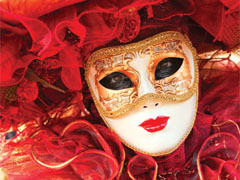
Libretto: Somma after the libretto of Eugene Scribe for Auber’s opera Gustave III ou Le Bal Masque


masksIsrael


Conductor Daniele Callegari
  Eithan Schmeisser
Director Michal Znaniecki
Associate director Zosia Dowjat
Set Designer Luigi Scoglio
Costume Designer Joanna Medynska
Lighting and Projection Designer         Bogumil Palewicz
Choreographer Katarzyna Aleksander Kmiec


Among the Soloists:
 

Riccardo Kamen Chanev
  Christian Mogosan
Amelia Ira Bertman
  Mirela Gradinaru
Renato Boaz Daniel
  Ionut Pascu
Ulrica Dalia Schechter
  Svetlana Sandler
Oscar Hila Fahima
  Shiri Hershkovitz
Sam Vladimir Braun
Tom Noah Briger
Silvano Oded Reich

The Israeli Opera Chorus
Chorus Master: Ethan Schmeisser
The Opera Orchestra – The Israel Symphony Orchestra Rishon LeZion
Surtitles in Hebrew and English
Translation: Israel Ouval

New Production
Sung in Italian
Duration: Three hours

Day   Date              Hour        back stage tours   Opera Talkback
FRI 17.1.14 13:00    
SAT 18.1.14 20:00    
*SUN 19.1.14 20:00    
TUE 21.1.14 20:00   After the show
WED 22.1.14 20:00   After the show
THU 23.1.14 20:00 18:30  
FRI 24.1.14 13:00    
SAT 25.1.14 20:00    
TUE 28.1.14 20:00 18:30 After the show
WED 29.1.14 20:00 18:30 After the show
FRI 31.1.14 13:00    
SAT            1.2.14 20:00 18:30  

* PREMIÈRE 
** TOWARDS OPENING –  11.1.14 SAT 11:00 

Un ballo in maschera

ACT I
Scene i
The governor’s mansion
 
Riccardo, the governor of Boston, is giving an audience. Oscar, his page, brings him the list of guests invited to a masked ball. Riccardo is overjoyed to see included the name of Amelia, the wife of his secretary Renato, with whom – despite his conscience¬- he is in love. The faithful Renato tells him of a plot against his life but Riccardo brushes the warning aside. A judge arrives with papers to sign, banishing a fortune-teller named Ulrica for her evil influence. Oscar intercedes for her. Riccardo, for a lark, suggests that they all go in disguise to the dwellings of the sorceress and test her powers. The conspirators, Samuel and Tom, fall in with the scheme, seeing in it an opportunity to carry out their plot against Riccardo.

Scene ii
Ulrica’s place

Riccardo enters disguised as a fisherman. Without his knowledge, Amelia also comes to consult the fortune-teller. Concealed, Riccardo hears Amelia ask for a magic potion, which will uproot her love to Riccardo from her heart. Ulrica tells her of such a herb which can only be gathered at midnight in the place where the gallows stand. When Amelia leaves, Riccardo asks to have his fortune told. Ulrica tells him he will die by the hand of the friend who will next shake his hand. Renato enters. Riccardo goes forward and grasps his hand. He tells Ulrica this is the hand of his most trusted friend.

ACT II
Midnight, in a deserted field, beside the gallows

Amelia, veiled, comes to pluck the magic herb, when Riccardo arrives. They proclaim their love to each other but Amelia begs Riccardo to leave her. At that point Renato comes into view. Amelia, seeing her husband, lowers her veil in fright. Renato has come to warn his master that conspirators are lying in wait for him. Riccardo consents to escape through a side path but asks Renato to promise that he will escort the veiled lady back to the city without attempting to find out who she is. As they leave, Renato and Amelia fall into the hands of the conspirators who, enraged at the loss of the governor, insist at least on knowing his sweetheart. They try to pull off Amelia’s veil. Renato draws his gun. To stop bloodshed Amelia reveals herself. Renato sees his own wife.
ACT III
Scene i
Renato’s house

Renato prepares to kill his wife. Amelia begs to be allowed to embrace their son before she dies. When she goes out he gazes at the portrait of Riccardo which hangs on the wall, decides it is he on whom he must vent his wrath. He joins Samuel and Tom in their plot to murder the Governor. They draw lots; Amelia is commanded to pick the paper from an urn. It bears the name of Renato. The page Oscar arrives with the invitation to the masked ball.

Scene ii
A ballroom in Riccardo’s mansion

Riccardo decides to give up Amelia and send her and Renato abroad. Renato learns from Oscar what disguise Riccardo is wearing to the ball. Amelia also recognizes Riccardo, begs him to flee his impending death, but he refuses. As they bid each other farewell, Renato, unobserved, comes between them and shoots Riccardo. Too late, Renato hears from the dying ruler of Amelia’s innocence. With his last words Riccardo pardons all.

Posted in Music, OPera | Tagged , , , , | Leave a comment

The New National Theatre of Tokyo will perform “Carmen”

mainmenuTokyo

Presents:

carmenTokyo

Carmen

    • 2013/2014 Season
    • Georges Bizet: Carmen
      Opera in 3 Acts
      Sung in French with Japanese Supertitles
    • OPERA HOUSE
  • PERFORMANCES

    2014
    January 19 January 22 January 26 January 29 February 1
    Sunday Wednesday Sunday Wednesday Saturday
    2:00
    *
    2:00
     
    2:00
    *
     
     
    2:00


    6:30
    *


This NNTT repertory production was directed by Uyama Hitoshi. This latest incarnation will be conducted by the dynamic Ainars Rubikis, making his NNTT debut. Mr. Rubikis has been serving as Music Director of the Novosibirsk Opera and Ballet Theatre since 2012. Carmen will be sung by Ketevan Kemoklidze, a young singer who is gaining much notice of late. Ms. Kemoklidze is a popular mezzo soprano who combines fine singing abilities, good looks, and acting skills. This production marks her much-anticipated debut in the title role. The role of Don José will be sung by Gaston Rivero, who has performed the role with both the l’Opera de Lausanne on their Japan tour and with the Deutsche Oper Berlin. Hamada Rie will sing Micaëla, reprising the role that earned her favorable notice during the previous run of Carmen here at NNTT.

STAFF

Conductor : Ainars Rubikis
Production : Uyama Hitoshi
Scenery Design : Shima Jiro
Costume Design : Ogata Kikuko
Lighting Design : Sawada Yuji
Choreographer : Ishii Jun


(Conductor)
Ainars Rubikis

(Production)
Uyama Hitoshi

CAST

Carmen : Ketevan Kemoklidze
Don Jose : Gaston Rivero
Escamillo : Dmitry Ulyanov
Micaela : Hamada Rie
Zuniga : Tsumaya Hidekazu
Morales : Masu Takashi
Le Dancaire : Tani Tomohiro
Le Remendado : Ono Mitsuhiko
Frasquita : Hirai Kaori
Mercedes : Shimizu Kasumi

Chorus : New National Theatre Chorus
Orchestra : Tokyo Symphony Orchestra

Photos

(Carmen)
Ketevan Kemoklidze
Photos

(Don Jose)
Gaston Rivero
Photos

(Escamillo)
Dmitry Ulyanov
Photos

(Micaela)
Hamada Rie
Photos

(Zuniga)
Tsumaya Hidekazu

SYNOPSIS

A cigarette factory girl, Carmen, admired by men of the town, takes an interest in Don José, who is indifferent to her, and seeks to win his attention by tossing him a rose. Although he loves Micaëla, he soon becomes captivated by Carmen and is persuaded to desert the Army and throw in his lot with smugglers. But Carmen becomes disillusioned with José and gives her heart to the toreador Escamillo. In front of the bullring, from which loud cheering can be heard, José, consumed by jealous rage, stabs Carmen in the heart.

Posted in Music, OPera | Tagged , , , , , , | 1 Comment

Massenet’s “WERTHER” at l’Opera National de Paris

Logo_OnP

L’Opera National de Paris Presents:

WERTHER

LYRIC DRAMA IN FOUR ACTS AND FIVE SCENES (1892)

MUSIC BY JULES MASSENET (1842-1912)
POEM BY EDOUARD BLAU, PAUL MILLIET AND GEORGES HARTMANN BASED ON JOHANN WOLFGANG VON GOETHE

Performed in FrenchwertherFrance

Werther is a long requiem, a “lacrimosa dies illa”, a day full of tears and, without doubt, the most personal of all Massenet’s works. Roberto Alagna and Karine Deshayes portray the two unhappy lovers in the now legendary production of Benoît Jacquot, conducted by Michel Plasson.

Michel Plasson Conductor
Benoît Jacquot Stage Director
Charles Edwards Sets
Christian Gasc Costumes
André Diot Lighting (after Charles Edwards)

Roberto Alagna ⁄ NN (12 Févr.) Werther
Jean-François Lapointe Albert
Jean-Philippe Lafont Le Bailli
Luca Lombardo Schmidt
Christian Tréguier Johann
Karine Deshayes Charlotte
Hélène Guilmette Sophie

Paris Opera Orchestra and Chorus
Maîtrise des Hauts-de-Seine⁄ Paris Opera children’s Chorus

Original production by Royal Opera House, Covent Garden, London

Présentation

In Massenet’s masterpiece, from the moment the moonlight idyll is revealed and then shattered, the tears never cease to flow. “My entire being weeps”, says Werther. This is a far cry from the furtive tears or the violent sobbing usually associated with opera. These tears fall slowly and inexorably, one by one, in “patient drops”, as Charlotte says: in four acts, they will accomplish their work. Charlotte cannot hold back her tears when she rereads Werther’s letters and her tears are the only part of her, the only sacrifice that Werther dares to ask of her. She weeps before Sophie, her angel of consolation; her tears flow again on reading Ossian; they fall once more over Werther’s blood-soaked body. These final tears he refuses, however, for he is now free and happy. Werther is a long requiem, a “lacrimose dies illa”, truly a day of tears and, without doubt, the most personal of all Massenet’s works. Roberto Alagna and Karine Deshayes portray the two unhappy lovers in the now legendary production by Benoît Jacquot, conducted by Michel Plasson.

The composer

Jules Massenet was born on May 12th 1842 in Montaud, France and died on August 13th 1912 in Paris. After receiving a musical education from his mother who gave lessons to balance the family budget, Massenet entered the Conservatoire at a very early age and studied theory of music, piano and harmony before joining Ambroise Thomas’s composition class in 1861. In 1863 he won the Grand Prix de Rome and spent two years at the Villa Medici where he composed numerous outlines for projects which would form the basis of his future works. The first of these, performed after his return to France, was Grand’-Tante, a one-act opera commissioned by the directors of the Opéra-Comique. There followed, among others: Don César de Bazan (1872), Le Roi de Lahore (1877), Hérodiade (1881), Manon (1884), Le Cid (1885), Esclarmonde (1889), Thaïs (1894), Sapho (1897), Cendrillon (1899) and Don Quichotte (1910).
Massenet soon gained the stature of an “official composer”. Awarded the Légion d’Honneur, appointed Professor of Composition at the Conservatoire and elected to the Académie des Beaux-Arts, his influence was such that certain composers like Debussy did not hesitate to “Massenetise” their cantatas in order to win the Prix de Rome. From a musical point of view, Massenet preferred to work within the existing musical tradition rather than to break with it.

The work

The libretto is based on Goethe’s famous epistolary novel that Massenet probably knew from his stay in Bayreuth in 1886. Unlike the librettos of Gounod’s Faust or Ambroise Thomas’ Mignon, it follows the original text very closely. Nevertheless the importance given to Charlotte’s role is one of the essential differences: relegated to the background in the novel (where the hero, the author of the letters, acted alone), she plays just as important a role as Werther himself in the opera. The work is clearly modelled on the French conception of a typically German romance. The episodes are linked together in a style reminiscent of genre painting, each act bearing a title as if it were a chapter in a picture book. Given this aesthetic structure, the most successful episodes are those born of each character’s inner struggles, resulting from the interchange – conflicting or otherwise – between Werther, Charlotte and Albert and giving rise to extensive melancholic outpourings.
The orchestration reflects the work’s overall conception. Although making use of a large-scale orchestra, Massenet’s transparent musical texture is often suggestive of chamber music. The vocal style does not aim at virtuoso effects, preferring as it does dialogue and dramatic interaction. The interplay between the different musical motifs and their relationship with the characters establishes a parallel with Wagner’s leitmotifs. However Massenet distances himself from the latter, seeking rather to create a French “fin de siècle” style, characterised by its delicacy, elegance and sensibility.
From the very first performance of his opera, where the title Mattia Battistini, a baritone with a agile and effortless high range, asked him to write a new baritone version for him. This version was completed ten years later in 1902.

The first performance

Werther was first performed at the Imperial Opera of Vienna on February 16th 1892, in German, with the composer himself conducting.

The work at the Paris Opera

Werther’s Parisian career took place, for the most part, at the Opéra-Comique, where the opera had been performed 1389 times by 1978. Among the countless singers who tackled the main roles were Georges Thill, Raoul Jobin, Albert Lance, Alain Vanzo (Werther), Ninon Vallin, Denise Scharley, Rita Gorr, Nadine Denize (Charlotte), Jean Vieuille, Gabriel Bacquier, Yves Bisson (Albert). The work was not performed at the Palais Garnier until 1984, under the baguette of Georges Prêtre, with Alfredo Kraus / Neil Schicoff (Werther), Lucia Valentini-Terrani / Tatiana Troyanos (Charlotte) and Gino Quilico (Albert). In 2009, a new production was presented in the Opéra Bastille, staged by Jürgen Rose, with alternately Rolando Villazon and Ludovic Tézier in the title-role and Susan Graham in the part of Charlotte. The opera was back at the Opéra Bastille in 2010, staged by Benoît Jacquot, with Jonas Kaufmann and Sophie Koch. It is this production which is being performed this season.

January 2014
Mon Tue Wed Thu Fri Sat Sun
    1 2 3 4 5
6 7 8 9 10 11 12
13 14 15 16 17 18 19
20 21 22* 23 24 25* 26
27 28 29* 30 31    
 
 
February 2014
Mon Tue Wed Thu Fri Sat Sun
          1 2
3 4 5* 6 7 8 9
10 11 12* 13 14 15 16
17 18 19 20 21 22 23
24 25 26 27 28  
Posted in Music, OPera | Tagged , , , , , , | Leave a comment

Peter Bruun’s “All the world, goodnight” in Copenhagen

logoDenmark

The Royal Danish Theater Presents:

There once was a ship called the Unicorn. On May 9, 1619, it was sent off on an expedition to the North in order to find a sea route to India and China, the Northwest Passage, which could make the Christian IV, the King of Denmark, rich and powerful.

There once was a ship captain called Jens Munk. Three times Jens Munk searched for a way to the East through the Northern passages and all three times the ice tested him. The third time he found a way through, only to end up once again in a sea of ice. He and his crew wintered in the huge Hudson Bay in an attempt to find the Northwest Passage. At Christmas, hope was not yet lost; the crew was still optimistic and alive. But over the course of the winter, scurvy overpowered the crew one by one. The number of corpses per day was very accurately noted by Jens Munk in the margin of his logbook. When spring came, only three were alive.

All the World, Goodnight is an opera about being stuck in ice, about letting go of life and seizing it again.
About the one who seeks but does not always find.
About the one who dares but does not always wins.

All the World, Goodnight is directed by Rolf Heim, who’s credits include the theater concerts Leonard Cohen and Nick Cave at Aarhus Theatre, and The Motion Demon with FIGURA.

Music and libretto for All the World, Goodnight are created by Peter Bruun and Ursula Andkjær Olsen, the authors of FIGURA Ensemble’s opera MIKI ALONE, which in 2008 was awarded the Nordic Council Music Prize.

Thanks to the National Arts Council, the Danish Arts Foundation, Denmarks Nationalbank’s Anniversary Foundation of 1968, Danish-Icelandic Foundation, Danish Composers’ Society and KODA’s National Funds, The Foundation for Danish-Icelandic Cooperation, Nordic Culture Point, Koda-Drama, Queen Margrethe and Prince Henrik’s Foundation and The Sonning Foundation.

Stage: Operaen Takkelloftet
Title: All the World, Goodnight
Artform: Opera
Performance period: 13. Jan. – 17. Jan. 2014
Duration: Unknown (TBD)
Price: 195kr
Dates: 13/01, 14/01, 15/01, 16/01, 17/01

Posted in Music, OPera | Tagged , , , , , , , | Leave a comment

COSÌ FAN TUTTE at OPERA LAFAYETTE (Washington, New York and Versailles)

Cosi banner

Cosi-4973Cosi-5039

OPERA LAFAYETTE  Presents:

COSÌ FAN TUTTE 

Wolfgang Amadeus Mozart

Friday, October 18, 2013, 7:30 p.m., Kennedy Center Terrace Theater

Saturday, October 19, 2013, 2:00 p.m., Kennedy Center Terrace Theater

Thursday, January 23, 2014, 6:30, Rose Theater, Frederick P. Rose Hall,

Home of Jazz at Lincoln Center

Thursday, January 30, 2014, 8:00 p.m., Versailles

Saturday, February 1, 2014, 4:00 p.m., Versailles

Sunday, February 2, 2014, 3:00 p.m., Versailles

Among the precedents for Mozart and Da Ponte’s final masterpiece, Così fan tutte, was Les Femmes Vengées (The Avenging Wives), a 1775 opéra-comique by Philidor and Sedaine. In a mirror image of Così’s plot, the women humorously uncover, punish, and forgive their husband’s infidelities. With a cast of six vocalists nearly identical to Così, Opera Lafayette reproduces the innovative set created for Les Femmes Vengées, and conceives and performs both operas with the same cast and set, and with a continuous story line. In Così, the pairs of lovers begin their familiar exploration of love and deception, guided by Don Alphonso’s challenge to the men; in Les Femmes Vengées, the four are older, married couples, and it is Despina’s counterpart Madame Riss who leads the wives to a better understanding of their husbands. 

Philidor and Sedaine’s Les Femmes Vengées appeared in Vienna in 1776, a year after its debut in Paris. Mozart’s Così fan tutte was performed in Paris and in French as an opéra-comique thoughout the latter half of the 19th century. Opera Lafayette presents Cosi in this French version to shed new light on a familiar work and to integrate it with one of its most successful forerunners. Les Femmes Vengées will be an American premiere.

Artists

Ryan Brown, conductor

Nick Olcott, director

Misha Kachman, set designer

Kendra Rai, costume designer

Colin K. Bills, lighting designer

Pascale BeaudinFleurdelise

Blandine StaskiewiczDorabelle
Alex Dobson,* Guillaume

Antonio Figueroa, Fernand

Claire Debono, Delphine

Bernard DeletréDon Alphonse

Jeffrey Thompson, peintre

Opera Lafayette Orchestra

Synopsis

Act I- In a small provincial town, a painter, Monsieur Riss, prepares to finish his latest work, a martial tableau.  His friend, Don Alphonse, has convinced two young soldiers, Fernand and Guillaume, to pose for the painting.  Because the modeling will take several days, Riss has also invited the soldiers’ fiancées, sisters Dorabelle and Fleurdelise, to accept his hospitality.  When the sisters respond to the painter’s flirtatious greeting, Don Alphonse hints that the young ladies might not be as virtuous as they should be.

The two defend their fiancées heatedly and enter into a bet with Don Alphonse.Confident of their lovers’ fidelity, Fernand and Guillaume promise to do whatever hesays they must to put the women to the test.  While Don Alphonse gives them their orders, the sisters look at the sketches for the painting and vie with each other over whose betrothed is the more handsome.  Both declare that they could never be unfaithful to their loves.

The men return and announce that they have been called back to the army for overseas deployment.  After many tearful farewells, the two appear to depart, and Don Alphonse joins the ladies in praying for the soldiers’ safe passage. 

The ladies’ maid, Delphine, who has been enjoying some time with with Monsieur Riss, finds Dorabelle giving vent to a wild expression of grief.  When she learns the reason, Delphine mocks her mistresses’naïveté: the soldiers will surely be enjoying themselves while they’re away, and the women should do the same.  The sisters haughtily reject Delphine’s advice. She soon gets chance to prove them wrong when Don Alphonse enlists her help in introducing the ladies to two handsome strangers visiting from foreign shores.  The strangers are, of course, Fernand and Guillaume in disguise, but neither Delphine nor the sisters recognize them.  Each man chooses to woo the other’s fiancée, but Fleurdelise ensures that they have no success.   Sure of their victory, the men demand that Don Alphonse settle the wager, but he insists that the test is not over yet.

 As the sisters lament their plight, Don Alphonse launches a second onslaught.  The two men pretend to have taken poison in a fit of lovelorn desperation.  Delphine convinces Fleurdelise and Dorabelle that they are to blame for this suicide attempt.  Stricken with guilt, the sisters promise to do anything to save the men’s lives, and Delphine suggests a little tenderness. As the women hold and stroke the men, Delphine disguises herself as a doctor and returns to “draw out” the poison by means of a powerful magnet.  The men, brought back to life, beg a kiss from the ladies.  They refuse, but Don Alphonse and Delphine suspect that their outrage is too extreme to be real.  Even the two lovers begin to fear that the women are succumbing to their advances. 

Act II- Don Alphonse reminds us of his conviction that nothing is as changeable as a woman’s heart, and Delphine attempts once again to convince the women that there’s no harm in seeing other men while their fiancées are away.  This time her reasoning has the desired effect, and the two decide to engage in a little harmless flirting.  The “exotic strangers” serenade the sisters, and Don Alphonse and Delphine give the four a lesson in courtship.  As Fernand and Fleurdelise stroll in the garden, Guillaume makes his first serious play for Dorabelle: he gives her a heart-shaped locket in exchange for the one she hadbeen wearing, which he knows was a gift from Fernand.  Dorabelle and Guillaume declare their love for each other. 

They withdraw, and Fleurdelise runs in, Fernand in pursuit.  She begs him to leave her, but when he does, she realizes that she is in love with him.  She struggles with her conscience, begging forgiveness from her absent lover.

When the two men meet, Guillaume shows his friend the locket received from Dorabelle, and Fernand is furious at her betrayal.  All women are weak in the face of temptation, responds Guillaume.  His superiority as a lover made his success with Dorabelle inevitable, just as Fleurdelise’s yielding to Fernand’sinferior advances would be unthinkable.  Enraged, Fernand determines to even the score.

As Delphine congratulates Dorabelle on finally acting like a woman of experience, Fleurdelise arrives to confess her infatuation with the handsome “stranger.”  She vows not to give in, however, and demands a soldier’s uniform in order to join her fiancée on the battlefield and die at his side.  Once she encounters her new love, however, she melts, and the two exchange tender vows.

The men face having lost the bet.  Delphine arrives to announce that a notary will arrive for a double wedding, and Don Alphonse comforts the men with the maxim, “Così fan tutte” – all women act like that.

The wedding proceeds with toasting and the arrival of the notary, once again Delphine in disguise.  Just as the women sign the contract, Don Alphonse announces the return to the soldiers, to the consternation of the woman and the astonishment of the men.  The “strangers” appear to hide, but in fact make a quick change back into their uniforms and pretend to “return from war.”  They unmask Delphine and discover the marriage contract. 

The men vow revenge and the women beg forgiveness, but Don Alphonse tells them that he played this trick on them for their own good: to learn that the heart is a changeable thing.   The men forgive the women, the women forgive the men, and the four lovers choose to do what their hearts tell them.

The only person still smarting from the trick is Delphine.  Even as she accepts Monsieur Riss’ proposal, she vows revenge on the men who duped her.

SOCIAL COMEDIES IN MIRROR IMAGES:
Così fan tutte and Les Femmes Vengées On March 20, 1775, the Comédie Italienne premiered a new opéra-comique, Les Femmes Vengées (The Avenged Women), by Francois-André-Danican Philidor (1726-1795) to a play in verse by Michel-Jean Sedaine (1719-1797). It was well received, and broke a long spell of lukewarm receptions to Philidor’s stage works since the huge success of Tom Jones in 1766. Les Femmes Vengées was still being performed in the repertory of the Comédie Italienne when Mozart and his mother arrived in Paris three years later on March 23, 1778. Mozart would stay in Paris six months, trying to establish himself as a composer and gain a permanent appointment. He failed and left on September 26, 1778, saddened by the death of his mother a few months before and reluctant to return to his underappreciated position in Salzburg. During Mozart’s stay, the Comédie Italienne was a thriving theater with a varied repertory that attracted a large following. The Opéra, on the other hand – despite the renewed interest brought about by Gluck, whose Armide had been premiere the previous September – saw its box office receipts steadily declining. To remedy that situation, its new director, Anne-Pierre-Jacques de Vismes (1746-1819), decided to call in an Italian troupe in the hopes of bringing back a disaffected public. His aim was to rekindle the controversy between French and Italian music known as La Querelle des Bouffons which had proven to be so beneficial both artistically and financially to the Opéra once before, in 1752-3. Thus, for the next two seasons (June 1778 to March 1780), a recently engaged Italian troupe, performing alongside the French troupe, gave the Paris premieres of a dozen Italian operas by Piccinni, Paisiello, Anfossi, Ciampi, Traeta, and Sacchini. Mozart’s only commission for the Paris Opera, the ballet Les Petits Riens (The Trifles) KV.299b, was premiered on the opening night of the “Italian Season” on June 11, 1778, featuring Piccinni’s Le Finte Gemelle (The Faked Twins), and passed almost unnoticed. 

Nothing is known of Mozart’s reaction to any of the works staged in Paris. During his stay, the Paris Opera performed, besides the Italian operas alluded to above, Gluck’s Armide, Alceste, Iphigénie en Aulide and Orphée, Piccinni’s Roland, Philidor’s Ernelinde, and Rousseau’s Le Devin du village, among others, while at the Comédie Italienne works of Duni, Monsigny, Grétry, Philidor, and many others were performed. It is tantalizing to notice some coincidences between a few of these works and Mozart’s later compositions. On August 13, 1778, the Paris Opera premiered Anfossi’s “Il Curioso Indiscreto”. When that work was performed later in Vienna on June 30, 1783, Mozart composed no less than three arias to be interpolated in these performances: “Vorrei spiegarvi” KV. 418 and “No, no, che non sei capace” K.V.419 for soprano and “Per pieta, non ricercate” KV. 420. 

Sedaine and Philidor’s Les Femmes Vengées was performed at Comédie Italienne seven times during Mozart’s stay in Paris (May 7, May 25 June 6, June 22, August 1, August 13 and August 29) and the similarity of plots between it and Da Ponte and Mozart’s Così fan tutte is striking. One is the mirror image of the other and both show a predilection for parallel structures.

Sedaine took the story of Les Femmes Vengées from a tale by Jean de La Fontaine (1621-1696), Les Rémois, which was published in his third book of tales in 1671. This was the fourth time that Sedaine crafted a libretto from a tale of La Fontaine. He had previously written On ne s’avise jamais de tout (1761) and Le Faucon (1772) for Monsigny, and Le Magnifique (1773) for Grétry. 

The sources for Da Ponte’s Così fan tutte are more numerous and complex. In 1837, the writer Friedrich Heinse claimed that “… Mozart was in fact expressly commissioned by Joseph II to compose this libretto. According to rumors, an incident that had actually happened at that time in Vienna between two officers and their lovers, which was similar to the plot of the libretto, offered the emperor the occasion of honoring his court poet Gemaria [recte: Da Ponte] with the commission to make this piece of gossip into a Drama giocoso da mettersi in musica [to be set to music].” This claim is very questionable and not a shred of evidence has been brought to light in support of it. In fact Così fan tutte is the only original libretto of Da Ponte that Mozart set to music: Le Nozze di Figaro was based on the comedy by Pierre-Augustin Caron de Beaumarchais, Le Mariage de Figaro, while Don Giovanni was a reworking of an older libretto by Giovanni Bertati, Il convitato di pietra set to music in 1785 by Giuseppe Gazzaniga. 

Da Ponte’s plot is inspired in part by the Greek myth of Cephalus and Procris, both as recounted in Ovid’s Metamorphosis, book 7, and its rendition in canto 43 of Ariosti’s Orlando Furioso. It also takes elements from a story in Boccaccio’s Decameron (Second day, ninth tale) and perhaps even from a play by Pierre Carlet de Chamblain de Marivaux (1688-1763), La Dispute. This latter had been translated into German and then made into a singspiel libretto, Die Kinder der Natur (The Children of Nature), set to music by Franz Aspelmayr (1728-1786) and performed in Vienna in 1778. Certainly, the gradual arousal of love in the sisters’ hearts – and, in the case of Fiordiligi, the struggle against it – owes a lot to Marivaux’s theater plays, in particular Les Fausses Confidences (The False Confidences) and Le Jeu de L’Amour et du Hasard (The Game of Love and Chance). 

Besides purely literary sources, there are librettos that may have inspired Da Ponte, chief among them Goldoni’s La pescatrici. Goldoni’s work was set to music by Nicolo Piccinni in 1766 and Joseph Haydn in 1770, and it is interesting to note that Mozart invited Haydn to his house to hear a rehearsal of Così fan tutte on December 31, 1789. Other librettos which might have inspired Da Ponte are Vadé’s Les Troqueurs (The Barterers), set to music by Antoine Dauvergne in 1752 and enthusiastically received in Vienna in 1758, as well as Sedaine’s Les Femmes Vengées, set by Philidor and first performed in Vienna on January 25, 1776.

French culture was very prominent at the Vienna court ever since Empress Maria-Theresa married French-speaking Francis Stephen of Lorraine in 1736. It was further strengthened when the catholic French kingdom allied itself with the catholic court of Vienna in the Seven Year War (1756-1763). This alliance was sealed by the wedding of the youngest daughter of the empress Maria Theresa, Marie-Antoinette, to the heir to the throne of France, the future king Louis XVI, in 1770.

The entertaining and educational value of theater was considered so important in Vienna that it was unique among the German-speaking cities of the time in having a permanent troupe of Italian singers as well as a French theatrical company performing in the court theater (Burgtheater), in addition to a German theatrical troupe at the Carinthian Gate Theater (Kärtnertor Theater). Furthermore, the appointment of Count Giacomo Durazzo (1717-1794) to be head of the imperial theaters in 1754 brought a director sympathetic to French as well as Italian culture, and one with access to the intellectual elite of Europe. Durazzo had a long a fruitful correspondence with Charles-Simon Favart (1710-1792), one of the dramatists at the Comédie Italienne in Paris, and whom he used as his agent to bring to Vienna the successful opéra-comiques created in Paris. 

It is Durazzo, who, recognizing the genius of Gluck, fostered the composer’s career by first by asking him to adapt opéra-comique scores to the capabilities of the French actors/singers in Vienna – transposing arias to fit an actor’s tessitura and substituting new arias where the original ones were deemed too difficult or inappropriate – and then by asking him to compose new music to the librettos sent by Favart from Paris. These included La Fausse esclave (1758), and Le Diable à quatre (1759), which had been created in Paris in 1756 to a libretto by Sedaine with music by Philidor and other composers, as well as La Rencontre imprévue (1764), an air of which was to be used by Mozart for a set of piano variations (KV 455, composed in 1784). 

The French troupe in Vienna did not limit itself to opéra-comique. It also regularly performed spoken French theater at the Burgtheater, presenting works by Marivaux, Jean-Francois Regnard (1655-1709) and Jean Galbert de Campistron (1656-1723), not to mention the classics of Moliere, Racine and Corneille.

From such a rich background, Da Ponte crafted a libretto whose text often paraphrases his sources, and occasionally cites them verbatim. Because of this diversity, Da Ponte’s comedy can be read on many levels: It is at the same time a “demonstration comedy” (as are so many of Marivaux’s plays), a sentimental comedy, and a social comedy. Consequently, it is arguably Da Ponte’s best libretto.

Da Ponte’s original libretto of Così fan tutte was first given to Salieri, who composed two trios before giving it up. It then went to Mozart, who rose to the challenge of this text, much to the chagrin of Salieri. Working closely with Da Ponte, Mozart brought several modifications to the libretto, not least by having the words “Così fan tutte” introduced in the arioso in which Don Alfonso sums up the lesson to the two sorry officers. Mozart was then able to compose music that underscores the humanity of the characters while matching the rich ambiguities of the libretto. The opera was premiered in Vienna on January 26, 1790. It was well received and was repeated another four times until February 20, when all theaters were closed for a period of mourning: Emperor Joseph II had passed away. 

Così fan tutte and Les Femmes Vengées present themselves as lessons of behavior: one is a lesson to naïve lovers (Così, is even subtitled The School for Lovers), the other to philandering husbands. It is unclear from either libretto whether the “lesson” was heeded. Both, however, can also be read as a social commentary on women in eighteenth century. Da Ponte clearly underscores the dominant male view that women are pliable and inconstant, while Sedaine demonstrates the new assertive role that women were beginning to take in French society. In Les Femmes vengées, Sedaine foreshadows the modern bourgeois marriage of companionship, as opposed to the subservient traditional union between a dominating husband and a meek wife (Mrs. Ris and Mr. Ris are very much equals). 

There are also similarities in the musical treatment of both comedies. In their respective genres, opéra-comique for Les Femmes Vengées and opera-buffa for Così fan tutte, both works show an increase in the relative number of ensembles (duets, trios, etc.). Besides the two finales, Così fan tutte has 29 numbers of which 16 are ensembles, while Les Femmes Vengées, apart from the final vaudeville, has 15 numbers of which 7 are ensembles.

More subtly, there are a number of melodic turns and harmonic progressions in Philidor’s score that anticipate Mozart. Mozart’s extraordinary memory and capacity to absorb all the styles of music he encountered in his travels is well documented. Furthermore, thanks to Gluck, French opéra-comique had become a key element in the Viennese classical style developed in the 1760s. Thus the genre of opéra-comique was likely to have influenced Mozart both directly during his stay in Paris and indirectly through the Viennese school led by Gluck. 

We can subscribe to the statement of French musicologists Jean and Brigitte Massin who wrote: “Of Mozart’s reactions to these performances (those taking place at the Paris Opera and at the Comédie Italienne during his stay) we know nothing, save what his music reveals to us.” This is one of the reasons Opera Lafayette chose to perform both works this season. 

-Nizam Peter Kettaneh

Director’s Note 

Most people now consider Così fan tutte a masterpiece. Together with Le nozze di Figaro and Don Giovanni, Mozart’s other two collaborations with librettist Lorenzo da Ponte, Così fan tutte has come to represent the pinnacle of the 18th-century opera.

This was not always so.

Beethoven deemed the story beneath Mozart’s dignity. Wagner asserted that such a worthless libretto led Mozart to write inferior music. Lesser critics simply called the opera immoral. Throughout the 19th century, new libretti with completely different stories were grafted onto the music. Only in the 20th century did the opera in its original form attain the status it enjoys today.

 A central criticism has been that Così’s music is the most heartfelt at the very moments in the opera when the characters are being the most deceitful. In their initial pairings, the two couples relate to each other in ensembles only. The music makes no differentiation between the sets of lovers and offers no definition of the individuals. There are no love duets, no moments of intimacy. It is lovely music, but rather formal. Only later, as each man disguises himself and attempts to seduce his friend’s fiancée, do the scenes contain duets – perhaps the most tender and passionate Mozart ever wrote.

Musical scholars and opera directors have found various ways to explain this apparent contradiction. This production reflects my own view. I don’t want to give too much away in these notes, so let it suffice to say that I think Mozart knew exactly what he was doing. Few have understood the human heart as well as he, and his music reflects exactly what is happening to the four lovers in this story. 

Pairing Così fan tutte with Les Femmes Vengées (written only fifteen years apart) was a stroke of brilliance on the part of Opera Lafayette. The characters bear remarkable similarities, and their milieus are much the same. These could very well be the same people.

Our shift in the opera’s locale hints at a possible reason for the opera’s initial chilly reception: perhaps Così fan tutte was simply too French. The German playwright Rochlitz wrote in 1801, “The German audience has altogether too much heaviness and too little frivolity of temperament for this sort of comedy.” The opera’s matter-of-fact acceptance of the frailties and vagaries of the human heart may have been too Gallic for its contemporary Teutonic audience to bear. 

Linking these two stories gives us a delicious opportunity. In Così, we see what happens when young, idealistic lovers encounter temptation for the first time. In Les Femmes Vengées, we get to see them ten years later, when the bloom is off the romance and the realities of married life have taken over.

The conversation between great works of art is always worth hearing. This chat we’ve put together between Mozart and Philidor offers some particularly interesting listening.

-Nick Olcott

 Opera Lafayette | 10 Fourth Street, NE, Washington, DC 20002

Posted in Music, OPera | Tagged , , , , , , , | Leave a comment

Opera by Menotti: The Old Maid and the Thief in the FRINGE WORLD Festival 2014


loveoperawa's avatar

POSTER/FLYER

“What curse for a woman, is a timid man.”

Perth, Western Australia, 12 December 2013 – Love Opera!, a new performance ensemble formed for FRINGE WORLD Festival 2014, presents The Old Maid and the Thief, the first time full length opera is programmed in the FRINGE WORLD Festival. Composed by Italian-American Gian Carlo Menotti, this quirky comedy is performed in the English language.

The Old Maid and the Thief farcically explores the secrets hidden within a small town. Miss Todd, a local busybody, and her maid Laetitia compete for the affection of a handsome wanderer, Bob. Secrets are kept and complications begin when the women learn that a criminal matching Bob’s description has just escaped from a local prison.

“Menotti’s opera is funny yet poignant, short, sung in English, and is an unusual and rarely performed opera. It’s a perfect fit for the FRINGE WORLD Festival” said soprano, Jenna Robertson. Director Kathryn Osborne said “I come from a devised theatre…

View original post 124 more words

Posted in OPera | Leave a comment

Seattle Opera Presents “Rigoletto”

Seattle Opera Presents:

Rigoletto

Giuseppe Verdi

Hugely popular ever since its Venice premiere, Verdi’s tense and brutal tale of a deformed court jester caught in a web of corruption, lechery, and revenge runs the full emotional gamut in true operatic fashion. The iconic melodrama boasts an action-packed plot, memorably complex characters, and a hit parade of brilliant music.

In Italian with English subtitles | at McCaw Hall
Approximate Running Time: 3 hours, with 2 intermissions

Audio described performance for visually impaired patrons available on Sunday, January 12. Description begins 10 minutes prior to the beginning of the matinee.

Performance Dates

Sat, Jan 11, 2014 7:30 PM

Sun, Jan 12, 2014 2:00 PM

Wed, Jan 15, 2014 7:30 PM

Sat, Jan 18, 2014 7:30 PM

Wed, Jan 22, 2014 7:30 PM

Fri, Jan 24, 2014 7:30 PM

Sat, Jan 25, 2014 7:30 PM

Synopsis

Long Story Short
Playboy duke seduces and abandons pretty virgin. When her hunchbacked father, the duke’s jester, tries to be avenged, it backfires horribly.

Who’s Who?
The Duke of Mantua
is an attractive young nobleman who spends his leisure time seducing every woman he sees.
Rigoletto, the Duke’s court jester, is a nasty, miserable old hunchback.
Gilda, Rigoletto’s daughter, is innocent, virginal, and far too good for this wicked world.
Giovanna is the unreliable duenna Rigoletto has hired to keep an eye on Gilda.
Count Ceprano is one of the Duke’s courtiers. All the courtiers loathe Rigoletto, but Ceprano more so than most.
Countess Ceprano, his wife, is quite the beauty.
Count Monterone is an old nobleman whose daughter has been ruined by the Duke.
Sparafucile is a hired assassin who runs a seedy inn on the outskirts of town.
Maddalena is Sparafucile’s attractive sister. She dances in the streets in order to lure men to Sparafucile’s tavern, where he kills them and dumps their bodies in the river.

Where and When?
In Mantua, a city in northern Italy. Seattle Opera’s 2014 production is set in the 1930s.

What’s Going On?
That irrepressible bad boy, the Duke of Mantua, is at it again. He’s just had his way with the beautiful daughter of Count Monterone, and next on his list is a pretty girl he’s seen in church. But at one of his many parties, his eye is caught by the lovely Countess Ceprano, wife of another courtier. Rigoletto, the wicked jester who encourages the Duke’s licentious ways, suggests the Duke kidnap Ceprano’s lovely wife and throw the husband in prison, banish him, or behead him. Ceprano and the other courtiers vow revenge on Rigoletto, who, they learn, keeps a mistress himself: a beauty hidden away in a remote house. But Rigoletto laughs them off: as the Duke’s favorite, he is untouchable.

Into the middle of their bacchanal bursts Count Monterone, who tells the Duke he will be avenged for his daughter’s honor. When Rigoletto ridicules him, the old man curses both the Duke and his vicious jester. The Duke’s bodyguards drag Monterone off to prison while Rigoletto cringes in terror of the curse.

Rigoletto’s career (if you can call it that) is all about inciting the Duke to sleep with every woman he sees. His home life, on the other hand, is all about preventing his beloved daughter, Gilda, from sleeping with anyone. Gilda is the one ray of light in Rigoletto’s terrible life, and he keeps her a virtual prisoner in the house. She is only allowed outside to go to church, and doesn’t even know her father’s name or what he does.

Her naiveté makes her easy prey for the Duke, who comes calling one night while Rigoletto is away. Gilda recognizes the handsome young man who goes to her church; he tells her he is a poor student named Gualtier Maldé and wins a declaration of love from her lips. Later that night, she is musing over his name when the courtiers appear on the street below her balcony, wearing masks. They have come to abduct Rigoletto’s “mistress.” Rigoletto shows up, and they tell him they are planning to abduct Countess Ceprano as a surprise for the Duke. Rigoletto wants to help, so they give him a mask; but it’s really a blindfold, and Rigoletto doesn’t see that he is in fact helping them abduct his own daughter until it’s too late.

The next day, the Duke is lamenting Gilda’s sudden disappearance when his courtiers tell him, “We’ve got her downstairs.” He immediately dashes off to have his way with her. It doesn’t take Rigoletto long to figure out what is going on: but the courtiers, astonished (and pleased) to find out that she is really the jester’s daughter, gang up and prevent him from helping her. Soon enough she emerges from the Duke’s room, a virgin no longer.

Rigoletto vows he himself will bring about Monterone’s vengeful curse on the Duke. He hires Sparafucile to kill him, and before long the Duke (this time disguised as a soldier) is wooing Sparafucile’s sister Maddalena with great success. Rigoletto takes Gilda, who still loves the Duke, to Sparafucile’s inn so she can see him seducing another woman. It breaks her heart, but still she loves him. Gilda cannot stay away, and when she figures out what Sparafucile means to do, she finds a terrible way to defy her father and rescue her beloved—and fulfills old Monterone’s curse.

Artists

Rigoletto
Marco Vratogna
Hyung Yun †*
Gilda
Nadine Sierra
Jennifer Zetlan *
Duke of Mantua
Francesco Demuro
Rolando Sanz †*
Sparafucile
Andrea Silvestrelli
Maddalena
Sarah Larsen
Count Monterone
Donovan Singletary
Conductor
Riccardo Frizza
Stage Director
Linda Brovsky
Set Designer
Robert A. Dahlstrom
Costume Designer
Marie Anne Chiment
Lighting Designer
Thomas C. Hase
Choreographer
Nicola Bowie
Sets & Costumes
Seattle Opera 

† Seattle Opera debut
* On January 12 and 24 only

Sarah Larsen is a former Seattle Opera Young Artist

photo_11 photo_05 photo_07 photo_08 photo_09 photo_10

Posted in OPera | Tagged , , , , , , , | Leave a comment

DIE FLEDERMAUS in Chicago.

The Lyric Opera of Chicago presents a comic operetta that leaves you dancing in the aisles!

DIE FLEDERMAUS

  • by Johann Strauss Jr
  • In German with projected English texts. 

    Strauss’s Die Fledermaus is a new-to-Chicago production. Production owned by San Francisco Opera Association.

  • Running time: 3h, 28m

2013: DECEMBER 10, 13, 16, 18, 21

2014: JANUARY, 10, 12, 15, 18

Waltzes galore and more…it’s the world’s favorite operetta, and it’s laughter all the way.

Two friends angle to “out-prank” each other, a wife contemplates a tenorial fling, her maid schemes to break into showbiz, and Vienna’s favorite prince encourages us all to party on!

“This production is a delightful reminder of how much pleasure can be had from Johann Strauss, Jr.’s operetta…American director E. Loren Meeker brings it to life with energy and abundant charm.” Opera News


Lyric Opera presentation of Johann Strauss, Jr.’s Die Fledermaus generously made possible by the Donna Van Eekeren Foundation and Katherine A. Abelson and Robert J. Cornell.

Starring

  • Juliane Banse

    Rosalinde

    Juliane Banse

    With her sensual, smoky high sopran, “Juliane Banse is capivating.” The New York Times

  • Bo Skovhus

    Eisenstein

    Bo Skovhus

    Superstar Bo Skovhus “makes a handsome and dashing philanderer.” Chicago Tribune

  • Daniela Fally

    Adele

    Daniela Fally 

    Daniela Fally: “Amazing top notes, laser beam accuracy, plummy tone, and oh, what trills.” Opera News

  • Adrian Eröd

    Falke

    Adrian Eröd 

    Adrian Eröd, “one of the great music theater discoveries of the last decade” (Die Presse, Vienna) will shine as the crafty Falke!

  • Michael Spyres

    Alfred

    Michael Spyres

    With his “gorgeous lyric tenor” (Opera News), Michael Spyres will be ideal as the would-be-seducer Alfred.

    Die Fledermaus - Juliane Banse Rosalinde
    Juliane Banse*
    Die Fledermaus - Bo Skovhus Eisenstein
    Bo Skovhus
    Die Fledermaus - Daniela Fally Adele
    Daniela Fally*
    Die Fledermaus - Adrian Erod Falke
    Adrian Eröd
    Die Fledermaus - Michael Spyres Alfred
    Michael Spyres*
    Die Fledermaus - Emily Fons Prince Orlofsky
    Emily Fons† †
    Die Fledermaus - Andrew Shore Frank
    Andrew Shore
    Die Fledermaus - David Cangelosi Dr. Blind
    David Cangelosi† †
    Die Fledermaus - Fred Wellisch Frosch
    Fred Wellisch
    Die Fledermaus - Julie Anne Miller Ida
    Julie Anne Miller
    Die Fledermaus - Will Liverman Ivan
    Will Liverman
    Die Fledermaus - Ward Stare Conductor
    Ward Stare


    Director
    E. Loren Meeker**


    Set Designer
    Wolfram Skalicki    


    Die Fledermaus - Thierry Bosquet Costume Designer
    Thierry Bosquet


    Die Fledermaus - Duane Schuler Lighting Designer
    Duane Schuler


    Chorus Master
    Michael Black


    Choreographer
    Daniel Pelzig


LIFE’S A BALL

High style and comedy in 3/4 time
Die Fledermaus

by Magda Krance 

Imagine a city full of the rich young and restless. They dress extravagantly and dance madly till dawn. They prank each other and disguise themselves to relieve ennui. They’re fabulously decadent, and their bad behavior often lands them in jail.

Narcissistic millennials? Denizens of the heady Jazz Age? True enough. But back in the mid-1800s, that description fit the refined hedonism of “New Vienna” like a kid glove. The city was flush with nouveau-riche entrepreneurs and speculators spending lavishly on magnificent mansions and endless parties. Johann Strauss, Jr. (1825-99) cranked out 200+ dance tunes before he turned 30, quickly surpassing his father’s output and popularity. The rock-star composer-conductor had six orchestras playing multiple gigs nightly. As Hector Berlioz observed, “The youth of Vienna gives rein to its passion for dancing…I spent whole nights watching these incomparable waltzers whirling around in great clouds…. what an influence [Strauss] has already had on the musical taste of Europe as a whole.”

Johannes Brahms also sang Strauss’s praise: “There is a master of the orchestra, so great a master that one never fails to hear a single note of any instrument.” Even Richard Strauss (no relation) declared, “How could I have composed [the Rosenkavalier waltzes] without thinking of the laughing genius of Vienna?”

In the early 1870s J. Strauss turned to operetta; his first efforts succeeded despite weak libretti. The third, Die Fledermaus, became the dazzling charmer for the ages after it premiered in 1874 – even though the glittering world it depicts had been seriously shaken just 11 months earlier, after a ginormous stock-market crash ravaged the Austro-Hungarian economy. Strauss could’ve called it The Way We Were

But you can’t keep the ebullient Viennese down, and the “Black Friday” gloom had mostly dissipated when Strauss’s irrepressible Fledermaus first kicked up its heels.

The opening measures snap and crackle with the promise of intoxicating merriment and mischief. The overture music pops and sparkles like – what else? – champagne. Coyly feminine musical phrases alternate with manly swaggering, which signals a cascade of lively deceptions and intrigues to come. The orchestra hesitates tipsily before accelerating to a dizzying gallop.

By the time the curtain rises you’ll be under the influence, fully primed for a roaring good time. As essayist Gordon Stewart noted, “the complete distillation of gaiety and joie de vivre that the composer put into Die Fledermaus has never been The operetta has been seen four times previously at Lyric since 1982.

“We’ve chosen to present a traditional, beautiful, very entertaining and very funny production,” says general director Anthony Freud of the San Francisco Opera production (new to Chicago) directed by E. Loren Meeker (Lyric directorial debut) and designed by Wolfram Skalicki (sets), Thierry Bosquet (costumes), and Duane Schuler (lighting). Music director Sir Andrew Davis praises the “dream cast”:

Juliane Banse (Rosalinde) is “a wonderful actress with a beautiful, beautiful voice. Bo Skovhus (Eisenstein) is one of the great European artists – we had terrific fun in Die Meistersinger. I’ve heard excellent things about Daniela Fally (Adele), Michael Spyres (Alfred), and Adrian Eröd (Dr. Falke). Emily Fons (Prince Orlofsky) is exceptional at portraying adolescent males – most recently Cherubino at Santa Fe Opera. Andrew Shore (Frank) is a terrific comedian, as we recall from his Falstaff and Pooh-Bah in The Mikado.”

The Fledermaus tale twists like a bat in flight: ardent tenor Alfred serenades his former sweetheart, Rosalinde (now respectably married), to her professed horror and secret delight. Her husband, prosperous Gabriel von Eisenstein, is off to jail for a minor infraction – how convenient! His hapless lawyer, Dr. Blind, has actually caused a longer sentence.

The maid Adele wheedles for the night off, having received an invitation to Prince Orlofsky’s ball. Dr. Falke drops by to invite Eisenstein to flirt and feast at the ball, telling Rosalinde he’s escorting her husband to jail. Alfred sneaks in to continue his wooing, but is foiled when the prison warden Frank comes for Rosalinde’s husband (whom Alfred pretends to be) and hustles Alfred off to jail so he can proceed to the same ball. And – an invitation comes for The Good Wife, so off she goes as well!

Got all that? It gets worse, and thus better. Everyone (but Alfred) arrives at the prince’s party in masks, having been invited incognito by Falke. He presents the bored young host with the evening’s diversion, “The Bat’s Revenge,” hearkening back to when Eisenstein had ditched the passed-out doctor on a park bench – dressed in a bat costume and mocked by passersby. Falke introduces Eisenstein and his would-be jailer as “Marquis Renard” and “Chevalier Chagrin” (their faux-français bumbling is hilarious), Adele as the actress Olga, and Rosalinde as a Hungarian countess. Mirthful misbehavior abounds, all abetted by champagne. The action shifts to the jail in the early morning, where further amusing complications and embarrassments ensue. Ultimately, champagne takes the blame and all is forgiven in the frothy finale.

The melodies of Die Fledermaus are hummably familiar and perennially fresh, engendering affection for characters who might otherwise seem less than charming: straying spouses, a scheming maid, a revenge-driven prankster, a lousy lawyer, dissolute nobility, overserved guests. Note that the second acts of Die Fledermaus and Verdi’s La traviata depict the beau monde/demimonde revels perfectly summarized by Prince Orlofsky’s jaded motto, “Chacun à son goût!” (Everyone to his taste). As Stewart observed, “After 1850 there grew up in [Vienna] a nightlife that had not existed before…gentlemen were not accompanied by their wives, whose image of respectability excluded them from such orgies of pleasure…the only chance a respectable woman had was to attend a masked ball where one could pleasantly play with fire and a man could seek adventure. The masked ball was a symptom of the moral attitude of the time.”

A little darkness below the surface makes Die Fledermaus glitter gaily all the more. “The Bat’s Revenge” will brighten Lyric’s stage immeasurably during the long midwinter evenings of December and January.


Posted in Music, OPera | Tagged , , , , , , , | Leave a comment

The Swedish Royal Opera Presents ANDREA CHENIER

The Swedish Royal Opera Presents:

ANDREA CHENIER

Love in the shadow of the guillotine

andreachenier_fst1

The poet Chénier fighting for freedom, love and poetry. The butler Gérard becomes a revolutionary leader to avenge the oppression and injustice. Both love Madeleine a spoiled aristocrats. Her life changes when she is thrown out of the chaotic Paris and she will experience both human wretchedness that sacrifice. The revolution eats its own children and love the couple goes to the guillotine singing high C.

Umberto Giordano’s opera Andrea Chénier is a large fresco of the French Revolution, its hopes and horrors depicted in bright, vivid images with a gallery of intriguing minor characters. The 10th, 15th and 19 January sung the title role of the world-famous tenor José Cura. In other performances singing the Italian tenor Riccardo Massi, who later starred in critical and audience success Turandot.

andreachenier_fst2

Press Quotes

“Class Drama with verve” SvD

 Music Umberto Giordano

Libretto Luigi Illica

Director Dmitri Bertman

Sets Hartmut Schörghofer

Costume Corinna Crome

Lighting Hans-Åke Sjöquist

Choreography Edvald Smirnoff

The performance lasts Act I = 60 minutes / Pause 25 minutes / Act II = 60 minutes.

Total length of conceptions about 2 hours 25 minutes.

Performed in Italian with Swedish text on surtitles.

Friday, January 10 19:00

Wednesday, January 15 19:00

Sunday, January 19 15:00

Wednesday, January 22 19:00

Monday, January 27 19:00

Monday, February 3 19:00 

andreachenier_fst3

Cast

André Chénier    José Cura  Riccardo Massi

Charles Gérard   Alberto Gazale
Madeleine de Coigny  Maria Jose Siri
Bersi  Susann Végh
Countess de Coigny / Old Madelon  Marianne Eklöf
Rocher Linus Börjesson
Fleville, poet / Fouquier Tinville  Kristian Flor
Mathieu / sansculotte Johan Edholm
Abbe, poet / incroyable Magnus Kyhle
Waiter / Dumas / jailer Michael Schmidberger
Conductor Pier Giorgio Morandi

The Royal Opera Chorus
Chorus master: Folke Alin and Christina Hornell
Royal Opera Orchestra

 andreachenier_fst4
andreachenier_fst5
Posted in Music, OPera | Tagged , , , , , | Leave a comment

La Traviata in Chicago.

The Lyric Opera of Chicago presents a love story as unforgettable as Giuseppe Verdi’s sweeping and spectacular melodies:

LA TRAVIATA

In Italian with projected English texts.

DECEMBER 12, 15 & 20

Verdi’s La Traviata is a new production. Coproduction of Lyric Opera of Chicago, Houston Grand Opera, and Canadian Opera Company.

  • Running time: 2h, 58m

Profoundly moving and emotionally overwhelming—Verdi’s music says it all in this lush new production.

Violetta is the most desirable courtesan in Paris. Sought after by society’s most important men and wealthy in her own right, she is perfectly content—until she falls in love with Alfredo Germont. But when Alfredo’s father insists that she’ll ruin Alfredo’s family name, she selflessly pushes away the only man she’s ever loved. Will they ever be together again? Yes, but by then it’s much, much too late.

A new production from Arin Arbus, called “a star in the making” by The New York Times

New Lyric Opera production of Giuseppe Verdi’s La Traviata generously made possible by the Julius Frankel Foundation in honor of Nelson D. Cornelius, Stefan Edlis and Gael Neeson, Sylvia Neil and Daniel Fischel, and Helen and Sam Zell.

Starring

  • Marina Rebeka

    Violetta

    Marina Rebeka


    Making her Chicago debut, radiant Marina Rebeka boasts “gleaming tone and fearless coloratura…she is a star.” San Francisco Chronicle

  • Joseph Calleja

    Alfredo

    Joseph Calleja

    Joseph Calleja owns “the most thrilling lyric tenor sound since Pavarotti.” Associated Press

  • Quinn Kelsey

    Giorgio Germont

    Quinn Kelsey 

    Quinn Kelsey: With his dark, exciting voice, “he could be the Verdi baritone we’ve been waiting for.” Chicago Sun-Times

    <!–
    Start of DoubleClick Floodlight Tag: Please do not remove
    Activity name of this tag: Lyric Opera of Chicago – La Traviata – RMKT
    URL of the webpage where the tag is expected to be placed: http://www.lyricopera.org/traviata/
    This tag must be placed between the and tags, as close as possible to the opening tag.
    Creation Date: 10/31/2013
    –>


    • by Giuseppe Verdi
    • In Italian with projected English texts.Verdi’s La Traviata is a new production. Coproduction of Lyric Opera of Chicago, Houston Grand Opera, and Canadian Opera Company.
    • Running time: 2h, 58m

    Profoundly moving and emotionally overwhelming—Verdi’s music says it all in this lush new production.

    Violetta is the most desirable courtesan in Paris. Sought after by society’s most important men and wealthy in her own right, she is perfectly content—until she falls in love with Alfredo Germont. But when Alfredo’s father insists that she’ll ruin Alfredo’s family name, she selflessly pushes away the only man she’s ever loved. Will they ever be together again? Yes, but by then it’s much, much too late.

    A new production from Arin Arbus, called “a star in the making” by The New York Times.

    New Lyric Opera production of Giuseppe Verdi’s La Traviata generously made possible by the Julius Frankel Foundation in honor of Nelson D. Cornelius, Stefan Edlis and Gael Neeson, Sylvia Neil and Daniel Fischel, and Helen and Sam Zell.

    Starring

    • Marina Rebeka

      Violetta

      Marina Rebeka


      Making her Chicago debut, radiant Marina Rebeka boasts “gleaming tone and fearless coloratura…she is a star.” San Francisco Chronicle

    • Joseph Calleja

      Alfredo

      Joseph Calleja


      Joseph Calleja owns “the most thrilling lyric tenor sound since Pavarotti.” Associated Press

    • Quinn Kelsey

      Giorgio Germont

      Quinn Kelsey


      Quinn Kelsey: With his dark, exciting voice, “he could be the Verdi baritone we’ve been waiting for.” Chicago Sun-Times

      CAST

    La Traviata - Marina Rebeka Violetta
    Marina Rebeka*
    La Traviata - Joseph Calleja Alfredo
    Joseph Calleja
    La Traviata - Quinn Kelsey Giorgio Germont
    Quinn Kelsey† †
    La Traviata - J'nai Bridges Flora
    J’nai Bridges† 
    La Traviata - Julie Anne Miller Annina
    Julie Anne Miller† 
    La Traviata - Adam Bonanni Gastone
    Adam Bonanni† 
    La Traviata - Adam Bonanni Giuseppe
    John Irvin† 
    La Traviata - Nicholas Pallesen Baron
    Nicholas Pallesen
    La Traviata - Will Liverman Marquis
    Will Liverman† 
    La Traviata - Richard Ollarsaba Dr. Grenvil
    Richard Ollarsaba† 
    La Traviata - Anthony Clark Evans Commissioner
    Anthony Clark Evans† 
    La Traviata - Massimo Zanetti Conductor
    Massimo Zanetti
    La Traviata - Arin Arbus Director
    Arin Arbus*
      Set Designer
    Riccardo Hernandez 
      Costume Designer
    Cait O’Connor 
      Lighting Designer
    Marcus Doshi* 
      Projection Designer
    Christopher Ash* 
      Chorus Master
    Michael Black 
      Choreographer
    Austin McCormick*

    *Lyric Debut
    † current member, Ryan Opera Center
    † † alumnus/ alumna, Ryan Opera Center

    LA TRAVIATA–THE STORY OF THE OPERA

    TIME: Around 1860
    PLACE: In and near Paris

    ACT ONE
    A salon in Violetta’s home

    A party is in progress at the Paris home of a beautiful courtesan, Violetta Valéry, who only recently has revived from serious illness. Gastone de Letorières introduces her to Alfredo Germont, his friend from the country. Violetta’s current lover, Baron Douphol, is irritated with Alfredo because during Violetta’s recent illness, Alfredo came to her home each day to express his concern. Gastone encourages Alfredo to lead a drinking song (Brindisi: Libiamo ne’ lieti calici). 

    The guests move into the next room for dancing, but Violetta, feeling faint, stays behind. She is startled by the reappearance of Alfredo and gently rebuffs him when he declares his love (Duet: Un dì felice). Finally she gives him a flower, telling him to return when it has faded. Overjoyed – since this means he will see her the next day – he leaves, followed moments later by the other guests, who affectionately bid their hostess goodnight.

    Violetta wonders if Alfredo offers the true love she thought would never be hers (Aria: Ah! fors’è lui). She laughs off the idea, declaring that her life will remain a whirl of pleasure (Cabaletta: Sempre libera).

    Intermission

    ACT TWO
    Scene 1. A country house

    Five months later Alfredo is blissfully happy living with Violetta in the country, far from Paris society (Aria: De’ miei bollenti spiriti). When Alfredo learns from the maid, Annina, that Violetta has been selling her possessions to pay their expenses, he rushes off to Paris to raise the necessary funds (Cabaletta: O mio rimorso). Violetta is perplexed by Alfredo’s sudden departure. She receives an invitation to a party to be given by her friend, Flora Bervoix, that evening in Paris and quickly dismisses it.

    A visitor arrives: Alfredo’s father, who is outraged by his son’s liaison with Violetta. She responds that she is a lady and will not be insulted in her own house. Germont insists that Violetta give up Alfredo for the sake of his family: Alfredo has a sister whose chances for a prosperous marriage would be doomed by Alfredo’s relationship with Violetta. Having assumed that Violetta is after his son’s money, he is surprised to see that she loves Alfredo unselfishly. She is eventually convinced by Germont’s appeal and agrees to leave Alfredo (Duet: Dite alla giovine), knowing that it will hasten her death. Germont urges her to live and attempts to console her with the thought that heaven will reward her sacrifice. He embraces her and leaves. Violetta decides to go to Flora’s party that night and writes a farewell note to Alfredo. When he returns, she begs him simply to love her as much as she loves him and then runs from the room.

    The confused Alfredo is surprised when a messenger delivers the farewell note from Violetta. He reads only a few lines before despair overwhelms him, but his father appears and offers comfort. He begs his son to return to the family in Provence (Aria: Di Provenza il mar), and urges Alfredo to seek solace in their embrace (Cabaletta: No, non udrai rimproveri). Noticing Flora’s invitation, Alfredo assumes that Violetta has returned to her old life – and to her old lover. He resolves to seek revenge at the party.

    Scene 2. Flora’s mansion

    At Flora’s home, everyone enjoys vigorous Spanish entertainment (Chorus: Noi siamo zingarelle). Alfredo startles the guests by arriving without Violetta. She soon arrives, escorted by Baron Douphol, who battles Alfredo at the gaming table. Alfredo wins every game and large sums of money. When supper is announced, all adjourn to the dining room, but the distraught Violetta soon reappears, having asked to see Alfredo privately. Fearing Douphol’s jealousy, she begs Alfredo to leave immediately. He refuses, finally drawing from her a false confession that she loves Douphol. Summoning the guests, Alfredo humiliates and denounces Violetta and throws his winnings at her feet as payment for her services. She faints, to the horror of all present, who castigate Alfredo for his behavior. Germont, who has followed his son to the party, reproaches him for insulting a woman, even in anger. Now revived, Violetta laments that Alfredo will never understand the sacrifice she made for love (Ensemble: Alfredo, Alfredo).

    Intermission

    ACT THREE

    Violetta’s bedroom

    One month later, Violetta lies dying in her Paris home. Dr. Grenvil encourages her, but admits to Annina that Violetta has only a few hours to live. Violetta asks Annina to distribute her remaining money to the poor. Left alone, she rereads a letter from Germont: Alfredo, having wounded the baron in a duel, is traveling abroad. Germont has written him of Violetta’s sacrifice, and Alfredo – accompanied by his father – will soon return to ask her forgiveness. Violetta knows that it is too late (Aria: Addio del passato).

    Annina reappears, asking her mistress if she feels well enough to hear some unexpected, joyous news. Within seconds Violetta is in Alfredo’s arms. He convinces her that she will regain her health once they start life together again, far from Paris (Duet: Parigi, o cara). Violetta wishes to go to church to offer a prayer of thanksgiving. She attempts to dress, but her energy is gone. In anger and despair, she asks how God can let her die so young.

    When Germont arrives, he is horrified to see Violetta in such terrible condition. She gives Alfredo a miniature of herself in happier days, and asks that he give it to the woman he will one day marry (Finale: Prendi, quest’è l’immagine). Violetta suddenly declares that she has found new strength, but then falls lifeless.


    A Conversation with the Director

    Arin Arbus, who debuts at Lyric Opera with La traviata, spoke during spring 2013 with the company’s manager of media relations, Magda Krance. (Edited by Lyric dramaturg Roger Pines)

    How have you immersed yourself in the story, the music, and the backstory of La traviata?

    I started working on it about a year ago. It was fascinating to read both the Dumas fils novel and his play, to see what Verdi and his librettist, Francesco Maria Piave, were working from and to make note of the things they changed. I also read about Marie Duplessis, the courtesan Dumas fils fell in love with, who was the inspiration for his novel.

    Because the opera rests so deeply upon 19th-century bourgeois concepts of morality, it has been important for me to gain an understanding of the values of the world that Verdi is depicting, and to understand the life and trade of a Parisian courtesan of the time. There really isn’t an equivalent in our world – certainly it’s very different from our contemporary understanding of prostitution. I actually think that’s one of the aspects of the opera that is most challenging to convey to contemporary audiences. But it’s crucial – Violetta’s shame and her precarious financial situation are at the crux of the dramaturgy. 

    All the history and backstory goes into the stew of my imagination, but ultimately one has to simply focus on the opera itself. The music reveals the story in an incredibly specific way, and that is of the greatest interest.

    What draws you to this opera? 

    The music. The story, which depicts a beautiful love destroyed by a petty and cruel world. I love the intimacy and the intensity of the piece, the tragedy of it, the poetry within the music, the ways the melodies are woven through, the passion expressed by the characters. And I love Violetta’s fierce thirst for life in the face of death, her self-loathing, her loneliness, the wild parties.

    How do you keep the opera’s timeliness/timelessness without transposing it into a current setting? 

    For me, it’s not the setting that makes something relevant to an audience. I have seen many plays, operas, and films that were set in our contemporary world that had little relevance or power, just as I have seen many period pieces that speak to me directly and feel of the moment – and vice versa. The setting is not the determinant, it’s just the surface. It’s the immediacy and truth of the characters, their situations, the imagery, language, music, ideas, themes, and passions that make a piece timely and profound.

    In this case, we’re setting La traviata around the time that Verdi wrote the opera, as it was originally conceived, because the circumstances surrounding Violetta are incredibly specific. To move it out of that time, I feel, would change or lower the stakes.

    What intrigues, moves, and/or frustrates you about the three central characters?

    Violetta is a successful courtesan, a girl who is dying. She is lonely, sad, theatrical, practical, passionate, so filled with longing. She knows how to throw a great party.

    One of the big questions is: why does Violetta agree to break it off with Alfredo? Why does Germont get to her? It’s one of the mysteries of the piece. I think she believes that a courtesan, a fallen woman, doesn’t get to fall in love. She cannot escape her past. She knows better than to fall in love, but does it anyway. She sacrifices her one shot at love and happiness because she believes she doesn’t deserve it. She has digested the values of her world and has come to believe that they are correct. That’s what destroys her.

    Alfredo comes from a sheltered, conventional, bourgeois world. He is adventurous. He comes to Paris and is knocked out by this remarkable woman – he’s never met anyone like her. He loves, despite the expectations of his family and the world. How brave! He is naïve, impulsive, inexperienced, has a temper, is a rebel. The thing that frustrates me about him is his foolishness when it comes to money. I don’t understand why it doesn’t occur to him that Violetta is paying their way in the country.

    Germont is a sinister figure in the opera, but he’s actually a very ordinary, familiar, bourgeois family man. That’s what makes him so dangerous – he thinks he knows what’s best. He represents the moral conventions of 19th-century Paris and probably 19th-century Italy. Surprisingly, he comes to love Violetta.

    How do you envision the chorus’s role?

    In a certain sense La traviata is a story about profane love – a love that is a kind of rebellion against the world. Germont reveals the values of the world Alfredo rebels against, while the chorus reveals the world from which Violetta tries to escape. Her life as a courtesan is one of excess, debauchery, empty pleasure, superficiality, and disease. The chorus must convey this.

    What are the inspirations for the visual world you’re creating with your collaborators?

    Here are some images that come to mind: a frail girl putting on a big dress, brightly colored damask wallpaper, a man in a woman’s wig, bull heads, skeletons, Spanish lace, iridescent bird wings, colored paper lanterns, dancing shadows, Ingmar Bergman’s figures on the horizon from The Seventh Seal, sunlight breaking through the trees, pastel colored cakes, carnival parades, 19th-century Parisian interiors, daguerreotypes, white plaster walls, confetti….


Posted in Music, OPera | Tagged , , , , , , , | Leave a comment