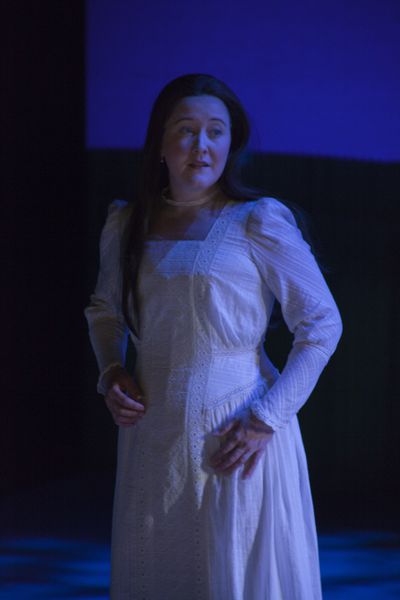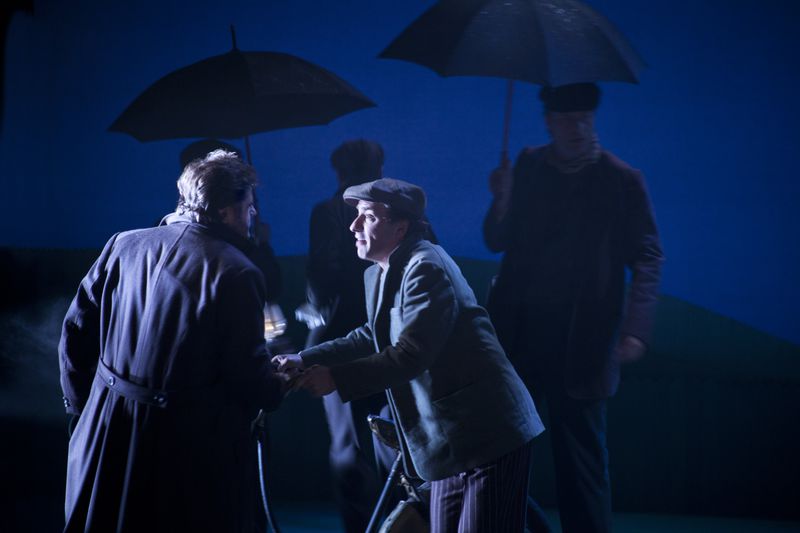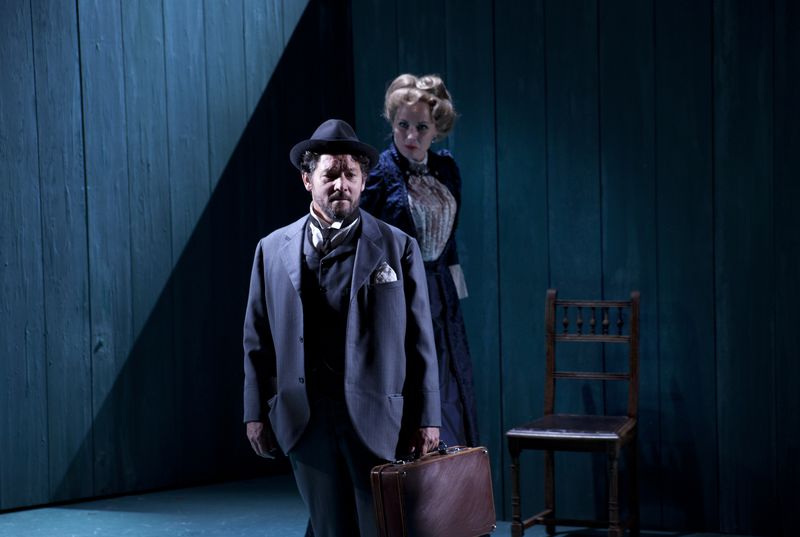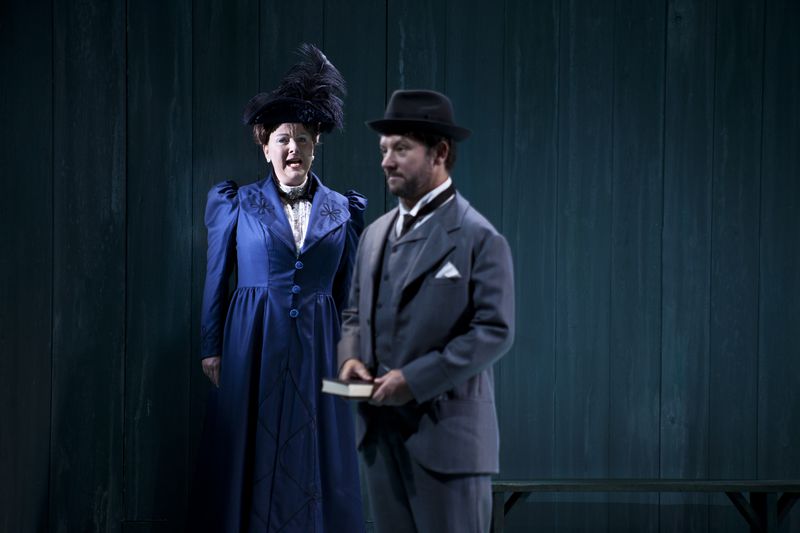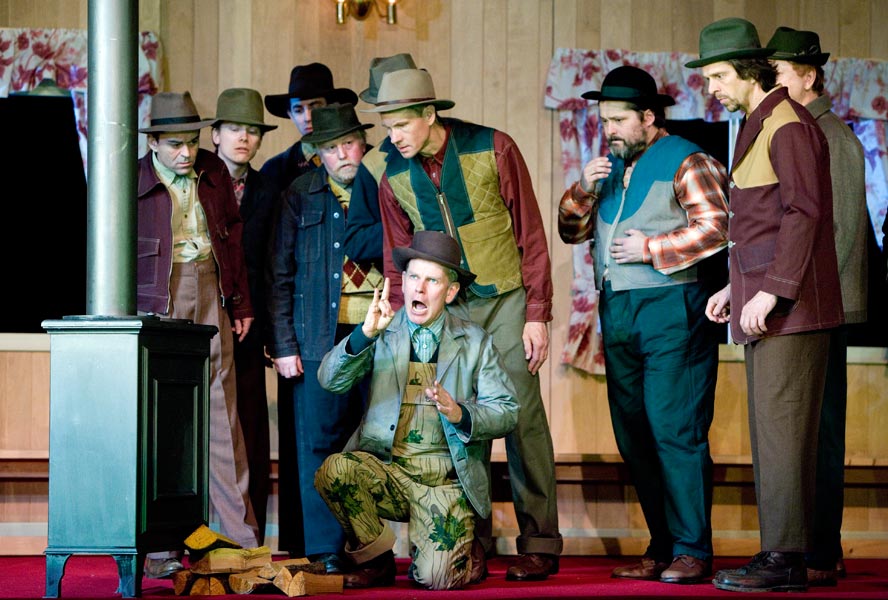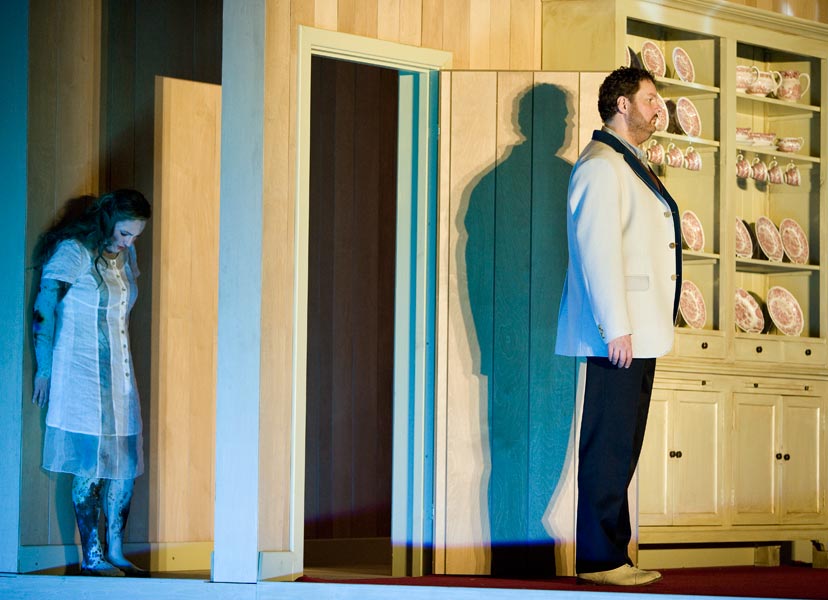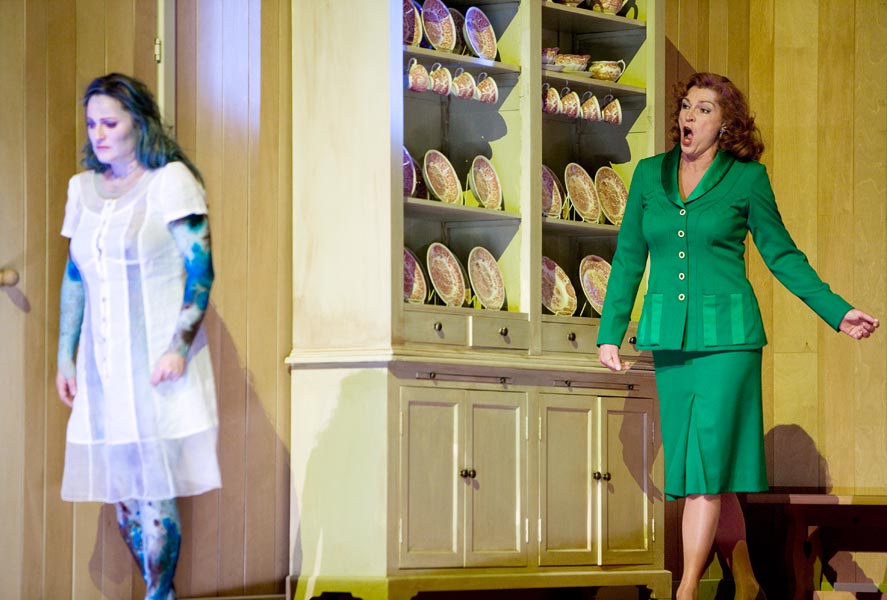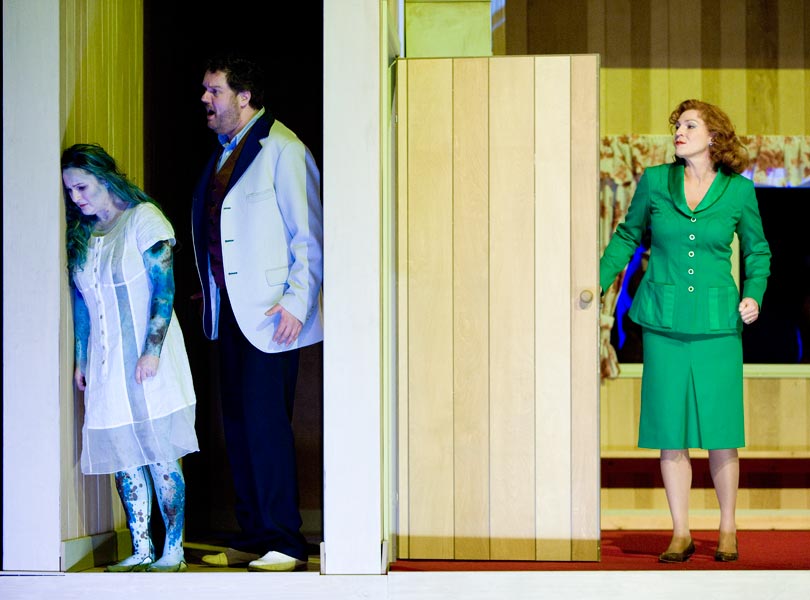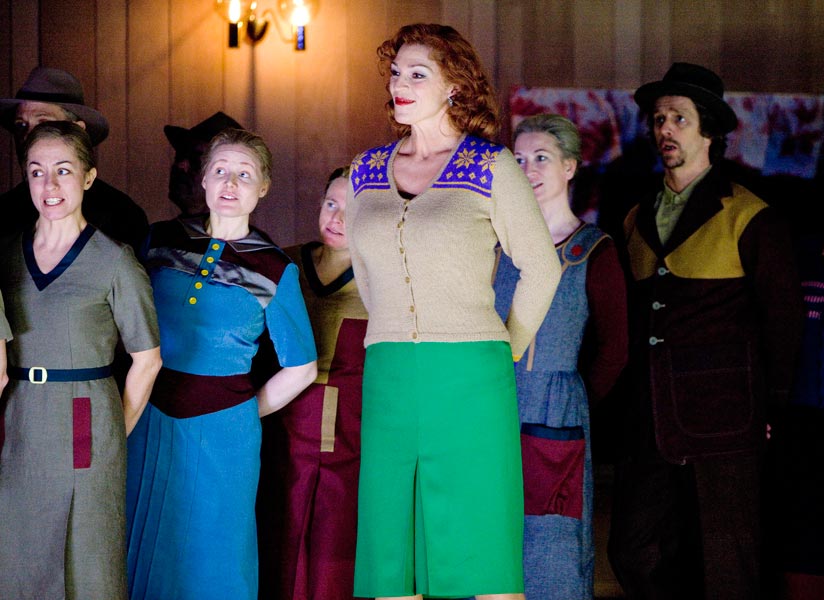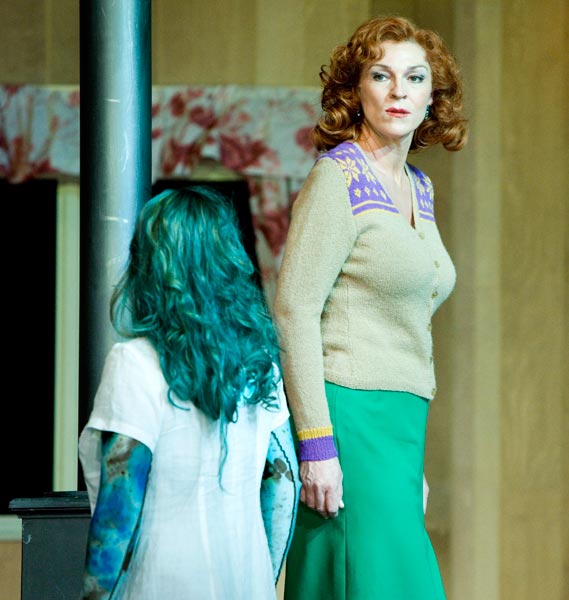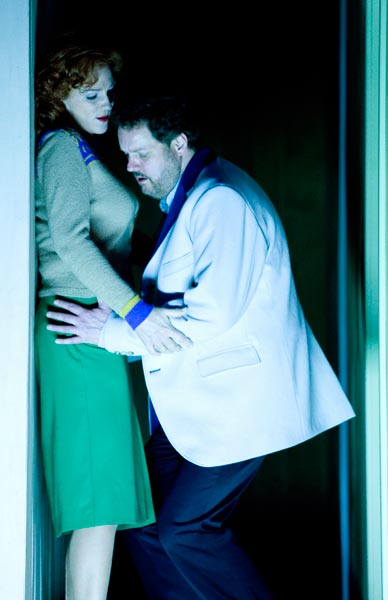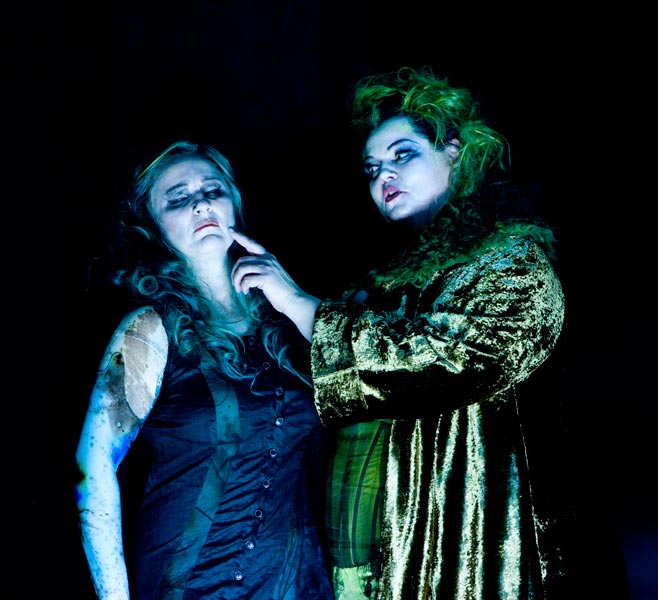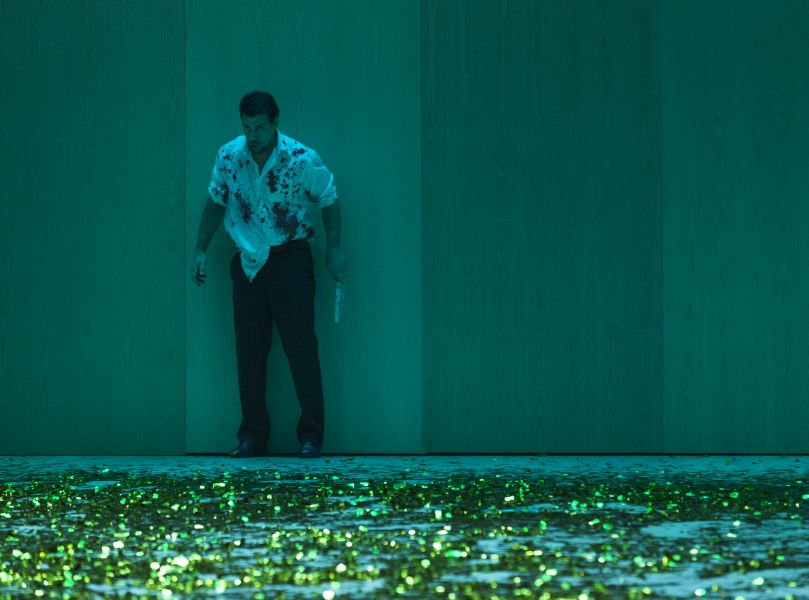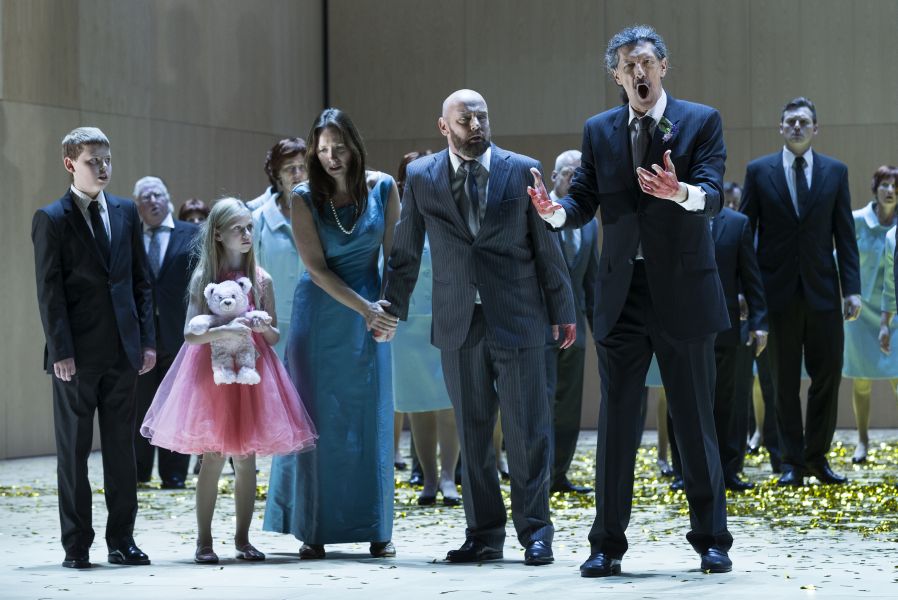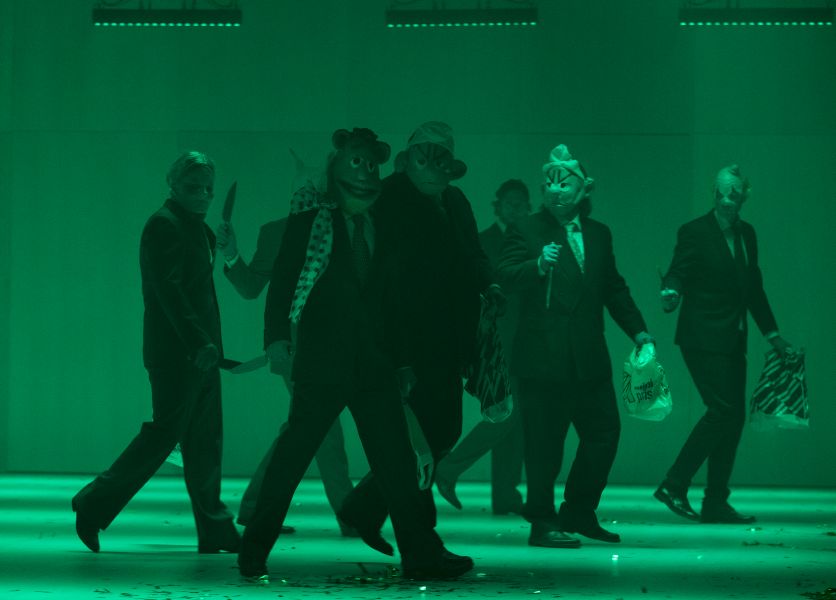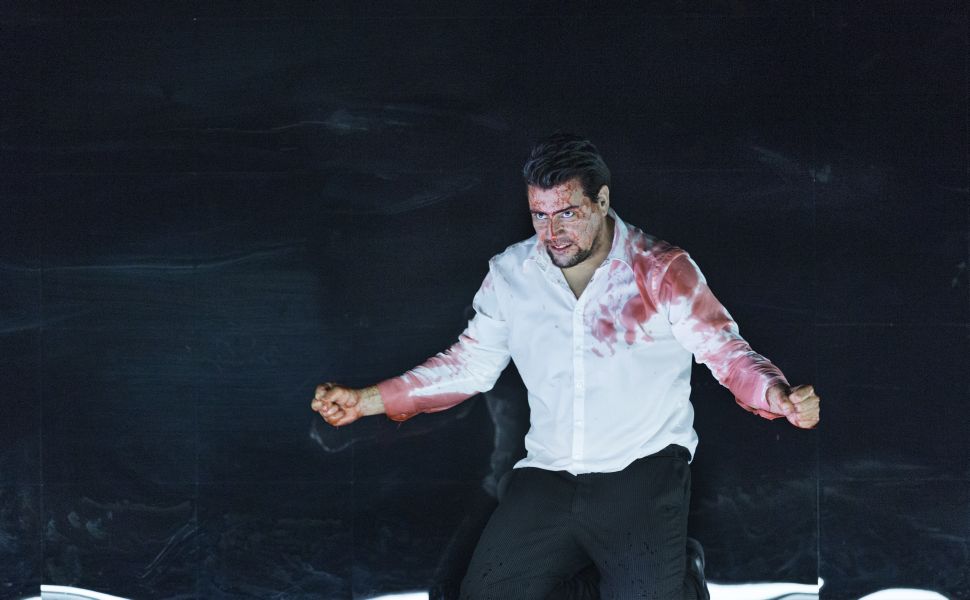
“NEIGE” by Catherine Kontz in Luxembourg

logoLuxembourg

NEIGE

Catherine Kontz (*1976)

From the novel “Neige” by  Maxence Fermine
Libretto by Catherine Kontz
Création mondiale
In French and Japanese, with subtitles in French and English

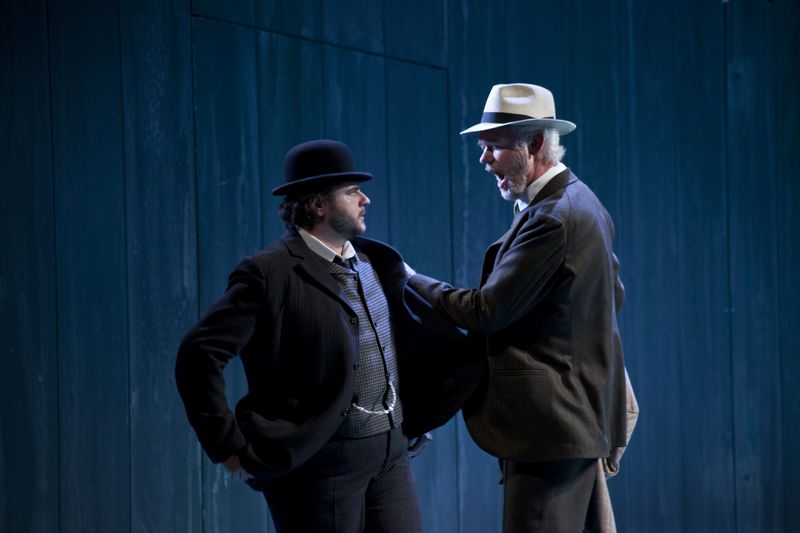
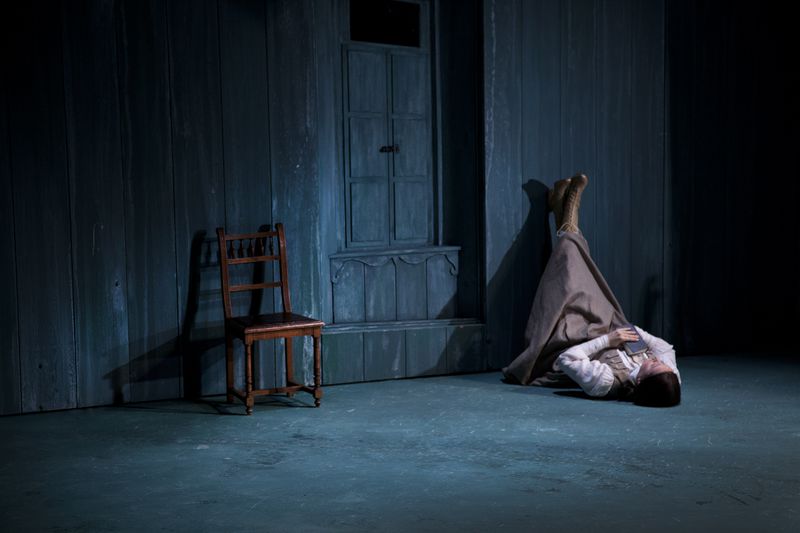
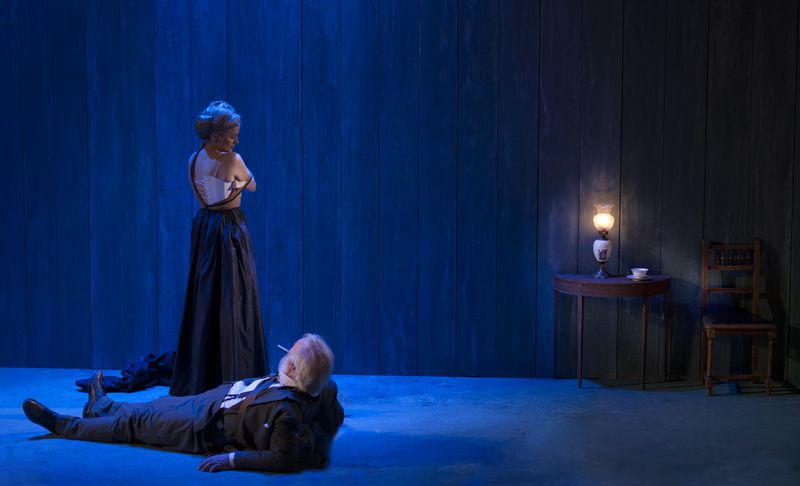
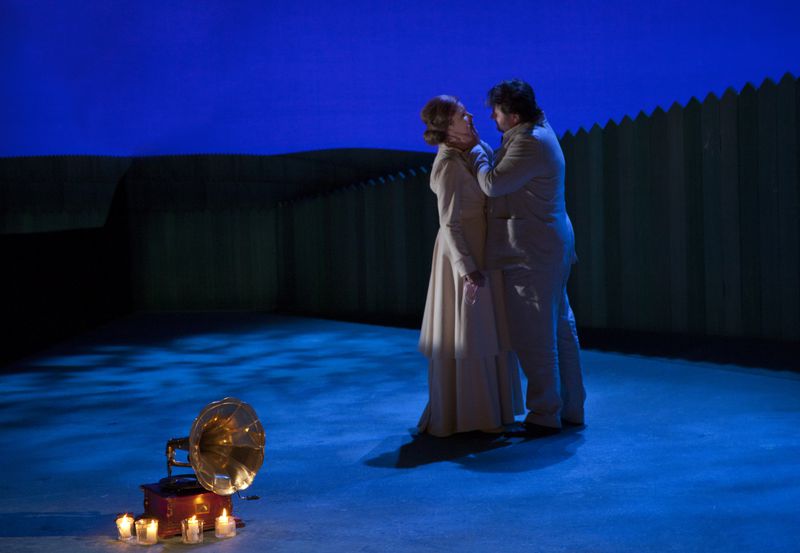
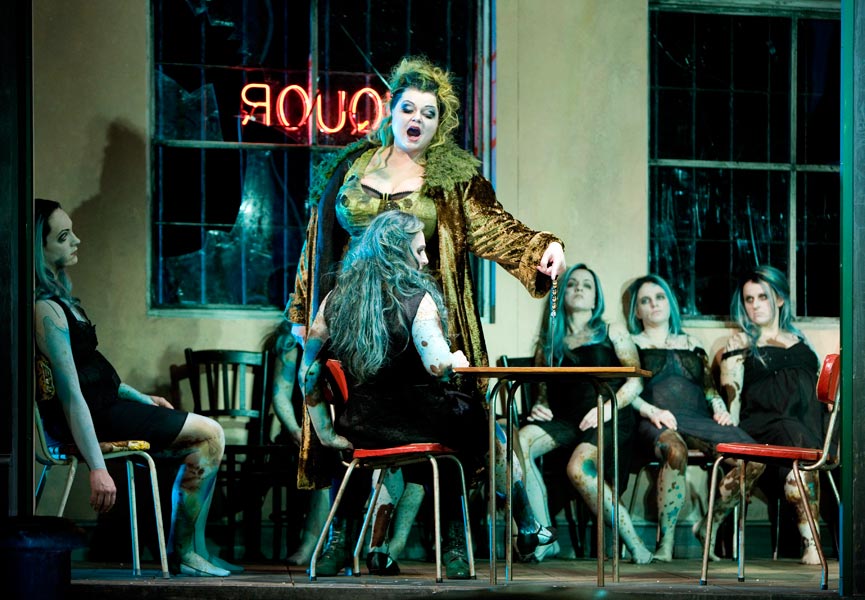
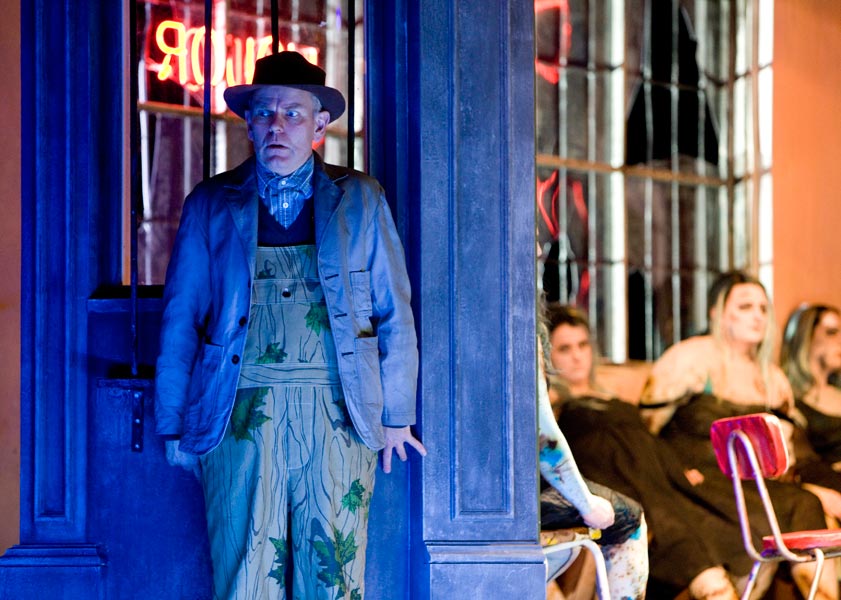
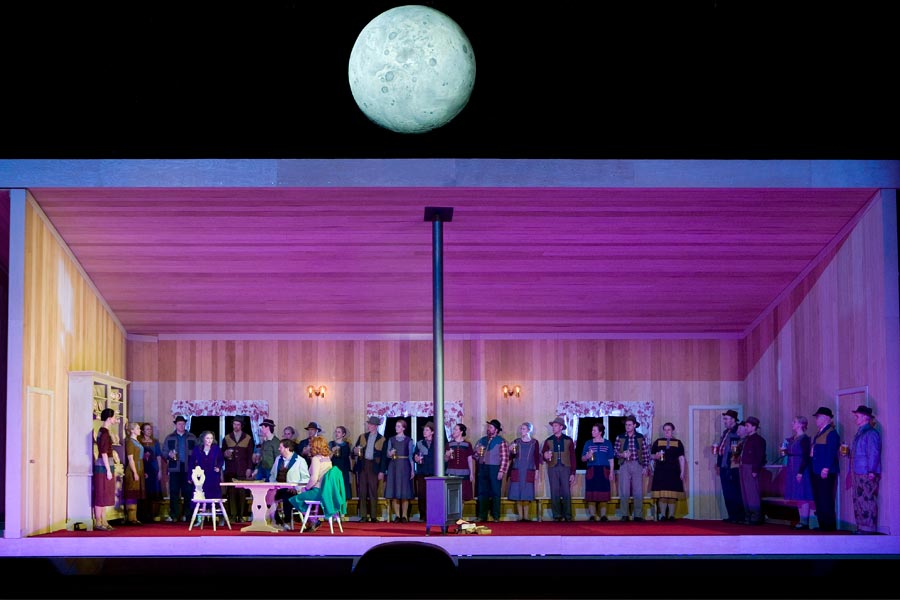
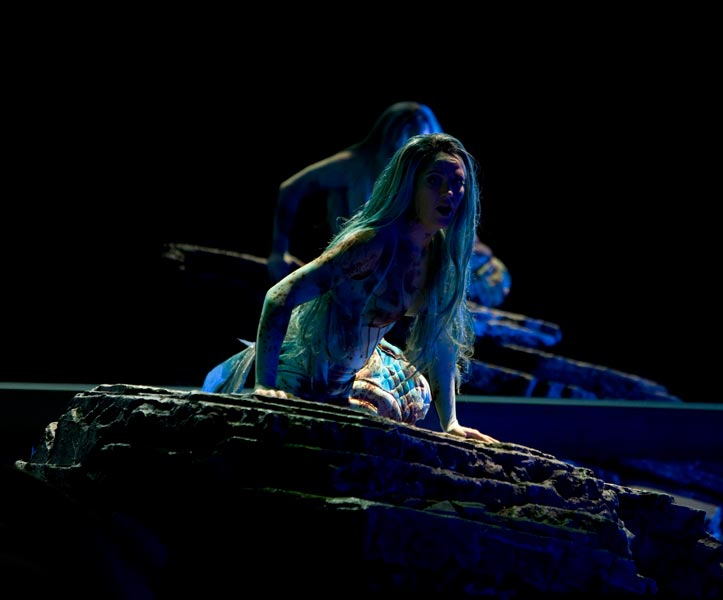
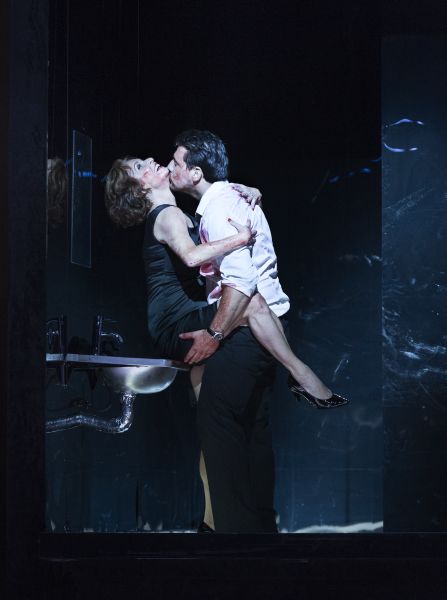
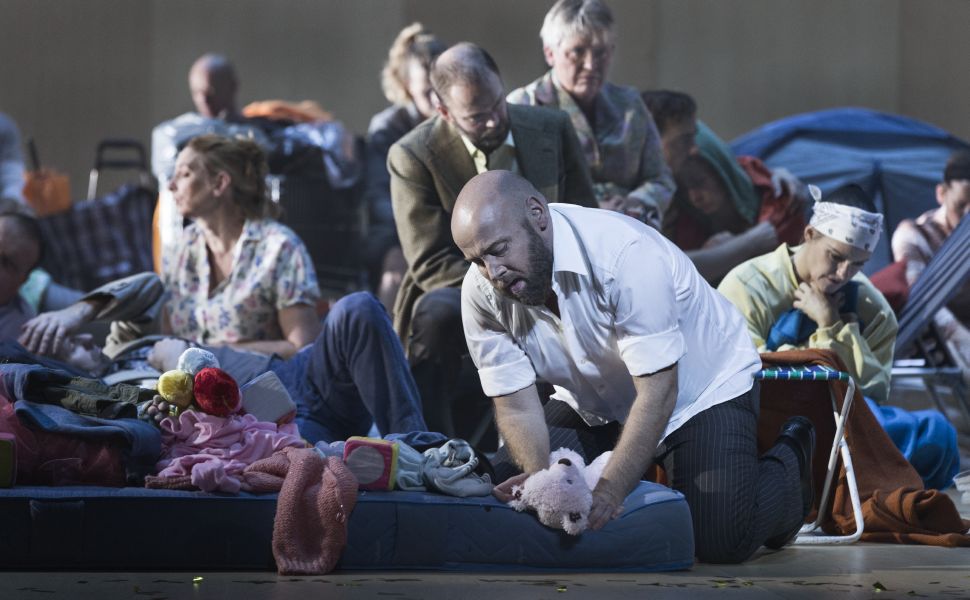
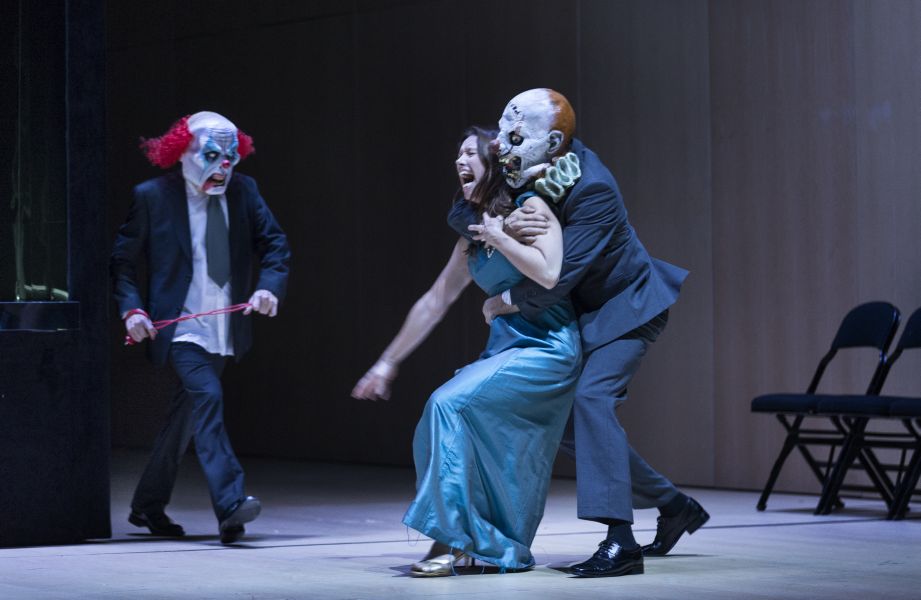
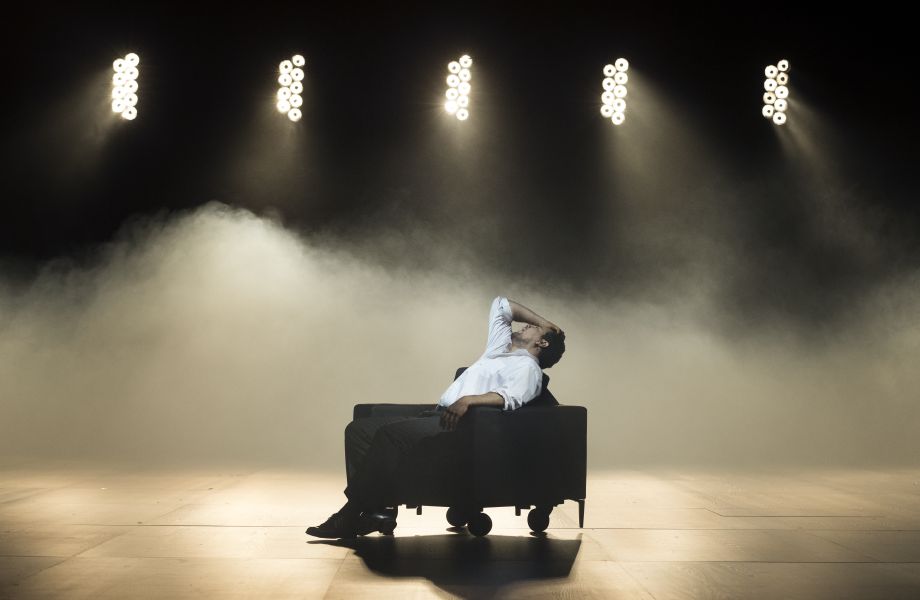
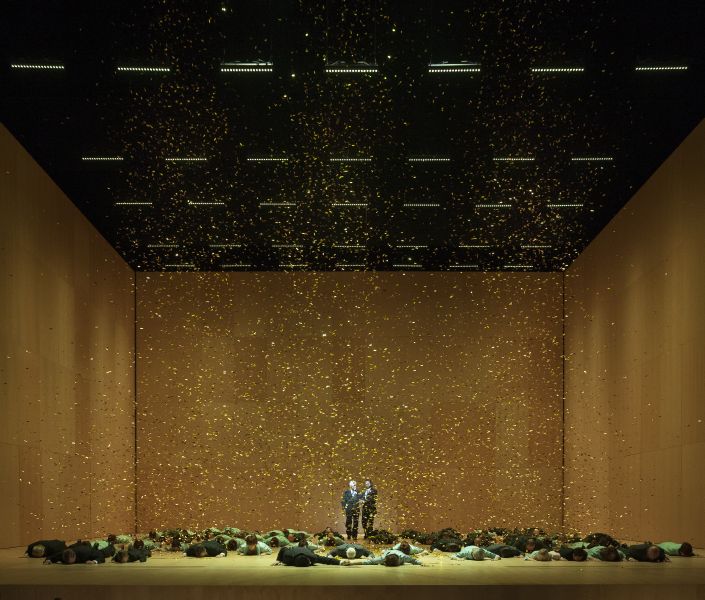
After Der Turm in 2011, the Théâtres de la Ville once again support the work of a Luxembourg composer in 2013. Catherine Kontz was inspired by certain aspects of Japanese Kabuki theatre to create her first opera Neige. Based on the novel by Maxence Fermine of the same title, the story recounts the adventures of a 19th century haiku poet who comes across a blind painter, a tragic samurai warrior and a French tight-rope walker.

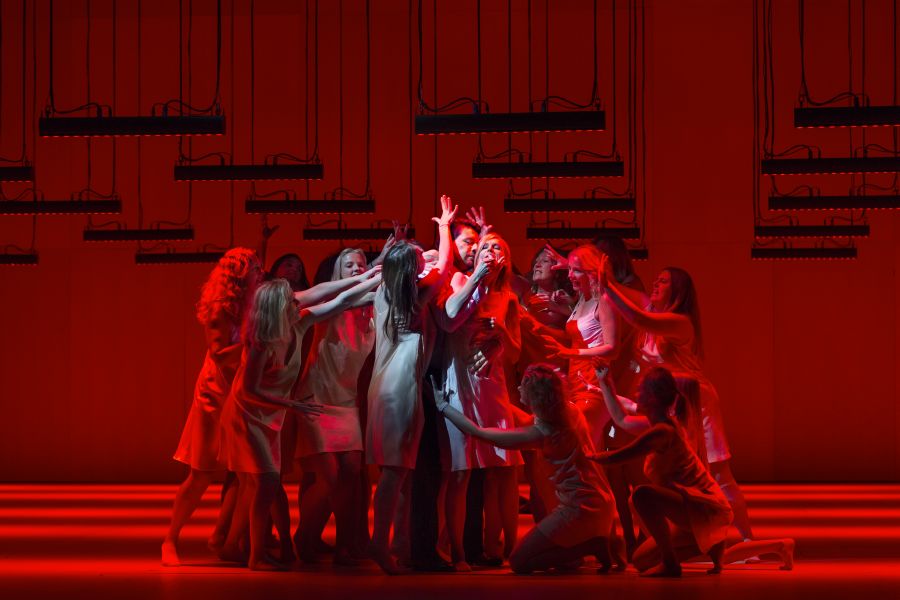
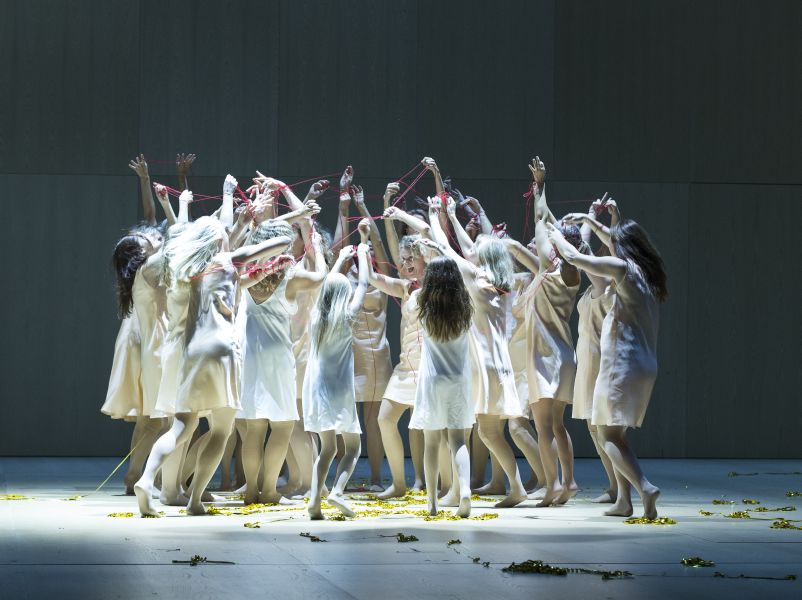
The multidisciplinary production features five soloists, a small female choir, a dancer and an acrobat. The music is provided by Luxembourgbased ensemble Lucilin, who impressed audiences last year in the production of The Raven and with whom the Théâtres de la Ville are thus continuing their collaboration.

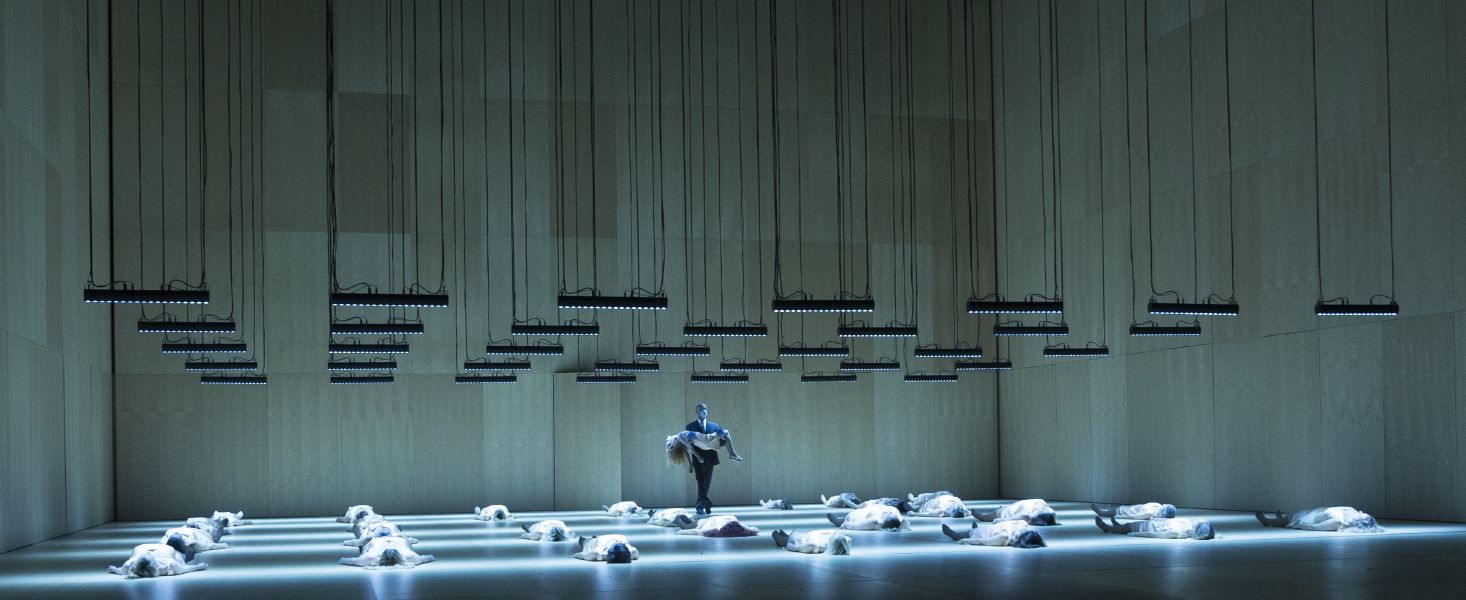
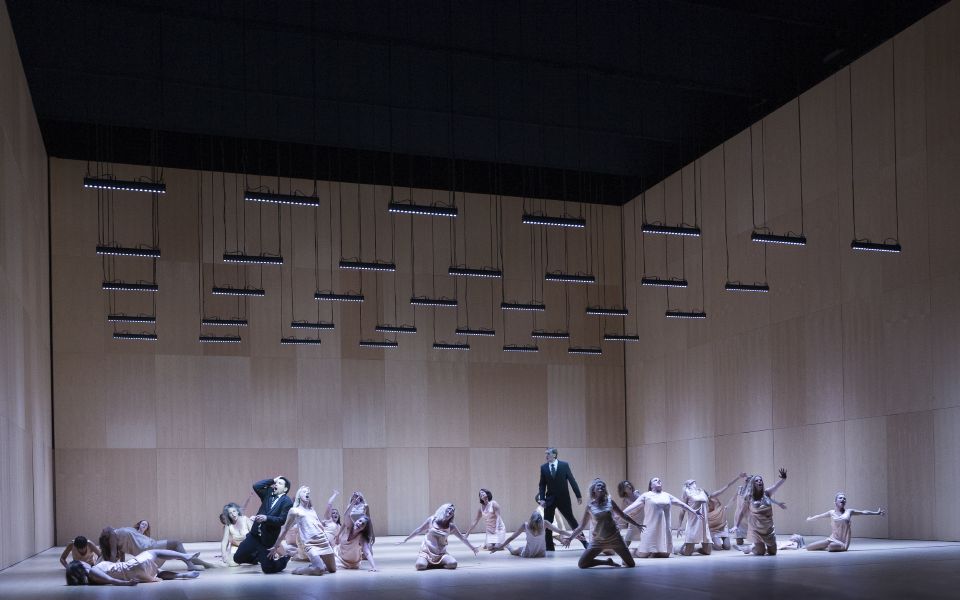
As with her previous theatre work, Catherine Kontz will direct the piece herself but has assembled an impressive creative team around her from her London connections. Avant-garde studio Knifedge will create the projections and Conductor in Residence for the British National Youth Orchestra Gerry Cornelius will be in charge of the music while award-winning theatre designer Ellan Parry will be responsible for set and costumes. Together they will try to create a magical and beautiful landscape with mountains made out of fabric and cutting-edge projections inspired by Japanese painting and calligraphy.

Direction musicale Gerry Cornelius
Mise en scène Catherine Kontz
Collaboration à la mise en scène Keiko Sumida
Scénographie & costumes Ellan Parry
Créateur Vidéo Timothy Bird
Lumières Kristina Hjelm 

Yuko Akita Rodrigo Ferreira
Père Akita Edward Grint
Dignitaire de la Cour & Horoshi Vincent Pavesi
Maître Soseki Omar Ebrahim
Neige Juliet Fraser
Neige jeune / Flocon du printemps Katharina Dröscher
Soseki jeune Reveriano Camil

Orchestre United Instruments of Lucilin

Chœur de femmes Lilith Verhelst (Soprano I), Coline Dutilleul (Soprano II), Dana Luccock ( Mezzo-soprano I), Anaïs Brullez (Mezzo-soprano II)

Instrumentalistes Philipp Marguerre (Glasharmonica), Akinori Fujimoto (Taiko drums) 

Répétiteur piano Klauspeter Bungert

Régie générale Sabine Konz

Production créée le 19 décembre 2013 au Grand Théâtre de Luxembourg

Production Les Théâtres de la Ville de Luxembourg
Coproduction United Instruments of Lucilin
Collaboration Catherine Kontz Productions asbl
Avec le soutien de l’Œuvre Nationale de Secours Grande-Duchesse Charlotte, Ministère de la Culture, de la Fondation Indépendance, FOCUNA (Fond Culturel National) & SACEM

Thursday 19 DÉCEMBER 2013 à 20h00

Friday 20 DÉCEMBER 2013 à 20h00 
 
Estimated time 1h10 plus interval

Introduction à l’opéra par Catherine Kontz (compositrice et metteure en scène) & Guy Frisch (de l’Orchestre United Instruments of Lucilin) une demi-heure avant chaque représentation (en langue française)

Posted in OPera | Tagged , , , | Leave a comment

“Il trovatore” in Krakow

trovatoreKrakowThe Troubadour

(Il trovatore)

Composer: Giuseppe Verdi

opera in four acts
libretto: Salvatore Cammarano and Leone Emanuele Bardare after the play Antonio Garcia Gutiérrez
in the original Italian
world premiere: Roma 1853
Polish premiere: Warsaw 1854
premiere in the Krakow Opera: 8 june 2013

Production team:
Director: Laco Adamik
Music director: Tomasz Tokarczyk
Set and costume designer: Barbara Kędzierska
Chorus master: Zygmunt Magiera
Lighting designer: Bogumił Palewicz

director’s assistant: Dagmar Bilińska
ausic director’s assistant: Grzegorz Brajner
set designer’s assistant: Izabela Firek
chorus master’s assistant: Joanna Wójtowicz
stage managers: Agnieszka Sztencel, Magdalena Wąsowska
prompters: Dorota Sawka, Krystyna Behounek
soloists’ coaches: Irena Celińska-Głodek, Kristina Kutnik, Olha Tsymbalyuk, Natalia Wasidlow
chorus accompanist: Magdalena Kurek
displayed libretto translated by Dorota Sawka

trovatoreKrakow1  trovatoreKrakow2

Cast:
IL CONTE DI LUNA | Leszek Skrla, Dainius Stumbras
LEONORA | Magdalena Barylak, Katarzyna Oleś-Blacha, Ewa Vesin

AZUCENA | Małgorzata Ratajczak, Agnieszka Rehlis, Małgorzata Walewska

MANRICO | Vasyl Grokholskyi, Tomasz Kuk, Arnold Rutkowski

FERRANDO | Jozef Benci, Krzysztof Dekański, Volodymyr Pankiv

INES | Agnieszka Cząstka, Monika Korybalska

RUIZ | Krzysztof Kozarek, Marek Gerwatowski, Rafał Pawłowski

OLD GYPSY | Marcin Herman, Jan Migała

MESSENGER | Marek Gerwatowski, Rafał Pawłowski

THE KRAKOW OPERA ORCHESTRA AND CHOIR
24.11.2013
time: 6:30 pm
scene: Main Stage
duration: 3 hrs.
intervals: 1

22.11.2013
time: 6:30 pm
scene: Main Stage
duration: 3 hrs.
intervals: 1

trovatoreKrakow3  trovatoreKrakow4

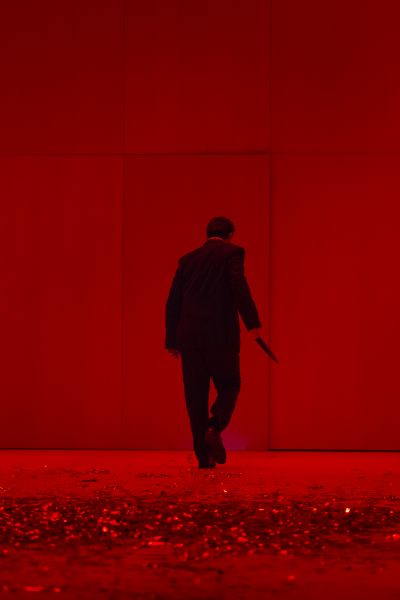
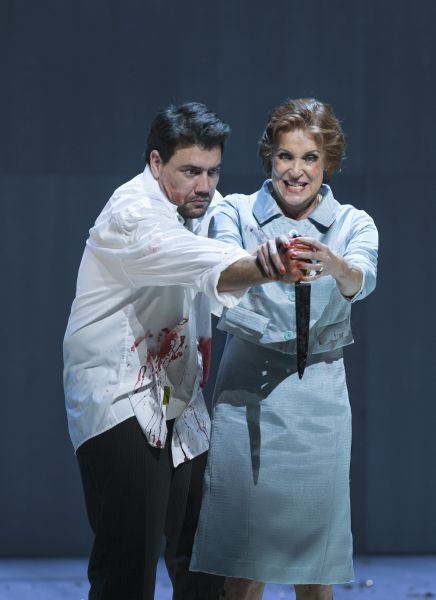
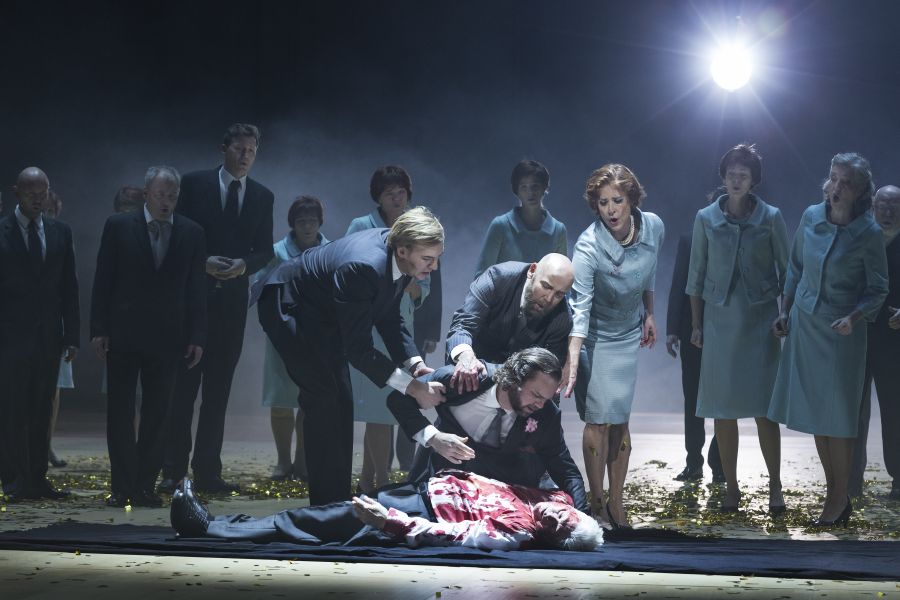
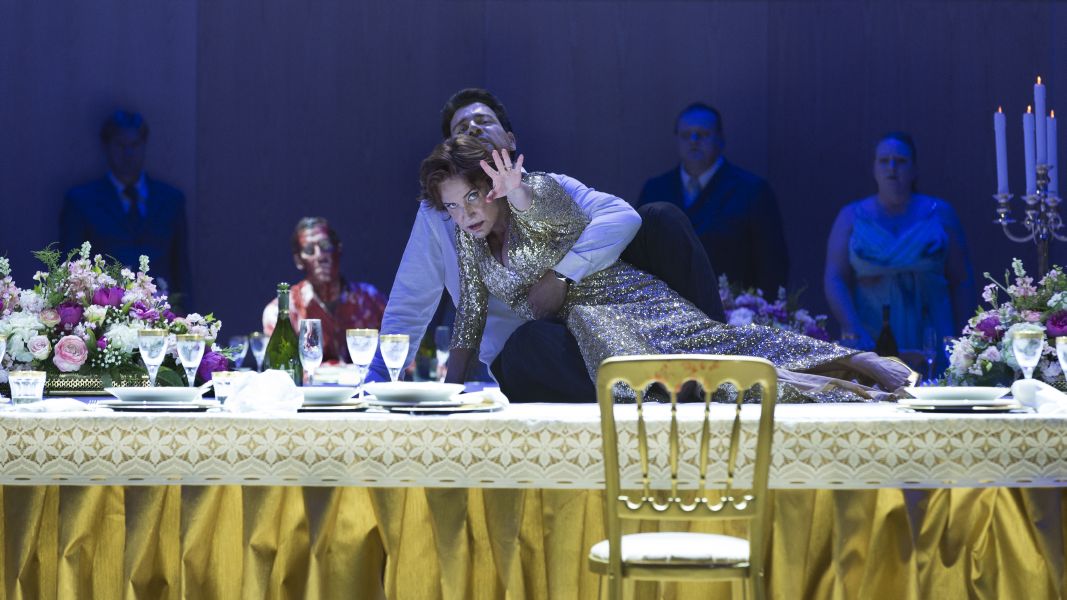
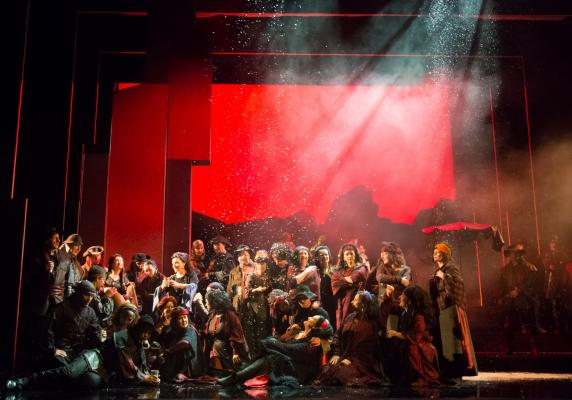
A story of two brothers, separated by fate and then pitted against each other by their love for the same woman and by political turbulences – both unaware of their brotherhood… “Troubadour’s” libretto, despite based on authentic events from Middle Age Spain torn with civil wars, is regarded to be complicated and unclear, mainly because the key events for the plot take place out of stage – they exist only in relations of other characters. The opera’s success was attributed primarily to music – it is “a music and vocal pleasure”, they wrote. Laco Adamik – in defiance of these opinions – tries, relying on his many year’s narrative experience of a director, to make the performance shine also from the plot’s side. His staging offers fleshy characters, well-shaped events and a crime which once committed entails next ones, like in the ancient tragedy. You will be anxious and moved. It is the first staging of the title in the entire history of the Krakow stage.

trovatoreKrakow5

Posted in Music, OPera | Tagged , , , , , , , | Leave a comment

The “Csardas Princess” in Tel Aviv

csardasIsrael8  csardasIsrael7


csardasIsrael6  csardasIsrael5


csardasIsrael4  csardasIsrael3


csardasIsrael2  csardasIsrael1


Csardas Princess

Emmerich Kalman

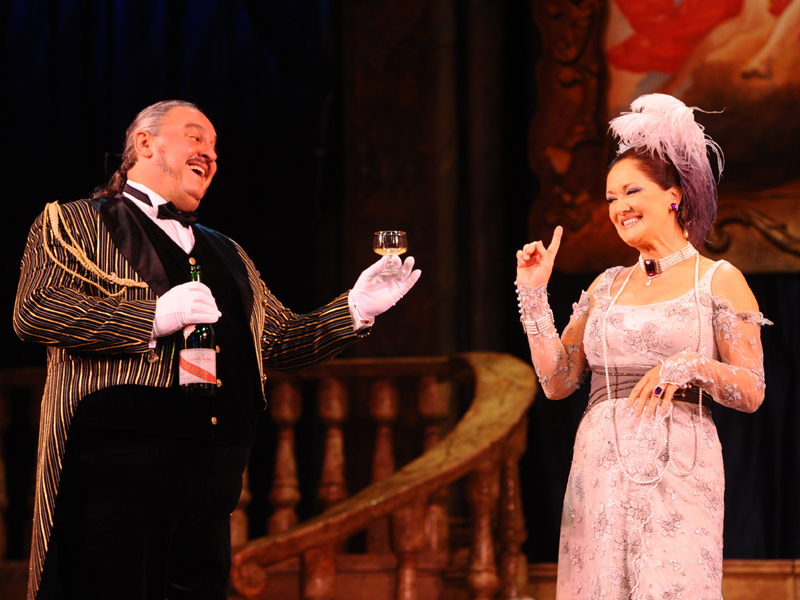
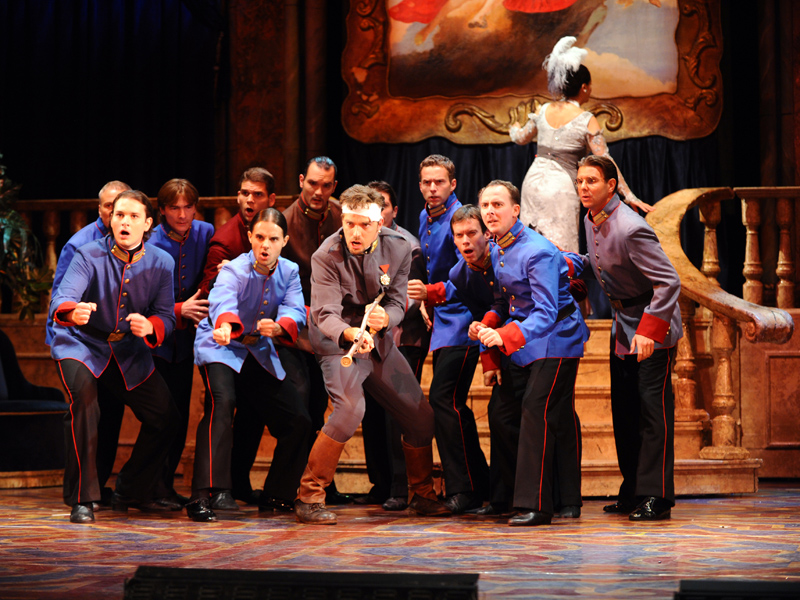
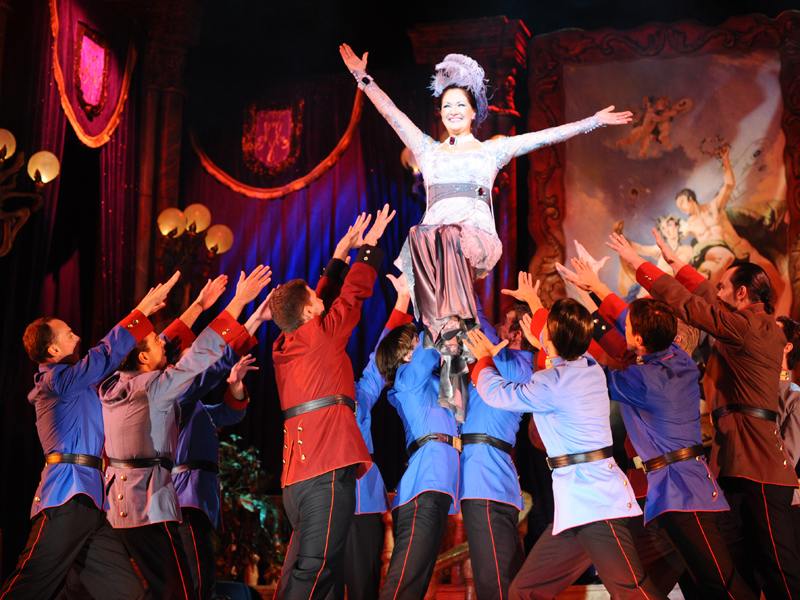
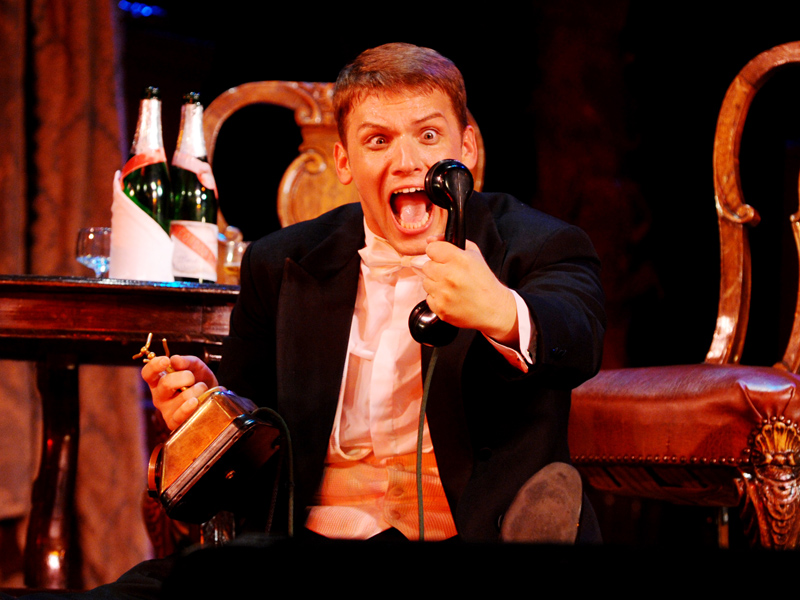
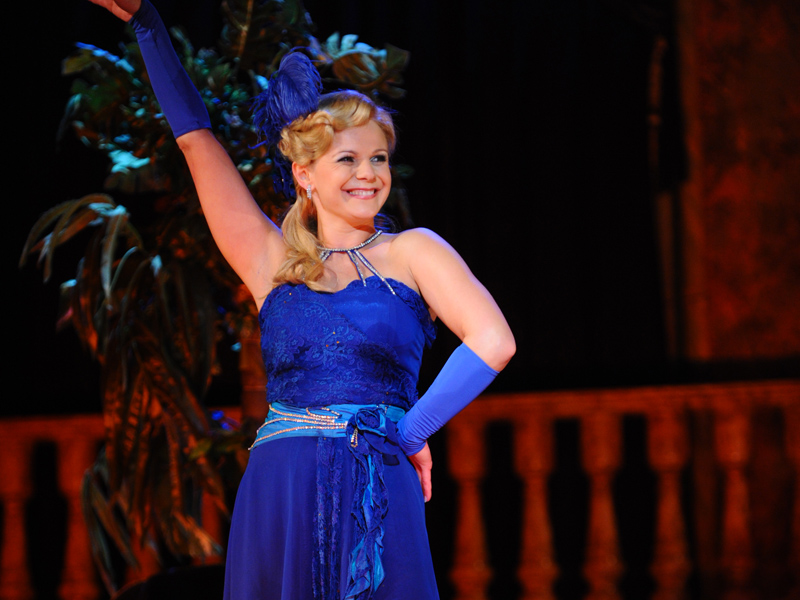
The Budapest Operetta Theatre comes to Israel with their splashy production of The Csardas Princess. This is a story in which eventually love conquers all, a celebration of sweeping operetta melodies, colorful costumes and music that sparkles like champagne.

Libretto: Béla Jenbach and Leo Stein

Conductor  Laszlo Maklary
Director  Miklos Gabor Kerenyi KERO®
Costumes Designer                      Fanni Kemenes
Set Designer  Agnes Gyarmathy
Lighting Designer  Laszlo Nagy
Choreographer  Gyorgy Gesler


Sylva Varescu Monika Fischl
  Barbara Bordas
Edwin Ronald Zsolt Vadasz
  Gergely Boncser
Countess Stasi Szilvi Szendy
  Annamari Dancs
Graf Boni Karoly Peller
  David Szabo
Feri von Kerekes Tamas Foldes
Leopold Maria Peter Mrik
Anhilte Bori Kallay
Arnold Sandor Gyorgy-Rozsa
Eugen von Rohnsdorff                  Gabor Dezsy-Szabo
Kiss, Notary  

 
Soloists, dancers and chorus of the Budapest Operetta and Musical Theatre

Raanana Symphonette Orchestra with players from the Budapest Operetta Theatre

Surtitles in Hebrew and English

New Production
Sung in Hungarian
Duration: Three hours

Day         Date  Hour        back stage tours       Opera Talkback
*THU 12.12.13           20:00    
FRI 13.12.13 13:00    
    21:30    
SAT 14.12.13 16:30    
    20:30    
MON 16.12.13 20:00 18:30 After the show
TUE 17.12.13 20:00 18:30 After the show
WED 18.12.13 20:00 18:30 After the show
THU  19.12.13 20:00   After the show
FRI 20.12.13 13:00    
SAT 21.12.13 20:30    

* PREMIÈRE
** TOWARDS OPENING – 14.12.13 SAT 11:00 

The Gipsy Princess

Act I The Orpheum Cabaret, Budapest 
The guests at the Orpheum Cabaret are celebrating the final appearance of their singing star, Sylva Varescu, before her departure on a tour of America. After the performance Sylva celebrates with two older admirers, Count Boni and his friend Feri as she eagerly awaits the arrival of the man she loves, Prince Edwin Ronald von und zu Lippert-Weylersheim. Edwin, who is under pressure from his family to abandon this unsuitable liaison with a cabaret singer and return to Vienna, arrives and is not willing to lose Sylva, yet he receives a letter demanding him to report to his regiment in Vienna. Edwin makes up his mind and before returning to Vienna he and Sylva sign a document binding them to marry each other within two months. Sylva decides to cancel her American tour. Unknown to Edwin his parents have already announced the betrothal of Edwin to Countess Anastasia (Stasi). When Sylva finds this outs, she assumes that Edwin has cheated her and decides to fulfill her American contract accompanied by Boni as her manager.

Act II Prince Leopold’s residence near Vienna.
Prince Leopold and Princess Anhilte (Edwin’s parents) are holding a ball announcing the official betrothal of Edwin and Stasi, yet the two are far from happy with the idea. Edwin, who has never understood why Sylva deserted him, is still desperately hoping for news from America. Suddenly two unexpected guests arrive – Sylva and Boni. She has cut short her tour and persuaded Boni to bring her to the ball, pretending that they are now married to each other. Edwin is livid with Boni for his apparent treachery and also accuses Sylva of betraying him, however Edwin and Sylva are still in love and soon enough it is obvious that Stasi and Boni fall for each other and are happy with each other’s company. Edwin persuades Sylva that she should divorce Boni but Sylva needs to be accepted as Sylva Varescu, cabaret singer, not the ex-wife of a Count whom she hasn’t actually married. When the Prince makes an official declaration about Edwin and Stasi’s engagement, Edwin announces that he loves Sylva. But she is not willing to be announced as anyone else than who she really is, the cabaret singer from Budapest, and leaves the ball with anger.

Act III The foyer of the Holzberg Hotel, Vienna, later the same night.
Sylva and Boni return to their hotel, where they find their older friend Feri and the dancing girls from the Orpheum. Edwin follows, looking for Sylva, followed in turn by his angry father. Boni declares that he wants to marry Stasi and she of course accepts. Yet Prince Leopold still rejects his son’s liaison with a cabaret singer. But when by mere coincidence he realizes that long ago his own wife has also been a cabaret singer, he no longer can refuse. And so the two pairs of lovers are reconciled. All’s well that ends well.

The Israeli Opera, Sderot Sha’ul, HaMelech 19, Tel Aviv-Yafo, Israel

Csardas Princess

Posted in Music, OPera | Tagged , , , , , | Leave a comment

CD REVIEW: Gaetano Donizetti – BELISARIO

Reposted from: http://www.voix-des-arts.com/2013/11/cd-review-gaetano-donizetti-belisario-n.html

Author: Joseph Newsome

CD REVIEW: Gaetano Donizetti – BELISARIO (N. Alaimo, J. El-Khoury, R. Thomas, C. Roberts, A. Miles; Opera Rara ORC49)

 Gaetano Donizetti: BELISARIO (Opera Rara ORC49)

GAETANO DONIZETTI (1797 – 1848): Belisario – N. Alaimo (Belisario), J. El-Khoury (Antonina), R. Thomas (Alamiro), C. Roberts (Irene), A. Miles (Giustiniano), J. Sporsén (Eudora), P. Hoare (Eutropio), E. Price (Eusebio), M. Bundy (Ottario), D. Jeffery (Centurion); BBC Singers; BBC Symphony Orchestra; Sir Mark Elder [Recorded at BBC Maida Vale Studios, London, in October 2012; Opera Rara ORC49; 2CD, 124:53; Available from Opera RaraPresto Classical, and all major music retailers]

Thoroughly, memorably satisfactory performances of bel canto operas are as rare today as honest politicians—and as welcome when they unexpectedly appear.  Not so many seasons have passed since the Lucias of Beverly Sills or Dame Joan Sutherland could be partnered on any given night with the Edgardos of Carlo Bergonzi, Nicolai Gedda, Sándor Kónya, or Richard Tucker.  Perhaps they were not Pastas or Rubinis, but these singers knew and loved bel canto and possessed both the requisite techniques and sufficient respect for the music to dedicate themselves to delivering stylish performances.  There are excellent bel cantosingers active today, of course, but instances in which groups of them are assembled in casts for Bellini or Donizetti operas are strangely few.  Are an Adalgisa with no coloratura and a strangulated Roberto Devereux really considerably less expensive for an opera company than good ones?  Bel canto suffers more in the 21st Century than ever before, it seems, from the supposition that this repertory requires star singers in order to be viable: worry first about filling seats and then about meeting the demands of the music, and if one of these aims must be sacrificed it is better to sing poorly to a full house.  The history of Opera Rara proves, however, that, when sung not just competently but enthusiastically and devotedly,bel canto repertory both is a star in its own right and creates stars of its own accord.  Any number of sopranos can get through a rôle like Donizetti’s Maria de Rudenz, but only a mistress of the idiom like Nelly Miricioiu can truly make the part her own, and Opera Rara’s studio recording gave her the ideal setting in which to offer a masterclass in dramatic bel canto singing.  The talented team at Opera Rara have now given this same gift to Donizetti’sBelisario, bringing together a cast of today’s most talented bel canto singers and crafting a performance that sweeps the boards, artistically and technically.

The technical strengths of this recording arise from the work of Opera Rara’s engineers, Neil Pemberton, Drew Leckie, and Susan Thomas.  They faced a daunting assignment: sonic excellence is the expectation rather than the exception with Opera Rara recordings, but the best of their skills were engaged in producing a dynamically wide-ranging recording that benefits from near-ideal balance and a natural, slightly dry acoustic that credibly replicates the sound of a small theatre.  As has also become customary for Opera Rara releases,Belisario is accompanied by an article by Jeremy Commons by which the attentive reader will be both educated and entertained.  Even among Donizetti’s lesser-known operas, Belisario is something of an enigma, its musically uneven but dramatically innovative score largely overlooked during the Donizetti revival of the 1950s and ‘60s.  The opera’s resurgence in the 20th Century was due to interest in the lead soprano rôle by Mara Zampieri and, most significantly, Leyla Gencer.  Compared with Anna Bolena and Lucia di LammermoorBelisariois not a masterpiece, but the efforts of Opera Rara have often revealed that Donizetti’s ‘forgotten’ operas are finer scores than those of his less-remembered contemporaries—and, indeed, than those of subsequent generations that enjoy greater popularity.  Thus it is also with Belisario.  There are passages, even pages, of the opera that lack inspiration, but of how many composers’ scores except the mature operas of Mozart can that not be said?  There are many pages in Belisario that rival the best of Donizetti’s work, however, and there is an obvious effort by all of the personnel involved with this recording to ensure that the score receives uniform distribution of the deep trove of resources.  A listener would not expect a Violetta to sing haphazardly until reaching ‘Amami, Alfredo, amami quant’io t’amo’ and ‘Alfredo, Alfredo, di questo core,’ her two great outpourings of melody, but many performances of bel canto operas do just that, taking flight only in the moments of greatest fame or distinction.  There are moments in Belisario when Donizetti’s genius is more apparent, but the levels of musical and dramatic execution in this recording are consistently high from beginning to end.

One of the finest if least-heralded theatrical conductors working today, Sir Mark Elder presides over this performance of Belisario with passion and precision.  His keen ear for rhythm provides a firm foundation for the performance, and the depth of his understanding of both the similarities and differences of the styles of the mature Donizetti and the young Verdi is evident.  In many ways, Belisario is a close relative of Nabucco, both in terms of the basic structure of the narrative and in the sharply-contrasted musical profiles of the characters.  Donizetti’s opera mostly lacks the contemporary political and religious subtexts of Nabucco but shares many of the complicated, ultimately unanswerable questions of Verdi’s work.  Maestro Elder shows a firm hand in guiding the development of Donizetti’s carefully-conceived thematic arcs, but he is also a confident, cordial friend to the singers.  Melodic lines are granted the flexibility that they need in order to expand organically without distorting the dramatic progression of scenes.  Perhaps the greatest accomplishment of Maestro Elder’s conducting in this performance is the way in which be balances clean articulations of rhythmic figurations with seemingly effortless commands of dynamics, balance between orchestra and singers, and idiomatic phrasing of Italianate melodic lines.  Such accomplishments are far from effortless, of course, and Maestro Elder’s expert leadership contributes significantly to the success of this recording.  Led respectively by Renato Balsadonna and Tomo Keller, the BBC Singers and BBC Symphony Orchestra also perform excellently, not least by responding so readily to Maestro Elder’s baton.  The BBC Singers evoke the grandeur of Imperial Byzantium with singing of compelling vigor.  The choristers are given nothing of the melodic fecundity of Nabucco’s ‘Va, pensiero sull’ari dorate,’ but the Senators’ Chorus in Part One, ‘Che mai sarà,’ is a stirring number, faintly resembling in its basic structure the Council Chamber Scene in Verdi’s Simon Boccanegra.  Whether plotting rebellion or decrying betrayal, the choristers maintain a sturdy, unstintingly musical presence throughout the performance.  The demands of Donizetti’s score find not one of the players of the BBC Symphony Orchestra unprepared, and the reliable quality of the orchestral playing further enhances the cumulative impact of the recording.

Another quality typical of Opera Rara releases (and sadly atypical of other labels’ recordings) is the uniformly high level of talent among the singers cast in supporting rôles.  Belisario is an opera in which there truly are no insignificant rôles, and even the unnamed Centurion comes forward in the penultimate scene with the critical news that Belisario has been mortally wounded in battle.  Thankfully, a singer as capable as Darren Jeffery is on hand to fill the Centurion’s lines with forceful tone befitting the gravitas of his statements.  Eutropio, duplicitous head of the Imperial guards and combatant for Antonina’s favor, and Eusebio, the warden of the Imperial prison, are sung with ringing tones by Peter Hoare and Edward Price.  Michael Bundy is a suitably martial Ottario, leader of the rebels, and Irene’s confidante Eudora is beautifully sung by Julia Sporsén.

The rôle of the Byzantine Emperor Giustiniano is sung by bass Alastair Miles, a frequent participant in Opera Rara projects and one of the most important exponents of bel cantosinging in Britain.  In recent seasons, there were occasional signs of the effects of time and a rigorous career in Mr. Miles’s singing, but in this performance these traits are little in evidence.  Donizetti did not give Giustiniano a concerted aria, but Mr. Miles takes advantage of every opportunity offered him, infusing his pronouncements with focused, suitably regal tone.  Passages at neither the very top nor the bottom of the voice come as easily as in the past, but it is heartening to hear Mr. Miles again singing so well.

Irene is an usual seconda donna in that she, rather than Antonina, is the opera’s sympathetic female protagonist.  Subjected to the cruel workings of fate and her mother’s covert political manipulations, she suffers greatly and, in one of the defining characteristics of bel canto, in music of considerable beauty.  Irene’s scene with her blinded father in Act Two, culminating in the duet ‘Ah! se potessi piangere,’ is the emotional climax of the opera, the situation of the faithful daughter reunited with her humiliated father—so familiar from mythology and in opera—inspiring Donizetti to extraordinary heights of pathos and musical inspiration.  Camilla Roberts scales these heights imaginatively, phrasing with an audible understanding of the art of bel canto and shaping her performance with an effecting sense of womanly dignity.  Ms. Roberts’s Irene is a mercilessly put-upon woman but not one who lashes out in vengeful anger or who demurely accepts the hands she is dealt.  Indeed, Ms. Roberts proves as spirited in up-tempo passages as she is moving in more lyrical moments.  Neither her artistry nor her voice is more eloquently deployed than in the scene with Belisario, when Irene takes her wounded father under her protection.  Warmly feminine and secure throughout the performance, Ms. Roberts’s voice here takes on the slow-burning intensity of a heroine of Greek tragedy.  Ms. Roberts occasionally sounds cautious in approaching the top of her range, but the voice is full and lovely, and her singing is a credit to the performance.

Tenor Russell Thomas takes a rôle that could all too easily be a standard-issue operatic caricature—that of the child long lost but miraculously found at the most opportune time—and transforms it into a vocal and dramatic tour de force.  Even the scene in which, his Greek ancestry having been revealed, he is taken into his father’s household as a replacement for the missing son is managed without the slightest hint of parody.  Donizetti set the scene with absolute sincerity, of course, and Mr. Thomas performs his part in it accordingly.  It is obvious in every line that Mr. Thomas sings in this performance that his is a voice that should be heard in all of the world’s important opera houses.  In Alamiro’s aria and cabaletta that open Part Two, Mr. Thomas sings with virile security and brilliant tone that would be welcome in any of Donizetti’s operas; or, indeed, in any of Verdi’s.  Alamiro is not called upon for any great philosophical discourses, but he is a hero with an insightful nature, and Mr. Thomas’s performance glows with honesty and open-hearted emotion.  Keeping with the nature of the music, interpolated top notes are few, but Mr. Thomas’s excursions into his freely-produced upper register are thrilling.  Even very young singers without idiosyncrasies and mannerisms are rare today: Mr. Thomas impresses most by the unaffected simplicity of his singing.  This is not to suggest that Alamiro’s music is an easy sing, but the facility with which Mr. Thomas sings it is testimony to the well-schooled completeness of his technique.  In every scene in which he appears in Belisario, Mr. Thomas sings with an ideal combination of power and grace—an auspicious launch to what will hopefully prove a long and fruitful career before the microphones.

Also at the dawn of an especially promising recording career is soprano Joyce El-Khoury, who sings Antonina with a dramatic abandon that might seem old-fashioned to listeners accustomed to the anemic singing heard in so many recent performances of bel cantorepertory.  Indeed, Ms. El-Khoury’s performance is refreshingly ‘old-fashioned’ in the sense of bringing to the rôle the kind of take-no-prisoners intensity that was a hallmark of Leyla Gencer’s singing of Antonina.  Bel canto leading lady she is, but a delicate songbird Antonina is not, and Ms. El-Khoury discloses at her first entrance that hers will be a performance that neglects none of the character’s less glamorous elements.  She also neglects none of Donizetti’s musical demands, filling her performance with stretches of wonderfully stylish singing.  Antonina makes her entrance with ‘Sin la tomba è a me negata,’ the first music of real distinction in the score, and Ms. El-Khoury makes it clear that Antonina’s emotions run hot.  First sung by Caroline Ungher, who also created Donizetti’s Parisina and Maria de Rudenz, Antonina is an intriguing figure whose influence, like that of Fricka in Die Walküre, is more felt than heard, her appearances being confined to Parts One and Three.  That she is so omnipresent in this performance is indicative of the strong impression made by Ms. El-Khoury’s singing.  Antonina’s final aria and cabaletta are blazingly sung, Ms. El-Khoury putting even Donizetti’s most demanding vocal writing at the service of her wide-eyed dramatic instincts.  Musically, Ms. El-Khoury encounters no challenge to which her technique is not equal.  The dark-amber timbre of her voice is very attractive, especially as the sunlit ascents of Donizetti’s melodic lines access her glowing upper register.  Like Klytämnestra, Antonina’s political ambitions are upset by the reappearance of a presumed-dead son, though Antonina presumably had no hand in her child’s fate (her hatred of her husband is inspired at least in part by her belief that their son was slain on his order), and destiny delivers one last blow by Belisario’s untimely death thwarting her quest for absolution.  It is perhaps misleading to suggest that Antonina is a ‘broken’ woman, but Donizetti gave her poised, beautiful music that complicates interpretations of the part as either a straightforward bel canto heroine or an evil villainess.  Ms. El-Khoury shares Leyla Gencer’s talent for emotionally-charged dramatic bel canto singing, and she manages to make Antonina an even more sympathetic figure than Gencer achieved in Venice and Bergamo, all while singing with formidably sure technique and controlled fire.

The title rôle receives from baritone Nicola Alaimo a performance of musical and dramatic potency.  Making his entrance into the opera in the manner of Rossini’s—or, even more spectacularly, Verdi’s—Otello, as the triumphant warrior returning to his native land, Belisario receives both from Donizetti and from Mr. Alaimo suitable pomp and circumstance.  Mr. Alaimo joins Mr. Thomas in a monumental account of the duet ‘Sul campo della gloria.’  Belisario’s disbelief and offended exasperation upon being accused and condemned echo Anna Bolena’s ‘Giudici…ad Anna,’ and Mr. Alaimo’s performance brims with barely-concealed rage.  In the scene in which the blinded Belisario is reunited with Irene, recalling the devotion of Antigone to Oedipus, Mr. Alaimo sings with tremendous feeling.  Dramatically, this scene foreshadows many similar scenes of life-altering interaction between parents and their children—or, in one instance, a would-be daughter-in-law—in the operas of Verdi: Rigoletto and Gilda, Germont and Violetta, Boccanegra and Amelia.  Musically, it is a testament to Donizetti’s genius that his music for Belisario and Irene inhabits the same exalted environment as that of Verdi for his celebrated familial confrontations.  Mr. Alaimo responds to Ms. Roberts’s example with long-breathed phrasing and an alert presentation of text.  Mr. Alaimo’s excellent diction is of great importance throughout the opera, and the naturalistic but unaffected manner in which he delivers both Belisario’s surprise at learning that Alamiro is his son and the character’s death scene is richly rewarding.  Mr. Alaimo’s voice is not extraordinarily beautiful like that of Giuseppe Taddei, who was one of the most notable exponents of the part in the 20th Century, but he proves a subtle, moving Belisario whose gifts for bel canto provide countless moments of gratifying singing.

During the past few seasons, a listener might be forgiven for having forgotten that bel cantoboth literally and figuratively means ‘beautiful singing.’  With the increasing focus on crowding the world’s stages with pretty faces regardless of the quality of the voices that pass through them, it is inevitable that the traditions of bel canto, which rely upon handsomeness of tone rather than attractiveness of figure, should suffer.  From that perspective, the operas espoused by Opera Rara’s initiatives are not as rare as the performance traditions they uphold.  More so than many of the works that hover in the peripheries of the repertories of the world’s opera houses today, Belisario is an opera that deserves to be heard on the most important stages and that deserved a recording of the highest possible quality.  Fulfillment of the former goal may remain unlikely, but Opera Rara’s efforts have produced a Belisario to be treasured by lovers of genuine bel canto.  Stylish bel canto singing may be fighting for its life in many theatres, but in Opera Rara’s projects and in the throats of Nicola Alaimo, Joyce El-Khoury, Russell Thomas, Camilla Roberts, and Alastair Miles it is alive and well.

Posted in Article | Tagged , , , , , , , | Leave a comment

“I vespri Siciliani” in the Czech Republic

logobrno

The Sicilian Vespers

In the dark shadows, revenge is born…

Giuseppe Verdi (1813-1901)

Janacek Theatre – Rooseveltova 1-7 |

2013: Sunday November 17, Friday December 20
2014: Friday January 24, Sunday February 9, Sunday May 25, Saturday June 14

vespers6Author: Giuseppe Verdi
Musical Preparation: Jaroslav Kyzlink
Conductor: Jaroslav Kyzlink, Ondrej Olos
Director: Laco Adamik
Set Design: Jozef Ciller
Costume Design: Peter Čanecký
Choreographer: Hana Litterová
Chorus Master: Josef Pančík
Dramaturgist: Patricie Částková
Assistant Conductor: Ema Mikešková
Assistant Stage Director: Otakar Blaha

Cast

Guido di Montfort Luis Cansino
Lord of Bethume Ladislav Mlejnek
Count Vaudemont Jiří Klecker
Arrigo, a young Sicilian Rafael Álvarez
Giovanni da Procida Jiří Sulženko
Duchess Elena Adriana Kohútková
Ninetta, her maid Václava Krejčí
Danieli Tomáš Kořínek
Tebaldo Jozef Gráf
Roberto Igor Loškár
Manfredo Martin Pavlíček

Janáček Opera Ensemble and Orchestra of the National Theatre Brno

Premiere 11th January 2013, Janáček Theatre

In the dark shadows, revenge is born…

Many of Verdi’s operas are inspired by actual historical events. Among them is The Sicilian Vespers which the composer wrote at the request of the Paris Opéra. The libretto was written by the French dramatist Eugène Scribe. He offered Verdi a libretto that he had written in collaboration with Charles Duveyrier for the opera Le duc d’Albe that was originally designed for Gaetano Donizetti. Verdi insisted on revising the work and in particular, changing the setting from the Spanish occupation of Flanders in 1573 to the French occupation of Sicily in 1282. When composing The Sicilian Vespers, Verdi followed the genre of the French grand opera tradition, with an abundance of typical dramatic tension and greatness woven into his music.

This is the first time that the opera, The Sicilian Vespers, will be performed on the stage of the National Theatre Brno. Directed by the Polish drama, film and opera director, Laco Adamik, the dramatic opera tells the story of rebellion, ambition, pride and ultimately love.

vespers7 vespers1 vespers2 vespers3 vespers4 vespers5

Posted in Music, OPera | Tagged , , , , , , , , , | Leave a comment

The Magic Flute in Virginia

The Magic Flute

The Magic Flute

Join the dashing Prince Tamino in his quest for truth, honor, and a beautiful damsel in distress, who—true to fairytale form—he falls madly in love with, despite having never met. Mozart’s fantastical tale draws you into a world of magic-realism, complete with a giant serpent, moody monarchs, a secret brotherhood, and one very lovesick bird catcher. This charming opera, directed by Michael Shell, which is a profound exploration of the limits of loyalty and love, has been enchanting believers of all ages for over 200 years.

The fun unfolds around a star-studded cast that welcomes several anticipated returns: Matthew Plenk (The Mikado, 2012) plays the brave, love-struck Tamino whose adventurous pursuits lead him to the arms of his princess; David Pershall (The Pearl Fishers, 2012) lends comic-relief as the prince’s sidekick Papageno; and the regal Heather Buck (Orphée & The Pearl Fishers, 2012) reigns as Queen of the Night. Nadine Sierra joins the trio in her company debut as Pamina.

 Sung in English with English Supertitles

Runtime: 2 hours 50 minutes

Performance dates:

ShowCalendar-2Flute-Beach-v2

Synopsis

ACT I 

Scene 1 – Prince Tamino is being pursued by a terrible serpent. He faints, but just as the serpent is about to attack, three Ladies appear and defeat the beast. They are enchanted by the handsome prince, but cannot decide who should stay behind to watch as the others report back to their mistress, the Queen of the Night, so they all depart.

Tamino wakes up, sees the dead beast, and believes that some divine force is looking out for him.  He is even more surprised when a man covered in feathers comes into the clearing. This is Papageno, the bird catcher, who serves the court of the Queen by trading birds for food and drink. Papageno is more than happy take the credit for having killed the monster, but the three ladies return and punish Papageno for his lies by sealing his mouth with a lock.

They show Tamino a picture of the Queen of the Night’s daughter, Pamina, who has been kidnapped by the evil Sarastro. The mountains open to reveal the Queen of the Night, who commands Tamino to save Pamina.

The Ladies unlock Papageno’s mouth, warning him not to lie again. They give Tamino a magic flute to help protect him on his journey. Papageno tries to leave, but the Queen wants him to accompany the Prince. To assuage his obvious fear, the Ladies give Papageno a set of magic bells. With three boys to lead them to the palace, Tamino and Papageno set off.

Scene 2 – In Sarastro’s palace, Pamina tries to rebuff the advances of Monostatos, the overseer of slaves. Papageno sees Pamina through the window, and enters the chamber. Papageno and Monostatos are each frightened by the other’s strange appearance, and Monostatos runs off. Papageno explains to Pamina that there is a Prince on the way to rescue her. But Papageno is sad, because he has no girlfriend waiting for him.

Scene 3 – The boys have led Tamino to a grove with three temples – Reason, Nature, and Wisdom. He is sent away from the first two, but at Wisdom, a priest speaks with him—it is the Queen, not Sarastro, who is the evil one, and that Pamina is still alive.  Overjoyed, Tamino begins to play the magic flute. He hears an answering melody on Papageno’s bells, and heads towards the music.

Monostatos tries to stop Papageno and Pamina from escaping, but when Papageno plays his bells, Monostatos and all the slaves begin to dance instead.

Horns announce the arrival of Sarastro. Papageno is terrified, but Pamina reassures him, and explains to Sarastro that she was not trying to escape him, but Monostatos. Monostatos enters, bringing Tamino with him. Tamino and Pamina embrace, infuriating Monostatos, who tries to pull them apart. Sarastro interrupts and orders Monostatos beaten for his advances on Pamina. He then asks that Tamino and Papageno be led into the temple for purification.

ACT II

Tamino is ready for the upcoming trials, but Papageno isn’t so sure—fighting isn’t his thing.  Sarastro convinces him—he has found Papageno a pretty little wife, Papagena, but he can never have her unless he undergoes the trials.

The Queen’s Ladies appear, and try to get Tamino and Papageno to break their vows of silence. Tamino remains strong, but Papageno babbles in terror. The Ladies admit defeat, at least where Tamino is concerned, and the ground swallows them.

Meanwhile, The Queen gives Pamina a dagger, demanding that she murder Sarastro. Pamina refuses, and asks Sarastro to forgive her mother.

The second trial begins, and once again Papageno cannot keep his mouth shut.  When he begs for a glass of water, an old woman appears. She claims to be 18, and says that Papageno is her boyfriend. A thunderclap sounds as she speaks her name, and she vanishes.  The three boys bring refreshments, and Papageno tucks in, but Tamino refuses, playing his flute. Pamina appears, and does not understand why Tamino will not speak to her.

Papageno, having failed the prior two trials, is not invited to proceed, which is fine with him. But he does still wish that he could have the Papagena he was promised, and plays his bells. The old woman from the last trial appears, and demands that Papageno declare his love for her. After much coercion, Papageno agrees, and suddenly the old woman is transformed into the beautiful, feather-covered Papagena….only to be immediately taken away by the priests. Papageno, distraught, asks the earth to swallow him, and it obliges.

Tamino prepares to enter the mountain, where he will face trials of fire and water. Pamina begs to see him, and the guards allow it—the lovers will face this final trial together. Shielded by the power of the magic flute, they proceed through the mountain, and are greeted on the other side by a rejoicing chorus.

Papageno searches for his missing Papagena. About to give up and end his life, he is stopped by the three boys, who remind him that he holds a powerful weapon – the magic bells. He plays them, Papagena appears, and the two can finally look forward to a home and many children together.

Monostatos has led the Queen and her Ladies beneath the temple, intent on killing Sarastro and taking Pamina back. Amidst thunder and lightning, Sarastro thwarts their plans, and breaks the Queen’s power forever. All can now celebrate the triumph of light over darkness.

– Claire Marie Blaustein

CAST

Sarastro • Kenneth Kellogg
Tamino • Matthew Plenk
Pamina • Nadine Sierra
Queen of the Night • Heather Buck
Papageno • David Pershall
First Lady • Natalie Polito
Second Lady • Courtney Miller
Third Lady • Sarah Williams
Monostatos • Ryan Connelly
Papagena • Amanda Opuszynski
Speaker • Matthew Scollin                     
First Priest • David Blalock
Second Priest •  Andre Chiang
Spirit 1 • Anna Maples
Spirit 2 • Fran Coleman
Spirit 3 • Kristen Choi
First Armored Man • Ben Kwak
Second Armored Man • Matthew Scollin

CREATIVE TEAM

Conductor • Mark Russell Smith
Director • Michael Shell
Set Designer • Troy Hourie
Costume Designer • Marie Anne Chiment 
Lighting Designer • Driscoll Otto              
Wig and Makeup Designer • James McGough     

Mark Russell Smith, conductor

Mark Russel lSmithWhether conducting contemporary masterpieces or bringing fresh insights to the symphonies of Mozart, Beethoven or Brahms, Mark Russell Smith demonstrates consummate musicianship and enthusiastic commitment to the art of music-making – qualities that have endeared him to audiences and musicians alike.  In June of 2007, Smith was appointed Director of New Music Projects of the St. Paul Chamber Orchestra and Artistic Director of Orchestral Studies at the University of Minnesota, a combined post that enables him to bring his commitment for excellence and passion for education to new audiences.  In March of 2008, he was named Music Director and Conductor of the Quad City Symphony Orchestra, effective September, 2008.  As Music Director of the Richmond Symphony Orchestra, a position he held from 1999 to 2009, Smith was praised for his innovative and approachable programming and is widely credited with fostering the orchestra’s unprecedented artistic growth. As a guest conductor, Smith enjoys a burgeoning international reputation that has already brought him engagements and re-engagements with prestigious American orchestras, including the St. Louis Symphony, the Houston Symphony and the St. Paul Chamber Orchestra. With the Minnesota Orchestra, he made his critically-acclaimed Sommerfest debut in 2006 and made his subscription series debut in March of 2009.   In November 2007, he returned to his alma mater to lead the Symphony Orchestra of The Curtis Institute of Music in Verizon Hall.  Smith’s debut at the Nomus Music Festival in Novi Sad, Serbia was met with critical and audience acclaim and led to immediate reengagement. Other recent and upcoming appearances include the Santa Barbara Symphony, Brazil’s Orquestra Sinfôniea da USP, the Hartford Symphony, Orquesta Sinfonica de Xalapa, the Phoenix Symphony, the Colorado Symphony, the Eugene Symphony, the Curtis Opera Theatre, the Jacksonville Symphony, the Berkshire Choral Festival, the Eastern Music Festival, the Tulsa Philharmonic, Orchestra London (Ontario), and the European Center for Opera and Vocal Art in Ghent, Belgium.

Michael Shell, director

After making his directorial debut in 2006, Mr. Shell has gone on to direct for Atlanta Opera, Pittsburgh Opera, Michigan Opera Theater, Virginia Opera, Piedmont Opera, Opera Tampa, Opera Omaha, The A.J. Fletcher Opera Institute, Opera Theatre of St. Louis and Wexford Festival Opera. He made his international directing debut at the Wexford Festival Opera in 2010 with a production of “Winners,” by American composer Richard Wargo and returned the next fall to direct Double Trouble – Trouble in Tahiti and The Telephone. He has written and directed three cabarets, including All About Love and The Glamorous Life – A group therapy session for Opera Singers, both for Opera Theatre of Saint Louis. Mr. Shell has been a guest faculty member at the North Carolina School of the Arts and Webster University St. Louis, teaching Opera Workshop and directing Undergraduate Opera Workshop performances. He was the 2009 honoree of the OTSL Charles MacKay Career Development Fund and recently won the Best Director/Best Opera Wilde Award in Michigan for Giulio Cesare at MOT. Upcoming engagements include: H.M.S. Pinafore – Indiana University Opera, and a new production of The Barber of Seville – Co-produced by Opera Philadelphia and Opera Theatre of Saint Louis.

Kenneth Kellogg, bass

Kenneth KellogAn  alum of the Domingo-Cafritz Emerging Artist Program, performances in  2012-13   Anna Bolena and Don Giovanni with Washington National Opera,   Amahl and the Night’s Visitors with Ashlawn Opera. And Un Ballo in Maschera with  Opera Tampa .   He   made his European debut in  Die Zauberflöte with  Opera de Oviedo. Additionally he has sung  Cosi fan tutte,  Werther and Tosca with WNO, and, in Wolf Trap was seen in  Sweeney Todd and  Les contes d’Hoffmann. He has also sung with San Francisco Opera, Atlanta Opera, Los Angeles Opera , and Eugene Opera,


Matthew Plenk, tenor

Matthew PlenkThis season, tenor Matthew Plenk returns to the both the Metropolitan Opera and the Virginia Opera as Tamino in The Magic Flute. A graduate of the Metropolitan Opera’s Lindemann Young Artist Development Program, he made his Met debut in the 2007/2008 season in Tristan und Isolde. He has since returned to the Met for Lucia di Lammermoor, The Makropolous Case, Il Tabarro and Hamlet. Other recent opera engagements have included Die fligende Holländer at the Los Angeles Opera, The Pirates of Penzanze at the Opera Theater of St. Louis, Cosi fan tutte at the Atlanta Opera, and Don Giovanni at the Boston Lyric Opera and the Des Moines Metro Opera. In concert he has appeared with the Boston Symphony Orchestra, Philadelphia Orchestra, Cleveland Orchestra, Los Angeles Philharmonic and at the Tanglewood and Aspen festivals. Mr. Plenk is a Samling Scholar, and holds a Bachelor’s degree from the Hartt School of Music and a Master’s degree from Yale University.


Nadine Sierra, soprano

Nadine SierraThis season, soprano Nadine Sierra makes her debuts at the Seattle Opera as Gilda in Rigoletto and at the Virginia Opera as Pamina in Die Zauberflöte, and returns to the Boston Lyric Opera for Rigoletto. She also appears in a performance of the Brahms Requiem in Ann Arbor and will be presented in recital in the Tucson Desert Song Festival and by the Michael Schimmel Center for the Arts in New York. She recently made debuts at the Teatro di San Carlo in Naples in Rigolett and the Glimmerglass Festival in staged performances of the Pergolesi Stabat Mater. A graduate of the Adler Fellowship program at the San Francisco Opera, she appeared on their main stage in The Magic Flute and Heart of a Soldier. Other recent engagements have included her debuts at the Florida Grand Opera as Gilda and the Boston Lyric Opera as Tytania in A Midsummer Night’s Dream; the title role in Orfeo ed Euridice at the Palm Beach Opera, and the critically acclaimed production of Montsalvatge’s El gato con botas at the Gotham Chamber Opera.


Heather Buck, soprano

sopranoIn 2013-14 Heather Buck sings Alma Beers in Wuorinen’s Brokeback Mountain with Teatro Real (Madrid, world premiere), debuts with Nashville Opera as Leila in Les Pêcheurs de perles, and with Pittsburgh Opera as La Princesse in Glass’ Orphée. In 2012-13 Heather Buck sang Leila in Les Pêcheurs de perles with Virginia Opera; returned to Opera Naples as Tytania in A Midsummer Night’s Dream; and to Teatr Wielki, Opera Naradowa as Medea in Dusapin’s “Medeamaterial.” She sings Lulu Baines in Elmer Gantry with Florentine Opera (Naxos label), nominated for three Grammy awards, and voted “Best of the Year” by Opera News.


David Pershall, baritone

sopranoPerformances  include La Boheme with Den Norske Opera,  Schmidt’s Notre Dame in Carnegie Hall,  Il Barbiere di Siviglia with El Paso Opera, Andrea Chenier in  Avery Fisher Hall, Lucia di Lammermoor with Opera Theater of Connecticut,  concerts with Dallas Opera, Wonderful Town with the Giuseppe Verdi Orchestra di Milano,  and a recording  of L’amore dei tre re at the Beethoven Easter Festival in Warsaw with the Polish Radio Symphony Orchestra.   Awards include the Lissner Foundation International Vocal Competition, the Kauder Competition for Voice, Metropolitan Opera National Council Auditions, Giulio Gari Foundation Competition, Opera Index, George London Foundation, and Licia Albanese-Puccini Foundation.


Natalie Polito, soprano

Natalie PolitoNatalie Polito, hailed as “one of the finest young sopranos in Greater Boston”, makes her Virginia Opera mainstage debut as the First Bridesmaid in Le nozze di Figaro. Ms. Polito recently made her international debut during a 2012 concert tour of Vietnam. She made her mainstage debut at the 2012 Green Mountain Opera Festival as Musetta in La Bohème under the baton of internationally renowned conductor Leonardo Vordoni. The 2011 recipient of the Santa Fe Opera’s Lillian Caroff Mayer award, Ms. Polito covered Kitty in The Last Savage and Marie in Wozzeck for Santa Fe. Ms. Polito holds degrees from The Boston Conservatory and Northwestern University. http://www.nataliepolito.com


Courtney Miller, mezzo-soprano

Courtney MillerMezzo-Soprano Courtney Millerjoins Virginia Opera as a Resident Artist this season.  A New England Regional Finalist of the Metropolitan Opera Auditions, Ms. Miller is a current Career Bridges Grant recipient.  Highlights include Sister Helen (Dead Man Walking), L’enfant (L’enfant et les sortilèges), Concepción (L’heure Espagnole),Romeo (I Capuleti e i Montecchi), and Nancy (Albert Herring)She has sung with Boston Lyric Opera, Chautauqua Opera, Ohio Light Opera, and Seagle Music Colony.  An art song enthusiast, Ms. Miller is an avid recitalist.  A Wisconsin native, Ms. Miller holds degrees from the University of Michigan and the Boston Conservatory.  www.courtneyallycemiller.com

Sarah Williams, mezzo-soprano

Courtney MillerRecognized for her “warm, clear, and colorful voice” and “huge talent, full of temperament, and pinache”(Washington Post), Mezzo-soprano Sarah Williams has performed to critical acclaim worldwide. Equally at home in opera, musical theater, chamber music, and recital, Ms. Williams has performed at venues such as Carnegie Hall, Lincoln Center, Virginia Opera, Chautauqua Opera, and Sarasota Opera. A prolific recording artist, Ms. Williams can be heard on the Albany and Naxos labels. Her performances have been broadcast on PBS, NPR, and the radio program Performance Today. A deep commitment to contemporary music, has led Ms. Williams to premiere the role of Veruca Salt in Peter Ash’s The Golden Ticket. In addition, she debuted the title role of Jo in Mark Adamo’s Little Women in Tel Aviv, Israel. She received her degrees from the Manhattan School of Music (M.M.) and Westminster Choir College (B.M.).


Ryan Connelly, tenor

Ryan ConnellyRyan C. Connelly, tenor, is from New Freedom, Pennsylvania.  He attended Temple University where he received a Bachelor’s Degree in Voice Performance in 2009, and the University of Cincinnati College-Conservatory of Music where he received a Master’s degree in Voice Performance in 2011.  He has since performed with many companies, including Kentucky Opera, making his professional debut as Remendado in Carmen; the Queen City Chamber Opera, singing the roles of Vogelsang and Bastien in the company’s first production of Der Schauspieldirektor and Bastienne und Bastienne; and the CCM Spoleto festival, where he starred in Rossini’s Il Signor Bruschino as Florville.


Amanda Opuszynski, soprano

Amanda OpuszynskiSoprano Amanda Opuszynski recently appeared as Frasquita (Carmen) with The Atlanta Opera and covered Woglinde and Wellgunde in Seattle Opera’s renowned Ring Cycle. During her two seasons with the Seattle Opera Young Artist Program, she appeared as Norina (Don Pasquale) and Sophie (Werther) and made her mainstage debut as Frasquita (Carmen). Ms. Opuszynski has also enjoyed apprenticeships with the Glimmerglass Festival, The Santa Fe Opera, and the Wolf Trap Opera Studio. She is a graduate of the University of Michigan and the University of Maryland Opera Studio and has twice been a Regional Finalist in the Metropolitan Opera National Council Auditions.


Matthew Scollin, bass

Matthew ScollinA native of Walled Lake, Michigan, bass-baritone Matthew Scollin has begun his emerging career with young artist residencies at Santa Fe Opera, San Francisco Opera, and Seattle Opera.  In 2012, he performed Man with a Cornet Case (Postcard from Morocco) while a member of the Merola Opera Program.  As a Seattle Opera young artist during the 2012-13 season, Scollin made his mainstage debut as Second Prisoner in Fidelio and sang La Rocca in the program’s touring production of Verdi’s Un Giorno di Regno.  He has also covered Colline (La Bohème), First Apprentice (Wozzeck), and Antonio (Le Nozze di Figaro) while an apprentice at Santa Fe Opera in 2011 and 2013.  Scollin holds degrees from Michigan State University and the University of Illinois.


David Blalock, tenor

David BlalockTenor David Blalock is participating in his first season as a Virginia Opera Emerging Artist.  In the spring of 2013, he made his Fort Worth Opera debut as Young Thompson in Tom Cipullo’s Glory Denied.  During his second summer as an apprentice with Santa Fe Opera in 2013, David made his SFO mainstage debut, singing Bertram in Rossini’s La Donna del Lago, as well as First Prisoner in the world premiere of Theodore Morrison’s Oscar.  He is a two-time district winner of the MONC auditions.  After receiving his undergraduate degree from UNC Greensboro, David attended the Maryland Opera Studio for two years.


Andre Chiang, baritone

Andre ChiangAndré Chiang is young baritone with great musicality and promise. Mr. Chiang’s credits include Dr. Falke (Die Fledermaus), Ctésippe (Pénélope), and Il Conte (Le nozze di Figaro) at the Manhattan School of Music; Masetto (Don Giovanni), El Gallo (The Fantisticks), Sciarrone/Jailer (Tosca) with Shreveport Opera; Yamadori (Madama Butterfly), Young Galileo/Salviate (Galileo Galilei), Maximillian/Captain (Candide), Argante (Rinaldo), Ford (Falstaff) with Portland Opera. He has been a Gerdine Young Artist with the Opera Theatre of St. Louis and joins the young artist program with the Glimmerglass Festival covering Lancelot (Camelot) and the Emerging Artist Program with Virginia Opera.’


Kristen Choi, soprano

Ben KwakKristen Choi (Mezzo-soprano) is a Los Angeles native and a graduate of the San Francisco Conservatory of Music. Recent roles include Jo (Little Women) with Opera North, Tisbe (La Cenerentola) with Townsend Opera, Lady Thiang (The King and I) with Opera North, Zerlina (Don Giovanni) with West Bay Opera in Palo Alto, CA, and St. Theresa II (Four Saints in Three Acts) with Opera Parallèle in San Francisco. Ms. Choi recently sang arias from Bizet’s Carmen with the Young Musicians Foundation Orchestra and received a scholarship with the Pasadena Opera Guild. Earlier this year, Ms. Choi participated in Sarasota Opera’s apprenticeship program.


Ben Kwak, tenor

Ben KwakTenor Ben Kwak is well know in Korean community in Washington DC area. He has been tenor soloist in Washington Soloist Ensemble since year 2000. He has performed tenor solos in Mozart’s Requiem, Coronation Mass, Verdi’s Requiem and Handel’s Messiah with Global Mission Church, Washington Soloist Ensemble, The First Baptist Church in Washington. He is continuously invited from the Ureuk Symphony Orchestra’s annual concert performing at Merkin Concert Hall in New York City. Recently he sang with Tenor Tracey Welborn and Soprano Anne O’bern In Love With Music concert which Lyric Opera Virginia and Grace and Holy Trinity Church presented. In 2013-2014 season, Mr. Kwak will sing numerous rolls and cover lead rolls with Virginia Opera productions.


Troy Hourie, Set Designer

Troy HourieTroy has designed over 275 productions for various off-Broadway, regional and opera companies across the USA, Canada and internationally; including The New Victory, New York Theatre Workshop, Cherry Lane Theatre, Brooklyn Academy of Music, Classical Theatre of Harlem, Epic Theatre Ensemble, Juilliard, The Guthrie, Bay Street Theatre, New York Stage and Film, Williamstown, Huntington Theatre, Court Theatre, Studio Theatre, DC., Syracuse Stage, and Sarasota Opera. Awards: AUDELCO Award and nominations for Helen Hayes Award, Joseph Jefferson Award, Henry Hewes Award, Drama Desk Award, six AUDELCO nominations and Ford Foundation Artist Grant. Upcoming: Falstaff at Opera Hamilton and Ariadne in Naxos at Glimmerglass Opera.

Driscoll Otto, Lighting Designer

Driscoll Otto

Driscoll Otto is a New York based Lighting and Projection Designer. Driscoll’s lighting design work has been seen Off-Broadway and in regional opera & theatre companies nationwide including NC Opera; Gotham Chamber Opera; Dallas Theatre Center; Trinity Repertory Theatre; The Hangar Theater; Flatrock Playhouse; Reprise Theatre Company and Utah Festival Opera and on the new Norwegian Cruise Line’s “Breakaway”. He has designed the Lights and Projections for numerous productions including Antony & Cleopatra (Houston Shakespeare Festival) and Passion Play (Summer Rep SRJC). He holds a Master of Fine Arts degree from NYU Tisch School of the Arts and his portfolio can be viewed at http://www.LoneStarNYC.com

James P. McGough , Wig and Make-Up Designer

James P. McGough is pleased to return for his 16th season with the Virginia Opera. During the off season, Jim is a designer and Make-Up artist for Fort Worth Opera Festival. Over a 25 year career, Jim’s work has been seen in theatres across the U.S. from Broadway to regional productions. He dedicates this season to the loving memory of his parents.

Posted in Music, OPera | Tagged , , , , , , , , | Leave a comment

“THE MERRY WIDOW” at the Opera Balet Ljublijana (Slovenia)

vesela-vdova-front

logo

The Opera Balet Ljublijana Presents: Franz Lehár’s

THE MERRY WIDOW

Operetta in Three Acts


Repeat Performance from the 2001/2002 Season

Performance Dates:

12 December 2013 19:30 SNG Opera in balet Ljubljana
23 December 2013 19:30 SNG Opera in balet Ljubljana
28 December 2013 19:30 SNG Opera in balet Ljubljana
31 December 2013 19:30 SNG Opera in balet Ljubljana

Franz Lehár (1870–1940) is an Austrian composer of Hungarian descent. He is most popular among the audience for his operettas, as his oeuvre includes almost 40 musical comedies. Outstanding among them are by all means The Land of Smiles and of course The Merry Widow, which was premiered in Vienna, in 1905. “Neither trivial nor light, but well written, musically constructed and theatrically ambitious performance puts before us a rather difficult task of providing three different venues, different atmospheres and excellent cast of actors and/or vocalists,” contemplated the stage director Vinko Möderndorfer on the eve of this production’s premiere back in the 2001/2002 season and added: “The Merry Widow is undoubtedly one of those musical works that keep calling for new and fresh productions. The audience just adores it, the singers love to sing it and the directors like to stage it. This is a seemingly effortless performance, full of dramatic turning points, witty characters as well as pleasant but not cheap music. Besides all this, The Merry Widow also tells a very interesting story, thus unveiling an eternal theme of searching for true love and happiness.”

Posted in OPera | Tagged , , , , , | 2 Comments

Rigoletto in Moldova

The National Opera and Balet Theatre Maria Bieşu in Moldova Presents:

Rigoletto


Sunday, November 24, 2013, 16:00

Original name: Le roi s’amuse

Libretto: Francesco Maria Piave After the story by Victor Hugo Le roi s’amuse

Stage Director: Eugen Platon Artist al Poporului
Set Designer: Felix Bessonov Om Emerit
Costume Designer: Irina Press
Choreography: Eugen GîrneţMaestru in Artă
Music Director: Iurie Florea

World Premiere: 11 march 1851, Teatro La Fenice, Venice.
Premiere in Chisinau: 30 december 1957, at Moldovan State Theatre of Opera and Ballet „A.S.Pushkin”.


The protagonists


Rigoletto, the Duke’s jester

Gilda, his daughter

Duke of Mantua

Sparafucile, an assassin

Maddalena, his sister

Count Monterone

Count Ceprano

Countess Ceprano, his wife

Giovanna, Gilda’s Nurse

Matteo Borsa, a courtier

Marullo

A Page

Conductor

Stage director

bariton

soprano

tenor

bas

mezzo-soprano

bariton

bariton

soprano

soprano

tenor

bariton

soprano

 
  “Opera is a cry to heaven of the human spirit in times of divine power, it is a synthesis of all coated in a fine art form theatrical pageant”. 

Boris Asafiev


The history of creation

“Rigoletto opera was written in 1851, based on a libretto by Maria Piave and after the story by Victor Hugo. It is a social fresco during the leadership of the king Francois I. Mores, depravity, the lust with blazon were in the same way retailed like V.Hugo. The censorship imposed the authors to change the subject.So the action was transposed in Mantua in order not to offence the Crown. In the centre of the author’s opera was situated the psychological drama and the principal hero was characterized like: court jester, deeply suffering and ruthless avenger loving father. Through Rigoletto the composer states his maturity and where psychological subtlety surpasses with music beaty. And the author said: “The most wonderful thing what I have put on music is Rigoletto”1.

The action takes place in Mantua in. XVI century

ACT ONE

A drawing room in the Duke’s palace.

rigolettomoldova3The Duke, having discovered that Gilda has been taken, but not by whom, rails against her abductors and vows revenge.  Marullo and the others arrive with the news that Rigoletto’s mistress has been kidnapped.  The Duke, amused, asks them to tell him how it was done, but as they do so, he realizes that it was Gilda who was kidnapped.  He is overjoyed to learn that they have brought her to his own palace and runs off to see her. 

rigolettomoldovaMeanwhile, Rigoletto shuffles in, singing with repressed grief.  The courtiers pretend to feel sorry for him, and ask him what’s new.  As he answers sarcastically, he looks around for clues to where Gilda might be.  He finds a handkerchief, but it is not hers.  When he asks about the Duke, they say that he is sleeping.  Just then a page enters with a message from the Duchess.  The courtiers firmly turn him away, first saying that he’s out hunting, then that he can’t see anyone right now.  Rigoletto realizes that Gilda is with the Duke.  The courtiers mock him for losing his mistress, but he reveals that the girl is his daughter.  He tries to run into the other room, but they block him.  He threatens them, but to no avail. Then he begs for their pity, but they ignore him.

Gilda rushes in, weeping for shame.  Rigoletto orders the courtiers to leave.  They do so, but plan to stay nearby to watch him.  Gilda tells her father about how she saw a handsome young student at church and fell in love with him at first sight; how he suddenly appeared to declare his love; and how she was abducted soon after.  Rigoletto consoles her and says they can leave after he does what he has to do.

Monterone and his guards pass through on the way to prison.  He addresses the Duke’s portrait on the wall, saying that his curse was in vain.  As Monterone leaves, Rigoletto swears that he will be avenged.  He ignores Gilda’s pleas to forgive the Duke, for she loves him in spite of his betrayal.

ACT TWO

On the banks of the Mincio River, Rigoletto takes Gilda in the vicinity of Sparafucile’s tavern, where the Duke in a new disguise is planning on seducing Maddalena, the cut-throat’s sister. The Duke’s new song leaves no doubt about his low opinion of women. Even Gilda, following the scene through a chink in the wall, realises how dishonest the Duke is, but remains in love with him regardless. The Duke’s effusions, Maddalena’s superficial sentiments, Gilda’s consternation and Rigoletto’s anger unite in a quartet. Rigoletto hires Sparafucile to take out his revenge. This is his plan: after sending his daughter to Verona, he will come back at midnight and himself throw the sack into which Sparafucile will have put the body of the Duke into the river.   

rigolettomoldova4However, as soon as her father leaves, Gilda goes back to her eavesdropping and hears Maddalena convince Sparafucile to kill the first person who comes into the tavern instead of the Duke. While outside the storm rages, Gilda offers herself to the sacrifice, and, unrecognised in the darkness, enters the tavern where she knows that Sparafucile’s dagger awaits her. At midnight Rigoletto rejoices as he gathers up the sack and gets ready to throw it in the river, when in the distance he hears the song of the Duke. Incredulous, he opens the sack to discover his dying daughter. In the heartbreaking finale, Gilda reveals the reasons that made her substitute herself for the Duke in order to save him and expires asking her father’s pardon. All that is left for Rigoletto is to cry: “Ah, the curse “.

 rigolettomoldova1 rigolettomoldova2

Posted in Music, OPera | Tagged , , , , , , , , , | 1 Comment

Bellini’s “La Straniera” in Marseille

from October 31st – November 8th, 2013

La Straniera

Vincenzo Bellini

October 31st, 2013 -November 8th, 2013
Broadcast by France Musique Radio in “Soirée lyrique” : Saturday November 9th 2013 > 19:08 PM
Finally in Marseille, almost two centuries after its creation, this is one of those works that our house is delighted to stage again, boasting a top-quality cast.

DURATION : 2H45 (including intermission)

La Straniera

Opera in 2 acts
Libretto by Felice ROMANI from a novel by vicomte d’ARLINCOURT.
First performed in Milan, Teatro alla Scala, on Febuary 14th, 1829.

First performed at Marseille Opera.
CONCERT VERSION

Broadcast by France Musique Radio

Conductor : Paolo ARRIVABENI

CAST

Alaide : Patrizia CIOFI
Isoletta : Karine DESHAYES

Arturo : Jean Pierre FURLAN
Valdeburgo : Ludovic TÉZIER
Osburgo : Marc LARCHER
Il Priore / Montolino : Nicolas COURJAL

Marseille Opera Orchestra and Chorus

Posted in Music, OPera | Tagged , , , , | 1 Comment

“Orfeo ed Euridice” at Marseille Opera

OPERA MARSEILLE PRESENTS:

November 30th and December 1st, 2013

Orfeo ed Euridice

Christoph Willibald Gluck
Saturday November 30th, 2013 > 8:00PM
Sunday December 1st, 2013 > 2:30PM

MARSEILLE OPERA
AND LE BALLET NATIONAL DE MARSEILLE PRESENT ORFEO ED EURIDICE

Orpheus, Eurydice and the God of Love sweep us into a drama of passions where the real and imaginary rub shoulders.

Apart from subscription
Booking priority

for lyrical subscribers
DURATION : 1H30 (without intermission)

 Orfeo ed Euridice

Opera in 3 acts
Libretto by Raniero De CALZABIGI.

1859 Hector BERLIOZ’s version (in french) and two extracts of 1774 Christoph Willibald GLÜCK’s version (Paris’ version).
First performed on June 13th, 2012 at Opéra-Théâtre de Saint-Étienne.

Last performed at Marseille Opera, on December 16th, 1987.

Production
Ballet National de Marseille / Opéra-Théâtre de Saint-Étienne
Coproduction
Ballet National de Marseille / Marseille Opera

Conductor : Kenneth MONTGOMERY
Director and choreographer : Frédéric FLAMAND
Assistant Choreographer : Yasuyuki ENDO
Scenography, images and costumes : Hans Op de BEECK
Assistant : Jasper LUTIN
Lumières : Frédéric FLAMAND, Hans Op de BEECK et Bertrand BLAYO
with le Ballet National de Marseille
Ballet Master : Sophie FAUDO ABEL

CAST

Orfeo : Varduhi ABRAHAMYAN
Euridice : Ingrid PERRUCHE
Amour : Maïlys de VILLOUTREYS

Marseille Opera Orchestra and Chorus

Posted in Music, OPera | Tagged , , , , , , | Leave a comment