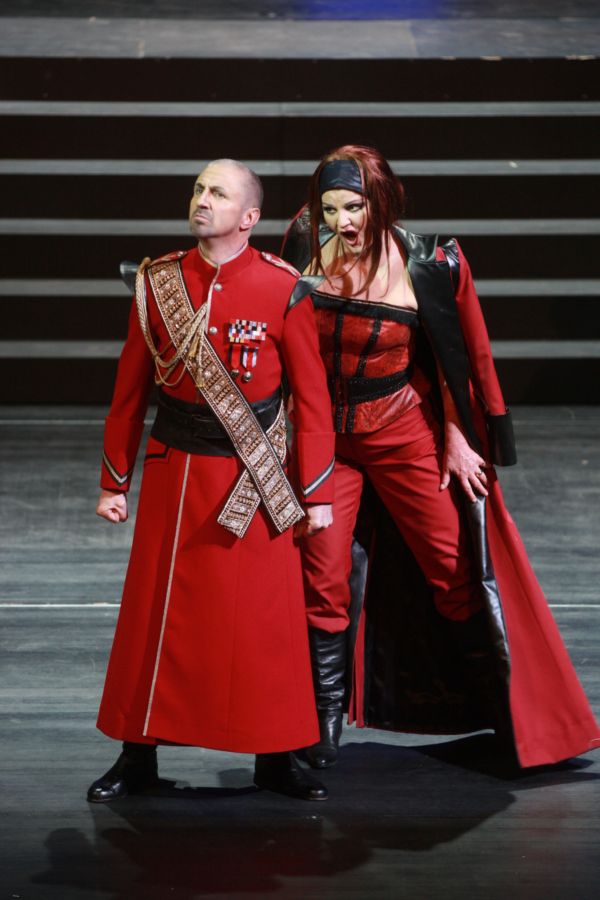
Johann Strauss’ “Die Fledermaus” in Slovakia

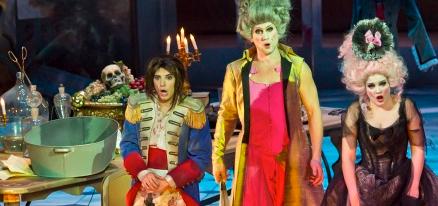
bat1Johann Strauss:

Die Fledermaus

Operette in three acts

logo-snd

Conductor: Dušan ŠtefánekFriedrich Haider
Directed by: Miro Grisa
Set Designer: Milan Ferenčík
Costumes Designer: Erzsébet Rátkai
Choreography: Jaroslav Moravčík
Dramaturgy: Michal Benedik
Chorusmaster: Pavol Procházka
Gabriel von Eisenstein: Miroslav DvorskýJakub Pustina
Rosalinde: Adriana KohútkováPetra Perla-NôtováEva Hornyáková
Frank: Ján GallaJuraj Peter
Princ Orlofsky: Monika FabianováTerézia KružliakováDenisa Šlepkovská
Alfred: Ján BabjakTomáš JuhásOndrej Šaling
Dr. Falke: Daniel ČapkovičPavol RemenárFrantišek Ďuriač
Dr. Blind: Ivan OžvátJozef Benedik
Adele: Jana BernáthováAndrea Vizvári
Ida: Miriam MaťašováKatarína Polakovičová
Frosch: Ivan KrúpaPeter Marcin
Ivan: Peter KružliakRoman Krško
Postman: Gustáv Herényi

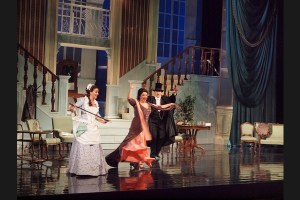
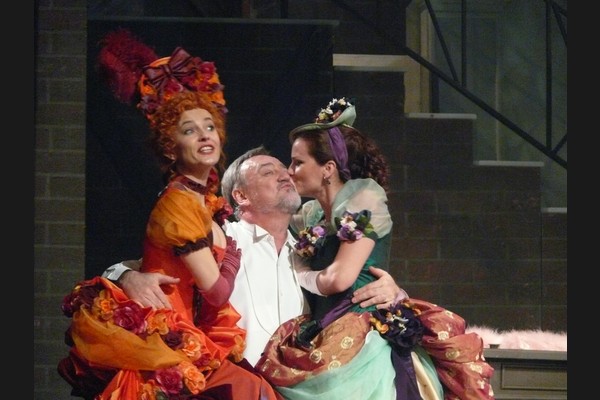
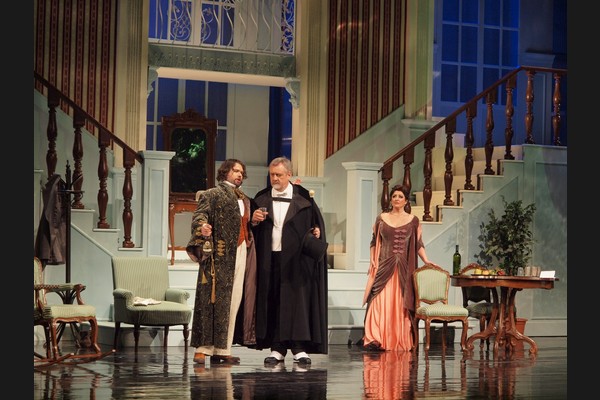
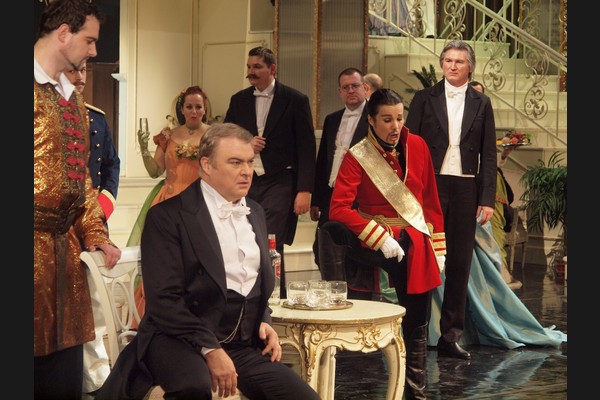
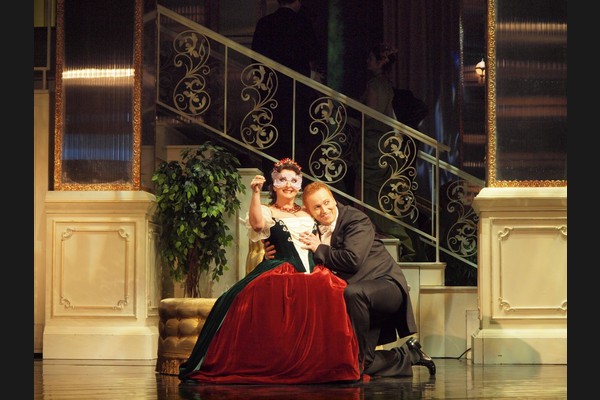
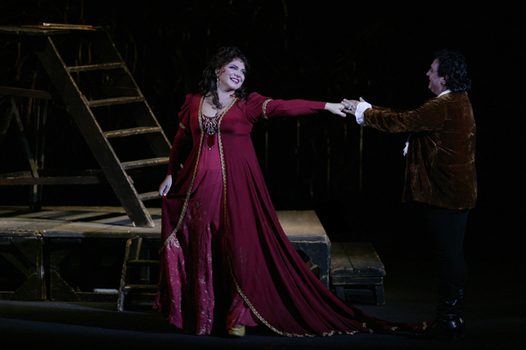
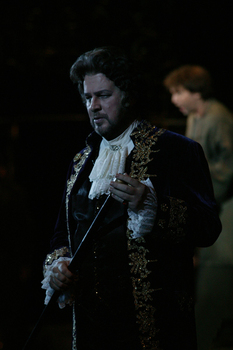
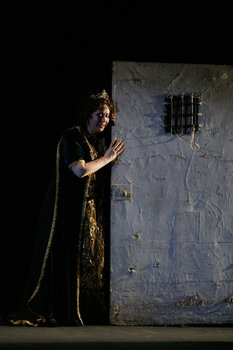
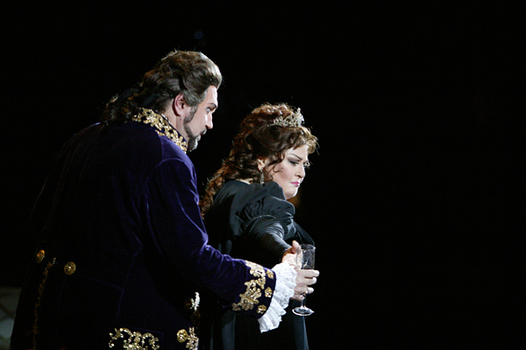
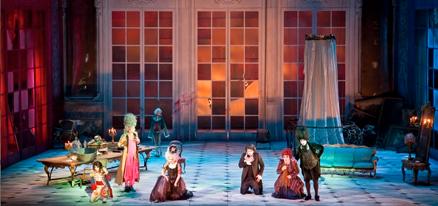
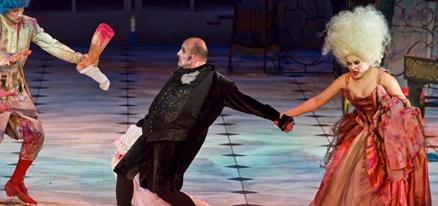
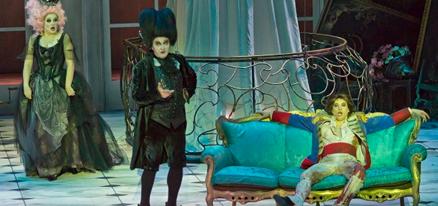
Die Fledermaus is a difficult test to each theatre ensemble, both from the points of view of singing and acting. A good production is a concert of actors crowned by wonderful melodies. A critic from Viennese Morgenpost newspaper wrote after the world premiere in 1874: “…sitting in a box in the Theater an der Wien one may get the best seasick, because down in the parterre everything is in the curling and waving motion, accompanied by charming tones played by the orchestra under the conducting baton of Johann Strauss. It all chatters, tunes, sings and warbles, as in the middle of spring.”

Running time: 3 hrs with one interval

bat12

Plan of performances

Thursday November 14, 2013 – 19:00    
Monday December 2, 2013 – 19:00    
Tuesday December 31,  2013 – 19:00    
Thursday January 16, 2014 – 19:00    
Monday February 24, 2014 – 19:00    
Thursday March 27, 2014 – 19:00    

Premières: December 30,2011 New Building, Opera and Ballet Stage

bat2  bat3

bat4  bat5

bat6  bat7

bat8  bat9

bat10  bat11

Posted in Music, OPera | Tagged , , , | Leave a comment

Agrippina at the Gran Teatre del Liceu, Barcelona, Spain


Agrippina

Handel, George Frideric (1685-1759)

Gran Teatre del Liceu, Barcelona, Spain

SaturdayNovember 16-29, 2013 08:00pm

Credit: © Toma B, 2013 /Shuttersctock.comThis opera seria by Handel is a politically incorrect comedy about how to seize or hang on to power, the tale of a battle between female patricians. McVicar views this virtually wicked text in the light of the aesthetic of the most sophisticated soap operas of the 1980s. Agrippina and Poppea – the two great rivals – behave with the tyrannical confidence of the leading ladies of Dynasty or Falcon Crest, waging all-out war on stiletto heels, oblivious to ethical constraints or obstacles. Seduction and sex are mere tools for getting what they want, by fair means or foul. Yet paradoxically, the characters of this amoral farce are not caricatures. Three hundred years after its premiere, Agrippina still interests the audience because the protagonists are three-dimensional, almost Mozartian, in their human contradictions and complexity.

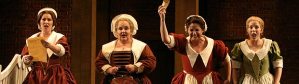
Opera seria in three acts. Libretto by Vincenzo Grimani. Music by George Frideric Handel. Premiered on 26 December 1709 at the Teatro San Giovanni Grisostomo in Venice. First performance at the Gran Teatre del Liceu.

Tickets 141.75€ to 8,50€.

Image credit: © Toma B, 2013 /Shuttersctock.com

Harry Bicket, Conductor
David McVicar, Director
John Macfarlane, Set Designer
Sarah Connolly, Mezzo-soprano: Agrippina
Malena Ernman, Mezzo-soprano: Nerone
Danielle de Niese, Soprano: Poppea
David Daniels, Countertenor: Ottone
Enric Martinez-Castignani, Baritone: Lesbo
Franz-Josef Selig, Bass: Claudius
Henry Waddington, Bass: Pallante
Dominique Visse, Countertenor: Narcissus
Andrew George, Choreography
Posted in Music, OPera | Tagged , , , , , , , , , | Leave a comment

VERDI’S 200th ANNIVERSARY: Falstaff in Los Angeles.

logoLAOPERA Presents:

FALSTAFF.head_falstaff

Saturday November 09, 2013 07:30 PM
Wednesday November 13, 2013 07:30 PM
Saturday November 16, 2013 07:30 PM
Thursday November 21, 2013 07:30 PM
Sunday November 24, 2013 02:00 PM
Sunday December 01, 2013 02:00 PM

In honor of Verdi’s 200th birthday, LA Opera presents a new production of the crowning glory of the composer’s magnificent career, his comic masterpiece Falstaff. LA Opera Music Director James Conlon, praised internationally for his mastery of Verdi, conducts this unabashed celebration of Merrie Olde England’s lusty days and bawdy nights, starring Italian baritone Roberto Frontali. When Shakespeare’s portly knight of Windsor hatches a plot to improve his love life by courting two different married women, he launches a flood of comic chaos and romantic misadventure.

Synopsis

Setting: Windsor, England, during the reign of Henry IV (1399-1413)

Act One
At the Garter Inn, after a run-in with Dr. Caius, Falstaff discovers that he doesn’t have enough money to pay for his dinner. To support the expanding kingdom that is his paunch, he settles on seducing Alice Ford and Meg Page, wives of two of Windsor’s wealthiest burghers. His thieving sidekicks, Bardolph and Pistol, refuse to deliver love letters to the women, so Falstaff dismisses them and has a page do it instead.

Alice and Meg compare the letters as they relax in the garden by Ford’s house, noticing that the notes are identical. They decide to play a little joke on the fat knight. As the women leave, Dr. Caius, Bardolph, Pistol and Fenton arrive with Ford, who is getting an earful about what a trickster and scoundrel Falstaff is. Pistol tells Ford about the fat knight’s plan to dishonor Alice and empty the burgher’s coffers, so Ford decides to go to the inn in disguise and catch Falstaff. Meanwhile, the ladies enlist Mistress Quickly to lure Falstaff into their own trap. Whenever they can steal a moment, Fenton and Nannetta, the Fords’ daughter, enjoy a clandestine kiss.

Act Two
Back at the inn, Quickly brings Falstaff a response from the two ladies. Both return his affections, but only Alice can meet him, any afternoon between two and three, while her husband is out. Bardolph informs Falstaff that a “Master Fountain” (Ford in disguise) wishes to make the knight’s acquaintance and give him a good bottle of Cyprian wine. “Fountain” tells Falstaff that he has fallen in love with Alice and promises the knight a sack of gold for seducing her, explaining that if she slips once, she’ll most likely slip again. Falstaff happily accepts the challenge. Indeed, he admits, he is well along with his own plan to cuckold Alice’s husband.

Quickly returns to Ford’s house to tell Meg and Alice that Falstaff has taken the bait. Nannetta complains that her father plans to marry her off to old Dr. Caius. Servants enter with a basket of dirty linen, while the ladies prepare their trap by setting up a screen between the basket and the fireplace. Falstaff arrives, but the rendezvous is interrupted when he and Alice her Ford approaching. Falstaff hides behind the screen while Ford, Dr. Caius, Bardolph and Pistol search for him. Believing that Falstaff is hiding behind the screen, Ford throws it aside only to discover his daughter and Fenton. Infuriated, he and the rest of the men rush off. Alice summons the servants to deal with the laundry. They struggle with the basket but finally manage to dump it, and Falstaff, into the Thames River.
Intermission

Act Three
Outside the inn, Falstaff drowns his sorrows in wine. Quickly arrives and convinces him that Alice wants to meet him at midnight in Windsor Park, but he has to come dressed as a fairy-tale character, the Black Huntsman. Hidden behind a house, the husbands, wives, and others overhear the conversation, and Quickly arrives just in time to hear Ford plotting the doctor’s marriage to Nannetta.

At the park that night, the wives make some costume changes to foil Ford’s marriage plans for Nannetta. Midnight approaches, and Falstaff enters wearing antlers on his head and wrapped in a huge black cloak. His encounter with Alice is interrupted, this time by the assembled company disguised as spirits. They torment Falstaff and force him to repent, but recognizing Bardolph in the midst of the revelry, Falstaff realizes that he has been duped yet again. Ford announces that, to end their festivities, they shall celebrate the marriage of the Fairy Queen. Dr. Caius steps forward and takes the hand of the Queen, believing her to be Nannetta. Another masked couple also approaches to take their vows. Only afterward is it revealed that the Queen was Bardolph and that Fenton and Nannetta were the masked couple. Ford accepts the situation, and the opera closes with a mighty fugue praising the hilarity of life.

Cast

Creative Team

* LA Opera debut artist
+ Domingo-Colburn-Stein Young Artist Program member
++ Domingo-Colburn-Stein Young Artist Program alumnus

Posted in Music, OPera | Tagged , , , | Leave a comment

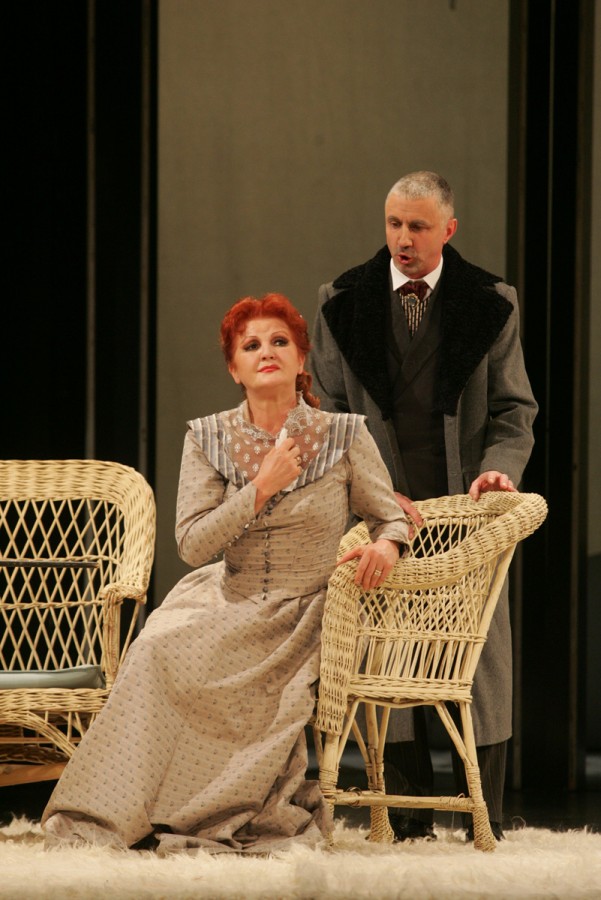
Giacomo Puccini’s “Tosca” at The Bolshoi in Moskow

bolshoiGiacomo Puccini’s

“Tosca”

Opera in three acts

preview_tosca5Premiered on May 25, 1971.

Sung in Italian with Russian surtitles.
Presented with two intervals.
Running time: 2 hours 55 minutes.


Libretto by Giuseppe Giacosa and Luigi Illica
based on Victorien Sardou’s play of the same name

26 october 2013

Conductor: Pavel Klinichev
Floria Tosca, a celebrated singer: Marina Lapina
Mario Cavaradossi, a painter: Oleg Kulko
Baron Scarpia, chief of the police:Yuri Nechaev
Cesare Angelotti: Vadim Lynkovsky
A Sacristan: Mikhail Diyakov
Spoletta, police agent: Vadim Tikhonov
Sciarrone, gendarme: Alexander Korotky
A Gaoler:Pavel Tchervinsky
Music Director: Mark Ermler
Stage Director: Boris Pokrovsky
Designer: Valery Levental

Synopsis

Act I
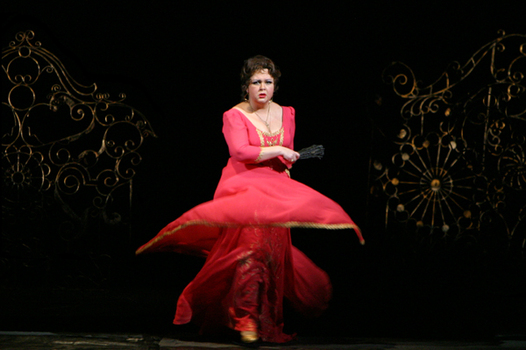
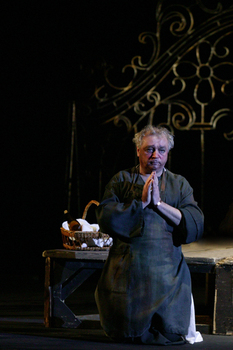
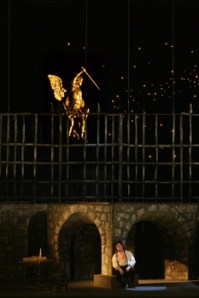
Cesare Angelotti, an escaped political prisoner, runs into the church of Sant’Andrea della Valle to hide in the Attavanti family chapel. At the sound of the Angelus, the Sacristan enters to pray. He is interrupted by Mario Cavaradossi, who has come to work on his portrait of Mary Magdalene — inspired by the Marchesa Attavanti, Angelotti’s sister. Mario contrasts the beauty of the blond Marchesa with that of the woman he loves, the raven-haired singer Floria Tosca (“Recondita armonia”).

Angelotti ventures out and is recognized by Mario, who gives him food and hurries him back into the chapel as Tosca is heard calling outside. She jealously questions Mario, then prays and reminds him of their rendezvous that evening (“Non la sospiri la nostra casetta”). Recognizing the Marchesa’s likeness in the painting, she explodes with renewed suspicions, but he reassures her (“Qual’occhio al mondo”). When she has left, Mario summons Angelotti as a cannon signals that the police have discovered the escape; the two flee to Mario’s villa.

Napoleon’s army is supposed to have suffered defeat, and the Sacristan returns with choirboys who are about to sing a Te Deum. Their excitement is silenced by the entrance of Baron Scarpia, chief of the secret police, in search of Angelotti. When Tosca comes back looking for Mario, she encounters Scarpia, who shows her the Attavanti crest on a fan he has just found. Thinking Mario faithless, Tosca tearfully vows vengeance and leaves as the church resounds with the Te Deum. Scarpia has the diva trailed, scheming to get her in his power (“Va, Tosca!”).

Act II
In the Farnese Palace, Scarpia anticipates the pleasure of bending Tosca to his will (“Ha piu forte sapore”).
The spy Spoletta arrives, not having found Angelotti; to placate the baron, he brings in Mario, who is interrogated while Tosca is heard singing at a royal gala downstairs. She enters as her lover is being taken to an adjoining room for torture. Unnerved by Scarpia’s questioning and Mario’s screams, she reveals Angelotti’s hiding place.

Mario is carried in; realizing what has happened, he rages at Tosca, but the gendarme Sciarrone rushes in to announce that Napoleon has won the Battle of Marengo, a defeat for Scarpia’s side. Mario shouts his defiance (“Vittoria!”).

Tosca yields to Scarpia in exchange for her lover’s life. Fighting him off, she protest her fate to God, having dedicated her life to art and love (“Vissi d’arte”).

Spoletta interrupts: faced with capture, Angelotti has killed himself. Tosca, forced to decide, agrees to Scarpia’s proposition. The baron pretends to order a mock execution for the prisoner, after which he is to be free. Spoletta leaves.

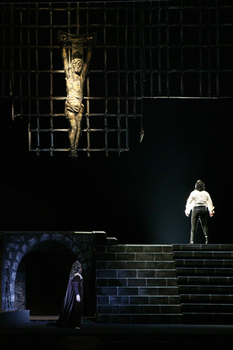
Scarpia prepares a document of safe-conduct for the lovers. When he embraces her, Tosca stabs him with a knife, wrenches the document from his fingers and, placing candles at his head and a crucifix on his chest slips quietly out.

Act III
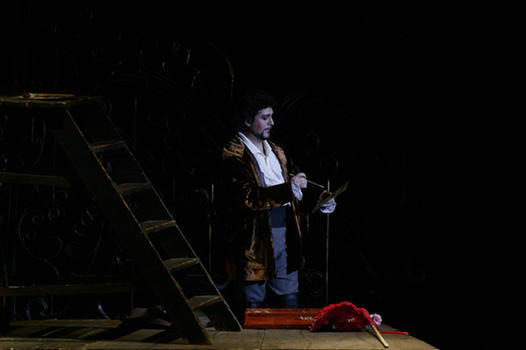
The voice of a shepherd is heard as church bells toll the dawn. Mario is led to the roof of Castel Sant’Angelo prison to await execution; he bribes the jailer to convey a farewell note to Tosca. Writing it, overcome with memories of love, he gives way to despair (“E lucevan le stelle”).

Suddenly Tosca runs in, filled with the story of her recent adventure. Mario caresses the hands that committed the murder for his sake (“O dolci mani”), and the two hail the future.

As the firing squad appears, the diva coaches Mario on how to fake his death convincingly; the soldiers fire and depart. Tosca urges Mario to hurry, but when he fails to move, she discovers that Scarpia’s treachery has transcended the grave: the bullets were real.

Spoletta rushes in to arrest Tosca. She climbs the battlements and, crying that she will meet Scarpia before God, leaps to her death.

preview_tosca1   preview_tosca2

preview_tosca4  preview_tosca6

preview_tosca8   preview_tosca9

preview_tosca10   preview_tosca12  preview_13tosca

Posted in Music, OPera | Tagged , , , , , , | Leave a comment

VERDI’s 200th ANNIVERSARY CELEBRATION: “Nabucco” triumphs in Slovenia

nabucofront3

logoThe Opera Balet Ljubljana Presents: Giuseppe Verdi’s

NABUCCO

An Opera in Four Acts
Premiere: 2 February 2012

5 October 2013 19:30 SNG Opera in balet Ljubljana
25 October 2013 19:30 SNG Opera in balet Ljubljana
30 October 2013 19:30 SNG Opera in balet Ljubljana
30 November 2013 19:30 SNG Opera in balet Ljubljana
25 January 2014 19:30 SNG Opera in balet Ljubljana
22 March 2014 19:30 SNG Opera in balet Ljubljana

Nabucco1netThe Opera Nabucco is well-known and quite popular among our audiences, especially because of the famous chorus of the Hebrew Slaves Va pensiero sul’ali dorate (Fly, thought, on golden wings). The opera was first performed in Slovenia in 1959 and then again in 2000, to mark the 100th anniversary of the composer’s death.

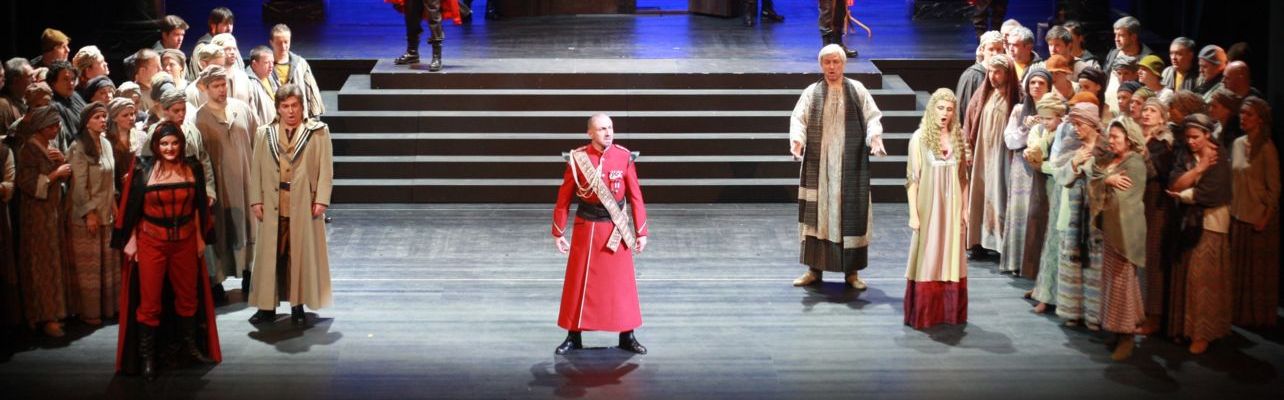
Verdi’s legendary early work began its triumphant march around the globe soon after its first staging in Milan, in 1842. The success of this opera rests on the expressive recitatives, elapsing into the melodious arias, ensembles and solemn choruses. The librettist Solero was inspired by the Old Testament Bible story after the Book of Daniel, relating to the Babylonian King Nebuchadnezzar and his fight against the Jews. The rivalry between Nabucco’s daughters Fenena and the intriguing Abigaille, fighting for the love of Ismaele – the nephew of the King of Israel – thickens the plot additionally.

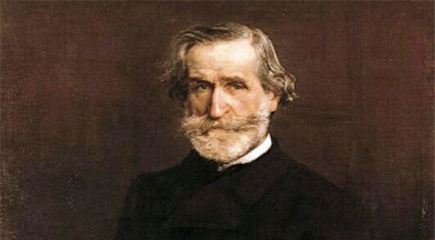
verdi-festival-2013Giuseppe Verdi (Roncole, 1813 – Milan, 1901) was not only a great artist and a musical genius, but also a symbol of the uniting nation. However the artist had lived through long years of hard work, during which he gradually developed his own style and not all of his new operas were necessarily immediate successes.

The triumphant premiere of the opera Nabucco was performed at the Teatro alla Scala in Milan on 9th March 1842. Then followed his “galley years”, as he later called them, i.e. the fruitful and successful period between 1842 and 1851, when he composed an impressive number of 14 operas. After the opera Ernani, which was premiered at the Teatro la Fenice in Venice (1844), he was hailed as a national hero.

Posted in Music, OPera | Tagged , , , , , | 2 Comments

“La Traviata” at the Opera Balet Ljubljana (Slovenia)

Traviata

logo The Opera Balet Ljubljana (Slovenia) Presents: Giuseppe Verdi’s

LA TRAVIATA

An Opera in Three Acts (Four Pictures) I
A Repeat Performance from the 2003/2004 Season (Premiere: 17 April 2003) I
Calendar

4 October 2013 19:30 SNG Opera in balet Ljubljana
26 October 2013 19:30 SNG Opera in balet Ljubljana
9 November 2013 19:30 SNG Opera in balet Ljubljana
6 December 2013 19:30 SNG Opera in balet Ljubljana
7 December 2013 19:30 SNG Opera in balet Ljubljana
17 January 2014 19:30 SNG Opera in balet Ljubljana
24 March 2014 19:30 SNG Opera in balet Ljubljana

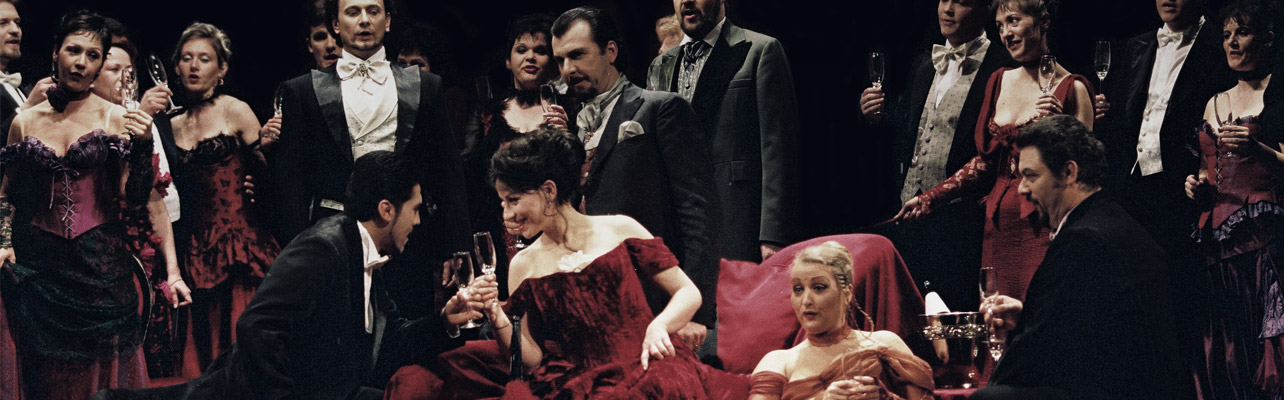
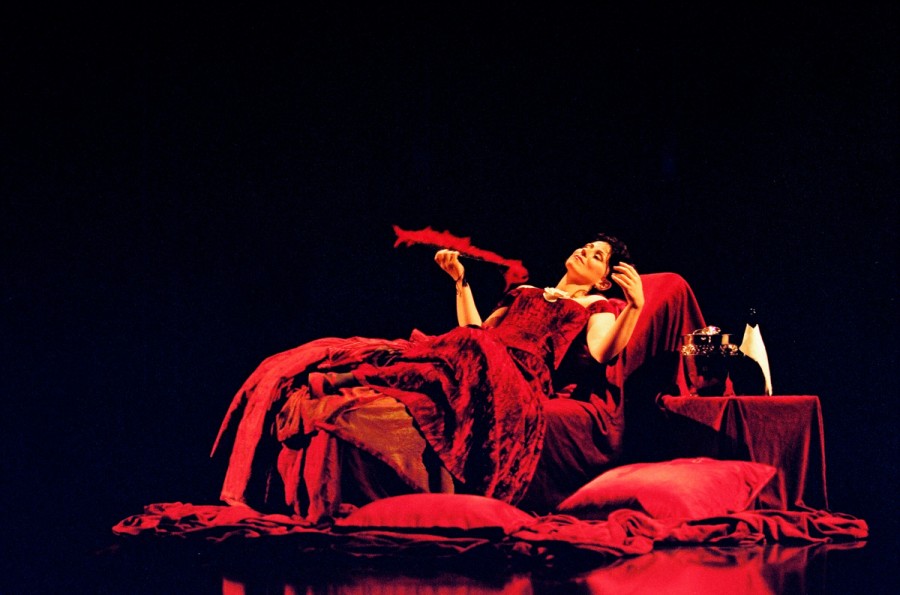
1traviataIn spite of the fact that La traviata ranks today among the most popular operas and is considered a synonym for the fireworks of wonderful and catchy melodies, the conservative audiences of the Venetian Teatro La Fenice had booed its premiere back in 1853. It became a success only a year later, when performed in the smaller San Benedetto Theatre.

La traviata is one of those masterpieces, which were created in a swing, as the composer, inspired by a constant wave of creative enthusiasm, managed to write it within just a month and a half. The libretto, which was created by the poet Francesco Maria Piave, is an excellent adaptation of The Lady of the Camellias by French writer Alexandre Dumas. Verdi presented on stage the fallen Parisian courtesan Violetta, overwhelmed with pure and unselfish love. Violetta presents an archetype of a female, whose frontiers of personal liberty can be moved only by love.

TraviataVELIKALa traviata was first performed in Slovenia by the German Acting Ensemble of the Ljubljana Provincial Theatre, in 1867. This staging (15thin a row) is signed by the renowned stage director Lutz Hochstraate. He and his creative team staged for the Ljubljana Opera not only the famous love story, but also one of the greatest emotional dramas, which is primarily based on psychological absorption of characters, their intimate pain and critique of social relations. Although the creators have kept the story within its historical frame, they allowed it enough freedom to develop a lively and authentic stage action.

Music: Giuseppe Verdi

Libretto: Francesco Maria Piave

Posted in Music, OPera | Tagged , , , , , , , | Leave a comment

VERDI’S 200th ANNIVERSARY CELEBRATION: “La Traviata” at the Palau de les Arts Reina Sofia in Valencia, Spain

traviataSpain

logo_palau

LA TRAVIATA

Giuseppe Verdi

19th, 24th, 29th October 2013 · 2nd, 7th, 10th, 13th November 2013 – The performances start at 8:00 pm. Sundays and holidays, at 7:00 pm  Sala Principal

Opera in three acts · Music by Giuseppe Verdi
Libretto by Francesco Maria Piave based on La Dame aux Camélias by Alexandre Dumas (junior)
Premiere: Venice, 6th March 1853, Teatro La Fenice

Conductor
Zubin MehtaStage Director
Willy Decker

Revival director
Meisje HummelSet Designer
Wolfgang GussmannCostume Designer
Wolfgang Gussmann
Susana Mendoza
Lighting Designer
Hans Toelstede

Choreography
Athol John Farmer
Production
De Nederlandse Opera, Amsterdam
(
based on an original production
from Salzburger Festspiele)

Cor de la Generalitat Valenciana
Francesc Perales
, chorus master

Orquestra de la Comunitat Valenciana

19th, 24th, 29th October 2013
2nd, 7th, 10th, 13th November 2013

Sala Principal


Violetta Valéry
Sonya Yoncheva
Jessica Nuccio (2)Alfredo Germont
Ivan MagrìGiorgio Germont
Simone PiazzolaFlora Bervoix
 Maria Kosenkova
Gastone
Mario Cerdá*Annina
Cristina Alunno*

Barone Douphol
Javier Franco

Marchese D’Obigny
Maurizio Lo Piccolo

Dottore Grenvil
Luigi Roni

Giuseppe
Valentino Buzza*

Flora’s Servant
David Astorga*

Commissioner
Germán Olvera*

Un cavaliere
Mattia Olivieri

* Centre de Perfeccionament Plácido Domingo

traviata2Spainlogo_generalitat

Posted in OPera | Tagged , , , , , , | Leave a comment

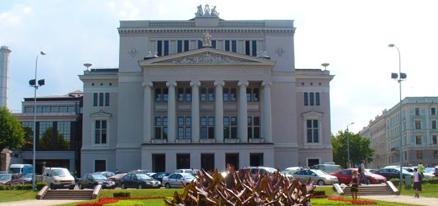
Latvian National Opera Presents Rossini’s “Il Barbiere di Siviglia”

LatvianNationalOpera_2Latvian National Opera

Presents:


Rossini’s “Il Barbiere di Siviglia”

Thursday, October 24 2013, 19:00

Il Barbiere di Siviglia (The Barber of Seville) is not only one of the most brilliant comic operas ever composed, but also one of the most popular ones – enjoy Rossini’s opera at the Latvian National Opera.

Il-Barbiere-di-Siviglia-Latvian-National-Opera_1Count Almaviva enlists the help of the witty barber Figaro to come up with and ingenious plan to meet Rosina, the girl he loves. Doctor Bartolo, Rosina’s ward, keeps her confined in his house, and Almaviva and Figaro have to overcome many obstacles until the Count wins his beloved.
 
Il-Barbiere-di-Siviglia-Latvian-National-Opera_2Director of the perfomance Aik Karapetian: “There is no doubt that Rossini’s Barber of Seville is a great challenge for any director, especially, as it is the case with me, if it is a director’s first encounter with the art form of opera. The Barber is not only one of the most performed of Rossini’s works, it is one of the most popular operas ever, so most people know this piece and probably even have an idea of how it should be done. I tried to find some new angle, something about it that had never been explored before — all the time being fully aware of the fact that comedy is one of the trickiest and most difficult genres in terms of directing.
My decision was to turn the Barber’s humor into something darker and more cynical. That is why I chose the French Revolution as a background for telling the story.”

Il-Barbiere-di-Siviglia-Latvian-National-Opera_3Production:
Conductor: Modestas Pitrenas, Andris Veismanis
Stage Director: Aik Karapetian
Set Designer: Ieva Kauliņa
Costume Designer: Kristīne Pasternaka
Dramaturge: Jochen Breiholz

Il-Barbiere-di-Siviglia-Latvian-National-Opera_4Cast:
Count Almaviva: Tansel Akzeybek, Viesturs Jansons, Anicio Zorzi Giustiniani   
Rosina: Inga Šļubovska, Evija Martinsone   
Figaro: Jānis Apeinis, Andrei Jilichovski   
Doctor Bartolo: Piotr Micinski, Krišjānis Norvelis   
Don Basilio: Romāns Poļisadovs, Rihards Mačanovskis   
Berta: Ilona Bagele   
Fiorello: Imants Erdmans, Juris Ādamsons   
The Officer: Nauris Puntulis   


EVENT DATES

 
Thursday 24 October 2013 19:00
Posted in OPera | Tagged , , , | Leave a comment

Mozart’s “The Magic Flute” at English National Opera in London

Eno_MagicFlute-WebThe Magic Flute

November 7, 2013 – December 7, 2013

Running time: 3hrs

Brimming with stunning theatricality and extraordinary imagination, don’t miss this spectacular new staging of one of the greatest and most popular opera’s ever written.

Mozart’s beloved magical tale follows Prince Tamino and bird-catcher Papageno on an adventure to rescue Princess Pamina. On their journey they meet fantastical creatures and face unexpected trials and challenges in a light-hearted but profound examination of man’s search for love and his struggle to attain wisdom and virtue.

Complicite’s artistic director Simon McBurney brings this innovative new interpretation to the London Coliseum stage – making the orchestra a visible part of the action and using breathtaking projections throughout. Conducted by Gergely Madaras (ENO Charles Mackerras Fellow), The Magic Flute features ENO Harewood Artist Ben Johnson as Tamino, American soprano Devon Guthrie as Pamina, Roland Wood as the bird-catcher Papageno and James Creswell as Sarastro.

A collaboration with Complicite.

Co-produced by ENO, De Nederlandse Opera and International Festival of Lyric Art, Aix-en-Provence.

Sung and surtitled in English.

Signed performance November 28, 2013  Pre-performance talk November 12, 2013

 
19:30 Thursday, November 7, 2013
18:30 Saturday, November 9, 2013
19:30 Tuesday, November 12, 2013
19:30 Thursday, November 14, 2013

15:00 Saturday, November 16, 2013

19:30 Tuesday, November 19, 2013
19:30 Friday, November 22, 2013
19:30 Thursday, November 28, 2013
18:30 Saturday, November 30, , 2013
19:30 Tuesday, December 3, 2013

CAST

Tamino Ben Johnson
Pamina Devon Guthrie
Papageno Roland Wood
Papagena Mary Bevan
Sarastro James Creswell
The Queen of the Night Cornelia Götz
Monostatos Brian Galliford 
First Lady Eleanor Dennis
Second Lady Clare Presland
Third Lady Rosie Aldridge 
Conductor Gergely Madaras
Director Simon McBurney

Set Designer Michael Levine
Costume Designer Nicky Gillibrand
Movement Josie Daxter
Lighting Designer Jean Kalman
Video Designer Finn Ross
Sound Designer Gareth Fry
Translator Stephen Jeffreys

eno

London Coliseum
St Martin’s Lane
London
WC2N 4ES

Posted in Music, OPera | Tagged , , , , , , | Leave a comment

VERDI’S 200th ANNIVERSARY: The Choral Arts Society of Washington performs Verdi’s Requiem in “Legacy and Life”

THE KENNEDY CENTER CONCERT HALLkennedycenter

Legacy and Life
The Choral Arts Society of Washington

Scott Tucker, conductor
Bonnie Nelson Schwartz, visual producer

  • Sun., Nov. 10, 2013, 4:00 PM
  • Approx. 2 hourswashingtonchoral

Legacy and Life begins with the East Coast premiere of Pulitzer Prize-winning composer Steven Stucky‘s Take Him, Earth, written to commemorate the 50th anniversary of the assassination of President John F. Kennedy.

Texts by Prudentius, Aeschylus, and Shakespeare express the universality of the human condition.

Honoring the 200th anniversary of his birth, Giuseppe Verdi’s Requiem follows. Enhanced by visual images, this performance honors the life and legacy of Kennedy and may inspire you to reflect on how your life may influence your own legacy. Experience this masterwork within a contemporary context.

Performance Timing: Part One – 15 min.; Intermission – 20 min.; Part Two – 90 min.

Posted in OPera | Leave a comment