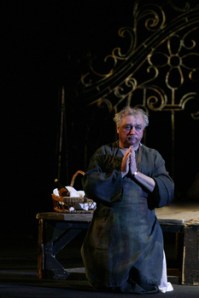
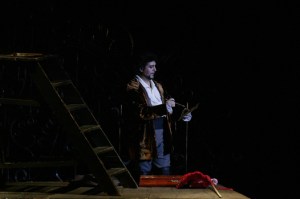
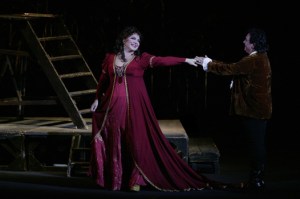
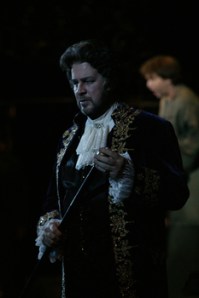
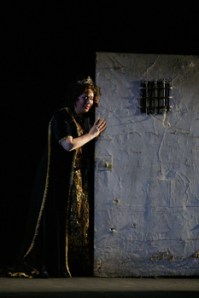
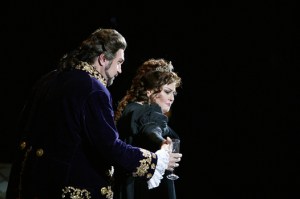
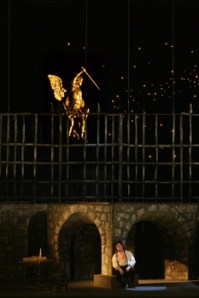
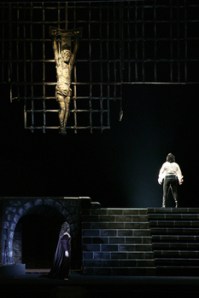
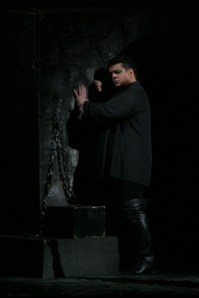
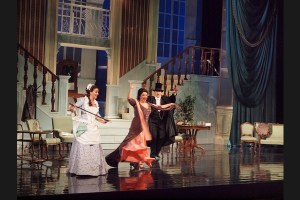
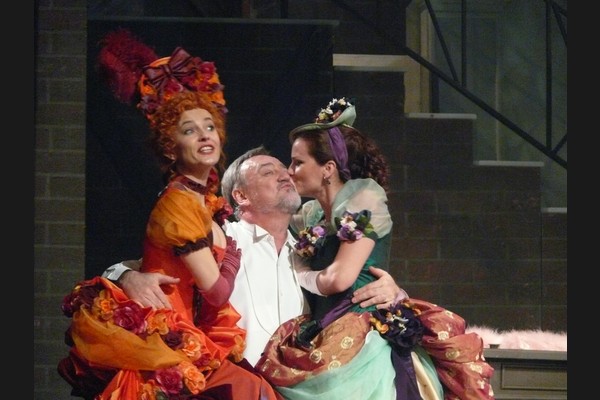
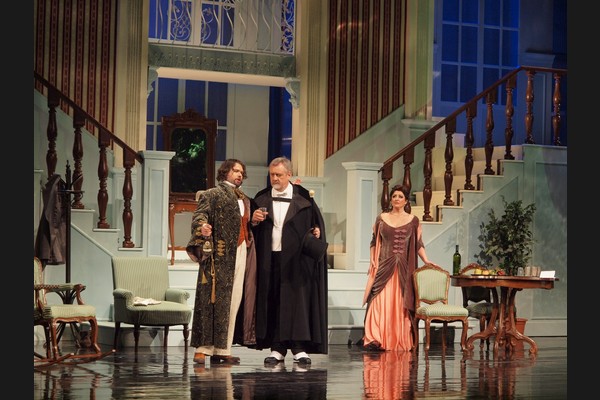
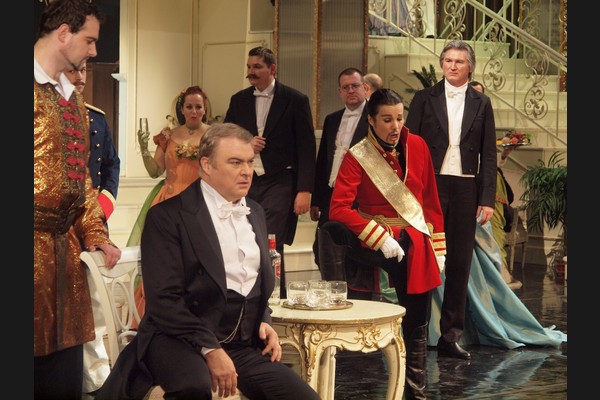
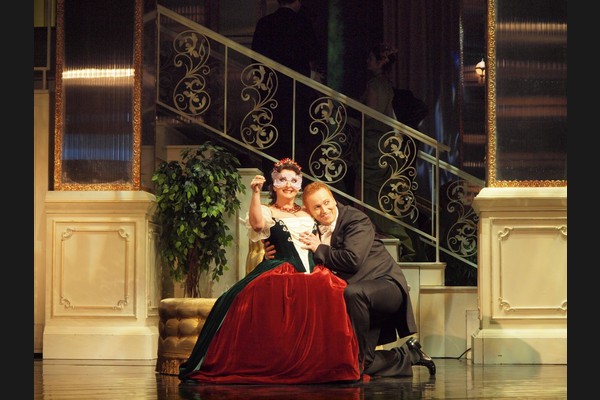
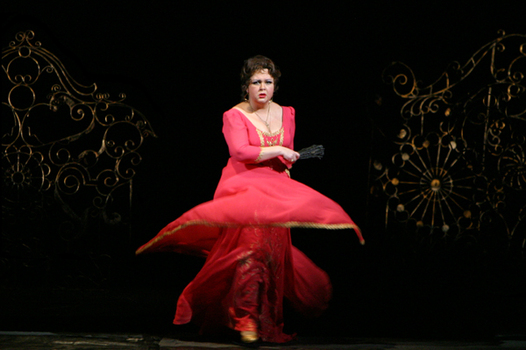
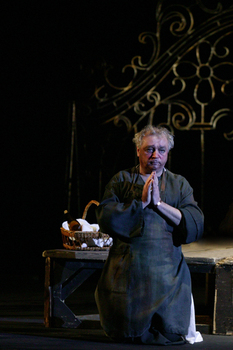
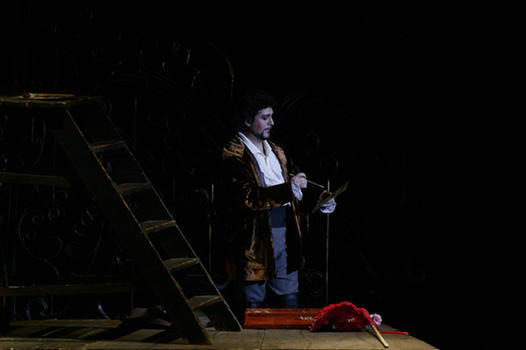
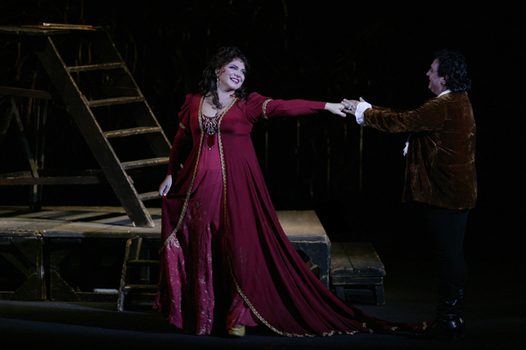
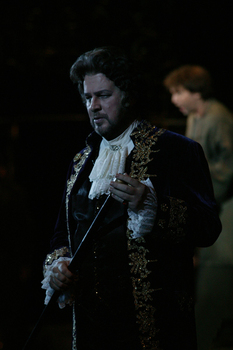
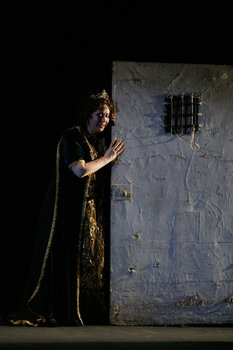
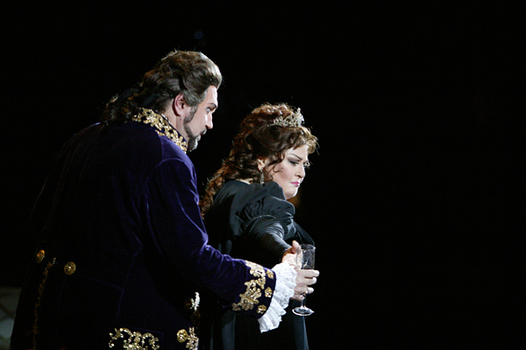
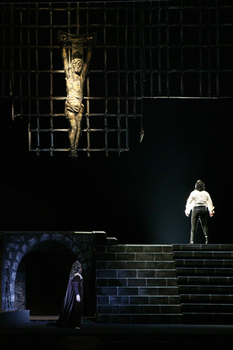
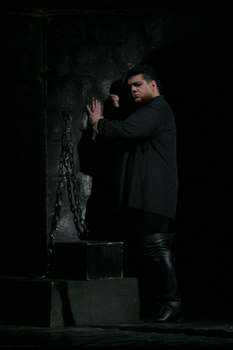
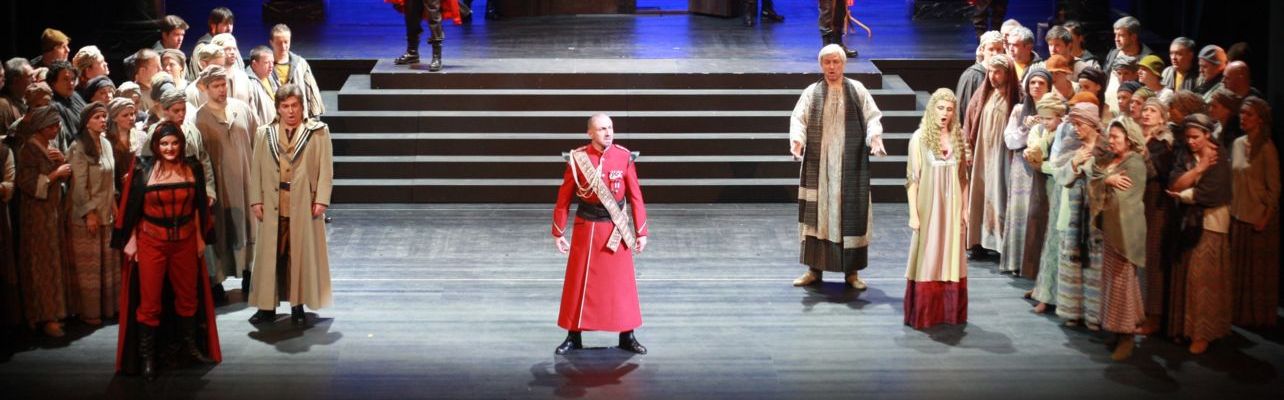
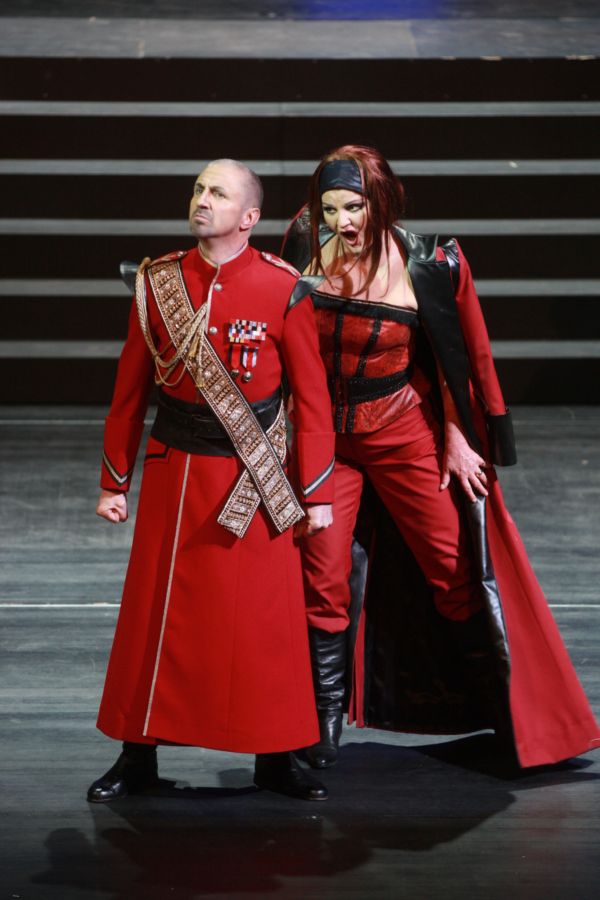
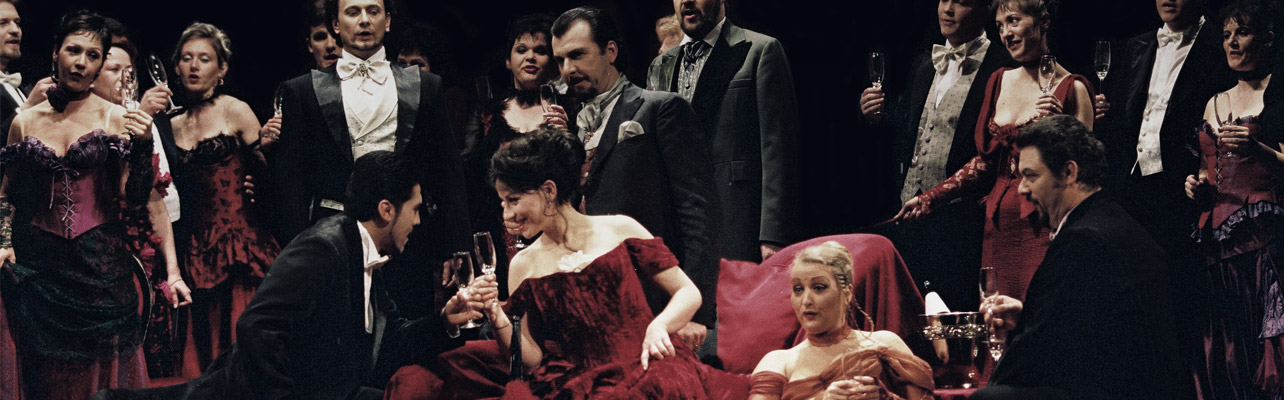
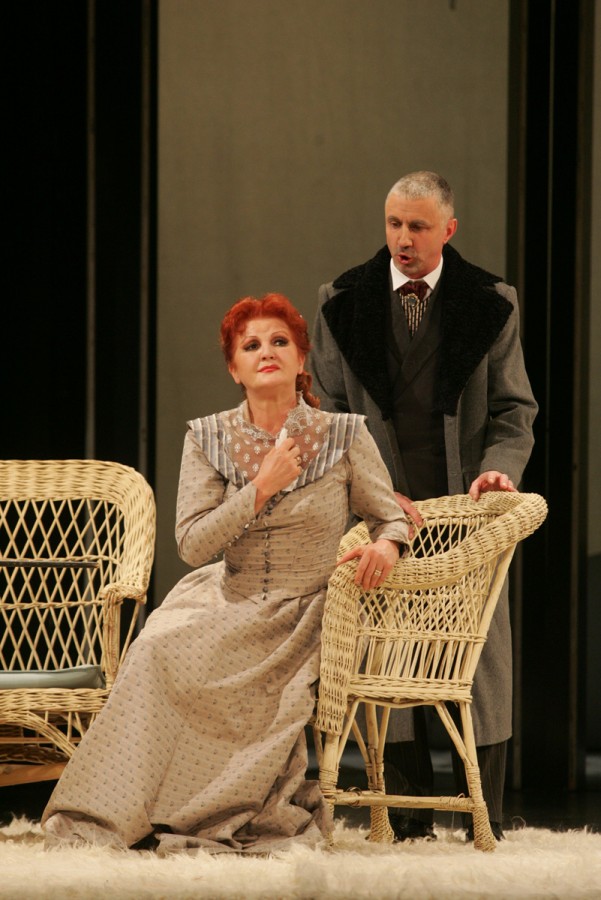
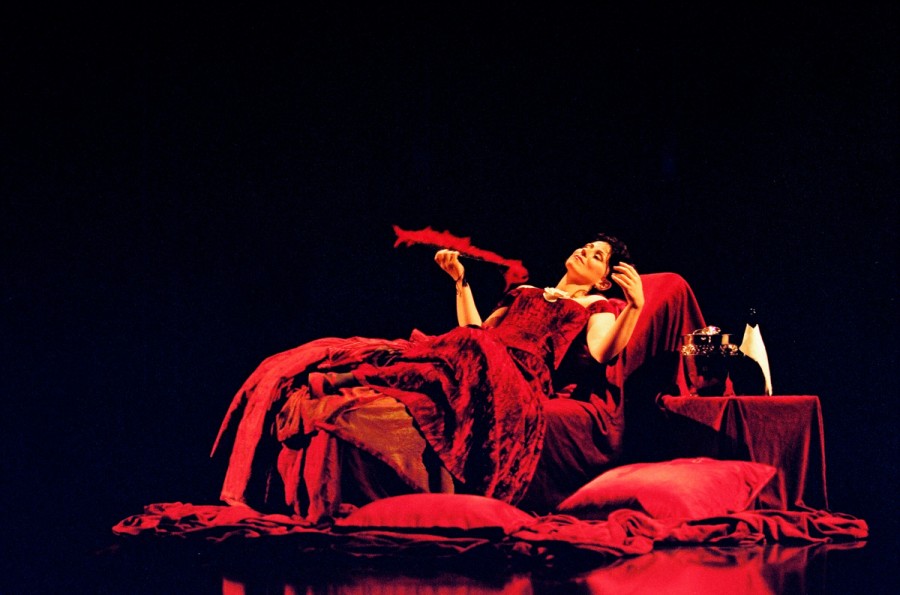
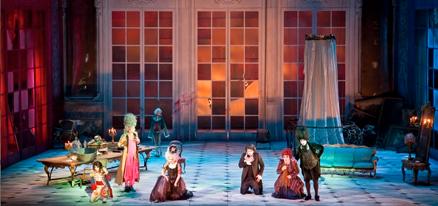
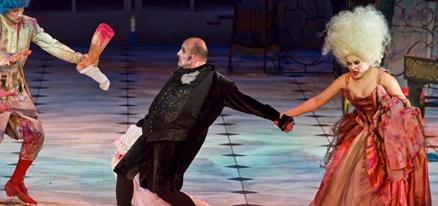
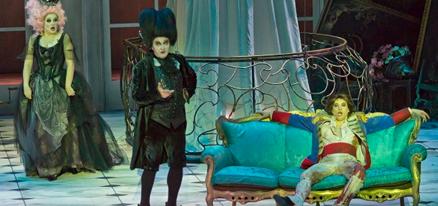
VERDI’S 200th ANNIVERSARY CELEBRATION: “La Traviata” at the Palau de les Arts Reina Sofia in Valencia, Spain

traviataSpain

logo_palau

LA TRAVIATA

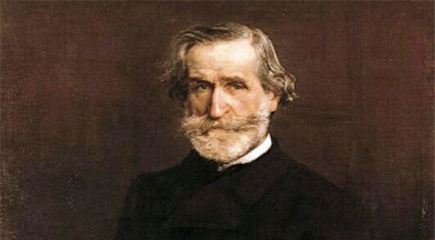
Giuseppe Verdi

19th, 24th, 29th October 2013 · 2nd, 7th, 10th, 13th November 2013 – The performances start at 8:00 pm. Sundays and holidays, at 7:00 pm  Sala Principal

Opera in three acts · Music by Giuseppe Verdi
Libretto by Francesco Maria Piave based on La Dame aux Camélias by Alexandre Dumas (junior)
Premiere: Venice, 6th March 1853, Teatro La Fenice

Conductor
Zubin MehtaStage Director
Willy Decker

Revival director
Meisje HummelSet Designer
Wolfgang GussmannCostume Designer
Wolfgang Gussmann
Susana Mendoza
Lighting Designer
Hans Toelstede

Choreography
Athol John Farmer
Production
De Nederlandse Opera, Amsterdam
(
based on an original production
from Salzburger Festspiele)

Cor de la Generalitat Valenciana
Francesc Perales
, chorus master

Orquestra de la Comunitat Valenciana

19th, 24th, 29th October 2013
2nd, 7th, 10th, 13th November 2013

Sala Principal


Violetta Valéry
Sonya Yoncheva
Jessica Nuccio (2)Alfredo Germont
Ivan MagrìGiorgio Germont
Simone PiazzolaFlora Bervoix
 Maria Kosenkova
Gastone
Mario Cerdá*Annina
Cristina Alunno*

Barone Douphol
Javier Franco

Marchese D’Obigny
Maurizio Lo Piccolo

Dottore Grenvil
Luigi Roni

Giuseppe
Valentino Buzza*

Flora’s Servant
David Astorga*

Commissioner
Germán Olvera*

Un cavaliere
Mattia Olivieri

* Centre de Perfeccionament Plácido Domingo

traviata2Spainlogo_generalitat

Posted in OPera | Tagged , , , , , , | Leave a comment

Latvian National Opera Presents Rossini’s “Il Barbiere di Siviglia”

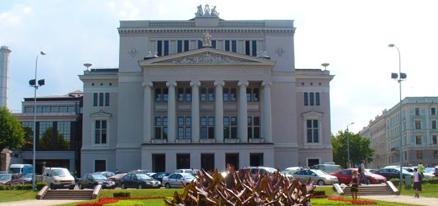
LatvianNationalOpera_2Latvian National Opera

Presents:


Rossini’s “Il Barbiere di Siviglia”

Thursday, October 24 2013, 19:00

Il Barbiere di Siviglia (The Barber of Seville) is not only one of the most brilliant comic operas ever composed, but also one of the most popular ones – enjoy Rossini’s opera at the Latvian National Opera.

Il-Barbiere-di-Siviglia-Latvian-National-Opera_1Count Almaviva enlists the help of the witty barber Figaro to come up with and ingenious plan to meet Rosina, the girl he loves. Doctor Bartolo, Rosina’s ward, keeps her confined in his house, and Almaviva and Figaro have to overcome many obstacles until the Count wins his beloved.
 
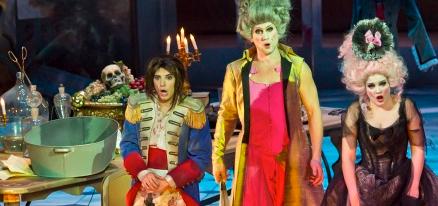
Il-Barbiere-di-Siviglia-Latvian-National-Opera_2Director of the perfomance Aik Karapetian: “There is no doubt that Rossini’s Barber of Seville is a great challenge for any director, especially, as it is the case with me, if it is a director’s first encounter with the art form of opera. The Barber is not only one of the most performed of Rossini’s works, it is one of the most popular operas ever, so most people know this piece and probably even have an idea of how it should be done. I tried to find some new angle, something about it that had never been explored before — all the time being fully aware of the fact that comedy is one of the trickiest and most difficult genres in terms of directing.
My decision was to turn the Barber’s humor into something darker and more cynical. That is why I chose the French Revolution as a background for telling the story.”

Il-Barbiere-di-Siviglia-Latvian-National-Opera_3Production:
Conductor: Modestas Pitrenas, Andris Veismanis
Stage Director: Aik Karapetian
Set Designer: Ieva Kauliņa
Costume Designer: Kristīne Pasternaka
Dramaturge: Jochen Breiholz

Il-Barbiere-di-Siviglia-Latvian-National-Opera_4Cast:
Count Almaviva: Tansel Akzeybek, Viesturs Jansons, Anicio Zorzi Giustiniani   
Rosina: Inga Šļubovska, Evija Martinsone   
Figaro: Jānis Apeinis, Andrei Jilichovski   
Doctor Bartolo: Piotr Micinski, Krišjānis Norvelis   
Don Basilio: Romāns Poļisadovs, Rihards Mačanovskis   
Berta: Ilona Bagele   
Fiorello: Imants Erdmans, Juris Ādamsons   
The Officer: Nauris Puntulis   


EVENT DATES

 
Thursday 24 October 2013 19:00
Posted in OPera | Tagged , , , | Leave a comment

Mozart’s “The Magic Flute” at English National Opera in London

Eno_MagicFlute-WebThe Magic Flute

November 7, 2013 – December 7, 2013

Running time: 3hrs

Brimming with stunning theatricality and extraordinary imagination, don’t miss this spectacular new staging of one of the greatest and most popular opera’s ever written.

Mozart’s beloved magical tale follows Prince Tamino and bird-catcher Papageno on an adventure to rescue Princess Pamina. On their journey they meet fantastical creatures and face unexpected trials and challenges in a light-hearted but profound examination of man’s search for love and his struggle to attain wisdom and virtue.

Complicite’s artistic director Simon McBurney brings this innovative new interpretation to the London Coliseum stage – making the orchestra a visible part of the action and using breathtaking projections throughout. Conducted by Gergely Madaras (ENO Charles Mackerras Fellow), The Magic Flute features ENO Harewood Artist Ben Johnson as Tamino, American soprano Devon Guthrie as Pamina, Roland Wood as the bird-catcher Papageno and James Creswell as Sarastro.

A collaboration with Complicite.

Co-produced by ENO, De Nederlandse Opera and International Festival of Lyric Art, Aix-en-Provence.

Sung and surtitled in English.

Signed performance November 28, 2013  Pre-performance talk November 12, 2013

 
19:30 Thursday, November 7, 2013
18:30 Saturday, November 9, 2013
19:30 Tuesday, November 12, 2013
19:30 Thursday, November 14, 2013

15:00 Saturday, November 16, 2013

19:30 Tuesday, November 19, 2013
19:30 Friday, November 22, 2013
19:30 Thursday, November 28, 2013
18:30 Saturday, November 30, , 2013
19:30 Tuesday, December 3, 2013

CAST

Tamino Ben Johnson
Pamina Devon Guthrie
Papageno Roland Wood
Papagena Mary Bevan
Sarastro James Creswell
The Queen of the Night Cornelia Götz
Monostatos Brian Galliford 
First Lady Eleanor Dennis
Second Lady Clare Presland
Third Lady Rosie Aldridge 
Conductor Gergely Madaras
Director Simon McBurney

Set Designer Michael Levine
Costume Designer Nicky Gillibrand
Movement Josie Daxter
Lighting Designer Jean Kalman
Video Designer Finn Ross
Sound Designer Gareth Fry
Translator Stephen Jeffreys

eno

London Coliseum
St Martin’s Lane
London
WC2N 4ES

Posted in Music, OPera | Tagged , , , , , , | Leave a comment

VERDI’S 200th ANNIVERSARY: The Choral Arts Society of Washington performs Verdi’s Requiem in “Legacy and Life”

THE KENNEDY CENTER CONCERT HALLkennedycenter

Legacy and Life
The Choral Arts Society of Washington

Scott Tucker, conductor
Bonnie Nelson Schwartz, visual producer

  • Sun., Nov. 10, 2013, 4:00 PM
  • Approx. 2 hourswashingtonchoral

Legacy and Life begins with the East Coast premiere of Pulitzer Prize-winning composer Steven Stucky‘s Take Him, Earth, written to commemorate the 50th anniversary of the assassination of President John F. Kennedy.

Texts by Prudentius, Aeschylus, and Shakespeare express the universality of the human condition.

Honoring the 200th anniversary of his birth, Giuseppe Verdi’s Requiem follows. Enhanced by visual images, this performance honors the life and legacy of Kennedy and may inspire you to reflect on how your life may influence your own legacy. Experience this masterwork within a contemporary context.

Performance Timing: Part One – 15 min.; Intermission – 20 min.; Part Two – 90 min.

Posted in OPera | Leave a comment

VERDI’S 200th ANNIVERSARY CELEBRATION: Falstaff in Victoria, Canada

Verdi: Falstaff

FalstaffFalstaff: 100th Productionlogo

Music by Giuseppe Verdi
Libretto by Arrigo Boito

October 17, 19, 23, 25, 2013, at 8 pm
Matinée October 27 at 2:30 pm

In Italian with English Surtitle

Boito and VerdiMusic by Giuseppe Verdi
Libretto by Arrigo Boito

October 17, 19, 23, 25, 2013, at 8 pm
Matinée October 27 at 2:30 pm

In Italian with English Surtitles

Overview

Welcome to POV’s 100th production! We’re coming full circle: our first production, in 1980, was The Merry Wives of Windsor, Otto Nicolai’s adaptation of Shakespeare’s play, featuring that incorrigible scoundrel, Sir John Falstaff. We’re thrilled to reconnect with Falstaff, this time with Verdi’s version, an altogether masterful interpretation that many believe transcends Shakespeare.

How better to mark Verdi’s bicentennial than with the old man’s glorious parting shot – the greatest comedy in the Italian repertoire. Here is Verdi at the top of his game. About to turn 80, he gave us his last laugh – his first comedy in a half century, written for the sheer joy of it – a rich, layered feast about another old man who faces the indignities of age with irrepressible good humour.

Shakespeare may have invented the character of Sir John Falstaff, but the portly, hard-drinking, womanizing scoundrel is the perfect fit for opera: he lives life large.

Falstaff is a prodigious celebration of laughter and human resilience, with a miraculous score and a dizzying wealth of melody – it is in every way monumental.

Victor Maurel as Falstaff - 1893

Cast and Creative Team

Photos, bios, reviews, audio, and video

With the Victoria Symphony, the Pacific Opera Chorus, and Members of the Pacific Dance Centre, Wendy Vernon, Director


Synopsis of Falstaff


Act One

INSIDE THE GARTER INN

Costume for Falstaff - 1893Sir John Falstaff sits drinking with his servants Bardolfo and Pistolo. In bursts Dr. Caius, accusing the men of robbing him while he was drunk. Falstaff dismisses the accusations and Caius storms out. Unable to pay his large bill at the Inn, Falstaff devises a plan: he will seduce two local matrons in order to gain access to their husbands’ money. When Bardolfo and Pistola claim that honour prevents them from carrying Sir John’s letters to the ladies, Falstaff dispatches a page instead, and throws his henchmen out.

A GARDEN OUTSIDE FORD’S HOUSE

Alice Ford and Meg Page amuse themselves comparing identical letters received from Sir John Falstaff. Meanwhile, in another part of the garden, Bardolfo and Pistola inform Alice’s jealous husband of Falstaff’s plot. All devise revenge on Falstaff: aging busybody Mistress Quickly will tell Falstaff that Alice is receptive to his advances, while Falstaff’s own servants will introduce Ford to the old knight under an assumed name. In the midst of this commotion, the Fords’ daughter Nannetta and her lover Fenton steal a few precious moments together.

Act Two

INSIDE THE GARTER INN

Mistress Quickly brings a message to Falstaff that Alice will meet him in the afternoon when her husband is always away. She adds that both ladies are pining for him, and that neither knows of the other’s letter. Bardolfo then brings in Ford, introducing him to Falstaff as Mr. Brook, who spins a tale of long-unrequited love for Alice, pleading with the old knight for assistance in winning her affections. Falstaff replies that nothing could be easier – he already has an assignation with her. The jealous Ford struggles to maintain composure.

A ROOM IN FORD’S HOUSE

The ladies are preparing for Falstaff’s visit. Nannetta tearfully reveals that her father insists she marry Doctor Caius; Alice reassures her daughter. Falstaff arrives and begins his seduction of Alice, but Meg Page rushes in to warn the pair that Ford is approaching. They hide Falstaff behind a screen. Ford arrives with the other men; they begin searching for Falstaff in a large laundry basket. As they look elsewhere, the ladies bundle Falstaff into the basket. The men pull aside the screen only to discover Nannetta and Fenton in an embrace; Alice orders her servants to tip the basket (with Falstaff inside) into the Thames.

Act Three

OUTSIDE THE GARTER INN

Falstaff soothes his injured pride over a glass of wine. Mistress Quickly arrives and assures him that Alice was an innocent in the events at Ford’s house, and that he should appear at “haunted” Windsor Park at midnight, dressed as Herne the Hunter. The others, including Ford (who has been admitted into the conspiracy), plan to dress as goblins, witches, and fairies. Ford secretly promises Caius that he will wed Nannetta that night, but Quickly overhears their scheming.

WINDSOR PARK AT MIDNIGHT

Alice instructs Fenton to wear a costume identical to that prescribed by Ford for Caius. They all hide as Falstaff approaches. Alice appears, declaring her love for the old knight, but then runs away. Witches and fairies appear, with Nannetta as the fairy queen. They pinch and poke the terrified Falstaff, demanding that he abandon his dissolute ways. He recognizes Bardolfo, and, realizing he has been successfully tricked, points out that he is still the source of wit in others.

Ford announces the marriage of the Queen of the Fairies, but two similarly attired couples come forward, so a double wedding is performed. Unveiling reveals that Caius has been married to Bardolfo, and Nannetta to Fenton. Ford accepts this with good grace: he who laughs last, laughs best.

Robert Holliston


Verdi’s Last Laugh – The Miracle of Falstaff

One of the great lost possibilities of opera is that, after composing two tragedies based on Shakespeare – Macbeth and Otello – Verdi never completed his dreamed-of King Lear. But in his 80th year he gave us the unexpected miracle of Falstaff.

The larger-than-life Sir John Falstaff, often called the Homer Simpson of his time, is an aging hellraiser with an undiminished appetite for women, food, booze, and life.

When his bar bill gets out of hand, Sir John decides to fix the problem by seducing two wealthy married women. His approach is anything but subtle: he sends them identical love letters. The women of course see right through him and decide to have some fun. Merry mix-ups, disguises, farce, and romance ensue as the townspeople of Windsor concoct an elaborate hoax to foil Sir John’s gold-digging schemes, and our hero ends up in a laundry hamper, a river, and a forest (with a pair of horns on his head).

The ensemble cast includes an assortment of nutbars – a jealous husband / overbearing father, a hot-headed doctor, Falstaff’s ne’er-do-well cronies – as well as a pair of star-crossed lovers and a trio of mischievous and formidable women.

Verdi and his librettist, Arrigo Boito, who had written the libretto for Otello, scrounged ingredients from four of Shakespeare’s plays to concoct this feast of an opera.

Falstaff appeared in three of Shakespeare’s plays – Henry IV, part 1, Henry IV, part 2, and The Merry Wives of Windsor – and his death is reported in Henry V. For their opera, Verdi and Boito took much of the plot of The Merry Wives of Windsor and some of Falstaff’s lines from the two Henry IV plays. The opera ends with a happy adaptation from As You Like It: the cynical speech All the world’s a stage, And all the men and women merely players becomes, in the hands of Verdi and Boito, a joyous fugue in praise of laughter: All the world’s a joke and man is born a clown … he laughs best who has the last laugh! One critic called this the funniest, most astonishing and exhilarating fugue ever written for voices.

The problem in Falstaff, if there can be said to be one, is that it has so many tunes. The melodies tumble over one another, one gorgeous phrase after another. Each, in other hands, would be repeated and expanded into a full-fledged aria. Capturing Falstaff‘s melodies is like trying to catch fireflies.

As POV patron Barbara Wollman observed:

It took me a few listenings (decades ago) to understand Falstaff – the music whizzed by at such a pace that by the time I got my mind around one set of measures I had missed a dozen more … in contemporary terms, the “tunes” in Falstaff are analogous to a cascade of tweets (twitter messages), as opposed to the formal letter (as an analogy to previous operas).

The writing of Falstaff proceeded in fits and starts between 1889 and 1892. Despite concerns about his age and health, Verdi found the project irresistible, writing to Boito in July 1889, What joy! To be able to say to the public: We are still here!! Make way for us!!

They worked on the opera in secret, giving it the code name Pancione (Big Belly) and discussing their progress in terms of Pancione’s mood and health. Verdi wrote in June 1891:

Pancione is on the road that leads to madness. There are days when he doesn’t move, sleeps, and is in a bad mood. Other times he shouts, runs, jumps, rages like the devil … if he persists, I’ll put a muzzle and a straitjacket on him.

To which Boito sent an exuberant response:

Hurrah! Let him have his way, let him run, he will break all the windows and all the furniture in your room; never mind, you will buy others…let everything be turned topsy-turvy! …What pandemonium!! But pandemonium as bright as the sun and as dizzying as a house full of lunatics!

In February 1893, that pandemonium was unleashed in a triumphant première at La Scala. Amid the ovations, Verdi insisted that Boito should join him on stage – for Falstaff was the marvellous result of an extraordinary partnership, and the old rogue had finally found his ideal place – in an opera.

As poet W.H. Auden said,

Even in The Merry Wives of Windsor, Falstaff has not and could not have found his true home because Shakespeare was only a poet. For that he was to wait nearly two hundred years till Verdi wrote his last opera. Falstaff is not the only case of a character whose true home is the world of music; others are Tristan, Isolde and Don Giovanni.

Verdi’s last opera – his last laugh – is an absolute joy – monumental and exhilarating.

The renowned opera director, lecturer and writer Thomson Smillie said of the old man’s final work:

Wagner, Verdi’s great contemporary and rival, had ended his career with a profound spiritual statement, Parsifal, whose depths we are still struggling to plumb. Verdi dismisses the human condition as mere folly. No one is qualified to say which is the truer philosophy or the more appropriate statement for a last artistic will and testament, but there is no doubting which is the more endearing.

Maureen Woodall


Posted in OPera | Tagged , , , , | Leave a comment

VERDI’S 200th ANNIVERSARY CELEBRATION: “Nabucco” at the Latvian National Opera (Riga)

LatvianNationalOpera_2Latvian National Opera (Riga)

Presents:

Giuseppe Verdi’s

“Nabucco”

Giuseppe Verdi’s beloved opera Nabucco will be performed at the Latvian National Opera this season.

Saturday, October 19 2013, 19:00
Latvian National Opera, Aspazijas bulv. 3, Riga,

Nabucco-1‘I can say with a certainty that this opera marked the beginning of my career as a composer’ – said Giuseppe Verdi. In 1840, after the death of both children and his wife, Giuseppe Verdi was struck by a deep depression. Only after two years – in 1842, the composer overcame his crisis and settled down to write Nabucco. The resounding triumph after the performance of Nabucco opened the era of glory for Giuseppe Verdi’s operas.

Nabucco-2The LNO stage version of Nabucco is based on the concept of time. The theme of time can be traced also in the visual interpretation of the production – it is the course of the sun, the course of human life and, above all, the judgement of the Supreme Power of our thoughts and deeds.

Nabucco-4Production:
Libretto by: Temistocle Solera
Conductor: Normunds Vaicis, Martins Ozolins, Aigars Meri
Director: Guntis Gailītis
Set Designer: Andris Freibergs
Costume Designer : Kristīne Pasternaka
Lighting Designer : Ēriks Otto
Lighting Designer of the Revival: Ainārs Kabucis

Nabucco-5Cast:
Nabucco: Samsons Izjumovs, Vladimir Petrov
Abigaille : Elena Nebera, Yulianna Bawarska
Ismaele : Guntars Ruņģis, Aleksandrs Antoņenko, Viesturs Jansons, Raimonds Bramanis
Fenena: Kristīne Zadovska, Antra Bigača, Olga Jakovļeva, Laura Grecka
Zaccaria: Romāns Poļisadovs, Ramaz Chikviladze
Abdallo: Nauris Puntulis,
Anna: Liene Kinča, Dana Bramane
High Priest of Baal: Krišjānis Norvelis, Rihards Mačanovskis,

 Nabucco-6

EVENT DATES

 
Saturday 19 October 2013 19:00  
Sunday 03 November 2013 15:00  
Saturday 16 November 2013 19:00
Posted in Music, OPera | Tagged , , , , | 1 Comment

“Butterfly”, New Opera by Tõnu Kõrvits premiered in Estonia

logoestoniaButterfly

Opera by Tõnu Kõrvits in two acts
Libretto by Maria Lee Liivak and Lauri Kaldoja, based on Andrus Kivirähk’s eponymous novel
World premiere on September 13, 2013 at the Estonian National Opera

  • Friday, November 1, 2013 / 19:00
  • Wednesday, February 12,  2014 / 19:00
  • Friday, February 21, 2014 / 19:00

liblikas_300x180px“Butterfly” by Tõnu Kõrvits is a dream-like opera, merging life, theatre and fairy-tale. The heroine Erika is a mysterious bird-woman, who is employed by the theatre by chance and dances like a butterfly. She is fickle, sensitive and unpredictable. Her descent from birds makes her choose between leaving with them on the brink of winter or staying at the theatre, where her heart and her beloved August is.

“Butterfly” is commissioned for the 100th anniversary of the house of the Estonia Theatre and Concert House on September 6, 2013.  The opera recounts the beginning years of the theatre and people who worked there at the time (dancer Erika Tetzky, actor August Michelson). The historical opening performance of the house, “Hamlet”, will be portrayed by the characters of the legendary actors Erna Villmer and Theodor Altermann. Ophelia portrayed by Villmer will become a parallel to the fate of Erika.

Staging team

  • Conductors: Vello Pähn, Risto Joost
  • Stage Director: Peeter Jalakas (Von Krahl Theatre)
  • Designer: Liisi Eelmaa
  • Ligting Designer: Anton Kulagin
  • Choreographer: Kati Kivitar
  • Video Designer: Emer Värk (Von Krahl Theatre)
  • Technical Consultant: Enar Tarmo (Von Krahl Theatre)

CAST:

Posted in Music, OPera | Tagged , , , | Leave a comment

VERDI’s 200th ANNIVERSARY CELEBRATION: “Ernani” in Lithuania

logolithuaniaGiuseppe Verdi’s

“ERNANI”

an opera in 4 acts

October 9, 2013 18:30

October 18, 2013 18:30

January 8, 2014 18:30

March 26, 2014 18:30

April 30, 2014 18:30

May 2, 2014 18:30

Music Directors and Conductors Gianluca Marciano (Italy), Giampaolo Bisanti (Italy)
Conductors Martynas Staškus, Dainius Pavilionis
Director Jean-Claude Berutti (France)
Set Designer Rudy Sabounghi (France)
Costume Designer Agnė Kuzmickaitė
Light Designer Levas Kleinas

Cast:

Marc Heller (USA), Arūnas Malikėnas, Tadas Girininkas, Sandra Janušaitė, Laura Zigmantaitė, Mindaugas Jankauskas, Arvydas Markauskas
Choro meno vadovas Česlovas Radžiūnas

Premiere 14 September,  2013

Posted in Music, OPera | Tagged , , | Leave a comment

“La traviata” in Estonia

logoestonia

Presents:

traviata_300x180px

“La traviata”

An opera by Giuseppe Verdi

Libretto by Francesco Maria Piave, based on the play by Alexandre Dumas fils La dame aux camélias
Revival on October 29, 2009

The timeless opera classics La traviata has become one of the most beloved operas in the whole world. It is also one of the most frequently performed operas at the Estonian National Opera to which the audience has applauded in seven premieres within nearly a hundred years.

The play by Dumas fils was published in 1849 and staged in 1852. Giuseppe Verdi, who attended the premiere, was so fascinated by the play that he based his opera La traviata on it. La traviata premiered the next year. It is a moving love story haunted by the morality of society and Violetta’s past. Ephemeral happiness ends in tragedy.

Staging team


  • Sung in Italian with subtitles in Estonian and English
  • Approx. running time 3 h, two intermissions

    DATES

    • Thursday, October 10, 2013 / 19:00
    • Thursday, December 5, 2013 / 19:00
    • Thursday, December 19, 2013 / 19:00
    • Friday, December 27, 2013 / 19:00
Posted in OPera | Tagged , , , , , | Leave a comment

Borodin’s “Prince Igor” in Tel Aviv

logoisraeliopera

Alexander Borodin’s

“Prince Igor”

The Kolobov Novaya Opera Theatre of Moscow makes it Israeli debut presenting one of the greatest Russian epic tales of all time – Prince Igor. Scores of soloists, choristers and dancers perform Borodin’s sweeping score which features the ever popular Polovtsian Dances.

princeigor1 princeigor2

Libretto

Alexander Borodin, The composer  
     
Conductor Jan Latham Koenig 2, 10, 11 October
  Yevgeny Samoilov 3, 4, 5, 6, 8, 9, 12 October
Director Yuri Alexandrov  
Set & Costume Designer                  Vyacheslav Okunev  
Lighting Designer Irina Vtornikova  
Stage Movement Directors Georgy Kovtun  
  Irina Sharonova  

Solists

Prince Igor Andjey Beletsky 2, 4, 6, 10, 11 October
  Vladimir Baykov 3, 5, 8, 9, 12 October
Yaroslavna Elena Popovskaya 2, 3 October
  Galina Badikovskaya 5, 8, 11 October
  Olga Terentieva 9, 12 October
  Marina Nerabeyeva 4, 6, 10 October
Vladimir Igorevich    Dmitry Piyanov 2, 4, 6, 9, 11 October
  Alexander Bogdanov 3, 5, 8, 10, 12 October
Prince of Galich Alexander Kisselev 2, 4, 6, 9, 11 October
  Dmitry Orlov 3, 5, 8, 10, 12 October
Konchak Vladimir Kudashev 2, 4, 6, 9, 11 October
  Vitaly Efanov 3, 5, 8, 10, 12 October
Konchakovna Tatyana Tabachuk 2, 4, 6, 9, 11 October
  Alexandra Saulskaya-Shulyatieva       3, 5, 8, 10, 12 October
Ovlur Marat Gareyev  
Skula Anatoly Grigoriev 2, 4, 6, 9, 11 October
  Sergey Tarasov 3, 5, 8, 10, 12 October
Yeroshka Maxim Ostroukhov 2, 4, 6, 9, 11 October
  Veniamin Egorov 3, 5, 8, 10, 12 October
Nurse Marina Efanova  
Polovtsian Girl Victoria Shevtsova  

The Kolobov Novaya Opera Theatre of Moscow
Surtitles in Hebrew and English
Translation: Israel Ouval

New Production
Sung in Russian
Duration: Three hours, The first act: 1h15 – 1h20 minutes

Day Date Hour Back stage tours Opera Talkback
*WED 2.10.13 20:00    
THU 3.10.13 20:00   After the show
FRI 4.10.13 13:00    
SAT 5.10.13 20:00 18:30  
SUN 6.10.13 20:00 18:30 After the show
TUE 8.10.13 20:00 18:30  
WED 9.10.13 20:00   After the show
THU 10.10.13 20:00    
FRI 11.10.13 13:00    
SAT 12.10.13 20:00    

*PREMIÈRE
** TOWARDS OPENING – 5.10.13, 11:00

SYNOPSIS:

princeigor3

Prince Igor

Prologue
The Square in Putivl
Prince Igor and his army are about to set out on a campaign against the Polovtsy and their Khans. The people praise prince Igor, his son Vladimir and the soldiers. Suddenly a solar eclipse takes place. The people are terrified; they think it to be a bad omen and ask the prince to cancel his campaign. But Igor has made up his mind. He bids farewell to his wife Yaroslavna and leaves her to the care of prince of Galich, Yaroslavna’s brother. The army takes the field.

Act I
Prince of Galich’s Court

The prince of Galich, taking advantage of Igor’s absence, is feasting with his followers. Two drunken gudok players, Skula and Yeroshka, are entertaining the party. The prince is dreaming of ruling Putivl instead of Igor and of sending Yaroslavna to a convent. The feast is interrupted by a group of young women, who beg the prince to restore their abducted friend. But the prince rudely drives them away. The prince’s followers are mulling over the possibility of bringing him to power in Putivl. But Yaroslavna’s influence is very strong.

Yaroslavna’s Palace
Yaroslavna is worrying about why she does not hear from her husband. The young women come to tell her about the evil deeds of the prince of Galich, asking for her help. Yaroslavna demands that the prince returns the girl. But he just mocks her and threatens to seize the throne in Putivl. The boyars announce that Igor’s army is defeated and he and his son are captured. Khan Gzak, Konchak’s ally, is about to attack Putivl. The people led by Yaroslavna are preparing to defend the city.
Act II
The Polovtsian Camp

Prince Igor and his son are in captivity. In the evening Konchakovna, the Khan’s daughter, is longing to see her beloved Vladimir, who is also craving to see Konchakovna. The love scene is interrupted by Igor. He ponders about his defeat, about his native land, about Yaroslavna. Ovlur, a Christian Polovtsian, stealthily comes up to Igor. He suggests they flee. Igor is in doubt. Khan Konchak tries to entertain his captives with music and oriental dances. The Polovtsians praise their Khan.

Putivl
Yaroslavna is pining, observing the devastated lands. She notices a traveler, who turns out to be Igor. The two lovers rejoice at being miraculously reunited. Igor is depressed over his defeat and repents his mistakes

Posted in OPera | Tagged , , , , , , | Leave a comment