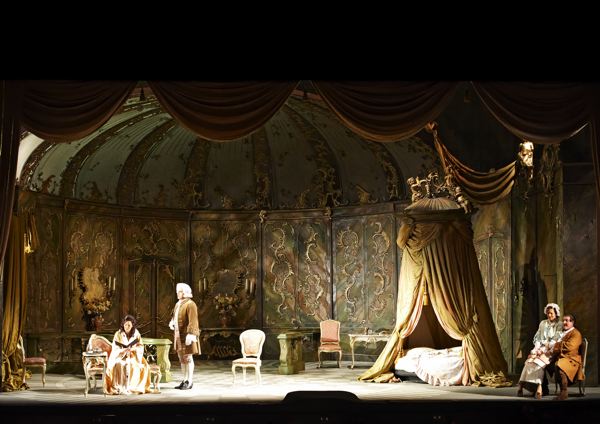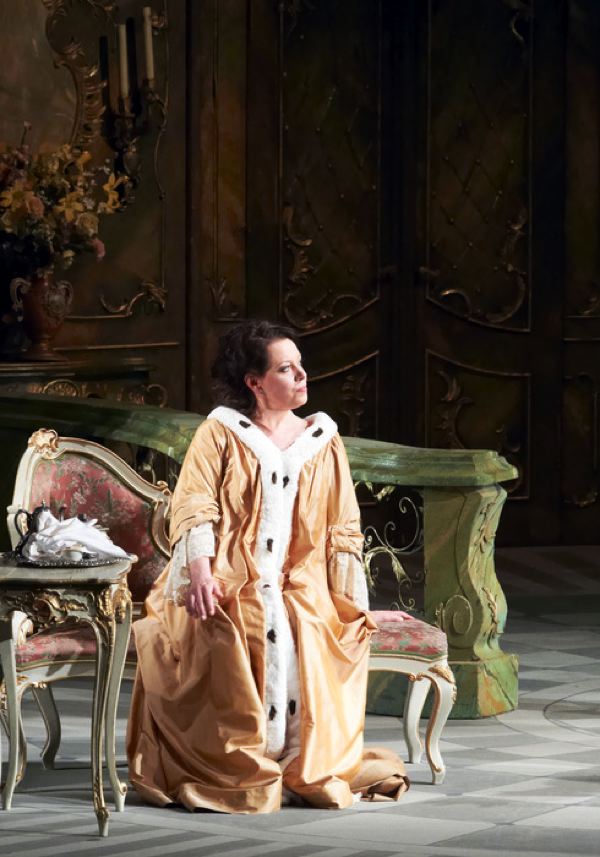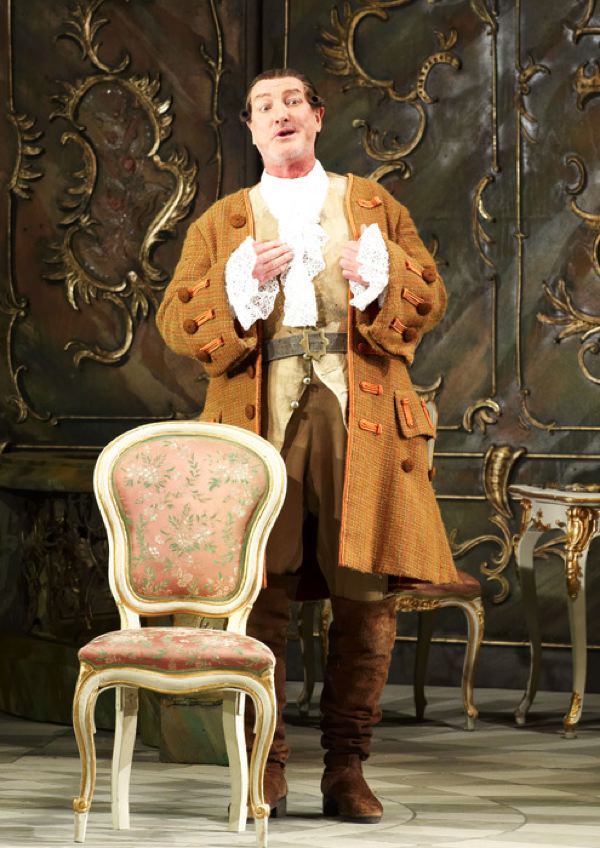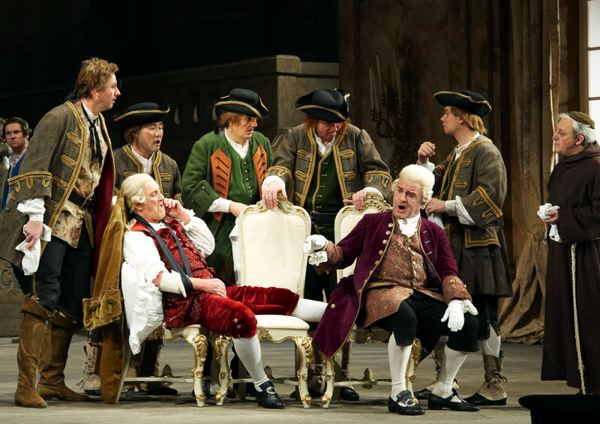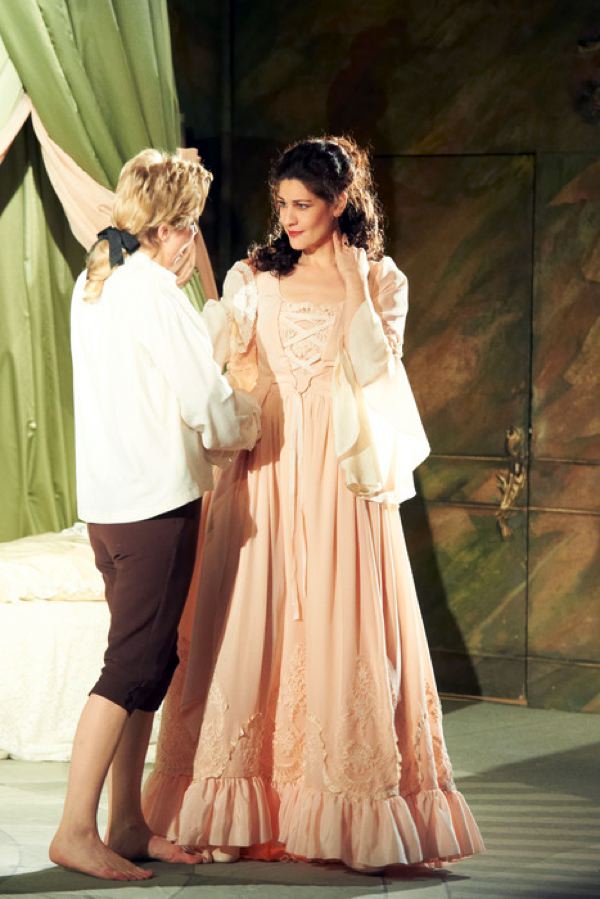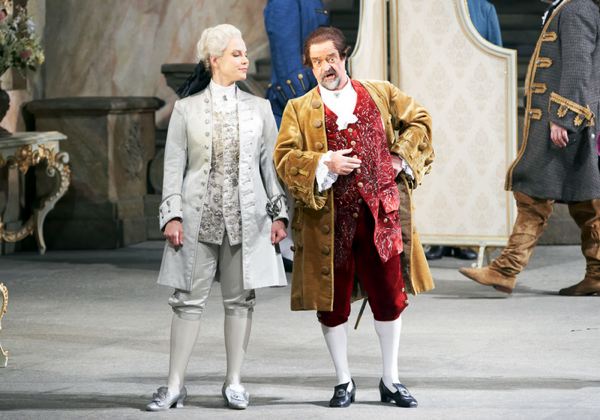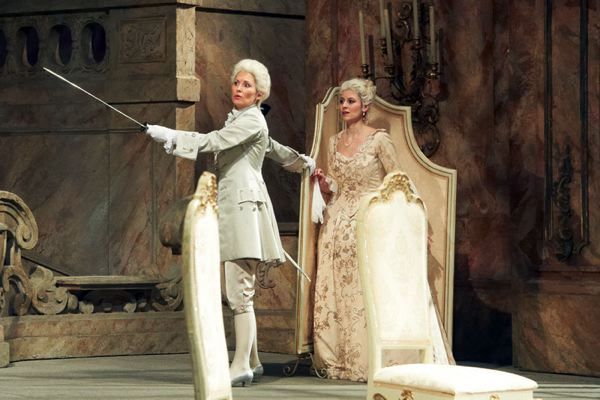

“The Barber of Seville” in Cape Town, South Africa

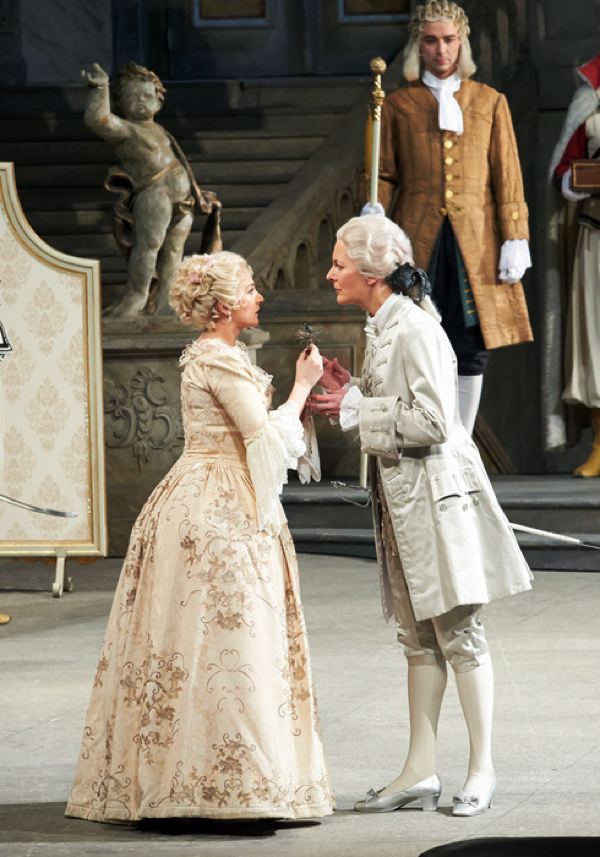
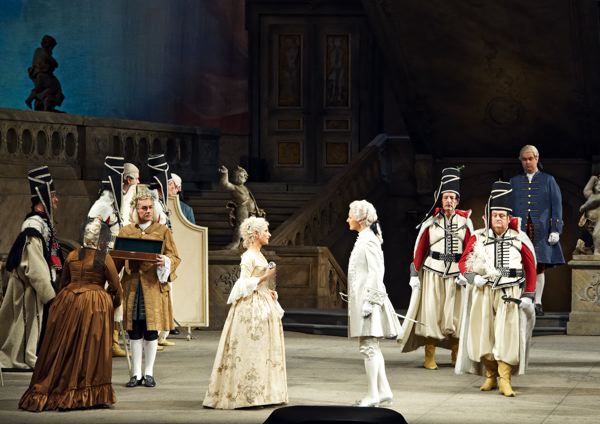
IL BARBIERE DI SIVIGLIA (Barber of Seville) Presented by Cape Town Opera in collaboration with the UCT Opera School

THE 2013 SEASON COMES TO A HIGH-SPIRITED CONCLUSION WITH ROSSINI’S EVERGREEN COMIC CLASSIC

“I’m gentle, respectful, obedient, sweet and loving – but push me too far and I’ll become a viper!”

The nimblest barber in Seville, Figaro is the go-to man for a close shave. And there will be close shaves a-plenty when Figaro helps the lovestruck Count Almaviva abduct his sweetheart Rosina from her nasty guardian Don Bartolo in this hilarious opera buffa, our hair-raising contribution to the month of ‘Movember’.

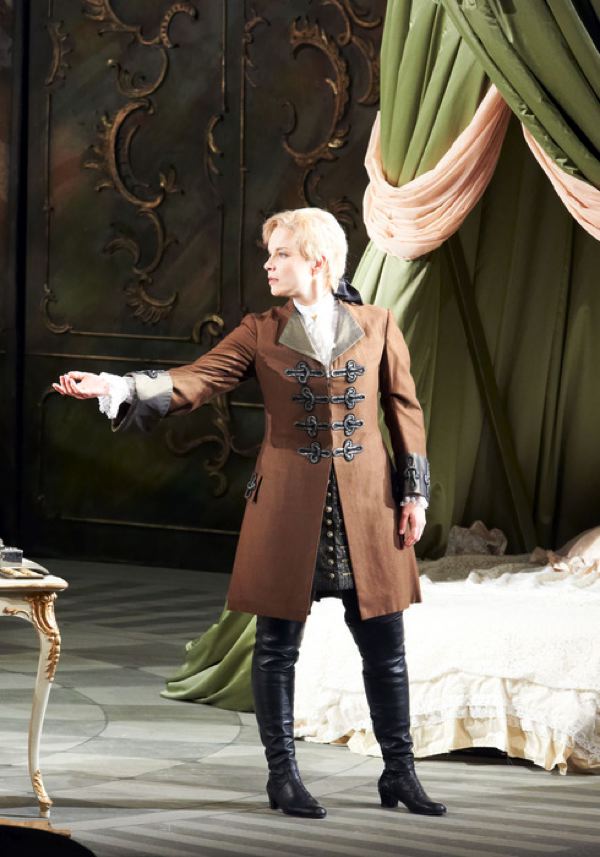
The Barber of Seville combines knockabout humour with music of great virtuosity and brilliance, from its cheeky overture to showstopping arias including ‘Largo al factotum’ and ‘Una voce poco fa’. Following her warm-hearted and witty stagings of L’elisir d’amore and Die Entführung aus dem Serail for CTO and UCT, Christine Crouse helms a whimsical new production of this sparkling. With the “Cape Town Festival Orchestra”.


Conductor: Kamal Khan
Director: Christine Crouse

Posted in Music, OPera | Tagged , , , , , | Leave a comment

VERDI’S 200th ANNIVERSARY: “Rigoletto” at the Metropolitan Opera.

metlogo

RIGOLETTO.

Approximate running time 3 hrs. 2 min.

Dmitri Hvorostovsky sings the title role of Verdi’s tragic masterpiece for the first time at the Met in Michael Mayer’s dazzling production set in Las Vegas—the neon-bedecked hit of the 2012–13 season. Aleksandra Kurzak is the beautiful Gilda, in thrall to Matthew Polenzani’s womanizing Duke.

SYNOPSIS

Las Vegas 1960
Act I
At his casino, the Duke boasts of his way with women. He dances with the Countess Ceprano, while Rigoletto, the Duke’s hunchbacked sidekick and sometime comedian, mocks the countess’s enraged but helpless husband, Count Ceprano. Marullo, one of the Duke’s entourage, bursts in with the latest gossip: Rigoletto is suspected of keeping a young mistress at his place. Rigoletto, unaware of the news, continues to taunt Ceprano, who plots with the others to punish him. Monterone, an Arab tycoon, forces his way into the crowd to denounce the Duke for seducing his daughter and is viciously ridiculed by Rigoletto. Monterone is arrested and curses Rigoletto.

Rigoletto is disturbed by Monterone’s curse. He encounters Sparafucile, a hitman, who offers his services. Rigoletto reflects that his own tongue is as sharp as the murderer’s knife. Arriving at home he warmly greets his daughter, Gilda. Afraid for the girl’s safety, he warns the housekeeper, Giovanna, not to let anyone into the apartment. When Rigoletto leaves, the Duke appears and bribes Giovanna, who lets him in. He declares his love for Gilda, who has secretly admired him at church, and tells her he is a poor student. After he has left, Gilda tenderly thinks of her newfound love before going to bed. The Duke’s entourage gathers, intending to abduct Rigoletto’s “mistress.” Rigoletto appears and they quickly change their story, telling him they are abducting the Countess Ceprano, and enlist his aid in their scheme. But they have deceived him and it is Gilda they carry off, with Rigoletto’s unwitting assistance. He rushes in to discover that his daughter is gone and collapses as he remembers Monterone’s curse.

Act II
At the casino, the Duke is distraught about the abduction of Gilda. When his entourage returns and tells him the story of how they took the girl from Rigoletto’s apartment and left her in the Duke’s rooms, he hurries off to her. Rigoletto enters, looking for Gilda. The entourage is astonished to find out that she is his daughter rather than his mistress, but they prevent him from storming into the Duke’s apartment. Rigoletto violently denounces them for their cruelty, then asks for compassion. Gilda appears and runs in shame to her father, who orders the others to leave. Alone with Rigoletto, Gilda tells him of the Duke’s courtship, of her abduction, and her seduction by the Duke. Monterone is brought in as he is being taken away by the Duke’s men, and Rigoletto swears that both he and the old man will be avenged. Gilda begs her father to forgive the Duke.

Act III
Rigoletto and Gilda arrive at a seedy club on the outskirts of town where Sparafucile and his sister Maddalena live. Inside, the Duke laughs at the fickleness of women. Gilda and Rigoletto watch through the window as the Duke amuses himself with Maddalena. Rigoletto tells Gilda to leave town disguised as a man and pays Sparafucile to murder the Duke. Gilda returns to overhear Maddalena urge her brother to spare the handsome stranger and kill the hunchback instead. Sparafucile refuses to murder Rigoletto but agrees to kill the next person who arrives at the club, so that he will be able to produce a dead body. Gilda decides to sacrifice herself for the Duke. She knocks, enters the club, and is stabbed. Rigoletto returns and Sparafucile presents him with the body, which is wrapped in a trenchcoat with its face covered. Assuming it is the Duke’s, Rigoletto gloats over the body, when he hears his supposed victim singing in the distance. Frantically pulling the covering aside, he finds his daughter, who dies asking his forgiveness. Horrified, Rigoletto remembers Monterone’s curse.

Metropolitan Opera NYC

Metropolitan Opera NYC

Metropolitan Opera NYC

Metropolitan Opera NYC

Metropolitan Opera NYC

Metropolitan Opera NYC

Metropolitan Opera NYC

Posted in OPera | Leave a comment

“DER ROSENKAVALIER” in livestreaming on October 27 from the Vienna Opera House

logo_Vienna The Vienna State Opera Presents

OCT. 27, 2013 – 4 P.M. (UTC)

“DER ROSENKAVALIER”

MUSIC: RICHARD STRAUSS | LIBRETTO: HUGO VON HOFMANNSTHAL

……LIVESTREAMING……

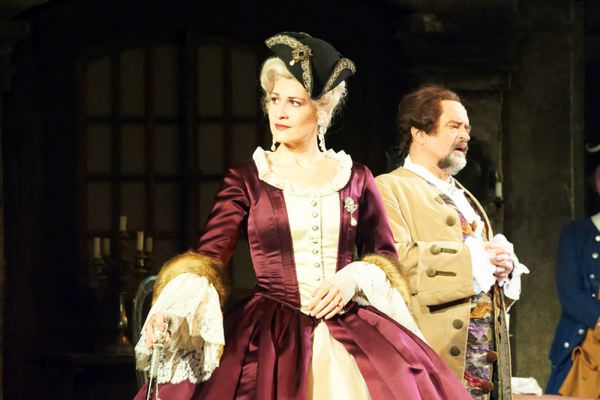
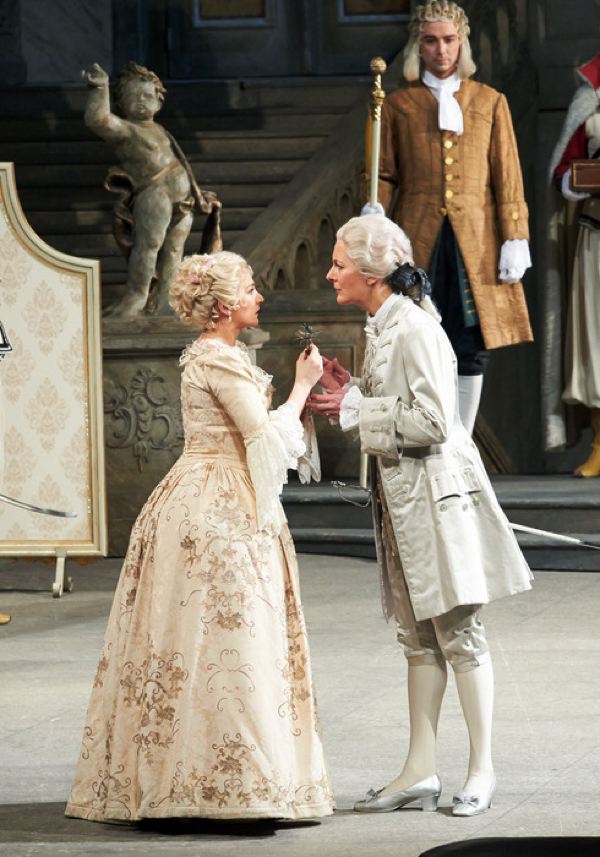
Rosenkavalier_10The more mature Marschallin is the only person in this story who realizes the true nature of love in all its facets. By making sacrifices herself, she manages to smooth the way for the young couple Octavian and Sophie despite the intentions of the avaricious and lustful Baron Ochs von Lerchenau.

ARTISTIC TEAM:

CAST:

SYNOPSIS

Rosenkavalier_01It is early one morning. The field marshal’s wife, neglected by her husband, has spent a night of rapturous passion with her lover Octavian. Without any warning, her cousin bursts in: the lecherous Baron Ochs von Lerchenau. Ochs is due to marry Sophie Faninal, the daughter of a rich parvenu, and is looking for a suitable Rosenkavalier (or Knight of the Rose) to present a ceremonial rose to his future bride. However, he takes an immediate liking to the ‘chambermaid’ that he finds with the field marshal’s wife, and makes certain unambiguous propositions to her. The field marshal’s wife recommends Octavian as a suitable rose-bearer, showing Ochs a portrait of him in a locket; Ochs is greatly surprised at the striking ‘resemblance’ of the portrait to the ‘chambermaid’, but accepts the recommendation.

Rosenkavalier_02When Octavian first meets Sophie in his role as Knight of the Rose, the two young people instantly fall in love. Ochs, who is only interested in the girl’s dowry, continues to act in a very coarse and leering manner, and Sophie no longer has any intention of marrying him. When Ochs tries to force her to sign the marriage contract, Octavian draws a sword, challenges him to a duel and inflicts a minor wound to his arm. The general chaos that follows prevents the marriage from being legally concluded. To undermine the proposed marriage once and for all, a trap is also set for Ochs. In a letter, the ‘chambermaid’ invites him to an assignation at an inn on the outskirts of town…

Rosenkavalier_05Ochs accepts the ‘chambermaid’s’ offer with enthusiasm and meets her at the inn as agreed. Just as he is about to lay hands on ‘her’, various figures force their way into the room, and a chaotic masquerade ensues. Finally, Faninal, Sophie, a police commissioner and the field marshal’s wife also arrive. Ochs is forced to admit that he is no longer a suitable groom for Sophie. Octavian and Sophie remain sheepishly behind with the field marshal’s wife. Once she is sure where Octavian’s affections now lie, she relinquishes him – in complete control of the scene – to the younger Sophie, and leaves the young couple to their fate.


Rosenkavalier_03   Rosenkavalier_15 (1)   Rosenkavlier_11   Rosenkavalier_08


Rosenkavlier_12   Rosenkavalier_06     

Rosenkavlier_13   Rosenkavalier_10

For more information, visit the Vienna State Opera’s web site: http://www.staatsoperlive.com/en/

Posted in Music, OPera | Tagged , , , , , , | Leave a comment

VERDI’S 200th ANNIVERSARY CELEBRATION: “Aida” in Vienna

logo_Vienna The Vienna State Opera  Presents:

Aida_teaser

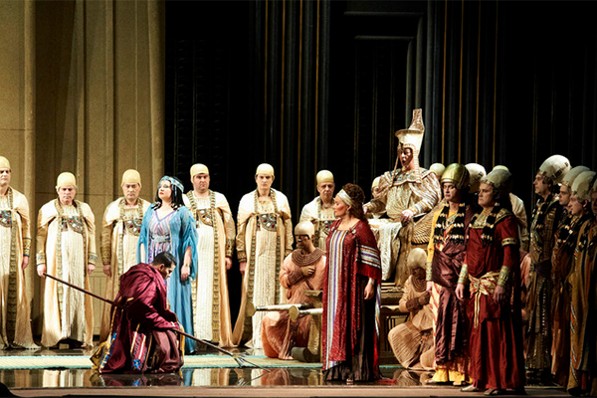
AIDA

Giuseppe Verdi

Performance Dates:

Oct. 15, 2013 | 19.00
Oct. 18, 2013 | 19.00

ARTISTIC TEAM:

Dan Ettinger | Conductor
Nicolas Joel | Artistic Director
Carlo Tommasi | Scenographer
Jan Stripling | Choreographer

CAST

Olga Borodina | Amneris
Kristin Lewis | Aida, Ethiopian slave
Marcello Giordani | Radames, Commmander
Markus Marquardt | Amonasro, Aida’s Father, King of Ethiopia

On their website there is an interesting video of the performance….
Click here to visit their web page…

Posted in Music, OPera | Tagged , , , | Leave a comment

VERDI’S 200th ANNIVERSARY: Don Carlo in Austin, Texas

austin-logo        

Austin Lyric Opera

doncarloaustin

Verdi’s Don Carlo

Nov. 16 – Nov. 24

Politics, love and family loyalties are tested in this epic battle of wills involving a tyrannical king, a despairing prince and an innocent young woman. Verdi’s tour de force tells the tale of powerful people who must accept their role as pawns in a tragic destiny. Austin Lyric Opera is presenting Don Carlo for the first time on the Austin stage, in celebration of the bicentennial of Verdi’s birth.

The Long Center is conveniently located at 701 W. Riverside Drive, at the corner of South 1st Street and West Riverside Drive, in Austin (Texas). If you have questions or comments, please call ALO Patron Services at 512.610.7684.

Posted in OPera | Leave a comment

“VIVA VERDI” presentation at the Italian Heritage Month’s celebration in Brooklyn.

IMG_1061“VIVA VERDI” presentation at the Italian Heritage Month’s celebration in  Brooklyn.

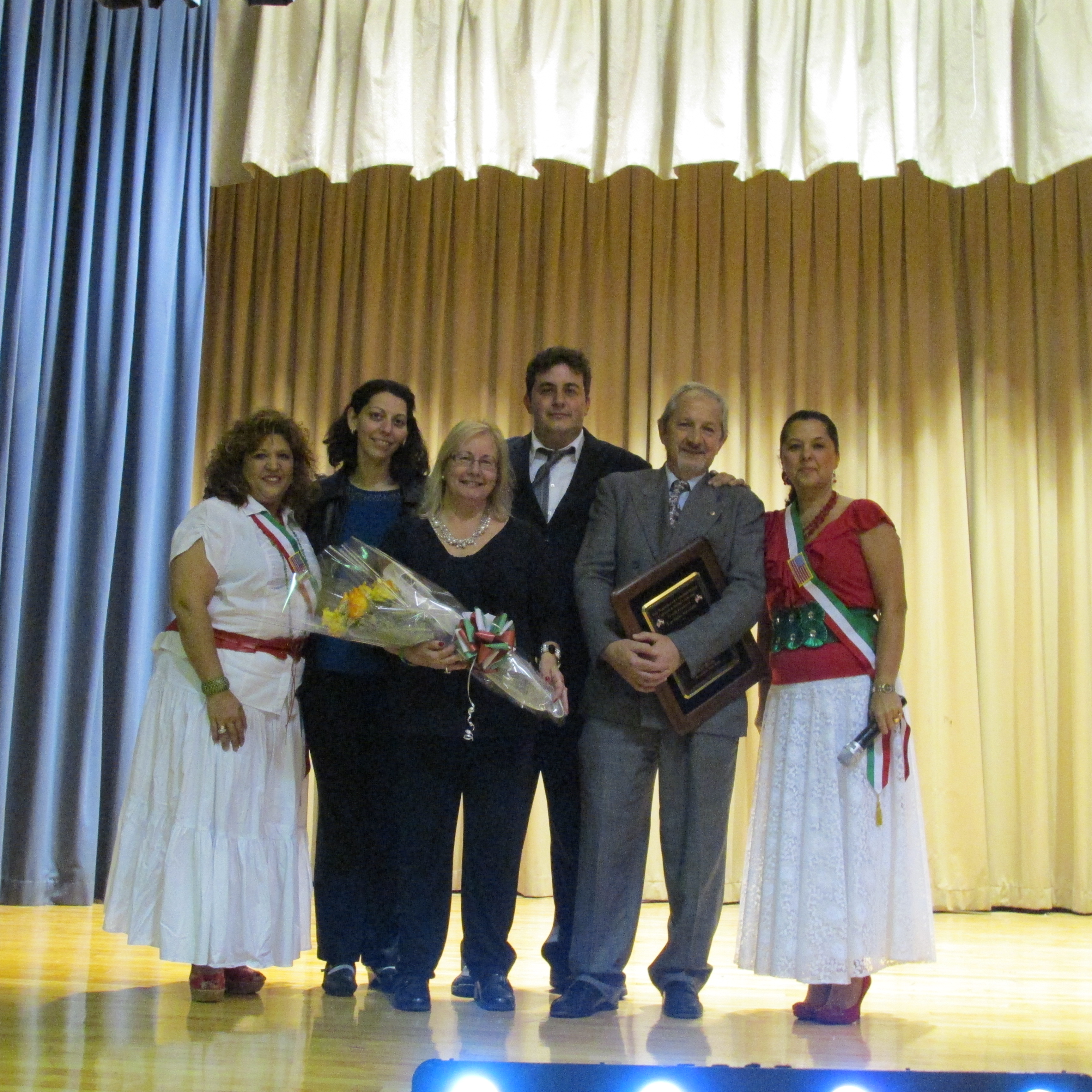
Tiziano Thomas Dossena, Editorial Director of L’Idea Magazine, gave a presentation titled “Viva Verdi” at the celebrations of the Italian Heritage Month, in the auditorium of St. Athanasius Church in Brooklyn. The presentation proved to the large audience there is a common, everyday knowledge of Verdi’s works by the average American. With this interesting twist, Mr. Dossena, who in the course of the evening was awarded the “Italian American Personality of the Year” by the Associazione Culturale Pugliese Maria SS Addolorata, found a way to reclaim Verdi’s fame even in the eyes of whoever did not think opera was a likable entertainment.

IMG_1083Mr. Dossena showed that TV and movies are ripe with Verdi’s music and that everyone in the audience knew some of his arias, most often without realizing that it was from an opera. A brief biography of the composer complemented the presentation main theme, offering a chance to learn bits of this great man’s life story.


Below you can find some of the slides from the Presentation….

VIVA VERDI   VIVA VERDI2

VIVA VERDI4
Please click on VIVA VERDI to see all the images (pdf) from the presentation…

Posted in Lectures, Music, OPera | Tagged , , , , | Leave a comment

Johann Strauss’ “Die Fledermaus” in Slovakia

bat1Johann Strauss:

Die Fledermaus

Operette in three acts

logo-snd

Conductor: Dušan ŠtefánekFriedrich Haider
Directed by: Miro Grisa
Set Designer: Milan Ferenčík
Costumes Designer: Erzsébet Rátkai
Choreography: Jaroslav Moravčík
Dramaturgy: Michal Benedik
Chorusmaster: Pavol Procházka
Gabriel von Eisenstein: Miroslav DvorskýJakub Pustina
Rosalinde: Adriana KohútkováPetra Perla-NôtováEva Hornyáková
Frank: Ján GallaJuraj Peter
Princ Orlofsky: Monika FabianováTerézia KružliakováDenisa Šlepkovská
Alfred: Ján BabjakTomáš JuhásOndrej Šaling
Dr. Falke: Daniel ČapkovičPavol RemenárFrantišek Ďuriač
Dr. Blind: Ivan OžvátJozef Benedik
Adele: Jana BernáthováAndrea Vizvári
Ida: Miriam MaťašováKatarína Polakovičová
Frosch: Ivan KrúpaPeter Marcin
Ivan: Peter KružliakRoman Krško
Postman: Gustáv Herényi

Die Fledermaus is a difficult test to each theatre ensemble, both from the points of view of singing and acting. A good production is a concert of actors crowned by wonderful melodies. A critic from Viennese Morgenpost newspaper wrote after the world premiere in 1874: “…sitting in a box in the Theater an der Wien one may get the best seasick, because down in the parterre everything is in the curling and waving motion, accompanied by charming tones played by the orchestra under the conducting baton of Johann Strauss. It all chatters, tunes, sings and warbles, as in the middle of spring.”

Running time: 3 hrs with one interval

bat12

Plan of performances

Thursday November 14, 2013 – 19:00    
Monday December 2, 2013 – 19:00    
Tuesday December 31,  2013 – 19:00    
Thursday January 16, 2014 – 19:00    
Monday February 24, 2014 – 19:00    
Thursday March 27, 2014 – 19:00    

Premières: December 30,2011 New Building, Opera and Ballet Stage

bat2  bat3

bat4  bat5

bat6  bat7

bat8  bat9

bat10  bat11

Posted in Music, OPera | Tagged , , , | Leave a comment

Agrippina at the Gran Teatre del Liceu, Barcelona, Spain


Agrippina

Handel, George Frideric (1685-1759)

Gran Teatre del Liceu, Barcelona, Spain

SaturdayNovember 16-29, 2013 08:00pm

Credit: © Toma B, 2013 /Shuttersctock.comThis opera seria by Handel is a politically incorrect comedy about how to seize or hang on to power, the tale of a battle between female patricians. McVicar views this virtually wicked text in the light of the aesthetic of the most sophisticated soap operas of the 1980s. Agrippina and Poppea – the two great rivals – behave with the tyrannical confidence of the leading ladies of Dynasty or Falcon Crest, waging all-out war on stiletto heels, oblivious to ethical constraints or obstacles. Seduction and sex are mere tools for getting what they want, by fair means or foul. Yet paradoxically, the characters of this amoral farce are not caricatures. Three hundred years after its premiere, Agrippina still interests the audience because the protagonists are three-dimensional, almost Mozartian, in their human contradictions and complexity.

Opera seria in three acts. Libretto by Vincenzo Grimani. Music by George Frideric Handel. Premiered on 26 December 1709 at the Teatro San Giovanni Grisostomo in Venice. First performance at the Gran Teatre del Liceu.

Tickets 141.75€ to 8,50€.

Image credit: © Toma B, 2013 /Shuttersctock.com

Harry Bicket, Conductor
David McVicar, Director
John Macfarlane, Set Designer
Sarah Connolly, Mezzo-soprano: Agrippina
Malena Ernman, Mezzo-soprano: Nerone
Danielle de Niese, Soprano: Poppea
David Daniels, Countertenor: Ottone
Enric Martinez-Castignani, Baritone: Lesbo
Franz-Josef Selig, Bass: Claudius
Henry Waddington, Bass: Pallante
Dominique Visse, Countertenor: Narcissus
Andrew George, Choreography
Posted in Music, OPera | Tagged , , , , , , , , , | Leave a comment

VERDI’S 200th ANNIVERSARY: Falstaff in Los Angeles.

logoLAOPERA Presents:

FALSTAFF.head_falstaff

Saturday November 09, 2013 07:30 PM
Wednesday November 13, 2013 07:30 PM
Saturday November 16, 2013 07:30 PM
Thursday November 21, 2013 07:30 PM
Sunday November 24, 2013 02:00 PM
Sunday December 01, 2013 02:00 PM

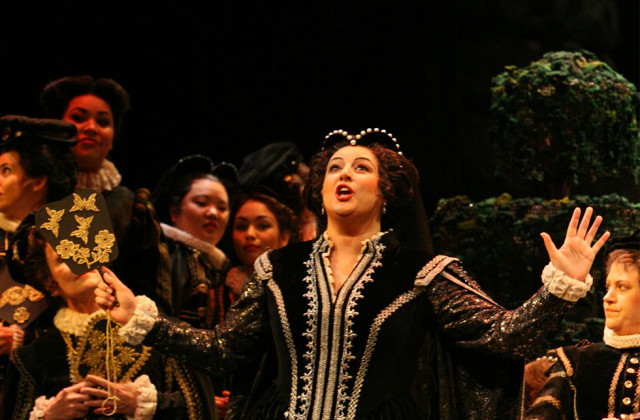
In honor of Verdi’s 200th birthday, LA Opera presents a new production of the crowning glory of the composer’s magnificent career, his comic masterpiece Falstaff. LA Opera Music Director James Conlon, praised internationally for his mastery of Verdi, conducts this unabashed celebration of Merrie Olde England’s lusty days and bawdy nights, starring Italian baritone Roberto Frontali. When Shakespeare’s portly knight of Windsor hatches a plot to improve his love life by courting two different married women, he launches a flood of comic chaos and romantic misadventure.

Synopsis

Setting: Windsor, England, during the reign of Henry IV (1399-1413)

Act One
At the Garter Inn, after a run-in with Dr. Caius, Falstaff discovers that he doesn’t have enough money to pay for his dinner. To support the expanding kingdom that is his paunch, he settles on seducing Alice Ford and Meg Page, wives of two of Windsor’s wealthiest burghers. His thieving sidekicks, Bardolph and Pistol, refuse to deliver love letters to the women, so Falstaff dismisses them and has a page do it instead.

Alice and Meg compare the letters as they relax in the garden by Ford’s house, noticing that the notes are identical. They decide to play a little joke on the fat knight. As the women leave, Dr. Caius, Bardolph, Pistol and Fenton arrive with Ford, who is getting an earful about what a trickster and scoundrel Falstaff is. Pistol tells Ford about the fat knight’s plan to dishonor Alice and empty the burgher’s coffers, so Ford decides to go to the inn in disguise and catch Falstaff. Meanwhile, the ladies enlist Mistress Quickly to lure Falstaff into their own trap. Whenever they can steal a moment, Fenton and Nannetta, the Fords’ daughter, enjoy a clandestine kiss.

Act Two
Back at the inn, Quickly brings Falstaff a response from the two ladies. Both return his affections, but only Alice can meet him, any afternoon between two and three, while her husband is out. Bardolph informs Falstaff that a “Master Fountain” (Ford in disguise) wishes to make the knight’s acquaintance and give him a good bottle of Cyprian wine. “Fountain” tells Falstaff that he has fallen in love with Alice and promises the knight a sack of gold for seducing her, explaining that if she slips once, she’ll most likely slip again. Falstaff happily accepts the challenge. Indeed, he admits, he is well along with his own plan to cuckold Alice’s husband.

Quickly returns to Ford’s house to tell Meg and Alice that Falstaff has taken the bait. Nannetta complains that her father plans to marry her off to old Dr. Caius. Servants enter with a basket of dirty linen, while the ladies prepare their trap by setting up a screen between the basket and the fireplace. Falstaff arrives, but the rendezvous is interrupted when he and Alice her Ford approaching. Falstaff hides behind the screen while Ford, Dr. Caius, Bardolph and Pistol search for him. Believing that Falstaff is hiding behind the screen, Ford throws it aside only to discover his daughter and Fenton. Infuriated, he and the rest of the men rush off. Alice summons the servants to deal with the laundry. They struggle with the basket but finally manage to dump it, and Falstaff, into the Thames River.

Intermission

Act Three
Outside the inn, Falstaff drowns his sorrows in wine. Quickly arrives and convinces him that Alice wants to meet him at midnight in Windsor Park, but he has to come dressed as a fairy-tale character, the Black Huntsman. Hidden behind a house, the husbands, wives, and others overhear the conversation, and Quickly arrives just in time to hear Ford plotting the doctor’s marriage to Nannetta.

At the park that night, the wives make some costume changes to foil Ford’s marriage plans for Nannetta. Midnight approaches, and Falstaff enters wearing antlers on his head and wrapped in a huge black cloak. His encounter with Alice is interrupted, this time by the assembled company disguised as spirits. They torment Falstaff and force him to repent, but recognizing Bardolph in the midst of the revelry, Falstaff realizes that he has been duped yet again. Ford announces that, to end their festivities, they shall celebrate the marriage of the Fairy Queen. Dr. Caius steps forward and takes the hand of the Queen, believing her to be Nannetta. Another masked couple also approaches to take their vows. Only afterward is it revealed that the Queen was Bardolph and that Fenton and Nannetta were the masked couple. Ford accepts the situation, and the opera closes with a mighty fugue praising the hilarity of life.

Cast

Creative Team

* LA Opera debut artist
+ Domingo-Colburn-Stein Young Artist Program member
++ Domingo-Colburn-Stein Young Artist Program alumnus

Posted in Music, OPera | Tagged , , , | Leave a comment

Giacomo Puccini’s “Tosca” at The Bolshoi in Moskow

bolshoiGiacomo Puccini’s

“Tosca”

Opera in three acts

preview_tosca5Premiered on May 25, 1971.

Sung in Italian with Russian surtitles.
Presented with two intervals.
Running time: 2 hours 55 minutes.


Libretto by Giuseppe Giacosa and Luigi Illica
based on Victorien Sardou’s play of the same name

26 october 2013

Conductor: Pavel Klinichev
Floria Tosca, a celebrated singer: Marina Lapina
Mario Cavaradossi, a painter: Oleg Kulko
Baron Scarpia, chief of the police:Yuri Nechaev
Cesare Angelotti: Vadim Lynkovsky
A Sacristan: Mikhail Diyakov
Spoletta, police agent: Vadim Tikhonov
Sciarrone, gendarme: Alexander Korotky
A Gaoler:Pavel Tchervinsky
Music Director: Mark Ermler
Stage Director: Boris Pokrovsky
Designer: Valery Levental

Synopsis

Act I
Cesare Angelotti, an escaped political prisoner, runs into the church of Sant’Andrea della Valle to hide in the Attavanti family chapel. At the sound of the Angelus, the Sacristan enters to pray. He is interrupted by Mario Cavaradossi, who has come to work on his portrait of Mary Magdalene — inspired by the Marchesa Attavanti, Angelotti’s sister. Mario contrasts the beauty of the blond Marchesa with that of the woman he loves, the raven-haired singer Floria Tosca (“Recondita armonia”).

Angelotti ventures out and is recognized by Mario, who gives him food and hurries him back into the chapel as Tosca is heard calling outside. She jealously questions Mario, then prays and reminds him of their rendezvous that evening (“Non la sospiri la nostra casetta”). Recognizing the Marchesa’s likeness in the painting, she explodes with renewed suspicions, but he reassures her (“Qual’occhio al mondo”). When she has left, Mario summons Angelotti as a cannon signals that the police have discovered the escape; the two flee to Mario’s villa.

Napoleon’s army is supposed to have suffered defeat, and the Sacristan returns with choirboys who are about to sing a Te Deum. Their excitement is silenced by the entrance of Baron Scarpia, chief of the secret police, in search of Angelotti. When Tosca comes back looking for Mario, she encounters Scarpia, who shows her the Attavanti crest on a fan he has just found. Thinking Mario faithless, Tosca tearfully vows vengeance and leaves as the church resounds with the Te Deum. Scarpia has the diva trailed, scheming to get her in his power (“Va, Tosca!”).

Act II
In the Farnese Palace, Scarpia anticipates the pleasure of bending Tosca to his will (“Ha piu forte sapore”).
The spy Spoletta arrives, not having found Angelotti; to placate the baron, he brings in Mario, who is interrogated while Tosca is heard singing at a royal gala downstairs. She enters as her lover is being taken to an adjoining room for torture. Unnerved by Scarpia’s questioning and Mario’s screams, she reveals Angelotti’s hiding place.

Mario is carried in; realizing what has happened, he rages at Tosca, but the gendarme Sciarrone rushes in to announce that Napoleon has won the Battle of Marengo, a defeat for Scarpia’s side. Mario shouts his defiance (“Vittoria!”).

Tosca yields to Scarpia in exchange for her lover’s life. Fighting him off, she protest her fate to God, having dedicated her life to art and love (“Vissi d’arte”).

Spoletta interrupts: faced with capture, Angelotti has killed himself. Tosca, forced to decide, agrees to Scarpia’s proposition. The baron pretends to order a mock execution for the prisoner, after which he is to be free. Spoletta leaves.

Scarpia prepares a document of safe-conduct for the lovers. When he embraces her, Tosca stabs him with a knife, wrenches the document from his fingers and, placing candles at his head and a crucifix on his chest slips quietly out.

Act III
The voice of a shepherd is heard as church bells toll the dawn. Mario is led to the roof of Castel Sant’Angelo prison to await execution; he bribes the jailer to convey a farewell note to Tosca. Writing it, overcome with memories of love, he gives way to despair (“E lucevan le stelle”).

Suddenly Tosca runs in, filled with the story of her recent adventure. Mario caresses the hands that committed the murder for his sake (“O dolci mani”), and the two hail the future.

As the firing squad appears, the diva coaches Mario on how to fake his death convincingly; the soldiers fire and depart. Tosca urges Mario to hurry, but when he fails to move, she discovers that Scarpia’s treachery has transcended the grave: the bullets were real.

Spoletta rushes in to arrest Tosca. She climbs the battlements and, crying that she will meet Scarpia before God, leaps to her death.

preview_tosca1   preview_tosca2

preview_tosca4  preview_tosca6

preview_tosca8   preview_tosca9

preview_tosca10   preview_tosca12  preview_13tosca

Posted in Music, OPera | Tagged , , , , , , | Leave a comment