ON THE NOTES OF VERDI’S COSTUMES.

From Teatro alla Scala di Milano to the heart of Montefeltro. In Frontino (province of Urbino, Italy) at the Monastery of San Girolamo.
From Sunday August 4th to Sunday September 22, 2013

Exhibit of the original costumes of some of the most famous of Giuseppe Verdi’s operas. With the collaboration of Teatro alla Scala di Milano.

 costumiverdiani

Costumes displayed at the exhibition, with historical notes.

costumi verdiani2AIDA
Costumes of the Pharaoh and of Aida, on a design by Lila De Nobili. Worn by Antonio Zerbini and Leontyne Price. 

Teatro alla Scala, 1962-1963 season.
Conducted by Gianandrea Gavazzeni.
Directed by Franco Zeffirelli. Scenography: Lila De Nobili.

traviata937WLa Traviata
Costumes of Violetta Valery and a woman from the chorus, on a design by Gabriella Pascucci.
Worn by Daniela Dessi

Teatro alla Scala, 1989-1990 season.
Conducted by Riccardo Muti.
Directed by Liliana Cavani. Scenography: Dante Ferretti.

OTELLO

costumi verdiani_otelloCostumes of Desdemona and Otello, on a desegn by Ezio Frigerio
Worn by Margherita Roberti and Mario del Monaco

Teatro alla Scala, 1959-1960 season.
Conducted by Antonino Votto
Directed by Margherita Wallmann. Scenography: Nicola Benois

Costumi_Balloinmaschera

Costumes of the chorus of women and men, on a design by Gabriella Pascucci.

Teatro alla Scala, 2000-2001 Season
Conducted by Riccardo Muti
Directed by Liliana Cavani. Scenography: Dante Ferretti

carlo935WCostumes of Elisabeth of Valois and Philip II King of Spain, on a design by Anna Anni.
Worn by Daniela Dessi e Samuel Ramey
Teatro alla Scala, 1992-1993 Season
Conducted by Riccardo Muti
Directed by Franco Zeffirelli. Scenography: Franco Zeffirelli

Posted in Music, OPera | Tagged , , , , , , , , , , | Leave a comment

Opera meets humor: Maestro Recchiuti presents Verdi at Rockford Concert.

Maestro Recchiuti2

At the Rockford  Concert titled “GIUSEPPE VERDI: HIS HEROES AND VILLAINS” (see previous blog), Maestro Michael Recchiuti demonstrated his showmanship went well beyond his composing and directing capabilities by presenting the evening with a fantastic wit and a great mixture of information and humor that allowed even the newcomers to the world of opera to appreciate to the fullest the evening’s program. The arias were introduced with a particular “twist”, unique to his style. What follows is his presentation (or what we could transcribe from the live recording). I enjoyed it immensely and I am sure all readers will:

“Giuseppe Verdi. Born Oct. 9, 1813 in an out of the way village, near an out of the way town, attached to an out of the way Duchy that was still part of the French empire. Yes, the greatest composer of Italian music was born, thanks to Napoleon Bonaparte and his Italian invasion, a French citizen, listed in the town hall as Joseph Fortunin Francois Verdi. A year or two later the Austrians and Russians drove the French out, and the locals got to be Italians ruled by Austrians.

Verdi is educated by the local priests, studies music with the town organist, and shows a precocious gift for music. He attends the town music school, and graduates with honors. He even gets to play some masses on the organ, substituting for his indisposed master. Then the important thing happens; somebody who mattered, and could do something for him, noticed him. Antonio Barezzi, who really is the hero of the Verdi story, was a wealthy merchant in Bussetto, who was an avid amateur musician. He took notice of the boy and invited him to come and watch rehearsals of the town Accademia sinfonica – the band. Barezzi kept this group going – they rehearsed in his parlor, over his shop, and they appeared at all local festivities, and even played in the church.  Next thing you know, Young Verdi is composing little pieces for the band – marches, serenades, concertos, and even some church music. Young Verdi moves into the palazzo, and begins to give Barezzi’s fetching young daughter piano lessons.

At the age of 18, it’s time for Verdi to expand his horizons, and his studies. Barezzi pays for him to go to Milano, and take the entrance exam for the conservatory. The exams go so badly that they don’t even tell Verdi that he wasn’t admitted. Barezzi had to write to the conservatory to hear the results. They declared firstly, that he was too old – the  normal age limit was 15, and that his piano playing wasn’t up to snuff. Verdi is crushed. “That’s ok- says Barezzi – don’t worry about it. Stay in Milano, and study privately. I’ve got your back, I’ll pay for it. No worries.”

Verdi studies for three years with the chief conductor at La Scala. -counterpoint, harmony, musical form , studies all the important scores with his maestro,  in the meantime, he marries Barezzi’s daughter, big surprise, and they set up house in Milano. Barezzi is still supporting him. An out of work musician wants to marry your daughter, and you like the idea. Think about it! A daughter is born, Verdi gets his first opera accepted for production at La Scala. Oberto – Conte di San Bonifacio. It’s kind of a success (It’s not really much of an opera – I prepared the first commercial recording of it about 20 years ago, and don’t remember a single phrase.) A son is born. Verdi gets a contract from LaScala to produce three operas. This is a big deal for a guy who a few years before couldn’t even get into the Conservatory.

Then, disaster! Within about a year and a half, the baby boy dies, the daughter dies, and his wife dies. Verdi goes into a tailspin depression. Even Barrezzi cannot pull him out of it. He vows never to write music again. He is completely lost. He hangs around Milano in despair, until one evening he meets the impressario of LaScala at a cafe, who insists that he have a look at a libretto that another composer had just rejected, Nabucodonosor. Verdi protests, the impressario rolls up the libretto, and sticks it into Verdi’s coat pocket. When Verdi gets home, he tosses the libretto onto the table, and it opens to a certain page. Verdi reads “Va, pensiero, sull’ali dorati….” the chorus of the Hebrew slaves, and he begins to think about music again. This, at least, is the story the way Verdi later told it.

Verdi goes on to write Nabucco, and it is his first truly great success. You know, we always say that opera was the great “popular” art form. But you have to do the math. If you took the number of available theater seats, and factored the population of Europe against it, I think there was always a relatively small number of people who actually WENT to the theater. However – a great many people came to know the music of the theater. There were the infamous organ grinders. There were bands playing potpourris, and excerpts in concerts. There was a flourishing sheet music publishing business that fed an insatiable appetite for musical novelty in the educated musical amateurs. Everybody played some instrument. And eventually, there was the phonograph.

One of the most common pastimes at social gatherings used to be to the play piano, both solos and  duets. All of the symphonic repertory had been arranged for four hands. I, as a student, learned most of my repertory this way, back in the last millenium. So, to give you a taste of this vanished experience, I have invited my dear friend and colleague, Eric Malson, to join me at the mighty Steinway. Eric is an extremely accomplished concert pianist, and collaborator in chamber music, and with singers, in New York, and all over Europe. He played in the orchestra in Lisbon for a number of years, rendering him absolutely indispensible to me for any visit to a rodizio, or a restaurant like, say, the Azorean here in Gloucester. He is a much better pianist than I, so I shall severely limit his access to the instrument, this evening. He has kindly consented to act as my page turner, and, more importantly, to allow himself to be exhibited with me, in the four hand arrangement of the Overture to Verdi’s first great opera, Nabucco. So you will hear how most people probably first heard this piece.

The tenor: “Parmi veder le lagrime”

Opera is when a tenor and a soprano want to make love, and are prevented from doing so by a baritone .  GB Shaw
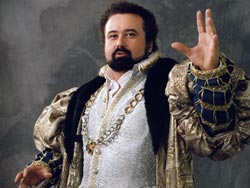
rigolettoMeloIn Italian opera, the tenor is often the young, heroic, romantic figure. Often the nationalist, brave, and self sacrificing one. Excellent for my search for heroes! Verdi, however, complicates matters. He begins to be very selective about what stories he sets. He reads literally thousands of plays searching for a good story, for good characters. He learns that good characters generate good stories, and therefore good operas. He always said that it was the hardest part of his job. He also said, over, and over again, “You must never bore the public, because, if they are bored, they won’t come back to the theater.” I think this should be engraved on plaques, and posted in the office of every artist director, administrator, and theater director in the world. The more complicated these stories get, the harder it’s going to be to find heroes, and villains.

Just a word about technical musical stuff. The scene you are going to hear Raul sing is a full scene, a recitativo, an aria, and a cabaletta. The recitativo is the more spoken part of the piece where the character gives you some back story, and sets up the scene for you. The aria is the beautiful, sung part, usually apostrophizing his beloved, or communicating some sad feeling. Then, usually, someone or other runs in, and informs the character that something has happened that completely alters his mood, and he sings the cabaletta- the fast, contrasting part. This is a form that had been around in Italian opera for ages, and Verdi was beginning to bridle at the strict convention. It was, he decided, unnatural. And he was right, in a dramatic sense. But, thank God, before he did away with the form, he gave us some of the greatest examples of it.

The Duke, in Rigoletto, is a libertine despot, who begins the opera at a party sizing up his courtiers’ wives, and discussing his conquests. He’s been meeting up with this young girl in the suburbs while her parents were out, but she’s disappeared. He comes running into room when he hears this news.  He is sad, for a lyrical moment, at least. (ARIA)In come some of his boys saying that they’ve snatched the girl up, and brought her to him here in the castle, and she’s been deposited in the Duke’s bedchamber. Oh joy, he says, smacking his lips, and he sings the cabaletta. Not exactly hero material, this guy.

The Baritone: “Cortigiani, vil razza dannata”
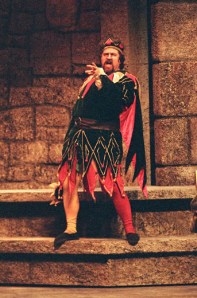
Peter Castaldi as Rigoletto

Peter Castaldi as Rigoletto

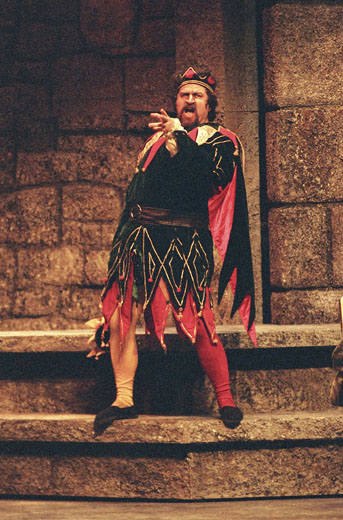
For all intents and purposes, Verdi invented the baritone. The low male voice was always the bass in Italian opera, and they usually played old men. The highest bass was called the “basso cantante”. They were hardly ever principle singers. Verdi took these singers, and pushed their range up just a little higher, giving them more resonance, and tension in their sound. The result is the Verdi baritone. He is often a father, a protector, a counselor. In Rigoletto, he is a protective father. But he is also a deformed, hunchback court jester working for a depraved libertine (the Duke), and he hides his daughter out of town to protect her. Should be a hero. But wait. When he finds out the duke has seduced and defiled his daughter, he goes to an assassin, and takes out a hit on him. No hero there. But, not really a villain, either. He is, with all his qualities, and faults, human. And here begins the genius of Verdi; the representation of the human.

The scene you will hear is the moment that Rigoletto, having discovered his daughter abducted and delivered to the duke’s bedchamber, breaks into the court, and curses the courtiers, demands the return of his daughter, and finally, pleads with them for her return as a father.

“O tu che in seno agli angeli” 

Of the thousands of plays Verdi read, when searching for new material, many of them tended to be by Spanish authors, on Spanish themes. To other Europeans, Spain represented an exotic, magical, and somewhat mystical locale. There was the Moorish occupation for centuries. There were the gypsies. There were the mountains, and the smugglers. There was the dark, severe, Catholicism – nothing like the Italian rather flexible one. And there was the subject of HONOR. Nobody holds a vendetta like a Spaniard. The author of Princess Bride got it right – Mandy Patinkin spends an hour and a half running around telling people ” my name is Inigo Montoya; you killed my father, prepare to die.”

La Forza del Destino is one of these stories. Drawn from a Spanish play, Verdi decided there wasn’t already enough chaos in it, so he inserts a military encampment scene from Schiller’s “Wallenstein’s Lager”.

The tenor  is loosely based on an actual historical figure. One of the last conquistadores married the daughter of the last Inca chief in order to calm things down, and consolidate power. And they had offspring. The play assumes that their son has gone back to Spain. He has fallen in love with the noble Leonora, and as he is meeting her father for the first time to ask for her hand in marriage, he drops his pistol, and of course, accidently kills him. He immediately goes on the lam. In this aria, he remembers his time in Sevilla with Leonora. He assumes Leonora is also dead by now, and he sings to her imploring her help from heaven.

A musical note. Verdi’s early experience, writing for the Bussetto town band gave him a love of woodwind instruments that stuck with him, and served him well throughout his career. Often in the introduction to musical numbers he would include what was essentially a little concerto for a solo instrument. In this introduction, it’s a clarinet, and I shall attempt my best Italian clarinet impersonation on the mighty Steinway.

“Con sangue sol cancellassi” 

Verdi wrote La Forza del Destino on commission for the Czar of all Russians, to be performed in St. Petersburg. The contract called for Verdi to come to St. Petersburg, supervise the preparation, and conduct the performances. One of the most amusing documents we have is his wife, Giuseppina’s packing list for the trip: pasta, olive oil, wine, woolen underwear, and fur coats that they had made. Even a little one for LouLou the little dog that travelled with them. They went in 1861, but the tenor got sick, the season was cancelled, and they returned in 1862. The piece was a great success, and mounted throughout Europe.

Back to the story. Leonora will wind up not to have died, but in a cloister, from where she becomes a hermit to expiate the sin of having had a boyfriend without telling her father. The important guy now is Leonora’s brother, who will make a profession of hunting down Alvaro, the tenor, who has killed his father, and dishonored, so he thinks, his sister, who he also presumes is dead. He chases this tenor all over Spain, and finally locates him in a monastery, where he has gone to expiate his sins. He confronts him, tries to get a rise out of him, challenges him to a duel, but Alvaro is taking his religious calling very seriously, and presents a kind of Zen presence, refusing to be roused to a fight. Finally the baritone slaps him, and gets him riled up enough to exit to fight with him. The ultimate irony is that when they exit the cloister and find a deserted place for their duel, they wind up right in front of the cave, where Leonora is living her hermit’s existence. There are no heroes in this story, either.

Macbeth, Verdi said, was his favorite opera. It is the one that he dedicated to Antonio Barezzi, his greatest supporter, and father of his first, departed wife. Shakespeare was Verdi’s favorite author, and he knew all of the plays in Italian translation. By his bedside, at S. Agata, are two complete sets of the bard’s works, close at hand at any hour. He had also wanted to compose a King Lear, but never did

 “Pietà, rispetto, onore”

This final scene of Macbeth, before the last battle of Byrnam Wood, is the low point of Macbeth’s life. His wife has gone mad, and then died. He has realized that his life has been meaningless. He leaves no legacy, and only curses will be his lullaby.  His lines, from Shakespeare:

I have lived long enough. My way of life

Is fallen into the sere, the yellow leaf,

And that which should accompany old age,

as honor, love, obediance, troops of friends,

I must not look to have. But, in their stead,

Curses, not loud, but deep……

“Quando le sere al placido” 

Luisa Miller comes at a strange time in Verdi’s development. He was beginning to break away from the old Italian styles and forms, but he didn’t have the revolutionary techniques yet that would lead to the big three, La Traviata, Il Trovatore, and Rigoletto in the next few years.

Let’s talk about Verdi’s vocal writing for a moment. He inherited  the style called florid, and moved in the direction of the Syllabic. That is to say, previous composers put a lot of notes on every syllable, to ornament them. Like Rosina, in Rossini’s Barbier di Siviglia.”Io sono docile”.  Verdi realized that this style ultimately did not give words the power that he wanted them to have, and he drastically reduced the number of notes per syllable, usually to one, so we say he wrote syllabically. Like the melody you will hear in this next aria. Sing “Quando le sere al placido”.  The shapes of the melodies become more expressive.

Rodolfo, the tenor in Luisa Miller, is the son of the Count. He is operating in disguise in the village, where he falls in love with the lovely Luisa, daughter of an old soldier of the Count’s. He ultimately has completely honorable intentions, but his father can’t have him marry a commoner, and begins to muck things up. He has his henchman force Luisa to sign a letter stating she never really loved Rodolfo, and just wanted his title. The father then shows this to Rodolfo, who explodes with this aria, thinking that Luisa has betrayed their love. Of course, everybody dies in the end, for all the wrong reasons. Is Rodolfo a hero? Not really, but he’s about as close as you can get to one in this opera.

“Ehi! paggio!”

We finally come to the last two great masterpieces of Verdi’s old age, Otello, and Falstaff. Verdi was old, said he was tired, and didn’t want to deal with the theater any more. But then he spends some time with a certain younger man, who manages to re ignite the passion to compose in the old master.

Arrigo Boito was one of the greatest figures of nineteenth century Italy. Italian father, Polish mother, he was a writer, a composer, a poet, a polemicist. One of the great cultural polymaths. He read and spoke all the European languages. His Shakespeare, he knew in French, from Hugo and Dumas’ translations. He managed to produce librettos for Otello, and finally, Falstaff for Verdi, and said that the time he spent working with him were the highlight of his life. In Falstaff, Boito conflates Henry IV, and The Merry Wives of Windsor into a satisfying operatic plot, bathed in an autumnal glow.

Sir John  wants to ignite his amorous intrigue, and he has written his two love letters, one for Meg, one for Alice, and orders his cohort Bardolfo to deliver them. Bardolfo, scoundrel that he is, refuses. Why , asks Falstaff. I am forbidden replies Bardolfo. By whom, inquires Falstaff. By honor, he replies.

Falstaff calls for his page, who takes the letters, and then turns on Bardolfo with a tirade on the word “honor” , arriving at the fact that “honor” is just a word, and made of nothing but air. He then chases his gang of lowlifes out of the tavern, to prepare himself for what he thinks will be his amorous adventure. Hero? Hardly. Villain?  Corruptor of youth, but not really. But we do know that poor old Sir John will die a sad, lonely death, when Hal, his youthful companion in many escapades becomes king, and banishes him forever from court.

“Desdemona rea…”

I finally have a real, live, evil villain. IAGO. Not a redeeming virtue, pre-Freudian, Freudian, or post Freudian. Verdi thought that Iago should be tall, slim, and smooth. The very personification of the banality of evil. And it mattered what Verdi thought about every detail of his operas. He conceptualized every detail, musically, dramatically, and visually of every work, and got to the point where he could impose his will on every theater in which he worked. There is huge extant correspondence between Verdi, and the theater producers, his conductors, designers, and his publisher about every small detail of his operas. In rehearsal he was relentless with the singers, and the stage personnel. And he was always right. His instincts were incredible, and he had the technique to back them up.

In this scene from Act two of Otello, Iago has already planted the evil seed of Doubt in Otello’s head about Desdemona’s faithfulness. He suggests that there might be something going on with Cassio, the young lieutenant that Otello has just demoted, owing to a row that Iago himself instigated. In the scene immediately preceding ours, Desdemona has, as his friend, plead Cassio’s case for re instatement to Otello. Otello’s antennas go up, given Iago’s previous conversation, and he rudely dismisses her.

After everyone leaves Otello alone, Iago approaches him to set the hook. Otello is confused, wounded, and then finally furious. Iago recounts a scene in the quarters he shares with Cassio of watching Cassio have a dream. It is  essentially the narration of Cassio’s, shall we say, nocturnal dream, about Desdemona. That’s all Otello needs to hear. He swears vengeance by heaven on his betrayers. Iago joins him. A musical note to listen for:  to show you the absolute genius of Verdi in this scene. In the final part of the duet where he swears vengeance, Otello sings, “Si, pel ciel marmoreo giuro”. It’s not until Iago joins him in the pledge that we realize that IAGO is singing the actual tune, and what Otello sings is actually a background accompaniment. IAGO is literally calling the tune.”

Posted in OPera | Leave a comment

Verdi’s Bicentennial Celebration in Rockport, Massachusetts.

Free Community Live Opera Concert.

Shalin Liu Performance Center

Shalin Liu Performance Center

The past August 11th, at the Shalin Liu Performance Center, in Rockport, Massachusetts, a free Community Live Opera Concert titled “GIUSEPPE VERDI: HIS HEROES AND VILLAINS” was offered to a large audience, proving once more that opera is more than alive.


rigolettoMelo

Raul Melo as the Duke of Mantua in Rigoletto.

The Metropolitan Opera tenor Raul Melo and the New York City Opera baritone Peter Castaldi, accompanied by the maestro Michael Recchiuti at the piano, performed various heroes and villains from Verdi’s operas. Mr. Melo opened with “Parmi veder le lagrime”, from Rigoletto’s Preludio, followed by Cortigiani, vil razza dannata”, also from Rigoletto, interpreted by Mr. Castaldi. Mr. Melo, who has performed the principal tenor roles with the Hamburg State Opera, Zurich State Opera, Frankfurt Opera, Dresden State Opera, The Metropolitan Opera, Washington Opera and Dallas Opera to name a few, then sang “O tu che in seno agli angeli” from La Forza del Destino. The two performers followed with another aria from that opera: “Con sangue sol cancellassi.”

Peter Castaldi as Rigoletto

Peter Castaldi as Rigoletto

Mr. Castaldi, who was born in Paris and raised in Milan, and who has sung the principal and title roles in Verdi’s Rigoletto Falstaff, Macbeth, Trovatore, Traviata and Ernani, with such organizations as the New York City Opera, Florentine Opera, Roanoke Opera, New Jersey Opera and the Los Angeles Opera Orchestra, performed in the second part of the concert singing the aria “Pietà, rispetto, onore” from the Macbeth and “Ehi! paggio!” from Falsdtaff, joining Mr. Melo in “Desdemona rea…” from Otello. Mr. Melo also sang “Quando le sere al placido” from Luisa Miller.

Maestro Michael Recchiuti, who accompanied the singers through the concert, has been recently interview by me (see the blog on him). His recordings have been awarded the Palme d’Or by Opera Magazine, and have been chosen as Best of the Year by Opera News and CD Classica magazines.

Posted in Music, OPera | Tagged , , , , , , , , , , , | Leave a comment

Metropolitan Opera’s Summer HD Festival.

“La Traviata” launches the free 10-day series of outdoors screenings in Lincoln Center Plaza, in Manhattan. Met General Manager stated that “watching larger-than-life stars on a big screen on the facade of the opera house has become a quintessential New York experience”.

No tickets are required and seatings (3,100) is on a first-come first-served basis.

  • Verdi’s La Traviata

    Saturday, August 24, 8:00 PM

    Natalie Dessay stars as Verdi’s most popular heroine in Willy Decker’s striking production, with Principal Conductor Fabio Luisi on the podium. Matthew Polenzani is Alfredo and Dmitri Hvorostovsky sings his father, Germont.

    Conductor: Fabio Luisi; Production: Willy Decker; Natalie Dessay, Matthew Polenzani, Dimitri Hvorostovsky

    Running time: 1 hour, 45 minutes
    (Original transmission: Saturday, April 14, 2012)

     
  • Donizetti’s Lucia di Lammermoor

    Sunday, August 25, 8:00 pm

    The Met’s hit production stars Anna Netrebko in the title role of the innocent young woman caught in an arranged marriage. Piotr Beczala is her lover, Edgardo, and Mariusz Kwiecien sings her brother, Enrico, in Mary Zimmerman’s ghost-story staging.

    Conductor: Marco Armiliato; Production: Mary Zimmerman; Anna Netrebko, Piotr Beczala, Mariusz Kwiecien, Ildar Abdrazakov

    Running time: 2 hours, 20 minutes
    (Original transmission: Saturday, March 19, 2011)

     
  • Adès’s The Tempest

    Monday, August 26, 8:00 pm

    Thomas Adès conducts his acclaimed opera, based on Shakespeare’s final play, in Robert Lepage’s stunningly inventive production. Simon Keenlyside leads the cast as Prospero.

    Conductor: Thomas Adès; Production: Robert Lepage; Audrey Luna, Isabel Leonard, Alan Oke, Alek Shrader, Simon Keenlyside

    Running time: 2 hours
    (Original transmission: Saturday, November 10, 2012)

     
  • Verdi’s  Otello

    Tuesday, August 27, 8:00 PM

    Renée Fleming is Desdemona and Johan Botha sings the title role in Verdi’s powerful Shakespeare adaptation, one of the supreme masterpieces of Italian opera. Falk Struckmann is Iago and Semyon Bychkov conducts.

    Conductor: Seymon Bychkov; Production: Elijah Moshinsky; Renée Fleming, Johan Botha, Falk Struckmann, Michael Fabiano

    Running time: 2 hours 30 minutes
    (Original transmission: Saturday, October 27, 2012)

     
  • Mozart’s La Clemenza di Tito

    Wednesday, August 28, 8:00 pm

    Elīna Garanča, Barbara Frittoli, and Giuseppe Filianoti lead the cast in Mozart’s drama set in ancient Rome. Early music specialist Harry Bicket conducts Jean-Pierre Ponnelle’s classic production.

    Conductor: Harry Bicket; Production: Jean-Pierre Ponnelle; Lucy Crowe, Barbara Frittoli, Elīna Garanča, Kate Lindsey, Giuseppe Filianoti, Oren Gradus

    Running time: 2 hours, 20 minutes
    (Original transmission: Saturday, December 1, 2012)

     
  • Berlioz’s La Damnation de Faust

    Thursday, August 29, 8:00 PM

    Met Music Director and Berlioz champion James Levine conducts the composer’s rarely staged masterpiece. Robert Lepage’s dazzling production, first seen in the 2008–09 season, stars Susan Graham, Marcello Giordani, and John Relyea.

    Conductor: James Levine; Production: Robert Lepage; Susan Graham, Marcello Giordani, John Relyea

    Running time: 2 hours 10 minutes
    (Original transmission: Saturday, November 22, 2008)

     
  • Donizetti’s Maria Stuarda

    Friday, August 30, 8:00 pm

    Joyce DiDonato takes on the tour-de-force title role of Donizetti’s opera, opposite Elza van den Heever as her rival, Queen Elizabeth. David McVicar’s Met premiere production also stars Matthew Polenzani as Leicester.

    Conductor: Maurizio Benini; Production: David McVicar; Elza van den Heever, Joyce DiDonato, Matthew Polenzani, Joshua Hopkins, Matthew Rose

    Running time: 2 hours 20 minutes
    (Original transmission: Saturday, January 19, 2013)

     
  • Massenet’s Manon

    Saturday, August 31, 7:45 pm

    Anna Netrebko stars as Massenet’s tragic title heroine, opposite Piotr Beczala as her lover, des Grieux, and Paulo Szot as her cousin, Lescaut. Fabio Luisi conducts Laurent Pelly’s 2012 production.

    Conductor: Fabio Luisi; Production: Laurent Pelly; Anna Netrebko, Piotr Beczala, Paulo Szot, David Pittsinger

    Running time: 2 hours, 45 minutes
    (Original transmission: Saturday, April 7, 2012)

     
  • Verdi’s Un Ballo in Maschera

    Sunday, September 1, 8:00 pm

    David Alden’s 2012 production brings Verdi’s drama back to its original Swedish setting, in an early-20th-century film noir atmosphere. Sondra Radvanosvky, Stephanie Blythe, Marcelo Álvarez, and Dmitri Hvorostovsky star, with Fabio Luisi on the podium.

    Conductor: Fabio Luisi; Production: David Alden; Sondra Radvanovsky, Kathleen Kim, Stephanie Blythe, Marcelo Álvarez, Dmitri Hvorostovsky

    Running time: 2 hours, 20 minutes
    (Original transmission: Saturday, December 8, 2012)

     
  • Verdi’s Aida

    Monday, September 2, 8:00 PM

    The Met’s magnificent production of Verdi’s Egyptian epic is brought to life by an extraordinary cast, led by Liudmyla Monastyrksa in the title role, Roberto Alagna as Radamès, and Olga Borodina as Amneris. Fabio Luisi conducts.

    Conductor: Fabio Luisi; Production: Sonja Frisell; Liudmyla Monastyrska, Olga Borodina, Roberto Alagna, George Gagnidze, Stefan Kocán

    Running time: 1 hour, 55 minutes
    (Original transmission: Saturday, December 15, 2012)

Posted in OPera | Leave a comment

“La Bohème” in Kentucky

Kentucky Opera

PRESENTS:

Friday, September 20 – 8pm & Sunday, September 22 – 2pm

LaBoheme300x400

La Bohème

Giacomo Puccini

Friday, September 20 – 8pm (Opening Night Gala)
Sunday, September 22 – 2pm

Love finds young bohemians in early 19th century Paris trying to make a living with their art. While there are fleeting moments of joy, the realities of poverty and ill health become too much and sacrifices must be made in an attempt to save one in their midst. Featuring Corinne Winters as Mimi and Patrick O’Halloran as Rodolfo, Puccini’s La Bohème is one of the top ten most performed operas in the repertory.

The Cast

WintersBOHEME

Corinne Winters* as Mimi

Patrick O'Halloran

Patrick O’Halloran* as Rodolfo

Luis Orozco

Luis Orozco* as Marcello

Emily Albrink

Emily Albrink as Musetta

Christiaan Smith-Kotlarek

Christiaan Smith-Kotlarek*+ as Schaunard

John Arnold

John Arnold+ as Colline

Tony Dillon

Tony Dillon* as Benoit/Alcindoro

MacDevitt

Patrick MacDevitt+ as Parpignol

Mechavich

Joseph Mechavich, Conductor

Creative Team

Joseph Mechavich, Conductor
David Roth, Director
Set Courtesy of  Tri-Cities Opera Company, Inc.
Robert Little, Set Design
Costumes supplied by Malabar Limited, Toronto
Jeff Bruckerhoff, Lighting Design
Lisa Hasson, Chorus Master

*Kentucky Opera debut
+Kentucky Opera Studio Artist

BohemeAct-II-Backdrop

Setting: 1830s, the Latin Quarter in Paris

Act I, a garret in the Latin Quarter of Paris on Christmas Eve
In their cold garret, Marcello, an artist, and Rodolfo, a poet, burn pages of Rodolfo’s latest drama in order to stay warm. Soon they are joined by Colline, a philosopher, and Schaunard, a musician, who surprise them with food and fuel for the fire. Throwing some money on the table earned from his latest job, Schaunard suggests they spend Christmas Eve at the Café Momus. Before they can leave, their old landlord Benoit shows up to collect their rent. After a few drinks, Benoit reveals his indiscretions so the men throw him out without the rent. Rodolfo stays behind, promising to join them as soon as he finishes his article. Another neighbor, Mimì, appears and asks for assistance to light her candle. Rodolfo obliges and as she leaves, she collapses in a fit of coughing, dropping her key on the floor. While the two search for it, the draft blows out both candles. Rodolfo finds the key and quietly places it in his pocket. As the two continue to search in the darkness, their hands meet. He tells her of his dreams (Che gelida manina), and she tells of her simple life embroidering flowers (Mi chiamano Mimì). Immediately taken with one another, they go to the café together (O suave fanciulla).

Act II, a square with the Café Momus
Rodolfo buys Mimì a bonnet on the way to the café. The streets are filled with holiday revelers and vendors. As they sit down to dinner, Musetta (Marcello’s former girlfriend) appears with the wealthy and older Alcindoro. Although Marcello and Musetta attempt to appear indifferent, it is obvious that they still care for each other. In order to gain his attention, Musetta sings a song praising her popularity (Quando me’n vo). Complaining that her shoe is hurting her, she sends Alcindoro off so she is free to join her old friends, leaving Alcindoro to pay the bill when he returns.

Act III, a toll-gate on the Orléans road to Paris
It is February, and an ill Mimì searches for the reunited Musetta and Marcello. Catching Marcello as he leaves a tavern, Mimì tells him of Rodolfo’s jealousy, and that she feels they should separate. Mimì hides when Rodolfo appears and unaware of her presence, Rodolfo tells Marcello that he wishes to leave Mimì but admits that he fears her health will suffer if she continues to live in poverty. The two couples resolve to separate (Addio dolce svegliare). Marcello and Musetta part in anger, while Rodolfo and Mimì choose to stay together until spring.

Act IV, the garret in the Latin Quarter
Months later, in the garret, Marcello and Rodolfo commiserate about their loneliness. Colline and Schaunard enter, breaking the mood and offering a small meal. The four men forget their worries staging a mock sword fight. However, their laughter is short-lived, as Musetta arrives with the news that Mimì is dying and has asked to see Rodolfo. Mimì is brought upstairs and made comfortable while Marcello and Musetta leave to sell her earrings for medicine and Colline decides to sell his prized overcoat (Vecchia zimarra). Left alone, Rodolfo and Mimì recall their happiness together. Soon the others return, bearing a muff to keep Mimi’s hands warm. As Mimì is overtaken with coughing, it is obvious to everyone but Rodolfo that help has come too late. He is the last to realize that Mimì has quietly died; devastated, Rodolfo calls her name

LEARN

Kicking off the 2013/14 Brown-Forman season is Puccini’s LA BOHÈME (September 20th and 22nd at the Brown Theatre). Kentucky Opera will present an exciting array of enrichment opportunities for students and adults to explore the world of opera.

Lunch & Listen

Wednesday, September 11, 2013 | 12:00 pm
Louisville Public Media | 619 S. Fourth Street
Broadcast live through a partnership with MetroTV and WUOL at the Louisville Public Media studios, a unique opportunity to meet main stage artists and Kentucky Opera Studio Artists performing live selections from the upcoming opera production. Kentucky Opera General Director David Roth provides commentary and interviews. For reservations, call 502-584-4500.

Final Dress Rehearsal for Students

Wednesday, September 18, 2013 | 7:00 p.m.
Brown Theatre | 315 W. Broadway
Kentucky Opera presents a special opportunity for students to attend the final dress rehearsal of each opera every season including on-line study guides and other opera information. This program is designed for students from third grade through college. All final dress rehearsals take place at the W.L. Lyons Brown Theatre and begin at 7:00 p.m. There is no late seating. Tickets for LA BOHÈME are $7.50 and must be purchased one week in advance through the Kentucky Opera Education Department. For more information, contact the Education Department at 502-561-7938 or deanna_hoying@kyopera.org. Reservations forms are here.

Opera Previews

Friday, September 20, 2013 | 7:00 p.m.
Sunday, September 22, 2013 | 1:00 pm
Brown Theatre 2nd floor Rehearsal Hall | 315 W. Broadway
Join Kentucky Opera’s Director of Education for a free informal talk to enhance your opera going experience. Musical and historical topics will be discussed as well as specifics on how Kentucky Opera produces opera in the Brown Theatre and new takes on standard repertory. All previews take place one hour prior to curtain time in the 2nd floor rehearsal hall of the Brown Theatre.

Cast Party

Friday, September 20, 2013 | after the show
Marketplace Restaurant at Theater Square | 651 S. 4th Street
Join the cast, production team and staff after the show to celebrate opening night at the Marketplace Restaurant at Theater Square.

Opera Talk back

Sunday, September 22, 2013 | after the show
Brown Theatre | Fifth Third conference room, 1st floor
Kentucky Opera offers the opportunity for patrons to stay and talk with the conductors, stage directors, and artists after the Sunday matinee performance.

Posted in Music, OPera | Tagged , , , , , , , | Leave a comment

Macbeth at Teatro Solis of Montevideo…

Macbeth at Teatro Solis of Montevideo...      Macbeth4     Macbeth3

The fabulous Elizabeth Blancke-Biggs interprets Lady Macbeth in Giuseppe Verdi’s opera at Teatro Solis of Montevideo (Uruguay).


Posted in Music, OPera | Tagged , , , , | Leave a comment

The birth of Verdi’s Aida

As appeared on L’Idea Magazine N.4, 2013

THE BIRTH OF VERDI’S AIDA.

aidalibretto

In 1869 Egypt opened the Suez Canal, after ten years of works, becoming unexpectedly, and all of a sudden, a major player in the international scene.

Ismail Pasha, the uncontested ruler of that country, desired his country to undergo key changes so as to match the grandeur of France, an ambition certainly stimulated by the success of this engineering marvel. He commissioned many large and luxurious buildings, and among them a large opera house with seating capability of over 1000, the Khedivial Opera House, which was inaugurated with a performance of Rigoletto on November 1st of that year. But just as it has happened in other historical instances, (van Westerhout’s Doña Flor, for example, was commissioned by the Mola Township for a performance in the Civic Theater, subsequently named after the composer) his ambition was to have an opera specially composed for this theater. It had to be something magnificent and based on the country’s history; he envisioned an opera with customes and sets thoroughly reflecting Egypt’s rich history. The Egyptian ruler wanted not only his Khedivial Opera House to be one of the most renowned in the world; it wanted it to become the keystone of that country’s recently founded musical tradition.

ImageNo one is sure from whom or from where the outline of the plot came, although it was gossiped that the author Temistocle Solera, who had previously written five librettos for Verdi, was the author of the original storyline, but having a basic story in his hands, the Khedive approached Auguste Mariette, a French scholar, archaeologist and Egyptologist, and the designer of the rebuilt Egyptian Museum, and asked him to supervise the sets and the customes of the future opera to make sure they would be as authentic as possible.

No money would be spared to find the best composer, story and designers. Giuseppe Verdi was the Khedive’s first choice and he wanted to make sure that the great composer would be enticed with a clearly spectacular scenario, so that he would not refuse. Mariette accordingly asked his friend Camille Du Locle, librettist of Verdi’s Don Carlos and director of the Théâtre de l’Opéra-Comique in Paris, to write the libretto based on the preexisting narrative and contact Verdi. Du Locle had been attempting to get Verdi to compose an opera for his theater for a long while, proposing plot after plot, to no avail. He figured that maybe this would be the opportunity to have Verdi compose an opera that could be played in Cairo, and after that in Paris, so he sent to Verdi the outline of the Egyptian plot on May 1870: it was an immediate success. The Italian composer wrote to him: “I have read the Egyptian outline. It is very well done; it offers a splendid mise en scène, and there are two or three situations which, if not new, are certainly very beautiful. But who did it? There is a very expert hand in it, one accustomed to writing and one who knows the theater well. Now let’s hear the financial conditions from Egypt and we shall decide”.

Without even waiting for a proposal from Du Locle, Verdi sent him a second letter with his conditions, to be forwarded to the Khedive. In it, he asked that the libretto be written by Antonio Ghislanzoni, an Italian journalist, poet and novelist who had previously worked with Verdi on a revision of La forza de destino. He also proposed that he would pay and supervise the writer himself.  Ismail Pasha accepted; his only requirement was that the opera would be ready by the end of January 1871.

Verdi initially decided not to compose an overture for the opera, but simply a brief orchestral prelude. Later on, he changed his mind and wrote an overture of the “potpourri” variety to substitute the original prelude. In a final revision, Verdi deleted completely the overture because he felt it was bursting with “pretentious insipidity”; this overture, therefore, was never played in the Aida performances (the original Aida overture was broadcasted by Arturo Toscanini and the NBC Symphony Orchestra on March 30, 1940, although it was never made commercially available).

The Italian composer kept his part of the deal and prepared the score by the date, but unfortunately something else occurred that made it the performance impossible. Auguste Mariette had gone to Paris in July of 1870 to supervise the building of the sets and the making of the costumes, but he had encountered unforeseen difficulties in creating authentic-looking customes. In a letter to the superintendant of the Cairo Opera, he laments: “[…] To create imaginary Egyptians as they are usually seen in the theater is not difficult, and if nothing else were needed, I would not be involved. But to unite in proper measure the ancient costumes in the temples and the requirements of the modern stage constitutes a delicate task […}”.

If that was not enough, the Franco-Prussian war made it impossible to have any communications between that city and the rest of the world until May 1871, making the project’s anticipated date unattainable.

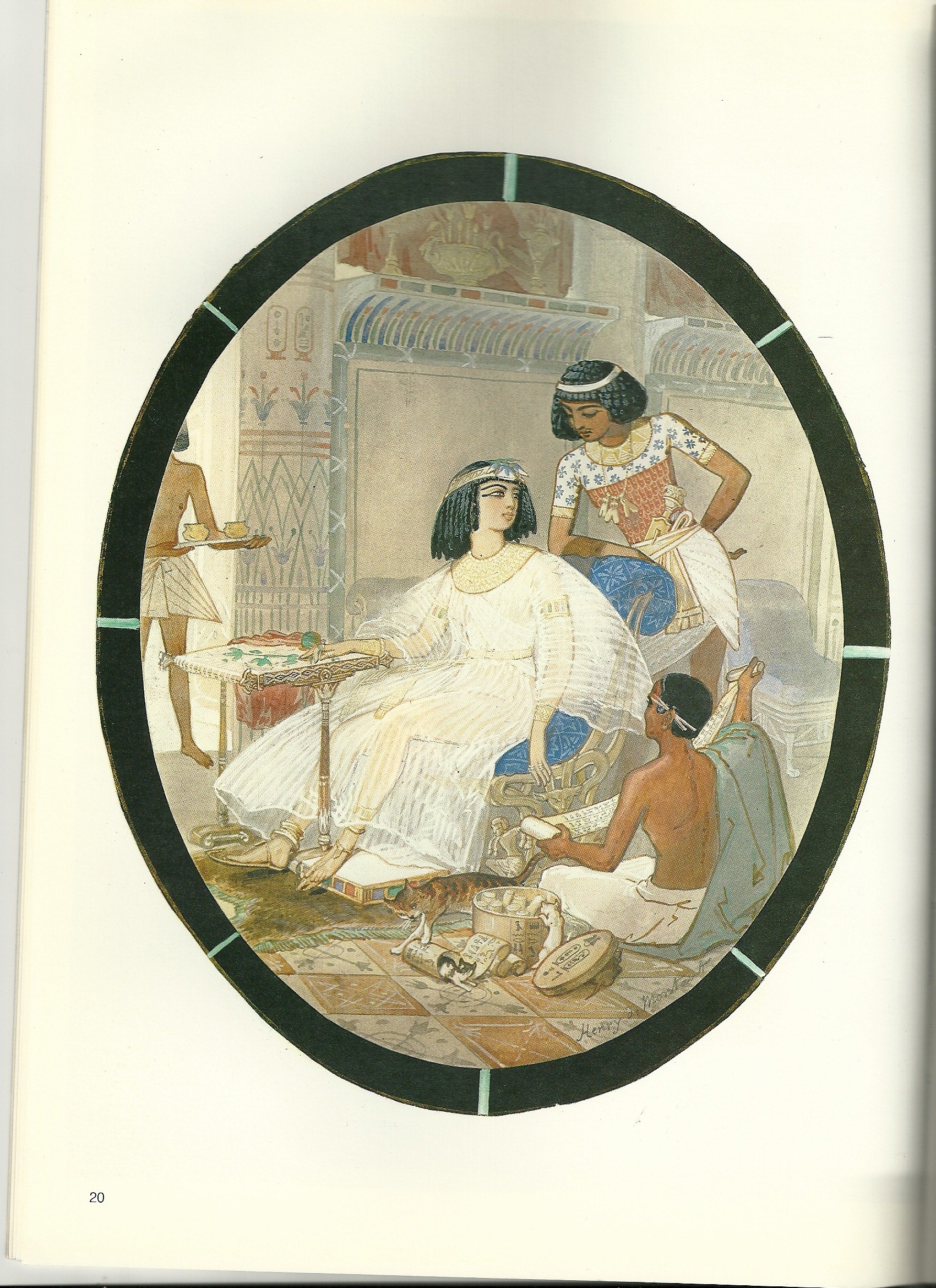
That said, the extra time allowance would have given the opportunity to Mariette to obtain a final product that was as close as possible to his directions. While the Theatre de l’Opéra’s painters Auguste Rubé and Philippe Chaperon painted the scenes of the 2nd and 4th acts, and Edouard Despléchin and Jean-Baptiste Lavastre painted the scenes for the 1st and 3rd acts, Mariette oversaw the designs and the construction of the sets. The famed Egyptologist also followed the preparation of the costumes. They were based on his original ideas, but the sketches were by Henry de Montaut, a designer, engraver and illustrator (he illustrated Jules Verne’s Voyages Extraordinaires). This brought another problem in the arena, which Mariette did not catch it until after the first performance: Montaut’s designing flair made him accentuate the spectacular side of the characters, and as a result the costumes turned out to be luxurious but lost in the process some of the authenticity Mariette had attempted to achieve. The critic Filippo Filippi called their opulence “really absurd”.

Regardless of all these impediments, Aida, the final magnificent work of Verdi’s second period, was performed for the first time in Cairo on the 24th December of 1871, conducted by Giovanni Bottesini and staged by Carlo D’Ormerville. A couple of months later, the European première took place at the renowned theater La Scala, in Milan.

ImageAlthough the Cairo performance was technically the world première, it is said that Verdi himself considered the Italian one, in which he was deeply involved at every level, as the “real” première, been displeased with the fact that no members of the general public were present at the Cairo première (the premiere was by invitation only). Moreover, Verdi had written the role of Aida for his close friend, the soprano Teresa Stolz,  who could not perform at the Cairo première (the role of Aida was played by Antoinetta Anastasi-Pozzoni), but did perform at the Milan première.

From the Teatro alla Scala to Paris it would have been just a small step, but somehow it was a big one, because it was in Paris that Verdi directed his own opera, a unique experience both for him and the spectators. From that point Aida went on to conquer the world as the undisputed queen of the big-spectacle operas.

Aida uses all the elements of his art: awe-inspiring choruses and moving arias, dance, and breath-taking show and sets, sanctioning his standing as one of the greatest musical dramatists and making this opera one of the most played ever.

The subject of Aida is doomed love and it is certainly something that has not lost its appeal, even in today’s world.

ImageVerdi, Aida, Cairo, L’Idea Magazine

Posted in Music, OPera | Leave a comment

Interview to Michael Recchiuti.

Interview by Tiziano Thomas Dossena.

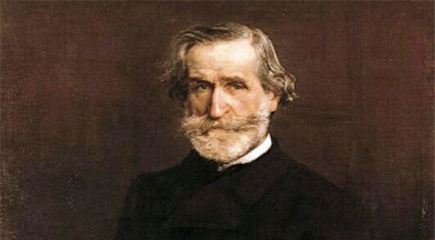
A Riverdalian by choice, Maestro Michael Recchiuti has been a relevant “voice of reason” in the classical music world, bringing  a much needed and sought after recording of Stefano Donaudy’s music. An ardent admirer of Giuseppe Verdi, Recchiuti was the ideal Maestro to interview in the year of  Verdi’s 200th anniversary.

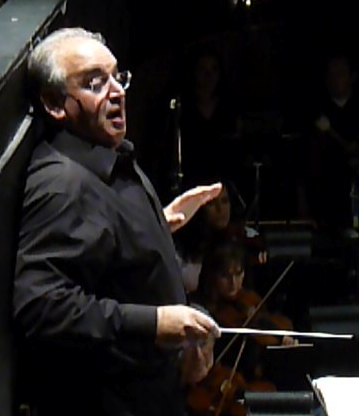
Maestro Michael Recchiuti

Maestro Michael Recchiuti

L’IDEA: Maestro Recchiuti, you have been Artistic Director of the American Opera Theater, Music Director of the Opera Ensemble of New York,  founding Principal Conductor of the New Jersey Opera Theater, conductor of the Budapest Philarmonic and assistant conductor at Venice’s Teatro La Fenice, amongst the many other titles you have held, as a conductor, music director or artistic director. You are also an accompanist and a piano performer, besides a recording artist. Which activity would you say it’s most rewarding and which one the most demanding for you?

MAESTRO MICHAEL RECCHIUTI: The wonderful thing about being a musician is how many different activities in which you  can be involved. Performing, recording, and teaching, both as a pianist and a conductor each have their own specific skill sets, and rewards. The important thing, I believe, is to remember that you are part of a continuum, a river that flows through life. For generations, musicians passed on their knowledge, their technique, their experiences to the next generation, and that you are only a single step in this progression. I am, besides whatever individual talents I possess, part of a process of transmission, and have an obligation to communicate with the public, in performance, and students, in my teaching this sum total of what I have received. In Western music, perhaps more than in the plastic or literary arts, oral transmission, and teaching by example are crucial to the survival of the forms. You cannot learn to sing from a book. You cannot interpret Verdi from the printed page without  immense cultural grounding. I have been very fortunate, in that in my pianistic training I can trace my “family tree” back through Ferruccio Busoni, Franz Liszt, and ultimately, Beethoven. That is not to say that I can actually play like any of them, but I have been the beneficiary of their ideas. In my conducting training, I was fortunate to have had Carlo Maria Giulini, Bruno Bartoletti, and Joseph Primavera, who gave me essentially the history of being a conductor.MaestroRecchiuti
The most demanding part of my work is now simply working in what has become an unfriendly cultural environment for serious art, thanks to corporate and government agendas fostering stupidity, and the debasement of the experience of travel. Since our careers are based on traveling around the world to different theaters, and public, travel is a primary preoccupation. When I began working, I was fortunate (or unfortunate, depending on how you look at it) enough to travel by ship, and with steamer trunks. Now we travel like cattle wedged into flying buses, like the steerage passage that my grandfather took from Italy, carrying little plastic bags.

L’IDEA: You have degrees from the Philadelphia College of the Performing Arts and the Manhattan School of Music and later you studied at the Accademia Chigiana in Siena, Italy, where you were awarded a ‘Diploma di Merito in Direzione della Lirica’. Would you compare your experiences in these schools?

M. RECCHIUTI: The different educational experiences were really about the level of the student. Early conservatory training is about instilling the rudiments of craft and technique. One must learn to play the instruments, music history, theory, etc. The more advanced studies, like those of the Chigiana, were more like a Greek classical training; there was more discussion of theory, refinement of approach. More work on nuance.

L’IDEA: Being in the Anno Verdiano, that is the year dedicated to Verdi, could you tell me what was your most remarkable experience with Verdi’s operas?

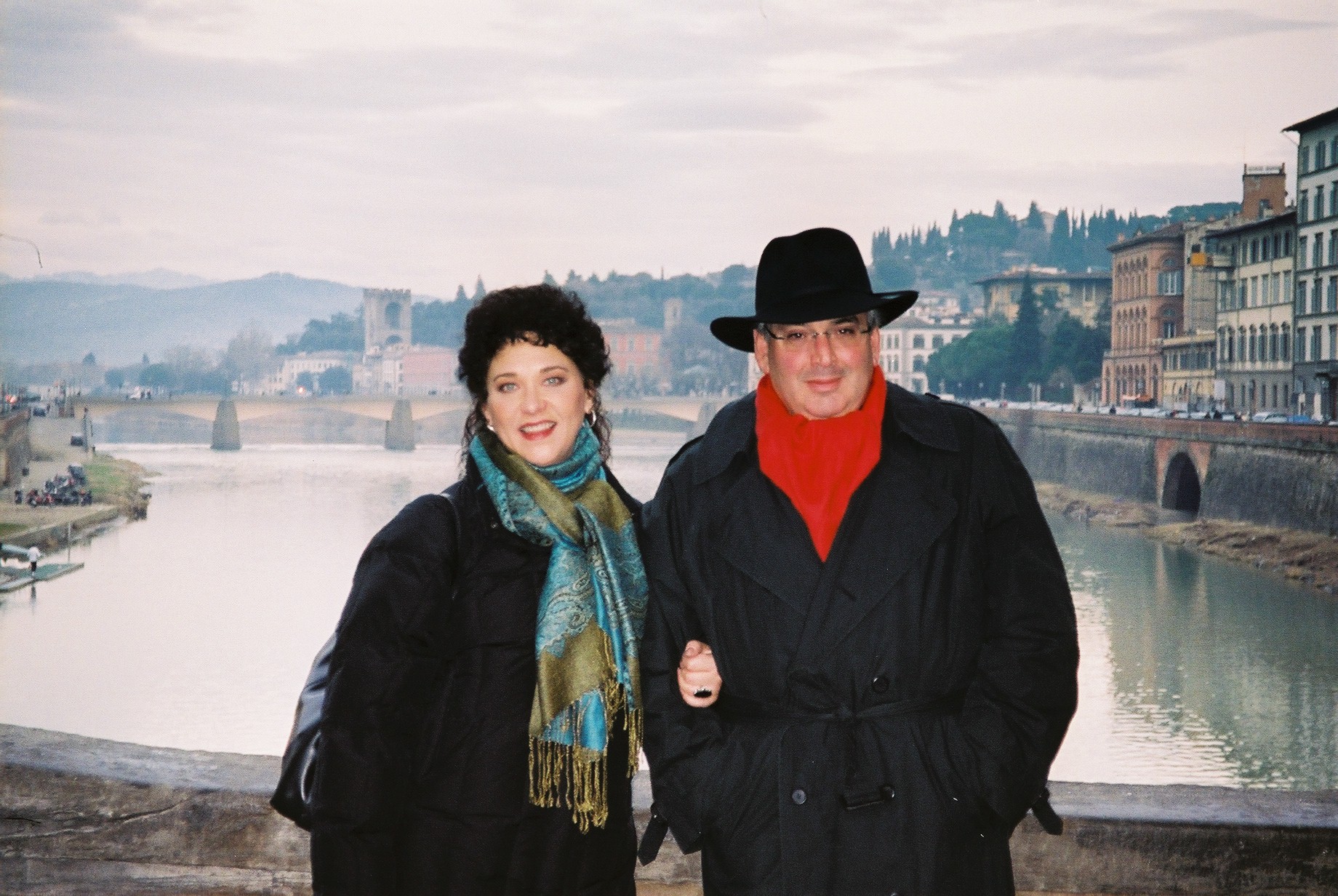
Michael Recchiuti and Elizabeth Blancke-Biggs

Michael Recchiuti and Elizabeth Blancke-Biggs

M. RECCHIUTI: The operas, and the person of Giuseppe Verdi have been crucial to my life. As a musician, I have always known the famous operas, and year by year in my studies, and my work, I have come to know and appreciate even the lesser known ones. My first professional job, as a teenager, was to prepare, and serve as prompter for a production of “Il Trovatore” in Washington DC – well back in the last century!  My most memorable performance as conductor had to have been in Santiago di Compostela Spain, where I was assisting the late, great Nicolà Rescigno, of Maria Callas’ fame, on a production of “La Forza del Destino” with Giuseppe Giacomini as the tenor, set in the plaza in front of the Cathedral, and broadcast nationally on TV. All was going well until the day of the performance, when Mo. Rescigno was taken violently ill, and was flown back to Rome for surgery, and it devolved upon me to conduct the performance – with no rehearsal. I think it went well.
On a personal level, my connection with Verdi began in 1983, during my first trip back to Italy to study. I spent the first week in Bergamo with William Ashbrook, the great Italian opera scholar, and his wife. One day he said we were going down to Parma to see his colleague Pierluigi Petrobelli, who was the founder, and director of the Istituto per gli Studi Verdiani. It was a hot, hot June day, and we arrived at the rather modest offices of the Istituto. The Italians have never adequately supported their cultural endeavors, either in Italy or here in America. Pierluigi was a most charming man, who was personally responsible for the renaissance of Verdi studies in the world. Without his tireless work, there would be no Verdi Critical Edition. We became great friends over the years, and he was very helpful to me in questions about scores, and versions of the operas.CDcover1-hires
Petrobelli announced in the afternoon that we were invited to Sant’Agata for dinner, as it was the birthday of Signora Carrara-Verdi’s son. At sunset, we pulled into the gate of the Villa Verdi, and we were seated at Giuseppe Verdi’s dining room table, with the family, eating off of plates with the Maestro’s monogram! Pierluigi took us around the private quarters of the house, and showed us autograph manuscripts from the family collection, never made public, and the small monument that Verdi erected to his and Giuseppina’s little dog – Lulu – with the inscription “alla memoria d’un vero amico”. Years later, when I took Elizabeth to visit the villa, and we had our Yorkshire terrier, Alfredo (as he arrived right after Elizabeth’s Met debut in “La Traviata” he had to be Alfredo…), we were going to leave him in the car, and the guard insisted that we take him in with us, so he, too, got to visit the Maestro.

L’IDEA: Are you going to be involved in any projects for l’Anno Verdiano?

M. RECCHIUTI: The “Anno Verdiano” has been, in my opinion, rather disgracefully marked, both in America, and Italy. The Italians are in complete free fall in their theaters, and have been putting on some embarrassing shows. The major American theaters are really no better, as they no long seem to know the vocal demands of the various roles, or how to fill them. My contribution has been working, and preparing Elizabeth for her appearances on various festival concerts. Earlier this season she opened the Verdi Festival in Mexico City at the fantastic Palacio di Bellas Artes with a concert in which she sang seven of the most demanding Verdi arias on the same program. There are live recordings of the concert on her website (www.elizabethblancke-biggs.com).

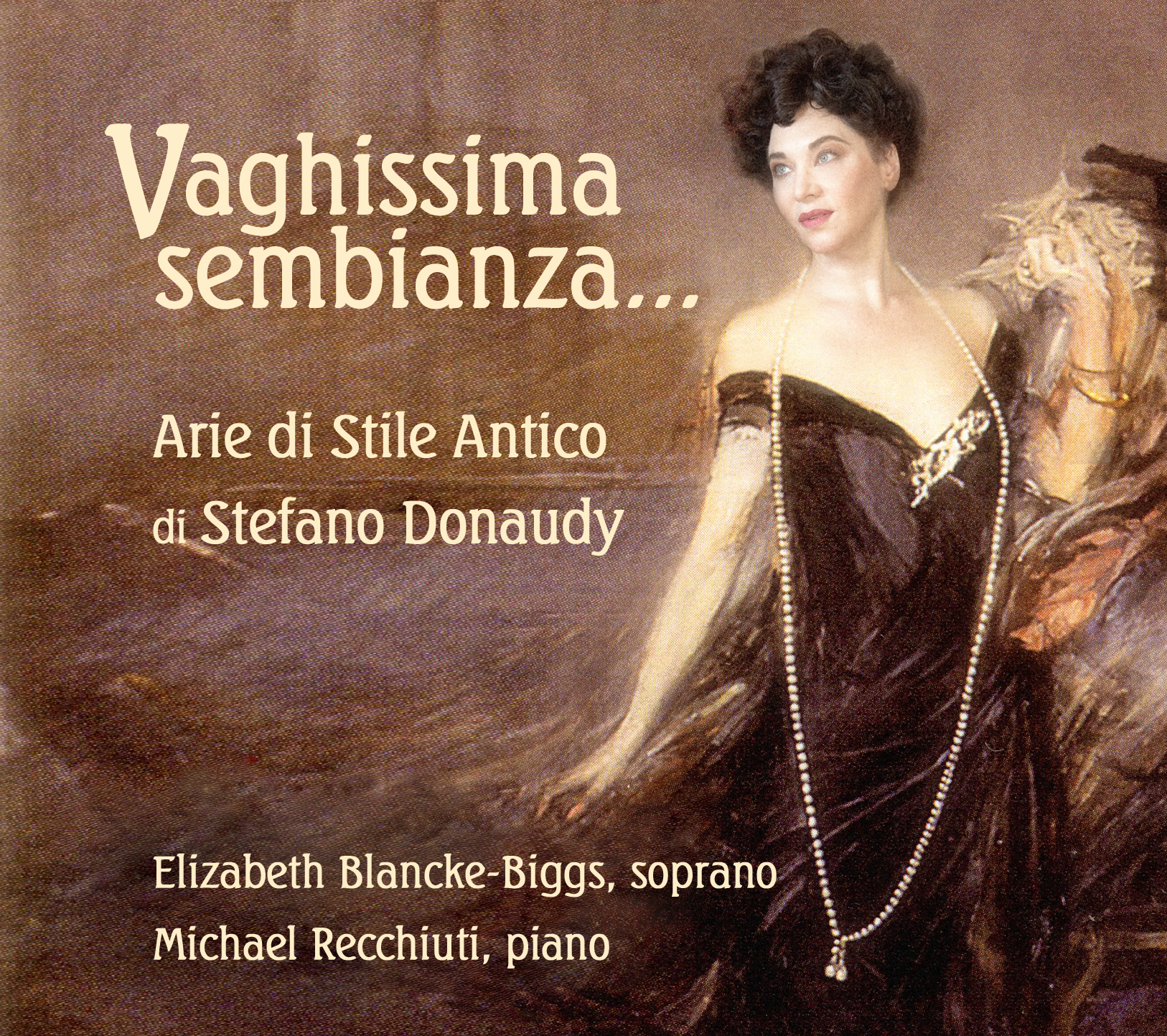
L’IDEA: You have recently produced a recording titled ‘Vaghissima Sembianza…’ for La Sirena Records. Could you tell us something about this project and the composer Stefano Donaudy?

M. RECCHIUTI: For the centennial of Puccini’s “La Fanciulla del West”, Elizabeth was invited to Palermo’s Teatro Massimo to perform the work with Mo. Bruno Bartoletti, an old conducting teacher of mine. While we were there, I discovered the world of “Liberty” architecture, and the world of Palermo in 1900. I knew some of the songs of Stefano Donaudy, and then we investigated the rest, and fell in love with them. Donaudy’s songs are written in the style of the Italian baroque, but impose the vocal demands of the verismo singer, so they are perfect for Elizabeth. They range from the nostalgic, to the playfully erotic. We also made a documentary about the music which is on YouTube: “Vaghissima sembianza- the life, times, and music of Stefano Donaudy”. I began the company La Sirena Records to produce serious classical music, mostly vocal, as the major record labels can no longer produce quality recordings by other than “big name” artists. Their business model is upside-down, the company gets to spend, waste,  and consume all the money, and the artist owns and earns nothing. At La Sirena, the artist owns the actual record, which we produce with a highly skilled team consisting of a great recording engineer, photographer, artist, and videographer. Let’s hope that there is still actually an audience for serious, beautiful music. I must believe that there is.

L’IDEA: Do you have any other plans as a producer for the near future?

M. RECCHIUTI: I would like to make some more recordings with Elizabeth and other artists. I would also like to produce some events of opera in concert with some great young singers singing repertoire that is not greatly represented currently; pieces like La Gioconda, Medea, La Vestale, etc. Writing more, and film making are also beginning to attract me.

For information regarding the CD and to view a short documentary on Stefano Donaudy, visit: http://www.elizabethblancke-biggs.com/CD/

Posted in Interview | Tagged , , , , , , , | 1 Comment

Italian Opera Festival in California: Viva Verdi!

Date: 10.26.2013
Time: 7:00 PM – 9:30 PM
Location: Soka Performing Arts Center

Italian American Opera Foundation

Stefano Vignati

The Italian American Opera Foundation presents:

Italian Opera Festival

“Viva Verdi!”

Orchestra Sinfonica del Tuscia Operafestival and Progetto “Gioventù all’ Opera”

Stefano Vignati, conductor

Saturday, October 26, 2013 at 7:00 PM

ITALIAN AMERICAN OPERA FOUNDATION (IAOF) was created with the aspiration to develop a cultural bridge between Italy and the United States. IAOF was formed to unite the most talented young Opera singers and musicians in an ensemble that transcends cultural and geographical boundaries – all in the common pursuit of musical excellence and to create a community for their families and the people that support their passion for music. The purpose of the Foundation is to rekindle a passion for Opera by bringing large productions and Master Classes to United States and with them a taste of Italy, its culture, arts, and style.

Italian Conductor STEFANO VIGNATI was born in Rome (Italy) and made his debut in the United States in February of 1998. Stefano studied music, composition, and conducting extensively and received high honors. Upon finishing his education, Stefano began his professional career in Italy and eventually worldwide enlarging his area of experience.

This performance’s program includes Ouvertures and excerpts from: LA Traviata, Rigoletto, IL Trovatore, Un Ballo in Maschera, Don Carlos, AIDA, La Forza del Destino, Otello, I Vespri Siciliani, and Messa da Requiem

Soka University
1 University Drive
Aliso Viejo, CA 92656
 (949) 480-4000 

info@soka.edu

Posted in Music, OPera | Tagged , , , | Leave a comment

Viva Verdi Gala Concert in Canada


verdi-festival-2013

Friday, October 11, 2013, 7:00 pm

Enmax Hall, Winspear Centre

Viva Verdi Gala Concert

  • Edmonton Opera Chorus, Michael Spassov, conductor
    Edmonton Youth Orchestra, Michael Massey, conductor
    Emilio De Mercato, piano
    Stephanie Kwan, piano
    Vaughan String Quartet
    Bertrand Malo, bass-baritone
    Cara Brown, soprano
    Robert Clark, tenor
    Krista Marie Lessard, mezzo-soprano
    Edmonton Appennini Dancers

A major celebration of the 200th anniversary of the birth of the great Italian composer, Giuseppe Verdi, awaits all opera lovers of the romantic period. Members of Edmonton’s Italian community did not want to see this anniversary pass by without celebrating Verdi’s life and music. To this end, an all-Verdi event – VIVA VERDI GALA CONCERT – with a very dynamic and fascinating cast of performers has been passionately organized for your enjoyment. Exceptional talent has come together in order to create an unforgettable and memorable event.  The performers are: the Edmonton Appennini Dancers, pianists Emilio De Mercato and Stephanie Kwan, the Vaughan String Quartet, the Edmonton Youth Orchestra, the Edmonton Opera Chorus and soloists.

Featured Repertoire

GIUSEPPE VERDI
Nabucco Overture
Nabucco “Va Pensiero”
Ernani Paraphrase for piano by Franz Liszt
Rigoletto “La donna è mobile”
Rigoletto Quartet “Bella figlia dell’amore”
Rigoletto Paraphrase for piano by Franz Liszt
La Traviata Gypsies and Matadors
String Quartet in E minor, I & III movements
Don Carlos Paraphrase for two pianos by F. Liszt/E. De Mercato
Il Trovatore “Stride la vampa”
La Traviata Prelude, Brindisi, “Addio del passato”
Otello Credo
Aida Triumphal March

Reserved Seating
$35 Adult
$15 Child
All tickets subject to applicable service charges.

Learn more about the Edmonton Verdi Festival at www.verdifestivaledmonton.ca.

Posted in Music, OPera | Tagged , , , , , , | Leave a comment