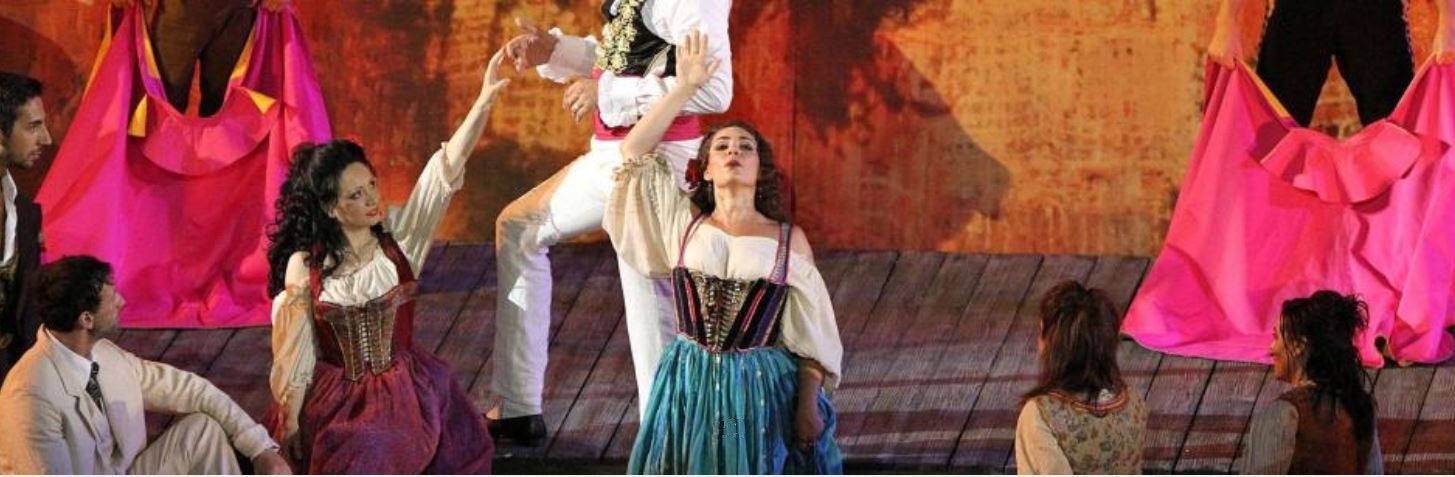
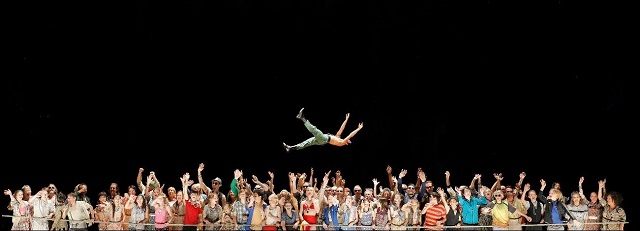
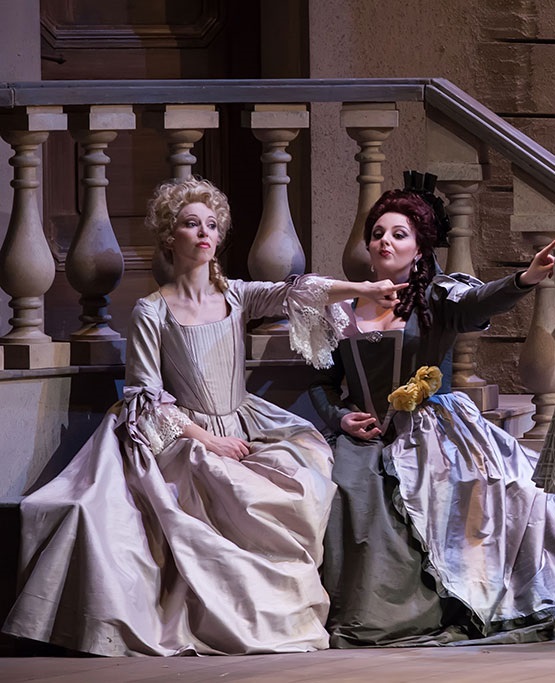
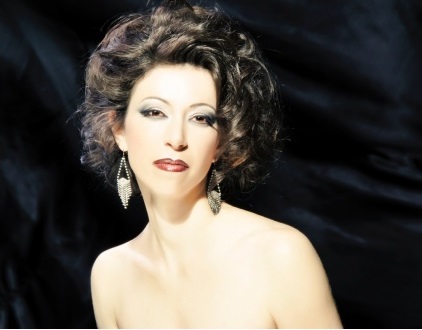
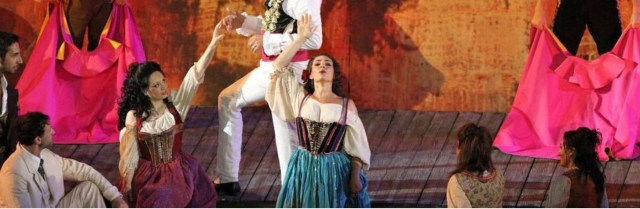
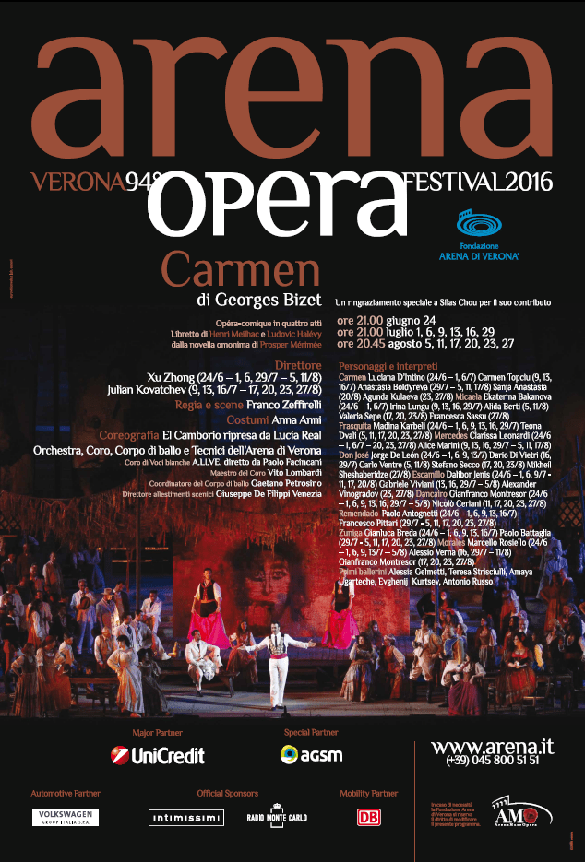
Carmen at the Arena di Verona, directed by Franco Zeffirelli

arenaveronalogocarmentitOn June 24th the Arena Opera Festival is starting with a great return: Carmen directed by Franco Zeffirelli. Special thanks to Silas Chou for his contribution

24 June – 27 August

Libretto by  Ludovic Halevy – Henri Meilhac
Music by Georges Bizet
Lasting 4 Hours approximately – Intervals includedcarmen1

Conductor
Xu Zhong (24/6 – 1, 6, 29/7 – 5, 11/8)
Julian Kovatchev (9, 13, 16/7 – 17, 20, 23, 27/8)

Director and Sets Franco Zeffirelli

Costume Anna Anni

Choreographer El Camborio
revival by Lucia Real

Chorus Master Vito Lombardi

Ballet Coordinator Gaetano Petrosino

Director of Technical Operations and Stage Design Giuseppe De Filippi Venezia

Children’s Choir A.LI.VE. conducted by Paolo Facincani

Arena di Verona Orchestra, Chorus, Corps de Ballet and Technical team
carmen2

Carmen
Luciana D’Intino (24/6 – 1, 6/7)
Carmen Topciu (9, 13, 16/7)
Anastasia Boldyreva (29/7 – 5, 11, 17/8)
Sanja Anastasia (20/8)
Agunda Kulaeva (23, 27/8)

Micaela
Ekaterina Bakanova (24/6 – 1, 6/7)
Irina Lungu (9, 13, 16, 29/7)
Alida Berti (5, 11/8)
Valeria Sepe (17, 20 ,23/8)
Francesca Sassu (27/8)

Frasquita
Madina Karbeli (24/6 – 1, 6, 9, 13, 16, 29/7)
Teona Dvali (5, 11, 17, 20, 23, 27/8)

Mercedes
Clarissa Leonardi (24/6 – 1, 6/7 – 20, 23, 27/8)
Alice Marini (9, 13, 16, 29/7 – 5, 11, 17/8)

Don José
Jorge De León (24/6 – 1, 6, 9, 13/7)
Dario Di Vietri (16, 29/7)
Carlo Ventre (5, 11/8)
Stefano Secco (17, 20, 23/8)
Mikheil Sheshaberidze (27/8)

Escamillo
Dalibor Jenis (24/6 – 1, 6, 9/7 – 11, 17, 20/8)
Gabriele Viviani (13, 16, 29/7 – 5/8)
Alexander Vinogradov (23, 27/8)

Dancairo
Gianfranco Montresor (24/6 – 1, 6, 9, 13, 16, 29/7 – 5/8)
Nicolò Ceriani (11, 17, 20, 23, 27/8)

Remendado
Paolo Antognetti (24/6 – 1, 6, 9, 13, 16/7)
Francesco Pittari (29/7 – 5, 11, 17, 20, 23, 27/8)

Zuniga
Gianluca Breda (24/6 – 1, 6, 9, 13, 16/7)
Paolo Battaglia (29/7 – 5, 11, 17, 20, 23, 27/8)

Morales
Marcello Rosiello (24/6 – 1, 6, 9, 13/7 – 5/8)
Alessio Verna (16, 29/7 – 11/8)
Gianfranco Montresor (17, 20, 23, 27/8)Carmen2016locandina
SYNOPSIS

ACT I

A tobacco factory and the barracks of the dragoons open out onto the main square of Seville. People are coming and going. A young girl makes her way through the crowd. She has an air of bewilderment and approaches the guards shyly, saying she is looking for Brigadier Don José. They tell her he will soon be here and invite her to wait with them. Intimidated, she declines and wanders away.

It is time for the changing of the guard. A new platoon arrives, followed by a group of young rogues who mimic the march of the soldiers. Don José is with them. His fellow soldiers tell him of the girl’s visit and, from their description, he deduces it was Micaela, an orphan who his mother has welcomed into their home.

A bell rings and everyone’s eyes turn to the cigarette-makers as they walk out of the tobacco factory. The men rush to the entrance to admire them close-up. The girls enjoy flirting. Among them is Carmen, a beautiful and sensual gypsy. Well-aware of her charm, she sings a song which is full of allusions and from which it is clear that she does not believe in the constancy of love. Don José pays no attention to her. Carmen notes his indifference and so she provocatively throws him a flower, much to the delight of the crowd. Shocked by such brazenness, but also disturbed by it, he picks up the flower and instinctively hides it under his coat.

Micaela returns. She hands Don José a letter with money enclosed and a kiss to give him, a kiss from his mother. He is moved and when she leaves, he opens the letter. His mother, he reads, wants to see him married, to that fine girl. He swears he will follow his mother’s advice and is about to throw away the flower when a fight breaks out among the cigarette-makers. Carmen has wounded a fellow worker with a knife. Don José is ordered to arrest her and escort her to prison. But on the way, Carmen, a consummate seducer, starts tricking him. She promises a meeting at the tavern of Lillas Pastia, near the walls of the city. By now bewitched, Don José succumbs: he frees her wrists, pretends to be pushed and falls to the ground. Carmen laughs and escapes.

ACT II

In the tavern of Lillas Pastia, an infamous place and a smugglers’ inn where soldiers and gypsies meet. Carmen sings and dances a hypnotic and exotic love song in the company of her friends, Mercedes and Frasquita. Lieutenant Zuniga informs her that Don José, having spent time in prison for helping her to escape, has just been released. However, Zuniga, too is captivated by the gypsy and starts flirting with her, but is interrupted by the arrival of Escamillo. All the people present acclaim the young toreador as he recounts his prowess in the bullfighting arena, and he, too is struck by Carmen’s beauty.

When the regulars leave, the innkeeper allows Dancairo and Remendado to come in. They are two smugglers who are preparing to strike that night and want Carmen and her friends to help. This time, however, the gypsy has no intention of going with them: she is waiting for her man to return. Shortly afterwards, Don José arrives, manifesting all his love. Carmen starts dancing sensually for him but the moment the trumpet sounds the retreat, José (who has now been demoted to the rank of simple soldier) starts to head back to the barracks. This infuriates Carmen. She derides and insults him for this is not her idea of love. Just before leaving, he pauses and pours out his heart to her. Despite their differences, he says, he loves her and cannot live without her. Carmen then invites him to join the smugglers. She proposes a life free of constraints, but José rules out the idea of deserting. Faced with the umpteenth misunderstanding between them, he decides to leave her. In the meantime, Zuniga arrives, returning in the hope of seducing Carmen. As soon as he sees Don José, he orders him to return to the barracks, but Don José refuses and a violent fight breaks out. At this point, José, guilty of insubordination, has no choice but to join the smugglers and take up the life of an outlaw.

ACT III

Having arrived at their hideout in the mountains, the smugglers sit and rest. Carmen and Don José exchange a few words but it is clear that their relationship is deteriorating. She is already tired of him and wants to be free; he is full of remorse over having betrayed his mother. Above all, though, he is obsessed by jealousy. Frasquita and Mercedes read tarot cards and see a bright future ahead for them. Carmen then comes over and consults the cards. She looks and sees death, both for her and Don José. She is agitated for she knows that her man is exasperated and could even kill her, but she is not afraid. She resigns herself to her fate.

Micaela unexpectedly arrives, accompanied by a guide. These places scare her, but in a desperate attempt to redeem the man she loves, she summons up the courage to go on. From afar, she sees Don José standing on a rock with a rifle, firing a warning shot at a stranger. Scared stiff, she quickly hides. Then Escamillo appears, having narrowly escaped Don José’s rifle shot. The toreador has come to track down the gypsy he is in love with. He and Don José exchange a few words and quickly realize they are rivals in love and prepare to fight a duel to have her. They unsheathe their swords and are about to rush at each other when Carmen and the smugglers appear and stop them.

Escamillo departs, but not before inviting them all to the bullfight in Seville. The band of smugglers is about to depart once more when they find Micaela. She pleads with José to go back home with him, but he refuses. (He knows Carmen would take advantage of his absence to start a relationship with the toreador.) However, when he learns that his mother is dying, overcome with a sense of guilt, he gives in and goes with her. But before leaving, he warns Carmen that they will meet again, soon.

ACT IV

In the square opposite the arena in Seville, the crowd is excitedly waiting for the toreador to arrive. When the team of toreadors arrive, preceded by the band, the crowd becomes euphoric. Escamillo arrives accompanied by Carmen, elegant and more radiant than ever. Before he enters the arena, she swears that she has never loved anyone as much as him. Don José is also in the crowd and Frasquita who has seen him, warns Carmen to be careful: it would be better if she went, she says. Carmen is not intimidated, however, and replies defiantly that she is not afraid of him; on the contrary, she wants to meet him.

Everyone goes into the arena, except Carmen. Don José arrives. He is deranged. He begs her to return to him. He humiliates himself by saying that he is ready to do anything in order to have her again. Carmen, though, is not moved by pity. She remains inflexible and haughty. She says she no longer loves him and will not change her mind. After all, free she was born and free she will die. The atmosphere becomes more and more tense and the words increasingly violent until, as a final provocation, she pulls off the ring he had given her, and throws it away.

While the crowd inside the arena is cheering and applauding Escamillo’s victory, Don José, by now out of his mind with anger and frustration, stabs Carmen mortally. Before the crowd who are now coming out of the arena, he throws himself on top of her lifeless body, calling her desperately by name.

GALLERY


FOCUS ON…

sassu1 FRANCESCA SASSU

Francesca Sassu was born in Sassari in 1984. She began studying singing at an early age at the Conservatorio of her hometown. She had masterclasses with Raina Kabaivanska, Renato Bruson, Natale De Carolis and Barbara Frittoli.

In 2005 she won the International Competition A. Belli at Teatro Lirico Sperimentale in Spoleto and she debuted the role of Leonora in Oberto Conte di San Bonifacio. In the same year she performed Oberto Conte di San Bonifacio at the New National Theatre in Tokyo. Other roles she debuted in Spoleto: Mimì in La bohème and Antonio in Cleopatra by Cimarosa. 

2006: La traviata (Violetta) – Beijing;  La donna del lago Edinburgh Festival, CD recording by Opera Rara. In Parma she performed La canzone dei ricordi by Martucci with Orchestra della Fondazione Toscanini conducted by P. Arrivabeni.

2007: Carmen (Micaela) – Landestheater Salzburg; Le nozze di Figaro (Contessa) – Menorca; Oberto Conte di San Bonifacio at Festival Verdi in Parma, directed by Pier’Alli and conducted by Allemandi, recorded by Decca.sassu2

2008: Suor Angelica and Gianni Schicchi at Teatro alla Scala, broadcasted by Sky Classica and RaiTrade; Il matrimonio inaspettato (Contessa di Sarzana) – Salzburg Festival and Pisa, conducted by Muti; Nabucco and Boris Godunov (Ksenja) – Teatro La Fenice in Venice; La bohème (Mimì) – Teatro Petruzzelli in Bari.

2009: Carmen (Micaela) – Modena, Piacenza, Ferrara, Ravenna and at Terme di Caracalla (Opera di Roma) with Elina Garanca and conducted by Chichon.

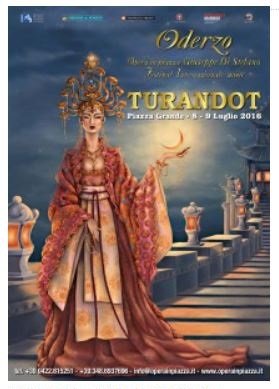
turandot

Valter Fraccaro (Principe Calaf) e Francesca Sassu (Liù) – Foto di Mario Finotti

2010/11: Carmen (Micaela) – Opéra Royal de Wallonie in Liege and Teatro San Carlo in Naples; L’elisir d’amore (Adina) – Sassari.

2012/13: La bohème (Musetta) – Teatro La Fenice; Così fan tutte (Fiordiligi) – Sassari.

2014: Die Zauberflöte (Papagena) – Cagliari; La rondine (Magda) – Livorno and Modena. 

2015: La rondine (Magda) – Pisa, Ravenna; Turandot (Liù) – Novara e Luglio Musicale Trapanese; Die Zauberflöte Verona.

Francesca Sassu (Leonora). © Roberto Ricci/Teatro Regio di Parma

Francesca Sassu (Leonora). © Roberto Ricci/Teatro Regio di Parma

2016: La donna serpente (Farzana) by Casella – Teatro Regio, Turin.

Repertoire: Don Giovanni (Donna Elvira), Così fan tutte (Fiordiligi), Idomeneo (Elettra), Le nozze di Figaro (Contessa), La sonnambula (Amina), Tancredi (Amenaide), La scala di seta (Giulia),  L’occasione fa il ladro (Berenice), Moise (Anais), L’elisir d’amore (Adina), Don Pasquale (Norina), Carmen (Micaela), Orfeo ed Euridice (Euridice), Falstaff (Nannetta), La traviata (Violetta).

AUDIO SAMPLE:

Je dis que rien ne m’épouvante / Micaela / Carmen

Posted in OPera | Tagged , , , , , , , , , , , , , , | Leave a comment

Carmen in San Francisco…

sanfranciscologoCarmenTitle

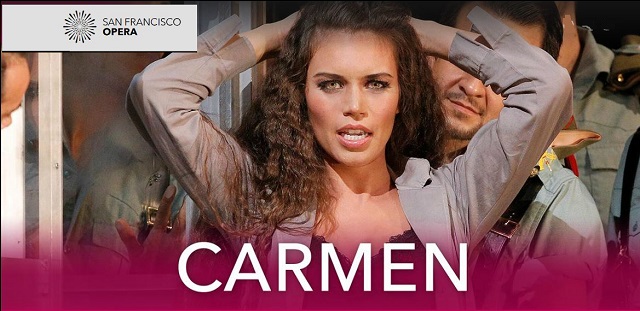
Carmenside1The ultimate femme fatale returns in a provocative staging by acclaimed director Calixto Bieito. His raw take on Carmen heightens the intense emotions pulsing through this tale of love, lust and murder. The result is a powerful account of a free-spirited woman and her obsessive lover. Be swept into Carmen’s deadly seduction as never before.

Music by Georges Bizet | Libretto by Henri Meilhac and Ludovic Halévy

Sung in French with English supertitles

See A Performance, Invite a Friend

Running Time 2 hours, 45 minutes including one intermission

Carmen10sidePre-Opera Talks Pre-Opera Talks are free to ticketholders and take place in the Orchestra section, 55 minutes prior to curtain.

Thursday 06/23/16 7:30PM *

Sunday 06/26/16 2:00PM

Thursday 06/30/16 7:30PM

Saturday 07/02/16 7:30PM

Sunday 07/03/16 2:00PM *

Please note: This production contains violence, nudity and sexual situations. Parental discretion advised.

*OperaVision, HD video projection screens featured in the Balcony level for this performance, is made possible by the Koret/Taube Media Suite.

GALLERY

Cast & Creative

Cast
Carmen Irene Roberts 1
Carmen Ginger Costa-Jackson 2
Don José Brian Jagde
Don José Adam Diegel *3
Micaëla Ellie Dehn 1
Micaëla Erika Grimaldi *2
Escamillo Zachary Nelson *1
Escamillo Michael Sumuel 2
Frasquita Amina Edris*
Mercédès Renée Rapier
Moralès Edward Nelson
Zuniga Brad Walker*
El Dancairo Daniel Cilli*
El Remendado Alex Boyer*

Performances

May 27, 28, 29, 31
June 1, 17, 23, 26, 30
July 2, 3

Creative
Conductor Carlo Montanaro *
Conductor Jordi Bernàcer *4
Production Calixto Bieito *
Revival Director Joan Anton Rechi *
Set Designer Alfons Flores *
Lighting Designer Gary Marder
Costume Designer Mercè Paloma *
Chorus Director Ian Robertson
Fight Director Dave Maier

1 May 27, 29, June 1, 23, 26, July 2
2 May 28, 31, June 17, 30, July 3
3 May 28    
4
 July 3
* San Francisco Opera Debut

Co-production with Boston Lyric Opera based on Bieito’s production which originated at El Festival de Peralada in Catalonia and Opera Zuid in the Netherlands.

– See more at: http://sfopera.com/discover-opera/1516-season/carmen/#sthash.l7bG6Lzq.dpuf

Synopsis

ACT I 
20th-century, Spain.
Corporal Moralès and his men are resting outside the guardhouse as Micaëla comes looking for Don José. The change of guard arrives, among them Corporal José and Lieutenant Zuniga. Zuniga questions José about the nearby cigarette factory and the girls who work there. The cigarette girls leave the factory for a break, and the men await a glimpse of Carmen. When she appears, Carmen flirts with them and gives a flower to José. Micaëla returns and gives José a letter from his mother. She leaves when he begins to read the letter that advises him to marry Micaëla and settle down. Screams are heard from the cigarette factory, and Zuniga sends José to find out the cause of the disturbance. José returns with Carmen and another girl, Manuelita, whose face has a knife wound allegedly inflicted by Carmen. When Carmen refuses to speak, Zuniga orders José to tie her hands and take her to prison and leaves to make out the warrant for Carmen’s arrest. Carmen hints to José about a rendezvous at her friend Lillas Pastia’s tavern, and José agrees to let her escape. When Zuniga returns with the warrant, Carmen breaks free as she is being led off to prison. José is demoted and arrested for his participation in Carmen’s escape.carmen1small

ACT II
Carmen and her Gypsy friends Frasquita and Mercédès sing and dance at Lillas Pastia’s tavern. Zuniga tells Carmen that José has been released from prison. A procession announces the arrival of the toreador, Escamillo. Attracted to Carmen, he invites her to attend his upcoming bullfight but she declines. As the soldiers leave, Zuniga promises to return to see Carmen. Dancaïre and Remendado come to ask the three Gypsy girls to join them in a smuggling expedition. José arrives and gives Carmen the gold piece she sent him along with a file while he was in prison. He explains that his soldier’s honor prevented him from trying to escape. Carmen dances for José, but when retreat sounds, he starts to leave for the barracks. She taunts him and challenges him to follow her to the mountains. Zuniga returns and José attacks him in a jealous rage, but the smugglers break up the fight and disarm José. José has no choice but to join the band of smugglers.

ACT III
The smugglers are at work in the mountains. After a brief period of happiness, Carmen has become fed up with José’s jealousy. Frasquita and Mercédès read their own good fortune in the cards. When Carmen takes her turn, she only finds death. Dancaïre asks the girls to distract the customs men on duty, leaving José on guard. Looking for José, Micaëla is led to the smuggler’s cove by a mountain guide who warns her of the perils she faces. She hides as Escamillo arrives unexpectedly. A jealous José challenges him to a knife fight, but Carmen and the smugglers separate them. Escamillo invites the band of smugglers to his next bullfight. Micaëla is discovered hiding, and she tells José that his mother is dying. He leaves with her, but warns Carmen that they will meet again.Carmen6small

ACT IV
The crowd gathers outside the arena for the bullfight. When Carmen and Escamillo appear, Frasquita and Mercédès warn her that José is in the crowd. Carmen declares she is not afraid of José and waits alone outside the arena. José confronts her and begs that she return to him. She coldly tells him all is over between them and returns the ring he had given her. José stabs Carmen and confesses to the murder.

FOCUS ON…

GRIMALDI-Erika2ERIKA GRIMALDI

Erika Grimaldi is one of the most sought after young sopranos in Europe today, having delivered critically acclaimed performances in nearly a dozen roles at the prestigious Teatro Regio di Torino. She is equally at home at such major opera houses as Teatro dell’Opera di Roma, Bayerische Staatsoper in Munich, Teatro di San Carlo in Naples, and Opéra National de Montpellier.

Ms. Grimaldi’s engagements for the 2015/16 season include the title role in Giovanna d’Arco at Teatro alla Scala in Milan, Armilla in La donna serpente at Teatro Regio, Alice Ford in Falstaff at the Verbier Festival in Switzerland, Mimi in La Boheme at Opera de Oviedo and the Savonlinna Festival in Finland, Amelia in Simon Boccanegra in Hong Kong, and Micaëla in Carmen for her debut at San Francisco Opera. Future engagements include Mimi in La Boheme and her debut as Nedda in Pagliacci at Teatro Regio, Mathilde in Guillaume Tell at Bayerische Staatsoper in Munich, Mimi at San Francisco Opera, and Verdi’s Requiem with the London Symphony Orchestra.matrimonio

In the 2014/15 season, Grimaldi sang Desdemona in Otello and the Countess in Le nozze di Figaro at Teatro Regio, Donna Anna in Don Giovanni at Opera de Bellas Artes in Mexico City, Donna Fiorilla in Il turco in Italia for her debut at Staatsoper Hamburg, and Mimi in La Boheme at Teatro di San Carlo. Her engagements from the 2013/14 season included Liu in Turandot, her first run of Mathilde in Guillaume Tell, and her first performances as Maria in Simon Boccanegra at Teatro Regio. She made her U.S. debut in the summer of 2014 as a soloist in Beethoven’s Symphony No.9 at the Mostly Mozart Festival in New York. In the 2012/13 season, Grimaldi sang three leading roles in Turin: Mimi in La Boheme, Micaëla in Carmen, and Elisetta in Cimarosa’s Il Matrimonio Segreto.grimaldiErika2

Ms. Grimaldi gave her first performance at Teatro dell’Opera di Roma in 2010, playing the role of Anaï in Rossini’s Moïse et Pharaon under the baton of Riccardo Muti. Later that season, she sang her first Micaëla in Carmen at Teatro Lirico di Cagliari. In 2009, Grimaldi made acclaimed debuts as Adina in Donizetti’s L’elisir d’amore at the Teatro Filarmonico in Verona, Pamina in Mozart’s Die Zauberflöte at the Teatro Massimo in Palermo, and Donna Anna in Don Giovanni at the Avenches Festival in Switzerland, staged by Giancarlo Del Monaco. Recently, she joined Jonas Kaufmann in a scene from Il Trovatore on the tenor’s recent all-Verdi album for SONY CLASSICAL.Erika-Grimaldi-al-Regio-nell-opera-di-Casella

Born in Asti, Italy, Erika Grimaldi graduated with distinction from the Conservatorio Giuseppe Verdi in Turin, eventually distinguishing herself at various vocal competitions. Her first of many successes came at the Crescentino International Competition in Vercelli and the International Giacomo Lauri-Volpi Competition in Spain. After winning First Prize at the Comunità Europea competition in 2008, Grimaldi was immediately offered the role of Mimi in La Boheme at the Teatro Regio in Turin.


Posted in OPera | Tagged , | Leave a comment

Don Carlo at the San Francisco Opera

sanfranciscologo

doncarlotitle

Don Carlo

At the time of Spain’s brutal Inquisition, the king of Spain marries the woman his son loves and sets into motion a tension-filled chain of events. Don’t miss this magnificent tale of romantic triangles, political idealism and life-and-death devotion.

Music by Giuseppe Verdi | Libretto by Joseph Méry and Camille du Locle

Sung in Italian with English supertitles

Running Time

4 hours, 27 minutes including two intermissions

Pre-Opera Talks

Pre-Opera Talks are free to ticketholders and take place in the Orchestra section, 55 minutes prior to curtain.

See the performance, invite a Friend…

Friday 06/24/16 7:00PM *
Wednesday 06/29/16 7:00PM
*OperaVision, HD video projection screens featured in the Balcony level for this performance, is made possible by the Koret/Taube Media Suite.

Cast & Creative

Don Carlo Michael Fabiano
Elisabetta Ana María Martínez
Princess Eboli Nadia Krasteva *
Rodrigo Mariusz Kwiecien
Philip II René Pape
Philip II Ferruccio Furlanetto 1
The Grand Inquisitor Andrea Silvestrelli
A Monk Matthew Stump
Tebaldo Nian Wang
A Heavenly Voice Toni Marie Palmertree*
Count Lerma Pene Pati*

Conductor Nicola Luisotti

Director Emilio Sagi

Designer Zack Brown

Lighting Designer Gary Marder

Chorus Director Ian Robertson

Fight Director Dave Maier

Synopsis

ACT I 1559-1568; France and Spain.

Against the wishes of the Spanish King Philip II, his son and heir, Don Carlo, has traveled incognito to Fontainebleau, where negotiations are under way for a peace treaty between Spain and France. He has seen his intended bride Elisabetta, daughter of the French king, and fallen in love with her on sight. When he meets Elisabetta and her page, who have been hunting and become lost in the forest, Carlo offers his protection without revealing his identity. Elisabetta questions him about her future husband, apprehensive over her marriage to a stranger. Carlo gives her a miniature portrait of himself, and she realizes that he is the prince. It is clear to them both that their feelings of love are mutual. Their happiness ends with news that the treaty arrangements have been altered and Elisabetta is to marry King Philip, Carlo’s father. Elisabetta reluctantly accepts. While all around them celebrate the end of the war, Elisabetta and Carlo are devastated.

ACT II

Carlo seeks peace at the monastery of St.-Just in Spain, where he prays at the tomb of his grandfather, Emperor Charles V. He is confronted by a monk who seems to be the emperor’s ghost. His friend Rodrigo, the Marquis of Posa, arrives to remind Carlo of his commitment to the cause of the Flemish people who are oppressed by Spanish rule. Both pledge themselves to the cause of liberty and swear eternal friendship. In a garden outside the monastery, Princess Eboli entertains the other ladies of the court with a song. Elisabetta—now queen—enters, followed by Posa, who hands her a secret letter from Carlo asking for a meeting. When he is admitted, Carlo asks the queen to obtain Philip’s permission for him to go to Flanders, then suddenly declares his continuing love. Elisabetta rejects him and Carlo rushes off. The king enters and, finding the queen unattended, banishes the Countess of Aremberg, who should have been present. Left alone with the king, Posa challenges Philip to end his oppression of the Flemish people. Philip refuses but is impressed by Posa’s courage. He warns him to beware of the Inquisition and tells Posa about his suspicions of his wife and Carlo, asking Posa to watch them. Posa accepts the assignment, knowing that being in the king’s confidence will help him in the future. 1

ACT III

Carlo has received a letter asking him to a secret meeting at midnight in the queen’s gardens in Madrid. He thinks the meeting is with Elisabetta, but it is Princess Eboli who appears. She is in love with him. When Carlo discovers her identity and rejects her advances, Eboli realizes where the prince’s true feelings lie and swears to expose him. Posa arrives in time to overhear Eboli and threatens to kill her but is stopped by Carlo. Eboli leaves. Posa persuades Carlo he is now in danger and Carlo hands over some secret papers to him for safekeeping. At a public burning of heretics in front of Madrid’s Basilica of Our Lady of Atocha, Carlo leads a group of Flemish deputies to Philip. The king rejects their pleas for freedom. When he also dismisses Carlo’s own request to rule Flanders, the prince draws his sword on his father. He is disarmed by Posa and arrested. In thanks, Philip makes Posa a duke. As a group of heretics is led to the stake, a celestial voice welcomes their souls into heaven.

ACT IV

In his study at night, the king reflects on his life with a wife who doesn’t love him. He consults with the old and blind Grand Inquisitor, who consents to the death sentence for Carlo: as God sacrificed his son to save mankind so Philip must stifle his love for his son for the sake of the faith. The Inquisitor also demands that Posa be handed over to him. As he leaves, Philip wonders if the throne must always yield to the altar. Elisabetta enters, having discovered that her jewel case has been stolen. Eboli, who knows that Elisabetta keeps a portrait of Carlo in it, had taken the box and given it to the king. Philip now shows the box to Elisabetta, takes out the portrait, and accuses her of adultery. Elisabetta collapses and the king calls for help. Eboli and Posa rush in, he to express amazement that a king who rules half the world cannot govern his own emotions, she to feel remorse at what her jealousy has brought about. Alone with Elisabetta, Eboli confesses that she not only falsely accused her but that she has been the king’s mistress. Elisabetta orders her from the court. Eboli laments her fatal beauty and swears to spend her final day in Spain trying to save Carlo. Posa visits Carlo in prison to tell him that he has used the secret papers to take upon himself the blame for the Flemish rebellion. He is now a marked man, so Carlo must take up the cause of liberty for Flanders. Posa is shot by agents of the Inquisition. As he dies, he tells Carlo that Elisabetta will meet him at the monastery of St.-Just and declares he is happy to have sacrificed his life for a man who will become Spain’s savior.

ACT V

Elisabetta has come to the monastery, wanting only her own death. When Carlo appears, she encourages him to continue Posa’s quest for freedom in Flanders and they hope for happiness in the next world. As they say goodbye, Philip and the Grand Inquisitor arrive. As the agents of the Inquisition move in on Carlo, the Emperor Charles V materializes out of the darkness to insist that suffering is unavoidable and ceases only in heaven.

Video of the Highlights

FOCUS ON…

MICHAEL FABIANO

michaelfabiano3

Of Michael Fabiano’s debut as Lensky in Tchaikovsky’s Eugene Onegin at the Royal Opera, The Sunday Times in London wrote: “I can’t think of a Lensky at Covent Garden who has held the audience so spellbound in 40 years of Onegin-going… a glorious debut.” The recipient of the 2014 Beverly Sills Artist Award and the 2014 Richard Tucker Award, Mr. Fabiano is the first singer to win both awards in the same year, and is considered one of the greatest tenors in the world today.

In the 2016/17 season, Mr. Fabiano will make his debuts at the Proms Concerts and with the Royal Danish Opera in the Verdi Requiem, will return to the San Francisco Symphony for a program of Italian masterworks, and will debut at Houston Grand Opera in the title role of Gounod’s Faust. He sings Jean in Massenet’s rarely performed Hérodiade with Washington Concert Opera, and returns to the Metropolitan Opera for performances as Rodolfo in La Bohème and Alfredo in La Traviata.  Mr. Fabiano will be the guest soloist for the Metropolitan Opera National Council Grand Finals Concert, perform in the Met’s 50th Anniversary Gala at Lincoln Center, and sing his first Don José in Carmen at Festival Aix-en-Provence. Additional performances include a series of solo recitals within the United States.michaelfabiano5

This season, he adds four new roles to his repertoire: Rodolfo in Luisa Miller, which he performed to open the San Francisco Opera season, Lenski in Eugene Onegin, which marked Mr.Fabiano’s Royal Opera debut, the title role in Don Carlo, at San Francisco Opera, and Jacopo in I due Foscari, in concert performances at the Teatro Real. He starred as Rodolfo in a new production of La Bohème at the Opernhaus Zurich and performed the Duke in a new production of Rigoletto at the Opéra National de Paris – Opéra Bastille. Mr. Fabiano will also be a guest artist on the Opera Gala at the Festival Napa Valley.michaelfabiano1

During the 2014/15 season, Mr. Fabiano returned to the San Francisco Opera and the Metropolitan Opera for performances as Rodolfo in La Bohème, and debuted at Opera Australia in the title role in a new production of Faust; a role he also sang to great acclaim at the Opéra National de Paris – Opéra Bastille, and the Dutch National Opera. He created a sensation at the Metropolitan Opera when he performed Edgardo in Lucia di Lammermoor, replacing an ailing colleague on seven hours’ notice, and opened the Glyndebourne Festival starring in the title role of Donizetti’s rarely-performed Poliuto in the first professionally staged production in the history of the United Kingdom. Mr. Fabiano sang Rodolfo in a special concert performance of La Bohème from Maschpark, Hannover, which was televised live throughout Germany over NDR.de, sang at the Richard Tucker Gala at Lincoln Center, and was featured in the Italian-Americans documentary, both of which aired on PBS. Additional performances include the Columbus Day Parade in New York City, and special Christmas Concerts with the Montreal Symphony under the direction of Kent Nagano.michaelfabiano4

Mr. Fabiano has performed at many of the world’s leading opera houses; a list that includes: the Metropolitan Opera, San Francisco Opera, Teatro Real, Opéra National de Paris, Dutch National Opera, La Scala, Asociacíon Bilbaina de Amigos de la Ópera, Dresden Semperoper, Deutsche Oper Berlin, English National Opera, and the Teatro San Carlo. In addition, he has graced concert stages with some of the world’s most acclaimed orchestras such as the Cleveland Orchestra, San Francisco Symphony, Los Angeles Philharmonic, Philadelphia Orchestra, Oslo Philharmonic, and the Vienna Symphony.

Mr. Fabiano can be heard on the “Prologue” to Shostakovich’s Orango, with the Los Angeles Philharmonic under the direction of Esa-Pekka Salonen on Deutsche Grammophon; on two recently-released DVDs: Alfredo in La Traviata from the Glyndebourne Festival on Opus Arte, and Cassio in Otello from the Metropolitan Opera on Decca, and Gennaro in Donizetti’s Lucrezia Borgia from the San Francisco Opera on EuroArts and Naxos of America.michaelfabiano6

Mr. Fabiano is the recipient of Australia’s prestigious Helpmann Award in the “Best Male Performance in an Opera” category, for his portrayal of the title role in Gounod’s Faust with Opera Australia. He is a member of the Metropolitan Opera Guild Artists’ Council. Mr. Fabiano is also a Brand Ambassador for Jeffrey Rudes, luxury Italian clothing.

Posted in OPera | Leave a comment

The Marriage of Figaro at the Oper Frankfurt

Operfrankfurt2016logo

The Marriage of Figaro

Wolfgang Amadeus Mozart 1756 – 1791

Opera in four acts
Libretto by Lorenzo Da Ponte after Pierre Augustin Caron de Beaumarchais
First performed May 1st 1786, Burgtheater Vienna

Sung in Italian with German surtitles
Duration c. 3hrs 30 mins, including one interval

A mad day in Count Almaviva’s castle: preparations for Figaro and Susanna’s wedding begin in the morning but a faked letter, people pretending they are going away, forcing doors open, jumping out of windows and dressing up as one another mean that the pair have to wait until the next break of dawn before they are united. The count, thinking he is about to, at long last, enjoy a bit of hanky-panky with Susanna, finds himself back in the arms of none other than his wife. The rest of the day is filled with desperate attempts to prevent the wedding taking place and equally determined efforts to ensure that it does. The opera was based on Beaumarchais’ sociocritical comedy – aimed to show up the “Vice, abuse and capriciousness carried out under the masks of the ruling classes”. Whilst adapting this »delicate« subject, which turned out to be one of the harbingers of the French revolution, Mozart and Lorenzo Da Ponte managed to communicate the swings between serious and amusing scenes. Fine portraits of characters come to life and there is real situation comedy during the intrigue filled story. It was the refreshing liberality of the figures as well as politically explosive texts that lent the French original a scandalous aura. The real fun in Mozart’s comedy comes from the impudence of the retainers and their lack of respect for their masters. Despite all the turmoil during a completely crazy day everything turns out all right in the end.

Jun 2016
Sat 11. Sat 18. Fri 24.

July 2016
Fri 01.

Cast

Conductor
Hartmut Keil
Director
Guillaume Bernardi
Stage Designer
Moritz Nitsche
Costume Designer
Peter DeFreitas
Lighting Designer
Olaf Winter
Dramaturge
Zsolt Horpácsy
Choreography
Bernd Niedecken
Chorus Master
Tilman Michael
Figaro
Simon Bailey
Susanna
Katharina Ruckgaber *
Count Almaviva
Iurii Samoilov
Countess Almaviva
Jacquelyn Wagner
Cherubino
Judita Nagyová
Marzelline
Katharina Magiera
Bartolo
Dietrich Volle
Antonio
Franz Mayer
Barbarina
Danae Kontora *

Basilio, Don Curzio

Michael McCown

Opera Frankfurt’s Orchestra and Chorus

* Member of the Opera Studio

GALLERY

SYNOPSIS

ACT 1
Susanna tells Figaro that the Count has offered her a dowry if she will allow him his fuedal rights and be the first man to sleep with her. Figaro intends to to thwart the Count’s plans. Another problem arises: Marcellina made Figaro promise that he would marry her on a particular day (today) if he failed to repay a sum of money. She and Bartolo, Figaro’s enemy, intend to make him keep his word. Cherubino, a page in love with the Countess, has been banished by the Count for being found alone with Barbarina. He begs Susanna to ask the Countess to intercede on his behalf. The Count arrives. Cherubino hides. The Count tries to convince Susanna of his affections but is interrupted by Don Basilio. He hides. Basilio accuses Susanna of flirting with the Count and Cherubino. When he tells her to warn Cherubino not to make his infatuation for the Countess so obvious the furious Count makes his presence known. He demonstrates how he found Cherubino and Barbarina hiding under a table and… The Count orders Cherubino to leave. Figaro and Susanna beg for leniency. The Count sends him to join the army instead. Figaro commiserates with the boy that instead of pestering the girls he will now have to march through mud.

ACT 2
The Countess is miserable about her husband’s indifference. Figaro has a plan to make the Count jealous: he will ensure that he finds out about a rendezvous the Countess (Susanna in disguise) is planning with her lover and let it be known that Susanna (Cherubino in disguise) will agree to meet the Count in the garden. The Count arrives. He has heard about his wife’s lover and is livid with rage. Cherubino and Susanna hide. The Countess swears she is alone except for her maid, who is trying on a dress next door, but refuses to let him go and check. He orders her to accompany him to fetch tools to break open the door and locks the room. Cherubino jumps from the balcony. Susanna hides. The Count and Countess are astonished to find Susanna. The Count apologises. Antonio, the gardener says that a flower pot was broken by a man leaping from the balcony. Figaro says it was him. Hoping to see Susanna, he panicked when he heard the Count’s voice. Antonio also found some papers. The Count asks Figaro what they contain. The ladies manage to tell him that it is Cherubino’s commission, which had not been sealed. Marcellina arrives with Don Curzio and demands that the Count make Figaro keep his word.

ACT 3
The Countess urges Susanna to make an assignation with the Count. He is delighted at Susanna’s apparent change of heart. She agrees to meet him in the garden in return for the dowry, which she intends to use to repay Figaro’s debt. Figaro tells Marcellina that he can’t marry without his parents consent – but does not know who they are. When Marcellina sees a birthmark on his arm it she realises he is her long lost child. She tells him that Bartolo is his father. Susanna is furious when she sees Figaro hugging Marcellina until she finds out that she is his mother. A double wedding is planned. Barbarina has dressed Cherubino as a village girl. The Countess longs for things to be as they were when the Count loved her. The Countess dictates a letter to Susanna saying where she will meet the Count. The Countess now intends to disguise herself as Susanna. The letter is sealed with a pin, which the Count is to return to Susanna as a sign that he has read it. Cherubino is unmasked and ordered to leave by the Count. Barbarina reminds him that he promised she could have anything she wanted in return for some kisses, and she wants Cherubino. The weddings can take place. Susanna gives the Count the letter. He pricks his finger on the pin, which drops to the floor. Figaro laughs, little knowing that the letter is from Susanna.

ACT 4
Barbarina is trying to find the pin. Figaro is horrified when she tells him that she needs it so that she can return it to Susanna on behalf of the Count. Figaro decides to set a trap for his bride and hides. The Countess, Susanna and Marcellina know he is watching. Susanna make him jealous by singing of her lover, the Count. The ladies withdraw to swap clothes. Cherubino finds the Countess (dressed as Susanna). The Count steps between them as Cherubino tries to kiss her. The Count flirts with „Susanna“ – they hear a sound and rush off in opposite directions. Figaro approaches Susanna (dressed as the Countess) to tell her what he has seen. Her voice gives her away. He realises that it is Susanna, not the Countess. He flirts with her and Susanna boxes his ears. He says he loves her and she forgives him. Seeing the Count looking for Susanna, they decide to arouse his jealousy by continuing to flirt with each other. The Count calls for everyone to come and witness what his wife has been up to. He refuses his „wife’s“ pleas for forgiveness until the Countess appears and he realises that it was she, not Susanna, who had come to meet him. After all has been revealed the Count feels suitably ashamed and asks his wife to forgive him, which she does. Everybody prepares to celebrate.

Posted in OPera | Tagged , , , , , , , | Leave a comment

I Puritani at the Opernhaus Zürich

zurichLogo

I puritani

Music by Vincenzo Bellini

Opera seria in three parts
Libretto by Carlo Pepoli after the drama «Têtes rondes et cavaliers» by Jacques Arsène Polycarpe Ancelot and Saintine

puritani3

Civil war is raging in 17th-century England. The protestant, republican puritans and the Catholics loyal to the King are at loggerheads, and an intimate affair of the heart runs right through the middle of both camps: Elvira, daughter of the puritan Lord Walton (Valton), is in love with Arthur Talbot (Arturo Talbo), who secretly supports the royalists. Elvira even receives permission from her father to marry Arthur, but on their wedding day of all days, Arthur places his loyalty to the King above his love for Elvira. He liberates the King’s widow, Henrietta Maria of France, who has been held captive by the puritans, and escapes with her by hiding her under his bride’s veil. Believing that her bridegroom is in love with another woman, Elvira goes mad… Vincenzo Bellini loved the exceptional emotional states into which the protagonists fall in the story, and gave them poignant expression with the at once expansive and highly virtuoso melodies typical of his compositions.

puritaniinsert
The last opera by the composer, who died young, requires the highest possible artistry of the singers. With the South African soprano Pretty Yende, our new production staged by Andreas Homoki presents a new, glowing star in the bel canto firmament. At her side, Lawrence Brownlee will perform the breakneck role of Arturo. Michele Pertusi as Sir George (Giorgio), George Petean as Riccardo (Richard) Forth and Liliana Nikiteanu as Henrietta (Enrichetta) complete the cast, which is in every respect worthy of a festival. At the rostrum, Fabio Luisi continues his voyage of discovery of Bellini’s music.

GALLERY ONE (Photos © Judith Schlosser)

In Italian
with German and English surtitles
Playing duration 3 hrs. 10 min.
Break After the 1st part (after approx. 1 hrs. 20 min).
Introduction 45 min before the performance
Einführungsmatinee 5 Jun 2016
Dates 19 Jun 2016, 19:00
Premiere

22 Jun 2016, 19:00

25 Jun 2016, 20:00

29 Jun 2016, 19:30

03 Jul 2016, 20:00

07 Jul 2016, 19:00

10 Jul 2016, 18:00

Location Hauptbühne Opernhaus

GALLERY TWO (Photos © Judith Schlosser)

This slideshow requires JavaScript.

CAST

Conductor Fabio Luisi
Producer Andreas Homoki
Stage design Henrik Ahr
Costumes Barbara Drosihn
Light-Design Franck Evin
Chorus master Pablo Assante
Dramaturgy Claus Spahn
Orchestra Philharmonia Zürich
Choir Chor der Oper Zürich


Lord Gualtiero Valton Wenwei Zhang
Sir Giorgio Michele Pertusi
Lord Arturo Talbo Lawrence Brownlee
Sir Riccardo Forth George Petean
Sir Bruno Robertson Dmitry Ivanchey
Enrichetta di Francia Liliana Nikiteanu
Elvira Pretty Yende
Statistenverein am Opernhaus Zürich


Posted in OPera | Tagged , , , , , , | Leave a comment

Così fan tutte at the OpernHaus Zürich

zurichLogo

Così fan tutte

Opera by Wolfgang Amadeus Mozart

Dramma giocoso in two Acts by Wolfgang Amadeus Mozart (1756-1791), libretto by Lorenzo da Ponte

Mozart’s Così fan tutte begins entirely in the spirit of an opera buffa:the men – Ferrando and Guglielmo – make a bet on the fidelity of their women, pretend to go to war and return in disguise. The women, their fiancées Dorabella and Fiordiligi, do not recognise the men – and embark on an affair with the supposed strangers. However, what began as a fast-paced “dramma giocoso” and a harmless joke played by the young men’s experienced friend Don Alfonso increasingly becomes a drama of existential dimensions, which ultimately wreaks havoc among all involved. InCosì fan tutte, Mozart portrays the inconsistency and complexity of human feelings as no-one else can. In Sven-Eric Bechtolf’s production, Julia Kleiter will be singing Fiordiligi at Zurich Opera for the first time, Anna Stéphany will be Dorabella, Mauro Peter débuts as Ferrando, and Ruben Drole sings Guglielmo. At the rostrum will be Karl-Heinz Steffens, who last conducted Così fan tutte at La Scala in Milan.

GALLERY (Photos © Judith Schlosser)

Cast, dates

Conductor Karl-Heinz Steffens
Producer Sven-Eric Bechtolf
Stage design Rolf Glittenberg
Costumes Marianne Glittenberg
Lighting Jürgen Hoffmann
Chorus master Jürg Hämmerli
Orchestra Philharmonia Zürich
Choir Chorzuzüger
Zusatzchor der Oper Zürich

Fiordiligi Julia Kleiter
29 May; 1, 3, 5 JunMandy Fredrich
10 Jun
Dorabella Anna Stéphany
Despina Rebeca Olvera
Ferrando Mauro Peter
Guglielmo Ruben Drole
Don Alfonso Oliver Widmer
Faun Markus Hofmann
10 Jun
Continuo Solo-Cello Claudius Herrmann
Continuo Hammerklavier Andrea del Bianco
In Italian
with German and English surtitles
Playing duration 3 hrs. 30 min.
Break After the 1st act after approx. 1 hrs. 30 min.
Introduction 45 min before the performance
Dates 29 May 2016, 19:00
Revival
Preise E: 230, 192, 168, 95, 35 CHF 01 Jun 2016, 19:00
Preise E: 230, 192, 168, 95, 35 CHF 03 Jun 2016, 19:00
Preise E: 230, 192, 168, 95, 35 CHF

05 Jun 2016, 19:00
Preise E: 230, 192, 168, 95, 35 CHF

10 Jun 2016, 19:00 AMAG people’s performance
Preise H: 75, 59, 44, 25, 15 CHF

Location Hauptbühne Opernhaus

SYNOPSIS
Act 1
The philosopher Don Alfonso and two young men enter into a debate regarding the constancy of women. Guglielmo and Ferrando are so convinced of the fidelity of their betrothed, Fiordiligi and Dorabella, that they accept Don Alfonso’s proposal to bet one hundred gold coins on their constancy. Don Alfonso intends to prove to them that their brides are like all women – faithless. His only condition is that they do his bidding for 24 hours. Guglielmo and Ferrando insouciantly accept his demands.

The sisters Fiordiligi and Dorabella await their fiancés in a state of joyful anticipation; how­ever, Don Alfonso arrives in their place to tell them – apparently dismayed – that Guglielmo and Ferrando have unexpectedly been drafted into military service. The couples have only a short time to bid farewell – perhaps forever, as the young ladies fear.

Despina pokes fun at the young women’s pain at the separation – nothing, she says, is easier than replacing a lover. Fiordiligi and Dorabella are appalled. Don Alfonso bribes Despina into helping him to gain access to the young women, and to ensure that he is heard. In exotic disguise, Guglielmo and Ferrando now attempt to make a conquest of their lovers, but are brusquely rejected. They already demand their stake from Don Alfonso, but the 24 hours have not yet passed.

Certain of success, the men again launch an attack. In front of the two sisters, who lament their fate, they claim to have poisoned themselves out of unrequited love. Disguised as a doctor, Despina revives the men, seemingly dead.

Act 2
Despina warns the girls of the inconstancy of men, and intercedes in favour of the unknown admirers. Dorabella and Fiordiligi finally allow themselves to be persuaded to agree to another meeting. They assure each other that they intend to enter into a flirtation, and rapidly agree which partner each should take. Dorabella chooses Fiordiligi’s fiancé Guglielmo, while Fior­diligi opts for Dorabella’s intended, Ferrando.

At a party organised by Don Alfonso and Despina, the two men feign timidity. Fiordiligi takes the initiative and persuades Ferrando to join her on a walk. The men find the partner swap initiated by the girls deeply unsettling. Dorabella, left alone with Guglielmo, succumbs to his advances. By contrast, Fiordiligi flees from Ferrando, although she has to admit to herself that the stranger is by no means indifferent to her.

Ferrando accepts his defeat and tells Guglielmo of Fiordiligi’s constancy; however, he has to hear from the latter that Dorabella has yielded to him. Fluctuating between fury and despe­ration, Ferrando collapses. Guglielmo, who demands his stake from Don Alfonso, has to accept being told that the experiment is not yet complete.

No longer sure of her feelings, Fiordiligi intends to follow Guglielmo to the battlefield in order to remain true to him and, if need be, to die at his side. Ferrando wants to dissuade her from her plan and goes all the way; her resistance fails. Cut to the quick, the two men think of revenge, but Alfonso, who has won his bet, recommends that they marry their fiancées, whom they do love, after all.

Fiordiligi and Dorabella are ready to enter the married state with their new lovers. Despina, disguised as a notary, presents the marriage contracts. Scarcely have the girls signed them than a march heralds the return of their former betrothed. While the men hide, Fiordiligi and Dorabella are utterly petrified. With cruel satisfaction, Ferrando and Guglielmo gradually expose the intrigue, until they reveal themselves as the exotic lovers. Despina is now also aghast, while Don Alfonso attempts to reestablish the status quo.

Posted in OPera | Leave a comment

Wagner’s Siegfried at the Oper Frankfurt

operfrankfurtlogo

Siegfried

Richard Wagner 1813-1883

Libretto by the composer
First performed August 16th 1876, Festspielhaus Bayreuth

Sung in German with German surtitles
Duration: c. 5 hrs including 2 intervals

Live recording and DVD available – Oehms Classics

Friday 15th July 2016   Start 5:00 pm   Venue: Opera House

Wagner finished the libretto for his new opera in late 1852. What had begun as Siegfried’s Death had grown into a four-part »Stage Festival« so as to provide the background which led to Siegfried’s downfall. Wagner told Liszt: »writing the music will be easy and quick: because it will only be the execution of that which is already finished«; but this was not the case. After 4 years he had finished Rheingold and Walküre and begun work on Siegfried. He was then seized by »melancholic doubt« and the perhaps most extraordinary pause in the history of operatic composition took place: the Ring des Nibelungen ground to a halt for nearly twelve years. Only the prospect that the complete work could be performed encouraged him to start working on it again. More astonishing than the long break in composing is the compelling arch of sound that is apparent throughout the Ring. Siegfried is therefore a work of transition, of change. It is also a piece that connects: Nordic myths merge with the German Nibelungenlied. Wagner said that Siegfried was an »intermezzo«. A tale about »the boy who went forth to learn what fear was«, a hero in whom others have put their own, conflicting, hopes.

GALLERY

This slideshow requires JavaScript.


Cast
Conductor Sebastian Weigle

Director Vera Nemirova

Revival rehearsed by Hans Walter Richter

Stage Designer Jens Kilian

Costume Designer Ingeborg Bernerth

Lighting Designer Olaf Winter

Dramaturgy Malte Krasting

Video Bibi Abel

Siegfried Vincent Wolfsteiner

Mime Peter Marsh

The Wanderer James Rutherford

Alberich Jochen Schmeckenbecher

Fafner Per Bach Nissen

Erda Meredith Arwady

Brünnhilde Rebecca Teem

Voice of the Forest Bird Katharina Ruckgaber *

Forest Bird Alan Barnes
* Member of the Opera Studio

Siegfried_video

SYNOPSIS

Siegfried, Siegmund and Sieglinde’s son, has been brought up by Mime who is trying to forge a sword strong enough to allow Siegfried to kill Fafner, who has transformed himself into a dragon to guard his treasure, so that Mime can get his hands on the Ring. Wotan is roaming the world as a Wanderer. After a knowledge competition with Mime, who loses, he tells him that only a man who has never learnt what fear is can mend Siegmund’s sword, Nothung. Siegfried mends his father’s broken weapon and kills Fafner. After coming into contact with the dragon’s blood he can understand the language of birds, one of whom tells him to take the Ring and Tarnhelm and not to trust Mime, who he kills when he tries to trick him into drinking poison. The bird tells him about Brünnhilde asleep on a rock and they set off to find her. Wotan wakes Erda and asks her how he can change the fate of the gods. When Erda finds out that their daughter has been deprived of her divinity, and is sleeping surrounded by a ring of fire, she keeps silent – for her he is no longer the ruling god he claims to be. Wotan tries to prevent Siegfried from reaching Brünnhilde but Siegfried, believing him to be his father’s enemy, breaks his spear with his sword. Siegfried strides through the ring of fire and wakes Brünnhilde with a kiss. She sees the fateful ring on his finger and is fearful that she is no longer able to save him from Wotan’s plans of destruction. He is insistent and she eventually gives into her desires. Their joy is ecstatic.

Posted in OPera | Tagged , , , | Leave a comment

Simon Boccanegra at the Opera Australia

Simon Boccanegra

26 July 2016– 13 August 2016

Venue: Joan Sutherland Theatre

SimonBoccanegra

A powerful man. A past tragedy. A very present enemy.

Personal sacrifice meets political thriller in this vast opera by a master of the genre.

No composer rivals Verdi in his ability to draw the audience into complex political landscapes by telling intimate, personal stories.

The opera’s extraordinary musical demands and sprawling story make it a rarity on the opera stage.

Performed in Italian with English surtitles.

Artist Information

Under the baton of conductor Renato Palumbo (who conducts without a score), a major cast including Barbara Frittoli, Diego Torre, George Petean and Giacomo Prestia come together to bring this masterpiece to the Sydney Opera House stage.

Conductor Renato Palumbo
Director Matthew Barclay
Based on an original production by Moffatt Oxenbould
Set Designer Peter England
Costume Designer Russell Cohen
Lighting Designer Nigel Levings

Amelia Grimaldi Barbara Frittoli
Gabriele Adorno Diego Torre
Simon Boccanegra George Petean
Jacopo Fiesco Giacomo Prestia
Paolo Warwick Fyfe
Pietro Richard Anderson
Maidservant Rebecca Currier
Captain Stuart Haycock

Opera Australia Chorus
Australian Opera and Ballet Orchestra

Performance Dates

Running Time: Approximately 2 hours and 30 minutes (including one interval)

July

  1. Tue 26 Jul 16 7:30pm
  2. Thu 28 Jul 16 7:30pm
  3. Sat 30 Jul 16 7:30pm

August

  1. Tue 02 Aug 16 7:30pm
  2. Thu 04 Aug 16 7:30pm
  3. Sat 06 Aug 16 7:30pm
  4. Mon 08 Aug 16 7:30pm
  5. Wed 10 Aug 16 7:30pm
  6. Sat 13 Aug 16 1:00pm

SYNOPSIS

Prologue

(Act 1 in the 1857 Original)

A piazza in front of the Fieschi palace

Paolo Albiani, a plebeian, tells his ally Pietro that in the forthcoming election of the Doge, his choice for the plebeian candidate is Simon Boccanegra. Boccanegra arrives and is persuaded to stand when Paolo hints that if Boccanegra becomes Doge, the aristocratic Jacopo Fiesco will surely allow him to wed his daughter Maria. When Boccanegra has gone, Paolo gossips about Boccanegra’s love affair with Maria Fiesco – Boccanegra and Maria have had a child, and the furious Fiesco has locked his daughter away in his palace. Pietro rallies a crowd of citizens to support Boccanegra. After the crowd has dispersed, Fiesco comes out of his palace, stricken with grief; Maria has just died (Il lacerato spirito – “The tortured soul of a sad father”). He swears vengeance on Boccanegra for destroying his family. When he meets Boccanegra he does not inform him of Maria’s death. Boccanegra offers reconciliation and Fiesco promises clemency only if Boccanegra lets him have his granddaughter. Boccanegra explains he cannot because the child, put in the care of a nurse, has vanished. He enters the palace and finds the body of his beloved just before crowds pour in, hailing him as the new Doge.

Act 1

(Act 2 in the 1857 Original)

[Twenty-five years have passed. Historically the action has moved from 1339, the year of Simon’s election in the prologue, forward for acts 1, 2 and 3, to 1363, the year of Simon’s death]
[The Doge has exiled many of his political opponents and confiscated their property. Among them is Jacopo Fiesco, who has been living in the Grimaldi palace, using the name Andrea Grimaldi to avoid discovery and plotting with Boccanegra’s enemies to overthrow the Doge. The Grimaldis have adopted an orphaned child of unknown parentage after discovering her in a convent (she is in fact Boccanegra’s child, Maria (known as Amelia) named after her mother, and she is Fiesco’s granddaughter). They called her Amelia, hoping that she would be the heir to their family’s fortune, their sons having been exiled and their own baby daughter having died. Amelia is now a young woman.]

Scene 1: A garden in the Grimaldi palace, before sunrise

Amelia is awaiting her lover, Gabriele Adorno (Aria:Come in quest’ora bruna – “How in the morning light / The sea and stars shine brightly”). She suspects him of plotting against the Doge and when he arrives she warns him of the dangers of political conspiracy. Word arrives that the Doge is coming. Amelia, fearing that the Doge will force her to marry Paolo, now his councilor, urges Adorno to ask her guardian Andrea (in reality, Fiesco) for permission for them to marry: Sì, sì dell’ara il giubilo / contrasti il fato avverso – “Yes, let the joy of marriage be set against unkind fate”.

[1857 original version: the duet ended with a cabaletta (set to the same words as the 1881 text)[28] then “a coda and a battery of chords followed by applause.”]

Fiesco reveals to Adorno that Amelia is not a Grimaldi, but a foundling adopted by the family. When Adorno says that he does not care, Fiesco blesses the marriage. Boccanegra enters and tells Amelia that he has pardoned her exiled brothers. She tells him that she is in love, but not with Paolo who she refuses to marry. Boccanegra has no desire to force Amelia into a marriage against her will. She tells him that she was adopted and that she has one souvenir of her mother, a picture in a locket. The two compare Amelia’s picture with Boccanegra’s, and Boccanegra realizes that she is his long-lost daughter. Finally reunited, they are overcome with joy. Amelia goes into the palace. Soon after, Paolo arrives to find out if Amelia has accepted him. Boccanegra tells him that the marriage will not take place. Furious, Paolo arranges for Amelia to be kidnapped.

Scene 2: The council chamber

[1881 revision: This entire scene was added by Verdi and Boito in place of the 1857 scene, which took place in a large square in Genoa.]

The Doge encourages his councillors to make peace with Venice. He is interrupted by the sounds of a mob calling for blood. Paolo suspects that his kidnapping plot has failed. The Doge prevents anyone leaving the council chamber and orders the doors to be thrown open. A crowd bursts in, chasing Adorno. Adorno confesses to killing Lorenzino, a plebeian, who had kidnapped Amelia, claiming to have done so at the order of a high-ranking official. Adorno incorrectly guesses the official was Boccanegra and is about to attack him when Amelia rushes in and stops him (Aria: Nell’ora soave – “At that sweet hour which invites ecstasy / I was walking alone by the sea”). She describes her abduction and escape. Before she is able to identify her kidnapper, fighting breaks out once more. Boccanegra establishes order and has Adorno arrested for the night (Aria: Plebe! Patrizi! Popolo! – “Plebeians! Patricians! Inheritors / Of a fierce history”). He orders the crowd to make peace and they praise his mercy. Realizing that Paolo is responsible for the kidnapping, Boccanegra places him in charge of finding the culprit. He then makes everyone, including Paolo, utter a curse on the kidnapper.

Act 2

(Act 3 in the 1857 Original)

The Doge’s apartments

[1881 revised version: There are some small adjustments in this act which include expanding Paolo’s opening aria, thus giving him greater stature in the work: Me stesso ho maledetto! / “I have cursed myself”, the wording of which was originally: O doge ingrato … ch’io rinunci Amelia e i suoi tesori? / “O ungrateful Doge! … Must I give up Amelia and her charms”.]

Paolo has imprisoned Fiesco. Determined to kill Boccanegra, Paolo pours a slow-acting poison into the Doge’s water, and then tries to convince Fiesco to murder Boccanegra in return for his freedom. Fiesco refuses. Paolo next suggests to Adorno that Amelia is the Doge’s mistress, hoping Adorno will murder Boccanegra in a jealous rage. Adorno is furious (Aria: Sento avvampar nell’anima – “I feel a furious jealousy / Setting my soul on fire”). Amelia enters the Doge’s apartments, seeming to confirm Adorno’s suspicions, and he angrily accuses her of infidelity. She claims only to love him, but cannot reveal her secret – that Boccanegra is her father – because Adorno’s family were killed by the Doge. Adorno hides as Boccanegra is heard approaching. Amelia confesses to Boccanegra that she is in love with his enemy Adorno. Boccanegra is angry, but tells his daughter that if the young nobleman changes his ways, he may pardon him. He asks Amelia to leave, and then takes a drink of the poisoned water, which Paolo has placed on the table. He falls asleep. Adorno emerges and is about to kill Boccanegra, when Amelia returns in time to stop him. Boccanegra wakes and reveals to Adorno that Amelia is his daughter. Adorno begs for Amelia’s forgiveness (Trio: Perdon, Amelia … Indomito – “Forgive me, Amelia … A wild, / Jealous love was mine”). Noises of fighting are heard – Paolo has stirred up a revolution against the Doge. Adorno promises to fight for Boccanegra, who vows that Adorno shall marry Amelia if he can crush the rebels.

Act 3

(Act 4 in the 1857 Original)

[1857 original version: Act 4 opened with a double male voice chorus, and a confused dialogue involving references to details in the original play.]

Inside the Doge’s palace

The uprising against the Doge has been put down. Paolo has been condemned to death for fighting with the rebels against the Doge. Fiesco is released from prison by the Doge’s men. On his way to the scaffold, Paolo boasts to Fiesco that he has poisoned Boccanegra. Fiesco is deeply shocked. He confronts Boccanegra, who is now dying from Paolo’s poison. Boccanegra recognizes his old enemy and tells Fiesco that Amelia is his granddaughter. Fiesco feels great remorse and tells Boccanegra about the poison. Adorno and Amelia, newly married, arrive to find the two men reconciled. Boccanegra tells Amelia that Fiesco is her grandfather and, before he dies, names Adorno his successor. The crowd mourn the death of the Doge.

Synopsis by Wikipedia.org

Posted in OPera | Leave a comment

Carmen at the Oper Frankfurt

Operfrankfurt2016logo

Carmen

Georges Bizet 1838 – 1875

Opéra-comique in three acts
Libretto by Henri Meilhac & Ludovic Halévy after a novel by Prosper Mérimée (1845)
First performed March 3rd 1875, Opéra Comique, Paris
Special Frankfurt edition, based on Michael Rot’s edition, created by Constantinos Carydis
Spoken texts based on Henri Meilhac, Ludovic Halévy & Prosper Mérimée adapted by Barrie Kosky

Sung in French with German surtitles
duration: ca. 3hrs 30 mins, including one interval

Jun 2016
Fri 10. Wed 15. Fri 17. Sun 19. Sat 25. Wed 29.

July 2016
Sun 03. Thu 07. Mon 11. Thu 14. Sat 16.

The work on which the opera was based, Prosper Mérimée’s novel, Carmen (1845), reflected a fascination the French had in those days for all things Spanish. With its tabacco factory, gypsy and smuggler way of life it appealed to a romantic dream of a free existence. The librettists Meilhac and Halévy remained true to most of the novel but cleverly expanded the characters and the relationships between them. This resulted in the comparision of two very different women: Michaëla, representative of a classic idea of womanhood and Carmen, who stands for the spirit of the times. She is a cliché of a seductress, a femme fatale – but also embodies freedom and self-determination.
Lyric moments collide with the tremendous smugglers’ revue music: Bizet breaks down boundaries between genres with the use of unexpected breaks between the biting tone of opéra bouffe and deeper tragedy. His Carmen refuses to be categorised and, 130 years later, still opens inexhaustible avenues to interpretation.
According to statistics, Carmen is the most performed opera in the world. But it is precisely its popularity as the passionate love story, that obscures a study of social and ideological conflict, and therefore its true potential. Bizet’s score and his heroine refuse to be tied down. Who is Carmen? A factory worker from Seville? A vamp? A victim? Carmen will not divulge her secret: she only knows that fate is unavoidable.

FREE CHILDMINDING during the performance on June 19th, at 3.30pm!

All Casts

Carmen Paula Murrihy / Tanja Ariane Baumgartner
Don José Joseph Calleja / Luc Robert
Michaëla Karen Vuong / Juanita Lascarro
Escamillo, Torero Daniel Schmutzhard / Andreas Bauer
Moralès, Dancairo Sebastian Geyer
Remendado, a smuggler Michael Porter
Frasquita, gypsy Kateryna Kasper / Katharina Ruckgaber
Mercédès, gypsy Elizabeth Reister / Wallis Giunta
Zuniga, Captain Kihwan Sim

Artistic Team
Conductor Constantinos Carydis
Director Barrie Kosky
Stage & Costume Designer Katrin Lea Tag
Lighting Designer Joachim Klein
Choreography Otto Pichler
Dramaturgy Zsolt Horpácsy
Chorus Master Tilman Michael
Children’s Chorus Director Markus Ehmann


SYNOPSIS

Seville.
Moralès and his soldiers look on as men pester a young woman, Micaëla, who is looking for sergeant Don José. She runs off, saying that she will come back when José is back on duty. The women who work at the cigarette factory are taking a break, surrounded by men. Carmen has the most admirers. Only one man, José, takes no notice of her until she throws him a flower. He is confused and fascinated by her, and pleased when he sees Micaëla again. She, an orphan raised by José’s mother, gives him a letter, money and, best of all, a kiss from his mother, which makes him forget seductive Carmen for a moment. Carmen is arrested for injuring one of her colleagues in the factory with a knife. Lieutenant Zuniga orders José to take her to prison. She seduces José with song and promises of love. He helps her escape, and is arrested.

Lillas Pastia’s tavern.
Carmen and her friends Mercédès and Frasquita work with the smugglers Dancaïro and Remendado. Escamillo, the winner of the bullfight in Granada, appears. He is strongly attracted to Carmen, who is waiting for José, who is due to be released from prison that day, the reason why she refuses to take part in the next smuggling operation. José arrives at last. While Carmen dances for him, the tattoo is heard. The soldier, conscious of his duty, tells Carmen he must go. She is furious with him and doubts his love. Lieutenant Zuniga suddenly appears. José, driven by jealousy, attacks his superior. Zuniga is disarmed by the smugglers. There is now no turning back for José, he deserts.

INTERVAL

In the mountains.
The smugglers try and transport their wares to Seville under the cover of darkness. José now lives with them and Carmen, who is fed up with his jealousy. The cards prophesy that both will die. When Escamillo, searching for Carmen, meets José they fight a duel, during which Carmen saves Escamillo’s life. He invites her and the smugglers to the bullfight in Seville. Micaëla bravely approaches the smugglers to try and persuade José to come home. Only the news that his mother is on her deathbed can move him to follow Micaëla.

Outside the bullring.
Escamillo enters the arena for the bullfight, cheered by the people. Carmen wants to follow him. José blocks her way. José begs Carmen, for the last time, to follow him and start a new life. She refuses, throwing the ring he gave her to the ground. José stabs Carmen.

 GALLERY


Posted in OPera | Tagged , , , | Leave a comment

La Traviata at the National Theatre in Prague

traviataTitle

Information

Conductor: Jaroslav Kyzlink
Stage director: Jana Kališová
Sets: Miloň Kališ
Costumes: Jan Růžička
Chorus master: Pavel Vaněk
Choreography: Jaroslava Leufenová

Please accept our sincere apologies for the cancellation of the performance. We will, of course, return to you the full price of the ticket. If you purchased your tickets by card payment online or through credit transfer – You need not do anything; we will refund the amount automatically to your account, no later than within 14 days. If you purchased your tickets at National Theatre box offices – upon presenting the valid ticket/s within 14 days from the date of the cancelled performance, we will refund the amount at one of our box offices. If you purchased your tickets at our contractual dealers (ColosseumTicket, Bohemia Ticket, Ticketportal, Ticketpro, Ticket Art) – the price will be paid back to you at the place where you purchased the ticket/s. Should you have any questions, feel free to contact us: info@narodni-divadlo.cz, +420 224 901 448.

National Theatre Orchestra
National TheatreChorus
Ballet of the National Theatre Opera

Premiere: February 21, 1998

The operatic story loosely based on Dumas’s novel La Dame aux Camélias about the sick courtesan Violetta and her vain desire to extricate herself from the conventions of society has been tugging at audiences’ heartstrings for more than 150 years. Verdi’s moving music romantically idealises Violetta’s ill-fated love for Alfredo and addresses the spectator not only with its theatrical eff ectiveness but also, and primarily, profound and emotive lyrics.

The opera is staged in Italian original version. Czech and English surtitles are used in the performance.

Approximate running time, including intermissions: 2 hours, 40 minutes, two 20-minute intermissions.

Photos: Hana Smejkalová

GALLERY

PERFORMANCES

June 2016

  • 13 Monday  (canceled)
  • 29 Wednesday <!–RE–>

September 2016

  • 10Saturday <!–RE–>

October 2016

  • 04 Tuesday <!–RE–>
  • 18 Tuesday <!–RE–>
  • 31 Monday <!–RE–>

January 2017

  • 02 Monday <!–RE–>

February 2017

  • 19 Sunday

CAST

cast1

cast5


cast2 cast4


cast3


Posted in OPera | Tagged | Leave a comment