The Vocal Score of IL CAVALIERE ERRANTE by Tommaso Traetta published for the first time…

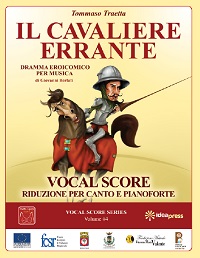
IL CAVALIERE ERRANTE IL CAVALIERE ERRANTE

DRAMMA EROICOMICO PER MUSICA
Vocal Score/Riduzione per Canto e Pianoforte
Edited by: Vito Clemente and Roberto Duarte
Copyright @ 2015 Idea Press Musical Edition USA

All rights reserved: Traetta Opera Festival
Published by: Idea Press USA

Il Cavaliere Errante, dramma eroicomico (1778) appartiene all’ultimo periodo creativo di Tommaso Traetta: qui ha innanzi tutto sviluppato il lato amabile del suo talento sino all’originalità ed ha acquisito leggerezza nell’espressione musicale. L’opera è in sostanza una favola: un principe spagnolo fa rapire la dama della quale è innamorato, la confina in un’isola incantata e lì, con i sortilegi di un mago, tenta di convincerla a sposarlo. La dama è però innamorata del Cavaliere Errante che, grazie all’aiuto di una maga buona ed insieme al fedele servo, riesce ad annullare i sortilegi, a liberare l’amata e a sposarla.

La partitura è ricca di parodie, di recitativi ed arie virtuosistiche per tutti i personaggi e presenta alcuni tòpoi utilizzati dai suoi successori, da Mozart a Rossini.

Acquistatelo su AMAZON, BARNES & NOBLE e altre librerie internazionali…


Il Cavaliere Errante (The Errant Knight), a comic-heroic drama, belongs to the last creative period of Tommaso Traetta: here he first developed the amiable side of his talent arriving to originality and acquired lightness in his musical expression.The opera is essentially a fairy tale: a Spanish prince makes his men abduct the lady whom he is in love with, he holds her prisoner in an enchanted island, and there, with the aid of the spells of a magician, tries to convince her to marry him. The lady, however, is in love with the Errant Knight who, with the help of a good witch and with his faithful servant, is able to dissolve the incantations, free his beloved and marry her.

The score is full of parodies, recitatives and virtuosic arias for all the characters and presents some topoi used by his successors, from Mozart to Rossini.

Buy on AMAZON, BARNES AND NOBLE and other International bookstores.

IL CAVALIERE ERRANTE

Posted in Books | Leave a comment

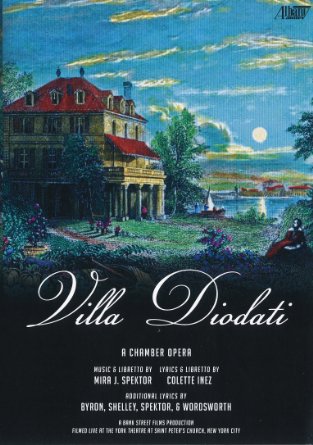
Penned up on Lake Geneva. OPERA-FILM REVIEW BY LINDAANN LOSCHIAVO: “Villa Diodati” by Mira J. Spektor.

Reviewed by LindaAnn Loschiavo

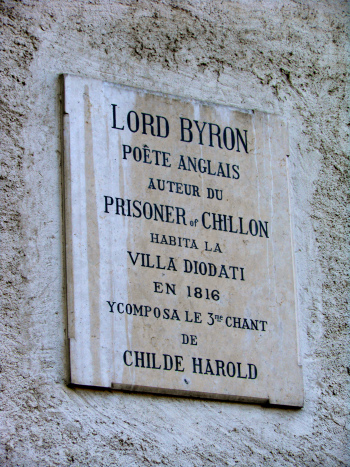
diodatiPlaqueMissed your engraved invitation to spend the summer of 1816 on Lake Geneva with Lord Byron, Shelley, Mary Godwin, and their entourage? Composer Mira J. Spektor, founder of The Aviva Players, wants to invoke their spirits and make it up to you.

First a little background.  Lord Byron [1788— 1824] rented the Swiss mansion Villa Diodati and vacationed there with his moody physician, John Polidori [1795—1821]. Mary Godwin [1797—1851] and Percy Bysshe Shelley [1792—1822], renting nearby, dropped in often. Thanks to unseasonably cool, rainy June weather, the friends holed up for three days inside the villa, spinning ghost stories to pass the time. Only two narratives were completed and published. Mary’s monster tale became “Frankenstein” and Polidori’s title was “The Vampyre.”

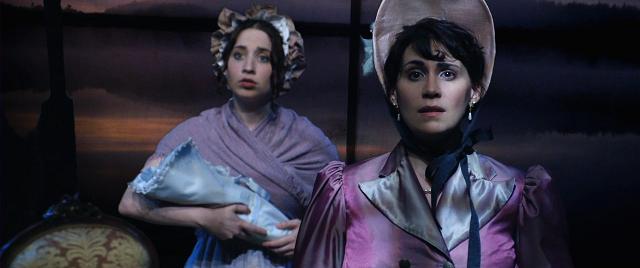
Still from "Villa Diodati" by Bank Street Films, based on Mira K. Spektor's opera about the origin of the Frankenstein story.  The villa is seen in fog in this shot.

Still from “Villa Diodati” by Bank Street Films, based on Mira K. Spektor’s opera about the origin of the Frankenstein story. The villa is seen in fog in this shot.

Unfortunately, Dr. Polidori (who was there, pen in hand) is not a character in Spektor’s opera, which has been in development since 1993 (or so) and was filmed in 2012 at York Theatre, Saint Peter’s Church, New York City. The 73-minute performance starts and ends with an anemic interlude featuring a modern couple not interesting enough to care about. The frame story— —used as a bridge to link the present day to 1816— —concerns an American man (tenor Mike Longo), vaguely ill and awaiting a diagnosis, who forges ahead by train to Villa Diodati with his amiable wife (mezzo-soprano Rachel Arky), where they will morph into characters from the past. Then, at last, the alluring Romantic poets do appear onstage with their ladies, 19-year-old Mary (soprano Angela Leson), and her 18-year-old half-sister Claire Clairmont [1798–1879] (soprano Rachel Zatcoff), along with a maidservant (soprano Hillary Schranze).

Still from "Villa Diodati" by Bank Street Films, based on Mira K. Spektor's opera about the origin of the Frankenstein story.

Still from “Villa Diodati” by Bank Street Films, based on Mira K. Spektor’s opera about the origin of the Frankenstein story.

As expected, there is plenty of sublime poetry, each poem sung like an aria. A classic text paired with music sounds like an interesting idea, doesn’t it? The question is whether or not the creative team has found a valid new way to illuminate and dramatize the work. That’s most definitely not the case with this hybrid. One problem is that the verses written two centuries ago were not intended to show character development nor advance a plot. Consequently, they stop the action cold. Therefore, in order to overcompensate for these poem-pauses, there must also be riveting storytelling, dramatic tension, conflict, inner turmoil. In the most memorable operas, a dilemma must be resolved, a lover’s desire is thwarted, a heroine is faced with an impossible choice, and so on. Alas, to its detriment, there is no gripping narrative arc here.

Still from "Villa Diodati" by Bank Street Films, based on Mira K. Spektor's opera about the origin of the Frankenstein story.

Still from “Villa Diodati” by Bank Street Films, based on Mira K. Spektor’s opera about the origin of the Frankenstein story.

diodatiposterAt one point, the shape of a subplot emerges: Claire confides in Mary that she is carrying Byron’s child and wants to tell him. Mary disagrees. [Hooray! Conflict!] Then it gets muddled. At first the couple is shown cuddling on the floor, all lovey-dovey. But Claire never tells Byron (tenor Jeremy J. Moore) about the pregnancy. [Why not?] Abruptly he declares it’s over because Claire spread gossip about him to reporters. Why raise the thorny issue of a pregnancy and then stifle a confrontation about it? Perhaps Mira Spektor did this to keep the focus on the happier couple, Percy and Mary, and their arias. But without anything amiss between them, there’s little to raise the stakes. While there is interesting staging for Mary’s nightmarish visions that inspire Frankenstein, the woman herself never quite breathes. In fact, feisty and troubled Claire Clairmont ends up having more narrative and emotional weight than Mary.

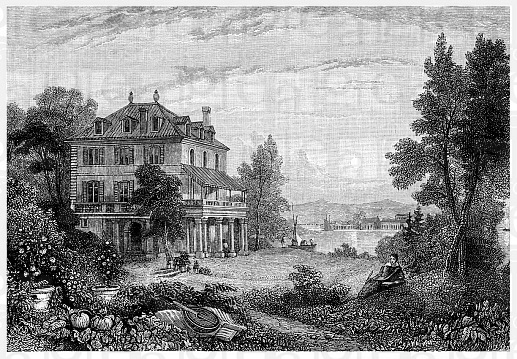
Historical illustration from the 19th Century, Villa Diodati, an estate on Lake Geneva in Cologny, a resident of George Gordon Noel Byron, 6th Baron B...

Historical illustration from the 19th Century, Villa Diodati, an estate on Lake Geneva in Cologny, a residence of George Gordon Noel Byron.

Director Rob Urbinati positioned Rachel Arky, in modern shoes and attire, onstage for the entire production and this was peculiar. Why is this tourist here? Then, without a costume change, she becomes Mary Wollstonecraft [1759—1797], Mary’s dead mother. She’s given a haunting song about death surrounding her daughter, which foretells who will die and when. It’s a good device but it would have been more effective to bring her onstage at that moment and barefoot, like all good ghosts. (The other female characters are shod in period footwear.)

Yes, many of us treasure these poems but the payoff of the music, though sung very nicely, does not save the film from its own stasis and dramatic flatness.

— — — — — — — —  — — — — —  — — —  — — — — —  — —
“Villa Diodati” | Bank Street Films | http://www.theavivaplayers.org
Mira J. Spektor (music and libretto) and Colette Inez (lyrics and libretto)
The Cast:
Rachel Arky, mezzo-soprano (tourist/ mother);
Angela Leson, soprano (Mary Godwin);
Mike Longo, tenor (tourist/ Shelley);
Jeremy J. Moore, tenor (Lord Bryon);
Hillary Schranze, soprano (maid);
Rachel Zatcoff, soprano (Claire Clairmont);
Arkady Orlovsky, cello; Barbara Ames, piano; produced by Gabriel Nussbaum for Bank Street Films, directed for the stage by Rob Urbinati with musical direction by Barbara Ames.

Posted in Article | Tagged , | Leave a comment

Don Carlo in Moscow at the Bolshoi


bolshoilogo

Don Carlo

Opera in four acts

Premiered on December 17, 2013

Presented with one interval.
Running time: 3 hours 45 minutes.

The score has been made available by RICORDI

Libretto by François-Joseph Méry and Camille du Locle
Original Italian translation by Achille De Lauzières, revised by Angelo Zanardini
‘Milan’ version 1884
carlo1

Conductors: Robert Treviño, Giacomo Sagripanti
Stage Director: Adrian Noble
Set Designer: Tobias Hoheisel
Costume Designer: Moritz Junge
Lighting Designer: Jean Kalman
Chorus Master: Valery Borisov
Choreographer: Darren Ross
Make up Artist: Campbell Young
Assistant to Director: Elsa Rooke
Assistant to Costume Designer: Elaine Garlick

In Honor of Giuseppe Verdi Bicentennial

carlo2

CAST

25 November 2015

Conductor Giacomo Sagripanti
Philip II, the King of Spain Rafal Siwek
Don Carlo, Infante of Spain Andrea Caré
Rodrigo, Marquis of Posa Elchin Azizov
The Grand Inquisitor Vyacheslav Pochapsky
A Monk Nikolai Kazansky
Elisabeth of Valois Veronika Dzhioeva
Princess Eboli, an aristocrat in court Elena Zelenskaya
Thibault, page to Elisabeth Oxana Gorchakovskaya
The Count of Lerma Marat Gali
Royal Herald Arseny Yakovlev
A Voice from Heaven Ruslana Koval

carlo3

26 November 2015

Conductor Giacomo Sagripanti
Philip II, the King of Spain Andrei Gonuykov
Don Carlo, Infante of Spain Oleg Dolgov
Rodrigo, Marquis of Posa Vasily Ladyuk
The Grand Inquisitor Pyotr Migunov
A Monk Oleg Tsybulko
Elisabeth of Valois Elena Evseyeva
Princess Eboli, an aristocrat in court Anastasia Bibicheva
Thibault, page to Elisabeth Ruslana Koval
The Count of Lerma Stanislav Mostovoy
Royal Herald Bogdan Volkov
A Voice from Heaven Olga Kulchinskaya

carlo4

27 November 2015

Conductor Giacomo Sagripanti
Philip II, the King of Spain Rafal Siwek
Don Carlo, Infante of Spain Andrea Caré
Rodrigo, Marquis of Posa Elchin Azizov
The Grand Inquisitor Vyacheslav Pochapsky
A Monk Nikolai Kazansky
Elisabeth of Valois Veronika Dzhioeva
Princess Eboli, an aristocrat in court Elena Zelenskaya
Thibault, page to Elisabeth Oxana Gorchakovskaya
The Count of Lerma Marat Gali
Royal Herald Arseny Yakovlev
A Voice from Heaven Ruslana Koval

carlo5

28 November 2015

Conductor Giacomo Sagripanti
Philip II, the King of Spain Andrei Gonuykov
Don Carlo, Infante of Spain Oleg Dolgov
Rodrigo, Marquis of Posa Vasily Ladyuk
The Grand Inquisitor Pyotr Migunov
A Monk Oleg Tsybulko
Elisabeth of Valois Elena Evseyeva
Princess Eboli, an aristocrat in court Anastasia Bibicheva
Thibault, page to Elisabeth Ruslana Koval
The Count of Lerma Stanislav Mostovoy
Royal Herald Bogdan Volkov
A Voice from Heaven Olga Kulchinskaya

carlo6

29 November 2015

Conductor Giacomo Sagripanti
Philip II, the King of Spain Rafal Siwek
Don Carlo, Infante of Spain Andrea Caré
Rodrigo, Marquis of Posa Elchin Azizov
The Grand Inquisitor Vyacheslav Pochapsky
A Monk Nikolai Kazansky
Elisabeth of Valois Veronika Dzhioeva
Princess Eboli, an aristocrat in court Elena Zelenskaya
Thibault, page to Elisabeth Oxana Gorchakovskaya
The Count of Lerma Marat Gali
Royal Herald Arseny Yakovlev
A Voice from Heaven Ruslana Koval

carlo7

SYNOPSIS

In 1556, the Emperor Charles V abdicated, celebrated his own funeral and retired to the monastery of San Jeronimo at Yuste. His son Philip II is now on the throne of Spain. To seal the peace between France and Spain after a long war, Philip marries Elisabeth of Valois, the daughter of Henry II, the French King, who has long been betrothed to his son Don Carlo.

carlo8

ACT I

Scene 1
The cloister of the Yuste monastery

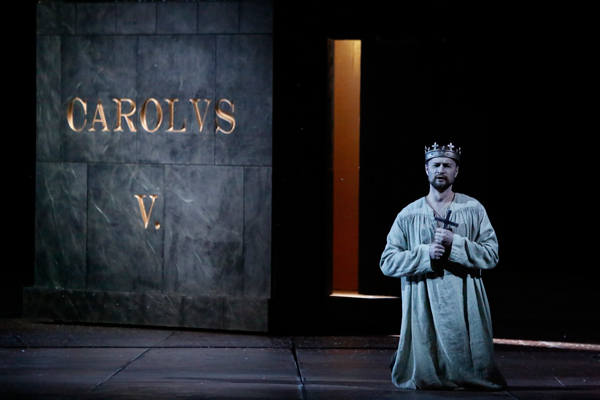
A Monk prays before the gates of the tomb of Charles V. Carlo starts at the sound of the voice — is this his grandfather, the Emperor?
Carlo’s friend Rodrigo, the Marquis of Posa, joins him, and advises him to conquer his sorrow caused by losing his bride by a noble enterprise — that of freeing Flanders. The two vow to live and die together.

carlo9

Scene 2
Outside the Yuste monastery gates

Outside the monastery, which no woman but the Queen may enter, her ladies while away the time with the song Princess Eboli sings.

The Queen enters, followed by Posa, who brings Elisabeth a letter from her mother and, under cover of the letter, a note from Carlo. While Eboli and Posa chat about the latest Paris fashions, Elisabeth reads the note, which tells her to trust Posa. In two broad strophes, Posa urges Elisabeth grant Carlo an interview, while Eboli (in asides) reveals her love for Carlo, and her hope that he loves her. Dismissing her ladies, Elisabeth consents to Posa’s request. Carlo, at first controlled, asks Elisabeth to obtain the King’s permission that he should leave for Flanders, but then his emotions overcome him and he falls to the ground in a swoon. On recovering, he clasps Elisabeth in his arms, defying the world. But she exclaims, “Then smite your father. Come stained with his murder, to lead your mother to the altar.” Carlo runs off in despair.

Philip enters, angry to find the Queen unattended. Coldly he orders the lady-in-waiting who should have been with her to return to France. Elisabeth consoles her. The company leaves, but Philip orders Posa to remain: has he no favour to ask for? “Nothing for me,” replies the Marquis, “but for others”; and, invited to speak freely, he describes the terror and destruction being wrought in Flanders. “At this bloody price,” says Philip, “I have paid for the peace of the world.” “The peace of a graveyard,” Posa replies: one word from Philip could change the world and set people free. The King, struck by Posa’s fearless honesty, confides to him his suspicions about his wife and his son, and appoints him his personal counsellor, but bids him beware the Grand Inquisitor.

carlo10

ACT II

Scene 1
The Queen’s gardens

Carlo enters, reading a note of midnight assignation which he believes has come from Elisabeth. When Eboli (who wrote the note) enters, masked, Carlo mistakes her for Elisabeth, and pours out his love. Too late, the mistake is revealed, and Eboli guesses his secret. Posa enters and tries to silence her, but in a tense trio she bids them beware the fury of a woman scorned. Posa asks Carlo to entrust to him any incriminating papers he may be carrying, and after a moment’s hesitation — can he trust the King’s new favourite? — Carlo does so.

Scene 2
A large square before the Basilica of Nuestra Señora de Atocha

The people gather to acclaim their King. Monks escort some Inquisition victims across the square; a splendid auto da fe, or public burning of heretics, is among the attractions of the day. Philip appears from the church and swears solemnly to serve God with fire and the sword. Suddenly a group of men cast themselves at his feet, and Carlo, who has led them there, announces that they are deputies from Flanders. The Flemings break into an eloquent plea for their country. Philip orders them to be taken away. All — except the monks — urge him to show mercy. At the close of the huge ensemble, Carlo asks his father to send him to Flanders as regent, and when Philip refuses, draws his sword on the King. No one dares to disarm him, until Posa steps forward. The King rewards Posa by making him a Duke, and the festive chorus is resumed.

carlo11

ACT III

Scene 1
The King’s study

Philip is alone in his study and reflects gloomily on his loveless, careworn life. The Grand Inquisitor is announced. Philip doubts whether he will be forgiven if he condemns his son to death; the Inquisitor demands that Posa should be handed over to the Inquisition. Philip refuses. The Inquisitor declares that Philip himself is in danger of being summoned before the Inquisition and leaves.

Elisabeth rushes in, distressed that her jewel casket has been stolen. Philip, who has it, opens it and draws out a portrait of Carlo. Elisabeth reminds him that she was once betrothed to the Prince, but he calls her an adulterous wife. She swoons. Eboli and Posa enter, and in a quartet Philip curses his unworthy suspicions, Eboli expresses her regret (for it was she who stole the casket), Posa decides that the time has come for him to take action, and Elisabeth, reviving, laments her unhappy life in this friendless country.

The two women are left alone. Eboli confesses that, drive by jealousy, she denounced Elisabeth to the King. At Eboli’s further confession, that she has been Philip’s mistress, Elisabeth tells her to choose, the following day, between exile and the veil, and leaves. Eboli curses the gift of fatal beauty that has caused her ruin. Her thoughts turn to Carlo, and she resolves to save him during the one day this is left to her.

Scene 2
Don Carlo’s prison

Posa comes to bid Carlo farewell; he is marked for death, since Carlo’s incriminating papers have been found on him — but Carlo can go free, to save Flanders. A shot is fired, and Posa falls. Quickly he explains that Elisabeth awaits Carlo at the Yuste cloister; he dies content, since by his death he secures the happy future of Spain. Philip enters, to return to Carlo his sword. A warning bell rings out; a crowd storms the prison, demanding the Prince. The tumult is quelled by the Grand Inquisitor, who orders the sacrilegious mob to fall on its knees before the King.

carlo12

ACT IV

The Cloister at Yuste

Elisabeth invokes the spirit of the Emperor Charles: may he carry her prayers to the Eternal Throne. Carlo enters and declares that he is done with dreaming; now he will save Flanders. The two take a solemn farewell, hoping to meet in a better world: “And for ever! Farewell!” Philip and the Inquisitor have overheard them; the King delivers his son to the Inquisition. The gates of the Emperor’s tomb open, and the Monk steps forth. He enfolds Carlo in his mantle and leads him into the cloister, recognized as Charles V by everyone present on stage.

ABOUT THE PERFORMANCE:

“In Don Carlo one feels a thirst for freedom”

The Don Carlo performance history at the Bolshoi Theatre is a short one. The opera was premièred at the Theatre on 2 November 1876 by an Italian troupe — there were a total of ten performances after which Don Carlo disappeared for a long time out of the repertoire. Its next appearance on the Theatre playbills was due to the initiative of Fyodor Chaliapin — there was just one performance on 10 February 1917 (Chaliapin sang King Philip). The third production to mark the 150th anniversary of Verdi’s birth opened at the Theatre on 25 October 1963 and this time Don Carlo remained in the repertoire for twenty-five years.

For the bicentennial of Verdi’s birth which this year has been celebrated across the globe, the Bolshoi invited the eminent British director, Adrian Noble, to do a new version of Don Carlo. An acknowledged expert on Shakespeare (for 13 years he was artistic director of the Royal Shakespeare Company and is the author of the book How to do Shakespeare), he is also known as a director of musicals and operas: the span of his interest ranging all the way from baroque opera to the modern musical. He has worked for the Glyndebourne Festival, the Opera Festival at Aix-en-Provence, the Metropolitan, La Scala, Wiener Staatsoper and for other Companies (over 20). He has received more than 20 Olivier Award nominations.

ADRIAN NOBLE:

“I belong to the ranks of those directors who trust authors and follow their dramaturgy. Great works talk to us directly across the centuries. And a story which in its time attracted one of the ‘chief’ romantics — Schiller, and then Verdi, the first composer of the Risorgimento, is still topical today. Both Schiller and Verdi examine the issues of state and the individual, of politics and the freedom of man. In Don Carlo one feels a thirst for freedom, I would even say that the spirit of revolt hovers in the air.

It seemed to me natural and logical not to transfer the action of the opera to a different age. If we manage to recreate the world of 16th century Spain on stage, that atmosphere of itself will shock the contemporary spectator and there will be no need to resort to additional directorial devices.

Imagine to yourself: a huge, rapidly growing empire which is held together by the mighty power of king, Inquisition and army. A society which wages a battle against nonconformists, in which rigid ceremonial plays a huge role and live human emotions are dangerous and carry death in their wake.

Luckily there are a lot of portraits of the historical prototypes of the opera’s heroes and we know exactly what they looked like. Their clothes — the external expression of their status in the rigid hierarchy, their duties and their lack of freedom. They are confined in their clothing as if it was a cocoon. Each character to some extent is in prison, each is bound by his duty. Philip II cannot be father to his son — he is a monarch aware of his mission before God and to the empire. Don Carlo is heir to a huge empire, but his convictions are absolutely opposed to those of his father. Elizabeth is queen and does not have the right to show her feelings. And they are all terribly lonely”.
Posted in OPera | Tagged , , | Leave a comment

Don Giovanni in Prague

1dongiovanniNarodni

nationaltheatreLibretto: Lorenzo da Ponte
Musical preparation: Tomáš Netopil
Conductor: Jan Chalupecký, David Švec
Stage director: SKUTR (Martin Kukučka a Lukáš Trpišovský)
Sets: Jakub Kopecký
Costumes: Linda Boráros
Chorus master: Pavel Vaněk
Choreography: Jana Burkiewiczová
Dramaturgy: Beno Blachut

National Theatre Orchestra

National Theatre Chorus

Ballet of the National Theatre Opera

Premiere: June 9 and 10, 2012

November 18, 2015 <!–RE–>

December 2, 20, 28, 2015<!–RE–> 

January 14, 2016<!–RE–> 

don-giovanni-df-047web

The opera Don Giovanni, the Estates Theatre and the long-standing Mozart tradition are among the greatest glories of Prague’s cultural history. The Estates Theatre is globally unique in that it is the one and only preserved and still functional venue where a world premiere of a Mozart opera took place with the composer himself conducting. This premiere was – as is generally known – of the very “Opera of Operas”, Don Giovanni. And the Estates Theatre is all the more unique owing to the fact that this opera has been performed there for centuries.
don-giovanni-df-251web

The world premiere of Don Giovanni on 29 October 1787 was a tremendous success and from Prague the new opera set out on its journey to global acclaim and admiration. Mozart’s “Prague” opera is one of the most frequently performed titles at the National Theatre. Mozart and Da Ponte’s opera is a work of Shakespearean multivalence, blending comedy and tragedy, “high” and “low”, giving rise to philosophical contemplations while at the same time affording entertainment replete with excitement and humour.

don-giovanni-df-943web

Orchestra and Chorus of the National Theatre

The opera is staged in Italian original version and Czech and English surtitles are used in the performance.

Photo: Hana Smejkalová

Duration of the performance: 3 hours and 10 minutes, 1 intermission

don-giovanni-df-1114web

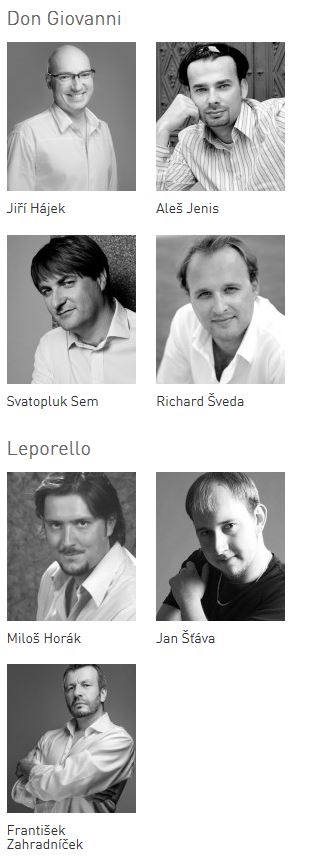
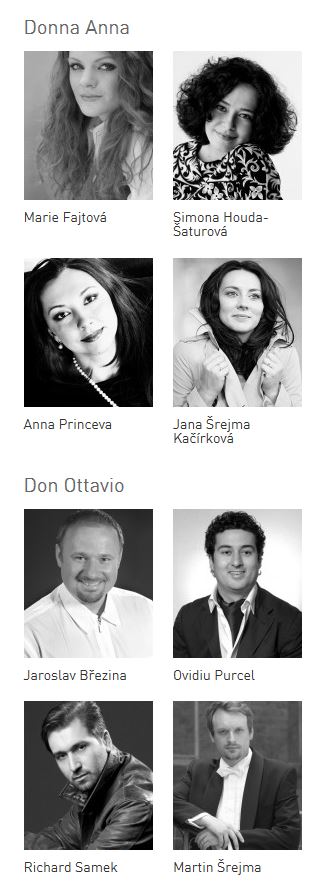
CAST

dongiovanniNat1 dongiovanniNat2

dongiovanniNat3 dongiovanniNat4

dongiovanniNat5


giovanni1 giovanni2 giovanni3 giovanni4 giovanni5 giovanni6 giovanni7 giovanni8 giovanni10 giovanni12 giovanni13

Posted in OPera | Tagged , | Leave a comment

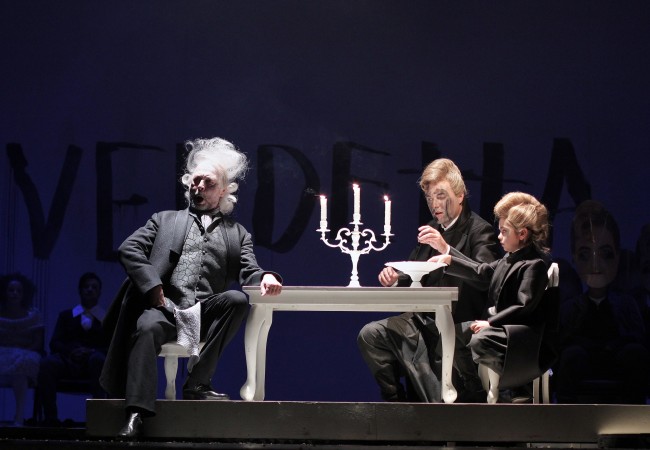
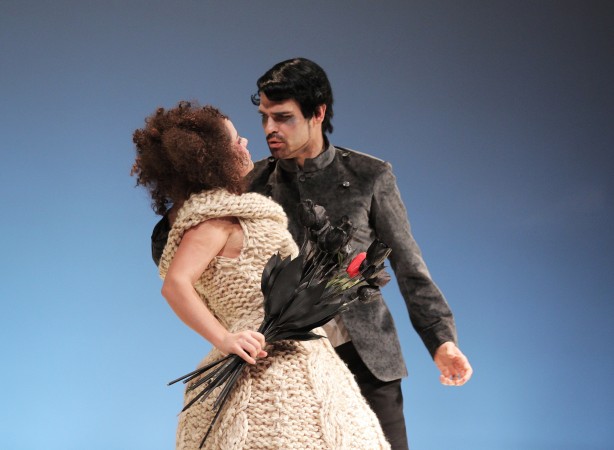
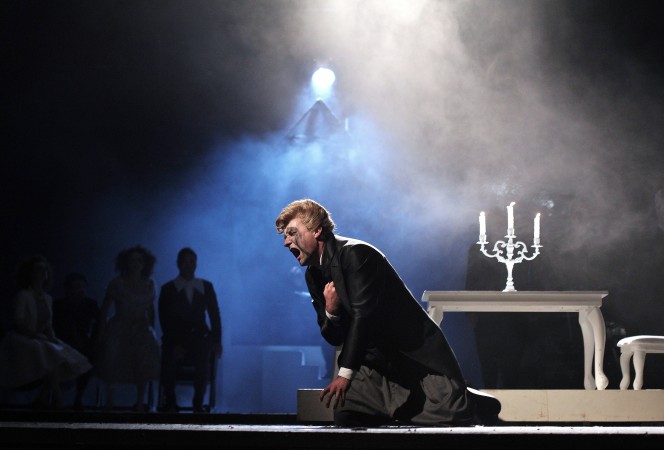
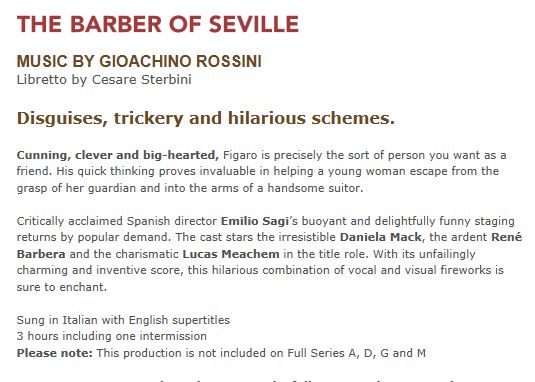
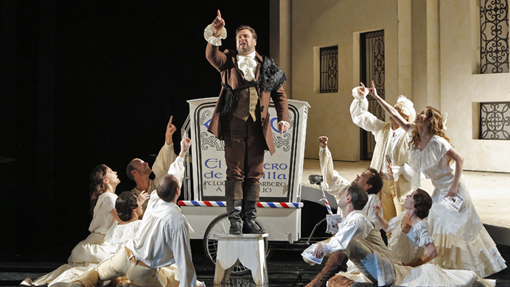
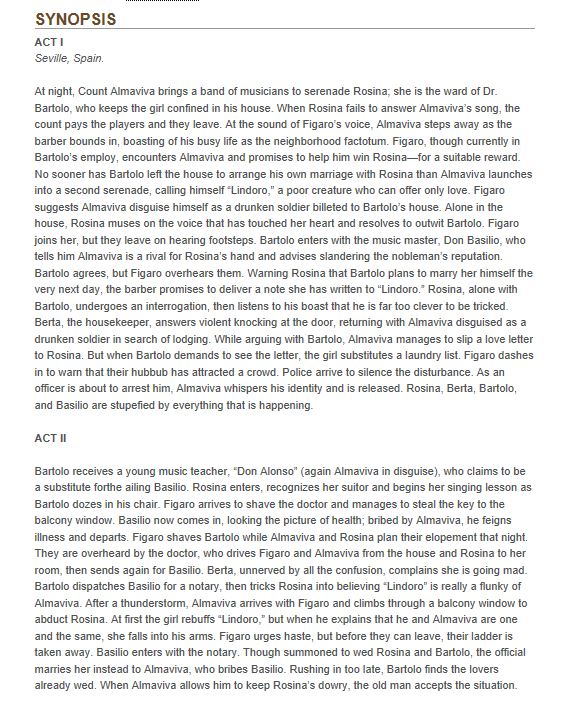
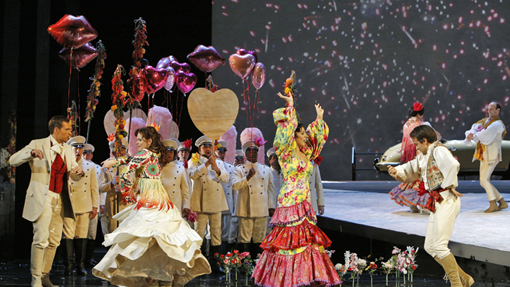
Disguises, trickery and hilarious schemes: the Barber of Seville at the San Francisco Opera

sanfranciscologobarber1Barber_Web1_P

PERFORMANCE PREMIERE

Wed 11/25/15 7:30pm

barber2Barber_Web2-2_Pbarbercast
Barber_Web3-1_P Barber_Web4_P

Posted in OPera | Tagged , , , , , | Leave a comment

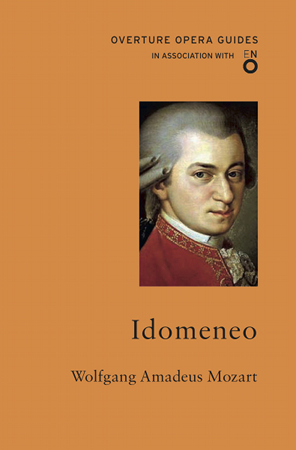
MOZART, IDOMENEO, K 366 at the Teatro La Fenice in Venice

fenicelogo2

idomeneoMOZART, IDOMENEO, K 366

Conductor: Jeffrey Tate

Direction: Alessandro Talevi

Sets: Justin Arienti

Costumes: Manuel Pedretti

Lights Designer: Giuseppe Calabrò

Venice: La Fenice Opera House

22, 24, 26, 28 November 2015

Idomeneo ⎮ Brenden Gunnell
Idamante ⎮ Monica Bacelli
Elettra ⎮ Michaela Kaune
IliaEkaterina Sadovnikova
Arbace ⎮ Anicio Zorzi Giustiniani
Il sommo sacerdote di Poseidone ⎮ Krystian Adam
La voce dell’oracolo ⎮ Michail Leibundgut

direttore ⎮ Jeffrey Tate
regia ⎮ Alessandro Talevi
scene ⎮ Justin Arienti
costumi ⎮ Manuel Pedretti
disegno luci ⎮ Giuseppe Calabrò
movimenti coreografici ⎮ Nikos Lagousakos

Orchestra e Coro del Teatro La Fenice
maestro del Coro ⎮ Claudio Marino Moretti

nuovo allestimento Fondazione Teatro La Fenice
col sostegno del Freundskreis des Teatro La Fenice
mozart_idomeneo

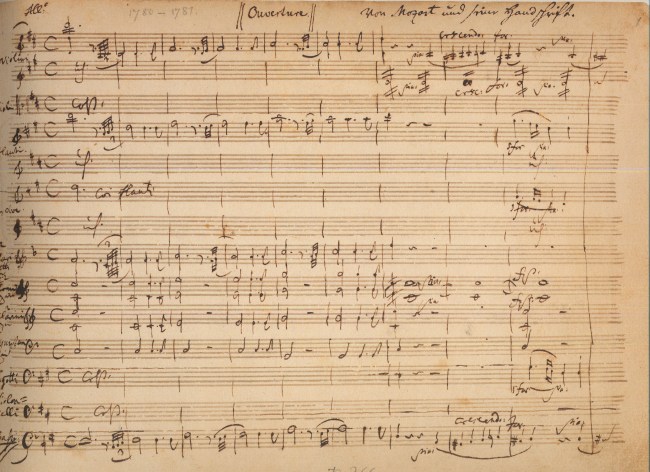
Idomeneo fu composto tra l’autunno del 1780 e i primi giorni del 1781 su libretto di Gianbattista Varesco, cappellano di corte dell’arcivescovo di Salisburgo. Del libretto esistono due versioni: la prima presenta il testo integrale; la seconda non riporta, invece, i numerosi passi tagliati o non musicati da Mozart, altri espunti dopo esser stati composti e altri ancora esclusi all’ultimo momento per esigenze di durata. A partitura ultimata, il compositore effettuò ulteriori tagli per snellire la lunghezza dello spettacolo. Questa complessa vicenda testuale nasconde un travaglio creativo, documentato dalla quarantina di fondamentali lettere che Mozart e suo padre si scambiarono tra l’8 dicembre 1780 e il 22 gennaio 1781. In esse il compositore discute con Varesco, per interposta persona, le soluzioni da adottare in molte parti del dramma. Non conosciamo l’esito della prima rappresentazione, ma dai pareri dei membri della corte di Monaco riportati nell’epistolario, si deduce che l’impressione destata dal lavoro del compositore venticinquenne fu enorme: «Vi assicuro che mi aspettavo molto da voi» confessò a Mozart il conte Seinsheim in una lettera del 1º dicembre 1780, «ma veramente non mi aspettavo questo!».

mozart_idomeneo1

Posted in OPera | Tagged , , , , , , | Leave a comment

La Sonnambula at the Bolshoi in Moscow

La Sonnambula

Opera in two acts

Premiered on March 6, 2013.

Sung in Italian with Russian surtitles.

New Stage
Presented with one interval.
Running time: 2 hours 50 minutes.

Libretto by Felice Romani

Music Director: Enrique Mazzola
Stage Director and Designer: Pier Luigi Pizzi
Chorus Master: Valery Borisov
Lighting Designer: Mark Stavtsev
Choreographer: Ekaterina Mironova

2sonnambula

CAST

18 November 2015

Conductor Pavel Klinichev
Count Rodolpho, Lord of the village Nikolay Didenko
Teresa, milleress Svetlana Shilova
Amina, orphan adopted by Teresa, betrothed to Elvino Venera Gimadieva
Elvino, wealthy peasant Pavel Kolgatin
Lisa, inn-keeper, in love with Elvino Anna Aglatova
Alessio, peasant, in love with Lisa Nikolai Kazansky
A Notary Vadim Tikhonov

1sonnambula

19 November 2015

Conductor Pavel Klinichev
Count Rodolpho, Lord of the village Oleg Tsybulko
Teresa, milleress Elena Novak
Amina, orphan adopted by Teresa, betrothed to Elvino Uliana Alexyuk
Elvino, wealthy peasant Stanislav Mostovoy
Lisa, inn-keeper, in love with Elvino Ruslana Koval
Alessio, peasant, in love with Lisa Pyotr Migunov
A Notary Yuri Markelov

3sonnambula

20 November 2015

Conductor Pavel Klinichev
Count Rodolpho, Lord of the village Nikolay Didenko
Teresa, milleress Svetlana Shilova
Amina, orphan adopted by Teresa, betrothed to Elvino Venera Gimadieva
Elvino, wealthy peasant Pavel Kolgatin
Lisa, inn-keeper, in love with Elvino Anna Aglatova
Alessio, peasant, in love with Lisa Nikolai Kazansky
A Notary Vadim Tikhonov

4sonnambula 5sonnambula

SYNOPSIS

Act I

The peasants are singing to celebrate the marriage of the rich landowner Elvino to Amina, an orphan adopted by Teresa. In the general rejoicing Lisa cannot find peace: she complains because of her unrequited love for Elvino. In the meantime she ignores the love which Alessio cherishes towards her. While awaiting the bridegroom, Amina happily answers her village friends. Elvino finally arrives after the notary and offers the wedding ring to Amina. The idyll is broken by the unexpected arrival of a carriage bearing Count Rodolfo, the son of the late Lord of the village, who, after many years absence, is not recognized and prefers to remain incognito. He takes up lodgings in Lisa’s inn and pays compliments to the young bride, thus arousing Elvino’s jealousy.

6sonnambula

In his room in the inn, Count Rodolfo pays court to Lisa who seems quite willing, but runs out, dropping a handkerchief, when a sound is heard outside; at that moment Amina arrives, asleep, in her nightdress, repeating the name of Elvino and describing the vision she has of the coming wedding ceremony; then she lies clown on the couch. Rodolfo remains disconcerted and uncertain as to what to do, then leaves the room. Right in this predicament the crowd of villagers enters to congratulate the Count, whose identity they have discovered. In this way everyone sees Amina, asleep in Rodolfo’s room. On waking, the young girl tries to justify herself and pleads her own innocence but nobody believes her. Elvino, seized by jealousy, repudiates her.

7sonnambula 8sonnambula

Act II

A group of peasants go to see the Count to persuade him to defend Amina who, in the meantime, accompanied by Teresa, crosses the path of Elvino who takes back the ring.

In the village, Lisa, taking advantage of the new situation, is about to marry Eivino who has accepted the marriage despite the Count’s repeated assurances that Amina is innocent. The village is celebrating once again but when Lisa and Elvino pass in front of Teresa’s mill, the latter accuses Lisa of having committed the same act as Amina, declaring that she has found a handkerchief of hers in Rodolfo’s room; Elvino is angry and jealous and rejects this marriage too. Suddenly the sleeping Amina appears on the edge of the roof, thus confirming the words spoken by the Count in her defence. Amina, still sleepwalking, comes down into the street singing her love for Elvino; the latter, repentant and with a change of heart, takes her in his arms, where she awakens. The festivities start once again and preparations are finally made for the wedding.

9sonnambula 10sonnambula

ABOUT THE PERFORMANCE:

Enter La Sonnambula

La Sonnambula’s performance history at the Bolshoi is not a great one — the opera has appeared in the repertoire just four times. The Theatre’s first production, however, was only six years after the world première — in December 1837. While the first night of the last Bolshoi Theatre Sonnambula was in December 1891 (when it was given a total of four performances before being dropped from the repertoire in January 1892).

After its long absence, La Sonnambula is returned to the Bolshoi by the illustrious director and scenographer Pier Luigi Pizzi, known for his baroque and bel canto opera productions.

EkaterinaLekhinaAs Amina
Pier Luigi Pizzi belongs to the same glorious ranks of outstanding Italian theatre people as Giorgio Strehler, Franco Zeffirelli and Luca Ronconi, while his creative range embraces the entire history of opera — from the baroque to the present day. Pizzi did not immediately take up the profession of director, starting off as scenographer and costume designer. Today he brilliantly combines all three professions.

And remarkably, though he has a simply incredible number of romantic operas to his credit, this was to be his first Sonnambula.

Laura Claycomb as Amina

Nina Minasyan as Lisa Pier Luigi Pizzi:

“I was amazed to learn that La Sonnambula had not been heard at the Bolshoi Theatre since 1892. However, it was this discovery which prompted me to the treatment of the opera which I am presenting. To transfer La Sonnambula to the present day, would be to divest it of its romantic aura without which it is unthinkable. This opera has to have the quality of an elusive dream. But, nor did I want the action to unfold at the time the opera was created, the remote from us ‘costume age’, since this might inhibit the artists from behaving naturally on stage. I therefore transferred the action to the period when La Sonnambula vanished from the Bolshoi Theatre stage, to the turn of the 19th-20th centuries, the time of Chekhov.

Nikolai Kazansky as Alessio Nikolay Didenko as Count RodolfoNinaMinasyanLisa

Chekhov’s world is in some sense very similar to that of Bellini. It is incredibly poetic and invariably colored by a gentle melancholy. A note of sadness is always present in Bellini’s music — even at moments of total jubilation. With Bellini shades of feeling are very complex, one emotion conceals another, much is built on counterpoint — just as in the case of Chekhov. And for this reason I decided it would be via Chekhov that I would re-introduce La Sonnambula to the Moscow public.venera Gimadieva as Amina

I did not want the production to turn into a quaint ‘picture-postcard’ and I therefore rejected an emphatically Swiss aesthetic, in favor of a landscape more familiar to the Russian public. The Russian countryside is very poetic, I have a very vivid image of it — an image of absolute purity which is so suitable for La Sonnambula.”

Posted in OPera | Tagged , , | Leave a comment

Lucia di Lammermoor at the Opera Royal du Liege

lammermoor

operaliegelogoLucia di Lammermoor

Season : 2015-2016
Length : 2:35
Song language : 
Italian
Conductor : Jesús López Cobos
Director : Stefano Mazzonis di Pralafera
Choirmaster : Pierre Iodice
Artists : Annick Massis, Celso Albelo, Ivan Thirion, Roberto Tagliavini, Pietro Picone, Alexise Yerna, Denzil Delaere
Number of performances : 
6
Dates : 
Tue, 17/11/2015 to Tue, 01/12/2015

Last performance at the Opera : May 2007.

nov nov1

Endless success

Donizetti is among the composers who saw glory and success in their lifetime. As a result, between two cities, while stopping off at home, he was snapped up by the Teatro San Carlo in Naples. He was bound by a contract and was obliged, this time, to honour a three-opera commission. He saw in Salvatore Cammarano a young librettist with a fiery nature to perfectly match the urgency of the moment.

Together, they pored over a work by Sir Walter Scott, The Bride of Lammermoor. They took a mere six weeks to compose Lucia di Lammermoor. The public’s enthusiasm was immediate. The composer added a feather to his cap: he had just saved the Theatre. Destiny smiled on him because, three days before the premiere, the death of Bellini made him the sole representative of the operatic art in Italy. This accident lends a surprising intensity to this tragedy, which will be borne by Annick Massis, and, for the first time in Liège, the Spanish tenor Celso Albelo. They make a dazzling duo.


 The Story

17th-century Scotland is marked by inter-clan warring. Edgardo and Lucia are in love, but are members of opposing clans. In addition, the beauty’s brother has promised her to another man. This is an impossible love that will drag her into madness and lead her, with her lover, to certain death.


(Libretto: Salvatore Cammarano after
Sir Walter Scott’s novel, The Bride of Lammermoor)

Cast

Conductor: Jesús López Cobos
Director: Stefano Mazzonis di Pralafera
Set designs: Jean-Guy Lecat
Costume designs: Fernand Ruiz
Lighting designs: Franco Marri


Choirmaster: Pierre Iodice
Orchestra & Choirs: Opéra Royal de Wallonie


Lucia: Annick Massis
Sir Edgardo di Ravenswood: Celso Albelo*
Lord Enrico Ashton: Ivan Thirion
Raimondo: Roberto Tagliavini*
Lord Arturo Bucklaw: Pietro Picone
Alisa: Alexise Yerna
Normanno: Denzil Delaere*


New production: Opéra Royal de Wallonie
Critical editions: Gabriele Dotto and Roger Parker – RICORDI –
Autograph revision: Jesús López Cobos


* First time at the Opéra Royal de Wallonie

Posted in OPera | Leave a comment

I due Foscari in Marseille

operamarseillelogo

I due Foscari

GIUSEPPE VERDI

Sunday November 15th, 2015 > 2:30PM
Wednesday November 18th, 2015 > 8:00PM

Although in the libretto, a father, at the height of his power, is powerless to help his son, this brilliant cast will do Verdi proud

Visu-Iduefoscari


I DUE FOSCARI

Opera in 3 acts
Libretto by Francesco Maria PIAVE
from the play by Lord BYRON
First performed in Rome, Teatro Argentina, on November 3rd, 1844
First performed in Marseille Opera

CONCERT VERSION

Conductor Paolo ARRIVABENI

CAST

Lucrezia Contarini Virginia TOLA
Pisana Sandrine EYGLIER

Francesco Foscari Leo NUCCI
Jacopo Foscari Giuseppe GIPALI
Jacopo Loredano Wojtek SMILEK
Barbarigo / Fante Marc LARCHER

Marseille Opera Orchestra and Chorus

Posted in OPera | Tagged , , , | Leave a comment

Tosca at the New National Theatre in Tokyo

tokyo_logotokyotosca2toscaTokyo

TOSCA

17 Nov. – 29 Nov., 2015

2015/2016 Season
Music by Giacomo PUCCINI
Opera in 3 acts
Sung in Italian with Japanese supertitles
Opera Palace

tosca1Tosca is one of PUCCINI’s most popular operas. This performance is a restaging of a production by Antonello Madau DIAZ that took a traditional approach to depicting the essence of the work’s nineteenth century Roman setting. The opera has scenes such as the Te deumat the end of the first act that are spectacular in their grand, gorgeous staging and costumes.

The conductor is the young Norwegian, Eivind Gullberg JENSEN. The title role is played by Maria José SIRI, Cavaradossi by Jorge de LEON, and Scarpia by Roberto FRONTALI.


tosca5

tosca2 tosca3tosca8  tosca6 tosca7  tosca9


Staff

Conductor Eivind Gullberg JENSEN 1

Production Antonello Madau DIAZ 2

Scenery Design KAWAGUCHI Naoji

Costume Design Pier Luciano CAVALLOTTI

Lighting Design OKUHATA Yasuo

Cast

toktotoscacast1

Tosca Maria José SIRI 3

Cavaradossi Jorge de LEON 4

Scarpia Roberto FRONTALI 5

Angelotti ONUMA Toru 6

toktotoscacast2

Spoletta MATSUURA Ken 7

Sciarrone OTSUKA Hiroaki 8

Il Sagrestano SHIMURA Fumihiko 9

Carceriere AKIMOTO Ken 10

toktotoscacast3

Un Pastore MAEKAWA Yoriko 11


Chorus New National Theatre Chorus

Orchestra Tokyo Philharmonic Orchestra

Photos are from 11 Nov, 2012 Tosca.

 SYNOPSIS

Act 1

In the church of Sant’Andrea della Valle

Cesare Angelotti, a political prisoner, has escaped from the Castel Sant’Angelo in Rome. He seeks refuge in the family chapel at the church of Sant’Andrea della Valle using a key hidden by his beautiful sister, Marchioness Attavanti. The Sacristan turns up but thinks that the noise at the door was made by the artist Mario Cavaradossi. The painter is currently working on a depiction of the Madonna inspired by the Marchioness, who has sat for the portrait in the church over the last couple of days. The artist also likens the portrait to a miniature of the woman he loves, the singer Floria Tosca.

Once the Sacristan has left, Angelotti comes out of hiding and recognises Cavaradossi – a friend whom he can trust in his struggle for the republic. Cavaradossi gives him the lunch basket prepared by the Sacristan but urges Angelotti to hide in the far end of the chapel when he hears Tosca, who goaded by jealousy pounds on the church door and calls out to her lover, convinced as she is that he has locked the door to seek privacy with another woman. He lets her in.

Cavaradossi attempts to reassure Tosca, but she notices that the eyes of the Madonna on the portrait resemble those of Marchioness Attavanti and she accuses him of cheating on her. He, however, assures her that she has nothing to fear. When Tosca has left the church Cavaradossi fetches Angelotti and together they find the women’s clothing that Angelotti has hidden as disguise for his escape. Cavaradossi advises Angelotti to seek refuge in his personal villa. No sooner has Angelotti left the church before canon fire is heard from the Castel Sant’Angelo, signalling that the jailbreak has been discovered. Cavaradossi decides to accompany Angelotti through Rome.

The Sacristan returns with tidings of the defeat of Napoleon by the Austrians, thus securing the continued rule of monarchy in Rome. The church chorists rejoice in the prospect of grand celebrations to be held at Palazzo Farnese the same evening, including a cantata by none other than Floria Tosca. There is also promise of a bonus to be paid for the Te Deum, staged by the church as part of the festivities. Baron Scarpia of the secret police turns up, which immediately quells the jubilation, although revellers are quick to reassure him that their jubilant behaviour is a mere expression of their joy of victory.

Scarpia and his henchmen look for leads in their search for Angelotti. They soon find Attavanti’s fan in the church, which Scarpia uses to convince Tosca – the object of his desire – of Cavaradossi’s faithlessness. He sends a spy to trail Tosca while she hastens to Cavaradossi fearing she will find him in the arms of his mistress.

Act 2

At Scarpia’s office in Palazzo Farnese

Tosca and Baron Scarpia are to rendezvous the same evening, following her performance. Scarpia hopes his scheme will work – soon Tosca will be his! Scarpia is unsuccessful in his pursuit of Angelotti but his men arrest Cavaradossi instead on the charge of abetting a fugitive. He refuses to reveal Angelotti’s hideout and Scarpia orders him to be interrogated in the next room.

When Tosca arrives her dilemma soon dawns on her: she can only save her beloved Cavaradossi from torture if she reveals Angelotti’s hideout. At first she refuses to cooperate but is soon unnerved by Cavaradossi’s harrowing agony and reveals Angelotti’s whereabouts. Cavaradossi has, however, confessed to republican leanings and is to be executed at dawn the next day, unless Tosca yields herself to Scarpia.

However, Angelotti commits suicide in his hiding place before the arrival of Scarpia’s men. So is Cavaradossi now to face the firing squad? Initially, Tosca agrees to Scarpia’s conditions for Cavaradossi’s release but she also demands free passage out of Rome for them both. Scarpia issues a pass and orders a mock execution of Cavaradossi using blanks.

But Tosca has a trump up her sleeve. She stabs Scarpia with a dagger and flees from the room with the pass in her hand.

Act 3

At the top of Castel Sant’Angelo

At the break of dawn, Cavaradossi prepares himself for death. He bribes a guard to bring a farewell letter to Tosca and he recalls their happiest hours together.

Tosca, in reply, shares the good news with him and they rejoice in the prospect of starting a new life together far from Rome. Cavaradossi faces the firing squad with a self-assured air as the soldiers raise their muskets. When the shots are fired he falls down to the ground. Tosca’s future happiness now depends on the unfolding events of the next few seconds….


Posted in OPera | Tagged , | Leave a comment